

Signs of Receding Hairline: How to Tell & Fix It
 ChatGPT
 Claude
 Perplexity
 Grok
Grok
 Gemini

Wondering whether you’re noticing the first signs of receding hairline can feel unsettling. Many people first spot subtle changes while styling their hair, comparing old photos, or noticing their temples look slightly thinner. The good news is that early hairline changes do not always mean permanent hair loss. Knowing how to tell if your hairline is receding is the first step toward choosing the right solution.
A receding hairline usually develops gradually. For many men, it begins with mild thinning around the temples before forming an M-shaped hairline. Others experience a slow increase in forehead height or finer, shorter hairs replacing thicker strands along the frontal hairline. Women can experience frontal hairline changes too, although the pattern is often different from male pattern baldness.
According to the American Academy of Dermatology (AAD), identifying hair loss early offers the best chance of slowing progression with medical treatment before significant follicle miniaturization occurs. Early evaluation can make a meaningful difference in long-term results.
Many people immediately search for how to fix receding hairline, but treatment depends entirely on the underlying cause. Genetics, hormones, age, stress, traction from hairstyles, and certain medical conditions can all produce similar-looking symptoms. That is why proper diagnosis matters far more than chasing popular products online.
Dr. Ahmet Murat explains: “Many patients come to us believing they need a hair transplant after noticing a slightly higher forehead. In reality, some have a naturally maturing hairline, while others are experiencing early androgenetic alopecia. The treatment plan should always follow an accurate diagnosis, never assumptions.”
Throughout this guide, you’ll learn how to recognize genuine early signs of receding hairline, distinguish them from a mature hairline, understand the role of the Norwood scale, explore proven medical treatments, and discover when a hair transplant for receding hairline becomes the most effective long-term option.
You’ll also find practical self-check methods, realistic treatment expectations, and expert guidance to help you make confident decisions about your hair.
Quick Insights
- Signs of receding hairline usually begin with gradual temple thinning, a higher-looking forehead, or the development of an M-shaped hairline.
- A mature hairline is a normal part of aging for many men, but a receding hairline continues to progress over time and is often linked to androgenetic alopecia.
- Comparing standardized photos every few months is one of the simplest ways to monitor meaningful changes.
- Genetics and DHT are the leading causes of male pattern baldness, though thyroid disorders, nutritional deficiencies, traction alopecia, and other medical conditions can also affect the hairline.
- Starting treatment early often provides the best opportunity to preserve existing follicles before significant miniaturization occurs.
- Evidence-based options such as minoxidil, finasteride, PRP, and Low-Level Laser Therapy (LLLT) may help slow progression in suitable candidates.
- A hair transplant for receding hairline is generally recommended when hair loss has become more established and sufficient donor hair is available.
- Successful hair restoration depends on accurate diagnosis, personalized treatment planning, and natural hairline design rather than simply restoring as many grafts as possible.
What Is a Receding Hairline?
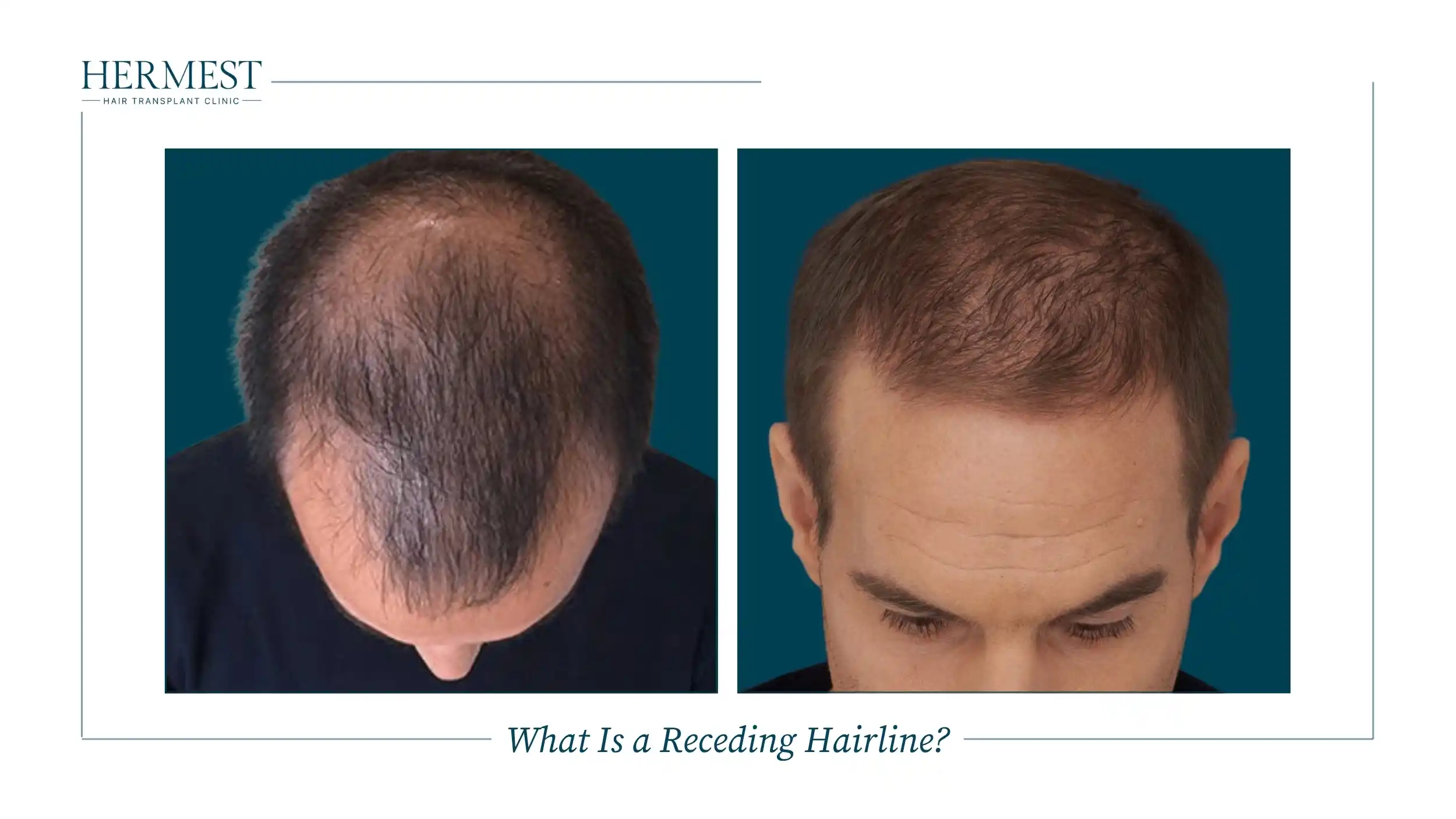
A receding hairline is the gradual movement of the frontal hairline farther back on the scalp. In most cases, the temples begin thinning first, creating subtle changes that become easier to notice over time. This pattern is most commonly associated with male pattern baldness, although several other conditions can produce similar symptoms.
Many people mistake a naturally maturing hairline for true hairline recession. That confusion often leads to unnecessary anxiety or, just as commonly, delayed treatment. Knowing the difference helps you make informed decisions and improves the chances of preserving existing hair.
What Does a Receding Hairline Look Like?
The earliest changes are usually gradual rather than dramatic. Instead of obvious bald patches, you may notice your hairline looking slightly different when comparing recent photos with older ones. Many people also find that styling their hair becomes more difficult around the temples.
Common early signs of receding hairline include:
- An M-shaped hairline gradually developing at the temples.
- Fine, shorter hairs replacing thicker terminal hairs.
- More scalp becoming visible under bright lighting.
- A forehead that appears slightly higher over time.
- Reduced density along the frontal hairline.
Unlike temporary shedding, androgenetic alopecia progresses slowly. Hair follicles become smaller through a process called miniaturization, producing thinner hairs during each growth cycle until some follicles eventually stop producing visible hair.
Follicle miniaturization is one of the hallmark features of hereditary hair loss and often develops over several years rather than weeks.
Why the Temples Usually Change First
The temples are among the first areas affected by dihydrotestosterone (DHT) in people with a genetic predisposition to hair loss. DHT gradually shortens the hair growth cycle and causes susceptible follicles to shrink, leading to progressive thinning around the front corners of the scalp.
This explains why many men first notice recession near the temples before changes appear elsewhere. As the process continues, the frontal hairline often develops the familiar M-shaped appearance described in the early stages of the Norwood scale.
Hair loss does not always follow a textbook pattern, though. Some individuals experience uniform thinning across the front, while others notice simultaneous recession at the temples and reduced density around the crown.
Dr. Ahmet Murat says:
“The position of the hairline tells only part of the story. During our consultations, we examine follicle quality, hair shaft thickness, donor area density, family history, and progression over time. Those details help us distinguish between a mature hairline, early genetic hair loss, and temporary shedding before recommending any treatment.”
Is It Always Male Pattern Baldness?
No. Although genetics account for most cases of receding hairline, they are far from the only cause. Temporary or treatable conditions can produce similar changes, especially during the early stages.
Other possible causes include traction alopecia from tight hairstyles, stress-related hair loss, thyroid disorders, nutritional deficiencies, autoimmune diseases, hormonal fluctuations, and certain medications. Women can also experience frontal hairline changes, though the pattern often differs from classic male pattern baldness and may require a different diagnostic approach.
In reality, the first question should never be, “How to fix receding hairline?” It should be, “Why is my hairline changing?” Identifying the underlying cause allows you to choose the most effective treatment, avoid unnecessary products, and act before permanent follicle damage occurs.
Early Signs of a Receding Hairline
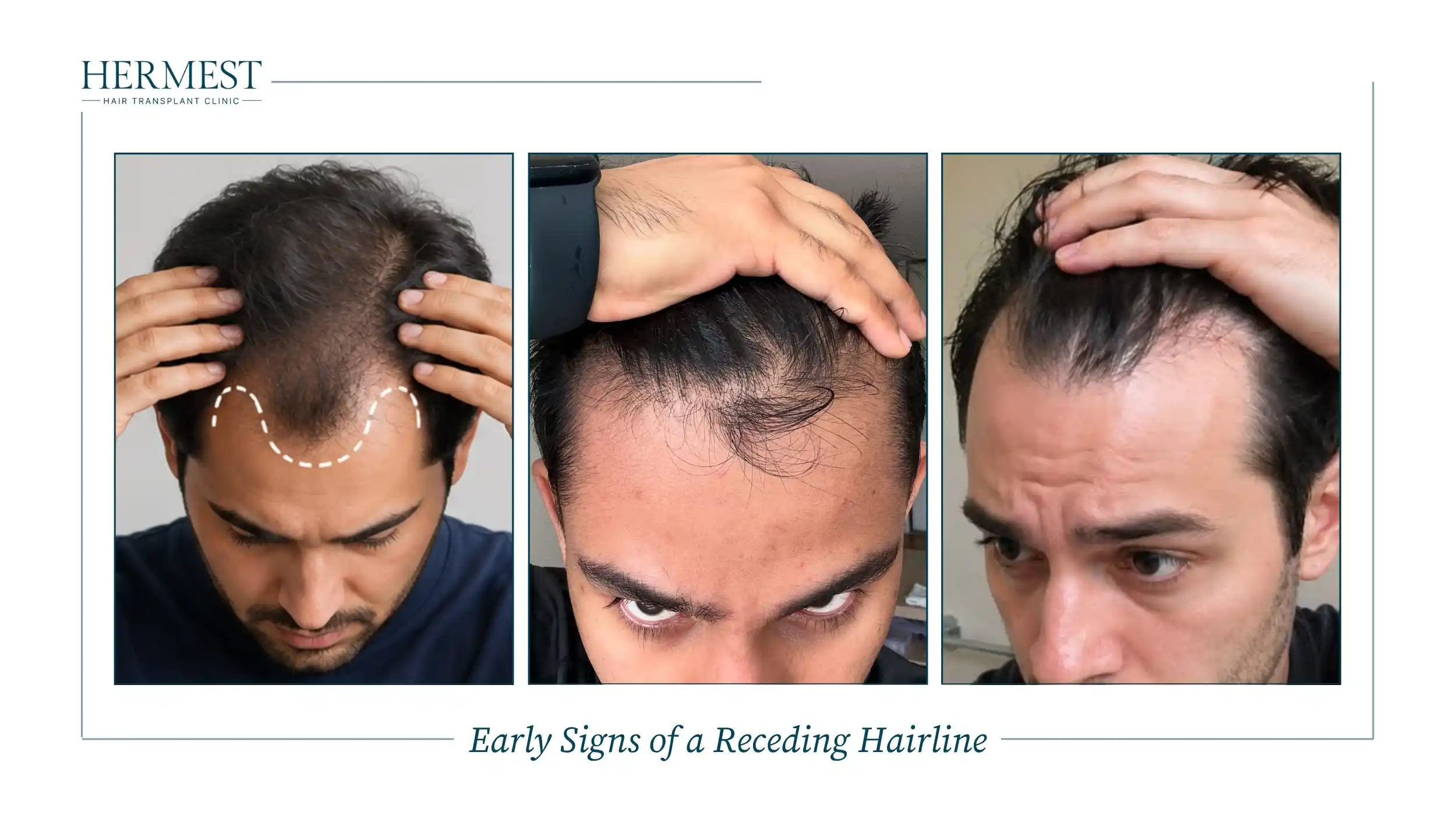
Recognizing the early signs of receding hairline can give you a valuable advantage. Hair loss rarely happens overnight. Most people notice subtle changes months, or even years, before significant thinning becomes obvious. Acting during this stage often opens the door to more treatment options and better long-term outcomes.
According to the American Academy of Dermatology (AAD), early intervention can slow hereditary hair loss and help preserve existing follicles before extensive miniaturization develops.
Your Hairline Looks Higher Than Before
One of the first clues is a gradual increase in forehead height. This change usually happens so slowly that you may not notice it until comparing recent photos with pictures taken one or two years earlier.
Rather than focusing on a single mirror check, compare photos taken under similar lighting and hairstyles. If your frontal hairline consistently appears farther back, it may indicate the beginning of hairline recession.
Natural aging can raise the hairline slightly, but steady progression over time deserves closer attention.
The Temples Begin Forming an M-Shaped Pattern
Temple recession is one of the most recognizable signs of male pattern baldness. The hair at both corners of the forehead becomes thinner, creating the classic M-shaped hairline seen during the early Norwood scale stages.
This pattern often develops before any noticeable thinning at the crown.
If one temple appears to recede faster than the other, don’t panic. Mild asymmetry is common, especially during the early phases of hereditary hair loss.
Dr. Ahmet Murat says:
“Many patients focus only on how high their hairline sits. We pay closer attention to temple density, hair caliber, and miniaturization patterns. Those findings tell us far more about future progression than the hairline position alone.”
Fine, Miniaturized Hairs Replace Thick Hair
Healthy hair follicles produce thick, pigmented terminal hairs. As follicles become affected by DHT, they begin producing finer, shorter, and lighter hairs instead.
This process is called follicle miniaturization and represents one of the earliest clinical signs of androgenetic alopecia.
You may notice:
- Thin “baby hairs” replacing thicker strands.
- Reduced volume along the frontal hairline.
- Hairs that struggle to grow beyond a certain length.
Miniaturized hairs are a stronger indicator of ongoing hair loss than occasional daily shedding.
Your Scalp Becomes More Visible
Another early warning sign is increased scalp visibility. Even before obvious bald areas develop, reduced hair density allows more light to reach the scalp.
This often becomes noticeable:
- Under bright bathroom lighting.
- In sunlight.
- After showering.
- When styling wet hair.
People with naturally fine hair may notice this earlier than those with thicker hair.
Hairline Changes Show Up in Old Photos
One of the simplest ways to answer how to tell if your hairline is receding is by reviewing older photographs. Looking at monthly selfies rarely reveals meaningful differences, but comparing images taken one or two years apart often tells a very different story.
Use photos where:
- Your hairstyle is similar.
- The camera angle is consistent.
- Your forehead is clearly visible.
Many hair specialists recommend taking standardized photos every three months. This creates an objective record and helps distinguish true progression from day-to-day perception.
Shedding Alone Doesn’t Always Mean Your Hairline Is Receding
Finding extra hairs in the shower can be alarming, but shedding by itself does not confirm receding hairline.
Temporary conditions such as illness, significant stress, surgery, or nutritional deficiencies may trigger telogen effluvium, causing increased hair shedding across the entire scalp. This type of hair loss is often temporary and differs from hereditary hair loss, which progresses gradually through follicle miniaturization.
Hair shedding measures how many hairs fall out. Hairline recession reflects what is happening inside the follicles. They are related, but they are not the same condition.
Dr. Ahmet Murat advises:
“If you’ve noticed changes for several months, don’t rely on internet photos alone. A detailed scalp examination can reveal follicle miniaturization long before visible baldness develops. That early diagnosis often allows patients to preserve far more hair than they expected.”
Mature Hairline vs Receding Hairline
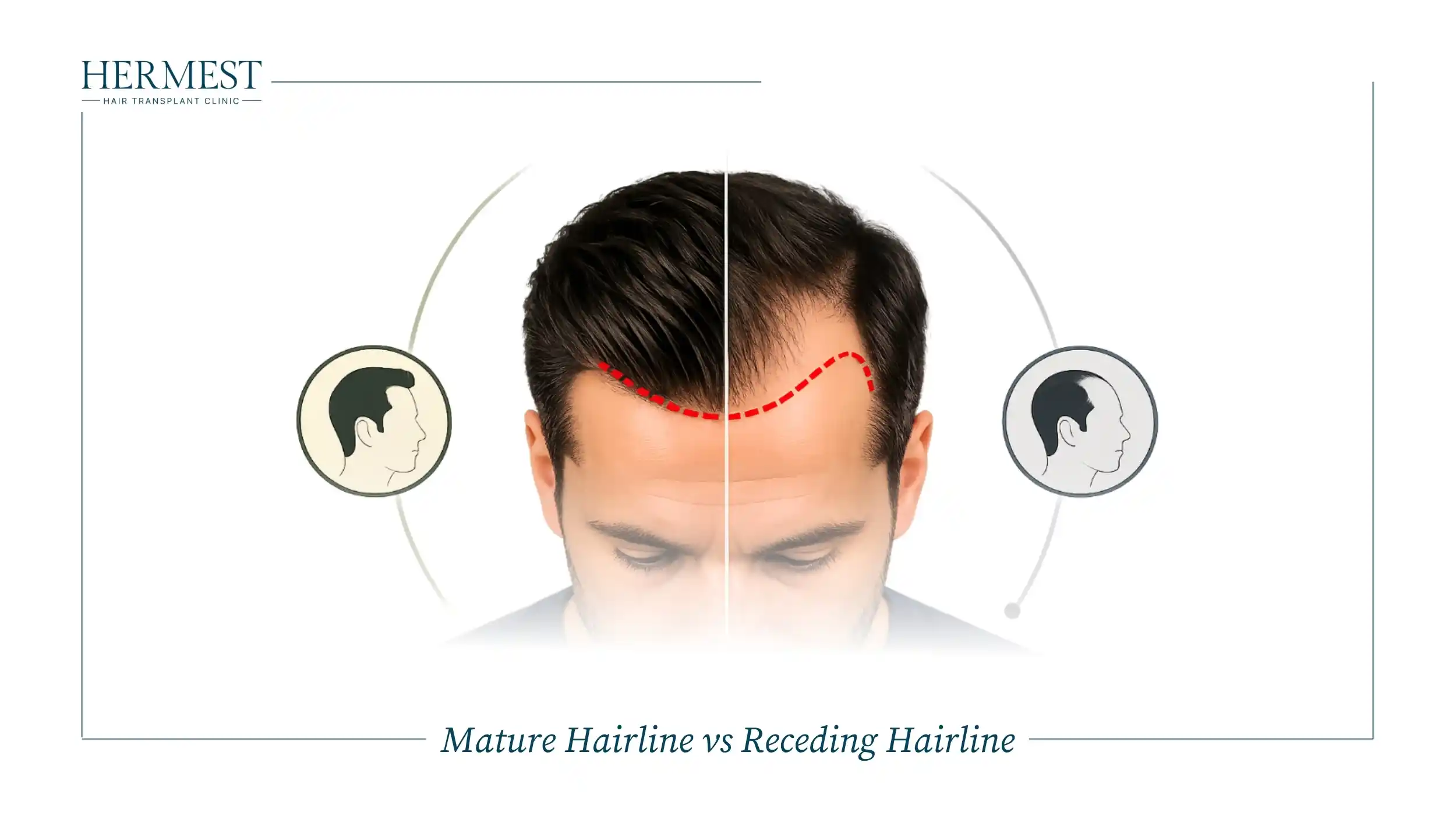
One of the most common questions hair restoration specialists hear is, “Is my hairline receding or just maturing?” The two can look similar at first, yet they represent very different processes. Understanding the distinction can prevent unnecessary worry and help you seek treatment at the right time.
A mature hairline is a normal part of aging for many men. A receding hairline, on the other hand, usually reflects ongoing follicle miniaturization caused by androgenetic alopecia. Knowing which one you’re experiencing is often more valuable than trying to find an immediate solution.
What Is a Mature Hairline?
Most boys have a low, rounded juvenile hairline during childhood and adolescence. Between the late teens and early thirties, the hairline often moves slightly upward as facial features mature.
This natural transition usually creates:
- A forehead that appears slightly taller.
- Mild recession at the temples.
- A more defined adult hairline.
- Stable hair density behind the frontal edge.
Unlike hereditary hair loss, a mature hairline typically stabilizes after this gradual adjustment. It does not continue moving backward year after year.
When Does It Become a Receding Hairline?
A hairline recession is different because the process continues over time. Instead of reaching a stable position, the temples gradually lose density, finer hairs replace thicker strands, and the frontal hairline slowly moves farther back.
Signs that suggest true recession include:
- Progressive temple thinning over several years.
- Visible miniaturized hairs around the hairline.
- A widening M-shaped pattern.
- Family history of male pattern baldness.
- New thinning developing around the crown.
According to the American Academy of Dermatology (AAD), hereditary hair loss usually progresses gradually unless treated, making early recognition particularly valuable.
Dr. Ahmet Murat explains:
“A mature hairline should remain relatively stable after it settles. If we see continued movement, increasing miniaturization, or declining density during follow-up examinations, we’re usually dealing with genetic hair loss rather than natural maturation.”
Widow’s Peak vs Receding Hairline
A widow’s peak is often mistaken for a receding hairline, but they are not the same.
A widow’s peak is simply a genetic hairline shape where the center forms a natural point. Many people are born with one and never experience significant hair loss.
A receding hairline develops through gradual thinning at the temples, making the forehead appear wider over time. Someone can have a widow’s peak without balding, or they can have both a widow’s peak and hereditary hair loss simultaneously.
The key difference lies in change. A widow’s peak remains relatively consistent throughout adulthood, whereas hairline recession continues to progress if the underlying cause is not addressed.
Why Monitoring Matters More Than a Single Mirror Check
Many encourage people to judge their hairline after one glance in the mirror. In reality, hair specialists rely on progression rather than a single observation.
At Hermest Hair Clinic, patients with early frontal changes are encouraged to document their hairline every few months using standardized photographs. Comparing images over six to twelve months often provides a much clearer picture than relying on memory alone.
This careful approach helps distinguish a stable mature hairline from active male pattern baldness, allowing treatment to begin when it can make the greatest difference.
How to Tell If Your Hairline Is Receding at Home
If you’ve been wondering how to tell if your hairline is receding, you don’t need expensive equipment to get started. Although a professional scalp examination provides the most accurate assessment, a few simple habits can help you recognize meaningful changes before they become obvious.
The goal isn’t to diagnose yourself. It’s to identify patterns that suggest whether your hairline is stable or gradually changing.
Compare Standardized Photos Every Three Months
One of the most reliable methods is taking photos under consistent conditions.
Try to use:
- The same hairstyle.
- Similar lighting.
- The same camera angle.
- A relaxed facial expression.
Comparing pictures taken three to six months apart makes subtle changes much easier to detect than checking your reflection every morning.
Many people believe their hairline is changing from week to week. In reality, hereditary hair loss usually progresses slowly. Looking too often can create unnecessary anxiety without revealing meaningful differences.
Measure the Hairline Instead of Guessing
Rather than relying on memory, use a flexible measuring tape to check the distance between your eyebrows and the center of your hairline.
The exact number matters less than consistency.
If the measurement gradually increases over several months, particularly alongside temple thinning, it may indicate hairline recession rather than normal variation.
Keep your measurements in a notebook or phone so you can spot long-term trends.
Check Your Temple Density
The temples often reveal the earliest changes before the center of the hairline.
Stand under bright natural light and compare both sides.
Ask yourself:
- Does one temple look noticeably thinner?
- Can you see more scalp than before?
- Are the hairs becoming finer around the corners?
Minor asymmetry is completely normal. What matters is whether the thinning continues to progress.
Dr. Ahmet Murat says:
“We don’t judge hair loss by the position of the hairline alone. We carefully evaluate density, hair shaft thickness, and miniaturization around the temples. Those findings often reveal early genetic hair loss before patients notice significant recession.”
Look for Miniaturized Hairs
Miniaturized hairs are one of the strongest indicators of androgenetic alopecia.
Instead of thick, healthy strands, affected follicles begin producing:
- Shorter hairs.
- Finer hairs.
- Lighter-colored hairs.
- Hairs that stop growing beyond a certain length.
Follicle miniaturization is a defining feature of hereditary hair loss and helps distinguish it from temporary shedding disorders.
If these fine hairs are increasing along your frontal hairline, it’s worth arranging a professional evaluation.
Follow the 90-Day Tracking Method
One area rarely discussed is structured monitoring before deciding on treatment. Unless you’re experiencing sudden or severe hair loss, tracking changes for about 90 days can provide valuable information.
During this period, record:
- Hairline photographs every month.
- Shedding patterns.
- Temple density.
- Changes in hair thickness.
- Family history and any recent illnesses, medications, or stressful events.
This timeline often helps separate temporary shedding from progressive male pattern baldness.
At Hermest Hair Clinic, this type of documented progression allows treatment decisions to be based on objective evidence rather than a single consultation or emotional first impression. In many cases, patients discover their hairline has remained stable. In others, early progression is identified before substantial follicle loss occurs, creating a much better opportunity for successful medical treatment or long-term hair restoration planning.
What Causes a Receding Hairline?
A receding hairline is a symptom, not a diagnosis. Although hereditary hair loss is the most common reason, several medical and lifestyle factors can affect the frontal hairline. Identifying the underlying cause is one of the most important steps before choosing any treatment.
Many people immediately search for how to fix receding hairline, yet successful treatment depends on understanding why the hairline is changing in the first place.
Genetics and Family History
The leading cause of male pattern baldness is genetics. If close relatives experienced frontal hair loss or thinning at the crown, your likelihood of developing a similar pattern is significantly higher.
In hereditary hair loss, genetically sensitive follicles gradually shrink over time. This process is called follicle miniaturization and usually begins around the temples before progressing across the frontal scalp.
The age at which hair loss begins varies widely. Some people notice changes in their early twenties, while others maintain a stable hairline well into middle age.
DHT and Follicle Miniaturization
Dihydrotestosterone (DHT) plays a central role in androgenetic alopecia.
DHT is produced naturally from testosterone. In people with a genetic predisposition, it binds to hair follicles and shortens each growth cycle. With every new cycle, the follicle produces a thinner, shorter hair until it eventually stops producing visible strands.
This progressive miniaturization explains why hereditary hair loss develops gradually rather than suddenly.
Dr. Ahmet Murat explains:
“DHT isn’t the enemy for everyone. The real issue is follicle sensitivity. Two people can have similar hormone levels, yet only one develops significant hairline recession because their follicles respond differently.”
Age and Hormonal Changes
Aging naturally affects hair growth, but age alone does not cause severe hairline recession.
Over time, hair growth slows, individual strands become finer, and the growth phase shortens. In someone with a genetic predisposition, these natural changes can accelerate the progression of hereditary hair loss.
Hormonal shifts may also contribute, particularly in women during menopause, when reduced estrogen levels can lead to frontal thinning or a widening part.
Stress Doesn’t Usually Cause a Receding Hairline
Stress is frequently blamed for every type of hair loss, but the relationship is often misunderstood.
Significant physical or emotional stress can trigger telogen effluvium, causing widespread shedding across the scalp several months after the triggering event. This differs from male pattern baldness, which gradually affects genetically susceptible follicles.
If hair loss appears suddenly after surgery, illness, rapid weight loss, or major emotional stress, temporary shedding may be more likely than permanent hairline recession.
Traction Alopecia and Lifestyle Factors
Repeated tension on the hairline can damage follicles over time.
Common causes include:
- Tight ponytails or braids.
- Hair extensions.
- Tight head coverings worn consistently.
- Frequent chemical or heat damage.
Unlike hereditary hair loss, traction alopecia often affects the areas experiencing the greatest pulling force. If recognized early, reducing tension may allow follicles to recover before permanent damage develops.
Medical Conditions Can Mimic Hairline Recession
Several health conditions may produce frontal thinning that resembles receding hairline.
These include thyroid disorders, iron deficiency, vitamin deficiencies, autoimmune diseases, and certain medications. According to the American Academy of Dermatology, identifying the underlying cause is essential since treatment varies depending on the diagnosis.
Before starting medications or considering surgery, a proper diagnosis helps confirm whether you’re dealing with hereditary hair loss or a potentially reversible condition.
Receding Hairline Stages
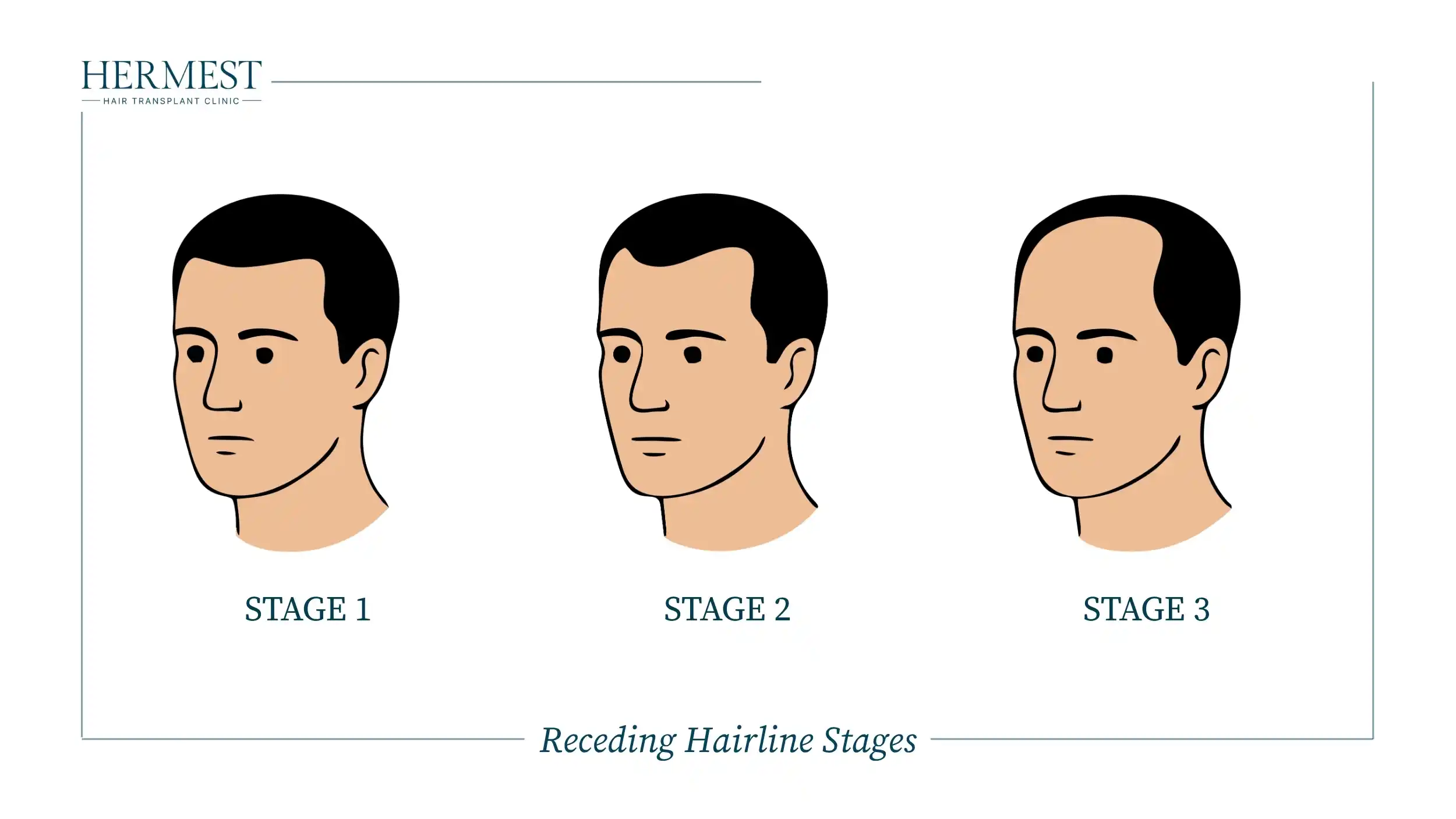
A receding hairline rarely develops all at once. Instead, it progresses through recognizable stages that help doctors estimate the severity of hair loss and recommend the most appropriate treatment. The most widely used classification system is the Norwood scale, which describes how male pattern baldness typically advances over time.
Knowing your stage is useful for much more than tracking hair loss. It helps determine whether medical therapy may be enough, whether a hair transplant for receding hairline is appropriate, and how to preserve donor hair for the future.
Norwood Stage 1 vs Stage 2
Norwood Stage 1 represents little to no visible hairline recession. The hairline remains close to its youthful position, with minimal changes at the temples.
Norwood Stage 2 is where many people first begin asking, “How do I know if my hairline is receding?” Mild temple recession becomes noticeable, creating the earliest signs of an M-shaped hairline.
At this point:
- Hair density often remains good.
- The crown usually appears unaffected.
- Early medical treatment may slow progression significantly.
According to the American Academy of Dermatology (AAD), starting treatment during the early stages generally offers better long-term results than waiting until more follicles have miniaturized.
Norwood Stage 3: When Hairline Recession Becomes More Noticeable
Stage 3 is widely considered the first clinically significant stage of hereditary hair loss.
The temple recession becomes deeper, and the frontal hairline develops a more defined M shape. Some people also begin noticing reduced density across the front, even if complete bald patches are not yet visible.
This is often the stage when people start exploring how to fix receding hairline, since styling becomes more difficult and changes are easier to recognize in photographs.
Dr. Ahmet Murat says:
“Many of our patients seek consultation during Norwood Stage 2 or 3, and that’s often the ideal time. Hair restoration isn’t only about replacing lost hair. It’s about preserving existing follicles and planning a natural-looking hairline that will still suit the patient years from now.”
Crown Thinning Can Develop Alongside Hairline Changes
Hairline recession and crown thinning do not always occur separately.
Some individuals develop frontal recession first. Others notice thinning at the vertex before any major changes at the temples. Many eventually experience both patterns simultaneously.
This combination usually indicates ongoing androgenetic alopecia rather than isolated frontal hair loss.
Evaluating both areas is important, since treatment planning should consider the entire scalp instead of focusing only on the hairline.
Why Staging Helps Create a Better Treatment Plan
A common assumption is that every stage requires the same solution. In reality, treatment should match the degree of hair loss, the patient’s age, family history, donor hair quality, and expectations.
For example, someone with early hairline recession may respond well to medications such as minoxidil or finasteride, helping preserve existing hair for years. A patient with advanced frontal recession and stable hair loss may benefit more from a carefully planned FUE hair transplant.
At Hermest Hair Clinic, staging is never viewed in isolation. Donor density, follicle quality, future hair loss risk, and facial proportions are all evaluated before creating a personalized treatment strategy. This long-term approach helps achieve natural results today while preserving enough donor hair for potential future needs.
Can a Receding Hairline Grow Back?
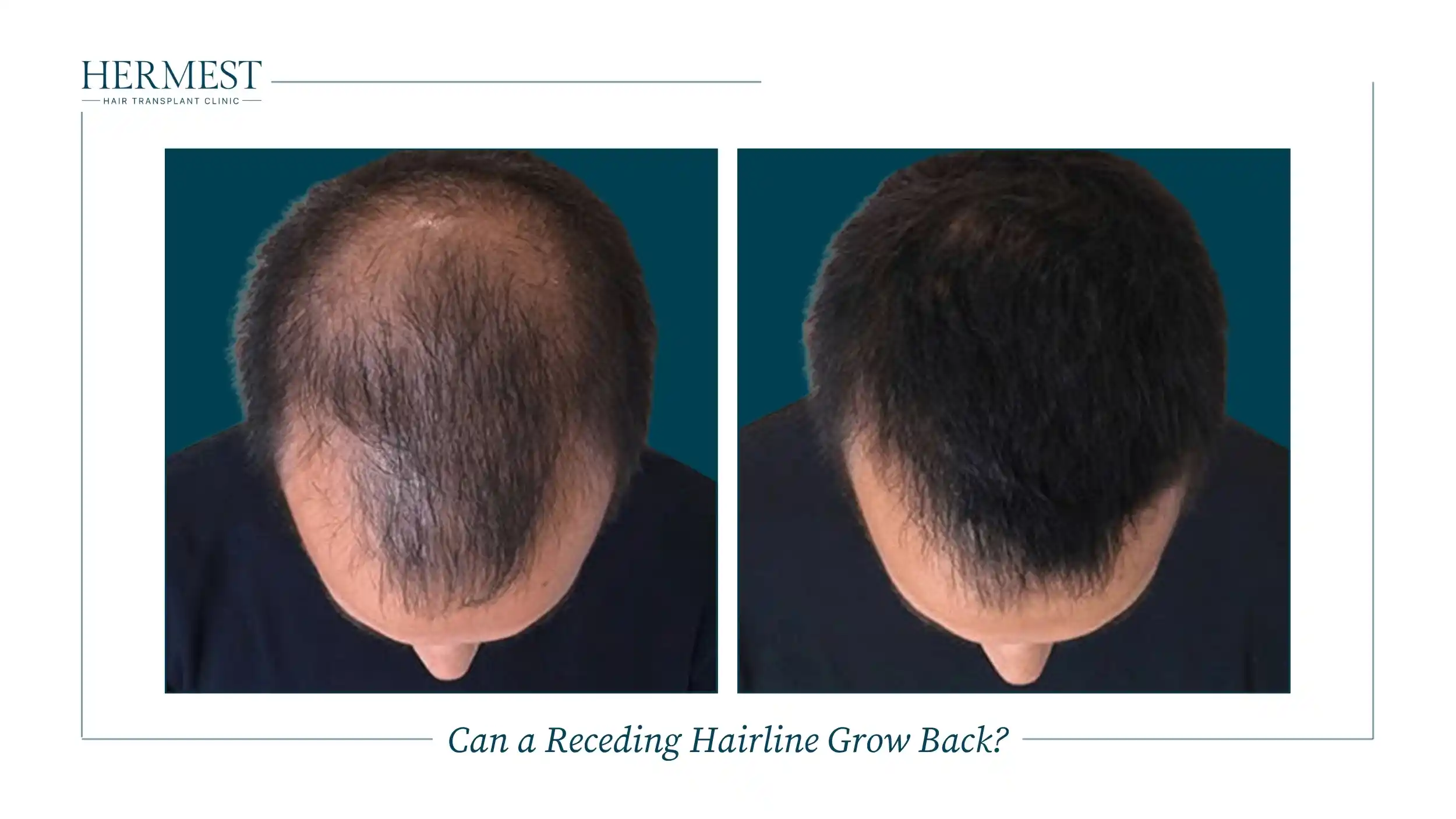
One of the first questions people ask after noticing a changing hairline is whether the lost hair can return. The answer depends largely on what is happening beneath the scalp. Some follicles remain alive but produce progressively thinner hairs, while others eventually stop growing visible hair altogether.
The earlier you identify the cause of hairline recession, the greater the chance of preserving existing follicles and improving density with appropriate treatment.
When Regrowth Is Possible
Hair regrowth is often possible if follicles are still active.
In hereditary hair loss, follicles gradually become smaller through miniaturization rather than disappearing immediately. During this stage, treatments may stimulate thicker hair growth and slow further recession.
Medical treatments may help when:
- Hair thinning has started recently.
- Miniaturized hairs are still present.
- The scalp remains healthy.
- Hair loss is progressing gradually rather than rapidly.
According to the American Academy of Dermatology (AAD), medications such as minoxidil and finasteride are generally most effective when started during the early stages of male pattern baldness.
When Hair Is Unlikely to Return Naturally
Once a follicle has remained inactive for a prolonged period, spontaneous regrowth becomes much less likely.
This is why completely bald areas that have existed for many years usually respond differently from areas with visible thinning.
Permanent follicle damage may occur in advanced androgenetic alopecia, certain scarring alopecias, or long-standing traction alopecia. In these situations, restoring density often requires surgical hair restoration rather than medication alone.
Dr. Ahmet Murat explains:
“One of the biggest misconceptions is waiting until the hairline has disappeared completely. If we examine the scalp while miniaturized hairs are still present, there are usually more opportunities to preserve existing hair before considering transplantation.”
Why Early Treatment Produces Better Results
Hair loss is generally easier to slow than to reverse.
Treatments work by protecting and strengthening existing follicles. They cannot recreate follicles that have already been permanently lost.
This is why many specialists recommend seeking evaluation after noticing:
- Progressive temple thinning.
- An enlarging M-shaped hairline.
- Visible miniaturized hairs.
- Consistent changes over several months.
Taking action early may reduce the amount of hair loss that occurs in the years ahead.
What Results Are Realistic?
No treatment can permanently stop hereditary hair loss for everyone, and no medication can restore a teenage hairline.
Realistic expectations are one of the most important parts of successful treatment. Some patients achieve thicker hair and slower progression with medication, while others eventually benefit from a hair transplant for receding hairline after their hair loss pattern becomes more stable.
At Hermest Hair Clinic, every treatment plan begins with a careful assessment of scalp health, donor hair quality, the stage of hair loss, and future progression. Rather than focusing only on today’s hairline, the goal is to create a strategy that continues to look natural for many years, combining medical therapy and surgical restoration whenever appropriate.
How to Fix a Receding Hairline
If you’re searching for how to fix receding hairline, the right approach depends on the cause and the stage of hair loss. There is no single treatment that works for everyone. Some people benefit from medication, others respond well to non-surgical therapies, and some achieve the best results through hair transplant surgery.
The goal is not simply to regrow hair. It is to preserve healthy follicles, slow future hair loss, and restore a natural-looking hairline when necessary.
Minoxidil
Minoxidil is one of the most widely recommended treatments for male pattern baldness. Applied directly to the scalp, it helps prolong the hair growth phase and may improve hair density in some individuals.
According to the American Academy of Dermatology (AAD), minoxidil works best when hair follicles are still active and should be used consistently to maintain results.
Many people notice increased shedding during the first few weeks of treatment. This temporary phase often reflects older hairs making way for new growth rather than worsening hair loss.
Visible improvements usually require several months of regular use.
Finasteride
Finasteride is an oral prescription medication that lowers DHT levels, helping slow the progression of androgenetic alopecia.
According to the NHS, finasteride can reduce ongoing hair loss and improve hair growth in many men, though continued treatment is usually necessary to maintain the benefits.
Like any prescription medication, finasteride may cause side effects in some individuals. Discussing your medical history and potential risks with a qualified physician is an important part of deciding whether it is appropriate for you.
Dr. Ahmet Murat says:
“Medication is most effective when patients still have healthy follicles to preserve. Starting treatment early often reduces future hair loss and may postpone, or even eliminate, the need for surgery.”
PRP Therapy
Platelet-Rich Plasma (PRP) uses concentrated platelets prepared from a patient’s own blood. These platelets contain growth factors that may support follicle function and improve hair thickness in suitable candidates. PRP is commonly used alongside medical treatment rather than as a standalone solution. It may be particularly helpful for patients with early thinning who still have a good number of functioning follicles.
Results vary, and multiple treatment sessions are typically recommended.
Low-Level Laser Therapy (LLLT)
Low-Level Laser Therapy (LLLT) uses low-energy light to stimulate hair follicles. Some studies suggest it may improve hair density in selected patients with hereditary hair loss.
LLLT is painless and non-invasive, but it should be viewed as a supportive treatment rather than a replacement for established medical therapies.
For many patients, it works best as part of a broader treatment plan.
Lifestyle Changes and Scalp Care
Healthy habits cannot reverse genetic hair loss, but they can support overall scalp health and reduce factors that contribute to unnecessary shedding.
Simple steps include:
- Eating a balanced diet rich in protein, iron, and essential nutrients.
- Avoiding hairstyles that place constant tension on the hairline.
- Managing ongoing stress.
- Treating underlying medical conditions when present.
These measures help create a healthier environment for existing follicles but are unlikely to reverse significant hairline recession on their own.
Blood Tests May Reveal Treatable Causes
Not every receding hairline is caused solely by genetics.
If hair loss develops suddenly, progresses rapidly, or occurs alongside fatigue or other symptoms, your physician may recommend blood tests to evaluate conditions such as iron deficiency, thyroid disorders, vitamin deficiencies, or hormonal imbalances.
Addressing these underlying issues may improve hair growth in people whose thinning is not driven primarily by male pattern baldness.
At Hermest Hair Clinic, treatment recommendations are never based on the hairline alone. A comprehensive evaluation considers the pattern of hair loss, donor hair quality, medical history, family history, and long-term expectations. This personalized approach helps patients choose treatments that fit both their current needs and future hair restoration goals.
When Is a Hair Transplant the Best Option?
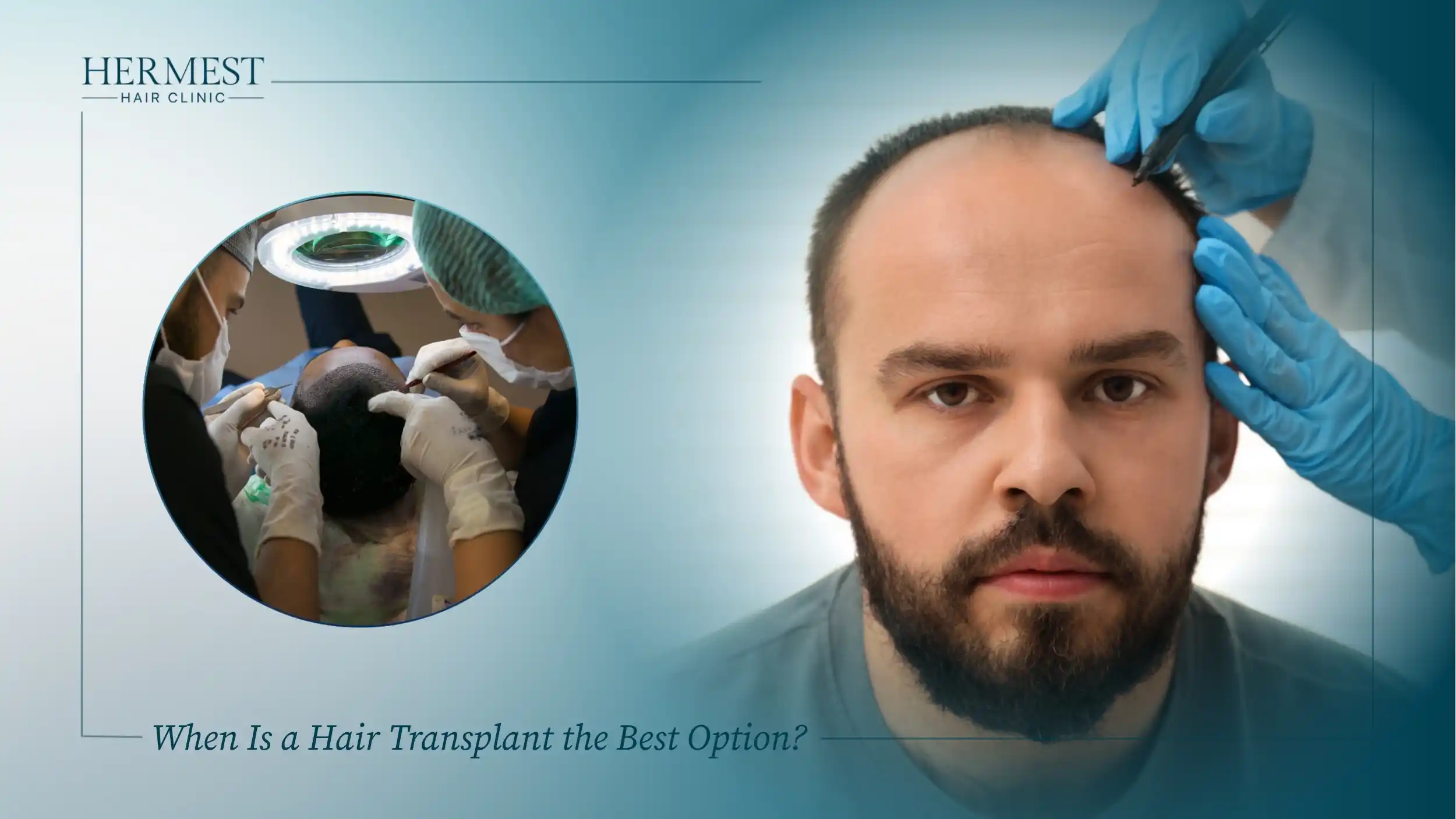
A hair transplant for receding hairline can produce natural, long-lasting results, but it is not the right choice for everyone. The best candidates usually have stable hair loss, healthy donor hair, and realistic expectations about what surgery can achieve.
For people in the early stages of male pattern baldness, medication may be enough to preserve existing hair. Surgery is often considered when the hairline has continued to recede despite appropriate medical treatment or when enough permanent hair loss has already occurred to justify restoration.
The decision should always be based on a thorough clinical evaluation rather than the patient’s age alone.
Who Is a Good Candidate?
Several factors help determine whether someone is suitable for hair transplant surgery.
These include:
- Stable or slowly progressing hairline recession.
- Good donor hair density at the back and sides of the scalp.
- Realistic expectations about density and coverage.
- Good general health.
- A willingness to continue protecting existing hair after surgery when appropriate.
Patients with rapidly progressing hair loss may benefit from stabilizing the condition before undergoing transplantation.
Why Donor Hair Quality Matters
Every hair transplant depends on the quality of the donor area.
During FUE hair transplant surgery, follicles are harvested from the permanent donor zone, where hairs are genetically more resistant to DHT. These follicles are then transplanted into thinning or bald areas.
Since donor hair is limited, every graft should be used carefully.
This is why experienced surgeons focus on long-term planning instead of trying to create the lowest possible hairline.
Dr. Ahmet Murat explains:
“A successful transplant isn’t measured by how low the hairline sits. It’s measured by whether the result still looks natural ten or twenty years later. Protecting the donor area and planning for future hair loss are just as important as restoring today’s hairline.”
FUE, DHI, and Sapphire FUE
Several modern techniques can restore a receding hairline, each with its own advantages.
FUE (Follicular Unit Extraction) is the foundation of most contemporary hair transplantation. Individual follicular units are extracted and transplanted with minimal scarring.
DHI (Direct Hair Implantation) uses a specialized implantation pen that allows graft placement without creating recipient sites separately. It may offer greater control in selected cases, particularly when working around existing hair.
Sapphire FUE follows the FUE extraction process but uses sapphire blades to create recipient sites. These blades allow precise incision design and are widely used for frontal hairline restoration.
According to the American Society of Plastic Surgeons, modern FUE techniques allow surgeons to move individual follicles while creating natural-looking hair growth patterns.
Why Hairline Design Matters More Than Graft Numbers
Many people focus on how many grafts they need. In reality, natural results depend far more on hairline design than on graft count alone.
A well-designed hairline should match:
- Your facial proportions.
- Age.
- Ethnicity.
- Hair characteristics.
- Future pattern of hair loss.
An aggressively low hairline may look appealing initially but can appear unnatural as surrounding native hair continues to thin over the years.
At Hermest Hair Clinic, every hairline is designed by Dr. Ahmet Murat before surgery begins. Using the clinic’s surgeon-led planning approach and Unique FUE® philosophy, the focus is on recreating natural irregularities, preserving donor reserves, and building a hairline that continues to look balanced as the patient ages. This individualized planning is one of the most important factors behind achieving realistic, lasting results rather than simply maximizing graft numbers.
What Not to Do If Your Hairline Is Receding
Discovering that your hairline is changing often creates a sense of urgency. Many people immediately begin trying every shampoo, oil, or supplement they find online, hoping for quick results. Unfortunately, rushing into treatment without understanding the cause can waste time and money, and in some cases, allow hairline recession to progress further.
Making informed decisions early is often just as valuable as choosing the right treatment.
Don’t Expect Miracle Products to Reverse Hair Loss
Social media is full of products claiming to regrow a receding hairline in a matter of weeks. Most lack strong scientific evidence, and some rely almost entirely on before-and-after marketing rather than clinical research.
Natural oils, herbal products, and over-the-counter supplements may improve the condition of the hair shaft or scalp, but they cannot reverse androgenetic alopecia once follicles continue to miniaturize.
When evaluating any treatment, look for evidence from reputable medical organizations instead of testimonials alone.
Don’t Ignore Ongoing Hair Loss
Some people delay seeking advice because the recession seems minor.
Others assume they’re simply getting older.
The problem is that hereditary hair loss usually progresses gradually. Waiting several years before taking action may reduce the number of treatment options available, particularly if many follicles have already become inactive.
If you’ve noticed steady changes over several months, arranging an evaluation is often more beneficial than waiting for obvious bald spots to develop.
Dr. Ahmet Murat says:
“One of the biggest mistakes we see is postponing treatment until the hairline has receded significantly. Preserving existing follicles is almost always easier than trying to replace them later.”
Don’t Choose a Hairline Based on Trends
Some patients request the same low hairline they had as teenagers or ask to copy a celebrity’s appearance.
Natural hairline design doesn’t work that way.
A successful hair transplant for receding hairline should suit your facial proportions today and continue looking natural in the years ahead. Hairline shape, temple angles, forehead size, donor capacity, and the likelihood of future hair loss all influence the final design.
Creating an unrealistically low hairline can consume valuable donor grafts that may be needed later.
Don’t Self-Prescribe Prescription Medication
Treatments such as finasteride can be highly effective for suitable patients, but they are prescription medications that require medical guidance.
Your doctor can discuss:
- Whether you’re an appropriate candidate.
- Expected benefits.
- Possible side effects.
- Alternative treatment options.
A personalized approach is always safer than following advice from online forums or social media.
Don’t Forget the Long-Term Picture
Hair loss is usually a lifelong process rather than a one-time event. Whether you choose medication, non-surgical therapies, or a hair transplant, long-term planning produces the best outcomes.
At Hermest Hair Clinic, every patient receives a treatment strategy based not only on their current hairline but also on likely future progression. By combining careful diagnosis, realistic expectations, and individualized planning, the focus remains on achieving natural results that continue to look balanced for many years instead of chasing short-term cosmetic changes.
Frequently Asked Questions
The easiest way to identify hairline recession is by comparing photographs taken several months apart under similar lighting and angles. Early signs include thinning temples, an M-shaped hairline, finer hairs along the frontal edge, and increased scalp visibility. A professional scalp examination can confirm whether these changes represent hereditary hair loss or another condition.
Restore Your Hairline with Expert Care at Hermest Hair Clinic
If you’ve noticed the signs of receding hairline, don’t wait until thinning becomes difficult to treat. Early evaluation can make a significant difference in preserving your existing hair and choosing the most effective treatment.

At Hermest Hair Clinic, every patient receives a personalized assessment by Dr. Ahmet Murat and his experienced medical team. Whether you need medical treatment, non-surgical therapies, or a carefully planned Unique FUE® hair transplant, your treatment plan is built around your current hair condition, donor hair quality, and long-term goals.
Book your consultation today to discover the cause of your hair loss and receive honest, evidence-based recommendations designed to achieve natural, lasting results.