

DHI Hair Transplant in Turkey: Cost, Procedure, Results & Recovery 2026

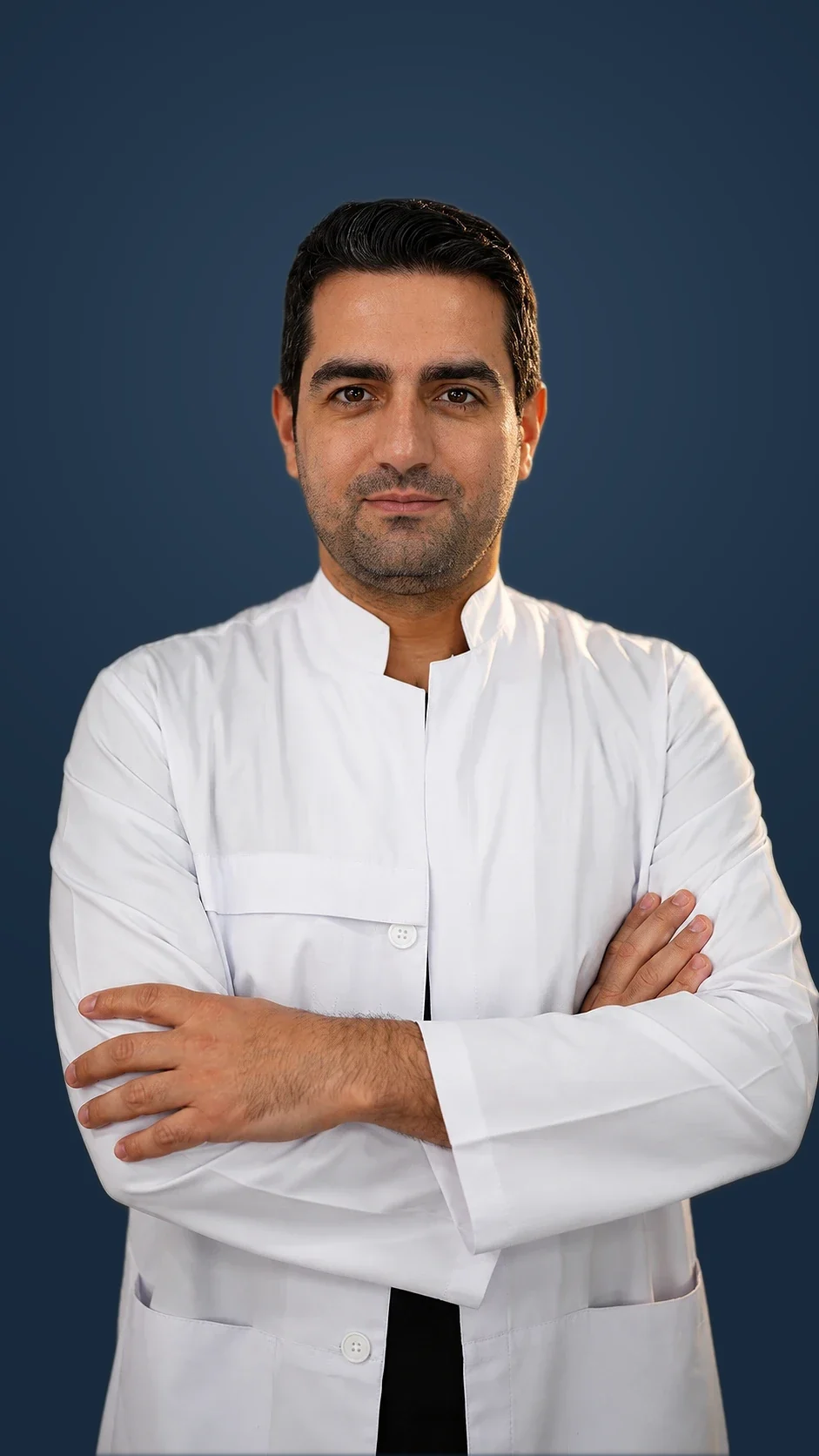
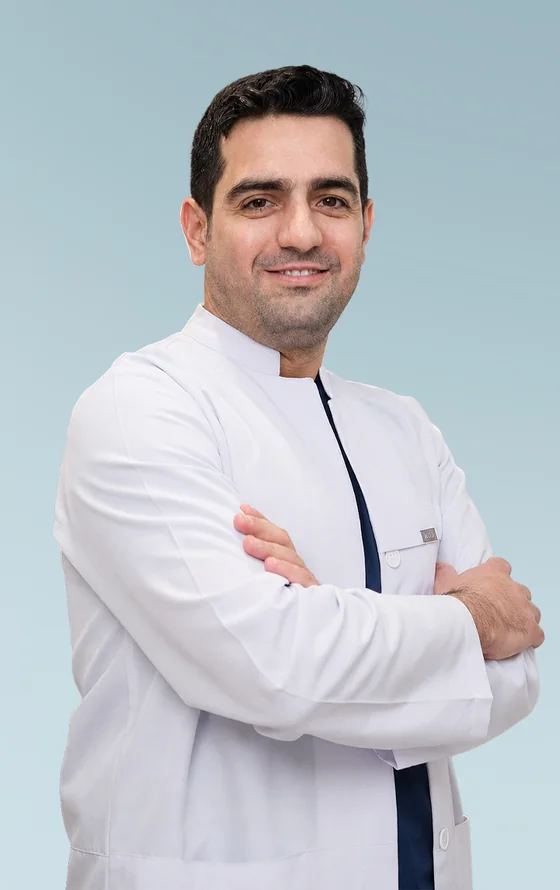
Medically reviewed by Dr. Ahmet Murat | Last updated:

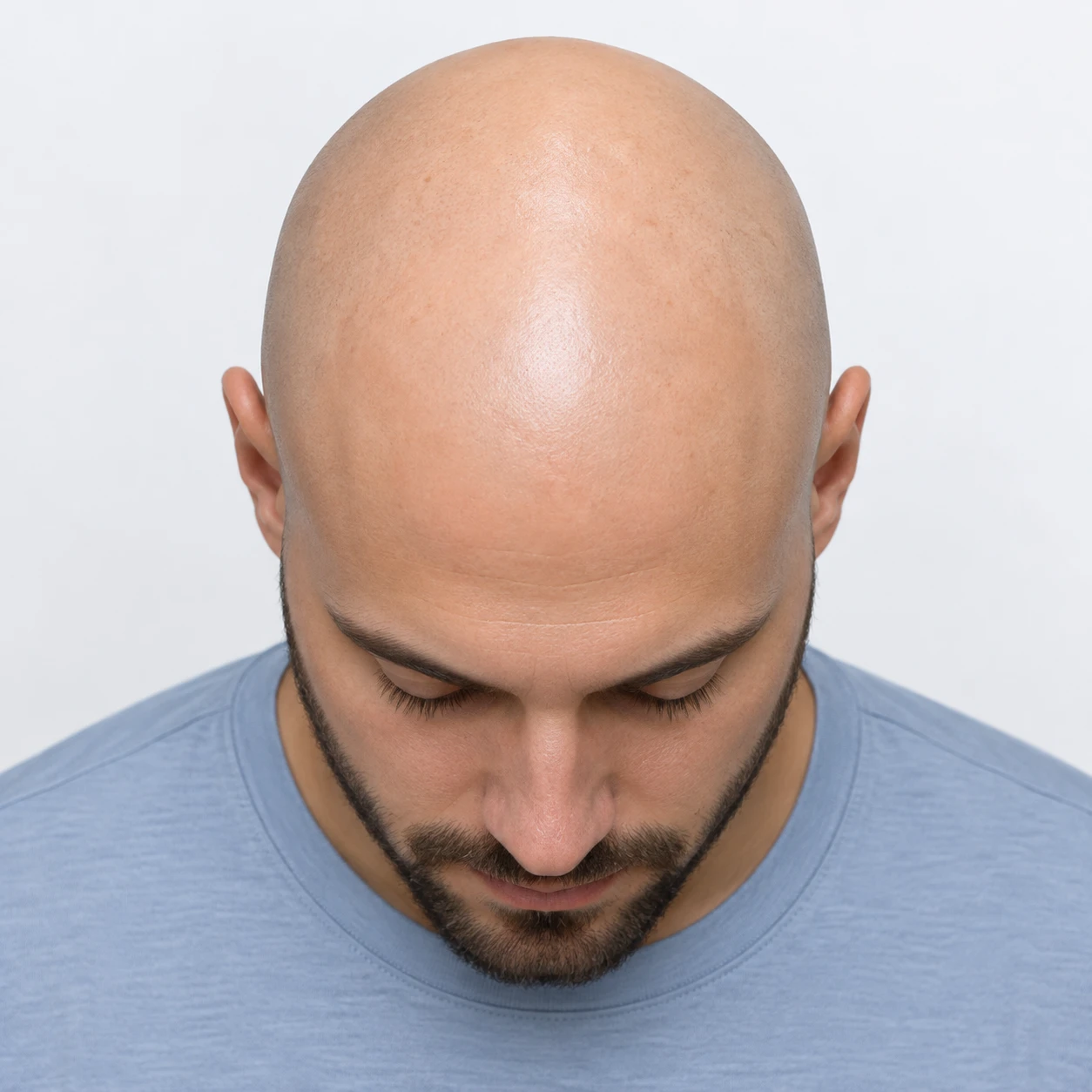
A DHI hair transplant is a surgical hair restoration technique that uses a specialized implanter pen to place healthy hair follicles into thinning or bald areas. It offers a precise way to restore a receding hairline, improve hair coverage, and treat selected areas of hair loss.

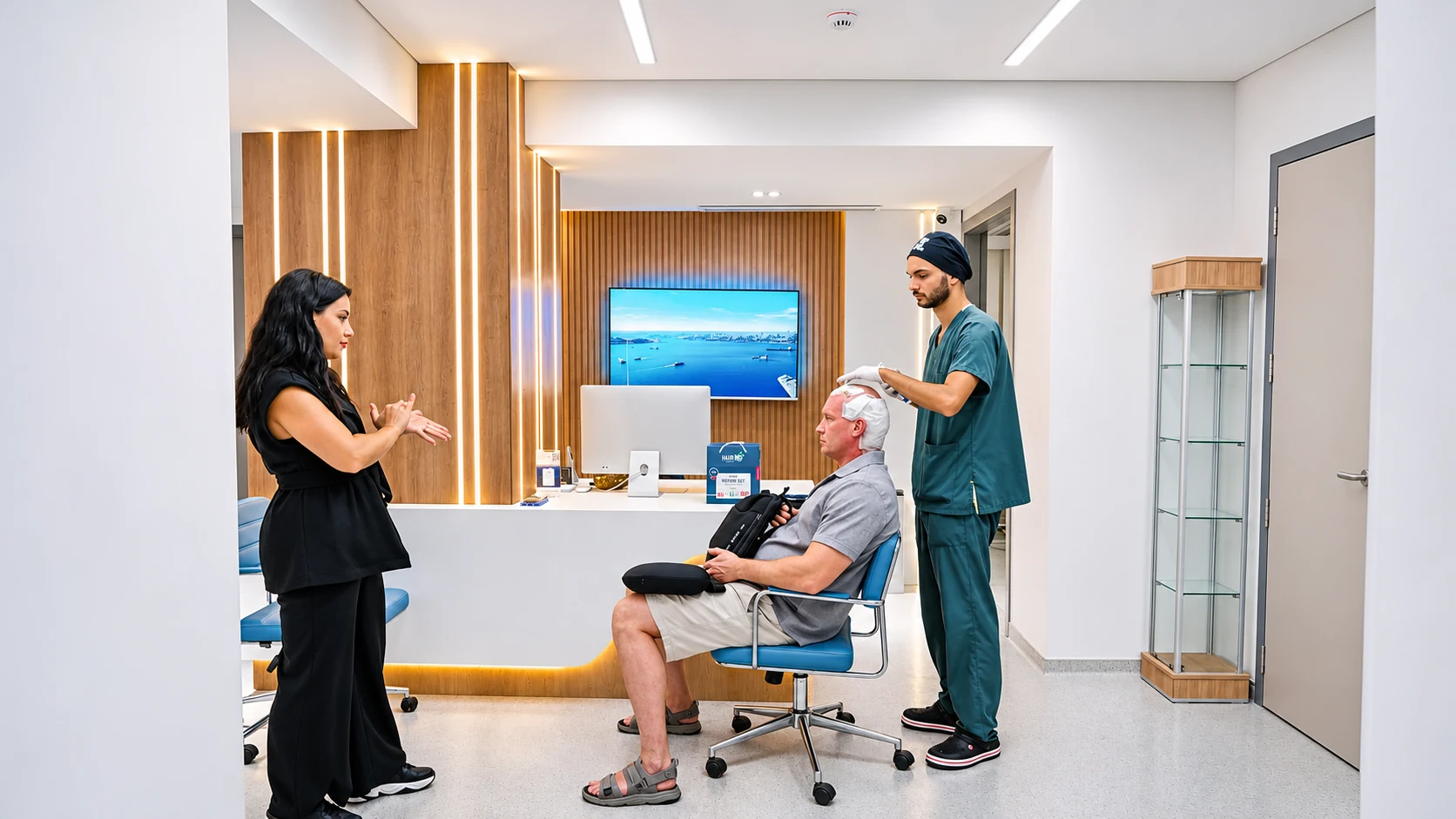
At Hermest Clinic in Istanbul, Turkey, DHI packages start at €3,490, including hotel accommodation, transfers, and postoperative support. Our medical team plans each treatment according to your donor hair, hair‑loss pattern, and desired results.

But is DHI the right technique for you? How does it compare with FUE, how much does it cost, and what results can you realistically expect? In this guide, our experts have answered these questions and explain everything you should know before booking treatment.

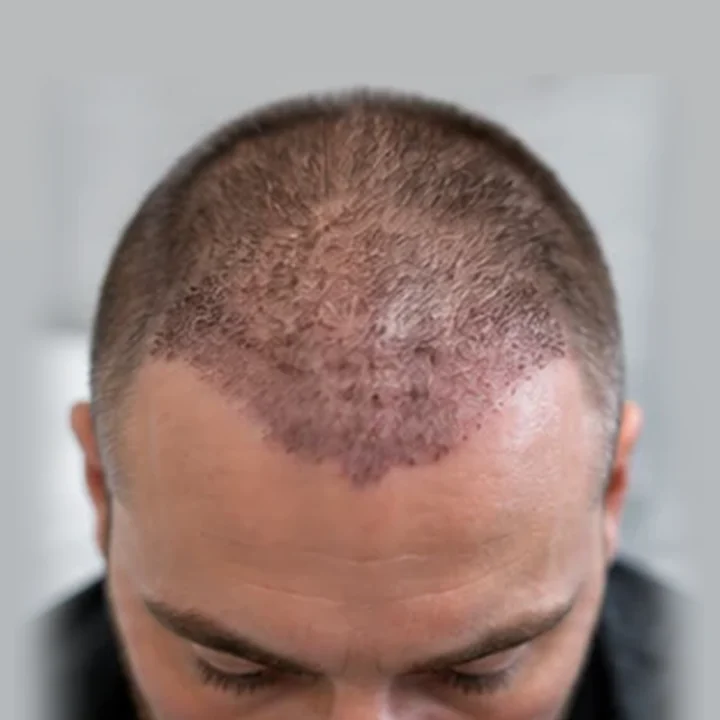
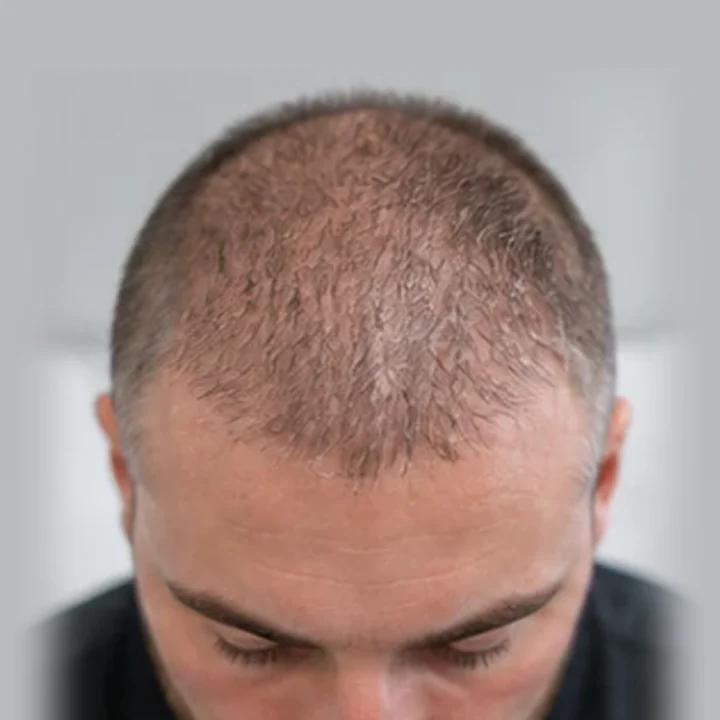
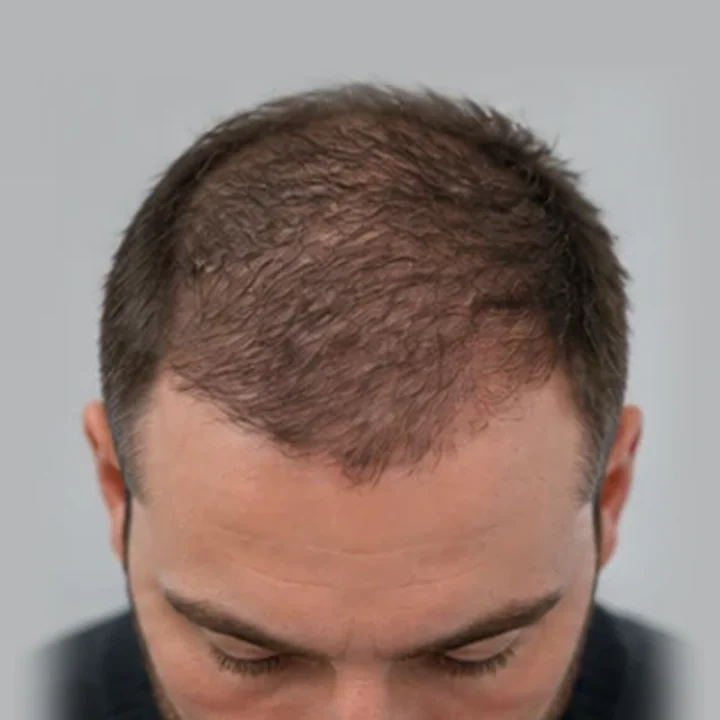
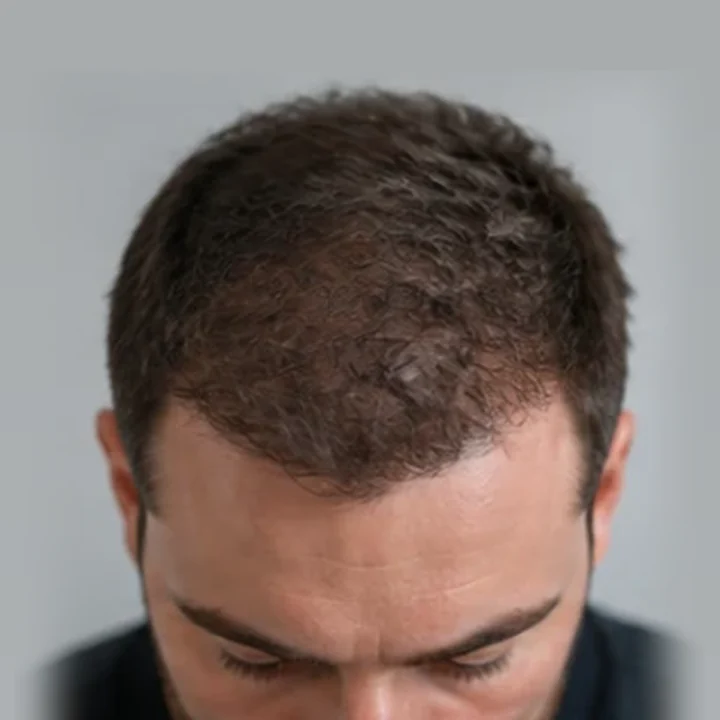
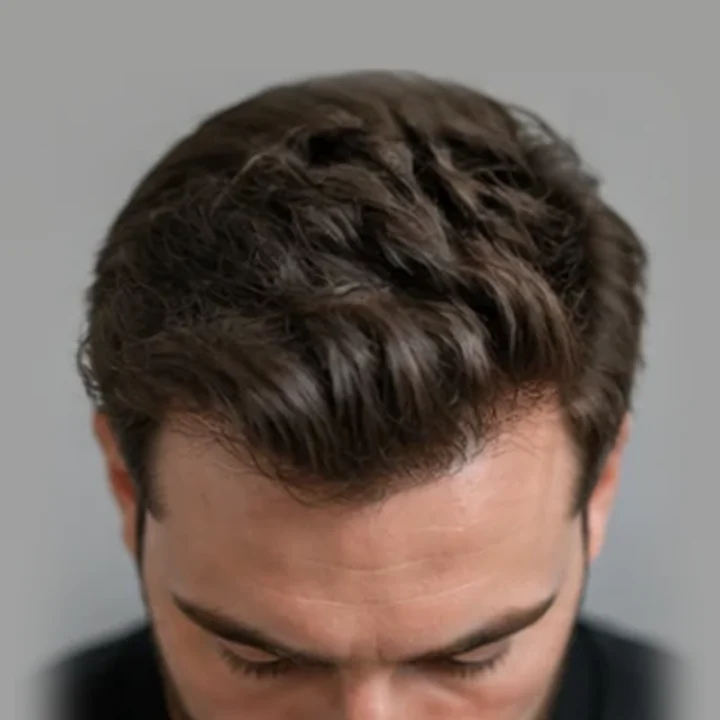
DHI Hair Transplant Before and After Results

DHI before‑and‑after photographs help patients understand how transplantation can change hairline shape and visible hair coverage. The most useful comparisons identify the treatment method, number of grafts, and time since surgery. Results vary, and a patient's photographs cannot guarantee the same outcome for someone else.

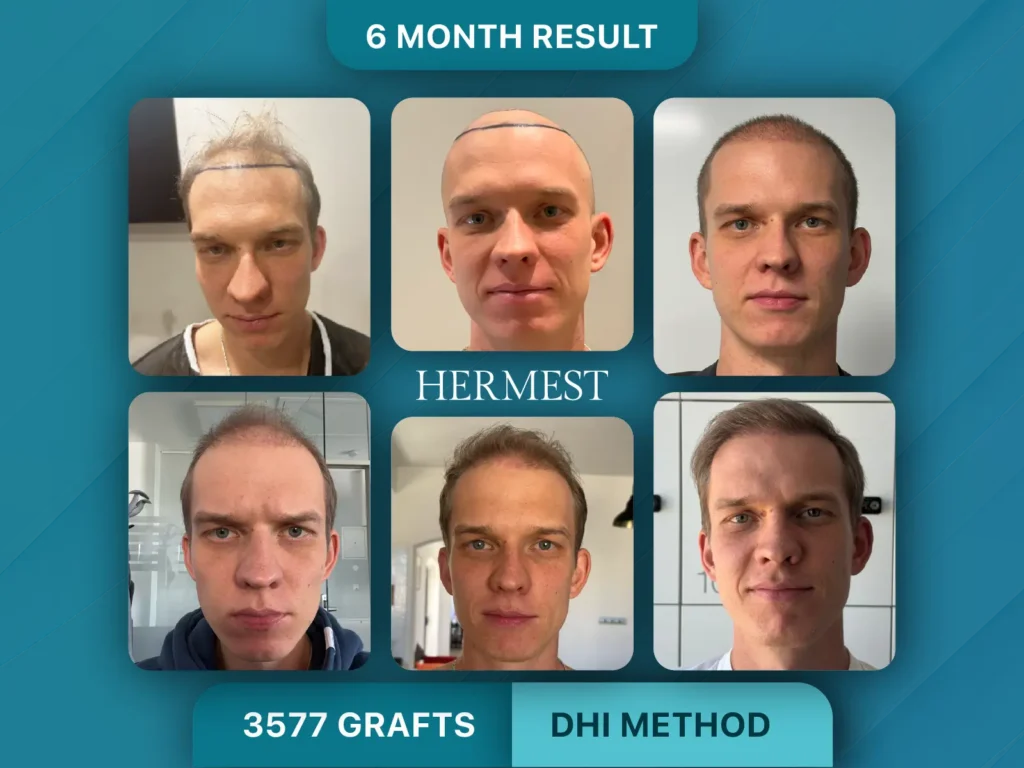
Hair transplant before and after at Hermest: 3577 grafts with the DHI method, 6-month result
3,577 graftsDHI6 months
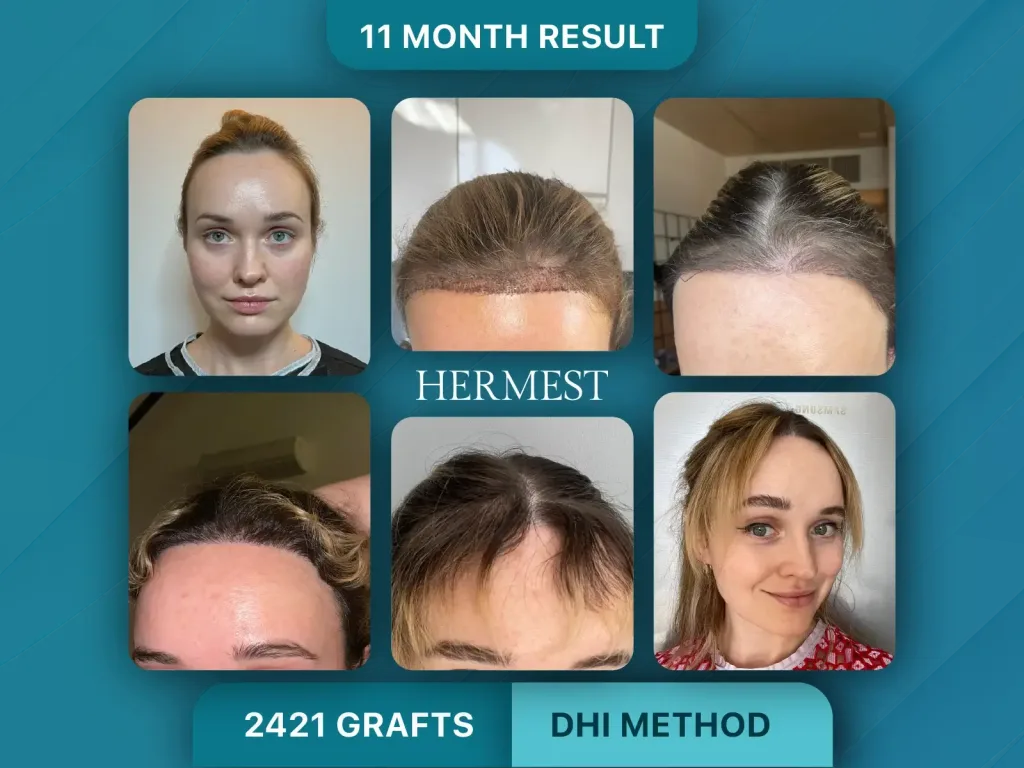
DHI hair transplant before and after, 11-month result: woman, lowered and fuller hairline, 2421 grafts
2,421 graftsDHI11 months
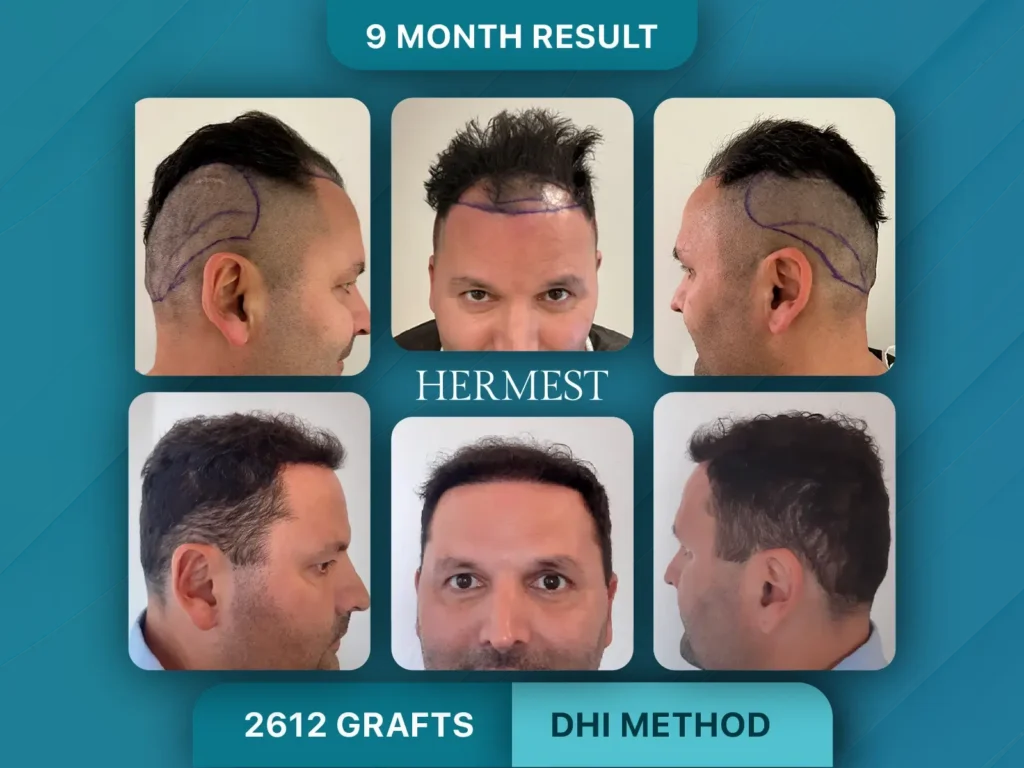
DHI hair transplant before and after, 9-month result: man, hairline and temples, side views, 2612 grafts
2,612 graftsDHI9 months
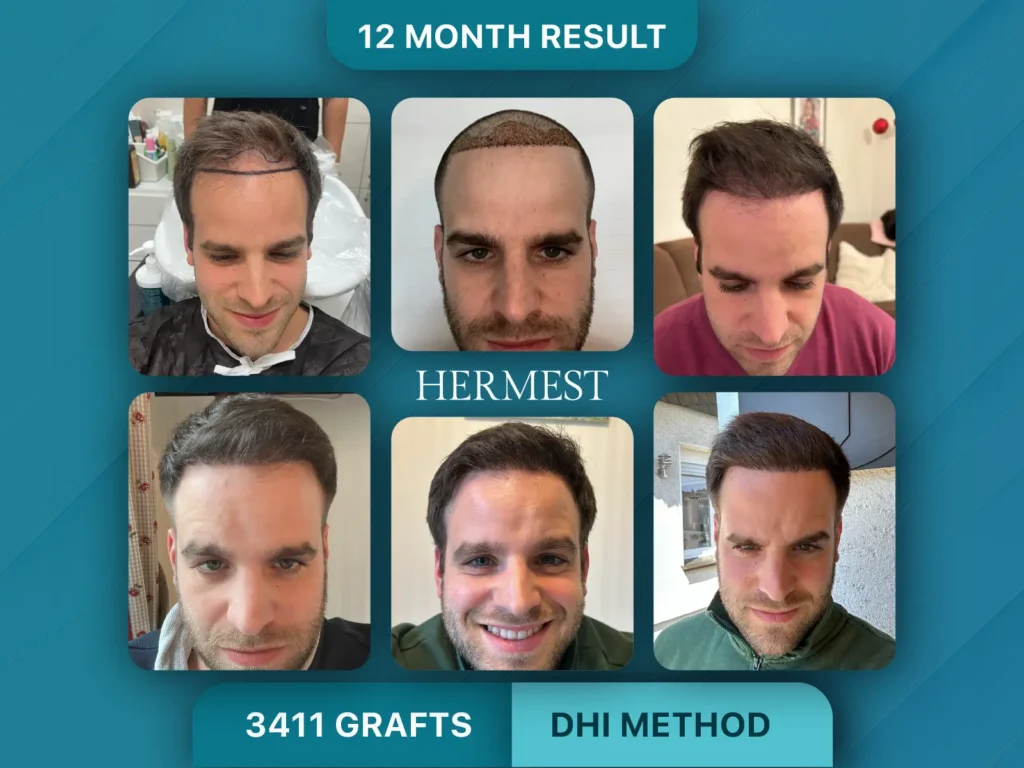
DHI hair transplant before and after, 12-month result: man with receding hairline, 3411 grafts
3,411 graftsDHI12 months
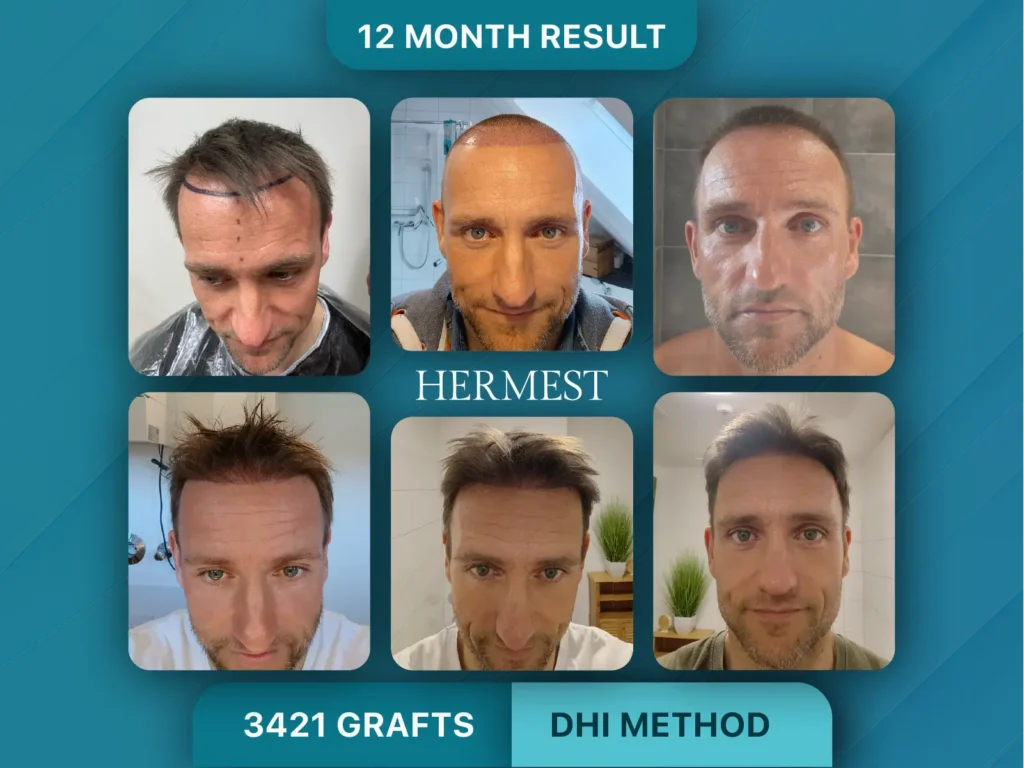
DHI hair transplant before and after, 12-month result: man with high receding hairline, 3421 grafts
3,421 graftsDHI12 months
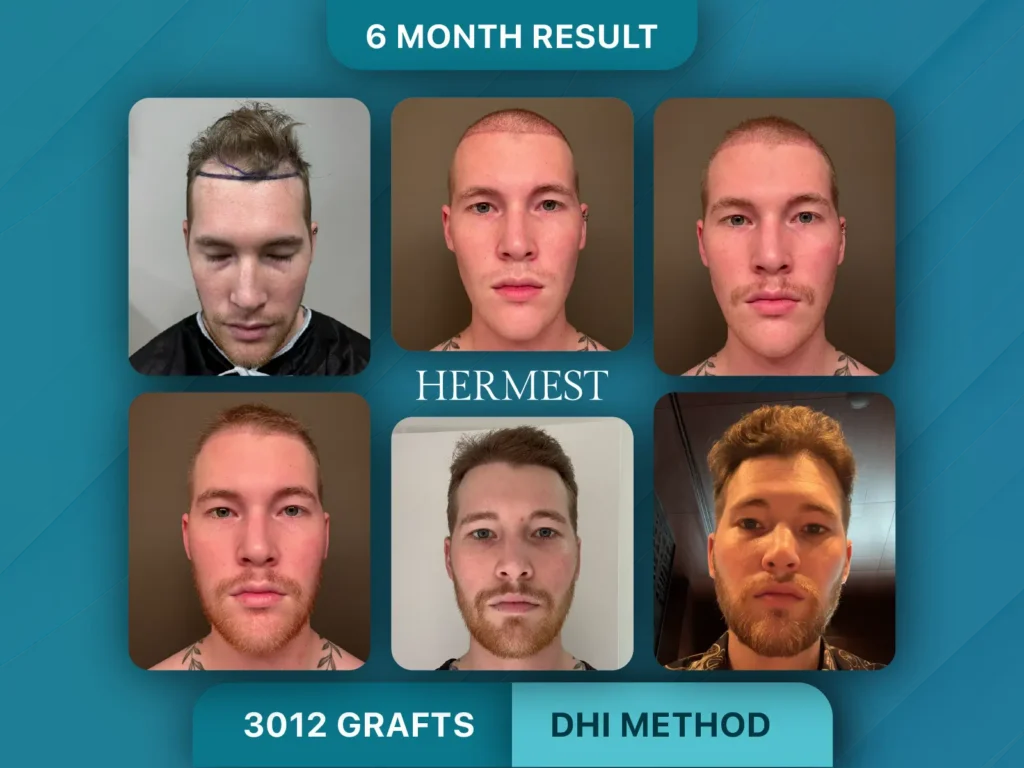
DHI hair transplant before and after, 6-month result: young man, hairline, 3012 grafts
3,012 graftsDHI6 months
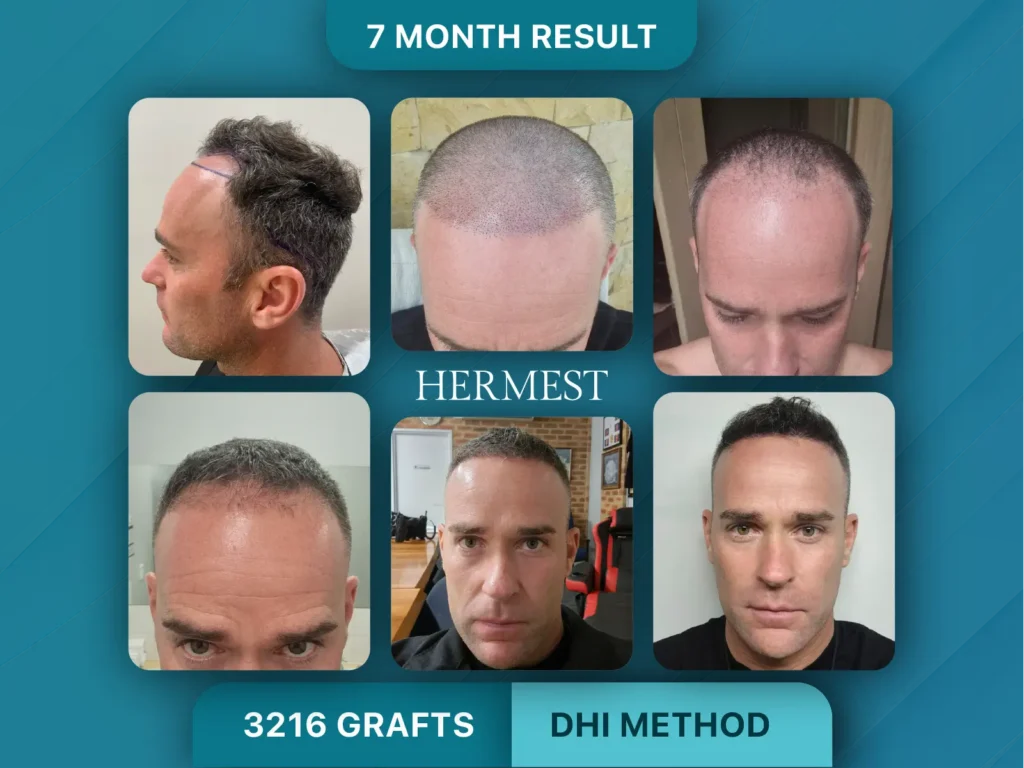
DHI hair transplant before and after, 7-month result: man, hairline and top, 3216 grafts
3,216 graftsDHI7 months
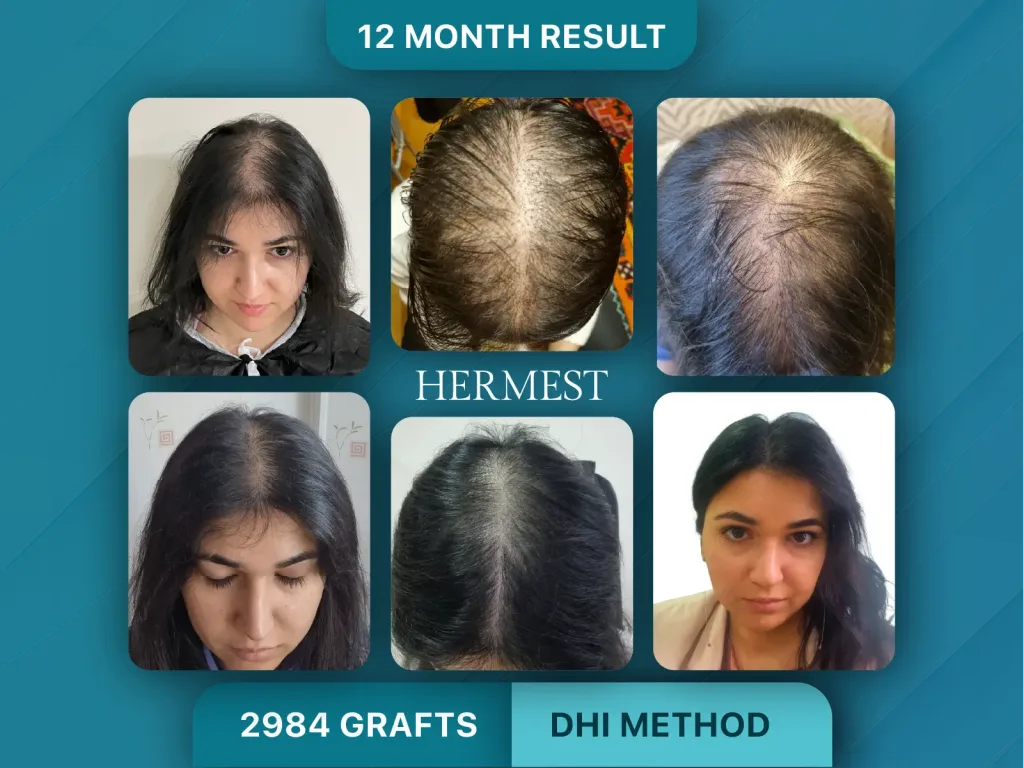
DHI hair transplant before and after, 12-month result: woman with thinning parting, 2984 grafts
2,984 graftsDHI12 months
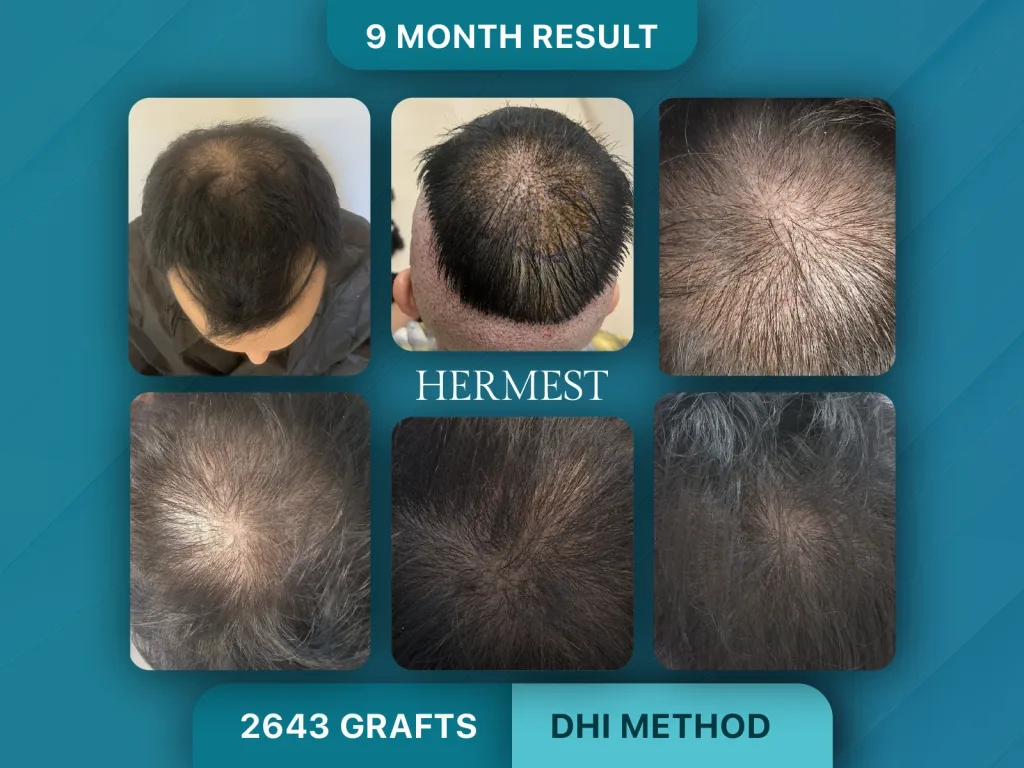
DHI hair transplant before and after, 9-month result: crown thinning, top views, 2643 grafts
2,643 graftsDHI9 months
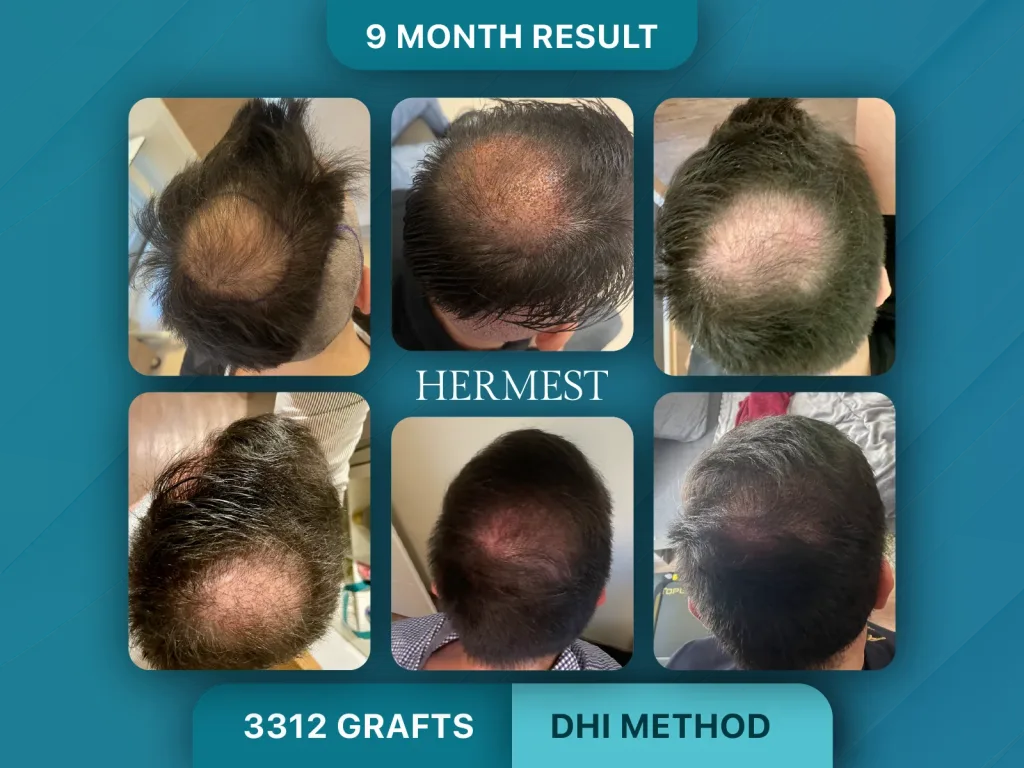
DHI hair transplant before and after, 9-month result: crown thinning, top views, 3312 grafts
3,312 graftsDHI9 months

Our DHI patient gallery includes documented cases with different graft counts and follow‑up periods.

Case 1: Anton C.

A patient from Switzerland who received 3,577 grafts using the DHI method. The documented follow‑up result was recorded at six months.

Case 2: Laura M.

A patient from Lithuania who received 2,421 grafts using DHI. Her documented before‑and‑after comparison shows the treatment at an 11‑month follow‑up.

Case 3: Cemil Y.

A patient from Turkey who received 2,612 grafts using DHI. His gallery record includes a nine‑month follow‑up result.

These examples represent different treatment plans and stages of hair growth.

You can explore more documented cases in our hair transplant before‑and‑after gallery.
Before‑and‑after photographs are useful only when they provide a fair comparison. Check the camera angle, lighting, hair length, and styling in both images.

A patient photographed at six months may have less visible coverage than the same patient at twelve months because hair growth continues to develop.

The number of grafts should also be considered alongside the original hair‑loss pattern.

A good result is not simply the one with the highest graft count. Natural hairline design and responsible donor preservation are equally important.

Our Patients’ Results on Video

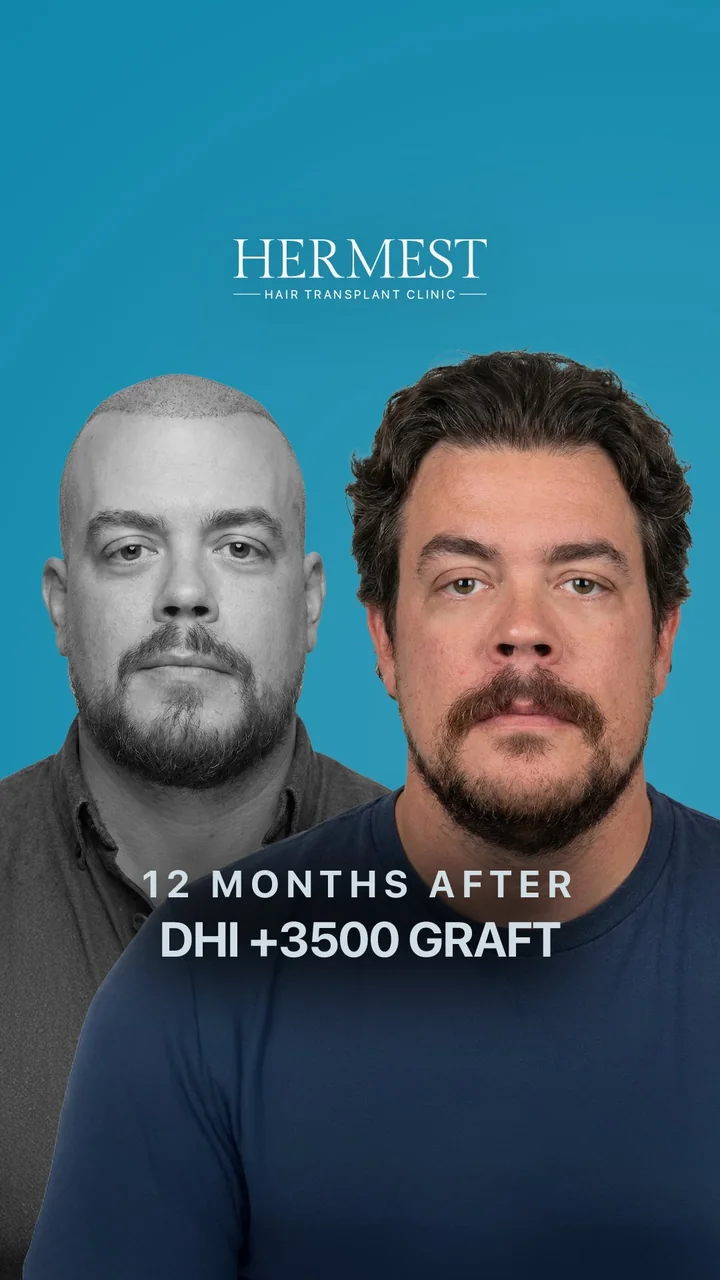
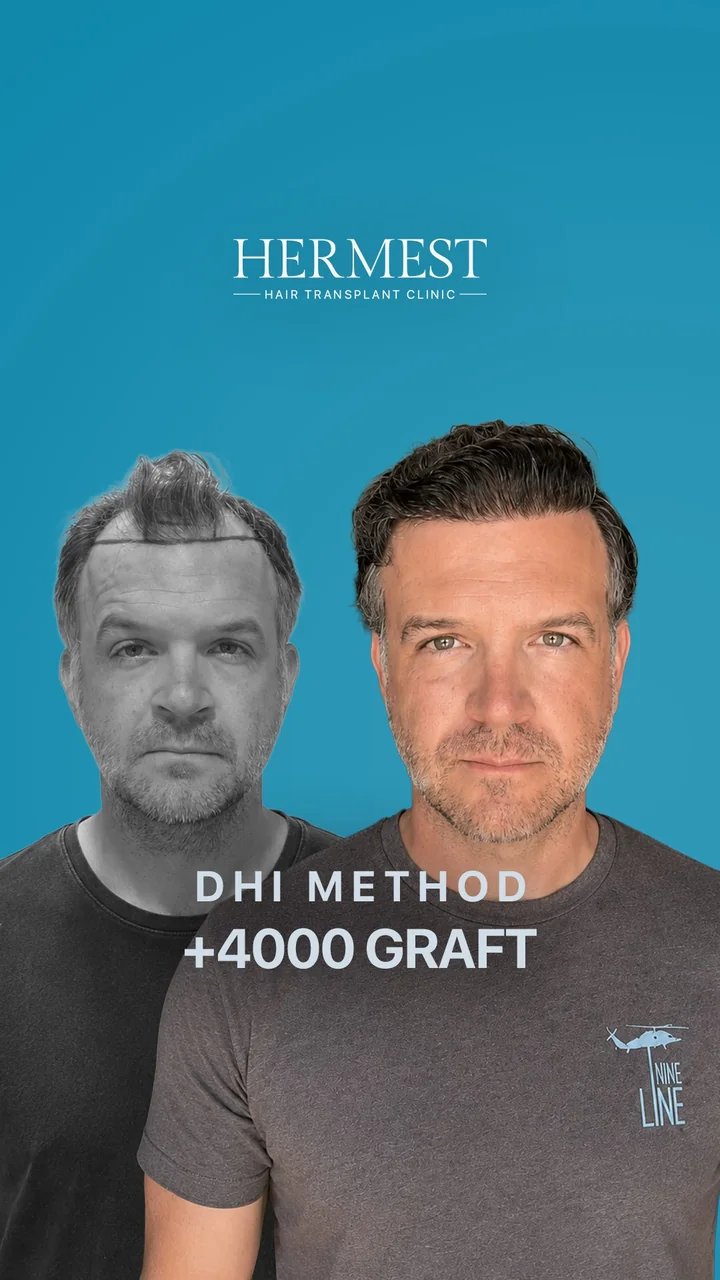
Hermest patient result video: DHI, 4,000 grafts, before and after
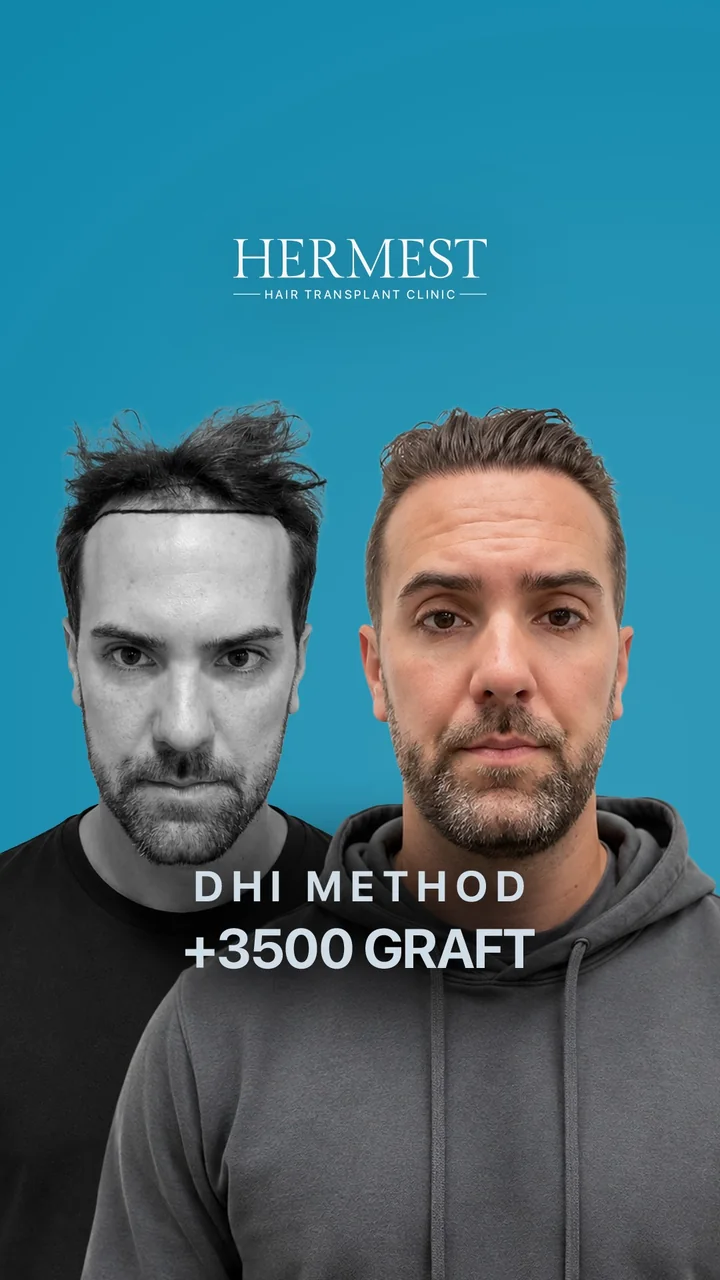
Hermest patient result video: DHI, 3,500 grafts, before and after
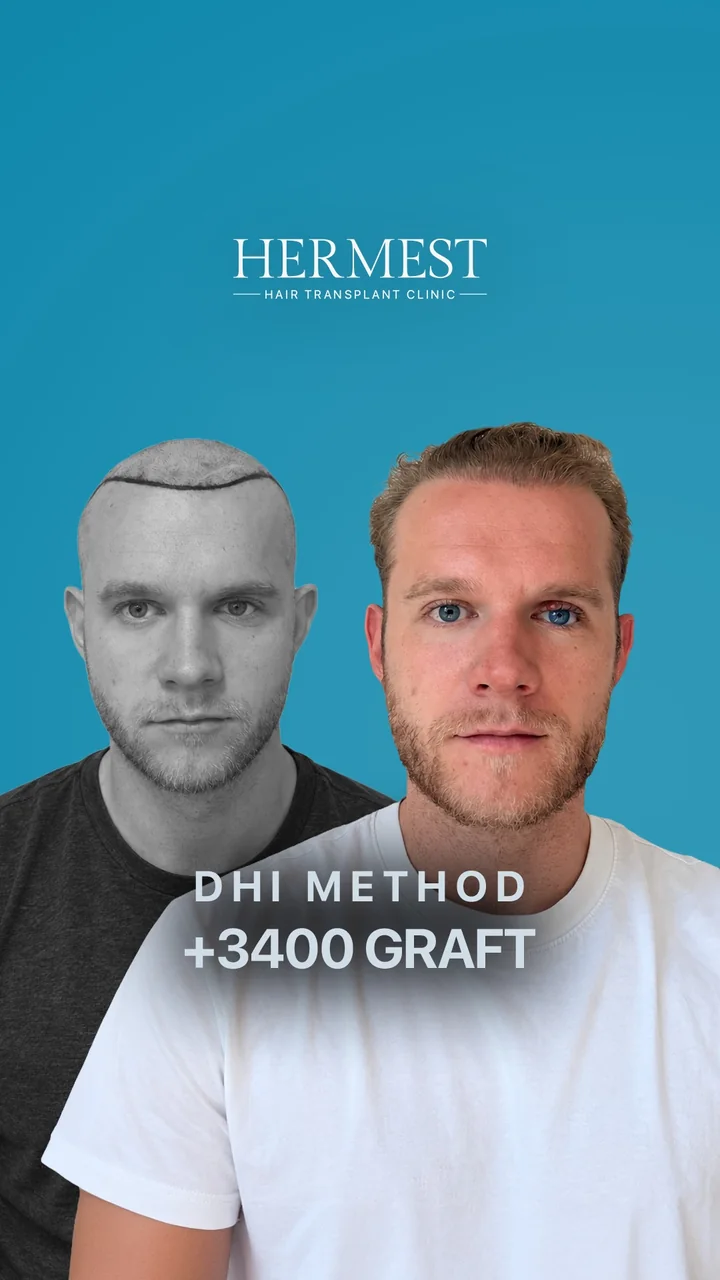
Hermest patient result video: DHI, 3,400 grafts, before and after
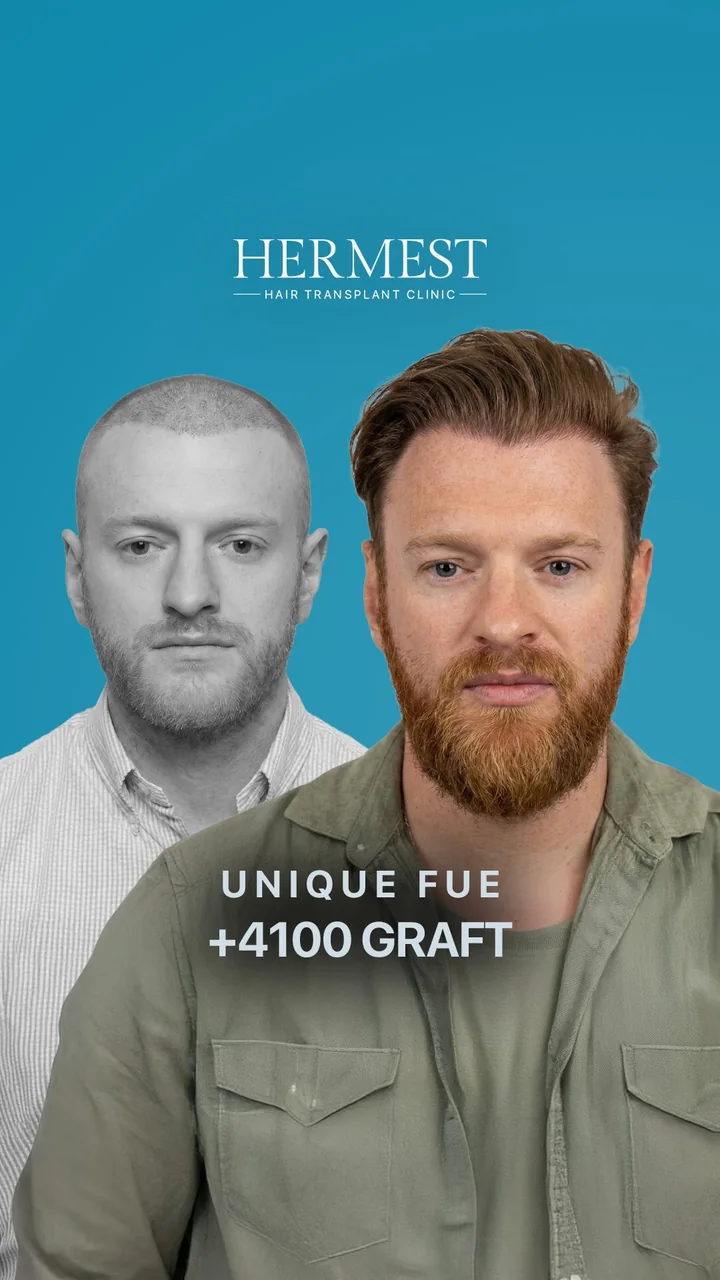
Hermest patient result video: UNIQUE FUE®, 4,100 grafts, before and after
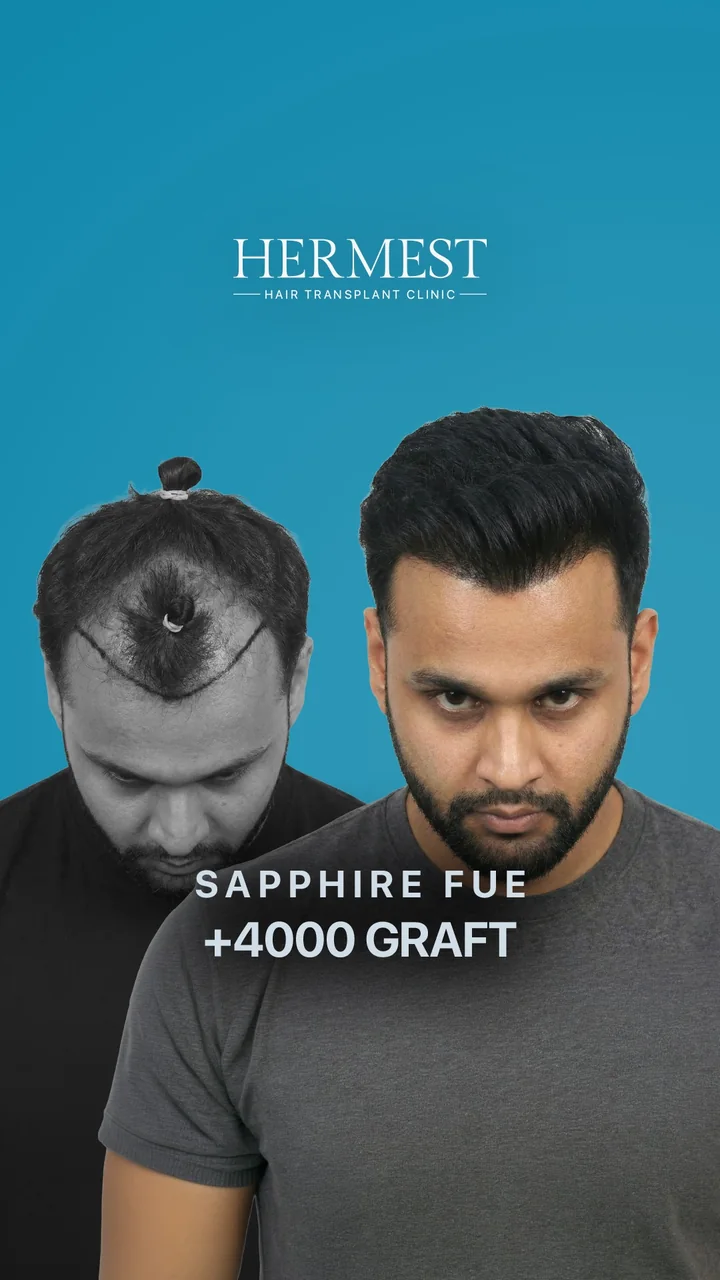
Hermest patient result video: Sapphire FUE, 4,000 grafts, before and after
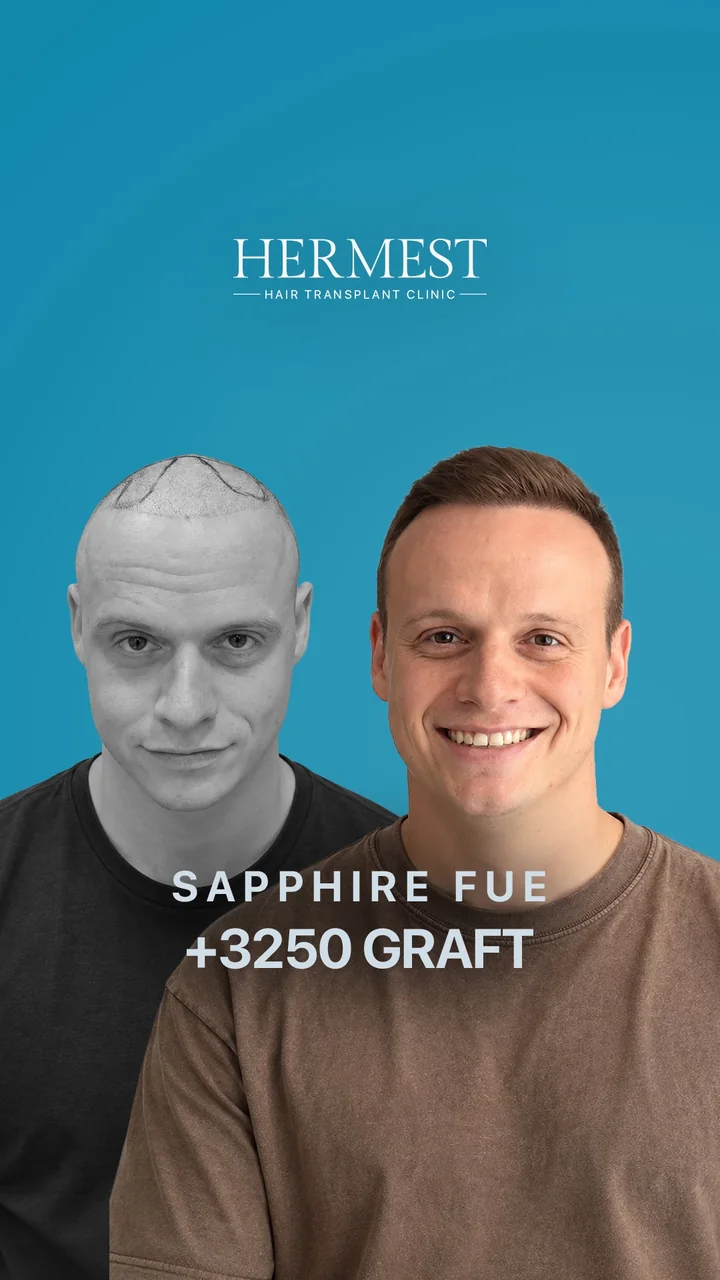
Hermest patient result video: Sapphire FUE, 3,250 grafts, before and after
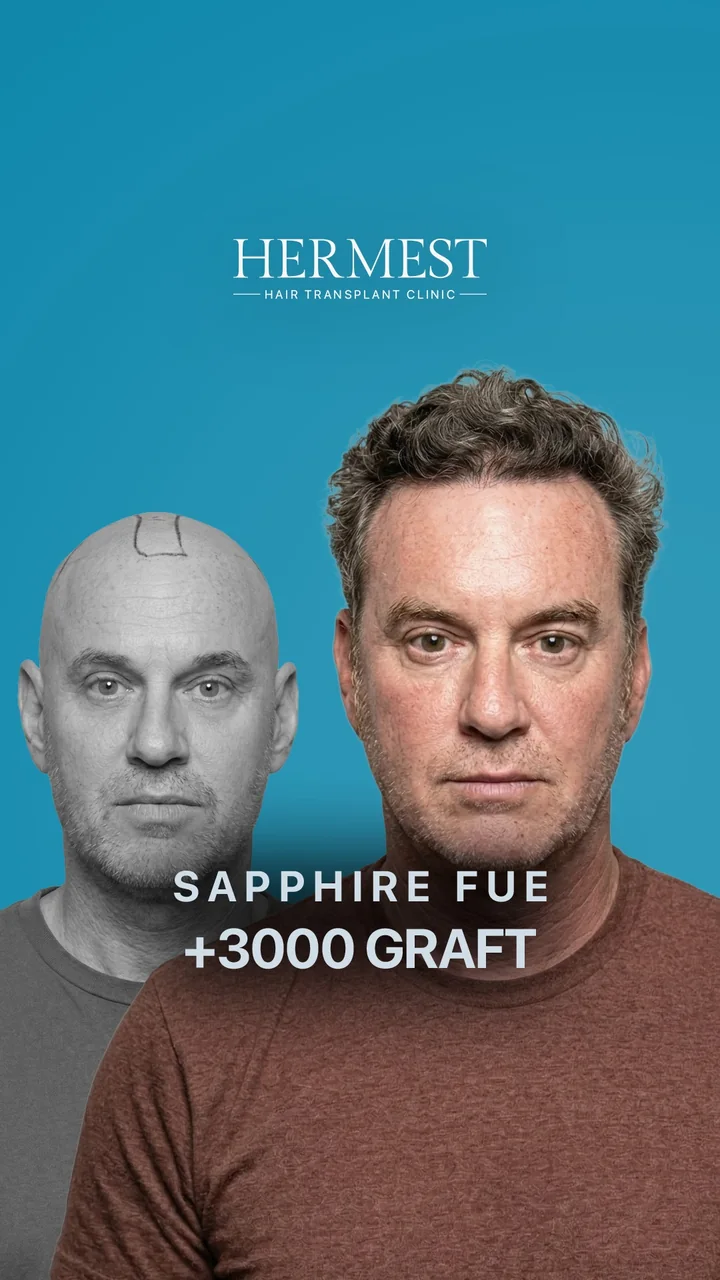
Hermest patient result video: Sapphire FUE, 3,000 grafts, before and after

What DHI Hair Transplant Services Does Hermest Clinic Offer in Istanbul?

Hermest Clinic offers Standard DHI and Premium DHI hair transplant packages in Istanbul. Both options involve individualized hair restoration planning, follicular unit harvesting, and implantation using the DHI approach. The packages differ in accommodation and selected additional services, while the appropriate treatment is determined through a medical assessment.

Our Standard DHI package is designed for suitable patients seeking hair restoration through direct implantation.

The treatment begins with an assessment of hair‑loss progression, donor hair density, and the areas requiring coverage.

The medical team creates a treatment plan based on the patient's hairline, available grafts, and realistic restoration goals.

The package includes the DHI procedure, two nights of accommodation at a four‑star hotel, transfers, medical products, prescribed postoperative medicines, and follow‑up support.

PRP treatment is also listed among the package services. Its suitability and potential benefits should be discussed during consultation.

Premium DHI includes the core DHI treatment approach with additional package services.

The package provides three nights of accommodation at a four‑star hotel, allowing an additional night during the visit.

It also includes the regenerative treatment option described in the package as exosome or stem‑cell therapy.

These treatments should be considered separately from the established surgical procedure. Their effectiveness for improving hair transplant outcomes is not established well enough to guarantee additional hair growth or faster healing.

The medical team can explain the proposed treatment, supporting evidence, potential risks, and whether it is appropriate for you.

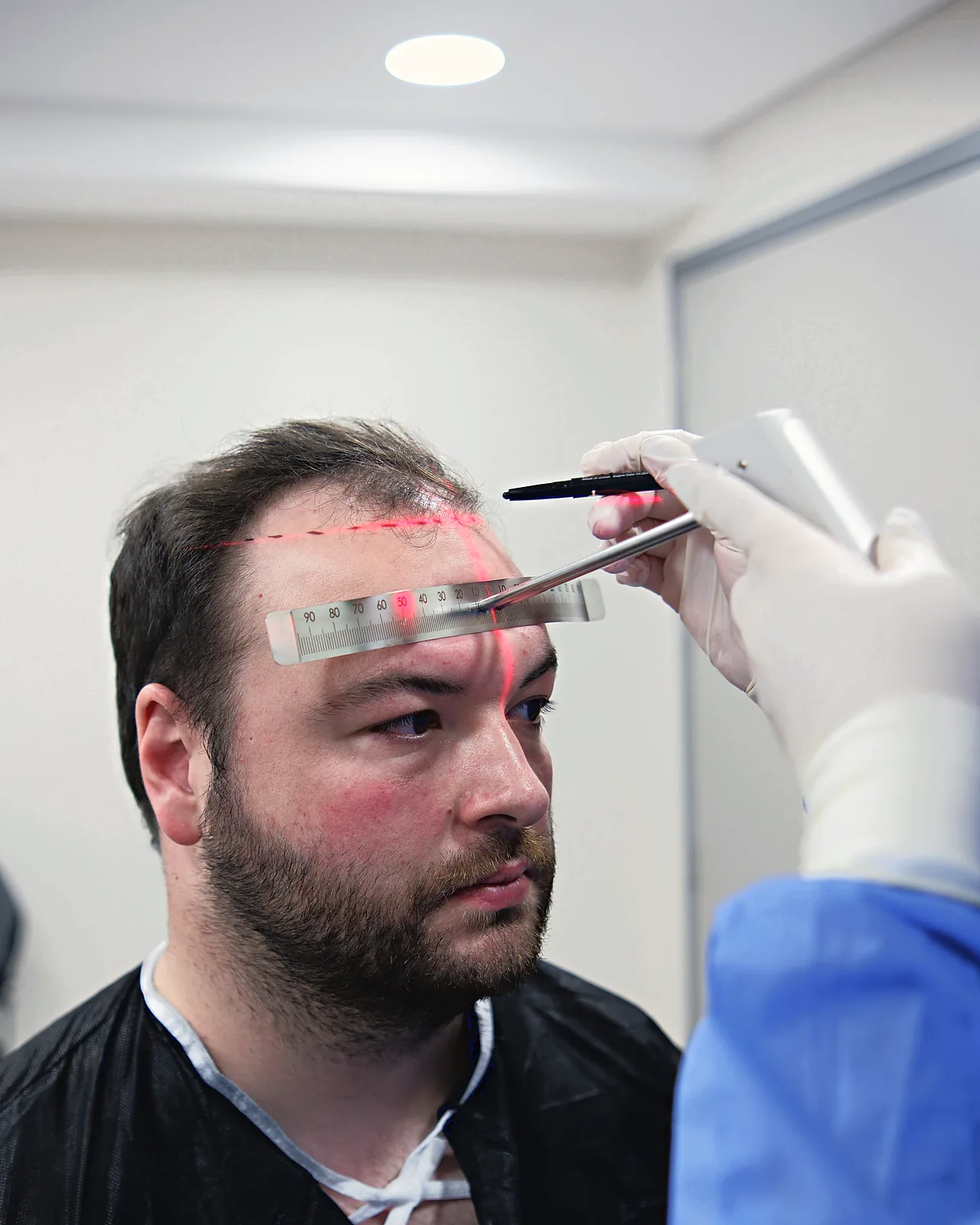
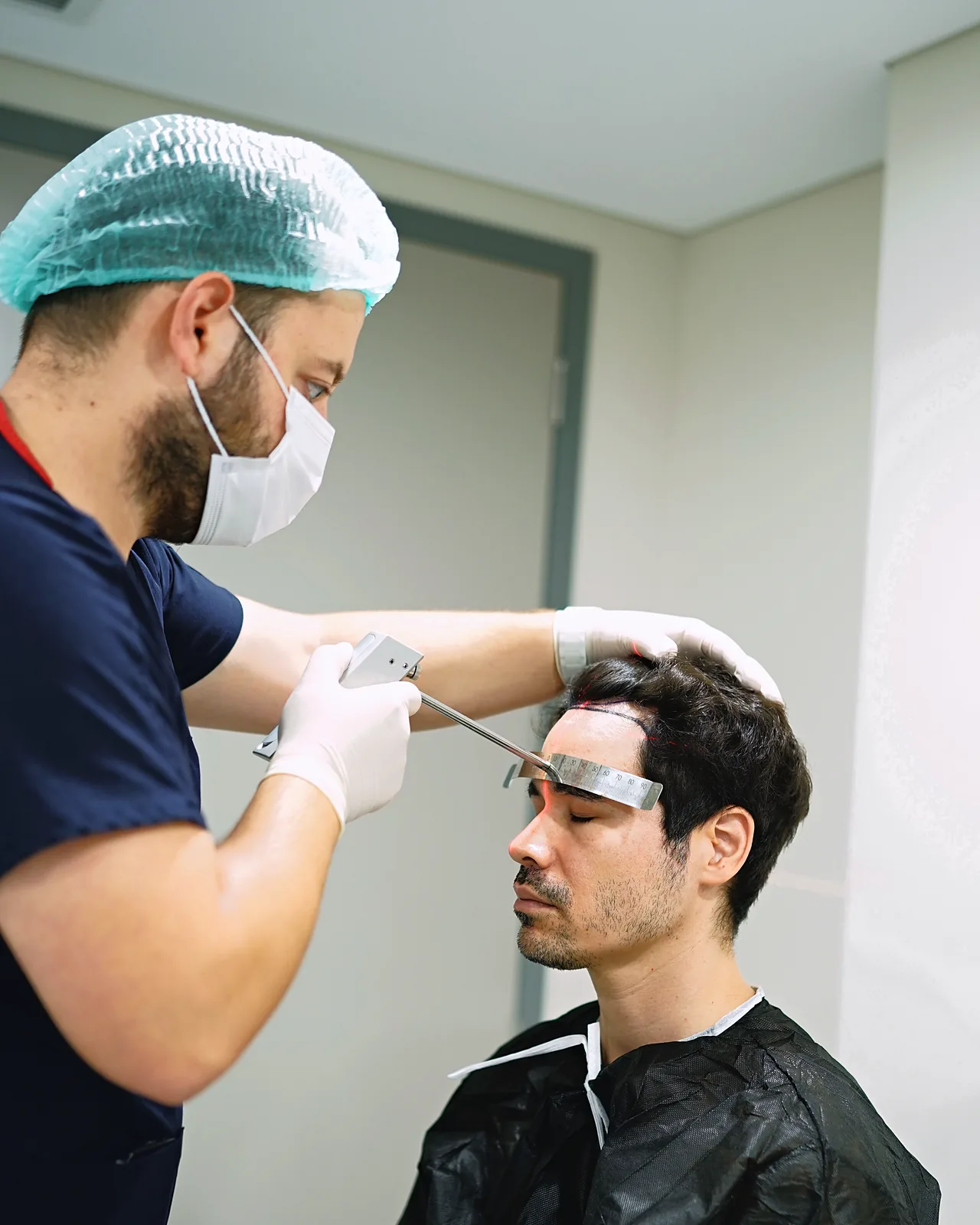
Hermest doctor measuring a patient's hairline with a laser ruler before a DHI hair transplant

Hair loss affects patients differently, so a single graft plan cannot suit everyone.

Some patients need treatment mainly around the temples or frontal hairline. Others have thinning across the mid‑scalp or crown. The medical team assesses the size of the recipient area, the quality of existing hair, and the available donor supply.

Hair thickness, texture, curl pattern, and the contrast between hair and scalp can all influence the appearance of coverage.

Our aim is to develop a realistic restoration plan that protects the donor area while improving the appearance of thinning regions.

Some patients are concerned about shaving their hair before transplantation.

DHI may allow the recipient area to remain unshaven in selected cases, particularly when grafts are being implanted among existing hairs.

However, the donor area usually requires trimming or shaving for accurate follicular unit extraction. The possibility of partial or unshaven treatment depends on hair length, donor characteristics, graft requirements, and the surgical plan.

Patients interested in preserving their existing hairstyle can discuss available options during their consultation.

How Much Does a DHI Hair Transplant Cost in Turkey?

DHI hair transplant turkey packages starts at €3,490 (approximately $4,090) at Hermest Clinic, while Premium DHI starts at €4,700 (approximately $5,500). These packages include surgery, hotel accommodation, VIP transfers, and postoperative support. Prices depend on the selected treatment package rather than a separate charge for each graft.

Hermest Clinic DHI and FUE Hair Transplant Prices

Hermest Clinic offers standard and premium packages for both DHI and Sapphire FUE. The main difference is the implantation method, while package upgrades include additional services.

Hair Transplant PackageSapphire FUEPremium Sapphire FUEDHIPremium DHI
Price (EUR)Listed Price (USD)€2,890 / $3,390€4,100 / $4,800€3,490 / $4,090€4,700 / $5,500
Hotel Accommodation2 nights, 4‑star3 nights, 4‑star2 nights, 4‑star3 nights, 4‑star
Free Hair AnalysisFree Hair Analysis
Dr. Nesim Tüğen, hair transplant surgeon at Hermest ClinicSurgeon‑performed packageDr. Nesim TüğenFrom€7,400 ≈ $8,500

All four packages include medical consultation, the planned surgical procedure, medications, aftercare products, transfers, and postoperative support. International flights are not included.

The final package and medically appropriate graft count are determined after a hair assessment.

At Hermest Clinic, standard DHI costs €600 (approximately $700) more than Sapphire FUE. The same price difference applies to the premium packages.

DHI uses an implanter pen to place individual grafts, while Sapphire FUE uses sapphire blades to prepare recipient sites before implantation.

The additional cost reflects differences in instruments, workflow, and treatment arrangements. It does not guarantee higher graft survival or better hair density.

DHI vs FUE Hair Transplant Prices Worldwide (2026)

DHI and FUE hair transplant prices vary significantly between countries. Turkey generally offers lower package prices than the UK, Germany, and the United States. However, international costs depend on the clinic, graft count, surgical team, and services included.

The following table provides indicative prices for approximately 2,000 –⁠ 3,000 grafts.

CountryFUE Cost (USD)DHI Cost (USD)
Turkey$1,500 –⁠ $3,500$2,000 –⁠ $4,000
United States$12,000 –⁠ $20,000$15,000 –⁠ $25,000
United Kingdom$10,615 –⁠ $19,903$13,269 –⁠ $23,884
Germany$5,604 –⁠ $11,209$7,846 –⁠ $13,451
India$1,200 –⁠ $2,500$1,500 –⁠ $3,000

The UK estimates correspond to approximately £8,000 –⁠ £15,000 for FUE and £10,000 –⁠ £18,000 for DHI. German estimates correspond to €5,000 –⁠ €10,000 for FUE and €7,000 –⁠ €12,000 for DHI.

Pricing note: These are indicative market estimates, not confirmed national averages or individual clinic quotations. USD conversions for the UK and Germany use exchange rates from October 14, 2026. Turkish packages commonly include accommodation and transfers, while overseas quotes may cover surgery alone.

DHI procedures often cost less in Turkey because of differences in operating costs, staffing expenses, and local economic conditions.

Many Turkish clinics also offer treatment‑based packages instead of charging separately for each graft. At Hermest Clinic, the DHI package starts at €3,490 and includes accommodation, airport transfers, medications, and postoperative care.

However, lower cost should never replace medical suitability or patient safety. Always review the clinic's licenses, the qualifications of its surgical team, and the services included before making a decision.

A medically suitable 2,000‑graft DHI procedure at Hermest Clinic falls under packages starting at €3,490 (approximately $4,090).

Hermest uses technique‑based package pricing rather than charging separately for every graft.

However, 2,000 grafts may not be appropriate for every patient. Your medical team must first assess donor density, hair‑loss progression, and the coverage required.

For a more detailed breakdown of package costs, graft pricing, and international comparisons, visit our hair transplant prices in Turkey guide.

Request a free consultation

Get an analysis and consultation with one of our hair transplant specialists.

▼

Your personal data is protected. We use it only to prepare your free hair analysis and to contact you. See our Privacy Policy.

Why Choose Hermest Clinic for DHI Hair Transplant in Istanbul?

Hermest Clinic provides DHI hair restoration through a licensed healthcare facility in Istanbul, with qualified medical practitioners, personalized treatment planning, and postoperative support. Our approach combines careful donor management with transparent package arrangements and documented patient care. Patients can also review our medical qualifications and official authorizations before choosing treatment.

The Hermest DHI doctor measuring a patient's hairline with a laser ruler

Our medical team includes doctors who hold Turkish Ministry of Health Hair Transplant Practitioner Certificates.

Dr. Ahmet Murat

Dr. Ahmet Murat graduated from Istanbul University Cerrahpaşa Faculty of Medicine. He is also a cardiology specialist and holds a Ministry of Health Hair Transplant Practitioner Certificate, registration number 234242.

His medical background supports the assessment of patient health, medical history, and suitability for treatment.

Dr. Nesim Tugen

Dr. Nesim Tugen graduated from Çanakkale Onsekiz Mart University Faculty of Medicine. He holds a Ministry of Health Hair Transplant Practitioner Certificate, registration number 234205.

He serves as Hermest's Medical Director and participates in clinical treatment planning.

Our doctors work with the medical team according to the responsibilities assigned to each procedure. Patients can discuss who will perform or supervise the different surgical stages before booking.

Our facility holds a Hair Transplant Unit Operating Permit issued by the Istanbul Provincial Health Directorate.

Official AuthorizationDetails
Hair Transplant Unit Operating PermitNo. 268382814
Hair Transplant Practitioner Training AuthorizationNo. SHGM‑SEU‑34
International Health Tourism Facilitator AuthorizationNo. AK‑0209, held by Hermest Sağlık Danışmanlığı A.Ş.

The clinical facility and international health tourism facilitator hold different authorizations for their respective activities.

Patients can review our official certificates and authorizations for more information.

We follow documented clinical and organizational processes intended to support patient care, hygiene, and treatment coordination.

Our quality management information references ISO 9001 and ISO 10002 standards.

We also maintain relationships with contracted medical institutions, including the Florence Nightingale Hospital Group.

İstanbul Florence Nightingale Hospital is a JCI‑accredited partner facility. This accreditation applies to that hospital and should not be confused with Hermest Clinic's own operating authorizations.

A successful treatment plan begins with understanding both the area requiring restoration and the hair available for transplantation. The medical team considers facial proportions, hair texture, donor density, and future hair‑loss progression.

Particular attention is given to the frontal hairline, where the direction and distribution of individual grafts strongly influence the final appearance.

The number of grafts harvested must remain within safe donor limits. We focus on realistic coverage and responsible donor management rather than recommending an unnecessarily high graft count.

We understand that choosing hair transplant surgery can be a major decision, especially when travelling from another country.

Our consultation process helps patients understand the procedure, package inclusions, accommodation arrangements, and expected recovery.

After treatment, patients receive care instructions and postoperative communication support.

Follow‑up is also important for monitoring healing, expected shedding, and the gradual development of new hair.

DHI is a method of implanting hair grafts into areas affected by hair loss.

Hair naturally grows in small groups called follicular units. Each unit usually contains one to four hairs, along with the supporting structures needed for hair growth.

During DHI, healthy follicular units are harvested from a donor area, usually the back or sides of the scalp. These grafts are then implanted into thinning or bald areas.

The main difference between DHI and conventional FUE lies in the implantation stage. Both techniques can use FUE to harvest individual follicular units.

DHI uses an implanter pen for graft placement, while conventional FUE procedures commonly place grafts into recipient sites prepared separately.

DHI does not create new hair follicles or prevent future hair loss. It redistributes existing healthy follicles to improve visible hair coverage.

The Choi implanter is a pen‑shaped surgical instrument with a hollow needle designed to hold an individual hair graft.

A prepared graft is carefully loaded into the needle. The clinician then positions the instrument against the recipient area at the planned angle and depth.

With a sharp implanter, the needle creates a small opening in the scalp as the graft is inserted. This combines recipient‑site creation and implantation into one movement.

The technique allows the operator to control the placement of each graft. This is particularly important when restoring a natural hairline or working between existing hairs.

However, DHI is not an incision‑free procedure. The implanter still penetrates the skin, and graft harvesting creates small wounds in the donor area.

The instrument itself does not guarantee better hair growth. The final outcome also depends on patient suitability, graft handling, surgical expertise, and recovery.

How Does the DHI Hair Transplant Procedure Work?

The DHI procedure involves scalp assessment, hairline planning, local anesthesia, follicular unit extraction, and graft implantation using an implanter pen. Each graft is prepared and placed according to the planned hair direction and distribution. DHI takes several hours, depending on graft requirements and the complexity of the treatment.

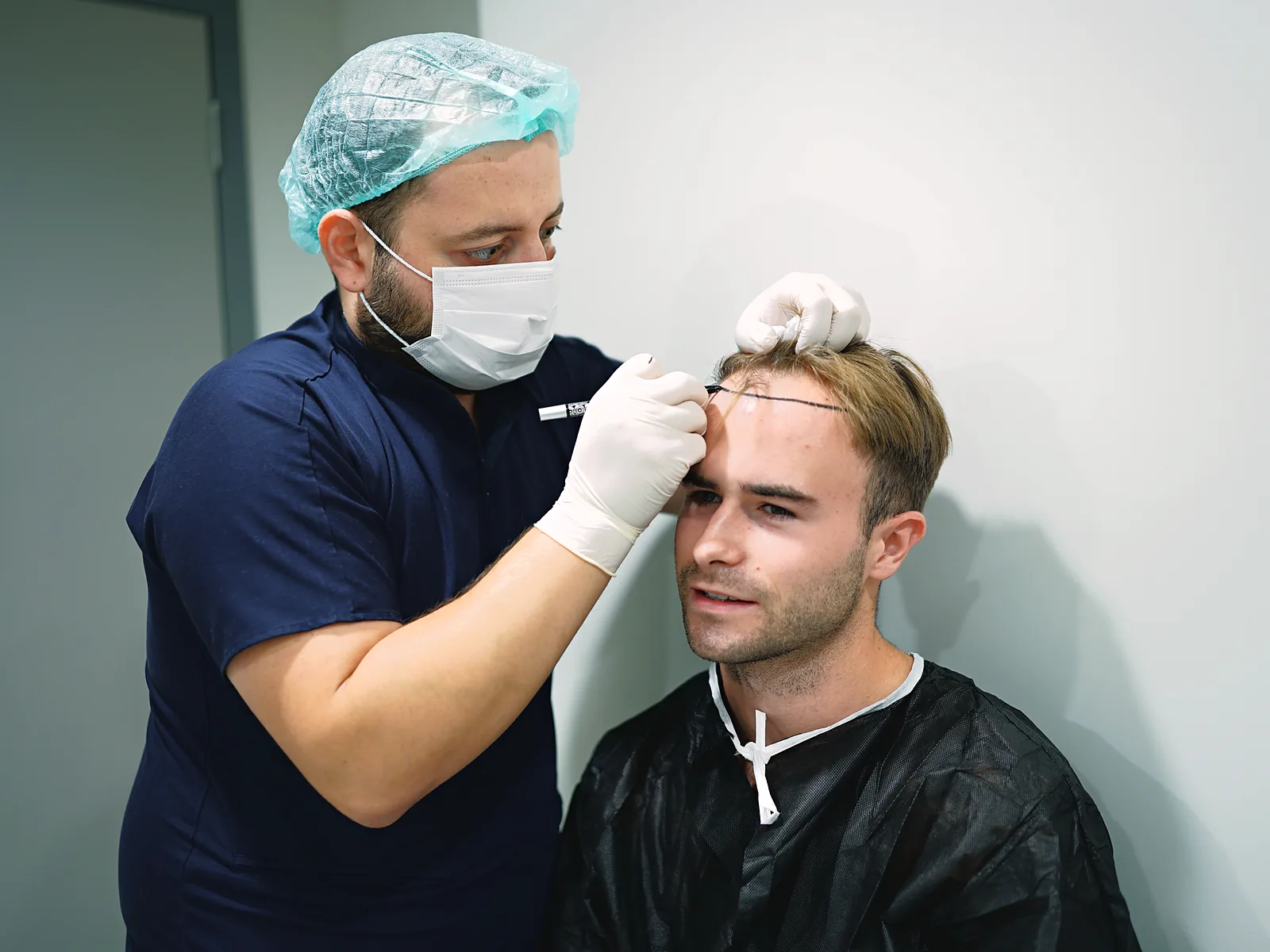
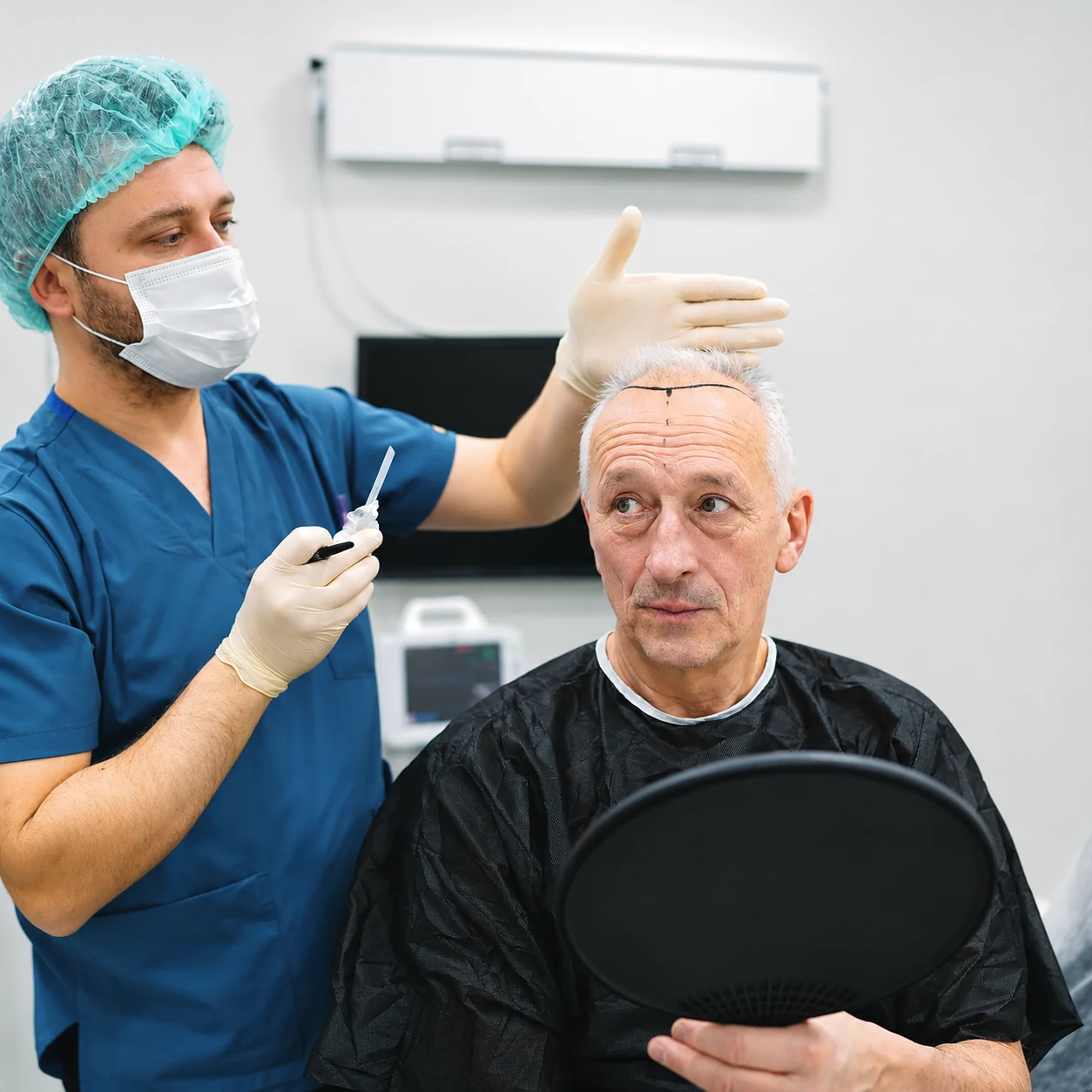
  1. Hermest doctor drawing a patient's new hairline

    We start your treatment with a consultation and a detailed examination of your hair and scalp.

    The medical team reviews your hair-loss history, donor hair density, current medications, and overall health. Your expectations and preferred hairline are also discussed.

    A suitable hairline should complement your facial features, age, and existing hair. It must also account for the possibility of further hair loss.

    The medical team estimates how many grafts may be needed and how much donor hair can safely be harvested.

    A good treatment plan aims to improve coverage without unnecessarily reducing the donor hair available for future treatment.

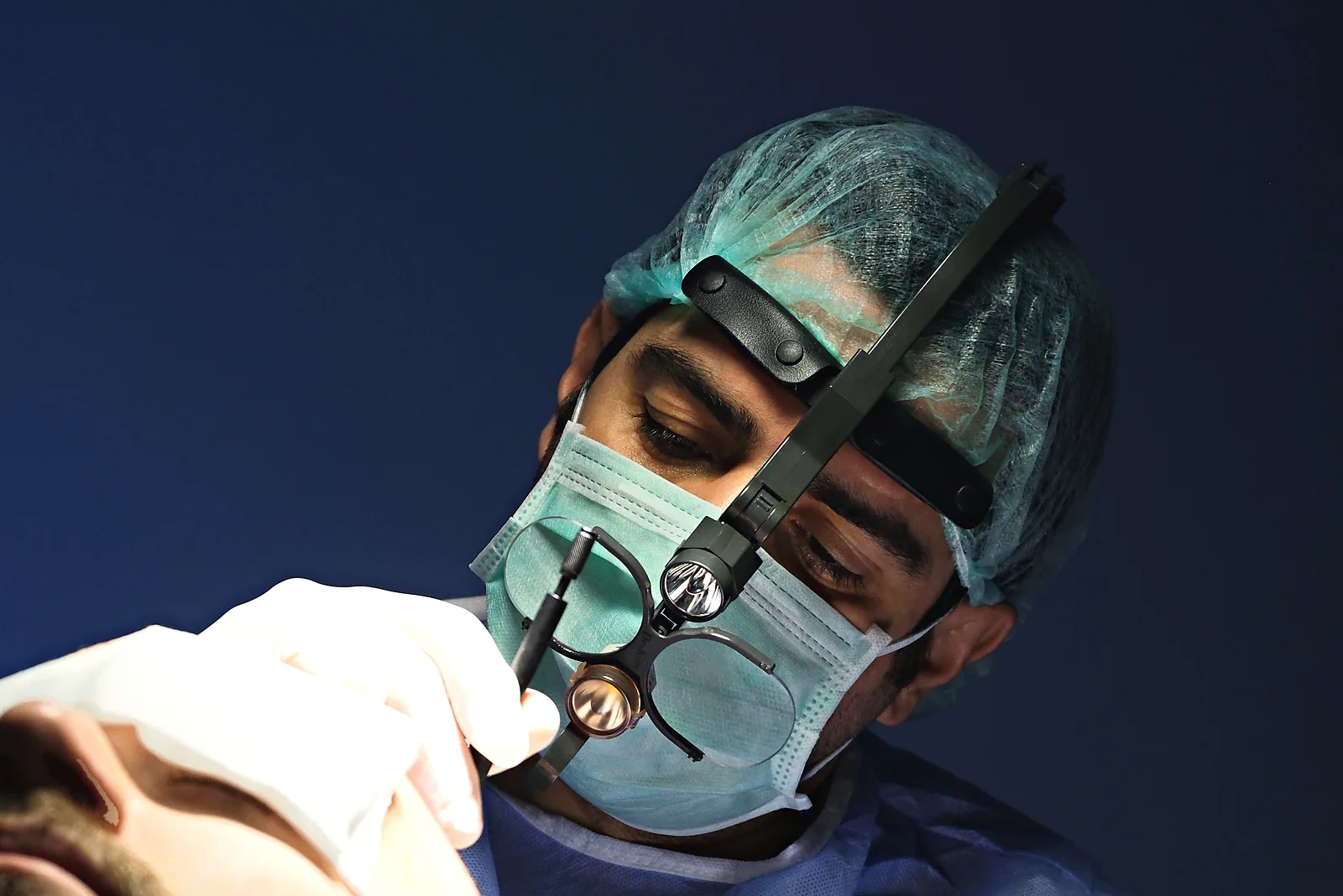
  2. Dr. Nesim Tüğen operating with loupes during a DHI hair transplant

    Before surgery begins, local anesthesia is administered to numb the scalp.

    The donor area is generally trimmed or shaved so individual follicular units can be identified and harvested accurately.

    Using small surgical punches, follicular units are carefully separated from the surrounding tissue and removed.

    These grafts contain the follicles responsible for producing new hair after implantation.

    Harvesting requires careful planning because the donor area has a limited supply of healthy follicles. Removing too many grafts can leave visible thinning or scarring.

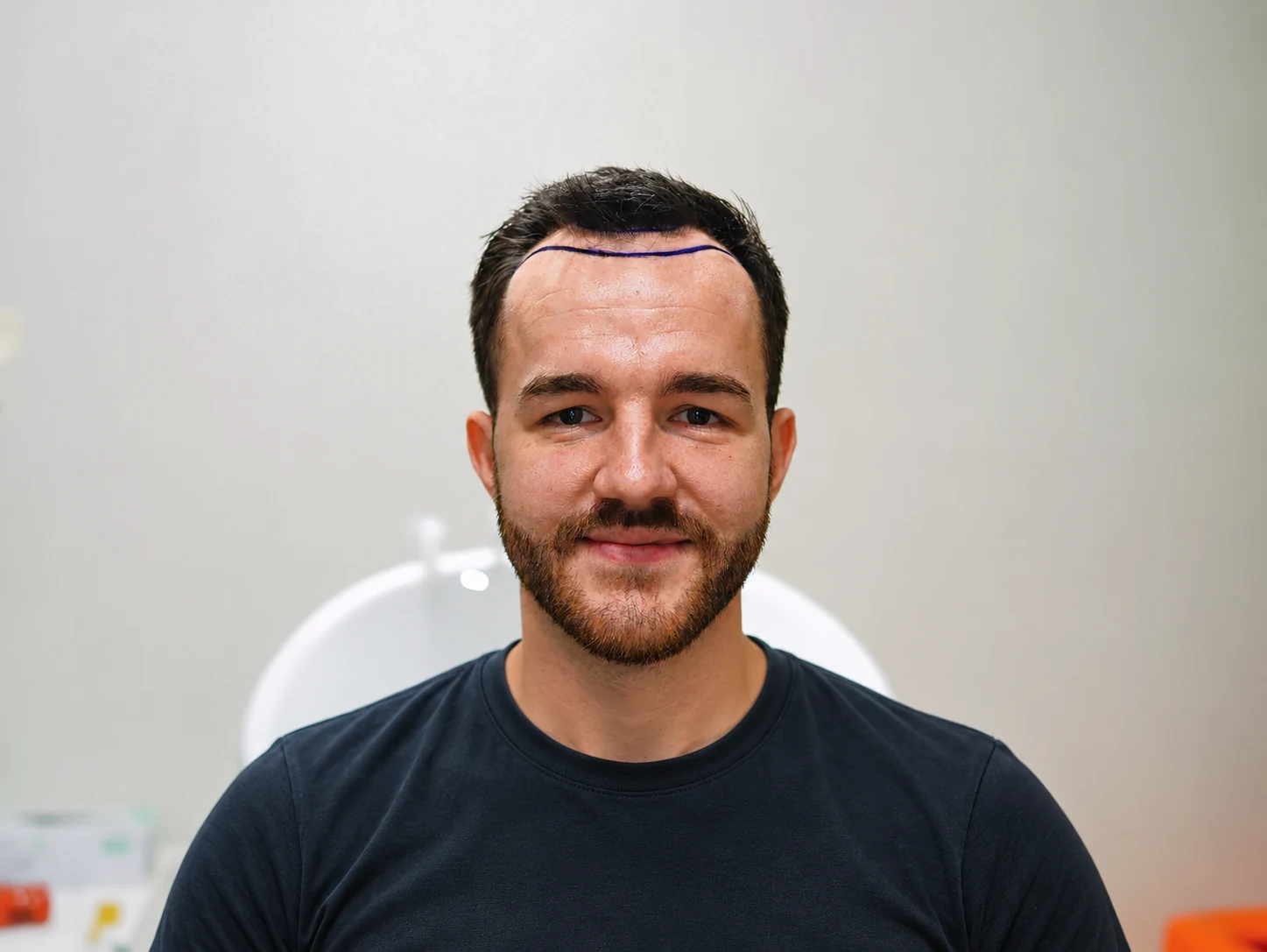
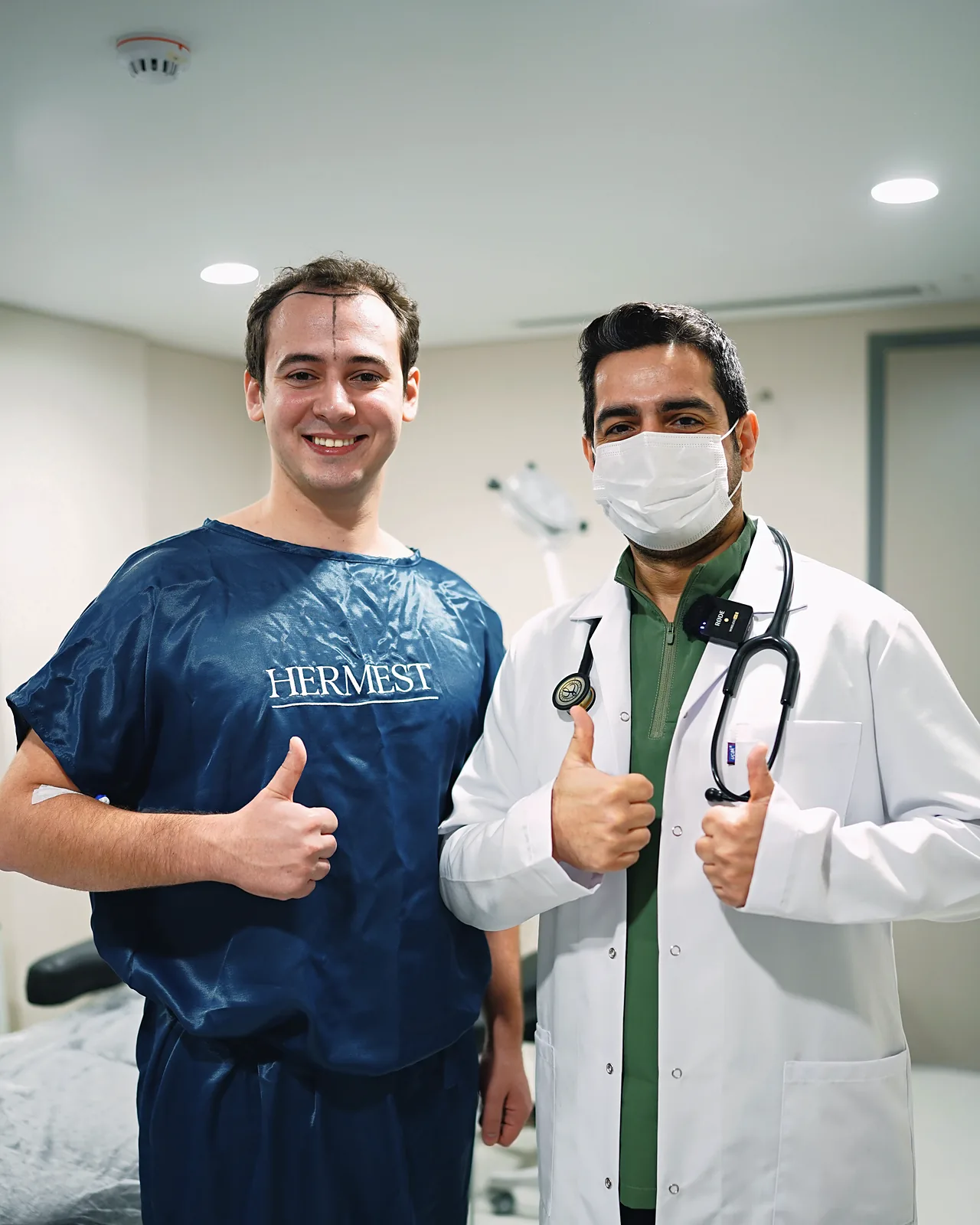
  3. Smiling Hermest patient with his new hairline drawn before a DHI hair transplant

    The harvested follicular units are examined and prepared for implantation.

    Each graft must be handled carefully because unnecessary pressure, drying, or mechanical damage can affect its viability.

    The prepared graft is loaded into the hollow needle of an appropriately sized implanter pen.

    Different needle sizes may be needed depending on the dimensions of the grafts and the characteristics of the patient's hair.

    The medical team also considers the direction and distribution of existing hair before placement.

  4. Dr. Nesim Tüğen with a patient and the team at Hermest Clinic

    The loaded implanter pen is positioned at the recipient area according to the planned hairline and graft distribution.

    With a sharp implanter, the instrument makes a small opening while placing the graft into the scalp.

    The operator controls the implantation angle, depth, and direction to help the new hair blend with surrounding hair.

    Single-hair grafts may be used near the frontal hairline to create a softer transition. Grafts containing multiple hairs can be distributed further behind the hairline where additional visual coverage is needed.

    The aim is to create an appropriate hair-growth pattern, not simply implant as many grafts as possible.

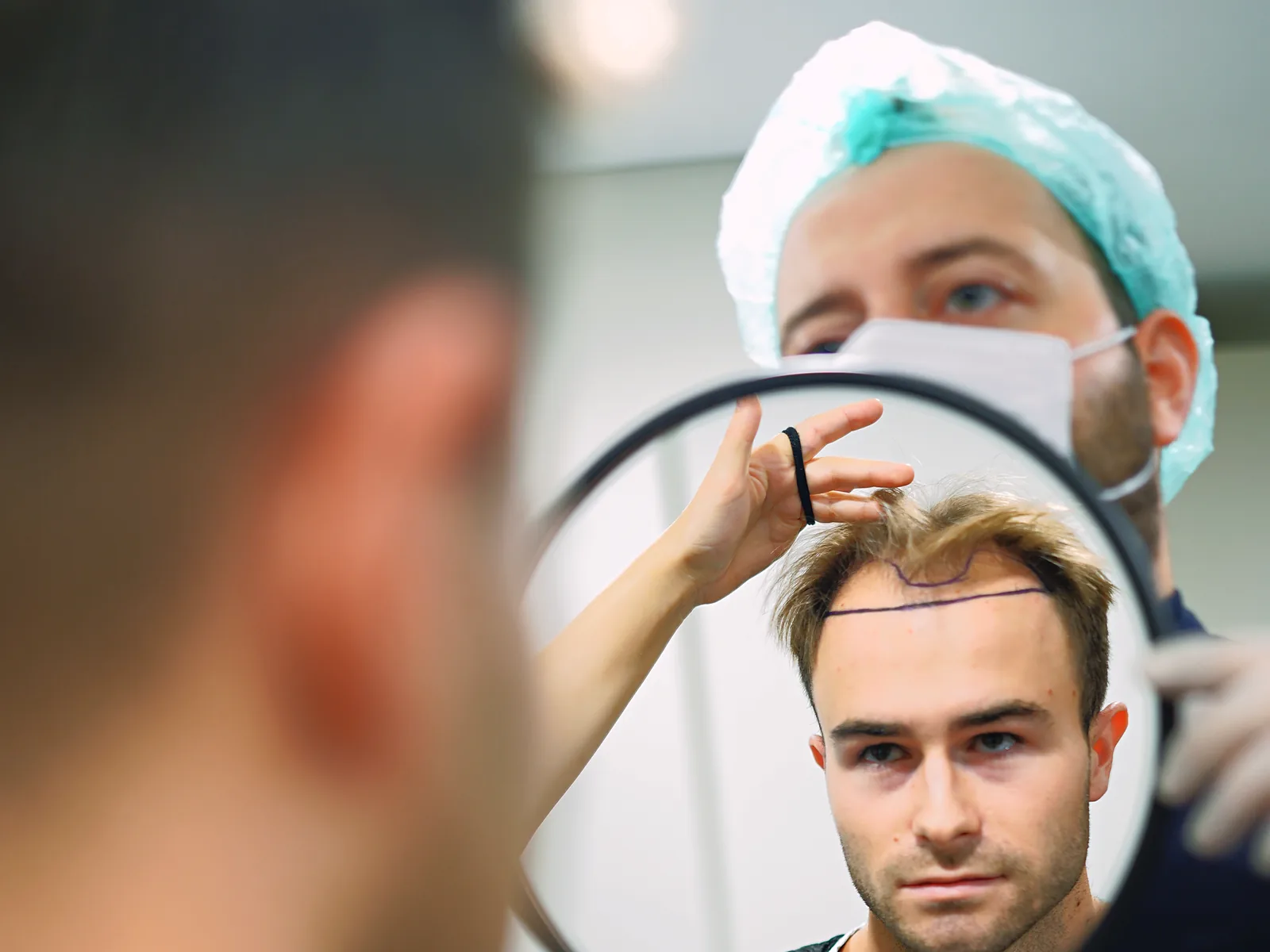
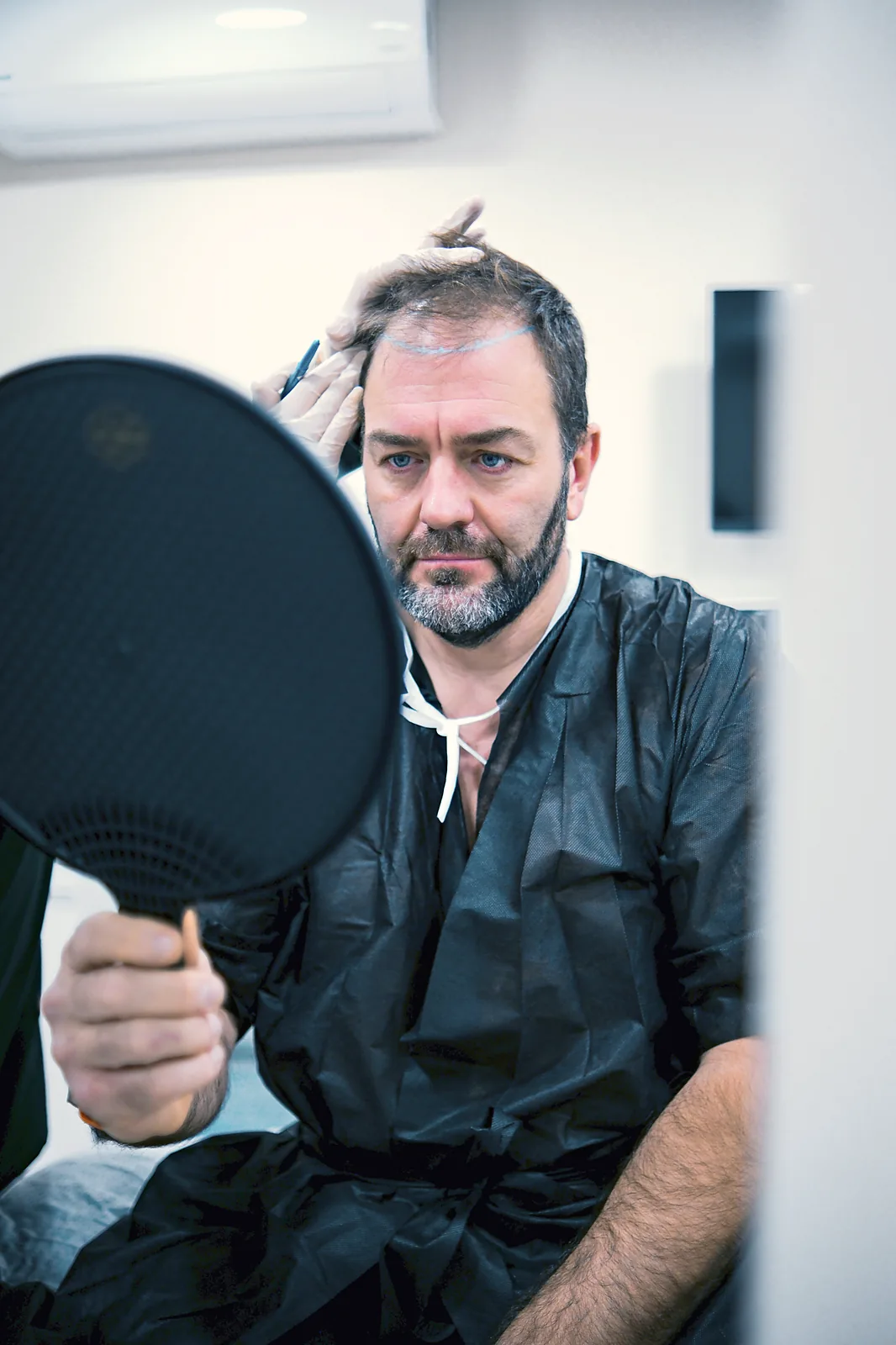
  5. The Hermest DHI doctor showing a patient his hairline in a mirror

    After implantation, the treated areas are examined, and the patient receives postoperative instructions. Mild redness, tenderness, swelling, and small scabs are expected during early healing.

    The medical team explains how to wash the scalp, protect the transplanted grafts, take prescribed medications, and arrange follow-up assessments.

    Following these instructions is particularly important during the first two weeks.

A DHI procedure commonly takes several hours and may occupy most of the treatment day.

The total duration depends on graft count, donor hair characteristics, the treatment area, and the surgical workflow.

Larger procedures may require additional treatment time or separate sessions.

Your medical team will explain the expected duration after assessing your hair and developing the treatment plan.

Who Is a Good Candidate for DHI Hair Transplantation?

DHI may be suitable for people with pattern hair loss, adequate healthy donor follicles, and realistic restoration goals. It can be considered for selected patients who want hairline restoration or treatment between existing hairs. However, suitability depends on the cause of hair loss, scalp condition, donor supply, and medical history.

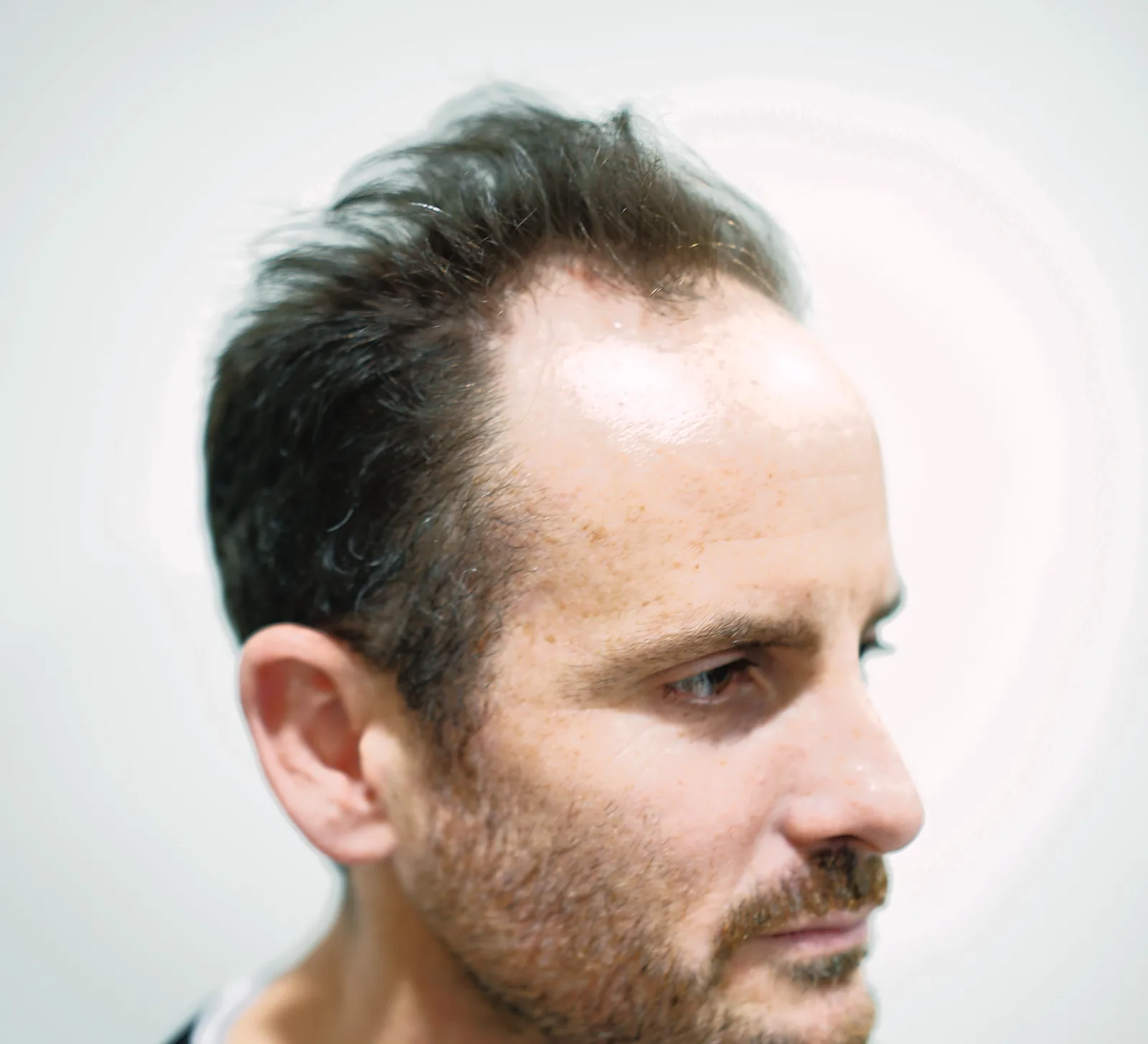
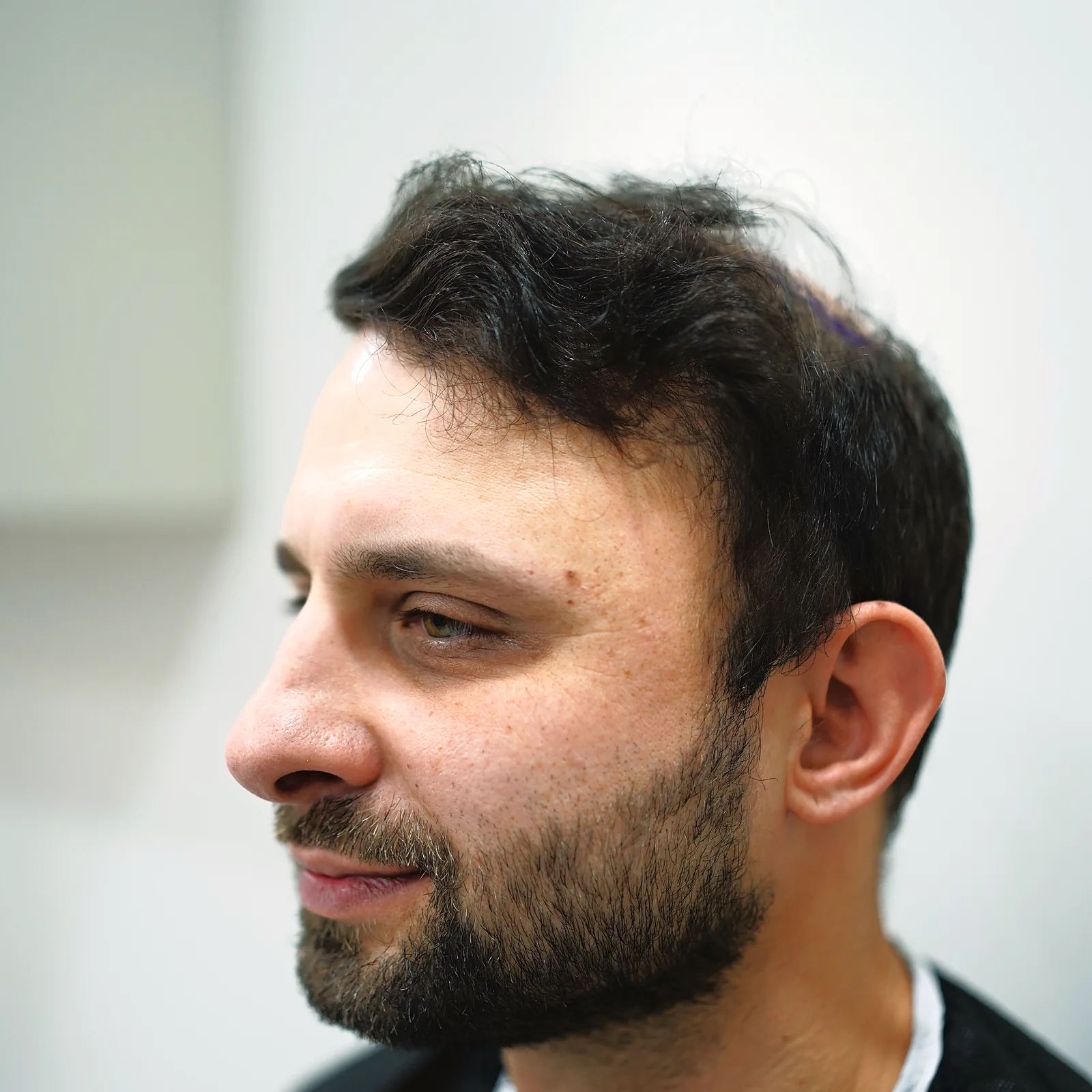
Patient in profile at Hermest Clinic, his receding hairline in view

DHI is most commonly considered for androgenetic alopecia, also known as pattern hair loss. In men, this often causes recession at the temples, thinning across the frontal scalp, or hair loss around the crown.

Doctors may use the Norwood scale to assess the progression of male‑pattern baldness.

Women may experience a different pattern, including thinning across the top of the scalp or a widening central part.

DHI may be considered for selected women, although the underlying cause of thinning must first be identified.

Not all hair loss can be treated surgically. Active inflammatory scalp conditions, alopecia areata, and some forms of scarring alopecia require specialist evaluation.

The donor area is one of the most important factors in determining whether transplantation is possible. The medical team evaluates donor density, hair thickness, follicular unit characteristics, and scalp health.

Hair texture and curl pattern can also influence the appearance of coverage.

For example, thicker or curlier hair may provide greater visual coverage with a given number of grafts than very fine, straight hair.

However, the available donor supply remains limited. Excessive extraction can cause permanent thinning in the donor region.

The treatment plan should balance the desired result with the long‑term preservation of healthy donor hair.

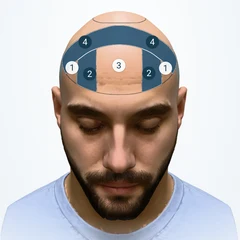
Estimate how many grafts your hair transplant may need. Select the areas where you are losing hair, rate your donor area, and the calculator shows an approximate graft count and whether your donor hair can cover it.

Loading the 3D head

Zones with hair loss
Donor area

Check in a mirror, or ask someone for a photo.

Ready to take the next step? Chat with us on WhatsApp to discuss your graft needs and personalized hair transplant plan.

Send on WhatsApp

Prefer a form? Leave your details. Our team contacts you for a free hair analysis.

Approximate grafts needed

0grafts

Range 0

Range 0 · about 0 hairs

This is an estimate for planning only. Donor figures are a lifetime supply, not one session. Your exact graft count depends on your donor area, hair thickness and the result you want, and is set by our doctors after a free hair analysis.

DHI can be considered for selected patients who have thinning areas surrounded by existing hair. The implantation method may be useful where grafts need to be placed carefully between native hair follicles.

However, placing grafts among existing hair requires precise planning to avoid unnecessary damage to surrounding follicles.

Women experiencing diffuse thinning should receive an appropriate diagnosis before transplantation. If the donor region is also affected by significant miniaturization or widespread thinning, surgery may not provide a satisfactory result.

Your medical history helps determine whether surgery is appropriate. Conditions that may require additional assessment include bleeding disorders, uncontrolled diabetes, certain cardiovascular conditions, and active scalp diseases.

Medications such as blood thinners and treatments for hair loss may also need to be reviewed. These factors do not automatically mean you cannot receive a transplant.

A qualified clinician must assess the risks, request appropriate investigations, and decide whether surgery should proceed, be postponed, or be avoided.

What Are the Benefits and Limitations of DHI Hair Transplantation?

DHI provides a controlled method of graft implantation using a specialized pen. It can be useful for selected hairline procedures and implantation among existing hair, particularly when preserving the recipient area's hairstyle is important. However, DHI can require additional graft‑handling steps and does not guarantee greater density or better growth than other well‑performed hair transplant techniques.

DHI offers several practical advantages for suitable patients.

  • Controlled graft placement:

    The implanter helps position follicles at planned angles and depths.

  • No separate channel‑making stage in some approaches:

    A sharp implanter can create the recipient opening during placement.

  • Selected unshaven applications:

    The recipient area may not need shaving in every case.

  • Hairline restoration:

    Individual graft placement can support careful planning along the frontal hairline.

  • Implantation between existing hair:

    The method may be appropriate for selected areas of localized thinning.

  • Small donor wounds:

    FUE harvesting avoids the long linear scar associated with strip surgery.

These advantages depend on appropriate patient selection and careful surgical technique.

DHI is not suitable for every hair‑loss pattern or treatment plan. Each graft must be individually prepared and loaded into an implanter, making the process potentially time‑intensive.

The technique also requires careful handling of delicate follicular units.

Graft characteristics, including hair thickness and curl pattern, may affect the choice of instruments and implantation method. Extensive hair loss can require a longer treatment plan or additional sessions.

Like other FUE‑based procedures, DHI also leaves small donor‑area scars and cannot overcome an insufficient donor supply.

DHI can be a reasonable option when its implantation approach suits the patient's hair characteristics and restoration goals.

For example, someone requiring treatment among existing hair may benefit from discussing a pen‑assisted approach. However, the higher price alone does not prove greater effectiveness.

Patients should compare medical suitability, the qualifications of the surgical team, graft planning, package inclusions, and postoperative care.

The right treatment is the one that best meets the patient's clinical needs.

How Effective Is a DHI Hair Transplant?

DHI can produce natural‑looking hair restoration when healthy grafts are implanted using appropriate surgical techniques. Its effectiveness depends on donor hair quality, careful graft handling, recipient‑area planning, and healing. No implantation device can guarantee that every graft will survive or that every patient will achieve the same density.

A patient consultation in the Hermest Clinic office in Istanbul

Several factors influence the final result. Healthy donor follicles are essential because weak or miniaturizing follicles may not provide lasting coverage. Careful extraction and graft handling help reduce avoidable damage.

The implantation angle, depth, and distribution also influence the final appearance. Scalp health, individual healing, and the management of ongoing hair loss can affect long‑term outcomes. The skill and experience of the medical team are important regardless of the implantation instrument used.

Hair transplantation aims to improve the appearance of coverage, not necessarily restore the density a person had before developing hair loss. Some patients primarily want to improve temple recession or rebuild the frontal hairline. Others may need treatment across larger thinning areas.

The achievable result depends on the size of the recipient region, the amount of healthy donor hair, and individual hair characteristics.

In extensive cases, the medical team may recommend a staged approach rather than attempting maximum coverage in one procedure.

Yes. A DHI hair transplant can produce disappointing results if grafts do not grow as expected or if the cosmetic outcome falls below the treatment goals.

Possible contributing factors include unsuitable patient selection, graft injury, healing complications, poor donor management, and continued natural hair loss.

Temporary shedding after surgery should not be confused with failed transplantation. Transplanted hair shafts commonly shed before new growth develops.

If growth remains poor after an appropriate recovery period, a clinical review can help determine the cause and whether additional treatment is possible.

DHI Hair Transplant Recovery and Hair Growth Timeline

DHI recovery involves two different processes: healing of the donor and recipient areas, followed by the gradual growth of transplanted hair. Redness, swelling, and scabbing commonly improve during the first couple of weeks, while visible hair growth takes several months. Following your surgeon's instructions helps protect the grafts during the early healing period.

The first two weeks require particular care because the transplanted grafts are still settling into the recipient area. During the first few days, you may experience redness, tenderness, swelling, and small scabs. Avoid touching, scratching, or rubbing the transplanted area.

Your medical team will explain the recommended sleeping position and washing method. As healing progresses, scabs gradually loosen and fall away. Do not force them off or use aggressive washing techniques.

DHI Hair Growth Timeline

Hair transplant results develop gradually. Temporary shedding is common before new growth becomes noticeable.

Recovery PeriodWhat You May Experience
Days 1 –⁠ 14 Redness, swelling, and scabbing
Weeks 2 –⁠ 8 Temporary shedding of transplanted hair
Months 3 –⁠ 4 First new hair growth
Months 5 –⁠ 8 Improving hair coverage and thickness
Months 9 –⁠ 12 Greater density and fuller hair
Months 12 –⁠ 18 Further hair maturation, especially at the crown

These stages are approximate and vary between patients.

Temporary shedding does not necessarily mean the transplant has failed. The hair shaft may fall out while the transplanted follicle remains beneath the skin. New hair growth begins as the follicle enters another growth phase.

Proper aftercare helps protect healing skin and reduces avoidable complications.

During early recovery:

  • Wash the scalp only as instructed.
  • Avoid scratching or picking at scabs.
  • Protect the recipient area from pressure and friction.
  • Take prescribed medicines as directed.
  • Avoid strenuous exercise until medically cleared.
  • Protect the scalp from excessive sunlight.
  • Avoid applying unapproved oils or hair products.
  • Contact the clinic if pain, swelling, or other symptoms become unusual.

Your surgeon's instructions should take priority over general online advice. For more details, read our hair transplant aftercare guide.

Hermest patient checking his hair in a mirror

The time needed away from work depends on the type of job and your recovery. People performing light desk work may return earlier than those with physically demanding occupations. Activities involving heavy lifting, excessive sweating, or pressure on the scalp may need to be postponed. The medical team will advise when you can safely resume exercise, swimming, and other activities.

How Long Do DHI Hair Transplant Results Last?

DHI hair transplant results can last for many years when healthy follicles are harvested from a suitable donor region. However, transplantation does not stop the progression of natural pattern hair loss. Your long‑term appearance depends on donor hair characteristics, future thinning, and appropriate treatment planning.

Portrait of a Hermest patient at the clinic in Istanbul

Hair follicles taken from suitable donor regions often retain their resistance to androgen‑related hair loss after transplantation. This is why transplanted hair can continue growing for many years. However, the word permanent should not be interpreted as a guarantee that every transplanted follicle will survive indefinitely. The final result depends on follicle quality, surgical technique, and the patient's long‑term hair‑loss pattern.

DHI restores hair in selected areas but does not cure androgenetic alopecia. If the surrounding natural hair continues to thin, the appearance of the transplanted region may change. For example, a restored frontal hairline may remain visible while hair further behind it gradually becomes thinner. This is why the medical team should consider future hair loss when designing the treatment plan.

Preserving donor hair also leaves more options available if additional treatment becomes necessary.

Long‑term maintenance begins with appropriate postoperative care and follow‑up assessments. For selected patients, medical treatment may help slow the progression of existing pattern hair loss.

A clinician may discuss treatments such as minoxidil or finasteride, depending on the diagnosis and medical history. These treatments can have side effects and are not appropriate for everyone.

Patients should not begin, stop, or change prescribed medication without discussing it with their healthcare professional.

What Are the Risks and Side Effects of DHI Hair Transplantation?

DHI is a surgical procedure and carries risks even when performed by qualified professionals. Common temporary effects include tenderness, swelling, redness, scabbing, and shedding. Less common complications include infection, bleeding, scarring, poor graft growth, and donor‑area damage.

Hermest patient going through his medical form with the patient coordinator

Common Postoperative Side Effects

Mild scalp tenderness is common after the local anesthetic wears off. Some patients develop swelling around the forehead or treated areas. Redness, itching, scabbing, and temporary numbness may also occur during healing. Temporary shedding of transplanted hair shafts is expected in many patients. Most routine symptoms gradually improve, although the speed of recovery differs between individuals.

Possible Surgical Complications

Complications are less common but should be discussed before surgery. Possible problems include infection, excessive bleeding, poor wound healing, and inflammation around hair follicles. Overharvesting can cause visible thinning or scarring in the donor area.

Poor graft handling or unsuitable placement may contribute to inadequate growth or an unnatural appearance. These risks highlight the importance of qualified medical professionals, careful surgical planning, and realistic treatment goals.

Signs That Require Medical Attention

Contact your medical team promptly if you develop severe or worsening pain, significant bleeding, spreading redness, fever, or unusual discharge. These symptoms may indicate a complication that requires examination. Do not attempt to manage suspected infections or other serious symptoms using home remedies.

If you have returned to your home country and need urgent care, seek local medical assistance while informing your treating clinic.

The International Society of Hair Restoration Surgery provides further information about surgical hair restoration, donor management, and treatment risks.

How Patients Can Reduce Their Risks

Choosing an appropriately licensed medical facility is an important first step. Patients should understand who will assess their scalp, plan the hairline, perform graft extraction, and carry out implantation.

A proper consultation should include medical history, donor hair evaluation, and an honest discussion of expected results. Avoid clinics that promise unlimited grafts or guarantee perfect results for every patient.

Following postoperative instructions and attending recommended reviews can also help identify complications early.

DHI vs FUE vs Sapphire FUE: Which Hair Transplant Method Is Better?

DHI, FUE, and Sapphire FUE are related approaches to hair transplantation, but they describe different parts of the procedure. FUE refers to individual follicular unit harvesting, while DHI usually refers to pen‑assisted graft implantation. Sapphire FUE typically involves using sapphire blades to prepare recipient sites. The best approach depends on the patient's clinical needs rather than the name of the technique.

Hermest doctor planning the hairline among a patient's existing hair

Both DHI and conventional FUE can use individual follicular unit extraction. The main difference is how the harvested grafts are implanted. In conventional FUE procedures, recipient sites are commonly prepared separately before graft placement. In DHI, a sharp implanter can create the opening and place the graft in one movement. Neither approach automatically guarantees greater graft survival, faster recovery, or better hair density.

Sapphire FUE uses specialized blades made from synthetic sapphire to prepare recipient sites. The grafts are then implanted into these prepared openings.DHI commonly uses an implanter pen for recipient‑site creation and graft placement.

Both approaches require careful planning of hair direction, angle, density, and graft distribution. The choice depends on the patient's hair characteristics, treatment area, and the medical team's assessment.

At Hermest Clinic, Sapphire FUE packages start at €2,890, while DHI starts at €3,490.DHI may involve additional implantation equipment and a different workflow. However, both approaches involve surgical harvesting and healing of the donor and recipient areas.

Recovery varies between patients, and neither technique guarantees a faster result.

FeatureDHISapphire FUE
Graft harvestingIndividual FUE extractionIndividual FUE extraction
ImplantationChoi‑style implanter penGrafts placed into prepared sites
Recipient openingsCan be created during implantationPrepared using sapphire blades
Donor scarringSmall FUE‑type scarsSmall FUE‑type scars
ShavingSelected unshaven optionsDepends on technique and case
Starting Hermest price€3,490€2,890

The right technique depends on the type and extent of hair loss.

DHI may be considered for selected patients who require precise implantation among existing hair or prefer to avoid shaving the recipient area.

Sapphire FUE may be suitable for other treatment patterns and graft requirements.

The donor supply, hair characteristics, surgical plan, and medical team's expertise are more important than choosing the newest‑sounding technique.

Learn more about our FUE hair transplant in Turkey to compare your available options.

Planning Your DHI Hair Transplant Trip to Istanbul

International patients considering DHI in Istanbul should confirm their treatment plan, package inclusions, required stay, and postoperative arrangements before travelling. Hermest Clinic provides accommodation and transfer services through its DHI packages. The appropriate return date depends on the procedure and the patient's early recovery.

Two smiling patients at the reception of Hermest Clinic in Istanbul
  1. Your journey begins with an assessment of your hair-loss concerns and desired results.

    You may be asked to share clear photographs of the hairline, crown, sides, and donor area.

    The medical team reviews this information to determine whether DHI may be suitable and whether further examination is needed. You can then discuss treatment options, package prices, accommodation, and travel arrangements.

    A remote assessment is preliminary. Final surgical planning requires an appropriate clinical examination.

  2. Your treatment arrangements depend on the selected package. Standard DHI includes two nights of four-star hotel accommodation, while Premium DHI includes three nights.

    Transfers between the airport, hotel, and clinic are included in the package arrangements.

    During your visit, the clinical team completes the required assessment, confirms the treatment plan, and performs the procedure. You will also receive postoperative instructions and information about the follow-up arrangements.

  3. Recovery continues after you leave Istanbul. Your medical team will advise when travel is appropriate based on your procedure and early healing.

    During the following months, you may experience temporary shedding before new hair growth becomes visible. Follow the recommended aftercare schedule and provide progress updates when requested.

    If symptoms require urgent examination after you return home, seek appropriate local medical care.

Frequently Asked Questions

A consultation room at Hermest Clinic in Istanbul

Is DHI hair transplant painful?

DHI is performed under local anesthesia, which numbs the scalp during surgery. Anesthetic injections can cause temporary discomfort, and soreness may occur afterward. The medical team can explain the available pain‑management options.

Does DHI require shaving the head?

Not always. Some patients can undergo DHI without shaving the recipient area, although the donor area generally requires trimming or shaving. Suitability depends on the planned graft count, hair characteristics, and surgical approach.

How many grafts can be transplanted with DHI?

There is no universal graft limit that applies to every DHI procedure. The number depends on donor capacity, patient needs, surgical workflow, and the treatment plan. Large procedures may require additional sessions.

Can women have a DHI hair transplant?

Yes. Selected women with suitable hair‑loss patterns and healthy donor follicles may benefit from DHI. However, female hair loss can have several causes, so a proper diagnosis is essential before surgery.

Is DHI better than FUE for hair density?

DHI is not automatically better than conventional FUE for density. The result depends on donor quality, graft distribution, surgical planning, and healing. An implanter pen alone cannot guarantee more hair growth.

Does the donor area grow back after DHI?

The individual follicles removed from the donor area do not regenerate at their original extraction sites. Surrounding follicles continue growing, which can help conceal the small extraction marks. This makes careful donor preservation important.

When can I wash my hair after DHI?

Gentle washing is introduced according to your surgeon's instructions. The timing and method depend on the procedure and early healing. Avoid rubbing, high‑pressure water, or unapproved products until your medical team advises otherwise.

Is DHI hair transplant permanent?

Transplanted hair can last for many years when healthy follicles are taken from an appropriate donor region. However, natural hair loss can continue, and individual results vary. Long‑term planning should account for future thinning.

Can DHI hair transplant fail?

Yes. Some grafts may not grow as expected, or the final coverage may be less than planned. Poor growth can result from several factors, including graft damage and healing complications. Temporary early shedding does not necessarily mean the transplant has failed.

How soon can I return to work after DHI?

Return‑to‑work timing depends on your recovery and occupation. People doing light desk work may return sooner than those performing strenuous physical tasks. Your surgeon should confirm when it is appropriate to resume your usual activities.

Is DHI available without shaving?

Selected patients may qualify for unshaven or partially shaved treatment, especially when implantation is planned among existing hair. However, donor‑area preparation may still be needed. Read more about unshaven hair transplantation to understand the options.

Get Your Personalized DHI Hair Transplant Consultation at Hermest Clinic

Choosing a DHI hair transplant starts with understanding whether the procedure is suitable for your hair‑loss pattern and donor hair supply. At Hermest Clinic in Istanbul, we help patients evaluate their options, understand treatment costs, and set realistic expectations before surgery.

Happy Hermest patient with his doctor at the clinic in Istanbul

You can begin by sharing your age, hair‑loss history, and clear photographs showing the frontal hairline, crown, and donor area. You may also explain your previous hair treatments and the results you hope to achieve.

Relevant medical information can be discussed through the appropriate private consultation process.

After reviewing your information, the medical team can discuss whether DHI is a suitable option. You will receive information about the proposed treatment approach, estimated graft requirements, available packages, accommodation, and postoperative support.

The final recommendation is confirmed after the necessary medical assessment.

Contact Hermest Clinic to discuss your hair restoration goals, receive a personalized treatment recommendation, and understand the next steps before making your decision.