




FUE Hair Transplant in Turkey: Cost, Procedure, Results & Recovery (2026)

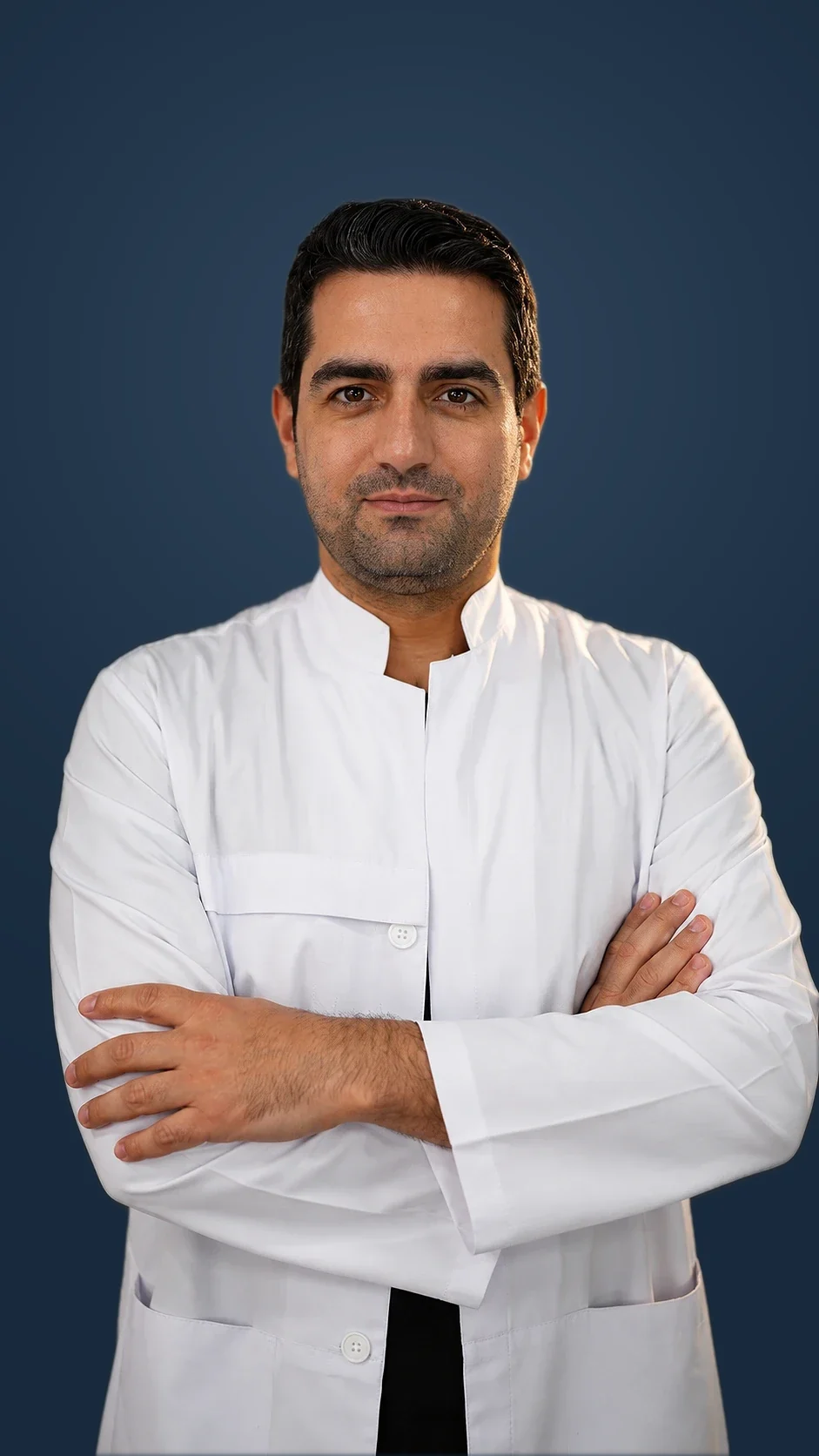
Medically reviewed by Dr. Ahmet Murat | Last updated:

A FUE hair transplant moves healthy hair follicles from a donor area, usually the back and sides of the scalp, to areas affected by hair loss. It is used to restore receding hairlines, improve thinning areas, and increase coverage in suitable patients.

At Hermest Clinic in Istanbul, Turkey, our Sapphire FUE packages start at €2,890, including hotel accommodation and transfers. FUE removes follicles one at a time, so there is no long linear scar of the kind left by traditional strip surgery.

Before you choose FUE, you need to know how it works, whether you qualify, what recovery involves, and what results are realistic. In this guide, our team of expert doctors explains all of it, including how to judge whether the treatment is suited for you or not.

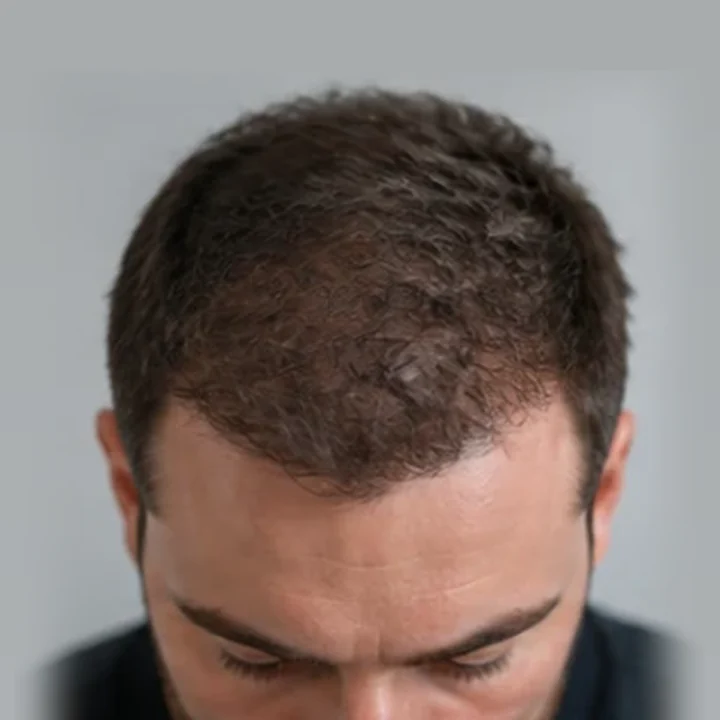
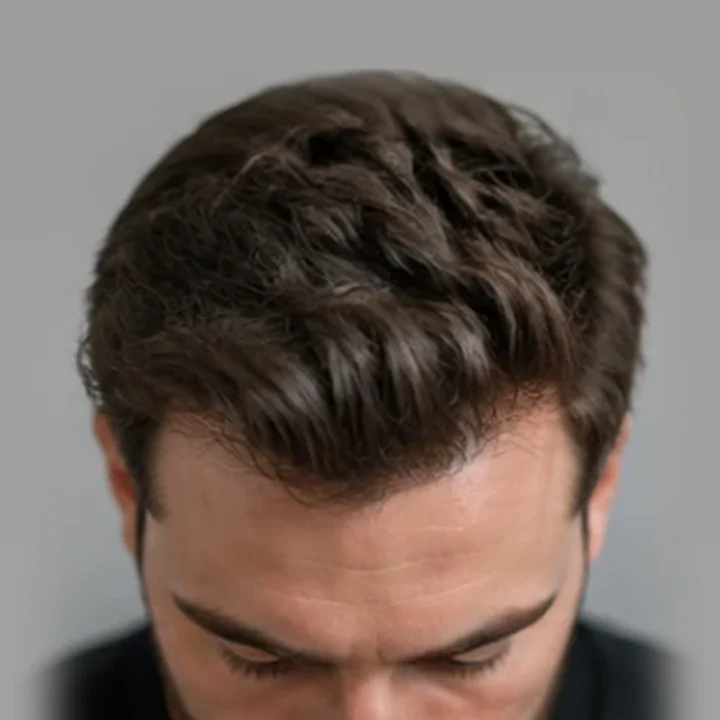
FUE Hair Transplant Before and After Results

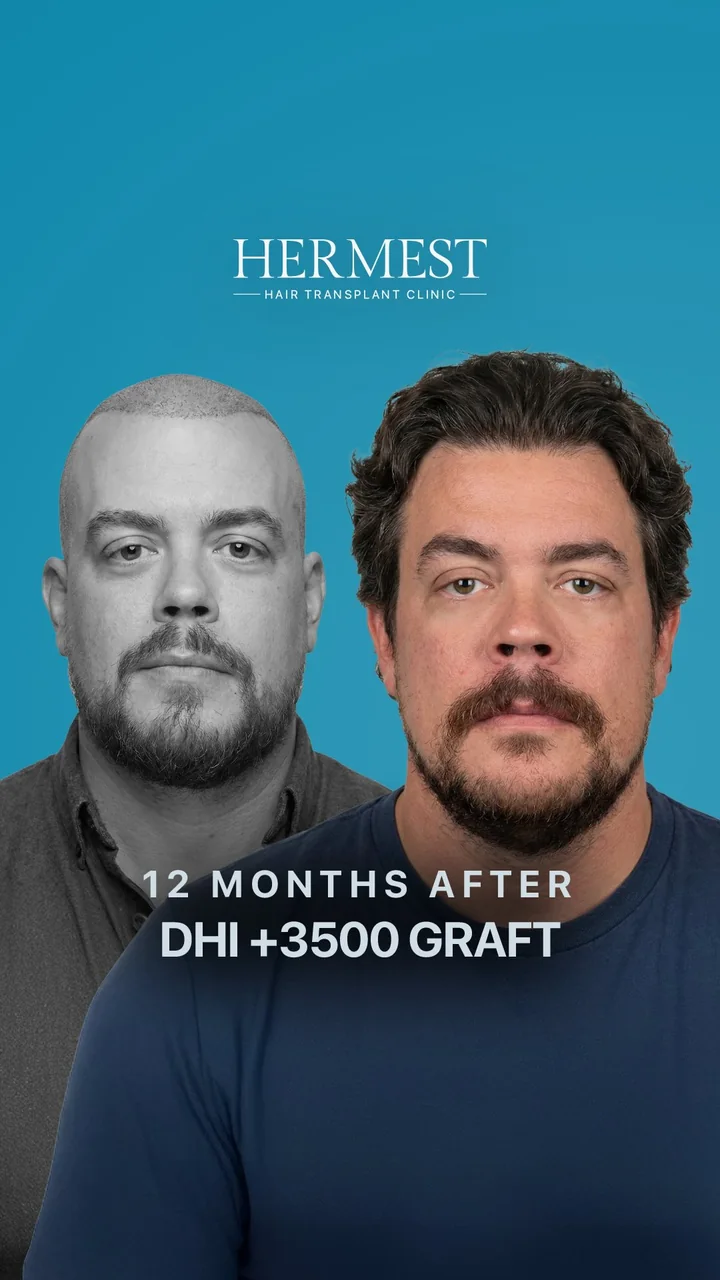
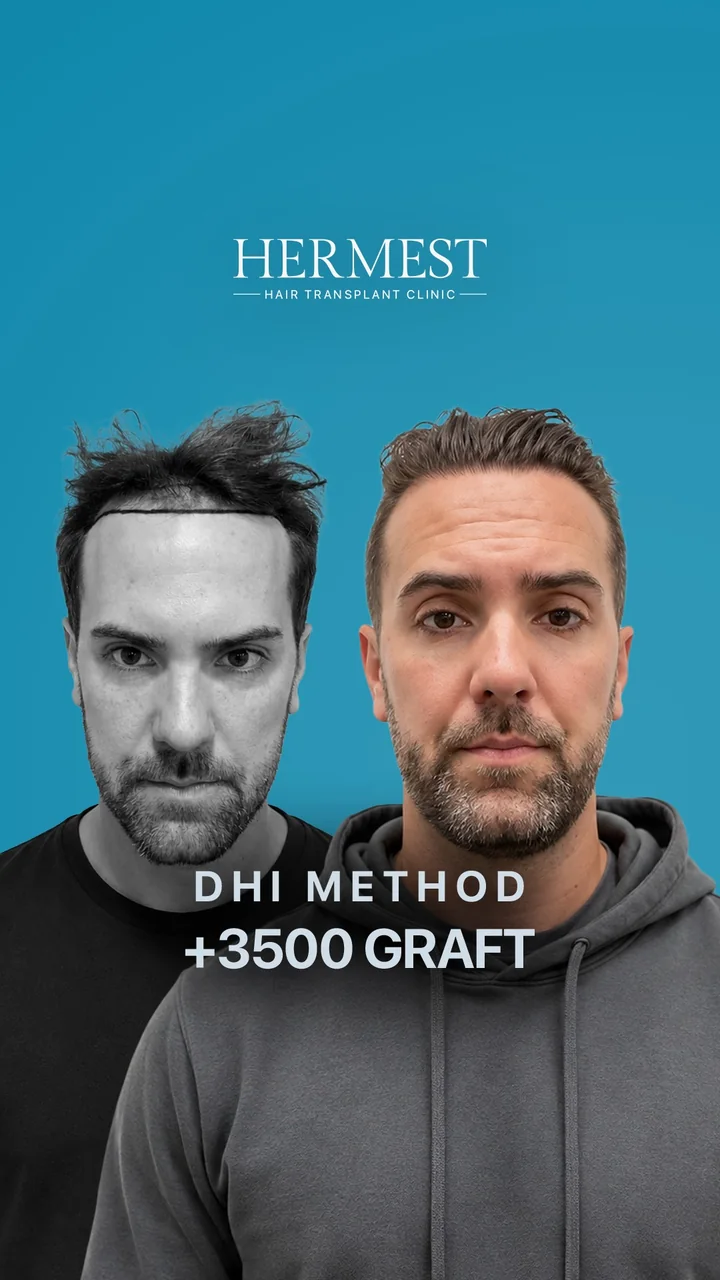
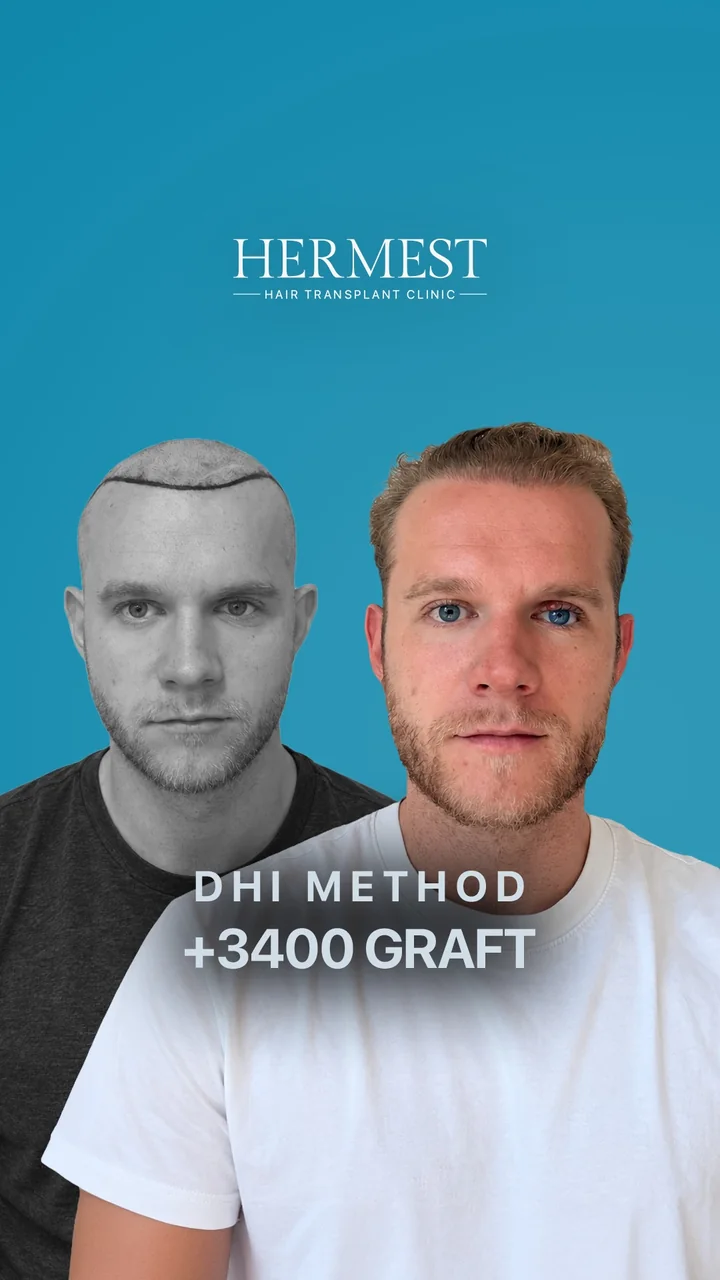
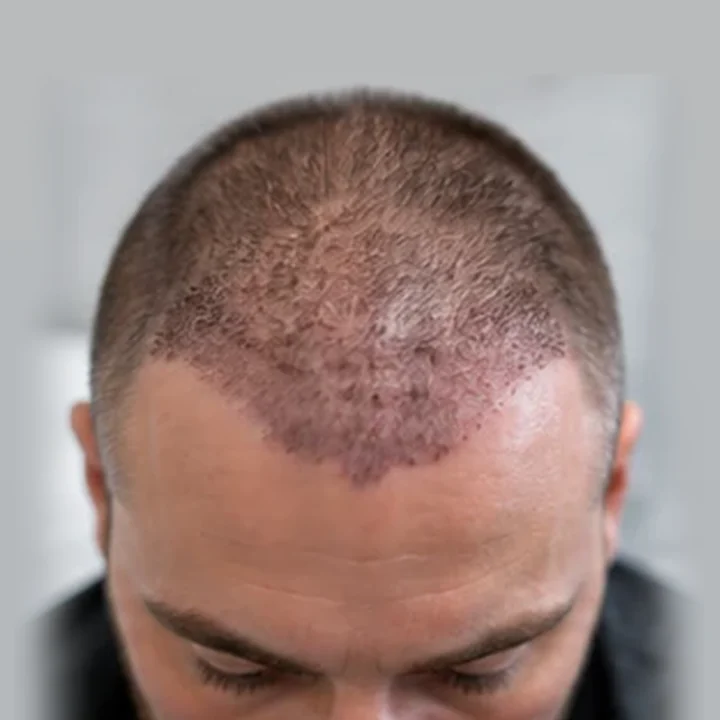
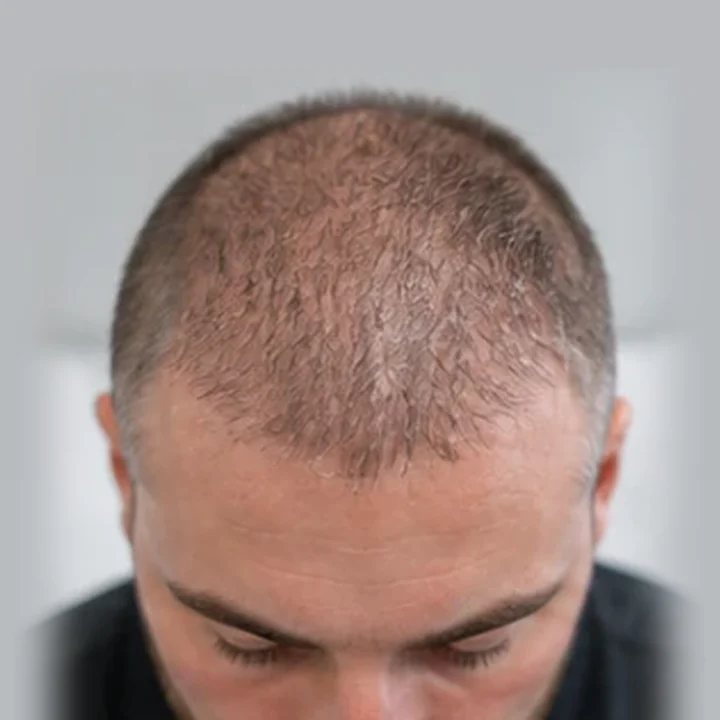
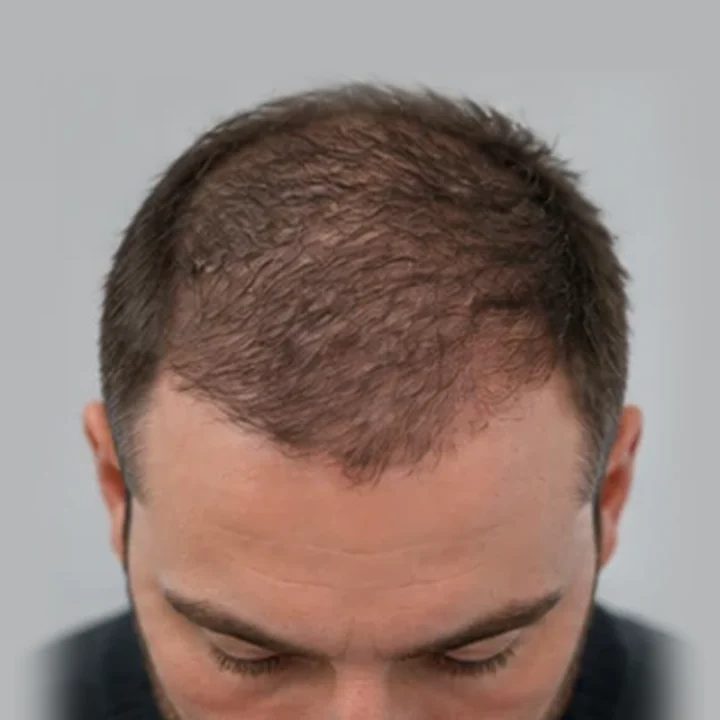
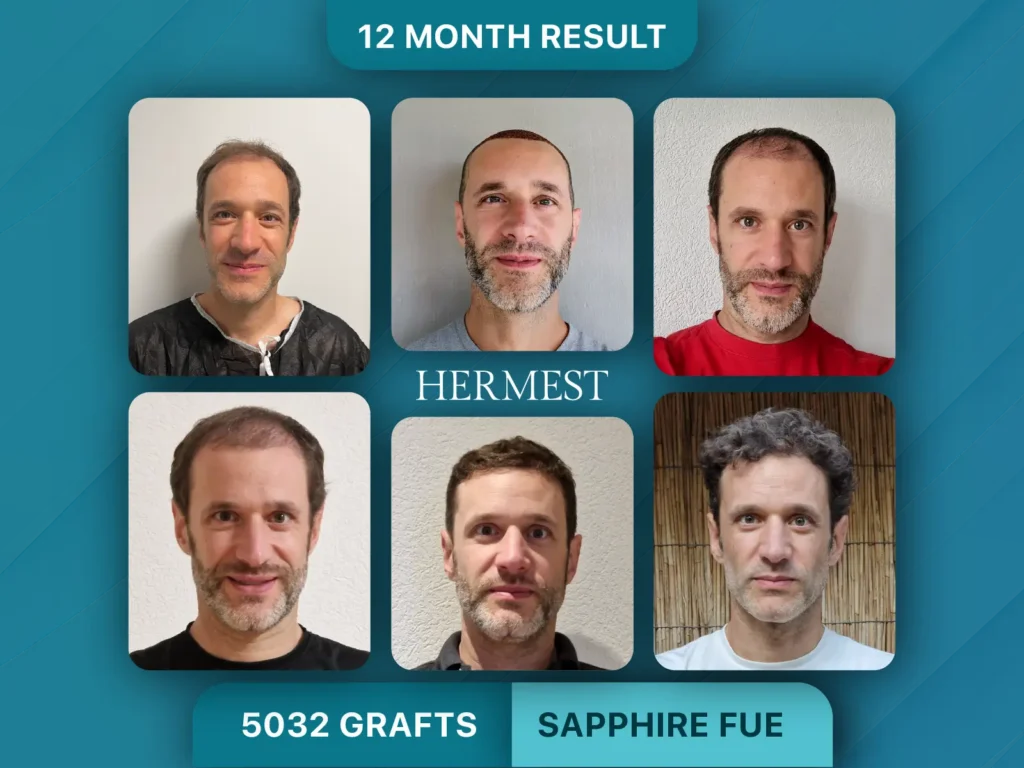
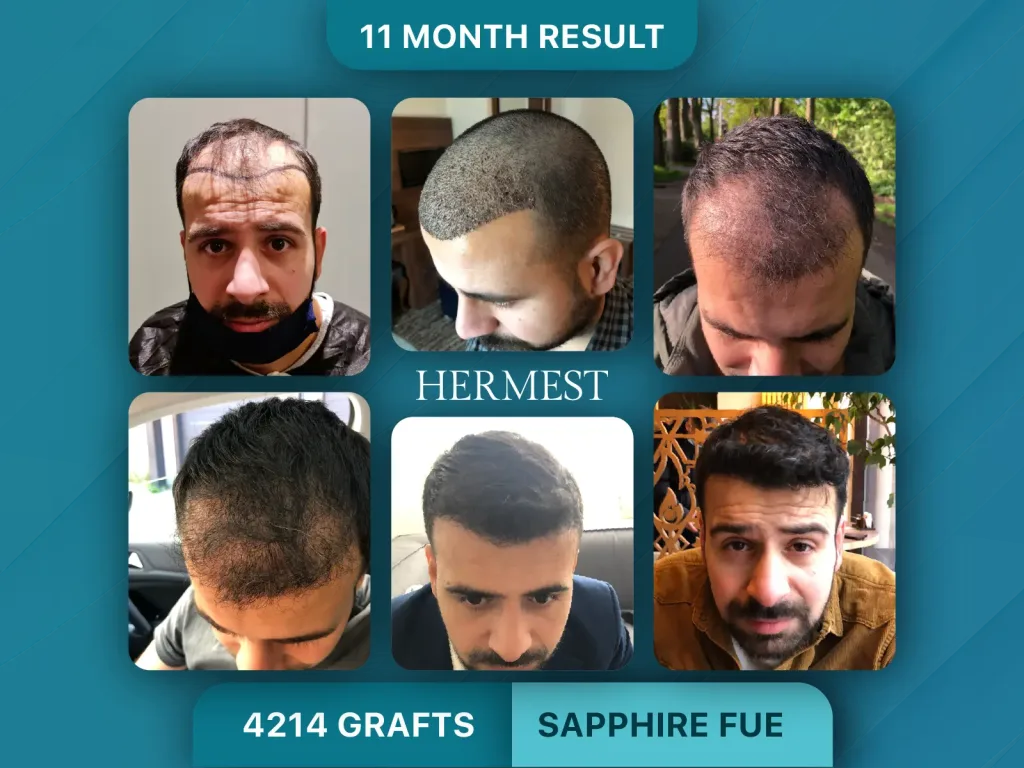
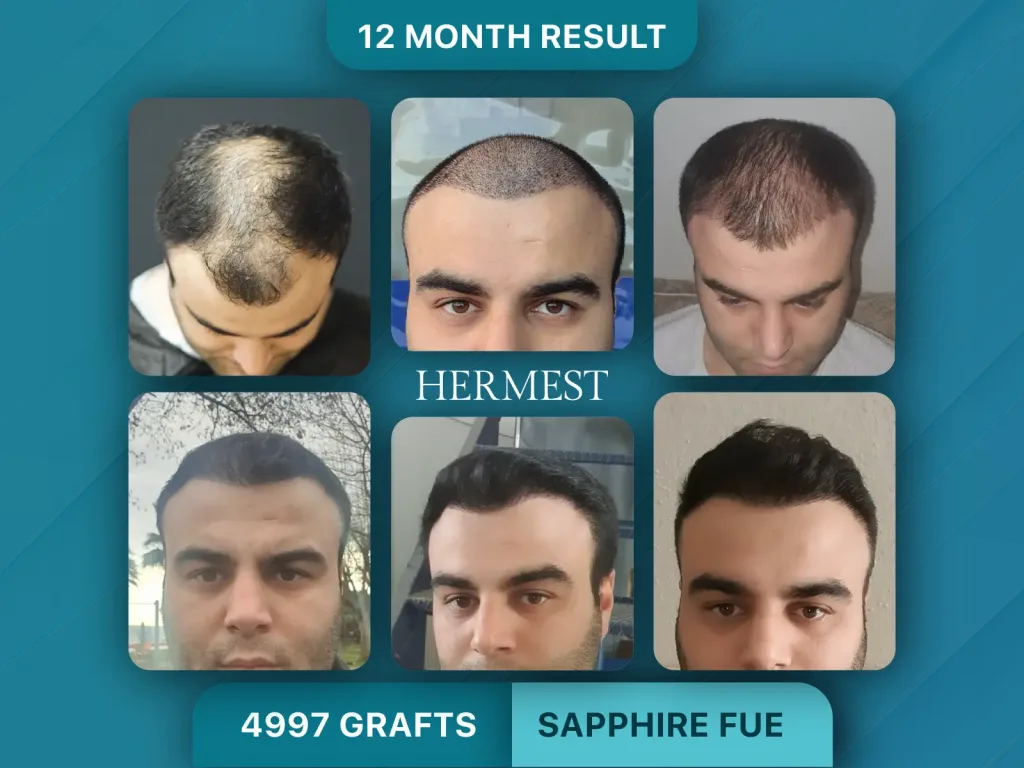
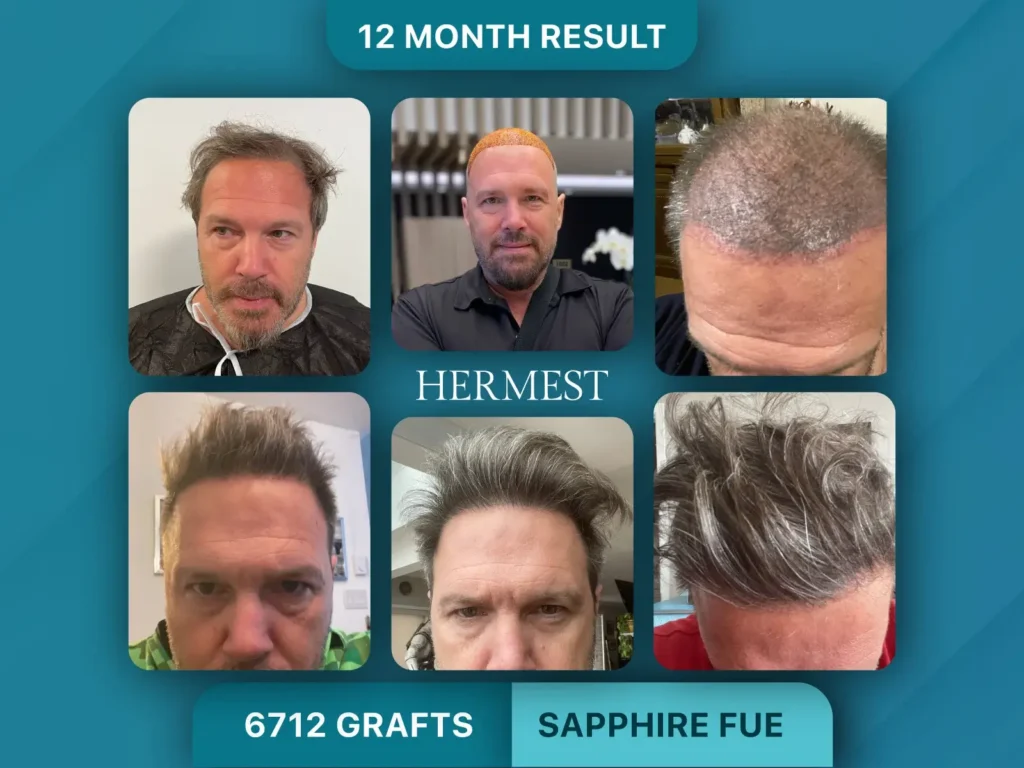
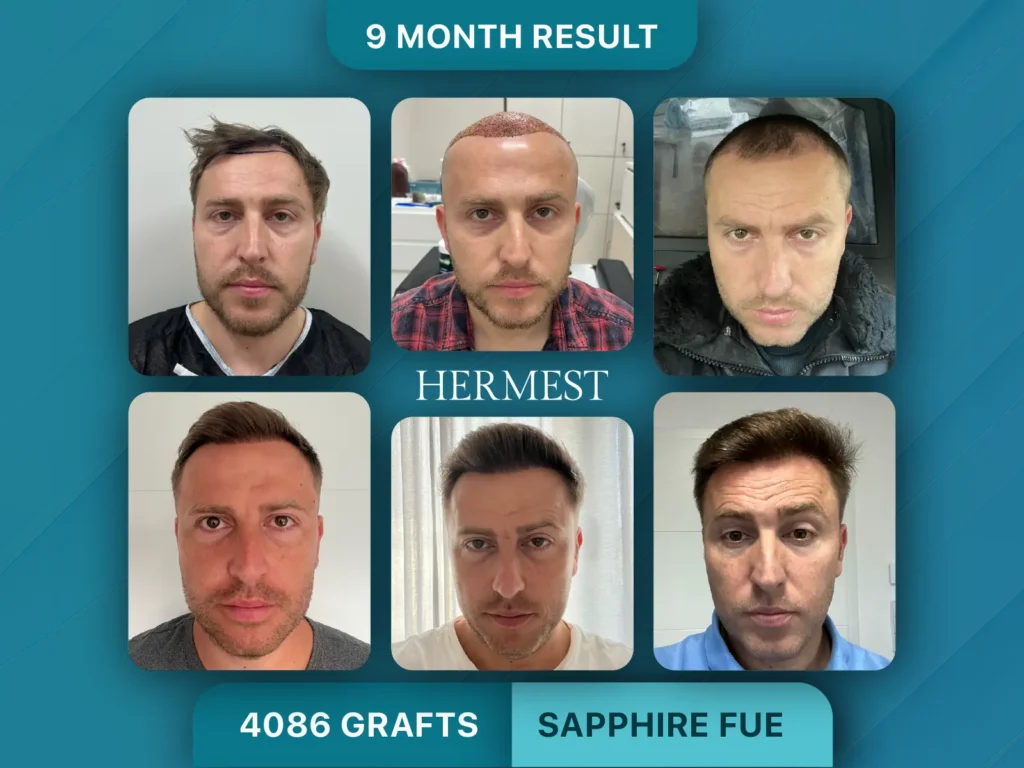
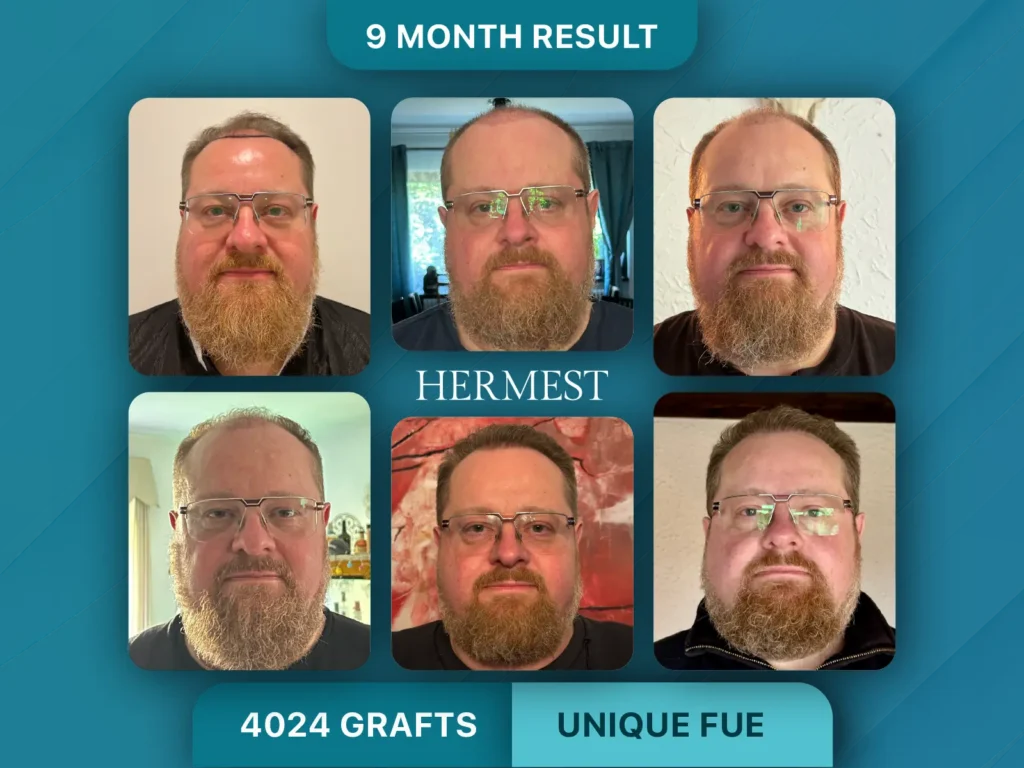
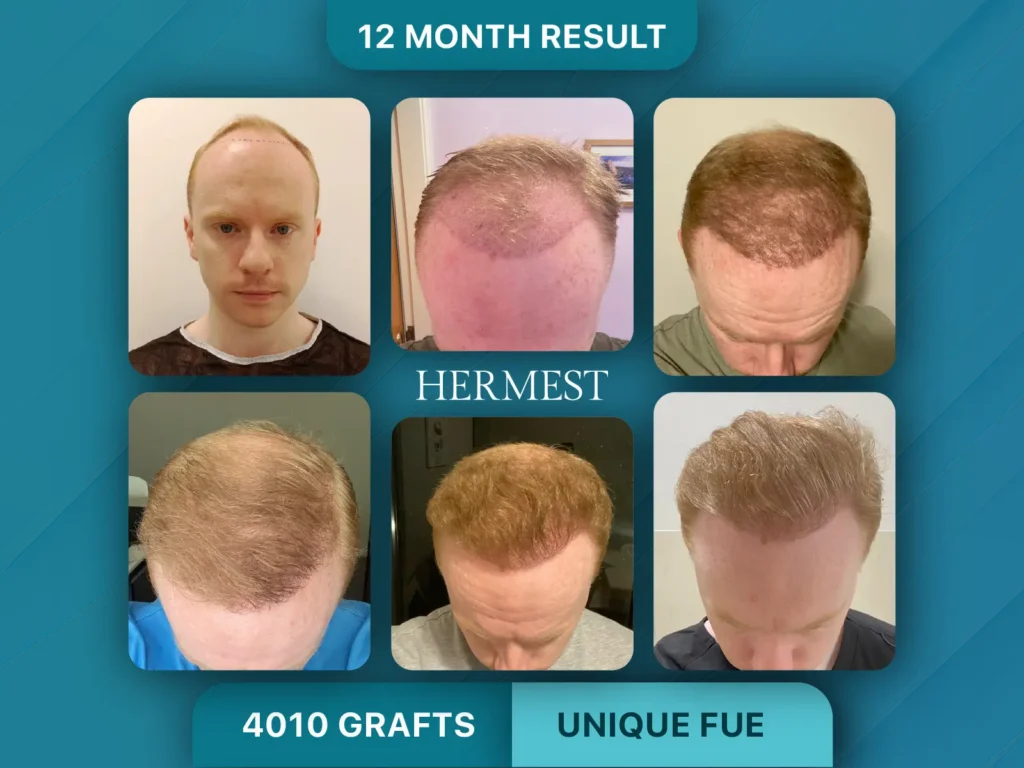
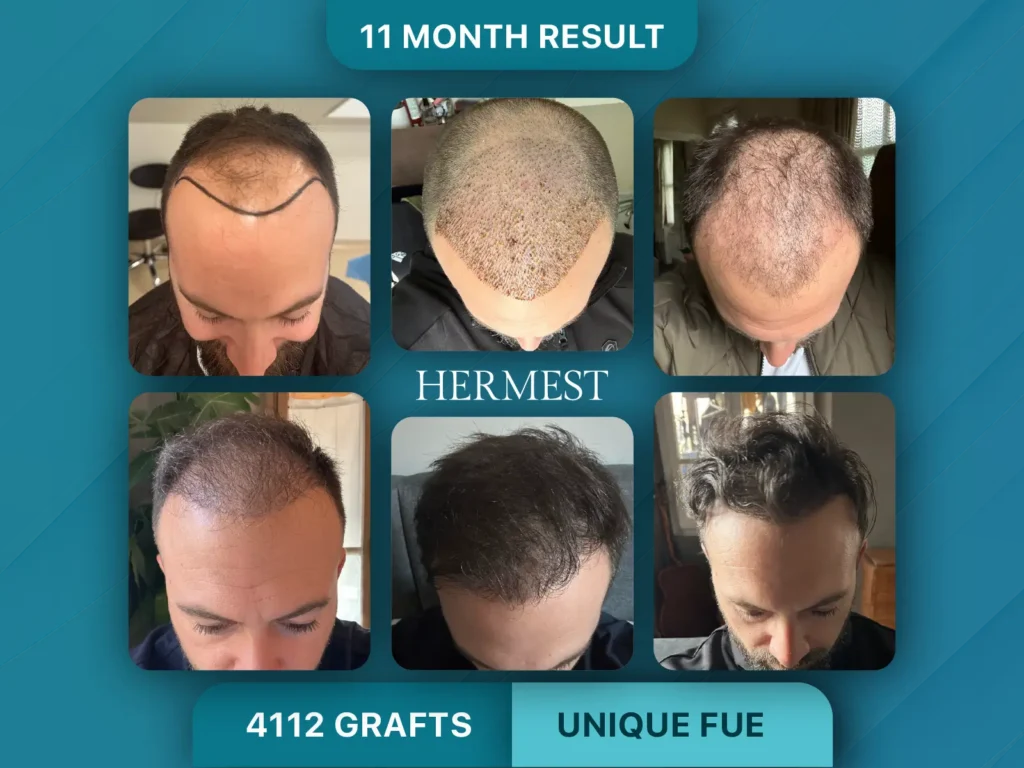
Before‑and‑after photos show how transplanted hair can improve hairline shape, visible density and coverage. The final appearance depends on the starting pattern, the number and quality of grafts and how long the hair has had to grow.

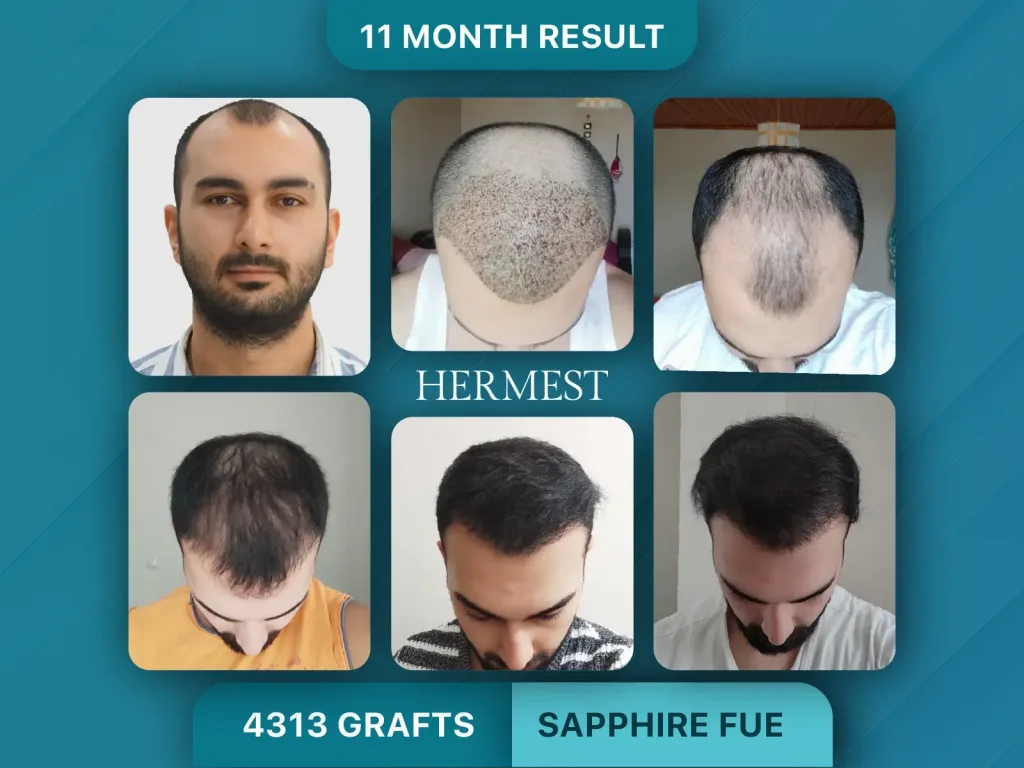
Sapphire FUE hair transplant before and after, 11-month result: bearded man with top and crown loss, 4313 grafts
4,313 graftsSapphire FUE11 months
Hair transplant before and after at Hermest: 5032 grafts with Sapphire FUE, 12-month result
5,032 graftsSapphire FUE12 months
Sapphire FUE hair transplant before and after, 11-month result: bearded man, front and top, 4214 grafts
4,214 graftsSapphire FUE11 months
Sapphire FUE hair transplant before and after, 12-month result: young man with top thinning, 4997 grafts
4,997 graftsSapphire FUE12 months
Sapphire FUE hair transplant before and after, 12-month result: man with extensive hair loss, fuller grey hair, 6712 grafts
6,712 graftsSapphire FUE12 months
Sapphire FUE hair transplant before and after, 9-month result: man with receding hairline, 4086 grafts
4,086 graftsSapphire FUE9 months
Unique FUE hair transplant before and after, 9-month result: bearded man with glasses, 4024 grafts
4,024 graftsUNIQUE FUE®9 months
Unique FUE hair transplant before and after, 12-month result: young man with red hair, 4010 grafts
4,010 graftsUNIQUE FUE®12 months
Unique FUE hair transplant before and after, 11-month result: man with marked hairline and crown thinning, 4112 grafts
4,112 graftsUNIQUE FUE®11 months

Every patient starts with a different level of loss and a different donor supply. Someone with mild temple recession needs a smaller plan than someone with extensive thinning.

When you look at results, note the number of grafts, the areas treated and the months since surgery. Our hair transplant before‑and‑after results show a range of goals and outcomes.
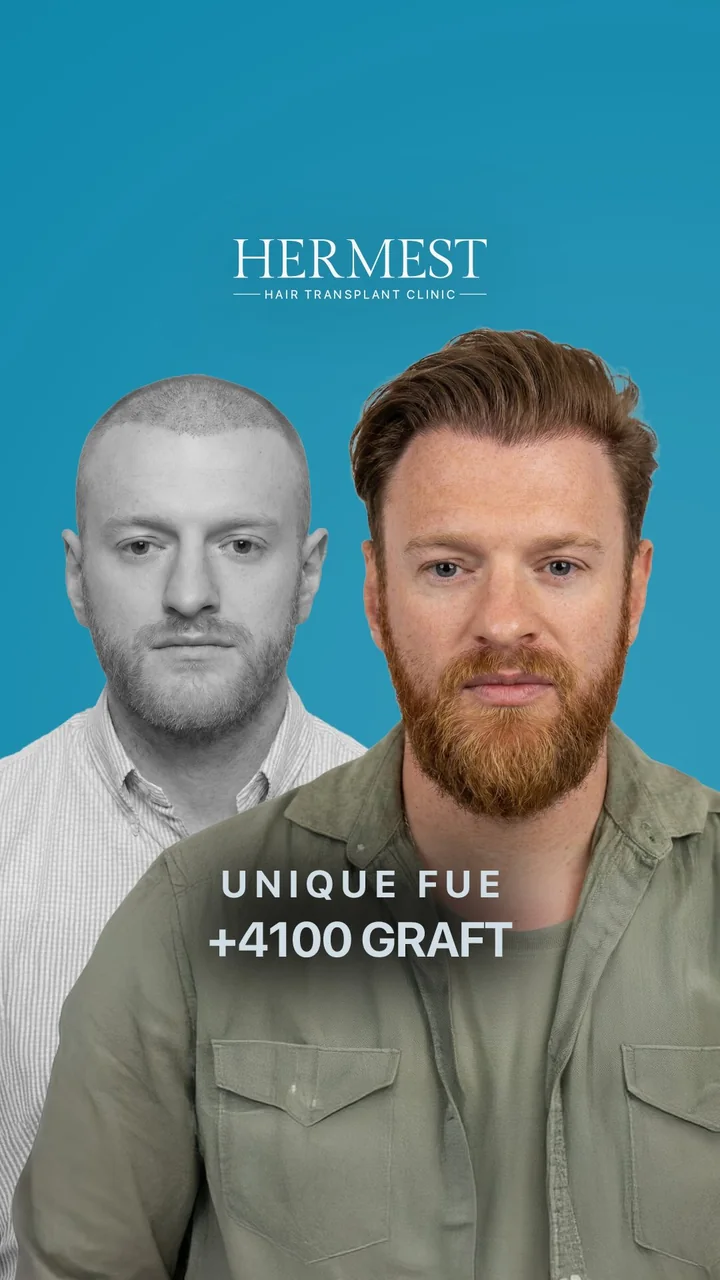
Look past how full the final photo appears. Check that the angles, lighting, hair length and styling are similar in both images.

Also check the timing. A six‑month photo can look very different from the same patient at twelve months, because transplanted hair keeps thickening and maturing. Good comparisons show what is possible without setting unrealistic expectations for your own result.

Our Patients’ Results on Video

Hermest patient result video: UNIQUE FUE®, 4,100 grafts, before and after
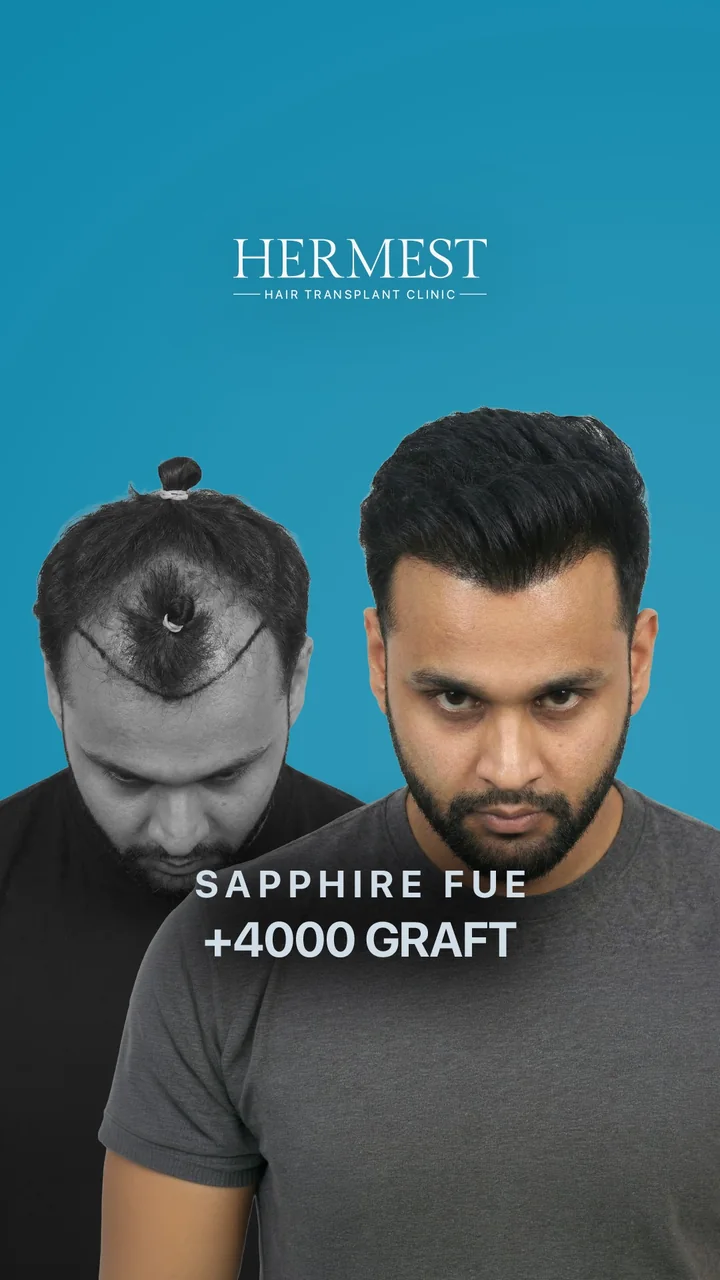
Hermest patient result video: Sapphire FUE, 4,000 grafts, before and after
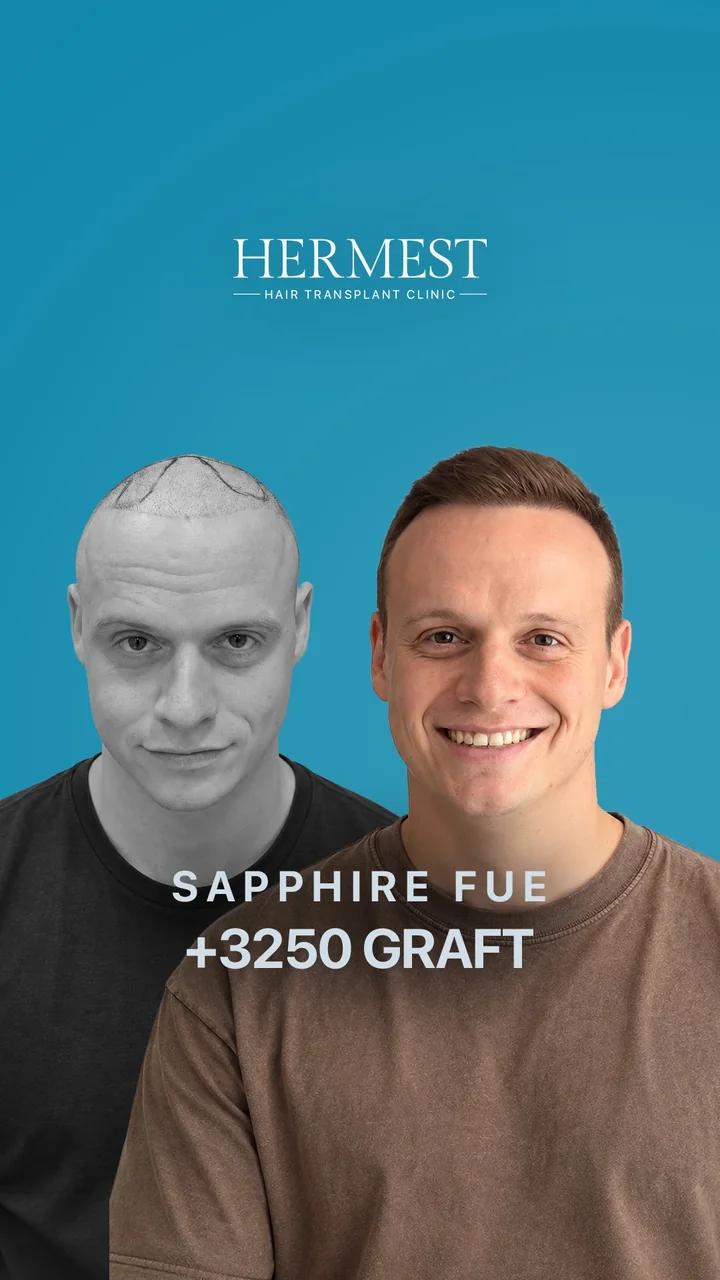
Hermest patient result video: Sapphire FUE, 3,250 grafts, before and after
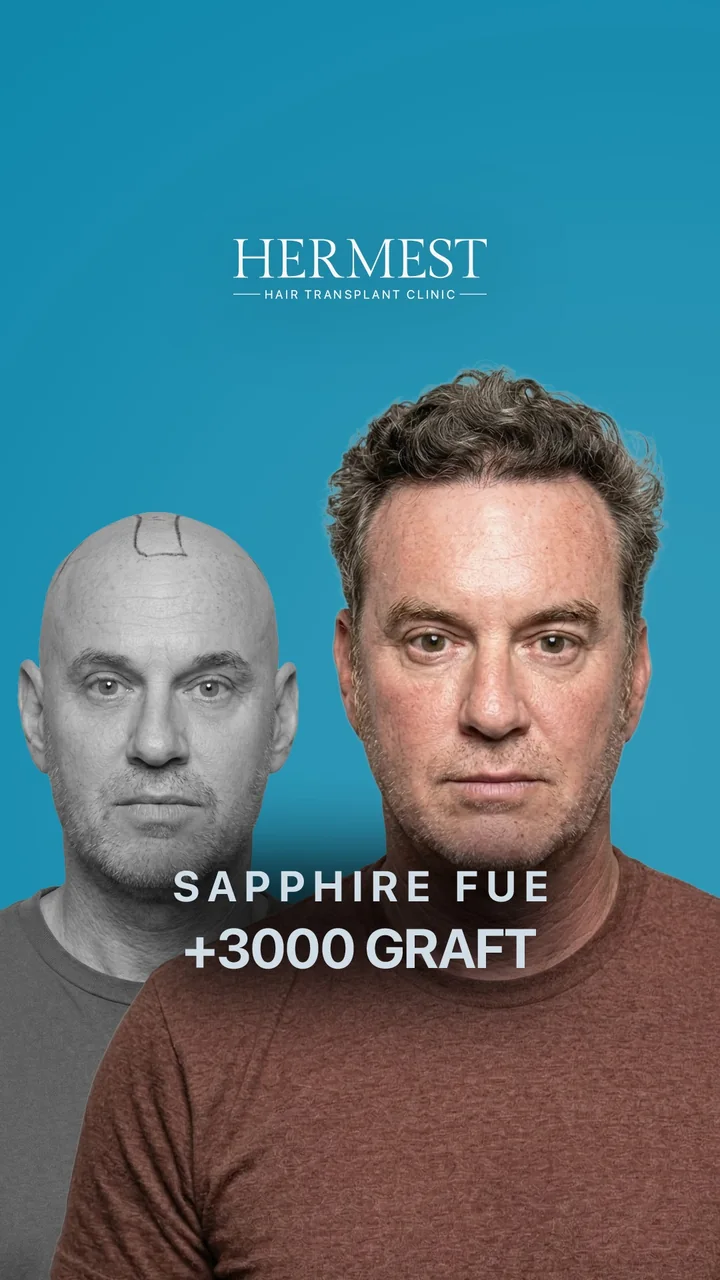
Hermest patient result video: Sapphire FUE, 3,000 grafts, before and after
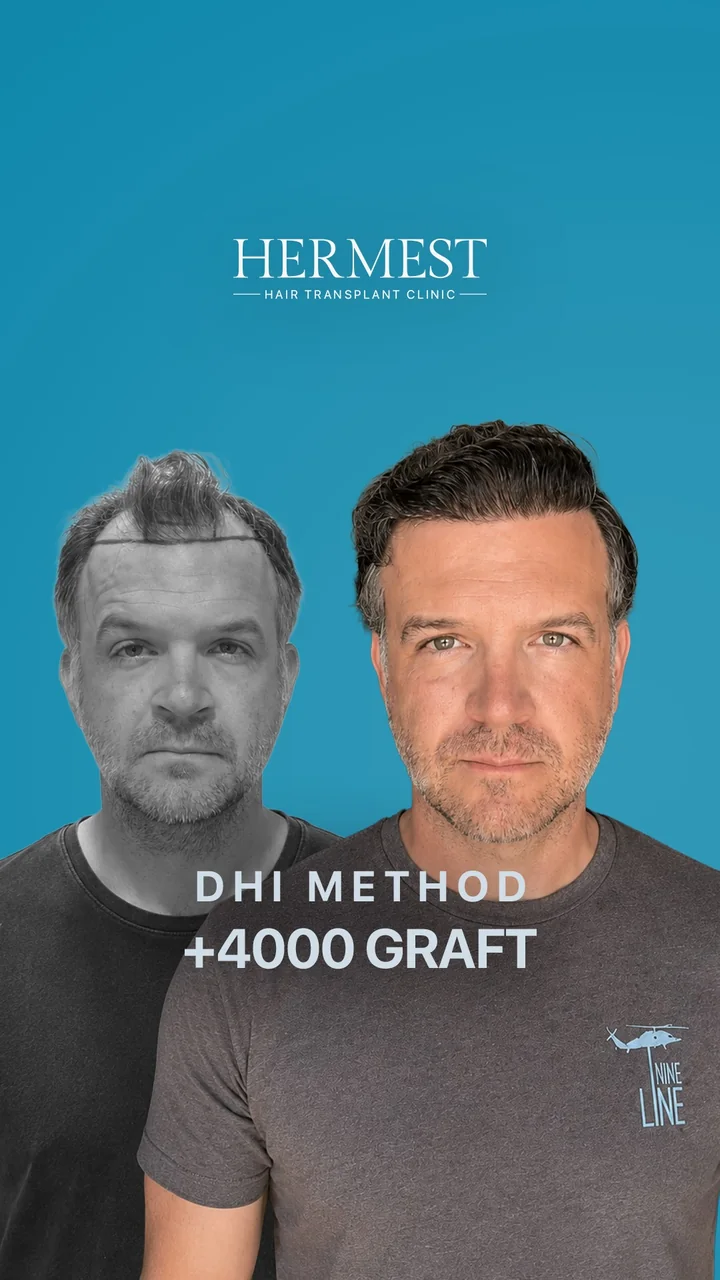
Hermest patient result video: DHI, 4,000 grafts, before and after
Hermest patient result video: DHI, 3,500 grafts, before and after
Hermest patient result video: DHI, 3,400 grafts, before and after
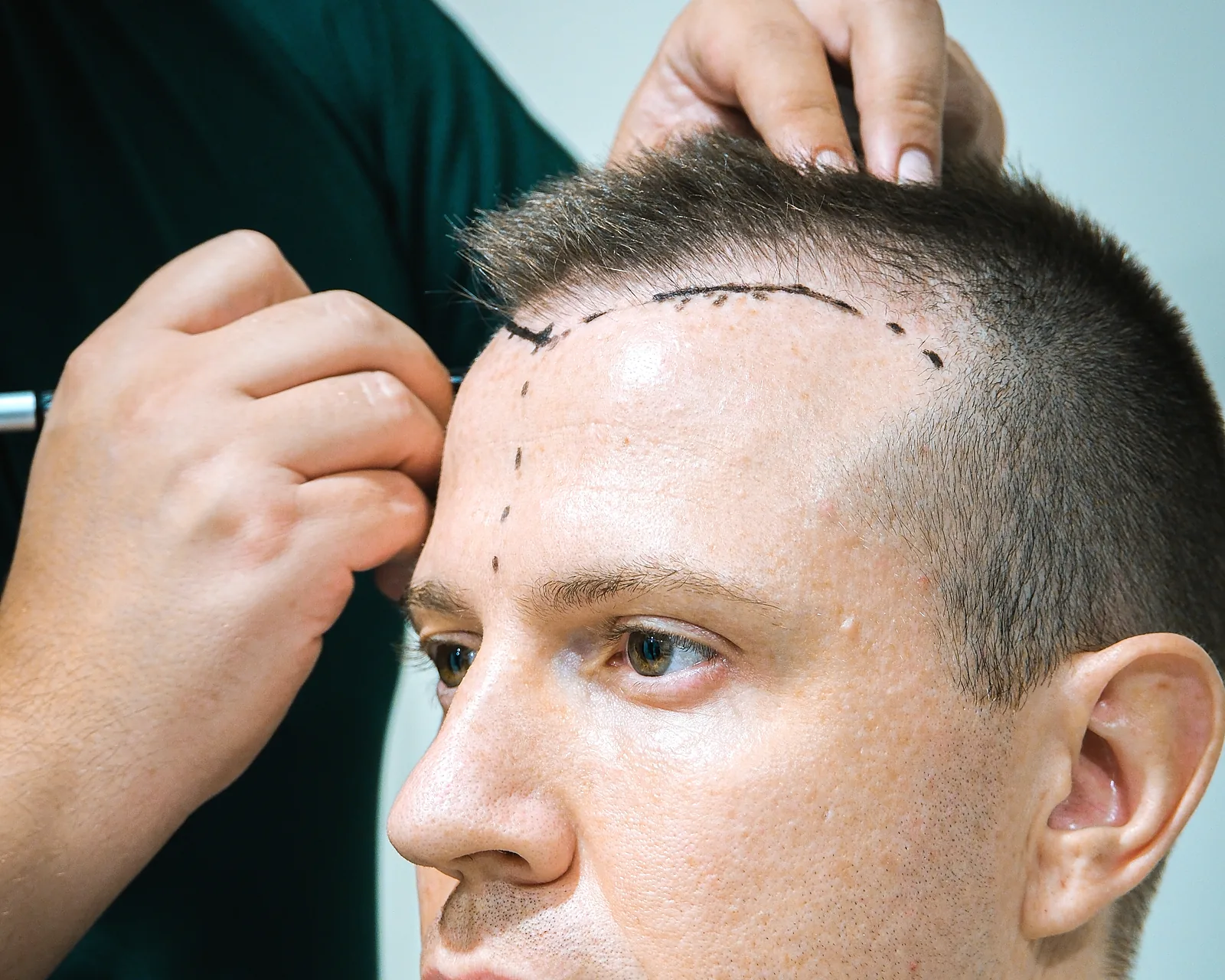
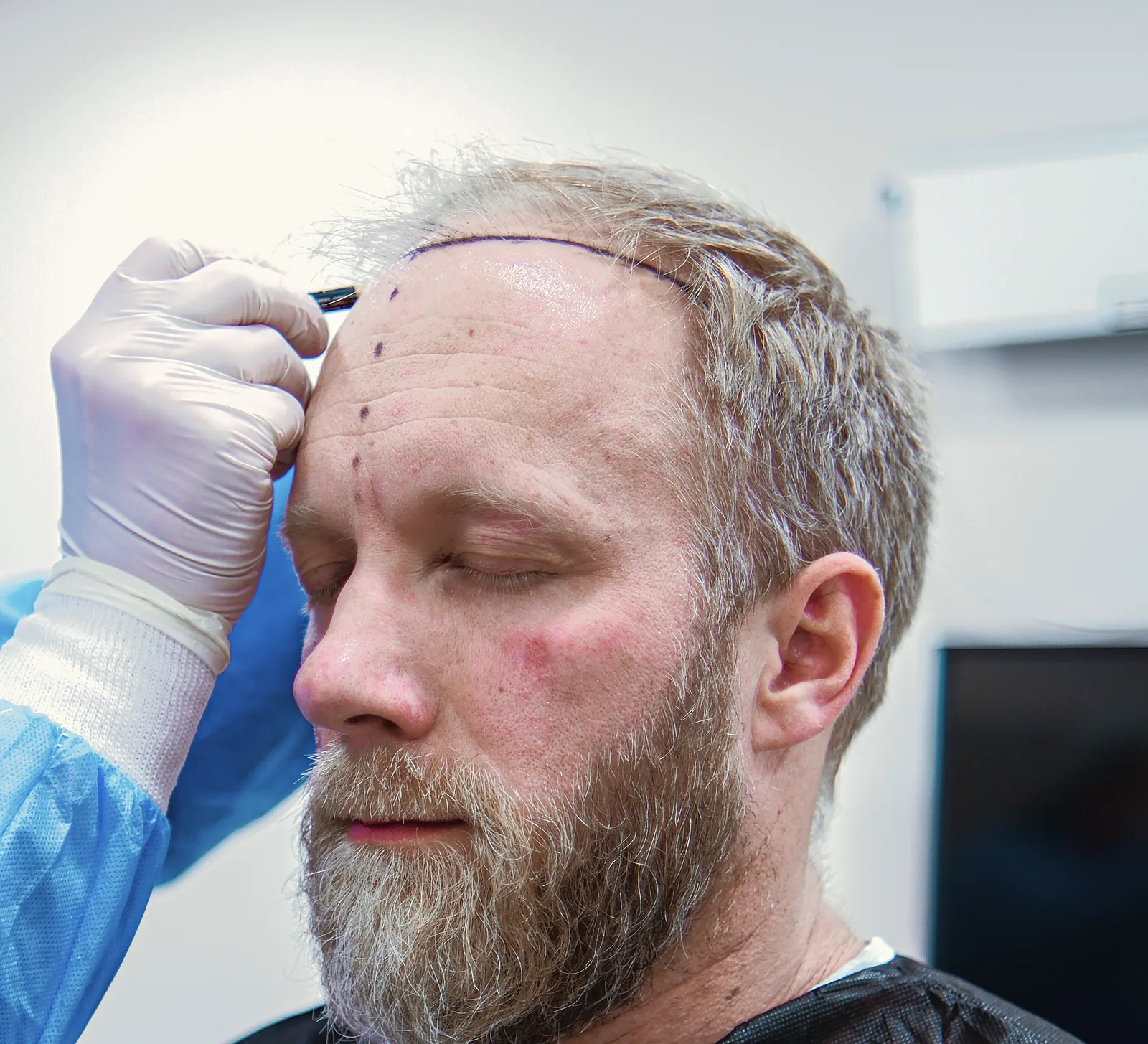
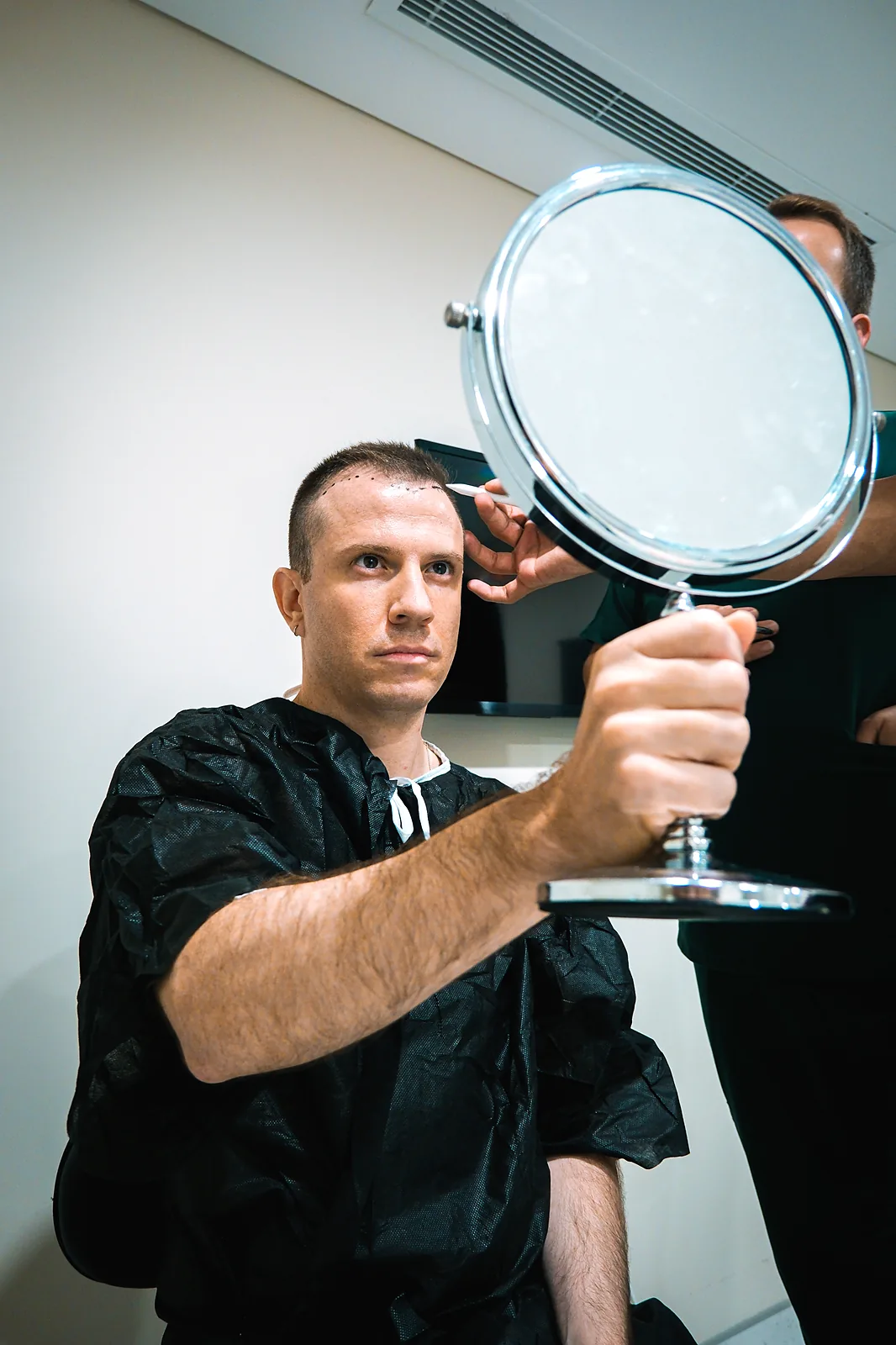
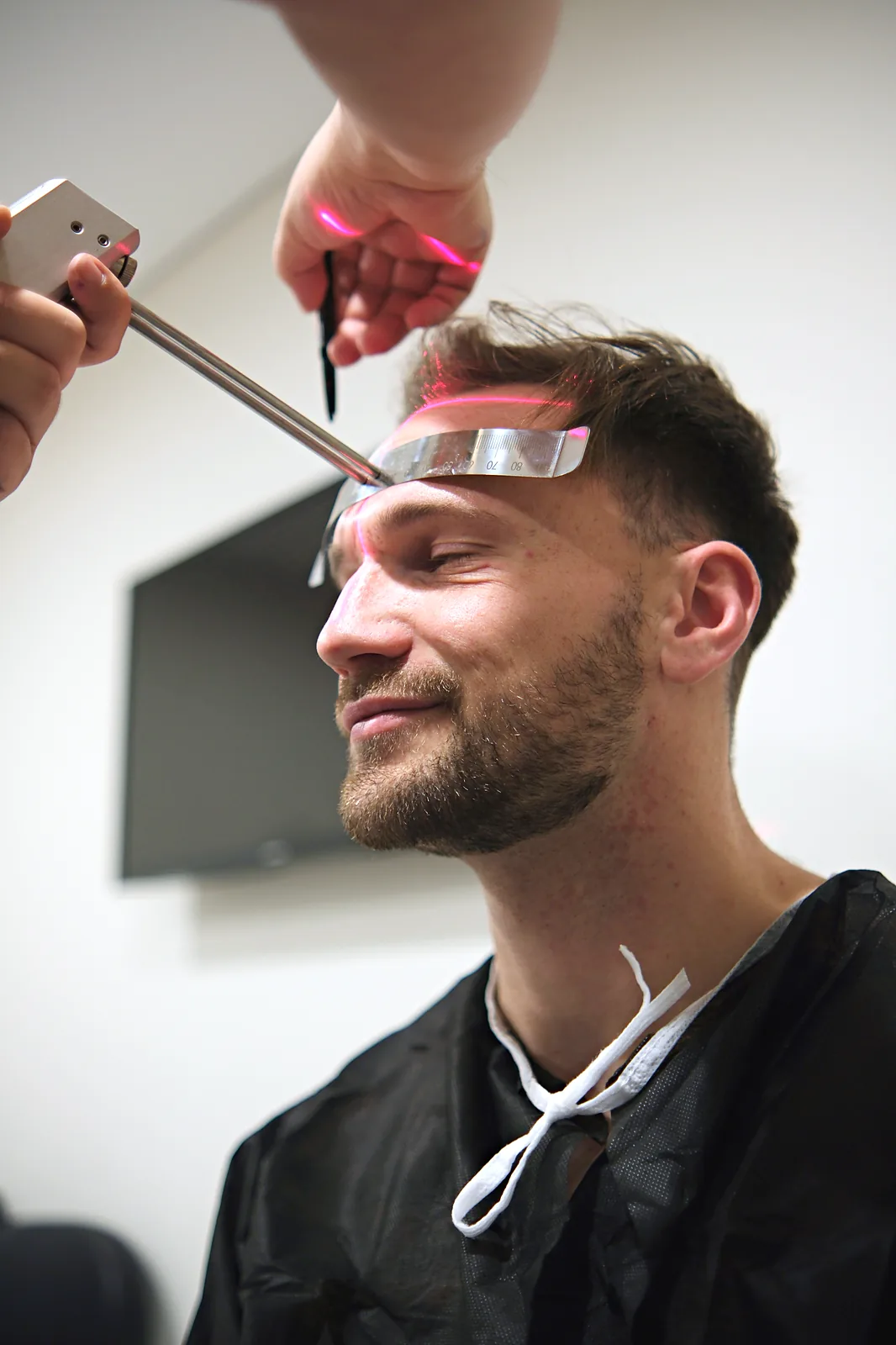
Patient with his new hairline drawn on before an FUE hair transplant at Hermest

What Is an FUE Hair Transplant?

An FUE hair transplant removes individual groups of hair follicles from a donor area and places them into thinning or bald areas of the scalp. FUE stands for Follicular Unit Extraction, although the more precise medical term is Follicular Unit Excision. Unlike the strip method, FUE does not remove a long strip of scalp tissue.

FUE describes how hair grafts are harvested during surgery.

Hair grows in small groups called follicular units. Each unit usually holds one to four hairs, together with the structures that support growth. During FUE, these units are removed with small surgical punches and prepared for implantation.

A graft is not the same as a hair. Because many grafts contain several hairs, a patient who receives 2,000 grafts receives considerably more than 2,000 individual hairs.

The International Society of Hair Restoration Surgery describes follicular unit excision as a surgical technique that requires appropriate medical training and careful donor management.

FUE redistributes existing healthy follicles to areas that need more coverage.

Hair is normally harvested from the back or sides of the scalp, where follicles tend to resist the hormones behind common pattern baldness. These follicles are implanted into planned recipient sites. Their direction, angle, spacing, and the number of hairs per graft decide how natural the result looks.

FUE does not create new follicles and does not stop future hair loss. The goal is to use the available donor hair efficiently and keep enough in reserve for any future procedure.

How Much Does an FUE Hair Transplant Cost in Turkey?

An FUE hair transplant at Hermest Clinic starts at €2,890 for Sapphire FUE, and Premium Sapphire FUE starts at €4,100. Prices are fixed by package and technique rather than charged per graft. Your final plan and price are confirmed after an individual hair assessment.

FUE Hair Transplant Packages at Hermest Clinic

AT Hermest Clinic, our packages differ by surgical approach, hotel category, and length of stay.

FUE PackageSapphire FUEPremium Sapphire FUEUnique FUEPremium Unique FUE
Starting Price (EUR / USD)€2,890 / $3,224€4,100 / $4,574€4,250 / $4,742€5,450 / $6,080
Hotel Accommodation2 nights, 4‑star hotel3 nights, 4‑star hotel2 nights, 5‑star hotel3 nights, 5‑star hotel
Graft ExtractionMedical team under doctor supervisionMedical team under doctor supervisionMedical team under doctor supervisionMedical team under doctor supervision
Free Hair Analysis

Developed with German Engineers

Free Hair Analysis
Dr. Nesim Tüğen, hair transplant surgeon at Hermest ClinicSurgeon‑performed packageDr. Nesim TüğenFrom€7,400 ≈ $8,500

The package price does not rise with the number of grafts. The number of grafts is set by your donor area and your treatment plan. More grafts are not automatically better, because the donor area can only safely give so many.

For a full comparison, see our hair transplant prices in Turkey.

A suitable 2,000‑graft procedure falls under the Sapphire FUE package, which starts at €2,890. Needing 2,000 grafts does not add a separate fee.

The number of grafts you need depends on the size of the thinning area, your existing density, hair thickness and the coverage you want. A receding hairline usually needs fewer grafts than loss across the frontal scalp and crown, and two patients with similar‑looking loss can need quite different plans.

The medical team gives a graft estimate after examining your scalp and donor hair. The aim is useful coverage without exhausting your donor supply.

Our package covers the treatment and the essentials of your stay in Istanbul. Depending on the package, this includes:

  • Medical consultation and hair transplant planning
  • FUE surgery under local anaesthesia
  • Hotel accommodation for the number of nights in your package
  • Airport, hotel and clinic transfers
  • Prescribed postoperative medicines and care products
  • Postoperative monitoring and follow‑up support

International flights are not included. Before you book, you will receive your treatment method, accommodation, inclusions and total price in writing.

Patient with his coordinator in the Hermest clinic lounge after his arrival in Istanbul

Request a free consultation

Get an analysis and consultation with one of our hair transplant specialists.

▼

Your personal data is protected. We use it only to prepare your free hair analysis and to contact you. See our Privacy Policy.

Who Is a Good Candidate for an FUE Hair Transplant?

You may be a good candidate if you have permanent hair loss, enough healthy donor hair and realistic expectations. FUE is most often used for selected patients with male‑pattern or female‑pattern hair loss, but suitability can only be confirmed after a medical assessment of your scalp, hair‑loss history and general health.

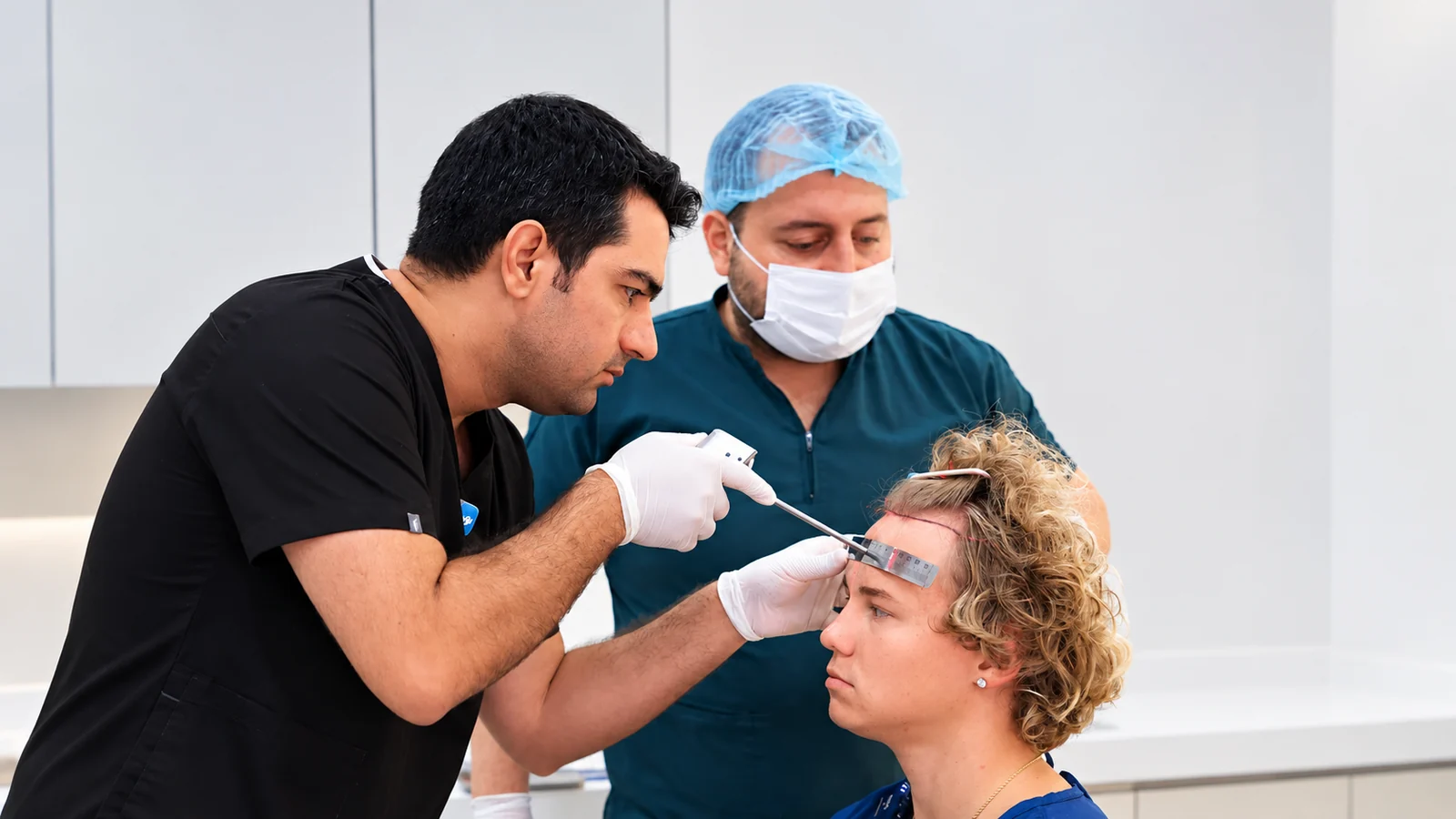
Hermest doctor marking a patient's receding hairline before an FUE hair transplant

FUE is most commonly used for androgenetic alopecia, also called pattern hair loss.

In men this typically shows as a receding hairline, thinning at the temples or loss at the crown. Doctors often describe it using the Norwood scale. Women can also have pattern loss, usually as diffuse thinning on top or a widening parting.

Not all hair loss can be treated by transplant. Alopecia areata, active inflammatory scalp disease and some scarring alopecias need specialist evaluation first, and surgery may be unsuitable until the cause is diagnosed and managed.

The donor area is the most important factor in planning, because its follicular units are limited. The team evaluates:

  • Donor density:

    how many healthy units can be harvested safely.

  • Hair thickness:

    thicker shafts give more visual coverage.

  • Texture and curl:

    wavy or curly hair can look denser.

  • Colour contrast:

    low contrast between hair and scalp makes the scalp less visible.

  • Recipient‑area size:

    larger areas need more grafts.

  • Future hair loss:

    enough donor hair should be kept for later needs.

Graft count is only part of the plan. Placement and donor protection matter just as much.

Estimate how many grafts your hair transplant may need. Select the areas where you are losing hair, rate your donor area, and the calculator shows an approximate graft count and whether your donor hair can cover it.

Loading the 3D head

Zones with hair loss
Donor area

Check in a mirror, or ask someone for a photo.

Ready to take the next step? Chat with us on WhatsApp to discuss your graft needs and personalized hair transplant plan.

Send on WhatsApp

Prefer a form? Leave your details. Our team contacts you for a free hair analysis.

Approximate grafts needed

0grafts

Range 0

Range 0 · about 0 hairs

This is an estimate for planning only. Donor figures are a lifetime supply, not one session. Your exact graft count depends on your donor area, hair thickness and the result you want, and is set by our doctors after a free hair analysis.

The medical team takes the full medical history before surgery. These medical conditions need a solid consideration:

  • Blood‑thinning medication or bleeding disorders
  • Diabetes or other conditions that affect healing
  • Heart conditions or high blood pressure
  • Autoimmune or inflammatory scalp conditions
  • Allergies, especially to local anaesthetics
  • Current hair‑loss treatments such as minoxidil or finasteride

These medical conditions do not automatically rule you out. Some need testing, specialist input or a change in timing before surgery.

FUE may not suit you if your donor hair is insufficient, your hair‑loss condition is uncertain or a medical problem makes surgery unsafe.

If your hair loss is progressing quickly, medical treatment or further assessment may come first. Younger patients need careful planning because their eventual pattern is not yet clear, and an aggressively lowered hairline can look unnatural if the surrounding hair keeps thinning.

At Hermest Clinic, the first question is whether a transplant is appropriate, not how many grafts can be implanted. A complete assesment decides the tretment and the procedure suitable for a patient.

How Does the FUE Hair Transplant Procedure Work?

The FUE hair transplant procedure involves assessing the scalp, designing the hairline, numbing the scalp, harvesting follicular units and implanting them into prepared recipient sites. Most FUE transplant sessions last several hours, depending on graft numbers and complexity.

  1. Hermest consultant going through the treatment plan with a patient

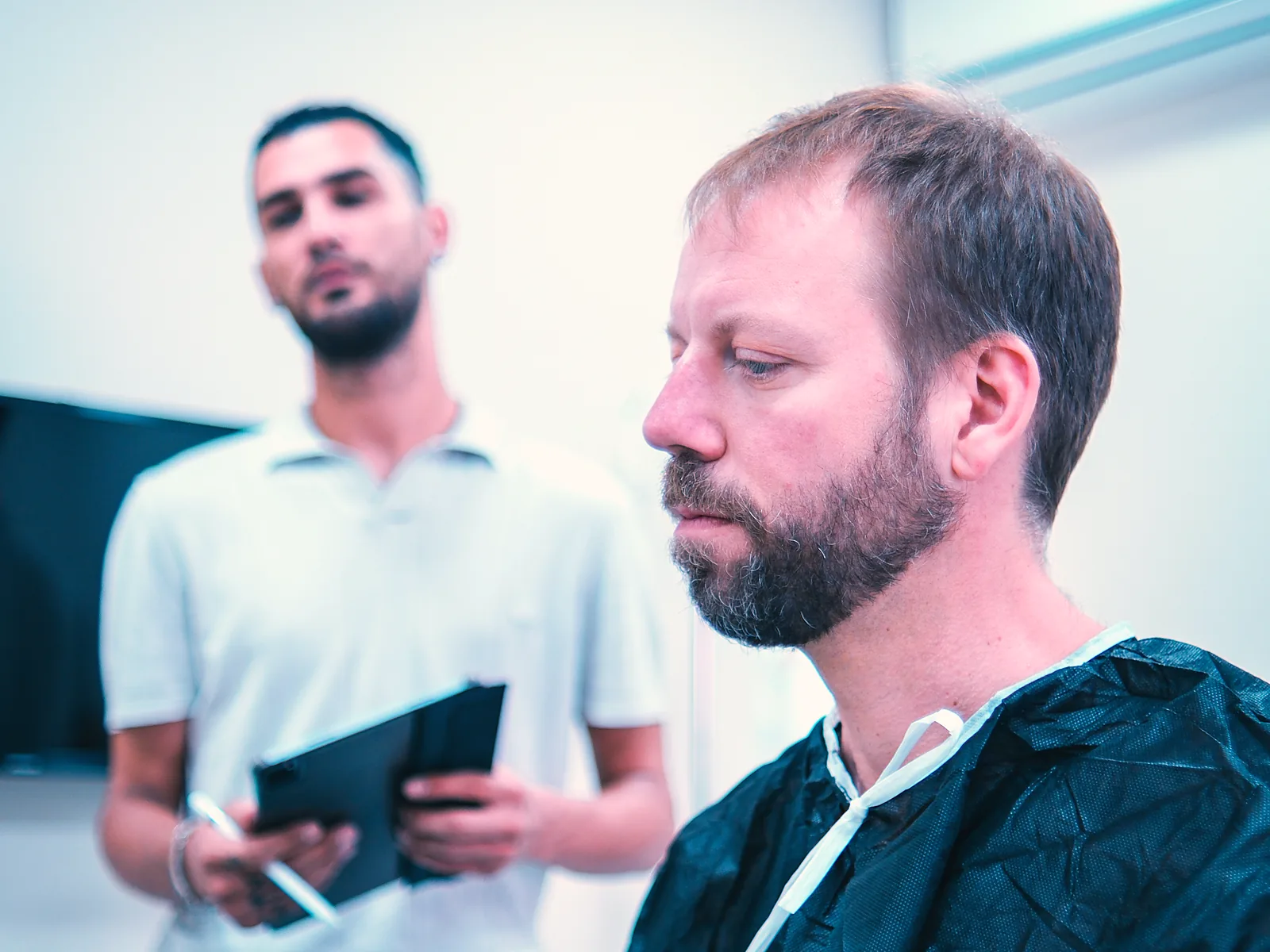
    Our doctors start your treatment with a medical consultation and a detailed examination of your hair and scalp. The team reviews your hair-loss history, medications, medical conditions and donor supply, and discusses your goals.

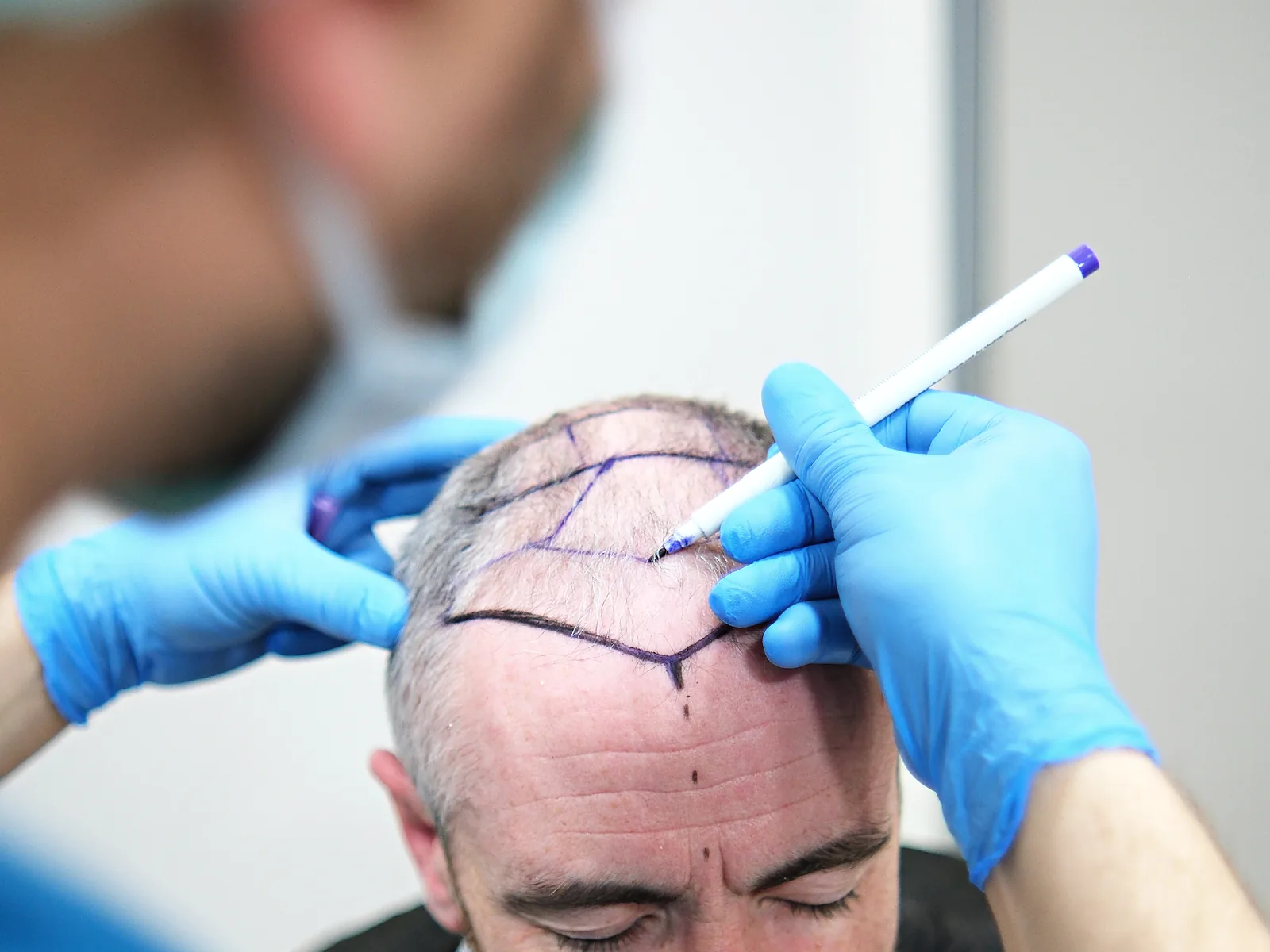
    The hairline is then designed around your facial proportions, age, existing hair and likely future loss. A natural hairline is not the lowest possible one. It is a position and shape that will still look right as you age.

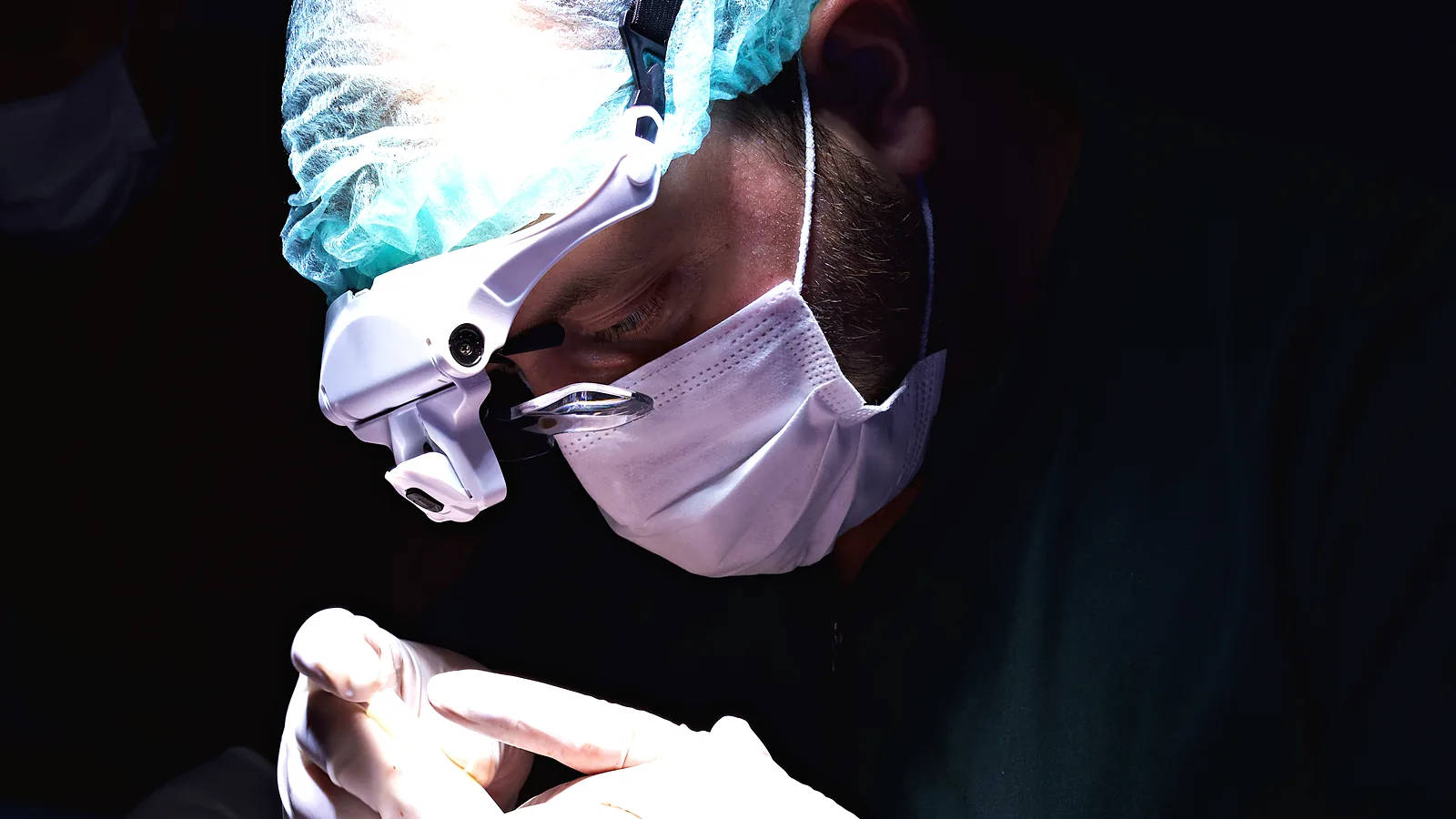
  2. Hermest surgeon with loupes extracting grafts during an FUE hair transplant

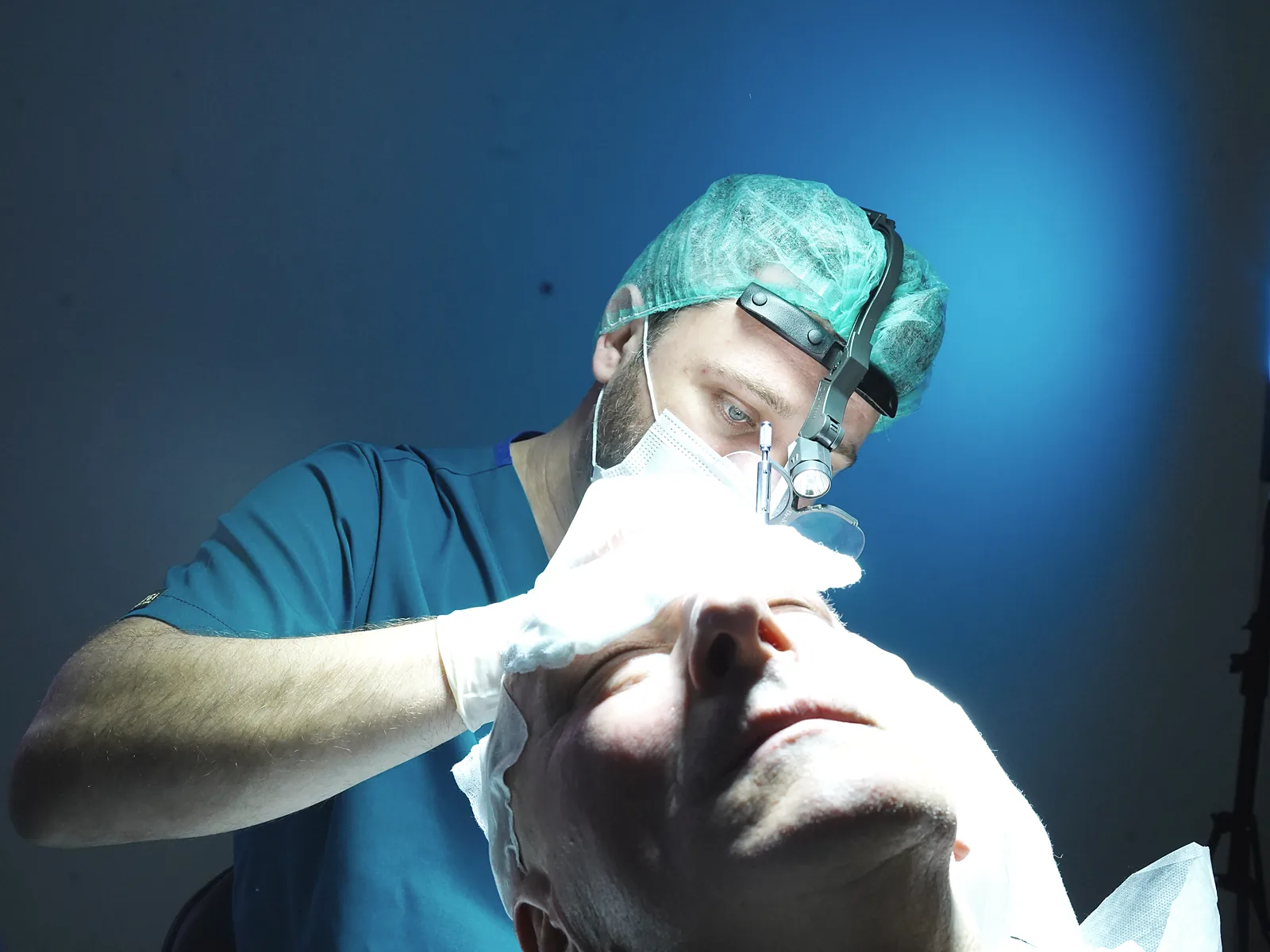
    We use local anaesthesia to numb the scalp. The donor area is usually trimmed or shaved so units can be identified accurately. A small surgical punch separates each follicular unit from the surrounding tissue and removes it.

    The grafts are then kept in suitable conditions until implantation, because damage or poor handling can reduce their ability to grow. Because grafts are removed one by one, FUE leaves small extraction wounds rather than a long donor incision.

  3. Hermest doctor marking the recipient areas on a patient's scalp

    Next, the recipient sites are created. Their angle, direction and spacing determine how natural the result looks.

    At the front of the hairline, single-hair grafts are placed with careful attention to angle. Further back, grafts with several hairs add the appearance of density. The order of harvesting and site creation can vary with the technique used.

  4. Smiling patient while a Hermest doctor checks his scalp

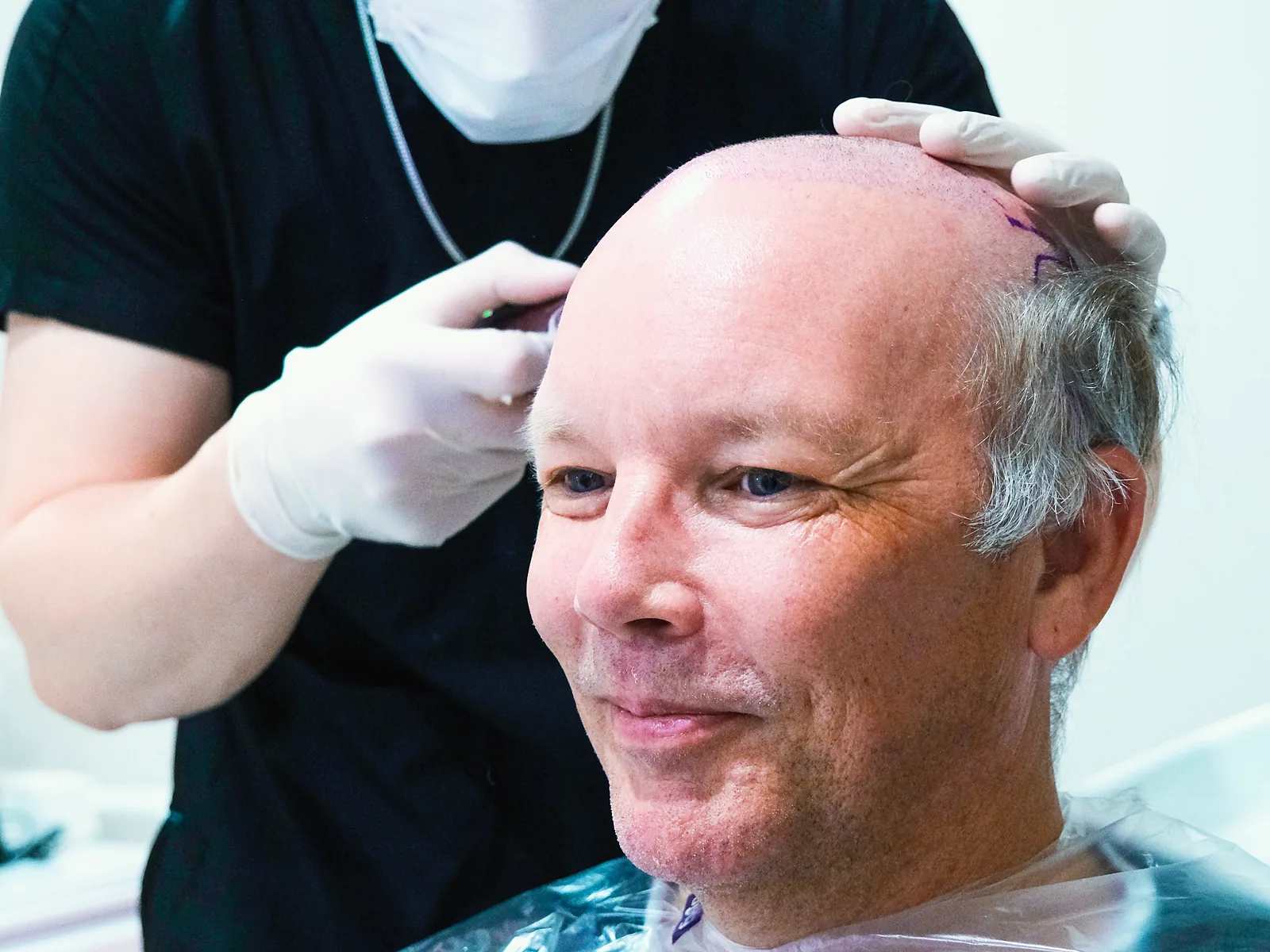
    After implantation, the medical team checks the treated areas and gives you recovery instructions covering washing, sleeping, activity, medication and graft protection.

    The donor and recipient areas may feel tender or swollen for the first few days, and small scabs begin to form. Before you leave, you should know what normal recovery looks like and which symptoms need medical attention.

An FUE hair transplant typically takes four to eight hours for around 2,000 to 4,000 grafts. Smaller sessions are shorter, and very extensive work can be split across two days.

Duration depends on graft count, donor hair characteristics, the size of the treatment area and the surgical approach. Our doctors give you an estimate timeframe during planning.

How Effective Is an FUE Hair Transplant?

FUE can give natural‑looking, long‑lasting results in well‑selected patients. Outcomes depend on donor hair quality, graft handling, recipient‑site planning, surgical skill and how you heal. No clinic can guarantee that every follicle will grow or that every patient will reach the same density.

Two Hermest doctors planning a patient's new hairline

Donor quality matters most: strong follicles from stable donor regions do better than weak or miniaturising ones. Careful harvesting, handling and implantation reduce graft damage.

Scalp health, hairline design, graft distribution and following aftercare instructions also play a part. Continued natural hair loss can change how the transplant looks over time.

The goal of FUE hair transplant treatmnet is to improve visible coverage and create a natural transition between transplanted and existing hair. For some patients that means rebuilding a receding hairline. Others want to fill thinning at the mid‑scalp or crown.

A transplant cannot always restore the density you had before hair loss. Your donor supply, the size of the area and your hair characteristics set the limit. When the area is extensive, treatment in stages may be the better plan.

FUE Hair Transplant Recovery and Aftercare: What to Expect

Recovery starts immediately, but scalp healing and hair growth run on different timelines. The small wounds usually improve within the first couple of weeks, while transplanted hair can take several months to become visible. Protecting the grafts and following your team's instructions are essential.

Your scalp may feel tight, tender or swollen. Do not touch, scratch or rub the transplanted area.

Sleeping position matters, because pressure or friction can disturb the grafts. Your team od doctors will explain the recommended position and any pillow to use. Take only the medication you have been prescribed.

Small scabs form around the transplanted follicles. You may notice mild redness, tenderness or itching. Do not pick at scabs or try to remove them early.

Gentle washing starts according to your surgeon's instructions. Avoid strong water pressure and rubbing. The grafts are most vulnerable during these two weeks, and the scalp can look better than it really is.

FUE Hair Growth Timeline: Month by Month

New hair does not appear straight away. Transplanted follicles go through a healing and shedding phase before they produce visible growth.

Recovery PeriodWhat You May Experience
Days 1 –⁠ 14 Redness, swelling, and scabbing
Weeks 2 –⁠ 8 Temporary shedding of transplanted hair
Months 3 –⁠ 4 First new hair growth
Months 5 –⁠ 8 Improving hair coverage and thickness
Months 9 –⁠ 12 Greater density and fuller hair
Months 12 –⁠ 18 Final hair maturation, especially at the crown

These stages are approximate. Some patients progress faster and others need longer.

Shedding does not mean the grafts have failed. The shafts often fall out while the follicles stay under the skin and later enter a new growth phase.

The best approach is a simple, consistent routine based on your surgeon's instructions:

  • Clean the scalp using the recommended washing method.
  • Do not scratch or pick at the treated areas.
  • Avoid pressure and friction on the scalp.
  • Take medication exactly as directed.
  • Avoid heavy exercise until you are cleared.
  • Ask your team before swimming or doing anything that exposes the scalp to contamination.
  • Protect the healing skin from strong sunlight.
  • Contact the clinic if pain, swelling or other symptoms are unusual or getting worse.

Do not apply oils, growth products or home remedies to the healing scalp without medical approval. For more detail, read our hair transplant aftercare guide.

Hermest patient checking his new hairline design in a mirror

Most patients plan one to two weeks away from work, depending on the job. Desk work can often resume sooner. Physical jobs, jobs that involve sweating or jobs that need protective headgear usually need longer.

Strenuous exercise and swimming are restricted for longer than desk work. Your team will tell you when each can safely resume.

How Long Do FUE Hair Transplant Results Last?

FUE results can last for many years when healthy follicles come from a suitable donor area. The surgery does not stop your untreated hair from thinning later, so long‑term results depend on donor characteristics, ongoing hair loss and sound planning.

Portrait of a Hermest patient at the clinic in Istanbul

Follicles taken from the right donor areas usually keep their characteristics after they are moved. That is why transplants can give lasting results in androgenetic alopecia.

Permanent does not mean guaranteed for life, though. Some transplanted hair may thin over time, particularly if grafts came from areas prone to future loss.

Yes. FUE does not cure androgenetic alopecia. If your existing hair keeps thinning, the contrast with transplanted areas can become more visible.

For this reason, the hairline and graft distribution should be designed with future change in mind. A conservative plan also preserves donor hair for a second procedure if you need one.

Long‑term care starts with following your postoperative instructions and attending follow‑up reviews. Depending on your diagnosis, a clinician may discuss minoxidil or finasteride to slow ongoing pattern loss.

These treatments are not right for everyone and can cause side effects, so they should be decided in an individual consultation. Healthy scalp care and keeping an eye on changes in your existing hair help you catch problems early.

What Are the Benefits and Limitations of FUE Hair Transplantation?

FUE is popular because it harvests individual follicular units without the long linear donor scar of FUT. It suits patients who want to wear their hair short, and donor healing is often quicker. It still leaves small scars, draws on a limited donor supply and cannot guarantee a particular result.

  • No long linear donor scar:

    units are removed individually rather than as a strip.

  • Small extraction wounds:

    donor sites generally heal without stitches.

  • Often quicker donor healing:

    many patients have less donor‑area discomfort than after FUT, although healing varies.

  • Short hairstyles:

    without a linear scar, shorter cuts are easier to wear.

  • Natural‑looking placement:

    well‑planned recipient sites support natural direction and density.

  • Spread‑out harvesting:

    grafts can be taken across the donor region while leaving surrounding hair intact.

These benefits depend on careful planning and sound surgical technique.

What Are the Disadvantages of FUE?

FUE is not scarless, and harvesting too many follicles can cause permanent thinning in the donor area. Large sessions take many hours. Some patients do not have enough donor hair to reach the coverage they want, and others see poor graft growth or keep losing untreated hair.

Benefits of FUE Limitations of FUE
No long strip scarSmall extraction scars remain
Individual graft harvestingDonor hair supply is limited
Often quicker donor-area healing than FUTHealing time varies
Can achieve natural-looking coverageFull original density may not be possible
Suits selected short hairstylesOverharvesting may cause visible thinning

Choose a technique for your medical needs, not because it sounds more advanced.

What Are the Risks and Side Effects of an FUE Hair Transplant?

FUE is generally considered safe when suitable patients are treated by appropriately qualified professionals, but it is not risk‑free. Common effects are tenderness, swelling, redness and temporary scabbing. Less common complications include infection, bleeding, visible scarring, poor graft growth and damage to the donor area.

Hermest patient coordinator going through the medical form with a patient

Common Side Effects After FUE Surgery

Scalp discomfort is common once the anaesthetic wears off. Swelling around the forehead or scalp may appear in the first few days. Redness, itching, scabbing and temporary numbness can follow as the skin heals.

Temporary shedding of transplanted shafts is expected in many patients and is not a failed transplant. Most routine effects settle as you heal, at a pace that differs from person to person.

Can an FUE Hair Transplant Fail?

Yes. A transplant can disappoint if grafts fail to grow or if the result does not meet the planned goals. Possible causes include graft damage, poor patient selection, excessive donor harvesting, healing complications and continued natural hair loss.

Do not confuse poor growth with the normal shedding phase. A lack of visible growth early on is not failure, because follicles can take several months to produce new hair. If growth is still disappointing after an appropriate recovery period, a medical review can find the cause and decide whether further treatment is possible.

When Should You Contact Your Surgeon?

Contact your medical team promptly if you have severe or worsening pain, significant bleeding, unusual discharge, spreading redness, fever or other unexpected symptoms. Do not treat these with home remedies alone.

If urgent symptoms start after you have returned home, seek local medical care as well as contacting your clinic. The NHS guide to hair transplant surgery also explains expected recovery effects and possible complications.

How Can Patients Reduce the Risks of FUE?

The most important step is choosing a licensed medical facility with qualified professionals and clear surgical responsibilities. Before treatment, ask who will assess your scalp, design the hairline, perform graft extraction, create the recipient sites and implant the grafts.

A proper consultation should examine your donor supply, medical history and expectations. Avoid clinics that promise unlimited grafts regardless of donor capacity or guarantee perfect results. After surgery, follow the instructions and attend follow‑up reviews.

FUE vs FUT vs DHI: Which Hair Transplant Method Is Better?

FUE and FUT are different ways of harvesting follicles, while DHI describes an approach to implanting them. FUE removes follicular units individually. FUT removes a strip of donor tissue that is divided into grafts. Neither is universally better, and the right choice depends on your hair‑loss pattern, donor resources, scalp characteristics and goals.

All three rely on individual follicular unit harvesting. The "Sapphire" in Sapphire FUE refers to the blades used to create the recipient sites, not to how the grafts are extracted.

Sapphire blades are made from synthetic sapphire. They may offer handling differences, but their use alone does not guarantee faster healing, greater density, or better graft survival. Planning, graft handling, and surgical execution matter more.

Hermest surgeon with loupes during a Unique FUE hair transplant

Developed with German Engineers

Unique FUE is Hermest Clinic's own adaptation of FUE. Whether it suits you depends on your donor area, hair characteristics, and goals. Explore the Unique FUE hair transplant technique and discuss the difference from Sapphire FUE at your consultation.

Why Choose Hermest Clinic for FUE Hair Transplant in Istanbul?

Hermest Clinic provides FUE hair restoration in Istanbul with individual treatment planning, medical assessment, and postoperative support. We match the treatment to your hair‑loss pattern, donor supply, and long‑term goals, and you receive details of the procedure, medical team, package, and follow‑up before you decide.

Hair transplantation needs medical judgement at every stage, from deciding whether surgery is appropriate to protecting the donor area.

Hermest Clinic is a certified private polyclinic authorised by the Istanbul Governorship, Provincial Health Directorate under licence number 297778207 and a copy of the licence is available on our website.

Dr. Ahmet Murat is responsible for medical consultation, preoperative cardiac assessment, and treatment planning. Dr. Nesim Tüğen works with patients on final hairline design and performs recipient‑site channel creation.

In standard packages, graft extraction and implantation are carried out by qualified team members, trained nurses and technicians under the doctors' supervision. In Premium packages, Dr. Tüğen personally performs graft extraction and takes part in implantation with the team.

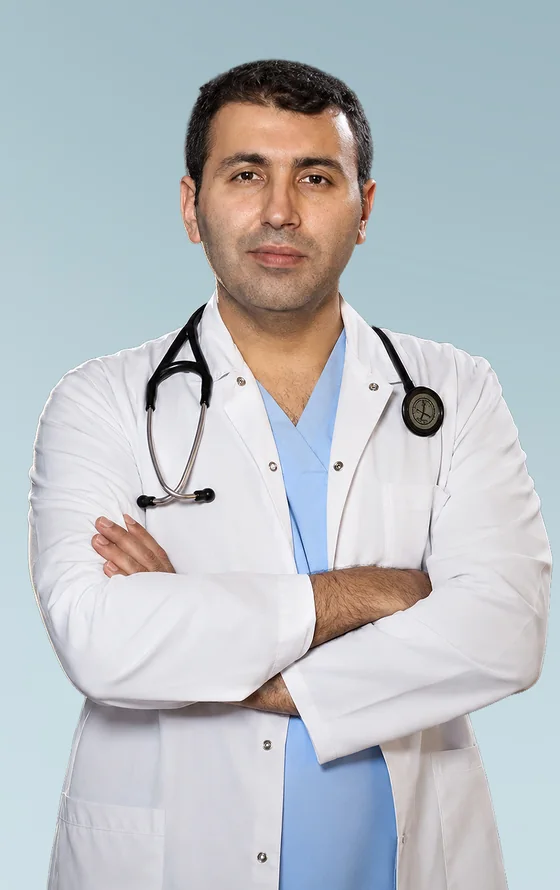
Dr. Ahmet Murat, hair transplant doctor at Hermest
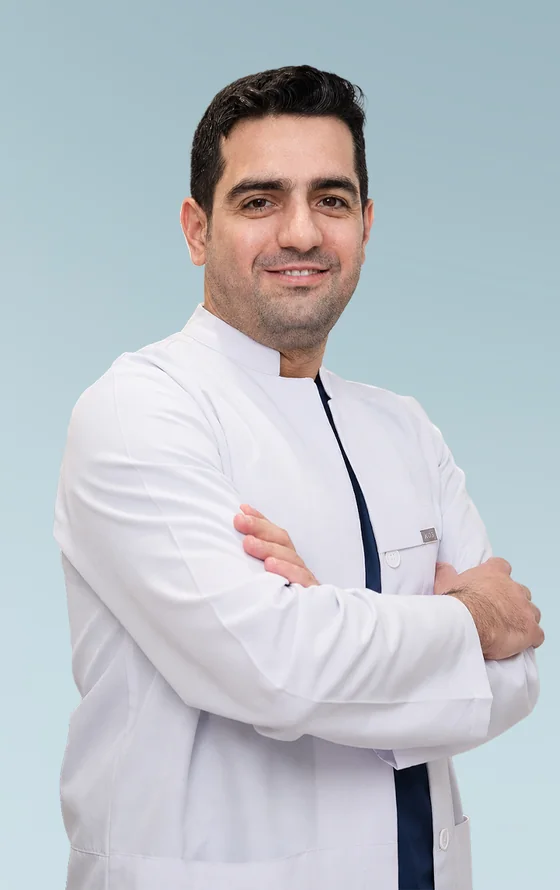
Dr. Nesim Tüğen, hair transplant doctor at Hermest

Your plan starts with an assessment of donor density and the recipient area. The team considers hair thickness, texture, existing coverage, and realistic graft requirements before recommending a technique.

The aim is to use donor follicles responsibly and build a hairline that suits your features and age.

Our consultation process explains the procedure, packages, required stay, and recovery arrangements before you travel. After surgery, you receive written instructions and follow‑up support, and you can send questions or photos to the team during healing, including about shedding and the timing of new growth.

What Should International Patients Know About FUE Hair Transplant in Turkey?

FUE is widely available in Turkey, including at Hermest Clinic in Istanbul. If you travel for surgery, plan for the consultation, the operation, early postoperative checks, and a recovery period before you fly home. Cost, accommodation, transfers, and follow‑up arrangements should all be clear before you book.

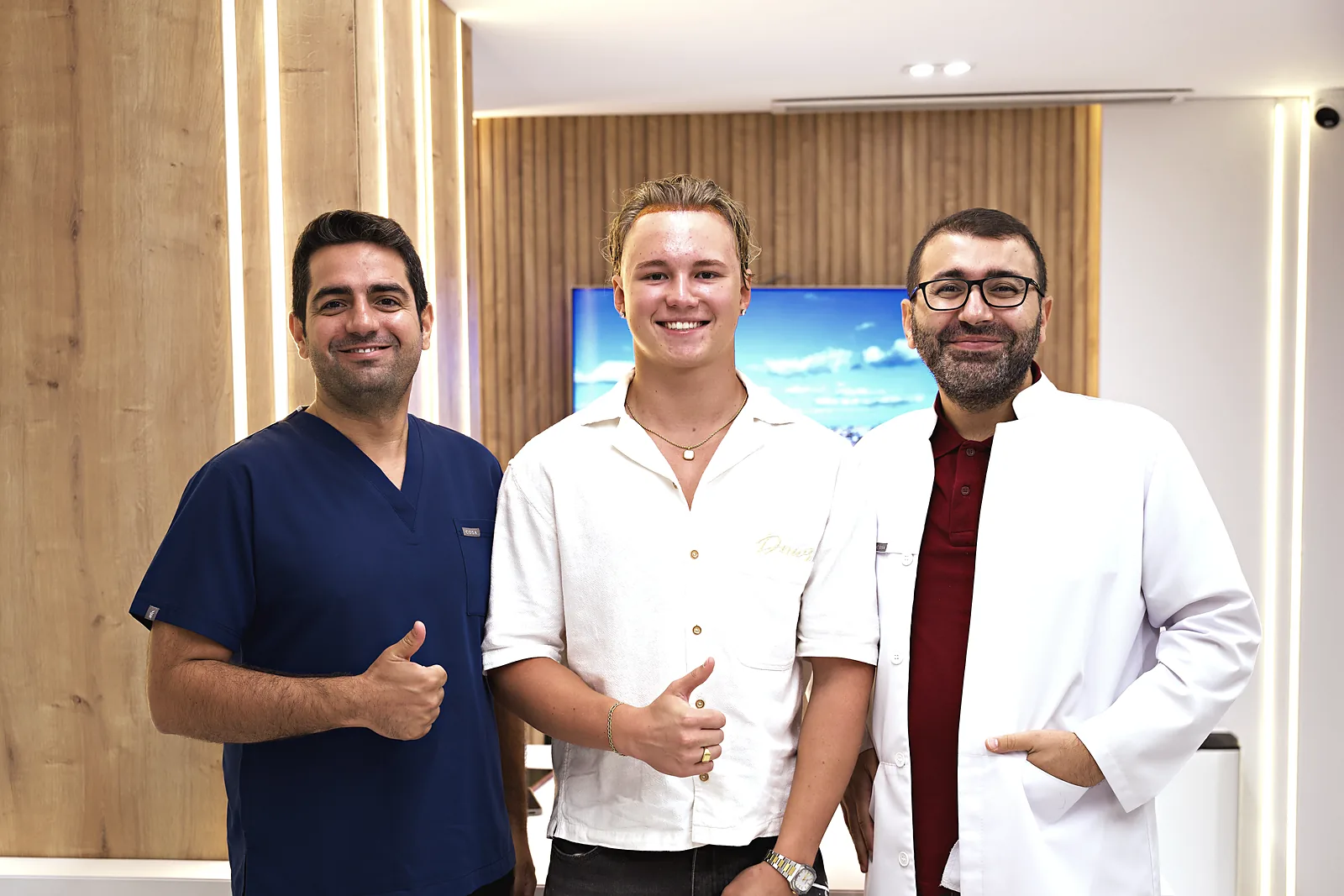
Two smiling patients in the corridor of Hermest Clinic in Istanbul

Many patients have safe, good‑quality treatment in Turkey, but quality varies between clinics, so choose carefully. Before booking, check these points:

Red flags include very low prices with vague inclusions, promises of unlimited grafts, guaranteed results, pressure to book quickly, and no answer to the question of who will actually perform the surgery.

  • Licence:

    the clinic holds a current Ministry of Health licence, and you can ask to see it.

  • Named doctors:

    you know which doctor assesses you, designs the hairline, and performs each stage.

  • Clear responsibilities:

    the clinic tells you in writing who performs extraction and implantation.

  • Honest graft estimates:

    the number is based on your donor capacity, not a sales target.

  • Written package details:

    what is included, what is not, and what follow‑up you receive.

  • Aftercare:

    there is a clear route to contact the clinic after you return home.

How Does the Cost Compare With the UK, US and Europe?

FUE in Turkey usually costs substantially less than in the UK, US, or much of Western Europe. The saving usually reflects lower local operating costs and package pricing, not lower standards, but price alone should never be the deciding factor. Compare the surgeon's role, what is included, and the aftercare offered, as well as the fee.

CountryEstimated FUE Cost (Local Currency)Approx. Cost (USD)
Turkey₺50,000 –⁠ ₺150,000$1,014 –⁠ $3,041
Hermest Clinic, Turkey€2,890 starting price (approximately ₺159,000)$3,224 starting price
United States$6,500 –⁠ $11,000$6,500 –⁠ $11,000
United Kingdom£4,500 –⁠ £8,000$5,942 –⁠ $10,564
Germany€5,000 –⁠ €9,000$5,578 –⁠ $10,041
  1. Your journey starts with an initial assessment of your hair loss and goals. You may be asked for clear photographs of your frontal hairline, crown, sides, and donor area. The team reviews them to judge whether FUE may be appropriate and whether more assessment is needed. You can then discuss the proposed procedure, expected graft requirements, package options, and travel plans.

    A remote assessment is only preliminary. Final suitability and surgical planning are confirmed by clinical examination in Istanbul.

  2. Plan your stay around the surgery and your postoperative check. The Sapphire FUE package includes two hotel nights, and the Premium Sapphire FUE package includes three.

    Your stay may be longer if your plan involves a longer procedure or extra care. Confirm your return flight date with the medical team before you book it.

  3. Many patients fly home within a few days of surgery, but the timing should be confirmed by your medical team after your postoperative check. If you have a long journey, tell the team when you book.

  4. Recovery continues after you leave Istanbul. Over the following weeks and months, the scalp heals, transplanted hair sheds, and new growth gradually develops. Follow your aftercare schedule and send updates or photographs when the team asks.

    If you notice unusual symptoms, contact the clinic promptly. Seek local medical attention if you need an in-person examination, especially for urgent concerns.

Frequently Asked Questions About FUE Hair Transplants

Reception of Hermest Clinic in Istanbul

Is an FUE Hair Transplant painful?

FUE is usually done under local anaesthesia, so the scalp is numb during surgery. You may feel discomfort when the anaesthetic is injected, and soreness is possible once it wears off. Your medical team can explain the pain‑relief options.

Do I need to shave my head for fue?

Standard FUE usually involves shaving or closely trimming the donor area. Some patients qualify for partial‑shave or unshaven techniques, depending on graft requirements, hair length, and surgical planning. Not everyone is a suitable candidate for unshaven FUE.

What Is the best age to have an FUE Hair Transplant?

There is no single ideal age. Stable hair loss, adequate donor hair, likely future progression, and realistic expectations matter more than age. Younger patients may need monitoring or medical treatment before surgery.

Can women have an FUE Hair Transplant?

Yes. Selected women with suitable hair‑loss patterns and enough donor hair can benefit from FUE. Female thinning has several possible causes, so an accurate diagnosis is essential before surgery is recommended.

How long does it take for FUE Hair grafts to become secure?

Grafts are most vulnerable in the first two weeks after surgery. Healing and graft stability develop gradually, so no single day applies to everyone. Follow your surgeon's washing and scalp‑protection instructions throughout.

Does the donor area grow back after FUE?

No. The follicles removed during FUE do not regenerate. Surrounding follicles keep producing hair, which can help conceal the small extraction sites, so careful donor planning is important.

What happens if I am unhappy with my FUE results?

First, allow enough time for the hair to grow and mature. If the result is still below expectations, a clinical review can assess graft growth, ongoing hair loss and donor reserves. Corrective treatment is possible in some cases but not all.

Get Your Personalised FUE Hair Transplant Plan at Hermest Clinic

Choosing an FUE hair transplant is an important decision, and the right treatment starts with understanding your own hair loss. At Hermest Clinic in Istanbul, we help you evaluate your donor hair, treatment options, recovery and realistic goals before you commit.

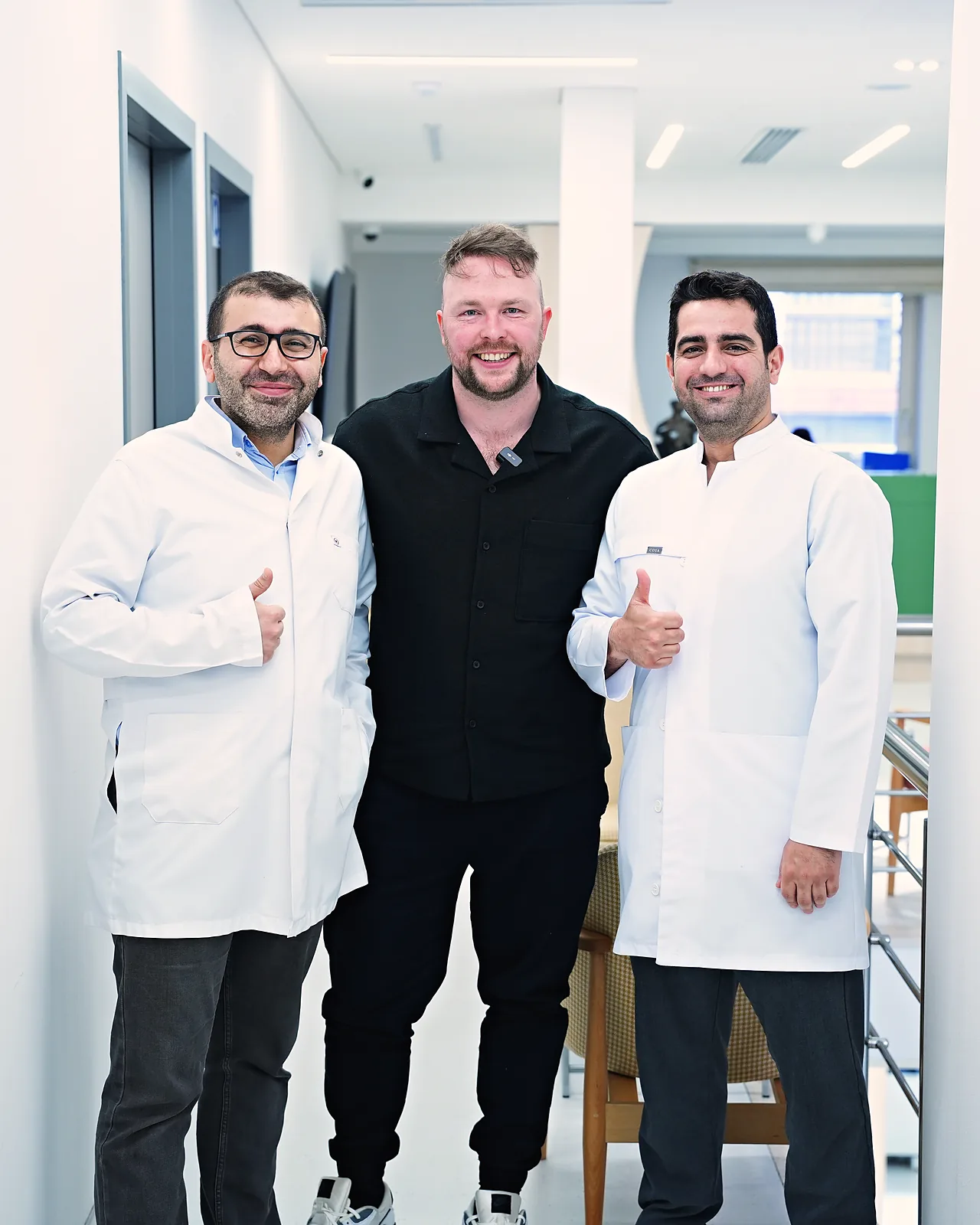
Happy Hermest patient with his two doctors at the clinic in Istanbul

Send your age, hair‑loss history and clear photographs of your frontal hairline, crown and donor area. You can also tell us about previous hair treatments, the result you want and any concerns. Relevant medical information is reviewed through our private consultation process.

After your assessment, our team will tell you whether FUE is suitable and explain the recommended approach. You will receive the proposed graft plan, package, expected stay in Istanbul and postoperative support. The final recommendation depends on your clinical assessment and the condition of your donor hair.

Send us your photos and get a personalised plan, a clear price and a straight answer on whether FUE is right for you.