

Female Receding Hairline Temples: Causes, Treatments & Fixes
 ChatGPT
 Claude
 Perplexity
 Grok
Grok
 Gemini

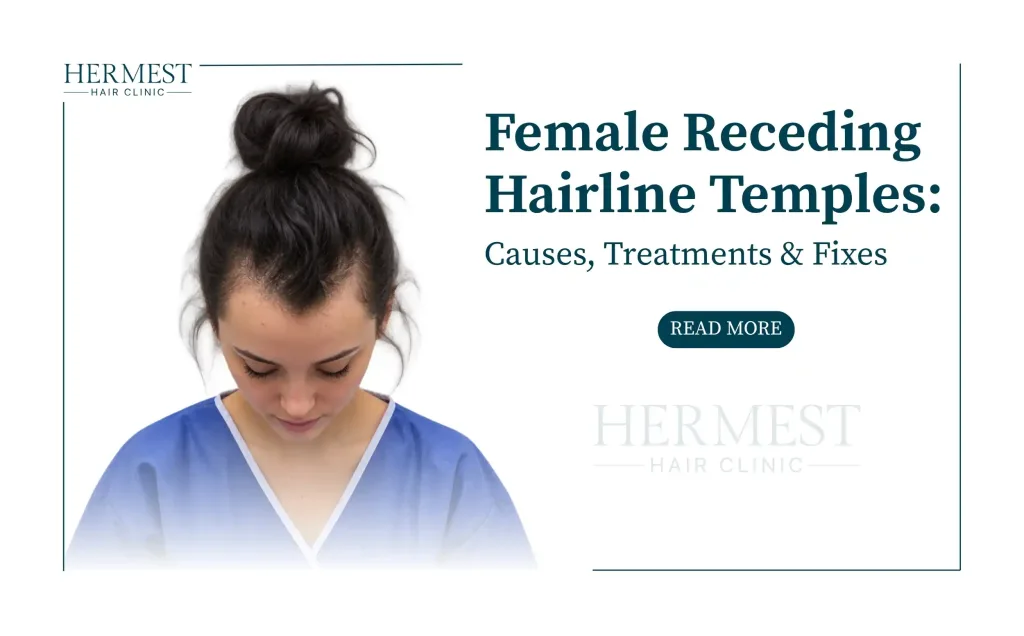
Noticing female receding hairline temples can be worrying, especially if you’ve always had thick hair. Many women first see subtle thinning near the temples while tying their hair back, looking at old photographs, or catching their reflection in bright light. Others notice their forehead appears wider, or that hairstyles no longer frame their face the way they once did.
Unlike male pattern baldness, hair loss in women often develops differently. Instead of forming a deep M-shaped hairline, women are more likely to experience female temple hair loss, diffuse thinning across the scalp, or gradual hairline thinning that preserves much of the frontal hairline. Hormonal changes, genetics, menopause, PCOS, thyroid disorders, nutritional deficiencies, and traction from tight hairstyles can all contribute to these changes.
According to the American Academy of Dermatology (AAD), identifying the underlying cause of female hair loss is one of the most important steps before starting treatment. Different conditions can produce similar symptoms, but they often require completely different management strategies.
One of the biggest challenges is knowing whether temple thinning is temporary or part of progressive female pattern hair loss. Fortunately, many causes are treatable, especially when diagnosed early. Medical therapies may help preserve active follicles, and for carefully selected patients, modern hair restoration techniques can restore density while maintaining a natural feminine hairline.
Dr. Ahmet Murat says:
“Women often arrive at our clinic believing every change around the temples requires a hair transplant. In reality, surgery is only one option. Our first priority is identifying why the hair loss is happening. Once we understand the cause, we can recommend the most appropriate treatment, whether that’s medical therapy, lifestyle changes, or surgical restoration.”
This guide explains hair loss on the temples, how to recognize the earliest warning signs, the differences between female hairline recession and female pattern hair loss, common medical causes, proven treatment options, and when a female hair transplant may become the most effective solution. You’ll also learn how specialists diagnose temple thinning, what results are realistic, and what you can do to protect your hair for the future.
Quick Insights
- Female temple hair loss often develops gradually and may be mistaken for normal aging during its early stages.
- Female receding hairline temples can result from genetics, hormonal changes, PCOS, menopause, thyroid disorders, nutritional deficiencies, traction alopecia, or Frontal Fibrosing Alopecia (FFA).
- Women usually experience a different pattern of hair loss than men, often preserving the frontal hairline while developing temple thinning or diffuse scalp thinning.
- Early diagnosis improves the chances of preserving active follicles and expanding treatment options.
- Treatments such as topical minoxidil, oral minoxidil, spironolactone, PRP, and Low-Level Laser Therapy (LLLT) may benefit suitable candidates.
- A female hair transplant is generally considered after the underlying cause has been identified and hair loss has become stable.
- Long-term success depends on personalized treatment, realistic expectations, and ongoing follow-up rather than relying on a single procedure or product.
- A comprehensive evaluation helps determine the cause of temple thinning and creates a treatment plan that protects both your current hair and future hair restoration options.
What Does Temple Hair Loss Look Like in Women?
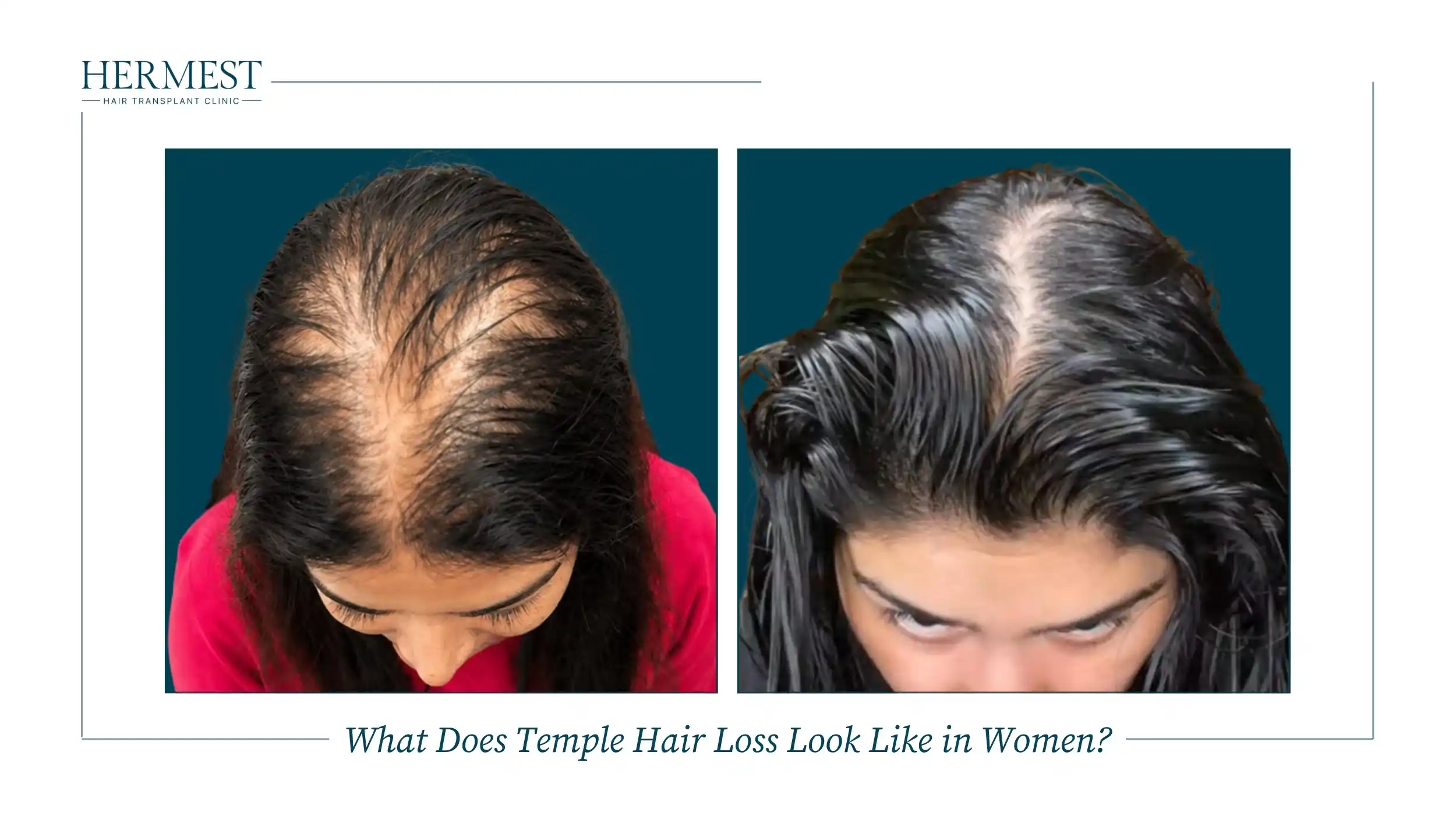
Hair thinning around the temples often begins so gradually that it goes unnoticed for months. Many women assume their hairstyle has changed or that their forehead simply looks a little wider. In reality, these subtle differences can be the earliest signs of female temple hair loss.
Unlike men, women rarely develop a pronounced M-shaped hairline. Instead, the changes are usually softer and less symmetrical, making early diagnosis more challenging.
Early Signs of Temple Thinning
The first symptoms are often related to reduced density rather than obvious bald patches. Hair becomes finer, styling becomes more difficult, and the temples may appear less full than they once were. Common signs include:
- Hair loss on the temples that develops gradually.
- Fine, shorter hairs replacing thicker strands.
- Increased scalp visibility near the temples.
- Less volume when tying hair back.
- A ponytail that feels thinner than before.
Some women notice one temple changing faster than the other. Mild asymmetry is common and does not necessarily indicate a more serious problem. Hair loss in women may begin subtly and progress slowly, making it easier to overlook during the early stages.
Normal Aging or Hairline Recession?
A slight change in the hairline can occur with age, but healthy aging usually does not cause continuous thinning around the temples. A naturally mature hairline typically remains stable over time. In contrast, female hairline recession continues to progress, often accompanied by reduced hair density and miniaturized hairs around the frontal scalp.
Looking at photographs taken one or two years apart often provides a clearer picture than checking your reflection every day.
Dr. Ahmet Murat explains:
“Many women tell us their forehead suddenly looks larger. During examination, we often find that the forehead hasn’t changed at all. What has changed is the density around the temples. Even a modest reduction in hair volume can make the entire hairline appear different.”
Temple Thinning vs a Naturally High Forehead
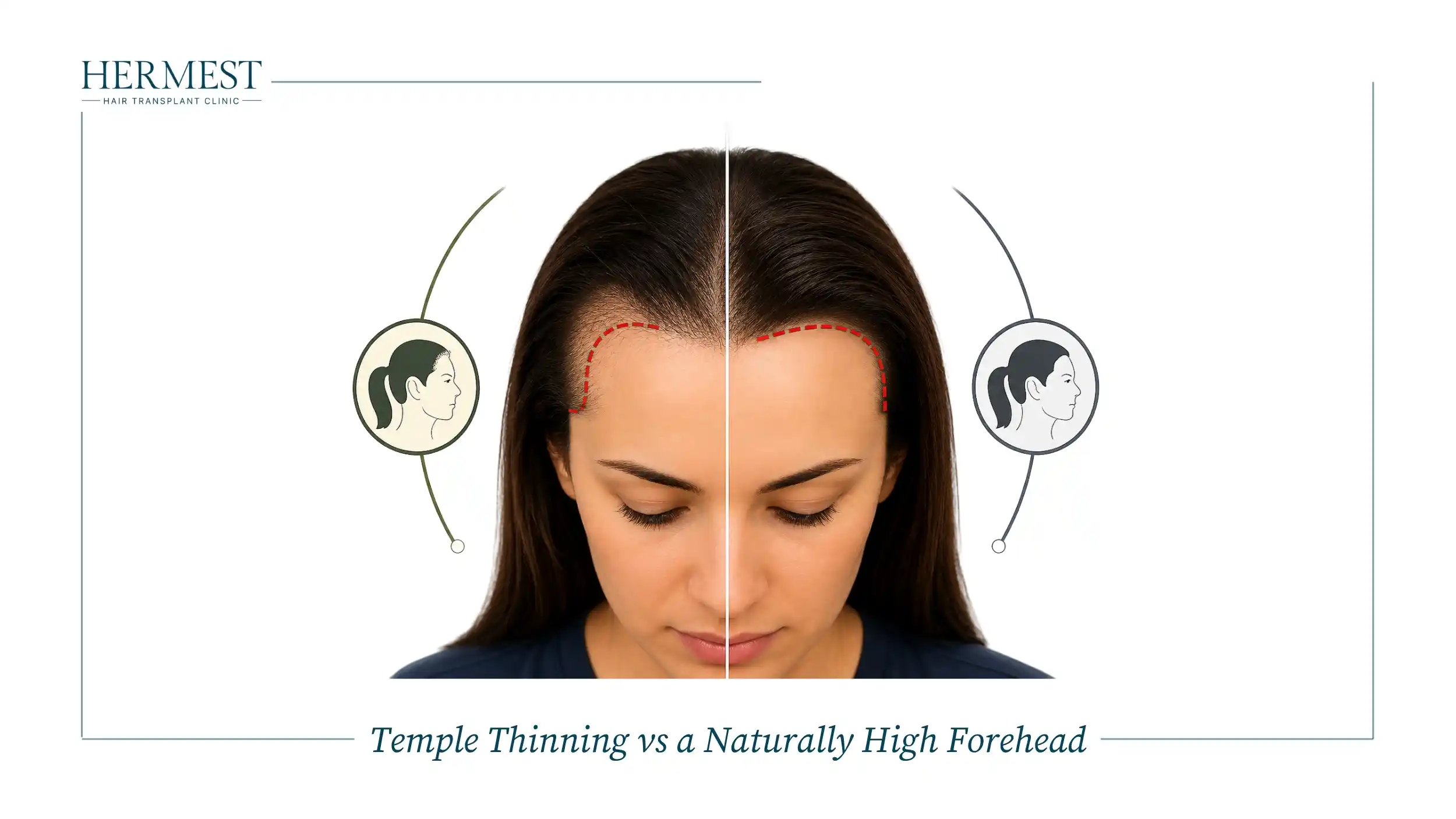
Having a naturally high forehead does not mean you have female pattern hair loss.
The difference lies in change rather than shape. A naturally high hairline usually maintains consistent density throughout adulthood. With female receding hairline, the density around the temples gradually decreases, fine hairs replace thicker ones, and the transition between the forehead and hairline becomes less defined. This distinction is particularly important for women with naturally broad foreheads, as many mistakenly believe they are losing hair when their hairline has remained stable for years.
Why Early Recognition Matters
The earlier temple thinning is identified, the more treatment options are usually available. Active follicles respond better to medical therapies than follicles that have remained inactive for many years.
At Hermest Hair Clinic, every female patient undergoes a detailed assessment of temple density, scalp health, donor hair quality, medical history, and hormonal factors before any treatment is recommended. This personalized approach helps determine whether the thinning is temporary, medically treatable, or part of a long-term hair restoration plan.
Female Receding Hairline vs Female Pattern Hair Loss
Many people use these terms interchangeably, but they are not exactly the same. A female receding hairline describes the location of hair loss, while female pattern hair loss refers to the underlying condition causing it.
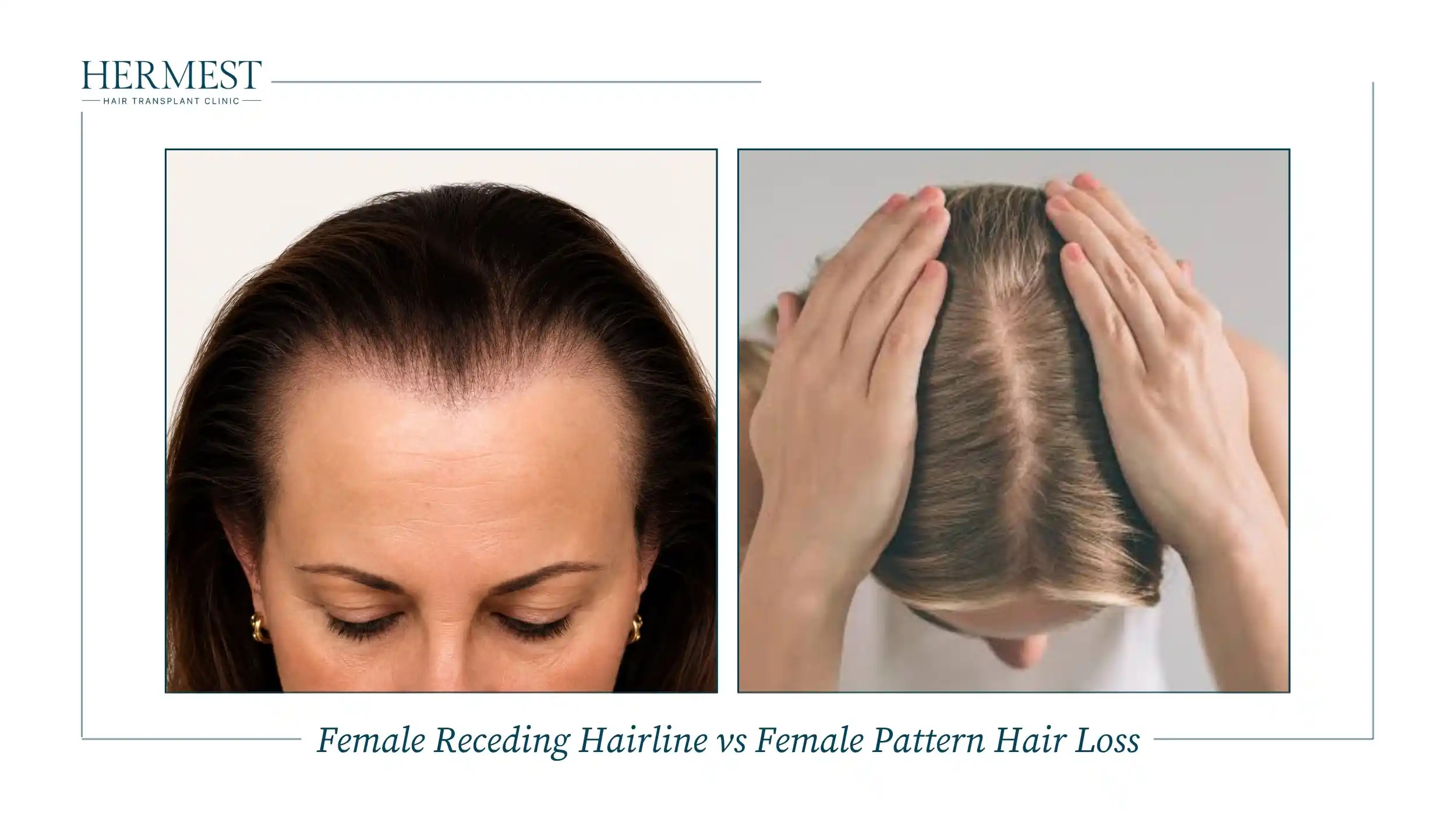
Understanding this difference is important. Two women may have similar temple thinning, yet require completely different treatment plans depending on the cause.
Are They the Same Condition?
Not always. Female pattern hair loss, also known as female androgenetic alopecia, is the most common cause of progressive hair thinning in women. It usually develops gradually and is influenced by genetics and hormones.
A female hairline recession, however, can result from several different conditions, including:
- Female pattern hair loss.
- Traction alopecia caused by tight hairstyles.
- Frontal fibrosing alopecia (FFA).
- Thyroid disorders.
- Nutritional deficiencies.
- Hormonal changes related to menopause or PCOS.
This is why identifying the underlying cause is more important than focusing on the appearance of the hairline alone.
Understanding the Ludwig Scale
Unlike men, women are rarely classified using the Norwood scale. Instead, specialists often use the Ludwig Scale, which measures the degree of thinning across the top of the scalp. The Ludwig classification includes three stages:
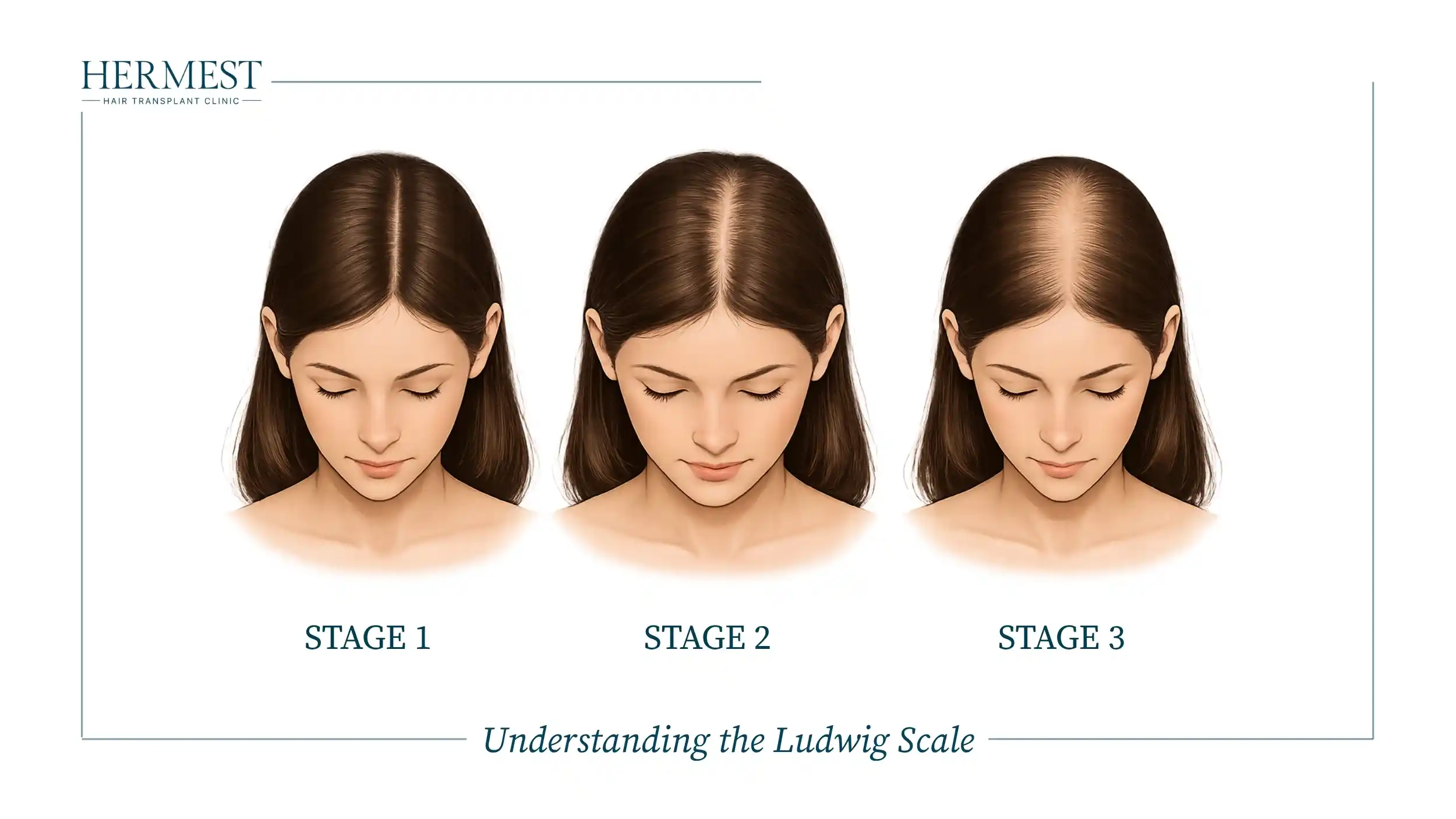
- Stage I: Mild thinning with a slightly wider part.
- Stage II: Noticeable reduction in density across the central scalp.
- Stage III: Advanced thinning with significant scalp visibility.
Many women with early female temple hair loss remain in Ludwig Stage I because the changes around the temples may appear before widespread thinning develops. Female pattern hair loss often presents as diffuse thinning over the crown while preserving much of the frontal hairline, making it quite different from the classic male pattern.
The Sinclair Scale Detects Earlier Changes
Another classification system frequently used by dermatologists is the Sinclair Scale. It focuses on subtle reductions in hair density and widening of the central part, making it particularly useful for identifying early-stage female hair loss before it becomes obvious. For women who are beginning to notice hair thinning around the temples, the Sinclair Scale can help monitor progression over time and evaluate how well treatment is working.
Dr. Ahmet Murat says:
“Classification systems are helpful, but they don’t replace a clinical examination. Two women with the same Ludwig stage may have completely different causes of hair loss. That’s why we combine scalp analysis with medical history, hormonal evaluation, and donor assessment before recommending any treatment.”
Why Women Usually Don’t Develop a Deep M-Shaped Hairline
One of the biggest differences between male and female hair loss is the pattern of recession. Men with male pattern baldness often develop deep temple recession and a pronounced M-shaped hairline. Women usually maintain the front edge of the hairline, even when significant thinning occurs elsewhere.
When noticeable temple recession does develop in women, doctors often investigate other possible causes in addition to female pattern hair loss. These may include traction alopecia, frontal fibrosing alopecia (FFA), hormonal disorders, or autoimmune conditions.
Why Are My Temples Thinning?
One of the most common questions women ask is, “Why are my temples thinning?” The answer isn’t always straightforward. Unlike male hair loss, female temple hair loss often has more than one contributing factor. Genetics may play a role, but hormones, nutritional deficiencies, medical conditions, and even daily hairstyling habits can all affect the temples. Finding the underlying cause is the foundation of successful treatment.
Genetics and Female Pattern Hair Loss
The most common reason for progressive thinning is female pattern hair loss, also called female androgenetic alopecia. This condition develops gradually as genetically sensitive hair follicles produce thinner hairs with each growth cycle. The process, known as follicle miniaturization, reduces hair density over time. Many women first notice:
- Less fullness around the temples.
- A widening part.
- Reduced volume when styling.
- Increased scalp visibility.
According to the American Academy of Dermatology (AAD), female pattern hair loss often becomes more noticeable with age, though it can begin much earlier.
Menopause and Perimenopause
Hormonal changes during perimenopause and menopause are another frequent cause of hair loss on the temples. As estrogen levels decline, the balance between growth-promoting and growth-inhibiting hormones changes. Hair may become finer, grow more slowly, and lose overall density.
Some women notice gradual temple thinning before they experience widespread thinning across the scalp. These changes usually develop over several months rather than appearing suddenly.
PCOS and Hormonal Imbalances
Polycystic Ovary Syndrome (PCOS) can affect hair growth in several ways. Higher androgen levels may increase follicle sensitivity, contributing to female hairline recession and thinning around the temples or crown.
Hair loss related to PCOS is often accompanied by other symptoms, including irregular menstrual cycles, acne, unwanted facial hair, or difficulty maintaining a healthy weight. When hormonal disorders are suspected, medical evaluation becomes an important part of diagnosis.
Dr. Ahmet Murat explains:
“Treating hormonal hair loss isn’t simply about restoring density. We first identify the hormonal imbalance, then build a treatment plan that supports both scalp health and long-term hair preservation. Surgery alone isn’t the answer when hormones continue affecting the follicles.”
Thyroid Disorders and Nutritional Deficiencies
Healthy hair depends on healthy body function. Conditions such as hypothyroidism, iron deficiency, low vitamin D levels, low vitamin B12, or inadequate protein intake can contribute to hair thinning around the temples.
Hair loss may be one of the early signs of certain nutritional or hormonal disorders. Blood tests are often recommended when hair loss develops rapidly, follows a major illness, or occurs alongside symptoms such as fatigue, weight changes, or menstrual irregularities.
Stress and Telogen Effluvium
Physical illness, surgery, emotional stress, childbirth, or rapid weight loss can trigger telogen effluvium, a temporary condition that causes more hairs than usual to enter the resting phase. Unlike female pattern hair loss, telogen effluvium typically causes diffuse shedding across the scalp rather than isolated temple recession.
Hair often begins growing back once the triggering event has resolved, although recovery may take several months.
Traction Alopecia and Frontal Fibrosing Alopecia (FFA)
Not all temple thinning is genetic. Repeated tension from tight ponytails, braids, extensions, or buns can damage hair follicles over time, leading to traction alopecia. If identified early, reducing tension may allow the follicles to recover.
Another condition that deserves attention is Frontal Fibrosing Alopecia (FFA). This inflammatory form of scarring alopecia usually affects postmenopausal women and often begins with gradual recession along the frontal hairline and temples. Eyebrow thinning is another common early sign.
According to the British Association of Dermatologists, early diagnosis of FFA is especially important because untreated inflammation can permanently damage hair follicles.
At Hermest Hair Clinic, every woman experiencing temple thinning undergoes a detailed evaluation that considers hormonal health, scalp condition, medical history, family history, and donor hair quality. Understanding why the temples are thinning allows treatment to target the cause rather than simply addressing the visible hair loss.
How Doctors Diagnose Female Temple Hair Loss
Successful treatment begins with an accurate diagnosis. Although female temple hair loss may appear similar from one person to another, the underlying causes can be very different. A woman with female pattern hair loss requires a different treatment plan than someone with thyroid disease, traction alopecia, or frontal fibrosing alopecia (FFA).
This is why hair specialists look beyond the hairline itself. They evaluate your overall health, scalp condition, and pattern of hair loss before recommending any treatment.
Reviewing Your Medical History
The first step is a detailed conversation about your medical background and when the thinning began. Your doctor may ask about:
- Family history of hair loss.
- Pregnancy or childbirth.
- Menopause or perimenopause.
- PCOS or other hormonal disorders.
- Recent illness, surgery, or significant stress.
- Weight loss or dietary changes.
- Current medications.
These details often provide important clues about whether the hair loss is temporary, hormonal, hereditary, or linked to another medical condition.
Examining the Scalp and Hair
A physical examination helps determine how the follicles are behaving. Your doctor will usually assess:
- Hair density around the temples.
- The frontal hairline.
- The crown and central scalp.
- Hair shaft thickness.
- Signs of inflammation or scarring.
Miniaturized hairs around the temples often suggest female pattern hair loss, while redness, scaling, or loss of follicle openings may point to inflammatory conditions such as FFA.
Dr. Ahmet Murat says:
Dermoscopy Provides a Closer Look
Many specialists use dermoscopy, a handheld device that magnifies the scalp and hair follicles. This allows them to identify subtle changes that cannot be seen with the naked eye, including:
- Follicle miniaturization.
- Variation in hair shaft diameter.
- Broken hairs.
- Early inflammation.
- Reduced follicle density.
Dermoscopy often helps distinguish female hairline recession from temporary shedding disorders.
Blood Tests May Identify Treatable Conditions
Blood tests are not necessary for every patient, but they can be extremely valuable when hair loss develops unexpectedly or is accompanied by other symptoms. Your physician may recommend tests to evaluate:
- Iron levels and ferritin.
- Thyroid function.
- Vitamin D.
- Vitamin B12.
- Zinc.
- Hormone levels when clinically indicated.
According to the American Academy of Dermatology (AAD), identifying underlying medical conditions allows treatment to address the cause of hair loss rather than only the symptoms.
When Is a Scalp Biopsy Needed?
Most women do not need a scalp biopsy. However, if the diagnosis remains unclear or a scarring alopecia such as Frontal Fibrosing Alopecia (FFA) is suspected, your dermatologist may remove a very small sample of scalp tissue for microscopic examination.
This procedure can confirm inflammatory conditions and guide treatment before permanent follicle damage occurs.
Why the Diagnosis Determines the Treatment
Two women can have nearly identical temple thinning yet need completely different care. One may improve with topical minoxidil, another may need hormone management, while someone with FFA may require anti-inflammatory treatment before hair restoration is even considered.
At Hermest Hair Clinic, diagnosis is never rushed. Every female patient receives a comprehensive assessment that combines scalp examination, dermoscopic evaluation, medical history, donor area analysis, and long-term planning.
Can Female Temple Hair Grow Back?
Whether female temple hair loss can be reversed depends on one key factor: the condition of the hair follicles. If the follicles are still active, many women can improve hair density with the right treatment. If the follicles have been permanently damaged or replaced by scar tissue, regrowth becomes much more difficult.
This is why early diagnosis often has a significant impact on the outcome.
Temporary Hair Loss Can Often Improve
Not every woman experiencing hair loss on the temples has permanent hair loss. Temporary conditions such as telogen effluvium, iron deficiency, thyroid disorders, nutritional deficiencies, postpartum hormonal changes, or certain medications may cause noticeable thinning around the temples.
Once the underlying problem is treated, many follicles return to their normal growth cycle. Hair regrowth usually takes time. Since hair grows slowly, visible improvement often requires several months of patience and consistent treatment.
Miniaturized Follicles Can Still Respond
In female pattern hair loss, follicles gradually shrink rather than disappearing immediately. During this stage, they continue producing hair, but each strand becomes thinner, shorter, and less pigmented. This process is known as follicle miniaturization.
When treatment begins before extensive miniaturization has occurred, active follicles may produce stronger, thicker hairs again. According to the American Academy of Dermatology (AAD), early treatment offers the best opportunity to slow progression and improve hair density in women with hereditary hair loss.
Dr. Ahmet Murat explains:
“Many patients assume thinning temples mean the follicles are gone forever. In reality, we often find healthy follicles producing very fine hairs. Protecting and strengthening those follicles can make a remarkable difference before surgery ever becomes necessary.”
Scarring Alopecia Requires Early Treatment
Some conditions permanently damage hair follicles. One important example is Frontal Fibrosing Alopecia (FFA), an inflammatory disorder that commonly affects the frontal hairline and temples in women.
Unlike hereditary hair loss, FFA destroys follicles through ongoing inflammation. Once scar tissue replaces the follicles, natural regrowth is no longer possible. According to the British Association of Dermatologists, recognizing FFA early allows treatment to reduce inflammation and help preserve remaining hair.
How Long Does Hair Regrowth Take?
Hair restoration is a gradual process rather than an immediate one. Most medical treatments require several months before noticeable improvement appears.
Although every patient responds differently, many women begin to see early changes within three to six months, with continued improvement over the following year if the follicles remain healthy. Regular follow-up appointments help determine whether the treatment is working or whether adjustments are needed.
When Is a Hair Transplant Considered?
A female hair transplant becomes an option when hair loss has stabilized, the donor area has sufficient density, and medical treatments alone are unlikely to restore the temples. Not every woman with temple thinning is a suitable surgical candidate. Factors such as the cause of hair loss, hormonal stability, donor hair quality, and long-term progression all influence the decision.
Best Treatments for Female Temple Hair Loss
The best treatment for female temple hair loss depends on the underlying cause. Some women respond well to medication, while others benefit from hormone management, regenerative therapies, or a combination of treatments. There is no universal solution, which is why a personalized treatment plan usually produces the best long-term results. The earlier treatment begins, the greater the opportunity to preserve healthy follicles and improve hair density.

Topical Minoxidil
Topical minoxidil for women is one of the most widely recommended treatments for female pattern hair loss. Applied directly to the scalp, it helps extend the hair growth phase and may increase hair thickness in women with active follicles.
According to the American Academy of Dermatology (AAD), minoxidil is one of the first-line treatments for female pattern hair loss and works best when used consistently over time.
Some women experience temporary shedding during the first few weeks. This usually reflects a shift in the hair growth cycle rather than worsening hair loss. Visible improvement often takes several months.
Oral Minoxidil
Low-dose oral minoxidil has become an increasingly common treatment for selected women with hair loss. Unlike the topical form, the medication is taken by mouth and should only be used under medical supervision.
For some patients, oral minoxidil may be considered when topical treatment is difficult to apply consistently or has not produced the desired response. Your doctor will evaluate your medical history and discuss potential benefits and side effects before prescribing it.
Dr. Ahmet Murat says:
“The right medication depends on the patient, not the trend. We evaluate the cause of temple thinning, overall health, hormonal factors, and treatment goals before recommending either topical or oral therapy.”
Spironolactone
For women whose hair loss is influenced by hormones, spironolactone may be an effective option. This prescription medication reduces the effect of androgens on hair follicles and is commonly used in women with PCOS or other androgen-related hair loss.
It is not appropriate for every patient, and regular medical follow-up is important during treatment.
PRP Therapy
Platelet-Rich Plasma (PRP) therapy uses concentrated platelets prepared from the patient’s own blood. These platelets contain growth factors that may support follicle function and improve hair quality in suitable candidates.
PRP is often combined with medical treatment rather than replacing it. Women with early hair thinning around the temples and active follicles may benefit the most from this combined approach.
Low-Level Laser Therapy (LLLT)
Low-Level Laser Therapy (LLLT) uses low-energy light to stimulate hair follicles. Some clinical studies suggest it may improve hair density in selected patients with hereditary hair loss.
Although LLLT is non-invasive and painless, it should generally be viewed as a supportive treatment rather than a standalone solution.
Microneedling
Microneedling creates tiny controlled micro-injuries in the scalp using fine needles. This process may stimulate natural healing responses and improve the absorption of topical treatments such as minoxidil.
When performed by experienced professionals or under appropriate guidance, microneedling can become part of a broader hair restoration strategy.
Nutrition and Hormone Management
Healthy follicles depend on a healthy body. Women with iron deficiency, thyroid disorders, low vitamin D levels, inadequate protein intake, or hormonal imbalances may see improvement once these issues are addressed.
Treating the underlying condition often supports healthier hair growth and improves the effectiveness of other therapies.
When Is Hair Transplant the Right Choice?
A female hair transplant can restore density around the temples and hairline, but it is not the first treatment recommended for every woman. Before considering surgery, doctors need to understand why the hair loss occurred and whether it has stabilized.
Many women achieve noticeable improvement with medical treatment alone. A hair transplant is generally considered when temple thinning has become permanent, the donor area is healthy, and non-surgical treatments are unlikely to provide sufficient regrowth. The decision should always be based on diagnosis rather than appearance alone.
Who Is a Good Candidate?
Not every woman experiencing female temple hair loss is an ideal candidate for surgery. Hair transplantation often produces the best results in women who have:
- Stable female hairline recession.
- Good donor hair density.
- Realistic expectations.
- Healthy scalp tissue.
- Hair loss that has not responded adequately to medical treatment.
Women with active inflammatory scalp diseases or ongoing rapid hair loss may need medical treatment before surgery becomes an option.
When Surgery Should Wait
Hair transplantation is not recommended until the underlying cause has been identified. For example, women experiencing telogen effluvium, uncontrolled thyroid disease, nutritional deficiencies, or active Frontal Fibrosing Alopecia (FFA) may not benefit from immediate surgery.
Treating the underlying condition first often improves the health of existing follicles and provides a more stable foundation for future hair restoration if it later becomes necessary.
Dr. Ahmet Murat explains:
“One of the most important decisions isn’t when to perform surgery, but when not to. If hair loss is still progressing or the diagnosis isn’t clear, our priority is stabilizing the condition before considering transplantation.”
FUE vs DHI for Female Hairline Restoration
Both FUE and DHI are modern hair transplant techniques that can successfully restore thinning temples.

FUE (Follicular Unit Extraction) involves removing individual follicular units from the donor area before implanting them into areas with reduced density. DHI (Direct Hair Implantation) uses a specialized implantation pen that allows follicles to be placed with a high degree of precision, making it particularly useful when working between existing hairs.
The choice of technique depends on the patient’s hair characteristics, the extent of thinning, and the surgeon’s treatment plan rather than one method being universally better than the other.
Hairline Design Is Different for Women
Designing a feminine hairline requires a different approach from male hair restoration.
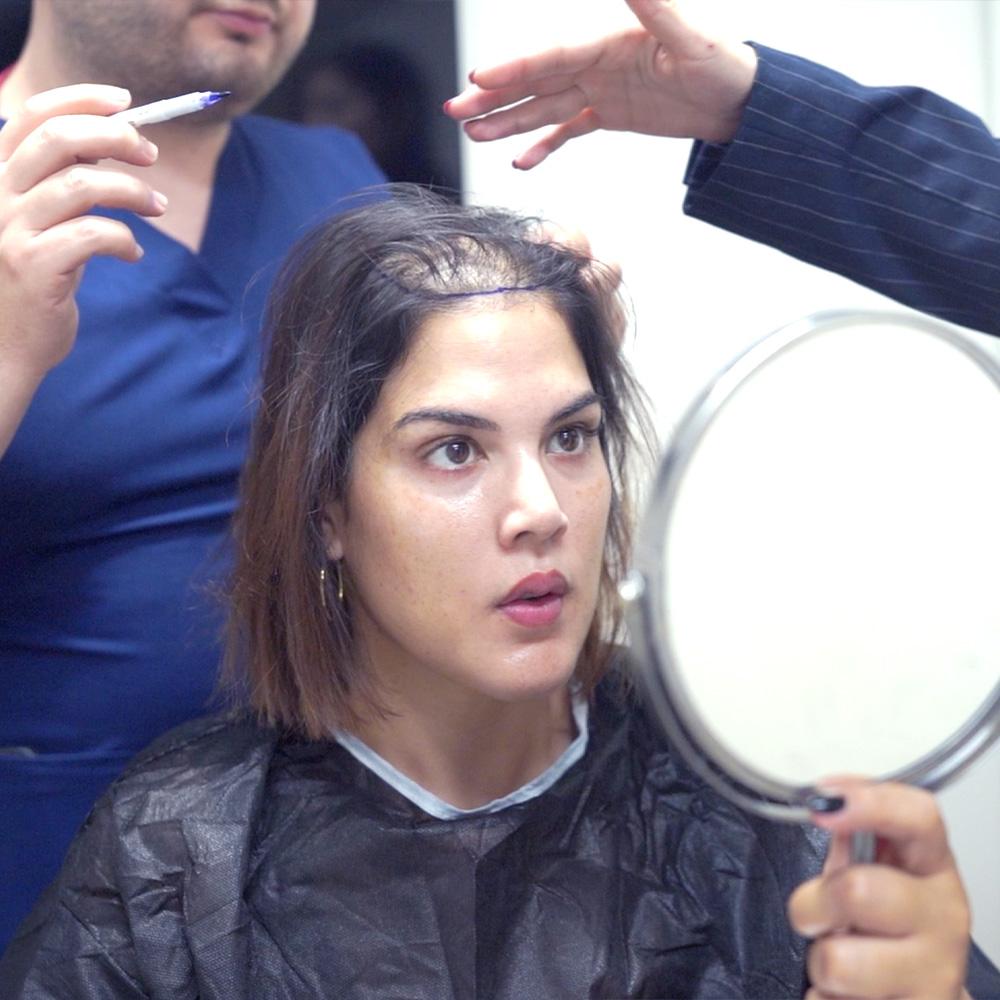
Women’s hairlines are generally softer, lower, and more rounded. The temples also have delicate transitions that frame the face naturally.
Restoring density is only one part of the procedure. The angle, direction, spacing, and irregularity of every graft contribute to a natural result. An overly straight or aggressively lowered hairline can appear unnatural, even when the grafts grow well.
Why Donor Hair Evaluation Matters
Every hair transplant depends on the quality of the donor area. Unlike medications, surgery uses a limited number of permanent follicles. Each graft should be placed where it creates the greatest cosmetic benefit while preserving donor reserves for the future if additional treatment is ever needed.
At Hermest Hair Clinic, every female patient undergoes a comprehensive donor area assessment before surgery is recommended. Dr. Ahmet Murat personally designs each hairline based on facial proportions, existing hair density, long-term hair loss patterns, and the clinic’s Unique FUE® philosophy. This individualized planning helps create soft, natural-looking temple restoration while protecting valuable donor hair for years to come.
What Not to Do If You’re Losing Hair Around the Temples
Seeing your temples become thinner can make you want to try every product or home remedy available. That reaction is understandable, but it often delays effective treatment. Some women spend months experimenting with shampoos, supplements, or social media trends before learning the real cause of their hair loss. A thoughtful approach usually leads to better long-term results than chasing quick fixes.
Don’t Ignore Early Changes
Many women assume temple thinning is simply part of getting older. Sometimes it is. Other times, it may be the first sign of female pattern hair loss, traction alopecia, or another condition that responds better when treated early.
If you’ve noticed gradual changes over several months, document them with photographs and consider scheduling an evaluation rather than waiting for more obvious thinning.
Don’t Keep Wearing Tight Hairstyles
Hairstyles that constantly pull on the hairline can place repeated stress on the follicles. High ponytails, tight buns, braids, extensions, and certain protective styles may contribute to traction alopecia, especially when worn daily over many years.
Changing styling habits early may help prevent further follicle damage and, in some cases, allow affected hairs to recover.
Dr. Ahmet Murat says:
“We always ask patients about their hairstyling routine. Sometimes a simple change in daily habits becomes an important part of protecting the hairline and preventing further temple thinning.”
Don’t Assume Every Hair Loss Product Works
The internet offers countless products claiming to reverse female hairline recession. Many promise dramatic results without scientific evidence. Healthy skepticism is worthwhile.
Look for treatments supported by clinical studies and recommended by reputable organizations such as the American Academy of Dermatology (AAD) instead of relying solely on before-and-after photographs or online testimonials.
Don’t Self-Prescribe Hormonal Medication
Some treatments used for women, including spironolactone and oral minoxidil, require medical supervision. These medications are not appropriate for everyone and may interact with existing health conditions or other prescriptions.
A personalized medical evaluation helps determine whether these therapies are suitable for your situation.
Don’t Overlook Inflammation
Hair loss accompanied by itching, redness, burning, pain, or scaling deserves prompt medical attention. These symptoms may indicate inflammatory scalp disorders such as Frontal Fibrosing Alopecia (FFA) or other conditions that can permanently damage follicles if left untreated.
Treating inflammation early may help preserve existing hair and improve future treatment options.
Don’t View Hair Restoration as a One-Time Solution
Whether your treatment involves medication, PRP, lifestyle changes, or a female hair transplant, healthy hair requires ongoing care. Hair naturally changes with age, hormone levels, and overall health. Regular follow-up allows treatment to be adjusted as your needs evolve.
When Should Women See a Hair Specialist?
Many women wait until temple thinning becomes difficult to hide before seeking professional advice. By that stage, some hair follicles may already have undergone significant miniaturization or permanent damage. A consultation doesn’t always mean you’ll need medication or surgery. In many cases, it simply provides answers and a personalized plan for protecting your existing hair.
If you’re unsure whether your hairline is changing, it’s better to seek guidance early than rely on guesswork.
Your Temple Thinning Is Becoming More Noticeable
If you’ve observed gradual hair loss on the temples over the past several months, it’s worth arranging an evaluation. Pay attention to changes such as:
- Reduced hair density around the temples.
- A widening forehead appearance.
- Difficulty covering thinning areas with your usual hairstyle.
- More visible scalp under bright lighting.
These signs do not automatically mean female pattern hair loss, but they deserve professional assessment.
You’re Going Through Menopause or Have PCOS
Hormonal changes are among the most common causes of female temple hair loss. Women experiencing perimenopause, menopause, or PCOS may notice gradual thinning around the hairline or crown. Since several hormonal conditions can affect hair growth, identifying the cause helps guide the most effective treatment.
Managing the underlying hormonal imbalance often improves overall hair health alongside other therapies.
Dr. Ahmet Murat explains:
“Hair loss rarely tells the whole story on its own. We always look at the patient’s overall health, hormone history, and scalp condition before recommending treatment. Understanding the cause allows us to create a much more effective long-term plan.”
You Notice Eyebrow Thinning
Hair loss that affects both the temples and the eyebrows should never be ignored. One possible cause is Frontal Fibrosing Alopecia (FFA), a condition that commonly affects postmenopausal women. Eyebrow thinning often appears before more advanced hairline recession.
According to the British Association of Dermatologists, early diagnosis and treatment may help slow disease progression and preserve remaining follicles.
Your Scalp Feels Different
Changes in the scalp can be just as important as changes in the hair. Seek medical advice if you experience:
- Persistent itching.
- Burning or tenderness.
- Redness.
- Scaling.
- Pain around the hairline.
These symptoms may indicate inflammation rather than simple hereditary thinning and often require prompt treatment.
Hair Loss Is Affecting Your Confidence
Temple thinning can influence much more than appearance. It may affect confidence, social interactions, and how you feel about styling your hair each day. If you’re spending increasing amounts of time trying to conceal thinning areas or avoiding certain hairstyles, a consultation can help you understand your options before the condition progresses further.
Frequently Asked Questions
Yes. Although women usually experience hair loss differently from men, female receding hairline can occur. Temple thinning, reduced density around the frontal hairline, or gradual hairline recession may result from female pattern hair loss, hormonal changes, traction alopecia, or inflammatory scalp conditions. A professional evaluation helps determine the underlying cause and the most appropriate treatment.
Restore a Healthy, Natural Hairline with Hermest Hair Clinic
If you’ve noticed female receding hairline temples, don’t assume the changes are simply part of aging. Identifying the cause early can make a meaningful difference in preserving healthy follicles and choosing the most effective treatment.
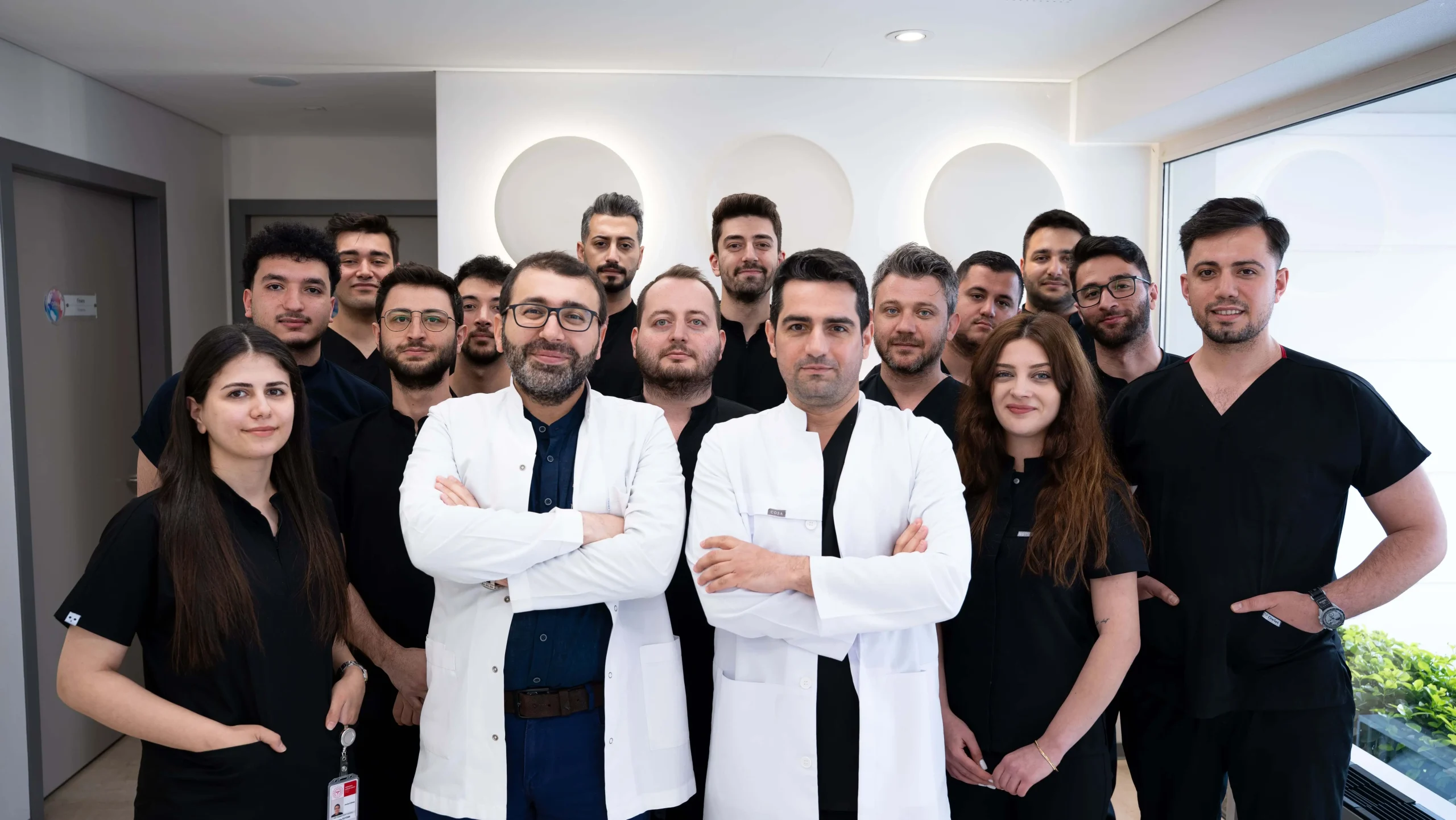
At Hermest Hair Clinic, Dr. Ahmet Murat and his experienced medical team provide personalized evaluations for women experiencing temple thinning, female hairline recession, and female pattern hair loss. Every treatment plan is based on a detailed scalp examination, donor hair assessment, medical history, hormonal factors, and long-term goals. Whether your best option is medical therapy, regenerative treatment, or a carefully planned Unique FUE® hair transplant, our priority is achieving natural, balanced, and lasting results.
Schedule your consultation with Hermest Hair Clinic today and take the first step toward restoring your confidence with a treatment plan designed specifically for you.