
Trichotillomania: Symptoms, Causes, Treatment, and Recovery
 ChatGPT
 Claude
 Perplexity
 Grok
Grok
 Gemini

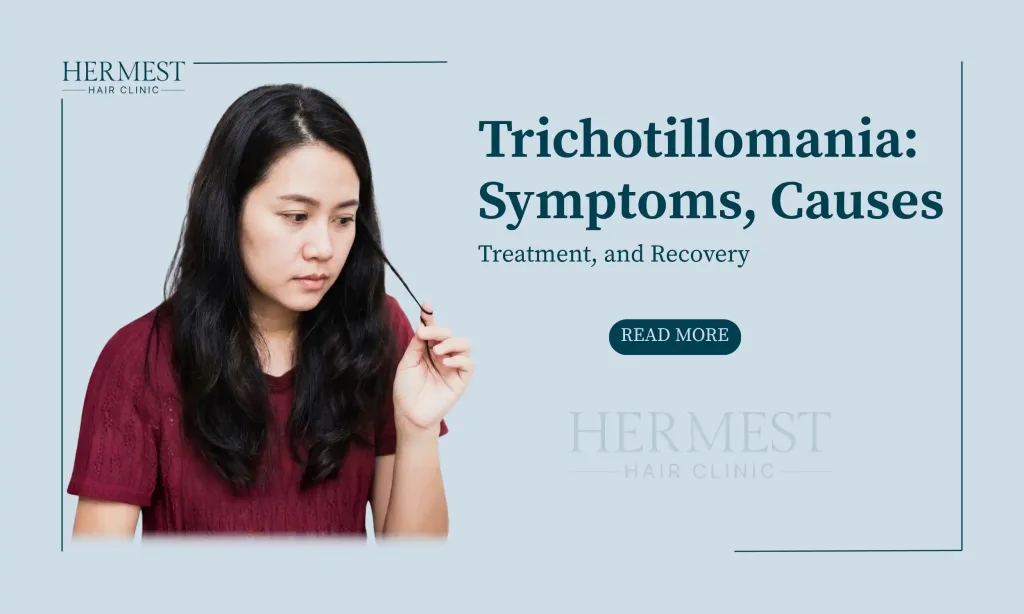
Trichotillomania is a mental health condition that causes an irresistible urge to pull out your own hair. For many people, it starts as a “nervous habit” and slowly becomes a cycle that is hard to stop, leaving bald patches, embarrassment, and a lot of effort spent hiding them. If that sounds familiar, you are not alone, and you are not lacking willpower. Trichotillomania is a recognized condition with proven treatments.
If you are new to this condition, this guide is for you. We will cover what trichotillomania is, what causes it, and how to recognize the symptoms. You will also learn how it is diagnosed and how to treat it, from therapy and medication to self-help tools and hair restoration.
If you need specialist support, Hermest Clinic in Istanbul can help you understand the damage to your hair and plan the next steps.
Key Takeaways
- Trichotillomania is a treatable hair-pulling disorder, not a lack of willpower.
- Causes combine genetics, brain chemistry, and emotional triggers like stress.
- CBT and Habit Reversal Training are the most effective treatments; medication may help.
- Hair often regrows once pulling stops.
- Seek specialist help early, especially for bald patches.
What Is Trichotillomania?
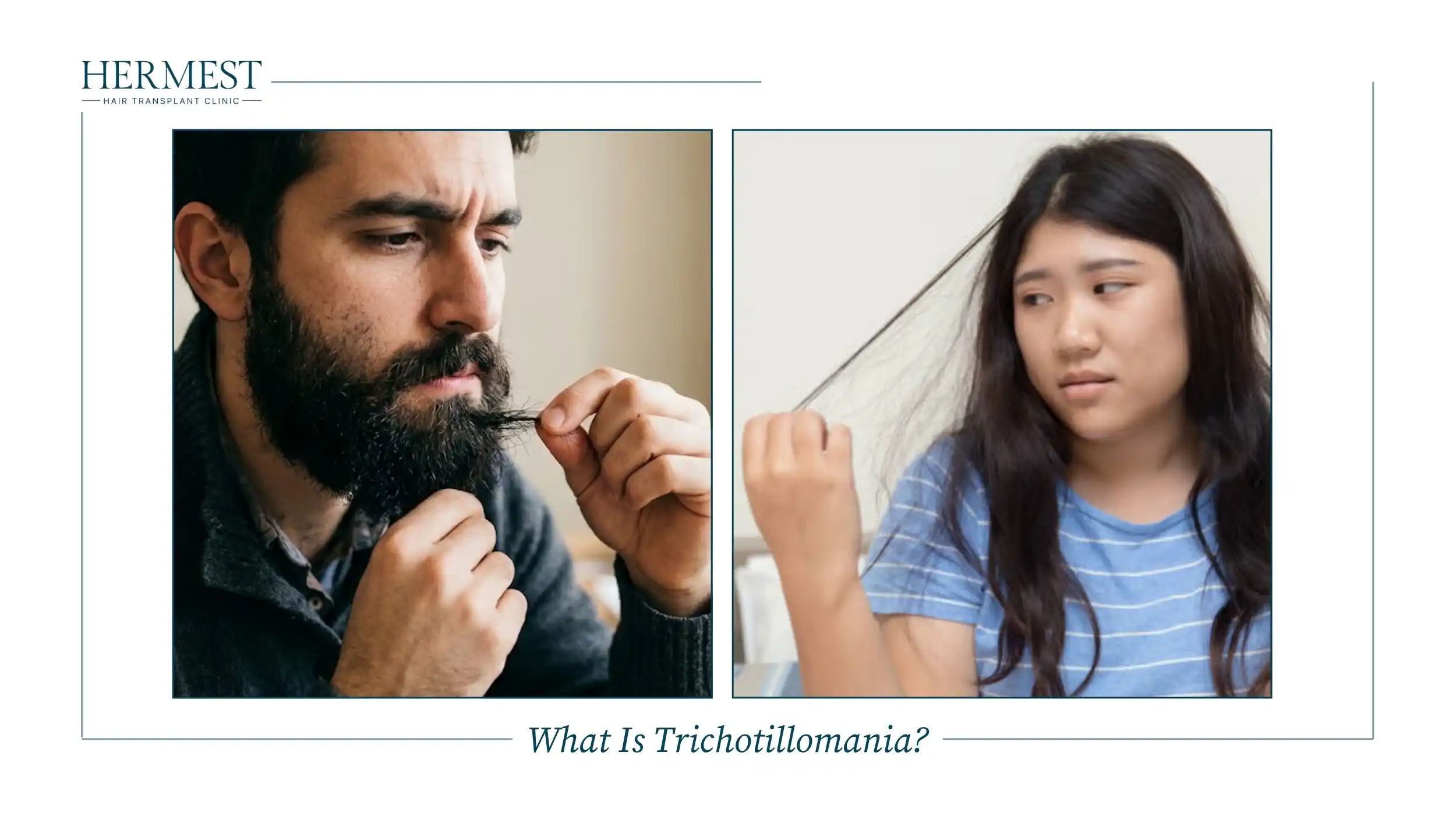
Trichotillomania, also called hair-pulling disorder, is a body-focused repetitive behavior (BFRB). BFRBs are a group of conditions in which a person repeatedly touches, picks, or pulls at their own body in ways that cause damage. Skin picking (excoriation disorder) and chronic nail biting belong to the same family.
People with trichotillomania pull hair from the scalp, eyebrows, eyelashes, beard, or other parts of the body. Over time, this causes visible thinning and bald patches. Studies estimate that between 0.5% and 2% of people experience hair-pulling disorder, and the true number may be higher because many people never seek help out of shame.
The condition is classified in the DSM-5 (the standard diagnostic manual used by clinicians) under obsessive-compulsive and related disorders.
Is Hair Pulling OCD or Anxiety?
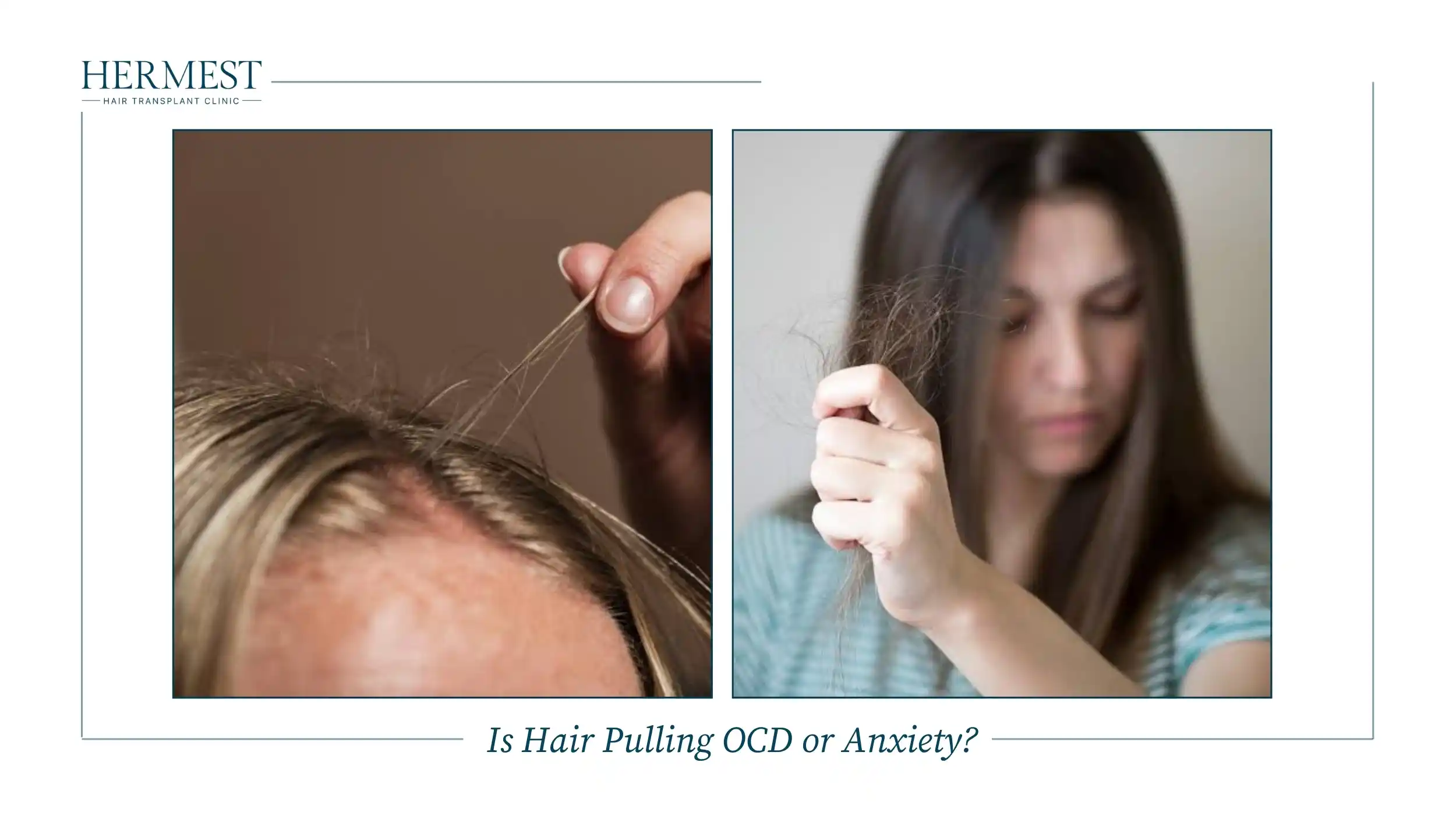
This is one of the most common questions people ask, and the answer is neither, exactly. Trichotillomania is closely related to the obsessive-compulsive spectrum because it involves a repetitive behavior that is hard to resist.
But it is a separate diagnosis. Unlike classic OCD, hair pulling is often not driven by a specific obsessive fear. Anxiety is a very common trigger, and many people with trichotillomania also have anxiety or depression. Treating the hair pulling itself needs its own targeted approach.
Who Gets Trichotillomania?
The condition can begin at any age, but it most often starts in late childhood or early adolescence.
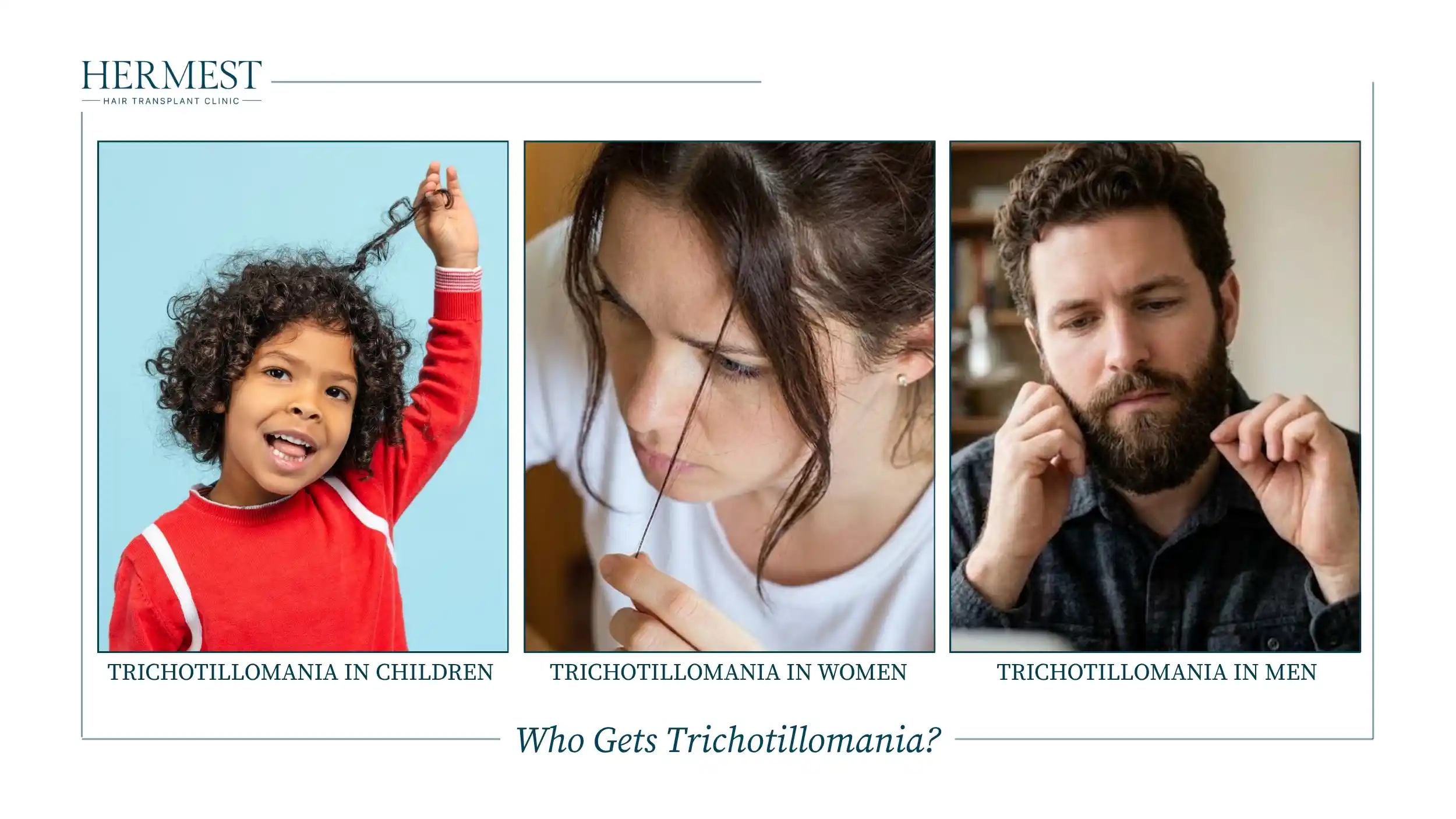
- Trichotillomania in children: Young children may pull hair during stress, boredom, or big changes such as starting school. In some children, it fades on its own. In others, it continues into the teenage years and adulthood, so early support matters.
- Trichotillomania in women: Women are diagnosed more often than men. Part of the reason may be that women are more likely to seek help, and hormonal shifts such as those around menstruation may make urges stronger for some.
- Trichotillomania in men: Men are likely underdiagnosed. Many hide the problem by shaving their heads or keeping their hair very short, or they pull from the beard, where patches are easier to blame on other causes.
Trichotillomania Symptoms
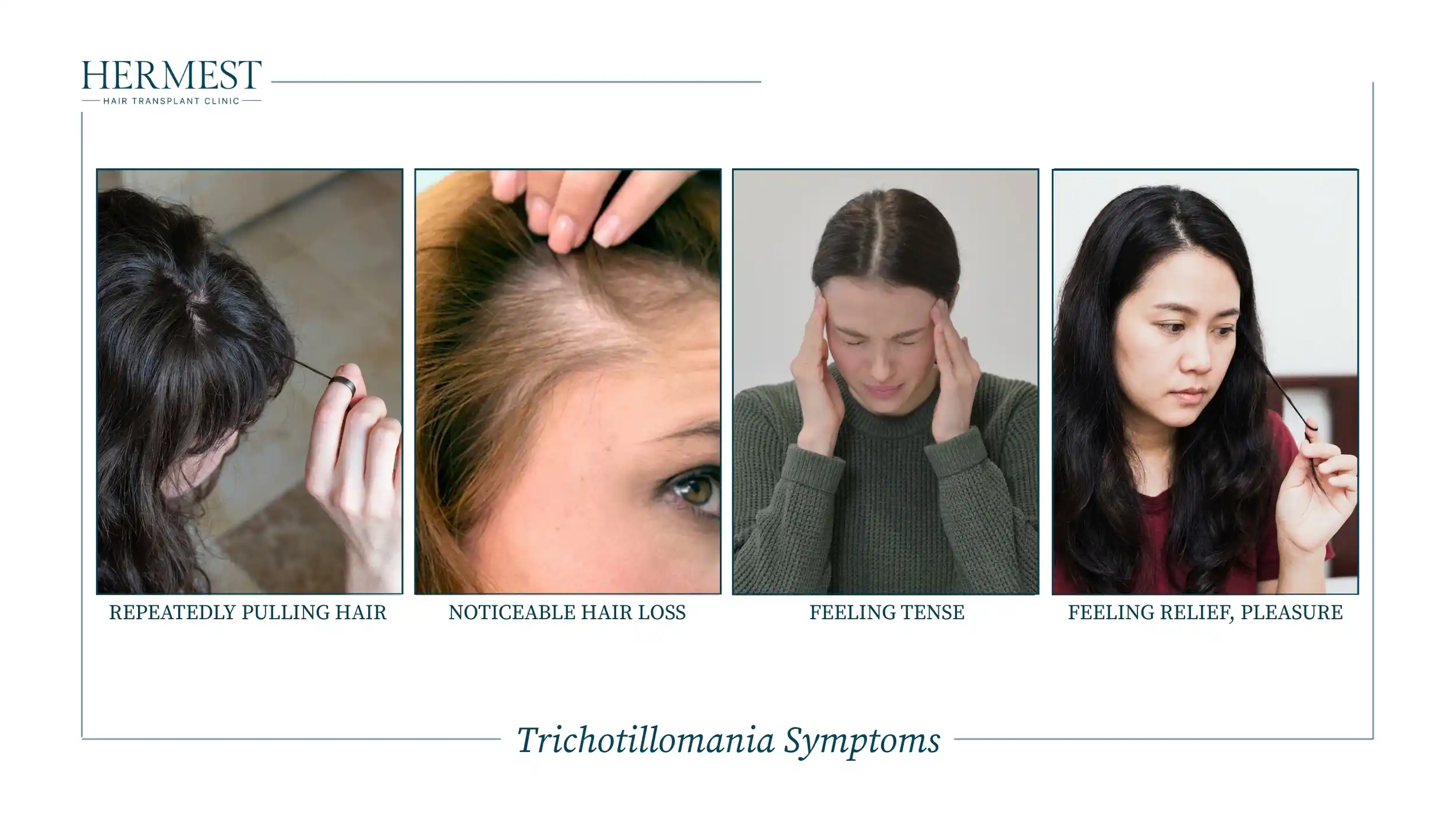
The main symptom is repeated hair pulling that leads to hair loss, but the full set of symptoms is much broader. Common signs include:
- Repeatedly pulling hair from the scalp, eyebrows, eyelashes, or body
- Noticeable hair loss, thinning, or bald patches
- Feeling tense or anxious before pulling, or when trying to resist
- Feeling relief, pleasure, or satisfaction afterward
- Trying and failing to stop the behavior
- Biting, chewing, or eating pulled-out hair (trichophagia)
- Playing with pulled hair or rubbing it against the lips or face
- Rituals around pulling, such as favoring a certain hair texture or examining the root
Why Does Trichotillomania Feel So Good?
Many people are confused, and even ashamed, that pulling feels satisfying. The reason is a temporary relaxation that they feel during anxiety. Tension or an urge builds, pulling relieves it, and the brain learns that pulling works. Each repetition strengthens the habit, which is why willpower alone rarely solves it.
Early Signs to Watch For
Because people hide the behavior, the early signs can be subtle:
- Uneven hair length or broken hairs of different lengths
- Short, stubble-like regrowth in a patch
- Missing eyebrows or sparse eyelashes
- Frequent hats, scarves, or new hairstyles used to cover areas
- Avoiding swimming, hairdressers, or close social situations
- Hair found on clothes, furniture, or in a child’s bedroom
Emotional Impact
Trichotillomania is not only a disorder; it also causes emotional stress, guilt, shame, low self-esteem, and social withdrawal. Some people avoid relationships or work events because they fear being judged. Recognizing this emotional side is important because effective treatment supports both the behavior and the person behind it.
What Is the Main Cause of Trichotillomania?
There is no single main cause. Trichotillomania causes are thought to be a combination of genetic, neurobiological, psychological, and environmental factors, and researchers are still working to understand exactly how they interact.
Focused vs. Automatic Pulling
- Focused pulling: Pulling hair on purpose, usually to relieve stress, tension, or an uncomfortable feeling. The person is fully aware of what they are doing.
- Automatic pulling: Pulling without realizing it, often during boredom or passive activities like watching TV, reading, or driving.
Many people experience both types, and the mix matters because treatment strategies differ. Automatic pulling needs awareness training, while focused pulling needs better ways to manage emotions.
Is Trichotillomania Genetic?
Family history appears to increase the risk. People with a close relative who has trichotillomania, OCD, or a related condition are more likely to develop it. Differences in brain chemistry and the brain circuits that control habits and impulses are also suspected. However, no single gene has been identified, so having a relative with the condition does not mean you will develop it.
Common Triggers
- Stress and anxiety
- Depression or low mood
- Boredom or inactivity
- Fatigue
- Perfectionism and frustration
- Trauma or major life changes
- Sensory triggers, such as the feel of coarse or uneven hair
Keeping a simple journal of when and where pulling happens often reveals patterns that make treatment easier.
How Is Trichotillomania Diagnosed?
Diagnosis usually starts by ruling out other causes of hair loss, then assessing the behavior. A clinician will look at whether:
- Hair pulling is recurrent and causes noticeable hair loss
- The person has repeatedly tried to reduce or stop the pulling
- The pulling causes distress or affects work, school, or relationships
- Another medical condition or mental health disorder does not better explain it
Trichotillomania vs. Other Hair Loss Conditions
Because the main visible sign is hair loss, it can be mistaken for other conditions. A hair specialist or dermatologist will usually compare:
- Alopecia areata: An autoimmune condition that causes smooth, round bald patches. Hairs at the edge typically look tapered (“exclamation mark” hairs), while pulled hair looks uneven and broken.
- Traction alopecia: Hair loss from tight hairstyles rather than deliberate pulling.
- Fungal scalp infections (tinea capitis): Scaly, itchy patches, often with inflammation.
A dermatologist may examine the scalp with a dermoscope, and occasionally a small biopsy is used when the cause is unclear. A psychiatrist or psychologist can then assess the pulling behavior and any co-occurring anxiety, depression, or OCD.
Trichotillomania Treatment: How to Treat Trichotillomania
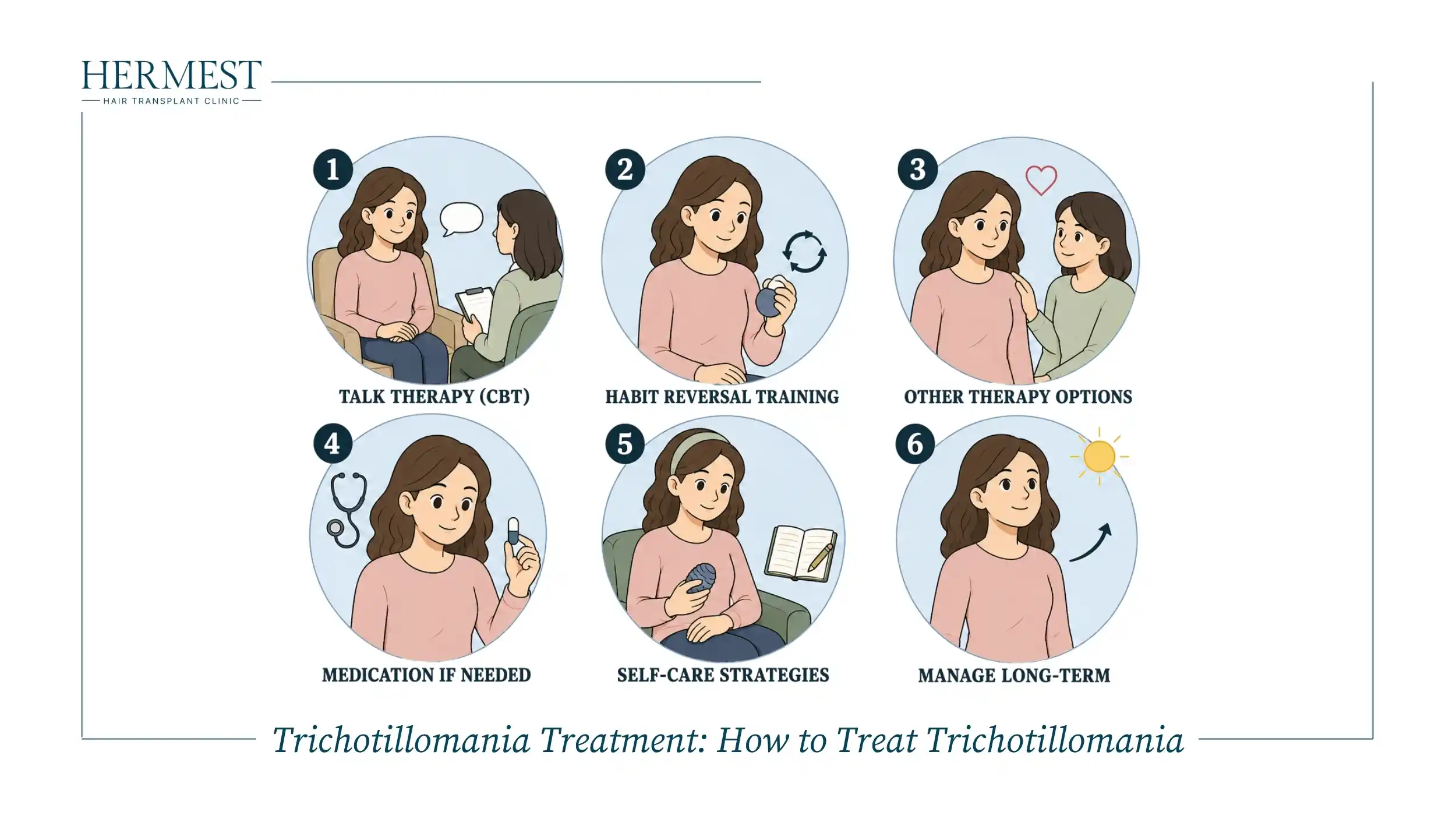
How do you stop trichotillomania? Most people improve with a combination of therapy, self-care, and sometimes medication. Treatment tends to work best when started early, but it can help at any stage. If you are wondering how to treat trichotillomania, the options below are the ones with the strongest evidence.
Dr. Ahmet Murat says:
“The most effective treatment for trichotillomania is usually a combination: Habit Reversal Training or CBT to change the pulling habit, medication when a doctor sees a need, and practical self-care to reduce triggers. On the hair side, we assess the scalp and protect the follicles while that treatment takes effect.”
Cognitive Behavioral Therapy (CBT)
CBT is a talk therapy that helps you identify the thoughts, emotions, and situations that trigger pulling, and change how you respond to them. It also addresses the shame and negative self-talk that often keep the cycle going.
Habit Reversal Training (HRT)
HRT is a specific type of CBT and is widely considered the most effective behavioral treatment for trichotillomania. It has three main parts:
- Awareness training: learning to notice the urge, the situations, and the early hand movements
- Competing response: replacing pulling with a safe action, such as squeezing a stress ball, clasping your hands, or pressing your fingers into your palm
- Support and motivation: rewarding progress and involving family where helpful
Other Therapy Approaches
- Acceptance and Commitment Therapy (ACT): teaches you to accept urges without acting on them
- Comprehensive Behavioral (ComB) model: looks at sensory, cognitive, emotional, motor, and place factors that drive pulling and builds a tailored plan
- Family or parent-guided therapy: especially useful for children and teenagers
Medication for Trichotillomania
No medicine is FDA-approved specifically for trichotillomania, according to the Mayo Clinic. Doctors may still prescribe options studied for the condition, including clomipramine, N-acetylcysteine (an amino acid supplement), and olanzapine. SSRIs are sometimes used when anxiety or depression is also present. Results vary from person to person, and medication usually works best alongside therapy. Only take medication under the supervision of a doctor.
Self-Care and Home Strategies
Self-help tools support professional treatment and can lower the number of pulling episodes:
- Keep hair short, or use a headband or hair clips
- Wear tight hats, scarves, or gloves during high-risk times
- Put tape or bandages on your fingertips
- Use fidget toys, stress balls, or textured objects to keep your hands busy
- Track triggers in a journal or app
- Practice stress management, such as breathing exercises or regular exercise
- Sleep well, since fatigue tends to increase urges
- Make high-risk places less inviting, for example by avoiding sitting for long periods in front of a mirror
Is There a Trichotillomania Cure?
There is no guaranteed trichotillomania cure, and urges can return during stress. But the condition is highly manageable. Many people reduce their pulling dramatically or stop entirely, and they learn tools that help them stay in control for the long term.
Helping a Child With Trichotillomania
If your child is pulling their hair, try to stay calm. Shaming, punishing, or repeatedly telling them to “stop it” usually makes pulling worse because stress is a trigger.
- Talk to them gently and privately
- Look for stressors at school, home, or with friends
- Offer fidget tools and calming activities
- Book a pediatrician or child psychologist appointment early
- Ask about family-involved behavioral therapy
Early support tends to lead to better outcomes.
Complications of Trichotillomania and Hair Regrowth
Untreated, the condition can lead to the following complications and problems with hair regrowth.
Medical Complications
- Skin damage and infection: repeated pulling can irritate or scar the skin
- Trichophagia and trichobezoar: swallowing hair can form a hairball in the stomach or intestines, which can cause pain, vomiting, weight loss, or a blockage that needs urgent medical care
- Emotional effects: anxiety, depression, and social isolation
Will Hair Grow Back?
In many cases, hair regrows once pulling stops, often over several months. The timeline depends on how long the pulling has continued and how much the follicles have been affected. Long-term, repeated pulling can damage follicles, so some areas may regrow thinner or not at all. Eyebrows and eyelashes can be slower to recover.
Hair Restoration Options
A hair specialist can examine the scalp and tell you what is realistic. Depending on the case, options may include treatments to support regrowth or, for permanent areas of loss, a hair transplant. A transplant is only considered once the pulling is well controlled. Continued pulling can damage transplanted grafts, so behavioral treatment usually comes first, or runs alongside restoration.
Dr. Ahmet Murat says:
“I only consider hair transplantation for trichotillomania once the pulling is well under control. Continued pulling can damage transplanted grafts, so timing matters as much as technique. A scalp assessment shows whether the follicles can still regrow and what recovery can realistically look like.”
Preventing Relapse
Urges can return, especially during stress. To stay on track:
- Keep using the competing response you learned in HRT
- Plan ahead for high-risk situations such as exams, deadlines, or travel
- Return to your therapist early if pulling increases
- Treat setbacks as part of the process rather than a failure
When to Seek Professional Help
Get help if you notice any of the following:
- Bald patches or noticeably thinning areas
- Distress, shame, or low mood related to hair pulling
- You have tried to stop and can’t
- You are swallowing hair, or have stomach pain and vomiting
- Pulling is affecting work, school, or relationships
- Your child is pulling their hair
Starting with a doctor, psychologist, or hair specialist is a good step, and you do not need to wait until it feels “bad enough.” If pulling has already affected your hair, you can book a consultation with our specialists.
Frequently Asked Questions
What is trichotillomania?
Trichotillomania is a mental health condition that causes an irresistible urge to pull out your own hair, leading to thinning or bald patches. It is also called hair-pulling disorder and is classed as a body-focused repetitive behavior.
What is the main cause of trichotillomania?
There is no single cause. It is thought to involve genetics, brain chemistry, and emotional triggers like stress, anxiety, or boredom. Family history raises the risk, but it doesn’t guarantee the condition.
What triggers trichotillomania?
Common triggers include stress, anxiety, boredom, tiredness, and sitting still, such as while watching TV or reading. Some people pull deliberately to relieve tension, while others pull without realizing it.
Is trichotillomania genetic?
Family history appears to increase the risk, and brain chemistry differences are suspected. However, no single gene has been identified, and genetics is only one factor among several.
How do you stop trichotillomania?
Most people improve with Habit Reversal Training and CBT, sometimes alongside doctor-prescribed medication. Self-care, such as keeping hair short, taping fingertips, and using fidget tools, can help.
Is hair pulling OCD or anxiety?
Neither exactly. Trichotillomania is a body-focused repetitive behavior related to the OCD spectrum. Anxiety often triggers it, but it is a separate condition with its own treatment approach.
Why does trichotillomania feel so good?
Pulling brings temporary relief or gratification after tension builds up. The brain learns this reward and repeats the behavior, which keeps the cycle going without treatment.
Can trichotillomania be cured?
There is no guaranteed trichotillomania cure, but symptoms are very treatable. Many people cut down or stop pulling with therapy and support, and learn tools to manage urges long term.
What is the best medication for trichotillomania?
No drug is FDA-approved specifically for it. Doctors may prescribe clomipramine, N-acetylcysteine, olanzapine, or SSRIs depending on the person. Always follow your doctor’s advice, or contact us for more details.
Does hair grow back after trichotillomania?
Often yes, once pulling stops. Long-term pulling can damage follicles, so some areas may regrow thinly or not at all and may need specialist assessment.
Can a hair transplant help with trichotillomania?
It may help with permanent hair loss, but only once pulling is under control. Continued pulling can damage transplanted hair.
Is trichotillomania more common in women or men?
It is diagnosed more often in women, but men are likely underdiagnosed because they hide it by shaving or keeping hair short.
Can children have trichotillomania?
Yes. It often begins in late childhood or early adolescence. Early support and gentle, non-punishing parenting tend to lead to better outcomes.
Can I get trichotillomania treatment in Istanbul?
Yes. Behavioral treatment is led by a psychiatrist or psychologist, and our hair specialists at Hermest Clinic in Istanbul assess your hair and scalp and plan restoration alongside that care. Contact us to book a consultation.
Get Expert Support at Hermest Clinic
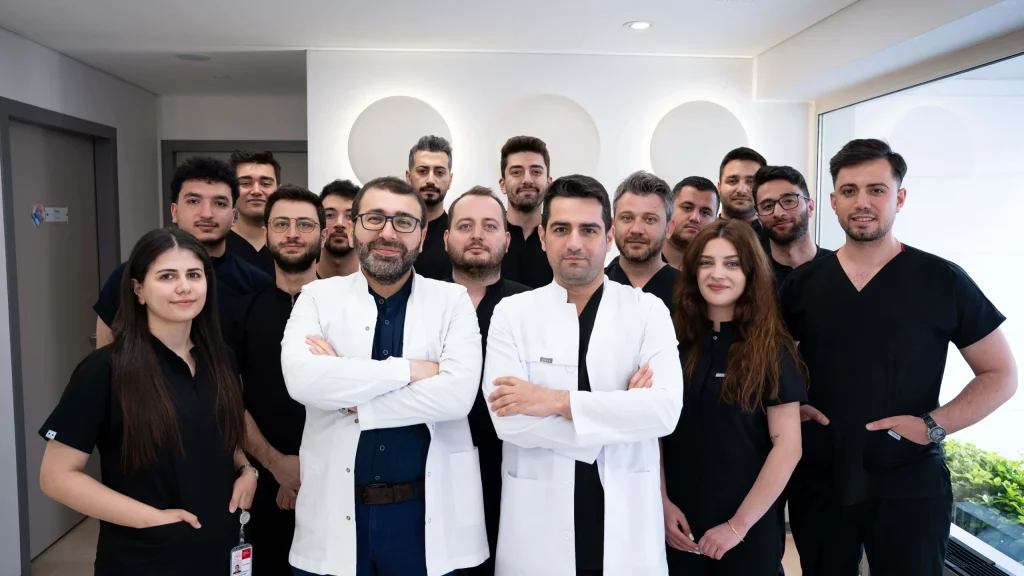
Trichotillomania is a treatable condition, and you do not have to face it alone. Therapy and self-care address the habit, and if pulling has left you with thinning or bald areas, our specialists at Hermest Hair Clinic in Istanbul can assess your hair and scalp, explain what recovery can realistically look like, and build a personalized plan. Book your consultation today