
Hairline Transplant in Turkey: Cost, Procedure & Results
 ChatGPT
 Claude
 Perplexity
 Grok
 Gemini

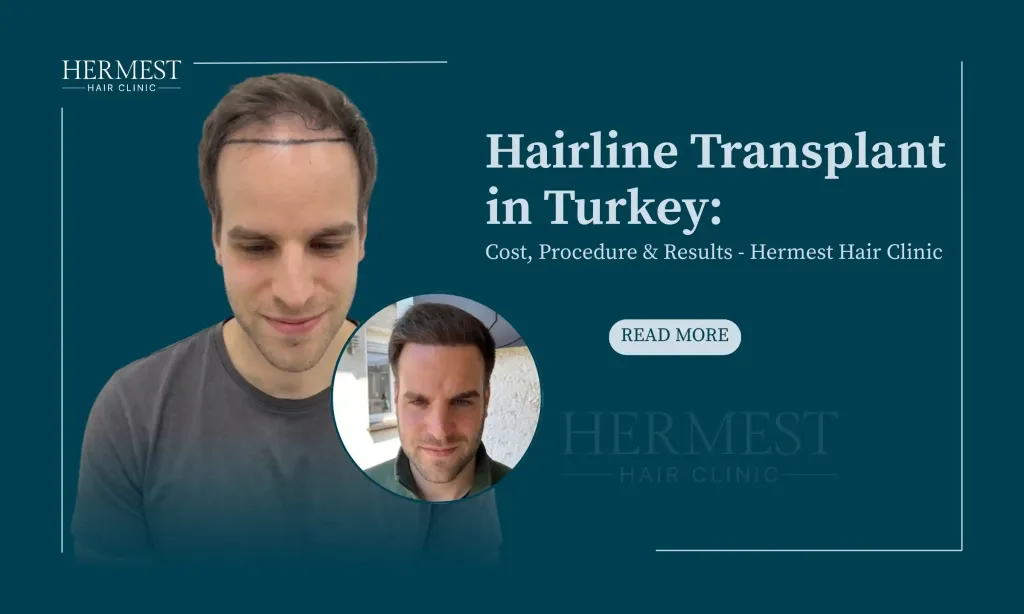
A receding hairline or thinning temples can change how your face looks. A hairline transplant in Turkey can restore lost frontal hair using healthy follicles from the donor area. At Hermest Hair Clinic in Istanbul, our packages start at €2,890 (approximately $3,390).
We plan your hairline around your facial proportions, age, existing hair, and future hair loss. Our doctors assess your donor area before recommending Sapphire FUE, DHI, or Unique FUE®.
Get a free hairline assessment to find out if transplantation is suitable for you.
What Is a Hairline Transplant?
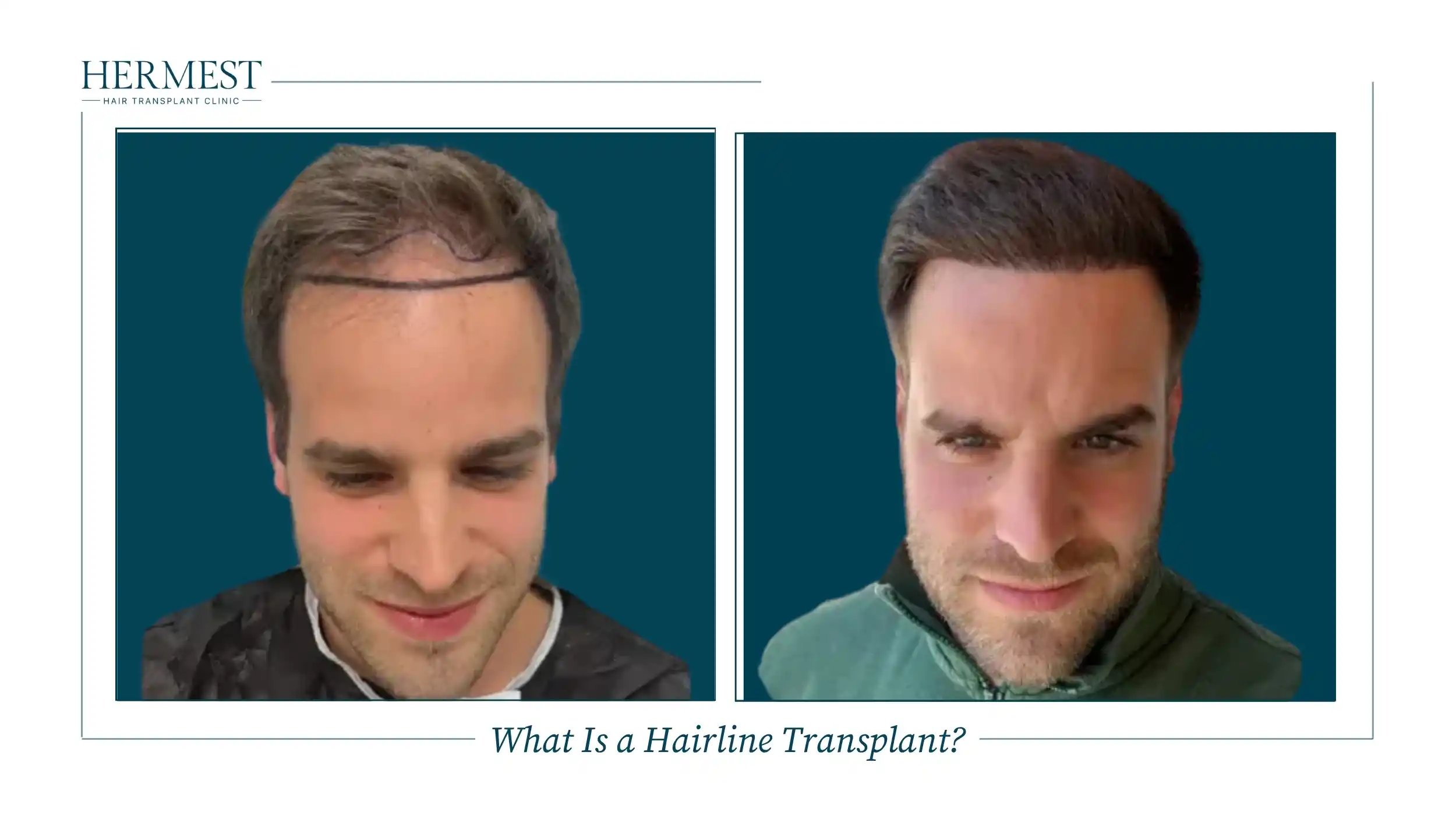
A hairline transplant is a surgical procedure that moves healthy hair follicles from the donor area to the front of the scalp. It restores thinning or receding areas along the forehead and temples and can improve the shape of your natural hairline.
The treatment can help with:
- Receding hairline: Restore coverage where the frontal hairline has moved backward.
- M-shaped hairline: Fill thinning areas around the temple corners.
- Uneven hairline: Improve the balance of the front hairline.
- High forehead: Create a lower visible hairline when medically suitable.
- Frontal thinning: Add density behind an existing hairline.
- Temple hair loss: Restore selected areas on one or both sides.
Some patients need only temple restoration, while others require treatment across the frontal scalp.
Who Is a Good Candidate for Hairline Restoration?
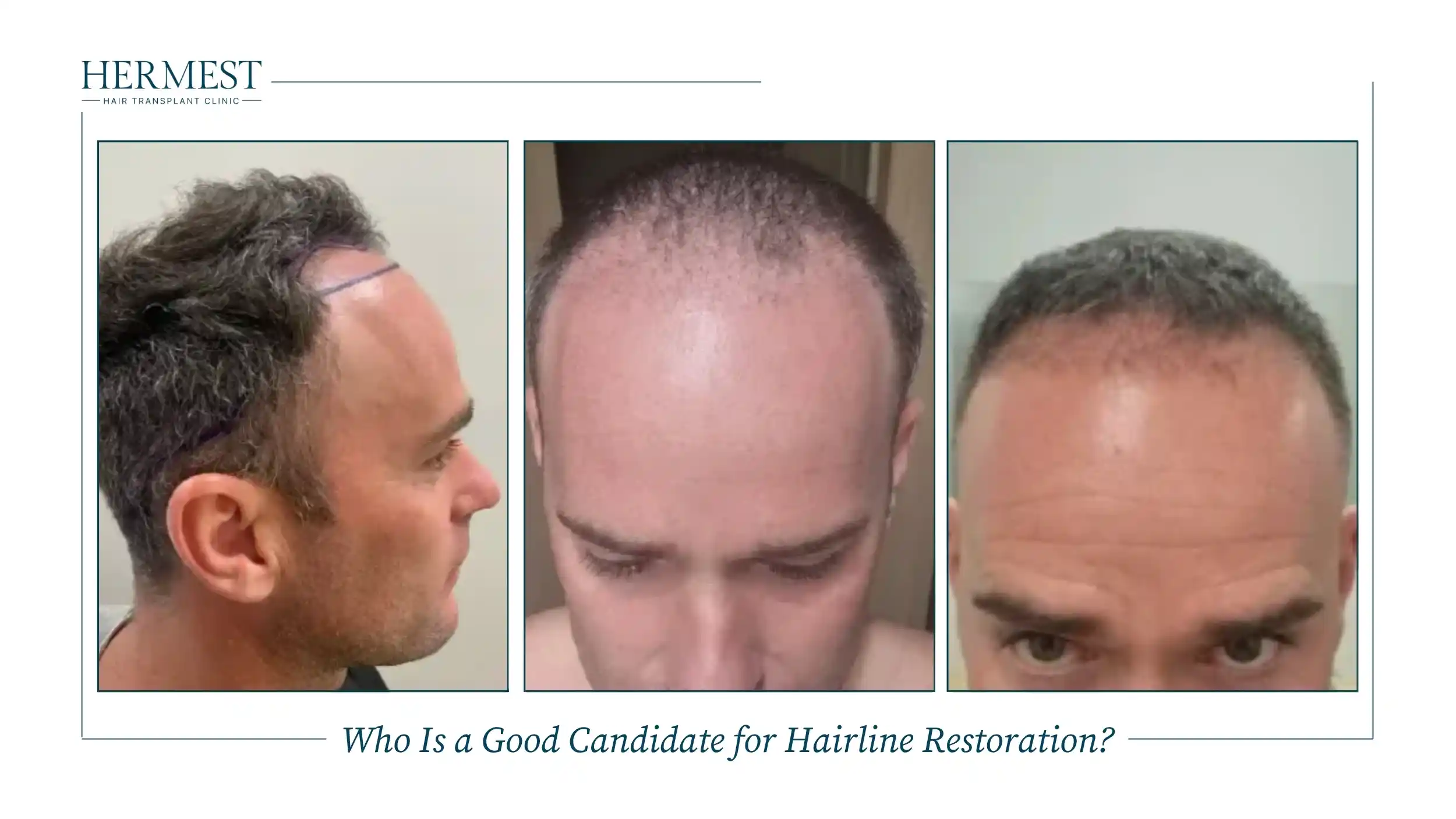
People with stable or predictable hair loss, sufficient donor hair, and realistic expectations may be suitable candidates. We examine your scalp, medical history, and existing hair before deciding if surgery is appropriate.
You may qualify if you:
- Have hereditary hair loss affecting the forehead or temples.
- Have sufficient healthy donor follicles.
- Want to restore an uneven or receding hairline.
- Have a suitable scalp condition and general health.
- Understand that existing hair may continue thinning.
Is Your Hairline Mature or Receding?
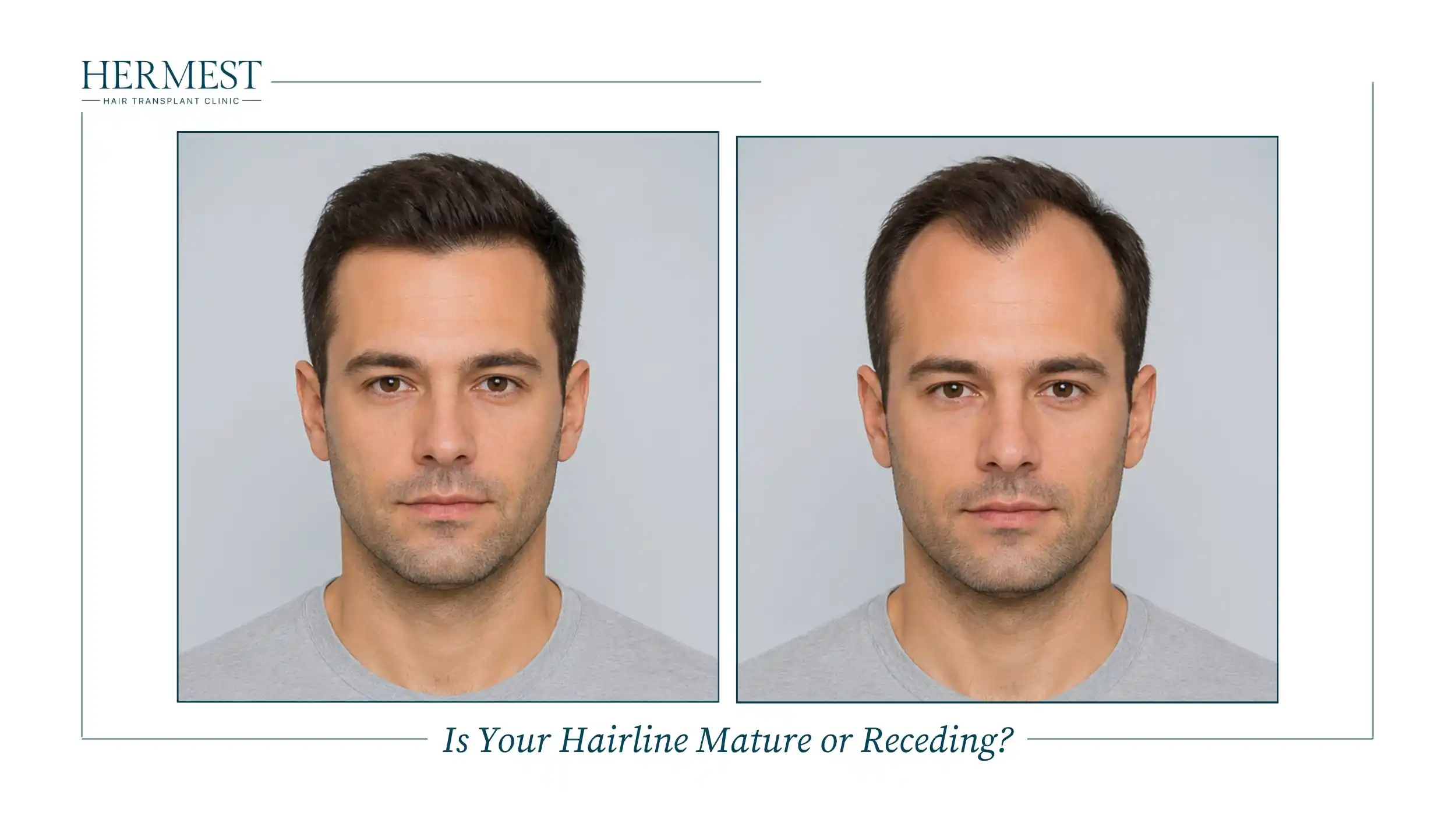
A mature hairline often moves slightly higher as a person ages and may remain stable. A receding hairline typically continues moving backward, sometimes with thinning behind the frontal edge.
Not every mature or Norwood 2 hairline needs surgery. At Hermest, we assess hair density, miniaturisation, family history, and the pattern of hair loss before recommending treatment.
Read our guide on mature hairline vs receding hairline if you are unsure which pattern you have.
When May We Recommend Delaying Surgery?
We may suggest delaying transplantation if your hair loss is rapidly progressing, your donor supply is limited, or an active scalp condition needs treatment.
Some patients benefit from medical treatment or monitoring first. For younger patients, conservative planning is particularly important because future recession can leave transplanted hair isolated from the surrounding hair.
How Do We Design a Natural Hairline at Hermest?
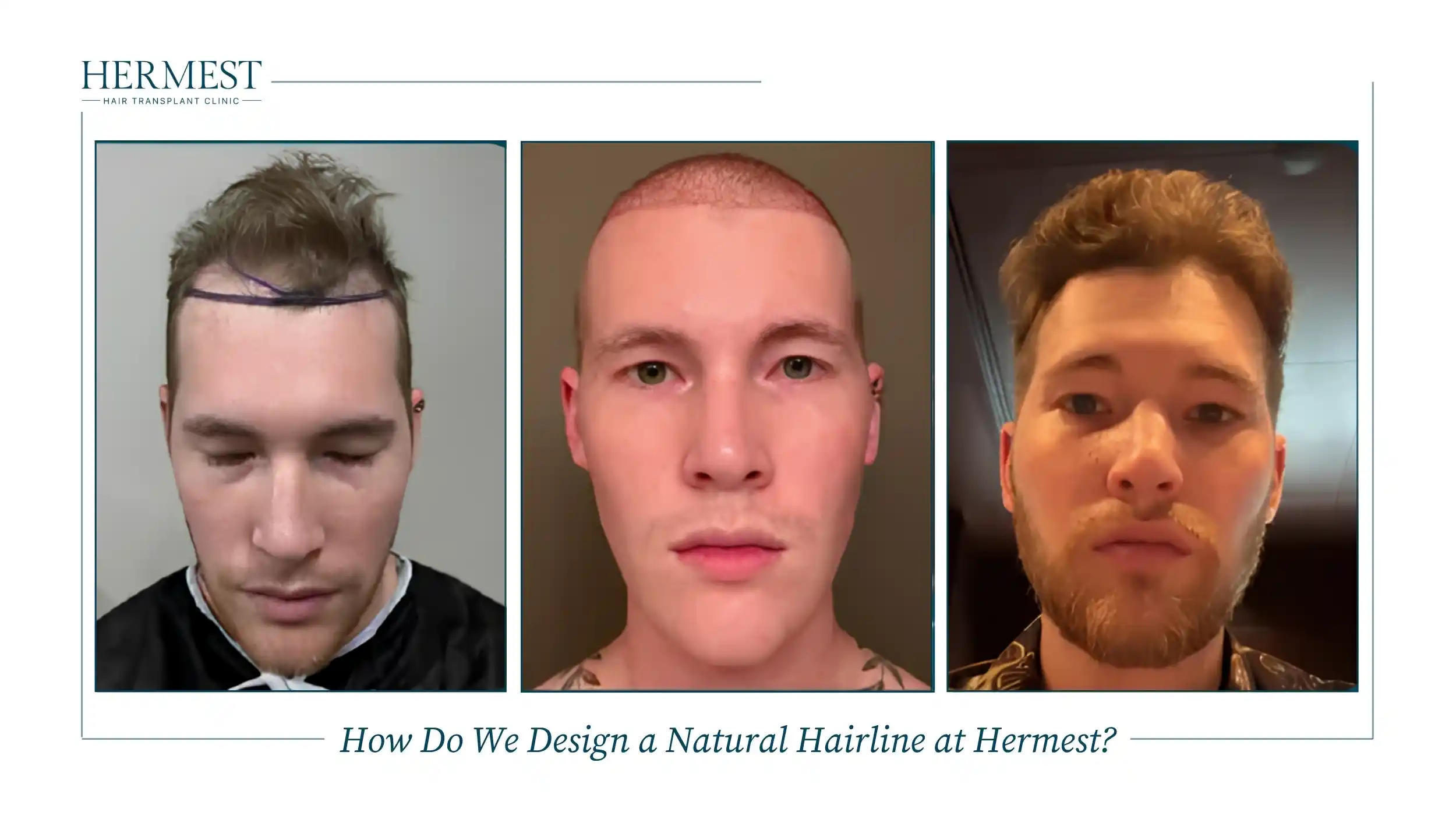
A natural hairline requires the right position, shape, density, and growth direction. At Hermest, we plan each hairline according to the patient’s facial proportions and existing hair rather than applying a standard design.
Our doctors consider four details.
Hairline Position and Facial Proportions
The new hairline should suit your forehead, facial structure, and age. Lowering it too far may create an unnatural appearance and use donor follicles that could be needed later.
Hairline Shape and Temple Corners
Natural hairlines have subtle irregularities. A perfectly straight or excessively rounded hairline may not suit every patient.
We also assess the temple corners and how they connect to the frontal hairline. This is especially important for patients with an M-shaped hairline.
Hair Density and Graft Selection
The front edge generally needs fine, single-hair follicular units to create a softer appearance. Density increases gradually behind this area, depending on the patient’s hair characteristics and donor capacity.
Hair Growth Direction
Hair along the forehead grows at specific angles. We plan recipient sites to follow the direction of your existing hair, helping the transplanted follicles blend with the surrounding area.
As Dr. Ahmet Murat explains:
The best hairline is not the lowest or the densest. It is the one that remains natural as the patient ages.
You can learn more about our approach in our hairline design guide.
How Is a Hairline Transplant Performed at Hermest?
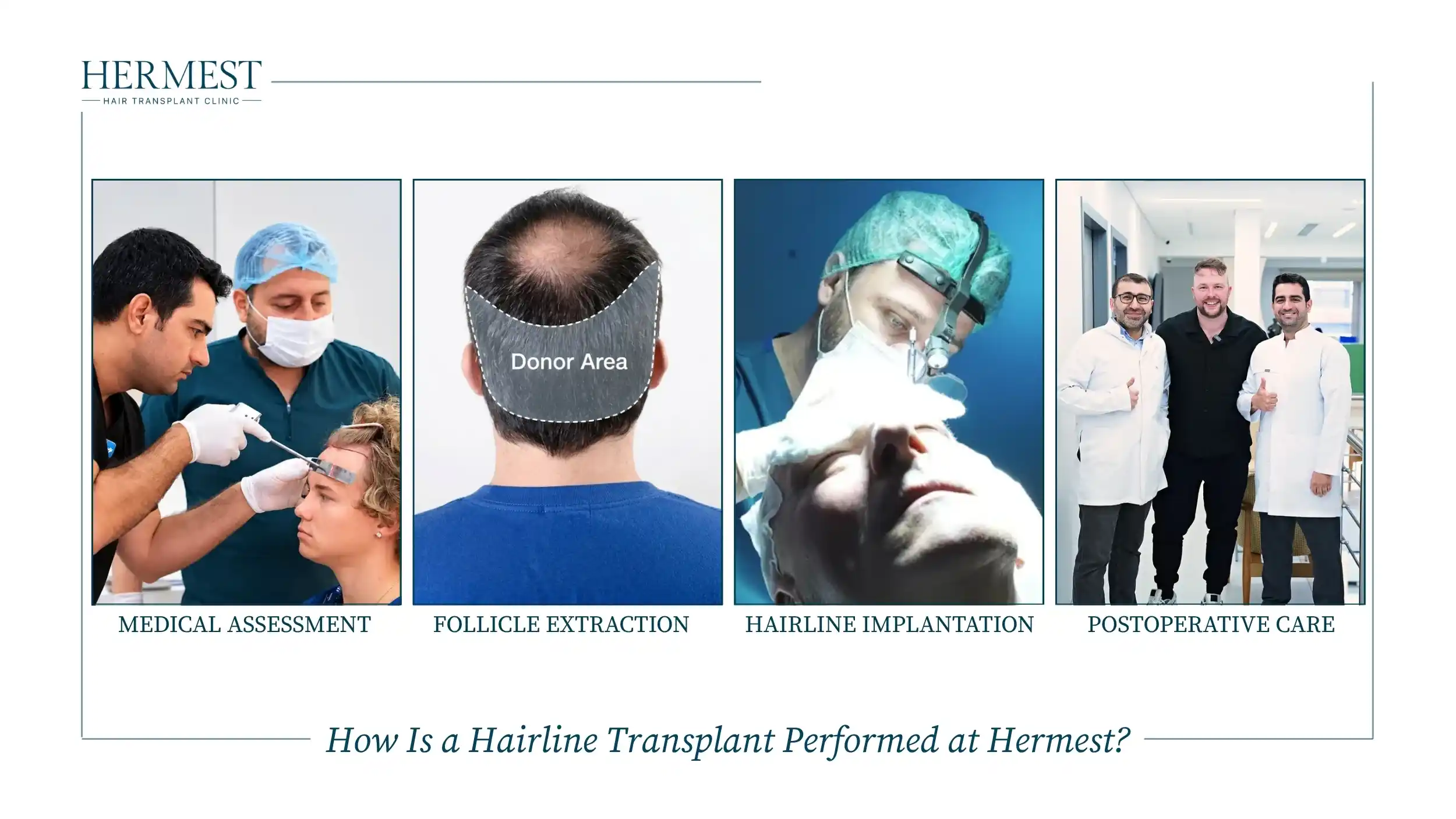
At Hermest, the procedure includes medical assessment, hairline planning, donor follicle extraction, and implantation into the frontal scalp. Surgery is usually performed under local anaesthesia, and the duration depends on the number of grafts and the technique selected.
Step 1: Medical Assessment and Planning
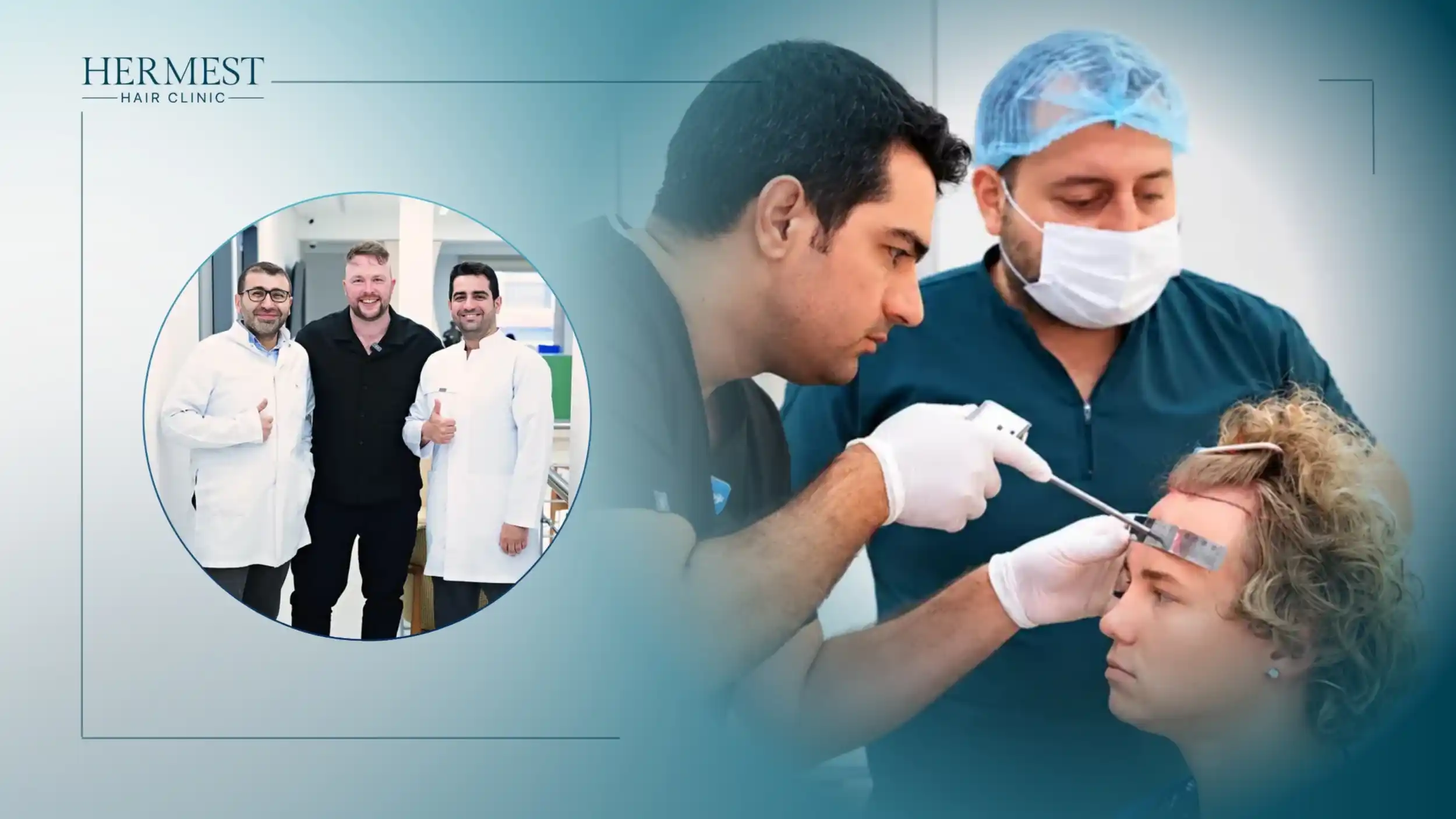
Dr. Ahmet Murat, our Medical Director, carries out the medical consultation, evaluates suitability, and plans the graft requirements. Dr. Nesim Tugen, our Executive Clinical Lead, works with the patient to draw the final hairline before surgery.
Step 2: Donor Follicle Extraction
Our medical team extracts the required follicular units under doctor supervision. We assess the donor area’s capacity and avoid unnecessary harvesting that could limit future treatment options.
Step 3: Hairline Implantation
Dr. Nesim Tugen and our other doctors create recipient channels when the chosen technique requires them. Our medical team then implants the grafts under doctor supervision, following the planned angles, direction and density.
Step 4: Postoperative Care
After surgery, we explain how to wash and protect the treated scalp. We also provide postoperative support and follow-up to monitor healing and growth.
Which Technique Is Best for Hairline Restoration?
The choice between Sapphire FUE, DHI, and Unique FUE® depends on the treatment area, existing hair, and graft requirements. No single technique guarantees a better hairline for every patient.
| Technique | How it is used for hairline restoration |
|---|---|
| Sapphire FUE | Uses FUE extraction and sapphire blades to create recipient channels before graft implantation. |
| DHI | Uses an implanter device to place extracted follicles and can be suitable for selected areas requiring detailed placement. |
| Unique FUE® | Hermest’s branded FUE approach uses specialised instruments and an individualised implantation plan. |
We explain the benefits and limitations of each option during your consultation.
How Much Does a Hairline Transplant Cost in Turkey in 2026?
The hairline transplant Turkey cost depends on the clinic, surgical technique and package inclusions. At Hermest, Sapphire FUE starts at €2,890 (approximately $3,390), while DHI starts at €3,490 (approximately $4,090).
Hermest Hairline Transplant Package Prices
| Package | Price (EUR) | Approx. USD |
|---|---|---|
| Sapphire FUE | €2,890 | $3,390 |
| Premium Sapphire FUE | €4,100 | $4,800 |
| DHI | €3,490 | $4,090 |
| Premium DHI | €4,700 | $5,500 |
| Unique FUE® | €4,250 | $4,980 |
| Premium Unique FUE® | €5,450 | $6,380 |
These are our published general hair transplant package prices. We do not advertise a separate fixed price for hairline-only procedures. USD figures are approximate, and your quotation will confirm the applicable charges.
What Is Included in the Cost?
Our all-inclusive packages cover:
- Medical consultation and hairline planning.
- Hair transplant surgery and local anaesthesia.
- Hotel accommodation for two or three nights, depending on the package.
- VIP airport, hotel and clinic transfers.
- Prescribed postoperative medicines and care products.
- Twelve months of postoperative support.
International flights are not included.
At Hermest, we use technique-based package pricing rather than charging for every graft. We assess how many follicles can be safely harvested while preserving the donor area. For more details, see our complete hair transplant prices in Turkey.
How Many Grafts Are Needed for Hairline Restoration?
The number of grafts needed depends on how far the hairline has receded, the size of the thinning area and the density required. Some patients need only a small temple correction, while others require restoration across the frontal scalp.
We assess:
- The depth of temple recession.
- The width of the frontal area.
- The existing hair density.
- Hair thickness, texture, and curl pattern.
- Donor availability and possible future hair loss.
For example, an early Norwood 2 patient may require fewer grafts than someone with extensive frontal thinning. Lowering the hairline can also increase graft requirements because additional scalp area needs coverage.
We provide an individual graft estimate after reviewing your hairline and donor area. Harvesting the greatest possible number of grafts is not always the safest or most appropriate approach.
Hairline Transplant Before and After Results
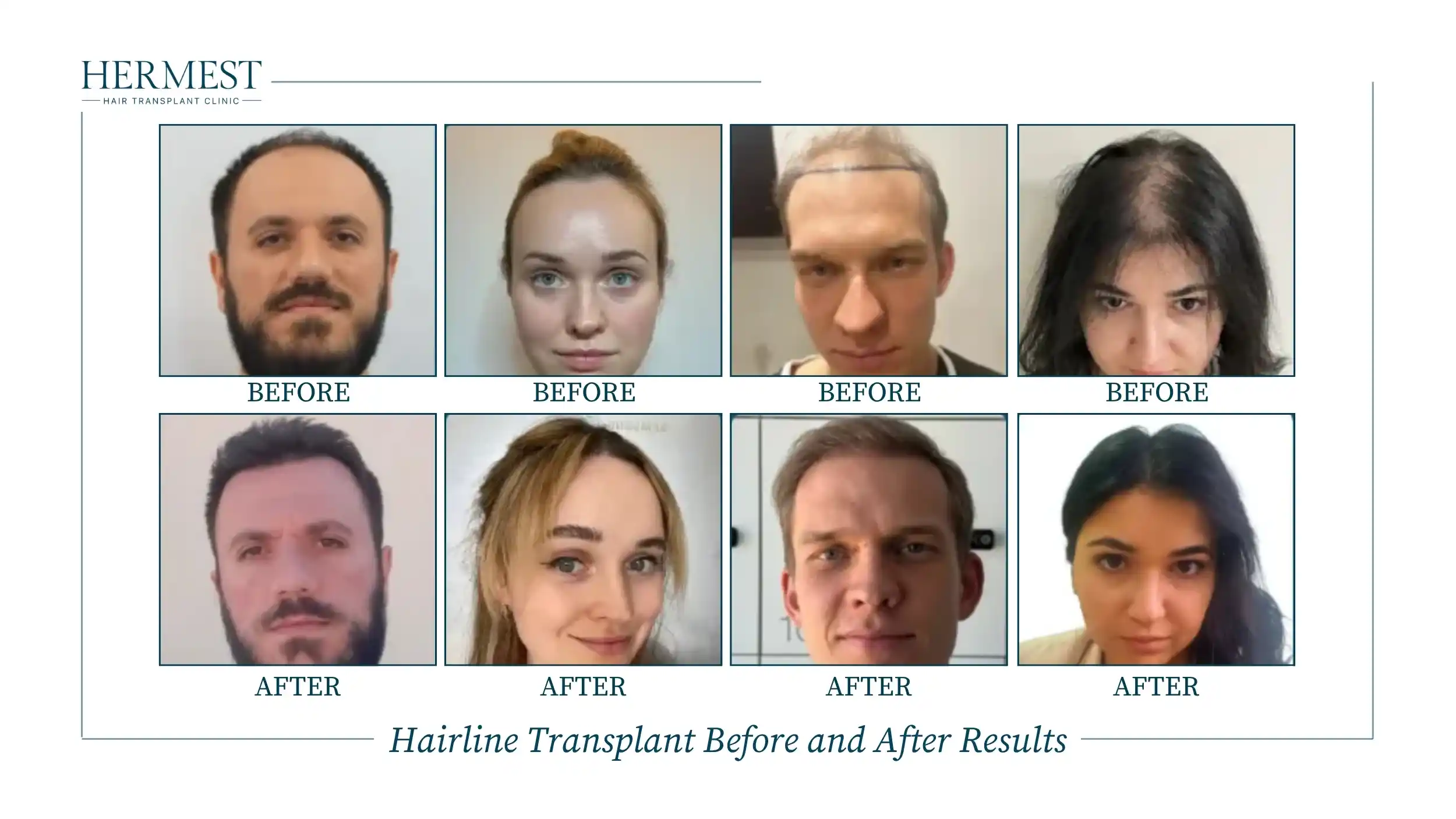
Hairline transplant results develop gradually as the implanted follicles begin producing new hair. The final appearance depends on the original hair loss pattern, graft growth, hair characteristics, and the planned hairline shape.
Our published patient gallery includes the following cases.
| Patient | Technique | Total grafts | Result shown |
|---|---|---|---|
| Cemil Y. | DHI | 2,612 | 9 months |
| Laura M. | DHI | 2,421 | 11 months |
| Dimitri N. | Sapphire FUE | 3,119 | 12 months |
These are some of Hermest cases involving hairline restoration or frontal hairline improvement. The graft totals are for each patient’s overall procedure and should not be interpreted as standard hairline-only graft requirements.
You can review their photographs in our hair transplant before-and-after gallery.
Results vary. We recommend comparing patients with similar hair loss patterns and hair characteristics rather than expecting an identical outcome.
How Long Does Hairline Transplant Recovery Take?
The treated scalp usually heals substantially within the first one to two weeks. Transplanted hair often sheds during the following weeks, and new growth generally begins around three to four months after surgery.
| Recovery period | What to expect |
|---|---|
| Days 1–3 | Mild swelling, redness, and tenderness may develop. |
| Days 4–14 | Small scabs form and gradually shed as the scalp heals. |
| Weeks 2–8 | Transplanted hair shafts may shed temporarily. |
| Months 3–4 | Early new hair growth usually begins. |
| Months 5–8 | Hair gradually becomes more noticeable and thicker. |
| Months 9–12 | Hairline coverage and density continue improving. |
| Months 12–18 | Further maturation may occur, depending on the patient. |
Early shedding is a normal part of recovery and does not necessarily indicate treatment failure.
The American Academy of Dermatology explains that transplanted hair commonly sheds during the first weeks, and visible results take several months.
Follow the washing, sleeping, and activity instructions given by your medical team. Avoid picking scabs or scratching the newly transplanted area.
What Are the Risks of Hairline Transplant Surgery?
Hairline transplantation carries surgical risks, including infection, bleeding, swelling, scarring, temporary hair shedding, and uneven graft growth. Poor planning or incorrect graft placement can also lead to an unnatural hairline.
Other concerns include:
- Continued hair loss behind the restored hairline.
- Poor graft growth or uneven density.
- Damage to existing hair follicles.
- Excessive donor-area harvesting.
- Unnatural hair angles or visible irregularities.
The International Society of Hair Restoration Surgery advises patients to confirm who performs the surgical stages and whether the professionals involved are appropriately qualified.
Contact your medical team if you notice increasing pain, spreading redness, fever, or unusual discharge after surgery. Seek urgent medical attention for severe symptoms.
Why Choose Hermest for Hairline Restoration in Istanbul?
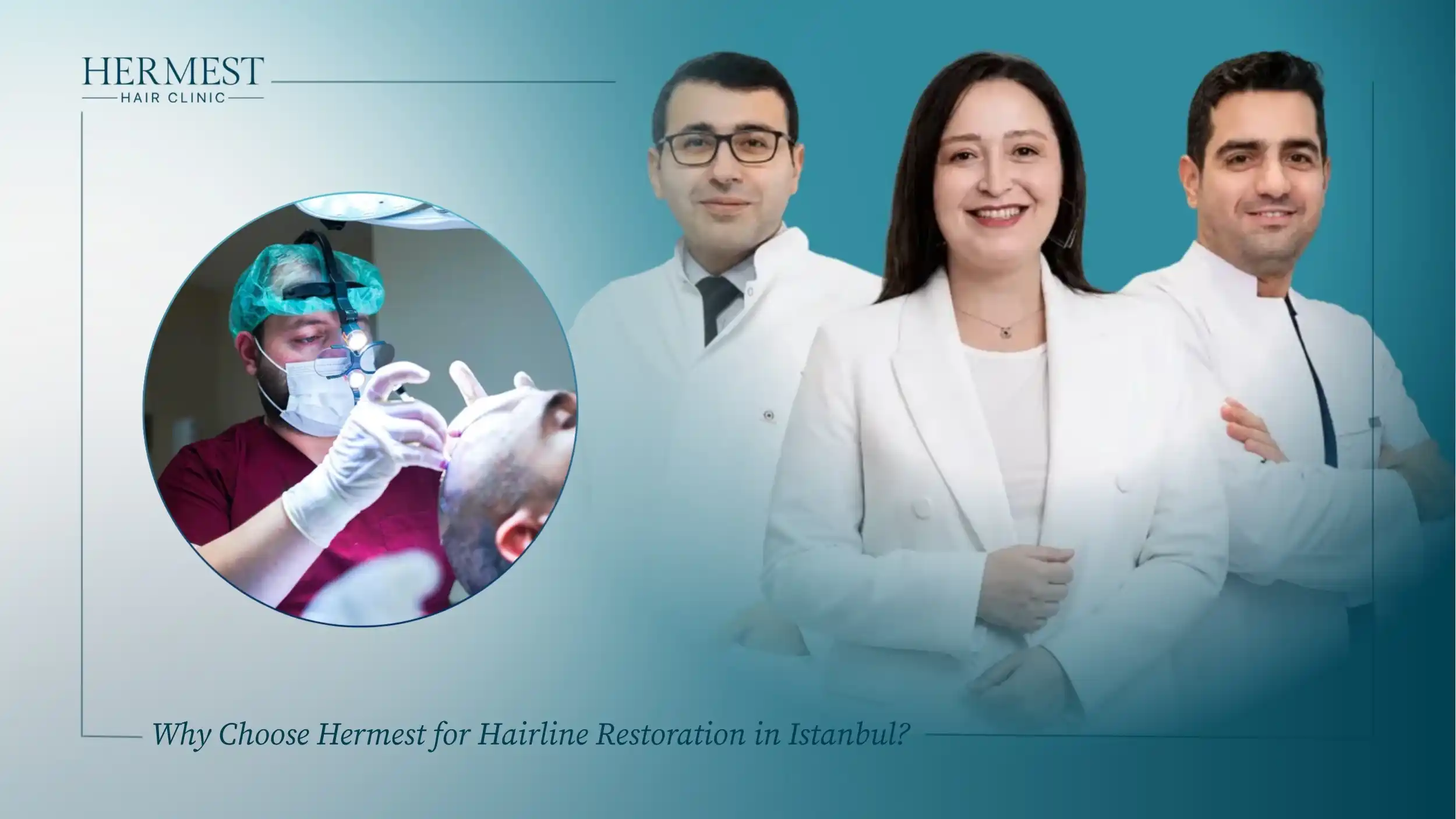
At Hermest Hair Clinic, we offer individual hairline planning, treatment by a doctor-supervised medical team, and structured postoperative support. Our Istanbul clinic holds a Turkish Ministry of Health Hair Transplant Unit Operating Permit.
Certified Medical Professionals
Dr. Ahmet Murat and Dr. Nesim Tugen both hold Turkish Ministry of Health Hair Transplant Practitioner Certificates.
Dr. Ahmet Murat leads medical consultations, graft planning, treatment supervision, and postoperative medical oversight. Dr. Nesim Tugen works on hairline design and recipient-channel creation alongside our other doctors.
Our trained medical team performs graft extraction and implantation under doctor supervision.
Natural Hairline Planning
We consider hairline shape, growth direction, donor supply, and future hair loss before finalising the treatment plan. We also explain when a conservative hairline position may be more appropriate.
Transparent Treatment Packages
We publish our package prices and explain the services included before treatment. Patients can choose among several techniques based on medical suitability and the agreed treatment plan.
Postoperative Follow-Up
Our packages include 12 months of postoperative support. Patients receive instructions for scalp care, recovery, and follow-up after returning home.
You can review our official clinic and doctor certificates.
Frequently Asked Questions
Transplanted follicles can provide long-lasting hair growth. However, existing hair may continue thinning because of hereditary hair loss, so additional treatment or medical management may be necessary.
Book Your Free Hairline Transplant Consultation at Hermest
If your hairline is receding or your temples are thinning, we can help you understand your treatment options.
At Hermest Hair Clinic in Istanbul, our doctors assess your hair loss pattern, donor area, and facial proportions before recommending a suitable approach. We explain the expected results, graft requirements, costs, and recovery process so you know what treatment involves.
Book your free hairline assessment today. Send us photographs of your hairline and donor area to begin your initial evaluation. Our team will review your information and guide you through the next steps.