
How to Reverse Male Pattern Baldness Naturally: What Works?
 ChatGPT
 Claude
 Perplexity
 Grok
 Gemini

If you’re searching for how to reverse male pattern baldness naturally, you probably want something more useful than another list of oils, vitamins, and supposed “DHT-blocking” foods. The evidence paints a more realistic picture.
Male pattern baldness, medically known as androgenetic alopecia, usually cannot be completely reversed with natural remedies alone. Genetics and androgen activity gradually cause susceptible follicles to miniaturize, producing progressively finer and shorter hairs.
Early thinning is different from established baldness.
Research indexed by PubMed identifies genetics, androgen signaling, 5-alpha reductase activity, and androgen receptors among the major biological factors involved in androgenetic alopecia. This explains why changing your shampoo or diet cannot simply switch off genetic hair loss.
Some natural remedies for male pattern baldness are more promising than others. Rosemary oil, pumpkin seed oil, and saw palmetto have been studied in humans, although the strength and quantity of evidence remain limited. Nutrition, sleep, stress management, and scalp care can support healthy hair, particularly when another problem is contributing to shedding.
They aren’t proven cures for advanced baldness.
Dr. Ahmet Murat says:When patients ask how to reverse male pattern baldness naturally, I first explain the difference between supporting healthier hair and reversing follicular miniaturization. Diet, scalp care, and selected natural approaches may support hair health, but established androgenetic alopecia requires realistic expectations.
This guide examines which natural hair loss treatments for men have genuine clinical evidence, which popular claims are overstated, and whether a receding hairline or thinning crown can realistically grow back.
We’ll also explain how to recognize early follicular miniaturization, when natural approaches may still be worth considering, and when medical treatment or hair transplantation becomes a more realistic option.
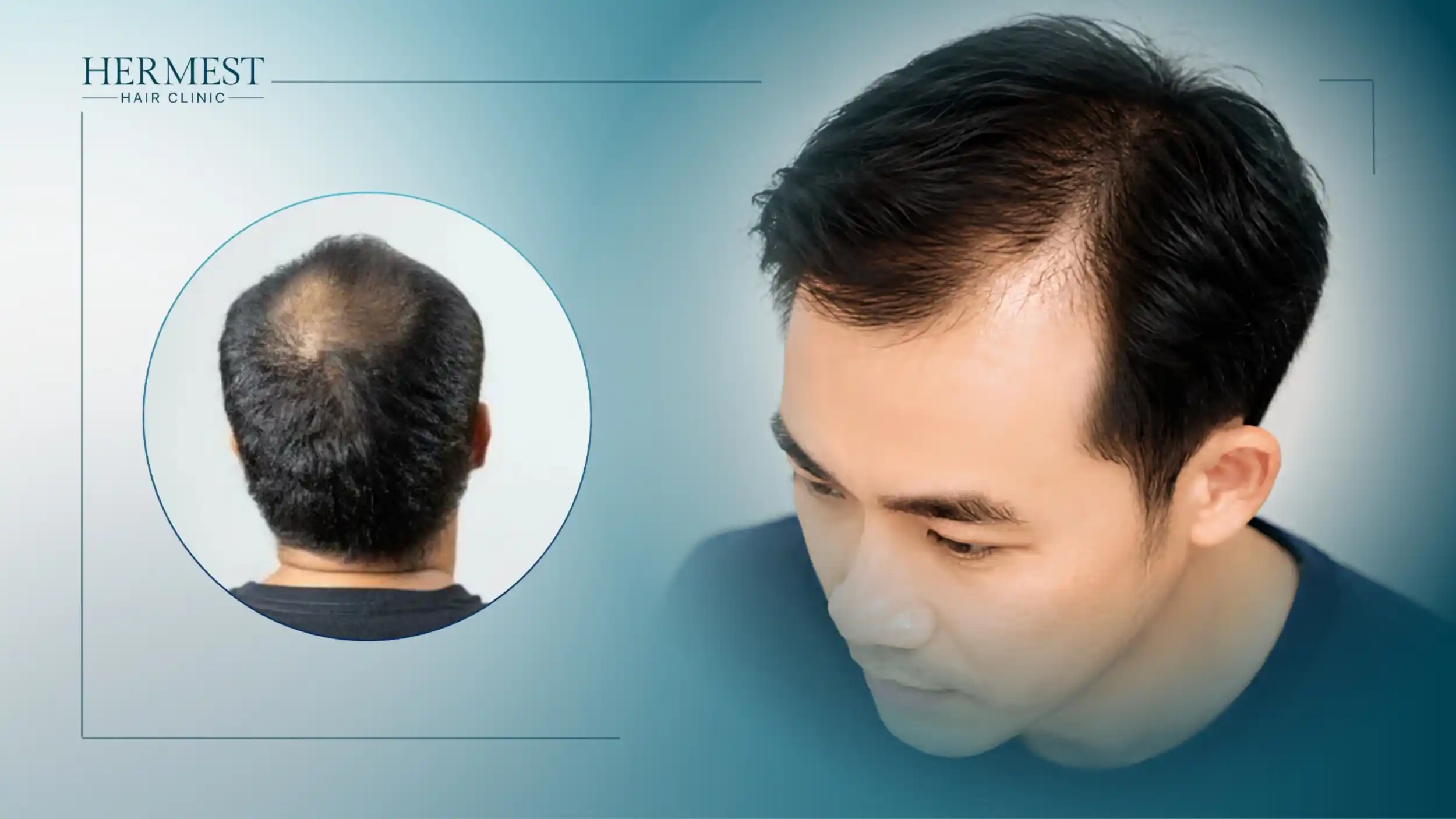
Quick Insights
- Male pattern baldness develops largely through genetics and androgen-related follicular miniaturization.
- Early treatment offers better prospects than waiting until substantial thinning develops. The AAD reports that men tend to achieve better results when treatment starts soon after noticing hair loss.
- Rosemary oil has encouraging evidence from a six-month trial comparing it with 2% minoxidil, but one small study doesn’t establish it as a cure for genetic baldness.
- Pumpkin seed oil and saw palmetto have promising but limited research.
- Scalp massage may support scalp comfort and hair thickness, yet evidence for reversing androgen-driven loss remains weak.
- Correcting a genuine nutritional deficiency may improve deficiency-related shedding. Taking unnecessary supplements won’t remove genetic susceptibility to DHT hair loss.
- A receding hairline or thinning crown containing miniaturized hairs may have more potential for improvement than a long-established bald area.
- Minoxidil and finasteride have stronger clinical evidence than natural remedies. AAD notes that full regrowth with minoxidil remains unlikely, reinforcing the need for realistic expectations.
- Hair transplantation can restore coverage when suitable donor hair exists and nonsurgical regrowth is no longer realistic.
Can Male Pattern Baldness Really Be Reversed Naturally?
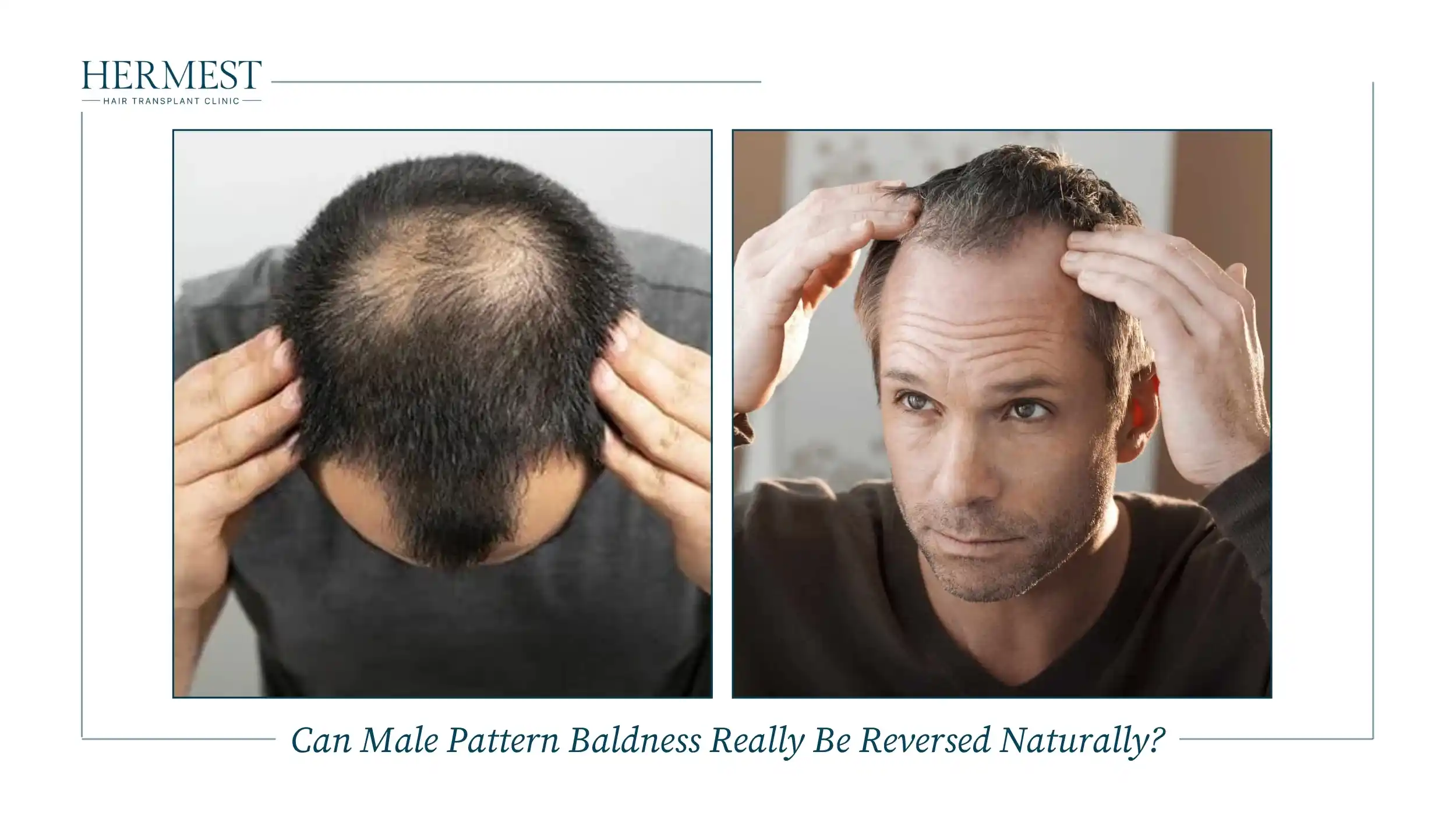
The realistic answer is that male pattern baldness usually cannot be completely reversed naturally. Natural approaches may support healthier growth, improve certain contributing factors, or possibly help some men with early thinning. They cannot reliably recreate hair in areas with advanced follicular miniaturization.
The American Academy of Dermatology (AAD) explains that hereditary hair loss causes follicles to gradually shrink. It also stresses that treatment tends to work better when started early, before substantial miniaturization has occurred.
What Does “Reverse Hair Loss” Actually Mean?
The word reverse creates unrealistic expectations. There are several very different outcomes:
- Slowing further hair loss
- Maintaining existing hair
- Thickening miniaturized hairs
- Producing measurable regrowth
- Restoring an established bald area
A natural hair loss treatment for men that modestly improves thickness shouldn’t automatically be described as reversing baldness.
This distinction matters when evaluating oils, supplements, massage, or so-called natural DHT blockers.
Early Thinning vs Advanced Baldness
Timing makes a major difference.
Research describes androgenetic alopecia as progressive follicular miniaturization. Genetically susceptible terminal hairs gradually become finer, shorter, and more vellus-like under androgen influence.
When follicles are still producing thin, miniaturized hairs, there may be greater potential for improvement. The AAD similarly notes that once follicles have substantially shrunk, regrowth becomes increasingly difficult.
Dr. Ahmet Murat says:Patients often use ‘reversal’ to mean very different things. Preserving miniaturized hair is one goal. Restoring an established bald area is another. The earlier we assess thinning, the better we can determine what existing follicles may realistically achieve.
So, can you regrow hair naturally after balding? Early thinning and long-standing baldness shouldn’t be treated as the same problem.
What Causes Male Pattern Baldness?
Understanding the biology behind male pattern baldness helps explain why natural remedies have limits. This condition isn’t simply caused by poor circulation, stress, vitamin deficiency, or using the wrong shampoo.
Androgenetic alopecia develops through an interaction between genetic susceptibility and androgen activity. Research reviews describe progressive hair follicle miniaturization as its defining feature.
Genetics Play a Major Role
Male pattern hair loss is polygenic, meaning numerous genetic variants influence susceptibility rather than one single “baldness gene.”
Recent genomic research links AGA with multiple biological pathways involving androgen signaling, follicular development, cell survival, and tissue remodeling.
Your family history can therefore provide clues, but inheritance isn’t as simple as looking only at your mother’s father.
How Does DHT Cause Hair Loss?
Dihydrotestosterone (DHT) is produced when the enzyme 5-alpha reductase converts testosterone into DHT.
In genetically susceptible scalp follicles, DHT interacts with androgen receptors and contributes to progressive miniaturization. Research describes shortening of the anagen growth phase alongside progressively thinner and shorter hair shafts.
This creates a gradual progression:
terminal hair → thinner hair → miniaturized hair → increasingly limited visible coverage
You don’t necessarily have abnormally high testosterone or DHT. Follicular sensitivity matters greatly.
Dr. Ahmet Murat says:DHT isn’t something we should simply try to eliminate from the body. With male pattern hair loss, the main issue is how genetically susceptible follicles respond to androgen signaling. This is why eating foods described online as natural DHT blockers doesn’t reliably switch off genetic baldness.
This distinction matters when researching natural DHT blockers. Reducing systemic DHT and supporting general hair health are completely different biological goals.
Can You Reduce DHT Naturally?
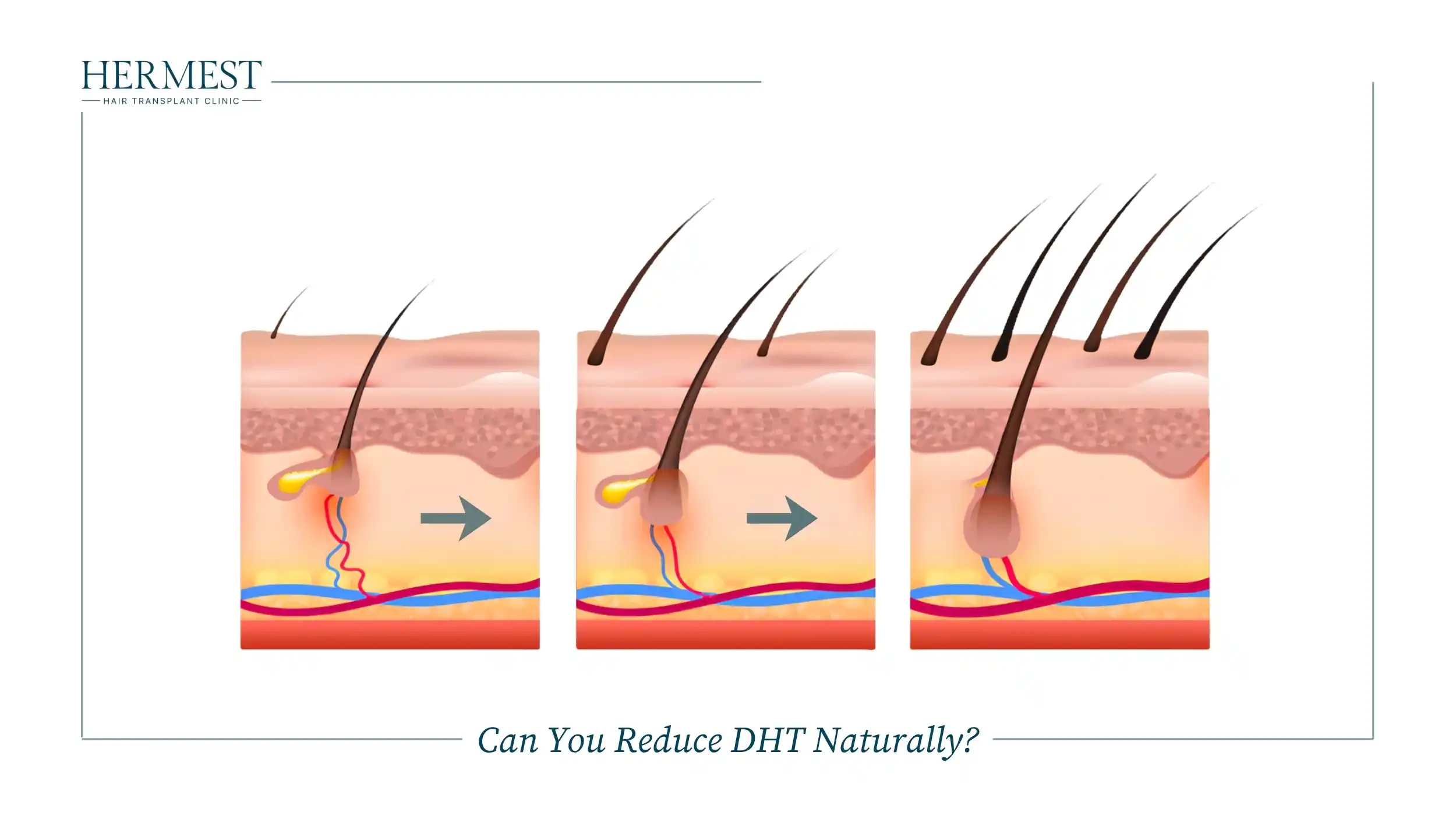
Some plant-derived compounds may influence pathways associated with DHT, but the phrase natural DHT blockers is often used far more confidently than the research justifies. No food, oil, or supplement has been shown to reliably suppress genetically driven male pattern baldness to the same established degree as prescription antiandrogen treatment.
That doesn’t mean every natural option lacks evidence.
Saw Palmetto and Hair Loss
Saw palmetto is frequently promoted as a natural alternative for androgenetic alopecia. Its proposed effects include inhibition of 5-alpha reductase, the enzyme involved in converting testosterone into DHT.
A systematic review indexed by PubMed found positive findings across several small clinical studies involving oral or topical saw palmetto products. However, the researchers concluded that high-quality evidence remains limited and larger randomized trials are needed.
So, does saw palmetto regrow hair?
There is preliminary evidence of benefit, but it isn’t a proven natural substitute for established AGA treatments.
What About Pumpkin Seed Oil?
Pumpkin seed oil for hair growth has particularly interesting human data.
A randomized, double-blind, placebo-controlled trial followed 76 men with mild-to-moderate androgenetic alopecia for 24 weeks. Researchers reported a mean hair-count increase of about 40% in the treatment group compared with 10% in the placebo group.
That’s encouraging, but one relatively small study cannot establish pumpkin seed oil as a proven treatment for reversing baldness.
“Natural” doesn’t automatically mean risk-free either. Botanical supplements can cause adverse effects, interact with medications, and vary considerably between formulations.
Does Rosemary Oil Work for Male Pattern Baldness?
Rosemary oil for male pattern baldness has more human research behind it than many popular natural remedies. Still, the evidence is much smaller than social media claims often suggest.
One clinical trial is responsible for much of rosemary oil’s reputation as a natural hair growth treatment.
What Did the Rosemary Oil vs Minoxidil Study Find?
A 2015 randomized comparative trial followed 100 people with androgenetic alopecia. Researchers assigned 50 participants to rosemary oil and 50 to 2% minoxidil for six months.
At three months, neither group showed a significant increase in hair count. At six months, both groups showed significant increases compared with baseline. Researchers found no significant difference in hair count between the groups at that point.
That sounds impressive, but context matters.
The study compared rosemary oil with 2% minoxidil, not 5% minoxidil. It was also one relatively small trial. We don’t yet have a large body of high-quality randomized studies confirming that rosemary oil can consistently reverse male pattern baldness.
Can Rosemary Oil Restore a Receding Hairline?
There isn’t convincing evidence that rosemary oil can restore an established bald hairline.
It may potentially support growth where miniaturized follicles remain active, but this differs greatly from rebuilding areas where visible hair has disappeared.
The trial itself showed no significant hair-count improvement after only three months. Any potential benefit required longer use.
Rosemary preparations can cause scalp irritation or itching in some people, so “natural” doesn’t mean irritation-free.
For early male pattern hair loss, rosemary oil may be a reasonable supportive option for some people. It shouldn’t be presented as a proven replacement for established treatments or as a reliable method for recreating hair in advanced bald areas.
Can Scalp Massage Regrow Hair?
Scalp massage for male pattern baldness is inexpensive and easy to try, but evidence for genuine hair regrowth remains limited. Massage may influence scalp tissue and hair-shaft thickness, yet it hasn’t been proven to reverse the androgen-driven follicular miniaturization behind androgenetic alopecia.
That distinction matters if your goal is to regrow hair naturally.
What Does the Research Show?
A small 2016 study followed just nine healthy Japanese men who performed a standardized four-minute scalp massage every day for 24 weeks.
Researchers found that average hair thickness increased from approximately 0.085 mm to 0.092 mm. However, the study did not demonstrate an increase in total hair number. The participants weren’t selected for male pattern baldness either.
A later study involving people with androgenetic alopecia reported self-perceived stabilization or regrowth among many respondents. Yet this was a retrospective survey without a randomized control group, making the evidence much weaker than a controlled clinical trial.
Can Massage Stop DHT Hair Loss?
There is currently insufficient evidence that massage meaningfully blocks DHT or stops genetically susceptible follicles from miniaturizing.
Massage can still be a supportive scalp-care habit. Just don’t confuse thicker individual hairs with the creation of new follicles.
Dr. Ahmet Murat says:Scalp massage is sometimes presented as though increasing circulation automatically reverses baldness. The clinical evidence doesn’t support that conclusion. It may support scalp comfort and possibly hair thickness, but we shouldn’t promise that massage can rebuild an established receding hairline.
Avoid aggressive rubbing, particularly when the scalp is inflamed, tender, recently transplanted, or affected by a dermatological condition.
For natural hair regrowth for men, massage is better viewed as an optional supportive measure rather than a standalone treatment for male pattern baldness.
Can Diet Reverse Male Pattern Baldness?

A healthy diet supports normal hair production, but diet cannot usually reverse male pattern baldness. Androgenetic alopecia remains primarily driven by genetic susceptibility and androgen signaling.
Nutrition becomes more relevant when a deficiency or restrictive diet causes extra shedding alongside genetic hair loss.
Which Nutritional Deficiencies Can Cause Hair Loss?
The American Academy of Dermatology (AAD) states that inadequate iron, protein, biotin, or zinc can contribute to noticeable hair loss. When a genuine deficiency causes shedding, restoring adequate nutrient levels can allow hair to regrow.
This doesn’t mean correcting a deficiency switches off DHT-related hair loss.
A man can have androgenetic alopecia and nutritional shedding simultaneously. Improving his diet may reduce the nutritional component, yet his genetically susceptible follicles can continue miniaturizing.
Do Hair Vitamins Help Male Pattern Baldness?
Taking extra vitamins without a diagnosed deficiency is unlikely to rebuild a receding hairline.
The AAD recommends checking for deficiencies before using supplements such as iron, zinc, or biotin. Excessive supplementation can be harmful, and high intakes of certain nutrients, including selenium and vitamins A and E, have been associated with hair loss.
Biotin deserves particular caution. It is heavily marketed for natural hair regrowth, yet supplementation isn’t automatically beneficial when intake is already adequate.
A balanced diet with adequate protein, vegetables, whole grains, legumes, nuts, seeds, eggs, fish, and other nutrient-rich foods can support healthy follicles. Think of nutrition as a foundation for hair health, not a natural cure for male pattern baldness.
Best Foods for Healthy Hair Growth

The best foods for healthy hair growth supply the protein, vitamins, minerals, and fatty acids follicles need for normal activity. They can support stronger hair production, but no individual food has been proven to reverse male pattern baldness.
That distinction protects you from many misleading “anti-DHT diet” claims.
What Should You Eat for Healthier Hair?
Hair fibers consist largely of keratin, a protein. Consistently inadequate protein intake can contribute to hair loss, so obtaining enough dietary protein is a sensible starting point.
Useful nutrient-dense choices include:
- Eggs, fish, poultry, dairy, legumes, and other protein sources
- Leafy vegetables, nuts, seeds, whole grains, and varied fruits
These foods can provide protein, iron, zinc, essential fatty acids, and several vitamins involved in normal follicular function.
The American Academy of Dermatology notes that insufficient protein, iron, zinc, or biotin can contribute to noticeable hair loss. Hair may regrow when a genuine deficiency is corrected.
Research on micronutrients and androgenetic alopecia is less straightforward. A 2024 systematic review found associations involving several micronutrients, including vitamin D, iron, and zinc, but results across studies were inconsistent.
Are There Foods That Naturally Block DHT?
Claims that certain foods function as powerful natural DHT blockers should be treated cautiously.
Eating pumpkin seeds, tomatoes, green tea, or other frequently promoted foods isn’t proven to suppress scalp DHT enough to restore a genetically receding hairline.
Food-first nutrition is usually more sensible than taking multiple high-dose hair supplements without evidence of deficiency. The AAD warns that excessive intake of certain nutrients can itself contribute to hair loss.
Can Stress, Sleep and Exercise Affect Male Pattern Baldness?
Lifestyle can influence overall hair health and shedding, but stress, poor sleep, and exercise don’t explain the underlying genetic mechanism of male pattern baldness. The key is separating factors that may worsen shedding from those responsible for follicular miniaturization.
Can Stress Cause Male Pattern Baldness?
Stress can trigger telogen effluvium, a form of excessive shedding that occurs when more follicles enter the resting phase.
This differs from androgenetic alopecia, where genetically susceptible follicles progressively miniaturize under androgen influence.
Both conditions can occur together. A stressful period may create extra diffuse shedding in someone who already has a receding hairline or thinning crown.
Reducing stress may help the temporary shedding component. It isn’t proven to reverse DHT-driven miniaturization.
Does Poor Sleep Cause Hair Loss?
Sleep deserves attention, but claims that better sleep can regrow a bald hairline go beyond current evidence.
A recent systematic review found frequent sleep disturbances among people with several hair-loss disorders, including androgenetic alopecia. Most available evidence was observational, so researchers couldn’t establish that poor sleep directly causes genetic baldness.
Does Working Out Increase DHT and Cause Baldness?
Exercise can temporarily alter androgen levels. One small study found serum DHT increased following maximal aerobic exercise. That doesn’t demonstrate that normal exercise causes male pattern hair loss.
Research examining exercise and AGA remains limited and largely observational, with no convincing evidence that ordinary workouts should be avoided to protect hair.
Lifestyle changes can support a sensible natural hair loss treatment for men, particularly when stress or poor nutrition contributes to shedding. They shouldn’t replace proper diagnosis when temple recession or crown thinning continues.
Natural Hair-Loss Treatments Ranked by Evidence
Not every natural treatment for male pattern baldness deserves equal confidence. Some approaches have human clinical studies behind them, others mainly support general hair health, and many popular internet remedies remain poorly studied.
The most useful approach is to separate promising evidence from marketing claims.
Which Natural Treatments Have the Best Evidence?
Among botanical options, rosemary oil, pumpkin seed oil, and saw palmetto have human research suggesting potential benefits. Yet systematic reviews continue to describe limitations such as small trials, inconsistent formulations, short follow-up periods, and limited long-term safety data.
A practical evidence hierarchy looks like this:
- Promising but limited evidence: rosemary oil, pumpkin seed oil, saw palmetto.
- Supportive measures: adequate nutrition, correcting deficiencies, gentle scalp care, sleep, exercise, and stress management.
- Insufficient evidence for reversing AGA: scalp massage alone, “DHT-blocking” foods, homemade oil mixtures, and most viral hair-growth remedies.
None should be described as a proven method to reverse male pattern baldness naturally.
What About Low-Level Light Therapy?
Low-level light therapy (LLLT) isn’t a natural remedy, but it deserves inclusion for readers seeking non-drug options.
A systematic review and meta-analysis involving 38 studies and 3,098 patients, including 2,930 with androgenetic alopecia, found significant improvements in hair density compared with placebo. The authors described LLLT as a promising treatment option for AGA.
Earlier randomized-trial evidence has likewise found LLLT superior to placebo for male androgenetic alopecia.
This evidence hierarchy can save valuable time. Male pattern hair loss is progressive, so spending years testing unsupported remedies may allow further miniaturization.
What About Microneedling for Male Pattern Baldness?
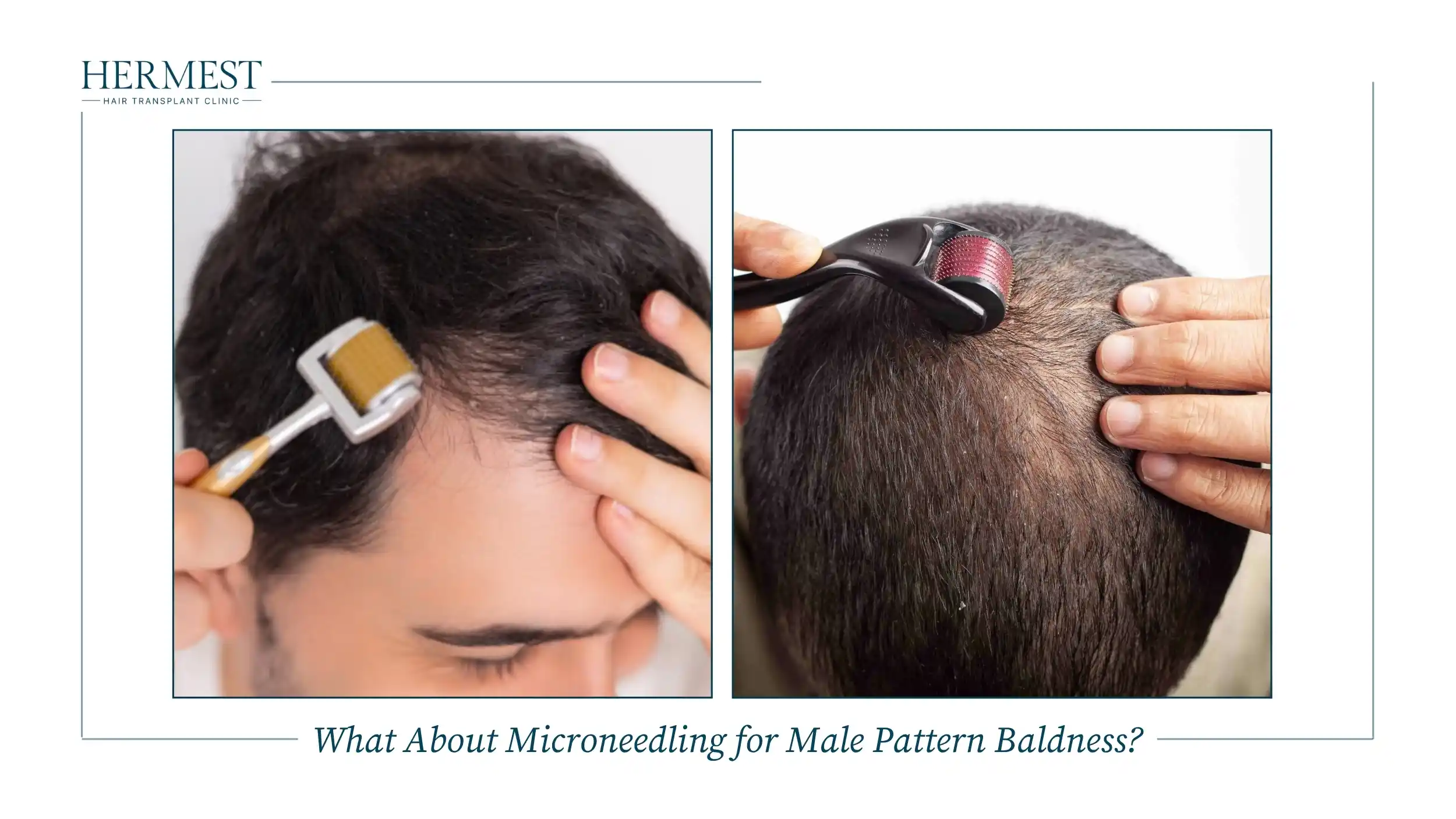
Microneedling for male pattern baldness is frequently grouped with natural treatments, but it isn’t a natural remedy. It is a minimally invasive procedure that creates controlled microscopic injuries in the scalp.
Research suggests it may support hair growth, particularly when combined with established treatments.
Does Microneedling Regrow Hair?
A systematic review covering 22 clinical studies and 1,127 participants found encouraging results across several hair-loss disorders. Among 17 studies involving 911 people with androgenetic alopecia, microneedling commonly improved hair parameters when paired with minoxidil, growth-factor preparations, PRP, or other therapies.
More recent evidence supports this combination approach. A 2024 meta-analysis of 13 randomized trials involving 696 AGA patients found combined microneedling treatment produced greater improvements in hair density and diameter than single-treatment approaches.
This doesn’t mean microneedling alone can reliably reverse male pattern baldness.
A separate review found preliminary evidence for microneedling monotherapy, but researchers stressed that relatively few studies have tested it alone. Most available trials combine needling with minoxidil or other interventions.
Should You Microneedle Your Scalp at Home?
DIY treatment deserves caution.
Needling can cause redness, irritation, bleeding, infection, and other complications when performed incorrectly. It may also aggravate existing inflammatory scalp conditions.
For that reason, we don’t recommend copying aggressive needle depths or treatment schedules from online tutorials.
For men seeking natural hair regrowth, microneedling sits somewhere between home remedies and medical therapy. Evidence is promising, yet much of its demonstrated benefit comes from combination treatment rather than microneedling alone.
Natural Remedies vs Proven Male Pattern Baldness Treatments
If natural remedies for male pattern baldness aren’t stopping progression, it helps to know how their evidence compares with established treatments. Natural options may support early thinning, but clinically established therapies have stronger evidence for preserving or improving susceptible hair.
No treatment guarantees complete restoration.
Minoxidil
Topical minoxidil is FDA-approved for male pattern hair loss. According to the American Academy of Dermatology, clinical trials show that it can reduce hair loss, stimulate growth, and strengthen existing hairs. Full regrowth remains unlikely, and results may require 6 to 12 months.
Treatment needs to continue to maintain its benefits.
Finasteride
Prescription finasteride targets the hormonal mechanism more directly by inhibiting type II 5-alpha reductase and reducing DHT.
The AAD reports that finasteride slows further hair loss in approximately 80% to 90% of men taking it, with some experiencing regrowth. Benefits tend to be greater when treatment begins early.
Finasteride can cause adverse effects, so suitability should be discussed with a clinician rather than decided from online recommendations.
Low-Level Light Therapy
For men wanting a non-drug option, some laser devices have FDA clearance. The AAD distinguishes FDA-cleared devices from FDA-approved medications, since the regulatory standards aren’t identical.
Hair Transplantation
Hair transplantation serves a different purpose. Medication and supportive treatments work with follicles still present. A transplant physically redistributes suitable donor follicles into thinning or bald areas. The AAD notes that modern transplantation can produce permanent, natural-looking results in appropriate candidates.
Dr. Ahmet Murat says:Natural approaches, medication, and transplantation shouldn’t be presented as interchangeable treatments. If miniaturized follicles remain, preserving them may be the priority. When an area has advanced loss with little realistic regrowth potential, transplantation becomes a separate restoration strategy.
At Hermest, Unique FUE® or DHI would only be considered after assessing donor capacity, existing miniaturization, hair-loss progression, and the potential value of preserving native hair.
Can a Receding Hairline Grow Back Naturally?
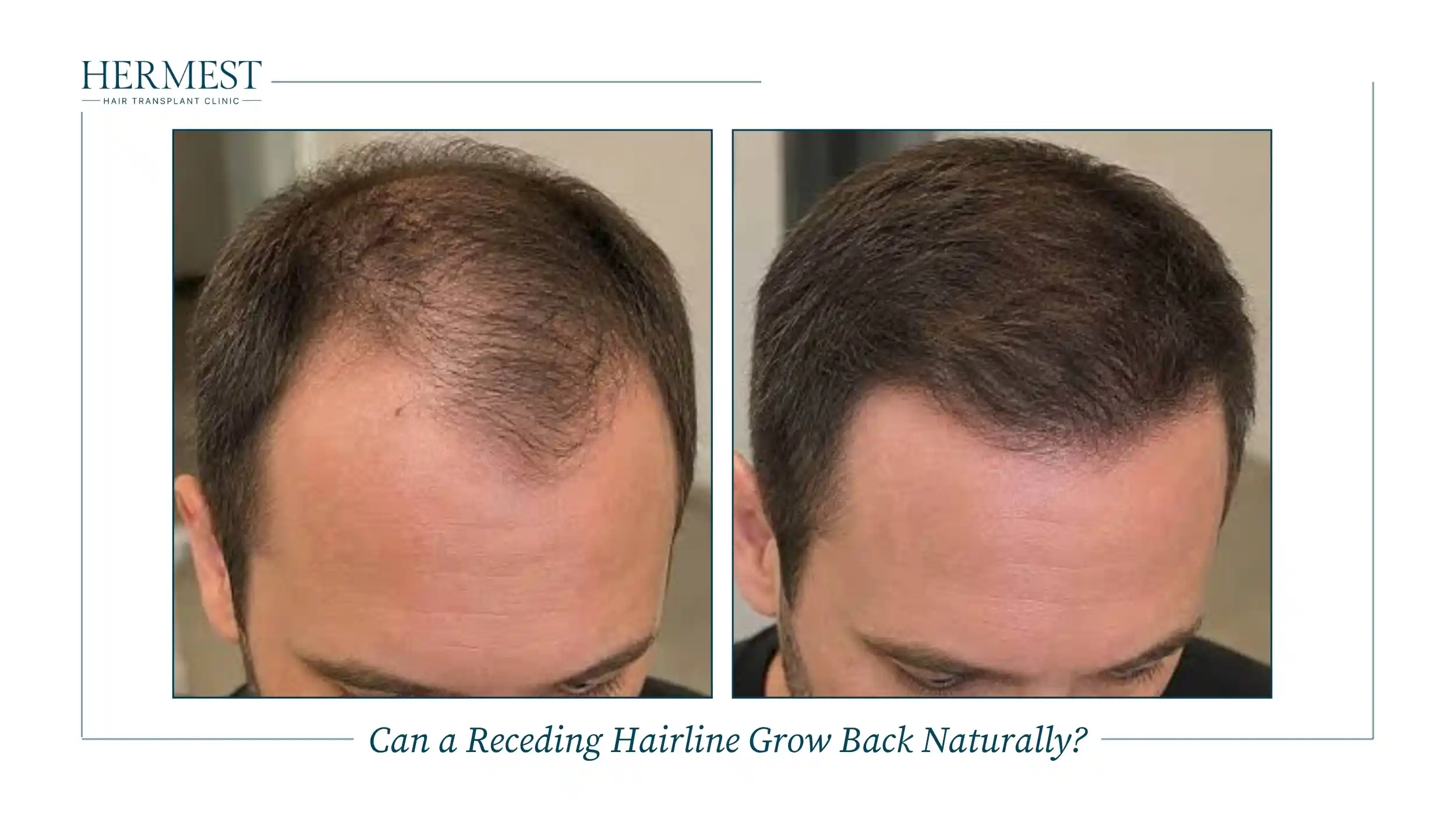
A receding hairline can sometimes appear fuller when thinning is still early, but completely restoring an established receding hairline through natural remedies isn’t supported by strong clinical evidence.
The key factor is how far follicular miniaturization has progressed.
Early Temple Miniaturization May Have More Potential
During early male pattern hair loss, follicles around the temples gradually produce thinner, shorter hairs. They haven’t necessarily stopped producing visible hair altogether.
The American Academy of Dermatology states that hereditary hair loss causes follicles to shrink progressively. Treatment started early tends to achieve better results, since restoring hair becomes increasingly difficult once follicles have substantially miniaturized.
This means someone with fine, wispy hairs along a changing hairline has a different situation from someone with long-established smooth temple recession.
Natural approaches such as rosemary oil may have limited potential to support existing hairs. However, there is no good evidence showing that oils, massage, supplements, or natural DHT blockers can reliably rebuild significantly receded temples.
Why Is the Hairline Difficult to Restore?
Androgenetic alopecia progressively miniaturizes genetically susceptible follicles under androgen influence. A major scientific review identifies this miniaturization process as a defining feature of the condition.
Once significant density disappears, preserving remaining hair becomes more realistic than expecting complete natural restoration.
So, can a receding hairline grow back naturally? Mild early thinning may potentially improve, but an established M-shaped hairline is unlikely to return to its previous density through natural methods alone.
Can a Thinning or Bald Crown Grow Back Naturally?
A thinning crown may have more potential for improvement when miniaturized hairs are still present, but natural remedies cannot reliably restore an established bald crown. The amount of remaining follicular activity matters far more than how large the area appears in a photograph.
The crown is one of the characteristic areas affected by male pattern hair loss. The American Academy of Dermatology notes that men commonly develop a bald or thinning spot on the top or crown, and earlier treatment tends to produce better results.
Early Crown Thinning vs Advanced Baldness
Crown loss can look worse under bright overhead lighting, with wet hair, or after cutting hair shorter. What matters biologically is whether follicles are still producing terminal or miniaturized hairs.
A 2025 review in Nature Reviews Disease Primers describes androgenetic alopecia as progressive follicular miniaturization with a reduction in active follicles. Frontal, mid-scalp, and crown follicles are particularly susceptible in men.
If numerous thin hairs remain, some treatments may improve their growth or thickness. The AAD notes that early treatment can stimulate some regrowth, though complete restoration shouldn’t be expected.
Natural approaches have much weaker evidence for accomplishing this.
Can Natural Remedies Fill a Bald Crown?
Rosemary oil, pumpkin seed oil, or other natural hair growth remedies may have limited evidence for supporting hair growth. They haven’t been shown to recreate dense coverage across a long-established bald crown.
This distinction can prevent premature decisions about transplantation, too. Someone with early crown thinning may benefit more from preserving existing follicles before considering surgery.
How Do You Know Whether Your Hair Follicles Can Still Recover?
You cannot reliably determine follicular recovery potential simply by looking in the mirror. Yet the appearance of remaining hairs can provide useful clues about how far male pattern baldness has progressed.
This matters when deciding whether natural hair regrowth is a realistic goal.
Look for Miniaturized Hair
During androgenetic alopecia, affected follicles don’t usually disappear overnight. They progressively produce finer, shorter hairs through follicular miniaturization.
A 2024 systematic review of trichoscopy in androgenetic alopecia found that hair diameter variability, vellus hairs, and the peripilar sign were among the most useful diagnostic findings.
Fine, wispy hairs across your temples or crown can indicate ongoing follicular activity. That doesn’t guarantee those hairs can return to their previous thickness.
Early intervention offers better prospects. The American Academy of Dermatology reports that hereditary hair-loss treatment works best when started early, before follicles have substantially shrunk.
What About Smooth Bald Areas?
The popular phrase “dead hair follicles” is oversimplified.
A smooth-looking scalp cannot tell you precisely what is happening beneath the skin. Long-standing areas with little visible hair, however, tend to have much lower prospects for meaningful nonsurgical restoration than areas containing numerous miniaturized hairs.
How Can Trichoscopy Help?
A dermatologist may use a dermatoscope to magnify the scalp during a hair-loss assessment. Trichoscopy can reveal variations in shaft diameter, vellus hairs, follicular distribution, and other features difficult to judge with the naked eye.
This is why starting oils or supplements without confirming your diagnosis can waste valuable time. Hair loss that resembles male pattern hair loss can occasionally have another cause requiring different management.
How Long Should Natural Hair-Loss Treatments Take to Work?
If you’re trying to reverse male pattern baldness naturally, several weeks is usually too short to judge progress. Hair follicles cycle slowly, so meaningful changes in density or shaft thickness may take months to become visible.
This is one reason hair-loss products are easy to misjudge.
What Should You Expect After 3 Months?
At three months, you may notice changes in shedding or scalp condition, but visible regrowth may still be difficult to assess.
The well-known randomized trial comparing rosemary oil with 2% minoxidil found no significant increase in hair count in either group after three months. Significant increases appeared at the six-month assessment.
So, abandoning a potentially useful routine after several weeks may be premature.
What About 6 Months?
Six months provides a more meaningful checkpoint.
Compare standardized photographs and look for:
- Stabilization of recession or crown thinning
- Changes in visible density or miniaturized hairs
Avoid relying solely on daily mirror observations.
Research reviews of natural treatments for androgenetic alopecia report encouraging findings for rosemary oil, pumpkin seed oil, saw palmetto, and several other compounds. The evidence remains limited by relatively small studies and insufficient long-term data.
Should You Continue for 12 Months?
For established treatments, the American Academy of Dermatology notes that minoxidil may require 6 to 12 months before its effectiveness can be properly judged. Natural remedies don’t automatically follow the same timeline, but this illustrates how slowly hair responds.
If your receding hairline or crown keeps progressing after months of consistent care, reassessing your diagnosis and treatment strategy makes more sense than repeatedly switching between unproven remedies.
Frequently Asked Questions About Reversing Male Pattern Baldness Naturally
Male pattern baldness usually cannot be completely reversed with natural methods alone. Early miniaturized hairs may have more potential for improvement than long-established bald areas. Natural approaches may support hair health or modest growth, but hereditary hair loss is progressive and becomes harder to restore as follicles shrink.