
Hair Test for Allergies: Are They Accurate or Just a Myth?
 ChatGPT
 Claude
 Perplexity
 Grok
Grok
 Gemini

Searching for a hair test for allergies has become increasingly common as at-home testing kits promise to identify food allergies, environmental sensitivities, and intolerances using only a few strands of hair. These tests are convenient, require no blood sample, and often provide long lists of foods or substances that supposedly trigger symptoms. The question is simple: Do they actually work?
Current scientific evidence says no. Although many companies market hair allergy tests and hair analysis allergy tests as reliable diagnostic tools, major medical organizations do not recommend them for diagnosing allergies or food intolerances. According to the World Allergy Organization (WAO) and the Asthma and Allergy Foundation of America (AAFA), there is no validated scientific evidence showing that hair analysis can accurately detect food allergies, environmental allergies, or allergic sensitivities.
This doesn’t mean all hair testing is meaningless. Hair samples have legitimate uses in areas such as forensic science, toxicology, and certain research settings. Those applications, however, are completely different from diagnosing allergic diseases.
This guide explains everything you need to know about hair test for allergies, including how these commercial tests claim to work, why allergy specialists question their accuracy, and which diagnostic methods are supported by medical evidence. You’ll also learn the difference between allergies and food intolerances, why some people receive conflicting results from different laboratories, and how allergists actually diagnose allergic conditions.
Quick Insights
- Hair allergy tests have not been scientifically validated for diagnosing allergies or food intolerances.
- Major organizations do not recommend hair analysis for allergy diagnosis.
- True allergies involve immune system responses that cannot be identified by analyzing hair strands.
- Skin prick tests, patch tests, and specific IgE blood tests remain the accepted methods for evaluating suspected allergies.
- Food allergies and food intolerances are different conditions that require different diagnostic approaches.
- Commercial hair intolerance tests may produce conflicting or inconsistent results between laboratories.
- Relying on inaccurate test results can lead to unnecessary dietary restrictions, nutritional deficiencies, anxiety, and delayed diagnosis of the real medical problem.
- Hair analysis has legitimate scientific applications, such as toxicology and forensic investigations, but these uses should not be confused with allergy testing.
- If you experience recurrent allergic reactions, persistent eczema, or food-related symptoms, consulting a qualified allergist is the safest and most reliable next step.
What Is a Hair Test for Allergies?
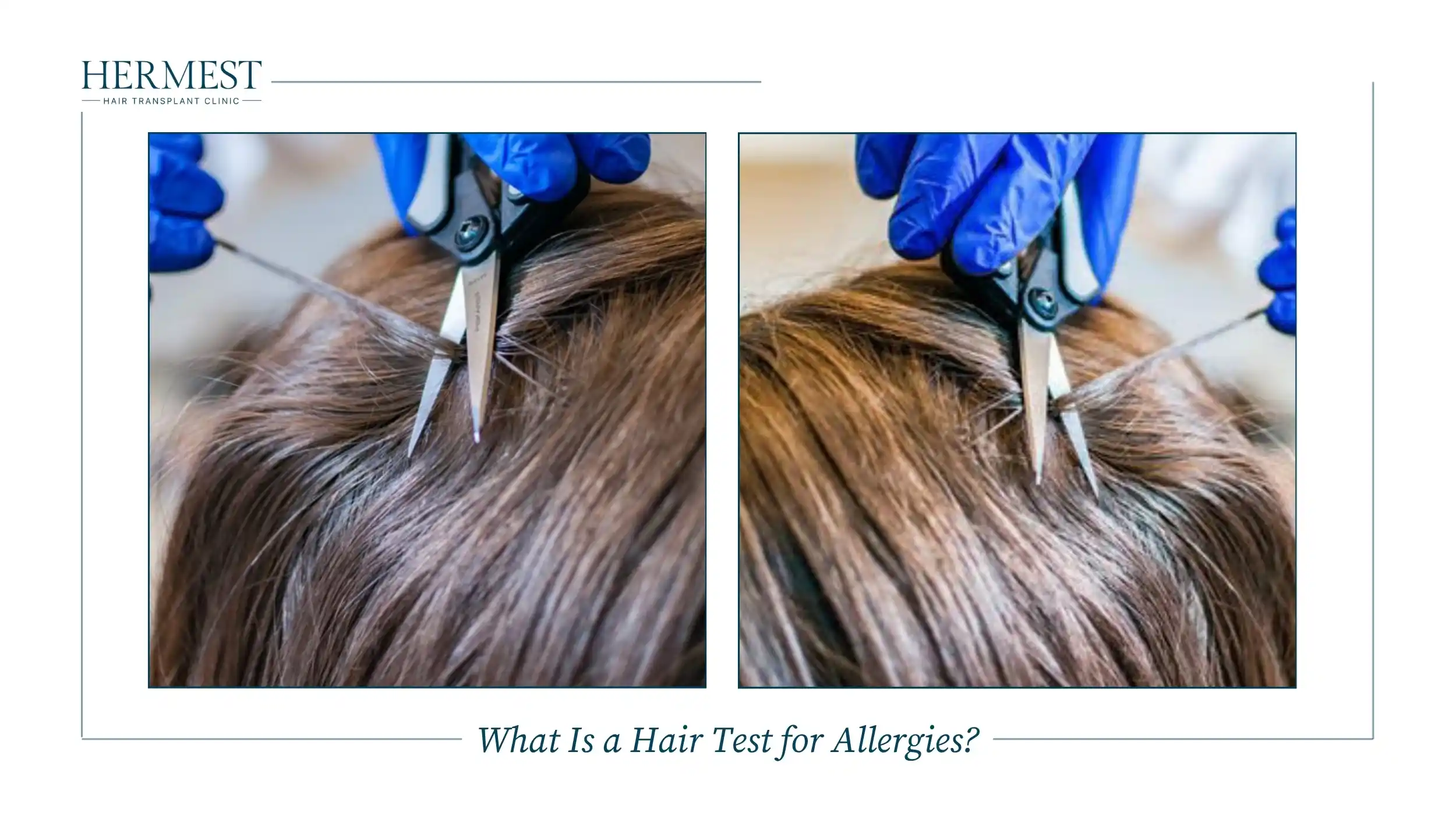
A hair test for allergies is a commercial test that claims to identify allergic reactions, food sensitivities, or intolerances by analyzing a small sample of hair. Most companies ask customers to mail several strands of hair to a laboratory, where the sample is processed using proprietary methods. Within days or weeks, customers receive a report listing foods, environmental substances, or chemicals that are supposedly causing symptoms.
These reports often appear detailed and scientific. That doesn’t necessarily mean they are medically valid.
According to the World Allergy Organization (WAO) and the Asthma and Allergy Foundation of America (AAFA), hair analysis has not been scientifically validated as a method for diagnosing allergies. Unlike evidence-based allergy testing, there is currently no accepted biological mechanism showing that human hair can accurately identify allergic reactions.
How Hair Analysis Claims to Work
Most commercial hair allergy tests describe their technology using terms such as energy frequencies, bioresonance, electromagnetic responses, or hair analysis. Although the terminology varies, the basic process is usually similar:
- A small hair sample is collected at home.
- The sample is mailed to a laboratory.
- The laboratory analyzes the hair using proprietary equipment.
- A report lists foods, environmental allergens, additives, or chemicals that may supposedly trigger symptoms.
Many companies advertise testing for hundreds or even thousands of potential allergens in a single report. Despite these claims, the scientific methods used are rarely published, independently validated, or reproducible.
Marketing Claims vs Medical Diagnosis
This is where many people become confused. A professionally presented report does not automatically mean the results are medically reliable.
Evidence-based allergy diagnosis depends on understanding how the immune system reacts to specific allergens. Hair itself doesn’t contain the biological markers that allergists typically measure when diagnosing allergies, such as IgE antibodies or delayed immune responses. That’s why organizations such as the WAO, AAAAI, and AAFA recommend validated diagnostic methods instead of hair sample allergy tests.
Dr. Nesim Tugen says:
“Many patients receive impressive-looking reports listing dozens of foods they should supposedly avoid. Before making major dietary or medical decisions, it’s important to ask a simple question: has this testing method been scientifically proven to diagnose allergies? In the case of hair analysis, the answer remains no.”
Another important distinction is that hair testing and hair mineral analysis are not the same as evidence-based allergy testing. Hair may be used in certain scientific or forensic settings, but those applications should not be confused with diagnosing allergic diseases.
Can Hair Tests Really Detect Allergies?
This is the question most people want answered before purchasing a hair allergy test. Based on the current scientific evidence, the answer is no.
Major allergy organizations, including the World Allergy Organization (WAO), the Asthma and Allergy Foundation of America (AAFA), and the American Academy of Allergy, Asthma & Immunology (AAAAI), do not recommend hair analysis allergy tests for diagnosing food allergies, environmental allergies, or food intolerances. Their recommendations are based on one simple reason: these tests have not demonstrated consistent scientific accuracy.
Unlike validated allergy tests, hair analysis hasn’t been shown to reliably identify how the immune system reacts to specific allergens.
What the Scientific Evidence Says
Evidence-based medical tests must produce results that are:
- Accurate.
- Reproducible.
- Consistent between laboratories.
- Supported by published clinical research.
Hair testing for allergies doesn’t currently meet these standards. One of the biggest concerns is poor reproducibility.
Studies evaluating alternative allergy testing methods have found that identical hair samples sent to different laboratories can produce very different reports. In some investigations, the same individual received conflicting lists of foods and environmental triggers depending on which company analyzed the sample. If a diagnostic test produces different answers from the same specimen, clinicians cannot rely on those results to make medical decisions.
This lack of consistency is one of the main reasons allergy specialists discourage the use of commercial hair sensitivity tests.
Hair Doesn’t Measure Allergic Immune Responses
Another important issue is biology. True allergic reactions involve the immune system. For example, many immediate allergic reactions are associated with immunoglobulin E (IgE) antibodies, while allergic contact dermatitis involves delayed immune responses measured through patch testing.
Hair strands do not contain these immune responses in a way that allows validated allergy diagnosis. That’s why evidence-based allergy testing focuses on the skin, blood, and clinical history rather than analyzing hair.
Why Medical Organizations Don’t Recommend Hair Analysis
Organizations such as the WAO and AAFA consistently advise patients to avoid relying on hair strand allergy tests when investigating suspected allergies. Instead, they recommend combining:
- A detailed medical history.
- Physical examination.
- Evidence-based allergy testing.
- Clinical interpretation by an allergy specialist.
This comprehensive approach provides a far more accurate diagnosis than relying on laboratory reports generated from hair alone.
Hair Allergy Tests vs Proven Allergy Tests
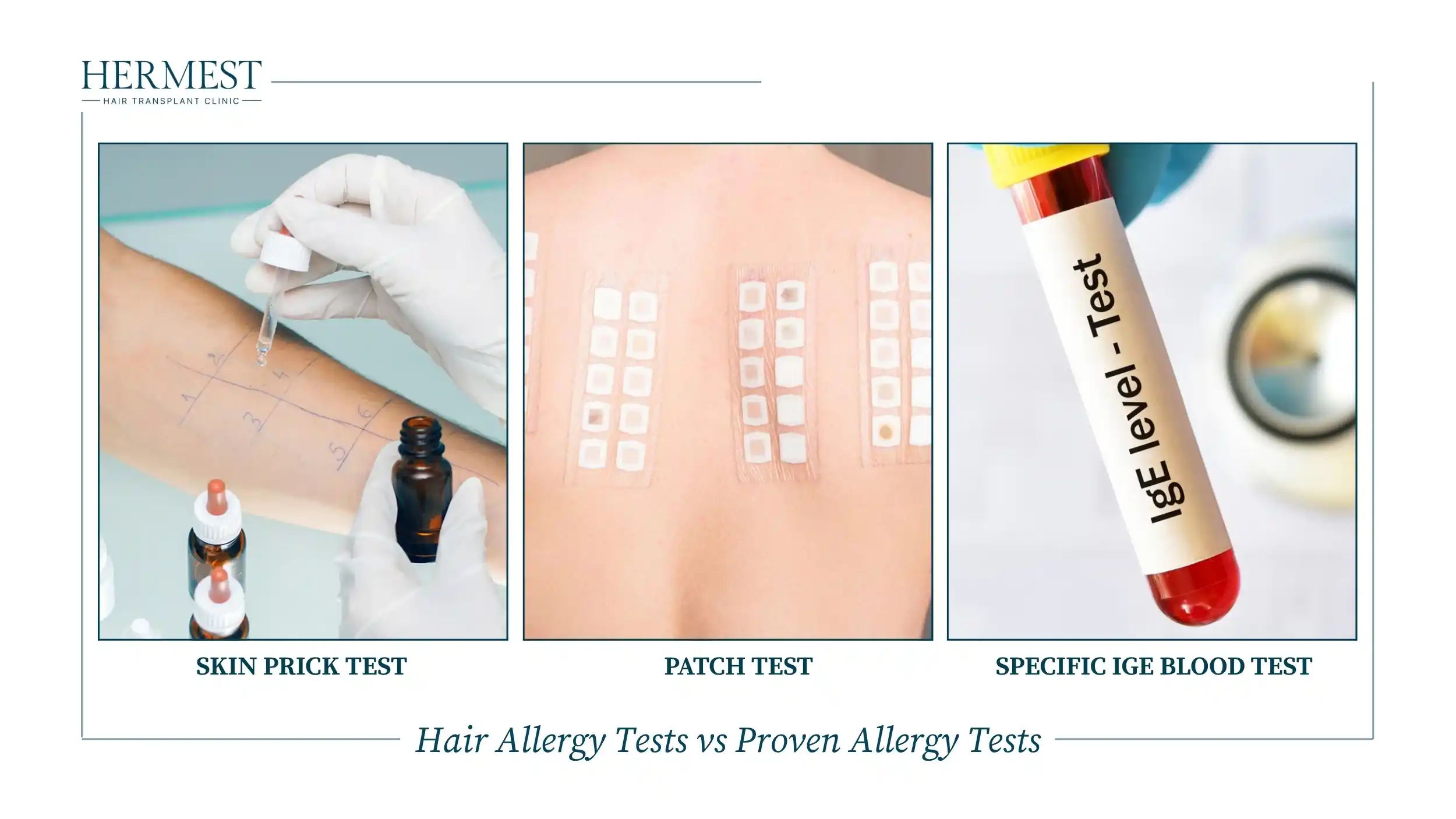
If you’re trying to identify the cause of allergy symptoms, understanding the difference between hair allergy testing and medically validated diagnostic methods is one of the most important steps you can take. Although commercial hair test for allergies kits promise quick answers, allergists rely on tests that measure actual immune responses rather than analyzing hair samples.
According to the World Allergy Organization (WAO), the American Academy of Allergy, Asthma & Immunology (AAAAI), and MedlinePlus, allergy diagnosis begins with a detailed medical history followed by testing that matches the suspected condition.
Skin Prick Test
The skin prick test is one of the most commonly used methods for diagnosing IgE-mediated allergies. During the procedure, tiny amounts of suspected allergens are placed on the skin, usually on the forearm or back. The skin is then gently pricked to allow the allergen to enter the outer layer.
If a true allergy is present, a small raised, itchy bump usually develops within 15 to 20 minutes. Skin prick testing is commonly used for:
- Pollen allergies.
- Dust mites.
- Pet dander.
- Mold.
- Certain food allergies.
The results are interpreted alongside the patient’s symptoms rather than being used alone.
Patch Test
A patch test serves a completely different purpose. Instead of detecting immediate allergies, it identifies allergic contact dermatitis, a delayed immune reaction that often develops hours or days after exposure. Small patches containing potential allergens are applied to the back for approximately 48 hours before the skin is examined.
Patch testing is particularly useful for identifying allergies to:
- Fragrances.
- Preservatives.
- Metals such as nickel.
- Hair dyes.
- Cosmetics.
- Topical medications.
Unlike hair analysis, patch testing has been validated through decades of dermatology research.
Specific IgE Blood Test
A specific IgE blood test measures antibodies produced by the immune system against particular allergens. This test may be recommended when:
- Skin testing isn’t possible.
- Certain medications interfere with skin testing.
- Severe eczema affects the testing area.
- There is concern about a significant allergic reaction.
Blood testing provides valuable information, but the results must always be interpreted alongside the patient’s medical history.
Hair Test vs Food Intolerance Testing
Many people purchase a hair test for allergies because they’re trying to explain symptoms that occur after eating certain foods. The problem is that food allergies and food intolerances are very different medical conditions, yet they’re often confused in advertisements for commercial hair intolerance tests. Understanding this difference is essential before interpreting any test result.
According to the World Allergy Organization (WAO) and MedlinePlus, a true food allergy involves an abnormal immune response, whereas a food intolerance usually does not. Since these conditions develop through different biological mechanisms, they require different diagnostic approaches.
Food Allergy and Food Intolerance Are Not the Same
A food allergy occurs when the immune system mistakenly identifies a food protein as harmful. This can trigger symptoms such as:
- Hives.
- Swelling.
- Wheezing.
- Vomiting.
- Difficulty breathing.
- In severe cases, anaphylaxis.
Many immediate food allergies involve IgE antibodies, which can be evaluated using validated skin prick tests or specific IgE blood tests. A food intolerance, by comparison, usually develops without involving the immune system. Common examples include:
- Lactose intolerance.
- Some reactions to food additives.
- Digestive sensitivity to certain carbohydrates.
- Individual difficulty processing specific foods.
Although food intolerances can cause uncomfortable symptoms, they don’t usually produce the rapid immune reactions seen in true allergies.
Why Hair Testing Cannot Diagnose Either Condition
One of the biggest misconceptions promoted by some companies is that a hair sensitivity test can identify both allergies and intolerances from a single hair sample. Current scientific evidence doesn’t support this claim. Hair strands don’t measure IgE antibodies, immune cell activity, digestive enzyme deficiencies, or the biological processes responsible for food intolerance.
That’s why major allergy organizations don’t recommend hair analysis for food intolerance or allergy diagnosis.
How Food Intolerances Are Usually Investigated
Unlike food allergies, there isn’t one universal laboratory test for every food intolerance. Diagnosis often involves:
- A detailed symptom history.
- A food and symptom diary.
- Supervised elimination and reintroduction diets.
- Breath testing for selected conditions, such as lactose intolerance.
- Medical evaluation to exclude other gastrointestinal disorders.
In selected situations, specialists may recommend additional investigations based on the individual’s symptoms and medical history. Recognizing the difference between allergy and intolerance helps patients avoid unnecessary dietary restrictions while focusing on diagnostic methods supported by clinical evidence.
Why Are Hair Allergy Tests So Popular?
Despite the lack of scientific support, hair allergy tests continue to attract thousands of customers every year. A quick online search reveals hundreds of companies offering hair analysis allergy tests, promising personalized reports based on a simple hair sample collected at home. If major allergy organizations don’t recommend these tests, why have they become so popular?
The answer lies in convenience, marketing, and the growing demand for personalized health information.
Convenience Makes Them Appealing
Traditional allergy testing usually involves scheduling a medical appointment, discussing symptoms, and undergoing skin or blood testing when appropriate. A hair sample allergy test offers a much simpler process. Most companies advertise:
- No blood sample.
- No needles.
- Home collection.
- Fast online results.
- Hundreds of foods and environmental substances analyzed at once.
For people frustrated by unexplained symptoms, that simplicity can be very attractive. Many consumers also appreciate receiving lengthy reports that appear highly individualized, even though the scientific validity of those reports remains unproven.
Wellness Marketing Has Increased Demand
Another major factor is the rapid growth of the wellness industry. Terms such as food sensitivity, personalized nutrition, bioresonance, and energy imbalance are frequently used in advertising. These phrases often sound scientific, but they don’t necessarily reflect methods supported by evidence-based medicine.
Social media has amplified these messages. Influencers sometimes describe dramatic improvements after eliminating foods identified by a hair intolerance test, even though personal experiences cannot establish whether the test itself was accurate. This creates a cycle in which anecdotal success stories spread much faster than scientific evidence.
The Confusion Between Allergies and Intolerances
Another reason these tests remain popular is widespread misunderstanding. Many people use the terms allergy, intolerance, and sensitivity interchangeably. In reality, they describe different biological processes.
Commercial advertising often combines these terms into a single product, giving the impression that one hair sample can identify every possible reaction to food or environmental substances. Current scientific evidence doesn’t support that assumption. Understanding this distinction helps explain why allergy specialists continue recommending validated diagnostic methods instead of relying on hair analysis.
Risks of Relying on Hair Tests
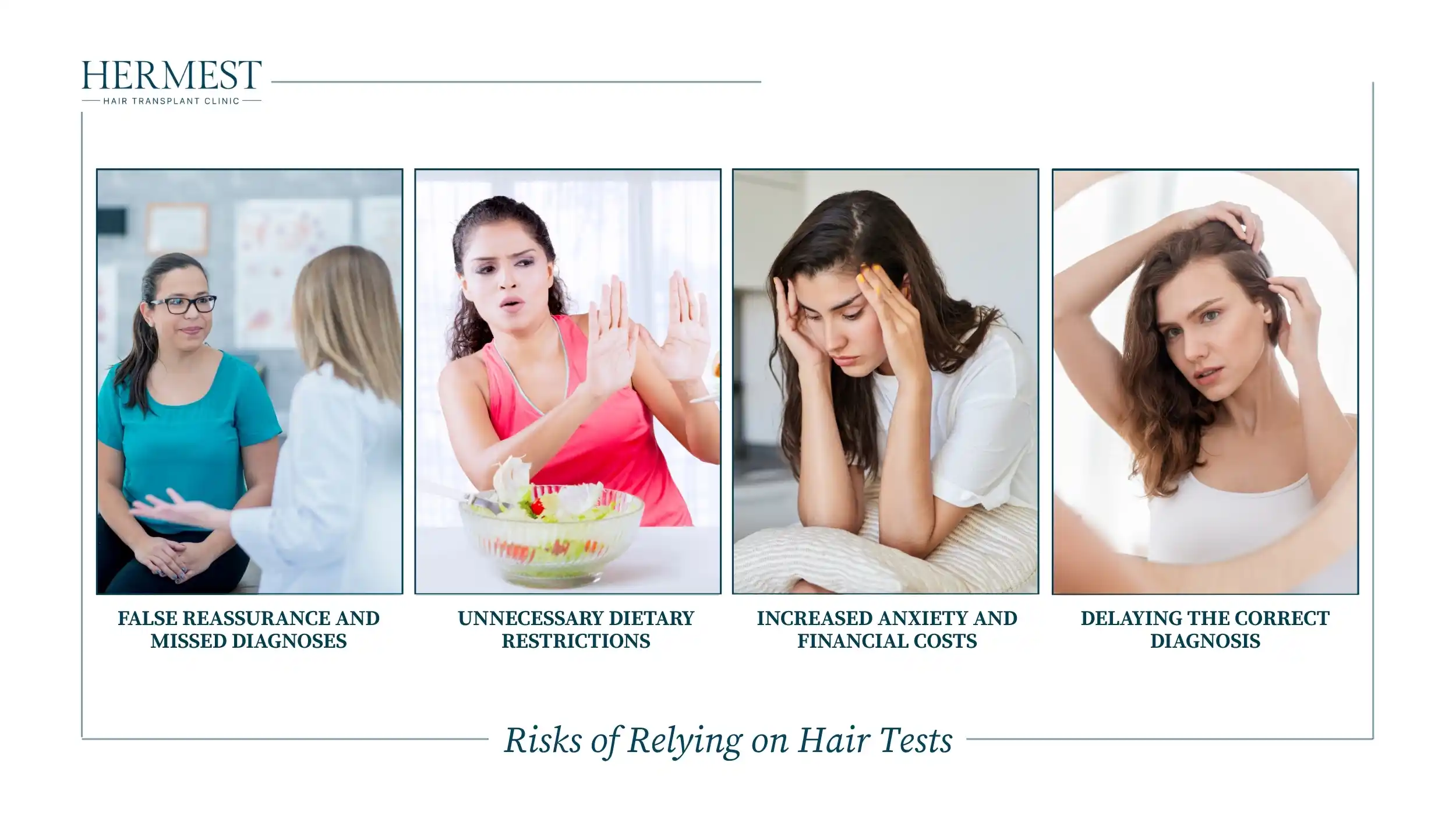
Choosing a hair test for allergies instead of evidence-based medical evaluation may seem harmless, but it can lead to significant health consequences. When inaccurate test results influence medical decisions, people may begin unnecessary treatments, eliminate nutritious foods, or overlook conditions that require proper diagnosis.
According to the World Allergy Organization (WAO) and the Asthma and Allergy Foundation of America (AAFA), relying on unvalidated allergy tests can delay appropriate care and create confusion rather than providing reliable answers.
False Reassurance and Missed Diagnoses
One of the greatest risks is receiving a reassuring result when a genuine allergy is actually present. For example, someone with an undiagnosed IgE-mediated food allergy could receive a report suggesting they have no problem with a particular food. If they continue eating that food based on an inaccurate result, they could remain at risk of serious allergic reactions, including anaphylaxis.
The opposite can also happen. A report may identify dozens of foods as problematic even when no true allergy exists. Without proper clinical evaluation, it becomes impossible to know which findings, if any, are meaningful.
Unnecessary Dietary Restrictions
Many commercial reports recommend avoiding long lists of foods. Some people eliminate:
- Dairy products.
- Eggs.
- Wheat.
- Nuts.
- Fish.
- Fruits and vegetables.
When these restrictions aren’t medically necessary, they may reduce dietary variety and increase the risk of nutritional deficiencies, particularly in children, older adults, or individuals already following restrictive diets. Eliminating foods should always be guided by qualified healthcare professionals rather than unsupported laboratory reports.
Increased Anxiety and Financial Costs
Repeated testing can also create emotional stress. Patients may become overly focused on avoiding numerous foods or environmental exposures that aren’t actually causing their symptoms. This can reduce quality of life while adding considerable financial expense through repeated testing, supplements, or unnecessary dietary products.
Delaying the Correct Diagnosis
Perhaps the most important concern is delayed medical evaluation. Symptoms attributed to food allergies may actually result from:
- Lactose intolerance.
- Celiac disease.
- Irritable bowel syndrome.
- Gastrointestinal disorders.
- Autoimmune diseases.
- Medication side effects.
Similarly, skin symptoms may be caused by eczema, allergic contact dermatitis, psoriasis, or other dermatological conditions rather than food allergies. Focusing on an unvalidated hair allergy test may postpone the investigations needed to identify the true cause.
How Allergies Should Actually Be Diagnosed
Accurate allergy diagnosis doesn’t begin with a laboratory report. It begins with a conversation.
According to the World Allergy Organization (WAO), the American Academy of Allergy, Asthma & Immunology (AAAAI), and MedlinePlus, diagnosing allergies requires combining a detailed medical history with carefully selected diagnostic tests. No single test, whether it’s a blood test, skin test, or any other method, should be interpreted without considering the patient’s symptoms and clinical findings.
This individualized approach is one of the main reasons evidence-based allergy testing remains far more reliable than commercial hair analysis allergy tests.
Medical History Comes First
An allergist will usually begin by asking detailed questions about your symptoms. Important topics include:
- When symptoms first appeared.
- Which foods or environmental exposures trigger reactions.
- How quickly symptoms develop.
- Whether reactions are mild or severe.
- Family history of allergies, asthma, or eczema.
- Current medications and medical conditions.
These details often provide valuable clues before any testing is performed.
Choosing the Right Allergy Test
The next step depends on the suspected condition. Your specialist may recommend:
- Skin prick testing for immediate IgE-mediated allergies.
- Specific IgE blood testing when skin testing isn’t appropriate.
- Patch testing for suspected allergic contact dermatitis.
- Oral food challenges, performed under close medical supervision when confirmation is needed.
An oral food challenge is considered the reference standard for confirming or excluding certain food allergies because it directly evaluates how the body responds under controlled conditions. Not every patient needs every test. The investigation is tailored to the individual’s symptoms.
Can Hair Testing Detect Nutritional Problems?
After learning that a hair test for allergies isn’t supported by scientific evidence, many people ask another question: Can hair analysis detect nutritional deficiencies instead? This topic creates considerable confusion because hair mineral analysis is a completely different concept from hair allergy testing.
Hair samples can sometimes provide useful information in specific scientific, occupational, environmental, or forensic settings. That does not mean hair is a reliable tool for diagnosing nutritional deficiencies or allergies in routine clinical practice. Understanding the difference helps prevent unrealistic expectations.
What Is Hair Mineral Analysis?
Hair mineral analysis (HMA) measures the concentration of certain minerals or elements deposited in hair over time. Some laboratories report levels of:
- Zinc.
- Iron.
- Magnesium.
- Calcium.
- Selenium.
- Heavy metals such as mercury or arsenic.
Since hair grows gradually, it can retain traces of substances that entered the body during previous months. This characteristic makes hair useful in selected research and toxicology applications. However, hair mineral levels don’t necessarily reflect the amount of nutrients circulating in the bloodstream or available to the body’s tissues.
Why Hair Analysis Has Clinical Limitations
Numerous factors influence the composition of hair. These include:
- Hair dyes and bleaching.
- Cosmetic treatments.
- Environmental contamination.
- Shampoo ingredients.
- Individual hair characteristics.
- Laboratory testing methods.
As a result, interpreting mineral concentrations can be difficult. For routine medical evaluation, healthcare professionals usually rely on blood tests rather than hair samples when assessing nutritional status.
When Should You See an Allergist?
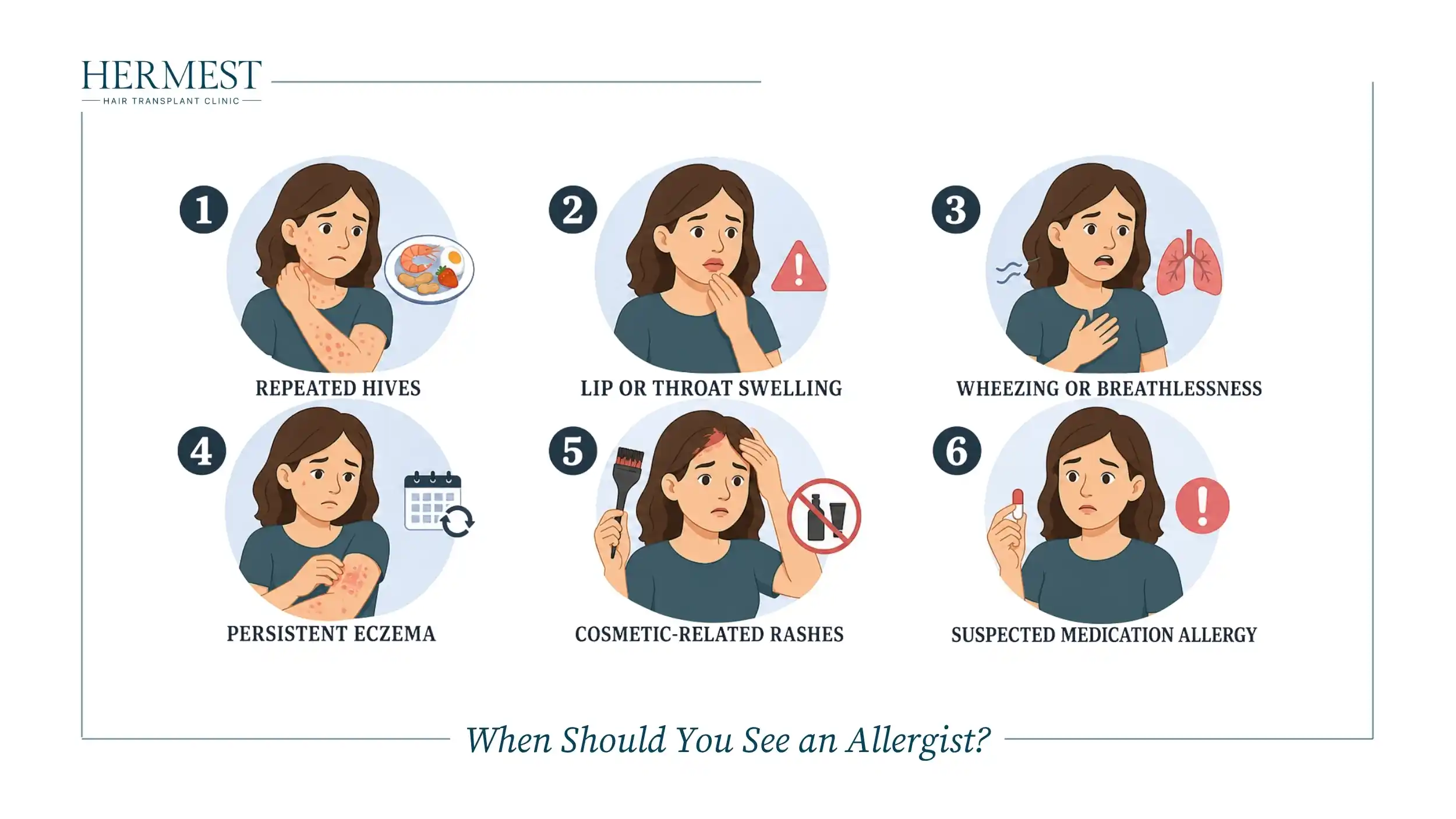
Many mild skin rashes or digestive symptoms improve without specialized care. However, recurring or severe reactions deserve professional evaluation, particularly when the cause isn’t clear. If you’re considering a hair test for allergies because you’ve experienced repeated symptoms, consulting an allergist is far more likely to provide reliable answers than relying on an unvalidated home test.
An allergist can determine whether your symptoms are caused by a true allergy, a food intolerance, allergic contact dermatitis, eczema, asthma, or another medical condition that requires a different treatment approach. According to the World Allergy Organization (WAO) and the American Academy of Allergy, Asthma & Immunology (AAAAI), early evaluation improves diagnostic accuracy and helps prevent unnecessary dietary restrictions or delayed treatment.
Symptoms That Shouldn’t Be Ignored
You should arrange a medical assessment if you experience:
- Repeated hives after eating certain foods.
- Swelling of the lips, tongue, or throat.
- Wheezing or difficulty breathing.
- Persistent eczema that doesn’t improve with treatment.
- Recurrent skin rashes after using cosmetics, hair dyes, or skincare products.
- Suspected medication allergies.
- Symptoms suggesting anaphylaxis, which always requires immediate emergency care.
These reactions should never be evaluated using commercial hair allergy testing alone.
Persistent Symptoms Need Proper Investigation
Some symptoms aren’t immediately life-threatening but still deserve medical attention. Examples include:
- Chronic nasal congestion.
- Seasonal sneezing.
- Ongoing itchy eyes.
- Repeated digestive symptoms after specific foods.
- Unexplained skin irritation.
- Frequent eczema flare-ups.
An allergist can decide whether skin prick testing, patch testing, specific IgE blood testing, or another investigation is most appropriate.
Don’t Delay Serious Symptoms
If you’ve ever experienced sudden difficulty breathing, dizziness, collapse, or rapid swelling after exposure to a food, medication, or insect sting, seek emergency medical care immediately. These symptoms may indicate anaphylaxis, a potentially life-threatening allergic reaction that requires urgent treatment. Home testing kits have no role in evaluating emergency allergic reactions.
Professional diagnosis remains the safest path. An accurate diagnosis doesn’t simply identify what you’re allergic to. It also helps you understand what you aren’t allergic to, reducing unnecessary worry and allowing treatment decisions to be based on reliable medical evidence rather than unsupported claims.
Frequently Asked Questions
No. Current scientific evidence does not support the use of a hair test for allergies to diagnose food allergies, environmental allergies, or allergic sensitivities. Organizations such as the World Allergy Organization (WAO) and the Asthma and Allergy Foundation of America (AAFA) recommend validated methods such as skin prick tests, patch tests, and specific IgE blood tests instead.
Concerned About Your Skin, Scalp, or Hair?
A hair test for allergies cannot diagnose allergic conditions, but persistent skin, scalp, or hair-related symptoms still deserve proper evaluation. Problems such as allergic contact dermatitis from hair dyes, recurring irritation, or changes in scalp health are best assessed by a qualified professional rather than a home testing kit.
At Hermest, dermatologist Dr. Nesim Tugen and the medical team evaluate scalp and skin concerns to help identify the underlying cause before recommending treatment. Contact Hermest to arrange a consultation if your symptoms persist or affect your hair and scalp.