

Tom Cruise Hair Transplant: Did He Really Have One? Expert Analysis
 ChatGPT
 Claude
 Perplexity
 Grok
Grok
 Gemini

The topic of a Tom Cruise hair transplant has fascinated fans and hair restoration enthusiasts for years. At 60+, the Hollywood star continues to appear with a remarkably full head of hair, leading many people to ask: Did Tom Cruise have a hair transplant, or is it simply exceptional genetics?
The short answer is that there is no confirmed evidence that Tom Cruise has undergone a hair transplant or any other hair restoration procedure. Neither the actor nor his representatives have publicly confirmed such treatment, and no clinic or surgeon has claimed involvement. As a result, any discussion about Tom Cruise hair transplant before and after photos or possible procedures should be viewed as informed analysis rather than established fact.
That doesn’t mean there’s nothing to learn. By examining publicly available photographs over several decades, it’s possible to discuss how his hairline has evolved, whether he shows typical signs of male pattern baldness, and what modern hair restoration specialists generally look for when evaluating a mature hairline. It’s also worth exploring other explanations, including genetics, healthy hair care, professional styling, medical treatments, and natural aging.
Throughout this guide, we’ll separate verified facts from speculation. You’ll learn why Tom Cruise’s hair continues to attract attention, whether his appearance is consistent with normal hair aging, and what today’s FUE hair transplant techniques can realistically achieve for patients with similar concerns.
Dr. Ahmet Murat says:
“Celebrity hair analyses should always be approached with caution. Photographs don’t reveal a person’s medical history, treatments, or genetics. Lighting, hairstyling, hair color, camera angles, and even film production techniques can dramatically influence how a hairline appears. At Hermest, we evaluate every patient through detailed scalp examination rather than relying on photographs alone.”
Whether you’re curious about Tom Cruise hair loss, interested in celebrity hair restoration, or considering treatment for your own thinning hair, this article provides a balanced, evidence-based perspective grounded in modern hair transplant principles rather than internet rumors.
Quick Insights
- There is no verified evidence that Tom Cruise has had a hair transplant.
- His hairline appears to have matured naturally while maintaining strong overall density.
- Genetics may explain much of his long-term hair retention, although this cannot be confirmed.
- Professional grooming, styling, lighting, and photography can significantly affect how hair appears.
- Modern FUE hair transplant procedures can produce similarly natural-looking results for suitable candidates, but surgery isn’t always necessary.
- Early treatment with medications, PRP, or other evidence-based therapies may help preserve existing hair before surgery becomes an option.
- Celebrity photographs should never replace a professional hair loss assessment.
- Every hair restoration plan should be personalized based on hair loss pattern, donor quality, facial proportions, and long-term goals.
Did Tom Cruise Have a Hair Transplant?
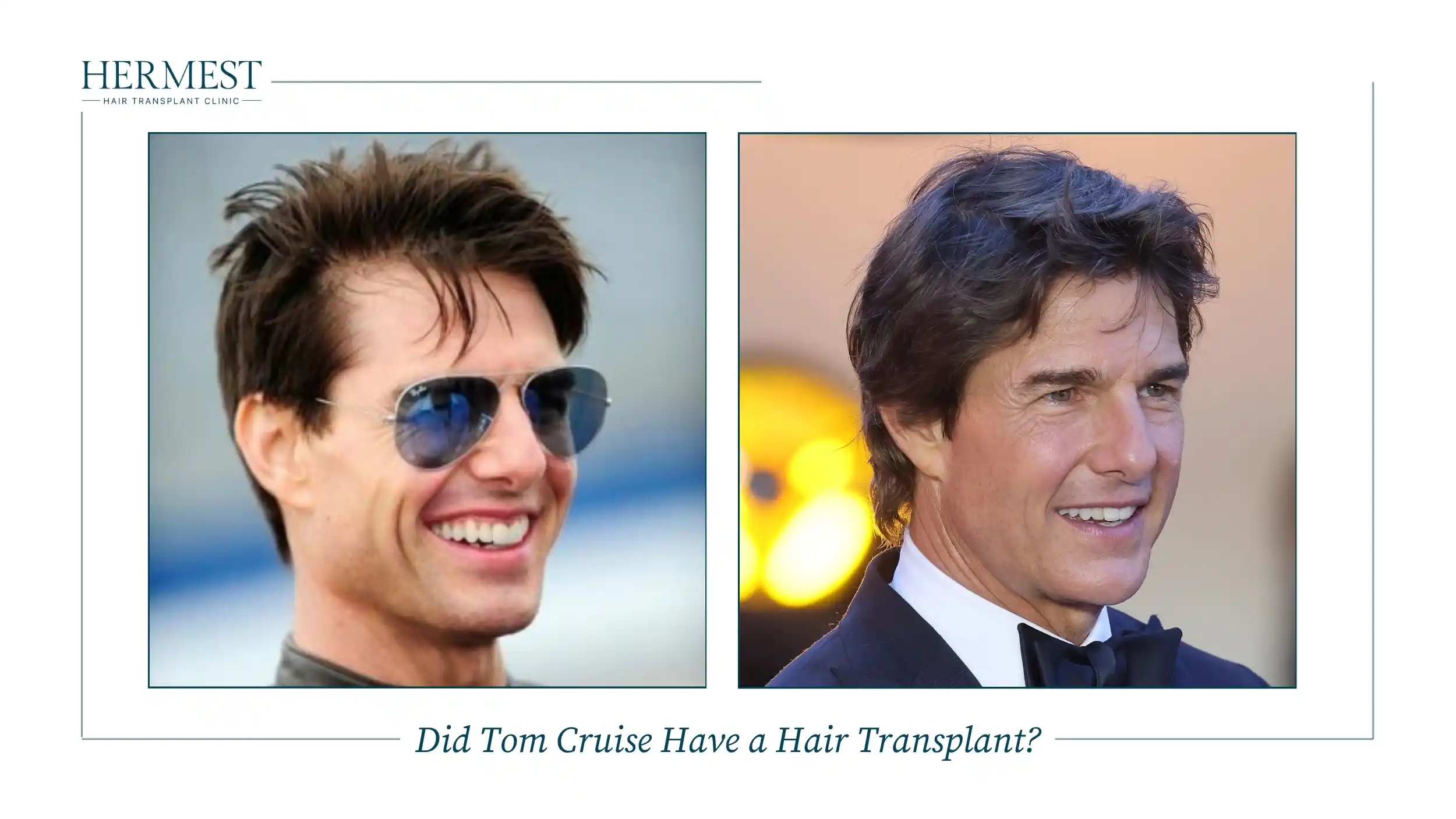
One of the most common questions people search online is whether Tom Cruise had a hair transplant. The answer is straightforward: there is no publicly confirmed evidence that he has undergone hair transplant surgery.
Tom Cruise has never stated that he received a hair transplant, and no surgeon or clinic has publicly claimed to have treated him. While numerous websites speculate about his hairline, these discussions are based entirely on photographs, public appearances, and personal opinions rather than verified medical information.
This distinction matters. Hair restoration specialists can analyze visible changes over time, but they cannot diagnose or confirm a procedure from photographs alone.
Why Do People Think He Had Hair Restoration?
The speculation largely comes from one observation: Tom Cruise has maintained a thick, youthful-looking hairstyle throughout a career spanning more than four decades.
Many men experience noticeable male pattern baldness as they age, particularly after their 40s and 50s. Tom Cruise, however, has continued appearing with dense frontal coverage and limited visible recession, leading many fans to wonder whether medical intervention played a role.
Several factors contribute to these rumors, including:
- Consistently full-looking hair in recent films and public appearances.
- Very limited visible crown thinning.
- A mature but well-preserved hairline.
- Professional grooming and high-quality hairstyling.
These observations naturally invite discussion, but they do not prove that a Tom Cruise hair transplant ever took place.
Could There Be Other Explanations?
Absolutely.
Hair density is influenced by many factors besides surgery. Genetics remain the biggest predictor of how much hair someone retains throughout life. According to the American Academy of Dermatology (AAD), some men naturally maintain excellent hair density well into their 60s because they have lower genetic sensitivity to dihydrotestosterone (DHT), the hormone primarily responsible for androgenetic alopecia.
Other possible explanations include:
- Naturally favorable genetics.
- Professional hairstyling and coloring.
- Strategic haircuts that enhance density.
- Non-surgical hair restoration treatments.
- Healthy lifestyle habits.
None of these possibilities can be confirmed in Tom Cruise’s case, but they illustrate why appearance alone should never be used as proof of cosmetic surgery.
Dr. Ahmet Murat says:
“One photograph can create a misleading impression. Hairlines look different depending on lighting, hairstyle, camera angle, and even facial expression. Before recommending a hair transplant at Hermest, we perform detailed scalp analysis, donor assessment, and hair density measurements. Those critical evaluations simply cannot be made from celebrity photos.”
What Can We Say With Confidence?
Based on publicly available information, only a few facts can be stated confidently:
- Tom Cruise has not publicly confirmed having a hair transplant.
- No medical professional has verified performing one.
- His hairline has matured naturally with age but continues to appear relatively dense.
- Any discussion about Tom Cruise hair transplant before and after images remains speculative rather than factual.
Instead of asking whether Tom Cruise definitely had surgery, a more useful question is whether his hair shows patterns consistent with normal aging, strong genetics, or modern hair restoration. That’s exactly what we’ll explore in the next section as we examine Tom Cruise’s hairline through the years and analyze how it has evolved across four decades in the public eye.
Tom Cruise’s Hairline Through the Years
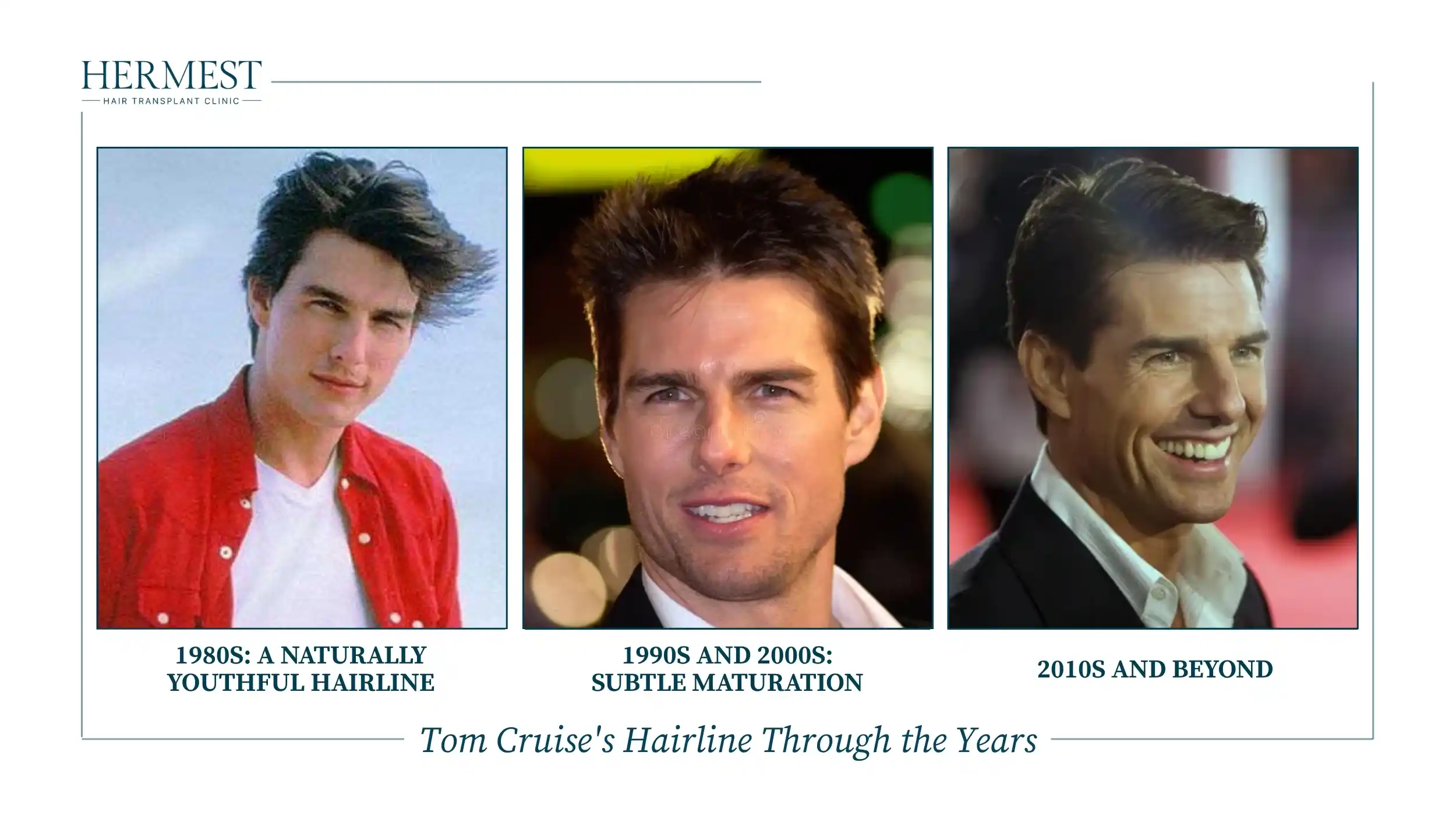
Tom Cruise has spent more than four decades in front of cameras, making his changing appearance easy to follow. From his breakout roles in the early 1980s to the latest Mission: Impossible films, countless photographs and high-definition videos provide a timeline of his hairline’s evolution.
Although many people search for Tom Cruise hair transplant before and after photos, a closer look suggests a more nuanced story. His hairline appears to have matured naturally over time while maintaining impressive overall density. This pattern differs from the progressive recession typically seen in advanced male pattern baldness.
1980s: A Naturally Youthful Hairline
During films such as Risky Business and Top Gun, Tom Cruise displayed the characteristics of a classic youthful hairline.
His frontal hairline sat relatively low, the temples were rounded, and his hair appeared exceptionally thick. There was no obvious recession or thinning around the crown, even under bright studio lighting.
At this stage, his appearance would generally be consistent with Norwood 1, a classification used to describe little or no visible hair loss.
1990s and 2000s: Subtle Maturation, Not Significant Hair Loss
As Tom Cruise entered his 30s and 40s, his hairstyle changed frequently for roles in films like Mission: Impossible, Jerry Maguire, Minority Report, The Last Samurai, and Collateral.
Looking across these years, several changes become noticeable:
- The frontal hairline appears slightly higher than in his twenties.
- The temple corners show mild maturation rather than aggressive recession.
- Overall density across the frontal scalp remains consistently strong.
This type of gradual change is often called a mature hairline and is considered a normal part of aging. According to the American Academy of Dermatology (AAD), a mature hairline does not necessarily indicate ongoing hair loss or androgenetic alopecia.
Dr. Ahmet Murat says:
“Many men mistake a mature hairline for balding. In reality, it’s common for the hairline to shift slightly during adulthood without progressing into significant hair loss. During consultations, we carefully distinguish normal maturation from true androgenetic alopecia before recommending any treatment.”
2010s and Beyond: Remarkably Consistent Density
Through films such as Jack Reacher, Mission: Impossible – Fallout, Top Gun: Maverick, and the latest entries in the franchise, Tom Cruise has continued to display thick-looking hair with minimal visible scalp exposure.
His hairstyles have varied considerably, from shorter military-inspired cuts to longer textured styles, yet the overall impression remains surprisingly consistent.
Several observations stand out:
- No obvious crown thinning is visible in most public appearances.
- Frontal density appears well preserved for his age.
- Hair caliber looks relatively thick compared with many men in their 60s.
- Minor recession around the temples appears stable rather than progressively worsening.
These characteristics help explain why Tom Cruise hair continues to generate discussion online. However, it’s important to remember that photographs tell only part of the story. Hairstyling, professional lighting, hair color, camera angles, and image editing can all make hair appear denser than it truly is.
In the next section, we’ll examine whether Tom Cruise’s hairline shows any signs of male pattern baldness and where he might hypothetically fall on the Norwood Scale based solely on publicly available images.
Does Tom Cruise Show Signs of Male Pattern Baldness?
When people search for Tom Cruise hair loss or wonder whether he underwent hair restoration, they’re often trying to answer a bigger question: does his hair actually show signs of male pattern baldness, or is he simply aging naturally?
Based on publicly available photographs and video appearances, Tom Cruise appears to have experienced some natural hairline maturation over the years. However, there is no clear evidence of the progressive thinning typically associated with advanced androgenetic alopecia. Since no medical examination has been performed, any assessment should be considered observational rather than diagnostic.
A Mature Hairline Doesn’t Always Mean Balding
One of the biggest misconceptions about hair loss is that every higher hairline signals baldness. In reality, many men develop a mature hairline between their late 20s and 40s without ever experiencing significant hair loss.
According to the American Academy of Dermatology (AAD), a mature hairline usually recedes slightly at the temples while maintaining overall density across the frontal scalp. This differs from male pattern baldness, where recession gradually progresses and thinning eventually affects the crown.
Looking at Tom Cruise over several decades, his hairline appears to follow the pattern of natural maturation rather than aggressive recession.
Where Would Tom Cruise Fit on the Norwood Scale?
The Norwood Scale is the most widely used system for classifying male pattern hair loss. While it cannot be applied definitively without a clinical examination, a hypothetical assessment based on public images suggests that Tom Cruise would likely fall between Norwood 1 and Norwood 2.
This estimate is based on several visible characteristics:
- Mild temple recession that has remained relatively stable over time.
- Strong frontal density with little visible scalp exposure.
- No consistently obvious crown thinning.
- Thick hair caliber that contributes to a fuller appearance.
Importantly, there are no public images showing the level of frontal recession or vertex thinning commonly associated with Norwood 3 or higher stages.
Dr. Ahmet Murat says:
“The Norwood Scale is a valuable clinical tool, but it shouldn’t be applied solely from celebrity photographs. We evaluate scalp health, donor density, miniaturization, family history, and progression over time before assigning a Norwood classification. Public images provide only a small part of that picture.”
Could Hairstyles Be Creating the Illusion of Fuller Hair?
Absolutely.
Professional hairstylists use techniques that can dramatically enhance the appearance of density without changing the actual number of hairs. Tom Cruise has worn a wide variety of hairstyles throughout his career, many of which naturally emphasize fullness.
Several styling choices may contribute to this effect:
- Layered cuts that create movement and volume.
- Slightly textured finishes that reduce scalp visibility.
- Hair length that balances facial proportions.
- Strategic styling that softens the temple areas.
Lighting also plays an important role. Bright overhead lighting, flash photography, wet hair, and high-definition cameras can either exaggerate or minimize the appearance of thinning depending on the angle.
For these reasons, Tom Cruise hairline analyses based only on photographs should always be interpreted carefully. A consistently healthy-looking hairline does not automatically confirm surgery, just as a single unfavorable image doesn’t necessarily indicate balding.
The next question is equally interesting: if surgery hasn’t been confirmed, could genetics alone explain why Tom Cruise has maintained such impressive hair density well into his 60s?
Could Genetics Explain Tom Cruise’s Hair?
When discussing Tom Cruise hair transplant rumors, genetics are often overlooked. Yet hereditary factors remain the single biggest influence on whether someone develops male pattern baldness and how quickly it progresses.
According to the American Academy of Dermatology (AAD), androgenetic alopecia is largely determined by inherited sensitivity to dihydrotestosterone (DHT) rather than age alone. While many men notice visible thinning in their 30s or 40s, others retain thick, healthy hair well into later life because their hair follicles are less affected by DHT.

This natural variation could explain why Tom Cruise’s hair has remained relatively consistent over several decades without requiring any confirmed surgical intervention.
Some Men Naturally Keep Their Hair Longer
Hair aging is not the same for everyone.
Even among men of similar age, hair density, caliber, and recession patterns can differ dramatically. Some experience rapid frontal recession and crown thinning, while others develop only a mildly mature hairline throughout adulthood.
Several inherited characteristics contribute to long-term hair retention:
- Lower genetic sensitivity to DHT.
- Naturally thicker hair shafts.
- Higher follicle density from birth.
- Slower progression of age-related miniaturization.
These traits cannot be identified from photographs alone, but they demonstrate why appearance should never be used as proof that someone has undergone hair restoration.
Hair Quality Matters as Much as Hair Quantity
Another reason Tom Cruise’s hair appears youthful may be its overall quality.
Hair thickness, texture, color, and natural wave all influence how full the scalp appears. Individuals with thicker hair shafts often create greater visual coverage, even if they have the same number of follicles as someone with finer hair.
Professional grooming also makes a noticeable difference. Throughout his career, Tom Cruise has worn hairstyles that complement his facial features while maximizing volume and movement. Longer textured styles, subtle layering, and carefully controlled styling can all enhance the perception of density without changing the actual amount of hair.
Dr. Ahmet Murat says:
“Patients often compare themselves with celebrities, but genetics can produce remarkable differences. Two men of the same age may have completely different hair densities despite following similar lifestyles. Before discussing treatment options, we first determine whether genetics, active hair loss, or another condition is influencing the patient’s hair.”
Genetics Don’t Guarantee Lifelong Hair
Strong genetics certainly help, but they don’t make someone immune to hair loss.
Many men with excellent hair in their 40s eventually develop thinning later in life. Others maintain stable density but experience subtle changes in their hairline, texture, or overall volume. Lifestyle, hormonal changes, medical conditions, stress, and certain medications may also influence long-term hair health.
For that reason, it’s entirely possible that Tom Cruise has benefited from favorable genetics while also following an effective hair care routine. Without direct medical information, however, no one can accurately determine the exact reason behind his consistently full appearance.
That naturally leads to another question. Even if surgery hasn’t been confirmed, could non-surgical hair restoration treatments help someone maintain a hairline like Tom Cruise’s? The next section explores the most common medical options available today.
Could He Have Used Non-Surgical Hair Restoration?
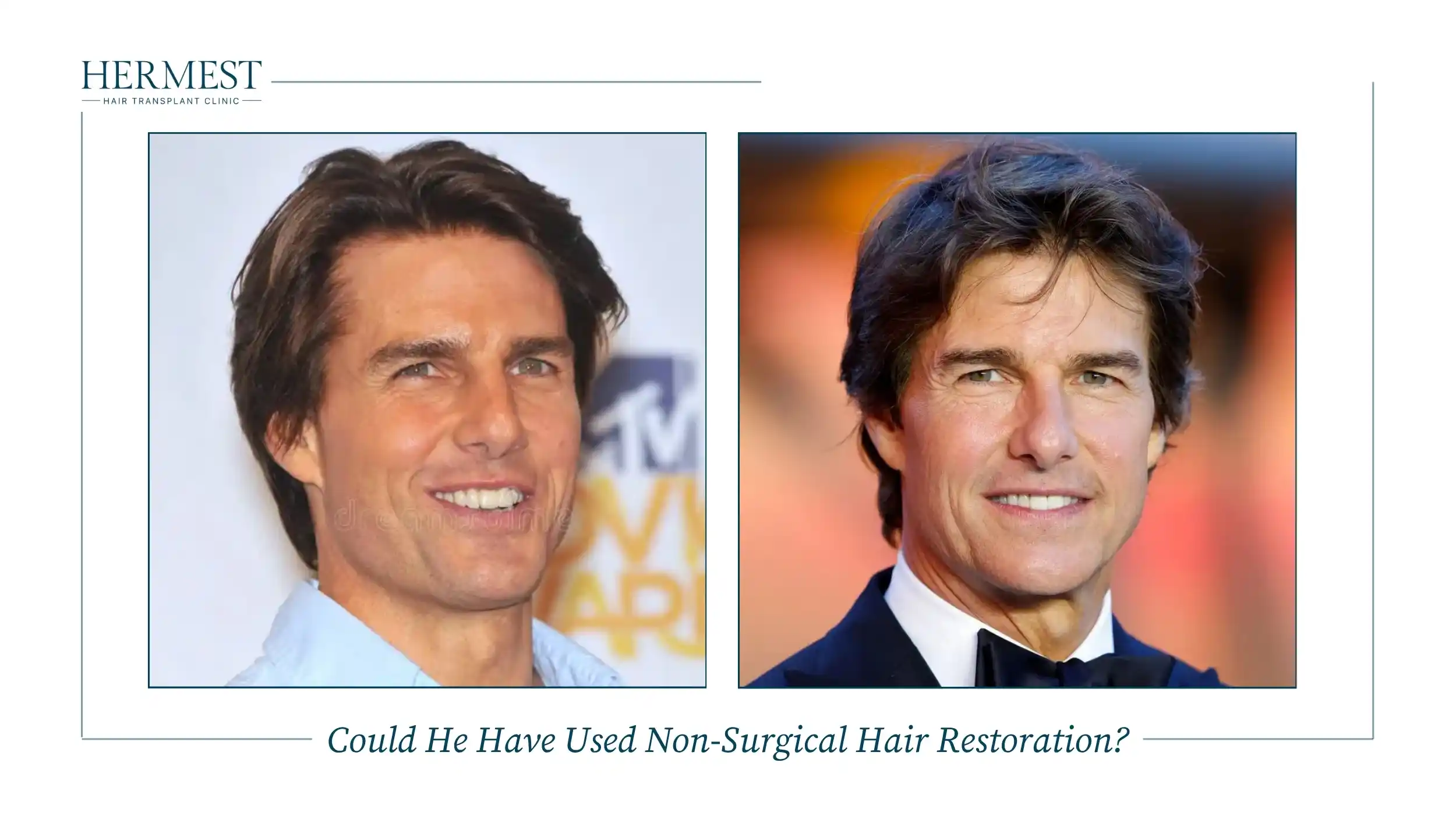
Although many discussions focus on a possible Tom Cruise hair transplant, surgery isn’t the only way someone can maintain healthy-looking hair. Modern hair restoration includes several non-surgical treatments that may help slow hair loss, preserve existing follicles, and improve overall hair quality.
It’s important to emphasize that there is no public evidence that Tom Cruise has used any of these treatments. The options below are discussed for educational purposes only and represent therapies commonly recommended by hair restoration specialists for suitable candidates.
Medications Can Help Preserve Existing Hair
For men experiencing male pattern baldness, doctors often begin with evidence-based medical treatments before considering surgery.
According to the American Academy of Dermatology (AAD), two of the most widely studied treatments are topical minoxidil and oral finasteride. These medications work differently but share the same goal: slowing follicle miniaturization and helping existing hair remain healthier for longer.
When started early, they may help:
- Reduce ongoing hair shedding.
- Slow the progression of androgenetic alopecia.
- Preserve native hair around the temples and crown.
- Improve long-term hair transplant outcomes when surgery is eventually performed.
Neither treatment creates an entirely new hairline, but both may help maintain existing density for many years in appropriate patients.
PRP and Regenerative Therapies
Another possibility often discussed in celebrity hair care is Platelet-Rich Plasma (PRP).
PRP uses concentrated growth factors obtained from the patient’s own blood. These are injected into targeted areas of the scalp to support follicle health. While results vary between individuals, several clinical studies suggest PRP may improve hair thickness and reduce shedding in selected patients when combined with medical therapy.
At Hermest, PRP is frequently used as part of a personalized hair restoration strategy rather than as a standalone solution.
Dr. Ahmet Murat says:
“One of the biggest misconceptions is that every patient needs surgery. In many cases, our first priority is protecting the hair the patient already has. Medical therapy, PRP, and careful long-term follow-up often delay or even eliminate the need for a hair transplant.”
Low-Level Laser Therapy and Scalp Care
Another non-invasive option is Low-Level Laser Therapy (LLLT).
According to the International Society of Hair Restoration Surgery (ISHRS), FDA-cleared low-level laser devices may stimulate hair follicles and improve hair density in some patients with androgenetic alopecia. While LLLT doesn’t replace surgery or medication, it can become part of a broader treatment plan.
Daily scalp care also plays a role. Gentle cleansing, balanced nutrition, stress management, and avoiding unnecessary trauma to the hair all support healthier follicles over time.
Taken together, these approaches demonstrate that maintaining thick hair doesn’t always require surgery. Genetics, medical treatments, regenerative therapies, professional grooming, and healthy lifestyle habits can all contribute to long-term hair preservation.
The next question is purely hypothetical but one many readers ask: if Tom Cruise had undergone a hair transplant, what might that procedure have looked like using today’s advanced FUE techniques?
If Tom Cruise Had a Hair Transplant, What Would It Look Like?
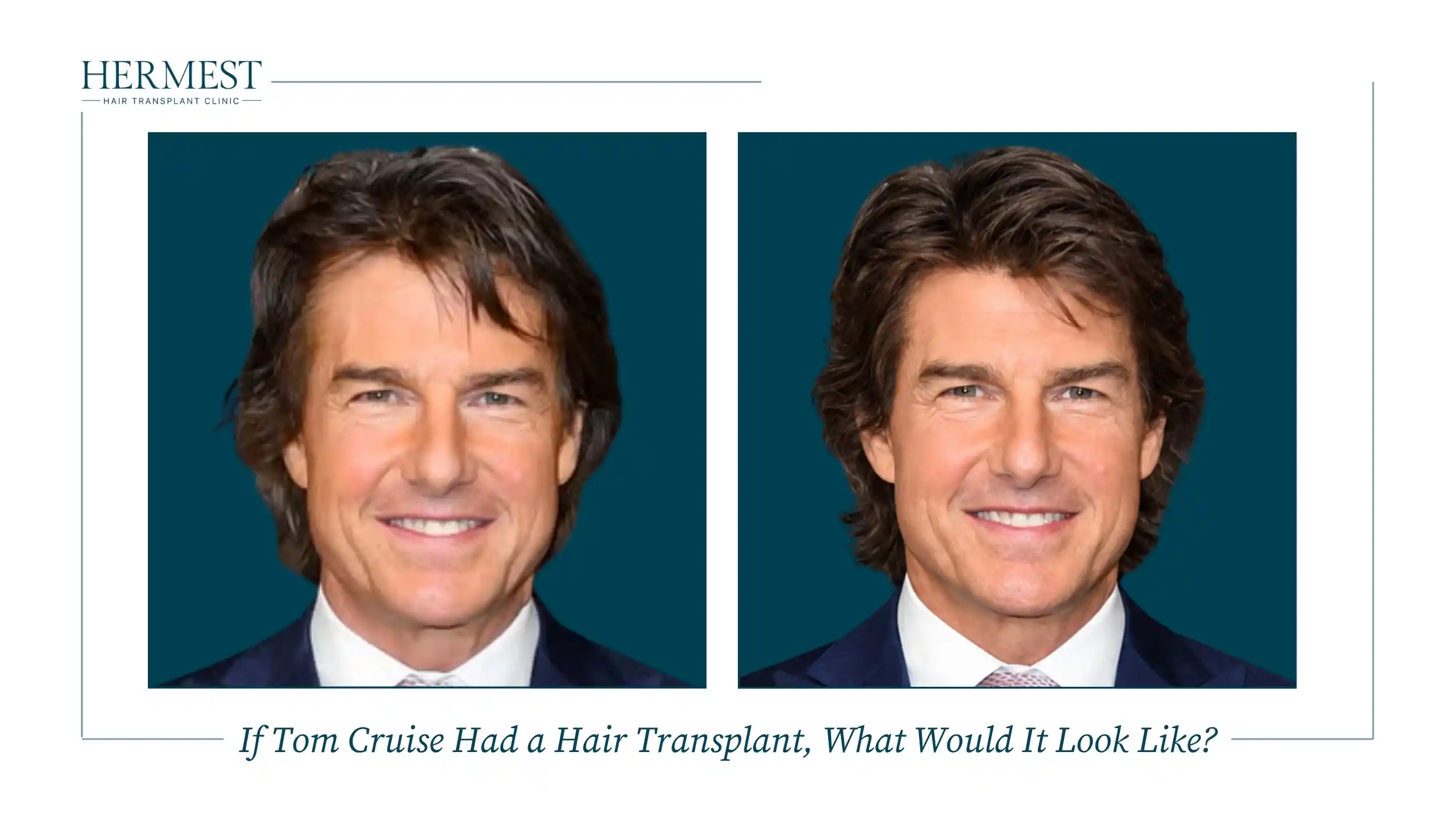
Since there is no confirmed evidence that Tom Cruise has undergone hair transplant surgery, any discussion about a possible procedure is purely hypothetical. Still, analyzing what modern hair restoration might involve for someone with a similar hairline helps explain how today’s techniques achieve natural-looking results.
Rather than trying to determine whether Tom Cruise actually had surgery, it’s more useful to ask what a hair transplant specialist would consider if a patient presented with comparable hair characteristics and goals.
Would a Hair Transplant Even Be Necessary?
Based on publicly available appearances, Tom Cruise does not appear to show the degree of hair loss that typically leads someone to seek surgical restoration.
Most patients who benefit from a FUE hair transplant have visible frontal recession, crown thinning, or a combination of both. In Tom Cruise’s case, his frontal density appears well preserved, while any temple recession seems relatively mild and stable.
If someone with a similar hairline visited a clinic today, surgery might not be the first recommendation. According to the International Society of Hair Restoration Surgery (ISHRS), preserving existing hair is often preferable when hair loss is limited or progressing slowly.
Dr. Ahmet Murat says:
“One of the most important parts of consultation is deciding whether surgery is actually necessary. At Hermest, we don’t recommend a hair transplant simply because a patient requests one. If their existing hair can be preserved through medical treatment or monitoring, that’s often the better long-term decision.”
If Surgery Were Performed, FUE Would Likely Be the Preferred Technique
If a patient with Tom Cruise’s apparent hair characteristics chose surgery, modern Follicular Unit Extraction (FUE) would probably be the technique of choice.
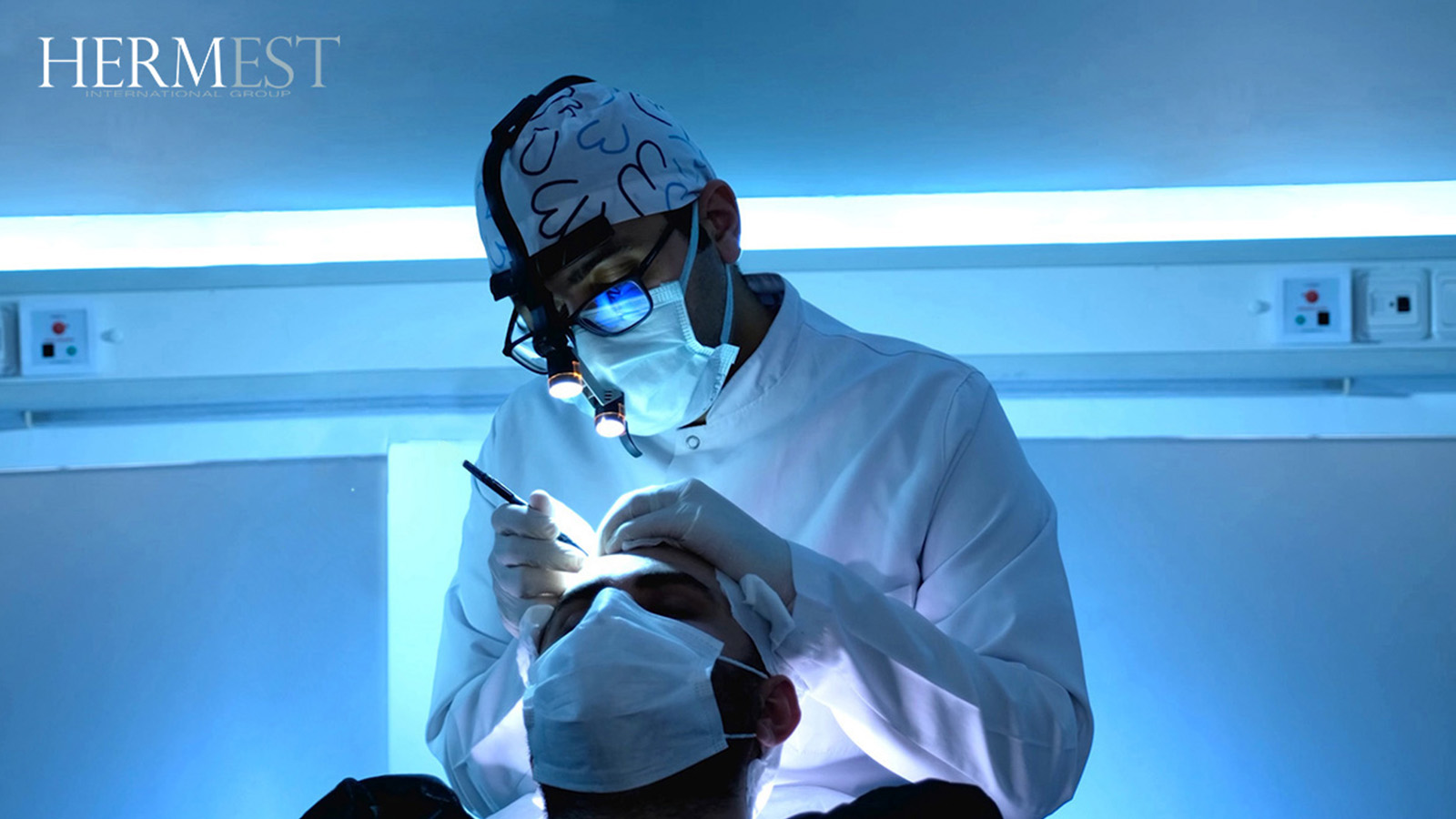
FUE removes individual follicular units from the donor area, usually the back and sides of the scalp, before implanting them into carefully planned recipient sites. Because there is no long linear scar, healing is generally quicker and hairstyles remain more flexible.
For someone with only mild temple recession, the procedure would likely focus on subtle refinement rather than dramatic reconstruction. The objective would be to preserve a natural, age-appropriate appearance instead of recreating the low hairline of someone in their early twenties.
How Many Grafts Might Be Needed?
Any estimate based on photographs should be treated with caution. Without examining scalp density, donor quality, hair caliber, and follicle characteristics, no surgeon can accurately determine graft requirements.
That said, if a patient displayed a similar pattern of limited temple recession and wanted modest enhancement, a procedure might hypothetically involve:
- Approximately 800 to 1,500 grafts for conservative temple refinement.
- Up to 2,000 grafts if additional frontal density were desired while maintaining a natural hairline.
These numbers are educational examples, not estimates of what Tom Cruise has received.
The goal would never be to create an unnaturally straight or youthful hairline. Instead, experienced surgeons design hairlines that complement facial structure, age, and future hair loss patterns to ensure results continue looking natural for decades.
Hairline Analysis by Hair Restoration Experts
While it’s impossible to diagnose a person from photographs alone, experienced hair restoration surgeons are trained to evaluate certain visual characteristics that help distinguish normal aging from progressive hair loss. Looking at Tom Cruise’s public appearances over several decades, several patterns stand out.
It’s worth repeating that this is an educational analysis, not a medical diagnosis or confirmation of a Tom Cruise hair transplant.
Frontal Hairline Appears Age-Appropriate
One of the first things specialists examine is the shape of the frontal hairline.
In Tom Cruise’s case, the hairline no longer appears as low or rounded as it did during his early career. Instead, it shows the subtle elevation commonly associated with a mature adult hairline. Importantly, this change appears gradual rather than sudden.
From a surgical perspective, this is significant because well-preserved mature hairlines often look more natural than aggressively low, perfectly straight hairlines that don’t match a person’s age.
According to the International Society of Hair Restoration Surgery (ISHRS), successful hair restoration should preserve facial harmony and anticipate future aging rather than simply lowering the hairline as much as possible.
Dr. Ahmet Murat says:
“One of the biggest mistakes in hair transplantation is designing the hairline for today’s appearance without considering the next twenty years. A natural hairline should age with the patient. At Hermest, every design is customized to facial proportions, existing hair density, and the likelihood of future hair loss.”
Temple Angles Look Stable
Temple recession is often one of the earliest signs of male pattern baldness.
Across numerous photographs spanning more than forty years, Tom Cruise appears to have mild temple maturation, but there is little evidence of rapid progression. The temple corners remain relatively balanced and symmetrical, helping maintain a youthful facial frame.
This stability is one reason many observers speculate about Tom Cruise hair restoration, although stable temple angles can also occur naturally in men with favorable genetics.
Frontal Density Remains Strong
Another noticeable characteristic is the apparent density across the front of the scalp.
Even under bright lighting and high-definition photography, there is generally minimal scalp visibility. Hair caliber also appears relatively thick, which naturally increases the perception of fullness.
Of course, several factors influence this appearance:
- Hair length and layering.
- Professional blow-drying and styling.
- Hair color and lighting conditions.
- Camera angles and image quality.
Each of these can make hair appear significantly denser than it actually is.
No Consistent Evidence of Crown Thinning
Hair restoration specialists also pay close attention to the vertex, commonly known as the crown.
Based on publicly available images, there is no consistently visible pattern of crown thinning that would strongly suggest advanced androgenetic alopecia. While isolated photographs occasionally spark online discussion, these images often vary because of lighting, hair movement, or viewing angle.
For surgeons, this highlights an important lesson: no single photograph should ever be used to diagnose hair loss or recommend treatment.
A complete evaluation always includes scalp examination, follicle miniaturization analysis, donor assessment, medical history, and long-term progression. These are details that simply cannot be determined from celebrity photographs.
The broader takeaway isn’t whether Tom Cruise has had surgery. It’s understanding why his hair appears natural and what realistic expectations patients should have when pursuing their own hair restoration journey.
Modern Hair Restoration Options
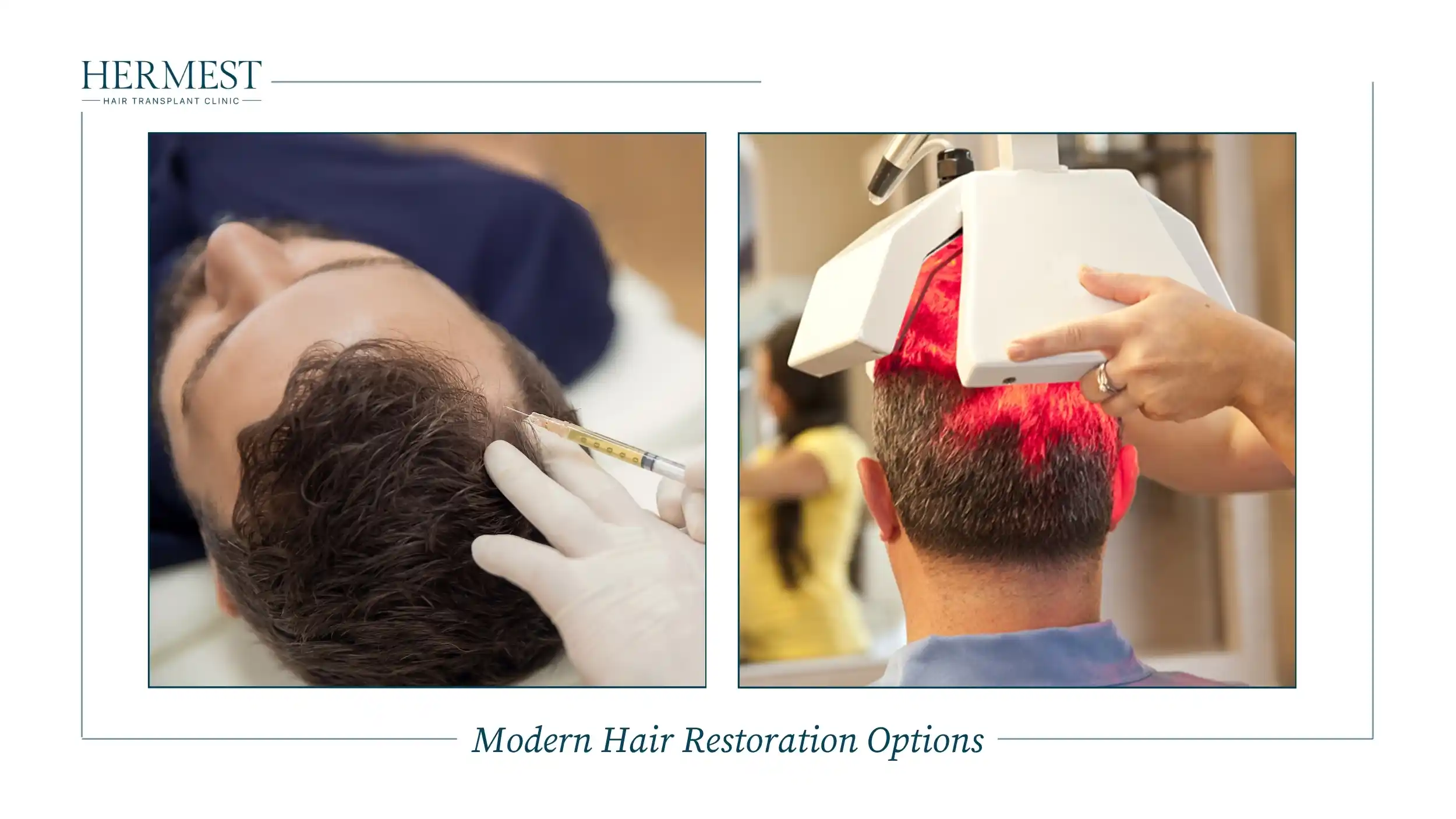
If you’ve been searching for Tom Cruise hair transplant because you’re worried about your own hair loss, it’s worth remembering that surgery is only one part of modern hair restoration. Today’s treatments are more personalized than ever, allowing specialists to tailor solutions based on the cause, severity, and progression of hair loss.
According to the American Academy of Dermatology (AAD) and the International Society of Hair Restoration Surgery (ISHRS), the most successful outcomes often come from combining medical therapies, regenerative treatments, and surgery only when appropriate.
The goal isn’t simply to replace lost hair. It’s to preserve healthy follicles, slow future hair loss, and create results that continue looking natural for years.
Medical Treatments Often Come First
For many patients with early male pattern baldness, non-surgical treatments are the first recommendation.
Evidence-based therapies such as minoxidil and finasteride may help reduce ongoing hair loss and preserve existing hair. These medications work best before extensive follicle miniaturization has occurred, making early evaluation particularly valuable.
Depending on the patient, treatment plans may also include:
- PRP (Platelet-Rich Plasma) to support healthier follicles.
- Low-Level Laser Therapy (LLLT) as part of a comprehensive maintenance program.
These options don’t create new follicles, but they may improve the condition of existing hair and help delay progression.
Dr. Ahmet Murat says:
“Hair restoration isn’t about choosing between medication or surgery. The best outcomes usually come from combining the right treatments at the right time. Every patient has different goals, genetics, and patterns of hair loss, so a personalized treatment plan always produces better long-term results than a one-size-fits-all approach.”
When Is a Hair Transplant the Right Choice?
A hair transplant becomes an option when hair loss has stabilized, sufficient donor hair is available, and realistic expectations have been established.
Modern FUE hair transplant techniques allow surgeons to extract individual follicular units and implant them with precise control over angle, direction, and density. This makes it possible to recreate natural-looking hairlines that blend seamlessly with existing hair.
At Hermest, treatment planning goes beyond replacing missing hair. Every consultation includes a detailed assessment of:
- Hair loss pattern and progression.
- Donor area quality and density.
- Hair caliber and scalp characteristics.
- Facial proportions and age.
- Long-term preservation strategy.
Rather than maximizing graft numbers, the objective is to achieve balanced, sustainable results that continue looking natural as the patient ages.
The Right Treatment Is the One Designed for You
Celebrity hairstyles often inspire patients, but successful hair restoration should never be based solely on another person’s appearance.
Whether you’re experiencing early recession, diffuse thinning, or more advanced hair loss, the most effective solution begins with an accurate diagnosis. Some patients benefit from medication alone, while others may be ideal candidates for regenerative therapies or a carefully planned transplant.
The best outcomes come from understanding your own hair rather than trying to replicate someone else’s. A professional evaluation can identify the most appropriate path forward and help you make informed decisions based on your unique needs rather than online speculation.
Frequently Asked Questions About Tom Cruise Hair Transplant
There is no confirmed evidence that Tom Cruise has undergone a hair transplant. The actor has never publicly acknowledged having hair restoration surgery, and no clinic or surgeon has claimed to have treated him. While his consistently full hair has fueled speculation for years, any discussion about a Tom Cruise hair transplant remains based on observation rather than verified medical information.
Ready to Find the Right Hair Restoration Solution?
Whether you’re concerned about a receding hairline, thinning crown, or early signs of male pattern baldness, the first step is an accurate diagnosis, not speculation based on celebrity photos.
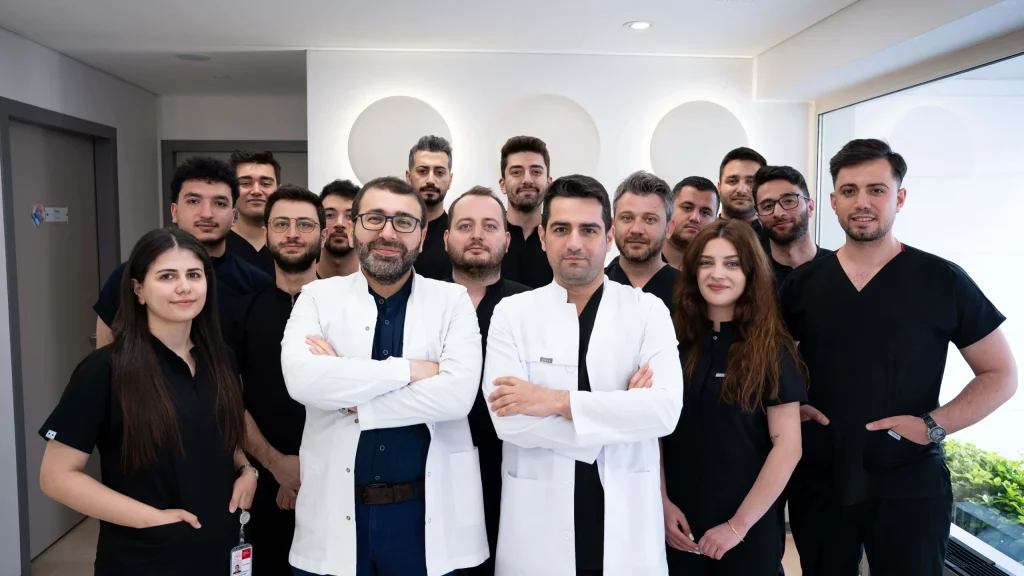
At Hermest Hair Clinic, Dr. Ahmet Murat and our experienced medical team perform comprehensive hair and scalp evaluations to determine the underlying cause of hair loss. Based on your individual needs, we create a personalized treatment plan that may include medical therapy, PRP, regenerative treatments, or a carefully designed FUE hair transplant when appropriate.
If you’re ready to understand your options and achieve natural, long-lasting results, schedule your consultation with Hermest today. Your best hair restoration journey begins with expert guidance tailored specifically to you.