

Norwood 1 Explained: Normal Hairline or Start of Hair Loss?
 ChatGPT
 Claude
 Perplexity
 Grok
Grok
 Gemini

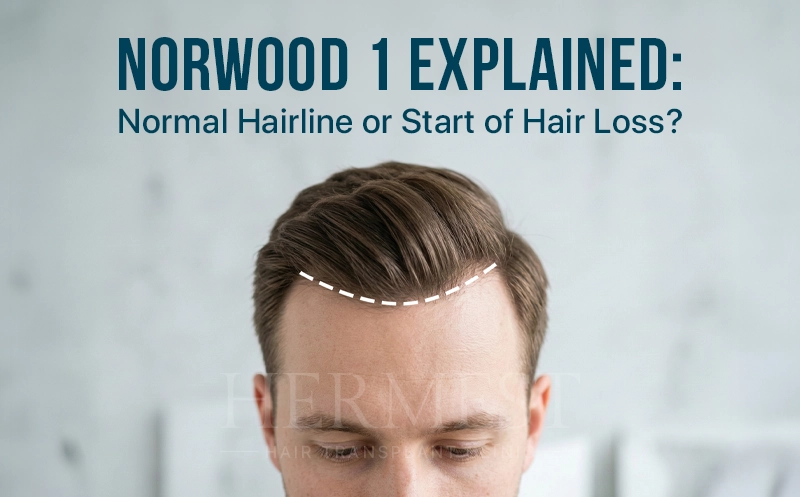
The term Norwood 1 sounds clinical, but it often triggers real anxiety. Many people search Norwood 1 hairline, is Norwood 1 normal, or Norwood 1 vs Norwood 2 because they are unsure if they are losing hair or simply seeing a natural change with age. That uncertainty matters. It shapes when you act and what you do next.
In simple terms, Norwood 1 male pattern baldness is not considered active hair loss. It describes a hairline that shows little to no recession at the temples. According to the American Academy of Dermatology, early male pattern hair loss usually begins with gradual temple recession or thinning at the crown. These changes are not present in a classic Norwood 1 pattern.
This is where many articles create confusion. They treat Norwood 1 as a starting stage of baldness. In reality, it is often a baseline stage. Some men stay Norwood 1 for decades. Others progress to Norwood 2 or 3 over time. The difference depends on genetics, hormones, and how early changes are managed.
Another source of confusion is the idea of a “mature hairline.” A mature hairline can look slightly higher than a teenage hairline, yet still fall within Norwood 1 hairline characteristics. This shift is normal and does not automatically mean balding.
Dr. Ahmet Murat explains:
“The goal is not to label every change as hair loss. The goal is to understand your pattern and track it correctly over time.”
This guide explains what Norwood 1 really means, how to tell if you are staying stable or progressing, and when treatment is actually useful.
We’ll start with the basics. What exactly defines Norwood 1, and how does it fit into the Norwood scale?
Quick Insights
- Norwood 1 usually represents a normal, stable hairline rather than active hair loss.
- A Norwood 1 hairline has strong density, straight frontal shape, and no visible temple recession.
- The term Norwood 1 hair loss can be misleading. Most people at this stage are not balding.
- A mature hairline can still fall within Norwood 1. A slight upward shift with age is normal.
- Progression from Norwood 1 to Norwood 2 depends on genetics, hormone sensitivity, and time.
- Early warning signs of progression include temple recession, miniaturized hairs, and reduced density at the edges.
- Treatment is not always necessary at Norwood 1. Stable hairlines are best monitored, not treated.
- If early changes appear, medical options like finasteride or minoxidil can help preserve existing hair.
- Hair transplant surgery is rarely recommended at Norwood 1 and should be approached conservatively if ever considered.
- Regular photo tracking and early professional evaluation help you stay in control of your hairline long-term.
What is Norwood 1 Hair Loss?
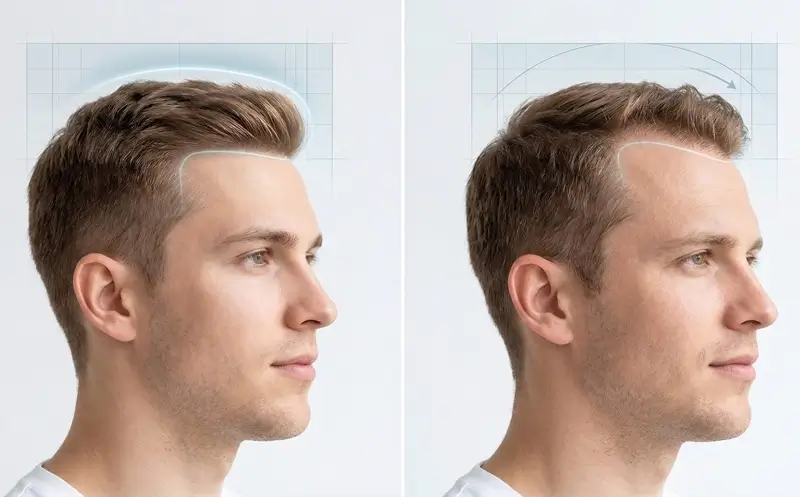
Norwood 1 is the starting point on the Norwood scale. It describes a hairline with no visible recession at the temples and strong overall density. Many people worry about Norwood 1 hair loss, but in most cases this stage represents a normal baseline rather than active thinning.
Norwood scale explained simply
The Norwood scale is a visual classification system for male pattern hair loss. It tracks how hairlines change over time, moving from minimal change to advanced recession and crown loss. According to the American Academy of Dermatology, androgenetic alopecia usually begins with temple recession or thinning at the crown. These signs define later Norwood stages, not Norwood 1.
Norwood 1 means:
- The frontal hairline sits low and straight
- Temples show no triangular recession
- Hair density remains even across the scalp
This is why searches like is Norwood 1 balding and is Norwood 1 normal are so common. The answer is usually yes, it is normal.
Norwood 1 hairline characteristics
A Norwood 1 hairline typically looks close to a youthful or mature hairline, depending on age. It may sit slightly higher than a teenage hairline, yet still maintain a solid, straight front without visible thinning.
Key features include:
- Symmetrical temple corners
- Strong density along the frontal line
- No visible miniaturization at the edges
This is where confusion with Norwood 1 hair loss begins. A slightly higher hairline does not mean hair is being lost. It can reflect a normal maturation process.
Dr. Ahmet Murat explains:
“Patients often think every change is hair loss. With Norwood 1, we first check if the hairline is simply maturing or actually thinning.”
Is Norwood 1 normal or early hair loss?
Most people asking about Norwood 1 hair loss want a clear answer. Is this normal, or is it the start of balding? In many cases, Norwood 1 is simply a normal baseline or a mature hairline, not active hair loss.
Mature hairline vs recession
A mature hairline usually settles slightly higher than a teenage hairline. It keeps good density and a clean, straight frontal edge. This look can still fit Norwood 1 hairline characteristics.
Early recession looks different. It starts with subtle temple corners forming and a slight thinning at the edges. According to the American Academy of Dermatology, early androgenetic alopecia often shows gradual temple recession or crown thinning, not a uniform front.
Signs that suggest a normal mature hairline:
- Even density across the frontal line
- No see-through areas in strong light
- Stable hairline position over time
Signs that suggest early loss:
- Small triangular recessions at the temples
- Fine, miniaturized hairs at the hairline edge
- Gradual change visible in photos over months
How to tell the difference at home
Simple tracking helps you decide if you are stable or progressing.
Try this:
- Take clear photos monthly, same angle and lighting
- Check temple corners for new recession
- Compare density at the hairline edge
If photos look the same over six to twelve months, you are likely stable at Norwood 1.
Dr. Ahmet Murat explains:
“Stability over time is the key. A true Norwood 1 pattern does not show progressive change.”
Why this matters for decisions
Treating a stable Norwood 1 too early can expose you to unnecessary medication or surgery. Waiting and monitoring avoids overtreatment.
Can Norwood 1 progress to Norwood 2 or 3?
A common fear behind Norwood 1 hair loss is progression. Many people ask if a stable Norwood 1 hairline will inevitably move to Norwood 2 or Norwood 3. The honest answer is simple. It can, but it does not always.
Genetic patterns and risk factors
Progression from Norwood 1 depends mainly on genetics and hormone sensitivity. According to the American Academy of Dermatology, androgenetic alopecia is driven by how follicles respond to DHT over time. Some people have strong resistance. Others are more sensitive and start to recede earlier.
Key factors that influence progression:
- Family history of male pattern hair loss
- Age of first visible change
- Hair thickness and density
- Hormonal sensitivity of follicles
If close male relatives progressed early, your risk is higher. If they kept full hairlines into later decades, your risk is lower.
Timeline of progression from Norwood 1
Progression is usually slow and uneven. It rarely jumps from Norwood 1 to Norwood 3 in a short time. More often, the first step is a mild shift toward Norwood 2, with small temple recessions.
Typical patterns:
- Early 20s to 30s: subtle temple corners appear
- 30s to 40s: gradual deepening if genetics drive it
- Some individuals: no meaningful change for decades
Searches like Norwood 1 to Norwood 2 timeline reflect this uncertainty. The truth is that there is no fixed schedule. It is individual.
What signals real progression
Watch for consistent change across several months:
- Receding temple corners becoming visible
- Fine, miniaturized hairs at the hairline edge
- Gradual loss of density at the frontal zone
One photo can mislead. A pattern over time tells the story.
Dr. Ahmet Murat explains:
“We look for progression, not single-day differences. Hair loss is a trend, not an event.”
Why early awareness helps
Tracking changes early allows you to act at the right moment, not too soon and not too late.
Early signs you are leaving Norwood 1
The shift from Norwood 1 to early recession is often subtle. Many people only notice it after the change is obvious. Catching early signals helps you act calmly and at the right time.
Temple recession patterns
The first visible change usually appears at the temples. Instead of a straight or slightly rounded front, the corners begin to form a gentle V shape. This is the earliest transition from a Norwood 1 hairline toward Norwood 2.
Look for:
- Slight indentations at the temple corners
- A change in symmetry between left and right sides
- A hairline that looks different in bright lighting
These changes are gradual. They often appear over several months.
Density changes at the hairline
Another sign is reduced density at the frontal edge. This can feel like Norwood 1 hair loss, even when the overall hairline position has not moved much.
Watch for:
- Finer, softer hairs at the front
- A see-through effect under direct light
- Hair that feels weaker when styling
According to the American Academy of Dermatology, miniaturization is a key early marker of androgenetic alopecia. It often begins before clear recession appears.
Changes visible in photos over time
One of the most reliable ways to confirm progression is comparison.
Track monthly photos with:
- The same angle and lighting
- Dry, styled hair
- Close-up shots of temples and hairline
If your hairline looks identical after six to twelve months, you are likely still stable at Norwood 1.
When these changes require attention
You do not need to panic at the first sign. Mild changes can stabilize. The goal is awareness, not anxiety.
Dr. Ahmet Murat explains:
“Early signs give you time. The earlier you understand your pattern, the more control you have over it.”
Should you treat Norwood 1?
This is the point where many people make rushed decisions. When you see small changes, it is tempting to start treatment immediately. In most cases, Norwood 1 hair loss does not require active treatment.
When treatment is unnecessary
If your hairline is stable, you usually do not need medication or procedures. A stable Norwood 1 hairline can remain unchanged for many years. Treating too early may expose you to side effects or long-term commitments without real benefit.
You likely do not need treatment if:
- Your hairline has not changed over 6–12 months
- Density at the frontal edge looks consistent
- No miniaturization is visible in close photos
Monitoring is often the best approach.
When early intervention may help
Treatment becomes more relevant when you see a pattern of progression. Small temple recession or visible miniaturization may indicate early androgenetic alopecia. According to the American Academy of Dermatology, early-stage hair loss responds better to medical therapies than advanced stages.
You may consider treatment if:
- Temple corners are gradually receding
- Fine, weak hairs appear at the hairline
- Family history suggests early progression
Balancing caution and prevention
Starting treatment too early can lead to unnecessary medication. Starting too late may reduce your ability to preserve existing hair. The right timing depends on your pattern.
Dr. Ahmet Murat explains:
“We treat progression, not fear. If the hairline is stable, observation is the best plan. If it is changing, early support can protect what you have.”
Treatment options at Norwood 1 stage
If you are seeing early changes, there are several ways to support a Norwood 1 hairline without rushing into surgery. The goal at this stage is preservation, not reconstruction. Many people searching Norwood 1 hair loss want to keep what they have and slow progression.
Finasteride for early prevention
Finasteride is one of the most studied options for male pattern hair loss. It works by reducing DHT levels, the hormone linked to follicle miniaturization. According to the American Academy of Dermatology, DHT plays a central role in androgenetic alopecia.
Finasteride may help when:
- Early temple recession is visible
- Family history shows progressive hair loss
- You want to preserve density long term
It is a long-term commitment. Results depend on consistency.
Minoxidil for density support
Minoxidil supports hair growth by improving blood flow and prolonging the growth phase of follicles. It is often used when mild thinning appears at the frontal edge.
Minoxidil may be useful if:
- Density feels slightly reduced at the hairline
- You notice finer hairs forming at the front
- You want to support regrowth in early stages
Lifestyle and scalp health
Lifestyle factors do not change genetics, but they support overall hair quality and scalp condition. A healthy scalp environment helps follicles function at their best.
Focus on:
- Balanced nutrition and protein intake
- Stress management and sleep
- Gentle hair care and scalp hygiene
Choosing the right approach
Not everyone at Norwood 1 needs treatment. The decision depends on stability and personal goals.
Dr. Ahmet Murat explains:
“At Norwood 1, our priority is preservation. We choose the lightest effective approach based on each patient’s pattern.”
Why medication comes before surgery
Medical options aim to maintain existing hair. Surgery replaces lost hair. At this early stage, preservation is usually enough.
Is a hair transplant recommended at Norwood 1?
Many people search Norwood 1 hair transplant out of fear that any change requires surgery. In most cases, a transplant is not recommended at the Norwood 1 stage. This level usually has enough natural density, and there is no clear area of loss to replace.
Why surgery is usually not advised
Hair transplantation works best when there is a defined area of loss. At Norwood 1 hairline level, the frontal edge is already strong. Adding grafts can create problems later, especially if your pattern changes.
Main reasons surgery is avoided:
- No significant hair loss to restore
- Risk of an unnatural or overly low hairline
- Future recession may expose transplanted areas
- Donor hair should be preserved for later stages
According to guidance principles discussed by the International Society of Hair Restoration Surgery, surgical planning must consider long-term patterns, not just current appearance.
When it might be considered
There are limited cases where surgery may be discussed carefully:
- Clear asymmetry in the hairline
- Congenital high hairline that never matured
- Previous trauma or scarring
Even in these cases, conservative planning is key. The goal is subtle improvement, not aggressive lowering.
The risk of acting too early
Operating too early can lock you into a hairline that does not match future changes. As natural hair recedes, the transplanted line may look out of place.
Dr. Ahmet Murat explains:
“A hair transplant at Norwood 1 must be planned with your future pattern in mind. If there is no true loss, surgery should be postponed.”
A better approach for most patients
At Norwood 1 hair loss stage, monitoring and medical support are usually the safest plan. This protects your donor area and keeps options open.
How to maintain a Norwood 1 hairline long-term
Staying at Norwood 1 is often about consistency rather than intervention. If your hairline is stable, the goal is preservation. Many people concerned about Norwood 1 hair loss simply want to avoid progression.
Monitoring progression the right way
Tracking changes calmly prevents unnecessary treatment. It also helps you act early if needed.
Use a simple system:
- Take monthly photos in identical lighting
- Keep hair dry and styled the same way
- Capture temple corners and frontal edge clearly
Compare images every three to six months. If there is no measurable change, you are likely stable at Norwood 1 hairline level.
Preventive strategies that actually matter
You cannot change genetics, but you can support follicle health. According to the American Academy of Dermatology, early intervention in androgenetic alopecia improves long-term outcomes. That does not mean everyone needs medication. It means awareness matters.
Helpful habits include:
- Managing stress and sleep quality
- Maintaining adequate protein intake
- Avoiding harsh chemical treatments
- Consulting early if visible miniaturization appears
When to consider medical prevention
If family history suggests early progression, preventive medication may be discussed even at Norwood 1 hair loss stage. This decision should be individualized.
Dr. Ahmet Murat explains:
“Preservation is easier than restoration. If we see a trend toward recession, we intervene early. If the hairline is stable, we monitor.”
The mindset that helps most
Do not panic over small daily variations. Hair looks different under different lighting and styling. Look for trends over time.
A stable Norwood 1 can last decades. Awareness and realistic planning make that possible.
FAQs about Norwood 1
No, Norwood 1 is usually not considered balding. It represents a baseline hairline with no clear recession. Many people with a Norwood 1 hairline never progress to later stages.
Take the next step with clarity and confidence

If you are trying to understand whether you are truly Norwood 1, or starting to see early Norwood 1 hair loss, getting a clear, professional assessment can make a big difference. Guessing based on mirrors or photos often leads to unnecessary worry or rushed decisions.
At Hermest Hair Transplant Clinic, the approach focuses on long-term planning, pattern analysis, and preservation. Every evaluation looks at your current hairline, family history, density, and risk of progression before suggesting any treatment. The goal is simple: protect what you have and intervene only when it makes sense.
A consultation can help you:
- Understand if your hairline is stable or changing
- See whether Norwood 1 vs Norwood 2 is relevant for you
- Learn if medication, monitoring, or no action is the best choice
- Plan for the future without risking your donor area or natural look
Dr. Ahmet Murat explains:
“The right decision at Norwood 1 is often patience and monitoring. When change begins, we guide you with a plan that protects your hair long term.”
If you want a clear answer about your hairline and what to expect next, you can reach out for a personalized evaluation and move forward with a plan that fits your pattern and your goals.