

Recurring Scab on Scalp in Same Spot: Causes & Warning Signs
 ChatGPT
 Claude
 Perplexity
 Grok
 Gemini

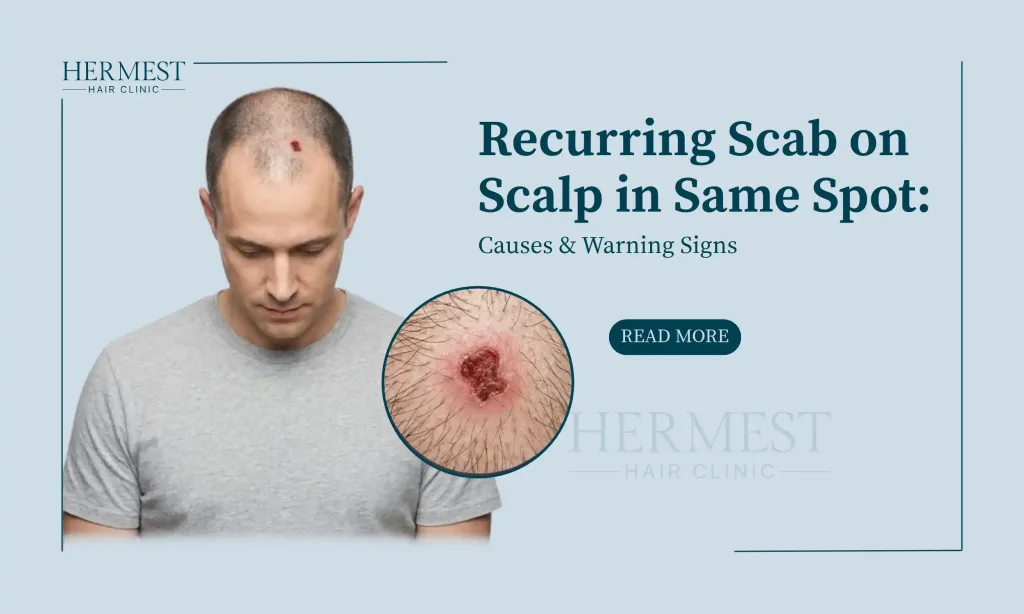
Finding a recurring scab on scalp in same spot can feel confusing. You remove it, the skin appears better, and then the exact same area becomes crusty again. Sometimes it also itches, feels tender, or bleeds when touched.
The good news is that many causes are manageable. A scab on scalp can develop from repeated scratching, an inflamed hair follicle, seborrheic dermatitis, psoriasis, eczema, contact irritation, or infection.
Still, recurrence in one precise location deserves attention.
A scab isn’t actually a disease. It is part of your skin’s response to injury or inflammation. The more useful question is why the skin underneath keeps becoming damaged.
Repeated picking can create a cycle of healing and reopening. Yet a scalp scab that won’t heal shouldn’t automatically be blamed on scratching, particularly when it returns without being disturbed.
Persistent lesions can occasionally have other explanations. The American Cancer Society lists a sore that doesn’t heal or repeatedly bleeds among possible warning signs of basal or squamous cell skin cancer. This doesn’t mean a recurring scalp scab is cancer, but persistent changes deserve examination.
Sun exposure matters as well. The American Academy of Dermatology identifies the balding scalp as a common location for actinic keratosis, a precancerous sun-related growth.
This guide explains the common causes of a persistent scab on scalp, how folliculitis, psoriasis, dermatitis, infection, and sun damage differ, whether recurring scalp sores can cause hair loss, and the signs that mean it’s time to see a dermatologist.
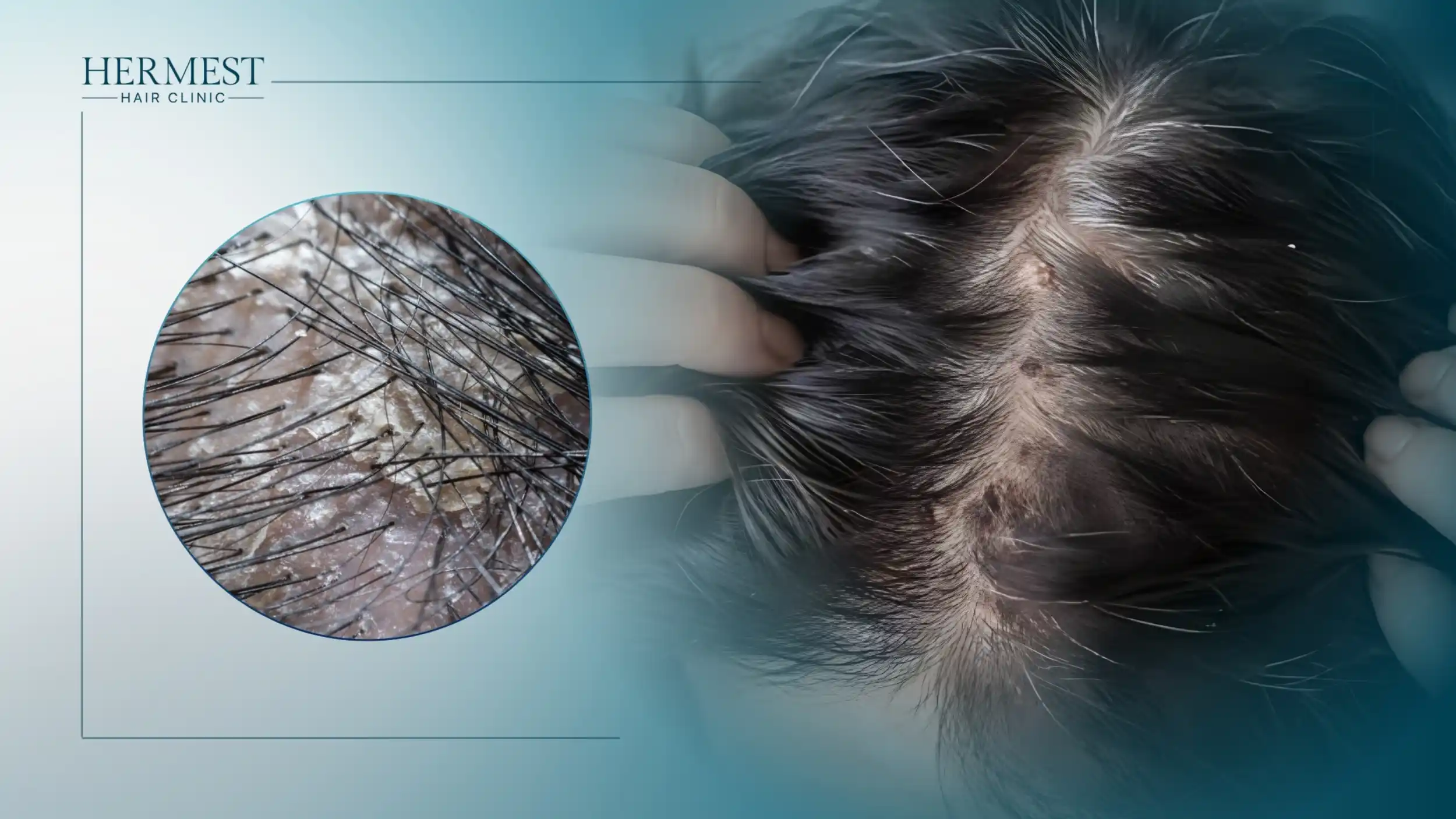
Quick Insights
- Common causes include scalp folliculitis, psoriasis, seborrheic dermatitis, eczema, contact dermatitis, infection, repeated scratching, and mechanical irritation.
- A single scab on scalp that repeatedly returns deserves different attention from widespread dandruff or generalized scaling.
- Picking can create a cycle of scab → bleeding → healing → another scab. Leaving the lesion undisturbed gives the skin a better opportunity to recover.
- Psoriasis can cause cracking, bleeding, itching, and temporary hair loss. The American Academy of Dermatology reports that scratching and forceful scale removal can contribute to shedding, with hair usually returning after the psoriasis clears.
- Pus, increasing tenderness, swelling, broken hairs, or patchy hair loss can point toward infection or significant follicular inflammation.
- Chronic inflammatory disorders can occasionally damage follicles permanently. Research describes erosive pustular dermatosis of the scalp as crusted erosions that can progress to scarring alopecia.
- A recurring lesion on a bald or heavily sun-exposed scalp deserves particular attention for sun-related skin changes.
- A scalp sore that won’t heal, repeatedly bleeds without picking, enlarges, changes appearance, or persists for several weeks should be examined by a dermatologist.
- Don’t repeatedly experiment with antibiotics, antifungals, steroids, essential oils, or harsh shampoos without knowing the cause.
- Hair transplantation shouldn’t be used to cover unexplained hair loss around an active scalp lesion. Diagnosis and scalp stabilization come first.
Why Does the Same Spot on My Scalp Keep Scabbing?
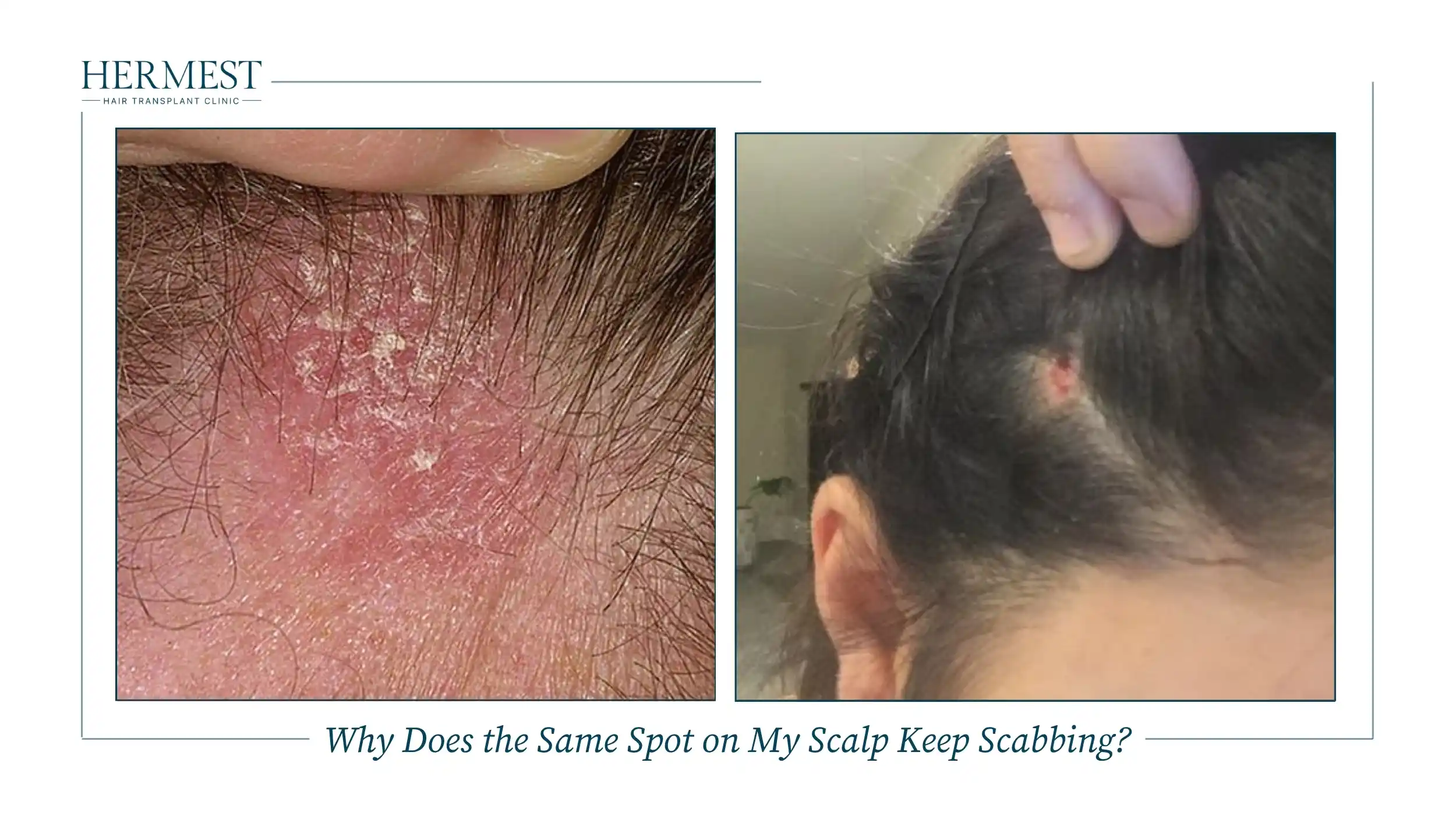
When one spot on your scalp keeps scabbing, the crust itself is usually only the visible result. Something underneath is repeatedly damaging, irritating, or inflaming the skin.
That distinction helps narrow down the possible cause.
A Scab Is a Symptom, Not the Diagnosis
A scalp scab forms when blood, serum, inflammatory fluid, or other material dries over damaged skin. It protects the tissue underneath during healing.
If the original problem resolves, the crust normally separates as healthier skin develops below it.
A scab that keeps coming back suggests this healing process is being interrupted or the underlying trigger remains active.
Possible triggers include an inflamed follicle, dermatitis, psoriasis, infection, scratching, or repeated mechanical irritation. Less commonly, a persistent skin lesion may repeatedly crust without properly healing.
The Scab, Pick, Bleed, Scab Cycle
Sometimes the explanation is surprisingly mechanical.
An itchy spot develops. You scratch it. A small wound forms and crusts. The crust then feels raised or irritating, so you unconsciously pick it again.
The skin reopens.
Another scab forms.
Hairbrushes, clippers, fingernails, hats, helmets, or scratching during sleep can keep the cycle going.
This is an important dividing line. A scalp sore that won’t heal despite being left alone deserves closer attention.
The American Cancer Society advises having a skin lesion checked when it doesn’t heal after several weeks or repeatedly bleeds. That warning doesn’t mean the lesion is cancer. It means persistent focal changes shouldn’t be diagnosed from appearance alone.
Most Common Causes of a Recurring Scalp Scab
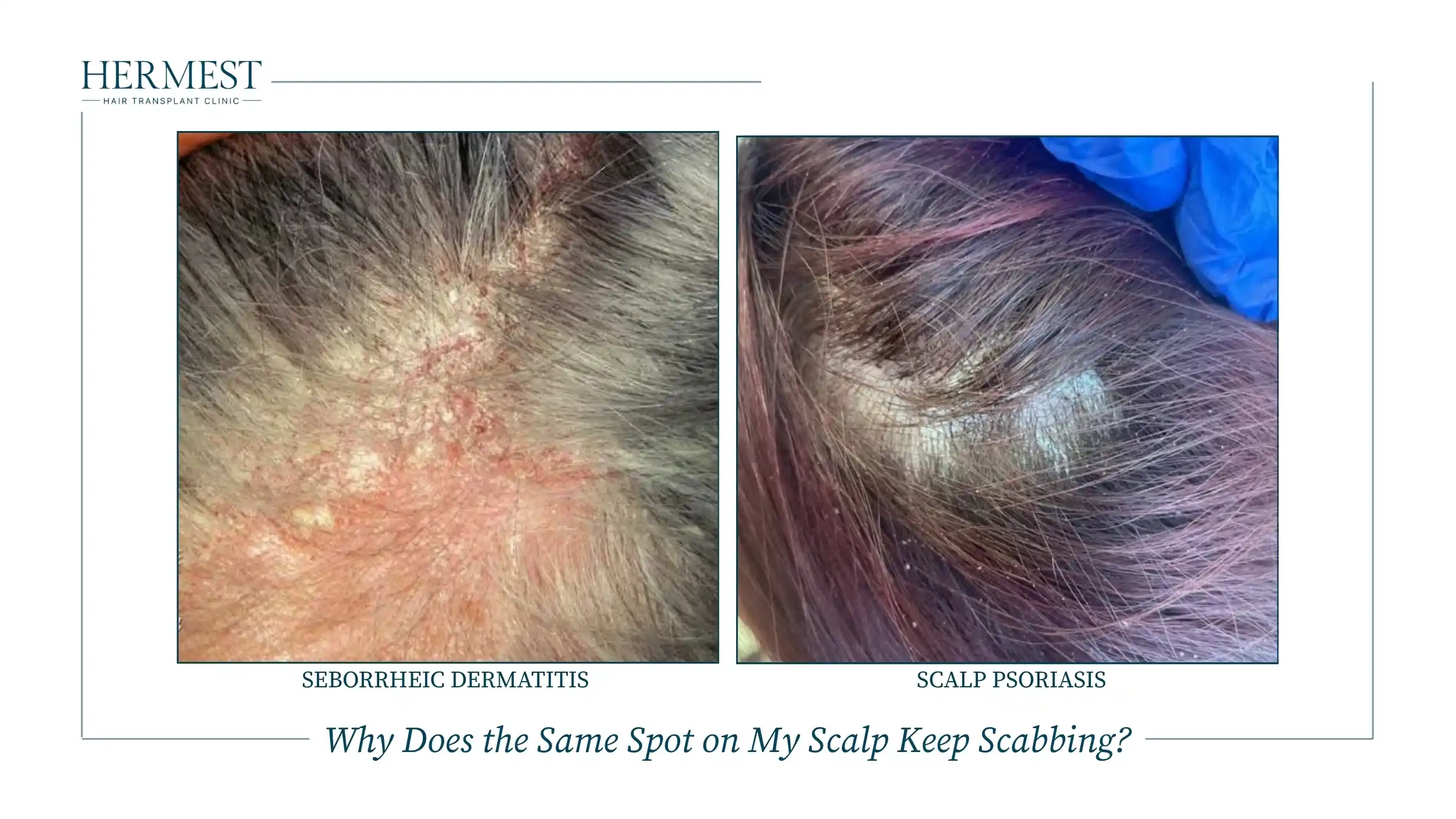
A scalp scab that keeps coming back can have several explanations. The location, surrounding skin, itching, pain, discharge, bleeding, and associated hair changes can all provide clues.
Still, appearance alone cannot reliably identify every scalp condition.
What Can Cause a Persistent Scab on the Scalp?
Common possibilities include scalp folliculitis, inflammatory skin conditions, infection, and repeated physical irritation.
Folliculitis develops when hair follicles become inflamed. Affected follicles may appear as small pimples or pustules that itch, hurt, rupture, and eventually crust.
Seborrheic dermatitis usually produces flaky or greasy scale rather than a true wound scab. The American Academy of Dermatology notes that it commonly affects the scalp and can produce white or yellowish scaling. Scratching irritated skin may then cause bleeding and secondary crusting.
Scalp psoriasis can produce thicker plaques and silvery-white scale. Cracking, scratching, or removing scale forcefully may cause bleeding. The AAD lists itching, soreness, cracking, and bleeding among possible scalp psoriasis symptoms.
Other possibilities include:
- eczema or contact dermatitis
- bacterial or fungal infection
- repeated scratching or picking
- friction from clippers, helmets, hats, or hair accessories
- sun-related lesions on exposed scalp
A single scab on scalp deserves somewhat different thinking from widespread dandruff or scaling.
One less common concern is actinic keratosis, particularly on thinning or bald, sun-exposed scalps. The AAD describes these precancerous lesions as potentially rough, scaly, crusty, or raised.
Scalp Folliculitis: Can an Inflamed Hair Follicle Keep Scabbing?
Yes. Scalp folliculitis can create small sores that become crusted and may recur. It happens when individual hair follicles become inflamed, sometimes involving bacteria, yeasts, or other microorganisms.
This can make folliculitis particularly relevant when a scalp scab begins as a small pimple-like bump.
What Does Scalp Folliculitis Look and Feel Like?
DermNet describes scalp folliculitis as small, often very itchy pustules. These spots can become sore and crusted, particularly after scratching.
Typical features can include:
- a small red or white bump around a hair
- itching or mild tenderness
- a pustule containing fluid or pus
- soreness after scratching
- crusting after the pustule breaks
Merck Manual similarly describes folliculitis as superficial pustules or inflammatory nodules surrounding hair follicles. Mild pain, itching, and irritation can occur.
Why Might Folliculitis Keep Returning?
Friction, perspiration, skin trauma, and occlusion can contribute to follicular inflammation. Scratching a particularly itchy follicle can then create another cycle:
pustule → scratching → small wound → crust → renewed irritation
Yet a recurring scalp sore shouldn’t automatically be labelled folliculitis from appearance alone.
Bacterial, fungal, and inflammatory follicular disorders can resemble each other. When folliculitis repeatedly returns, Merck notes that clinicians may culture a pustule to investigate causes such as resistant bacteria. Fungal testing can be considered when clinically suspected.
Hair changes provide another useful clue. Severe inflammatory scalp infections can sometimes produce broken hairs or hair loss. Tinea capitis, for example, can cause scaling and alopecia, and an inflammatory kerion may develop pustules and crusting.
Can Seborrheic Dermatitis Cause Scalp Scabs?
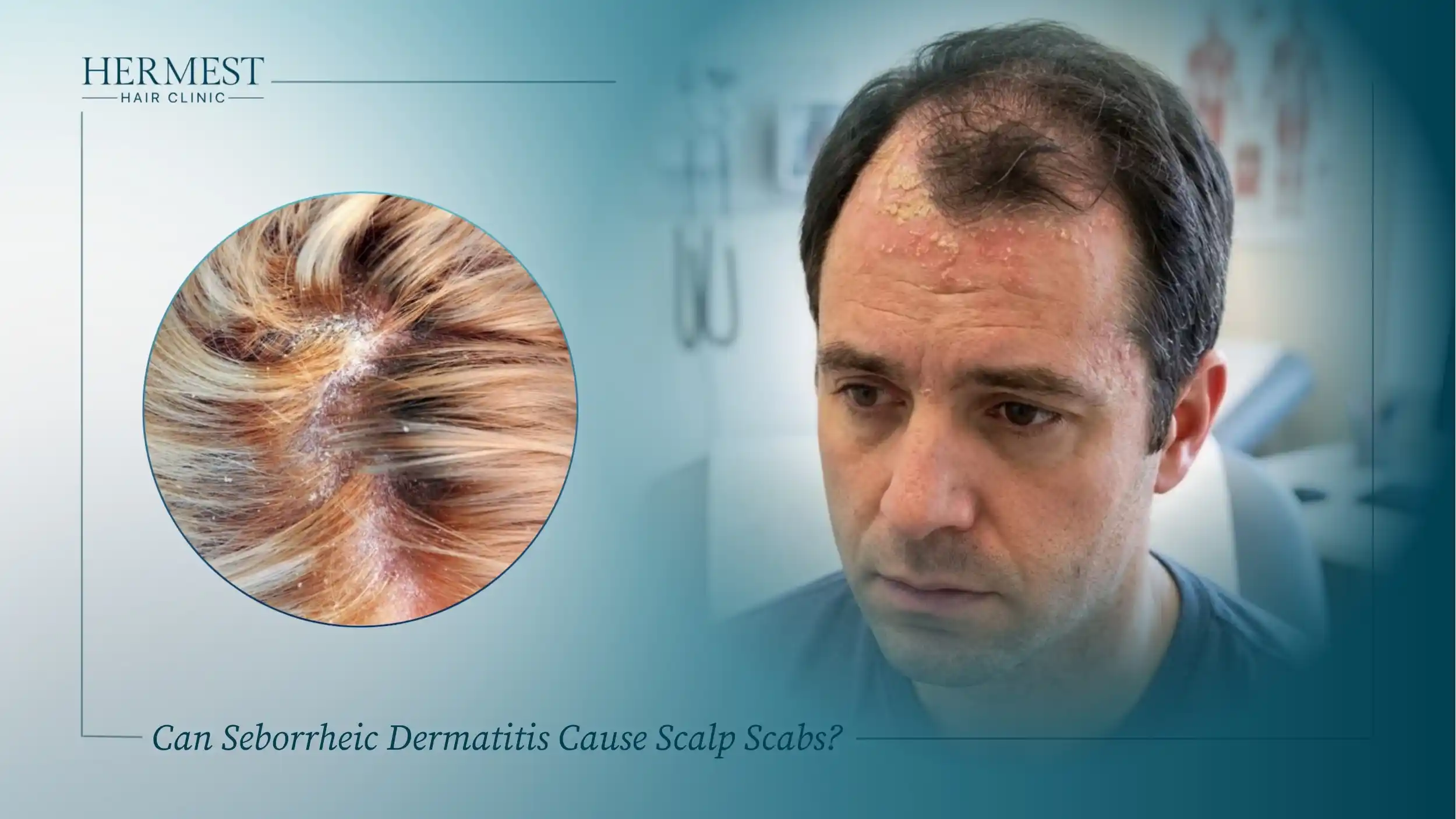
Yes, seborrheic dermatitis can contribute to scalp scabs, particularly when an itchy or inflamed area gets repeatedly scratched. Yet the condition itself usually produces scale rather than a classic wound scab.
That difference is useful when examining a crusty spot on scalp.
Dandruff, Scale, or a True Scab?
According to the American Academy of Dermatology, seborrheic dermatitis commonly affects the scalp and can produce dry flakes, greasy scales, itching, burning, and an inflamed rash.
Scale and scab aren’t interchangeable terms.
Scale consists largely of shedding surface skin cells. A true scalp scab usually develops when damaged skin releases blood or fluid that subsequently dries.
Seborrheic dermatitis can connect the two.
An itchy, scaly area develops first. Repeated scratching damages the skin underneath. Minor bleeding or fluid then dries, creating crust over the irritated area.
The AAD warns that skin affected by seborrheic dermatitis is easily irritated. Harsh products, hot water, sweat, and some hair-care products may trigger or worsen flare-ups.
Seborrheic dermatitis often affects more than one oily scalp area. For that reason, a single scab on scalp returning in precisely the same location shouldn’t automatically be diagnosed as dandruff.
Persistent focal crusting may have another cause, or scratching may have created a secondary wound on top of existing dermatitis.
Can Scalp Psoriasis Cause Repeated Crusting?
Yes. Scalp psoriasis can create thick scaling, cracking, bleeding, and soreness that may eventually resemble a recurring scalp scab. It can affect one small area or spread across much of the scalp.
The recurring pattern often comes from inflammation combined with scratching or picking.
What Does Scalp Psoriasis Look Like?
The American Academy of Dermatology describes scalp psoriasis as patches that may become thick and inflamed, often covered by silvery-white scale. The scalp can become extremely dry, causing the skin to crack and bleed.
Common signs include itching, burning, soreness, flaking, and thicker plaques.
This creates an important distinction.
Silvery scale isn’t technically the same thing as a scab. Yet once a psoriasis plaque cracks or gets scratched, bleeding can produce a true crust over the affected skin.
Why Does Picking Make the Same Spot Return?
Picking can create a repeating cycle.
You remove the thick scale, expose irritated skin underneath, trigger bleeding, and then another crust forms during healing.
The AAD recommends removing psoriasis scale gently. Scratching can worsen the condition, cause bleeding, and contribute to temporary hair loss.
Hair loss from scalp psoriasis is usually temporary. The AAD reports that hair typically regrows after the psoriasis clears.
Still, don’t assume every crusty spot on scalp is psoriasis. A single lesion that repeatedly bleeds or refuses to heal needs separate assessment, particularly when no typical psoriasis plaques appear elsewhere.
Could It Be Eczema or Contact Dermatitis?
Yes. Eczema and contact dermatitis can leave the scalp itchy, inflamed, cracked, or weeping. Once irritated skin gets scratched, a scalp scab may form over the damaged area.
Hair products are especially relevant when symptoms appear after changing your routine.
Can Hair Products Cause a Recurring Scalp Sore?
Potential triggers include hair dyes, shampoos, conditioners, fragrances, preservatives, styling products, and some topical scalp treatments.
A systematic review covering 99 studies and 3,185 patients found hair dyes, shampoos, and conditioners among the scalp products associated with allergic contact dermatitis. Common symptoms included itching, burning, and eczematous skin changes.
Hair dye deserves particular attention. The American Academy of Dermatology identifies para-phenylenediamine (PPD), found in many dark permanent dyes, as a common cause of allergic scalp reactions. Shampoos and conditioners can trigger reactions too.
Why Might One Area Become Particularly Crusty?
Contact dermatitis doesn’t always affect every exposed area equally. A small region may receive greater product exposure or become the place you scratch most frequently.
Once that skin barrier breaks, repeated scratching can produce a crusty spot on scalp that appears to heal before reopening.
Another useful clue is timing. Allergic contact dermatitis can develop after previous trouble-free use. DermNet notes that cosmetic allergies may appear after years of using the same product.
If a suspected product is causing inflammation, repeatedly applying more products to the scalp sore can make the picture harder to interpret. A dermatologist may use the exposure history and, when appropriate, patch testing to identify an allergen.
A single persistent scab that continues after suspected irritants are removed still needs separate assessment.
Could a Scalp Infection Cause a Recurring Scab?
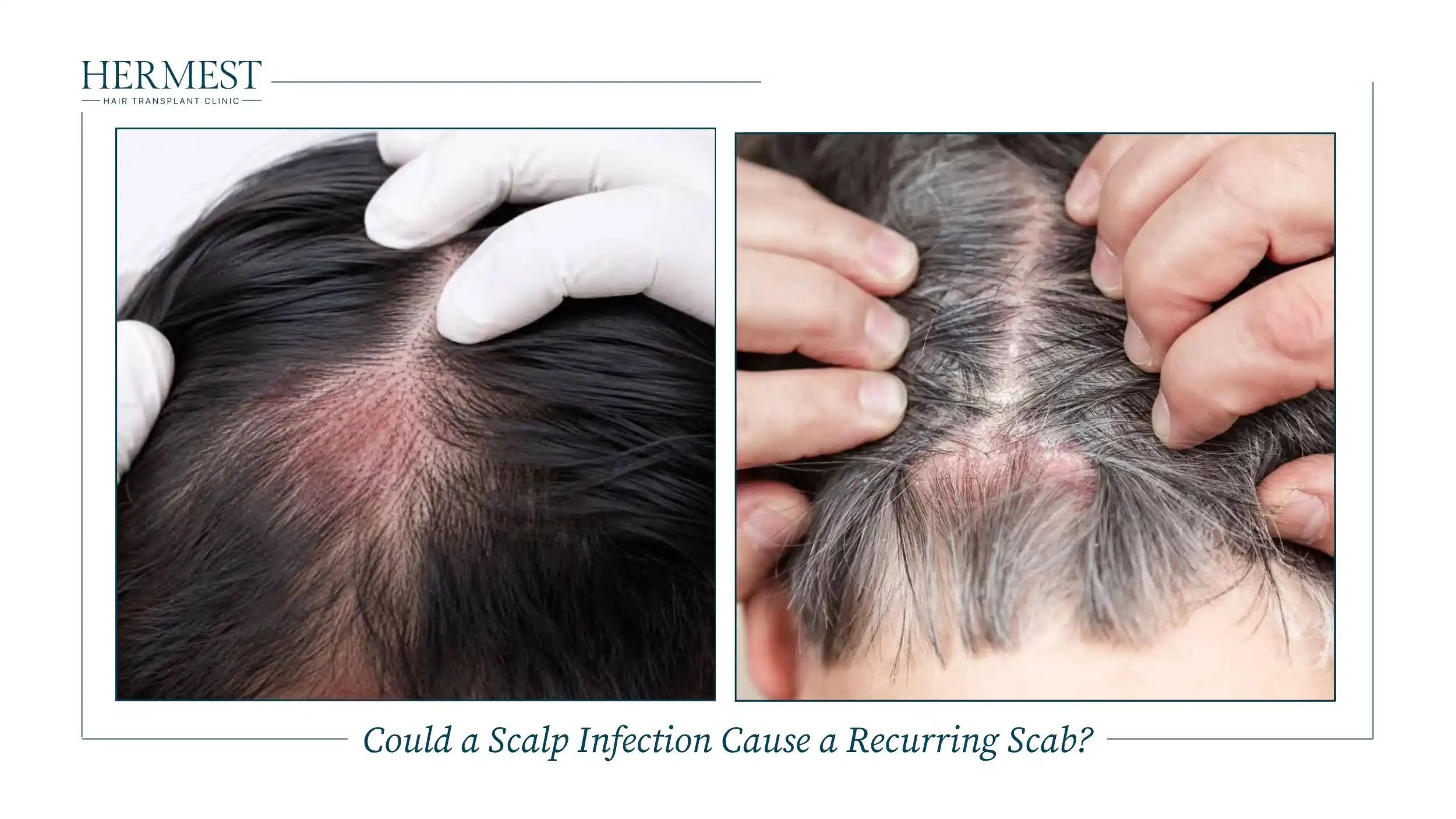
Yes. A bacterial or fungal scalp infection can produce scalp scabs, particularly when inflammation causes pustules, broken skin, or drainage. Infection becomes more suspicious when crusting appears with tenderness, swelling, pus, or localized hair changes.
Still, different infections require different treatments. Self-diagnosing the cause from the scab alone can lead you in the wrong direction.
What Are the Signs of a Bacterial Scalp Infection?
Bacterial folliculitis often appears as a pustule or inflamed bump surrounding a hair follicle. Mild pain, itching, and irritation can occur.
According to Merck Manual, folliculitis is commonly associated with Staphylococcus aureus, though other microorganisms can cause follicular inflammation. Friction, perspiration, trauma, and skin occlusion may contribute.
A pustule may rupture and leave a yellow or crusty spot on scalp. If the same follicle repeatedly becomes inflamed, the area may appear to heal before another lesion develops.
Can a Fungal Infection Cause Scabs and Hair Loss?
Yes. Tinea capitis, or scalp ringworm, can produce scaling and patchy hair loss. Hair shafts may break close to the scalp surface.
A severe inflammatory form called a kerion can become swollen and painful, with pustules and crusting. Merck notes that kerion can occasionally result in scarring hair loss.
Testing may include examination of hairs and scale, potassium hydroxide testing, or fungal culture when tinea capitis is suspected. Recurrent folliculitis may sometimes require bacterial culture.
A scalp scab with pus or spreading inflammation deserves medical assessment rather than repeated picking or random topical treatment.
Recurring Scab on a Bald or Sun-Exposed Scalp
A recurring scab on a bald scalp deserves particular attention when the area has received years of direct sunlight. Hair normally provides some physical protection from ultraviolet radiation. As density decreases, more scalp skin becomes exposed.
This doesn’t mean a crusted spot on a bald scalp is dangerous. Folliculitis, scratching, dermatitis, and minor injuries remain possible.
Sun-related skin changes simply become another possibility worth checking.
Could a Rough Scalp Spot Be Actinic Keratosis?
Actinic keratosis (AK) is a precancerous skin growth caused by accumulated ultraviolet damage. The American Academy of Dermatology reports that AKs commonly develop on heavily sun-damaged areas, including the face, ears, hands, and balding scalp.
An AK doesn’t always resemble a conventional wound.
It may appear or feel like a:
- rough or sandpaper-like patch
- dry, scaly or crusty area
- raised rough bump
- pink, red, brown, gray, or skin-colored spot
Some lesions can itch, sting, feel tender, or bleed.
That makes self-diagnosis difficult. A hard crusty spot on scalp could resemble irritation, psoriasis, a healing scratch, or another skin condition.
Why Does Actinic Keratosis Matter?
AK is precancerous rather than skin cancer itself. Yet the AAD confirms that some untreated actinic keratoses develop into squamous cell carcinoma.
A lesion that repeatedly appears to heal deserves extra attention. The American Cancer Society identifies sores that don’t heal or heal and then return, along with rough patches that crust or bleed, among possible signs of basal or squamous cell carcinoma.
Can a Recurring Scalp Scab Be Skin Cancer?
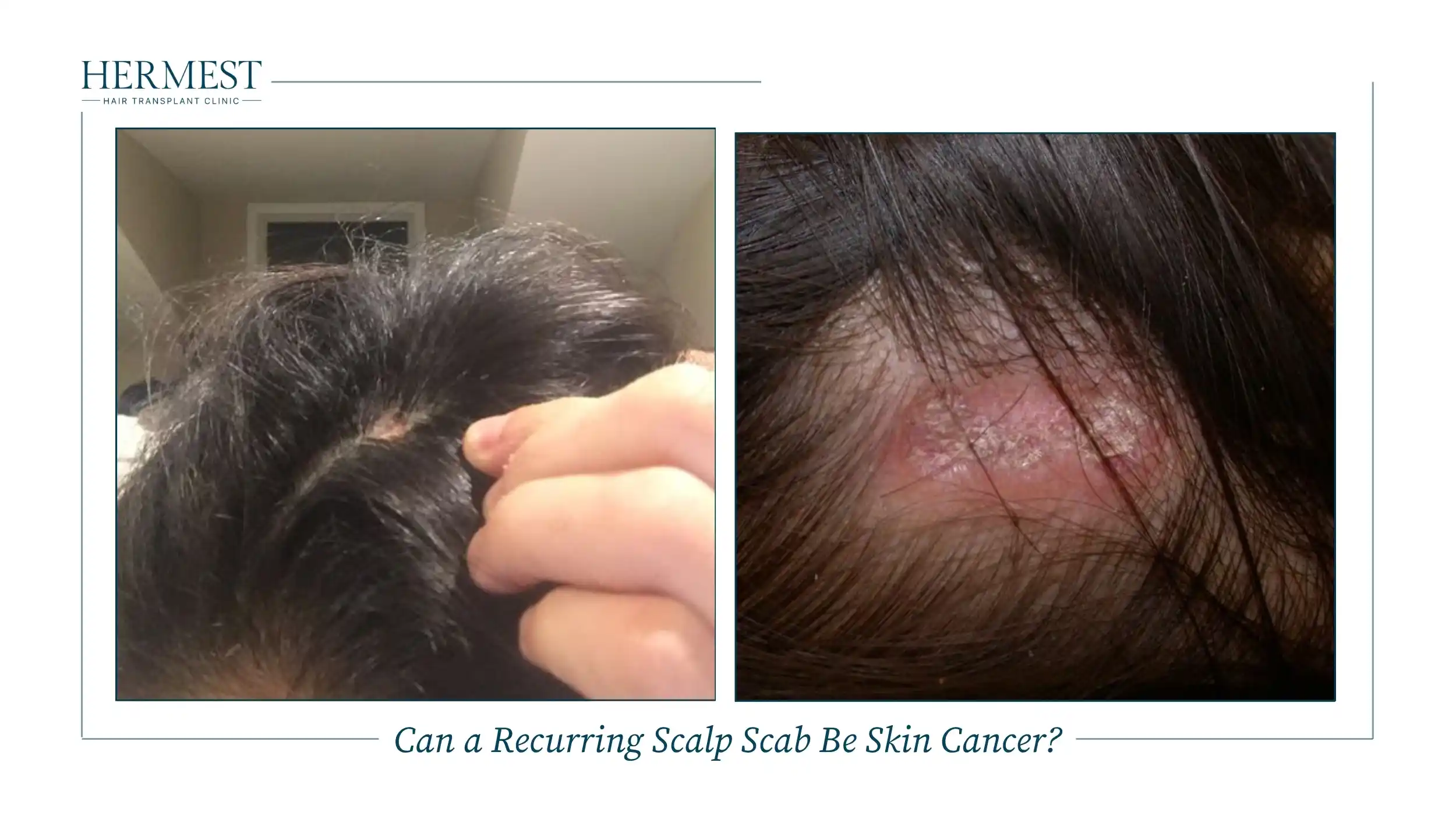
Yes, a recurring scalp scab can occasionally be associated with skin cancer, but most scalp scabs have other explanations. Folliculitis, psoriasis, dermatitis, infection, scratching, and minor trauma are far more familiar possibilities.
The concern rises when one lesion repeatedly crusts without truly healing.
What Does Skin Cancer on the Scalp Look Like?
There isn’t one characteristic appearance. Basal cell carcinoma (BCC) and squamous cell carcinoma (SCC) can resemble ordinary sores, rough patches, or crusted growths.
The American Cancer Society describes SCC as potentially appearing as a rough or scaly patch that may crust or bleed. BCC lesions can be fragile and bleed after relatively minor contact.
The American Academy of Dermatology gives another particularly relevant warning sign for SCC: a sore that doesn’t heal or heals and comes back. SCC can develop on the scalp and may cause tenderness, itching, bleeding, or scabbing.
That recurring pattern matters.
The “It Healed and Came Back” Trap
A crust falling off doesn’t necessarily mean the underlying lesion completely healed.
A scalp sore keeps coming back when the underlying process remains active. The surface may temporarily close before breaking down and crusting again.
Seek dermatological assessment when a spot:
- repeatedly bleeds or crusts without picking
- becomes larger, thicker, painful, or visibly different
- doesn’t heal within several weeks
- heals temporarily and repeatedly returns
The American Cancer Society recommends medical assessment for new or changing spots and sores that fail to heal within a few weeks.
Photos can help track changes, but they cannot reliably distinguish cancer from benign scalp conditions. The AAD stresses that even photographs of confirmed SCC cannot tell someone whether their own lesion is cancerous.
Erosive Pustular Dermatosis of the Scalp
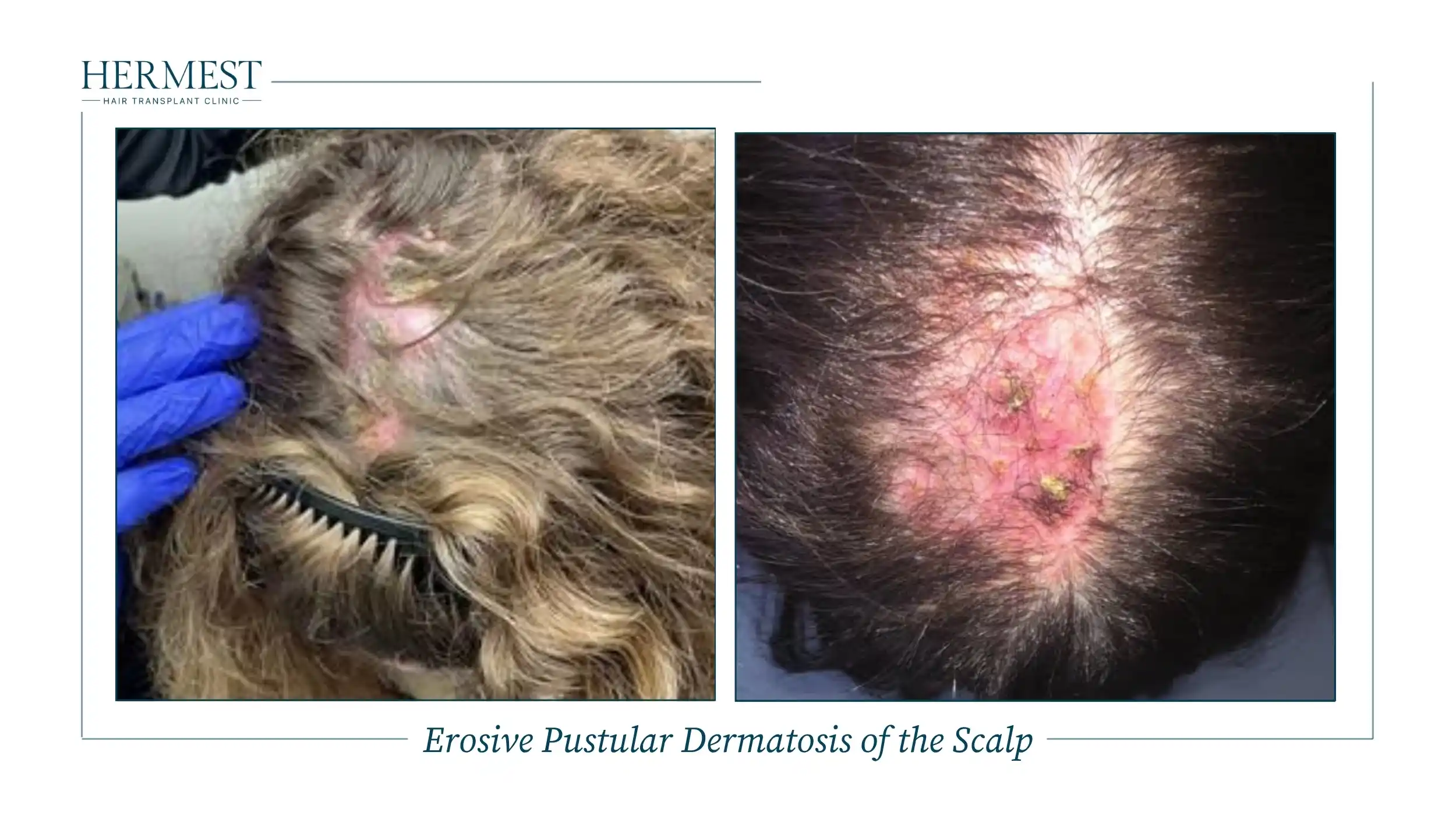
Most people with a recurring scalp scab won’t have erosive pustular dermatosis of the scalp. Still, EPDS deserves attention when crusting becomes chronic, particularly on an older, bald, or heavily sun-damaged scalp.
EPDS is a rare inflammatory scalp disorder rather than a conventional infection. Published reviews describe erosions, pustules, thick crusting, skin atrophy, and eventual scarring alopecia among its characteristic features.
Who Is More Likely to Develop EPDS?
The condition mainly affects older adults and often appears on areas affected by androgenetic alopecia and long-term sun damage.
A multicenter study examined 56 patients with confirmed EPDS, with an average age of 62.7 years. Nearly half had androgenetic alopecia, and 25% showed severe actinic damage. Researchers found crusts, serous discharge, pustules, broken hairs, and loss of normal follicular openings.
Local trauma can sometimes precede the condition. Reported triggers include physical injury, surgery, cryotherapy, and certain procedures used for actinic keratoses or hair loss.
Can EPDS Cause Permanent Hair Loss?
Yes. This is what separates EPDS from many superficial causes of a crusty scalp lesion.
Chronic inflammation can eventually damage follicles and produce scarring alopecia. A systematic review covering 75 studies and 168 patients describes EPDS as a chronic condition involving erosive plaques with subsequent scarring hair loss.
EPDS can resemble infection, actinic keratosis, skin cancer, and other inflammatory scalp diseases. Diagnosis may require dermoscopy, clinical history, and sometimes biopsy rather than visual inspection alone.
What Does the Color of a Scalp Scab Mean?
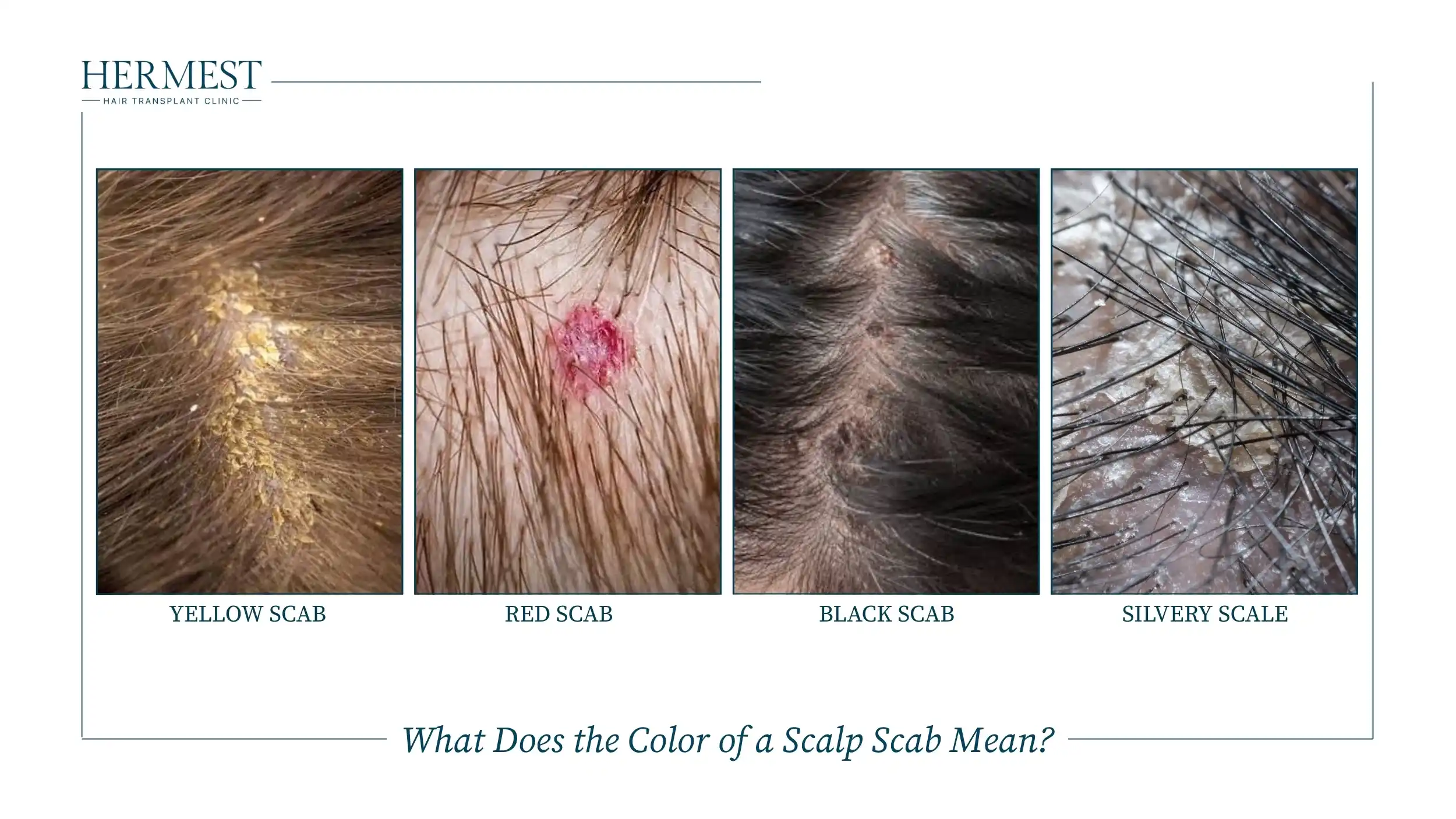
The appearance of a scalp scab can provide clues about what is happening underneath, but color alone cannot diagnose the cause. Dried blood, inflammatory fluid, skin scale, oil, and pus can produce surprisingly similar-looking crusts.
Texture and accompanying symptoms matter just as much.
Yellow Scab on the Scalp
A yellowish crust may contain dried serum, inflammatory fluid, oil, or pus. It can appear after a pustule ruptures or irritated skin begins weeping.
A yellow scalp scab accompanied by increasing pain, warmth, swelling, or discharge raises more concern for infection than color alone.
Greasy yellowish scaling can occur with seborrheic dermatitis too. This is often scale rather than a true wound scab.
Red or Bloody Scab
A red or blood-stained crust commonly follows scratching, picking, or another minor injury.
Psoriasis provides a good example. The American Academy of Dermatology notes that scalp psoriasis can become dry enough to crack and bleed, and scratching can trigger further bleeding.
Repeated bleeding without picking deserves more attention.
Dark Brown or Black Scab
Dried blood naturally becomes darker as it ages, so a brown or nearly black crust isn’t automatically alarming.
Still, don’t diagnose a dark scalp lesion from color. Pigmented growths and other skin conditions can appear brown or black too.
White or Silvery Scale
White or silvery material often points more toward scale than a conventional scab.
The AAD describes scalp psoriasis as producing dry, silvery-white scale over plaques. Appearance can vary with skin tone, with psoriasis potentially appearing violet, gray, or dark brown on darker skin.
A more useful question than “What color is my scab?” is what keeps happening before the crust forms.
Can a Recurring Scalp Scab Cause Hair Loss?
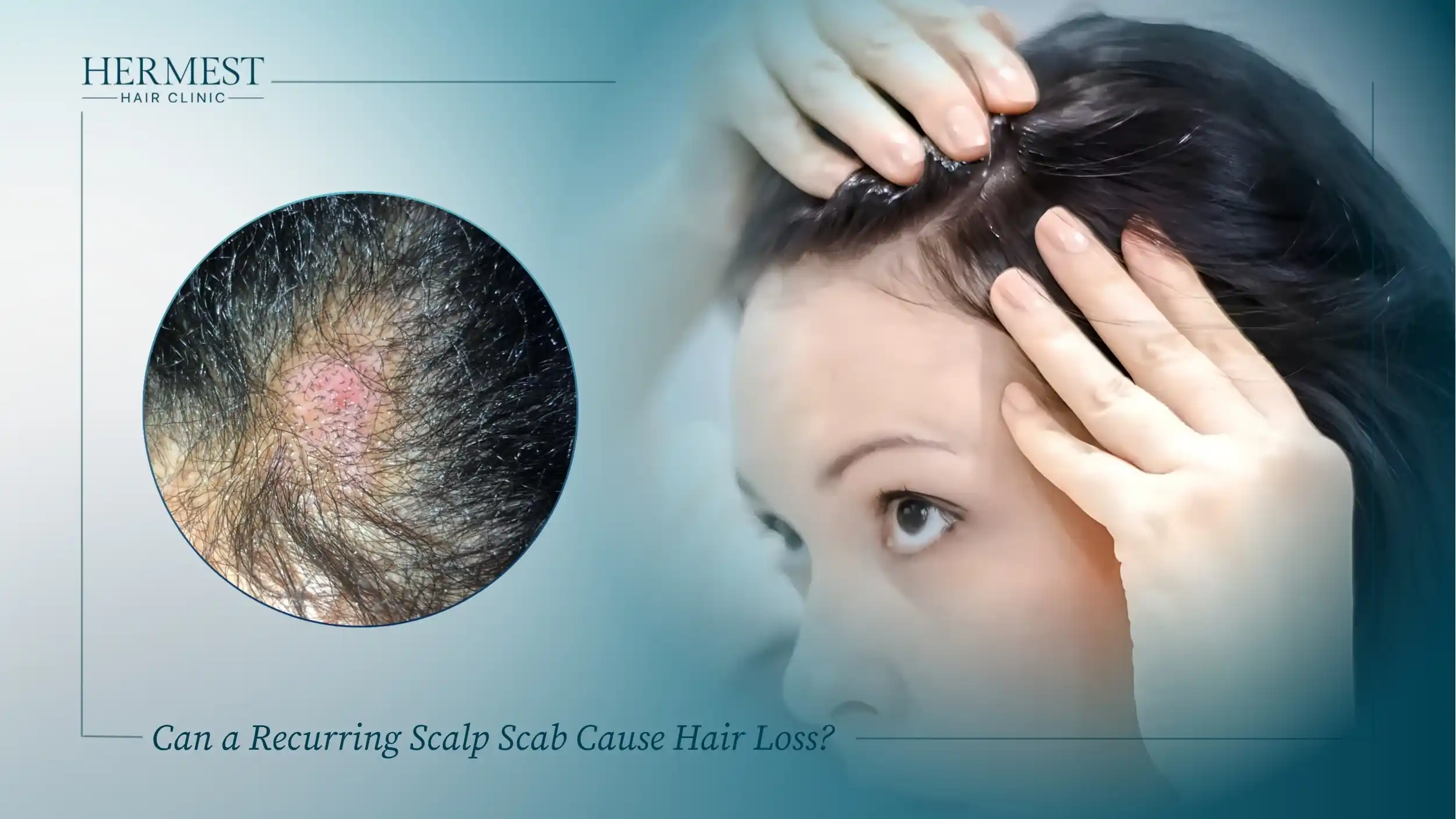
Yes, a recurring scalp scab can sometimes be associated with hair loss, but the scab itself doesn’t necessarily destroy hair follicles. The underlying inflammation, infection, scratching, or scarring process matters much more.
For many common scalp conditions, hair loss can be temporary.
When Is Hair Loss Likely to Be Temporary?
Repeated scratching and forceful removal of crusts or scale can pull hairs out or break them. Inflammatory conditions such as scalp psoriasis can contribute to temporary shedding around affected areas.
Once the underlying scalp inflammation settles and follicles remain intact, hair can often regrow.
A small scalp scab with hair loss should therefore be assessed in context. Look for broken hairs, redness, pustules, thick scaling, tenderness, or increasing patch size rather than assuming the crust caused the loss.
When Can Hair Loss Become Permanent?
The situation changes when inflammation damages and replaces follicles with scar tissue.
Scarring alopecia can permanently reduce hair growth in affected areas. Erosive pustular dermatosis provides one relevant example. A systematic review covering 75 studies and 168 patients describes EPDS as a chronic inflammatory condition involving erosive scalp plaques followed by scarring alopecia.
Clinical research has found loss of normal follicular openings and scalp atrophy in affected patients, signs consistent with follicular destruction.
This distinction is especially relevant before thinking about hair restoration. A scalp sore that keeps coming back should be diagnosed and controlled before anyone considers treating the resulting thin area cosmetically.
If hair disappears around the same recurring lesion and doesn’t begin returning after the scalp settles, dermatological assessment becomes particularly valuable.
Should You Pick a Scab on Your Scalp?
No. In most cases, you should avoid picking a scab on scalp, particularly when the same area repeatedly becomes crusted. A scab protects healing tissue underneath, and removing it prematurely can reopen the skin.
That can restart the cycle you are trying to stop.
What Happens When You Keep Picking a Scalp Scab?
Scabs usually remain attached until the underlying skin has repaired itself. Peeling or removing them prematurely can slow the healing process.
Repeated picking may lead to:
- renewed bleeding and another scab
- longer healing time
- increased irritation or infection risk
- greater chance of scarring
This becomes particularly relevant with a scab that keeps coming back. What looks like repeated formation may partly represent one wound being reopened over and over.
Scalp conditions can make the temptation stronger. Psoriasis, for example, can produce thick scale that feels easy to lift away. The American Academy of Dermatology advises removing psoriasis scale gently, since picking can aggravate the skin, trigger bleeding, and contribute to temporary hair loss.
What If the Scab Feels Ready to Come Off?
Let it separate naturally rather than pulling it away.
Gentle scalp care matters too. Avoid aggressive scrubbing with fingernails, brushes, or combs. The AAD recommends gentle shampooing for inflammatory scalp conditions since rubbing and scratching can worsen irritation.
There is an important exception to the “just leave it alone” approach.
If a scalp scab that won’t heal continues forming after you stop picking, the underlying cause still needs attention. Persistent bleeding, increasing pain, pus, enlargement, or localized hair loss shouldn’t simply be managed by waiting.
How to Help a Recurring Scalp Scab Heal
If a recurring scalp scab comes from a minor scratch or repeated picking, gentle wound care can give the skin a better chance to heal. Yet home care shouldn’t become a substitute for diagnosing a scalp scab that won’t heal.
The first goal is simple: stop repeatedly traumatizing the area.
How Should You Care for the Scab?
Avoid picking, scraping, or aggressively shampooing the spot. The American Academy of Dermatology recommends gently washing minor skin wounds with mild soap and water rather than scrubbing them.
For an uncomplicated superficial wound, keeping the area slightly moist rather than repeatedly allowing a hard crust to crack may support healing. AAD wound-care guidance recommends plain petroleum jelly for minor wounds and notes that moist wounds tend to heal faster.
The scalp can make conventional dressings impractical, particularly beneath dense hair, so individualized advice may be needed.
Avoid Random Treatments
Don’t repeatedly experiment with antibiotic creams, antifungal products, steroids, essential oils, or medicated shampoos without knowing what you’re treating.
AAD notes that routine topical antibiotics aren’t necessary for most minor wounds and can themselves irritate skin.
If a shampoo, dye, styling product, or topical hair treatment seems connected to the irritation, temporarily removing the suspected trigger may help. Allergic contact dermatitis can occur on the scalp from products that touch the skin.
Watch for increasing pain, warmth, swelling, pus, or spreading inflammation, which can suggest infection.
A scalp wound not healing after several weeks, or one that repeatedly bleeds despite being left alone, needs dermatological assessment rather than continued home treatment.
Scalp Scabs After a Hair Transplant
Temporary crusting is expected after a hair transplant. It is very different from a recurring scab on scalp in the same spot that appears weeks or months after the initial healing period.
Knowing the timing helps separate normal recovery from a new scalp problem.
How Long Do Hair Transplant Scabs Normally Last?
After FUE, small crusts commonly develop around transplanted follicles during the first few days. A 2026 review reports that postoperative crusting typically appears within 2 to 3 days and resolves around 7 to 10 days with appropriate care.
An international expert consensus involving 38 hair-transplant specialists recommends gradually returning to normal washing rather than aggressively manipulating the recipient area during early recovery.
Patients should follow their own surgical team’s washing instructions, since postoperative protocols can differ.
What If a Scab Returns Months Later?
A focal scalp scab that keeps coming back months after transplantation shouldn’t simply be considered leftover transplant crusting.
Possible explanations include folliculitis, scratching, dermatitis, infection, or an unrelated dermatological lesion. Persistent crusting beyond the normal healing period can signal delayed healing or inflammation and deserves assessment.
At Hermest, Unique FUE® aftercare includes monitoring recipient and donor healing rather than viewing surgery as finished when implantation ends.
Persistent pain, spreading redness, discharge, unusual swelling, or thick crusting should be reported to the surgical team.
Frequently Asked Questions About Recurring Scalp Scabs
A recurring scab on scalp in same spot usually means the underlying skin keeps becoming inflamed, injured, or reopened. Possible causes include scratching, scalp folliculitis, psoriasis, seborrheic dermatitis, contact dermatitis, infection, and repeated friction. One focal lesion that repeatedly crusts deserves closer attention than widespread ordinary flaking.