

Seborrheic Dermatitis: What It Is and How to Treat It
 ChatGPT
 Claude
 Perplexity
 Grok
Grok
 Gemini

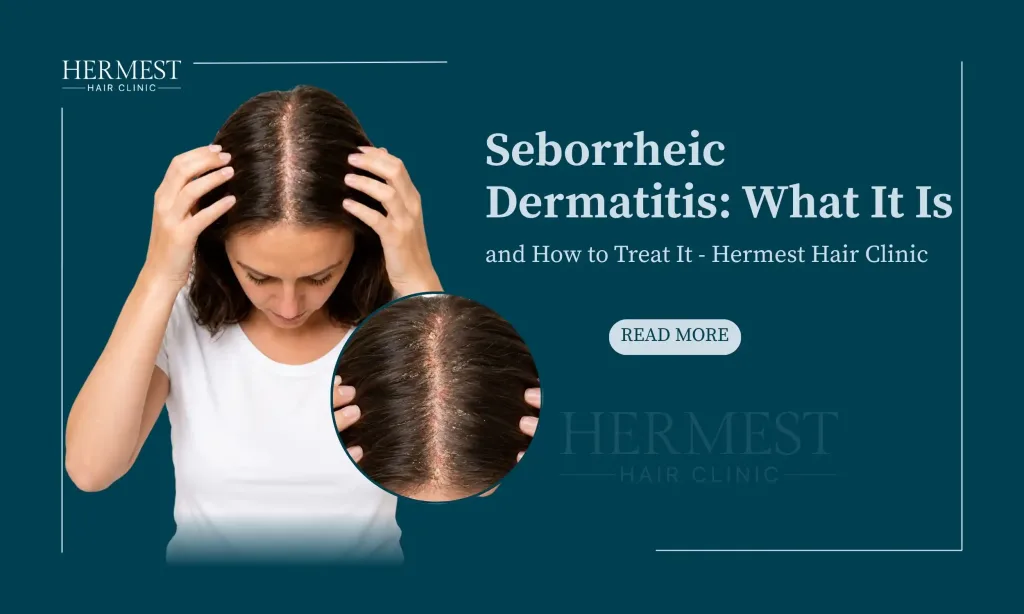
Persistent flakes after washing, redness around the nose, and scaling or itching of the eyebrows are common signs of seborrheic dermatitis. This chronic inflammatory skin condition affects areas with more oil-producing glands, including the scalp, face, and chest. It causes greasy or dry scales, redness, itching, and dandruff. Seborrheic dermatitis is not contagious and often recurs, but medicated shampoos and topical creams can help control symptoms and reduce flares.
Below, we cover the symptoms of Seborrheic Dermatitis on the scalp, face, eyelids, and chest, what triggers the flares, how it differs from psoriasis and eczema, which shampoos and creams work best, and whether the hair shedding it causes is permanent. If you’re planning a hair transplant, you’ll also learn when your scalp is ready for one, or you can get a free hair analysis online.
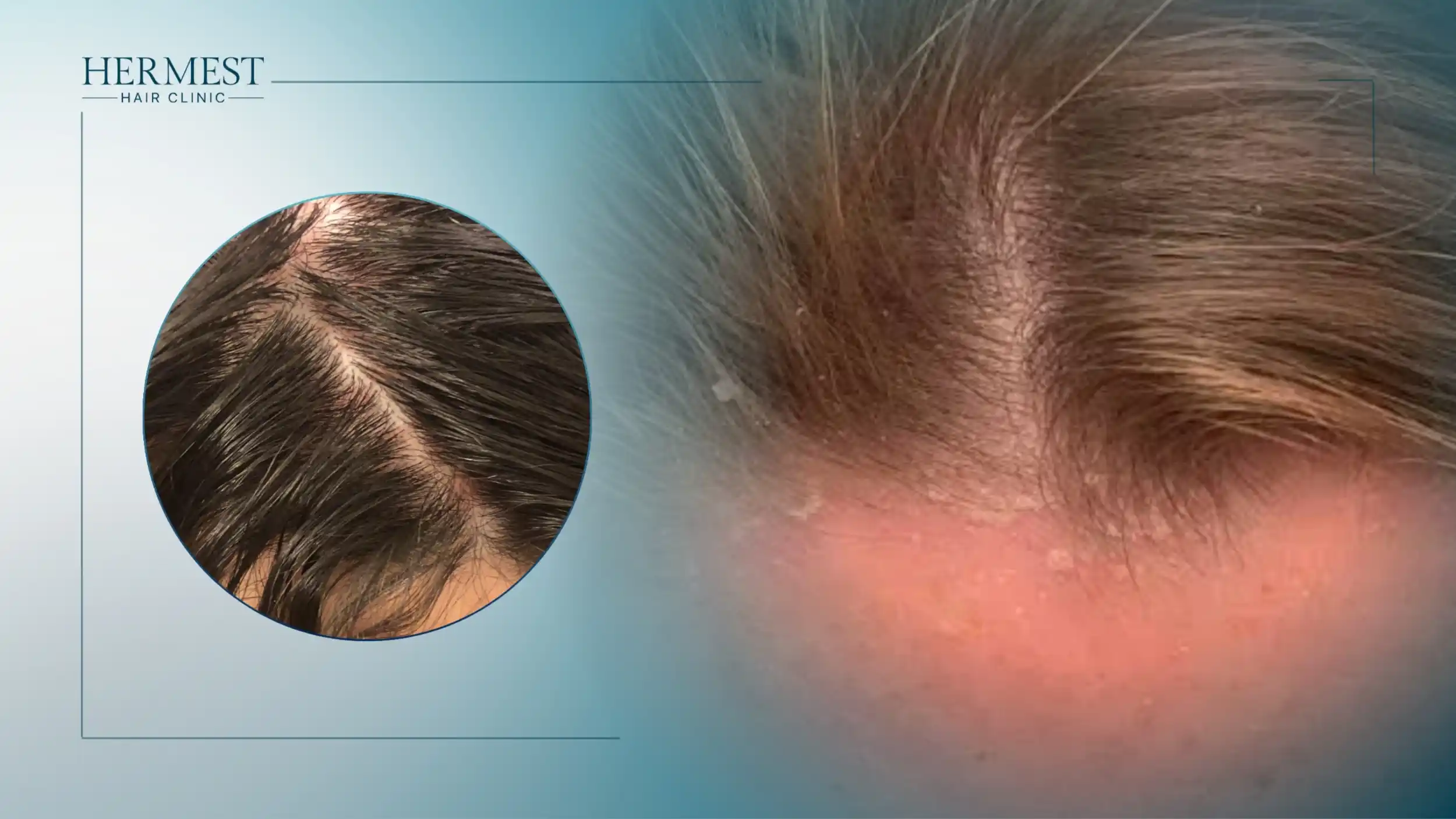
Quick Insights
- Seborrheic dermatitis is a chronic, non-contagious condition. Dandruff is its mildest form, and cradle cap is its infant form.
- According to a 2024 JAMA Dermatology meta-analysis of global studies, it affects 4.38% of people worldwide, mostly adults and men.
- The main sign is greasy yellow or white scale on oily areas, like the scalp, eyebrows, nose creases, ears, and chest.
- Malassezia yeast drives the inflammation. Stress, cold weather, and harsh products trigger flares, not poor hygiene.
- It is most often confused with scalp psoriasis, eczema, and rosacea, so unusual cases need a certified dermatologist.
- On the scalp, antifungal shampoos such as ketoconazole, left on for 5-10 minutes, are first-line treatment.
- On the face and body, antifungal creams and short hydrocortisone courses work, whereas calcineurin creams suit long-term use.
- There is no cure, but weekly maintenance treatment keeps most flares away once the skin clears.
- Hair shedding is usually temporary. Follicles survive, so hair regrows once the inflammation settles.
- A hair transplant is possible, but only after several weeks of stable, flare-free scalp control.
What Is Seborrheic Dermatitis?
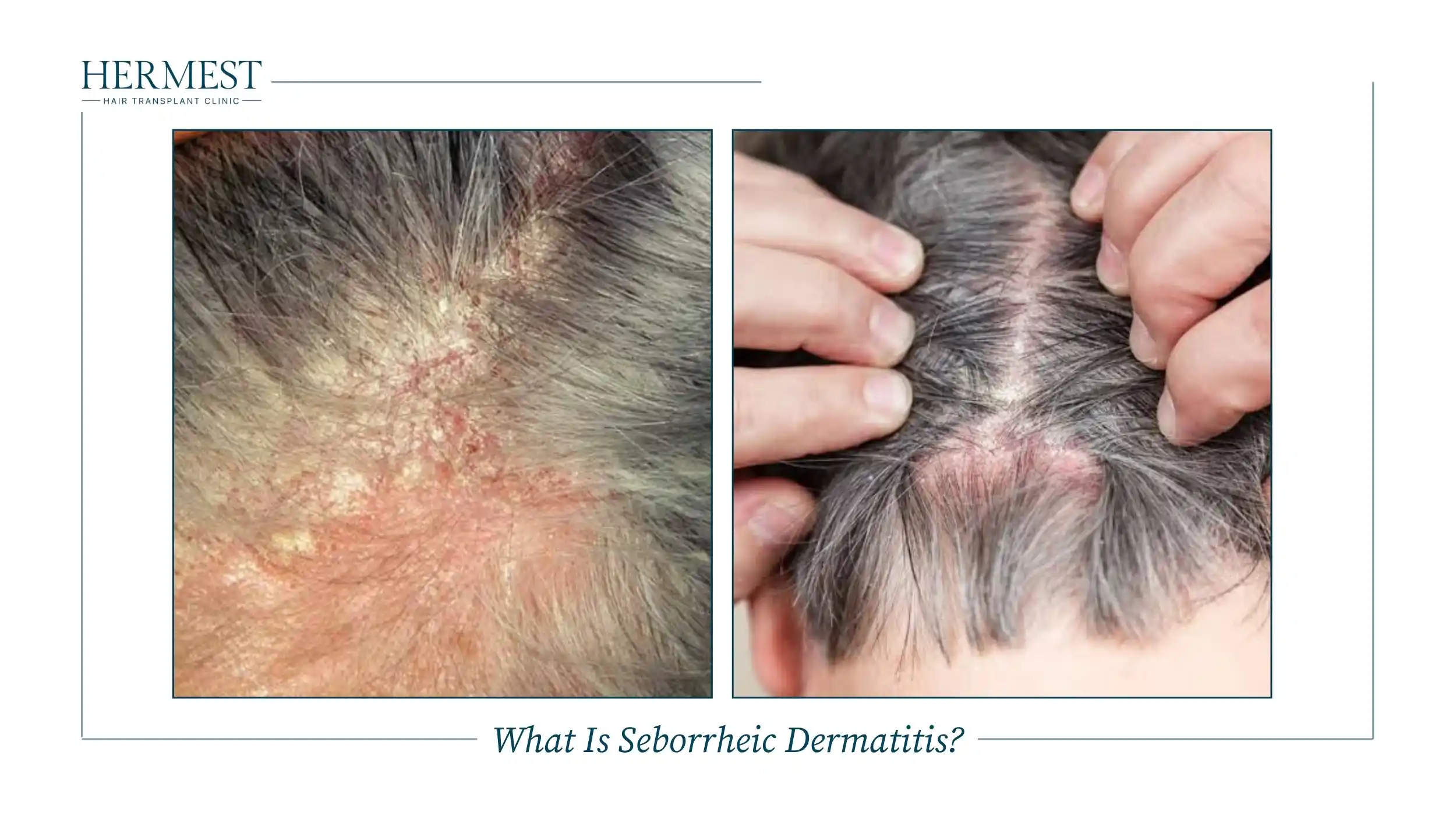
Seborrheic dermatitis, also spelled seborrhoeic dermatitis and also called seborrhoeic eczema, is a chronic, relapsing form of dermatitis that affects areas of the skin with many oil-producing sebaceous glands.
When inflammation develops, the condition can cause redness, scaling, and irritation on the scalp, central face, eyebrows, ears, chest, armpits, and groin. It flares and settles repeatedly over time, but it’s not contagious and does not spread from person to person.
On the scalp, the mildest form is ordinary dandruff, medically known as pityriasis capitis. In infants, it is called cradle cap, which causes thick, yellow, greasy scales on the scalp. Some people develop overlapping features of seborrheic dermatitis and psoriasis, known as sebopsoriasis.
Seborrheic Dermatitis Signs & Symptoms
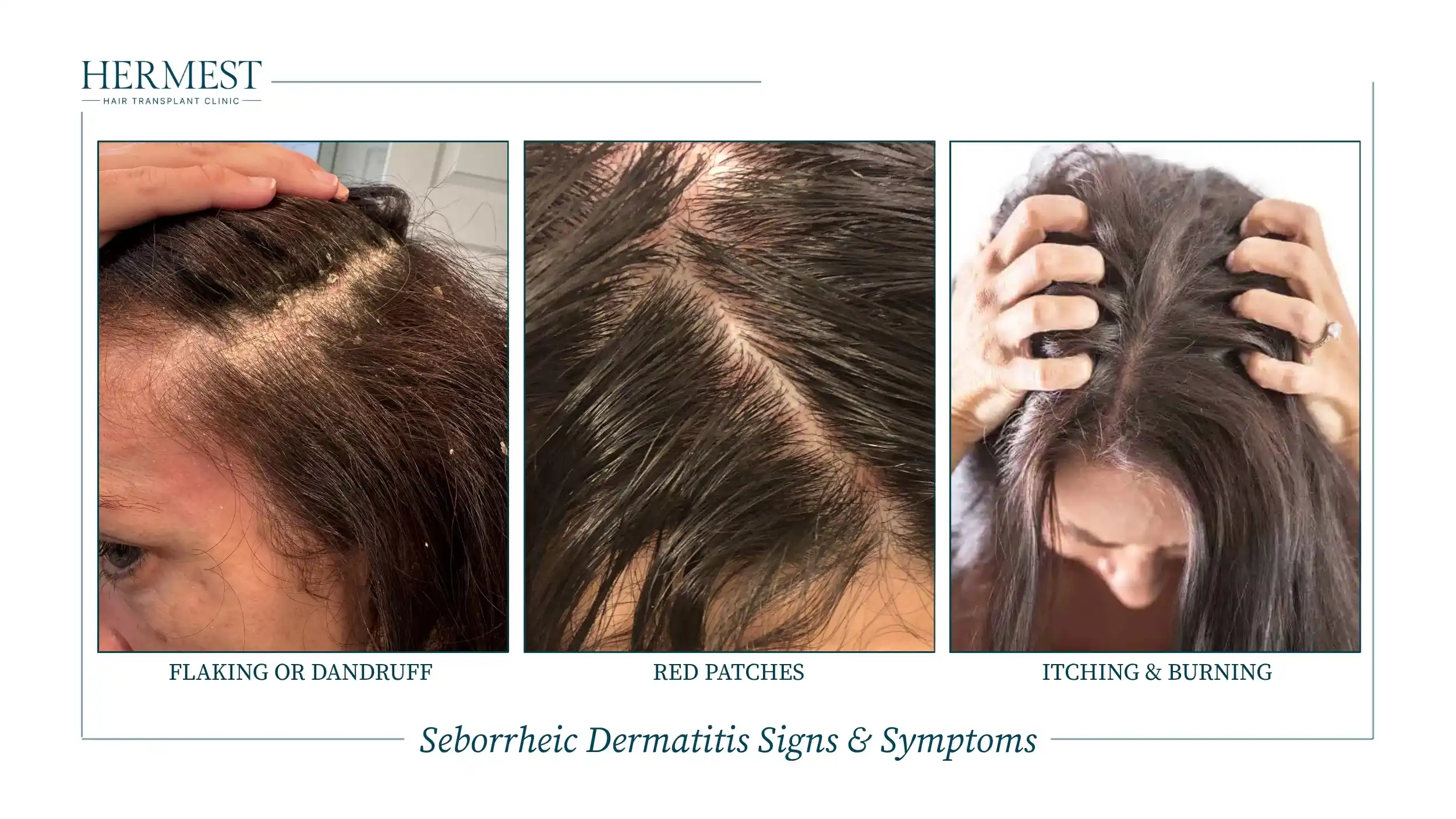
Seborrheic dermatitis symptoms look much the same wherever they appear, and usually worsen in cold, dry months and during stressful periods. The main signs (what you see) and symptoms (what you feel) are:
- Flaking or dandruff on the scalp, eyebrows, beard or moustache.
- Greasy white or yellow scale or crust over the patches.
- Red or discoloured patches under the scale.
- Itching, sometimes with mild burning or soreness.
How Seborrheic Dermatitis Appears on Different Body Parts
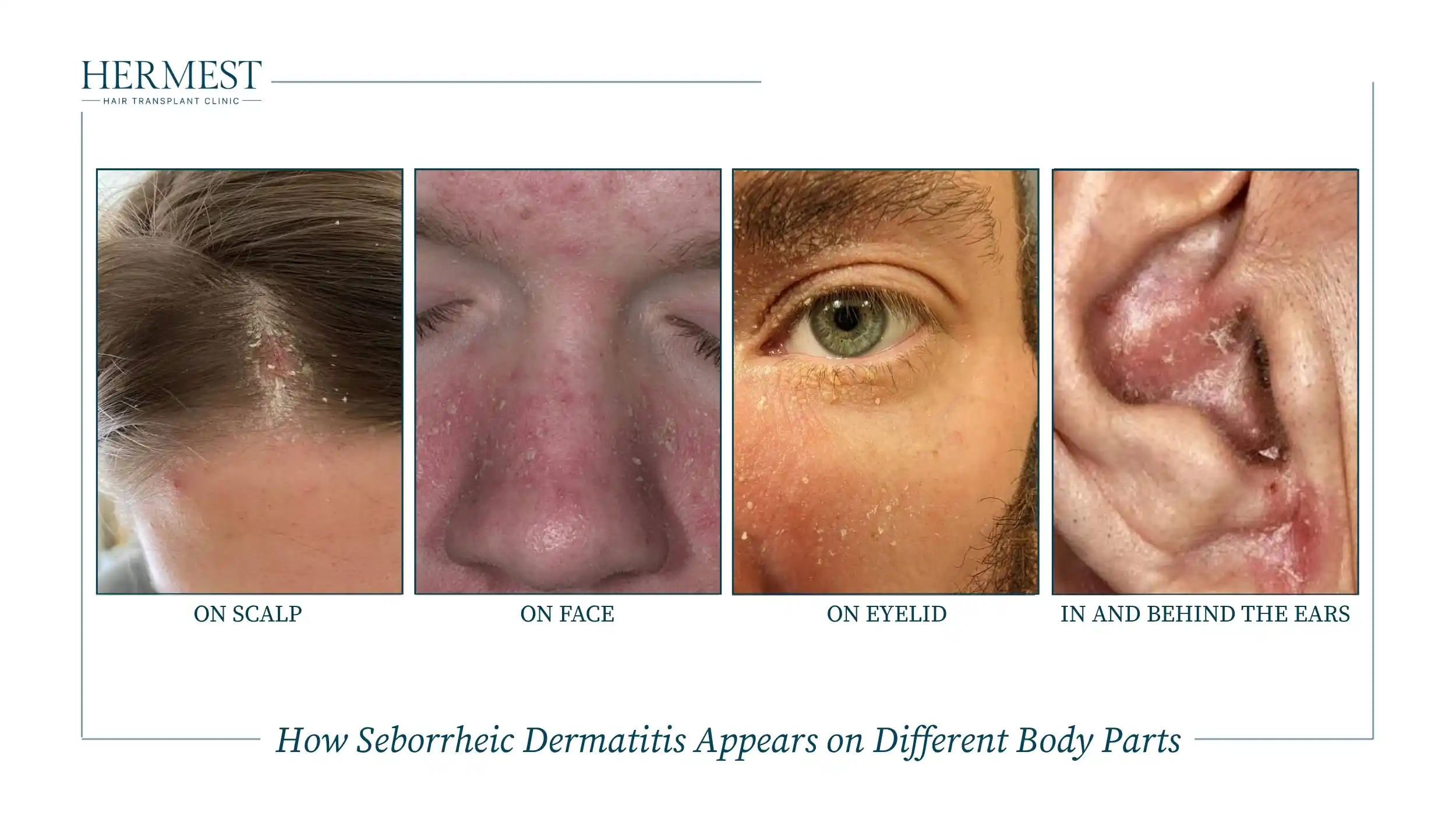
Seborrheic dermatitis commonly affects the scalp, face, eyebrows, ears, and chest. Symptoms vary according to the affected area and severity:
On Scalp
Seborrheic dermatitis on the scalp may cause:
- White or yellowish flakes
- Greasy or scaly patches
- Itching
- Inflammation
- Flaking around the hairline or behind the ears
Mild scalp disease may resemble ordinary dandruff. More inflammatory disease can produce thicker scaling and visible irritation.
Dr. Nesim Tugen says:A quick check helps tell seborrheic dermatitis from a simply dry scalp. Dry-scalp flakes are small, white, and dry, and the skin underneath looks normal. Seborrheic dermatitis flakes are greasier and yellowish, and they usually show up in the eyebrows, beside the nose or behind the ears too. If your face is flaking as well, moisturising the scalp alone won’t fix it.
On Face
Seborrheic dermatitis on face commonly affects areas with more oil-producing glands, especially the sides of the nose, eyebrows (in or between them), forehead, under the beard or moustache area, and around the ears. Visible signs include:
- Flaky or scaly skin
- Greasy patches
- Redness or inflammation
- Discoloration that may look different across skin tones
These symptoms can appear in several facial areas at the same time and may flare and settle repeatedly.
On Eyelid
When seborrheic dermatitis affects the eyelid edges/lash line, it’s called seborrheic blepharitis and is treated differently. Seborrheic dermatitis on the eyelid can look like:
- Flaking around the eyelids
- Scaling along the eyelid margins
- Irritation or inflammation
- Eye symptoms associated with seborrheic blepharitis (swelling, dry or watery eyes)
In and Behind the Ears
Seborrheic Dermatitis in and behind the ears causes scaling, irritation, and itching. Common symptoms include:
- Redness, scaling, cracking and crusting of the skin behind the ears
- Flaking and itching inside the ear canal, where buildup can partly block it
In some cases, untreated seborrheic dermatitis in the ear canal can contribute to otitis externa (inflammation of the outer ear canal, also called swimmer’s ear), which needs separate treatment.
On the Skin (Chest, Back and Body Folds)
Seborrheic dermatitis on the skin can affect the chest, back, armpits, under the breasts, groin, and other skin folds. Common symptoms include:
- Scaly, greasy patches on the chest and between the shoulder blades, which may form ring- or petal-shaped patterns called petaloid seborrheic dermatitis.
- Pink, shiny, and cracked skin in the armpits, groin, and under the breasts, where scaling may be less noticeable.
- Changes in skin color and inflammation, which can look different depending on the affected area and individual skin tone.
Seborrheic Dermatitis Symptoms on Darker Skin
On brown and Black skin, seborrheic dermatitis often looks different from the red rash in most photos:
- Patches look darker or lighter than the surrounding skin, and redness may not show at all.
- Lightened patches (hypopigmentation) are common along the hairline, forehead, and sides of the nose.
- Curved or ring-shaped patches can form at the hairline.
- Greasy scale is still present and remains the clearest sign.
- Without visible redness, it is often mistaken for a fungal infection or another pigment disorder.
- Colour changes usually fade within weeks to months once the inflammation settles.
Signs of a Seborrheic Dermatitis Infection
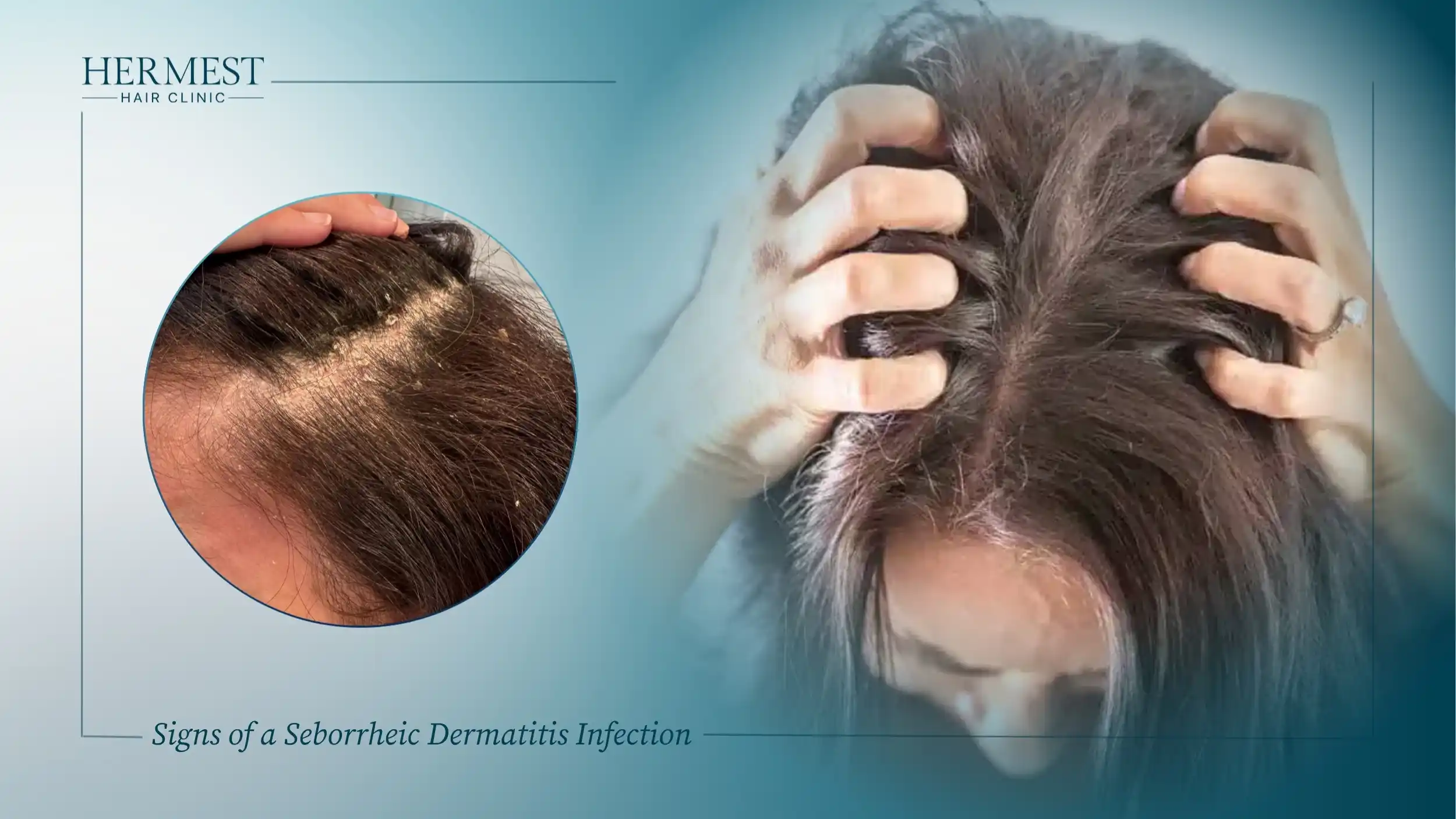
Seborrheic dermatitis can be controlled, but scratching untreated skin can cause an infection. Signs include swelling, oozing, pain, or honey-colored crusts. This can allow bacteria or yeast to enter damaged skin and may require medical treatment rather than just shampoo.
In babies, cradle cap usually appears during the first three months as greasy, yellow scalp crusts and may also cause a rash in the nappy area. It is rarely itchy, so babies are usually not bothered by it.
What Causes Seborrheic Dermatitis?
There is no single confirmed cause of seborrheic dermatitis. The condition is associated with the interaction between Malassezia yeast (a yeast that normally lives on human skin), skin oils, the skin barrier, and the body’s inflammatory response.
Most healthy adults carry Malassezia without any rash, so the yeast alone is not enough. The person’s susceptibility decides whether a flare starts.
How Malassezia, Sebum and the Skin Barrier Interact
Malassezia feeds on skin oil (sebum) and uses enzymes called lipases to break it down into fatty acids such as oleic acid, according to a review in Cosmoderma. In reactive skin, these fatty acids trigger inflammation, causing redness, scaling and itch. The inflamed skin then loses ceramides and moisture, and the weakened barrier lets fatty acids penetrate even more easily. That loop is why seborrheic dermatitis keeps returning with the same greasy flakes, redness, and itch.
Despite the name, people with seborrheic dermatitis usually produce a normal amount of oil, according to the Merck Manual; the problem is how their skin reacts to it. That reactive skin is also why antifungal shampoos clear the rash, yet it returns once you stop using them. A 2025 review on PubMed Central found that an overactive immune response and a weak skin barrier may matter more than the amount of yeast, so reducing the yeast calms a flare but leaves the underlying tendency in place. Seborrheic dermatitis is not an allergy, and it is not caused by poor hygiene.
Dr. Nesim Tugen says:Many patients reach their consultation having washed their hair twice a day for months, convinced the flakes mean their scalp is dirty. Scrubbing harder strips the skin barrier and usually makes the flaking worse. Seborrheic dermatitis is a reaction of the skin, not a hygiene problem.
Who Gets Seborrheic Dermatitis?
Seborrheic dermatitis affects about 4.38% of people worldwide (rising to 4.71% in general-population studies), according to a 2024 meta-analysis in JAMA Dermatology. The 2019 Global Burden of Disease study had estimated just 0.29%, so, according to Healio’s report on the meta-analysis, the condition has likely been underdiagnosed. By age group, the figures were:
| Group | Prevalence |
|---|---|
| Adults | 5.64% |
| Children | 3.70% |
| Newborns | 0.23% |
It occurs most often at two stages of life. In babies, it appears as cradle cap, usually within the first three months and often clearing by 6-12 months. The second peak starts in late adolescence and continues through adulthood, with the highest rates seen around ages 30-70, according to the Merck Manual.
Men are affected more often than women, and most people with the condition are otherwise healthy.
Risk Factors for Severe or Persistent Seborrheic Dermatitis
Some groups develop more extensive or stubborn disease. Here are the risk factors:
- Oily skin, or a family history of seborrheic dermatitis or psoriasis.
- A weakened immune system, including HIV, organ transplants, and lymphoma. Severe seborrheic dermatitis that appears suddenly can be an early visible sign of HIV.
- Neurological and psychiatric conditions, especially Parkinson’s disease, as well as stroke, epilepsy, facial nerve palsy, spinal cord injury and depression.
- Certain medicines, including neuroleptics, lithium, interferon and psoralen with ultraviolet A (PUVA) therapy.
- Other skin conditions, such as rosacea, acne and psoriasis.
- Heavy alcohol use and obesity.
Seborrheic Dermatitis Triggers: Why Flares Come and Go

Triggers do not create the condition, but they tip a susceptible scalp or face into a flare. The most common are:
- Stress, fatigue, and poor sleep.
- Cold, dry weather and indoor heating. Many people improve in summer, after regular sun exposure.
- Harsh products, such as alcohol-based toners, strong detergents, solvents, hair sprays and styling gels.
- Illness or recovery from a major medical event, such as a heart attack.
- Hormonal change during puberty, pregnancy or hormone therapy.
On the scalp, several of these triggers do double duty. Stress, hormonal change, aggressive products, and constant scratching also push hairs into their shedding phase, which is why seborrheic dermatitis and hair fall so often appear together. Our guide to the causes of hair loss covers the other reasons hair thins. These triggers and symptoms overlap with several other conditions, so the next step is an accurate diagnosis.
How Is Seborrheic Dermatitis Diagnosed?
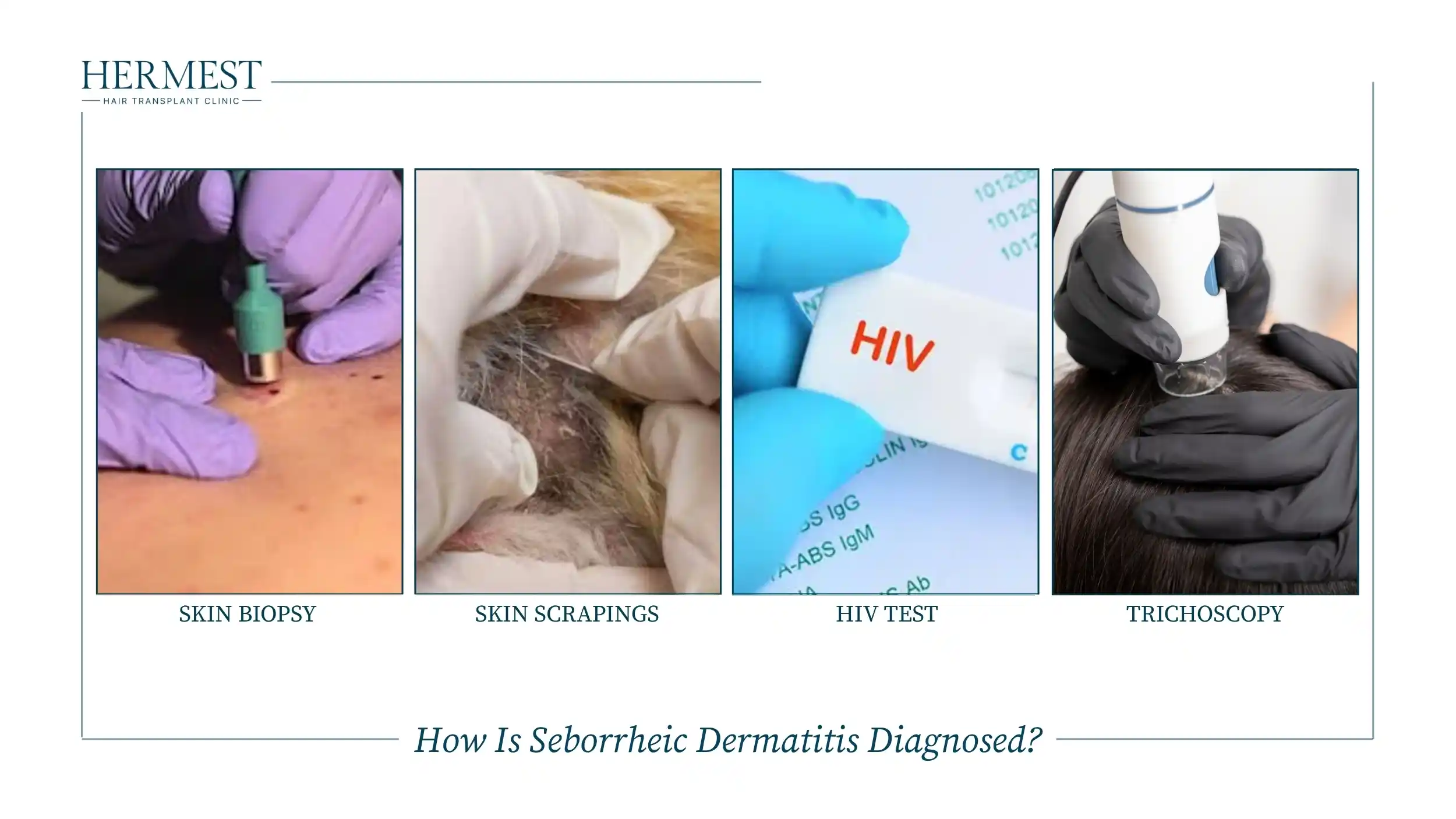
A doctor or dermatologist usually diagnoses seborrheic dermatitis by examining the skin. The greasy scale in typical oily areas is distinctive enough that no test is needed, and in Turkey any public or private dermatology clinic can confirm it. Tests are reserved for rashes that look unusual or do not respond to treatment:
- Skin biopsy: A small sample is examined under a microscope to rule out psoriasis, lupus or rarer disorders.
- Skin scrapings (mycology): Helps when scalp ringworm (tinea capitis) is suspected.
- HIV test: Offered when the disease is severe, sudden, or resistant in someone at risk.
- Trichoscopy: A magnified scalp examination when hair loss accompanies the rash.
What Can Be Mistaken for Seborrheic Dermatitis?
Several conditions can resemble seborrheic dermatitis, including:
- Atopic dermatitis (eczema)
- Scalp psoriasis
- Rosacea
- Candidiasis
- Tinea
Rarer lookalikes include follicular eczema, impetigo, contact dermatitis, lupus, Darier’s disease, and pemphigus foliaceus.
On the scalp, two lookalikes need ruling out early: lichen planopilaris and folliculitis decalvans. Both can look like severe seborrheic dermatitis at first, but unlike it, they destroy hair follicles and leave permanent bald patches.
Dr. Nesim Tugen says:On a flaky scalp, I usually see three kinds of hair loss, and they need very different plans. Seborrheic dermatitis shedding can grow back after treatment. Pattern hair loss and permanent scarred patches may need a transplant, but only once the scalp is calm and stable. For scarred patches, stable means the condition has been inactive for a long time, often a year or more.
Seborrheic Dermatitis vs Psoriasis, Eczema and Other Lookalikes
Scalp psoriasis is the condition most often confused with seborrheic dermatitis, and some people have features of both. The scale, location, and itch usually separate them:
| Feature | Seborrheic dermatitis | Scalp psoriasis | Atopic eczema | Rosacea |
|---|---|---|---|---|
| Scale | Greasy, white or yellow, loose | Thick, dry, silvery, firmly attached | Fine and dry | Little or none |
| Typical sites | Scalp, brows, nose creases, ears, chest | Scalp beyond the hairline, elbows, knees, nails | Elbow and knee creases, neck | Cheeks, nose, chin |
| Itch | Mild to moderate | Moderate to strong | Often intense | Burning more than itch |
In short, seborrheic dermatitis vs psoriasis comes down to greasy versus dry, silvery scale. Seborrheic dermatitis vs eczema comes down to location, oily zones versus skin creases.
Seborrheic Dermatitis Treatment: Scalp, Face and Body
There is no cure, so the goal of seborrheic dermatitis treatment is to clear the current flare and establish a maintenance routine that reduces recurrence.
Treatment depends on the affected area, severity, and symptoms. Common approaches include antifungal products, medicated shampoos, and short-term anti-inflammatory treatments. Most are sold over the counter in Turkish pharmacies (eczane), whereas steroid lotions and oral medicines need a prescription.
Best Treatment for Seborrheic Dermatitis on Scalp
Start with treatment that matches the severity. Move to the next step when there is no improvement after about four weeks.
Mild: Dandruff and Light Flaking
- Use: An anti-dandruff shampoo with ketoconazole 1–2%, zinc pyrithione, selenium sulfide, ciclopirox, or piroctone olamine.
- How often: Two to three times a week for at least four weeks.
- If it stops working: Alternate between two different ingredients.
- Once clear: Drop to once every one to two weeks to prevent relapse.
Moderate: Thick Scale and Redness
- Soften crusts first: Apply salicylic acid, urea, coal tar, or mineral or olive oil for 1-3 hours or overnight, then wash. Shampoo can’t reach the skin under thick scale.
- Calm the itch: A dermatologist may add a corticosteroid scalp lotion (betamethasone valerate, clobetasol, or fluocinolone) for a few days at a time.
- Steroid-free option: Tacrolimus.
- Combine: An antifungal plus a short anti-inflammatory course works better than either alone.
Severe or Resistant
- Prescription options: Oral antifungals (itraconazole, fluconazole, terbinafine), tetracycline antibiotics, low-dose isotretinoin or phototherapy.
- Roflumilast 0.3% foam: A steroid-free PDE4 inhibitor, FDA-approved in December 2023 for ages 9 and older, according to Drug Topics. LIVDerm reports that nearly 80% of trial patients reached treatment success by week 8.
- Before escalating: Some Malassezia strains resist azoles, so switch to zinc pyrithione or selenium sulfide first.
If none of these steps work, it may not be seborrheic dermatitis, so get a proper diagnosis. Scaling with hair loss that doesn’t respond to treatment should be checked promptly by a dermatologist. The shampoo comparison below helps you choose the right ingredient for each step.
Best Treatment for Seborrheic Dermatitis on Face and Body
Facial skin is thinner and more sensitive than the scalp, so treatment starts gently and adds medication as needed.
Mild
- Cleanse: Use a non-soap, fragrance-free cleanser with lukewarm water once or twice daily.
- Moisturise: Apply a light, non-comedogenic moisturiser afterwards.
- Short-contact antifungal wash: Lather an antifungal shampoo on the face, beard, or chest for five minutes, then rinse.
Moderate
- Antifungal cream: A seborrheic dermatitis face cream with ketoconazole 2% or ciclopirox 1%, once daily for two to four weeks. Clotrimazole and miconazole are alternatives.
- For redness: Hydrocortisone 1% cream up to twice daily for one to two weeks, always alongside the antifungal, never alone.
Dr. Nesim Tugen says:The patients who struggle most with facial seborrheic dermatitis are often the ones who found a steroid cream that worked. They use it for months, the skin thins, and every time they stop, the redness rebounds harder. A short steroid course should sit beside an antifungal, never replace it.
Severe or Steroid-Dependent
- Steroid-free creams: For routine use, repeated steroid use on the face isn’t recommended medically; go for
- Repeated steroid use on the face isn’t recommended, so dermatologists switch to calcineurin inhibitors such as pimecrolimus cream or tacrolimus ointment. They don’t thin the skin, though they are off-label and cost more.
- Other options: Oral antifungals and phototherapy.
- Botanical option: A 4% quassia gel matched or beat 2% ketoconazole and 1% ciclopirox gels in a 60-patient facial trial, according to the Journal of Drugs in Dermatology.
Treatment for Seborrheic Dermatitis on Eyelids and Ears
These areas are more delicate, so they need a separate approach.
- Eyelids: Hold a warm, damp cloth over closed lids for a few minutes to soften scale. Then gently clean the lash line once daily with warm water mixed with a few drops of baby shampoo. Persistent redness or swelling may need an eye-safe prescription ointment. Do not use scalp shampoos or steroid creams near the eyes without medical advice.
- Ears: Behind the ears, the same antifungal cream used on the face can work well. Inside the ear canal, use prescribed medicated ear drops and avoid cotton buds, which can push scale deeper and irritate the canal.
Treatment for Cradle Cap in Babies
Babies need a gentler approach. Wash the scalp daily with mild baby shampoo, then use a small amount of mineral or olive oil to loosen thick crusts. Brush the softened scale away gently with a baby brush.
Do not use adult dandruff shampoos on infants. Cradle cap usually clears on its own within a few weeks to months.
Best Shampoo for Seborrheic Dermatitis: Active Ingredients Compared
The best shampoo for seborrheic dermatitis is one whose active ingredient suits your scalp and hair type. Ketoconazole is the most studied first choice, but each ingredient below has a situation where it works better:
| Active ingredient | How it works | Best for | Watch for |
|---|---|---|---|
| Ketoconazole 1–2% | Antifungal; lowers Malassezia | First choice for most adults | Can dry tightly coiled or chemically treated hair; follow with conditioner |
| Ciclopirox 1% | Antifungal and anti-inflammatory | When ketoconazole stops working | Mild scalp irritation |
| Zinc pyrithione | Antifungal and antibacterial | Frequent use and maintenance | Few side effects |
| Piroctone olamine | Antifungal | Sensitive scalps, long-term maintenance | Few side effects |
| Selenium sulfide | Slows cell turnover, lowers yeast | Oily scalps with heavy flaking | Can discolour light, grey or dyed hair; strong smell |
| Coal tar | Slows skin cell turnover | Thick scale, overlap with psoriasis | Staining, odour, sun sensitivity |
| Salicylic acid | Lifts and loosens scale | Stuck-on crusts, before an antifungal wash | Dryness |
| Tea tree oil 5% shampoo | Antifungal botanical | Mild cases wanting a botanical option | Contact allergy; never apply undiluted oil |
Dr. Nesim Tugen says:Many medicated shampoos seem to fail because of how they’re used, not what’s in them. Massage the shampoo into the scalp itself rather than the lengths, leave it on for five to ten minutes, and condition only the ends. Use it two to three times a week until the scalp clears, then once every one to two weeks, and if one ingredient loses its effect, rotate to a second.
Home Remedies and Daily Care for Seborrheic Dermatitis
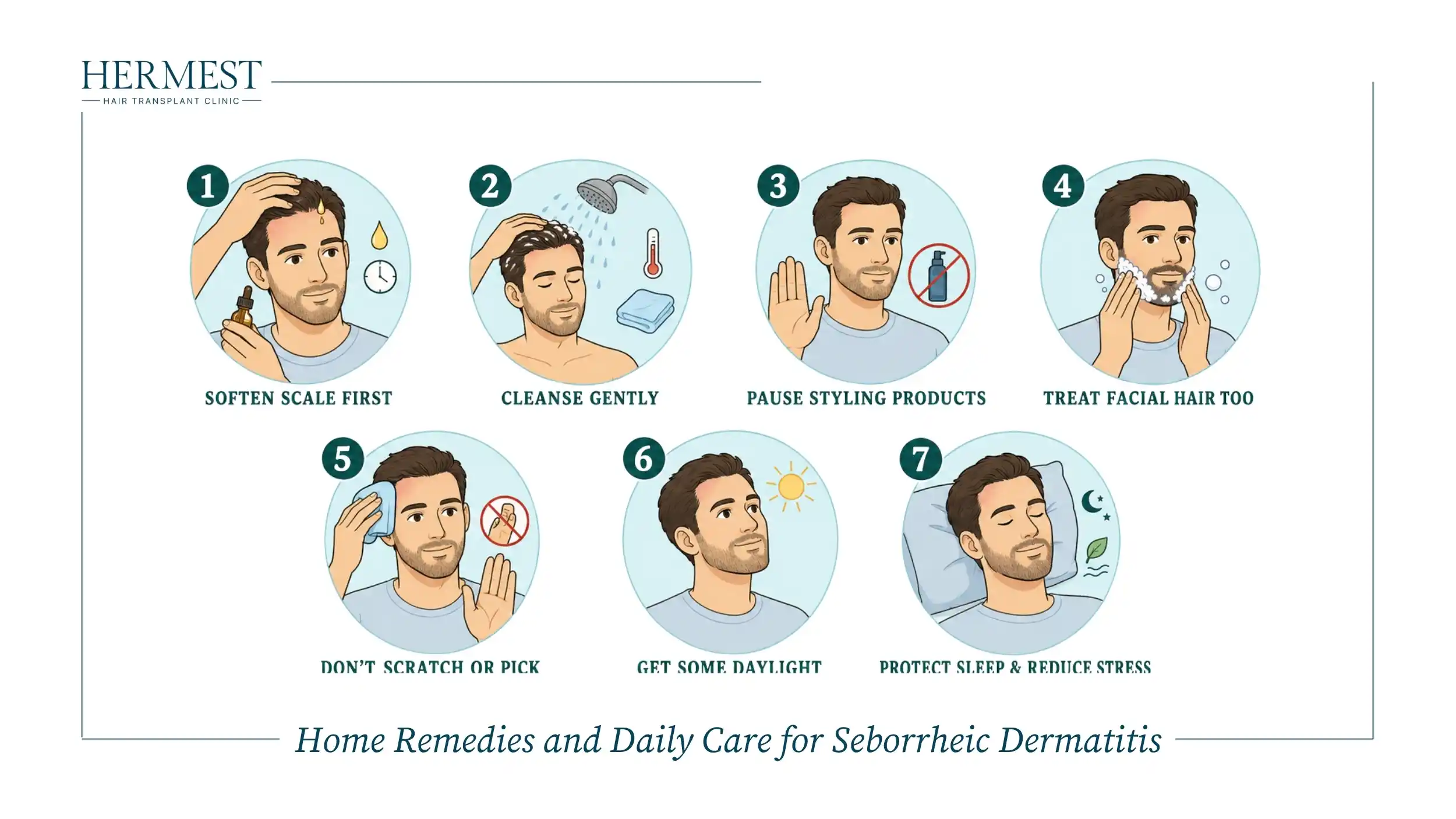
Home remedies cannot replace medicated products, but they cut down how often flares return and help the skin barrier recover. These habits have the most support:
- Soften scale before washing. Apply mineral or olive oil to the scalp for one to three hours, comb out the loosened flakes, then wash.
- Cleanse gently. Use lukewarm water and a non-soap cleanser, pat dry, and moisturise while the skin is still damp.
- Pause styling products during a flare. Hair sprays, gels and alcohol-based products irritate inflamed skin.
- Treat facial hair like scalp hair. Seborrheic dermatitis is often worse under a beard or moustache. Shampoo it daily with ketoconazole 1% until it settles, then once or twice a week. Shaving also helps some men.
- Don’t scratch or pick. Broken skin invites infection and worsens shedding. A cool, damp cloth eases itch.
- Get some daylight. A few minutes of sun most days, outside the midday peak, helps many people. Avoid sunburn.
- Protect sleep and manage stress. Both are among the most consistent flare triggers.
Do Natural Remedies and Diet Help?
5% tea tree oil shampoo has the best evidence among natural options, reducing dandruff severity by 41% vs. 11% with placebo after four weeks in a 126-person trial. Aloe vera has weaker evidence. Both may cause allergy, so patch-test first and never use undiluted essential oils.
No diet has been proven to treat seborrheic dermatitis. According to a 2019 Rotterdam Study analysis of 4,379 Dutch adults, published in the Journal of Investigative Dermatology, a fruit-rich diet was linked to a 25% lower risk of seborrheic dermatitis, while a Western-style diet was linked to a 47% higher risk in women. A Mediterranean-style diet rich in fruit, vegetables and omega-3 fats is sensible for general health. Yeast-elimination diets and high-dose biotin have no supporting evidence in adults. Whether you rely on home care or prescription products, the next question is how soon to expect results.
How Long Does Seborrheic Dermatitis Treatment Take?
Itch and flaking usually ease within 2 to 4 weeks of consistent treatment, but a plan should be judged after 1 to 3 months. The skin’s outer layer renews roughly every month, so the scalp responds much faster than hair does:
| Time on treatment | What usually improves |
|---|---|
| Weeks 1–2 | Itch eases and loose flakes reduce |
| Weeks 3–4 | Redness and stuck-on scale fade |
| Months 2–3 | Scalp looks even; switch to maintenance; shedding slows |
| Months 3–6 | Regrowth of shed hair becomes visible |
Steroid lotions belong to the first weeks only and should not become a long-term habit. Cradle cap in babies usually clears within a few weeks to months.
What If Seborrheic Dermatitis Treatment Isn’t Working?
When a plan fails, one of three things is usually behind it:
- The product isn’t used properly. It is rinsed off too soon, used too rarely, or stopped the moment the flakes fade.
- The yeast doesn’t respond to that ingredient. Some Malassezia strains resist azoles such as ketoconazole, so switching to zinc pyrithione, selenium sulfide, or ciclopirox can help.
- The diagnosis is wrong. Scalp psoriasis, contact dermatitis from a hair product, scalp ringworm, or early scarring conditions such as lichen planopilaris can all look like seborrheic dermatitis.
If two well-used regimens fail over two to three months, ask your dermatologist about a scalp biopsy. Months spent treating the wrong condition matter most when it is a scarring one, because hair follicles lost to scarring do not regrow.
When Should You See a Dermatologist?
Seborrheic dermatitis is not dangerous and does not affect your general health. Most people improve within a few weeks of over-the-counter treatment. If mild and moderate options don’t work, though, a healthcare provider can prescribe the stronger treatments described in the severe tiers above. Book an appointment if:
- Itch and scaling haven’t improved after 4 to 6 weeks of pharmacy products.
- The skin becomes painful, swollen, or starts to weep or crust, which suggests infection.
- You notice clearly more hair in the shower or on your pillow.
- The rash appears suddenly and severely, or spreads widely.
- It disturbs your sleep, confidence, or daily routine.
What Happens at a Dermatology Appointment?
A seborrheic dermatitis consultation is usually short and starts with questions. Your dermatologist may ask:
- When did the flaking or redness first appear, and where?
- Does it get worse in winter, under stress, or after certain hair or skin products?
- Which shampoos or creams have you tried, for how long, and did they help?
- Have you noticed more hair shedding or any bald patches?
- Do you or anyone in your family have psoriasis, eczema, or rosacea?
- Are you taking any medicines, or do you have conditions such as Parkinson’s disease or HIV?
The skin is then examined for:
- The type of scale: greasy and yellow, or dry and silvery.
- Where the patches sit: scalp, eyebrows, nose creases, ears or chest.
- Redness or colour change around the patches.
- Scratch marks, crusting or weeping that suggest infection.
- Hair density and broken hairs, sometimes checked under a dermatoscope.
Bring a list of the products you’ve used, and photos of a bad flare in case your skin looks calm on the day.
Does Seborrheic Dermatitis Cause Hair Loss?
Seborrheic dermatitis hair loss is usually temporary. The inflammation sits in the surface layers of the scalp and does not destroy hair follicles, so shed hair regrows once the inflammation is controlled. Mild cases rarely cause noticeable shedding. It appears with moderate to severe inflammation, heavy scratching, or both.
How Scalp Inflammation Affects Your Hair
Inflammation affects hair in four different ways, and knowing which one you’re seeing tells you whether it will recover on its own:
- More shedding. Strong inflammation can push growing hairs into their resting phase early, a pattern called telogen effluvium. The extra shedding usually shows up two to three months after a bad flare.
- Weaker regrowth. In moderate to severe cases, a magnified scalp exam can show short, thin, irregular dystrophic hairs. They return to a normal diameter once the inflammation settles.
- Breakage. Scratching and picking off crusts snap hair shafts close to the scalp.
- Faster pattern loss. In people who also have androgenetic alopecia, each extra shedding cycle can bring back a slightly thinner hair, so repeated flares can make pattern thinning progress faster.
Dr. Nesim Tugen says:When patients send photos of thinning and flaking, I ask for two shots in daylight: one of the parting and one of the crown. Even, diffuse thinning over a red, scaly scalp usually recovers once the dermatitis is treated. A receding temple or a widening crown points to androgenetic alopecia, which scalp treatment alone won’t reverse.
Why an Inflamed Scalp Can Blunt Minoxidil
If you use minoxidil for pattern hair loss, seborrheic dermatitis (inflamed scalp) can quietly cut its results. That’s another reason to get the scalp under control before judging minoxidil. In a classic 1993 biopsy study by Dr. David Whiting, as summarized by Donovan Hair Clinic, men with pattern hair loss regrew hair with minoxidil in 77% of cases when scalp inflammation was minimal, compared with 55% when inflammation was marked. The study wasn’t specific to seborrheic dermatitis, but it supports two practical steps:
- Calm the scalp first: Assess minoxidil’s results after the dermatitis is controlled.
- Prefer foam: Minoxidil solutions usually contain alcohol and propylene glycol, which can worsen itching and flaking. Foam is often better tolerated.
Hair Loss Treatments to Pause During a Flare
Some hair loss treatments work by creating controlled inflammation, which adds to the problem on an already inflamed scalp. A burning or stinging scalp during any of these is a reason to stop and get checked. Pause these until the flare settles, then restart them one at a time:
- Microneedling and PRP injections
- Mesotherapy, exosome or stem cell injections
- Topical retinoids
- Vigorous scalp massage
When the loss turns out to be permanent pattern loss, a hair transplant becomes an option. With seborrheic dermatitis in the picture, the timing of that transplant matters as much as the technique.
Can You Get a Hair Transplant With Seborrheic Dermatitis?
Yes, but not during an active seborrheic dermatitis flare. A hair transplant moves healthy follicles into areas of permanent hair loss. It does not treat seborrheic dermatitis, and placing grafts into an inflamed, itchy scalp can affect healing and hair growth.
Why Seborrheic Dermatitis Should Be Controlled First
An active flare means the scalp is red, flaky, itchy, or inflamed. That creates several problems for a transplant:
- Graft survival: A biopsy study on PubMed Central linked moderate or dense inflammation around follicles with poorer hair growth after transplantation.
- Scratching: New grafts need about 7 to 10 days to anchor. Scratching an itchy scalp can disturb them.
- Infection: Extra oil, yeast, and a damaged skin barrier can increase the risk of folliculitis after surgery.
- Flare-ups: Surgery and changes to your usual washing routine can trigger seborrheic dermatitis.
When Is Your Scalp Ready for a Hair Transplant?
| Scalp status | What you may notice | Transplant decision |
|---|---|---|
| Active flare | Redness, thick scale, sores, strong itch, or inflammation | Treat the dermatitis first |
| Controlled | No redness or itch for several weeks; donor area is clear | Can be considered after examination |
| Day of surgery | Donor and recipient areas are calm and clear | Proceed with a post-op scalp plan |
At Hermest, we look for around 4 to 6 weeks of stable control on maintenance treatment before planning an FUE hair transplant or DHI hair transplant. The exact timing depends on the scalp examination, with a dermatologist involved in scalp-related cases.
Dr. Nesim Tugen says:At the consultation, I look closely at the back and sides of the scalp, because that donor area is where we extract grafts. Flaking there matters as much as flaking on top. I also ask patients to bring the names of the shampoos and creams they use, so we can plan which ones are safe to restart after surgery, and when.
After the Transplant: Normal Shedding or a Flare?
Some shedding is normal. Transplanted hairs commonly shed 2 to 6 weeks after surgery while the follicles remain in place. Nearby native hair can also temporarily thin (shock loss).
A dermatitis flare is different. Contact your clinic before using a medicated shampoo, because fresh grafts need a gentle washing routine. See our hair transplant aftercare guide for the post-surgery schedule.
Seborrheic dermatitis can return after a transplant, so maintenance treatment usually continues once the grafts have healed.
Dr. Nesim Tugen says:Patients with seborrheic dermatitis often ask for a date when they can go back to medicated shampoo. I’d rather decide at follow-up, based on how the grafts have healed. Restarting too early with hard scrubbing risks disturbing grafts, while waiting too long lets a flare build. Until then, the gentle washing routine keeps scale from collecting around the grafts.
Seborrheic Dermatitis and Hair Loss: Get Your Scalp Assessed!
If shedding continues after your scalp has calmed, the cause may be pattern hair loss, not seborrheic dermatitis. Three steps to sort it out:
- See a dermatologist to bring the flare under control.
- Keep the scalp stable on maintenance treatment for several weeks.
- Send us photos of your hair and scalp for a free hair loss analysis.
Our team checks whether the loss is permanent, whether your donor area is ready, and which technique fits, with a cost estimate. If the dermatitis is still active, we tell you that first, before recommending any hair transplant method.
Frequently Asked Questions About Seborrheic Dermatitis
No. It cannot spread through touch, towels, pillows, or combs. It comes from a person’s own skin reacting to yeast that almost everyone carries.
Sources
- Polaskey MT et al. The Global Prevalence of Seborrheic Dermatitis: A Systematic Review and Meta-Analysis. JAMA Dermatology, 2024;160(8):846–855.
- DermNet: Seborrhoeic dermatitis
- Merck Manual Professional: Seborrheic Dermatitis
- Merck Manual Consumer: Seborrheic Dermatitis
- Seborrheic Dermatitis: Exploring the Complex Interplay with Malassezia (PMC, 2025)
- Seborrheic dermatitis and pityriasis sicca: A review (Cosmoderma)
- Roflumilast foam 0.3% FDA approval (Drug Topics, 2023)
- STRATUM trial results for roflumilast foam (LIVDerm)
- Efficacy of Topical 4% Quassia amara Gel in Facial Seborrheic Dermatitis (J Drugs Dermatol, 2013)
- Scalp inflammation and minoxidil response, Whiting 1993 (Donovan Hair Clinic)
- Perifollicular Inflammation of the Donor Area During Hair Transplantation (PMC)