
Follicular Eczema: Causes, Symptoms, Treatment & Prevention
 ChatGPT
 Claude
 Perplexity
 Grok
Grok
 Gemini

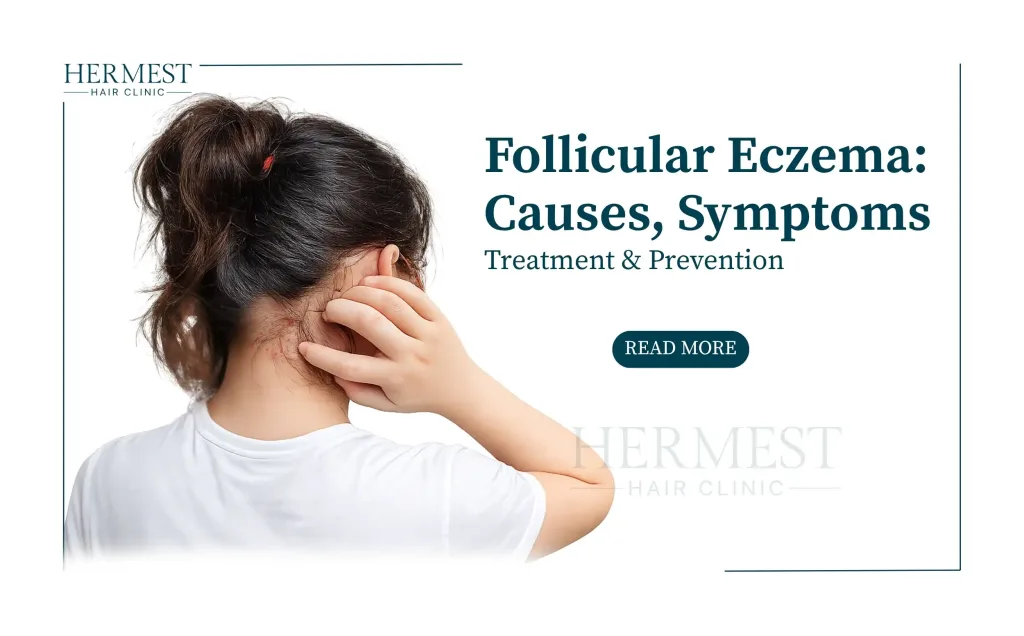
Follicular eczema is an itchy inflammatory skin condition that develops around the hair follicles, creating small rough bumps that are often mistaken for acne, folliculitis, or keratosis pilaris. Although it can look unusual, it is generally considered a follicular variant of atopic dermatitis, meaning it belongs to the eczema family rather than being a separate disease.
Many people search for follicular eczema symptoms after noticing tiny bumps on their arms, thighs, legs, or trunk that don’t respond to acne treatments. Others worry that the rash is contagious or wonder whether it could lead to permanent skin damage or even hair loss. These concerns are understandable, especially since the condition closely resembles several other skin disorders.
Fortunately, hair follicle eczema is not contagious, and most cases can be managed successfully with appropriate skin care, trigger avoidance, and anti-inflammatory treatment when necessary. According to the American Academy of Dermatology (AAD), restoring the skin barrier is one of the most important goals in treating eczema because healthy skin helps reduce inflammation, itching, and future flare-ups.
This guide explains everything you need to know about follicular eczema, including its causes, symptoms, diagnosis, treatment options, and prevention strategies. You’ll also learn how it differs from folliculitis, keratosis pilaris, and acne, why it may appear differently in darker skin tones, and whether it can affect the scalp or contribute to temporary hair shedding.
Quick Insights
- Follicular eczema is a variant of atopic dermatitis, not a separate contagious disease.
- It commonly causes itchy bumps around hair follicles, particularly on the arms, thighs, buttocks, legs, and trunk.
- A weakened skin barrier, genetic factors, and immune system overactivity contribute to its development.
- Common triggers include harsh soaps, fragrances, sweating, dry weather, stress, wool fabrics, and environmental allergens.
- Follicular eczema is frequently confused with folliculitis, acne, and keratosis pilaris, making accurate diagnosis important.
- Permanent hair loss is uncommon. Temporary shedding may occur if scalp inflammation or excessive scratching disrupts the normal hair growth cycle.
- Daily use of fragrance-free moisturizers and gentle skincare products remains one of the most effective long-term management strategies.
- Prescription treatments such as topical corticosteroids, calcineurin inhibitors, topical JAK inhibitors, phototherapy, or biologic medications may be recommended for more persistent or severe cases.
- Persistent, worsening, or frequently recurring symptoms should always be evaluated by a dermatologist.
What Is Follicular Eczema?
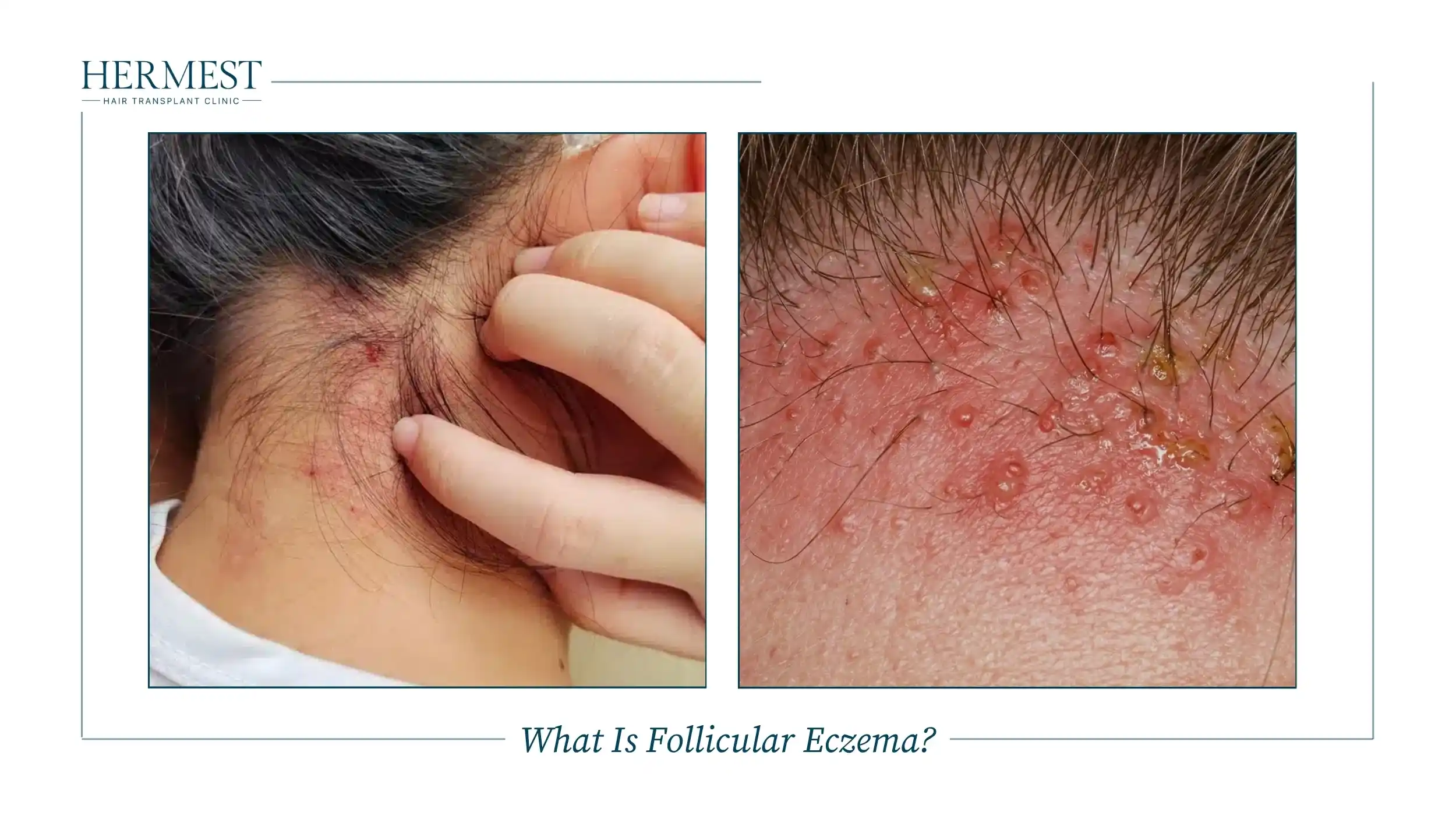
Follicular eczema is a form of atopic dermatitis in which inflammation develops primarily around the hair follicles instead of spreading evenly across the skin. Rather than producing large patches of red, scaly skin alone, this condition often creates numerous tiny, rough, itchy bumps that can resemble goosebumps, acne, or folliculitis.
Because of its appearance, many people initially treat it as a bacterial skin infection or clogged pores. Unfortunately, those treatments usually provide little improvement because the underlying problem isn’t infection. It’s inflammation and skin barrier dysfunction.
According to the American Academy of Dermatology (AAD), eczema develops when the skin’s protective barrier becomes weakened. This allows moisture to escape while irritants, allergens, and microbes enter more easily, triggering an exaggerated immune response and persistent inflammation.
A Follicular Form of Atopic Dermatitis
Unlike classic eczema plaques, follicular atopic dermatitis concentrates its inflammation around individual hair follicles.
As the surrounding skin becomes inflamed, tiny raised papules develop. These bumps often feel rough when touched and may be intensely itchy, particularly during flare-ups.
Common characteristics include:
- Small rough bumps centered around hair follicles.
- Dry, irritated skin.
- Persistent itching.
- Mild redness or darker discoloration depending on skin tone.
- A sandpaper-like texture.
Many dermatologists also refer to this presentation as papular eczema because of its characteristic small raised lesions.
Why Hair Follicles Become Inflamed
Hair follicles themselves aren’t the primary problem.
Instead, inflammation develops in the skin surrounding the follicle after the protective skin barrier becomes disrupted. This barrier dysfunction allows environmental irritants and allergens to penetrate more easily, activating the immune system and producing eczema symptoms.
Research also suggests that abnormalities involving proteins such as filaggrin, which help maintain healthy skin barrier function, contribute to many cases of atopic dermatitis.
Dr. Nesim Tugen says:
“The hair follicle is often blamed because that’s where the bumps appear. In reality, the surrounding skin barrier is usually the main issue. When we restore that barrier and reduce inflammation, the follicular bumps often improve without treating the follicle itself.”
One important point is that follicular eczema isn’t a completely separate disease. Instead, it represents one way atopic dermatitis can appear, particularly in certain age groups and skin types.
Understanding that distinction makes diagnosis much easier and helps explain why treatment focuses on repairing the skin barrier rather than eliminating bacteria or unclogging hair follicles.
What Causes Follicular Eczema?
Like other forms of atopic dermatitis, follicular eczema develops because several factors interact rather than from a single cause. Genetics, immune system activity, environmental triggers, and skin barrier dysfunction all contribute to the condition. Some people inherit skin that loses moisture more easily, making it more vulnerable to irritation and inflammation around the hair follicles.
According to the American Academy of Dermatology (AAD), eczema begins with a weakened skin barrier. When that protective barrier doesn’t function properly, allergens, irritants, and microbes can penetrate the skin more easily, triggering an inflammatory immune response.
Genetics and Skin Barrier Dysfunction
Many people with follicular atopic dermatitis have a personal or family history of eczema, asthma, or allergic rhinitis.
Researchers have identified changes in the filaggrin gene in some patients with atopic dermatitis. Filaggrin is an important protein that helps maintain the skin’s protective barrier and retain moisture.
When this barrier becomes compromised:
- Water escapes from the skin more quickly.
- Dryness becomes more severe.
- Irritants enter the skin more easily.
- Inflammation develops around hair follicles.
- Itching triggers repeated scratching, which further damages the barrier.
This creates a cycle in which dryness and inflammation continuously reinforce one another.
Common Triggers That Cause Flare-Ups
Although genetics increase susceptibility, flare-ups are often triggered by everyday environmental factors.
Common triggers include:
- Harsh soaps and cleansers.
- Fragranced skincare products.
- Laundry detergents and fabric softeners.
- Hot showers and very dry air.
- Excessive sweating.
- Wool or rough fabrics.
- Seasonal allergies.
- Emotional stress.
- Sudden weather changes.
Not every patient reacts to the same trigger. Identifying personal patterns is often one of the most effective ways to reduce future flare-ups.
Dr. Nesim Tugen says:
“Treating follicular eczema isn’t only about calming inflammation after it appears. We spend just as much time helping patients identify their individual triggers. Avoiding repeated skin irritation often reduces flare-ups more effectively than relying on medication alone.”
The Skin Microbiome May Also Play a Role
Another area receiving increasing attention is the skin microbiome.
Healthy skin contains a diverse community of beneficial microorganisms that help protect against harmful bacteria. In patients with eczema, this balance may become disrupted, allowing bacteria such as Staphylococcus aureus to multiply more easily. This doesn’t necessarily cause follicular eczema, but it can worsen inflammation and increase the risk of secondary skin infections during severe flare-ups.
Understanding these underlying mechanisms explains why successful treatment goes beyond simply applying a cream. Restoring the skin barrier, reducing inflammation, and minimizing exposure to personal triggers all play an important role in long-term disease control.
Symptoms of Follicular Eczema
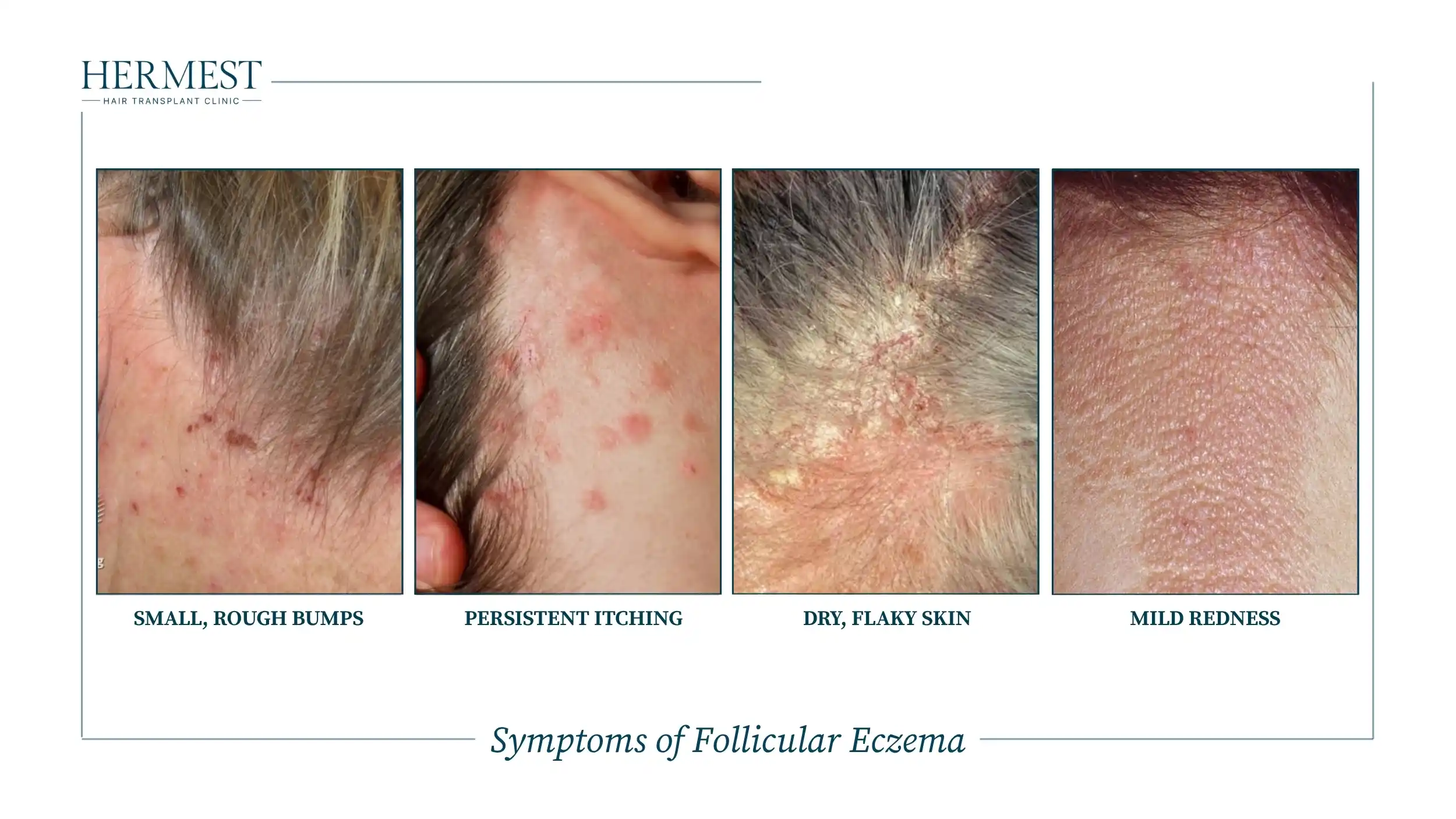
The symptoms of follicular eczema can vary from mild roughness to intensely itchy, inflamed skin. Because the condition develops around individual hair follicles, it often appears as clusters of tiny raised bumps rather than the larger eczema patches many people expect.
This unique appearance is one reason hair follicle eczema is frequently mistaken for acne, folliculitis, heat rash, or keratosis pilaris. Despite these similarities, the underlying cause is different. Follicular eczema is driven by inflammation and skin barrier dysfunction rather than clogged pores or bacterial infection.
According to the American Academy of Dermatology (AAD), itching is one of the defining features of eczema and often becomes the symptom patients find most troublesome.
Common Symptoms of Follicular Eczema
Although every patient is different, most people experience a combination of the following symptoms:
- Small, rough bumps centered around hair follicles.
- Persistent itching that may worsen at night.
- Dry, flaky skin.
- Rough or sandpaper-like texture.
- Mild redness or inflamed skin.
- Increased sensitivity to soaps, sweat, or friction.
Unlike acne, these bumps usually don’t contain pus or blackheads. Unlike folliculitis, they are typically not painful or tender unless a secondary infection develops from excessive scratching.
Many patients also notice that symptoms come and go, with periods of improvement followed by flare-ups triggered by environmental or lifestyle factors.
How Follicular Eczema Appears on Different Skin Tones
Another important detail is how eczema looks on different skin colors.
Research published in the Journal of the American Academy of Dermatology (JAAD) shows that follicular accentuation is often more noticeable in individuals with darker skin tones.
Instead of appearing bright red, inflamed areas may look:
- Brown.
- Purple.
- Gray.
- Darker than the surrounding skin.
The tiny follicular bumps may also become more prominent than the redness itself, making diagnosis more challenging if clinicians rely only on classic textbook images.
Itching Often Starts the Scratch Cycle
The itching associated with follicular eczema symptoms can become intense enough to create a self-perpetuating cycle.
Inflammation causes itching.
Scratching damages the already weakened skin barrier.
The damaged barrier allows more irritants to enter.
That leads to even more inflammation and itching.
Breaking this itch-scratch cycle is one of the primary goals of treatment.
Dr. Ahmet Murat says:
“Patients often focus on the visible bumps, but itching is usually the symptom that keeps the inflammation active. Repeated scratching weakens the skin barrier even further, delaying healing and increasing the risk of infection. Controlling itch is just as important as treating the rash itself.”
Although these symptoms commonly affect the arms and legs, follicular eczema can appear on several different parts of the body.
Where Does Follicular Eczema Appear?
Although follicular eczema can develop almost anywhere on the body where hair follicles are present, certain areas are affected much more frequently than others. The distribution isn’t random. It usually reflects regions where the skin is naturally drier, exposed to repeated friction, or more easily irritated by clothing, sweat, or environmental factors.
Unlike acne, which often concentrates on the face, chest, and upper back, follicular eczema rash typically develops on the limbs and trunk. The condition usually appears symmetrically, affecting similar areas on both sides of the body.
According to the American Academy of Dermatology (AAD), eczema patterns vary from person to person, but follicular involvement is commonly seen in patients with atopic dermatitis, particularly when the skin barrier is significantly compromised.
The Most Common Locations
Most patients notice the characteristic itchy bumps on areas with numerous hair follicles and naturally dry skin.
Frequently affected areas include:
- Upper arms.
- Thighs.
- Lower legs.
- Buttocks.
- Abdomen and trunk.
- Back and shoulders.
These areas often become rough to the touch before visible redness develops. During flare-ups, itching usually becomes more intense, particularly after sweating, hot showers, or prolonged skin irritation.
Can Follicular Eczema Affect the Scalp?
The scalp contains thousands of hair follicles, so many people assume hair follicle eczema commonly develops there.
In reality, scalp involvement is less common than eczema affecting the arms or legs.
When eczema does occur on the scalp, patients are more likely to experience:
- Itching.
- Dry, flaky skin.
- Mild redness.
- Small inflamed bumps around follicles.
Because several scalp disorders share similar symptoms, proper diagnosis becomes especially important.
Conditions that may resemble scalp follicular eczema include:
- Seborrheic dermatitis.
- Scalp folliculitis.
- Psoriasis.
- Contact dermatitis caused by hair products.
A dermatologist can usually distinguish these conditions through clinical examination and, when necessary, dermoscopy.
Dr. Nesim Tugen says:
“Patients frequently assume every itchy scalp is caused by dandruff or folliculitis. In practice, several inflammatory skin disorders can produce similar symptoms. Careful examination allows us to identify the correct condition before recommending treatment.”
Does It Affect the Face?
Facial involvement is possible but less common than involvement of the limbs.
When the face is affected, the bumps usually appear around the forehead, cheeks, or jawline and can easily be mistaken for acne or allergic reactions. Unlike acne, however, follicular eczema is generally associated with dry, itchy skin rather than oily skin, blackheads, or inflamed pimples.
Follicular Eczema vs Folliculitis
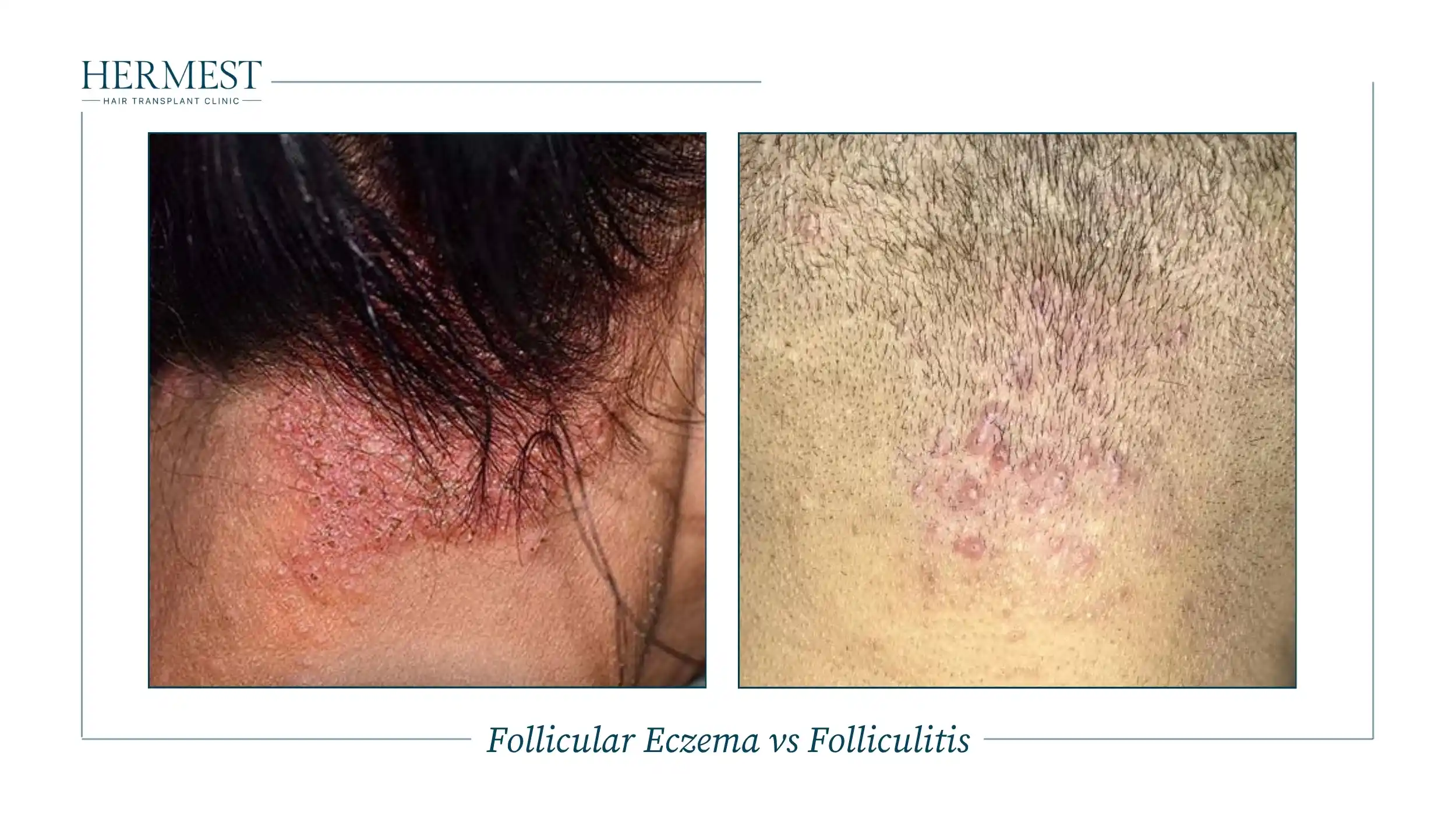
One of the most common reasons follicular eczema is misdiagnosed is that it closely resembles folliculitis. Both conditions develop around hair follicles and may produce small bumps on the skin. However, their causes, symptoms, and treatments are very different.
Understanding these differences is important because treating eczema with antibiotics usually won’t help unless a secondary bacterial infection is present. Likewise, treating bacterial folliculitis with moisturizers alone is unlikely to resolve the problem.
According to the American Academy of Dermatology (AAD), eczema is an inflammatory skin disorder caused by immune dysfunction and skin barrier impairment, whereas folliculitis is usually an infection or irritation affecting the hair follicle itself.
Key Differences Between the Two Conditions
| Feature | Follicular Eczema | Folliculitis |
|---|---|---|
| Primary cause | Inflammation from atopic dermatitis | Bacterial, fungal, viral, or friction-related follicle inflammation |
| Main symptom | Intense itching | Tenderness, pain, or burning |
| Appearance | Small rough bumps with dry skin | Red or white pustules centered on hair follicles |
| Infection | No | Often present |
| Skin texture | Dry and rough | Usually normal between bumps |
| Typical treatment | Moisturizers, topical anti-inflammatory medications | Antiseptics, antibiotics, or antifungal therapy when appropriate |
Although both conditions affect hair follicles, their underlying biology is completely different.
How Doctors Tell Them Apart
During a consultation, dermatologists evaluate several clues.
Patients with follicular eczema usually report persistent itching, dry skin, and previous eczema or allergy symptoms. The bumps often appear symmetrically on the arms, thighs, or trunk and may worsen during cold weather or after exposure to irritants.
By contrast, folliculitis often develops after shaving, sweating, friction, hot tub exposure, or bacterial infection. The bumps are more likely to contain pus and may become sore rather than intensely itchy.
Additional findings can also help:
- Follicular eczema commonly appears alongside generalized dry skin.
- Folliculitis may produce localized pustules with surrounding redness.
- Eczema tends to flare repeatedly in response to triggers.
- Folliculitis often improves once the infection or irritation is treated.
Dr. Nesim Tugen says:
“Patients are frequently prescribed antibiotics before the correct diagnosis is made. If the problem is actually follicular eczema, reducing inflammation and repairing the skin barrier are much more effective than treating for an infection that isn’t there.”
Can Someone Have Both Conditions?
Yes.
People with atopic dermatitis have a weakened skin barrier, making them more vulnerable to bacterial infections. Repeated scratching can introduce bacteria into damaged skin, allowing secondary folliculitis to develop on top of existing eczema.
When this happens, both conditions require treatment.
The inflammation caused by eczema must be controlled, and any confirmed infection should be managed appropriately. That’s why professional diagnosis is so important before beginning treatment.
Follicular Eczema vs Keratosis Pilaris
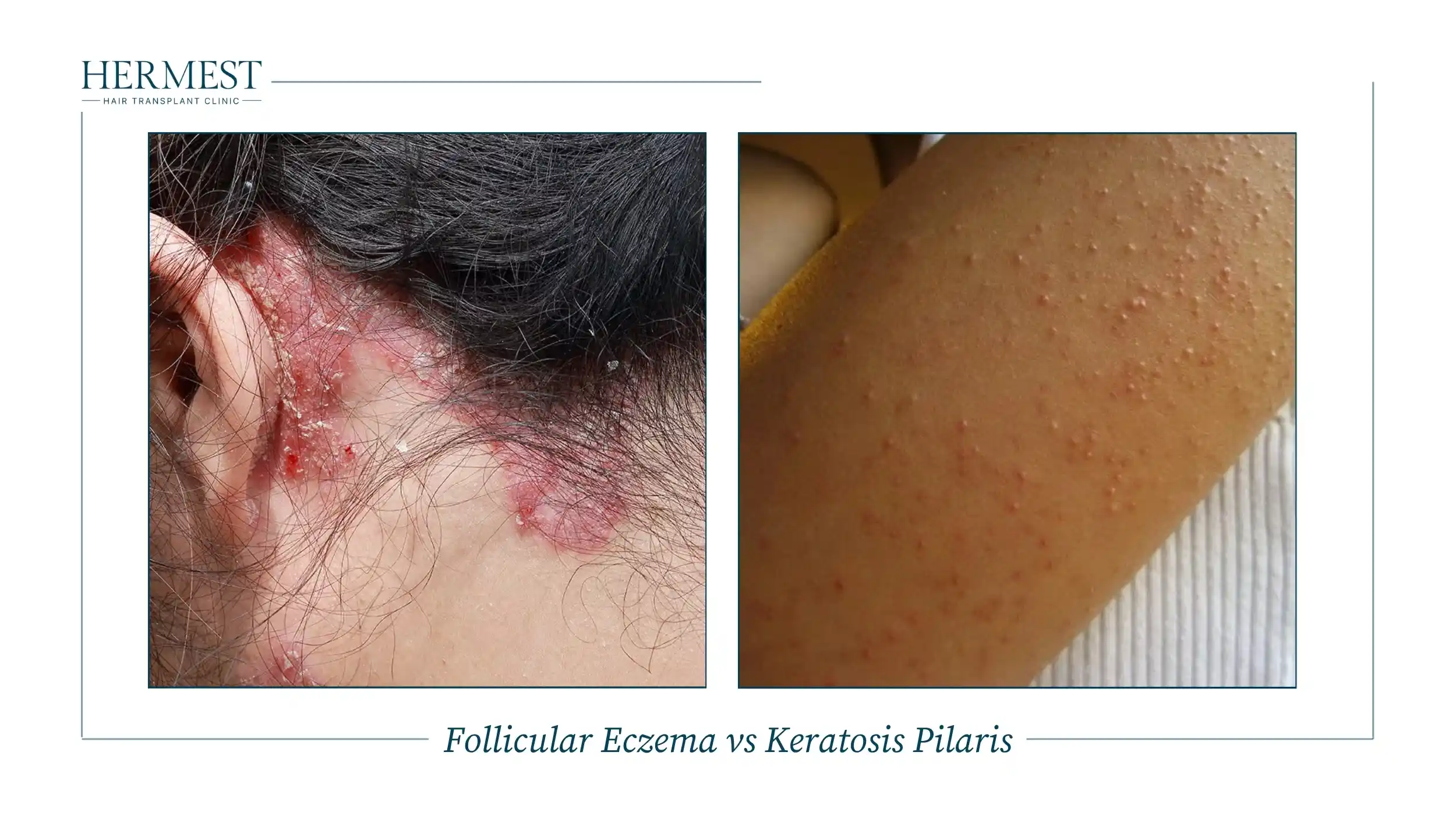
Another condition frequently confused with follicular eczema is keratosis pilaris (KP). Both disorders produce tiny bumps around hair follicles, most commonly on the upper arms and thighs. At first glance, they can look nearly identical. However, they develop for different reasons and usually require different treatment approaches.
Keratosis pilaris is caused by a buildup of keratin, a natural skin protein that blocks the openings of hair follicles. Follicular eczema, on the other hand, develops because of inflammation associated with atopic dermatitis and a weakened skin barrier.
Understanding this distinction helps explain why one condition is often itchy while the other is usually not.
How the Two Conditions Differ
Although they share a rough, “goosebump” appearance, several characteristics help separate them.
| Feature | Follicular Eczema | Keratosis Pilaris |
|---|---|---|
| Primary cause | Skin barrier dysfunction and inflammation | Keratin buildup blocking hair follicles |
| Itching | Common and often intense | Mild or absent |
| Dry skin | Usually significant | May be present but less inflamed |
| Redness | Frequent during flare-ups | Usually mild |
| Course | Flare-ups and remissions | Often persistent and stable |
| Treatment | Moisturizers and anti-inflammatory medications | Moisturizers with keratolytic ingredients such as urea, lactic acid, or salicylic acid |
While the appearance may overlap, the underlying biology is quite different.
Why They’re So Easily Confused
Both conditions commonly affect:
- Upper arms.
- Thighs.
- Buttocks.
- Outer legs.
Both can also make the skin feel rough when touched.
The biggest difference is itching.
Patients with follicular eczema usually describe persistent itching that worsens after hot showers, sweating, or exposure to irritants. People with keratosis pilaris often notice rough skin but experience little discomfort.
Another clue is the surrounding skin.
Eczema typically causes generalized dryness and inflammation, whereas keratosis pilaris produces small keratin plugs with relatively little surrounding redness.
Dr. Nesim Tugen says:
“Patients frequently describe both conditions as ‘chicken skin,’ but itching usually provides an important clue. If the bumps are intensely itchy and accompanied by dry, inflamed skin, eczema becomes much more likely than keratosis pilaris.”
Can Someone Have Both Conditions?
Yes.
This is actually quite common.
People with atopic dermatitis often have keratosis pilaris at the same time. The weakened skin barrier associated with eczema can make the rough bumps of keratosis pilaris appear more inflamed and noticeable.
Treating only the keratin buildup may leave the eczema uncontrolled, while treating only the eczema may not completely smooth the rough skin texture.
For that reason, dermatologists often address both conditions simultaneously using moisturizers that restore the skin barrier while selecting active ingredients appropriate for each diagnosis.
Can Follicular Eczema Cause Hair Loss?
One of the most common concerns people have after being diagnosed with follicular eczema is whether the inflammation around hair follicles can lead to permanent hair loss. The reassuring answer is that, in most cases, follicular eczema does not permanently damage hair follicles.
Although the condition develops around hair follicles, the follicles themselves usually remain healthy. The inflammation affects the surrounding skin rather than destroying the structures responsible for producing new hair.
According to the American Academy of Dermatology (AAD), eczema-related hair changes are generally temporary and improve once inflammation is brought under control.
Temporary Hair Shedding Can Occur
Although permanent hair loss is uncommon, temporary shedding may develop in certain situations.
This is most likely when:
- Persistent inflammation affects the scalp.
- Constant scratching traumatizes the skin.
- Secondary bacterial infection develops.
- Severe eczema causes significant skin irritation.
These situations may temporarily interrupt the normal hair growth cycle, causing more hairs to enter the resting (telogen) phase before eventually shedding.
Fortunately, once the inflammation settles and the scalp heals, normal hair growth usually resumes.
Can Scalp Follicular Eczema Affect Hair Growth?
Scalp involvement is relatively uncommon compared with eczema affecting the arms or legs, but it can happen.
When hair follicle eczema affects the scalp, patients may notice:
- Persistent itching.
- Dry, flaky skin.
- Red or darker inflamed patches.
- Increased shedding during flare-ups.
The good news is that healthy follicles generally continue producing new hair after treatment. The shedding is usually a response to inflammation rather than permanent follicle injury.
Dr. Nesim Tugen says:
“Patients often become frightened when they notice increased shedding during an eczema flare. In most cases, the follicles remain intact. Once inflammation is controlled and scratching stops, the hair growth cycle usually returns to normal without permanent damage.”
When Hair Loss May Need Further Investigation
If hair doesn’t begin recovering after the eczema improves, another condition may be contributing.
Your dermatologist may investigate:
- Androgenetic alopecia.
- Alopecia areata.
- Chronic telogen effluvium.
- Nutritional deficiencies.
- Thyroid disorders.
- Scarring forms of alopecia, which are unrelated to ordinary follicular eczema.
These conditions require different treatment approaches and shouldn’t automatically be attributed to eczema.
Is a Hair Transplant Ever Needed?
For isolated follicular eczema, the answer is generally no.
A hair transplant restores hair that has been permanently lost because follicles no longer produce healthy hair. Since follicular eczema rarely destroys hair follicles, surgery doesn’t address the underlying problem.
At Hermest, patients experiencing hair shedding alongside eczema first undergo a comprehensive scalp assessment. If the shedding is caused by inflammation, treatment focuses on restoring the skin barrier and controlling eczema rather than transplanting hair. Surgery is considered only if a separate condition causing permanent hair loss is diagnosed.
How Doctors Diagnose Follicular Eczema
Diagnosing follicular eczema usually doesn’t require complex laboratory testing. In most cases, an experienced dermatologist can identify the condition through a detailed medical history and careful skin examination. The challenge isn’t recognizing eczema itself. It’s distinguishing it from disorders that look very similar, including folliculitis, keratosis pilaris, acne, contact dermatitis, and certain fungal skin infections.
According to the American Academy of Dermatology (AAD), diagnosing eczema involves evaluating the appearance of the rash, the pattern of itching, personal and family history of allergies, asthma, or atopic dermatitis, and identifying possible environmental triggers.
Because follicular eczema symptoms often overlap with other conditions, diagnosis is based on the complete clinical picture rather than a single test.
Medical History and Skin Examination
The consultation usually begins with several detailed questions.
Your dermatologist may ask:
- When did the bumps first appear?
- Is itching constant or occasional?
- Do symptoms worsen after sweating, hot showers, or certain skincare products?
- Do you have asthma, hay fever, or previous eczema?
- Does anyone in your family have atopic dermatitis?
The skin itself is then examined for:
- Follicular papules.
- Dryness and scaling.
- Distribution of the rash.
- Signs of scratching.
- Evidence of secondary infection.
The location of the bumps often provides valuable diagnostic clues.
Dermoscopy and Patch Testing
If the diagnosis isn’t completely clear, additional evaluation may be helpful.
Dermoscopy allows the dermatologist to examine the skin under magnification, helping distinguish inflammatory eczema from bacterial folliculitis, psoriasis, or other skin disorders.
If allergic contact dermatitis is suspected, patch testing may also be recommended. This test identifies delayed allergic reactions to substances such as fragrances, preservatives, metals, cosmetics, or topical medications that could be triggering recurrent flare-ups.
These investigations are performed selectively rather than routinely.
Is a Skin Biopsy Ever Needed?
For most patients, no.
A skin biopsy is rarely required when the appearance is typical.
However, your dermatologist may recommend one if:
- The rash doesn’t respond to standard treatment.
- Another inflammatory skin disease is suspected.
- The diagnosis remains uncertain after examination.
- Unusual or persistent skin changes develop.
A biopsy helps exclude uncommon conditions that may resemble follicular eczema under clinical examination.
An accurate diagnosis is the foundation of successful treatment. Once your dermatologist confirms that the bumps are caused by follicular atopic dermatitis rather than infection or another skin disorder, treatment can focus on restoring the skin barrier, reducing inflammation, and preventing future flare-ups.
Best Treatments for Follicular Eczema
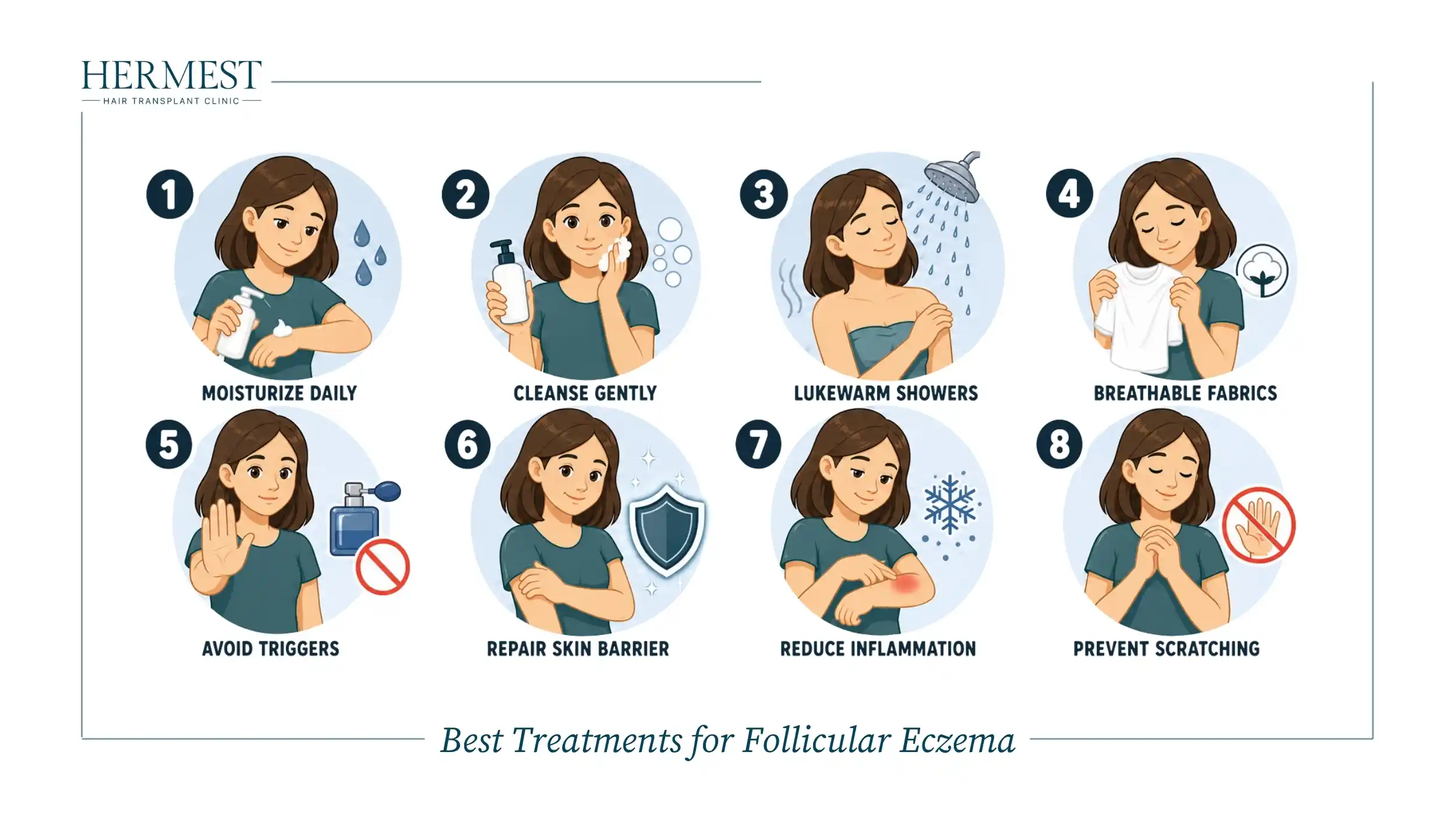
Successful treatment of follicular eczema focuses on more than simply relieving today’s itching. The primary goals are to restore the skin barrier, reduce inflammation, prevent scratching, and minimize future flare-ups. Since hair follicle eczema is an inflammatory condition rather than an infection, treatment usually combines daily skincare with targeted anti-inflammatory medications when symptoms become more severe.
According to the American Academy of Dermatology (AAD) and the NHS, consistent skincare remains the foundation of eczema management, even when the skin appears normal between flare-ups.
Home Care That Supports Skin Barrier Repair
Daily skincare plays a major role in controlling follicular eczema symptoms.
Many patients notice fewer flare-ups after adopting simple habits such as:
- Applying fragrance-free moisturizers several times a day, especially after bathing.
- Using gentle, soap-free cleansers instead of harsh soaps.
- Taking short, lukewarm showers instead of long, hot baths.
- Wearing soft, breathable fabrics like cotton.
- Avoiding known personal triggers, including fragranced skincare products and irritating detergents.
Moisturizers rich in ceramides, glycerin, or petrolatum help restore the damaged skin barrier and reduce water loss. Regular moisturization often decreases itching before prescription medication becomes necessary.
Medical Treatments for Active Flare-Ups
When moisturizers alone aren’t enough, dermatologists may recommend prescription therapy based on the severity and location of the eczema.
Common treatment options include:
- Topical corticosteroids to reduce inflammation during flare-ups.
- Topical calcineurin inhibitors, particularly for sensitive areas where long-term steroid use isn’t ideal.
- Topical JAK inhibitors, which have become an important option for selected patients with mild to moderate atopic dermatitis.
- Phototherapy (narrowband UVB) for widespread or persistent eczema that doesn’t respond adequately to topical treatment.
- Biologic therapy, such as dupilumab, for patients with moderate to severe atopic dermatitis when conventional treatments fail to provide sufficient control.
These therapies target inflammation through different mechanisms and should always be selected by a qualified healthcare professional.
Dr. Nesim Tugen says:
“The most effective treatment isn’t always the strongest medication. We begin by repairing the skin barrier, identifying triggers, and choosing the least intensive therapy that provides reliable control. Long-term skin health depends on consistency rather than repeatedly escalating treatment.”
Antibiotics Are Not Routine Treatment
This is another area where misinformation is common.
Because follicular eczema develops around hair follicles, many people assume antibiotics are automatically needed.
In reality, antibiotics are not standard treatment.
They are considered only when a dermatologist confirms a secondary bacterial infection, often caused by excessive scratching that allows bacteria to enter damaged skin.
Can You Prevent Follicular Eczema Flare-Ups?
Although follicular eczema cannot always be prevented, many people can significantly reduce the frequency and severity of flare-ups by protecting their skin barrier and avoiding personal triggers. Since this condition is closely linked to atopic dermatitis, long-term management focuses on maintaining healthy skin every day rather than treating symptoms only after they appear.
According to the American Academy of Dermatology (AAD), regular moisturization is one of the most effective strategies for preventing eczema flare-ups. Healthy, well-hydrated skin is less likely to become irritated by allergens, environmental changes, or friction.
The goal is consistency.
Small daily habits often produce the greatest long-term improvement.
Build a Stronger Skin Barrier
A healthy skin barrier helps reduce moisture loss and limits exposure to substances that trigger inflammation.
Simple preventive measures include:
- Apply a fragrance-free moisturizer immediately after bathing.
- Use mild, soap-free cleansers instead of harsh soaps.
- Take short, lukewarm showers rather than very hot ones.
- Wear breathable cotton clothing when possible.
- Keep indoor humidity at comfortable levels during dry seasons.
These habits help minimize dryness, one of the most common triggers for follicular eczema symptoms.
Identify Your Personal Triggers
Not every patient reacts to the same irritants.
Keeping a symptom diary can help identify patterns that may otherwise go unnoticed.
Common triggers include:
- Fragranced cosmetics and skincare products.
- Laundry detergents.
- Wool or synthetic fabrics.
- Excessive sweating.
- Emotional stress.
- Sudden weather changes.
- Very dry indoor air.
- Seasonal allergies.
Avoiding unnecessary exposure doesn’t eliminate eczema completely, but it often reduces the number of flare-ups throughout the year.
Avoid the Itch-Scratch Cycle
Preventing scratching is one of the most valuable ways to protect the skin.
Every episode of scratching creates tiny breaks in the skin barrier, allowing additional irritation and bacteria to enter. This prolongs inflammation and increases the likelihood of secondary infection.
Helpful strategies include:
- Keeping fingernails short.
- Applying moisturizers frequently to reduce itching.
- Using prescribed anti-inflammatory medication early during flare-ups.
- Sleeping in a cool, comfortable environment if nighttime itching is a problem.
Long-Term Skin Care Makes the Difference
One of the biggest misconceptions is that eczema treatment ends when the rash disappears.
In reality, daily skin care should continue between flare-ups.
Maintaining the skin barrier during symptom-free periods often reduces the intensity and frequency of future episodes, making long-term control much easier.
Frequently Asked Questions About Follicular Eczema
No. Follicular eczema is not contagious. You cannot catch it from another person or spread it through skin-to-skin contact, sharing towels, or using the same swimming pool. It develops because of skin barrier dysfunction and an overactive immune response rather than bacteria, viruses, or fungi.