
Does Wearing a Hat Cause Hair Loss? Facts About Caps and Beanies
 ChatGPT
 Claude
 Perplexity
 Grok
 Gemini

Does wearing a hat cause hair loss? It is a common worry when you notice thinning hair or find loose strands inside your cap. The short answer is no: ordinary hat use does not cause pattern baldness. The exception is tension. Repeated pulling, friction, and tight hairstyles under headwear can damage hair over time. At Hermest Clinic, we encourage you to understand the real cause of your hair loss before choosing a treatment. So let’s explore: does wearing a cap cause hair loss?
Key takeaways
- A comfortable hat does not cause pattern baldness.
- Tight headwear and hairstyles that pull on the hair can contribute to traction alopecia.
- Flattened hair after removing a hat does not mean you have lost hair density.
- Persistent thinning, bald patches, or a changing hairline deserve professional assessment.
- If you have recently had a hair transplant, follow your surgical team’s instructions before wearing any headwear.
Myth or Reality: Will wearing a hat cause hair loss?
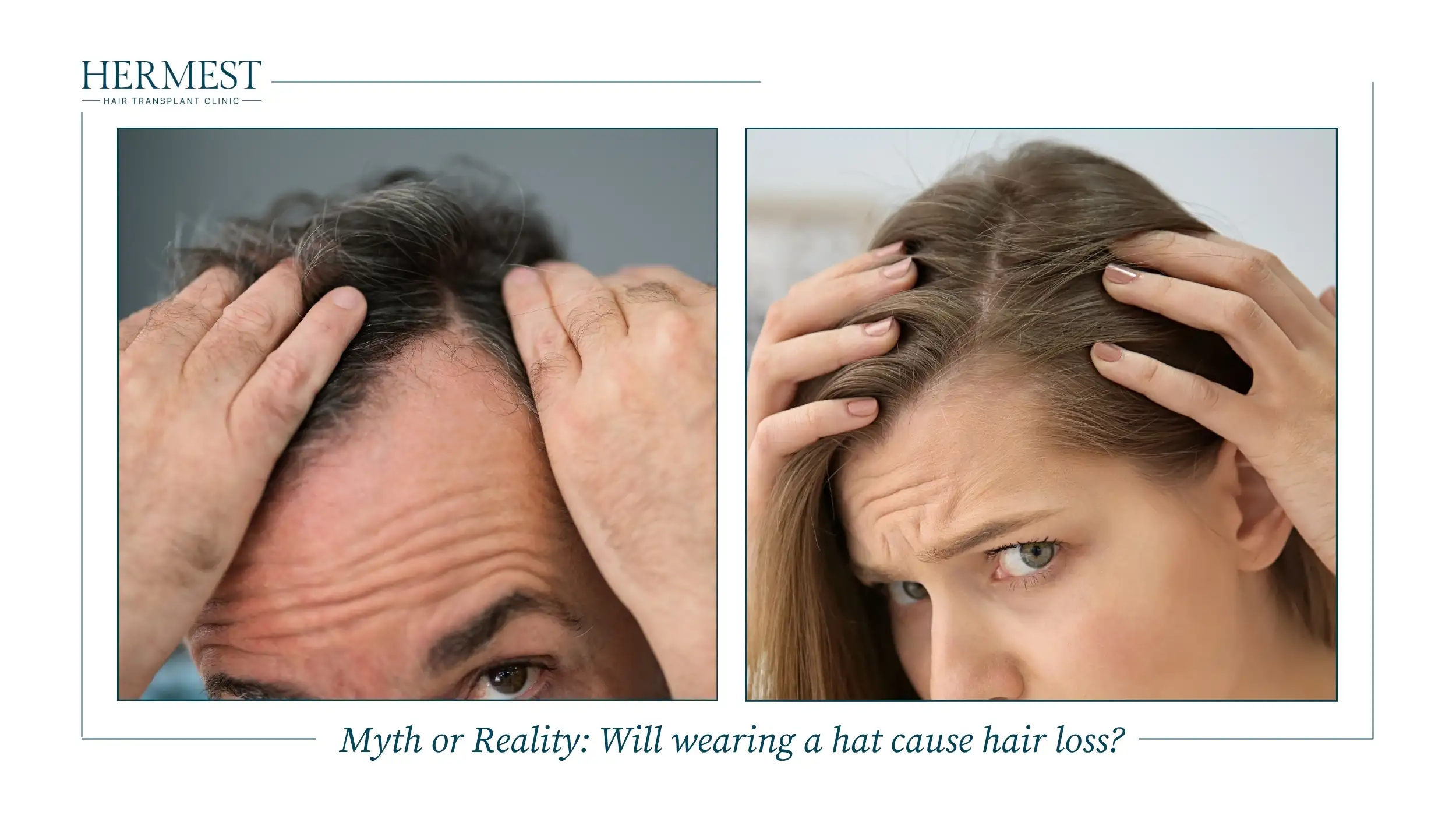
For pattern baldness, yes, it’s a myth that hats cause hair loss. Pattern hair loss, also known as androgenetic alopecia, is driven by genetic and hormonal factors. A cap does not suffocate follicles or stop them from producing hair.
What does matter is how your headwear fits and how you style your hair underneath it. A tight hat worn over a tightly pulled hairstyle can create repeated tension around the hairline, and that tension is a recognised cause of hair damage.
It is worth being honest about the evidence: few studies look at hats specifically. The conclusions here rest on what is well established about hair growth and traction alopecia, not on trials of caps and beanies.
Dr. Nesim Tugen, Co-Director of Hair Restoration & Executive Clinical Lead at Hermest Clinic, explains:Wearing a hat does not normally cause hair follicles to stop producing hair. When someone notices thinning, we look at the pattern of hair loss, family history, and scalp condition rather than assuming that headwear is responsible.
Can a hat make your hair look thinner?
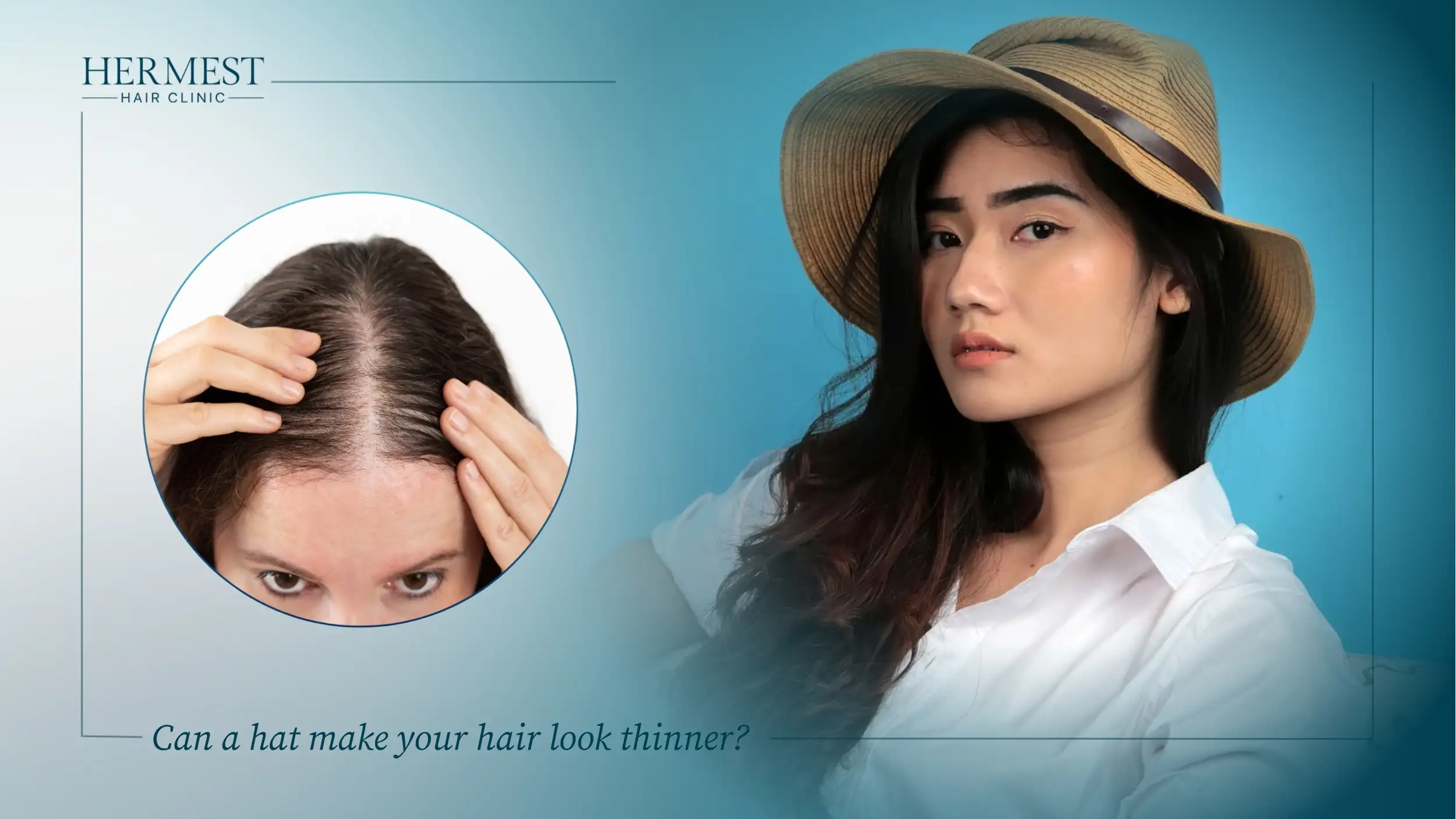
A hat can flatten your hair and make it look less full for a while, but that is a styling effect, not a loss of density. Persistent thinning is a different matter and has other causes, including genetic hair loss and repeated mechanical tension.
Appearance alone cannot tell you which one you are dealing with. Use this table as a guide to what you might be seeing, not as a home diagnosis.
| Hair concern | What you may notice |
|---|---|
| Temporary flattening | Hair looks pressed down after removing a hat but returns to normal later. |
| Hair shaft breakage | Short, broken strands appear in areas exposed to repeated friction. |
| Traction-related hair loss | Thinning develops where hair is repeatedly pulled or held under tension. |
| Pattern hair thinning | Hair gradually becomes finer or less dense in a typical distribution, such as the temples or crown. |
When tight headwear can damage the hairline
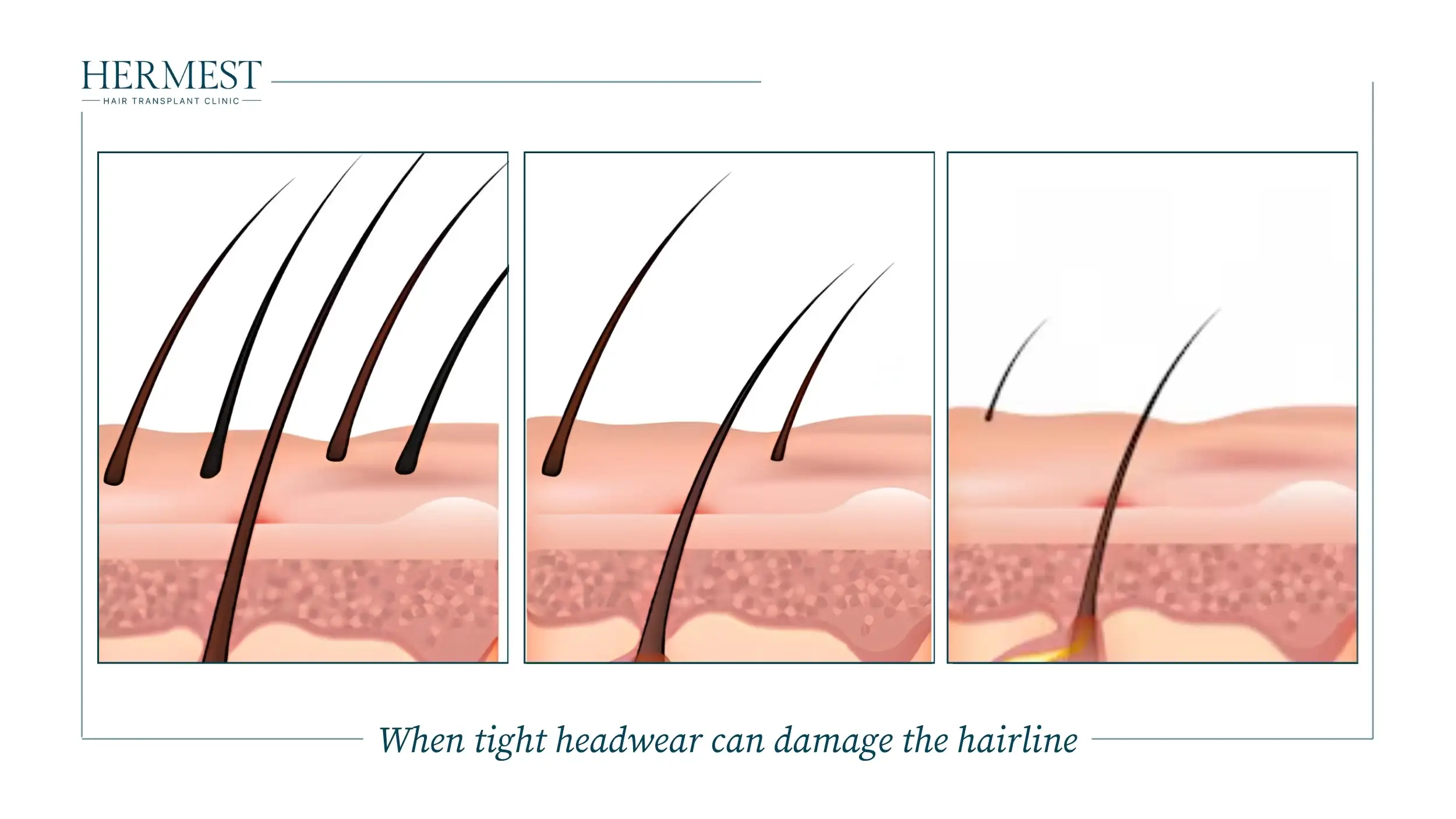
Repeated tension can damage hair, particularly when tight headwear is worn over tight buns, braids, or ponytails. When hair is pulled over a long period, the result is traction alopecia.
Friction can also snap the hair shaft without harming the follicle. This distinction matters: broken hairs usually grow out again, while follicle damage may not recover.
Not every receding hairline is caused by traction. Genetic pattern hair loss and other conditions also affect the hairline, so a changing hairline should be examined rather than blamed on a hat.
Dr. Tugen adds:Repeated tension on the hair can gradually damage follicles, particularly around the hairline. We recommend identifying and removing the source of tension early because the possibility of recovery depends on how long the damage has been present and whether scarring has developed.
Why loose hairs inside your hat prove nothing?
Finding hairs inside your cap does not mean the hat pulled them out. Everyone sheds hair daily, and strands that have already detached get caught in the fabric.
A better test is whether your hair looks visibly thinner over weeks and months. If you notice ongoing shedding or a change in density, look at the wider picture rather than blaming one accessory.
Do caps and beanies affect hair differently?
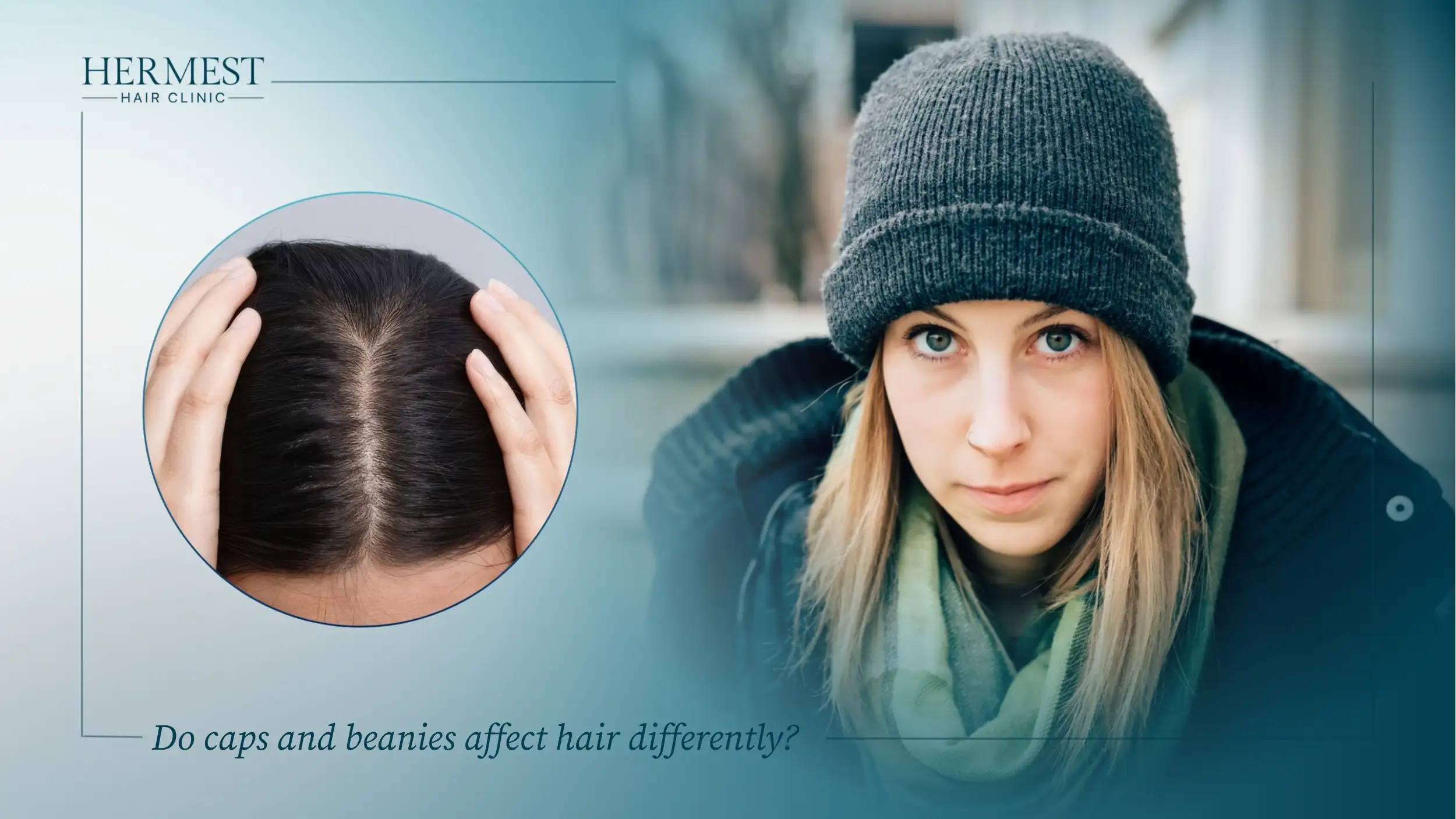
Fit, friction, and the hairstyle underneath matter far more than the type of hat. Neither caps nor beanies cause pattern baldness when worn comfortably.
Caps
A cap does not cause hair loss simply by covering your scalp. An adjustable band that is too tight, or one that tugs at the hairline every time you put it on, can cause discomfort and mechanical damage. Choose a fit that sits comfortably, and adjust or change the style if you notice rubbing or irritation.
Beanies
A beanie does not cause hair loss on its own. One that is very tight, or that rubs constantly, may damage hair shafts, especially if your hair is already under tension. Some people also find certain fabrics irritate the scalp. If a beanie makes your scalp itchy or sore, switch the material or size.
No hat category is inherently better or worse for hair. Comfort and low mechanical stress are the useful measures.
Is wearing a hat every day bad for your hair?
Wearing a hat every day is not inherently bad. Daily hat use only becomes a problem if it pulls on your hair, creates constant friction, or leaves your scalp irritated.
Men who wear caps regularly often worry that covering the head will bring on inherited thinning. It will not: male pattern hair loss is genetic and hormonal. If you notice gradual thinning at the temples or crown, look at those factors instead. You can read more about hormonal factors behind hair thinning.
Hats and hair loss in women
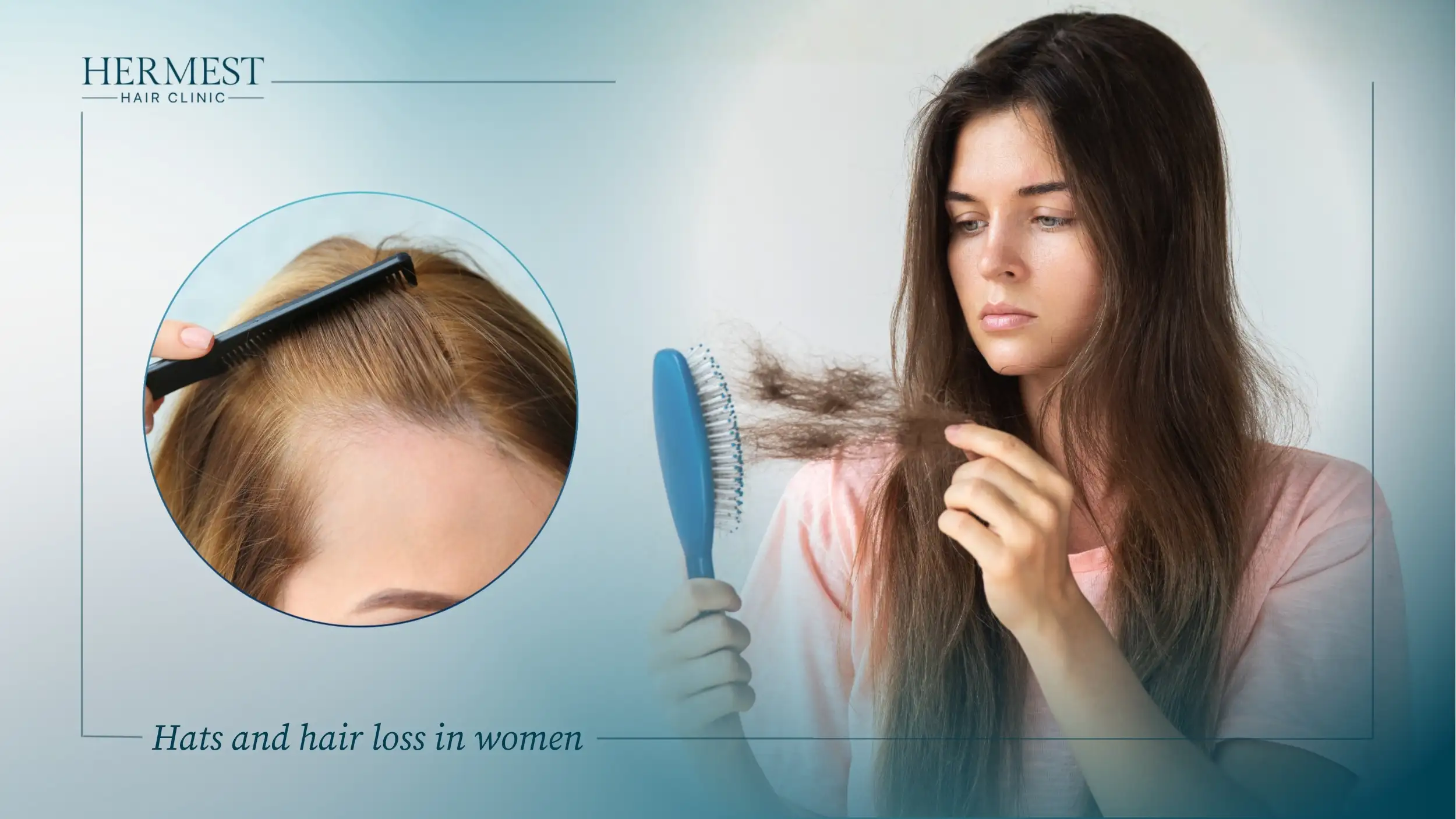
Hats do not normally cause hair loss in women either. The same caveat applies: tight headwear over tightly secured styles can increase tension around the hairline.
Women can experience traction alopecia, female pattern hair loss, and other types of thinning, each with different causes and treatments. If you notice thinning around your edges or a gradual drop in density, a proper examination will identify the cause far more reliably than changing your headwear.
Do hats affect how fast hair grows?
No. Hair growth depends on the hair growth cycle and the health of the follicles, not on whether your head is covered. Hats neither speed up nor slow down growth, and they are not a treatment for baldness.
Some headwear protects hair from sun and wind, but that is not the same as stimulating regrowth. Low-level laser caps, which are medical devices designed to deliver light to the scalp, are a separate category and should not be compared with an ordinary cap or beanie.
Hat hygiene and scalp health
Hats trap heat and sweat against the scalp. For most people, this is harmless, but for those prone to scalp conditions, it can make problems worse. Sweat, oil, and product buildup in a rarely washed hat can aggravate folliculitis (inflamed hair follicles) and seborrheic dermatitis (flaky, itchy, inflamed skin). These conditions can cause redness, itching, and temporary shedding, and they are worth treating in their own right.
Wash hats and beanies according to the care label, avoid wearing a damp hat for long periods, and rotate between several if you wear one daily.
How to wear a hat without pulling on your hair?
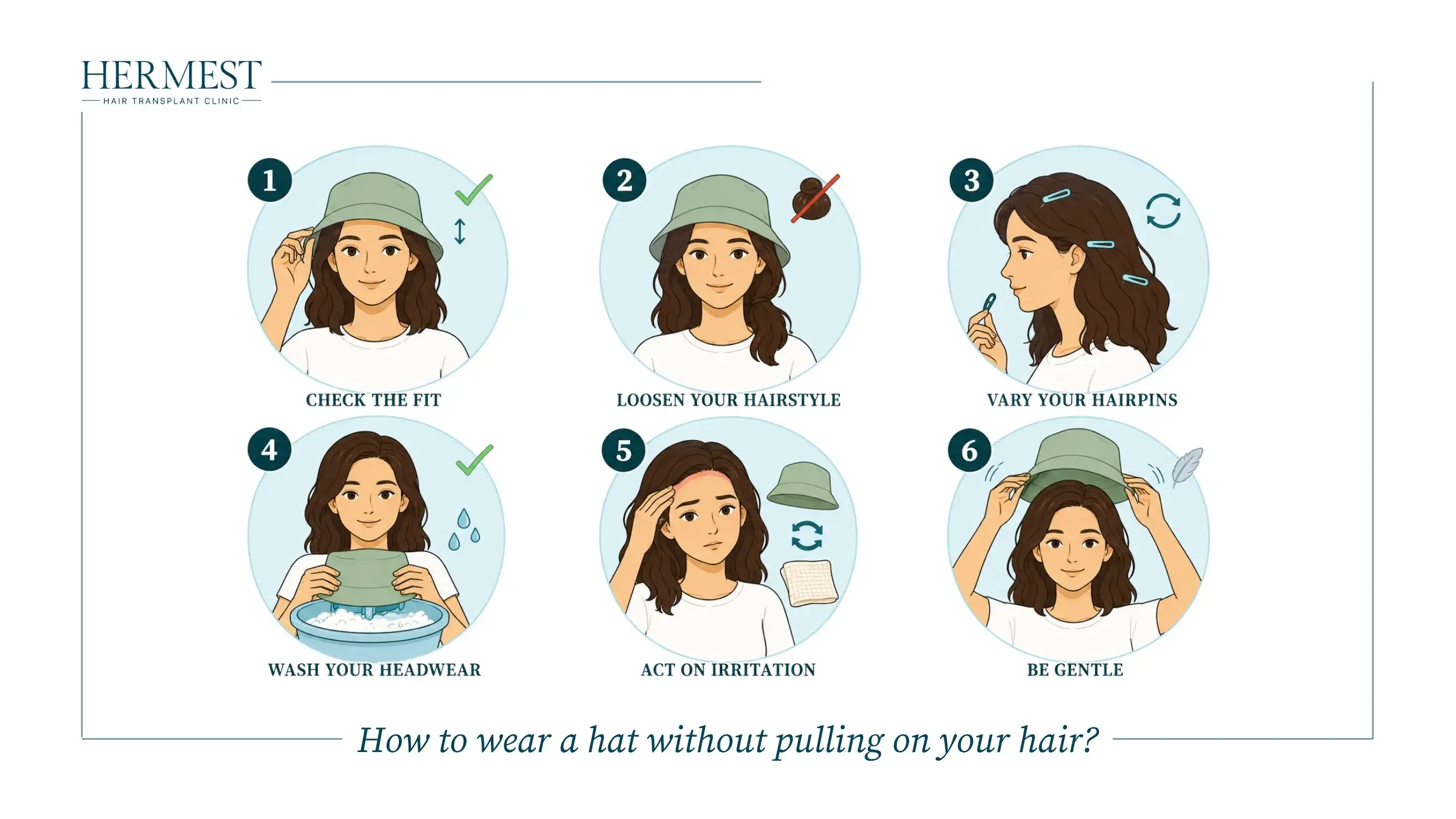
Small changes reduce tension and friction:
- Check the fit: Choose a hat that sits comfortably and does not drag on your forehead or hairline.
- Loosen your hairstyle: Avoid tight buns, braids, or ponytails under your hat.
- Vary your hairpins: Securing hair in the same place every day concentrates tension in one spot.
- Wash your headwear regularly: This limits sweat and oil buildup against the scalp.
- Act on irritation: If a hat repeatedly causes itching or soreness, change the material or fit.
- Be gentle: Take care when putting on and removing snug headwear.
Helmets and other protective head coverings must always be fitted correctly. Never loosen safety equipment against its instructions to relieve pressure on your hair.
If you wear a religious head covering, you do not need to give it up because of hair concerns. Choose comfortable styling that avoids pulling on the same areas repeatedly.
When should you see a doctor about hair loss?
Arrange an assessment if you notice persistent thinning, bald patches, or a changing hairline. Pain, inflammation, or other ongoing scalp symptoms should also be checked rather than put down to a hat.
Possible explanations include genetic pattern thinning, alopecia areata, telogen effluvium, traction alopecia and scalp conditions. A clinician will usually ask:
- When you first noticed the hair loss
- Whether thinning affects specific areas or the whole scalp
- Whether your hairline or crown is changing
- Whether you have scalp irritation or other symptoms
- About your health history and other possible contributing factors
A scalp examination helps tell these conditions apart and guides the next steps. Our guide to the other causes of hair loss explains why thinning can happen even if you never wear headwear. For a detailed look at how specialists investigate hair loss, the American Academy of Dermatology’s guide to diagnosing hair loss is a useful medical resource.
Frequently asked questions
It depends on the extent and cause of the damage. Early traction-related hair loss often improves once the source of tension is removed. Long-standing damage that has caused scarring can limit regrowth. A medical assessment can help establish what to expect.
Get guidance on hair loss at Hermest Clinic
If you are still asking whether wearing a hat causes hair loss because your hairline is changing or your hair is becoming thinner, understanding the real cause should come first. Hermest Clinic offers a free hair-loss assessment to help you understand your concerns and discuss suitable next steps. Contact our team to request yours.
If you experience sudden bald patches, pain, or scalp inflammation, arrange a local medical examination rather than waiting for an online review.
Sources
- Cleveland Clinic: Can Wearing a Hat Cause Hair Loss?
- American Academy of Dermatology: Hair loss: Diagnosis and treatment