
Buzz Cut for Receding Hairline: Best Styles & Expert Tips
 ChatGPT
 Claude
 Perplexity
 Grok
Grok
 Gemini


Choosing a buzz cut for receding hairline is one of the most common styling decisions men make after noticing thinning at the temples or a changing hairline. A shorter haircut won’t stop hair loss, but it can dramatically improve your overall appearance by reducing the contrast between thicker and thinner areas. For many men, that simple change creates a cleaner, sharper, and more confident look.
If you’re wondering, “Should I buzz my hair if my hairline is receding?”, the answer depends on your hair density, stage of hair loss, and personal style. A buzz cut works exceptionally well for many men with early temple recession or a mature hairline, but the ideal guard length and style vary from person to person. In some cases, pairing a buzz cut with medical treatment or planning for future hairline restoration offers the best long-term strategy.
According to the American Academy of Dermatology (AAD), male pattern baldness is progressive, meaning the hairline and crown may continue changing over time if left untreated. That makes it important to think beyond today’s haircut and consider how your hairstyle will look as your hair loss evolves.
A buzz cut is also popular among men preparing for or recovering from a FUE hair transplant. It creates a uniform appearance, makes post-operative care easier, and allows new growth to blend naturally during recovery.
Dr. Ahmet Murat says:
“A buzz cut doesn’t hide a receding hairline. What it does is reduce visual contrast between thicker and thinner areas, making the overall appearance look more balanced. We often recommend it to patients before treatment, during medical therapy, or after hair transplantation because it creates a natural, well-groomed look while the hair changes over time.”
In this guide, you’ll learn whether a buzz cut with receding hairline is right for you, which guard length works best at different stages of hair loss, how face shape and beard style influence the result, and when a haircut alone is enough versus when medical treatment or a hair transplant should be considered.
Quick Insights
- A buzz cut for receding hairline reduces visual contrast, making thinning areas appear less noticeable.
- The haircut improves appearance but does not stop or reverse male pattern baldness.
- #1 and #2 guards suit many men with early to moderate hairline recession, though the ideal length depends on hair density and scalp visibility.
- Matching the buzz cut to your Norwood stage usually creates a better result than choosing a guard length based only on trends.
- A well-maintained beard can improve facial balance and complement a short haircut.
- Mid and low fades often work better than high fades for men with noticeable temple recession.
- Buzzing your hair does not make it grow back thicker. Hair thickness depends on follicle health, not haircut frequency.
- Medical treatments such as minoxidil and finasteride may help preserve existing hair, while FUE hair transplantation can restore lost hair in suitable candidates.
- Long-term success comes from combining the right hairstyle with an evidence-based hair restoration strategy.
Why Does a Buzz Cut Work for a Receding Hairline?
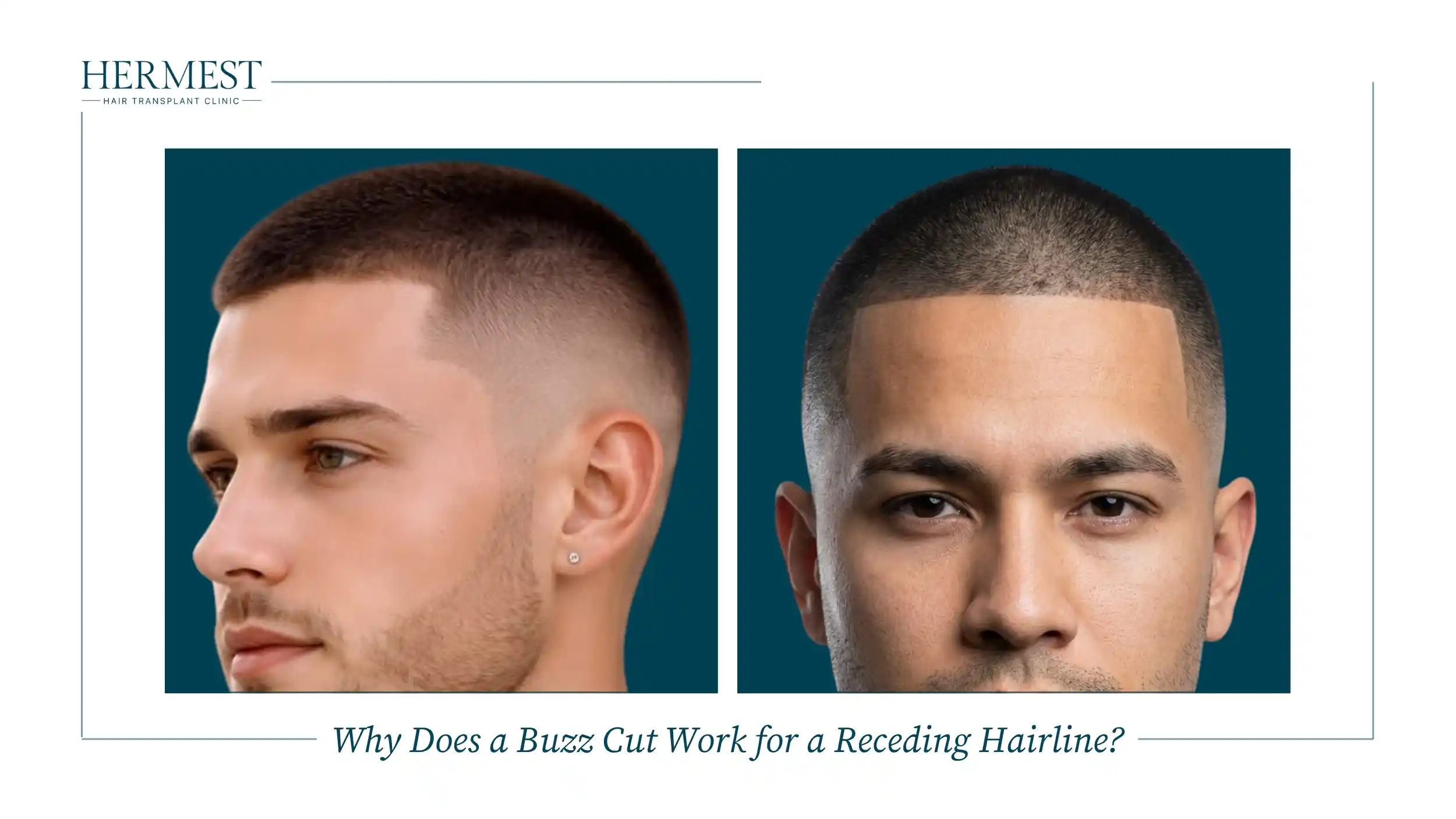
A buzz cut has earned its reputation as one of the best haircuts for balding men for a simple reason: it creates visual balance. Instead of trying to hide thinning areas with longer hair, it embraces a clean, uniform look that makes the difference between dense and thinning hair far less noticeable. The haircut doesn’t change your hairline, but it can change how people perceive it.
The Contrast Effect
One of the biggest reasons a buzz cut with receding hairline looks good is something barbers call the contrast effect. When the hair on top is much longer than the hair at the temples or crown, the difference in density becomes obvious. Longer hair naturally draws attention to thinning areas, making them appear more pronounced.
A buzz cut reduces this contrast by keeping the entire head at a similar length. As a result:
- Temple recession becomes less noticeable.
- Thin areas blend more naturally.
- The overall haircut looks intentional rather than compensatory.
This is why many barbers recommend shorter styles for men experiencing male pattern baldness.
Why Shorter Hair Often Looks Fuller
Many people assume longer hair creates the illusion of more volume. For thinning hair, the opposite is often true.
Long strands separate more easily, exposing the scalp beneath. Short hair stands more evenly and reflects light more consistently, helping create the appearance of greater density. This effect is especially noticeable in men with early M-shaped hairline changes or mild thinning around the temples.
Dr. Ahmet Murat explains:
“Patients often ask whether growing their hair longer will hide a receding hairline. In most cases, shorter hair actually produces a more natural appearance because it reduces the contrast between healthy and thinning areas. The goal is balance, not camouflage.”
When a Buzz Cut Doesn’t Work as Well
Although a buzz cut receding hairline style suits many men, it isn’t the ideal choice for everyone. You may need to adjust the guard length or consider alternative styles if you have:
- Very advanced crown thinning.
- Extensive diffuse thinning across the entire scalp.
- Significant scalp scarring.
- Irregular head shape that becomes more visible with very short hair.
In these situations, a slightly longer buzz cut, a fade, or another short hairstyle may provide a more flattering result.
A Buzz Cut Is a Style Choice, Not a Hair Loss Treatment
A buzz cut improves appearance by changing proportions, not by slowing hair loss. Hereditary hair loss continues unless the underlying condition is treated. If your hairline is actively receding, treatments such as minoxidil, finasteride, or, in appropriate candidates, a hair transplant may help preserve or restore hair over the long term.
For many men, the best strategy combines a well-chosen haircut with an evidence-based treatment plan. That approach helps you look your best today while protecting your hair for the future.
Best Buzz Cut Length for Different Hair Loss Stages
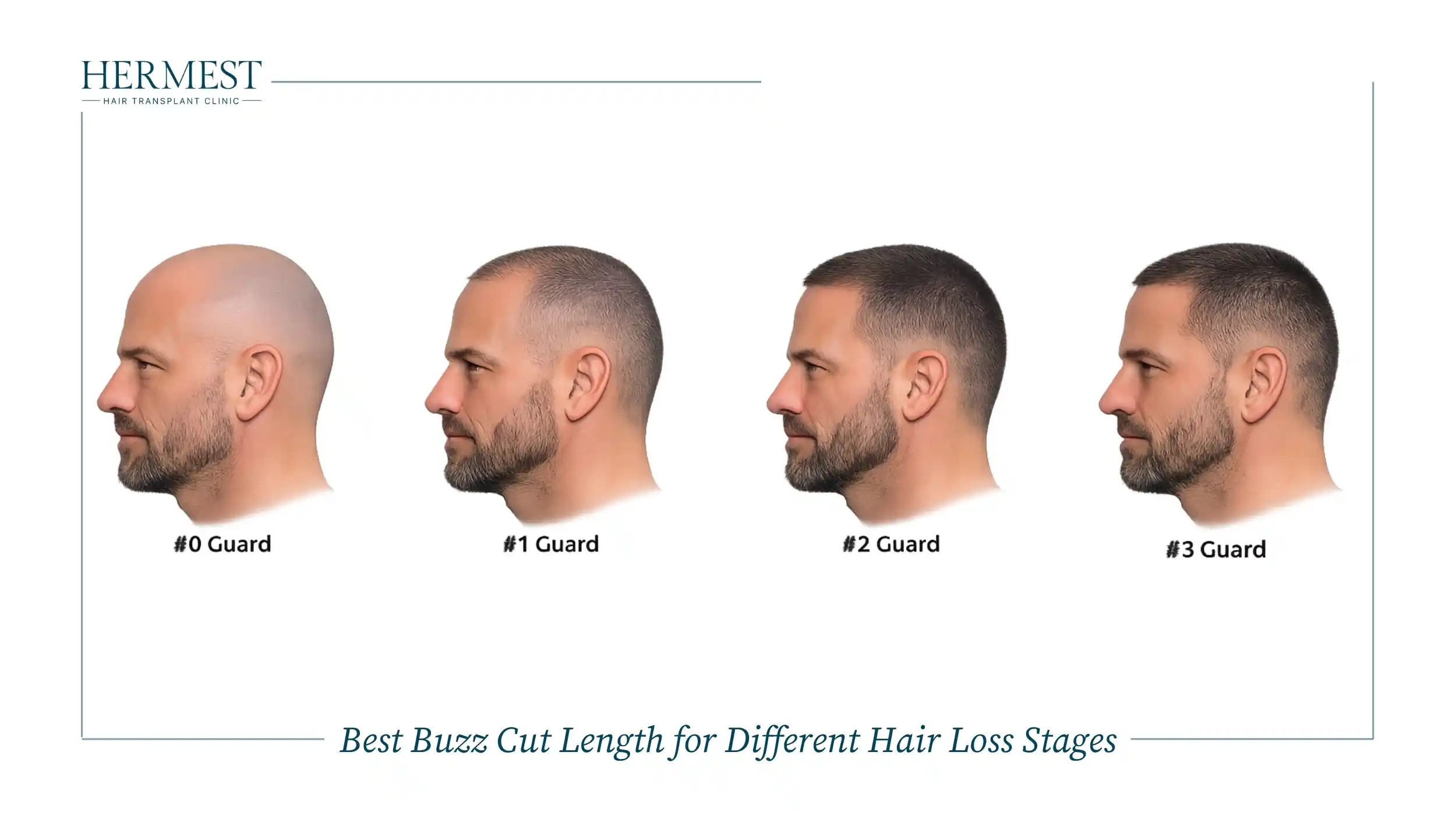
Choosing the right clipper guard can make a noticeable difference in how a buzz cut for thinning hair looks. There isn’t a single “perfect” length for everyone. The best choice depends on your hair density, the amount of temple recession, scalp visibility, and personal preference. In general, the more evenly the hair blends across the scalp, the more natural the result appears.
#0 Guard (Induction Cut)
A #0 buzz cut, often called an induction cut, is done with no guard attached and leaves almost no visible hair, little more than stubble. This style creates the least contrast between the hairline and the rest of the scalp, making it a popular option for men with advanced male pattern baldness or significant crown thinning. Advantages include:
- Very clean appearance.
- Minimal maintenance.
- Reduced emphasis on thinning areas.
- Easy transition if you later decide to shave completely.
However, a #0 cut also exposes your scalp, head shape, scars, and skin tone more than any other guard length.
#1 Guard
A #1 buzz cut leaves roughly 3 mm of hair and is one of the most versatile choices for men with a receding hairline. It leaves a small amount of hair while still minimizing the contrast between thicker and thinner areas.
Many men with Norwood 2 or Norwood 3 hair loss find that a #1 guard creates a balanced appearance without making the scalp look overly exposed. It also pairs well with a neatly trimmed beard.
Dr. Ahmet Murat says:
“If someone asks for a single buzz cut length that suits the widest range of patients, a #1 guard is often an excellent starting point. It maintains definition while reducing the visual impact of temple recession.”
#2 Guard
The #2 guard leaves roughly 6 mm of hair, enough to create a softer appearance while still keeping the haircut neat. It often works well for men who have:
- A mature hairline.
- Mild temple recession.
- Thick hair density.
- Minimal crown thinning.
If the hair on top has already become significantly thinner, however, a #2 may increase the contrast between dense and thinning areas.
#3 Guard
A #3 buzz cut leaves roughly 10 mm of hair, keeping noticeably more length on the scalp. For men with minimal hair loss and naturally thick hair, it can provide a fuller appearance.
On the other hand, if hairline recession or crown thinning has become more pronounced, the additional length may actually highlight the differences in density. In those cases, shorter guards often produce a cleaner overall result.
Which Guard Is Best?
There is no universal answer. Your ideal buzz cut length depends on several factors:
- The stage of your hair loss.
- Hair thickness.
- Hair color.
- Scalp visibility.
- Head shape.
- Beard style.
As a general guide, the 3 to 6 mm range suits most men with a receding hairline. Going shorter than 3 mm exposes more scalp and increases shine, while going longer than 6 mm tends to make uneven areas more noticeable. Some barbers also blend two lengths, using the shorter guard over the thinner areas and one step longer over the denser zones, then fading the transition so the change is invisible.
Buzz Cut by Norwood Stage
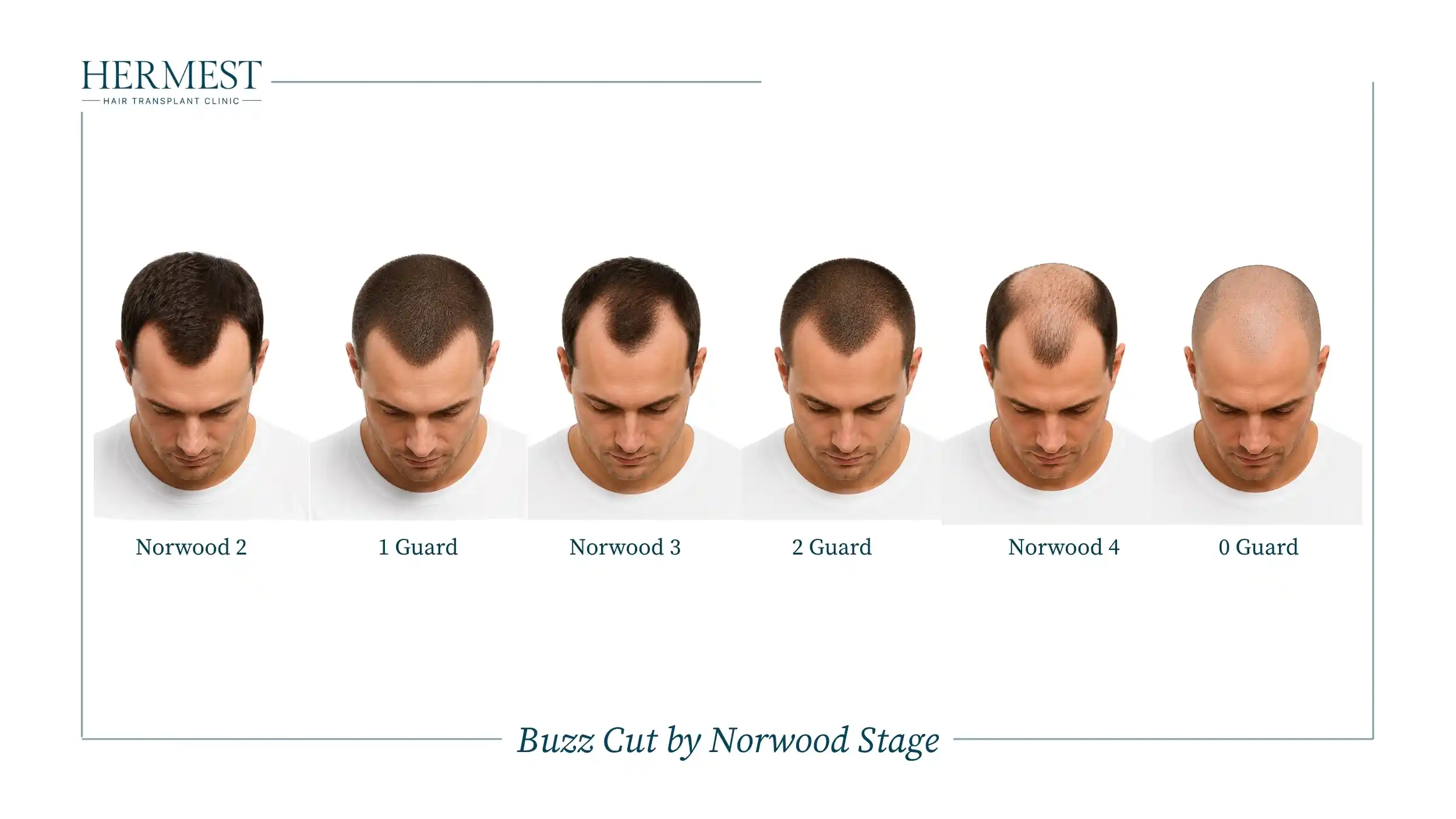
Not every buzz cut with receding hairline produces the same result. The appearance depends heavily on how advanced your hair loss has become. A haircut that looks great at Norwood 2 may not be the best choice for someone with extensive crown thinning or advanced frontal recession. Matching your haircut to your stage of hair loss usually creates a more balanced and natural appearance.
Norwood 2
Norwood 2 typically involves mild temple recession without significant loss of overall density. This stage is often ideal for a buzz cut because the hairline remains well defined and the contrast between the temples and the rest of the scalp is relatively small.
A #1 or #2 guard usually works well. Many men at this stage can maintain a youthful appearance while making early hairline recession less noticeable.
Norwood 3
At Norwood 3, the temples recede more deeply, creating a more recognizable M-shaped hairline. A buzz cut continues to work well, particularly if hair density across the top remains good.
Many barbers recommend shorter guards because they reduce the visual difference between the frontal hairline and the temples. Adding a well-groomed beard often helps create stronger facial balance.
Dr. Ahmet Murat says:
“Norwood Stage 3 is often where patients begin considering both hairstyle changes and medical treatment. A buzz cut creates an immediate cosmetic improvement, while preserving existing hair with evidence-based treatment helps maintain that appearance over time.”
Norwood 4
Norwood 4 usually combines more noticeable frontal recession with thinning at the crown.
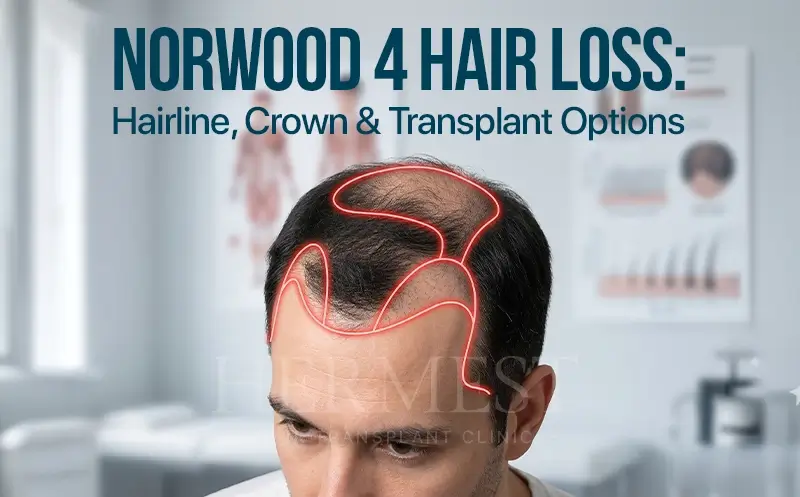
A buzz cut can still look excellent, but the guard length becomes more important. Very long buzz cuts may emphasize the difference between thicker and thinner areas. Many men prefer a #0 or #1 guard, creating a more even appearance across the scalp.
At this stage, some patients also begin exploring hair transplant options to restore the frontal hairline while continuing medical treatment to protect existing hair.
Norwood 5 and Beyond
As male pattern baldness progresses beyond Norwood 5, the bridge of hair between the front and crown often becomes much thinner.
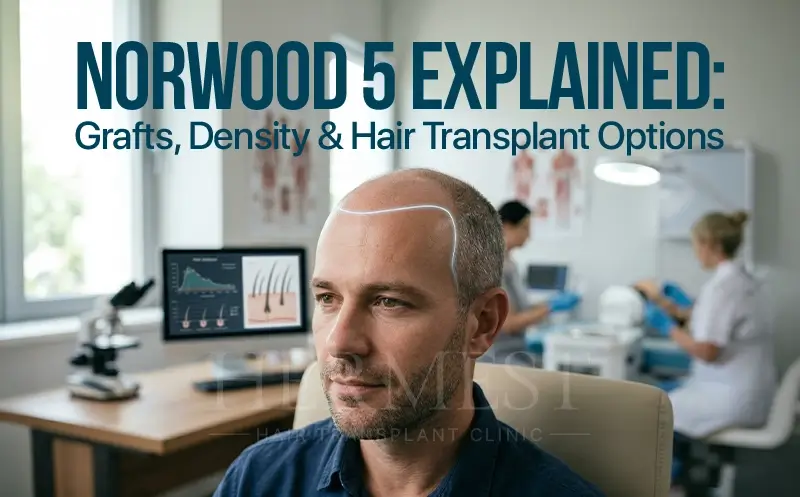
Many men choose either:
- A very short buzz cut.
- A fully shaved head.
Both styles reduce contrast and create a cleaner overall appearance than attempting to style longer thinning hair. For suitable candidates, FUE hair transplant surgery may also become part of a long-term restoration plan.
Temple Recession vs Crown Thinning
Not all hair loss patterns respond to a buzz cut in the same way. If your main concern is temple recession, a buzz cut often creates excellent balance because it minimizes the contrast around the frontal hairline.
If your primary issue is crown thinning, the haircut may still improve your appearance, but the scalp can remain more visible under bright lighting depending on your hair density and color.
Buzz Cut vs Shaved Head
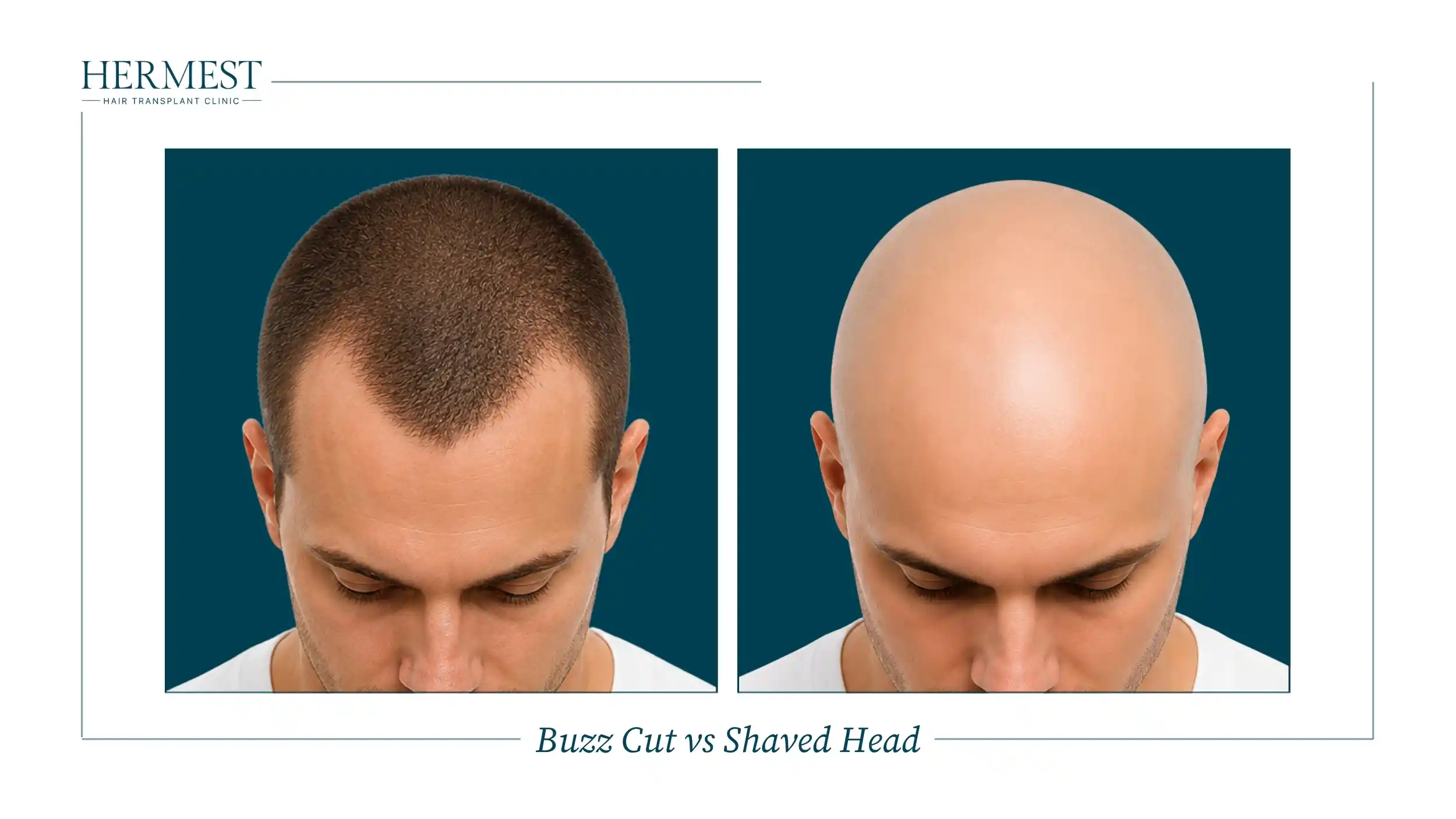
Many men reach a point where they ask themselves another important question: Should I get a buzz cut or shave my head completely? Both styles work well with a receding hairline, but they create different overall appearances. The right choice depends on your stage of hair loss, hair density, head shape, and how much maintenance you’re comfortable with.
Benefits of a Buzz Cut
A buzz cut leaves a small amount of hair across the scalp, creating subtle texture and definition. For many men with temple recession or mild to moderate thinning, this texture softens the transition between the hairline and the forehead. A buzz cut also offers several practical advantages:
- Creates a clean, intentional appearance.
- Requires very little daily styling.
- Makes thinning areas less noticeable.
- Works well with most face shapes.
- Can easily be adjusted by changing the clipper guard.
For men in the early stages of male pattern baldness, it often provides an excellent balance between simplicity and coverage.
Benefits of a Shaved Head
A fully shaved head removes virtually all visible contrast between thick and thin hair. This approach is particularly popular among men with advanced Norwood 5 or Norwood 6 hair loss, where longer hair may emphasize sparse areas.
A shaved head can create a confident, bold appearance, but it also makes your scalp, skin tone, scars, and head shape much more noticeable. Regular shaving every few days is usually needed to maintain a smooth finish.
Dr. Ahmet Murat says:
“Many patients assume shaving their head is the only option once hair loss progresses. In reality, a very short buzz cut often creates a softer and more natural appearance while preserving some texture. The best choice depends on the individual’s hair pattern rather than a general rule.”
Which Style Looks Younger?
There isn’t a universal answer. Men with mild hairline recession often appear younger with a buzz cut because the remaining hair still frames the face naturally.
Those with more advanced hair loss sometimes find that a shaved head creates a cleaner appearance than trying to maintain sparse hair. Facial hair, skin tone, and overall grooming also influence the final result.
Comparing Maintenance
Both styles are easy to maintain, but they require different routines. A buzz cut usually needs trimming every two to four weeks, depending on how quickly your hair grows and how short you prefer to keep it.
A shaved head often requires shaving every two or three days to maintain a consistently smooth appearance. Scalp care is equally important for both styles. Regular moisturizing and sun protection help keep the scalp healthy, especially since shorter hair provides less protection from ultraviolet exposure.
Does Face Shape Matter?
Yes. Your face shape can influence how a buzz cut for thinning hair looks, sometimes just as much as your hairline itself. A buzz cut exposes more of your facial features than longer hairstyles, so creating balance becomes especially important.
The goal isn’t to match a trend. It’s to choose a haircut that complements your natural proportions while making hairline recession appear less noticeable.
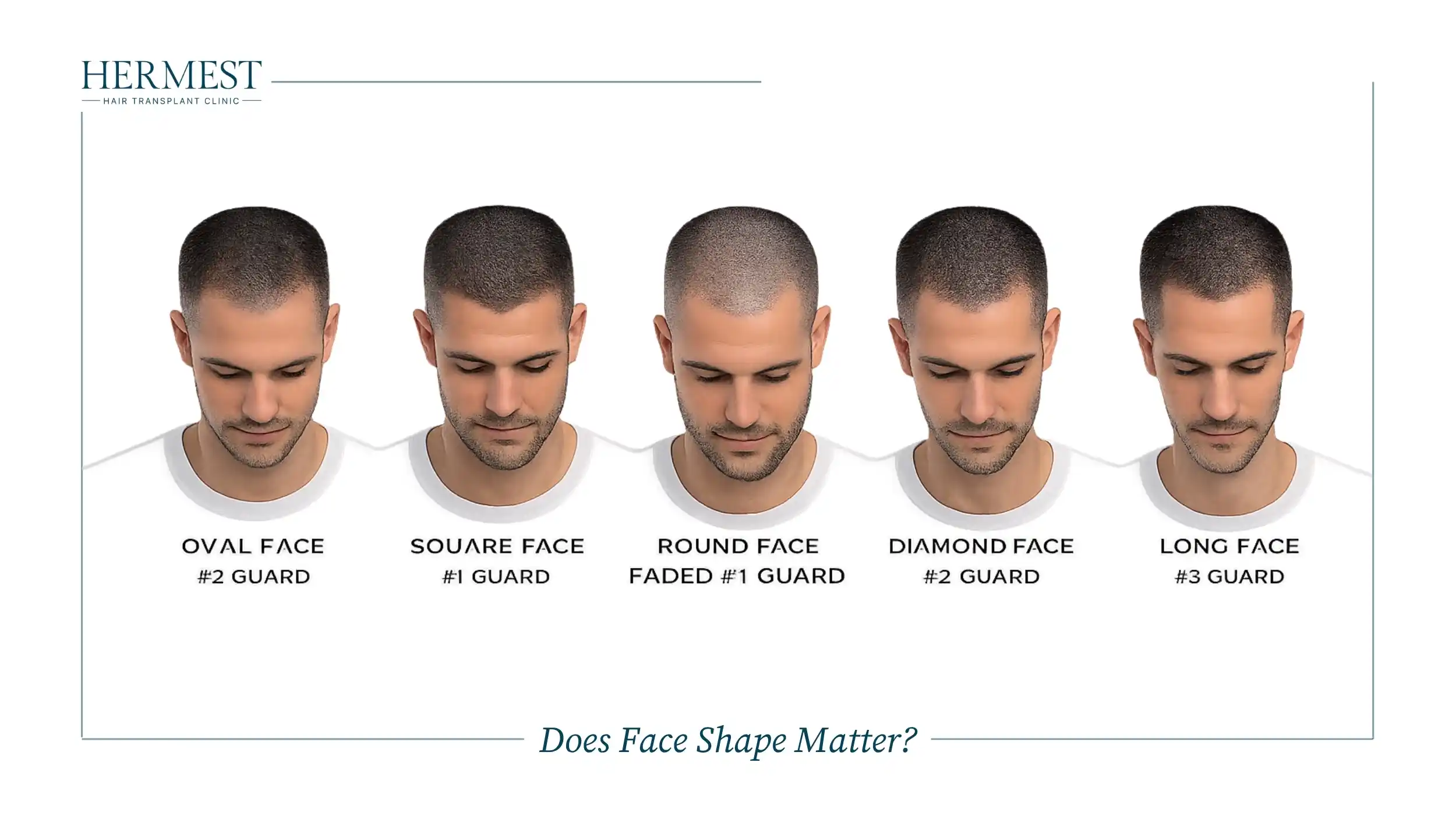
Oval Face
Men with an oval face generally have the most flexibility. The balanced proportions of an oval face suit almost every buzz cut length, from a #0 induction cut to a #3 guard.
If you have mild temple recession, a #1 or #2 guard often creates a clean, natural appearance without drawing unnecessary attention to the hairline.
Square Face
A square jawline pairs exceptionally well with short hair. The strong facial structure naturally balances a buzz cut with receding hairline, making the hairstyle appear intentional rather than a way to hide hair loss.
Adding light stubble or a neatly trimmed beard can further emphasize the jawline and create an even stronger overall look.
Round Face
Round faces benefit from creating more definition. A very short buzz cut combined with a subtle fade can make the face appear longer and leaner.
Keeping some length in the beard often helps improve facial proportions without distracting from the haircut.
Dr. Ahmet Murat says:
“When discussing hair restoration, we always consider facial proportions alongside the hairline itself. The same principle applies to buzz cuts. The most attractive result is the one that creates harmony between the face, hairline, and beard rather than focusing on the hair alone.”
Heart and Diamond Faces
Men with heart-shaped or diamond-shaped faces often have wider cheekbones and a narrower chin. A buzz cut generally works well, but an extremely short shave may make the forehead appear proportionally larger if temple recession is already noticeable.
A #1 or #2 guard usually provides a softer transition while maintaining facial balance. A short beard can also help broaden the lower face.
Long Face
If your face is naturally long, an ultra-short buzz cut may make it appear even longer. A slightly longer buzz cut hairline style, such as a #2 or #3 guard, often produces a more balanced appearance by adding subtle texture without emphasizing hair loss.
Avoid extremely high fades if your goal is to reduce the visual length of your face.
Your Hairline Isn’t the Only Feature People Notice
Many men become so focused on their receding hairline that they overlook everything else. In reality, people see your face as a whole. Jawline, beard, eyebrows, glasses, skin tone, posture, and confidence all influence how a haircut looks.
Buzz Cut with Beard
A beard can completely change how a buzz cut with receding hairline looks. Instead of drawing attention to the upper part of the face, facial hair helps create balance by adding definition to the jawline and lower face.
This is one reason many barbers recommend pairing a buzz cut with a beard, especially for men experiencing temple recession or an M-shaped hairline. The combination often creates a more masculine and well-proportioned appearance without trying to disguise hair loss.
Why Facial Hair Creates Better Balance
As the hairline moves higher, the upper third of the face becomes more prominent. A beard visually redistributes attention, creating a stronger connection between the jawline and the rest of the face.
This simple change can make the overall facial proportions appear more balanced. The effect is particularly noticeable in men with:
- Early hairline recession.
- Mild crown thinning.
- A naturally high forehead.
- Strong jawlines.
The goal isn’t to distract from the hairline. It’s to create harmony across the entire face.
Dr. Ahmet Murat says:
“Patients often focus exclusively on restoring the hairline, but facial balance is equally important. A well-groomed beard and the right haircut can dramatically improve overall appearance, sometimes even before any medical treatment begins.”
Choosing the Right Beard Length
Longer isn’t always better. The ideal beard length depends on your face shape, hair density, and personal style. As a general guide:
- Light stubble complements most buzz cut styles.
- A short boxed beard suits men with Norwood 2 or Norwood 3 hair loss.
- Fuller beards often pair well with advanced male pattern baldness.
- Well-defined cheek and neckline lines create a cleaner finish.
Regular trimming is just as important as choosing the right length.
Styling Combinations That Work Well
A few classic combinations consistently produce balanced results. Popular pairings include:
- #1 buzz cut + short boxed beard.
- #2 buzz cut + designer stubble.
- #0 induction cut + full beard.
- Buzz cut with low fade + neatly trimmed beard.
The best choice depends on your facial proportions rather than current trends.
Beard Care Matters Too
A well-maintained beard improves the overall appearance far more than simply allowing facial hair to grow. Regular washing, trimming, moisturizing, and shaping help keep the beard looking intentional and polished.
Sharp cheek lines and a clean neckline often make a bigger difference than beard length itself.
A Buzz Cut and Beard Won’t Stop Hair Loss
Although this combination can significantly improve your appearance, it doesn’t affect the progression of male pattern baldness. According to the American Academy of Dermatology (AAD), hereditary hair loss continues unless the underlying process is treated. If your receding hairline is becoming more noticeable, evidence-based treatments such as minoxidil, finasteride, or, for suitable candidates, FUE hair transplant surgery may help preserve or restore your hair.
Should You Get a Fade?
A fade is one of the easiest ways to modernize a buzz cut for receding hairline, but choosing the wrong fade can have the opposite effect. The height and transition of the fade influence how noticeable your hairline appears, especially around the temples. Rather than automatically asking for the shortest fade available, it’s worth considering how it works with your specific pattern of hair loss.
High Fade
A high fade starts close to the temples and quickly transitions into very short or shaved sides. This style creates a sharp, contemporary appearance, but it isn’t ideal for everyone.
If you have noticeable temple recession, a high fade may draw more attention to the corners of the hairline by exposing more skin around the temples. Men with thick hair and only mild recession often wear this style successfully, but those with deeper recession may prefer a softer transition.
Mid Fade
A mid fade offers one of the most balanced options. The transition begins around the middle of the head, creating a clean appearance without emphasizing the temples as much as a high fade. It works particularly well with:
- Norwood 2 hair loss.
- Mild M-shaped hairline changes.
- Thick or medium-density hair.
- Most face shapes.
For many men, this is the easiest fade to maintain while keeping the haircut versatile.
Dr. Ahmet Murat says:
“When patients ask about fades, we don’t recommend one style for everyone. The fade should complement the existing hairline rather than compete with it. A softer transition often produces a more natural result for men with temple recession.”
Low Fade
A low fade begins just above the ears and creates the most subtle transition of the three. Because more hair remains around the temples, this style often softens the appearance of hairline recession.
It is a popular choice for men who want a classic look while maintaining slightly more coverage around the sides. Low fades also pair well with a #1 or #2 buzz cut.
Should You Choose a Skin Fade?
A skin fade blends the sides completely into bare skin. It creates maximum contrast between the scalp and the remaining hair, producing a bold appearance.
For some men, particularly those with advanced male pattern baldness, this can look sharp and intentional. For others, especially with visible temple recession, the exposed skin may make the hairline appear higher than it actually is.
The Best Fade Matches Your Hair Loss Pattern
There isn’t a single fade that’s best for every buzz cut with receding hairline. Your barber should consider:
- Hair density.
- Temple recession.
- Crown thinning.
- Face shape.
- Beard style.
- Personal preference.
Can a Buzz Cut Slow Hair Loss?
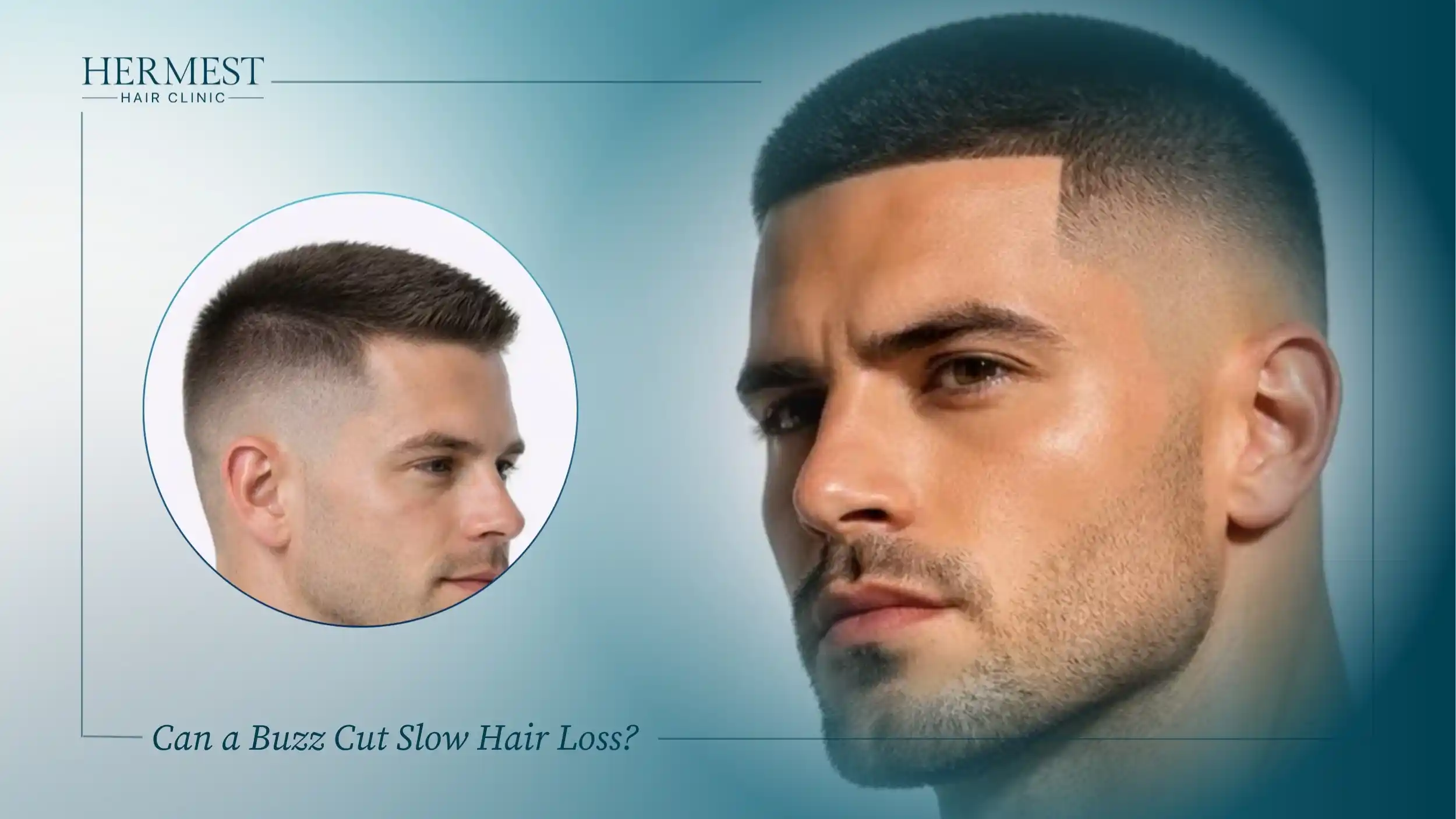
One of the most common myths is that cutting your hair very short can slow hair loss or make it grow back thicker. Unfortunately, that’s not how hair growth works.
A buzz cut for thinning hair can improve your appearance, but it does not change what is happening inside the hair follicles. If you’re experiencing male pattern baldness, the condition will continue to progress unless the underlying cause is treated.
Does Buzzing Your Hair Make It Thicker?
No. This belief has existed for decades, but scientific evidence does not support it.
When hair grows back after a buzz cut, the blunt ends make each strand feel slightly coarser. Since every hair is the same short length, the scalp may also appear more evenly covered. These changes create the illusion of thicker hair, but the follicles themselves have not changed.
Hair thickness is determined by the follicle itself, not by how often the hair is cut.
A Buzz Cut Doesn’t Affect Hair Follicles
Hair grows beneath the skin, inside individual follicles. Clippers only cut the visible hair shaft above the surface. That means a buzz cut receding hairline style has no effect on:
- DHT sensitivity.
- Follicle miniaturization.
- Hair growth cycles.
- Future progression of male pattern baldness.
The haircut changes appearance, not biology.
Dr. Ahmet Murat explains:
“Many patients feel their hair becomes healthier after a buzz cut. What they’re actually seeing is a more uniform haircut. The follicles continue behaving exactly the same way unless we treat the underlying hair loss.”
Medical Treatments That Can Help
If your goal is preserving existing hair rather than simply changing your hairstyle, evidence-based treatments may be appropriate. Depending on your diagnosis, options include:
- Minoxidil to support hair growth.
- Finasteride to reduce the effects of DHT.
- PRP (Platelet-Rich Plasma) therapy in selected patients.
- Lifestyle changes when nutritional or medical factors contribute to shedding.
These treatments work best when started before extensive follicle miniaturization has occurred.
Combining a Buzz Cut with Hair Loss Treatment
Many men choose both. A buzz cut provides an immediate cosmetic improvement by reducing contrast, while medical treatment focuses on preserving existing follicles for the future.
This combination can be particularly helpful during the early stages of hairline recession, when maintaining current density is often more achievable than restoring hair that has already been lost. A buzz cut is one of the smartest hairstyle choices for many men with thinning hair, but it should not be viewed as a substitute for treatment if your hair loss continues to progress.
Buzz Cut Before or After Hair Transplant
A buzz cut is common both before and after a hair transplant, but the reason changes depending on the stage of treatment. Before surgery, it helps create better access to the donor and recipient areas. After surgery, it can make the healing process easier and help new growth blend more naturally. Understanding when it’s safe to cut your hair again is just as important as choosing the right hairstyle.
Before Hair Transplant Surgery
Many clinics recommend a short haircut before FUE hair transplant surgery. A buzz cut offers several practical advantages:
- Makes follicular unit extraction more efficient.
- Allows the surgeon to clearly evaluate hair direction and density.
- Improves visibility during graft placement.
- Creates a more uniform appearance after the procedure.
Not every patient needs to shave their head completely. In selected cases, longer hairstyles or unshaven techniques may be appropriate, depending on the surgical plan and the amount of hair being transplanted.
Dr. Ahmet Murat says:
“The decision to shave before surgery depends on the procedure, the patient’s hairstyle, and the treatment goals. During consultation, we explain every option so patients know exactly what to expect before the transplant begins.”
During the Healing Period
After surgery, mild redness, scabbing, and temporary sensitivity are normal parts of recovery.
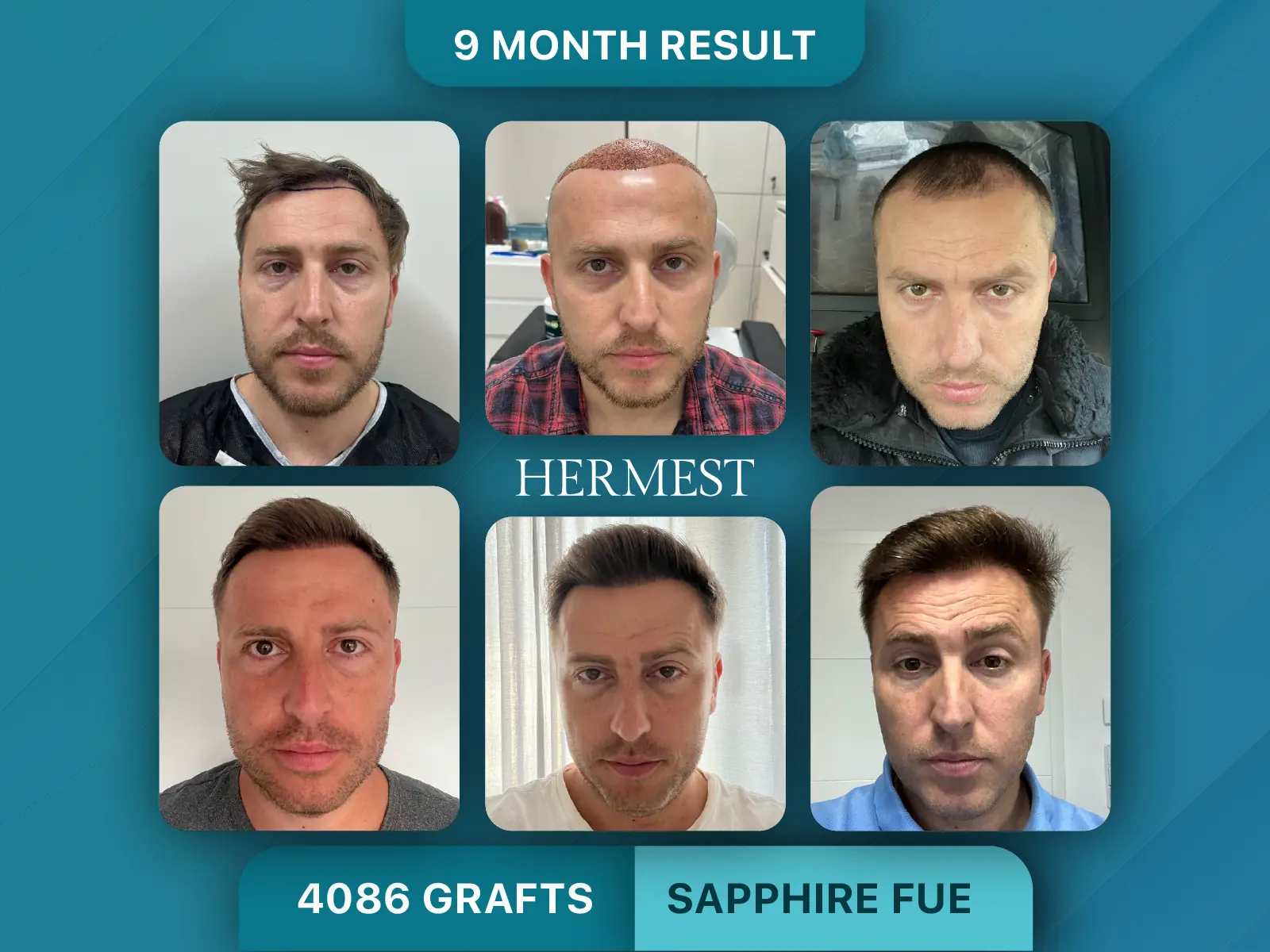
During the first several weeks, the transplanted grafts are still establishing their blood supply and should not be disturbed. For this reason, patients should avoid using hair clippers or visiting a barber until their surgeon confirms it is safe.
Following the clinic’s aftercare instructions is far more important than trying to tidy the hairstyle too early.
When Is It Safe to Buzz Your Hair Again?
The timeline varies slightly between patients and surgical techniques. In most cases, your surgeon will advise when clippers can safely be used without risking the transplanted grafts.
Even after the scalp has healed, using gentle techniques and avoiding unnecessary pressure on the recipient area is recommended during the early months. If you’re unsure, always ask your surgical team before cutting your hair.
Why Many Patients Choose a Buzz Cut During Recovery
A buzz cut can make the transition through the recovery period much easier. As transplanted hairs shed and new growth begins, keeping the surrounding hair short often creates a more even appearance.
It can also reduce the contrast between newly growing hair and existing hair, making the different stages of recovery less noticeable. Many patients continue wearing a buzz cut until the new hair has gained enough length to style normally.
A Buzz Cut Supports Recovery, But It Doesn’t Affect Results
Whether you wear a buzz cut before surgery, during recovery, or after your final results have developed, the hairstyle itself does not influence graft survival or future hair growth. What matters most is choosing an experienced surgical team, following proper aftercare, and allowing the transplanted follicles enough time to heal naturally.
At Hermest Hair Clinic, every patient receives detailed pre-operative and post-operative guidance from Dr. Ahmet Murat and his medical team. From deciding whether to buzz your hair before surgery to knowing when it’s safe to use clippers again, each recommendation is tailored to your procedure, healing progress, and long-term hair restoration goals.
Common Buzz Cut Mistakes
A buzz cut may seem like one of the easiest hairstyles to maintain, but small decisions can have a big impact on the final result. The right length can make hairline recession appear less noticeable, while the wrong approach may unintentionally highlight thinning areas. Avoiding a few common mistakes helps create a cleaner, more balanced appearance.
Choosing the Wrong Guard Length
Many men simply ask for the shortest possible cut without considering their hair density. That isn’t always the best choice.
If your hair is still relatively thick, an extremely short #0 guard may expose more scalp than necessary. On the other hand, a #3 guard can emphasize thinning if the density on top has already decreased. Finding the right balance is usually more effective than automatically choosing the shortest or longest option.
Leaving the Top Too Long
One of the most common barber mistakes is cutting the sides very short while leaving significantly more length on top. This creates stronger contrast between dense and thinning areas, making a receding hairline more noticeable.
A buzz cut works because of its uniformity. Keeping the top only slightly longer than the sides usually creates a cleaner and more natural appearance.
Dr. Ahmet Murat says:
“Many patients believe they need extra length on top to hide hair loss. In reality, uneven lengths often draw more attention to thinning. Consistency usually produces a stronger overall result.”
Ignoring Your Beard and Eyebrows
Your haircut is only one part of your appearance. An untrimmed beard, poorly defined neckline, or neglected eyebrows can reduce the polished look that makes a buzz cut so effective.
Even light stubble can improve facial balance when it’s maintained properly.
Waiting Too Long Between Haircuts
A buzz cut looks best when the length stays consistent. As the hair grows, differences in density become more noticeable again, particularly around the temples and crown.
Many men maintain the style by trimming every two to four weeks, depending on hair growth and preferred guard length.
Trying to Hide the Hairline
The biggest mistake is treating the haircut like camouflage. Combing hair forward, creating artificial fringes, or trying to disguise temple recession often produces the opposite effect.
According to professional barbers and hair restoration specialists, embracing a clean, well-maintained style usually looks far more confident than attempting to conceal thinning areas.
A Haircut Can’t Replace Long-Term Planning
A buzz cut can improve your appearance immediately, but it doesn’t prevent male pattern baldness from progressing.
When Is a Hair Transplant a Better Option?
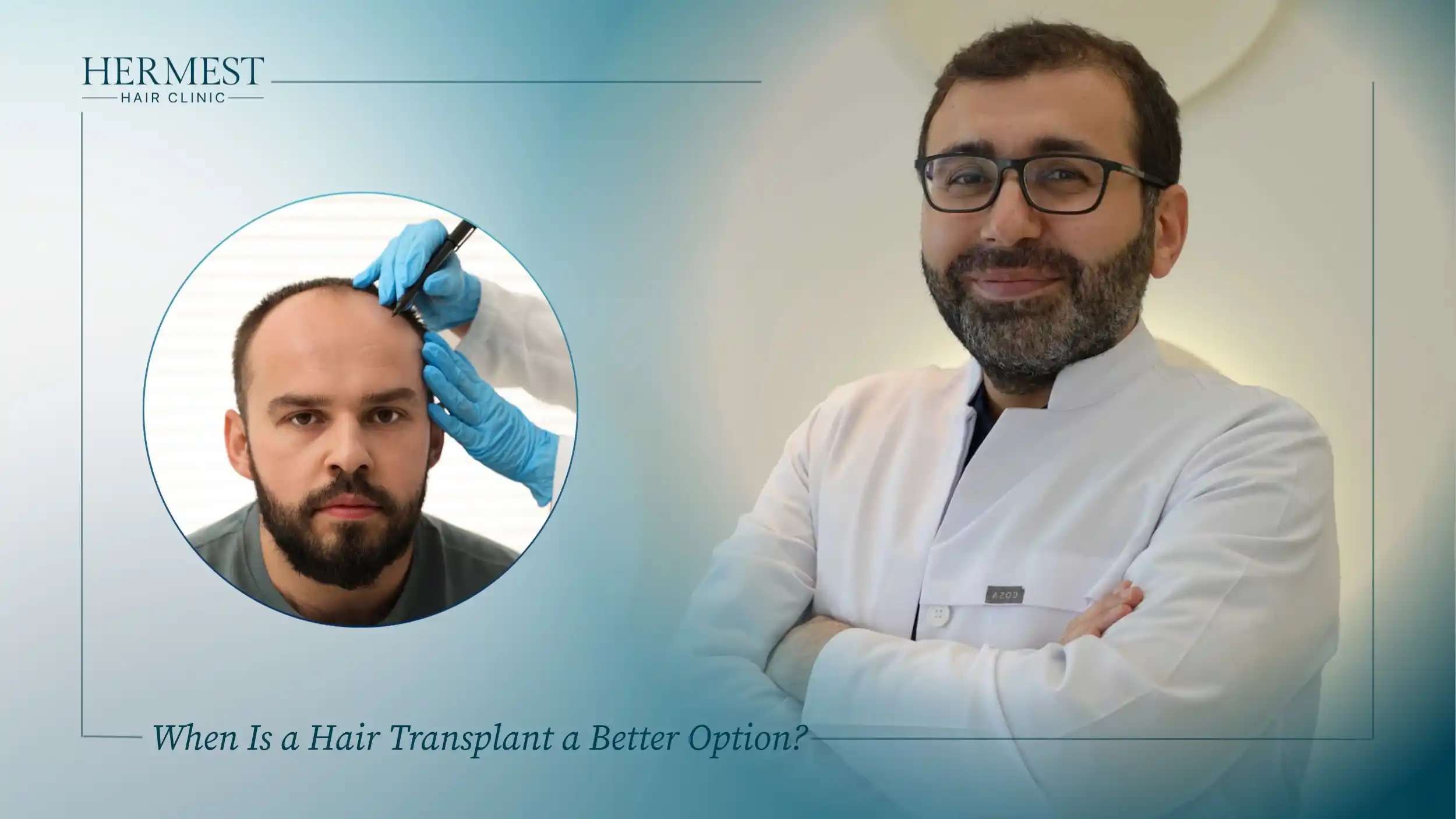
A buzz cut for receding hairline can improve your appearance almost immediately, but it cannot restore hair that has already been lost. For some men, the haircut provides everything they need. For others, it becomes a temporary styling solution while they consider long-term hair restoration.
The key question isn’t whether a buzz cut looks good. It’s whether your current hairline still matches your long-term goals.
When a Haircut Is No Longer Enough
A buzz cut works by reducing contrast. If your hairline recession continues to progress, however, there may come a point where shortening the hair no longer creates the appearance you want. You may be ready to explore additional options if you notice:
- Progressive temple recession each year.
- Increasing crown thinning.
- Difficulty achieving a balanced look, even with a short haircut.
- Loss of confidence despite changing hairstyles.
These situations don’t automatically mean you need surgery, but they often justify a professional hair restoration consultation.
Who Is a Good Hair Transplant Candidate?
A FUE hair transplant is generally considered for men with stable male pattern baldness who have sufficient donor hair and realistic expectations. Several factors influence candidacy, including:
- Current Norwood stage.
- Donor hair density.
- Age.
- Family history.
- Future hair loss risk.
- Overall scalp health.
According to the International Society of Hair Restoration Surgery (ISHRS), careful planning is one of the most important predictors of natural, long-lasting results.
Dr. Ahmet Murat says:
“A successful hair transplant isn’t simply about lowering the hairline. We design every hairline with the patient’s future hair loss in mind. The goal is to create a result that still looks natural many years later.”
Medical Treatment Still Matters
Hair transplantation restores lost hair, but it does not stop the progression of male pattern baldness in untreated follicles. Many patients benefit from combining surgery with evidence-based treatments such as minoxidil or finasteride, when appropriate.
This approach helps preserve existing hair while the transplanted follicles provide permanent coverage in carefully selected areas.
Why Hairline Design Makes the Difference
A natural result depends on far more than the number of grafts. Successful hairline restoration considers:
- Facial proportions.
- Age.
- Hair characteristics.
- Ethnicity.
- Existing density.
- Long-term progression of hair loss.
An overly aggressive hairline may look appealing initially but can appear unnatural as surrounding native hair continues to thin.
The Right Timing Is Different for Everyone
Some men enjoy a buzz cut with receding hairline for many years without ever wanting surgery. Others decide that restoring the temples or frontal hairline better matches their personal goals.
Neither choice is inherently better. The decision depends on your expectations, hair loss pattern, and lifestyle.
At Hermest Hair Clinic, Dr. Ahmet Murat creates individualized treatment plans based on each patient’s current hair loss and future needs. Through the clinic’s Unique FUE® approach, every hairline is designed to complement facial features, preserve valuable donor hair, and maintain a natural appearance over time. Whether you continue wearing a buzz cut, begin medical treatment, or choose hair transplantation, the objective is always the same: achieving results that look authentic today and continue looking natural in the years ahead.
Frequently Asked Questions
A buzz cut for receding hairline doesn’t hide hair loss, but it can make it appear less noticeable. Keeping the hair uniformly short reduces the contrast between thicker and thinner areas, creating a cleaner and more balanced appearance. This is why many barbers and hair restoration specialists recommend buzz cuts for men with early to moderate hairline recession.
Take Control of Your Hairline with Hermest Hair Clinic
A buzz cut for receding hairline can be one of the smartest hairstyle choices for men experiencing hair loss. It creates a clean, confident appearance and works well at many stages of male pattern baldness. If your hairline continues to recede, though, a haircut alone may no longer deliver the result you’re looking for.
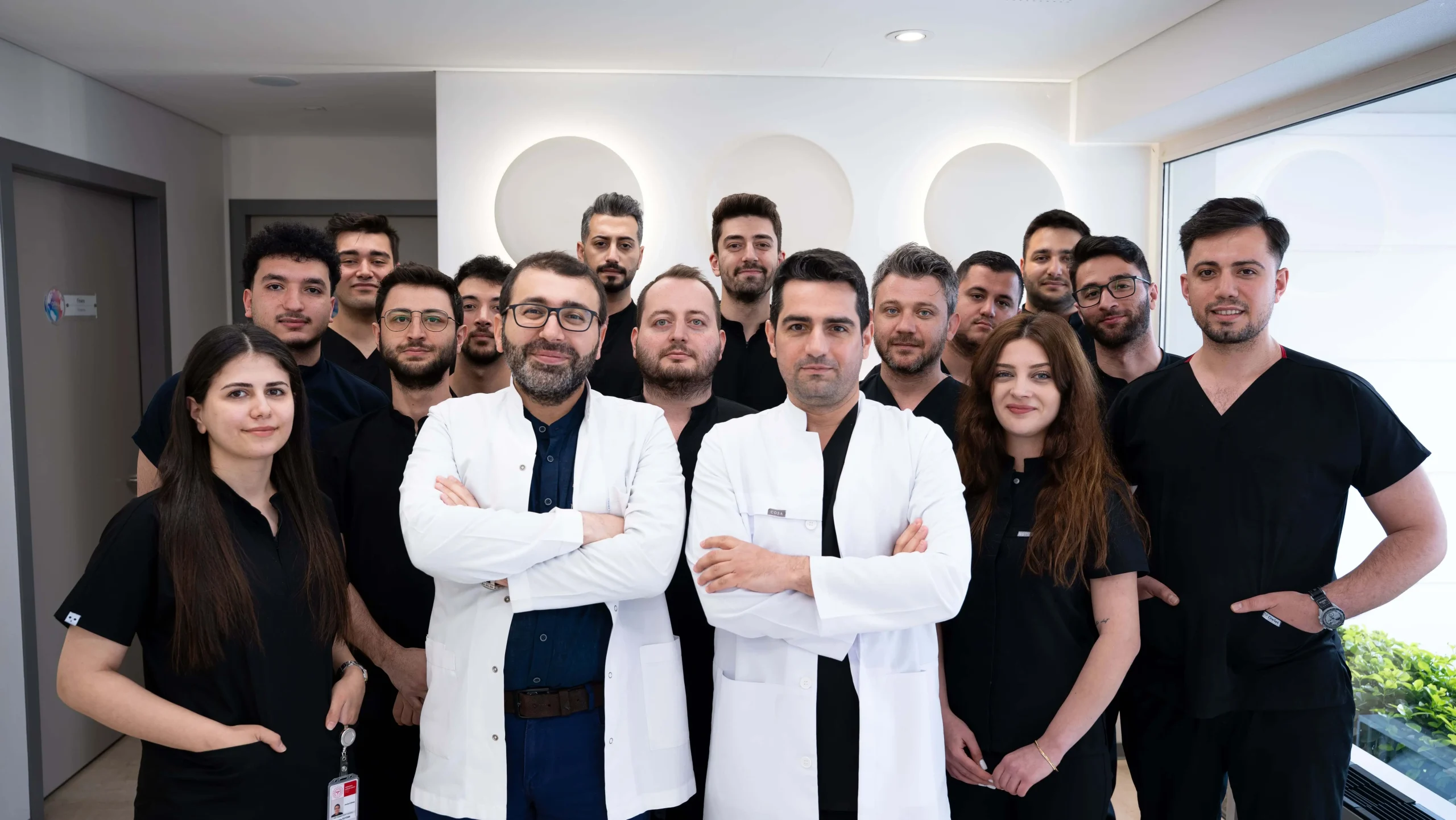
At Hermest Hair Clinic, Dr. Ahmet Murat and his experienced medical team provide personalized assessments based on your hair loss pattern, donor hair quality, facial proportions, and long-term goals. Whether you benefit most from medical treatment, ongoing monitoring, or the clinic’s Unique FUE® hair transplant technique, every recommendation is designed to achieve natural, lasting results.
Book your consultation with Hermest Hair Clinic today and discover the treatment plan that fits both your current hairstyle and your future hair restoration goals.