

Haircuts for Balding Men: Best Styles for Thinning Hair
 ChatGPT
 Claude
 Perplexity
 Grok
Grok
 Gemini

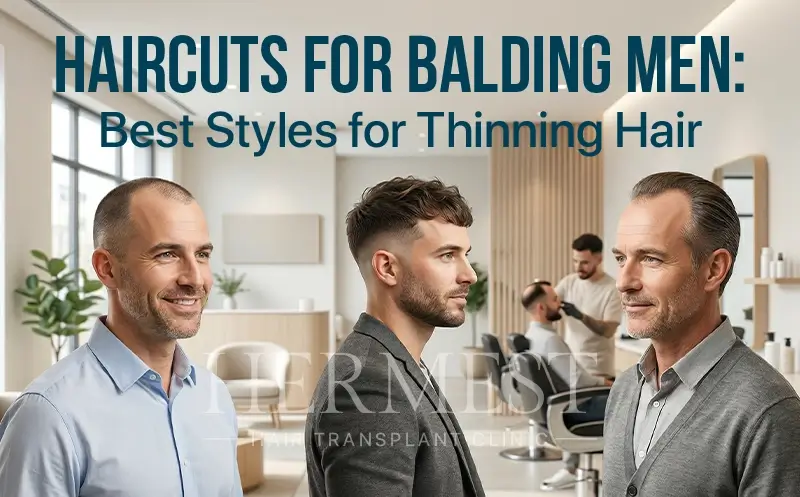
Haircuts for balding men are less about hiding hair loss and more about controlling how it looks. That shift changes everything. Most men try longer styles first. More coverage. More volume. It feels logical. But thinning hair behaves differently. It separates. It exposes scalp. It draws attention to the exact areas you want to soften.
Shorter, structured cuts work better. They reduce contrast. They create uniform density. They make hair loss look intentional, not accidental.
Here’s the part many miss. The “best haircut” is not universal. It depends on where the thinning is happening.
- Receding temples need balance at the front
- Crown thinning needs texture and diffusion
- Diffuse thinning needs consistency across the scalp
That’s why searches like best haircuts for balding men, haircuts for thinning hair men, and receding hairline haircuts men all lead to different answers.
According to the American Academy of Dermatology, most male hair loss follows predictable patterns over time. Your haircut should evolve with that pattern, not stay fixed.
Dr. Ahmet Murat shares this perspective:
“Patients often try to save their hair. We focus on optimizing how it looks. The right haircut is often the fastest and most effective solution.”
This guide gives you clarity.
We’ll break down what works, what doesn’t, and why. You’ll see the best options for each hair loss pattern. You’ll learn what to tell your barber. And you’ll understand when a haircut is enough, and when it isn’t.
Quick Inisghts
- Shorter styles almost always work better for thinning hair. They reduce contrast and make density look more even.
- The best choice depends on your pattern. A receding hairline haircut is different from a balding crown haircut or diffuse thinning men haircut.
- Clean, simple styles like a buzz cut for balding men or crew cut for thinning hair are the most reliable starting points.
- Texture helps break up light reflection. That’s why a textured crop for balding men works well for crown and diffuse thinning.
- Glossy products make thinning more visible. Matte products create a softer, more natural finish.
- Trying to cover hair loss with longer styles often makes it more noticeable.
What is the best haircut for balding men?
There isn’t one perfect answer. But there is a short list that works for most men.
If you want a safe starting point, these cuts consistently work:
- Buzz cut for balding men
- Crew cut for thinning hair
- Textured crop for balding men
- High and tight with short sides
- Clean shave for advanced hair loss
These styles reduce the visual gap between thick and thin areas. That matters more than length.
The buzz cut removes contrast completely. The crew cut keeps structure without exposing too much scalp. The textured crop adds movement where density is lower.
Simple rule. Shorter looks stronger.
Why shorter hair works better on thinning hair
Thinning hair fails when it tries to act thick.
Long strands separate. Light hits the scalp. Gaps become visible. That’s why styles like comb over for thinning hair or long slick backs often make things worse.
Short hair behaves differently:
- It stands more upright
- It reflects light more evenly
- It reduces visible scalp contrast
According to research published on PubMed, androgenetic hair loss reduces hair shaft thickness over time. Each strand becomes finer before density visibly drops.
So the goal shifts. You’re not adding volume. You’re controlling perception.
Dr. Ahmet Murat explains it simply:
“As hair becomes thinner, length works against you. Shorter styles highlight structure instead of weakness.”
That’s the mindset shift.
Not hiding. Structuring.
How to choose the right haircut for your balding pattern
The best results come from matching your haircut to your hair loss pattern. Not guessing. Not copying a celebrity. Matching.
Most men fall into three main categories. Receding hairline. Thinning crown. Diffuse thinning. Each behaves differently. Each needs a different approach.
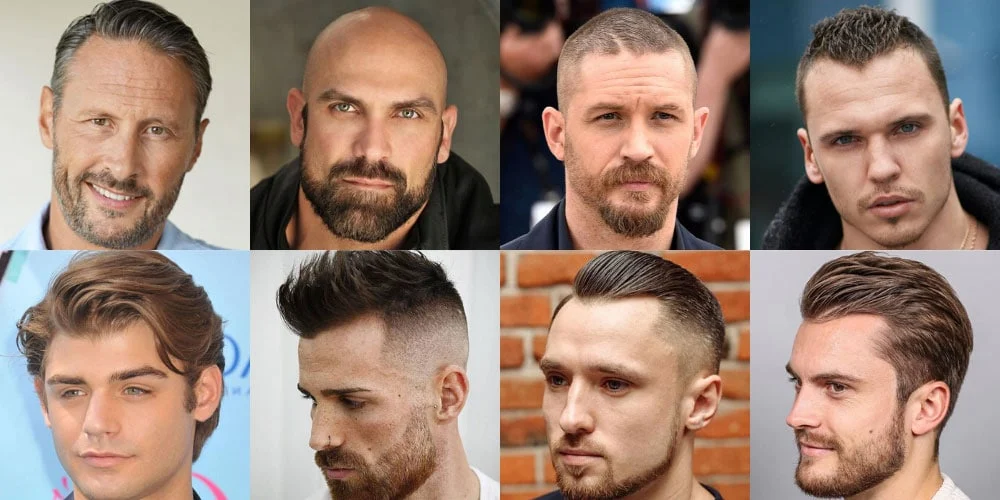
According to the American Academy of Dermatology, male pattern hair loss follows predictable zones. Temples first. Crown later. Then overall thinning. That pattern should guide your haircut decisions.
Best haircuts for a receding hairline
A receding hairline creates contrast at the front. The goal is to soften that edge.
The most reliable options:
- Crew cut for balding men
- Buzz cut for balding men
- Ivy League with a slightly forward texture
- Short textured crop for balding men
These styles reduce the gap between temples and front hair. They avoid sharp lines.
Avoid strong side parts or long top-heavy styles. They exaggerate the recession.
Dr. Ahmet Murat points this out clearly:
“Trying to rebuild the front with long hair rarely works. A softer, shorter front creates a more natural frame.”
Best haircuts for thinning at the crown
Crown thinning is tricky. It’s visible from above. And it spreads.
The goal here is diffusion. Not coverage.
Strong choices include:
- Short textured crop
- Crew cut for thinning hair
- Low fade with short top
- Buzz cut for thinning hair men
Texture helps break up the see-through effect. Uniform length helps reduce contrast.
Avoid long hair at the crown. It separates and reveals more scalp.
Best haircuts for diffuse thinning
Diffuse thinning affects the whole scalp. No clear bald spot. Just less density everywhere.
Consistency is key.
Best options:
- Even-length short cut
- Buzz cut for balding men
- Short messy crop with matte finish
You’re aiming for balance across the entire head. Not drawing attention to one area.
Best option for advanced balding
When density drops significantly, trying to “style around it” stops working.
At this stage:
- Clean shave
- Very short buzz
- Pairing with a beard for structure
This creates a defined, confident look.
Dr. Ahmet Murat adds:
“There is a point where simplifying the look gives better results than trying to control every detail. Recognizing that moment matters.”
This is where many men hesitate. But it’s often the cleanest upgrade.
12 best haircuts for balding men
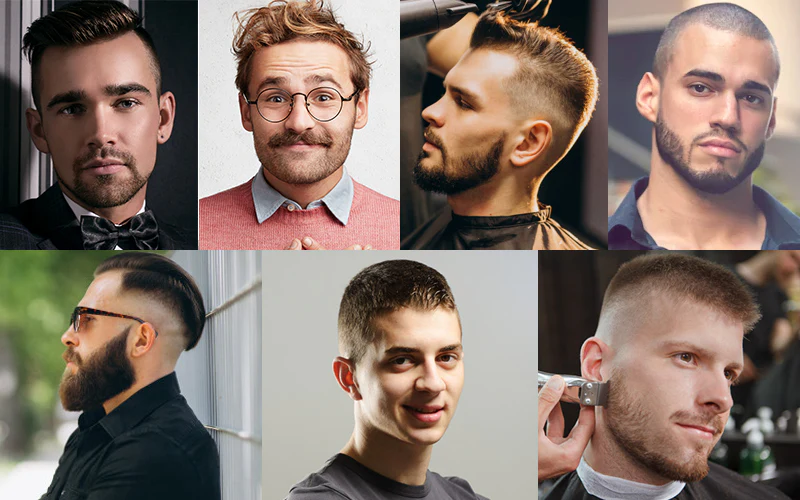
Choosing the right style comes down to control. Control of contrast. Control of shape. Control of how light hits your scalp.
Each of the cuts below works for a reason. Here’s how to think about them.
Buzz cut for balding men
A buzz cut keeps the same short length across the entire head. It removes contrast between thicker and thinner areas, which makes hair loss far less noticeable. It works well for almost every pattern, including balding crown haircut, diffuse thinning men haircut, and receding hairlines. If you prefer simplicity and low maintenance, this is often the safest choice.
Crew cut for thinning hair
The crew cut keeps the sides short and leaves a little length on top. That small difference adds structure without exposing too much scalp. It suits men with early thinning or mild recession. It also works well if you want a clean, professional look that doesn’t require much styling.
High and tight
This style brings the sides very short while keeping the top short and controlled. It shifts attention away from thinning areas by tightening the overall shape. It’s a strong option for men with uneven density or temple recession.
Textured crop for balding men
The textured crop uses short layers to create movement on top. That movement helps break up light reflection, which reduces scalp visibility. It’s especially useful for haircuts for thinning crown men or diffuse thinning where density is inconsistent.
Ivy League for thinning hair
The Ivy League is a slightly longer, refined version of the crew cut. It keeps things neat but allows subtle styling. This works best for men in early stages of thinning who want something classic without drawing attention to the hairline.
Caesar cut
The Caesar brings the hair forward with a short fringe. That forward direction softens a receding hairline and reduces the appearance of temple gaps. It works best when the front still has enough density to support a light fringe.
Short side part for thinning hair
A soft side part adds direction without creating harsh lines. It can help guide the eye across the head instead of focusing on thinning zones. This is suitable for early thinning, but it should stay subtle. Heavy parts can expose the scalp.
Low fade with short top
This cut keeps the sides clean with a gradual fade while maintaining a short, even top. It balances the head shape and reduces contrast between areas. It’s a good match for mixed patterns like thinning on top haircut men.
Buzz cut with beard balding
Pairing a short buzz cut with a beard shifts attention downward toward the face. This creates balance and adds definition. It’s a strong option for men with more advanced thinning or those considering a shorter overall look.
Clean shave
A fully shaved head removes uneven density completely. There’s no contrast left to manage. It’s often the most effective option for advanced hair loss or when styling no longer gives consistent results.
Short messy crop for diffuse thinning
This version of the crop uses light, natural texture to create movement. It avoids stiffness and helps disguise uniform thinning across the scalp. Matte styling products work best here to avoid shine.
Regulation cut
The regulation cut is a classic, balanced style with short sides and a controlled top. It keeps everything proportional and avoids extremes. It’s ideal if you want something simple, structured, and easy to maintain.
According to clinical observations referenced in PubMed, thinning hair changes in both density and thickness over time. That’s why styles that rely on balance and reduced contrast tend to hold up better as hair loss progresses.
Which haircuts make balding look worse?
Some styles don’t just fail. They highlight the problem.
Most mistakes come from the same instinct. Trying to hide thinning areas with more hair. More length. More styling. It feels right. It usually backfires.
Long slick-backs
This is one of the most common traps.
Hair is pushed straight back. The hairline becomes fully exposed. Density differences become obvious.
If you have a receding hairline, this style frames the recession instead of softening it.
Wet or shiny products make it worse. They increase scalp visibility.
Hard comb-overs
A classic mistake.
The idea is to cover thinning areas by moving hair across. The reality is different.
A strong comb over for thinning hair creates tension lines. It separates under light. The scalp shows through more clearly.
It can work in very early stages. After that, it becomes obvious.
Dr. Ahmet Murat explains it directly:
“When hair is moved unnaturally across the scalp, the eye notices the direction, not the density. That’s what makes it look artificial.”
High-volume pompadours on thin hair
Volume requires density.
Without density, height creates gaps. The higher the lift, the more the scalp shows underneath.
This style often appears in searches like best hairstyles for balding men, but it only works for men with minimal thinning.
Wet, glossy styling on thinning hair
Shine equals separation.
Products like gels and pomades group hairs together. That exposes the scalp between strands.
Matte finishes work better. They absorb light instead of reflecting it.
Uneven long top with very short sides
This creates contrast in the wrong way.
Dense-looking sides. Thin-looking top. The imbalance draws attention upward.
A better approach is balance. Keep lengths closer. Reduce contrast.
According to guidance referenced by the American Academy of Dermatology, visible thinning increases as hair shafts miniaturize and spacing between strands grows. That means styles relying on separation or shine will reveal more scalp over time.
These mistakes are common. Easy to fix once you see them.
Best haircuts by face shape and hair type
The same haircut can look completely different depending on your face shape and hair texture. That’s where most guides fall short. They show styles. They don’t explain fit.
If you match your haircut to both your hair loss pattern and your natural features, the result looks intentional. Not forced.
Best haircuts by face shape
Face shape affects balance. The goal is to avoid exaggerating proportions.
Oval face
Most styles work here. Stick with crew cut for thinning hair, textured crop for balding men, or a short fade with a natural top. Avoid extreme volume. Keep things controlled.
Square face
You already have strong angles. Short styles like buzz cut for balding men or high and tight work well. They highlight structure without overcomplicating the look.
Round face
You need definition. Slight height on top helps elongate the face. A short textured crop or subtle fade works well. Avoid very flat cuts that make the face appear wider.
Long face
Avoid too much height. Keep the top short and balanced. A Caesar cut or short crop helps reduce vertical length.
Best haircuts by hair type
Hair type changes how a haircut behaves. This is often overlooked.
This is the most common case with thinning. Fine hair separates easily. Go shorter. Choose buzz cut for thinning hair men or tight crops. Matte products only.
Thick hair with thinning areas
You may still have density on the sides. Balance is key. Avoid very short sides with longer top. A blended low fade with short top works better.
Wavy hair
Waves add natural texture. That helps disguise thinning. A short textured crop for balding men works especially well here.
Curly hair
Curls create volume naturally. Keep them controlled and not too long. Too much length creates uneven density.
According to insights referenced by American Academy of Dermatology, hair thinning often reduces strand diameter before visible loss increases. That means even thick-looking hair can behave like fine hair over time.
Dr. Ahmet Murat explains:
“We don’t just look at how much hair you have. We look at how it behaves. Texture and face shape change the entire result of a haircut.”
This is where small adjustments make a big difference.
Best styling products for thinning hair without making scalp more visible
The wrong product can undo a good haircut in minutes. The right one makes thinning look controlled and natural.
The key idea is simple. You want less shine, more texture.
Matte clay vs pomade
This is where most mistakes happen.
Pomades and gels create shine. Shine reflects light. Light exposes the scalp. That’s why styles using glossy products often make thinning look worse, even with a good cut.
Matte clay works differently. It absorbs light and keeps strands separated in a natural way.
- Matte clay adds thickness and grip
- It keeps hair in place without stiffness
- It reduces visible scalp contrast
If you’re using a textured crop for balding men or a crew cut for thinning hair, matte clay is usually the safest choice.
Sea salt spray, fiber, and texture powder
These products focus on movement and lift.
Sea salt spray adds light volume and roughness. It works well for slightly longer short styles. Fiber products add density and control without shine. Texture powders are strong for fine hair, especially when you need lift at the roots.
Used correctly, they help break up the uniform look that thinning hair often creates.
Best use cases:
- Sea salt spray for soft texture
- Fiber for control and thickness
- Texture powder for volume at the roots
What to avoid if hair is thinning
Some products make thinning more visible instantly.
Avoid:
- Wet gels
- High-shine pomades
- Heavy creams that flatten the hair
- Oils that separate strands
According to clinical observations referenced on PubMed, thinning hair loses structural strength over time. That means heavy products weigh it down faster and increase separation.
Dr. Ahmet Murat shares a practical tip:
“If your scalp is more visible after styling, the product is working against you. You should see less scalp, not more.”
A simple routine works best. Light product. Matte finish. Minimal effort.
What to tell your barber if you are balding
A good haircut starts with a clear request. Most men say “short on the sides” and hope for the best. That’s not enough when hair is thinning.
You need to guide the barber based on your pattern. Keep it simple. Be specific.
A simple barber script
You don’t need technical language. Just describe what you want to control.
You can say:
“I’m thinning at the crown and front. I want a short, even look that reduces contrast. Keep the top tight and add texture. Don’t leave it too long.”
Or:
“My hairline is receding. I want something clean and natural. No hard part. No long top.”
This tells the barber exactly what matters. Not length alone, but balance.
How short the sides should be
Very short sides can look sharp. But if the top is thin, it creates contrast.
That contrast draws attention upward.
A better approach is controlled blending:
- Low to mid fade instead of skin fade
- Gradual transition, not sharp disconnect
- Keep proportions balanced
This works well for styles like low fade with short top or crew cut for thinning hair.
When to ask for texture instead of length
Length feels like coverage. Texture is what actually helps.
If you say “leave it longer,” you often get separation. If you ask for texture, you get movement.
Use simple language:
“Keep it short, but add texture so it doesn’t look flat.”
This works especially well for textured crop for balding men or haircuts for thinning crown men.
According to guidance referenced by the American Academy of Dermatology, thinning hair changes gradually in density and diameter. That means haircut adjustments should happen over time, not just once.
When a haircut is enough and when you should think about treatment
A good haircut can improve how thinning hair looks. Sometimes dramatically. But it doesn’t stop the process behind it.
The real question is timing. When does styling solve the problem, and when does it start to fall short?
Signs it is still mostly a styling problem
At earlier stages, the right cut and product can carry most of the result.
You’re likely still in this phase if:
- Thinning is mild and not spreading quickly
- The crown is slightly visible only under strong light
- A crew cut for thinning hair or textured crop for balding men still looks full
- Styling changes noticeably improve the appearance
In this stage, focus on structure. Shorter length. Matte products. Clean blending.
You don’t need to rush into treatment. You need consistency.
Signs male pattern baldness is progressing
There comes a point where hair behaves differently. Even with a good cut.
You may notice:
- The crown becoming visible from normal angles
- The hairline continuing to move back
- Less response to styling or products
- More scalp showing even with short cuts
According to research summarized on PubMed, androgenetic alopecia is progressive. Hair follicles gradually miniaturize over time, producing finer and shorter hairs before stopping growth.
This is where styling alone starts losing ground.
When to speak with a specialist
You don’t need to wait until hair loss is advanced.
It makes sense to get a professional opinion if:
- You see consistent progression over 6–12 months
- Family history suggests continued hair loss
- You’re relying more on styling tricks than before
- You want to preserve existing hair, not just manage it
According to the American Academy of Dermatology, early treatment can help slow progression and maintain existing follicles longer.
This doesn’t mean jumping into procedures. It means understanding your options.
The balance between haircut and long-term plan
A haircut shapes how your hair looks today. A treatment plan shapes how it looks later.
The best approach combines both.
Dr. Ahmet Murat adds:
“We always evaluate patients with two timelines in mind. How it looks now, and how it will look in a few years. That’s how we plan properly.”
That’s the difference.
Not reacting. Planning.
Haircuts vs treatment options for male pattern baldness
A haircut changes appearance. Treatment changes progression. You need to know the difference.
Most men start with styling. Then they notice changes. Then they start asking bigger questions.
Both approaches have a place. They just solve different problems.
Minoxidil
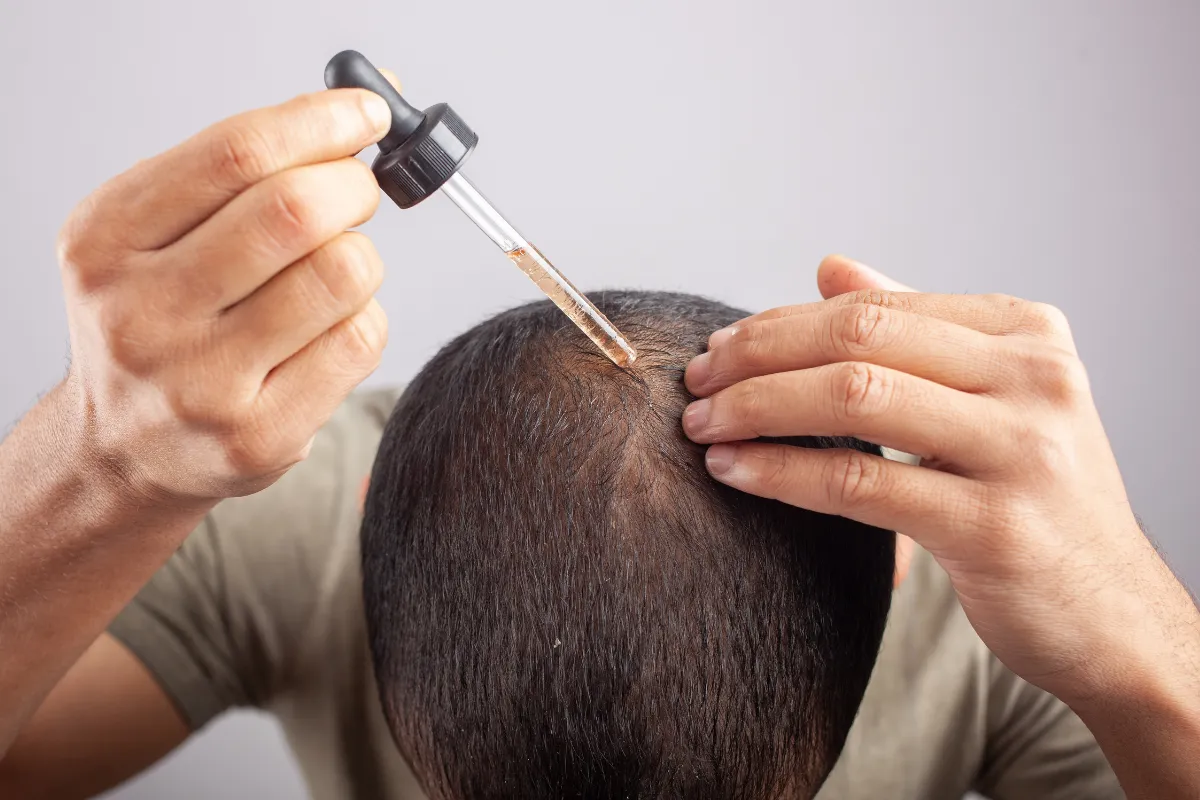
Minoxidil is a topical treatment applied to the scalp. It helps prolong the growth phase of hair follicles.
Some men see thicker, stronger strands over time. Others mainly slow down shedding.
It works best in early to moderate stages, especially for crown thinning.
Consistency matters. Results take months, not weeks.
Finasteride
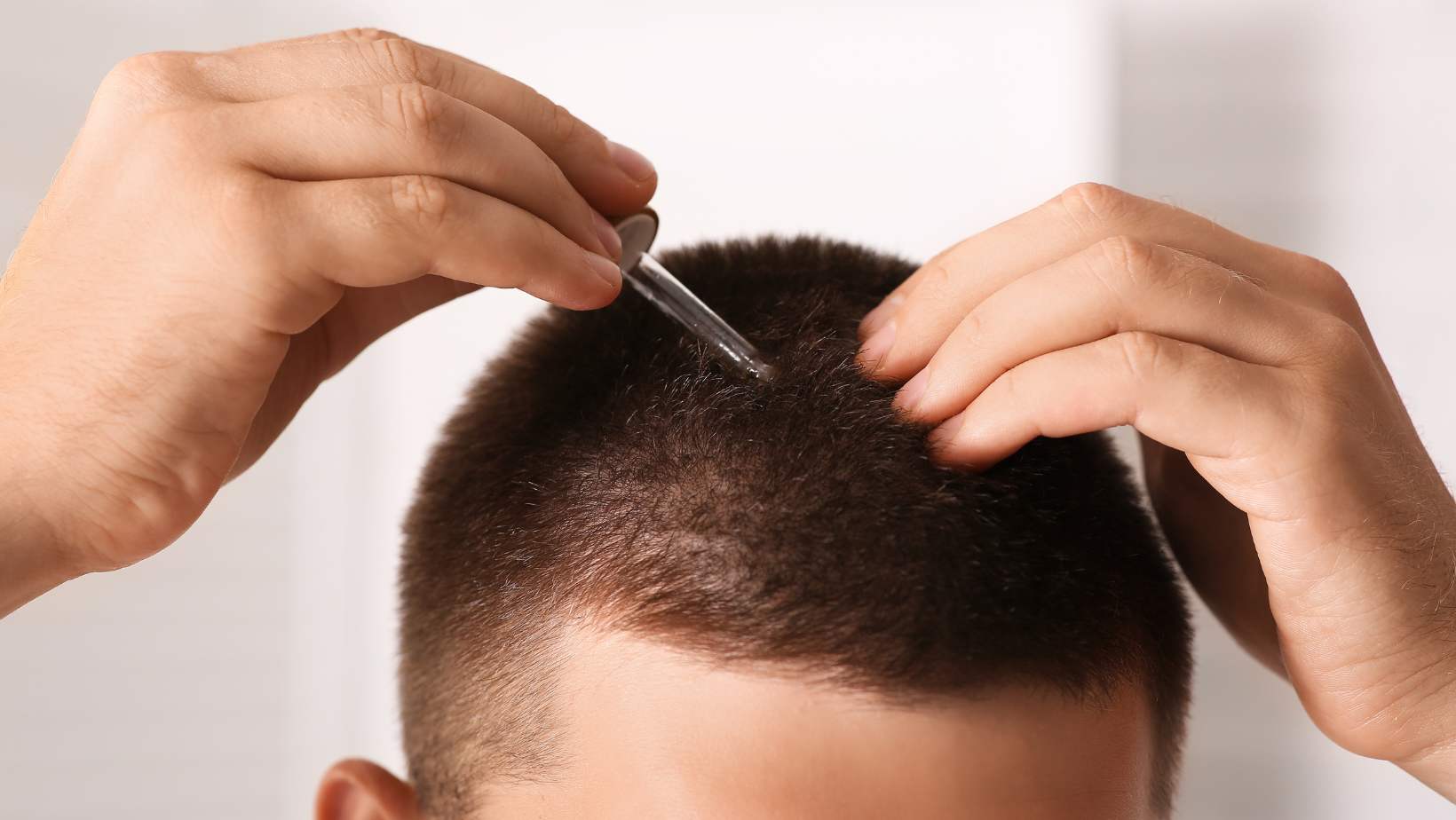
Finasteride works internally. It reduces DHT, the hormone linked to male pattern hair loss.
According to research referenced on PubMed, lowering DHT can slow or stabilize hair loss in many men.
This doesn’t create instant density. It helps preserve what you still have.
That makes it useful when your haircut still looks good, but progression is noticeable.
PRP (Platelet-Rich Plasma)

PRP uses your own blood plasma, injected into the scalp.
The goal is to stimulate follicles and improve hair quality.
Results vary. Some men see improved thickness. Others see minimal change.
It’s often used alongside other treatments, not alone.
Hair transplant

A hair transplant moves resistant follicles from the donor area to thinning zones.
It doesn’t stop future hair loss. It redistributes existing hair.
This is where planning matters most.
According to standards referenced by the Republic of Türkiye Ministry of Health, procedures must be performed under strict medical supervision and proper clinical protocols.
Dr. Ahmet Murat explains it this way:
“A transplant is not just about filling gaps. It’s about preserving the donor and designing a result that still looks natural years later.”
Why haircut advice should match your long-term plan
This is where most advice falls short.
If you’re planning treatment, your haircut should support that plan. Not fight it.
- Early stage: haircut + medical support
- Mid stage: haircut + preservation strategy
- Advanced stage: haircut + restoration planning
A buzz cut for balding men may look clean today. But if you’re planning a transplant, the approach may change.
That’s the bigger picture.
Can the right haircut make you look younger?
Yes. And the effect is often immediate.
Hair loss itself doesn’t age you. The way it’s styled does. When thinning hair is managed well, the overall look feels sharper, cleaner, and more intentional.
Reducing visual age with the right cut
The goal is not to look younger by hiding hair loss. It’s to remove the visual cues that make thinning stand out.
Shorter styles help with that:
- They reduce contrast between scalp and hair
- They create a cleaner outline around the face
- They remove uneven density that looks messy
A crew cut for thinning hair or textured crop for balding men often gives a fresher appearance within minutes. The face becomes the focus again.
Longer styles tend to do the opposite. They separate, fall unevenly, and highlight thinning areas.
Balancing the face with beard and proportions
Haircuts don’t work alone. The balance between hair and facial structure matters just as much.
A short cut combined with a well-shaped beard can:
- Add definition to the jawline
- Shift attention away from the scalp
- Create symmetry in the overall look
This is why styles like buzz cut with beard balding are so effective for many men.
Even without a beard, proportion matters. Keeping the sides and top balanced avoids drawing attention to weaker areas.
According to observations aligned with dermatology guidance from the American Academy of Dermatology, thinning hair changes how light reflects across the scalp. Clean, structured styles reduce that uneven reflection, which improves overall appearance.
That’s why the right haircut often feels like an instant upgrade.
Before and after mindset shift: stop hiding, start shaping
Most men approach thinning hair the same way at first. They try to cover it. More length. Careful styling. Strategic angles.
It feels like control. But it often creates tension. The hairstyle starts to look fragile. One bad angle, and everything falls apart.
The shift happens when you stop trying to hide and start shaping the overall look.
Shorter styles change the approach completely. They don’t depend on perfect placement. They work from every angle. They hold up in real life, not just in the mirror.
That’s why cuts like buzz cut for balding men, crew cut for thinning hair, or a tight textured crop for balding men feel easier to manage day to day.
You’re not protecting a style. You’re wearing one.
Why “covering up” usually backfires
Longer styles create pressure.
- You rely on exact positioning
- Wind or movement breaks the structure
- Light exposes gaps more clearly
- Styling becomes more time-consuming
- The result often looks less natural, not more.
This is especially true with styles like comb over for thinning hair or long top-heavy cuts. They require control that thinning hair can’t consistently hold.
What “shaping the look” actually means
Shaping is about working with your current hair, not against it.
It means:
- Choosing shorter, balanced lengths
- Reducing contrast across the scalp
- Keeping the style consistent from all angles
- Accepting the natural direction of your hairline
This creates a stable look. One that doesn’t depend on effort.
Dr. Ahmet Murat explains it this way:
“When patients stop trying to hide every thin area, the overall result improves immediately. The goal is harmony, not camouflage.”
According to clinical understanding reflected in PubMed, hair thinning progresses gradually. That means styles built on precision become harder to maintain over time.
A structured, simple approach holds up better.
It’s a small shift in thinking. But it changes how everything looks.
Frequently asked questions
The most reliable options are short, structured styles like a buzz cut, crew cut, or textured crop. These reduce contrast between thick and thin areas, which makes hair loss less noticeable.
Get a personalized plan that actually works
A good haircut can change how your hair looks today. A proper evaluation helps protect how it looks tomorrow.
At Hermest, we look at both.

We assess your hair loss pattern, donor area, and long-term progression. Then we guide you on what makes sense right now. That might be a simple haircut adjustment. It might be a prevention strategy. It might be something more structured.
Dr. Ahmet Murat explains:
“Every patient needs a plan that works today and still makes sense years later. That’s how we approach every case.”
If you’re unsure what direction to take, getting a professional opinion makes the next step much clearer.
You can start with a consultation and get a realistic, honest assessment based on your current stage and future expectations.