

Does Stress Cause Grey Hair? Science, Causes & Reversal
 ChatGPT
 Claude
 Perplexity
 Grok
Grok
 Gemini


The question “does stress cause grey hair” has fascinated scientists, physicians, and the general public for decades. Many people notice new grey hairs appearing during particularly stressful periods and naturally wonder whether emotional stress, anxiety, or major life events may be responsible. It turns out there may be some truth to this belief.
Recent scientific discoveries have revealed biological mechanisms linking stress to changes in hair pigmentation. Researchers have found that stress can affect the cells responsible for producing hair color, potentially accelerating the greying process in susceptible individuals.
The story is complex. Stress is not the only factor involved. Genetics remains the strongest predictor of when a person develops grey hair. Aging, family history, smoking, nutritional deficiencies, and certain medical conditions all play important roles as well. In other words, stress may contribute. It rarely acts alone.
A landmark study published in Nature demonstrated that stress activates the sympathetic nervous system, triggering the release of norepinephrine. This process can deplete melanocyte stem cells, the cells responsible for maintaining hair pigmentation. These findings changed scientific understanding of stress and grey hair, though researchers are still learning more.
“Patients frequently ask whether stress caused their grey hair. In reality, genetics usually determines when greying begins, but chronic stress may accelerate the process in susceptible individuals,” says Dr. Ahmet Murat, of Hermest Hair Clinic.
This guide explores what current science says about stress induced grey hair, explains how stress affects hair pigmentation, discusses whether grey hair can reverse, and reviews when premature greying may warrant medical evaluation.
Quick Insights
- Stress and grey hair are biologically linked, but genetics remains the strongest predictor of greying.
- Chronic stress may accelerate pigment loss by affecting melanocyte stem cells.
- Stress-related greying usually develops gradually rather than overnight.
- Nutritional deficiencies, smoking, thyroid disease, and autoimmune disorders may also contribute.
- Professional evaluation may be appropriate when premature greying develops suddenly or accompanies hair loss.
Does Stress Really Cause Grey Hair?
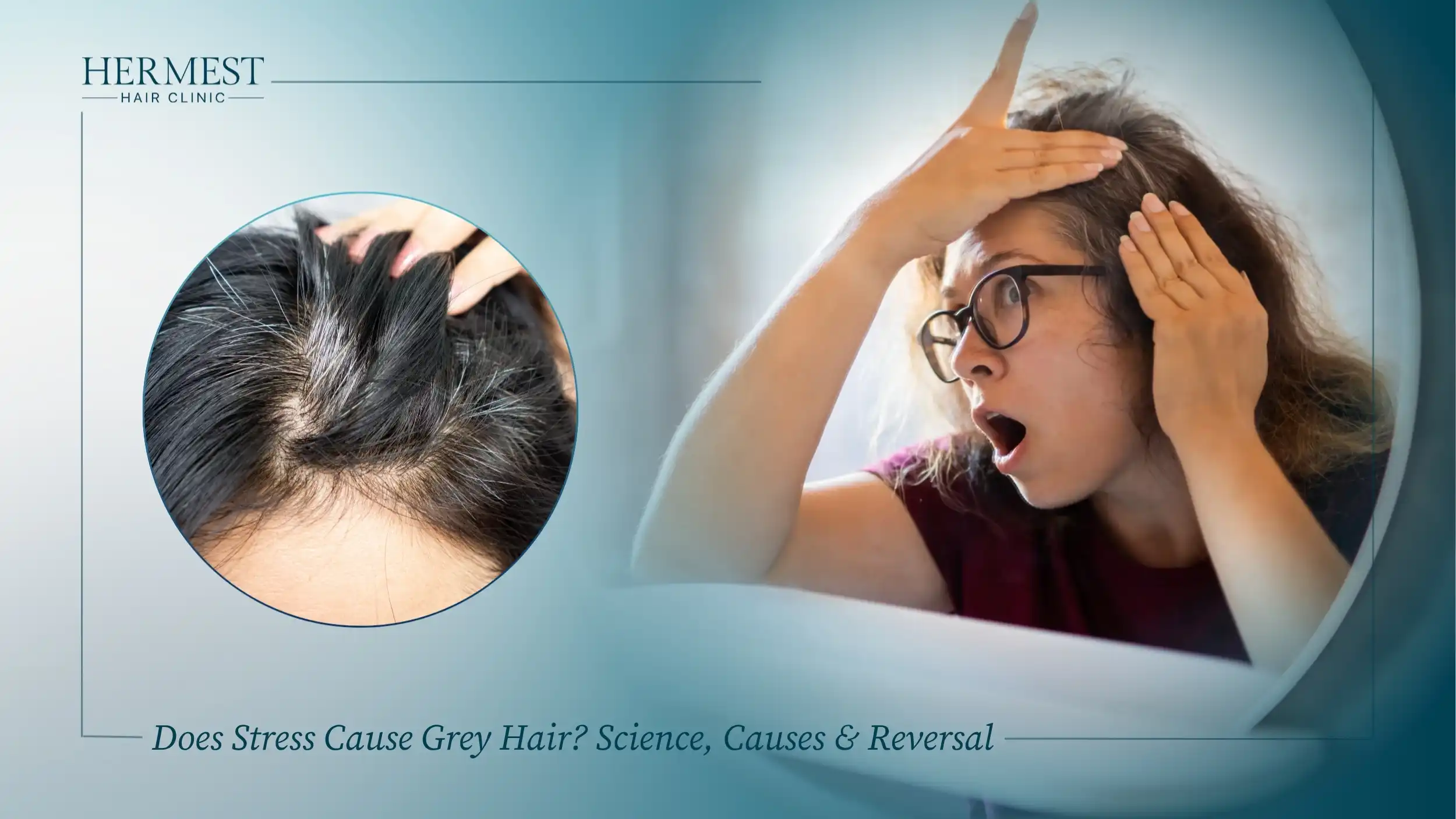
Many people firmly believe that severe stress turned their hair grey. For years, scientists questioned whether this was simply a myth. Recent research suggests otherwise.
Current evidence indicates that stress and grey hair are linked, although the relationship is more nuanced than many people assume.
The Short Answer
Yes, stress may contribute to premature greying. However, stress is rarely the primary cause. Most experts agree that genetics and natural aging remain the strongest determinants of when grey hair appears.
Stress appears to act as an accelerator rather than a sole trigger. In susceptible individuals, it may hasten an underlying biological process that was already destined to occur.
What Current Science Says
A landmark study published in Nature demonstrated that acute stress can deplete melanocyte stem cells, which are responsible for maintaining hair pigmentation. Researchers discovered that stress activates the sympathetic nervous system, and that activation triggers the release of norepinephrine.
Excessive stimulation may permanently reduce the population of pigment-producing stem cells within hair follicles. Without sufficient melanocyte stem cells, new hairs may emerge grey or white. These findings provided one of the strongest biological explanations for stress induced grey hair.
Human studies also support a connection. Researchers at Columbia University observed associations between psychological stress and changes in hair pigmentation, with some participants showing partial reversal after stress reduction.
Why Genetics Still Matter Most
This point cannot be overstated. Family history remains the most important predictor of greying, so if your parents developed grey hair early you are more likely to experience premature greying regardless of stress levels.
Other important contributors include:
- Aging
- Smoking
- Vitamin deficiencies
- Thyroid disorders
- Autoimmune disease
Stress is only one piece of a much larger puzzle.
“Patients often blame stress for every grey hair. While stress may accelerate greying, genetic predisposition usually determines when the process begins,” says Dr. Ahmet Murat.
How Does Stress Cause Grey Hair?
Scientists once believed that grey hair from stress was largely anecdotal. Today researchers understand much more about the biological mechanisms involved, and the process begins deep inside the hair follicle.
Melanin and Hair Pigmentation
Hair color depends on a pigment called melanin, produced by specialized cells known as melanocytes within the hair follicles. The amount and type of melanin determine whether hair appears black, brown, blonde, red, or grey.
Healthy hair follicles continually replenish these pigment-producing cells throughout life, a process that relies on melanocyte stem cells. When those stem cells decline, hair gradually loses color.
The Role of Melanocyte Stem Cells
Melanocyte stem cells reside within the hair follicle and act as a reserve population. During each hair growth cycle, these cells mature into melanocytes and produce fresh pigment.
Without sufficient melanocyte stem cells, new hair grows without color, and the result is grey or white hair. Researchers now believe stress can directly affect this cellular reservoir.
Sympathetic Nervous System Activation
When the body experiences stress, the sympathetic nervous system becomes activated in what is commonly called the “fight or flight” response. Short-term activation helps humans respond to danger, but chronic activation may produce unintended consequences.
A landmark Nature study demonstrated that stress overstimulates nerves connected to hair follicles, and that overstimulation affects pigment-producing stem cells.
Norepinephrine and Pigment Loss
Researchers discovered that stress triggers the release of norepinephrine, which forces melanocyte stem cells to rapidly activate and leave their protective niche.
Once depleted, these stem cells cannot easily be replaced, so future hairs may emerge grey. This discovery provided one of the clearest explanations for how stress can cause grey hair.
Why Some People Grey Earlier Than Others
Individual susceptibility varies considerably. Important influencing factors include:
- Genetics
- Age
- Smoking
- Overall health
- Chronic stress exposure
Not everyone responds identically.
“Hair follicles are remarkably dynamic structures. Modern research shows that emotional stress can influence biological processes inside the follicle, including those responsible for hair pigmentation,” says Dr. Ahmet Murat.
Can Stress Turn Hair Grey Overnight?
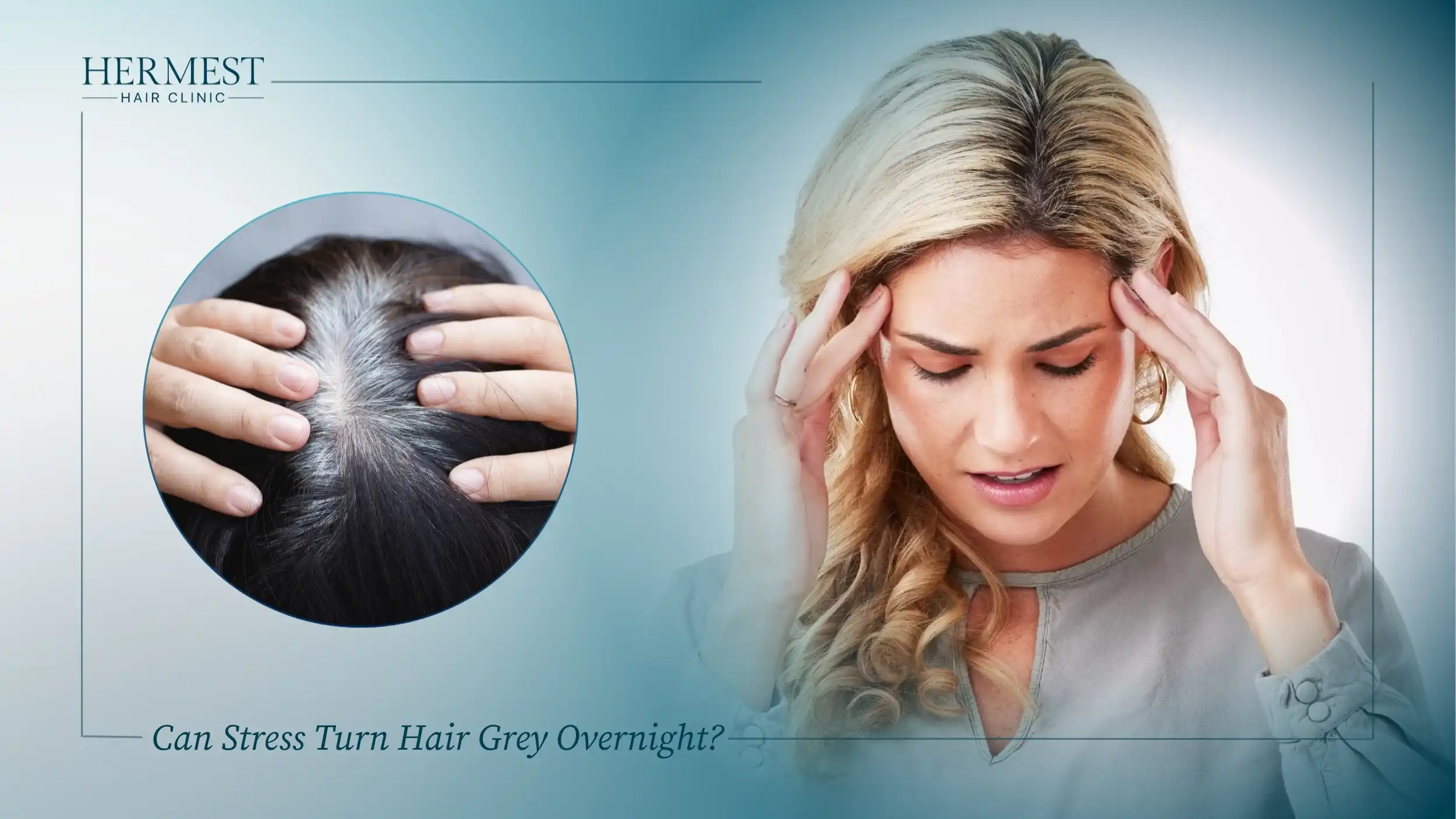
Stories of hair turning completely white overnight have existed for centuries. Perhaps the most famous example involves the French queen Marie Antoinette, whose hair reportedly turned white before her execution. These dramatic accounts continue to fuel public curiosity.
But can stress turn hair grey overnight? Science suggests the answer is largely no.
Marie Antoinette Syndrome
The phenomenon is sometimes called Marie Antoinette syndrome, and historical reports describe sudden whitening of hair after severe emotional trauma.
Researchers believe many of these cases likely involved a different process. Instead of existing hairs instantly losing pigment, individuals may have experienced rapid shedding of pigmented hairs, leaving the grey hairs already present more visible. That creates the appearance of sudden whitening.
What Science Says
Current scientific understanding indicates that fully formed hair shafts cannot suddenly lose pigment overnight. Once hair emerges from the follicle its color is already determined; the visible portion is biologically inactive and cannot rapidly change color.
Stress-related greying happens gradually instead, as new hairs grow from follicles that have lost their pigment-producing capacity. That takes weeks or months, not hours.
Sudden Appearance vs Actual Pigment Loss
Several factors may create the impression of overnight greying:
- Rapid shedding of darker hairs
- Severe alopecia areata
- Increased awareness during stressful periods
- Existing grey hairs becoming more noticeable
Stress can certainly influence hair biology, but the process is rarely instantaneous.
Can Severe Stress Accelerate Existing Greying?
Yes. Individuals already genetically predisposed to greying may notice accelerated changes during periods of chronic or intense stress, and the new grey hairs usually become visible during subsequent growth cycles.
Why This Distinction Matters
Patients often blame a single stressful event for all their grey hair. In reality, greying usually reflects a combination of genetics, aging, and environmental influences accumulated over time.
“Many patients associate the appearance of grey hair with a specific stressful event. Although stress may accelerate greying, the biological process generally develops progressively rather than overnight,” says Dr. Ahmet Murat.
Can Anxiety and Chronic Stress Cause Premature Greying?
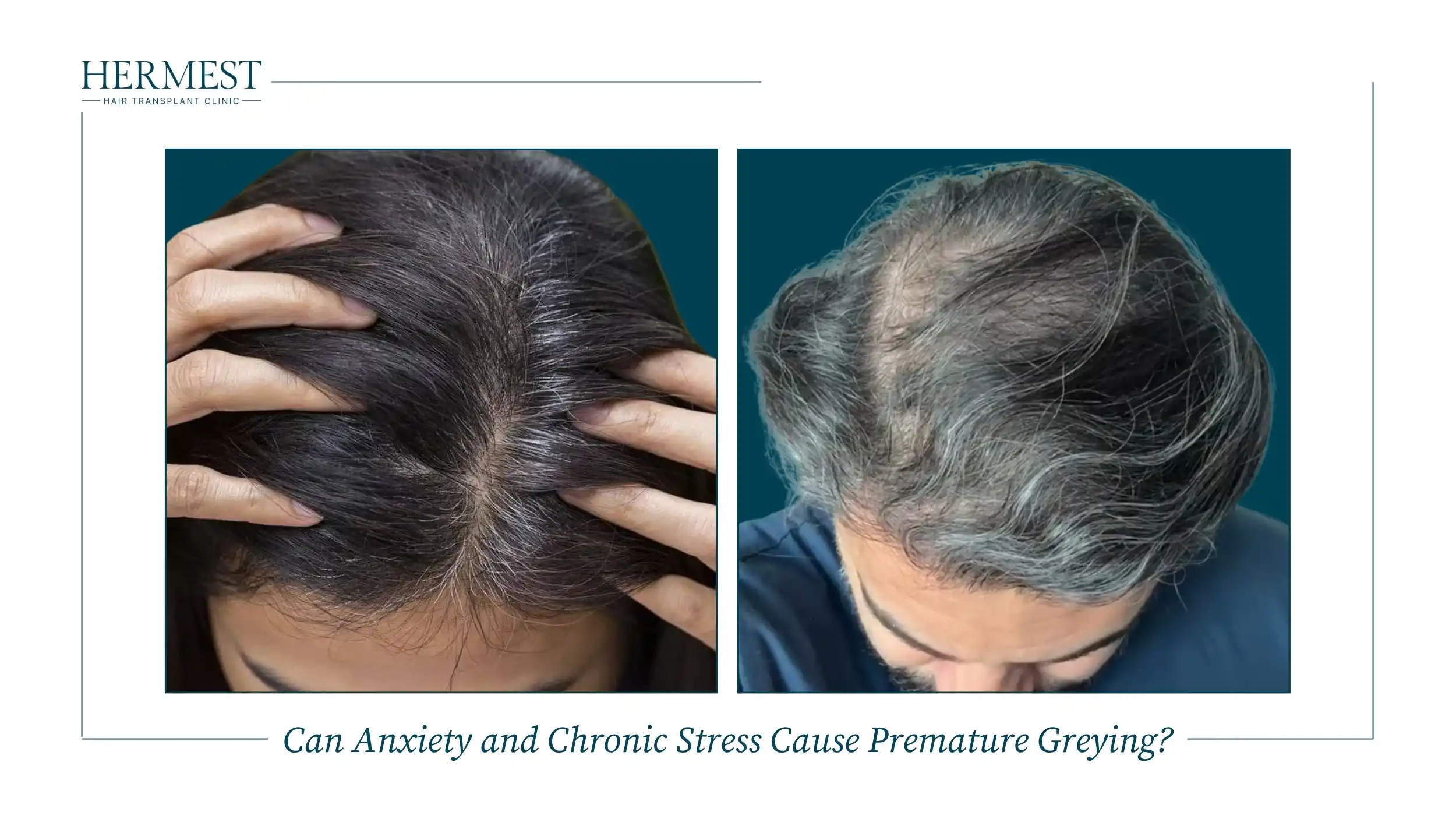
Occasional stress is a normal part of life. Chronic stress is different. Persistent psychological strain may affect multiple body systems, including the hair follicle.
Researchers increasingly believe that long-term emotional stress can contribute to premature grey hair in genetically susceptible individuals.
Chronic Stress and Hair Aging
The body responds differently to prolonged stress than to short-lived stressful events. Chronic stress can increase systemic inflammation, elevate stress hormone levels, and promote oxidative damage throughout the body.
Hair follicles are highly active structures and may be particularly sensitive to these changes. Over time, sustained stress may accelerate cellular aging processes inside the follicle, influencing both hair growth and pigmentation.
Can Anxiety Cause Grey Hair?
Many people ask, “can anxiety cause grey hair?” Current evidence suggests that chronic anxiety may contribute indirectly. Persistent anxiety activates the stress response repeatedly, and that ongoing activation may increase the release of stress-related chemicals, including norepinephrine.
Researchers believe these processes may affect melanocyte stem cells, potentially accelerating pigment loss. Anxiety alone is unlikely to explain all cases of premature greying, and other contributing factors usually exist.
Oxidative Stress and Premature Greying
Scientists have long associated oxidative stress with hair aging. It occurs when harmful molecules called free radicals overwhelm the body’s antioxidant defenses.
Excess oxidative stress may damage pigment-producing cells within hair follicles. Several factors can increase it:
- Chronic psychological stress
- Smoking
- Poor diet
- Environmental exposures
- Sleep deprivation
These factors may work together.
Why Some People Develop Grey Hair Earlier
Early greying often reflects a combination of influences:
- Genetics
- Chronic stress
- Medical conditions
- Lifestyle habits
- Nutritional status
No single factor tells the entire story.
“When young patients develop premature greying, we evaluate the whole picture. Genetics remains central, but lifestyle factors such as chronic stress, smoking, and nutritional status can influence the process,” says Dr. Ahmet Murat.
Is Stress-Induced Grey Hair Reversible?
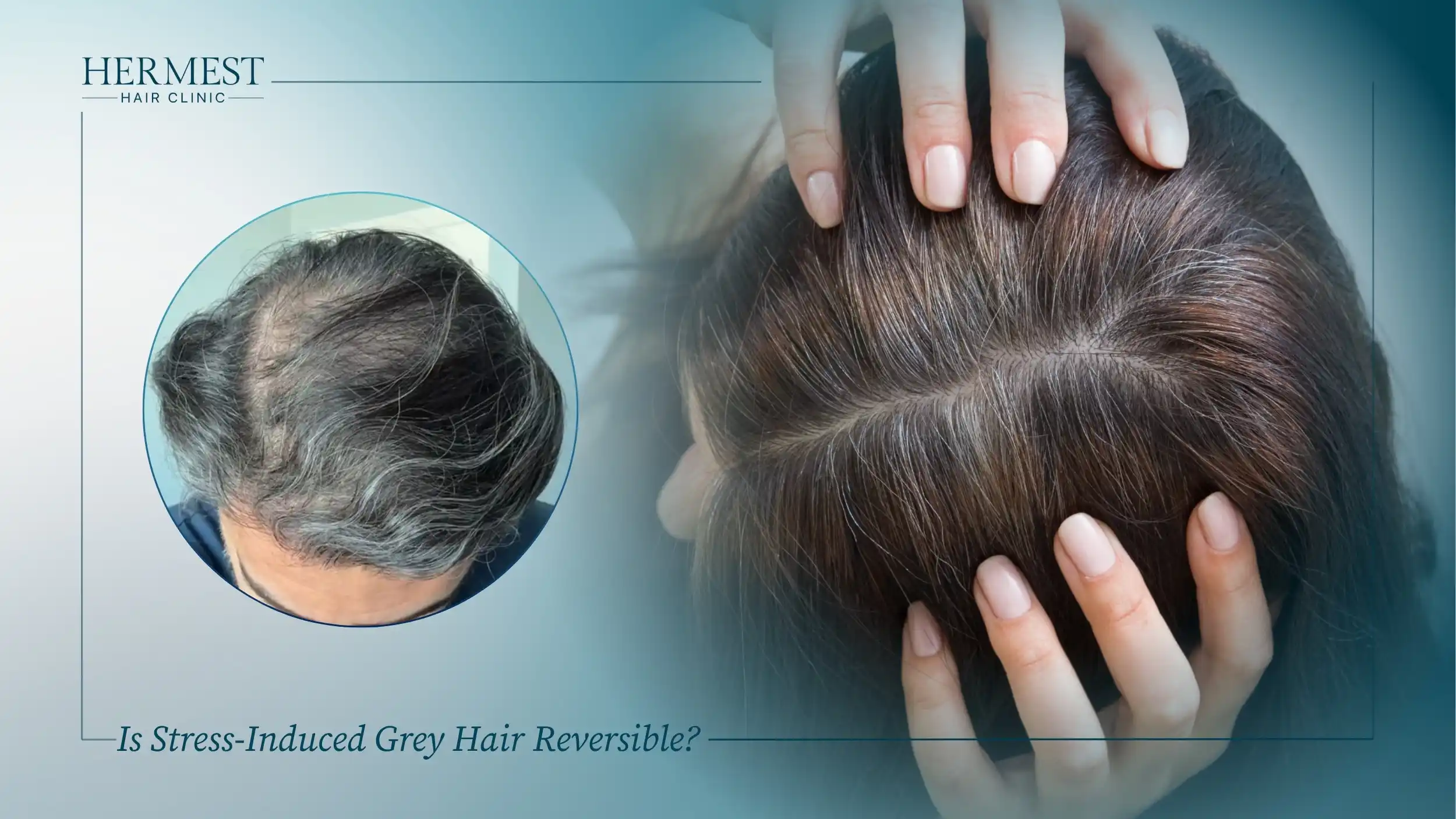
This is one of the most hopeful questions in hair science. If stress contributes to grey hair, can reducing stress restore natural color? The answer is intriguing.
Recent research suggests that, in certain circumstances, stress induced grey hair may be partially reversible. The reality, however, is more nuanced.
What Recent Human Studies Found
Researchers at Columbia University examined individual hair strands and analyzed changes in pigmentation over time. They discovered that some hairs regained pigment after periods of reduced psychological stress.
This finding challenged the long-held belief that greying is always permanent, suggesting that human hair pigmentation may be more dynamic than previously thought. Not every participant experienced repigmentation, but the discovery was significant.
When Color May Return
Reversal appears more likely when:
- Greying occurred relatively recently.
- The individual is younger.
- Stress was a major contributing factor.
- Significant melanocyte stem cell reserves remain.
If pigment-producing stem cells have not been completely depleted, some recovery may be possible. The earlier the intervention, the better the chances.
Why Reversal Is Uncommon
Although partial repigmentation can occur, most grey hair remains permanent. Age-related greying usually involves progressive depletion of melanocyte stem cells, and once those cells are exhausted natural pigment production becomes difficult to restore.
This is why genetics and aging remain dominant influences. Stress reduction alone cannot fully reverse genetically programmed greying.
What Patients Can Do
Reducing stress may still provide benefits. Practical strategies include:
- Regular physical activity
- Improved sleep quality
- Mindfulness practices
- Smoking cessation
- Balanced nutrition
These measures support overall hair health, and they may also help slow future greying.
Why Expectations Should Remain Realistic
Patients should approach claims of complete reversal cautiously. No supplement, treatment, or lifestyle change has been proven to consistently reverse all grey hair.
“Patients should view stress reduction as part of a broader approach to healthy aging rather than a guaranteed method for reversing grey hair,” says Dr. Ahmet Murat.
Other Causes of Premature Grey Hair
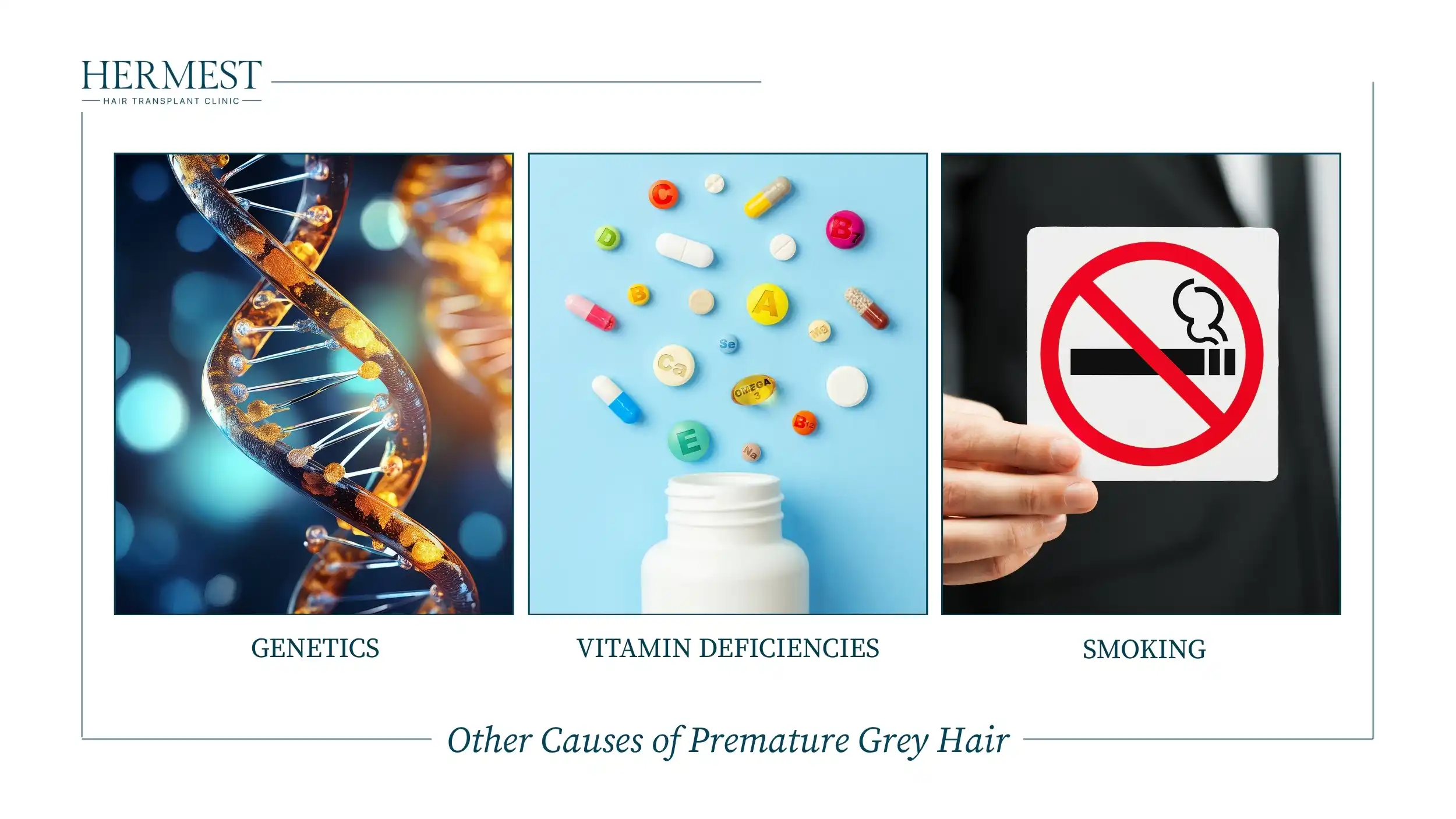
Although many people ask “does stress make hair grey?”, stress is only one possible contributor. Premature greying often develops because of several interacting factors, and understanding these causes helps patients identify potentially treatable conditions.
Genetics
Genetics remains the strongest predictor of when grey hair appears, and family history plays a major role. If your parents or close relatives developed grey hair early, you are more likely to experience premature greying as well.
For many individuals genetics largely determines the timing, and stress may simply accelerate an already programmed process.
Vitamin Deficiencies
Certain nutritional deficiencies have been associated with premature greying. These include:
- Vitamin B12 deficiency
- Iron deficiency
- Vitamin D deficiency
- Folate deficiency
- Copper deficiency
Hair follicles require adequate nutrients to function normally. Correcting deficiencies may improve overall hair health, and medical evaluation can help identify underlying problems.
Thyroid Disease
Both hypothyroidism and hyperthyroidism may affect hair pigmentation and hair quality. Grey hair accompanied by fatigue, weight changes, or temperature intolerance should prompt medical assessment, and treating the underlying thyroid disorder may improve hair health.
Smoking
Smoking is consistently associated with early greying, and research suggests smokers are significantly more likely to develop premature grey hair than non-smokers.
Cigarette smoke increases oxidative stress, which may damage pigment-producing cells. Smoking cessation benefits both general health and hair health.
Autoimmune Disorders
Certain autoimmune diseases may affect hair pigmentation. Examples include:
- Alopecia areata
- Vitiligo
- Autoimmune thyroid disease
These conditions may alter normal pigment production.
Oxidative Stress and Aging
Natural aging remains unavoidable. Over time melanocyte stem cells gradually decline, and this progressive loss eventually leads to grey or white hair in most people.
“When evaluating premature greying, we look beyond stress alone. A comprehensive assessment often reveals additional contributing factors that may benefit from medical attention,” says Dr. Ahmet Murat.
Why Is My Hair Turning Grey in My 20s?
Finding grey hairs in your twenties can be alarming, and many young adults immediately assume something is seriously wrong.
Fortunately, early greying is relatively common and in many cases is not a sign of serious illness.
Family History Often Provides the Answer
The first place to look is genetics. If your parents, siblings, or grandparents developed grey hair at a young age, there is a strong chance heredity is involved.
Genetic predisposition remains the leading explanation for premature grey hair among younger individuals, and some people are simply programmed to grey earlier than others.
Lifestyle Factors May Contribute
Lifestyle choices can influence how quickly greying progresses. Several factors have been associated with early pigment loss:
- Chronic stress
- Smoking
- Poor sleep habits
- Nutritional deficiencies
- Chronic illness
These factors do not always cause grey hair directly; they may accelerate an existing genetic tendency.
Young adults experiencing prolonged emotional strain often ask, “can stress cause grey hair at a young age?” Current evidence suggests it may contribute, particularly in genetically susceptible individuals.
Nutritional and Medical Causes
Premature greying sometimes reflects underlying health conditions. Potential medical contributors include:
- Vitamin B12 deficiency
- Iron deficiency
- Thyroid disorders
- Autoimmune diseases
- Rare genetic syndromes
Addressing these conditions may improve overall hair health, and early diagnosis remains valuable.
When Should You See a Doctor?
Medical evaluation may be appropriate if:
- Greying develops suddenly.
- Extensive greying appears before age 20.
- Hair loss accompanies greying.
- Other symptoms are present.
Examples include fatigue, weight changes, or skin pigmentation changes.
Should Young Adults Worry?
Usually not. Premature greying is often benign, though professional assessment can provide reassurance and identify treatable causes when necessary.
“Young patients with premature greying often worry that something serious is happening. Most cases reflect genetics, although medical evaluation may be helpful when greying develops unexpectedly or progresses rapidly,” says Dr. Ahmet Murat.
Stress, Hair Loss and Grey Hair: What’s the Difference?
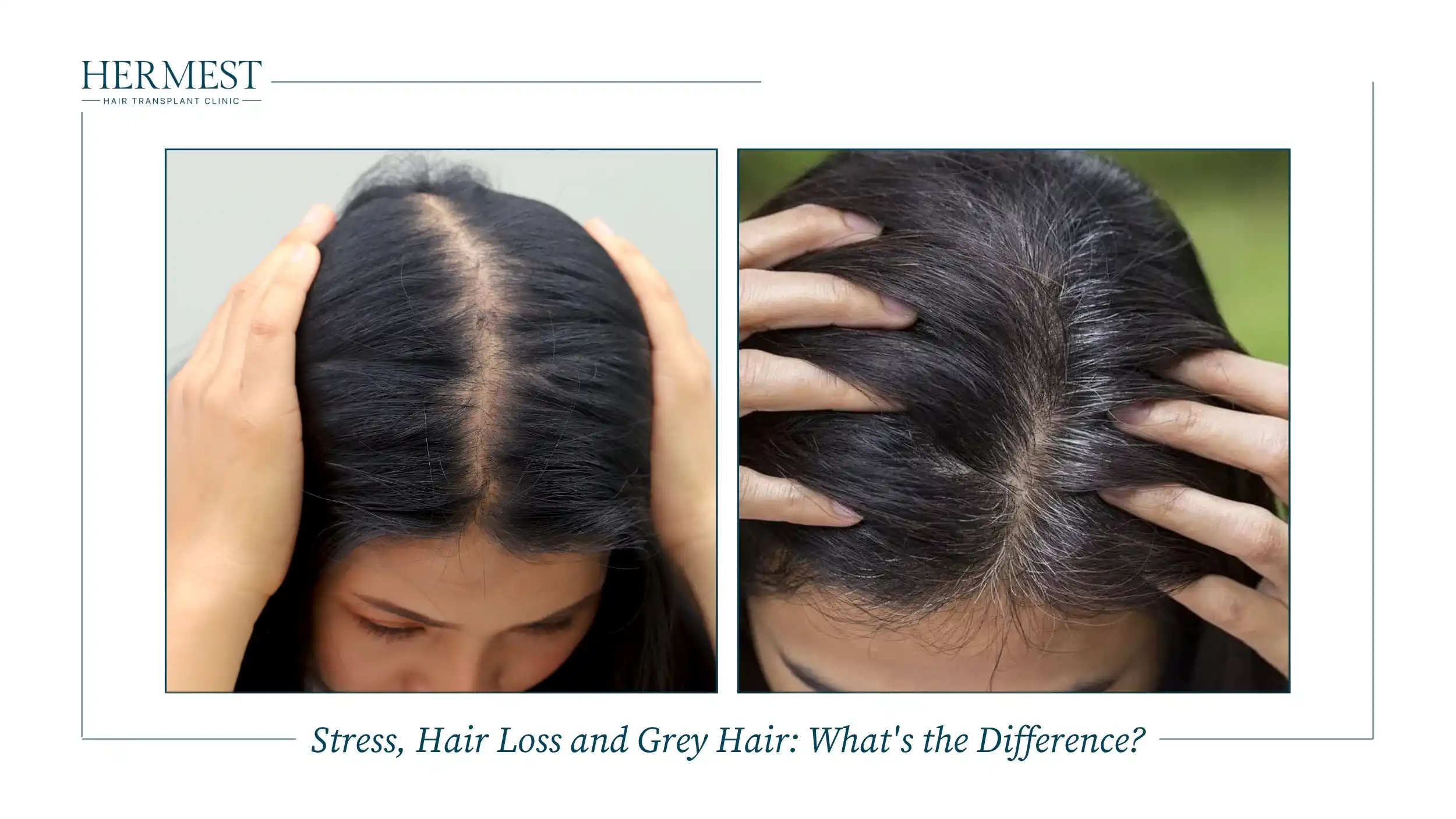
People often use the terms interchangeably. However, stress and grey hair are not the same as stress-related hair loss.
These conditions involve different biological mechanisms, and understanding the distinction can help patients interpret changes more accurately.
Telogen Effluvium
One of the most common forms of stress-related hair loss is telogen effluvium.
This condition occurs when physical or emotional stress pushes a large number of hair follicles into the resting phase, and several months later excessive shedding develops.
Common triggers include:
- Major illness
- Surgery
- Severe emotional stress
- Significant weight loss
- Childbirth
Patients often notice large amounts of hair falling out during washing or brushing. The good news is that telogen effluvium is usually temporary.
Greying vs Shedding
Grey hair and hair shedding involve different processes. Greying occurs when pigment-producing cells decline or stop functioning, while hair shedding occurs when the hair growth cycle becomes disrupted.
In simple terms:
- Grey hair changes color.
- Telogen effluvium changes quantity.
One affects pigmentation, the other density.
Can Stress Cause Both?
Yes. Stress can potentially contribute to both premature greying and increased shedding, though the relationship differs.
Current evidence suggests stress is a much stronger trigger for hair shedding than for greying. Severe stress frequently causes telogen effluvium, while its effect on pigmentation appears more variable and often depends on genetic susceptibility.
Why Correct Diagnosis Matters
Patients sometimes assume their hair is greying because it appears thinner, while others mistake white hairs for signs of hair loss. Professional evaluation can clarify what is happening.
This is particularly important when:
- Hair loss is sudden.
- Shedding is excessive.
- Greying occurs unusually early.
Can Grey Hair Fall Out?
Absolutely. Grey hairs follow the same growth cycle as pigmented hairs and can shed and regrow normally.
“Stress-related hair shedding is far more common than stress-induced greying. Accurate diagnosis helps determine whether patients are experiencing changes in density, pigmentation, or both,” says Dr. Ahmet Murat.
Can You Prevent or Slow Stress-Related Greying?
Many people ask whether they can stop grey hair before it progresses. The answer depends on the underlying cause.
If genetics is the primary driver, complete prevention is unlikely. However, healthy lifestyle habits may help slow stress induced grey hair and support overall follicle health.
Stress Management
Reducing chronic stress may benefit both physical and emotional well-being. Emerging research suggests that lowering stress levels could potentially help preserve hair pigmentation in some individuals.
Helpful stress-management strategies include:
- Regular physical activity
- Meditation or mindfulness practices
- Deep breathing exercises
- Adequate social support
- Professional counseling when needed
Managing stress supports more than hair; it benefits the entire body.
Nutrition and Hair Pigmentation
Hair follicles require a steady supply of nutrients, and a balanced diet rich in vitamins, minerals, and antioxidants may support healthy hair function.
Key nutrients include:
- Vitamin B12
- Iron
- Vitamin D
- Copper
- Protein
Patients with suspected deficiencies should seek medical evaluation rather than self-prescribing supplements.
Smoking Cessation
Smoking is one of the few modifiable risk factors consistently linked to premature greying. Tobacco exposure increases oxidative stress, which may damage pigment-producing cells, and quitting offers benefits that extend far beyond hair health.
Treating Underlying Medical Conditions
Addressing medical problems may help prevent further greying in some individuals. Examples include:
- Thyroid disease
- Nutritional deficiencies
- Autoimmune disorders
Early diagnosis can be valuable.
Can Supplements Reverse Grey Hair?
No supplement has consistently demonstrated the ability to reverse established age-related grey hair, so patients should approach marketing claims cautiously.
A Realistic Perspective
Grey hair is a natural part of aging, so the goal should not always be complete prevention. Healthy lifestyle choices may help slow progression and improve overall hair quality.
“Patients often search for a miracle treatment for grey hair. In reality, healthy lifestyle habits, proper medical evaluation, and stress management offer the most evidence-based approach,” says Dr. Ahmet Murat.
Can Hair Transplants Treat Grey Hair?
Patients frequently ask whether a hair transplant can eliminate grey hair or restore natural color. The answer is straightforward: Hair transplantation can restore hair density, but it cannot reliably restore hair pigmentation.
Does Transplantation Restore Color?
A hair transplant relocates living follicles from the donor area to thinning or bald regions, but the procedure does not alter the follicle’s genetic programming. If donor hairs are grey before surgery they will usually remain grey afterward, and pigmented donor hairs typically maintain their original color characteristics.
This distinction is important. A hair transplant addresses hair loss; it does not cure premature canities or reverse age-related greying.
Can Transplanted Hair Turn Grey?
Yes. Transplanted hair continues to age naturally, and as patients grow older transplanted follicles may gradually lose pigment just like non-transplanted hairs.
This process reflects normal biological aging. The surgery itself does not accelerate greying.
What If Only Grey Hair Remains in the Donor Area?
Some older patients have predominantly grey donor hair, and these follicles can still be successfully transplanted. Grey donor hair often provides excellent cosmetic coverage because white or grey hairs can create the appearance of greater fullness, particularly when contrasted with lighter skin tones.
Can Dye Be Used After Hair Transplant?
Yes. Most patients can safely color their hair once the scalp has completely healed, but timing is important. Patients should always follow their surgeon’s postoperative recommendations before using hair dyes or chemical treatments.
FAQs About Stress and Grey Hair
Yes. Research suggests that chronic stress may contribute to premature greying by affecting pigment-producing stem cells within hair follicles. Genetics and aging remain the primary causes.
Ready to Understand Your Hair Changes Better?
Whether you are experiencing premature greying, excessive shedding, or progressive hair loss, obtaining an accurate diagnosis is the first step.

At Hermest Hair Clinic, Dr. Ahmet Murat and his team provide comprehensive hair and scalp assessments to identify the underlying causes of hair changes and recommend individualized treatment strategies.
“Successful treatment begins with understanding why hair changes occur. Accurate diagnosis allows us to create personalized, evidence-based treatment plans for every patient,” says Dr. Ahmet Murat.
Book your consultation with Hermest Hair Clinic today and take the first step toward healthier, stronger hair.