
Does Conditioner Cause Hair Loss? Myths, Facts & Science
 ChatGPT
 Claude
 Perplexity
 Grok
Grok
 Gemini

If you have ever looked down in the shower and noticed strands of hair slipping through your fingers while conditioning, you may have wondered: does conditioner cause hair loss? You are not alone.
Many people become concerned when they see hair coming out during washing or conditioning. Since conditioner is being applied at that exact moment, it often becomes the first thing blamed. Fortunately, the evidence is reassuring.
Current scientific evidence does not show that ordinary hair conditioners directly cause permanent hair loss. In fact, research on hair cosmetics suggests that conditioners generally improve hair manageability, reduce friction between hair fibers, and decrease breakage when used correctly.
So why do so many people believe their conditioner is making their hair fall out? The answer usually lies in timing. Conditioning often helps loosen hairs that have already completed their growth cycle and were going to shed anyway. Because these hairs are released while washing or detangling, it can appear as though the product itself caused the shedding.
At the same time, not all hair shedding seen during conditioning is completely normal. Scalp irritation, allergic reactions, improper product use, excessive buildup, and underlying conditions such as androgenetic alopecia or telogen effluvium may contribute to increased hair loss in some individuals.
According to the American Academy of Dermatology (AAD), losing approximately 50 to 100 hairs per day is considered normal. Many of these hairs become most noticeable during washing and conditioning.
“Patients frequently tell us that they stopped using conditioner because they believed it was causing their hair loss. In most cases, the conditioner simply revealed shedding that was already occurring,” says Dr. Ahmet Murat, founder of Hermest Hair Clinic.
This guide explores what science says about conditioner hair loss, why you may see more shedding during conditioning, which ingredients can sometimes irritate the scalp, and when hair loss may actually signal an underlying medical condition.
Quick Insights
- Ordinary conditioners do not typically cause permanent hair loss.
- Most hair seen during conditioning represents normal daily shedding.
- Conditioners often reduce hair breakage rather than increase it.
- Scalp irritation or allergic reactions may contribute to temporary shedding in sensitive individuals.
- Androgenetic alopecia, telogen effluvium, and medical conditions are much more common causes of hair loss than conditioner use.
Does Conditioner Cause Hair Loss?
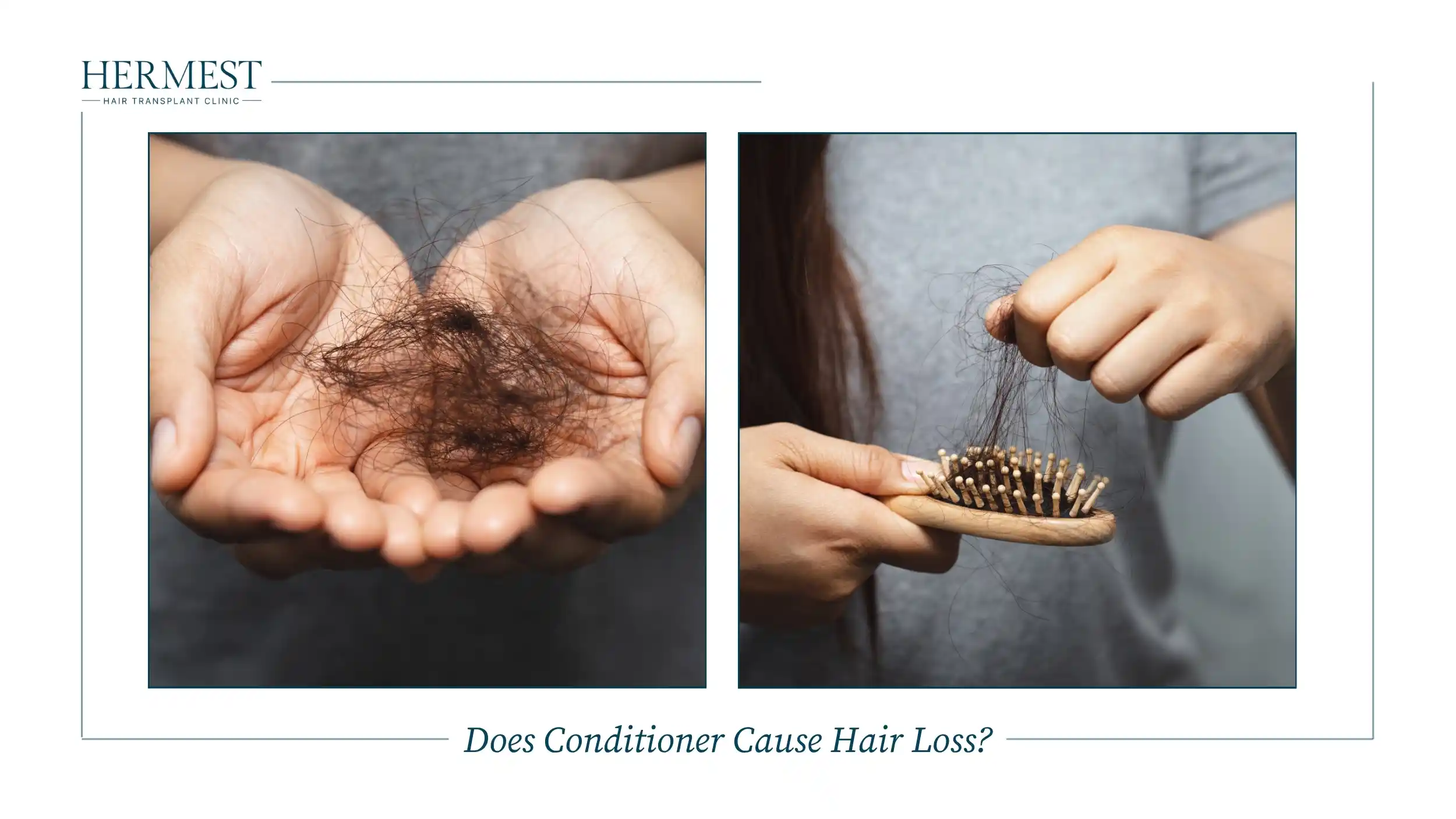
Many people notice hair strands on their hands while rinsing conditioner and immediately assume the product is responsible. The short answer is reassuring. For most people, ordinary hair conditioner does not cause permanent hair loss.
Current scientific evidence does not support the idea that properly formulated rinse-off or leave-in conditioners directly damage hair follicles or cause baldness. In fact, research published on hair cosmetics suggests that conditioners are designed to reduce friction, improve combability, and minimize hair shaft damage.
The Short Answer
Most commercial conditioners are intended to protect the hair fiber rather than harm it.
Conditioners typically work by:
- Reducing friction between hair strands
- Improving moisture retention
- Making detangling easier
- Decreasing mechanical damage
These effects can actually help reduce hair breakage.
This is particularly beneficial for individuals with long, chemically treated, or fragile hair.
What Scientific Evidence Says
Studies evaluating cosmetic hair products have found that conditioners generally improve hair shaft quality when used appropriately.
According to dermatology literature, conditioners coat and smooth the hair shaft, decreasing friction that can otherwise lead to breakage during brushing and styling.
No strong scientific evidence currently demonstrates that ordinary conditioners directly cause permanent hair loss.
That said, individual reactions can occur.
Some people may experience scalp irritation, allergic contact dermatitis, or sensitivity to specific ingredients.
In these situations, the scalp inflammation rather than the conditioner itself may contribute to increased shedding.
Why Conditioner Is Often Blamed
Timing explains much of the confusion.
According to the American Academy of Dermatology, shedding 50 to 100 hairs daily is considered normal.
Many of these hairs remain trapped among surrounding strands until washing or conditioning releases them.
As a result, it can seem as though the conditioner caused the shedding when it merely helped remove hairs that had already detached from the follicle.
“Conditioners do not usually create hair loss. More commonly, they make naturally shed hairs easier to see during washing,” says Dr. Ahmet Murat.
When Conditioner Might Contribute to Problems
Although permanent hair loss is unlikely, some situations deserve attention:
- Persistent scalp itching
- Redness or burning
- Flaking after product use
- Increased breakage
- Sudden diffuse shedding
These symptoms may indicate irritation or an underlying scalp disorder.
Why Do You See More Hair While Conditioning?
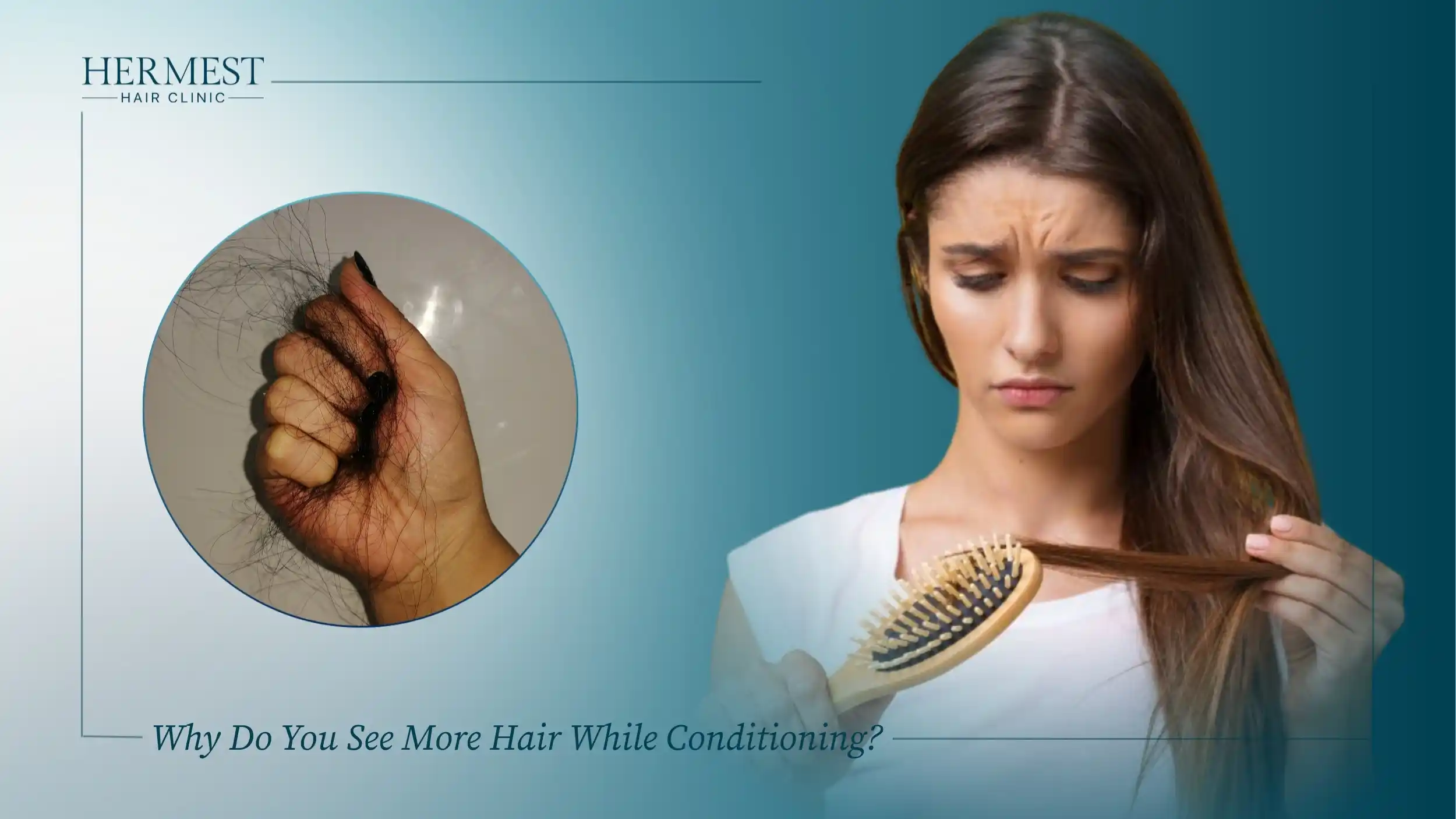
Many people become alarmed when they see hair collecting in their hands during conditioning. The amount can look dramatic. In most cases, it is completely normal.
Understanding why this happens can help reduce unnecessary anxiety and prevent people from abandoning helpful hair care products.
Normal Daily Shedding
Hair is constantly cycling through phases of growth, rest, and shedding. According to the American Academy of Dermatology, losing approximately 50 to 100 hairs per day is considered normal.
Some individuals naturally shed slightly more. Others shed less.
The important point is that daily hair shedding is part of a healthy hair cycle. You do not usually notice every shed hair throughout the day.
Many remain trapped among neighboring strands until washing or brushing dislodges them.
Detangling Releases Shed Hairs
Conditioner reduces friction and makes hair easier to comb.
This is one of its primary functions.
As you massage conditioner through your hair or detangle knots, hairs that have already detached from the follicle are often released.
This process can create the impression that the product itself caused the shedding.
In reality, the conditioner may simply be revealing shedding that was already occurring.
This is especially common in people with:
- Long hair
- Curly or textured hair
- Thick hair
- Hair that is washed infrequently
The longer hair remains unwashed, the more shed hairs may accumulate between wash days.
Why Shower Shedding Appears Dramatic
The shower creates a perfect environment for noticing hair loss.
Water, massage, and detangling occur simultaneously.
Shed hairs become visible against hands, shower walls, and drain covers.
As a result, even normal shedding can seem excessive.
People who wash their hair only two or three times per week often notice larger amounts of hair during wash days because several days of naturally shed hairs are released at once.
“Patients frequently worry after seeing hair in the shower. We often reassure them that the timing of the shedding is just as important as the amount,” says Dr. Ahmet Murat.
When Shower Shedding May Be Abnormal
Professional evaluation may be worthwhile if you notice:
- Progressive thinning
- Hairline recession
- Bald patches
- Sudden excessive shedding
- Persistent scalp symptoms
These findings may indicate a condition unrelated to conditioner use.
Hair Breakage vs True Hair Loss
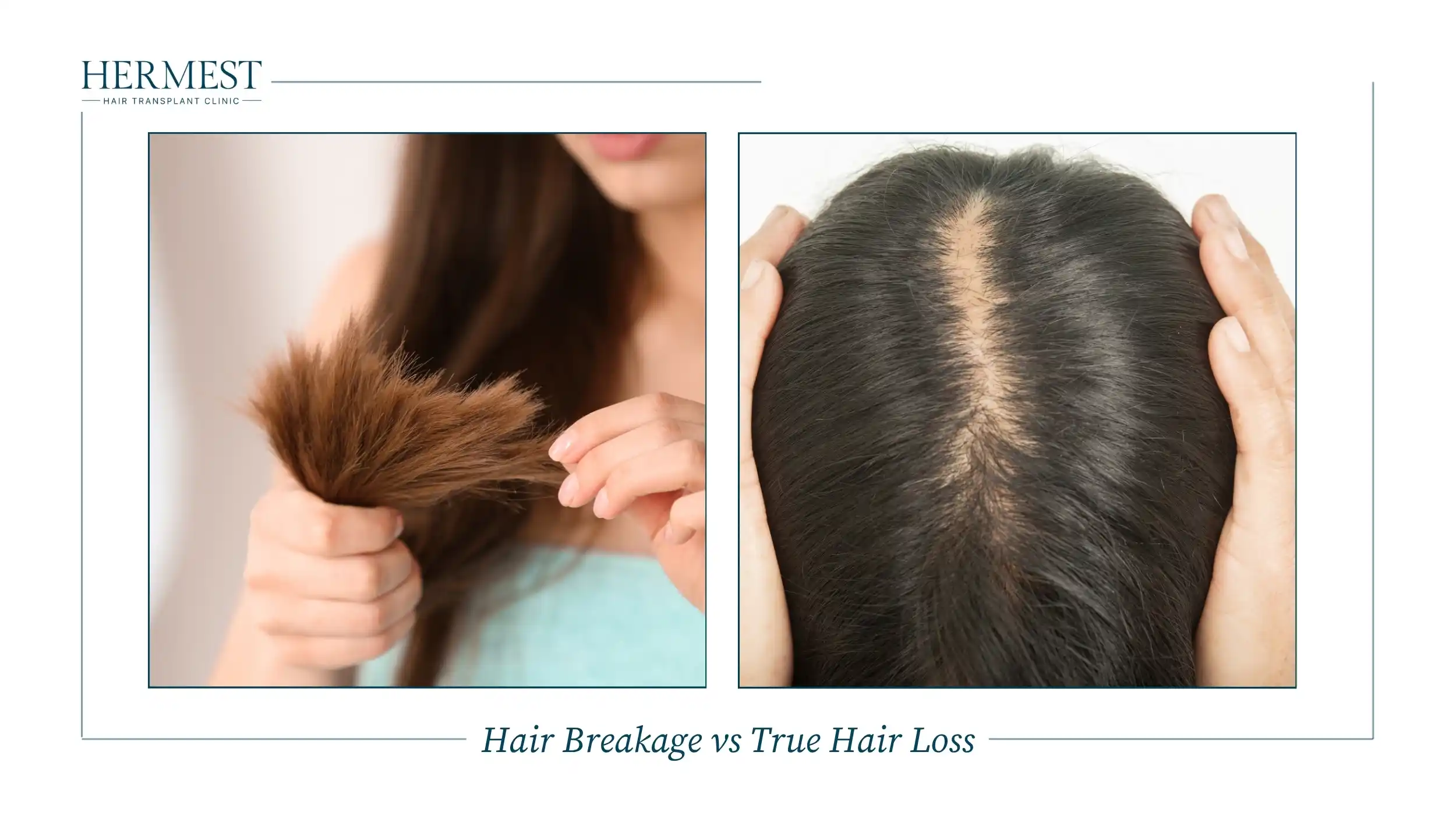
Many people use the terms “hair loss” and “hair breakage” interchangeably. They are not the same. Understanding the difference can completely change how you approach treatment.
A conditioner is far more likely to affect the hair shaft than the hair follicle. This means that when people suspect conditioner causing hair loss, they are often dealing with breakage rather than true follicle-related shedding.
What Hair Breakage Looks Like
Hair breakage occurs when the hair shaft snaps or fractures.
The follicle remains healthy.
The hair simply breaks before completing its normal growth cycle.
Common signs include:
- Short, uneven hairs
- Split ends
- Frizzy appearance
- Broken strands on clothing
- Reduced hair length despite growth
Damaged hair often feels rough, dry, or brittle.
Frequent heat styling, bleaching, tight hairstyles, and harsh chemical treatments are among the most common causes.
Conditioners can actually help reduce breakage by lubricating and protecting the hair shaft.
Research on hair cosmetics has shown that conditioners reduce friction between fibers, lowering the risk of mechanical damage.
What Follicle Hair Loss Looks Like
True hair loss begins at the follicle.
The entire hair, including the bulb at the end, is shed from the scalp.
Signs may include:
- Diffuse thinning
- Receding hairline
- Crown thinning
- Widening part line
- Increased scalp visibility
Conditions such as androgenetic alopecia, telogen effluvium, and alopecia areata affect the follicle itself.
These conditions require a different evaluation and treatment strategy.
Why the Difference Matters
Treating breakage as if it were male pattern baldness rarely works.
Likewise, assuming progressive follicle loss is simply breakage can delay appropriate treatment.
Ask yourself these questions:
- Is the hair strand full length or short?
- Do you see a white bulb at one end?
- Is the hairline changing?
- Is density decreasing over time?
The answers often provide useful clues.
“One of the first things we determine during consultation is whether the patient is experiencing breakage, shedding, or both. The distinction guides every treatment recommendation,” says Dr. Ahmet Murat.
When Both Problems Occur Together
Many patients experience both breakage and true hair loss simultaneously.
For example, someone with early androgenetic alopecia may also have chemically damaged hair.
Addressing only one issue may produce disappointing results.
Is Hair Breakage the Same as Hair Loss?
No. Hair breakage involves damage to the hair shaft, whereas true hair loss occurs when the entire hair is shed from the follicle. Conditioners are generally more likely to affect breakage than permanent hair loss.
Can Conditioner Ingredients Cause Problems?
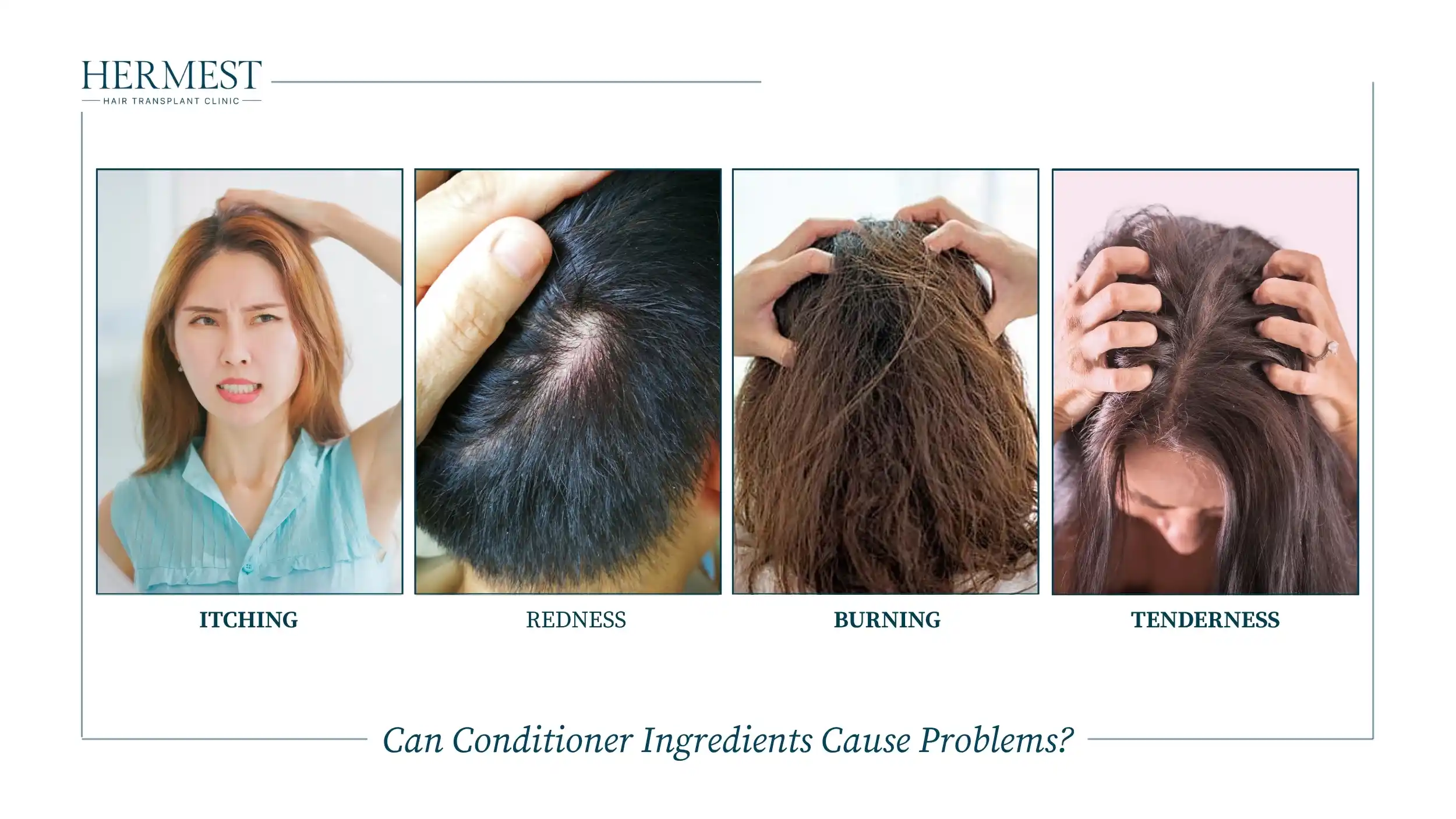
Although ordinary conditioners do not usually cause permanent hair loss, certain ingredients may create problems for some individuals. The issue is typically not follicle destruction. It is irritation.
A sensitive scalp can react to specific ingredients, leading to discomfort and, in some cases, increased shedding.
Understanding these reactions can help you choose products more confidently.
Scalp Irritation and Allergies
Some people develop irritation after using hair care products.
This reaction may appear as:
- Itching
- Redness
- Burning
- Tenderness
- Flaking
In some cases, the problem is allergic contact dermatitis, a condition in which the immune system reacts to a specific ingredient.
Persistent inflammation can disrupt the scalp environment and may contribute to increased shedding.
If symptoms consistently appear after using a particular conditioner, discontinuing the product and seeking professional advice may be appropriate.
Fragrances and Preservatives
Fragrances are among the most common causes of cosmetic-related allergic reactions.
Certain preservatives may also trigger irritation in susceptible individuals.
People with eczema, psoriasis, or highly sensitive skin may be more likely to react.
This does not mean these ingredients are unsafe for everyone.
It simply means individual sensitivity varies.
Patch testing by a dermatologist may help identify the responsible ingredient when reactions recur.
Silicones and Buildup
Silicones often generate concern online. Many people ask whether silicones in conditioners cause hair loss.
Current evidence does not show that silicones directly cause permanent hair loss.
Silicones are widely used because they smooth the hair shaft, improve shine, and reduce friction.
Some individuals may notice product buildup, especially if they have fine hair or use heavy products excessively.
Buildup can leave hair feeling:
- Greasy
- Heavy
- Flat
- Difficult to style
This is usually a cosmetic issue rather than true hair loss.
Can Conditioner Clog Hair Follicles?
This is another common myth.
There is currently no strong scientific evidence showing that ordinary conditioners clog hair follicles and cause baldness.
Proper cleansing generally removes excess product from the scalp and hair.
“Patients often worry that conditioner is suffocating their follicles. In reality, follicle miniaturization, genetics, and medical conditions are far more common causes of hair loss,” says Dr. Ahmet Murat.
When Ingredient Reactions Require Attention
Professional evaluation is recommended if scalp symptoms persist despite changing products.
Ongoing inflammation deserves investigation.
Does Leave-In Conditioner Cause Hair Loss?
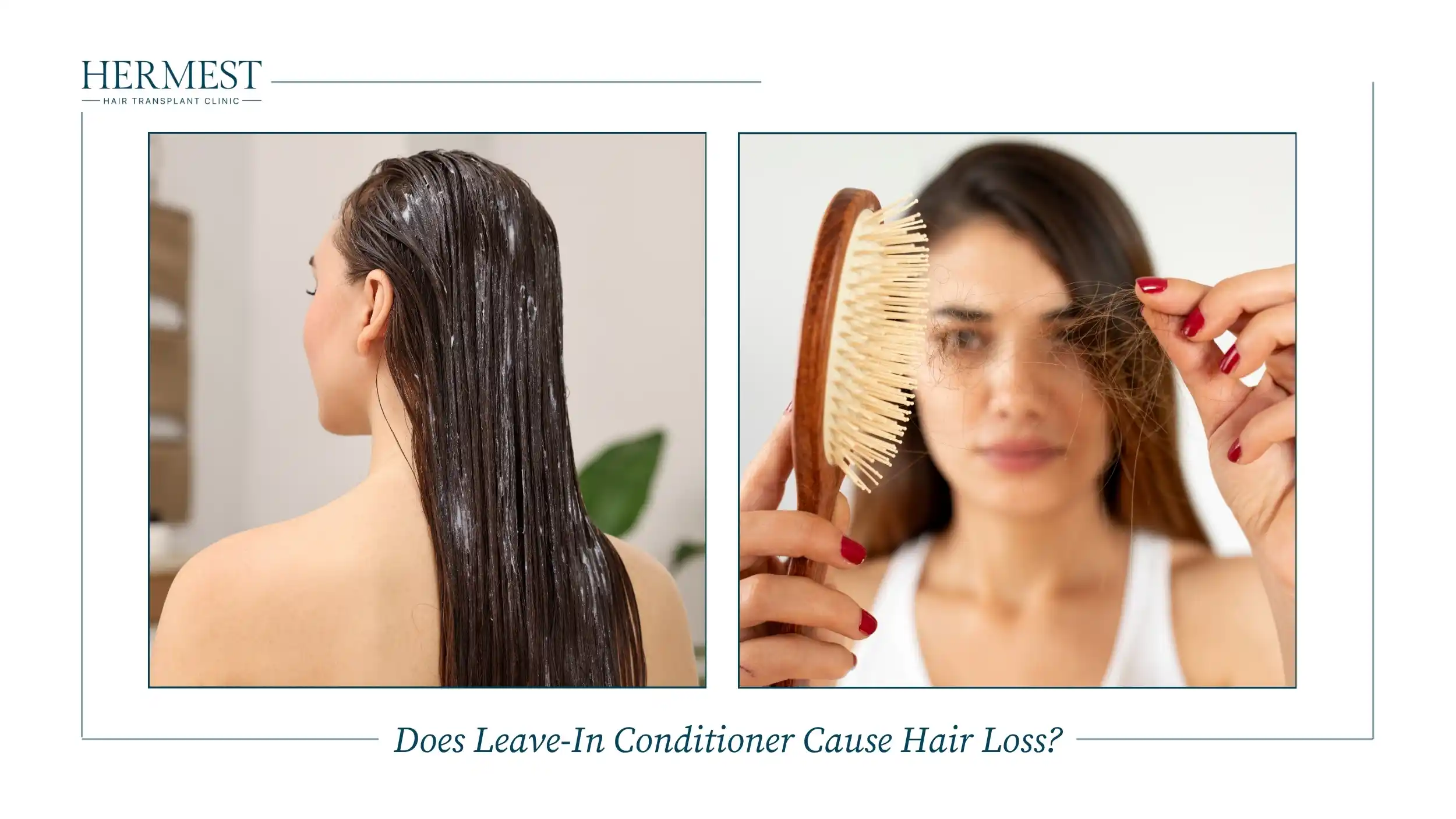
Many people who tolerate traditional conditioners without difficulty still worry about leave-in products. The concern is understandable.
Unlike rinse-off conditioners, leave-in products remain on the hair and scalp for extended periods.
This naturally raises questions about “does leave-in conditioner cause hair loss” and whether prolonged exposure increases risk.
The reassuring news is that properly used leave-in conditioners do not typically cause permanent hair loss.
Leave-In vs Rinse-Off Products
Both product types serve different purposes.
Rinse-off conditioners are designed to be applied after shampooing and washed away after a short period.
Leave-in conditioners remain on the hair to provide ongoing benefits such as:
- Improved moisture retention
- Reduced tangling
- Protection against mechanical damage
- Enhanced manageability
When used as intended, both products are generally considered safe.
Research on hair cosmetics suggests that conditioners can help protect the hair shaft and reduce breakage.
Using Products Correctly Matters
Problems often arise when products are not used according to instructions.
For example, the American Academy of Dermatology advises that rinse-off conditioners should not be used as leave-in products.
Products formulated for short contact times may contain ingredients that feel heavy or irritating if left on the scalp for prolonged periods.
Following manufacturer instructions remains important.
When Misuse May Cause Problems
Leave-in products are unlikely to cause permanent follicle damage.
Improper use may contribute to issues such as:
- Product buildup
- Scalp irritation
- Increased oiliness
- Itching
- Flaking
Individuals with very fine or oily hair may find that excessive product application leaves the hair appearing thinner or flatter.
This cosmetic effect can be mistaken for true conditioner hair loss.
Should Leave-In Conditioner Be Applied to the Scalp?
This depends on the product and individual hair type.
Many leave-in conditioners are intended primarily for the mid-lengths and ends rather than direct scalp application.
Always read the product instructions carefully.
“More product is not always better. Applying leave-in conditioners correctly can improve hair quality and reduce breakage without overloading the scalp,” says Dr. Ahmet Murat.
How to Minimize Problems
Simple habits can help:
- Use only the recommended amount
- Focus application on the hair shaft
- Wash regularly to remove buildup
- Stop using products that trigger irritation
Should You Put Conditioner on Your Scalp?
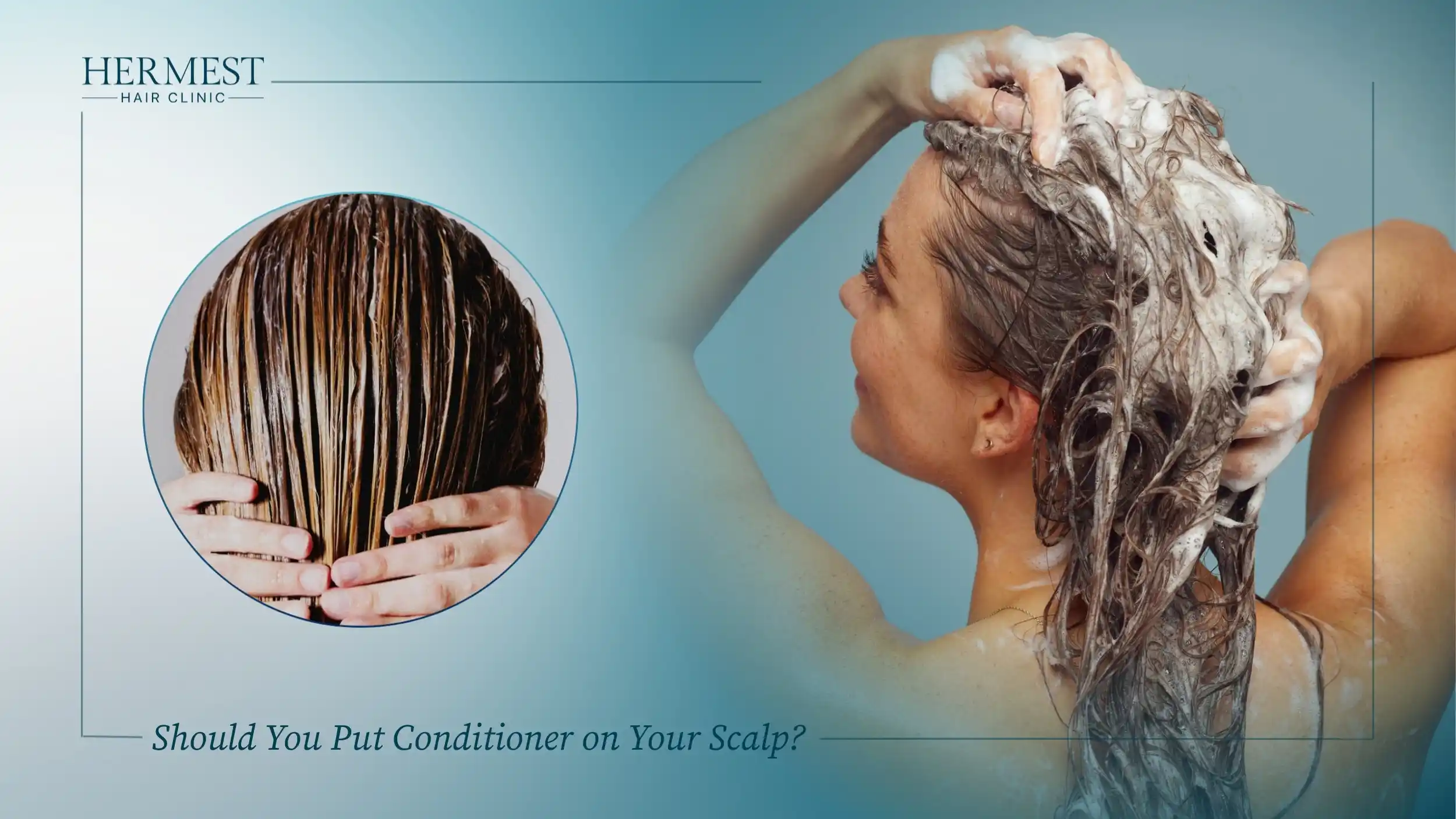
Many people apply conditioner from roots to ends without giving it much thought. Others avoid the scalp entirely. So which approach is correct?
The answer depends largely on your hair type, scalp condition, and the specific product you are using.
There is no universal rule that applies to everyone.
Hair Type Considerations
Different hair types have different needs. People with thick, curly, coily, or very dry hair often benefit from conditioning closer to the roots, especially if the scalp tends to be dry.
Individuals with fine or straight hair may prefer focusing conditioner on the mid-lengths and ends.
This approach can help avoid:
- Excess heaviness
- Flat-looking hair
- Increased oiliness
- Product buildup
Applying conditioner strategically often produces the best cosmetic result.
Dry Scalp vs Oily Scalp
Scalp characteristics matter.
People with dry scalps may find that some conditioners or scalp-specific moisturizing products improve comfort and reduce irritation.
Those with oily scalps often prefer lighter formulations and limited scalp application.
If you experience persistent symptoms such as itching, redness, or flaking, an underlying scalp disorder may be present.
Common conditions include:
- Seborrheic dermatitis
- Psoriasis
- Eczema
- Contact dermatitis
In these situations, a professional evaluation can help identify the cause.
Fine Hair Considerations
Individuals with fine hair frequently worry about conditioner hair loss because conditioner can temporarily make hair appear thinner.
Heavy products may weigh the hair down and reduce volume.
This visual effect can create the impression of increased thinning even when hair density has not changed.
Choosing lightweight formulations may help.
What About the Hair Follicles?
Many people ask whether applying conditioner to the scalp can suffocate or clog follicles.
Current evidence does not support this concern.
Healthy hair follicles remain active beneath the scalp surface and are not permanently damaged by ordinary conditioner use.
“The decision to apply conditioner to the scalp should be based on hair type, scalp condition, and product instructions rather than fear of hair loss,” says Dr. Ahmet Murat.
General Recommendations
For most people:
- Apply conditioner primarily to mid-lengths and ends
- Use scalp application only when appropriate
- Follow the manufacturer’s directions
- Stop using products that trigger irritation
Conditioner vs Androgenetic Alopecia
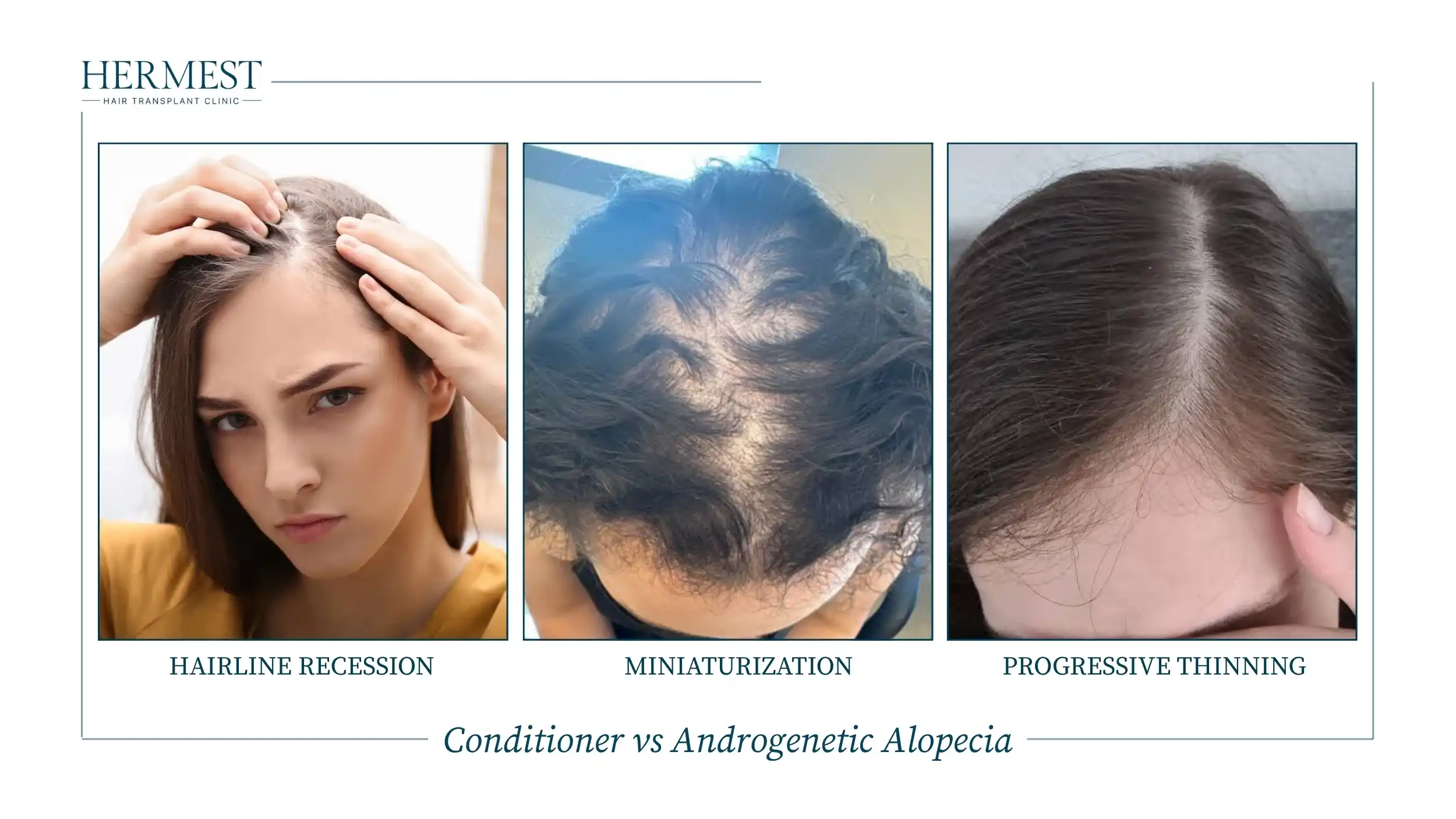
Many people begin questioning their hair products only after they notice thinning. A new conditioner is often blamed.
In reality, the conditioner may simply coincide with the timing of an underlying hair loss condition.
One of the most common examples is androgenetic alopecia, also known as male pattern baldness or female pattern hair loss.
Understanding the difference can prevent unnecessary worry and delayed treatment.
Hairline Recession
A changing hairline is one of the strongest signs of androgenetic alopecia.
Men commonly notice:
- Receding temples
- A deeper M-shaped hairline
- Progressive frontal thinning
Conditioners do not cause these changes.
If the hairline continues moving backward over time, a genetic hair loss condition becomes much more likely than conditioner hair loss.
Women usually experience a different pattern.
Rather than temple recession, many women notice gradual widening of the central part line.
Miniaturization
This process is invisible to most people.
Miniaturization occurs when hair follicles gradually produce thinner, shorter, and weaker hairs over time.
It is considered a hallmark of androgenetic alopecia.
Conditioners do not cause follicle miniaturization.
A scalp examination often reveals miniaturization long before significant baldness becomes obvious.
This is why professional assessment can be so valuable.
Progressive Thinning
True product-related irritation usually improves after discontinuing the offending product.
Genetic hair loss behaves differently.
Typical signs include:
- Gradual reduction in density
- Increasing scalp visibility
- Thinning at the crown
- Year-to-year progression
These changes generally continue unless treated.
Why Conditioner Gets Blamed
The timing creates confusion.
Many people begin using a new conditioner around the same time they first notice shedding or thinning.
Since the conditioner is the newest variable, it naturally becomes the suspected cause.
This phenomenon is common in hair clinics.
“Patients frequently attribute progressive thinning to a shampoo or conditioner. More often, careful examination reveals underlying androgenetic alopecia that had been developing quietly for years,” says Dr. Ahmet Murat.
Can Both Problems Occur Together?
Yes.
Someone with male pattern baldness may simultaneously experience scalp irritation, breakage, or temporary shedding.
Addressing only the cosmetic product without evaluating the underlying hair loss may produce disappointing results.
Can Hair Transplant Patients Use Conditioner?
Many patients become extremely cautious about hair products after surgery. This is understandable. After investing in a hair transplant, even routine hair washing can feel stressful.
One of the most common questions we hear at Hermest is whether conditioner is safe after transplantation.
The answer is yes, but timing matters.
When Conditioner Is Safe After Surgery
Immediately after a hair transplant, the scalp enters an important healing phase. Newly implanted grafts need time to stabilize.
During this early recovery period, patients should follow the postoperative washing instructions provided by their surgeon.
At Hermest Hair Clinic, patients receive detailed aftercare guidance tailored to their procedure and healing progress.
Conditioner is usually introduced only after the scalp has healed sufficiently and the medical team confirms it is appropriate.
Applying products too early may unnecessarily irritate sensitive tissues.
Post-Transplant Washing Guidelines
The first postoperative washes require special care.

Patients are generally advised to:
- Follow the clinic’s washing schedule precisely
- Use only recommended products
- Avoid vigorous rubbing or scratching
- Rinse gently using lukewarm water
As healing progresses, patients can gradually return to a more typical hair care routine.
The timeline varies from patient to patient.
Can Conditioner Damage Transplanted Grafts?
This is a common fear.
Once grafts are securely established, ordinary conditioners do not damage transplanted follicles.
Conditioners work primarily on the hair shaft rather than the follicle itself.
Using appropriate products may even help improve hair manageability and reduce breakage during brushing.
“Patients are often surprised to learn that properly selected hair care products can support healthier hair after transplantation. The key is introducing products at the right time and following postoperative instructions carefully,” says Dr. Ahmet Murat.
The Hermest Postoperative Approach
At Hermest, postoperative care extends far beyond the day of surgery.
Our team provides ongoing support regarding:
- Washing techniques
- Product selection
- Scalp care
- Recovery expectations
- Long-term hair maintenance
This structured follow-up helps patients recover comfortably and confidently.
When to Contact Your Surgeon
You should seek advice if you experience:
- Persistent redness
- Severe itching
- Unusual swelling
- Scalp irritation after product use
- Concerns about graft healing
Early communication often prevents unnecessary anxiety.
How to Choose the Best Conditioner for Thinning Hair
Although conditioners do not usually cause permanent hair loss, selecting the right product can improve hair appearance, reduce breakage, and support overall hair health.
The best conditioner for one person may not work for another.
Hair type matters.
Scalp sensitivity matters.
Underlying hair loss conditions matter.
A thoughtful approach often produces better results than simply choosing the latest trend.
Ingredients to Look For
People experiencing thinning hair often benefit from conditioners designed to minimize breakage and improve manageability.
Helpful characteristics may include:
- Lightweight moisturizing ingredients
- Proteins that strengthen the hair shaft
- Ingredients that reduce friction
- Formulas designed for sensitive scalps
Research on hair cosmetics suggests that conditioners reducing friction can help decrease mechanical damage during brushing and styling.
This can be particularly helpful for fragile hair.
Ingredients to Avoid if You Are Sensitive
Most ingredients are safe for most people.
However, individuals with sensitive scalps may prefer minimizing exposure to products that repeatedly trigger symptoms.
Potential triggers include:
- Strong fragrances
- Certain preservatives
- Heavy formulations causing buildup
The key is personal tolerance.
If a product consistently causes itching, redness, or burning, discontinue use and consider professional evaluation.
Repeated irritation is not normal.
Gentle Hair Care Habits Matter Too
According to the American Academy of Dermatology, everyday grooming practices can significantly influence hair damage and breakage.
Healthy habits include:
- Detangling gently
- Limiting excessive heat styling
- Avoiding tight hairstyles
- Minimizing harsh chemical treatments
Conditioner works best when combined with good hair care practices.
“Many patients focus entirely on products. In reality, daily hair care habits often influence hair quality just as much as the products themselves,” says Dr. Ahmet Murat.
Should People With Androgenetic Alopecia Use Conditioner?
Absolutely.
Individuals with male pattern baldness or female pattern hair loss can still benefit from conditioner.
Conditioners improve the quality and manageability of existing hairs, even though they do not treat the underlying genetic condition.
Choosing Based on Hair Type
General recommendations include:
- Fine hair: lightweight formulations
- Dry or textured hair: richer moisturizing products
- Sensitive scalp: fragrance-free options
- Chemically treated hair: strengthening conditioners
Selecting products based on your individual needs usually produces the best results.
FAQs About Conditioner and Hair Loss
No. Current scientific evidence does not show that ordinary conditioners directly cause permanent hair loss. Most shedding noticed during conditioning involves hairs that had already completed their natural growth cycle and were ready to fall out.
Ready to Find Out What’s Really Causing Your Hair Loss?
If you are concerned about ongoing shedding, thinning, or changes in your hairline, obtaining an accurate diagnosis is the most important step.
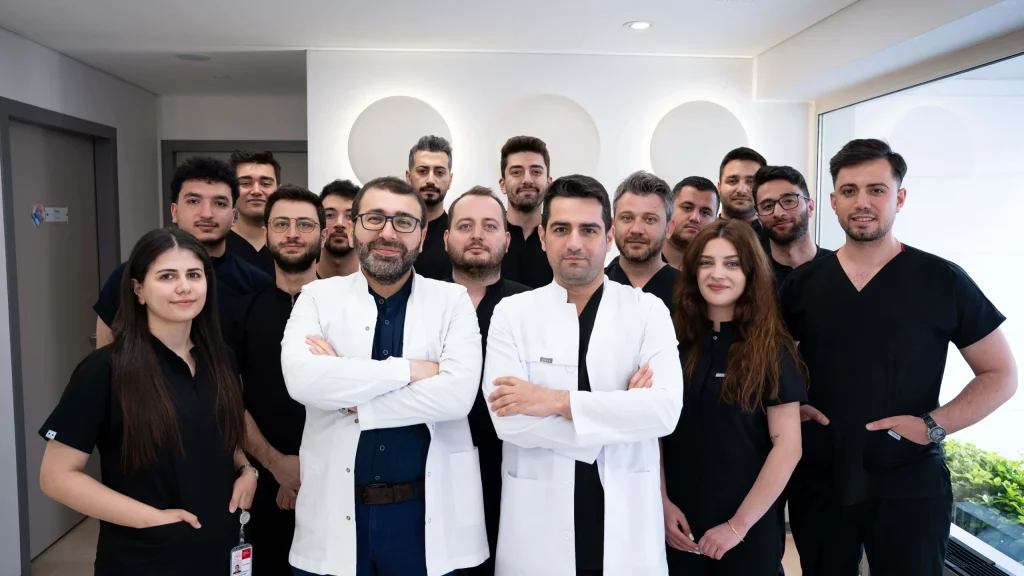
At Hermest Hair Clinic, Dr. Ahmet Murat and his team perform comprehensive scalp and hair assessments to identify the true cause of hair loss and create personalized treatment strategies.
Whether you are experiencing diffuse shedding, progressive thinning, or considering UNIQUE FUE® hair transplantation, our team can help you understand your options.
“Many patients arrive convinced that a product caused their hair loss. A detailed evaluation often reveals a very different story and opens the door to effective treatment,” says Dr. Ahmet Murat.
Schedule your consultation with Hermest Hair Clinic today and take the first step toward understanding, preserving, and restoring your hair.