


Coconut Oil for Hair: Benefits, Growth Claims & Risks
 ChatGPT
 Claude
 Perplexity
 Grok
Grok
 Gemini

Interest in coconut oil for hair has grown tremendously over the past decade. Social media, beauty influencers, and traditional wellness practices often describe coconut oil as a natural solution for everything from dryness and frizz to hair thinning and baldness. But what does science actually say? The answer is nuanced.
Research suggests that coconut oil can improve hair shaft health, reduce protein loss, and help decrease breakage. In fact, studies have shown that coconut oil penetrates the hair shaft better than several other commonly used oils because of its unique composition, particularly its high concentration of lauric acid. That is genuinely promising. Many of the claims made for coconut oil and hair growth, however, go well beyond what the evidence actually supports.
At present there is limited scientific evidence that coconut oil directly stimulates new hair growth, regrows lost hair, or reverses androgenetic alopecia. Healthier hair may well look fuller and longer because less of it is snapping off, but that is not the same thing as creating new follicles. The distinction matters more than it sounds. People facing progressive thinning, a receding hairline, or crown loss often put off professional treatment in the hope that a natural remedy will be enough on its own, and frequently it is not.
According to research published in the Journal of Cosmetic Science, coconut oil can significantly reduce protein loss in both damaged and undamaged hair, which may help preserve hair strength and improve its overall appearance.
“Coconut oil can be an excellent addition to a healthy hair care routine, particularly for reducing breakage and improving hair quality. However, patients with progressive thinning should not assume that oil alone can treat underlying genetic hair loss,” says Dr. Ahmet Murat, founder of Hermest Hair Clinic.
This guide sets out what coconut oil is genuinely proven to do, whether it can stimulate growth, what side effects to watch for, and when thinning warrants medical evaluation rather than another home remedy.
Quick Insights
- Coconut oil for hair can reduce protein loss and improve hair quality.
- Scientific evidence supports reduced breakage and improved moisture retention.
- Current evidence does not show that coconut oil directly regrows hair or reverses androgenetic alopecia.
- Coconut oil works best for dry, damaged, curly, or highly porous hair.
- Progressive thinning or persistent shedding deserves professional evaluation.
What Is Coconut Oil and Why Is It Used for Hair?
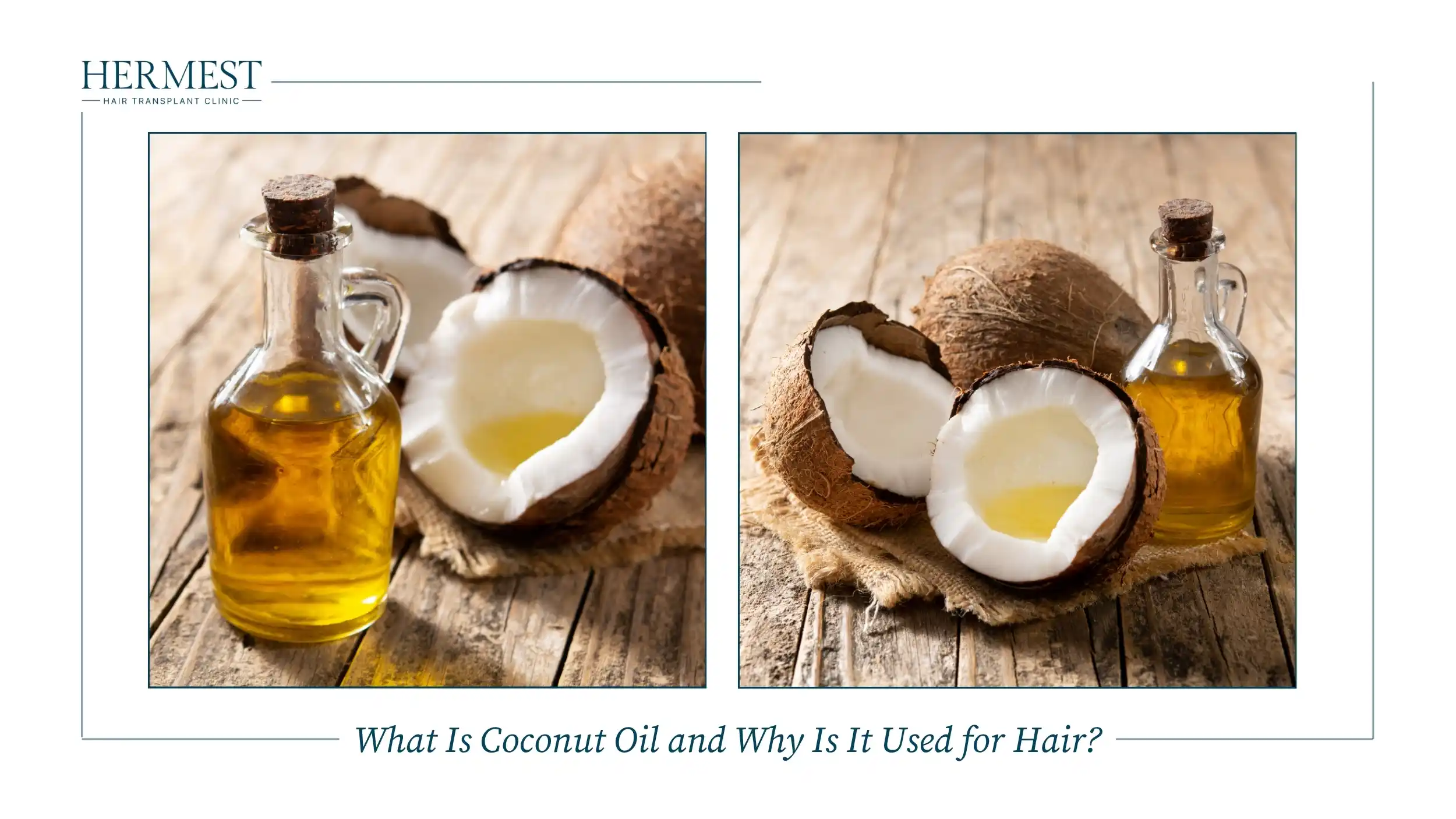
Coconut oil has been used in hair care traditions for centuries, and in many cultures regular hair oiling remains a normal part of scalp and hair maintenance. Interest in it spread globally once researchers began studying how the oil actually interacts with the hair shaft, and the findings turned out to be genuinely interesting: unlike most other plant oils, coconut oil has properties that let it behave differently on hair.
Composition of Coconut Oil
Coconut oil is extracted from mature coconuts and consists mainly of saturated fatty acids, the major one being lauric acid.
Lauric acid makes up nearly half of coconut oil’s fatty acid content, and it is what gives the oil several characteristics that set it apart from other cosmetic oils.
Virgin coconut oil also contains:
- Medium-chain fatty acids
- Antioxidant compounds
- Small amounts of vitamin E
- Polyphenols
These compounds contribute to its moisturizing and protective effects.
Lauric Acid and Hair Penetration
This is where coconut oil becomes genuinely interesting. Research published in the Journal of Cosmetic Science showed that it penetrates the hair shaft more effectively than either mineral oil or sunflower oil, and the reason lies in molecular structure: lauric acid has a relatively low molecular weight and a strong affinity for hair proteins, so it can move inside the shaft rather than simply coating the surface.
This deeper penetration may help:
- Reduce protein loss
- Strengthen hair fibers
- Improve flexibility
- Decrease breakage
These effects matter most for hair that is already damaged.
Why Coconut Oil Differs From Other Oils
Most hair oils stay largely on the surface of the hair. Coconut oil does not, and its ability to get inside the shaft helps explain why it has become such a popular treatment for dry, chemically treated, or fragile hair.
Penetration is not the same as regrowth, though. Improving the quality of the hair you already have and stimulating new follicle activity are two separate processes.
“Patients often confuse stronger hair with new hair growth. Coconut oil may improve hair quality significantly, but that does not necessarily mean it can reverse genetic hair loss,” says Dr. Ahmet Murat.
Is Coconut Oil Good for Hair?
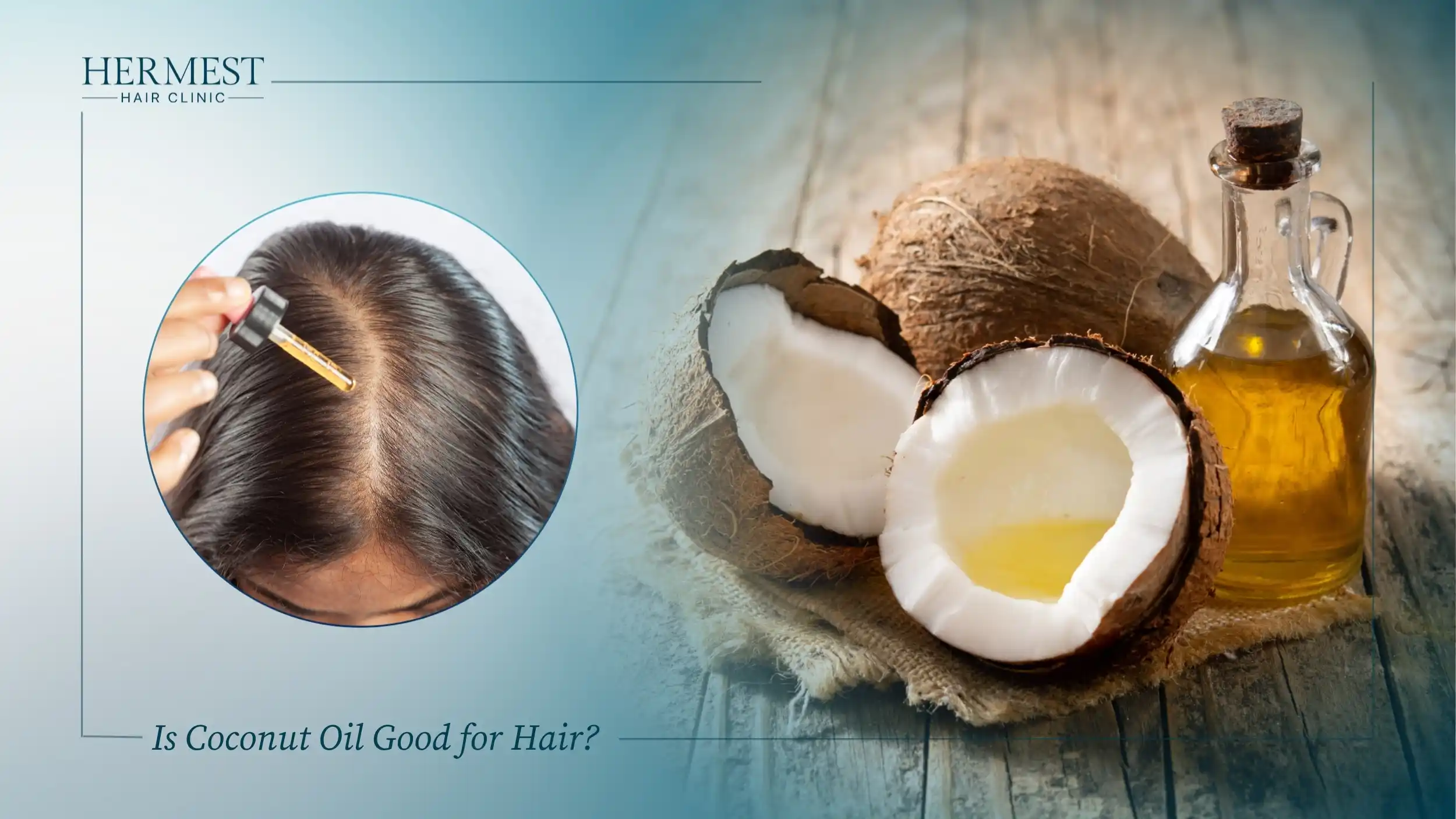
For many people, the answer is yes. Scientific evidence suggests that coconut oil can improve hair quality, particularly in individuals dealing with dryness, damage, or excessive breakage.
At the same time, expectations should stay realistic: coconut oil can support healthier-looking hair, but it is not a cure for every hair problem.
What Science Says
Research published in the Journal of Cosmetic Science found that coconut oil significantly reduces protein loss from both damaged and undamaged hair. That matters because hair proteins are what give it structure and strength, and when they are stripped away by washing, heat styling, chemical treatments, or environmental exposure, the hair becomes weaker and far more prone to breaking.
Coconut oil appears to help preserve those proteins by penetrating the shaft and limiting the damage. Several studies have also found that hair oiling practices in general may improve shaft integrity and reduce friction during grooming.
Major Hair Benefits
Many people reach for virgin coconut oil because of what it does for the overall appearance and manageability of their hair.
Potential benefits include:
- Reduced hair breakage
- Improved softness and shine
- Better moisture retention
- Easier detangling
- Reduced friction during brushing
Together these effects can make hair look fuller and healthier. Where hair is fragile, simply preserving the strands that are already there makes a noticeable cosmetic difference.
Who Benefits Most?
Not everyone responds in the same way. The people who tend to benefit most are those with:
- Dry hair
- Chemically treated hair
- Curly or textured hair
- High-porosity hair
- Heat-damaged hair
Anyone with extremely fine or low-porosity hair may find coconut oil simply too heavy; on those hair types, overusing it leaves the hair looking greasy and weighed down.
What Coconut Oil Cannot Do
Improved hair quality does not necessarily equal new hair growth. Current evidence does not support coconut oil as a treatment for androgenetic alopecia or permanent follicle loss.
“Coconut oil works best as a supportive hair care tool. It can improve hair quality and reduce breakage, but patients experiencing progressive thinning should seek proper diagnosis rather than relying solely on natural remedies,” says Dr. Ahmet Murat.
Benefits of Coconut Oil for Hair
Many of the claims made for coconut oil rest on traditional use; some rest on science. The strongest evidence by far relates to protecting the hair shaft rather than stimulating new growth, and knowing which is which helps set realistic expectations.
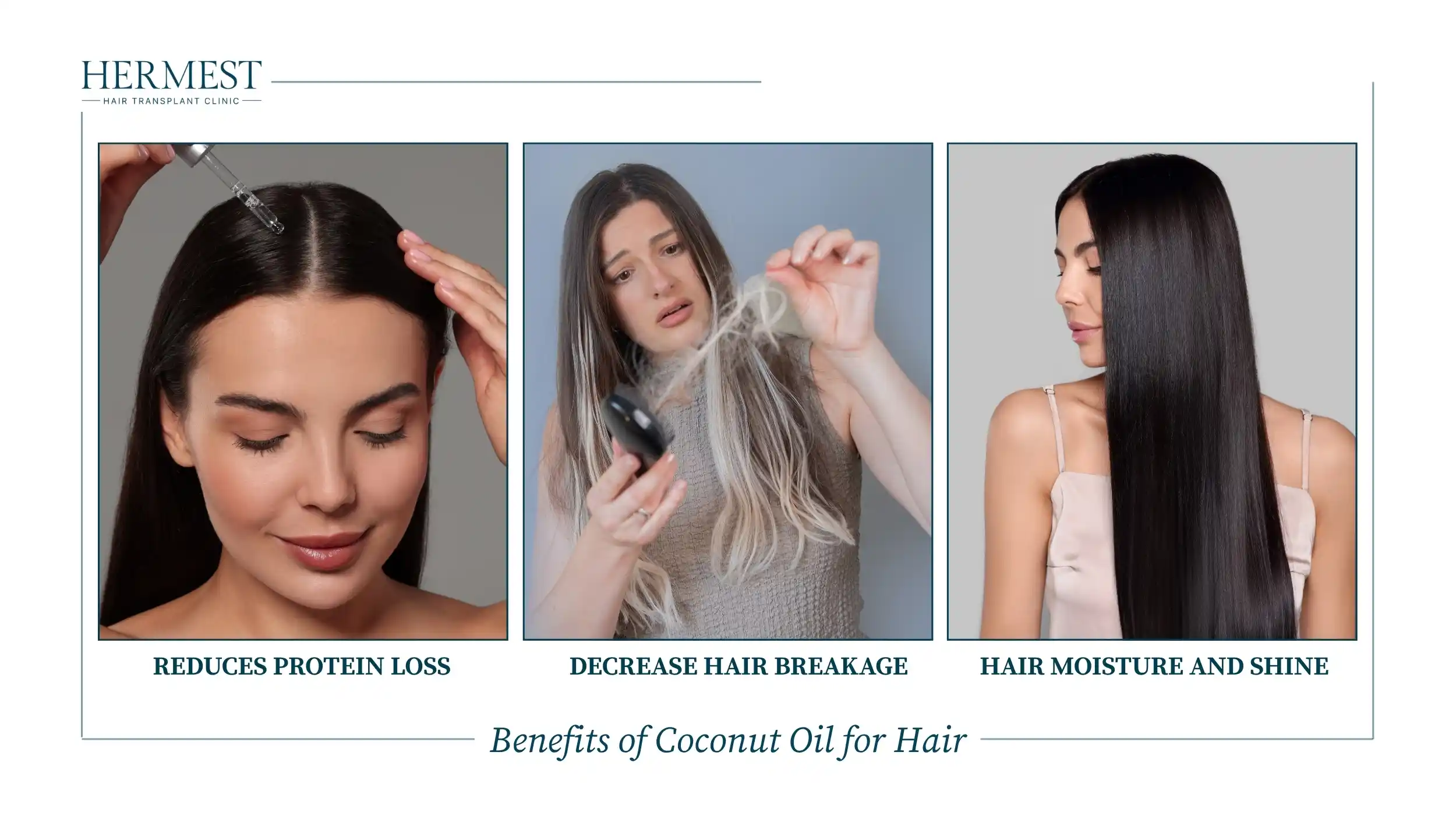
Reduces Protein Loss
This is the best-established benefit of the lot, and the mechanism behind it is straightforward. Hair is mostly protein, and repeated washing, heat styling, chemical treatments and environmental exposure gradually strip that protein away, leaving the shaft progressively weaker. Because coconut oil penetrates the shaft rather than sitting on top of it, it slows that loss and helps preserve the hair’s structural integrity.
Helps Decrease Hair Breakage
Many people who go looking for a coconut oil remedy for hair loss are actually dealing with breakage, which is a different problem from true follicle-related loss. The follicle itself is perfectly healthy; the hair shaft is simply snapping before it reaches full length.
By reducing friction and improving flexibility, coconut oil may help decrease mechanical damage caused by:
- Brushing
- Combing
- Heat styling
- Towel drying
Less breakage usually means fuller-looking hair.
Improves Hair Moisture and Shine
Dry, rough hair tends to look dull and frizzy. Coconut oil can help smooth the cuticle and improve moisture retention, leading to:
- Increased softness
- Improved shine
- Better manageability
- Reduced frizz
These cosmetic improvements are a large part of why coconut oil remains popular worldwide.
May Improve Hair Porosity
Hair porosity describes how easily hair absorbs and holds moisture. Highly porous hair loses it quickly and turns fragile as a result, and research suggests coconut oil may improve the condition of damaged, porous hair by reinforcing the shaft and limiting that moisture loss.
Supports Healthier-Looking Hair
One distinction is worth emphasizing: healthier hair does not necessarily mean more hair. Many people perceive better density after using coconut oil simply because less breakage lets them hold on to more of the length they already had.
“Patients frequently report that their hair feels thicker after using coconut oil. In many cases, this reflects improved hair quality and reduced breakage rather than the formation of new follicles,” says Dr. Ahmet Murat.
Does Coconut Oil Help Hair Growth?
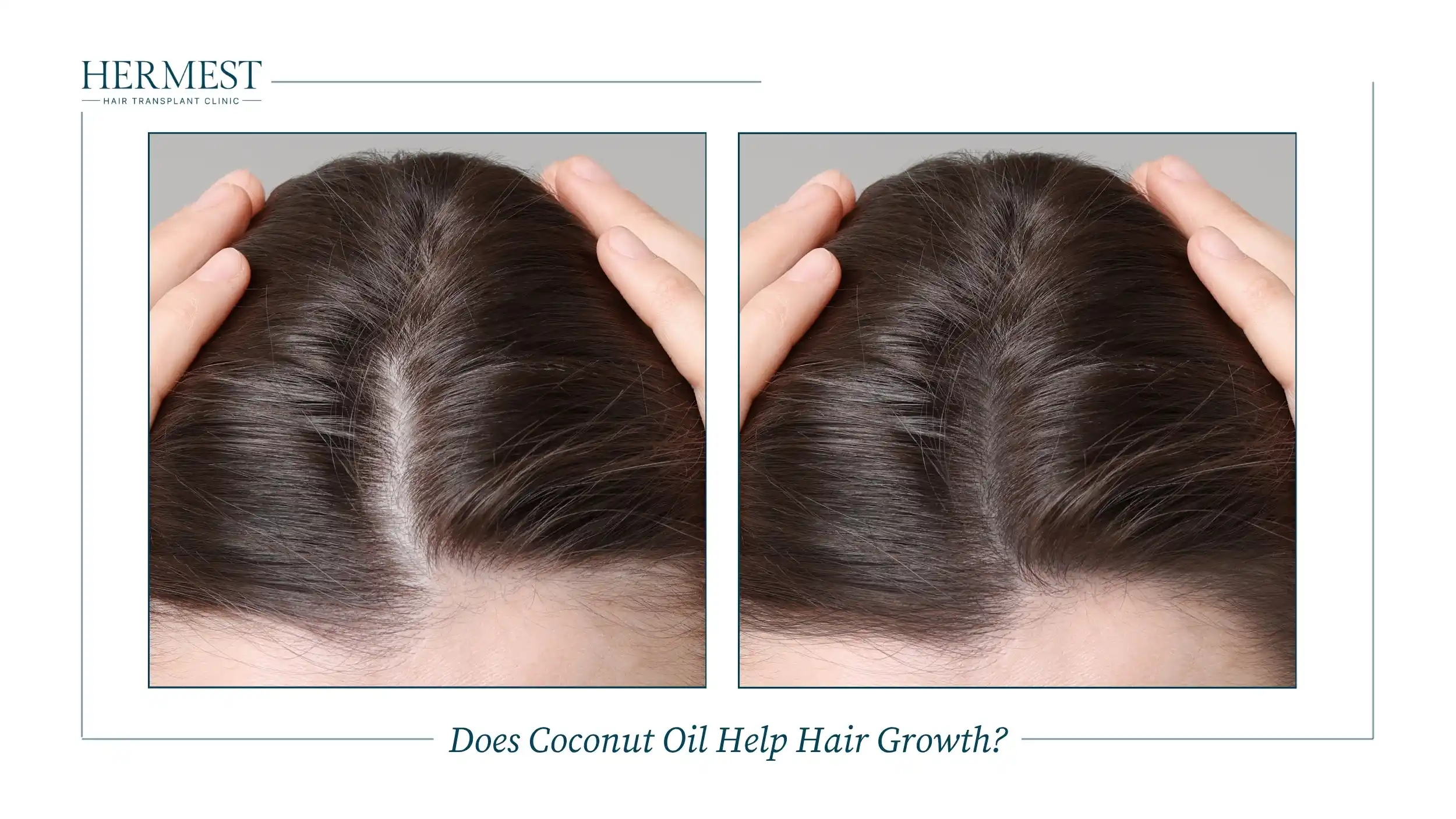
This is one of the most common questions in hair care. People searching coconut oil for hair growth often hope that a natural remedy can restore thinning areas, reverse baldness, or stimulate new follicles.
Current scientific evidence tells a more nuanced story. Coconut oil may well help hair look fuller and healthier, but the evidence for direct stimulation of new growth remains limited.
Can Coconut Oil Stimulate Hair Follicles?
At present there is no strong clinical evidence that coconut oil directly activates dormant follicles or meaningfully increases hair growth in humans. Most published studies look at protection of the hair shaft rather than stimulation of the follicle, and that distinction is important: protecting the hair you already have and creating new hair are not the same process.
Laboratory studies have explored the anti-inflammatory and antioxidant properties of coconut oil, but human studies demonstrating meaningful follicular regrowth are still lacking.
Length Retention vs True Growth
Many people are convinced that coconut oil accelerated their hair growth. What they are usually experiencing is better length retention, and the logic is simple enough: hair that breaks less stays on the scalp longer, so over time reduced breakage lets you keep more length and creates the appearance of faster growth. The hair is not necessarily growing any faster. It is simply breaking less often.
That effect is still worth having. For anyone with dry, fragile, or chemically treated hair, holding on to the strands already there can dramatically improve how the hair looks overall.
What Current Evidence Shows
Scientific evidence strongly supports coconut oil’s ability to:
- Reduce protein loss
- Improve hair shaft integrity
- Decrease breakage
- Improve manageability
Evidence for direct hair regrowth, by contrast, remains insufficient, which means coconut oil should not be treated as a replacement for evidence-based treatments for androgenetic alopecia.
Can Coconut Oil Regrow Hair?
There is currently no convincing evidence that coconut oil alone can regrow hair in areas affected by:
- Male pattern baldness
- Female pattern hair loss
- Advanced thinning
- Permanent follicle miniaturization
“Patients with genetic hair loss often delay treatment while experimenting with natural remedies. Unfortunately, once follicle miniaturization progresses significantly, oil treatments alone are unlikely to reverse the process,” says Dr. Ahmet Murat.
Can Coconut Oil Help Hair Loss?
People who are shedding or thinning usually look for natural solutions before they consider medical treatment, which is understandable. Hair loss can feel overwhelming, and plenty of people would rather try a non-pharmaceutical approach first.
Coconut oil may genuinely help in certain situations. How much it helps depends almost entirely on what is causing the hair loss in the first place.
Temporary Shedding
Conditions such as telogen effluvium cause diffuse shedding across the scalp.
Triggers may include:
- Stress
- Illness
- Surgery
- Rapid weight loss
- Nutritional deficiencies
In these situations coconut oil cannot stop the shedding itself, because the follicles have already entered their resting phase. It can still improve the condition of the hair that remains, reduce breakage, and make recovering hair look healthier as it grows back.
Hair Breakage
This is where coconut oil may offer the most benefit. A great many people who believe they are losing hair are actually experiencing breakage, brought on by frequent heat styling, bleaching, coloring and aggressive brushing, all of which weaken the shaft.
Because coconut oil reduces both protein loss and friction, it may cut down that breakage and help preserve length, and healthier strands read as thicker hair.
Why Coconut Oil Cannot Reverse Androgenetic Alopecia
One of the most important distinctions of all involves androgenetic alopecia, a condition in which genetics and hormones drive progressive follicle miniaturization.
Typical signs include:
- Receding hairline
- Crown thinning
- Widening part line
- Gradual density reduction
Coconut oil does not reverse that miniaturization, it does not block dihydrotestosterone (DHT) in clinically meaningful amounts, and it cannot restore follicles that have already been lost for good. Evidence-based medical treatment remains necessary for progressive genetic hair loss.
Can Coconut Oil Support Other Treatments?
Possibly, yes. Many patients use coconut oil alongside medically supervised therapy to improve shaft quality and reduce breakage. It complements a hair care routine rather than replacing treatment.
“Natural oils can support overall hair quality, but patients with ongoing thinning should not rely on oils alone. Accurate diagnosis remains the foundation of successful hair restoration,” says Dr. Ahmet Murat.
When Thinning Continues
If shedding persists for several months, or visible thinning keeps progressing, professional evaluation is the sensible next step. Early diagnosis usually preserves more hair.
Coconut Oil vs Minoxidil: Which Works Better?
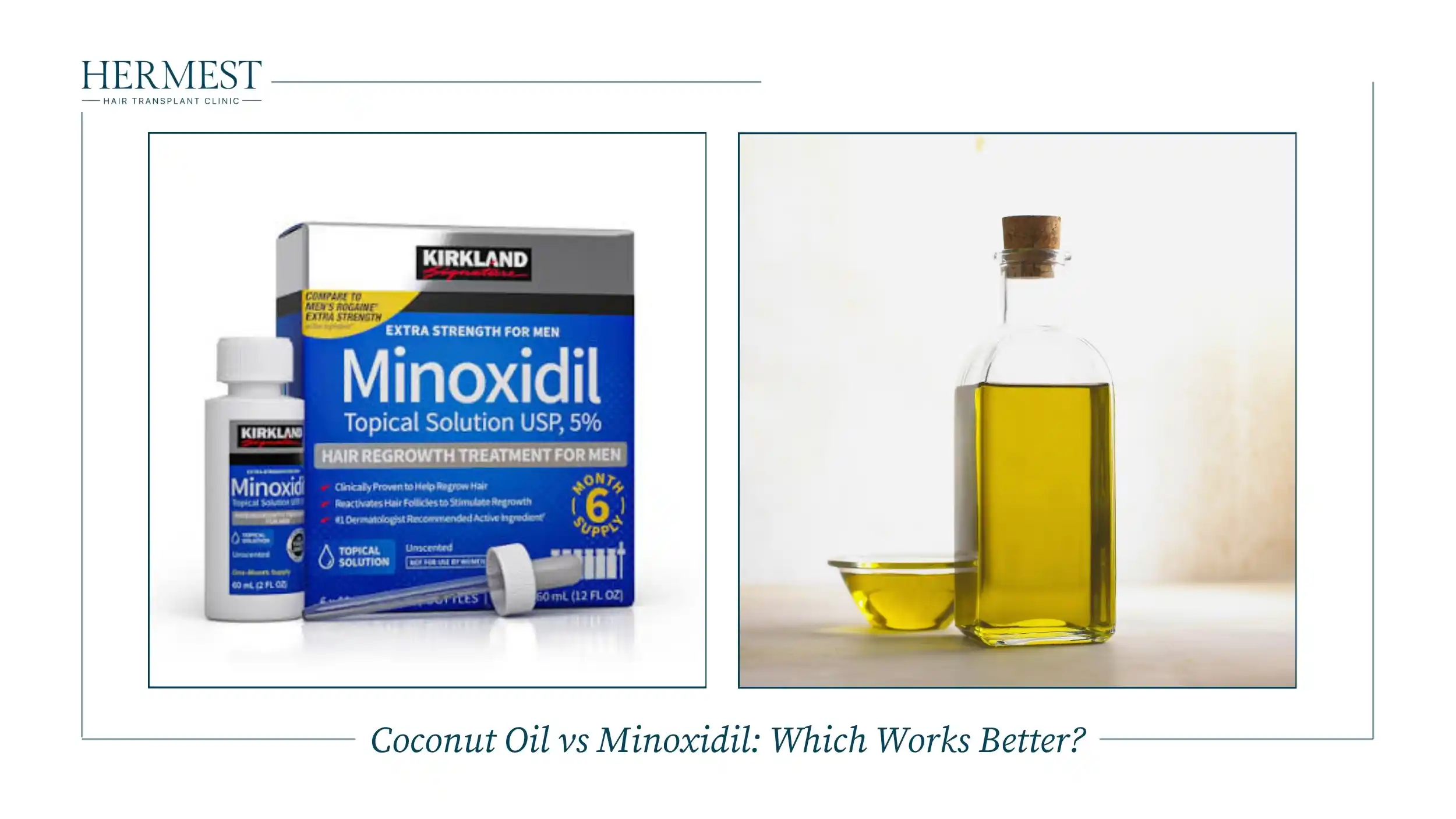
Many people looking for a natural solution eventually end up comparing coconut oil with Minoxidil, and the comparison is a fair one to make.
Both are used by people hoping to improve hair density. The similarities largely end there, because the two work in fundamentally different ways.
Different Mechanisms
Coconut oil acts primarily on the hair shaft. Its main benefits include:
- Reducing protein loss
- Improving moisture retention
- Decreasing breakage
- Enhancing hair manageability
Minoxidil works on an entirely different target. It is an FDA-approved medication for certain forms of hair loss, and it acts directly on the follicle, prolonging the growth phase and stimulating growth in follicles that are still able to respond. One improves the quality of the hair; the other changes what the follicle is doing.
Scientific Evidence Comparison
The scientific evidence supporting Minoxidil is substantially stronger. Multiple clinical trials have shown it can improve hair growth in patients with androgenetic alopecia, whereas coconut oil has not produced comparable results in controlled human studies.
Current evidence supports coconut oil for:
- Reducing hair breakage
- Improving shaft integrity
- Supporting healthier-looking hair
What the evidence does not show is that coconut oil can reliably regrow hair in areas affected by genetic baldness.
Can They Be Used Together?
In many cases, yes. Patients on Minoxidil sometimes fold coconut oil into their wider hair care routine to improve shaft quality and reduce dryness.
Timing matters, though. A heavy application of oil immediately before a topical medication may interfere with absorption, so anyone using both should talk their routine through with a qualified hair specialist.
Which Is Better for Thinning Hair?
The answer depends on the diagnosis:
- For dry or damaged hair, coconut oil may help.
- For androgenetic alopecia, Minoxidil has considerably stronger evidence.
- For excessive breakage, coconut oil may be beneficial.
- For progressive hairline recession, medical treatment should be considered.
“Patients with genetic hair loss should view coconut oil as a supportive cosmetic treatment rather than a replacement for evidence-based therapies such as Minoxidil,” says Dr. Ahmet Murat.
Can Coconut Oil Replace Minoxidil?
For most patients with male pattern baldness or female pattern hair loss, the answer is no. Swapping a proven treatment for oil alone simply allows follicle miniaturization to carry on unchecked.
How to Use Coconut Oil for Hair
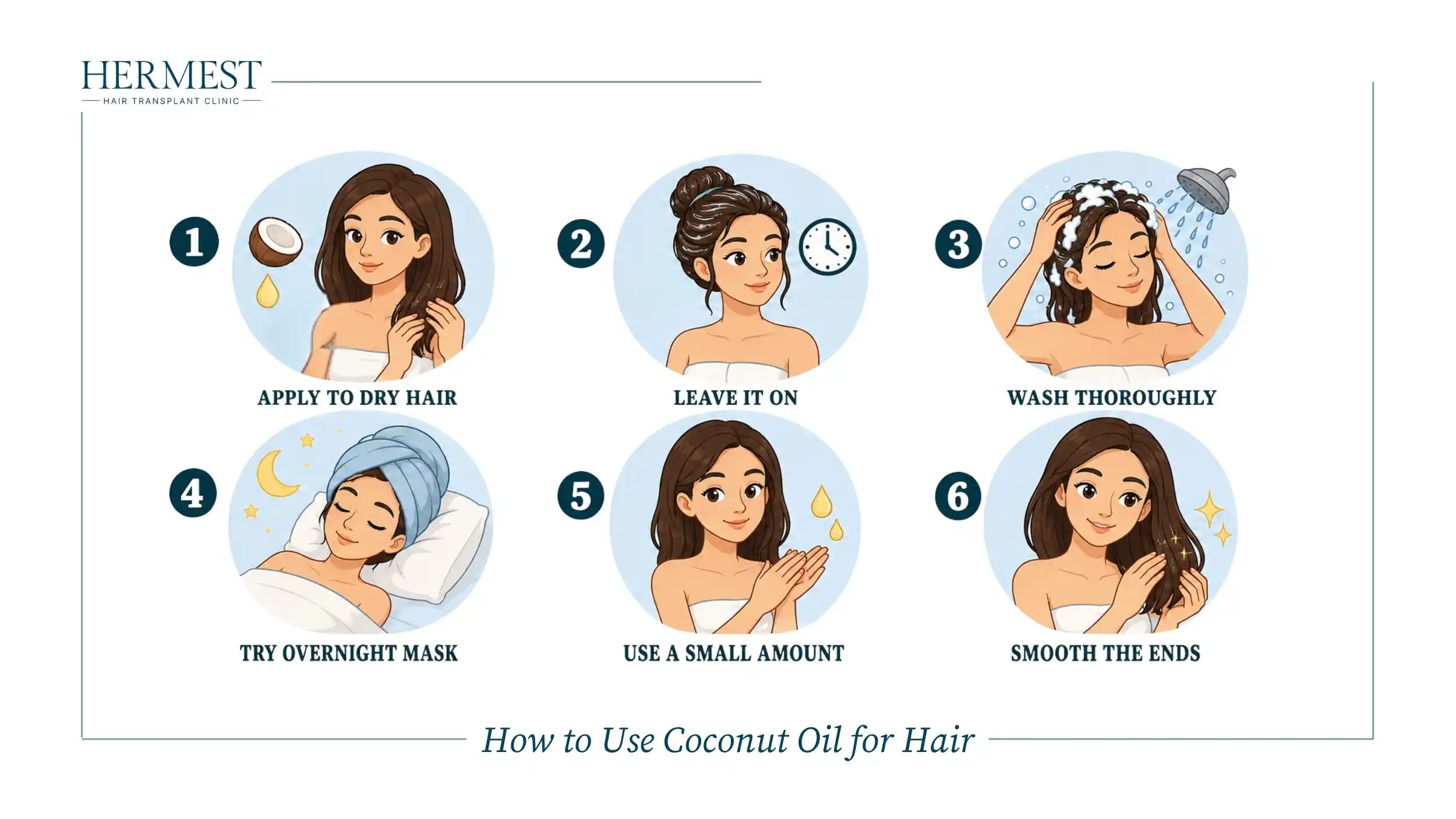
Using coconut oil properly makes a real difference. Too little does very little; too much leaves hair greasy, heavy and hard to wash. The right approach depends on your hair type, your scalp condition and what you are trying to achieve, and for most people moderation works best.
Pre-Shampoo Treatment
This is one of the most effective ways to use it. Applying coconut oil before washing may reduce the protein loss that happens during shampooing.
To use coconut oil as a pre-shampoo treatment:
- Apply a small amount to dry hair.
- Focus on mid-lengths and ends.
- Leave it on for 30 minutes to several hours.
- Wash thoroughly with shampoo.
Most people use this method once or twice a week, and those with dry or damaged hair tend to benefit most.
Overnight Hair Mask
An overnight mask is another popular option, since leaving the oil on gives it prolonged contact with the hair shaft. It is not necessary for everyone, though. Anyone with fine or low-porosity hair may find that much exposure excessive, and a shorter treatment often produces much the same result. A towel or an old pillowcase will protect your bedding.
Post-Wash Application
A very small amount of coconut oil can be applied after washing to smooth frizz and improve shine. The key word is small, since too much will weigh the hair down.
For post-wash use:
- Rub a few drops between your palms.
- Apply mainly to the ends.
- Avoid overloading the roots.
This method works especially well on curly or highly porous hair.
How Often Should You Use It?
Frequency varies by hair type. General recommendations include:
- Dry, damaged hair: one to two times weekly
- Curly or textured hair: one to three times weekly
- Fine hair: occasionally, as needed
Some trial and error is usually needed.
Should You Use Virgin Coconut Oil?
Many experts prefer virgin coconut oil, which is less processed and retains more of the naturally occurring compounds found in the raw material.
“Patients should think of coconut oil as part of a broader hair care strategy rather than a standalone treatment. Consistency and appropriate application are more important than excessive use,” says Dr. Ahmet Murat.
Should You Apply Coconut Oil to Your Scalp?
People have been applying oils directly to the scalp for centuries, and traditional hair oiling remains popular in many cultures, particularly across Asia and the Middle East.
Not everyone benefits equally from it, though. Whether scalp application makes sense for you depends on your own hair and scalp characteristics.
Potential Scalp Benefits
Coconut oil has moisturizing properties that may improve scalp comfort for some people. Those with dry scalps sometimes report improvements in:
- Dryness
- Tightness
- Mild flaking
- Scalp discomfort
Research also suggests coconut oil has antimicrobial and anti-inflammatory properties, though more human studies are needed to clarify what role these play in scalp disorders. For a dry scalp, occasional application may offer some symptomatic relief.
Who Should Avoid Scalp Application?
Scalp oiling is not ideal for everyone. People with very oily scalps may find that coconut oil worsens:
- Greasiness
- Product buildup
- Heavy hair texture
Anyone prone to scalp acne or folliculitis may also want to limit direct scalp application, since in susceptible people heavy oils can contribute to clogged follicles and general discomfort.
Oily Scalp and Dandruff Considerations
Many people assume coconut oil automatically improves dandruff. The reality is more complicated, because dandruff usually results from several factors at once, including overgrowth of Malassezia yeast, inflammation, and a disrupted scalp barrier.
For some people scalp oiling improves the dryness; for others the extra oil aggravates the symptoms. Persistent dandruff, itching, or inflammation warrants professional evaluation rather than months of self-treatment.
How to Apply Coconut Oil to the Scalp Safely
If you wish to try scalp application:
- Start with a small amount.
- Massage gently without scratching.
- Leave it on for a limited period.
- Wash thoroughly afterward.
- Monitor for irritation or worsening symptoms.
Stop if scalp symptoms develop.
“Patients often assume that if a small amount of oil is beneficial, more must be better. Excessive scalp oiling can sometimes create unnecessary irritation or buildup,” says Dr. Ahmet Murat.
Can Coconut Oil Improve Hair Growth Through the Scalp?
Current evidence does not show that scalp application alone stimulates significant new follicle growth. Improving scalp comfort and stimulating new follicles remain separate issues.
Can Coconut Oil Cause Hair Loss or Side Effects?
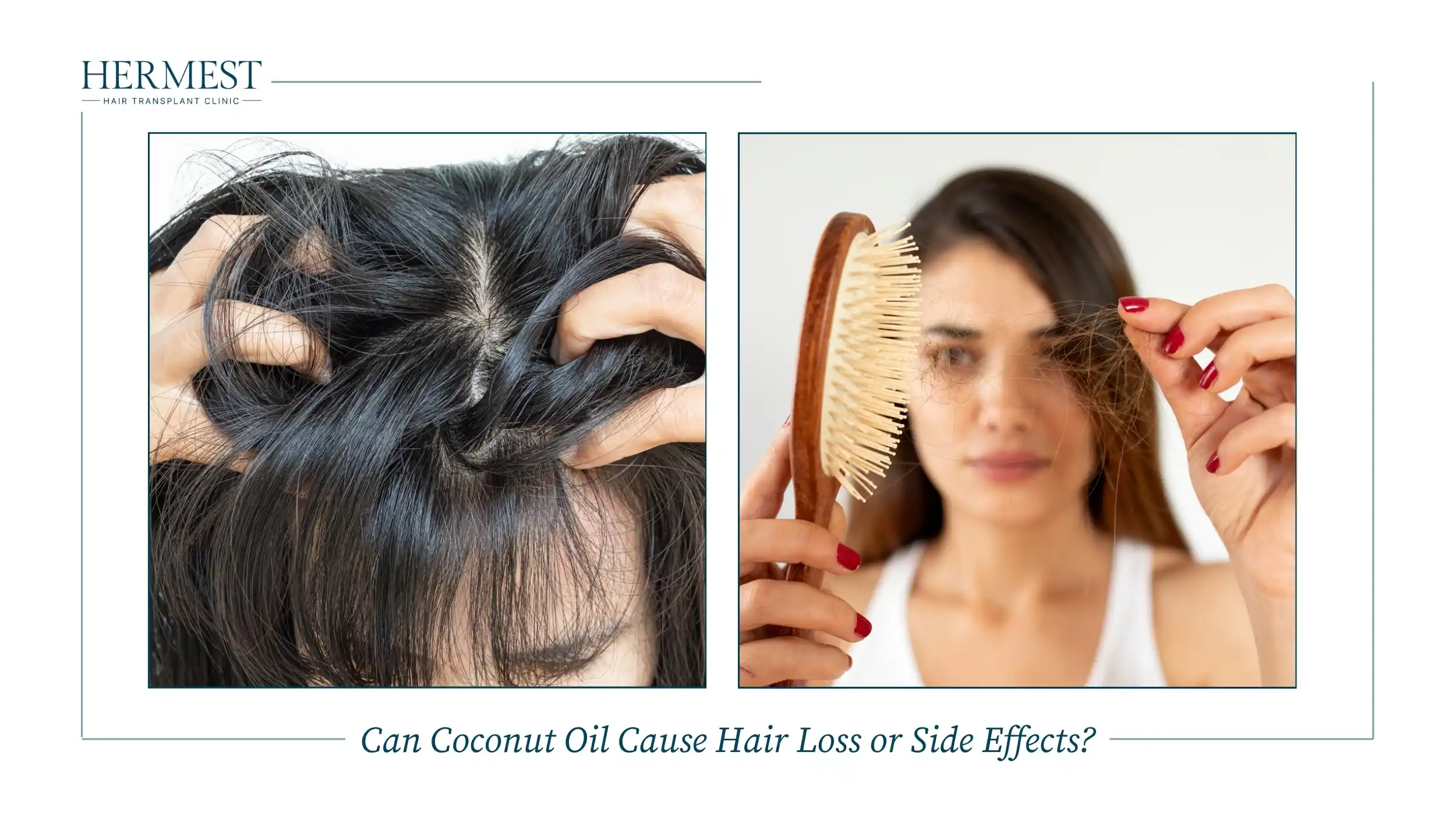
Coconut oil is generally considered safe for most people, but being natural does not automatically make something suitable for everyone. Some people do experience unwanted effects, particularly when the oil is used excessively or applied to hair types that do not respond well to heavy oils.
Knowing the limitations in advance helps prevent disappointment.
Scalp Irritation
Although uncommon, some people develop irritation after using coconut oil.
Possible symptoms include:
- Itching
- Redness
- Burning
- Tenderness
- Flaking
These reactions may stem from sensitivity to coconut-derived compounds or from a pre-existing scalp condition. If symptoms appear consistently after application, stop using it and seek professional advice; persistent inflammation deserves proper evaluation.
Product Buildup
One of the most common complaints is buildup. Coconut oil is relatively heavy compared with many cosmetic ingredients, and excessive use may leave hair:
- Greasy
- Flat
- Difficult to style
- Hard to wash clean
Fine hair is particularly susceptible. That cosmetic heaviness is often mistaken for hair loss caused by coconut oil, even though no actual follicle loss is taking place.
Low-Porosity Hair Concerns
Porosity influences how hair responds to oils. People with low-porosity hair sometimes report that coconut oil leaves theirs stiff, coated, or dry, because the oil sits on the surface instead of penetrating effectively.
As a result, some people notice:
- Increased brittleness
- Dull appearance
- Reduced flexibility
Alternative lightweight oils often work better for them.
Acne and Folliculitis
Applying large amounts of coconut oil directly to the scalp or along the hairline may contribute to acne or folliculitis in susceptible individuals.
Anyone prone to scalp breakouts should watch their skin carefully, and reducing how often they apply it usually helps.
Can Coconut Oil Cause Hair Loss?
Current evidence does not suggest that coconut oil directly causes permanent hair loss. Scalp irritation, heavy buildup, or worsening folliculitis could contribute to temporary shedding in some people, but the underlying follicles usually remain intact.
“When patients believe coconut oil caused their hair loss, closer evaluation often reveals scalp irritation, product buildup, or an unrelated hair loss condition rather than direct follicle damage,” says Dr. Ahmet Murat.
Coconut Oil vs Androgenetic Alopecia
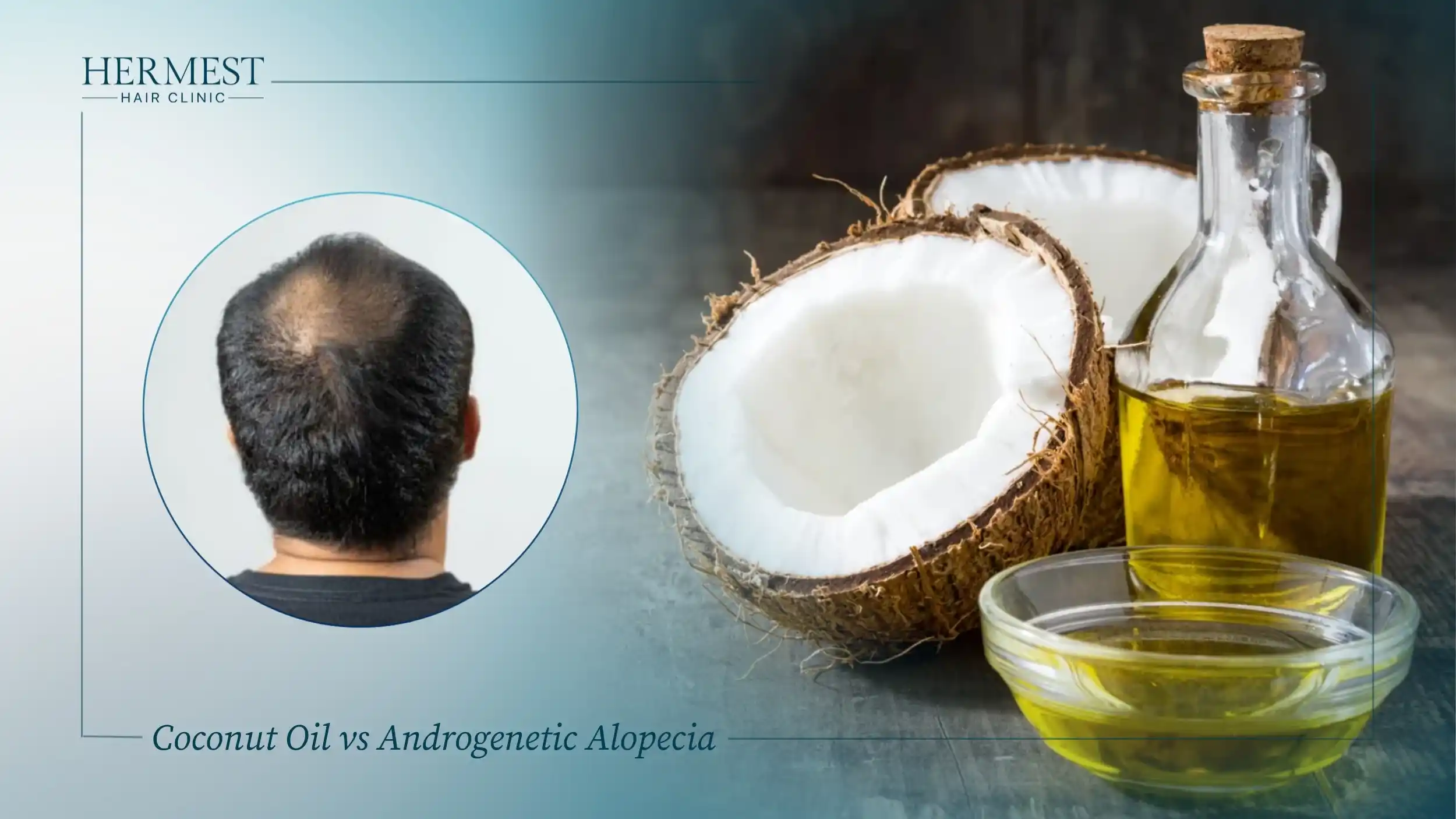
Many people start using coconut oil after noticing gradual thinning, and the hope behind it is easy to understand: natural remedies feel safe, accessible and easy to try.
The difficulty is that progressive hair loss is often caused by androgenetic alopecia, which coconut oil cannot reverse. Understanding that difference can prevent a lot of valuable treatment time being lost.
Hairline Recession
One of the earliest signs of male pattern baldness is recession at the temples.
Men often notice:
- A gradually receding hairline
- Deepening temporal corners
- Formation of an M-shaped pattern
Coconut oil neither causes these changes nor stops them. If the hairline keeps moving backward over months or years, androgenetic alopecia is a far more likely explanation than simple hair shaft damage.
Miniaturization
Miniaturization is the hallmark of genetic hair loss. Affected follicles progressively produce:
- Thinner hairs
- Shorter hairs
- Weaker hairs
- Less visible coverage
Eventually some follicles stop producing visible hair altogether. Coconut oil cannot reverse established miniaturization; healthier hair shafts may create the appearance of greater density, but the underlying process carries on unchanged.
When Oil Is Not Enough
Natural oils can improve the quality of hair, but they cannot touch the hormonal and genetic mechanisms driving androgenetic alopecia. Signs that oil alone is unlikely to be enough include:
- Progressive thinning
- Expanding crown loss
- Widening part line
- Family history of baldness
- Persistent hairline recession
Any of these changes deserves professional evaluation.
Can Coconut Oil Be Used Alongside Medical Treatments?
Absolutely. Many patients use coconut oil as part of a broader routine while receiving evidence-based treatment, where improving shaft quality and reducing breakage genuinely complements the medical therapy. The oil supports the hair; it does not replace the treatment.
“Patients often ask whether coconut oil can replace proven therapies for genetic hair loss. The answer is usually no. Natural oils may support hair quality, but progressive follicle miniaturization typically requires targeted treatment,” says Dr. Ahmet Murat.
Why Early Diagnosis Matters
The earlier androgenetic alopecia is identified, the more treatment options generally remain open. Waiting too long allows irreversible follicle loss to happen in the meantime.
Can Hair Transplant Patients Use Coconut Oil?
Many patients ask about coconut oil during recovery after a hair transplant. Given its reputation for moisturizing the scalp and improving hair quality, it is natural to wonder whether it can support healing or improve graft survival.
The answer is generally yes, but timing matters enormously.
When Is Coconut Oil Safe After Surgery?
Immediately after a hair transplant the newly implanted grafts are delicate, and during the early healing phase patients should avoid putting any unapproved product on the scalp.
At Hermest Hair Clinic, postoperative care protocols are individualized, and patients receive detailed instructions regarding washing, moisturizing, and product use.
Coconut oil should only be introduced once the medical team confirms the scalp has healed sufficiently, since applying oils too early can irritate healing tissue for no good reason.
Can Coconut Oil Improve Graft Survival?
There is currently no scientific evidence showing that coconut oil directly improves graft survival after hair transplantation.
Graft survival primarily depends on factors such as:
- Surgical technique
- Graft handling
- Blood supply
- Postoperative care
- Patient adherence to instructions
At Hermest, UNIQUE FUE® procedures emphasize meticulous graft handling and surgeon-led planning to maximize long-term outcomes.
Coconut oil should be viewed as a supportive cosmetic product rather than a determinant of graft survival.
Potential Long-Term Benefits
Once healing is complete, some patients choose to use coconut oil as part of their regular hair care routine.
Possible benefits include:
- Improved hair softness
- Reduced breakage
- Better manageability
- Increased shine
These effects may help transplanted and native hairs appear healthier.
The Hermest Postoperative Approach
Postoperative support at Hermest extends well beyond surgery.
Patients receive guidance regarding:
- Washing techniques
- Scalp care
- Product selection
- Recovery expectations
- Long-term hair maintenance
This structured follow-up helps protect both transplanted and native hair.
“Patients often want to introduce multiple products immediately after surgery. Our recommendation is always to follow the postoperative protocol carefully and introduce additional products only when appropriate,” says Dr. Ahmet Murat.
Can Coconut Oil Replace Medical Aftercare?
No. Medical aftercare instructions should always take priority over home remedies and cosmetic products.
Who Should Use Coconut Oil and Who Should Avoid It?
Coconut oil can be an excellent addition to a hair care routine, but it is not ideal for everyone. Hair texture, porosity, scalp condition and styling habits all influence how well someone responds, so knowing your own hair type helps you judge whether it is likely to do much for you.
Best Hair Types for Coconut Oil
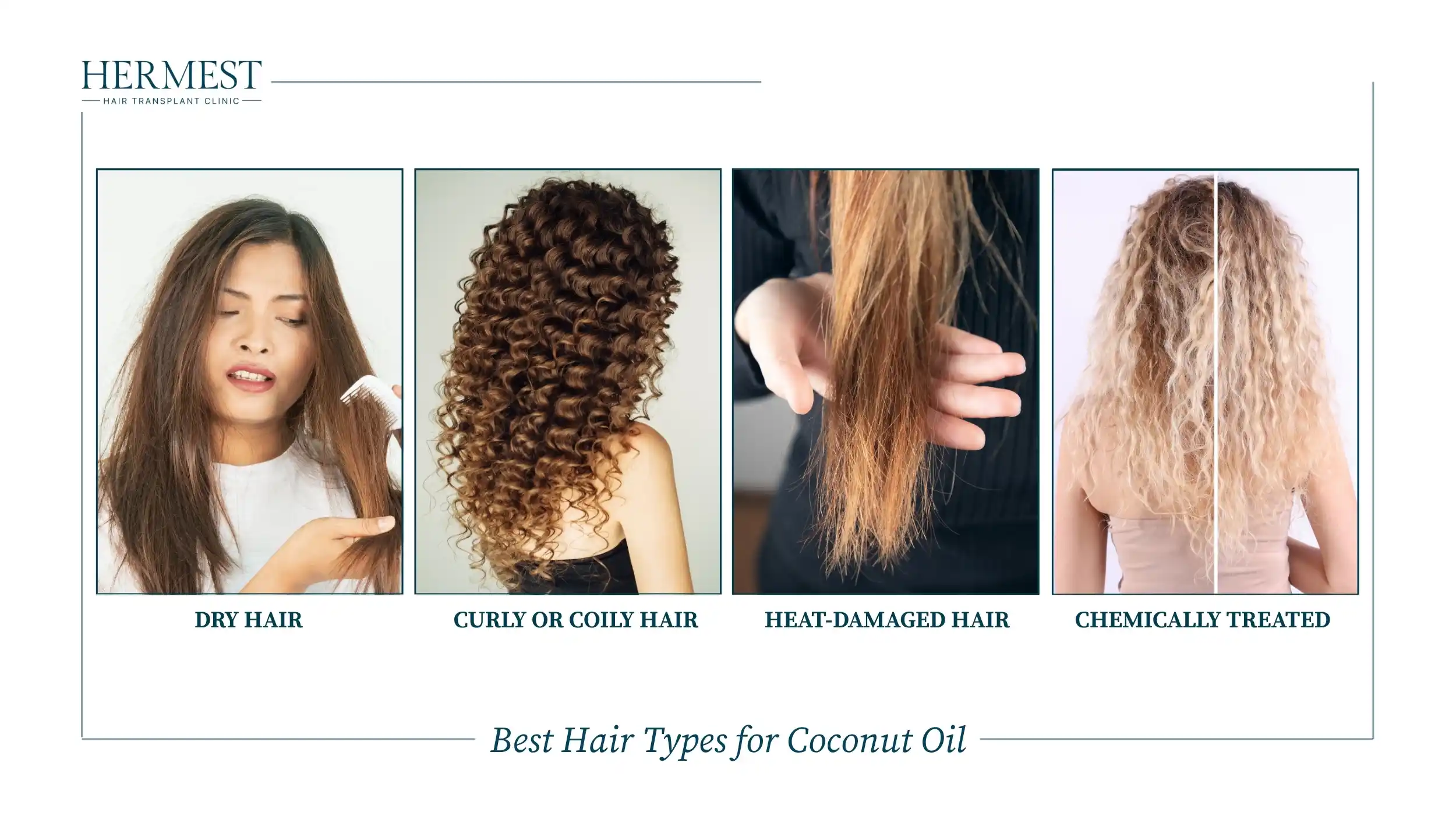
People with dry, damaged, or highly porous hair often report the greatest improvements.
Coconut oil may work particularly well for:
- Dry hair
- Curly or coily hair
- Chemically treated hair
- Heat-damaged hair
- Highly porous hair
These hair types tend to struggle with moisture retention and breakage, so by reducing protein loss and improving shaft integrity, coconut oil may help preserve length and improve overall appearance. People with textured hair often find that regular oiling improves softness and manageability.
Hair Types That May Struggle
Not every hair type tolerates coconut oil equally well. People with very fine or low-porosity hair sometimes find it simply too heavy. Possible complaints include:
- Greasy appearance
- Flat hair
- Product buildup
- Reduced volume
- Stiff texture
Some people also report increased brittleness, particularly when they use too much. A degree of experimentation is unavoidable here, and if coconut oil consistently leaves your hair feeling heavy or dry, a lighter oil or a conventional conditioner may suit you better.
Scalp Conditions Requiring Caution
People with certain scalp conditions should be careful. Examples include:
- Folliculitis
- Severe seborrheic dermatitis
- Oily scalp disorders
- Frequent scalp acne
Heavy scalp oiling can worsen the symptoms in some cases, and persistent scalp problems deserve professional evaluation.
How to Know if Coconut Oil Is Working
Positive signs may include:
- Less breakage
- Improved softness
- Better shine
- Easier detangling
- Improved manageability
Negative signs may include persistent greasiness, irritation, or worsening scalp symptoms.
“Patients should pay attention to how their hair actually responds rather than assuming that a popular product will work for everyone. Hair care is highly individual,” says Dr. Ahmet Murat.
FAQs About Coconut Oil for Hair
Yes. Scientific studies suggest coconut oil can reduce protein loss, decrease breakage, improve moisture retention, and enhance hair softness and shine.
Ready to Discover the Real Cause of Your Hair Loss?
Coconut oil can support healthier, stronger hair. If you are dealing with ongoing shedding, a receding hairline, or visible thinning, though, understanding the underlying cause matters far more than any product.

At Hermest Hair Clinic, Dr. Ahmet Murat and his team provide detailed scalp and hair assessments to determine whether thinning is related to genetics, temporary shedding, medical conditions, or other factors.
Whether you are exploring medical treatment, UNIQUE FUE® hair transplantation, or long-term hair preservation strategies, our team can help you make informed decisions.
“Patients often spend months trying natural remedies before seeking professional advice. A proper diagnosis provides clarity and helps patients choose the most effective treatment path,” says Dr. Ahmet Murat.
Book your consultation with Hermest Hair Clinic today and take the first step toward healthier hair and a personalized restoration plan.