
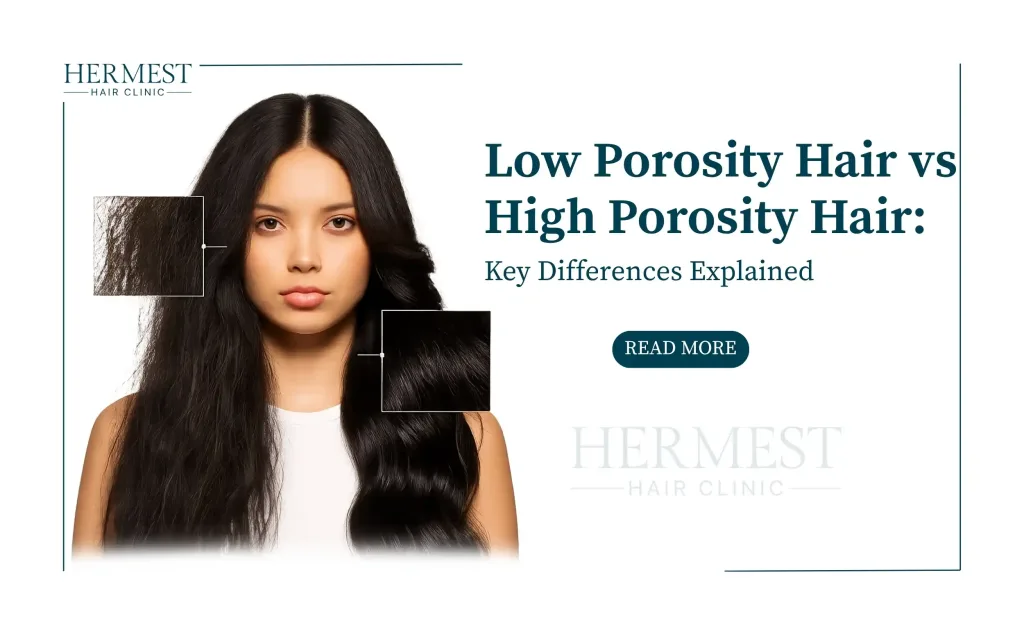
Low Porosity Hair vs High Porosity Hair: Key Differences Explained
 ChatGPT
 Claude
 Perplexity
 Grok
Grok
 Gemini
Understanding low porosity hair vs high porosity hair can explain why certain routines work beautifully for some people and fail completely for others. This frustrates many patients.
One person uses heavy oils and wakes up with smooth shiny hair. Another tries the exact same products and ends up greasy, dry, or weighed down within hours. The difference often comes back to hair porosity.
Hair porosity describes how easily the hair shaft absorbs and retains moisture. That process depends largely on the condition and structure of the cuticle layer surrounding each strand.
Low porosity hair typically resists water absorption due to tightly packed cuticles. High porosity hair absorbs moisture quickly but loses it just as fast because the cuticle layer becomes more open or damaged.
Both patterns create different challenges. According to research published through the Journal of Cosmetic Science, the hair cuticle plays a major role in regulating moisture movement, elasticity, and overall fiber behavior. Yet most online discussions oversimplify porosity into trendy product advice alone.
At Hermest Hair Clinic, patients often ask why their hair stays frizzy despite expensive products or why moisture “sits” on the surface without absorbing properly.
The answer is rarely one-size-fits-all.
Dr. Ahmet Murat says many people blame their products when the real issue involves understanding how their hair shaft behaves biologically. At Hermest, scalp condition, fiber damage, and cuticle health are evaluated together rather than recommending generic routines blindly.
This guide explains:
- how hair porosity works
- signs of low and high porosity hair
- why routines fail sometimes
- how damage changes hair behavior
- realistic ways to improve manageability and hydration
Hair texture alone rarely tells the full story.
Quick Insights
- Hair porosity affects moisture absorption and retention.
- Low porosity hair often develops buildup easily.
- High porosity hair commonly becomes frizzy and dry quickly.
- Bleaching and heat styling may increase porosity over time.
- The float test has major limitations.
- Different sections of hair may have different porosity levels.
- Scalp health still matters alongside strand condition.
What Is Hair Porosity?
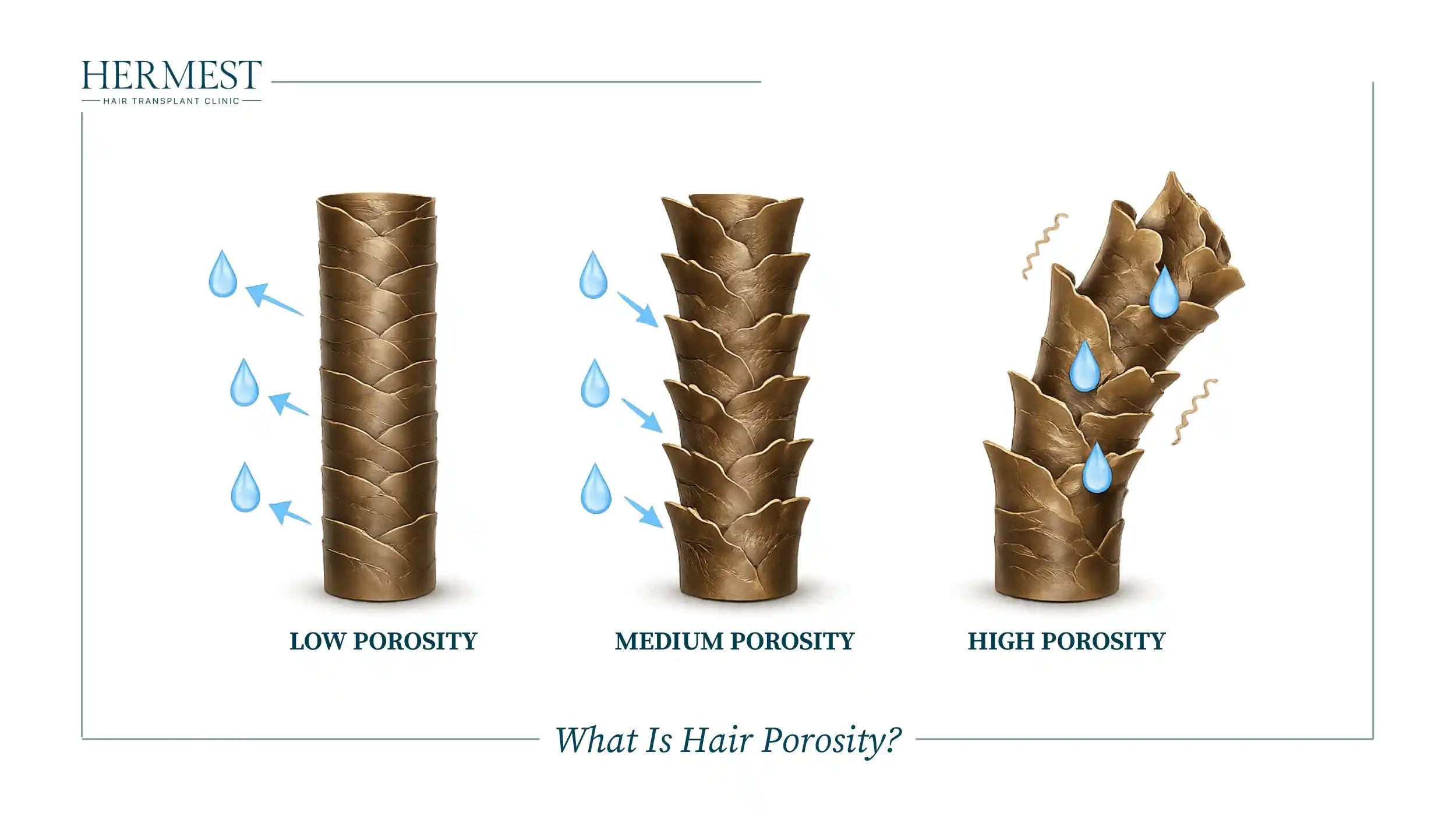
Hair porosity describes how easily water, oils, and treatments move through the hair shaft. The concept sounds simple. The biology underneath is more nuanced.
Every strand contains an outer protective layer called the cuticle. These overlapping cuticle cells regulate how moisture enters and exits the hair fiber.
That balance affects almost everything:
- hydration
- frizz
- softness
- elasticity
- shine
- breakage tendency
How does the hair cuticle affect moisture?
In healthy hair, cuticle layers help maintain controlled moisture balance. When cuticles remain tightly packed, water struggles to penetrate the strand.
This usually creates low porosity hair behavior.
When cuticles become lifted, uneven, or damaged, moisture enters quickly but escapes just as fast. This pattern commonly appears in high porosity hair.
The strand behaves differently depending on cuticle structure.
According to research available through the National Center for Biotechnology Information (NCBI), chemical processing, heat exposure, and mechanical damage can alter hair shaft structure and affect moisture retention significantly.
What is normal porosity hair?
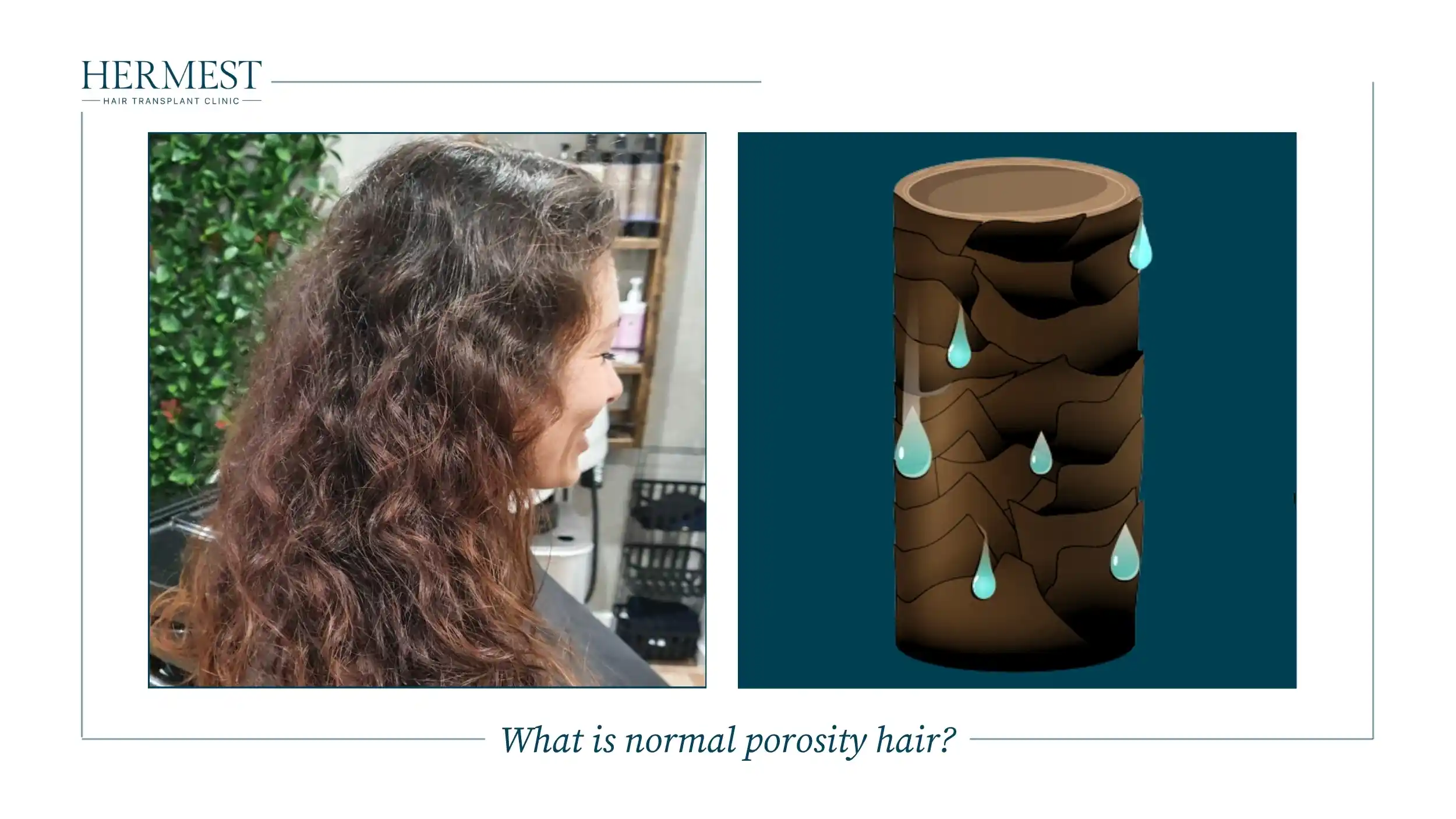
Normal porosity sits somewhere between the extremes.
These strands usually:
- absorb moisture reasonably well
- retain hydration effectively
- respond predictably to products
- dry at moderate speed
- maintain balanced elasticity
Many online articles ignore this middle category entirely.
Not everyone fits neatly into “low” or “high” porosity patterns.
Can porosity vary across the same head?
Yes. The ends of the hair often become more porous than newer growth near the scalp due to:
- heat styling
- brushing friction
- bleaching
- UV exposure
- environmental wear
This means someone may technically have multiple porosity behaviors simultaneously.
Why understanding porosity matters
Using routines designed for the wrong porosity type often worsens problems instead of solving them.
Heavy oils may overwhelm low porosity strands. Excess protein may stiffen already damaged high porosity hair.
Dr. Ahmet Murat says patients often assume “dry hair” automatically needs heavier products. At Hermest, the real focus is understanding why the strand struggles with moisture balance before adjusting treatment strategies.
The goal is not chasing trends. It is understanding how your hair actually behaves.
Low Porosity Hair Explained
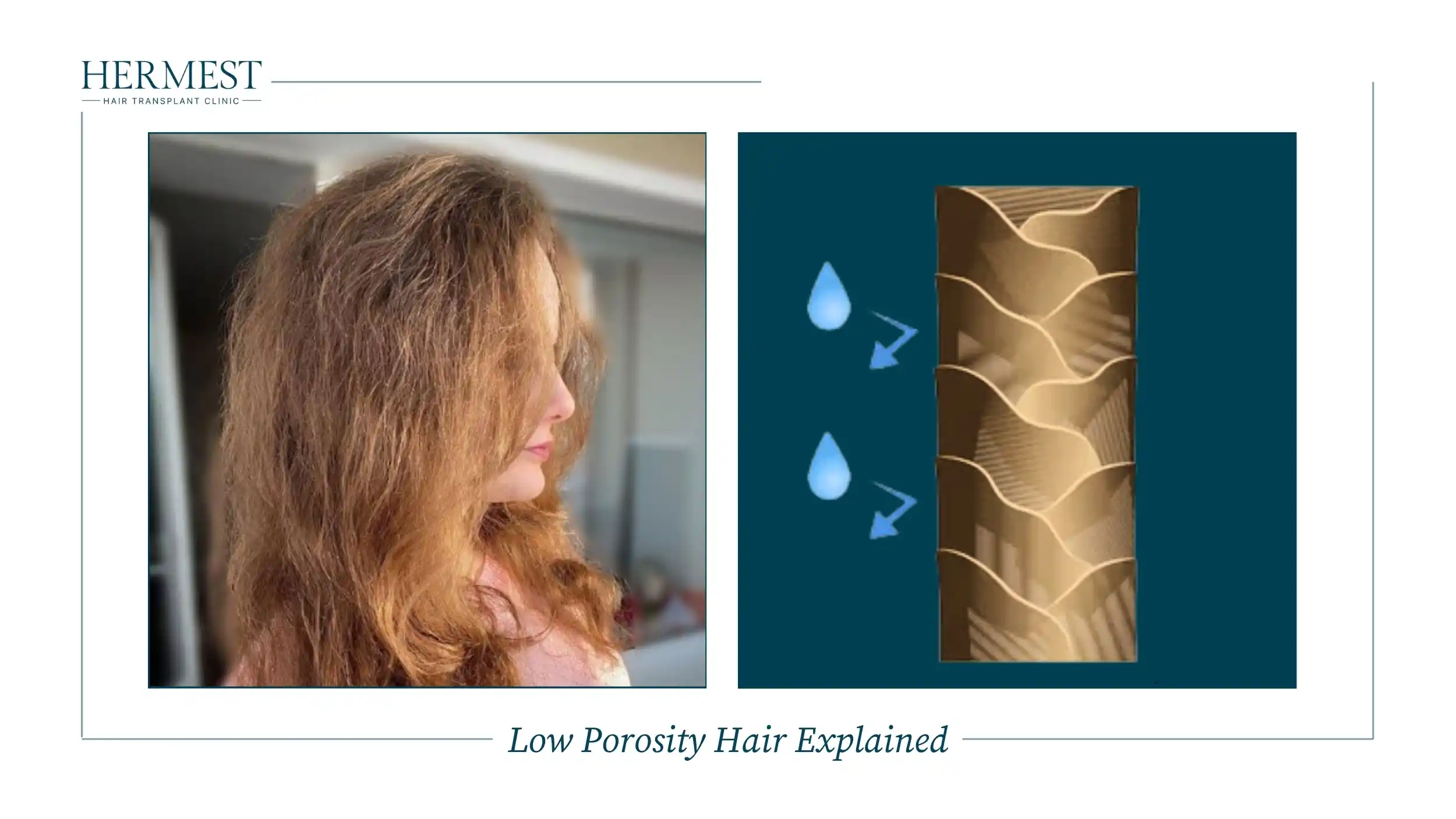
Low porosity hair usually has tightly packed cuticle layers that resist water penetration. Moisture tends to remain on the surface instead of absorbing efficiently into the strand.
This creates very specific frustrations.
Many people with low porosity patterns feel like:
- products sit on the hair
- oils feel greasy quickly
- conditioners never absorb properly
- hair takes long to get fully wet
- buildup appears easily
The strand often looks healthy externally while still feeling difficult to hydrate.
What are signs of low porosity hair?
Common low porosity hair characteristics include:
- slow water absorption
- products lingering on the surface
- extended drying time
- shiny but resistant texture
- buildup from heavy creams or oils
The hair may initially repel water during washing before slowly becoming saturated.
This detail gets overlooked constantly online.
Why does low porosity hair dry slowly?
Since moisture enters the strand gradually, water often remains trapped longer once absorbed.
This explains why some people air dry for hours despite relatively fine-looking hair.
Cuticle tightness influences both absorption and evaporation speed.
Is low porosity hair healthier?
Not automatically.
Another internet myth.
Low porosity strands may resist environmental damage somewhat better initially, yet heavy buildup and poor cleansing habits can still create dullness and scalp imbalance over time.
At Hermest, scalp health evaluation often becomes just as important as the fiber itself when discussing chronic buildup or moisture complaints.
Can genetics influence low porosity patterns?
Yes. Genetics strongly affect natural cuticle structure.
Still, environmental factors also influence how the strand behaves gradually through:
- heat exposure
- product layering
- hard water
- chemical treatments
Dr. Ahmet Murat says many patients with low porosity hair unintentionally overload the strand trying to “force moisture” into it. At Hermest, lightweight hydration and scalp balance are usually more effective than excessively heavy routines.
More product does not always mean more hydration. Sometimes the opposite happens.
High Porosity Hair Explained
High porosity hair absorbs moisture quickly but struggles to retain it. The cuticle layer becomes more open, uneven, or damaged, allowing water to move in and out too easily.
This often creates chronic dryness and frizz.
Many people describe the experience similarly:
- hair feels rough quickly
- ends dry out constantly
- humidity causes frizz instantly
- strands tangle easily
- moisture disappears within hours
The strand behaves like a sponge with holes.
What causes high porosity hair?
Some people naturally have more porous strands genetically. Yet high porosity commonly develops through cumulative damage over time.
Frequent causes include:
- bleaching
- heat styling
- chemical straightening
- excessive brushing
- UV exposure
- harsh coloring treatments
According to research available through the Journal of Cosmetic Science, repeated chemical and thermal damage can disrupt cuticle integrity and weaken hair fiber structure significantly.
The damage usually builds gradually.
Why does high porosity hair become frizzy?
When the cuticle remains lifted or uneven, environmental humidity enters the strand rapidly. The fiber swells inconsistently, creating frizz and rough texture.
This is why humid weather often affects highly porous hair dramatically.
Moisture enters easily. Staying balanced becomes harder.
Does damaged hair always become high porosity?
Often yes, at least partially.
Porosity can vary along the same strand. Bleached ends may behave highly porous while newer scalp growth remains relatively balanced.
This explains why some routines feel inconsistent across different sections of the hair.
Why protein overload becomes possible
Highly porous strands often lose structural proteins more easily. Yet excessive protein treatments can sometimes make the hair stiff, brittle, or rough if moisture balance becomes disrupted.
Balance matters more than extremes.
Dr. Ahmet Murat says many patients aggressively chase “repair” products after damage without understanding whether the strand actually lacks moisture, structural support, or both. At Hermest, realistic fiber assessment usually prevents overcorrecting the problem.
Hair care becomes more effective once the strand’s actual behavior is understood clearly.
Low vs High Porosity Hair: Key Differences
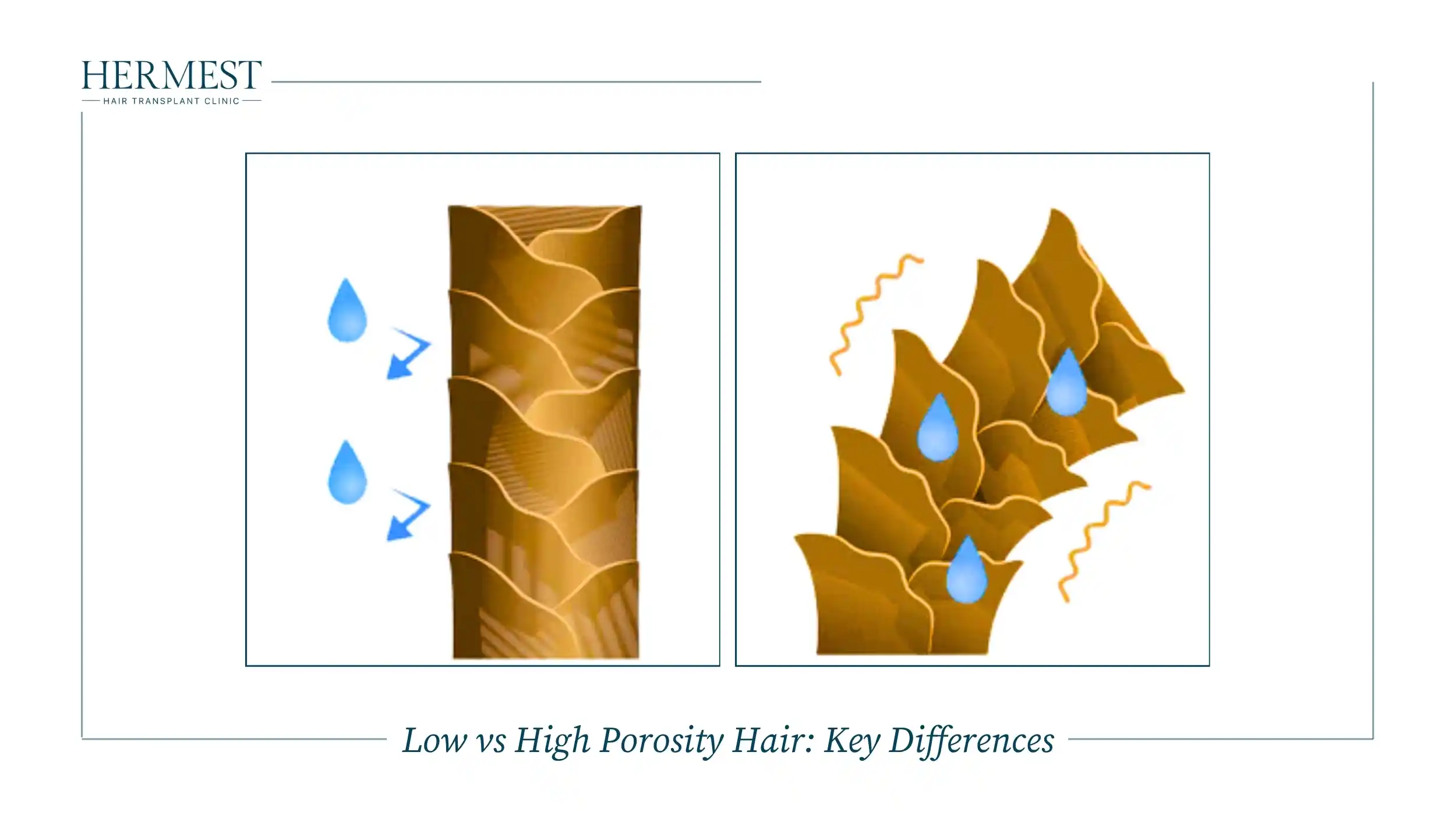
This is where most people finally understand why their routines behave unpredictably.
Two individuals may use identical products and experience completely opposite results purely because their porosity differs.
The strand structure changes everything.
How do low and high porosity strands behave differently?
Here is the simplest comparison:
| Feature | Low Porosity Hair | High Porosity Hair |
|---|---|---|
| Water absorption | Slow | Fast |
| Moisture retention | Strong once hydrated | Weak |
| Drying speed | Slow | Fast |
| Product absorption | Resistant | Rapid |
| Frizz tendency | Lower initially | Higher |
| Buildup risk | Higher | Lower |
| Damage sensitivity | Moderate | Higher |
This comparison gets simplified too aggressively online sometimes. Real hair often exists somewhere between these extremes.
Why does low porosity hair resist products?
Tightly packed cuticles make penetration harder. Heavy creams and oils often remain on the surface instead of entering the strand efficiently.
This may create:
- greasy appearance
- dull buildup
- weighed-down texture
Lightweight hydration often performs better.
Why does high porosity hair lose moisture quickly?
Lifted or damaged cuticles allow hydration to escape rapidly.
The result:
- dryness
- tangling
- rough texture
- humidity sensitivity
- increased breakage risk
This is why many people with high porosity frizzy hair constantly feel dry despite frequent conditioning.
Can someone have mixed porosity?
Absolutely.
Roots, mids, and ends may behave differently depending on:
- chemical history
- heat exposure
- age of the strand
- environmental wear
Dr. Ahmet Murat says patients often search for one single “hair type” label when the reality is usually more layered. At Hermest, scalp health, cuticle condition, and strand damage are evaluated together before recommending routines.
Hair behavior rarely fits perfect internet categories.
How to Test Hair Porosity
Most people discover hair porosity through frustration first. Products stop working predictably. Hair feels dry despite conditioning. Moisture either disappears instantly or refuses to absorb at all.
Then comes the internet “float test”.
The problem is that many online porosity tests oversimplify a much more complex issue.
Does the float test actually work?
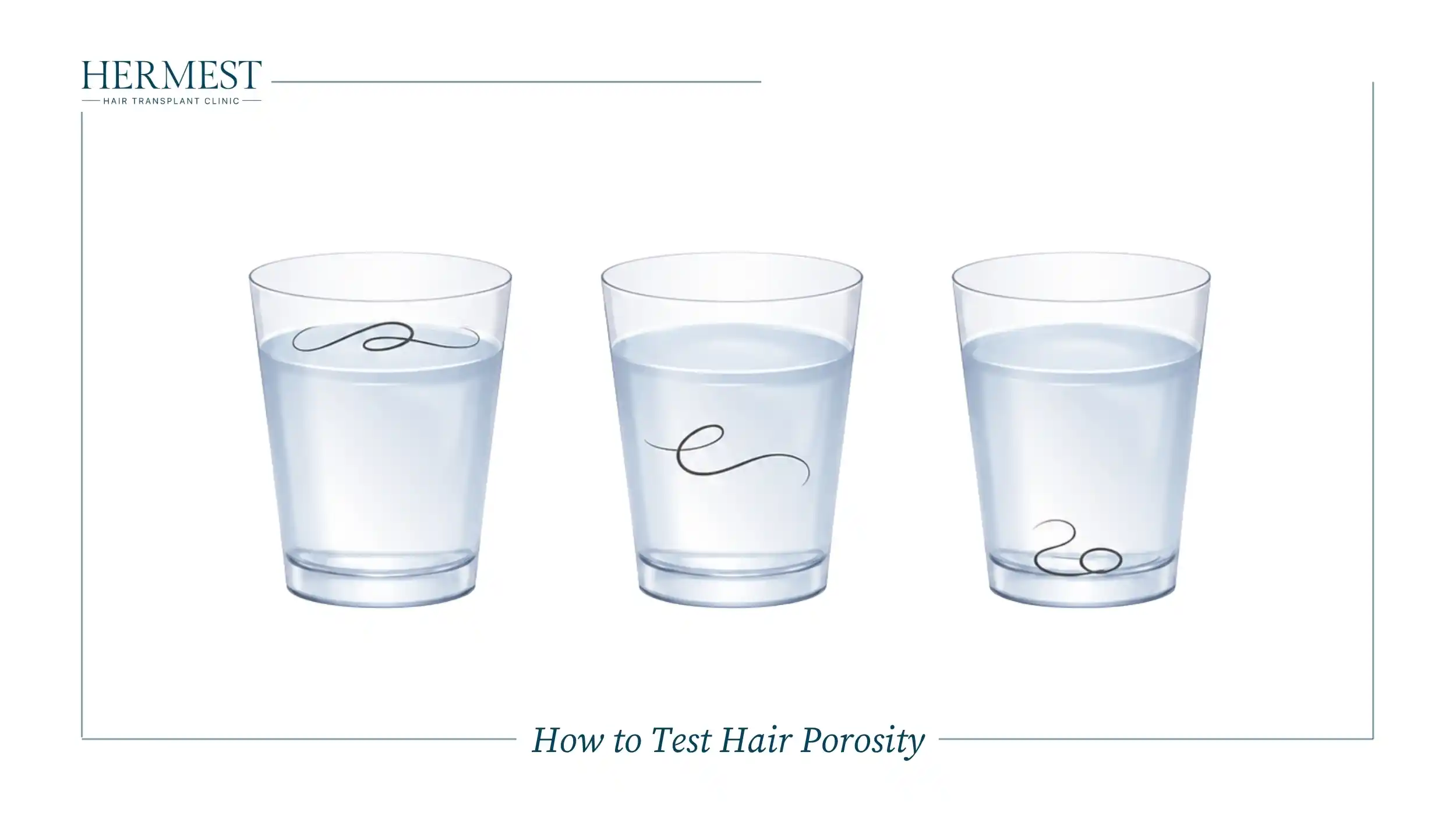
The float test involves placing a clean strand of hair into water and observing whether it sinks or floats.
Supposedly:
- floating = low porosity
- sinking quickly = high porosity
This test sounds scientific. It is highly limited.
Product residue, oils, strand thickness, water temperature, and even trapped air can affect results dramatically. Many often present the float test as definitive when it really provides only rough clues at best.
What are better ways to recognize porosity?
Daily behavior often reveals more useful information than internet experiments.
Signs commonly associated with low porosity hair:
- water beads on the surface
- products feel heavy quickly
- drying takes long
- buildup develops easily
Signs often linked to high porosity hair:
- frizz appears rapidly
- strands dry very quickly
- ends feel rough
- moisture disappears fast
- tangling increases
Pattern recognition matters more than one isolated test.
Can strand elasticity reveal damage?
Yes. Another overlooked clue.
Highly damaged porous hair often stretches excessively before breaking. Very rigid strands may indicate protein imbalance or severe dehydration.
This becomes especially relevant after:
- bleaching
- repeated coloring
- heat styling
- chemical straightening
According to hair shaft research available through the National Center for Biotechnology Information (NCBI), structural damage can significantly alter tensile strength and elasticity within the fiber.
Why scalp health still matters
People obsess over strand behavior while ignoring scalp condition completely. Yet buildup, inflammation, and poor cleansing habits may worsen porosity-related frustrations indirectly.
Dr. Ahmet Murat says many patients perform endless internet tests while overlooking the broader picture. At Hermest, scalp balance, cuticle integrity, and long-term damage history are all considered together before recommending corrective routines.
Hair behavior usually makes more sense once the biology underneath is understood properly.
Best Care Routine for Low Porosity Hair
Managing low porosity curly hair or straight low porosity strands usually requires a lighter, more strategic approach.
The biggest mistake? Trying to force moisture into the hair aggressively.
That often backfires.
Why heavy products create buildup easily
Low porosity strands resist absorption due to tightly packed cuticles. Thick oils and dense butters often remain on the surface instead of penetrating effectively.
This can leave the hair:
- greasy
- dull
- weighed down
- difficult to style
More product rarely solves the issue.
In many cases, it worsens it.
What types of products work better?
Low porosity routines often respond better to:
- lightweight conditioners
- water-based leave-ins
- gentle clarifying shampoos
- lighter oils in small amounts
Heat-assisted hydration may also help temporarily lift the cuticle slightly for improved absorption.
This is why warm water and steam treatments sometimes feel more effective.
Why clarifying becomes important
Since product buildup develops easily on low porosity strands, occasional clarifying may improve:
- moisture penetration
- shine
- softness
- scalp comfort
Without proper cleansing, even good products may stop performing well over time.
Can protein treatments become overwhelming?
Sometimes yes.
Low porosity hair may become stiff or brittle if overloaded with excessive protein-focused products repeatedly.
Balance matters more than following trends blindly.
Dr. Ahmet Murat says patients with low porosity hair often confuse buildup with dryness and continue layering heavier products unnecessarily. At Hermest, improving cleansing balance usually becomes just as important as hydration itself.
Healthy moisture management depends on understanding what the strand actually absorbs efficiently.
Best Care Routine for High Porosity Hair
Managing high porosity hair usually focuses on slowing moisture loss and reducing ongoing damage. The challenge is not getting hydration into the strand.
The challenge is keeping it there.
This is why some people feel soft immediately after conditioning but dry again within hours.
Why moisture disappears so quickly
Porous strands contain more lifted or damaged cuticle areas. Water enters rapidly, then escapes just as easily.
This often creates:
- chronic dryness
- frizz
- tangling
- rough texture
- breakage
Humidity can worsen everything.
The strand absorbs environmental moisture inconsistently, causing swelling and uneven texture.
What products usually help high porosity hair?
Highly porous strands often respond better to:
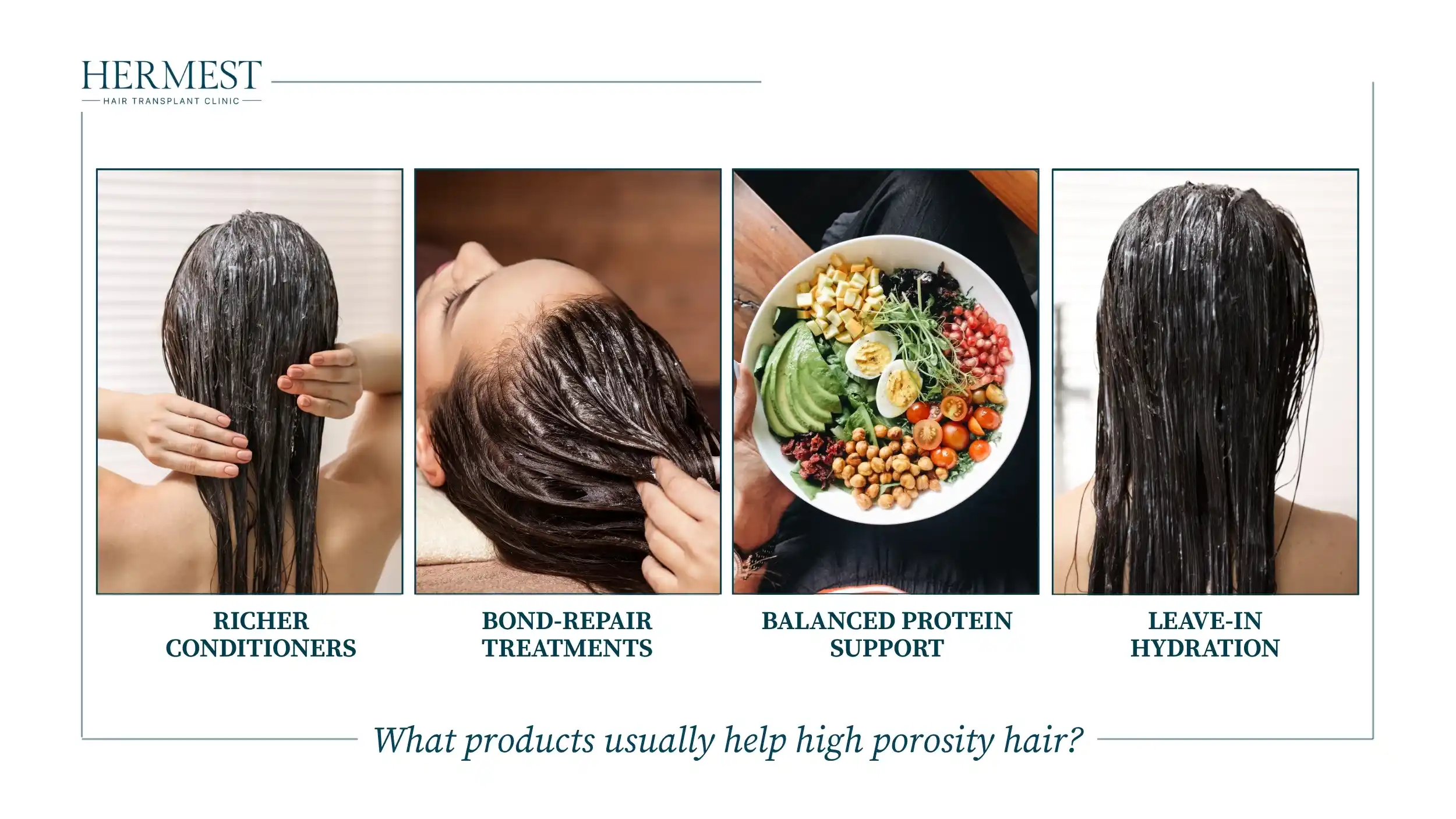
- richer conditioners
- bond-repair treatments
- balanced protein support
- leave-in hydration
- sealing oils used carefully
The goal is supporting cuticle stability without overloading the strand.
This balance gets misunderstood constantly online.
Why protein and moisture both matter
Highly porous hair often loses structural proteins more easily after:
- bleaching
- heat styling
- chemical treatments
Still, excessive protein alone may make the strand stiff or brittle if hydration becomes insufficient.
Balance matters more than extremes.
According to studies available through the Journal of Cosmetic Science, repeated chemical and thermal damage can weaken cuticle integrity and reduce structural resilience within hair fibers.
Can damaged high porosity hair recover fully?
Partially sometimes. Completely, not always.
Once significant cuticle damage occurs, routines may improve manageability and appearance but cannot always restore the strand to untouched condition permanently.
This is why prevention matters heavily.
At Hermest, patients experiencing severe dryness or breakage are often encouraged to reduce cumulative damage before aggressively chasing more treatments or styling changes.
Dr. Ahmet Murat says highly porous hair often enters a cycle of overprocessing and overcorrecting. At Hermest, slowing damage progression usually becomes more effective long term than constantly changing products every few weeks.
Consistency often helps more than trend-hopping.
Can Hair Porosity Change Over Time?
Yes. This surprises many people.
Hair porosity is not always permanently fixed. Some traits are genetic, yet strand behavior can change gradually depending on damage exposure, aging, environmental stress, and hair practices.
This is why routines that worked years ago may suddenly stop working later.
Can bleaching and heat increase porosity?
Absolutely.
Repeated exposure to:
- bleach
- heat styling
- chemical straightening
- UV radiation
- harsh brushing
can gradually disrupt cuticle structure and increase porosity over time.
This often explains why previously manageable hair becomes:
- rougher
- drier
- frizzier
- more fragile
The changes usually happen progressively rather than overnight.
Can low porosity hair become high porosity?
In damaged areas, yes.
New growth near the scalp may remain relatively low porosity while older bleached ends behave highly porous. Different sections of the same head can react completely differently.
This creates confusion during product selection.
Does aging affect hair porosity?
Aging may influence:
- scalp oil production
- strand elasticity
- cuticle resilience
- environmental sensitivity
Hair fibers experience cumulative wear over decades. Small changes eventually affect moisture behavior and manageability.
Can porosity be “repaired” permanently?
Not entirely in the way many marketing campaigns imply.
Products may temporarily smooth, coat, strengthen, or condition damaged fibers. Yet severely altered cuticle structure cannot always return fully to untouched biological condition.
This distinction matters.
Dr. Ahmet Murat says patients often expect damaged strands to behave like completely untouched hair again after one treatment. At Hermest, realistic expectations and reducing ongoing damage usually produce better long-term results than chasing instant transformation promises.
Healthy hair care often involves protecting what remains strong instead of constantly trying to reverse irreversible damage completely.
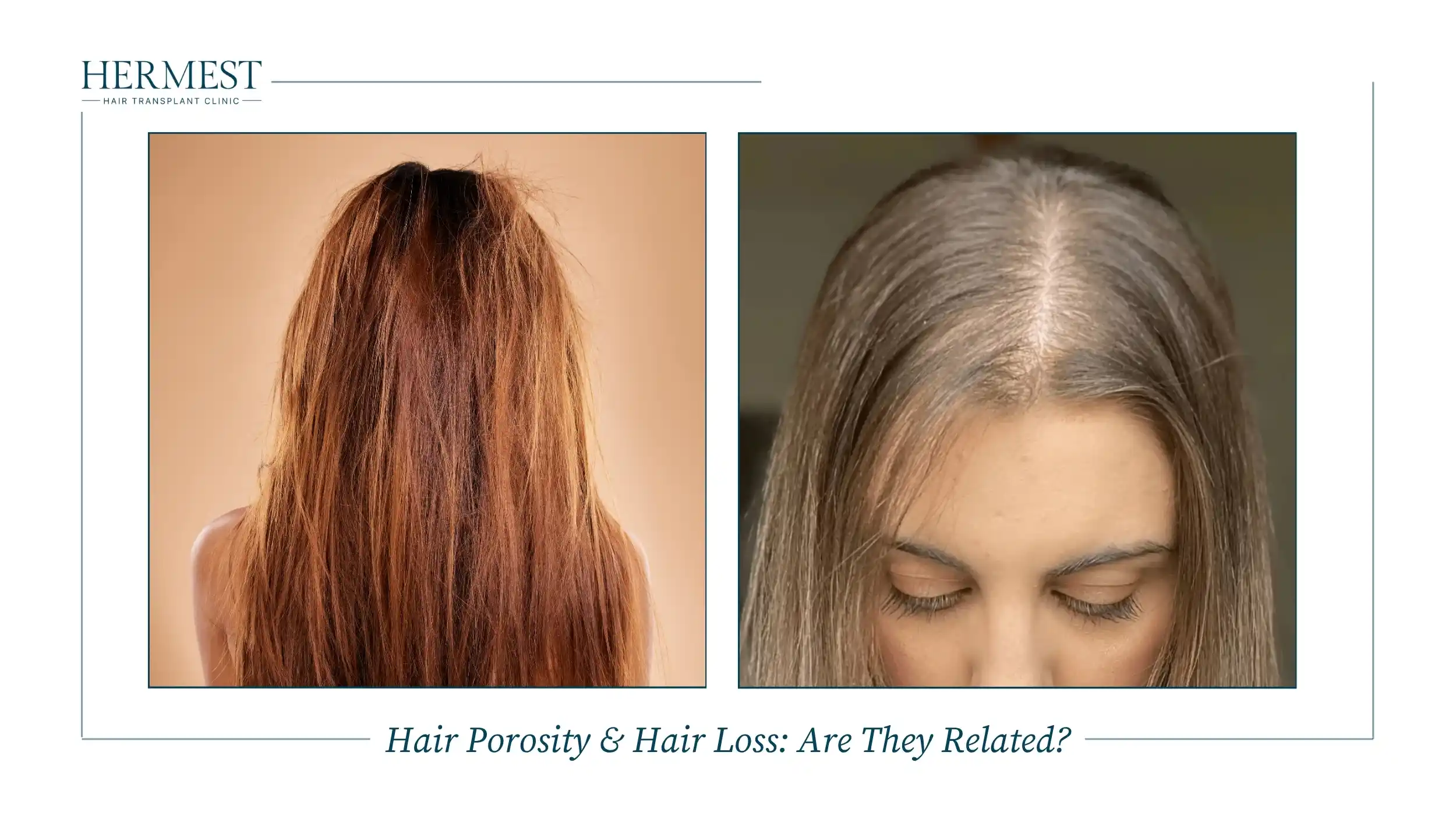
Hair Porosity & Hair Loss: Are They Related?
This is where many online discussions become confusing.
People often assume dry, porous, or frizzy hair automatically means unhealthy follicles or future hair loss. In reality, hair porosity and hair loss involve different biological processes.
Still, they can influence each other indirectly sometimes.
Does high porosity cause hair loss?
Not directly.
High porosity mainly affects the hair shaft, which is the visible fiber outside the scalp. Hair loss conditions usually involve the follicle beneath the skin.
This distinction matters enormously.
A strand may feel:
- dry
- brittle
- rough
- highly porous
while the follicle itself remains completely healthy.
At the same time, severe breakage can create the appearance of thinning even when follicles continue producing hair normally.
Can scalp health affect hair quality?
Many porosity-focused discussions obsess over products while ignoring scalp condition completely. Yet inflammation, buildup, seborrheic dermatitis, and chronic irritation may affect:
- scalp comfort
- shedding patterns
- strand quality
- breakage risk
According to American Academy of Dermatology (AAD), scalp disorders and excessive hair shaft damage can sometimes overlap visually with thinning concerns.
This is why proper evaluation matters.
When should you worry about actual hair loss?
You should consider professional assessment if you notice:
- widening part lines
- temple recession
- crown thinning
- excessive shedding
- visible scalp exposure
- miniaturized hairs
Dryness alone does not equal androgenetic alopecia.
This confusion creates unnecessary panic constantly online.
Why damaged hair may feel thinner
Repeated heat styling, bleaching, and breakage reduce fiber diameter gradually. The hair may appear less dense cosmetically even when follicle counts remain unchanged.
At Hermest, scalp evaluation often helps separate:
- shaft damage
- breakage
- temporary shedding
- true follicular miniaturization
Those conditions require different strategies entirely.
Dr. Ahmet Murat says many patients mistake severe breakage for permanent hair loss or assume thinning automatically comes from poor products alone. At Hermest, follicle health, scalp condition, and shaft integrity are evaluated separately before building a treatment plan.
Understanding the difference usually reduces unnecessary anxiety quickly.
Dr. Ahmet Murat’s Perspective on Hair Shaft Health
Healthy hair involves much more than buying trending products. The scalp, follicle, cuticle, and daily habits all influence how the strand behaves over time.
This bigger picture gets ignored constantly online.
Many routines focus aggressively on surface appearance while overlooking the biological condition underneath.
Why scalp health matters as much as the strand
At Hermest, evaluation often begins with the scalp itself.
Excessive buildup, inflammation, chronic irritation, or harsh cleansing habits may worsen:
- dryness
- breakage
- frizz
- shedding concerns
- poor product performance
Patients sometimes continue changing products endlessly when the underlying issue involves scalp imbalance instead.
Why overprocessing becomes a long-term problem
Repeated bleaching, heat styling, and aggressive chemical treatments gradually weaken cuticle integrity.
The damage accumulates.
Highly porous strands may eventually lose:
- elasticity
- shine
- structural strength
- moisture retention ability
This often explains why hair suddenly becomes “unmanageable” after years of cumulative styling stress.
Why realistic expectations matter
Another important point.
Products may improve softness, smoothness, and manageability significantly. Still, severely damaged fibers cannot always return completely to untouched biological condition permanently.
At Hermest, patients are usually encouraged to focus on:
- damage reduction
- consistent routines
- scalp balance
- realistic maintenance
- protecting new growth
rather than expecting instant reversal from marketing-heavy treatments.
Dr. Ahmet Murat says healthy hair routines work best when they support the strand gently over time instead of constantly forcing dramatic correction. At Hermest, long-term scalp balance and minimizing cumulative damage usually matter more than chasing viral product trends.
Hair health often improves gradually. Consistency usually matters more than intensity.
FAQs About Hair Porosity
Low porosity hair has tightly packed cuticles that resist moisture absorption, while high porosity hair has more open or damaged cuticles that absorb moisture quickly but lose it easily.
Struggling With Dryness, Frizz, or Product Buildup?
Understanding your hair’s porosity can explain why some routines fail even when the products seem highly rated online.
Low porosity hair often resists absorption and develops buildup easily. High porosity hair may absorb moisture quickly but lose it just as fast. The correct routine depends on understanding how your strands actually behave.
At Hermest Hair Clinic, Dr. Ahmet Murat and the team evaluate:
- scalp condition
- hair shaft damage
- moisture behavior
- breakage patterns
- cuticle health
- long-term hair quality concerns
The goal is realistic guidance based on biology rather than trend-driven routines.
Dr. Ahmet Murat says healthy hair care starts with understanding the condition of the strand and scalp together instead of constantly changing products without clear direction. At Hermest, long-term hair quality and scalp balance remain central during every evaluation.
If your hair feels persistently dry, frizzy, brittle, weighed down, or difficult to manage, you can request a professional scalp and hair assessment with the Hermest team.