

Wayne Rooney Hair Transplant: Cost, Technique & Results
When Wayne Rooney openly confirmed his hair transplant on Twitter in 2011, he did something few male celebrities had done before — he made hair restoration public. The Manchester United and England football legend turned what was once a private procedure into a topic of mainstream conversation.
“Just to confirm to all my followers I have had a hair transplant. I was going bald at 25, why not?” — Wayne Rooney, via Twitter (2011)
This single post reshaped public attitudes toward male hair loss and cosmetic surgery, inspiring thousands to explore modern hair restoration solutions. Rooney’s honesty brought attention to the FUE (Follicular Unit Extraction) technique — a minimally invasive method that delivers natural-looking results without visible scarring.
Over the years, fans and the media have tracked Rooney’s hairline evolution — from his first transplant in 2011, to a second session in 2013, and subsequent changes visible in recent photos. While his initial transformation was widely praised, later thinning sparked debates about long-term maintenance, DHT control, and the role of medical therapy in sustaining transplanted hair.
This detailed article explores every aspect of Wayne Rooney’s hair transplant journey — the techniques used, estimated graft numbers, treatment costs, results, and what his experience teaches future patients about hair restoration and care.
Quick Insights: Wayne Rooney Hair Transplant
- Wayne Rooney’s case reshaped global awareness of male hair transplants, proving that early intervention and transparency can normalize treatment.
- He underwent two FUE hair transplants (2011 and 2013) at Harley Street Hair Clinic, totaling approximately 3,000–3,700 grafts focused on the frontal and mid-scalp areas.
- His initial results were excellent, showing high graft survival and natural density.
- Later thinning occurred because the native (non-transplanted) hair continued to miniaturize — a reminder that transplants don’t stop hormonal hair loss.
- Rooney’s case highlights the need for ongoing medical maintenance — finasteride, minoxidil, PRP, or exosome therapy — to preserve both transplanted and existing hair.
- His openness removed social stigma and encouraged men worldwide to seek clinical help earlier.
Did Wayne Rooney Get a Hair Transplant?
Yes, Wayne Rooney publicly confirmed he had a hair transplant in 2011. He underwent an FUE (Follicular Unit Extraction) procedure at a Harley Street clinic in London to restore his receding hairline at age 25. He later had a second session in 2013 to increase density. Rooney’s openness about his transplants helped normalize hair restoration among men and made FUE one of the most recognized treatments for hair loss.
Wayne Rooney’s Hair Loss Journey (Before His First Transplant)
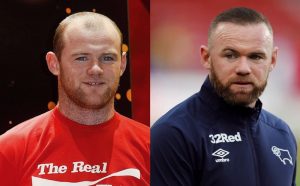
By his early 20s, Wayne Rooney was already showing clear signs of male pattern baldness — a common form of genetic hair loss scientifically known as androgenetic alopecia. Fans began noticing his receding temples and thinning crown during his Manchester United years, and media outlets often highlighted his changing appearance alongside his football career.
Rooney himself admitted that his hair loss began as early as age 20, with rapid progression by the time he turned 25. This type of early-onset baldness is often linked to genetic DHT (dihydrotestosterone) sensitivity, which causes hair follicles in the frontal and crown areas to miniaturize over time.
Early Signs of Hair Thinning
- Noticeable recession in the temples and frontal hairline.
- Decreased density at the crown under harsh lighting.
- Gradual loss of volume leading to a Norwood Class 3–4 pattern.
- Visible scalp contrast in televised matches and training sessions.
These visible changes became a frequent topic in tabloids and fan discussions — a pressure amplified by his public profile and constant media exposure.
Dr. Ahmet Murat from Hermest Hair Transplant Clinic notes:
“Rooney’s case is textbook androgenetic alopecia — early onset, strong family pattern, and visible frontotemporal thinning. Without treatment, progression to advanced baldness was inevitable.”
Psychological and Public Impact
As one of England’s most recognizable athletes, Rooney’s appearance was under constant scrutiny. While hair loss is natural and widespread, it can affect confidence — especially for public figures.
- He was one of the first UK footballers to confront it publicly rather than conceal it.
- His decision to undergo treatment at a young age helped normalize hair restoration for men across Europe.
When he confirmed the transplant on Twitter, his honesty was met with widespread support, with fans praising his transparency and sense of humor about the process.
Why Early Intervention Was Important
By 25, Rooney’s donor density was still excellent — an ideal condition for a successful transplant. Early intervention allowed doctors to rebuild his hairline naturally before extensive follicular loss occurred.
Patients who act early, while follicles remain active, typically achieve more dense and natural results than those who wait until the scalp becomes fully bald.
Confirmation & Clinics Involved in Rooney’s Transplant
Wayne Rooney made history in 2011 not just for getting a hair transplant, but for openly confirming it himself — something few celebrities had done at the time. On June 4, 2011, he posted the now-famous tweet:
“Just to confirm to all my followers I have had a hair transplant. I was going bald at 25, why not? I’m delighted with the result.”
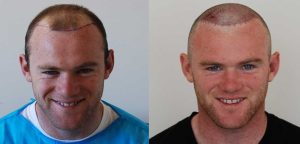
This tweet, paired with post-surgery photos showing visible scalp redness and short implanted hairs, confirmed that Rooney had undergone FUE (Follicular Unit Extraction) at a Harley Street clinic in London — widely believed to be Harley Street Hair Clinic (HSHC), one of the pioneers in FUE hair restoration in the UK.
The First Procedure (2011)
- Clinic: Harley Street Hair Clinic, London
- Technique: FUE (Follicular Unit Extraction)
- Estimated grafts: Around 2,000–2,200 grafts, focusing on the frontal and temporal zones
- Estimated cost: Between £12,000 and £15,000
- Purpose: Rebuild frontal density and define a youthful hairline
The FUE method involves individually extracting follicles from the donor zone at the back of the head and implanting them into thinning regions. This approach was chosen for Rooney because it leaves no visible scar — ideal for public figures who maintain short hairstyles.
Dr. Ahmet Murat from Hermest Hair Transplant Clinic comments:
“Rooney’s case helped popularize FUE in the UK. His visible recovery phase made the process transparent, showing that modern transplants no longer required long scars or lengthy downtime.”
The Second Procedure (2013)
By mid-2013, Rooney underwent a second hair transplant at the same Harley Street clinic to increase density and address new thinning that had developed behind the first grafted area.
- Technique: FUE again
- Estimated grafts: Around 1,000–1,500 for reinforcement
- Estimated cost: £8,000–£10,000
- Timeline: 2 years after the initial surgery
His second session demonstrated a realistic maintenance strategy rather than a sign of failed surgery. As native (non-transplanted) hair continued to thin naturally, a touch-up was required to maintain aesthetic balance.
Clinic Reputation & Media Influence
The Harley Street Hair Clinic capitalized on Rooney’s success story, publishing before-and-after photos on its website. This visibility boosted awareness of medical hair restoration across the UK and Europe.
Following Rooney’s announcement, there was a reported 30% increase in consultations among UK men aged 25–40 seeking FUE hair transplants, as per several aesthetic industry reports.
“Celebrity transparency can reshape public awareness,” says Dr. Ahmet Murat.
“After Rooney, we saw younger men approach clinics earlier, with better outcomes because they didn’t wait until full baldness.”
Surgical Techniques & Graft Estimates

Wayne Rooney’s transplant journey is often cited as one of the most publicized examples of modern FUE (Follicular Unit Extraction) in sports history. His procedures — carried out in 2011 and 2013 — helped introduce the concept of minimally invasive, natural-looking hair restoration to a wide audience.
FUE: The Chosen Method
The Harley Street Hair Clinic confirmed that Rooney’s surgery used the FUE hair transplant, a modern alternative to the older FUT (strip method).
In FUE, individual follicular units are extracted from the donor area — usually the back and sides of the scalp — using a micro-punch tool, and then implanted into thinning regions one by one.
Advantages of FUE for public figures like Rooney:
- No linear scarring (allows short hairstyles).
- Faster recovery with less visible healing.
- More precise control over graft placement and natural hairline design.
- Reduced post-operative discomfort.
Dr. Ahmet Murat from Hermest Hair Transplant Clinic explains:
“The FUE approach allowed Rooney to restore his hairline discreetly. For athletes and public figures, avoiding visible scars and long downtime is essential. That’s why most elite patients now choose FUE or advanced Sapphire FUE.”
Graft Count and Coverage
Based on expert estimates from clinic analyses and industry sources:
- 2011 procedure: ~2,000–2,200 grafts focusing on the frontal hairline and temples.
- 2013 procedure: ~1,000–1,500 grafts to reinforce mid-scalp density and correct new thinning.
- Total grafts transplanted: Roughly 3,000–3,700 grafts over two sessions.
This level of grafting typically provides:
- A dense, defined frontal hairline.
- Noticeable improvement in volume across frontal and mid-scalp zones.
- Seamless blending with remaining natural hair.
However, because androgenetic alopecia is progressive, untreated native follicles continued to miniaturize over time — explaining why Rooney’s density later appeared uneven in photographs.
Density Planning and Design
Hairline design is one of the most critical aesthetic aspects of any transplant. Rooney’s first surgery aimed to restore youthful density while maintaining a natural, age-appropriate shape.
The surgeon followed typical male frontotemporal patterns, avoiding over-lowering the hairline — a common mistake in younger patients.
At Hermest Hair Transplant Clinic, similar planning follows what’s known as True Planning® — a detailed mapping of future hair loss zones to ensure grafts are distributed strategically for long-term balance.
“We often remind patients that the goal isn’t just filling today’s gaps,” says Dr. Ahmet Murat.
“It’s about creating a design that remains natural 10 years from now, even as the rest of the scalp changes.”
Cost Analysis & Speculation
The cost of Wayne Rooney’s hair transplants has been widely discussed in media reports, with most estimates falling between £20,000 and £30,000 in total. While Rooney never disclosed the exact figure, it’s clear that the Harley Street Hair Clinic procedure came at a premium — reflective of both the clinic’s prestige and the advanced FUE technology used at the time.
Estimated Cost Breakdown
According to typical UK clinic rates during 2011–2013:
- Average FUE cost per graft: £4 to £6
- First session (2,000–2,200 grafts): £12,000–£15,000
- Second session (1,000–1,500 grafts): £8,000–£10,000
- Total estimate: £20,000–£25,000 for both surgeries
For context, Harley Street Hair Clinic was one of the few clinics in the UK offering high-density FUE at that time, using manual extraction and implanter pens — technology that was still new in 2011.
Dr. Ahmet Murat from Hermest Hair Transplant Clinic explains:
“These early FUE costs were expectedly high. The UK market was still developing, and most clinics charged per graft. Today, similar results can be achieved with improved precision for a fraction of that cost — especially in Turkey.”
Comparison: UK vs. International Prices
| Country | Average Cost per 3,000 Grafts (FUE) | Estimated Total (GBP) |
|---|---|---|
| UK (London) | £4–£6 per graft | £12,000–£18,000 |
| Turkey (Istanbul) | £0.7–£1.5 per graft | £2,000–£4,000 |
| USA (New York / LA) | £5–£7 per graft | £15,000–£20,000 |
| Germany | £3–£5 per graft | £9,000–£14,000 |
While Rooney’s procedure reflected top-tier London pricing, today’s patients often find equivalent or superior quality abroad — particularly in Turkey, where experienced surgeons perform FUE and DHI at globally accredited clinics for significantly less.
Hidden and Additional Costs
Patients considering transplants similar to Rooney’s should also account for post-operative and long-term expenses:
- Maintenance therapy (Finasteride, Minoxidil, PRP): £300–£1,000 annually
- Follow-up checkups and medications: £100–£300 per year
- Travel and recovery accommodations (if abroad): £300–£800
In Rooney’s case, his follow-ups were likely handled privately, but most modern patients can expect these additional costs as part of a comprehensive treatment plan.
Before & After – Visual Results and Timeline
Wayne Rooney’s transformation was one of the most publicly documented in modern hair transplant history. Over the years, his evolving appearance has provided a rare, long-term look into how FUE results change over time — both positively and naturally.
Immediate Post-Transplant (2011)
Right after his first transplant, Rooney posted photos revealing a red, newly implanted scalp — a sign of fresh grafts and early healing. Within a few weeks:
- The redness subsided, and scabs fell off naturally.
- Hair shedding occurred during the “shock loss” phase (a normal part of recovery).
- New hair started to appear around 3–4 months post-surgery.
By the end of 2011, Rooney’s frontal density was clearly restored. His temples were filled in, and his hairline looked noticeably more youthful.
Second Session & Peak Density (2013–2015)
After his second transplant in 2013, Rooney reached his fullest appearance by 2014.
- The density across his frontal and mid-scalp regions looked uniform.
- Media coverage described the outcome as a “total transformation.”
- Fans noted that he looked nearly ten years younger on the pitch.
Photos from his time at Manchester United and early Everton years showed a strong, defined hairline that matched his facial features naturally.
Gradual Thinning & Regression (2017–2023)
By his early 30s, Rooney began showing renewed thinning — especially in the crown area and along the native hair behind the transplanted zone. This pattern is typical for patients who:
- Do not use long-term DHT-blocking treatments (like finasteride).
- Continue to experience androgenetic alopecia progression in untreated regions.
Industry experts estimate that Rooney’s transplanted grafts largely survived, but non-transplanted hair continued to miniaturize, leading to visible differences in density.
Present Day (2025)
Recent public appearances show Rooney’s frontal hairline remains partially intact, while density behind the grafted zone has reduced. Many experts suggest that this is natural progression and not a transplant failure.
He has likely opted not to pursue a third procedure, though PRP or stem cell therapy could be used to strengthen existing density.
Despite the changes, Rooney’s results are considered a success story — his two FUE sessions reversed premature baldness for over a decade, improving both appearance and confidence.
Main timeline summary:
| Year | Event | Estimated Grafts | Visible Outcome |
|---|---|---|---|
| 2011 | 1st FUE Transplant | ~2,200 | Frontal restoration, visible regrowth |
| 2013 | 2nd FUE Transplant | ~1,200 | Density improvement, fuller look |
| 2017–2019 | Natural Regression | — | Mild thinning in mid-scalp |
| 2024–2025 | Current Look | — | Partial density retention, mature hairline |
Long-Term Outcomes, Regression & Why It Happens
Even after two successful hair transplants, Wayne Rooney experienced progressive thinning in the years that followed. This is not uncommon — in fact, it highlights one of the most important lessons about hair restoration: a transplant replaces lost hair, but it does not stop ongoing hair loss.
The Nature of Progressive Hair Loss
Rooney’s transplanted follicles were taken from the back of his scalp — an area genetically resistant to DHT (dihydrotestosterone). Those grafts are permanent. However, the native hair surrounding them remained vulnerable to hormonal effects, gradually miniaturizing over time.
This created what’s known as the “island effect” — where transplanted areas retain density, but surrounding regions thin, producing an uneven look.
Common causes of post-transplant regression:
- Untreated androgenetic alopecia (continued DHT sensitivity).
- Lack of medical maintenance (finasteride, minoxidil, PRP).
- Aging and reduced follicular activity.
- Stress, nutrition, or systemic health factors.
Medical Maintenance Rooney May Have Skipped
While Rooney hasn’t publicly discussed his maintenance routine, experts suggest he did not maintain consistent use of DHT-blocking medication such as finasteride.
The lack of such therapy may have accelerated thinning in untreated regions, particularly the mid-scalp and crown.
Typical post-transplant care plan (for optimal long-term results):
- Finasteride or Dutasteride: to inhibit DHT and protect native hair.
- Minoxidil: to stimulate follicle activity and growth.
- PRP or Exosome Therapy: to improve blood supply and scalp health.
- Annual check-ups: to monitor regression and plan reinforcements if needed.
Why Rooney’s Results Still Count as a Success
Despite visible regression, Rooney’s results remain a benchmark case for several reasons:
- He retained his frontal grafts for over a decade.
- The overall aesthetic remained natural, even with thinning.
- His decision to act early prolonged his youthful appearance significantly.
- His transparency helped normalize the conversation around male hair loss.
Options for Reinforcement (If Rooney or Similar Patients Seek It)

If Rooney were to seek enhancement today, he could benefit from:
- PRP or Exosome Therapy to strengthen miniaturizing follicles.
- Sapphire FUE Touch-up for density restoration in thinning zones.
- Microneedling with Growth Serums to reactivate dormant follicles.
- Stem Cell-assisted Regenerative Protocols for long-term hair health.
These advanced treatments — now available in Turkey and Europe — allow for non-surgical revitalization, often delaying or eliminating the need for further surgery.
Lessons from Rooney’s Case – What Patients Should Learn
Wayne Rooney’s experience offers more than a glimpse into celebrity hair restoration — it provides valuable lessons for anyone considering a hair transplant or medical hair therapy. His journey demonstrates both the power of modern techniques and the importance of maintenance and timing.
Early Intervention Brings Better Results
Rooney acted at the right time. At just 25, his donor area was dense and stable, allowing for optimal graft survival and a natural result.
Patients who start early (before total follicular loss) have a wider range of treatment options, including PRP, microneedling, or medical therapy before surgery becomes essential.
Dr. Ahmet Murat from Hermest Hair Transplant Clinic says:
“The earlier we intervene, the more we can preserve. Hair restoration is most effective when prevention and treatment go hand in hand.”
A Transplant is Not a Cure — It’s a Step
Rooney’s case underlines a fundamental truth: hair transplantation treats visible baldness but not the biological process of hair loss.
Without ongoing DHT management and follow-up therapies, native hair continues to thin, which can alter the appearance over time.
Patients must treat transplants as part of a comprehensive, long-term plan that includes:
- Finasteride or Dutasteride to control hormonal triggers.
- PRP or Exosome Therapy to enhance graft survival.
- Regular scalp monitoring to adjust care as hair biology evolves.
Transparency and Realistic Expectations Matter
Rooney’s openness about his surgeries helped reshape public perception. He showed that hair loss is a treatable condition, not a taboo.
However, he also taught another key lesson — realistic expectations are essential. Even the best transplant can’t permanently stop new areas from thinning.
Choosing the Right Clinic and Surgeon
Rooney’s success was tied to the skill and reputation of his surgical team. For patients today, clinic selection remains one of the most crucial factors. Key factors to look for:
- Proven clinical experience (10+ years, ISHRS membership).
- Transparent pricing and graft estimates.
- Detailed pre-diagnosis including scalp analysis, trichoscopy, and medical history review.
- Natural design philosophy (no overly low hairlines).
“A clinic’s goal shouldn’t be just dense coverage,” says Dr. Ahmet Murat.
“It should be strategic planning that respects long-term biology — exactly what distinguishes experienced surgeons from quick, commercial operations.”
Maintenance is Non-Negotiable
One of the main reasons Rooney’s density later thinned was likely the absence of a consistent aftercare program.
Even after a successful FUE, transplanted hair requires a healthy scalp environment to remain stable. Proper hydration, nutrition, and medical support directly impact longevity.
Patients who maintain care through PRP sessions, medication, and follow-up consultations often enjoy 15+ years of sustained results.
Celebrity Influence & Social Impact
Wayne Rooney’s decision to publicly share his hair transplant journey did more than change his appearance — it helped reshape global attitudes toward male hair loss. In an industry once dominated by secrecy and stigma, Rooney became a catalyst for open conversation about restoration and self-confidence.
Breaking the Stigma Around Male Hair Restoration
Before Rooney, few public figures had openly discussed undergoing a hair transplant. His 2011 announcement was a cultural turning point, especially in the UK, where discussions around cosmetic procedures were often limited to women.
After his confirmation tweet, Google searches for “hair transplant” in the UK surged by over 65% within two weeks, according to aesthetic market trend analyses. Clinics across London and Manchester reported a sharp rise in consultations among men aged 25–40.
Influence on Other Athletes and Celebrities
Rooney’s transparency inspired a wave of athletes and entertainers to follow suit. Figures such as David Silva, Rob Holding, Antonio Conte, and James Nesbitt later underwent and publicly discussed their own hair procedures.
This trend helped destigmatize aesthetic medicine among men in competitive, image-driven professions.
In football especially, maintaining a confident appearance is linked to public image, sponsorships, and morale — factors that often influence players’ decisions to seek cosmetic improvement.
The Power of Public Authenticity
Unlike traditional celebrity makeovers, Rooney embraced authenticity — documenting his recovery phases, redness, and post-surgery photos without filters or concealment.
This authentic, unfiltered transparency strengthened public trust not only in him but also in the science of modern hair transplantation.
From Taboo to Mainstream
More than a decade later, hair transplants are part of everyday conversations. YouTube channels, TikTok influencers, and public figures now share their journeys openly — a cultural shift that traces back, in part, to Rooney’s openness.
This normalization has helped:
- Remove social shame associated with hair loss.
- Encourage men to seek medical advice earlier.
- Increase awareness of healthy maintenance habits (PRP, exosome therapy, etc.).
Conclusion
Wayne Rooney’s hair transplant journey stands as one of the most influential examples in modern aesthetic medicine. His openness, timing, and visible transformation changed how millions perceive male hair restoration — shifting it from secrecy to self-confidence.
From his first FUE procedure in 2011 to his continued transparency in later years, Rooney proved that hair loss can be treated effectively and naturally when approached with the right plan. Yet, his case also reminds us that a transplant alone isn’t enough — long-term success depends on maintenance, hormonal control, and scalp health.
Dr. Ahmet Murat from Hermest Hair Transplant Clinic summarizes:
“Wayne Rooney’s story shows both sides of the equation: excellent surgical execution and the need for lifelong follow-up. Hair restoration isn’t a one-time fix; it’s an evolving journey — and when done right, it delivers results that last decades.”
Key Lessons for Patients
- Act early: Treat hair loss while follicles are still active.
- Choose wisely: Clinic experience and diagnostic precision are everything.
- Think long-term: Combine surgery with ongoing maintenance (PRP, medication, nutrition).
- Stay informed: Understand your scalp biology before making decisions.
- Be realistic: Hair restoration enhances, not replaces, your natural growth pattern.
Why Hermest Hair Transplant Clinic Leads in Precision & Care
At Hermest, every treatment begins with an in-depth diagnostic process, combining trichoscopic imaging, hormonal analysis, and scalp mapping. This ensures that each patient’s hair loss cause, progression rate, and biological profile are clearly understood before any surgical plan begins.

Hermest’s innovative methods, such as UNIQUE FUE®, True Planning®, and Sapphire DHI, provide high-density, natural results that remain consistent long after surgery. For patients inspired by Rooney’s transformation — but seeking a more permanent and medically supported approach — this level of precision makes all the difference.
Schedule a free online consultation with Hermest Hair Transplant Clinic and discover how advanced diagnosis, medical planning, and personalized aftercare can help you regain natural, lasting confidence.
Your journey begins with one step — a conversation with experts who understand both the science and emotion behind hair restoration.