
Types of Curly Hair: 3A, 3B & 3C Curl Types Explained
 ChatGPT
 Claude
 Perplexity
 Grok
Grok
 Gemini

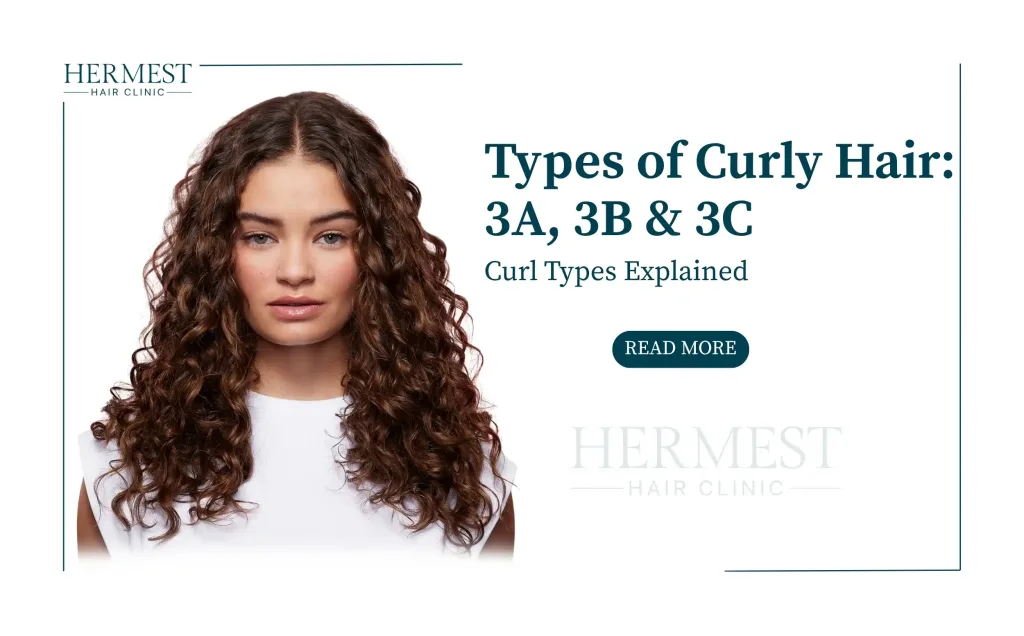
Knowing the types of curly hair is more than a matter of curiosity. It helps you choose products, build an effective routine, and avoid habits that can lead to dryness, breakage, or unnecessary frustration. Whether you have loose spirals or tight corkscrew curls, understanding your natural pattern is the first step toward healthier, more manageable hair.
Many people search for a curly hair chart or wonder, “What type of curly hair do I have?” The answer isn’t always straightforward. While curl pattern is important, it represents only one part of your hair’s unique characteristics. Factors such as porosity, density, strand thickness, and scalp health also influence how your hair behaves and which products will work best.
This guide explains the most common curly hair types, how they differ, and why two people with the same curl pattern can have completely different hair care needs. You’ll also learn how to identify your own curls, understand the popular hair curl types classification system, and discover practical care tips supported by dermatology research.
According to recent research published in the Journal of Cosmetic Dermatology, modern hair assessment goes beyond curl pattern alone. Hair professionals increasingly evaluate additional characteristics such as porosity, elasticity, and fiber diameter to provide more personalized recommendations for healthy hair care.
Dr. Ahmet Murat says:
“Many people believe identifying their curl pattern is enough to solve every hair concern. In reality, healthy curls depend on much more than appearance. During scalp and hair assessments, we also evaluate scalp health, hair density, strand quality, and lifestyle factors because these often explain why curls become dry, frizzy, or fragile.”
Throughout this guide, you’ll explore the complete curl types classification system, learn the differences between 3A, 3B, and 3C curls, discover why curl patterns sometimes change over time, and understand how to build a routine that works with your natural hair rather than against it.
Quick Insights
- The Andre Walker Hair Typing System divides hair into four main categories, with Type 3 representing curly hair.
- 3A, 3B, and 3C curls differ mainly in curl size, tightness, and moisture requirements.
- It’s completely normal to have multiple curl types on different areas of your scalp.
- Curl pattern is different from hair texture, porosity, density, and strand thickness.
- Curly hair is naturally drier because scalp oils travel less efficiently along curved hair shafts.
- Hormonal changes, aging, heat styling, and chemical treatments can alter your curl pattern over time.
- Choosing products based on both your curl type and your hair’s individual characteristics leads to healthier, more manageable curls.
- Having curly hair does not increase your risk of genetic hair loss, but gentle care helps minimize breakage and maintain fullness.
What Are Curly Hair Types?
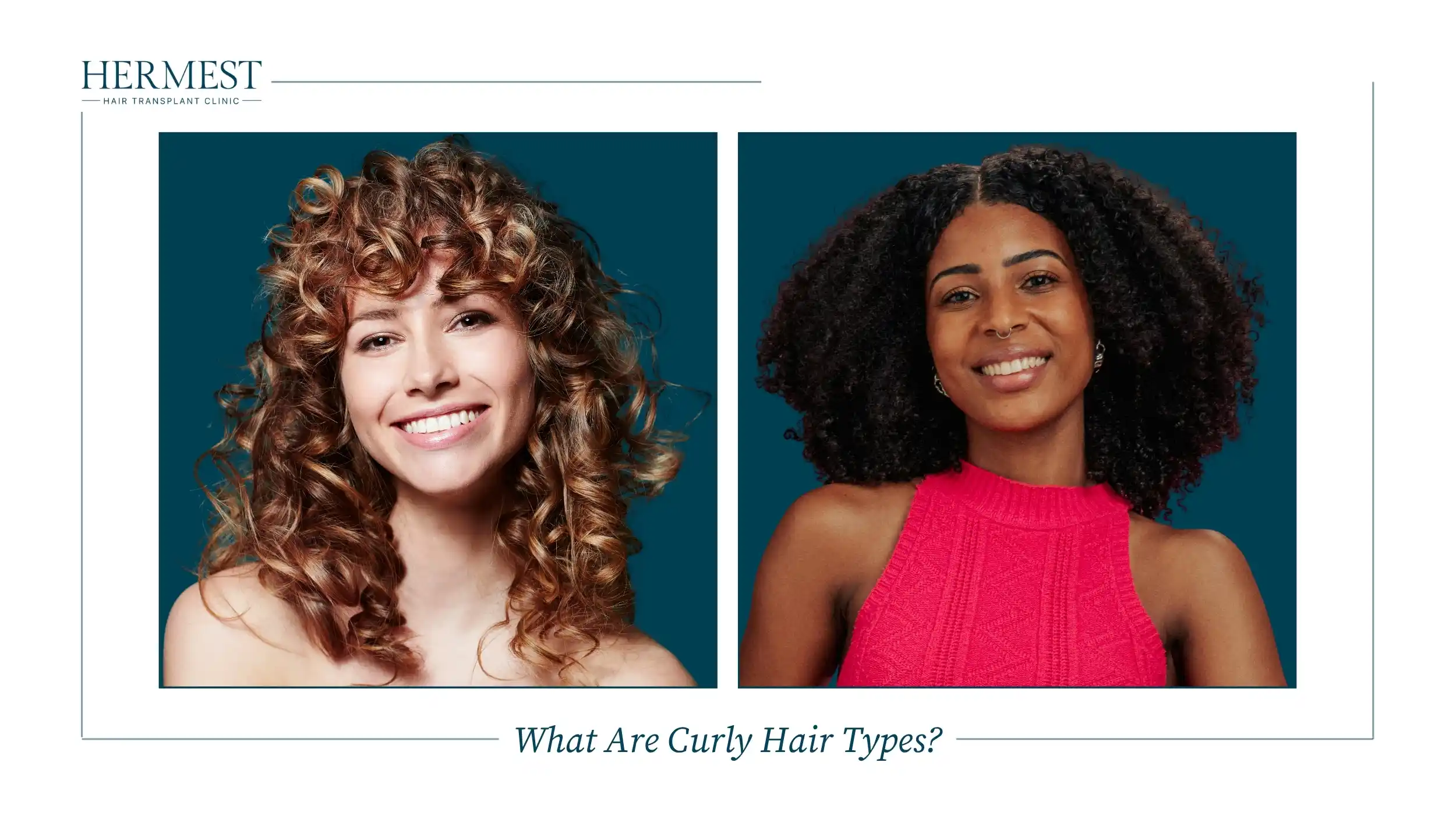
The phrase types of curly hair refers to the way hair naturally bends, twists, or coils as it grows from the scalp. These patterns are largely determined by genetics and are commonly grouped into standardized curl pattern types that make it easier to identify and care for different hair textures.
Although most people think of curls as simply “loose” or “tight”, the reality is much more complex. Hair professionals often classify hair curl types based on the size, shape, and consistency of the curl rather than how thick or full the hair appears.
Why Do Curl Patterns Vary?
The biggest factor is the shape of the hair follicle.
Straight hair usually grows from round follicles, while curly hair develops from more oval or asymmetrical follicles. This uneven shape causes the hair fiber to bend as it grows, creating waves, spirals, or tight coils.
Researchers have also found that the distribution of keratin proteins and chemical bonds within the hair shaft contributes to curl formation. Together, these biological differences create the wide variety of different types of curly hair seen across populations.
Other factors can also influence how curls look day to day, including:
- Humidity and climate.
- Hair length and weight.
- Heat styling.
- Chemical treatments.
- Overall hair health.
Curl Pattern Is Only One Piece of the Puzzle
Many people assume their curly hair type tells them everything they need to know about caring for their hair. It doesn’t.
According to dermatology and cosmetic science research, curl pattern should always be considered alongside other characteristics, including:
- Hair porosity, which affects moisture absorption.
- Hair density, or how many strands grow per square centimeter.
- Strand thickness, ranging from fine to coarse hair.
- Scalp health, which supports healthy hair growth.
Someone with 3B hair, for example, may need a completely different routine than another person with the same curl pattern because their porosity or density is different.
Dr. Ahmet Murat says:
“One of the most common mistakes we see is choosing products based only on curl type. Two patients with nearly identical curls may have completely different scalp conditions or hair characteristics. Personalized care always delivers better long-term results than following a generic routine.”
Understanding these differences provides the foundation for choosing the right products, reducing frizz, minimizing breakage, and maintaining healthier curls. In the next section, we’ll explore the Andre Walker Hair Typing System, the world’s most widely used method for classifying curl types, and explain both its strengths and its limitations.
The Andre Walker Hair Typing System
If you’ve ever searched for a curly hair chart or tried to identify your curl pattern, you’ve probably come across the Andre Walker Hair Typing System. Developed by celebrity hairstylist Andre Walker, this classification method has become the most widely recognized way to describe hair curl types.
Although it wasn’t originally created as a scientific model, it remains a practical starting point for understanding how different curl types look and behave. Many hairstylists, product manufacturers, and online communities still use it today because it’s simple and easy to understand.
The Four Main Hair Categories
The system divides hair into four primary groups based on its natural shape.
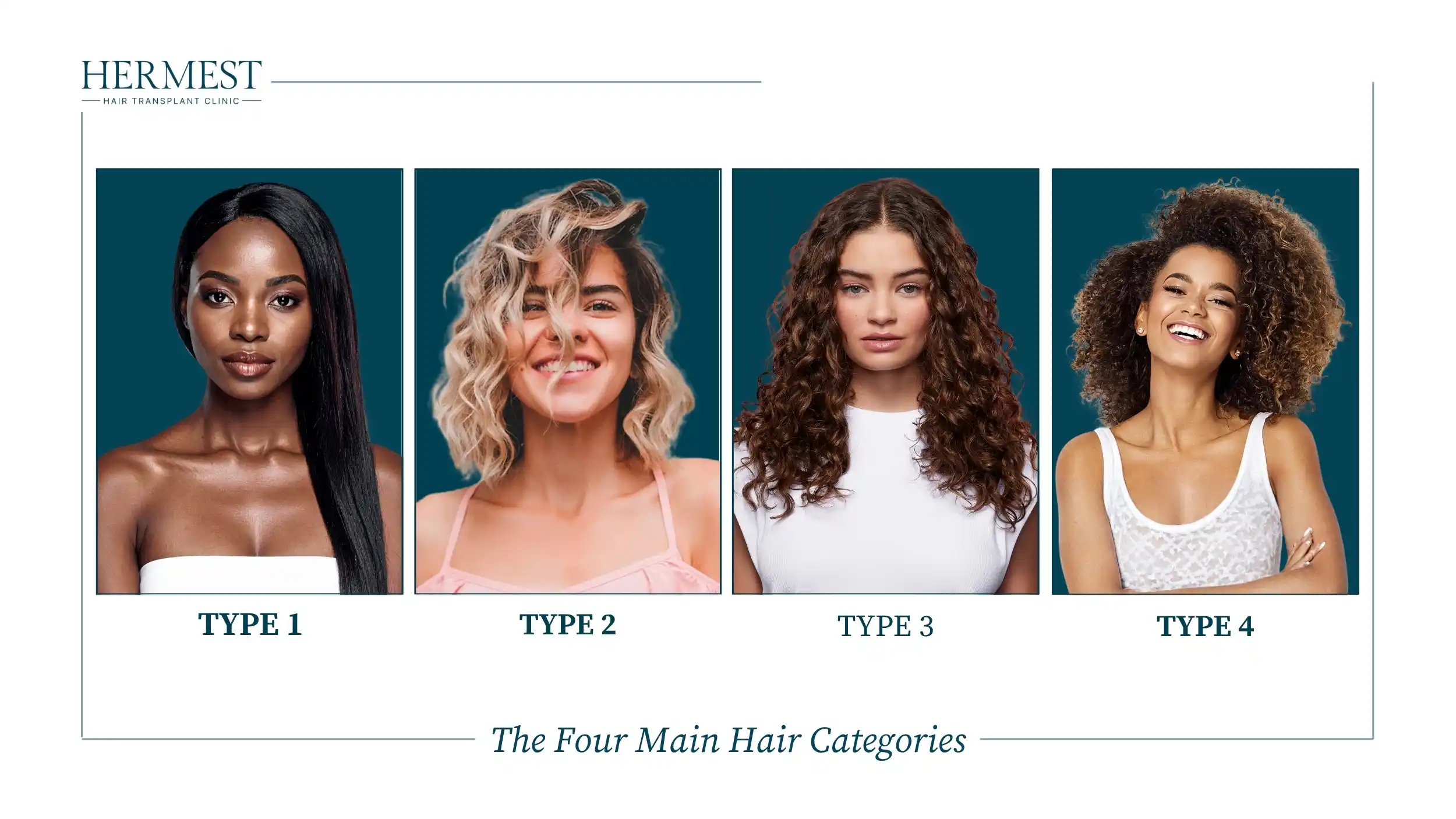
- Type 1: Straight hair with little or no visible bend.
- Type 2: Wavy hair that forms gentle S-shaped patterns.
- Type 3: Curly hair, characterized by defined spirals or ringlets.
- Type 4: Coily or tightly curled hair with dense, spring-like coils or zigzag patterns.
Each category is then divided into subtypes A, B, and C, which describe how loose or tight the pattern becomes. For example, Type 3A features large, loose curls, while Type 3C produces compact corkscrew-shaped curls.
This article focuses primarily on Type 3 hair, since it includes the classic different types of curly hair most people are looking for.
Why the Walker System Isn’t the Whole Story
Despite its popularity, dermatologists and hair researchers agree that the Walker system has limitations.
According to recent research published in the Journal of Cosmetic Dermatology, curl pattern alone cannot fully explain how hair behaves or what products it needs. Two people with identical curly hair types may experience very different levels of dryness, frizz, or breakage because other characteristics play equally important roles.
These include:
- Hair porosity.
- Strand diameter.
- Hair density.
- Elasticity.
- Scalp condition.
This is why one person with 3A hair may need lightweight hydration, while another with the same curl pattern benefits from richer moisturizing products.
Dr. Ahmet Murat says:
“The Andre Walker system is an excellent visual guide, but it shouldn’t be treated as a complete diagnosis of your hair. Healthy curls depend on several factors working together. Looking beyond curl shape allows us to recommend routines that are far more personalized and effective.”
Understanding this broader perspective helps explain why some people struggle despite using products recommended specifically for their curl type. In the following sections, we’ll take a closer look at 3A, 3B, and 3C hair, including their defining features, common challenges, and the best ways to care for each one.
Type 3A Hair: Loose, Defined Spirals
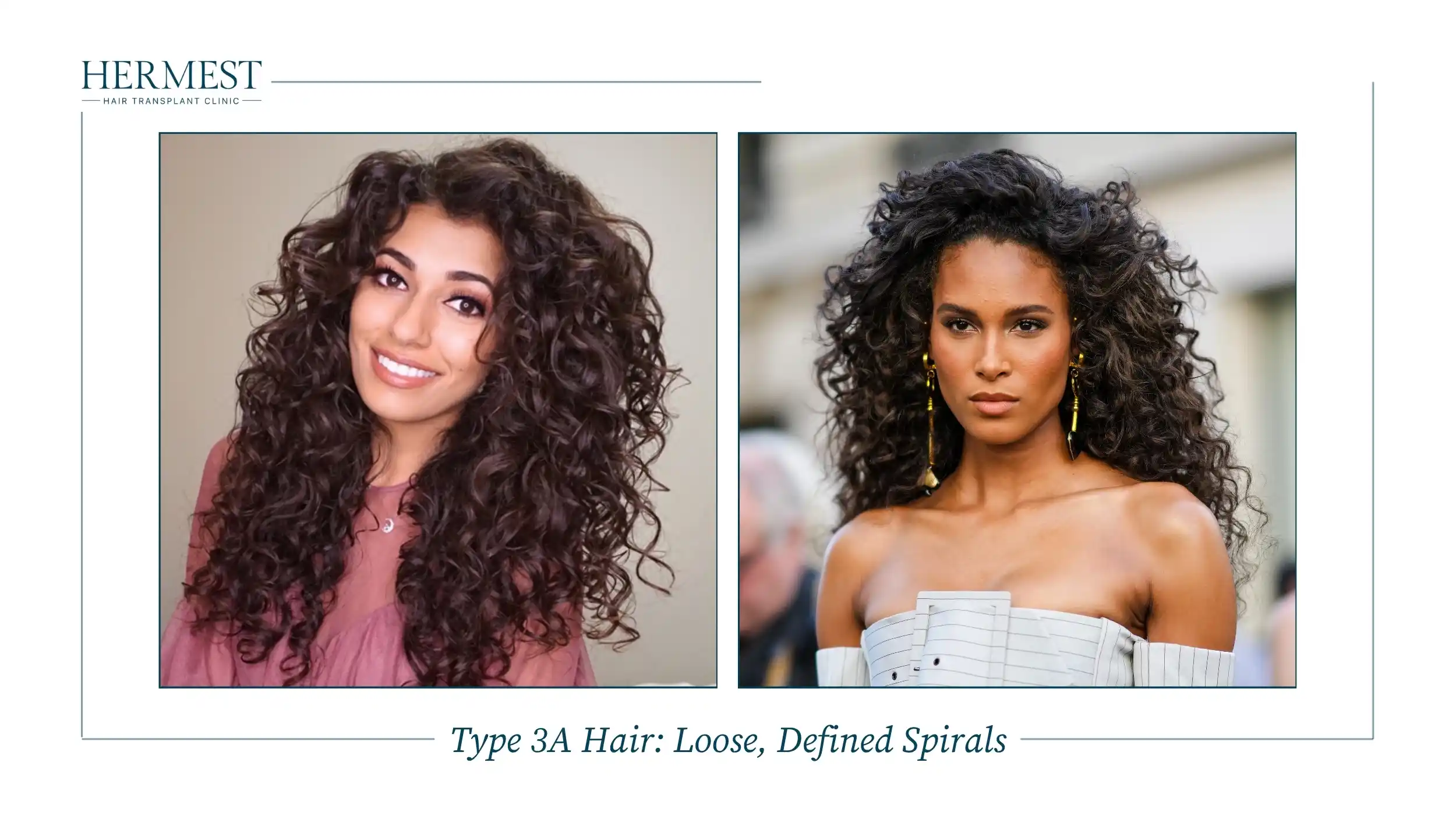
Among all types of curly hair, Type 3A hair has the loosest curl pattern. The curls are typically large, soft spirals with plenty of movement and natural shine. Many people describe them as springy ringlets that resemble the circumference of a large sidewalk chalk or a piece of thick curling ribbon.
Although 3A hair often looks voluminous, it can also become frizzy, lose definition, or appear flat at the roots if it’s not cared for properly. The good news is that this curl type usually responds well to lightweight styling products and moisture-balanced routines.
How to Recognize 3A Hair
If you’re wondering whether you have Type 3A hair, look for these characteristics:
- Large, loose spiral curls.
- Visible curl definition even without styling.
- Natural bounce and movement.
- Moderate shrinkage after washing.
- Frizz in humid weather.
Unlike wavy hair, 3A curls form complete spirals rather than gentle S-shaped waves. At the same time, they’re noticeably looser than the tighter ringlets seen in 3B or 3C hair.
Common Challenges of 3A Hair
Because natural scalp oils have difficulty traveling along curved hair strands, even loose curls tend to be drier than straight hair.
People with 3A hair commonly experience:
- Surface frizz during humid conditions.
- Dry ends despite healthy roots.
- Loss of curl definition after brushing.
- Product buildup from heavy creams or oils.
Many mistakenly believe adding more product will solve these issues. In reality, using products that are too rich often weighs down loose curls and reduces their natural bounce.
Dr. Ahmet Murat says:
“One of the biggest mistakes people with 3A curls make is treating their hair as though it’s much drier than it actually is. Heavy products can flatten the curls instead of improving them. A balanced routine that maintains moisture without adding excess weight usually delivers the best results.”
Best Hair Care Routine for 3A Curls
Healthy 3A curls benefit from hydration without heaviness.
Choose lightweight, moisturizing shampoos and conditioners that help define curls while preserving movement. Leave-in conditioners, curl creams with a light texture, and mousse often provide definition without making the hair feel greasy.
Air drying or using a diffuser on low heat also helps maintain curl shape while minimizing frizz. Gentle handling, regular trims, and sleeping on a silk or satin pillowcase can further protect the curl pattern and reduce breakage.
With the right care, Type 3A hair can remain soft, defined, and naturally voluminous while retaining the flexibility that makes this curl pattern so distinctive.
Type 3B Hair: Well-Defined Springy Ringlets
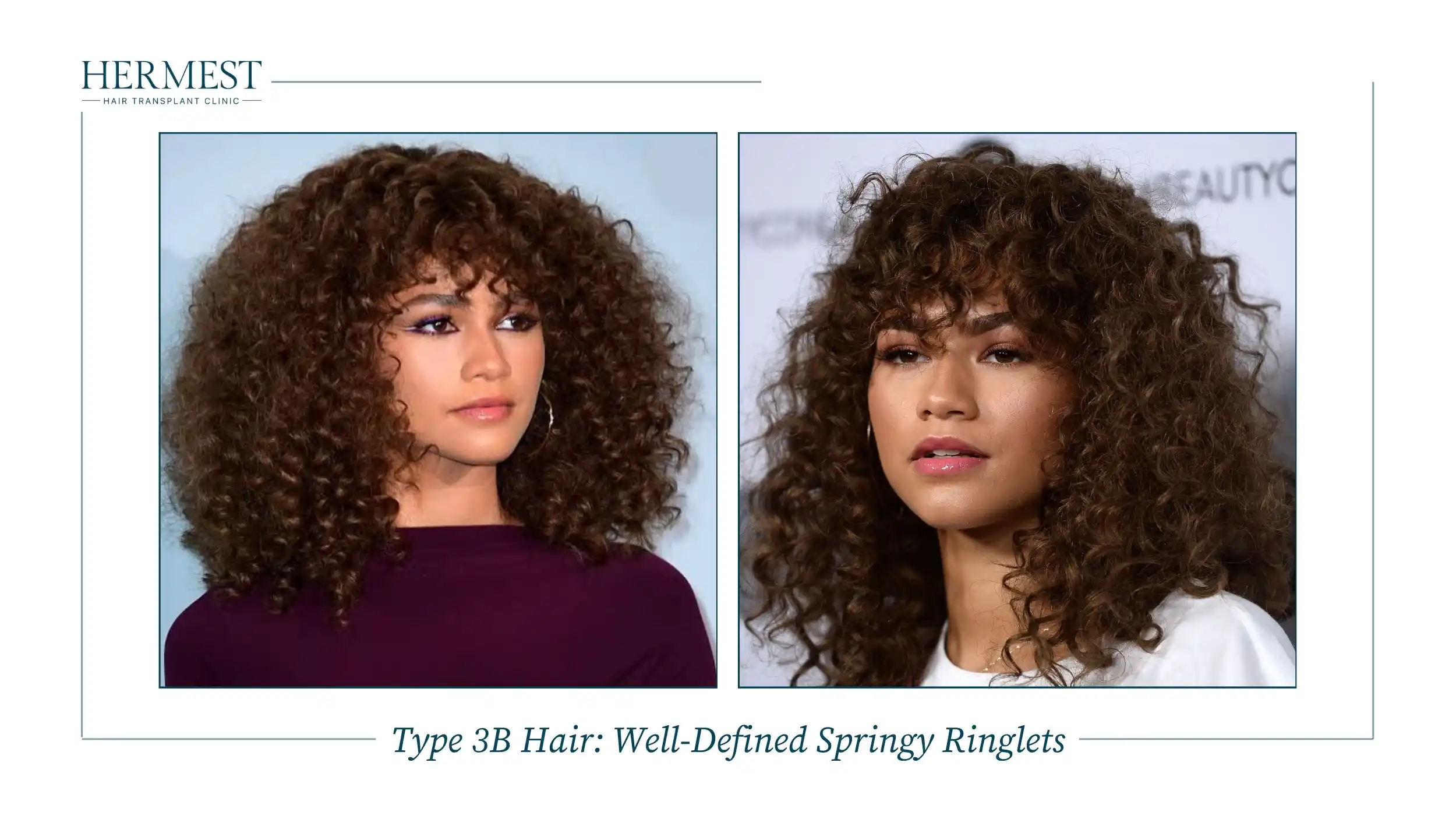
Type 3B hair sits in the middle of the curly hair types spectrum, offering tighter, more defined ringlets than 3A while remaining less compact than 3C curls. The curls are typically about the width of a permanent marker, creating noticeable volume, bounce, and a full appearance.
This curl pattern often looks striking, but it also requires more moisture than looser curls. Because the strands twist more tightly, natural scalp oils have an even harder time reaching the ends, making dryness and frizz common concerns.
How to Identify 3B Hair
If you’re trying to determine your curly hair type, 3B hair usually has these characteristics:
- Medium-sized, springy ringlets.
- High natural volume.
- Noticeable shrinkage after washing.
- Well-defined curls throughout most of the head.
- Increased frizz in humid conditions.
Unlike 3A curls, which appear looser and more elongated, 3B curls are tighter, more elastic, and spring back quickly when stretched.
Common Challenges of 3B Hair
People with Type 3B hair often find that maintaining moisture is their biggest challenge.
Common concerns include:
- Dryness between wash days.
- Frizz caused by humidity.
- Knots and tangles during detangling.
- Breakage from brushing dry hair.
- Curl definition fading as hair dries.
Because the curls naturally intertwine, rough towel drying or aggressive brushing can quickly disrupt the curl pattern and increase breakage.
Dr. Ahmet Murat says:
“Healthy 3B curls depend on preserving the hair’s natural structure. We encourage patients to minimize mechanical damage by detangling gently, avoiding excessive heat, and keeping the hair consistently hydrated rather than trying to repair severe dryness later.”
Best Hair Care Routine for 3B Hair
A moisture-focused routine works best for 3B curls.
Use a sulfate-free shampoo that cleanses without stripping natural oils, followed by a rich conditioner to improve slip and hydration. Applying a leave-in conditioner while the hair is still damp helps lock in moisture and makes styling easier.
Many people with 3B hair also benefit from curl creams or lightweight gels that define ringlets without leaving them stiff or sticky. Deep conditioning once a week can improve softness and reduce breakage, especially if the hair is color-treated or regularly exposed to heat styling.
To preserve curl definition overnight, consider sleeping on a satin pillowcase or using a satin bonnet. These simple habits reduce friction, help minimize frizz, and allow 3B curls to maintain their natural shape for longer between wash days.
Type 3C Hair: Tight Corkscrew Curls With Incredible Volume
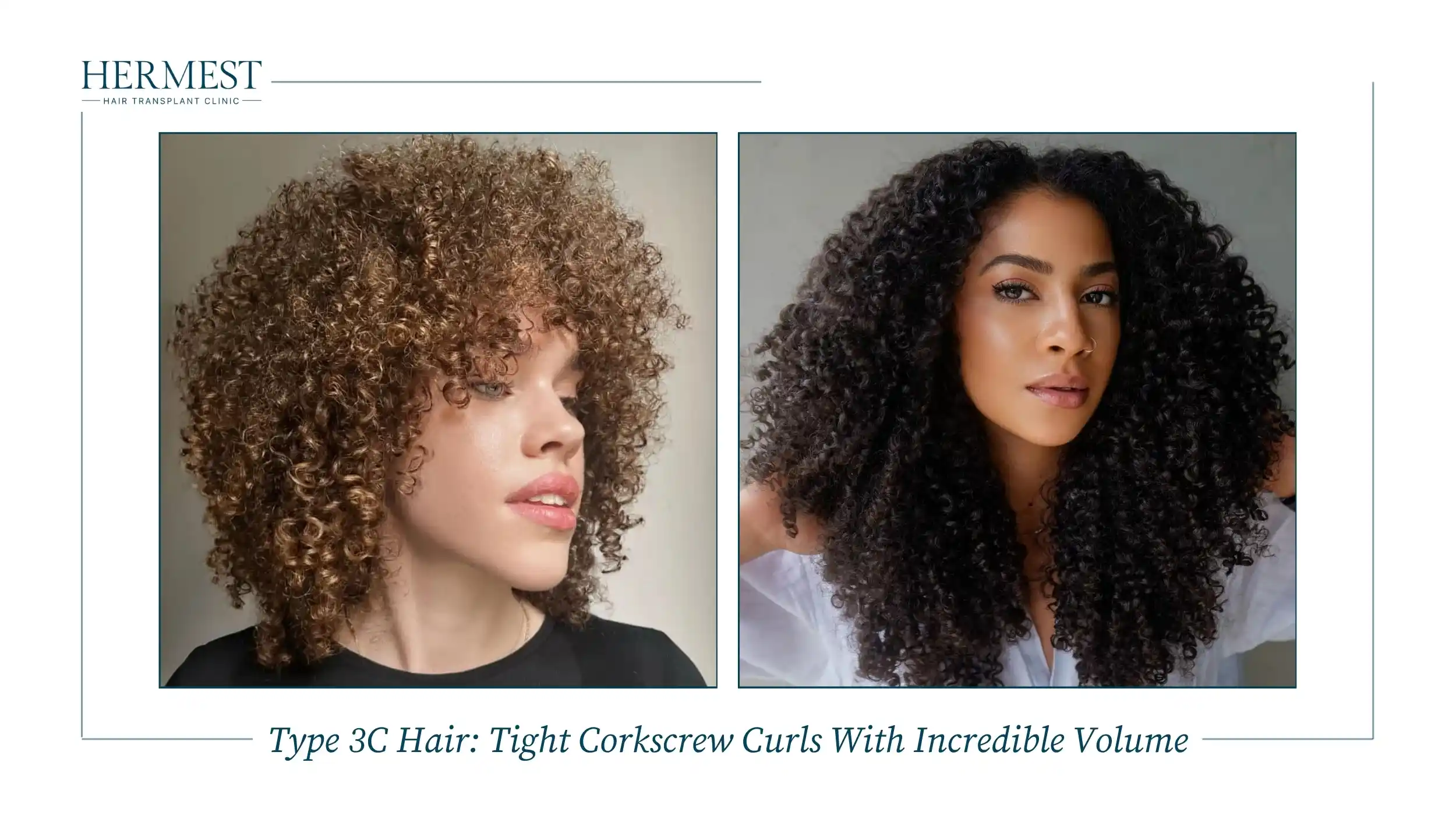
Type 3C hair features the tightest curls within the Type 3 hair category. The strands form densely packed corkscrew-shaped ringlets, often about the width of a pencil or drinking straw. This curl pattern creates remarkable volume and definition, but it also requires the highest level of moisture among the different types of curly hair.
Because the curls are tightly coiled, natural oils from the scalp travel very slowly along the hair shaft. As a result, 3C hair is naturally more prone to dryness, tangling, and breakage than looser curl patterns.
How to Recognize 3C Hair
Although every head of hair is unique, Type 3C hair usually shares several defining characteristics.
Common features include:
- Tight corkscrew ringlets.
- High shrinkage after washing.
- Dense, voluminous appearance.
- Noticeable spring when stretched.
- Hair that feels dry if not moisturized regularly.
One important point is that 3C hair is still classified as curly rather than coily. While it shares similarities with Type 4 hair, the curls remain more defined and spiral-shaped instead of forming very tight zigzags or compact coils.
Common Challenges of 3C Hair
The beauty of 3C curls comes with unique care requirements.
People with this curl pattern frequently experience:
- Dryness throughout the hair shaft.
- Increased tangling and single-strand knots.
- Frizz caused by moisture loss.
- Breakage from excessive manipulation.
- Longer detangling sessions.
Because of the significant shrinkage, many people also believe their hair isn’t growing. In reality, the hair is often growing normally, but the tight curl pattern makes the length less visible.
Dr. Ahmet Murat says:
“Many patients with 3C curls worry that their hair has stopped growing. Most of the time, the issue isn’t slow growth but breakage and shrinkage. Protecting the hair fiber is just as important as supporting healthy growth from the scalp.”
Best Hair Care Routine for 3C Hair
Healthy 3C hair thrives on consistent hydration and gentle handling.
Choose moisturizing shampoos that cleanse without removing too much natural oil, followed by rich conditioners with excellent slip to simplify detangling. Applying a leave-in conditioner and sealing in moisture with an appropriate cream or lightweight oil can help reduce dryness between wash days.
Protective hairstyles, regular deep conditioning, and minimizing heat styling also support healthier curls over time. Detangling with a wide-tooth comb while the hair is damp and conditioned helps reduce unnecessary breakage.
With proper care, Type 3C hair maintains its impressive volume, defined ringlets, and natural elasticity while remaining healthier, softer, and easier to manage.
Can You Have Multiple Curl Types?
If you’ve ever looked in the mirror and noticed loose curls near your forehead, tighter ringlets at the crown, and different textures at the back of your head, you’re not imagining it. Having multiple curl types is completely normal and far more common than most people realize.
Many people expect their entire head to match one category on a curly hair chart, but human hair rarely follows such neat patterns. In fact, it’s common to have a combination of 3A, 3B, and 3C curls, or even a mix of wavy and curly sections.
Why Do Curl Patterns Differ Across the Head?
Hair follicles aren’t identical across the scalp.
Small differences in follicle shape, growth angle, and genetics can produce different curl pattern types in separate areas. These variations may become even more noticeable as hair grows longer or after changes in hormones, age, or styling habits.
Several factors can contribute to multiple hair curl types, including:
- Natural genetic variation.
- Heat or chemical damage in certain areas.
- Hormonal changes.
- Hair length and weight.
- Frequent brushing or tension.
For example, curls around the face often appear looser because they experience more sun exposure, styling, and physical manipulation than hair at the back of the scalp.
Dr. Ahmet Murat says:
“Patients are sometimes concerned because one side of their hair curls differently than the other. In most cases, this is a completely natural variation rather than a sign of poor hair health. Our goal is to understand the overall condition of the hair and scalp before recommending any treatment or care routine.”
Which Curl Type Should You Follow?
A common question is, “What type of curly hair do I have if I have more than one pattern?”
The answer is simple: identify the dominant curl type, then adapt your routine to the areas with different needs.
For instance, if most of your hair is 3B but the crown contains tighter 3C curls, your products and styling techniques should support both patterns rather than forcing them to behave the same way.
This is another reason why the Andre Walker Hair Typing System should be viewed as a helpful guide instead of a strict rulebook. Healthy curls depend on more than appearance alone. Hair porosity, density, strand thickness, and scalp health all influence how your hair responds to moisture, styling products, and daily care. Understanding this bigger picture allows you to build a routine that works with your natural hair instead of trying to make every curl look identical.
Curl Type vs. Hair Texture: What’s the Difference?
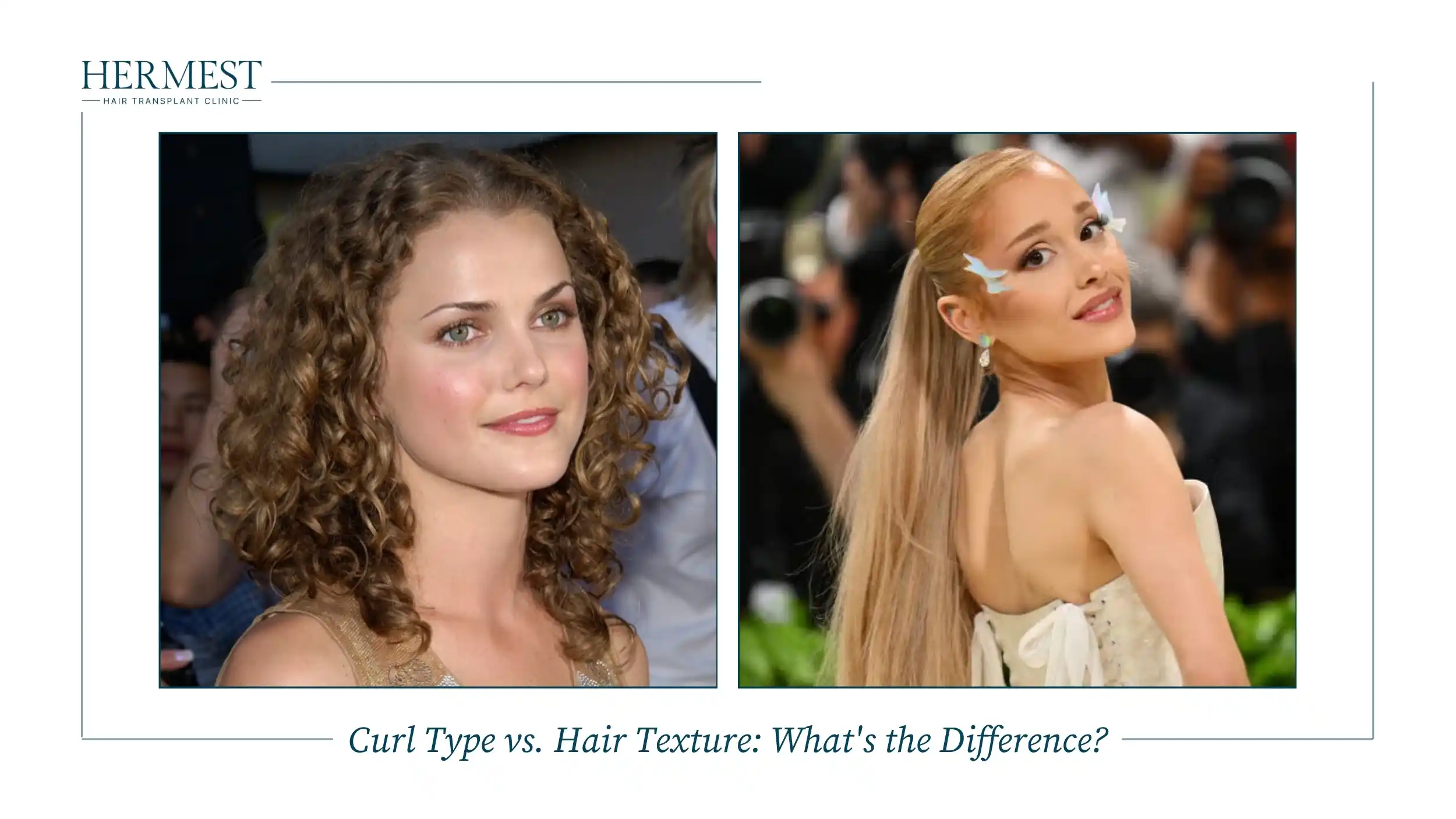
Many people use curl type and hair texture interchangeably, but they describe two completely different characteristics. Understanding the difference is one of the most important steps toward choosing the right products and building an effective hair care routine.
You can have tight 3C curls with fine strands, or loose 3A curls with coarse strands. The curl pattern stays the same, but the way the hair behaves can be completely different.
Curl Type Describes the Shape of Your Hair
Your curl type refers to the natural pattern your hair forms as it grows from the follicle.
This includes classifications such as:
- Type 1 (straight).
- Type 2 (wavy).
- Type 3 (curly).
- Type 4 (coily).
Within these groups, subtypes like 3A, 3B, and 3C describe how loose or tight the curls appear.
Curl pattern mainly influences:
- How defined your curls look.
- How much your hair shrinks.
- How easily natural oils move along the strands.
- The styling techniques that work best.
Hair Texture Refers to Strand Thickness
Hair texture, on the other hand, describes the diameter of each individual strand rather than its shape.
Most people fall into one of three categories:
- Fine hair: Thin strands that feel soft but may become oily or break easily.
- Medium hair: Balanced strength and flexibility.
- Coarse hair: Thick strands that are usually stronger but may feel drier or more resistant to styling.
Someone with fine 3B curls may struggle with flat roots if heavy creams are used, while another person with coarse 3B hair often benefits from richer moisturizing products.
Dr. Ahmet Murat says:
“One of the biggest reasons people feel disappointed with new hair products is that they only consider their curl pattern. Texture plays an equally important role. A product that transforms coarse curls may completely overwhelm fine curly hair.”
Why Both Matter for Healthy Curls
According to cosmetic dermatology research, no single characteristic determines the best hair care routine. Curly hair types, strand thickness, porosity, density, and scalp condition all work together to influence how your hair responds to moisture and styling.
Understanding both your curl pattern and your hair texture helps you:
- Choose products that match your hair’s actual needs.
- Prevent unnecessary buildup or dryness.
- Improve curl definition without sacrificing volume.
- Reduce breakage caused by unsuitable styling techniques.
Instead of asking only, “What curl type do I have?”, a better question is, “What combination of curl pattern, texture, porosity, and density makes my hair unique?” That broader understanding leads to healthier curls and more consistent results over the long term.
Curl Type vs. Hair Porosity: Why It Matters More Than You Think
Knowing your curl type is helpful, but understanding your hair porosity can have an even bigger impact on your hair care routine. Two people with identical curly hair types may use the same products and achieve completely different results simply because their hair absorbs and retains moisture differently.
This is one reason why some curls remain soft and defined while others become dry, frizzy, or weighed down despite using high-quality products.
What Is Hair Porosity?
Hair porosity describes how easily your hair absorbs, retains, and releases moisture. It depends largely on the condition of the hair cuticle, the protective outer layer of each strand.
Hair generally falls into three porosity categories:
- Low porosity: The cuticle is tightly closed, making it difficult for water and products to penetrate.
- Medium porosity: Moisture enters and remains balanced more easily, making hair relatively easy to manage.
- High porosity: The cuticle is more open, allowing moisture to enter quickly but also escape just as fast.
According to cosmetic hair science research, porosity often influences product performance more than curl pattern alone.
How Porosity Affects Curly Hair
Because curly hair naturally struggles to distribute scalp oils evenly, porosity becomes even more important.
For example:
- Low-porosity curls may experience product buildup because creams remain on the surface instead of being absorbed.
- High-porosity curls often feel dry shortly after washing because moisture escapes rapidly through the raised cuticle.
This explains why one person with 3A hair may need lightweight hydration, while another with the same curl pattern benefits from richer moisturizing products and regular deep conditioning.
Dr. Ahmet Murat says:
“Many people assume a product doesn’t work because it wasn’t designed for their curl type. In reality, porosity is often the missing piece. Once patients understand how their hair handles moisture, choosing the right products becomes much easier.”
How to Estimate Your Hair Porosity
While laboratory testing provides the most accurate assessment, you can often estimate your porosity by observing how your hair behaves.
Hair with low porosity typically takes longer to become fully wet and dries slowly. High-porosity hair absorbs water quickly but also dries rapidly and may feel rough or frizzy.
Rather than relying on a single home test, pay attention to how your hair responds over time. If moisture disappears quickly or products consistently leave residue, porosity may be influencing your results.
When you combine your curl pattern with your porosity level, you gain a much clearer understanding of what your hair truly needs. That combination forms the foundation of a personalized routine that supports healthier, more defined curls with less trial and error.
Curl Type vs. Hair Density: Why Fullness Isn’t the Same as Curl Pattern
One of the biggest misconceptions about curly hair types is that tighter curls automatically mean thicker or fuller hair. In reality, the appearance of volume often comes from the curl pattern itself rather than the actual number of hairs growing on the scalp.
This is where hair density becomes important.
Two people can have identical 3B curls, yet one appears to have twice as much hair because their scalp contains more active hair follicles.
What Is Hair Density?
Hair density refers to the number of individual hair strands growing within a specific area of the scalp. It doesn’t describe the thickness of each strand or the shape of the curls.
Hair density is generally categorized as:
- Low density: More scalp is visible, especially when the hair is parted.
- Medium density: Balanced fullness with moderate scalp visibility.
- High density: A large number of hairs create a fuller, more voluminous appearance.
Your density is largely determined by genetics, although age, hormonal changes, and certain medical conditions can reduce it over time.
Why Density Changes the Way Curly Hair Looks
Because curls naturally expand outward instead of lying flat, they create the illusion of greater volume.
This means someone with low-density 3C hair may appear to have more hair than someone with high-density straight hair. Conversely, fine curls with lower density may look less full despite having a well-defined curl pattern.
Density also affects everyday styling.
People with high-density curly hair often experience:
- Longer wash and drying times.
- Greater product usage.
- More shrinkage and bulk.
- Increased tangling underneath the surface layers.
Those with lower density may focus on maintaining volume without weighing the curls down.
Dr. Ahmet Murat says:
“Many patients believe they have thinning hair simply because they notice more scalp between their curls. Before reaching that conclusion, it’s important to distinguish natural hair density from true hair loss. A professional scalp assessment provides a much clearer picture.”
Curl Pattern Doesn’t Predict Hair Density
One of the most valuable lessons in understanding hair curl types is recognizing that curl pattern and density are independent characteristics.
You can have:
- Dense 3A curls.
- Fine, low-density 3B hair.
- Thick 3C curls with average density.
- Any combination in between.
This is why choosing products based only on your curl type can lead to disappointing results.
For the healthiest curls, consider your curl pattern, porosity, strand thickness, and hair density together. Looking at all four characteristics provides a far more accurate picture of your hair’s needs than any single classification system alone.
Curl Type vs. Strand Thickness: Fine, Medium, or Coarse Hair
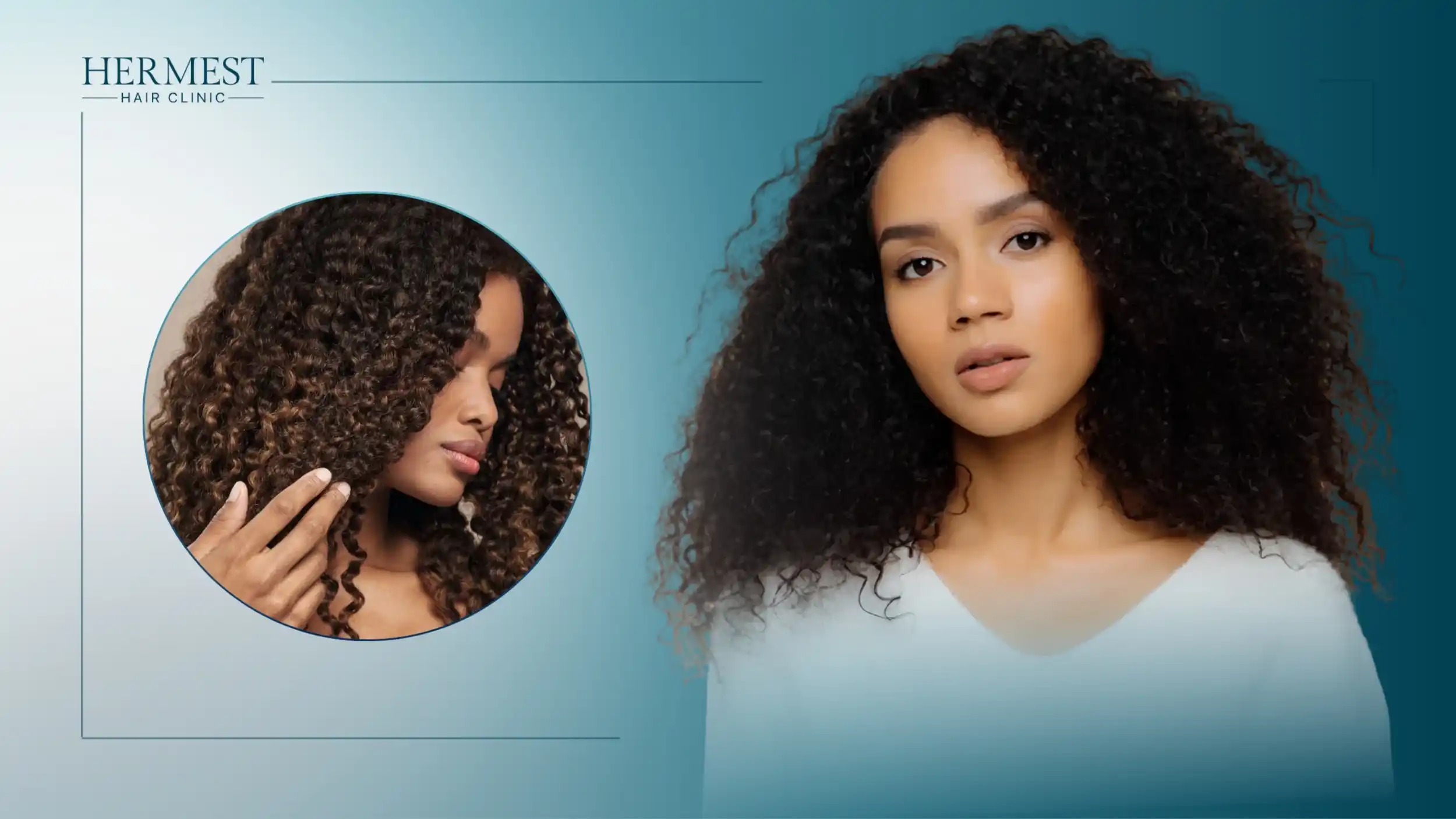
Another characteristic that’s often confused with curl type is strand thickness. While your curl pattern describes the shape of your hair, strand thickness refers to the diameter of each individual hair fiber.
This distinction matters because it affects everything from product absorption to styling, breakage, and overall hair strength.
Two people with identical 3C curls can have completely different experiences if one has fine strands and the other has coarse hair.
What Is Strand Thickness?
Each hair strand falls into one of three general categories.
- Fine hair: Small-diameter strands that feel soft and lightweight.
- Medium hair: Average thickness with balanced flexibility and strength.
- Coarse hair: Larger-diameter strands that are stronger but often feel rougher or drier.
Unlike hair density, which refers to how many hairs grow on the scalp, strand thickness focuses on each individual hair fiber.
Why It Matters for Curly Hair
Because curly hair naturally bends and twists, it is more vulnerable to friction and mechanical damage than straight hair. Strand thickness influences how well the hair tolerates those stresses.
For example:
- Fine curly hair becomes weighed down easily by rich creams or heavy oils.
- Medium strands are generally the easiest to manage and tolerate a wider variety of products.
- Coarse curls usually benefit from richer moisturizers because the thicker cuticle makes the hair feel drier.
The wrong product can quickly disrupt curl definition. Heavy products flatten fine curls, while lightweight formulas may not provide enough hydration for coarse hair.
Dr. Ahmet Murat says:
“When patients tell us they’ve tried dozens of curly hair products without success, strand thickness is often the missing piece. Products should match not only the curl pattern but also the characteristics of the individual hair fiber.”
How to Estimate Your Strand Thickness
A simple observation often provides useful clues.
If a single hair strand is barely visible between your fingers, it’s likely fine. Hair that feels noticeable but not stiff is usually medium, while strands that feel thick or slightly wiry are generally coarse.
While this method isn’t as precise as microscopic examination, it offers a practical starting point when choosing products.
Putting the Pieces Together
Healthy curls are shaped by much more than a curly hair chart.
To understand your hair fully, consider these four characteristics together:
- Your curl pattern.
- Your hair porosity.
- Your hair density.
- Your strand thickness.
This combination provides a far more complete picture than curl type alone. Once you understand how these characteristics interact, selecting shampoos, conditioners, styling products, and treatment routines becomes much easier, helping you maintain softer, stronger, and better-defined curls over the long term.
Why Curly Hair Is Usually Drier Than Straight Hair
One of the most common questions about curly hair types is why curls seem to lose moisture so quickly. Even healthy curls can feel dry, frizzy, or rough compared with straight hair, despite using quality products.
The answer lies in the natural structure of curly hair rather than a lack of care.
According to the American Academy of Dermatology (AAD), curly hair is naturally more prone to dryness because the scalp’s protective oils have a harder time coating the entire hair shaft.
Natural Oils Can’t Travel as Easily
Your scalp continuously produces sebum, a natural oil that helps lubricate and protect the hair.
With straight hair, sebum can move smoothly from the roots to the ends. Curly hair follows a very different path. Every bend, twist, and spiral creates another obstacle, making it difficult for the oil to travel evenly.
As a result:
- The roots may feel healthy while the ends remain dry.
- Moisture escapes more easily.
- The cuticle becomes rougher over time.
- Frizz develops more quickly in dry conditions.
The tighter the curl pattern, the more challenging it becomes for natural oils to reach the ends of the hair.
Curly Hair Has a More Fragile Structure
Research on hair fiber biology also shows that curly hair experiences greater mechanical stress than straight hair.
Each curve creates small points of tension along the hair shaft. Daily activities such as brushing, towel drying, or even sleeping can increase friction, making curls more susceptible to breakage and moisture loss.
This explains why people with 3B and 3C hair often require deeper hydration than those with 3A curls, even if they follow similar routines.
Dr. Ahmet Murat says:
“Dryness is one of the defining characteristics of curly hair, but it doesn’t mean your hair is unhealthy. The goal isn’t to eliminate dryness completely. It’s to maintain the right balance of moisture while protecting the hair from unnecessary damage.”
How to Keep Curly Hair Hydrated
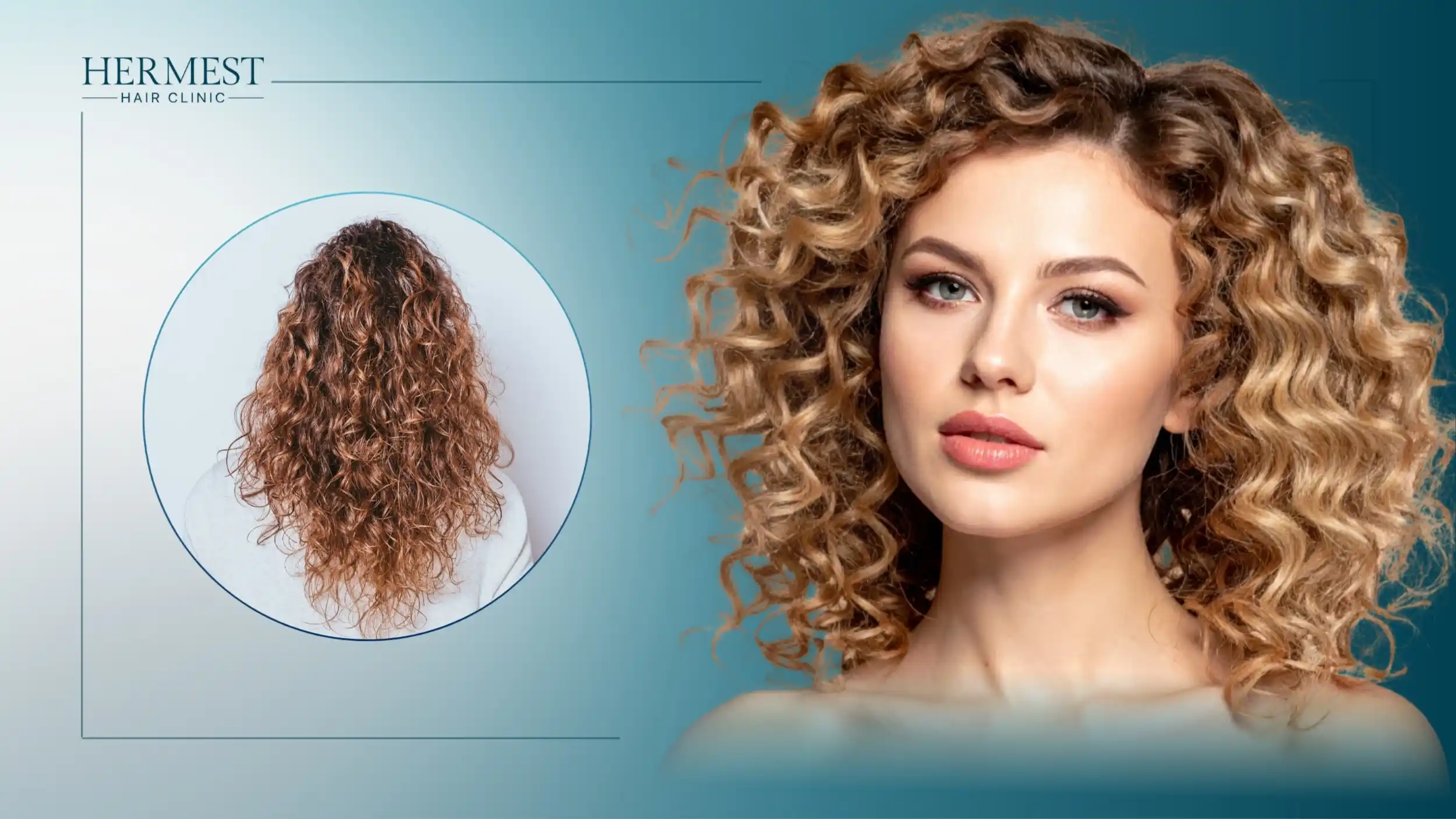
Because curls naturally lose moisture more easily, consistency matters more than using expensive products.
A healthy routine typically includes:
- Gentle, sulfate-free cleansing.
- Moisturizing conditioners after every wash.
- Leave-in conditioners to reduce moisture loss.
- Weekly deep conditioning treatments.
- Limiting excessive heat styling.
- Drying with a microfiber towel or cotton T-shirt instead of a rough towel.
Healthy curls don’t require dozens of products. They require products that match your curl pattern, porosity, and strand thickness, combined with gentle daily habits that preserve the hair’s natural moisture barrier.
When hydration becomes part of your routine rather than an occasional treatment, curls tend to become softer, more defined, and significantly easier to manage.
Can Your Curl Type Change Over Time?
Many people believe their curl pattern is permanent, but that’s not always the case. While your genetics determine the basic structure of your hair, your curl type can become looser, tighter, or less defined throughout your life.
Some changes are temporary, while others may last for years. Understanding why they happen can help you adjust your hair care routine instead of assuming something is wrong.
Hormones Can Influence Curl Pattern
Hormonal fluctuations are one of the most common reasons curls change.
Many people notice differences during:
- Puberty.
- Pregnancy.
- Menopause.
- Thyroid disorders.
- Hormone therapy.
These hormonal shifts can alter the shape and activity of the hair follicle, affecting how new hair grows. Some people develop tighter curls after puberty, while others find their hair becomes looser or less defined after pregnancy or menopause.
Because these changes occur as new hair grows, they usually happen gradually rather than overnight.
Heat and Chemical Treatments Can Change Your Curls
Not every change begins inside the body.
Frequent use of flat irons, curling wands, bleaching, coloring, or chemical relaxers can weaken the hair’s protein structure and stretch the natural curl pattern.
Over time, you may notice:
- Looser curls.
- Uneven curl definition.
- Increased frizz.
- More breakage.
- Difficulty maintaining your natural pattern.
Unlike hormonal changes, this type of damage often improves only after healthy hair grows in and damaged ends are trimmed.
Dr. Ahmet Murat says:
“Many patients think they’ve permanently lost their curls after years of heat styling. In many cases, the follicles continue producing naturally curly hair. The visible change often reflects accumulated damage to the hair shaft rather than a permanent change in the follicle itself.”
Can Hair Loss Affect Curl Pattern?
Yes, in some situations.
Conditions such as telogen effluvium or androgenetic alopecia don’t usually change the genetic curl pattern itself, but they can make curls appear different. Reduced hair density often causes curls to look flatter, less voluminous, or unevenly distributed.
Scarring forms of alopecia are different. Because they permanently damage hair follicles, they may alter the way new hair grows, or prevent it from growing altogether.
Aging Can Also Affect Curly Hair
As we get older, hair naturally becomes finer and produces less oil. Combined with gradual hormonal changes, this can make curls feel drier, less elastic, or slightly looser than they were in earlier years.
The good news is that changes in curly hair types are often manageable. By adjusting your routine to match your hair’s current needs rather than how it behaved years ago, you can continue to maintain healthy, defined curls throughout every stage of life.
How to Identify Your Curl Type
If you’ve ever asked yourself, “What type of curly hair do I have?”, you’re not alone. Identifying your natural curl pattern is one of the most common questions people have when building a hair care routine. The good news is that you don’t need special equipment or professional tools to get a reliable answer.
The key is to evaluate your hair in its natural state rather than after styling.
Start With Clean, Product-Free Hair
For the most accurate results, wash your hair with a gentle shampoo and conditioner, then allow it to air dry without applying curl creams, gels, oils, or styling products.
Avoid brushing your hair once it begins to dry, as brushing can stretch or disrupt the natural curl pattern.
As your hair dries, observe how it naturally forms.
Ask yourself:
- Does it stay straight?
- Does it form loose S-shaped waves?
- Does it create spiral curls?
- Does it develop tight corkscrew ringlets or compact coils?
Your natural shape provides the best clue to your curl pattern type.
Compare Your Hair to the Curl Classification
Once your hair has dried naturally, compare it with the hair curl chart.
In general:
- Type 1: Straight hair.
- Type 2: Wavy hair.
- Type 3A: Large, loose spirals.
- Type 3B: Medium-sized springy ringlets.
- Type 3C: Tight corkscrew curls.
- Type 4: Very tight coils or zigzag patterns.
Don’t worry if your hair doesn’t match one category perfectly. As discussed earlier, many people naturally have multiple curly hair types across different areas of the scalp.
Dr. Ahmet Murat says:
“Your curl pattern is only the starting point. During professional hair assessments, we also evaluate scalp health, hair density, strand thickness, and porosity because these factors often determine which treatments and products will produce the best long-term results.”
Look Beyond the Curl Pattern
One of the biggest mistakes people make is identifying their curl type and stopping there.
To truly understand your hair, also consider:
- Porosity: How easily your hair absorbs and retains moisture.
- Density: How much hair grows on your scalp.
- Strand thickness: Whether your individual hairs are fine, medium, or coarse.
- Scalp condition: Dryness, oiliness, dandruff, or sensitivity.
Together, these characteristics provide a much more complete picture of your hair than the Andre Walker Hair Typing System alone.
Remember, the goal isn’t to fit perfectly into a single category. It’s to understand how your hair naturally behaves so you can choose products, styling techniques, and routines that help your curls stay healthy, defined, and easy to manage.
Best Hair Care Routine for Each Curl Type
The best routine for curly hair types isn’t determined by curl pattern alone. While 3A, 3B, and 3C curls have different hydration needs, your porosity, density, strand thickness, and lifestyle also influence which products and techniques work best.
Rather than copying someone else’s routine, focus on building one that supports your own hair’s characteristics. Consistency almost always produces better results than constantly switching products.
A Simple Routine That Works for Most Curly Hair
Most healthy curls benefit from the same core steps, with adjustments based on how loose or tight the curls are.
A balanced routine typically includes:
- Cleanse with a gentle, sulfate-free shampoo one to three times per week.
- Apply a moisturizing conditioner after every wash.
- Use a leave-in conditioner while the hair is still damp.
- Style with a curl cream, mousse, or gel suited to your curl pattern.
- Allow the hair to air dry or use a diffuser on low heat.
- Deep condition weekly to maintain hydration and elasticity.
The tighter the curl pattern, the more important regular moisture becomes.
Adjust Your Routine Based on Curl Type
Each curly hair type has slightly different needs.
3A hair generally performs best with lightweight products that define curls without reducing movement. Heavy creams can flatten the curls and leave the hair looking greasy.
3B hair usually benefits from a balance of moisture and definition. Medium-weight leave-in conditioners and curl creams help reduce frizz while maintaining bounce.
3C hair often requires richer conditioners and frequent deep treatments to prevent dryness and breakage. Protective hairstyles may also help preserve moisture between wash days.
Dr. Ahmet Murat says:
“Healthy curls don’t come from using the largest number of products. They come from using the right products consistently. Understanding your curl pattern, porosity, and scalp condition makes choosing those products much easier.”
Healthy Daily Habits Make a Difference
Small daily choices have a lasting impact on curl health.
Sleeping on a silk or satin pillowcase reduces friction and helps preserve curl definition overnight. Detangling only when the hair is damp and conditioned minimizes breakage, while limiting excessive heat styling helps maintain the hair’s natural protein structure.
According to the American Academy of Dermatology (AAD), gentle hair care practices are particularly important for curly hair because its natural structure makes it more vulnerable to dryness and mechanical damage.
A personalized routine won’t make every day a perfect hair day, but it will make your curls healthier, stronger, and easier to manage over time. That’s a far more realistic and rewarding goal than chasing temporary results with constantly changing products.
Common Mistakes People Make With Curly Hair
Even the best products can’t compensate for habits that work against your natural curls. Many people spend years trying different shampoos, conditioners, and styling creams without realizing that everyday mistakes are preventing their hair from reaching its full potential.
The good news is that improving your curly hair routine often requires changing a few simple habits rather than buying an entirely new collection of products.
Brushing Dry Curls
One of the most common mistakes is brushing curly hair after it has dried.
Unlike straight hair, curls naturally group together into defined clumps. Brushing them apart separates these clumps, creating frizz, disrupting curl definition, and increasing mechanical stress on the hair shaft.
Instead, detangle your hair while it’s damp and coated with conditioner using your fingers or a wide-tooth comb.
Using Products That Don’t Match Your Hair
Not every product works for every curl type.
Common examples include:
- Heavy butters weighing down 3A curls.
- Lightweight sprays providing too little moisture for 3C hair.
- Rich oils causing buildup on low-porosity hair.
- Protein treatments used too frequently, leaving hair stiff and brittle.
Choosing products based on porosity, strand thickness, and hair density often produces better results than selecting products based only on a curly hair chart.
Dr. Ahmet Murat says:
“People often blame their curls when a product doesn’t perform well. In reality, the issue is usually the product-to-hair match. Understanding your hair’s individual characteristics allows you to simplify your routine and achieve more consistent results.”
Applying Too Much Heat
Frequent use of flat irons, curling wands, or high-temperature blow dryers gradually weakens the hair’s protein structure.
Over time, excessive heat can lead to:
- Reduced curl definition.
- Increased dryness.
- Split ends.
- Breakage.
- Permanent heat damage in severe cases.
Using a diffuser on a low or medium setting is generally much gentler than direct high heat.
Ignoring Scalp Health
Healthy curls begin with a healthy scalp.
Conditions such as dandruff, seborrheic dermatitis, excessive oiliness, or scalp irritation can affect the overall condition of the hair. Focusing only on styling while ignoring scalp health often limits long-term success.
According to the American Academy of Dermatology, maintaining a healthy scalp supports stronger hair and improves the effectiveness of your overall hair care routine.
Curly hair doesn’t require perfection. It requires understanding. Avoiding these common mistakes allows your natural curl pattern to shine while reducing frizz, dryness, and breakage over time.
Frequently Asked Questions
The most widely used system is the Andre Walker Hair Typing System, which classifies curly hair as Type 3 and divides it into 3A, 3B, and 3C. Type 3A has loose spirals, 3B features springy ringlets, and 3C consists of tight corkscrew curls. Each pattern has different moisture and styling needs.