
Sideburn Styles: Best Looks for Every Face Shape & Haircut
 ChatGPT
 Claude
 Perplexity
 Grok
Grok
 Gemini


Choosing the right sideburn styles can completely change the way your face looks. Many men spend time selecting the perfect haircut or beard but overlook their sideburns, even though they connect the two. A well-shaped pair of sideburns creates balance, sharpens facial features, and helps your haircut look intentional. Poorly trimmed sideburns, on the other hand, can make even an expensive haircut appear unfinished.
The best style depends on much more than current trends. Your face shape, hairstyle, beard length, hair density, and even your hairline all influence which men’s sideburn styles will suit you best. A style that complements a buzz cut may not work with a pompadour, and sideburns that flatter a square face can overwhelm someone with a longer face.
Many men are surprised to learn that sideburns also play an important role in facial harmony after hair transplant surgery. They help create a natural transition between the scalp and beard, making the overall result appear more balanced. According to the International Society of Hair Restoration Surgery (ISHRS), natural facial proportions are one of the key principles of successful hair restoration planning. Sideburn design contributes to that overall aesthetic.
Today’s grooming trends also favor natural-looking transitions rather than harsh, disconnected lines. Whether you prefer short sideburns, tapered sideburns, a classic look, or sideburns connected to a beard, choosing the right style can subtly improve your appearance without dramatically changing your haircut.
Dr. Ahmet Murat says:
“When designing a natural hairline, we never focus on the frontal hairline alone. Sideburns are part of the same visual frame. The transition from the temples to the beard should appear effortless, helping the entire face look balanced rather than drawing attention to any single feature.”
In this guide, you’ll discover the most popular types of sideburns, how to choose the right style for your face shape and haircut, how sideburns affect a receding hairline, the best trimming techniques, common grooming mistakes, and when thoughtful facial hair design can make a noticeable difference in your overall appearance.
Quick Insights
- Sideburn styles play a major role in facial balance and connect your haircut with your beard.
- The ideal sideburn length depends on your face shape, hairstyle, beard, and hairline.
- Classic sideburns remain one of the most versatile options for most men.
- Tapered sideburns and fade transitions create a modern, natural appearance.
- Men with receding hairlines often benefit from soft transitions that complement the temples rather than emphasizing them.
- Matching sideburns to your haircut creates a more polished overall look than treating them as a separate feature.
- Regular maintenance and symmetry are more important than following short-lived grooming trends.
- Natural facial harmony consistently outperforms dramatic styling choices.
What Are Sideburns?
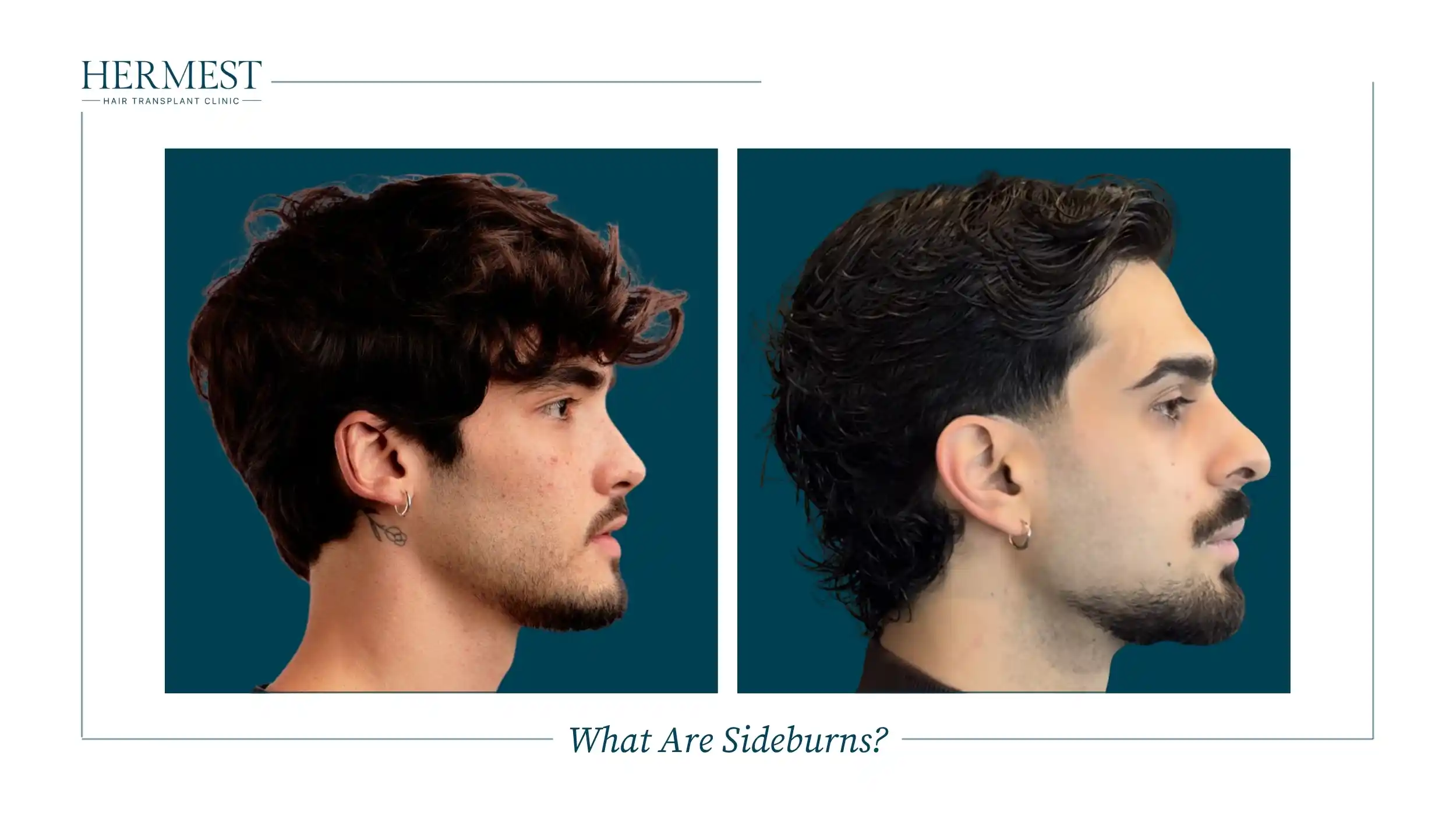
Sideburns are often treated as a small grooming detail, yet they have a surprisingly large impact on facial balance. They create the transition between your hairstyle and facial hair, framing the sides of your face and influencing how your jawline, cheekbones, and hairline are perceived.
Choosing the right sideburn styles isn’t simply about following trends. It’s about creating proportions that suit your individual features.
Why Sideburns Matter
Many men focus entirely on their haircut or beard, forgetting that sideburns connect the two. When they’re properly shaped, they help the entire hairstyle appear more cohesive. When they’re too wide, too narrow, too short, or uneven, they can make even a professionally cut hairstyle look unfinished. Well-designed sideburns can:
- Improve facial symmetry.
- Create a smoother transition into the beard.
- Complement different hairstyles.
- Help balance facial proportions.
- Draw attention away from minor asymmetries.
Professional barbers often view sideburns as one of the finishing details that separates a good haircut from a great one.
Framing the Face
Sideburns influence how long, wide, or angular your face appears. Longer sideburns can visually lengthen rounder faces, while short sideburns often create a cleaner appearance on naturally long faces.
The width also matters. A tapered shape usually appears softer and more modern, while thicker, straight sideburns create a stronger, more classic appearance.
Dr. Ahmet Murat explains:
“Hair design is about creating harmony. During hair restoration planning, we consider the hairline, temples, and sideburns together because each area affects how the others are perceived. Even small adjustments can noticeably improve facial balance.”
The Connection Between Hair and Beard
One reason sideburn beard combinations remain so popular is that they provide continuity between the scalp and facial hair. This transition can be:
- Fully connected.
- Gradually faded.
- Tapered.
- Intentionally disconnected.
The best option depends on your hairstyle, beard length, and personal style rather than one universal rule.
More Than a Grooming Detail
Many competing guides discuss trimming techniques but overlook how sideburns influence overall appearance. In reality, sideburns work alongside your haircut, beard, eyebrows, and even glasses to shape first impressions. They can soften sharp facial features, strengthen weaker jawlines, and create better balance for men with receding hairlines or different face shapes.
Rather than treating sideburns as an afterthought, experienced barbers and hair restoration specialists consider them an essential part of complete facial grooming. Choosing the right style creates a natural flow from your hairline to your beard, helping every part of your appearance work together instead of competing for attention.
Types of Sideburn Styles
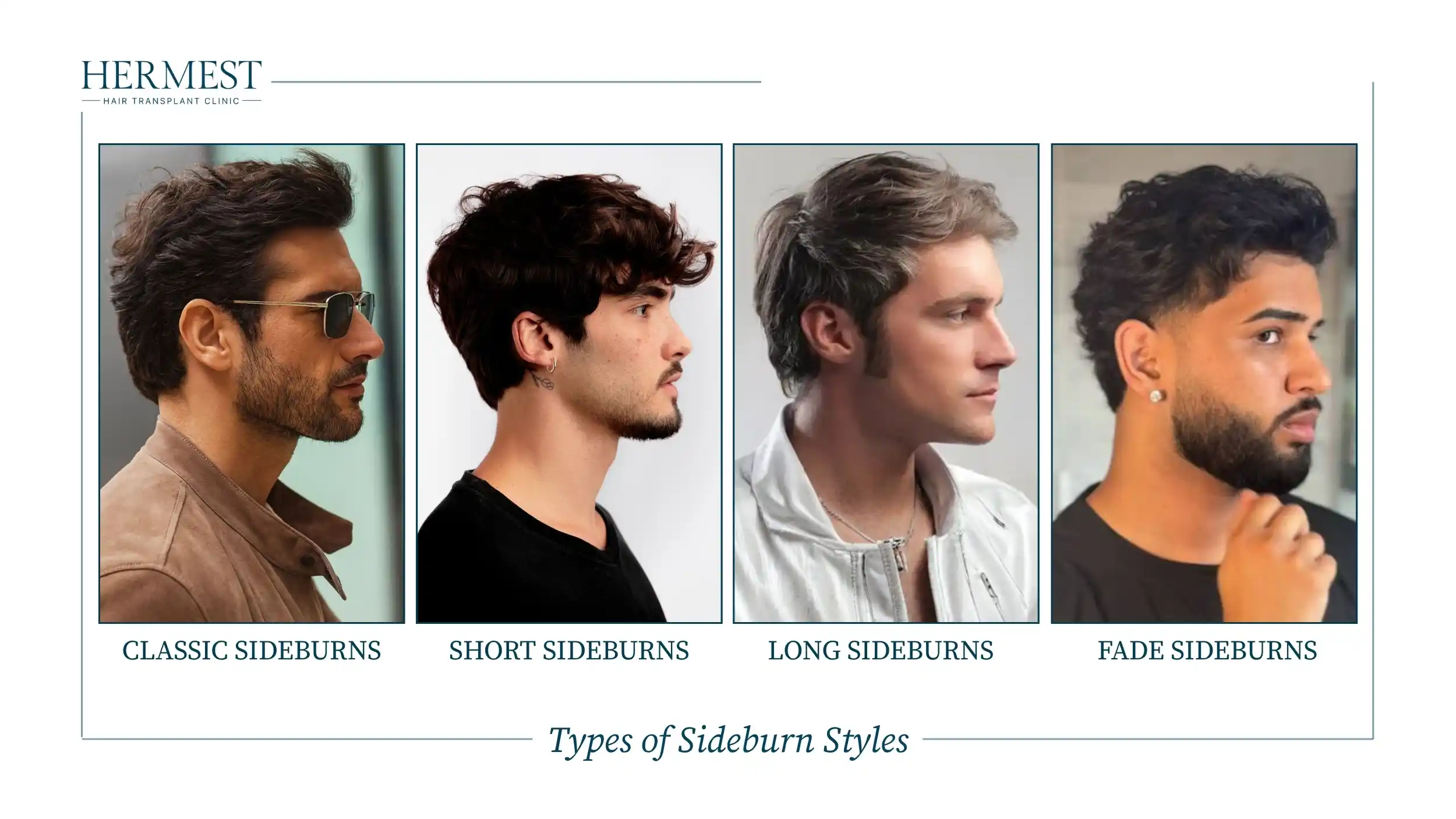
There is no single style that suits every man. The best sideburn styles depend on your haircut, beard, face shape, and personal preference. Some create a timeless appearance, while others produce a sharper, more contemporary look. Understanding the strengths of each style makes it easier to choose one that complements your overall grooming rather than simply following current trends.
Classic Sideburns
Classic sideburns remain one of the most versatile choices. They typically end around the middle of the ear, maintain moderate width, and blend naturally into the haircut. This style works well with:
- Business hairstyles.
- Crew cuts.
- Side parts.
- Pompadours.
- Medium-length hair.
According to professional grooming guides from Braun and Philips, classic sideburns continue to suit most face shapes because they create balanced facial proportions without becoming a dominant feature.
Short Sideburns
Short sideburns end near the top of the ear. They create a clean, minimalist appearance and are especially popular with:
- Buzz cuts.
- Skin fades.
- High fades.
- Military haircuts.
Men with naturally long faces often benefit from shorter sideburns because they avoid visually lengthening the face further.
Long Sideburns
Long sideburns extend below the middle of the ear and sometimes connect directly into facial hair. They produce a stronger vintage influence while adding structure to the lower face. This style often works well with:
- Medium-length hairstyles.
- Longer hair.
- Fuller beards.
- Retro-inspired grooming.
Long sideburns require regular maintenance to prevent them from looking untidy.
Dr. Ahmet Murat says:
“The best sideburn isn’t necessarily the most fashionable one. It’s the one that creates harmony with the patient’s facial features, haircut, and beard. Natural proportions always produce the strongest aesthetic result.”
Tapered and Fade Sideburns
Tapered sideburns gradually become narrower toward the bottom. They create a softer, more natural transition between the haircut and beard.
Fade sideburns take this concept further by blending the hair almost seamlessly into the facial hair or skin. These styles pair particularly well with modern fades and textured hairstyles.
Connected and Detached Sideburns
Some men prefer their sideburns to flow directly into the beard. Others intentionally leave a small gap between the two.
Connected sideburns usually create a fuller, more masculine appearance, while detached styles often look cleaner on men with light facial hair or minimal stubble.
Mutton Chops
At the opposite end of the spectrum are mutton chops, one of the boldest types of sideburns. These wide sideburns extend into the cheeks and connect to the beard while leaving the chin clean-shaven.
Although far less common today, they remain an iconic style and continue to appeal to men seeking a distinctive, vintage-inspired appearance. Rather than selecting a style in isolation, consider how your sideburns interact with your haircut, beard, and facial proportions. The strongest grooming results usually come from combining these elements into one cohesive look rather than treating each feature separately.
Which Sideburn Style Fits Your Face Shape?
The same sideburn styles can look completely different from one person to another. That’s because sideburns influence facial proportions just as much as your haircut or beard. Choosing a style that complements your face shape often creates a more balanced appearance without changing any other part of your grooming. Rather than copying someone else’s look, start with your natural facial structure.
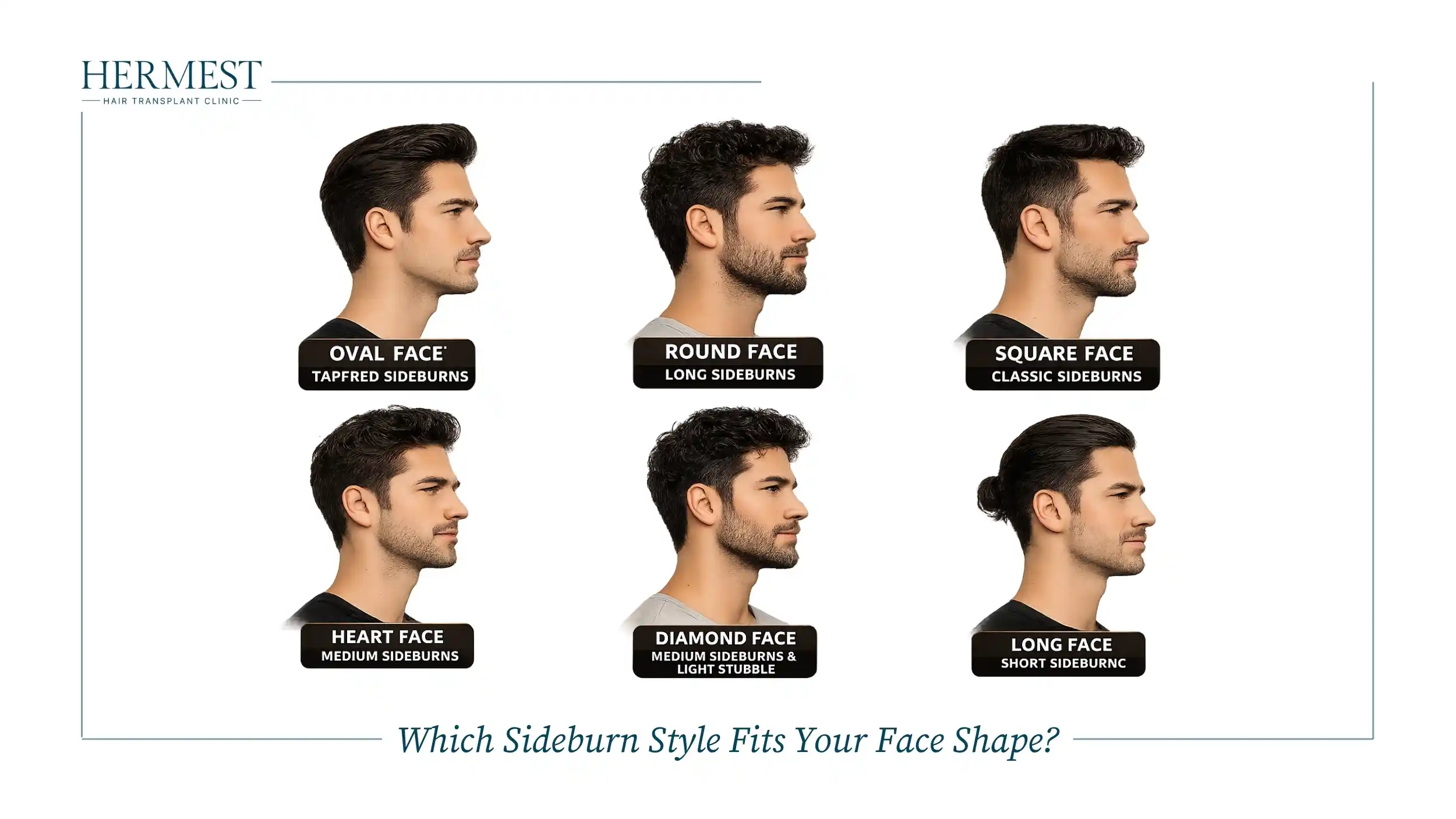
Oval Face
Men with oval faces have the greatest flexibility. Balanced proportions allow almost every sideburn style to work well, including:
- Classic sideburns.
- Tapered sideburns.
- Fade sideburns.
- Sideburns connected to a beard.
The main goal is maintaining the natural symmetry rather than dramatically changing facial proportions.
Round Face
Round faces usually benefit from creating more definition. Longer or slightly tapered sideburns can make the face appear slimmer by adding subtle vertical lines along the sides.
Pairing them with a neatly shaped beard often strengthens the jawline even further. Very wide sideburns may make the face appear broader than it actually is.
Square Face
Men with square faces already have naturally strong jawlines. Classic or medium-length sideburns usually complement these features without overpowering them.
A smooth transition into short stubble or a boxed beard often produces a timeless appearance.
Dr. Ahmet Murat explains:
“Every face has its own proportions. During hair restoration planning, we never design the hairline independently from the temples and sideburns. The entire facial frame should appear balanced rather than drawing attention to one specific feature.”
Heart and Diamond Faces
Heart-shaped and diamond-shaped faces typically have wider cheekbones with a narrower chin. Medium-length men’s sideburn styles often help soften this contrast by creating a smoother transition from the temples toward the jawline.
Combining them with light stubble can produce even greater balance.
Long Face
Men with long faces generally benefit from avoiding overly long sideburns. Shorter, slightly fuller sideburns help reduce the visual length of the face while maintaining clean proportions.
Extremely high fades combined with very short sideburns may exaggerate facial length in some cases.
Face Shape Is Only Part of the Picture
Although face shape provides an excellent starting point, it’s only one factor. Your hairstyle, beard, hair density, glasses, and hairline all influence which sideburn style works best.
Best Sideburn Styles for Different Hairstyles
The best sideburn styles don’t exist in isolation. They should complement your haircut rather than compete with it. A style that looks sharp with a buzz cut may feel out of place with long hair, while sideburns that suit a pompadour may overwhelm a crew cut. Creating a natural transition between the hairstyle and the face is what makes the entire look feel polished.
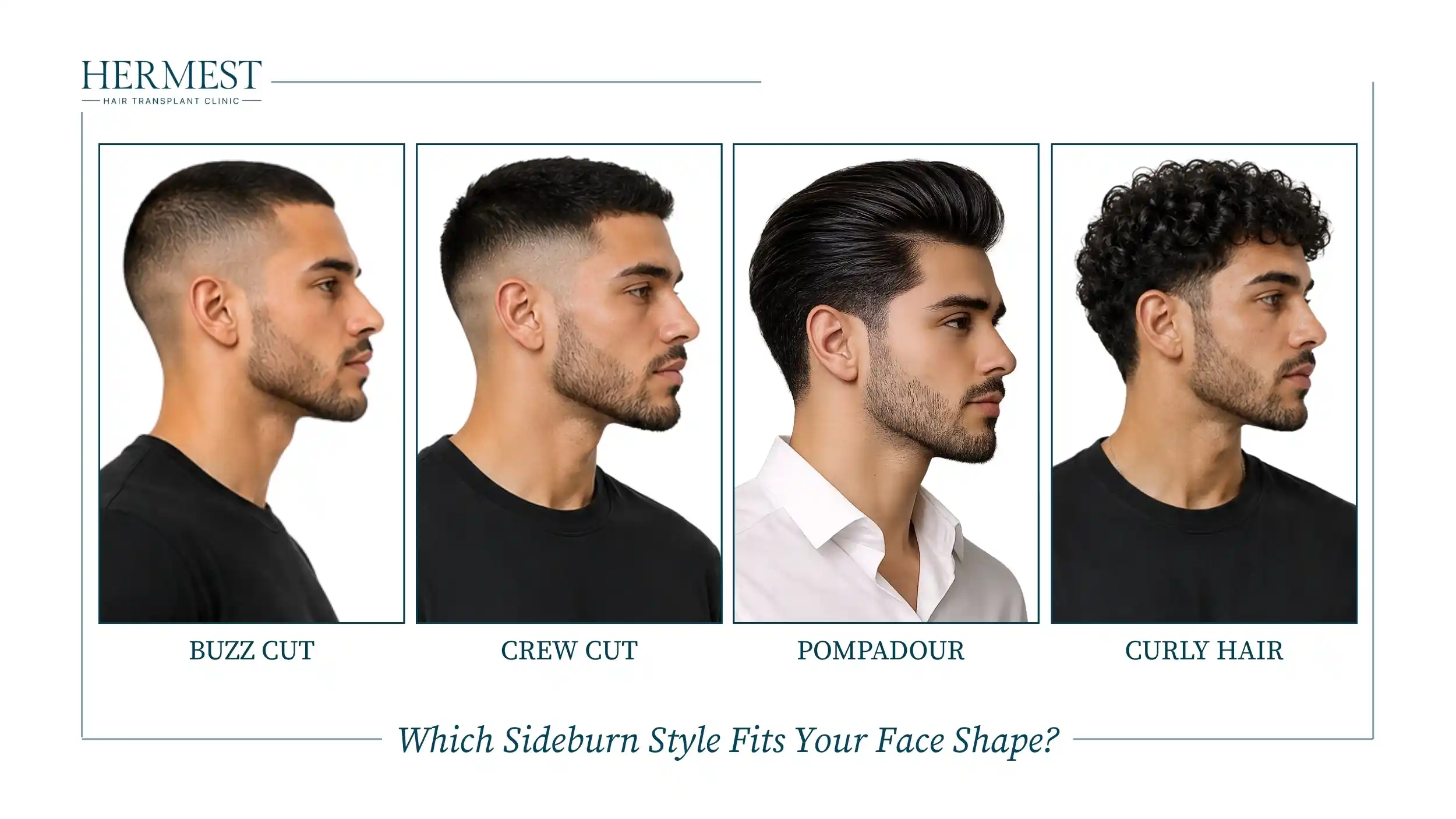
Buzz Cut
A buzz cut exposes more of the face than almost any other hairstyle. This makes the sideburns far more noticeable. Most men achieve the cleanest appearance with:
- Short or slightly tapered sideburns.
- A smooth transition into light stubble or a beard.
- Sideburns that match the clipper guard used on the sides.
Very thick or oversized sideburns can distract from the simplicity of a buzz cut.
Crew Cut and Fade Haircuts
Crew cuts and fades naturally pair well with tapered sideburns. The gradual transition complements the clean lines of the haircut while maintaining facial balance.
Low and mid fades usually blend effortlessly into the sideburns, whereas skin fades often benefit from a softer taper to avoid creating an abrupt break between the haircut and facial hair.
Pompadour and Slick Back
Classic hairstyles such as the pompadour and slick back carry more visual volume on top. Medium-length classic sideburns help anchor these hairstyles and create proportion between the upper and lower parts of the face.
Very short sideburns may make these fuller hairstyles appear disconnected.
Dr. Ahmet Murat says:
“When we evaluate facial harmony, we don’t look only at the hairline. Hair volume, sideburns, beard density, and facial proportions all influence how natural the overall appearance feels. Every transition should look intentional.”
Curly Hair
Curly hair naturally creates more texture and volume. Sideburns should usually follow that same softness rather than being cut into extremely sharp geometric shapes.
Light tapering often produces the most natural result while maintaining definition.
Long Hair
Long hairstyles benefit from sideburns that create continuity rather than interruption. Medium or longer sideburns often blend naturally into the hairstyle, especially when paired with light stubble or a short beard.
Abruptly removing the sideburns can make longer hairstyles appear disconnected from the face.
Matching Texture Creates Better Balance
One detail many grooming guides overlook is texture. Straight hairstyles generally pair well with cleaner, sharper sideburns. Textured hairstyles often look better with softer transitions and slightly more natural edges.
Sideburns With or Without a Beard?
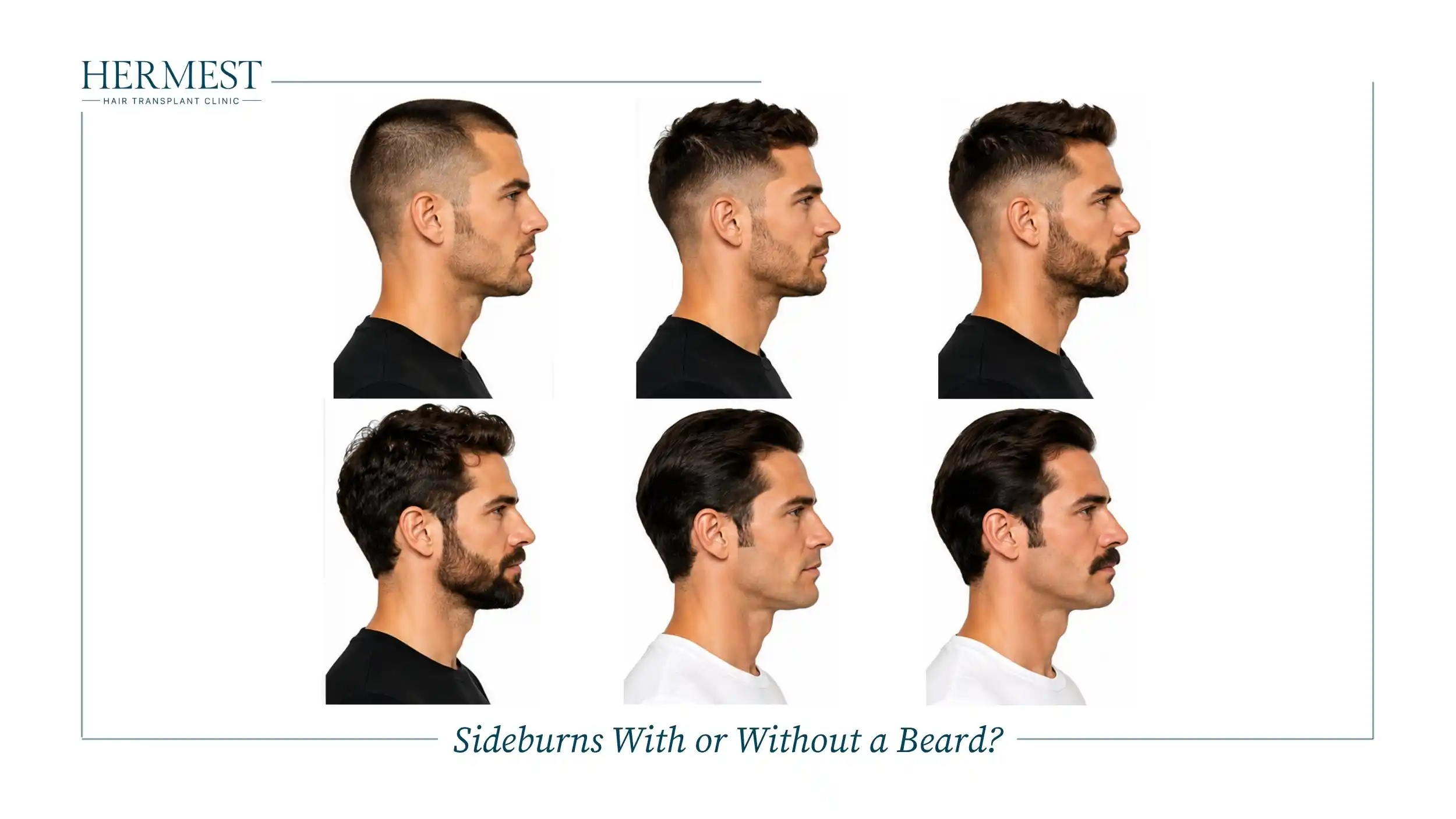
One of the biggest grooming decisions isn’t just choosing the right sideburn styles. It’s deciding whether they should connect to your beard or stand on their own. Both approaches can look excellent when matched to your facial features, hairstyle, and beard growth. The goal is creating a smooth transition rather than making each feature compete for attention.
Sideburns with Stubble
Light stubble remains one of the most versatile grooming styles. Short or tapered sideburns blend naturally into facial stubble, creating subtle definition without making the beard appear too heavy. This combination works especially well with:
- Buzz cuts.
- Crew cuts.
- Low fades.
- Mid fades.
- Modern textured hairstyles.
Maintaining consistent length between the sideburns and stubble usually creates the cleanest appearance.
Sideburns with a Full Beard
A full beard creates a stronger visual connection between the hair and jawline. In this case, connected sideburns often look more natural than detached ones.
Rather than creating a sharp break, they allow the hairstyle and beard to flow together as one continuous frame. According to professional grooming recommendations from Braun and Philips, gradual blending generally produces a more polished appearance than abrupt transitions.
Dr. Ahmet Murat says:
“Natural transitions are one of the foundations of facial aesthetics. Whether we’re designing a restored hairline or advising patients about grooming, abrupt lines usually attract attention. Smooth transitions create balance.”
Sideburns Without a Beard
Being clean-shaven doesn’t mean ignoring your sideburns. In fact, they’re often even more noticeable.
Classic or slightly tapered sideburns usually provide the cleanest finish for men without facial hair. The lower edge should look intentional rather than ending at an awkward point on the cheek.
Regular trimming keeps both sides symmetrical.
Mustache Combinations
For men who prefer a mustache without a beard, sideburns become more influential. Classic medium-length sideburns often pair well with:
- Chevron mustaches.
- Pencil mustaches.
- Natural mustache styles.
Very long sideburns combined with a standalone mustache can sometimes create an overly vintage appearance unless that aesthetic is intentional.
Beard Density Matters Too
Not every man grows a full beard. If facial hair is naturally patchy, forcing the sideburns to connect with the beard may actually emphasize areas of lower density.
A softer taper or detached transition often produces a cleaner result.
Sideburn Styles for Receding Hairlines
A changing hairline doesn’t mean you need to abandon good grooming. In fact, choosing the right sideburn styles can improve facial balance and make hairline recession appear less noticeable. Although sideburns cannot hide hair loss, they help create a smoother visual transition between the temples, haircut, and beard. Small adjustments often make a bigger difference than people expect.
Mature Hairline vs Receding Hairline
Many men mistake a mature hairline for significant hair loss. A mature hairline usually moves slightly higher during adulthood while maintaining good overall density. A receding hairline, however, continues progressing, particularly around the temples.
Well-proportioned sideburns work well with both patterns, but aggressive trimming around the temples may exaggerate deeper recession. Keeping the transition soft generally produces a more balanced appearance.
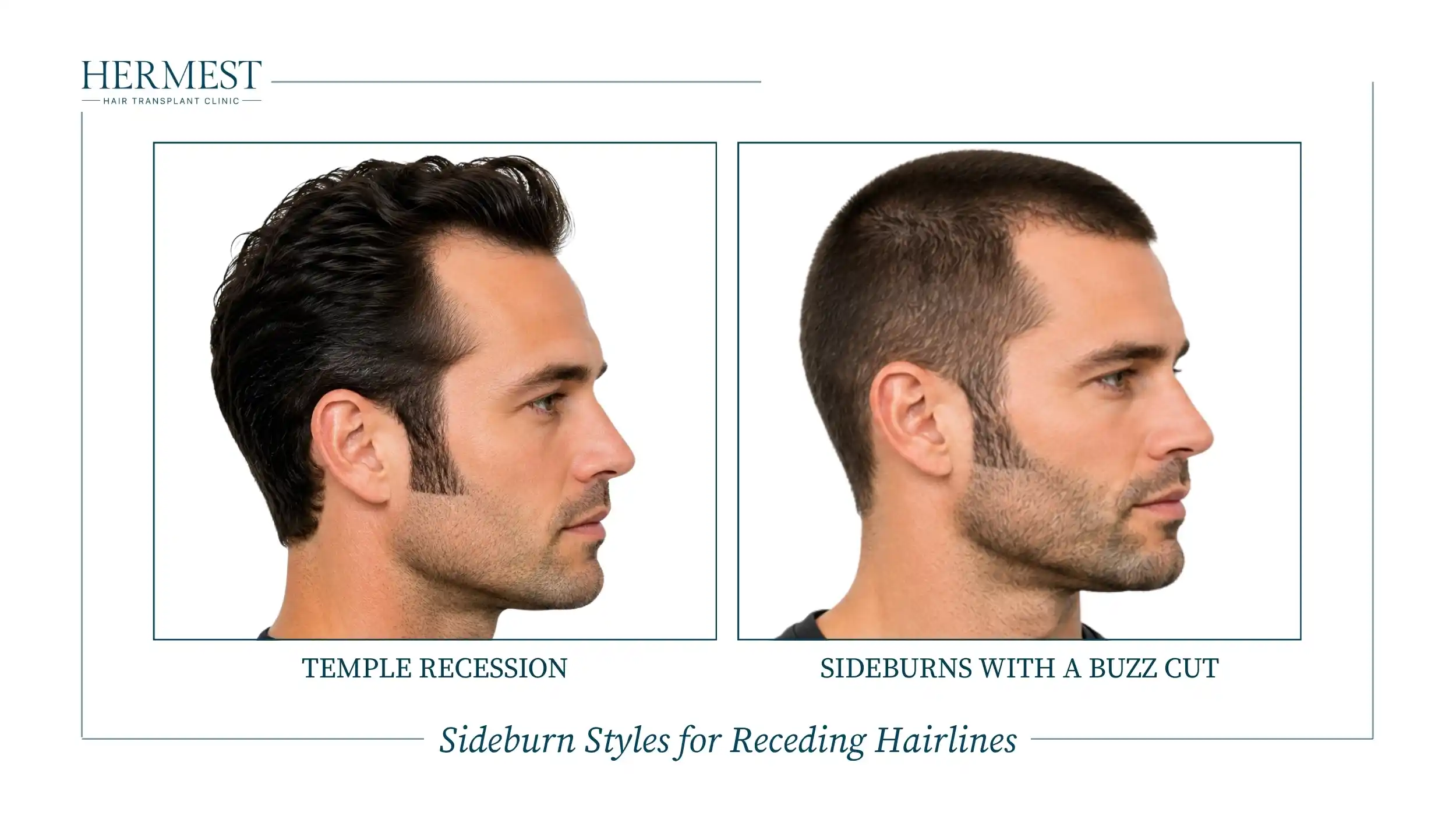
Temple Recession
When temple recession becomes noticeable, extremely short or disconnected sideburns can make the forehead appear wider. Many barbers recommend:
- Classic sideburns.
- Slightly tapered sideburns.
- Soft transitions into facial hair.
These styles help frame the sides of the face without drawing unnecessary attention to the temples.
Dr. Ahmet Murat says:
“Patients often concentrate only on restoring the frontal hairline. In reality, the temples and sideburns play an equally important role in facial harmony. Natural transitions usually create a stronger result than aggressive changes.”
Sideburns with a Buzz Cut
A buzz cut naturally exposes the temples, making sideburn design even more important. Short, neat sideburns that match the clipper length on the sides usually create the cleanest appearance.
If you wear a beard, gradually blending the sideburns into the facial hair helps soften the visual transition. Avoid making the sideburns dramatically wider than the haircut itself.
Sideburns After Hair Transplant
Natural-looking hair transplant results involve more than rebuilding the frontal hairline. Although sideburns are not always transplanted, their shape and position influence how the restored hairline is perceived.
When existing sideburns remain healthy, maintaining them properly helps create continuity between the transplanted hairline and facial hair. For patients requiring temple restoration, careful planning around the sideburn area contributes to a more seamless overall appearance.
What to Avoid
Some grooming habits can unintentionally emphasize hair loss. Common mistakes include:
- Removing the sideburns completely.
- Creating very high, disconnected sideburns.
- Choosing widths that don’t match the haircut.
- Ignoring beard balance.
How to Trim Sideburns
Learning how to trim sideburns properly is one of the simplest ways to improve your overall appearance. Even the best haircut can lose its sharpness if the sideburns become uneven or overgrown. Fortunately, maintaining them at home is easier than many people think when you follow a consistent routine.
The goal isn’t perfection. It’s symmetry and proportion.
Choose the Right Tools
Professional-looking results begin with the right equipment. Most men only need:
- A quality beard trimmer or hair clipper.
- A precision detail trimmer.
- A handheld mirror.
- A fine-tooth comb for longer sideburns.
Using the same clipper guard each time helps maintain a consistent appearance. According to grooming recommendations from Braun and Philips, trimming dry hair often produces more accurate results because wet hair appears longer than it actually is.
Find the Correct Endpoint
One of the most common questions is, “Where should sideburns end?” There isn’t a universal answer. As a general guide:
- Short sideburns end near the top of the ear.
- Classic sideburns finish around the middle of the ear.
- Longer styles extend toward the bottom of the ear or blend into the beard.
The best endpoint depends on your face shape, hairstyle, and beard rather than following one fixed rule.
Dr. Ahmet Murat says:
“Natural facial balance is created by proportion, not exact measurements. Sideburn length should complement the individual’s facial features instead of copying someone else’s style.”
Keep Both Sides Even
Symmetry matters more than absolute length. Instead of trimming one side completely before starting the other, alternate between sides after every few strokes.
Looking straight into the mirror with your head level helps prevent uneven trimming caused by tilting your head. Taking your time usually produces better results than trying to finish quickly.
Blend Into Your Haircut and Beard
Good sideburn beard styling relies on smooth transitions. If you wear a beard, gradually reducing the clipper guard between the haircut and beard often creates the most natural appearance.
If you’re clean-shaven, soften the lower edge rather than creating an unnaturally sharp horizontal line.
Trim Regularly Instead of Making Big Corrections
Many men wait until their sideburns become noticeably overgrown before trimming them. Regular maintenance is much easier.
A quick touch-up every one to two weeks usually requires only minor adjustments and helps preserve the original shape. Small, consistent trims also reduce the risk of accidentally removing too much hair.
Whether you’re maintaining classic sideburns, tapered sideburns, or a modern fade, careful trimming preserves facial balance and keeps your hairstyle looking intentional.
Common Sideburn Mistakes
Even a well-executed haircut can lose its impact if the sideburns are poorly maintained. Most grooming mistakes aren’t dramatic. They’re small details that gradually throw facial proportions out of balance. The good news is that they’re usually easy to correct once you know what to look for.
Uneven Sideburn Lengths
The most common mistake is simple asymmetry. Many people naturally have one ear positioned slightly higher than the other. If you trim your sideburns using your ears as the only reference point, one side may end up looking longer.
Instead, check your sideburns by looking straight into the mirror and comparing their relationship to your eyes, cheekbones, and jawline rather than relying solely on ear height. Small differences become surprisingly noticeable.
Choosing the Wrong Width
Width influences how strong or subtle your sideburns appear. Very thick sideburns can overwhelm slim faces, while extremely narrow ones may disappear against fuller hairstyles or beards.
A width that follows the natural density of your haircut usually creates the most balanced result.
Dr. Ahmet Murat says:
“Natural facial aesthetics come from proportion. Sideburns shouldn’t dominate the face or disappear completely. The best design supports the haircut and facial features without drawing unnecessary attention.”
Ignoring Your Face Shape
Many men copy celebrity grooming styles without considering whether they suit their own facial structure. For example:
- Long sideburns may elongate already long faces.
- Very short sideburns can widen round faces.
- Wide sideburns may overpower narrow facial features.
Choosing men’s sideburn styles that match your face shape almost always produces a more flattering result.
Creating a Harsh Transition
A sudden break between the haircut, sideburns, and beard often looks artificial. This is especially noticeable with fades and buzz cuts.
Gradual blending usually creates a cleaner and more modern appearance than sharply disconnected sections. Professional barbers often spend as much time refining transitions as they do cutting the main hairstyle.
Following Trends Instead of Your Features
Fashion changes constantly. Facial proportions don’t.
Some trends, such as oversized sideburns or extremely sharp geometric lines, may look striking in photographs but prove difficult to maintain in everyday life. Choosing a timeless style that complements your natural features generally ages much better than chasing seasonal grooming trends.
Small Details Create Big Results
Many focus only on trimming techniques while overlooking the role sideburns play in overall facial harmony. In reality, your haircut, beard, hairline, and sideburns work together as one visual frame.
Are Sideburns Still in Style?
Yes. Sideburn styles remain part of modern men’s grooming, but the way they’re worn has changed. Today’s trends favor clean lines, natural transitions, and facial balance over dramatic, oversized sideburns that were popular in previous decades. Rather than standing out, modern sideburns are designed to complement the haircut and beard.
Natural Looks Are Leading the Trend
Current grooming trends emphasize subtlety. Instead of making sideburns the focal point, most barbers aim to create a seamless transition between the hair and facial hair. Popular choices today include:
- Tapered sideburns.
- Short classic sideburns.
- Soft fades into the beard.
- Natural edges instead of sharp geometric lines.
According to grooming experts featured by Braun, Philips, and Men’s Health, these understated styles suit a wider variety of face shapes and hairstyles while remaining easy to maintain.
Celebrity Influence Continues
Well-known actors, athletes, and musicians continue to shape grooming trends, but many now favor timeless styles over dramatic statements. You’ll often see:
- Buzz cuts with neat tapered sideburns.
- Crew cuts paired with light stubble.
- Medium-length hairstyles with classic sideburns.
- Full beards connected through soft sideburn transitions.
The common theme is balance rather than excess.
Dr. Ahmet Murat says:
“The most successful hairstyles rarely depend on one feature. Hairline, haircut, beard, and sideburns should work together. Natural proportions almost always remain fashionable because they complement the individual rather than following temporary trends.”
Timeless Beats Trendy
Fashion changes quickly. Facial harmony doesn’t. A style that suits your face shape, haircut, and beard will usually look better over time than copying a trend that wasn’t designed for your features. This is particularly important for men with receding hairlines, where carefully chosen sideburns can help create a more balanced appearance.
Confidence Is the Best Style
The best types of sideburns are the ones that suit your own facial features and grooming routine. Some men look their best with short, understated sideburns. Others suit longer classic styles or fuller transitions into a beard.
There is no universal rule. Choosing a style that feels natural and is easy to maintain often produces the strongest impression.
Frequently Asked Questions
Yes. Modern sideburn styles remain popular, but today’s trends favor natural-looking transitions rather than oversized or sharply defined sideburns. Classic and tapered styles continue to work well with most haircuts and beard lengths.
Complete Your Look with Expert Hair Restoration and Grooming Advice
The right sideburn styles do more than finish a haircut. They improve facial balance, complement your beard, and help create a natural transition from your hairstyle to your facial hair. Small grooming decisions often have a greater impact than most people expect.
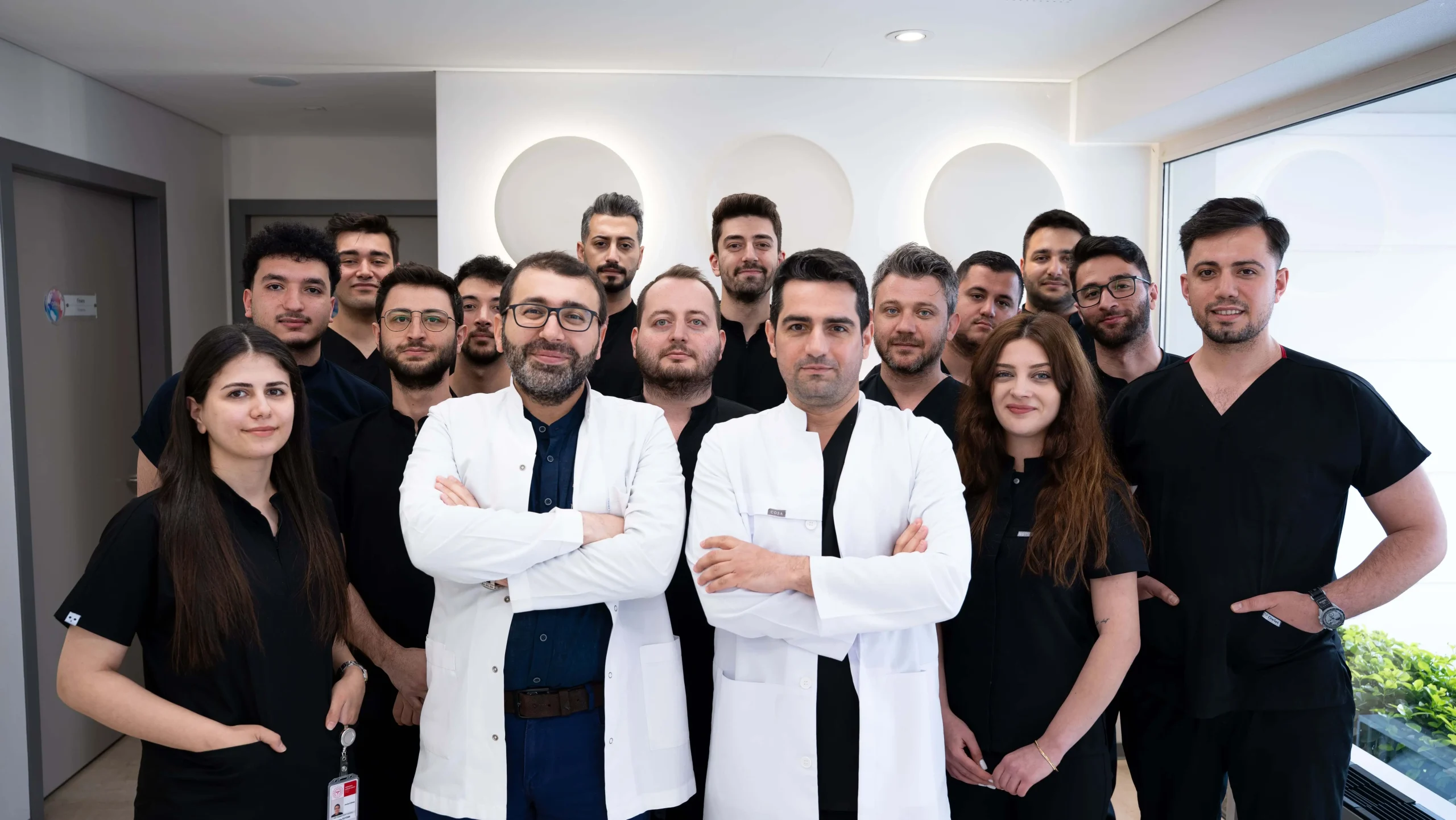
At Hermest Hair Clinic, Dr. Ahmet Murat considers every detail of facial harmony when planning hair restoration. Hairline design, temple density, and sideburn proportions are carefully evaluated to achieve results that look natural from every angle. Whether you’re considering a Unique FUE® hair transplant or simply looking for ways to enhance your appearance, a personalized consultation can help you choose the approach that best suits your facial features and long-term goals.