
Haircut for Balding Crown Male: 8 Best Hairstyles That Look Fuller
 ChatGPT
 Claude
 Perplexity
 Grok
Grok
 Gemini

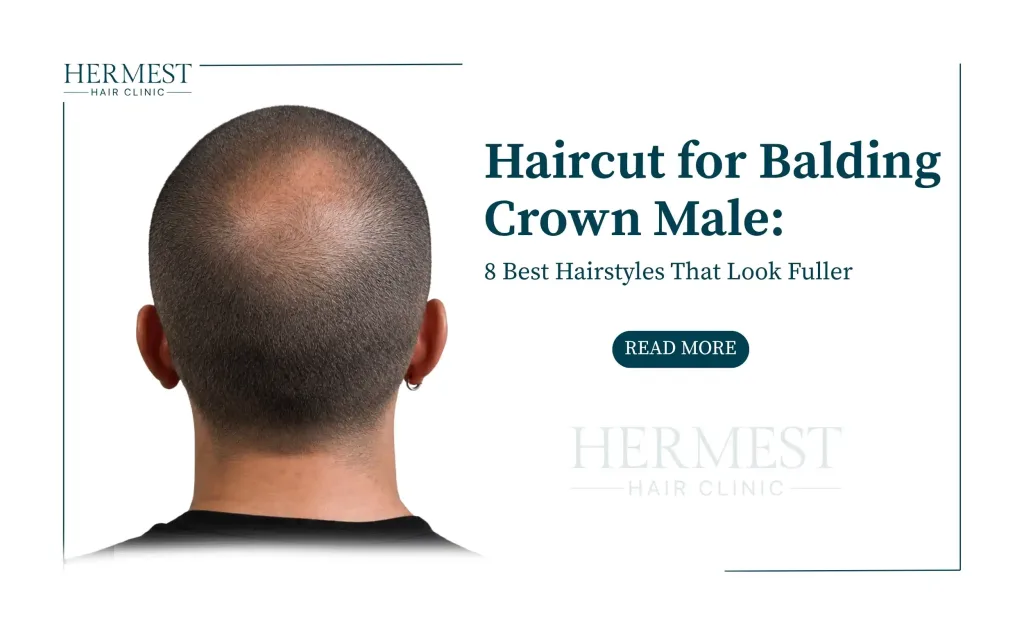
Choosing the right haircut for a balding crown can make a remarkable difference in overall appearance. While no hairstyle can stop male pattern baldness, the right cut can reduce the visibility of crown thinning, improve facial balance, and help your hair look fuller and more intentional. Sometimes, a trip to the barber creates a bigger visual improvement than changing styling products alone.
Many men first notice hair loss at the crown, also called the vertex. The bald spot often seems small in the bathroom mirror but appears much larger under bright lighting, in photographs, or on security cameras. That difference in visibility leads many men to search for the best haircut for balding crown before considering medical treatment.
The good news is that experienced barbers understand how hair length, texture, and contrast affect the way crown thinning appears. Shorter, well-balanced styles often minimize the difference between dense and thinning areas, making hair loss much less noticeable.
According to the American Academy of Dermatology (AAD), androgenetic alopecia, commonly known as male pattern baldness, is the most common cause of crown thinning. Although a haircut cannot change the biology of hair loss, it can significantly improve the way existing hair frames the face and scalp.
Dr. Ahmet Murat says:
“Many patients believe they have only two choices, hide the bald spot or shave everything. In reality, the right haircut can improve appearance at every stage of hair loss. We often encourage patients to optimize their hairstyle while also addressing the underlying cause of thinning.”
The appearance of crown thinning depends on several factors, including your Norwood stage, hair density, face shape, and hairstyle. That’s why a haircut that flatters one person may draw more attention to thinning in someone else.
In this guide, you’ll learn which hairstyles work best for different stages of crown thinning, which cuts should be avoided, how to style thinning hair effectively, and when a haircut is no longer enough to achieve the look you want.
Quick Insights
- The best haircut for a balding crown depends on your stage of hair loss, hair texture, face shape, and personal style.
- Short hairstyles such as the buzz cut, crew cut, French crop, and textured crop usually make crown thinning less noticeable by reducing contrast between the hair and scalp.
- As male pattern baldness progresses, a high and tight or a clean-shaven head often creates a more balanced and confident appearance.
- Avoid long hair on top, slicked-back styles, heavy gels, wet-look products, and exaggerated combovers, as they can make the thinning crown more noticeable.
- Matte styling products, texture powders, and lightweight clays generally create a fuller-looking hairstyle than shiny pomades or heavy waxes.
- A haircut improves the appearance of crown thinning but does not stop or reverse hair loss.
- Early treatment with minoxidil, finasteride, or PRP may help slow progression and preserve existing hair.
- A hair transplant can restore density in the crown for suitable candidates with stable hair loss and sufficient donor hair.
- Combining the right haircut, appropriate styling products, and evidence-based treatment often provides the most natural-looking long-term results.
- Consulting both an experienced barber and a qualified hair restoration specialist helps you choose the hairstyle and treatment plan best suited to your current level of hair loss.
Why Does the Crown Thin First?
For many men, the first noticeable sign of male pattern baldness isn’t a receding hairline. It’s a small area of thinning at the crown, also known as the vertex. At first, the hair may simply look flatter or less dense. Over time, the scalp becomes increasingly visible, especially under bright lighting or when viewed from above.
Understanding why this happens helps explain why the best haircut for balding crown can improve your appearance, but cannot stop the underlying process.
Male Pattern Baldness Begins at the Follicle
The most common cause of crown thinning is androgenetic alopecia, also called male pattern baldness.
This condition develops because genetically sensitive hair follicles gradually shrink under the influence of dihydrotestosterone (DHT). As the follicles become smaller, each new hair grows thinner, shorter, and lighter than the one before. Eventually, some follicles stop producing visible hair altogether.
This process usually develops slowly over several years, making early changes easy to overlook.
Why the Crown Is Often Affected First
Not every man’s hair loss follows the same pattern. Some men first notice a receding hairline, while others develop thinning around the crown before any changes appear at the front. Many experience both patterns at the same time.
The crown is particularly noticeable because the hair naturally grows in a circular pattern around the crown whorl. As density decreases, this growth pattern allows more of the scalp to show through, making thinning appear more advanced than it may actually be.
Dr. Ahmet Murat says:
“The crown is one of the most challenging areas because hair grows in multiple directions. Even mild thinning can become highly visible when density decreases around the natural swirl pattern.”
Understanding the Norwood Scale
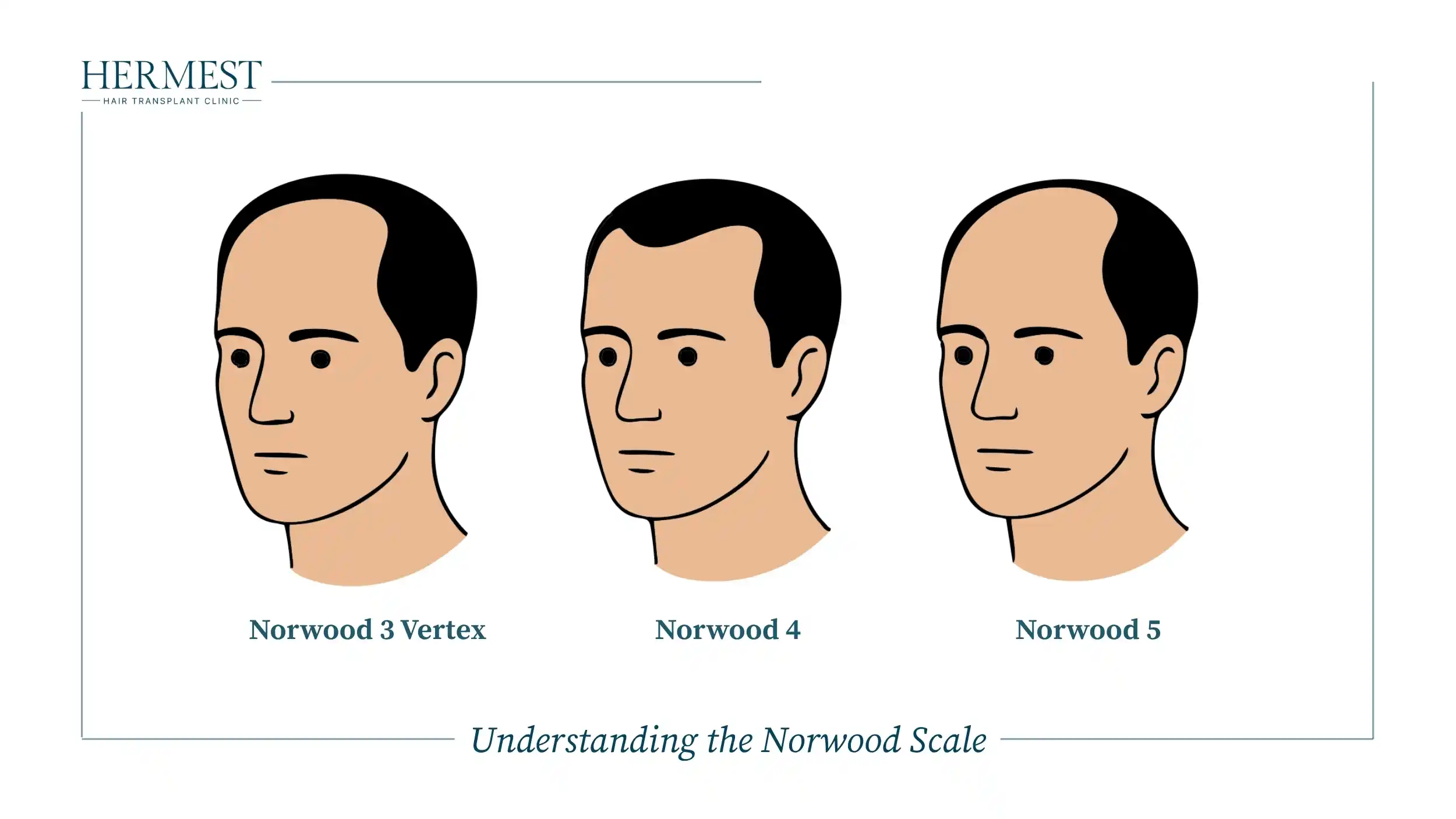
Hair loss specialists commonly use the Norwood scale to describe the progression of male pattern baldness. For crown thinning, the most relevant stages include:
- Norwood 3 Vertex: A small thinning area develops at the crown.
- Norwood 4: The bald spot becomes more noticeable, while the bridge of hair between the front and crown remains intact.
- Norwood 5 and beyond: The thinning areas gradually enlarge and may begin to merge.
Knowing your stage helps determine which hairstyles for balding crown men are most suitable and whether medical treatment should accompany your haircut.
Haircuts Improve Appearance, Not Hair Loss
A well-chosen haircut for thinning crown works by creating visual balance. It can reduce contrast between thicker and thinner areas, add texture, and make the crown appear less noticeable. What it cannot do is change the biological process affecting the follicles.
If crown thinning continues to progress, combining the right hairstyle with treatments such as minoxidil, finasteride, or, in appropriate candidates, a hair transplant, often provides the most satisfying long-term results.
How Haircuts Make a Balding Crown Look Better
The right haircut for a balding crown doesn’t create more hair, but it can change how people perceive your overall appearance. A skilled barber uses length, texture, and proportion to make thinning areas blend more naturally with the rest of your hairstyle.
The goal isn’t to hide the crown completely. It’s to reduce how much attention it attracts. When the haircut matches your hair density and pattern of loss, the result often looks cleaner, more balanced, and more confident.
Reducing Contrast Between Hair and Scalp
One reason crown thinning appears so noticeable is the contrast between dark hair and lighter scalp. Long hair surrounding a thinning crown often exaggerates this difference. Shorter, evenly blended styles reduce the contrast, making the transition between thicker and thinner areas appear much softer.
This is why many barbers recommend shorter cuts as crown thinning progresses.
Creating Texture and Natural Movement
Flat hair separates more easily, allowing the scalp to become visible. Textured hairstyles work differently.
By adding movement and controlled volume, they help break up visible scalp exposure and give the illusion of greater density. Styles such as the French crop, crew cut, and textured crop are popular because they naturally create this effect without looking artificial.
Dr. Ahmet Murat says:
“Texture often matters more than length. Even with moderate crown thinning, the right cut and styling technique can noticeably improve overall balance without trying to conceal the hair loss.”
Improving Facial Proportions
A haircut should complement your entire face, not just the crown. For example, adding a subtle fade or leaving slightly more texture on top can shift attention toward your facial features rather than the thinning area. Many men also find that pairing a well-groomed beard with a shorter hairstyle creates a stronger, more balanced appearance.
The best men’s haircut for balding crown depends on your face shape, hair density, beard style, and stage of hair loss rather than following a single trend.
Controlling Shine Makes a Difference
Many men focus only on the haircut while overlooking how styling affects the crown. Shiny products such as pomades or gels reflect light, making the scalp appear more visible. Matte styling products absorb light instead of reflecting it, helping thinning areas blend more naturally.
Lighting also plays an important role. Hair that looks full indoors may appear thinner in direct sunlight or under bright overhead lighting, so choosing a haircut that performs well in different environments is worthwhile. While the right hairstyle can significantly improve your appearance, it’s most effective when paired with healthy hair care and, if needed, treatment to slow the progression of male pattern baldness.
Best Haircuts for a Balding Crown
There isn’t a single best haircut for balding crown because the ideal style depends on how much thinning has occurred, your hair texture, and your personal preferences. Some men achieve the best results with a very short cut, while others benefit from leaving slightly more length and adding texture. The common goal is to create balance, minimize scalp visibility, and work with your natural hair pattern rather than against it.
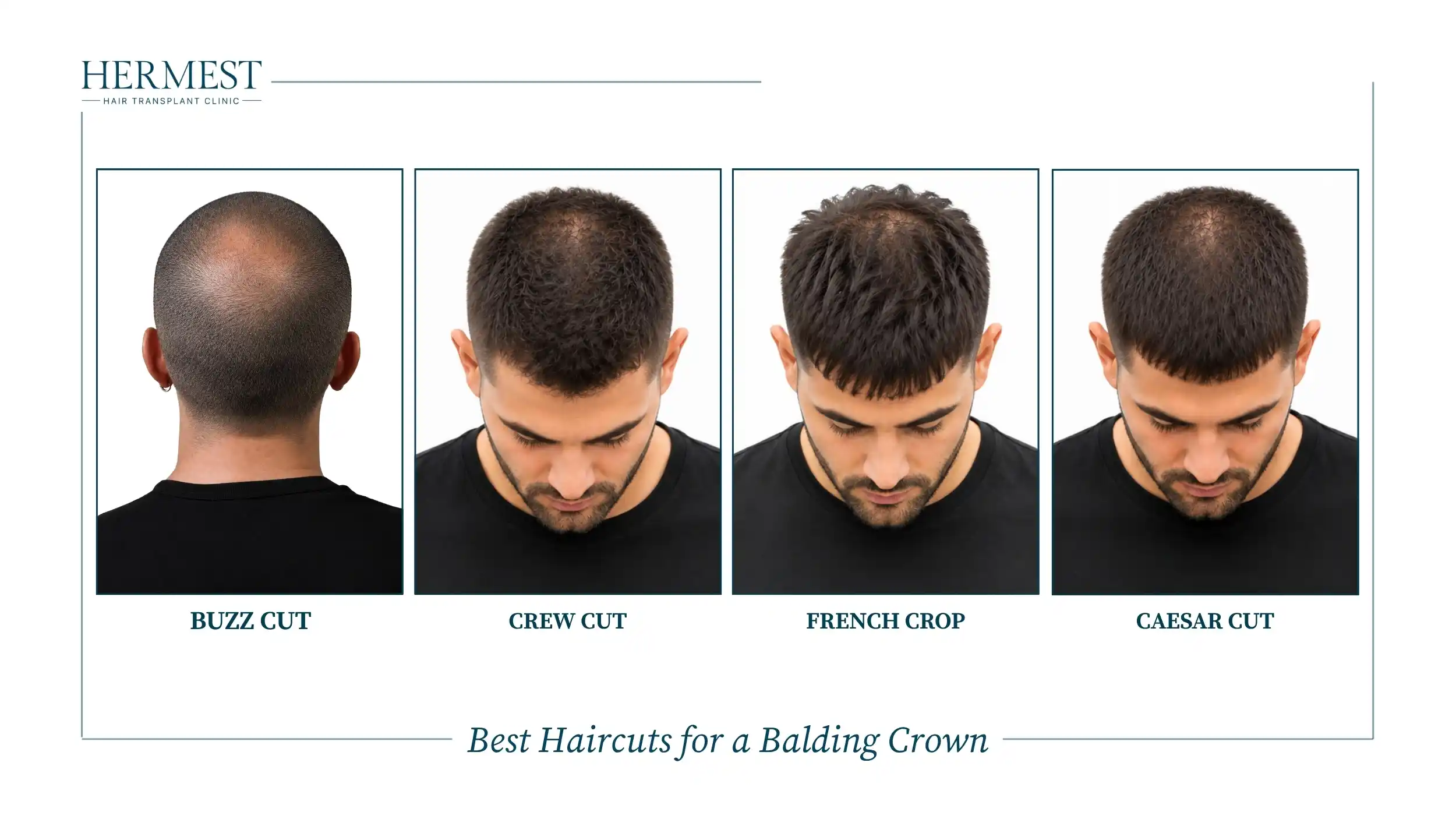
Buzz Cut
The buzz cut for balding crown remains one of the most popular options for men with crown thinning. Keeping the hair uniformly short reduces the contrast between thicker and thinner areas, making the bald spot less noticeable. It’s also easy to maintain and suits most face shapes.
A slightly longer buzz guard may work better for early thinning, while shorter guards often suit more advanced hair loss.
Crew Cut
The crew cut is a classic choice that leaves a little extra length on top while keeping the back and sides short. This style adds subtle texture without creating excessive contrast, making it a strong option for men with mild to moderate crown thinning. It also works well in both professional and casual settings.
Dr. Ahmet Murat says:
“One of the biggest mistakes is keeping the top much longer than the surrounding hair. Balanced proportions almost always produce a more natural appearance than trying to cover the crown with extra length.”
French Crop
A French crop combines short sides with a textured top and a forward-styled fringe. Although it doesn’t directly hide the crown, the added texture throughout the top creates a fuller overall appearance and naturally draws attention toward the front of the hairstyle. This makes it an excellent choice for men experiencing early crown thinning.
Caesar Cut
The Caesar cut features short, evenly layered hair with a small forward fringe. Its uniform length reduces sharp differences in density, helping the crown blend more naturally with the surrounding hair. It’s particularly effective for men with fine or straight hair.
Textured Crop
A textured crop creates controlled movement using layered cutting techniques. Unlike smooth hairstyles, textured cuts prevent the hair from separating into flat sections that expose the scalp. They also pair well with matte styling products that enhance fullness without adding shine.
Ivy League
For men with early-stage thinning, the Ivy League offers a slightly more polished appearance. The longer top provides styling flexibility while the tapered sides maintain clean proportions. It works best when crown thinning is still relatively mild.
High and Tight
The high and tight keeps the sides extremely short while leaving a modest amount of length on top. This military-inspired haircut minimizes maintenance and often reduces the visual impact of a thinning crown by simplifying the overall hairstyle.
Shaved Head
When crown thinning becomes more advanced, shaving the head completely can be the most confident and natural-looking option. A clean-shaven scalp eliminates the contrast created by patchy density and shifts attention to facial features instead of hair loss. Many men choose this style before considering medical treatments or a hair transplant, while others make it their long-term look because of its simplicity and ease of maintenance.
Best Haircuts by Norwood Stage
The best haircut for a thinning crown changes as hair loss progresses. A style that looks excellent during the early stages of crown thinning may draw more attention to the scalp a few years later. Matching your haircut to your stage of male pattern baldness often produces a more natural result than simply following hairstyle trends.
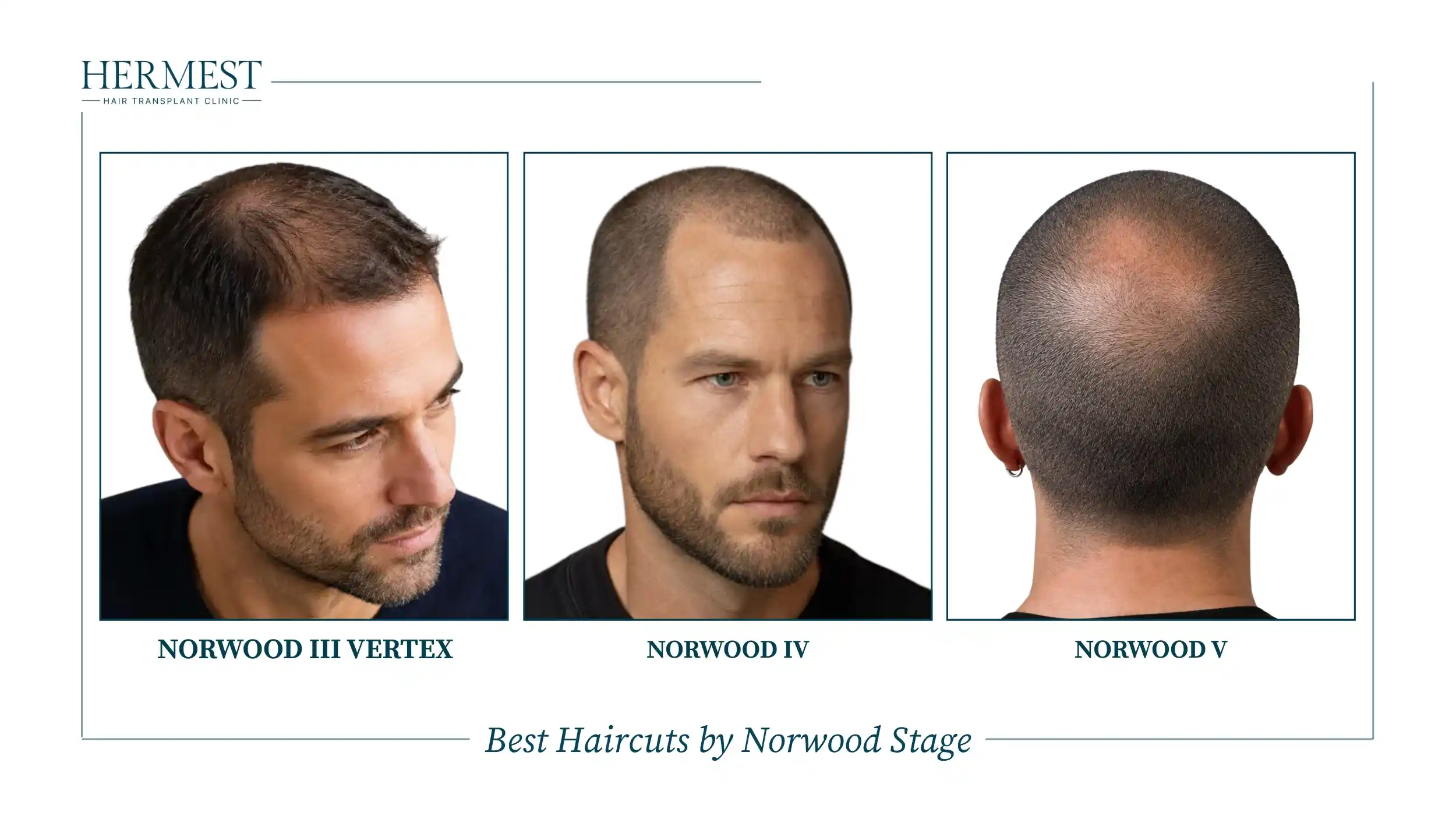
Norwood III Vertex
At this stage, the crown develops a small thinning area while the rest of the hair usually maintains good density. Most men still have several styling options, including:
- Crew cut
- French crop
- Textured crop
- Ivy League
- Slightly longer buzz cut
These hairstyles maintain texture while reducing the contrast between the crown and the surrounding hair. Many men at this stage can still wear a fade, provided the top isn’t left excessively long.
Dr. Ahmet Murat says:
“Early crown thinning gives us the greatest flexibility. A well-planned haircut, combined with timely medical treatment when appropriate, can preserve a natural appearance for many years.”
Norwood IV
The bald spot becomes larger, and hair density around the crown continues to decrease. Shorter hairstyles generally become more flattering because they reduce the visual difference between thick and thin areas. Popular choices include:
- Buzz cut
- Crew cut
- High and tight
- Short textured crop
Keeping the hairstyle simple often produces a cleaner, more confident appearance than trying to disguise the thinning area.
Norwood V
At this stage, the crown continues to expand, and the bridge of hair separating the front and crown becomes narrower. Very short styles usually work best because they create a more balanced overall look. Many men choose:
- Very short buzz cut
- High and tight
- Fully shaved head
Long hairstyles rarely improve appearance once crown thinning reaches this stage.
Norwood VI and Beyond
Extensive crown hair loss requires a different approach. Rather than trying to conceal the bald area with longer hair, many men find that a shaved head or closely clipped haircut creates the strongest overall appearance. If adequate donor hair is available, this is also the stage where many patients begin exploring hair transplant options.
Your Hair Texture Matters Too
The Norwood stage is only one part of the decision. Hair texture also influences which hairstyles for balding crown men produce the best results.
- Thick, wavy hair often creates natural volume that softens crown thinning.
- Straight, fine hair separates more easily, making the scalp appear more visible.
- Curly hair generally provides better coverage because of its natural fullness.
That’s why two men with the same amount of hair loss may benefit from completely different haircuts.
Haircuts That Make Crown Thinning Worse
Choosing the right hairstyle is only part of the equation. Some cuts unintentionally draw attention to the crown, making hair loss appear more advanced than it actually is.
In many cases, the issue isn’t the haircut itself. It’s the combination of excessive length, poor proportions, or styling techniques that increase the contrast between the hair and the scalp. Avoiding these common mistakes can make just as much difference as selecting the right haircut for crown thinning.
Long Hair on Top
Many men assume that growing the hair longer will cover a thinning crown. The opposite often happens.
Long hair becomes heavier, causing it to separate naturally around the crown whorl. As the strands spread apart, more scalp becomes visible, especially in bright lighting or windy conditions. Keeping moderate, textured length usually creates a fuller appearance than relying on extra-long hair.
Dr. Ahmet Murat says:
“Long hair doesn’t always mean better coverage. As density decreases, excessive length often exposes the crown instead of concealing it. A shorter, well-balanced haircut usually creates a stronger overall appearance.”
Slicked-Back Hairstyles
Slick backs remain a timeless style, but they are rarely ideal for men with crown thinning. Pomades and gels flatten the hair while adding shine. Together, these effects make the scalp easier to see from multiple angles.
If you enjoy a classic look, using a matte product with more texture generally produces a better result.
Wet-Look Styling
Wet-look hairstyles create another common problem. The shine reflects light directly from the scalp, making thinning areas appear larger than they really are. Hair also tends to clump together when coated with heavy styling products, exposing additional scalp between the strands.
Matte clays and texture creams are usually better choices for men experiencing male pattern baldness.
Sharp Center Parts
A defined part naturally separates the hair into sections. When density has already begun to decrease, this separation often reveals more of the scalp around the crown. Softer, textured styling creates a more natural transition and avoids drawing attention to thinning areas.
Poorly Executed Combovers
A comb-over isn’t automatically a bad hairstyle. The problem arises when long sections of hair are stretched unnaturally across a large bald spot. Strong wind, rain, or even normal movement quickly exposes the crown, often making the hairstyle appear forced.
A modern comb-over uses natural direction, moderate length, and subtle blending rather than attempting to disguise extensive hair loss. The most successful best hairstyle for balding crown works with your current hair density instead of trying to hide every thinning area. Clean proportions, natural texture, and realistic styling almost always produce a more confident appearance than hairstyles designed solely to conceal hair loss.
Best Styling Products
A great haircut creates the foundation, but the right styling products help maintain the final look throughout the day. For men with crown thinning, choosing the wrong product can flatten the hair, increase scalp visibility, and make the bald spot appear larger than it really is.
The goal isn’t to build height or hide the crown completely. It’s to create natural texture, reduce shine, and give the hair a fuller appearance.
Matte Clay
For many men, a matte clay is one of the best styling products to pair with a haircut for a balding crown. Unlike shiny pomades, matte clay adds definition without reflecting light from the scalp. It also creates separation between individual hair strands, helping the hair appear thicker and more textured.
Use a small amount and work it evenly through dry or nearly dry hair for the most natural finish.
Texture Powder
Texture powder is often overlooked, yet it can make a noticeable difference for fine or thinning hair. It lifts the roots slightly, increases friction between the strands, and creates the illusion of greater density without leaving the hair stiff or greasy. Many barbers recommend texture powder for men who want volume without using heavy styling creams.
Dr. Ahmet Murat says:
“The product should support the haircut, not dominate it. Lightweight styling products usually create a more natural appearance than heavy gels or waxes, particularly when crown thinning is present.”
Hair Fibers
Hair fibers are cosmetic products made from tiny keratin fibers that attach to existing hairs using static electricity. They can temporarily reduce the visibility of a thinning crown by filling the gaps between hair strands. Hair fibers work best when:
- Hair thinning is mild to moderate.
- Some existing hair remains in the area.
- The fibers closely match your natural hair color.
They are less effective once the crown becomes completely bald because there are fewer hairs for the fibers to attach to.
Sea Salt Spray
A sea salt spray can add natural movement and texture, especially for men with fine or straight hair. Used in moderation, it creates a slightly fuller appearance while maintaining a relaxed finish. However, frequent use may contribute to dryness, so pairing it with a moisturizing conditioner is often beneficial.
Less Product Often Looks Better
Many men believe using more product creates fuller hair. In reality, applying too much styling product usually has the opposite effect. Heavy creams, thick waxes, and oily pomades weigh the hair down, reduce movement, and make the scalp more noticeable.
The most effective styling routine is often the simplest. A lightweight matte product, combined with a well-executed haircut and proper blow-drying technique, can make hairstyles for balding crown men look significantly fuller without appearing artificial.
Should You Buzz It or Shave It?
At some point, many men with crown thinning ask the same question: Should I get a buzz cut or shave my head completely? There isn’t a universal answer.
The right choice depends on your stage of hair loss, hair density, head shape, facial features, and personal style. While both options simplify your appearance and reduce maintenance, they create very different visual effects.
When a Buzz Cut Works Best
A buzz cut for balding crown is often the first choice for men with early to moderate crown thinning. Keeping the hair evenly short reduces the contrast between dense and thinning areas while preserving a natural hairline. It also creates a clean, masculine appearance that requires very little styling.
A buzz cut is usually a good option if:
- You still have reasonable hair density around the crown.
- Your hair loss is in the early or middle stages.
- You prefer a low-maintenance hairstyle.
- You want to make the thinning less noticeable without shaving completely.
Many men find that experimenting with different guard lengths helps them discover which one best suits their hair density.
When Shaving the Head Makes More Sense
As male pattern baldness progresses, there may come a point when a shaved head creates a more balanced appearance than trying to maintain a very short haircut. Removing the remaining hair eliminates the contrast between thinning and thicker areas, allowing facial features to become the focal point instead of the crown. For many men with advanced vertex baldness, shaving the head feels like taking control rather than giving up.
Dr. Ahmet Murat says:
“A shaved head isn’t a last resort. For many patients, it becomes a confident style choice that suits their face and lifestyle extremely well. The decision should be based on appearance, comfort, and personal preference rather than fear of hair loss.”
Don’t Forget Your Face Shape
Head shape influences the final result more than many people expect. A buzz cut generally works well for most face shapes because it preserves a subtle outline of the hair. A fully shaved head places greater emphasis on the shape of the skull, jawline, and forehead.
Trying a progressively shorter buzz cut before shaving completely often helps you decide which look feels most comfortable.
A Beard Can Improve Overall Balance
Facial hair can complement both buzz cuts and shaved heads. A well-groomed beard adds definition to the lower face and helps create stronger facial proportions, particularly when the hair on top becomes shorter. The ideal beard length depends on your face shape, but even light stubble can make the overall look feel more balanced.
Ultimately, neither option is better for everyone. The best choice is the one that suits your current stage of hair loss, highlights your facial features, and gives you the confidence to stop worrying about your crown every time you walk past a mirror.
Can Haircuts Replace Hair Loss Treatment?
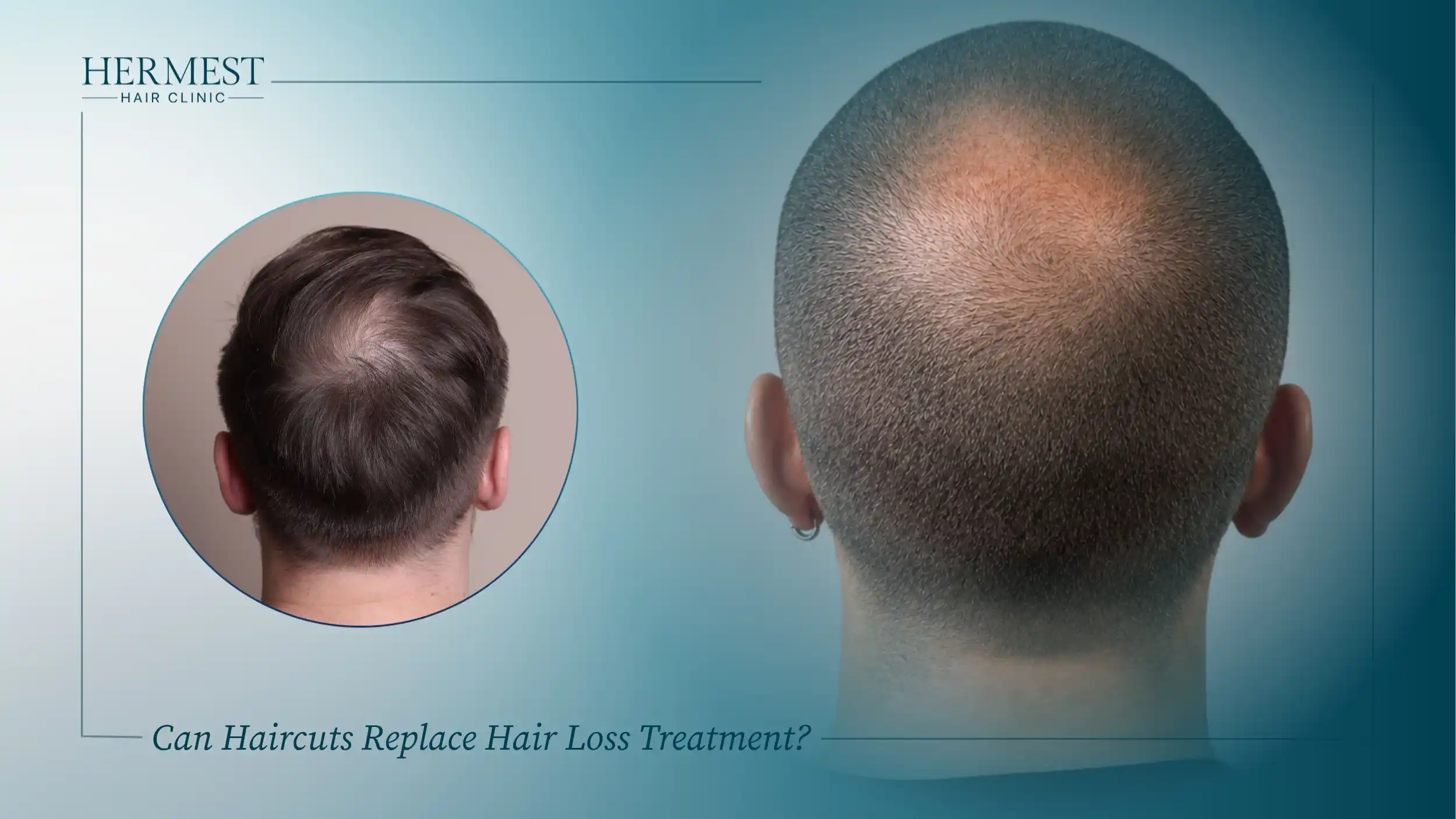
A well-chosen haircut for a balding crown can make thinning much less noticeable, but it doesn’t change what’s happening beneath the scalp. If male pattern baldness continues to progress, the hair follicles will keep shrinking regardless of how often you visit the barber.
That’s why it’s helpful to think of a haircut as a cosmetic solution and medical treatment as a biological one. The two often work best together.
Minoxidil
Minoxidil is one of the most widely recommended treatments for androgenetic alopecia. According to the American Academy of Dermatology (AAD), topical minoxidil can help slow hair loss and maintain hair thickness, with modest regrowth in some men when used consistently. Results usually take several months to become noticeable, and continued use is necessary to maintain the benefits.
Finasteride
Finasteride works differently. Instead of stimulating existing follicles, it reduces the production of dihydrotestosterone (DHT), the hormone primarily responsible for shrinking genetically sensitive hair follicles.
For many men, finasteride helps slow or stabilize crown thinning before significant hair loss develops. Treatment should always be discussed with a qualified healthcare professional because potential side effects and suitability vary between individuals.
Dr. Ahmet Murat says:
“One of the biggest mistakes we see is waiting until the crown has become extensively bald before seeking advice. Preserving existing hair is usually easier than trying to restore hair that has already been lost.”
Platelet-Rich Plasma (PRP)
Platelet-Rich Plasma (PRP) therapy uses concentrated platelets from your own blood to deliver growth factors into the scalp. Some studies suggest PRP may improve hair density and reduce shedding in selected patients with early male pattern baldness, particularly when combined with other treatments. While results vary, PRP has become an increasingly popular non-surgical option for men who want to support existing hair.
A Haircut and Treatment Can Work Together
Many men assume they must choose between changing their hairstyle or starting treatment. In reality, combining both approaches often produces the best outcome. A suitable haircut for a thinning crown creates an immediate cosmetic improvement, while treatments such as minoxidil, finasteride, or PRP work gradually to help preserve existing follicles.
If treatment successfully slows the progression of hair loss, your barber also has more styling options available over the coming years.
Early Action Makes a Difference
Hair loss rarely stops on its own. If you’ve recently noticed increasing scalp visibility around the crown, acting early gives you the greatest number of treatment options. Even if you’re happy with your current haircut, seeking professional advice before the thinning becomes advanced can help preserve more of your natural hair and delay the need for more extensive procedures in the future.
When Is a Hair Transplant the Best Option?
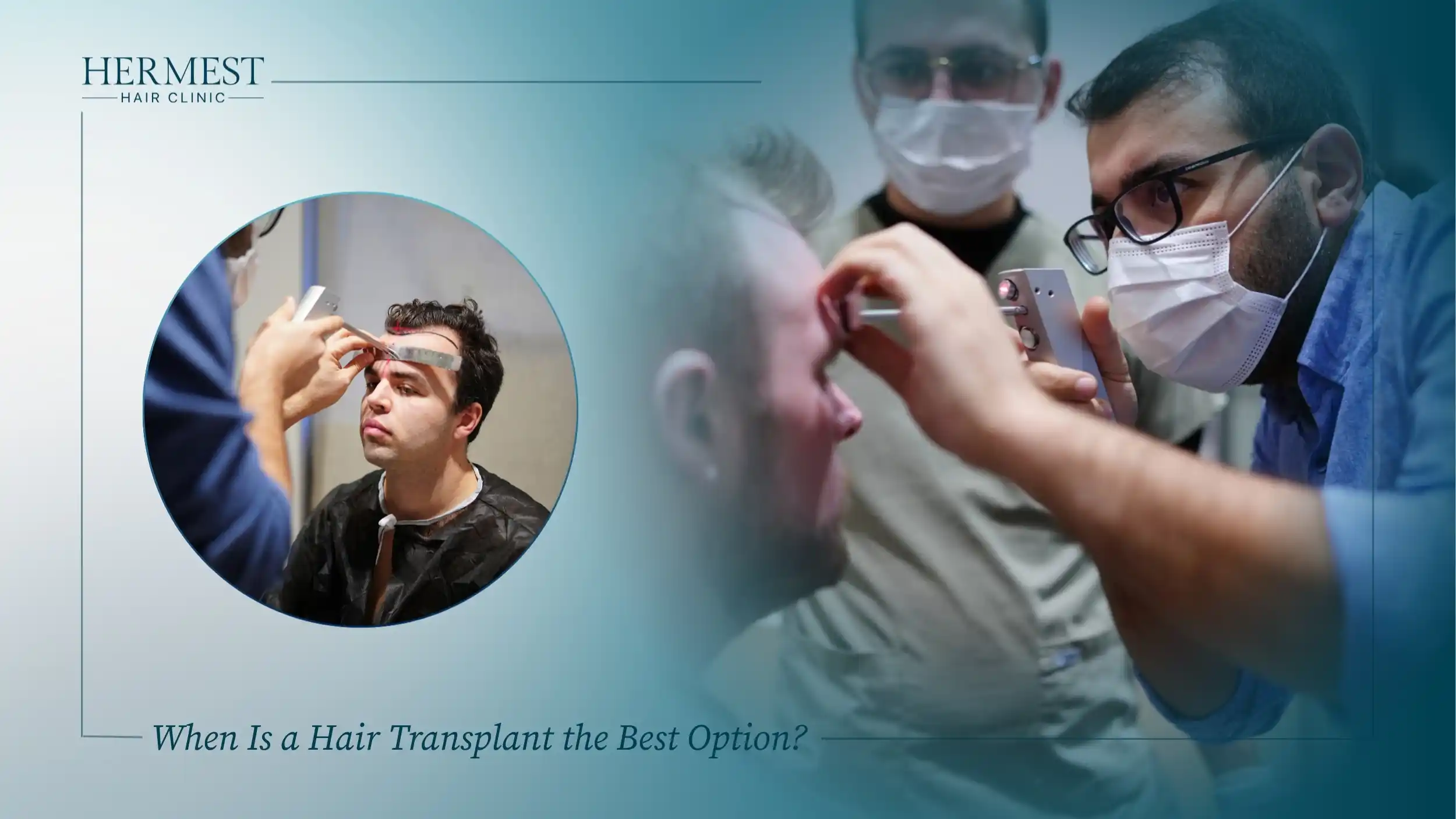
A haircut can improve your appearance immediately, but it cannot restore hair that has already disappeared. When crown thinning becomes more advanced or medical treatments no longer provide enough improvement, a hair transplant for crown baldness may offer a long-term solution.
Not everyone with a thinning crown needs surgery. The decision depends on several factors, including the extent of hair loss, donor hair quality, age, and whether your hair loss has stabilized.
Who Is a Good Candidate?
In general, the best candidates for a hair transplant have:
- Stable or slowly progressing male pattern baldness.
- Healthy donor hair at the back and sides of the scalp.
- Realistic expectations about density and coverage.
- Good overall health.
A consultation with an experienced hair restoration surgeon helps determine whether surgery is appropriate or if medical treatment should be tried first.
Why Crown Transplants Require Experience
The crown is one of the most technically demanding areas to restore.
Unlike the front hairline, crown hair grows in a natural spiral, often called the crown whorl. Recreating this pattern requires careful planning of graft direction, angle, and density. Even slight variations can affect how natural the final result appears.
For this reason, many surgeons prioritize restoring the frontal hairline before the crown when donor hair is limited.
Dr. Ahmet Murat says:
“The crown isn’t simply filled with grafts. Every follicle must follow the patient’s natural growth pattern. Careful planning is essential to achieve a result that still looks natural years later.”
FUE and DHI Techniques
Modern FUE hair transplant techniques allow individual follicular units to be harvested and transplanted with minimal scarring. Depending on the patient’s needs, surgeons may recommend:
- FUE, for efficient coverage of larger crown areas.
- Sapphire FUE, which uses precision blades to create recipient sites.
- DHI, which can provide additional control in selected cases where existing hair needs to be preserved.
The most appropriate technique depends on your scalp characteristics and surgical plan rather than one method being universally better than another.
Combining Surgery With Long-Term Hair Care
A transplant restores hair to thinning areas, but it does not stop the underlying progression of androgenetic alopecia. Many patients continue using treatments such as minoxidil or finasteride after surgery to help protect their existing, non-transplanted hair. Regular follow-up and good scalp care also contribute to maintaining long-term results.
For men whose crown thinning continues despite the right haircut and medical therapy, a hair transplant can provide a natural-looking improvement that blends seamlessly with the surrounding hair when performed by an experienced surgeon.
Frequently Asked Questions
The best haircut depends on how advanced your crown thinning is. For mild to moderate hair loss, styles such as a crew cut, French crop, textured crop, or buzz cut usually reduce the contrast between thicker and thinner areas. For more advanced hair loss, a very short buzz cut or a shaved head often creates the most balanced appearance.