
Hair Transplant Abroad: Best Countries, Costs & Safety Tips
 ChatGPT
 Claude
 Perplexity
 Grok
Grok
 Gemini


Hair transplant abroad has become a preferred solution for thousands of men and women seeking affordable, high-quality hair restoration. With advanced techniques, skilled surgeons, and competitive pricing in countries like Turkey, India, and Mexico, medical tourism for hair transplants is now more accessible and effective than ever.
But choosing to travel for surgery isn’t just about saving money—it requires understanding the risks, evaluating safety standards, and knowing which destination offers the best overall care. In this guide, we’ll walk through the top countries, cost comparisons, safety tips, and insights from Dr. Ahmet Murat, head surgeon at Hermest Hair Clinic, to help you make an informed decision.
Why Patients Travel for Hair Transplants
Getting a hair transplant abroad has become a popular solution for individuals looking to restore their hair without overpaying. From cost savings to specialized care, there are several reasons why thousands choose to travel for this procedure each year.
Significant Cost Savings
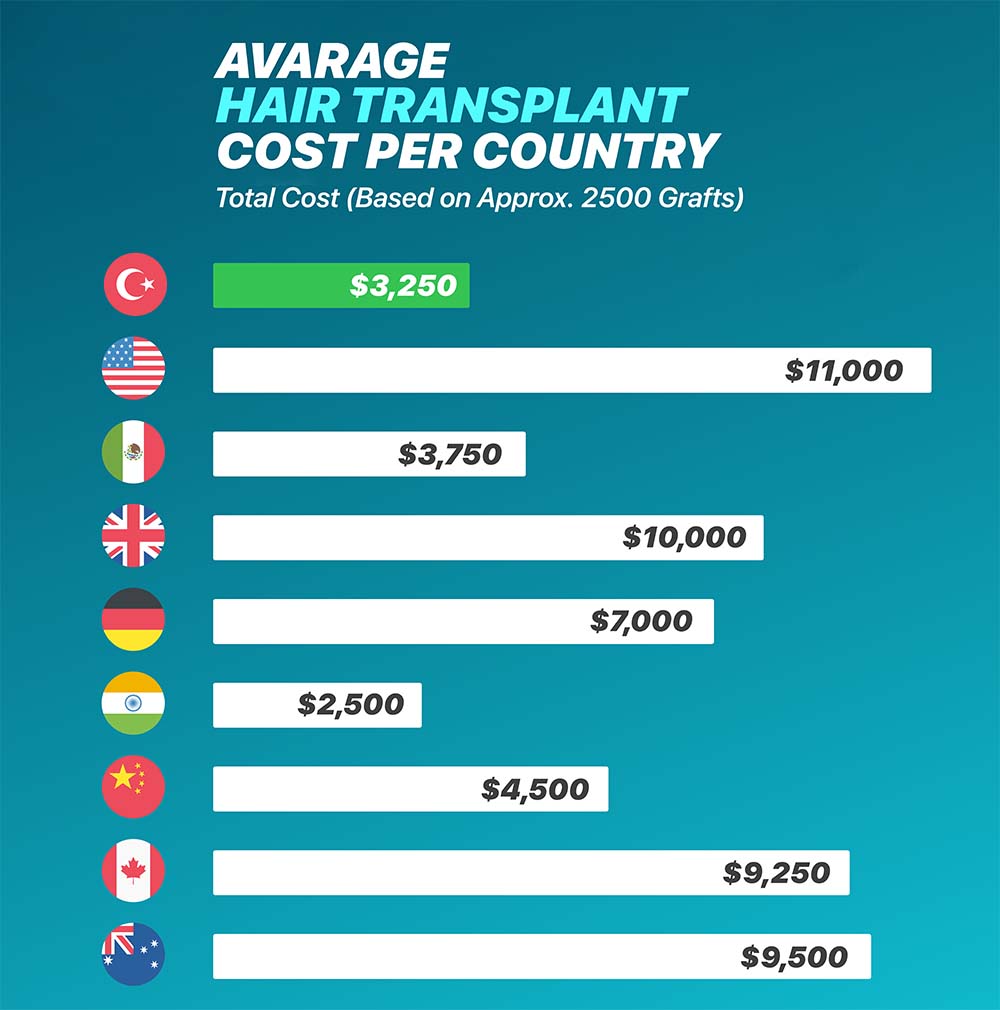
In the U.S., U.K., or most of Western Europe, a hair transplant can cost anywhere from $6,000 to $15,000, depending on the number of grafts and the technique used. In contrast, the cost of a hair transplant abroad—particularly in countries like Turkey, India, or Mexico—typically ranges from $1,500 to $3,500, including accommodation and aftercare.
Dr. Ahmet Murat explains:
“Patients often assume a lower price means lower quality. But with the right clinic, that’s simply not true. At Hermest Hair Clinic, we maintain international standards while keeping costs transparent and accessible.”
Access to Experienced Surgeons
Clinics in countries such as Turkey, South Korea, and Thailand frequently handle thousands of transplants annually. This high volume allows surgeons to refine techniques like FUE and DHI, often leading to better outcomes than clinics performing fewer procedures.
Hassle-Free Medical Tourism Packages
Reputable clinics abroad offer all-inclusive hair transplant packages, which often cover:
- Hotel accommodation (3–5 nights)
- Airport transfers
- Translation services
- Consultation and post-op care kits
This bundled approach not only reduces stress but makes the entire process easier to navigate.
Top Countries for Hair Transplant Abroad: Pros, Cons & Cost Breakdown
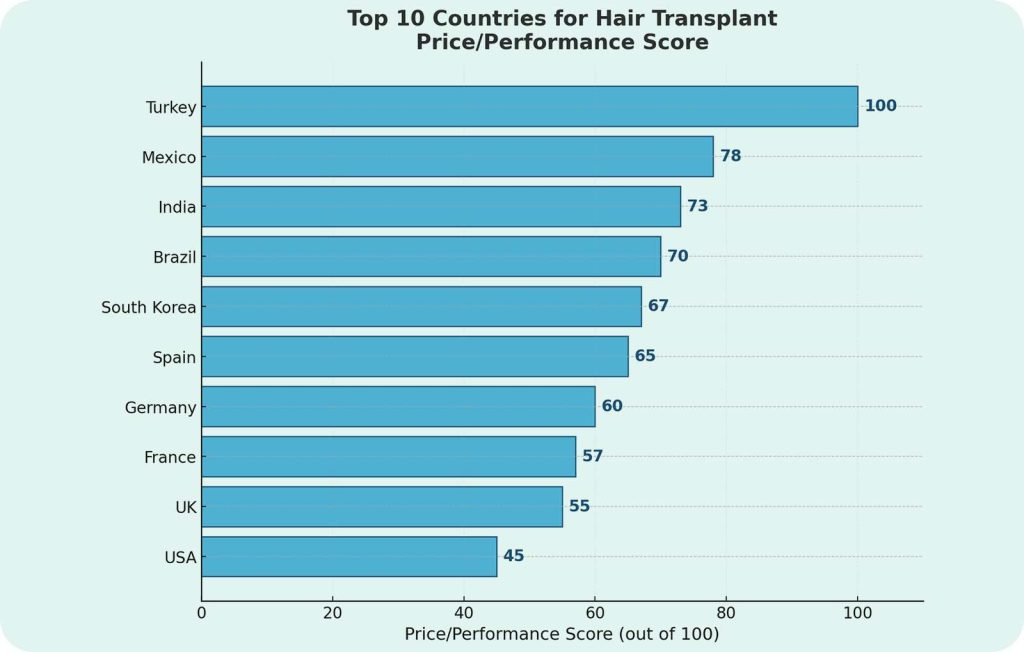
Choosing the best country for hair transplant depends on more than just price. Factors like clinic accreditation, language barriers, legal protections, and post-op care can significantly impact your experience and final result. Below is a detailed look at the most popular destinations for medical tourism hair transplant procedures, including what you can expect in terms of safety, service, and outcomes.
Turkey: The Global Leader in Hair Transplants
Average cost: $1,500 – $3,500
Techniques used: FUE, Sapphire FUE, DHI
Language: English widely spoken in clinics
Pros:
- High procedure volume = experienced surgeons
- All-inclusive packages with accommodation, transfers, meds
- Clinics like Hermest Hair Clinic offer proprietary techniques with >98% graft survival rate
Cons:
- Clinic quality varies drastically—research is essential
- Tourist-focused clinics may rush procedures to maintain volume
Dr. Ahmet Murat emphasizes:
“At Hermest, we’ve built our reputation not on volume but on surgical precision and patient satisfaction. Every case is reviewed individually to ensure medical safety and long-term success.”
Mexico: Accessible for U.S. Patients
Average cost: $2,000 – $4,000
Techniques used: FUE, DHI
Language: Mostly Spanish, but English-speaking staff common in major clinics
Pros:
- Close to the U.S.—short flights and low travel costs
- Reasonable pricing with flexible scheduling
- No major time zone differences for post-op communication
Cons:
- Clinic quality can be inconsistent
- Fewer high-volume hair transplant centers than Turkey or India
India: High Medical Standards at Lower Costs
Average cost: $1,000 – $2,500
Techniques used: FUE, FUT, DHI
Language: English commonly used in medical settings
Pros:
- Highly trained doctors, many internationally certified
- Clinics in Delhi, Mumbai, and Bangalore are known for medical tourism
- Very affordable, even with longer travel times
Cons:
- Travel can be challenging due to visa requirements and long flights
- Follow-up care access may be limited for international patients
Thailand: Quality + Tourism Appeal
Average cost: $2,500 – $4,000
Techniques used: FUE, DHI
Language: English in private clinics
Pros:
- Excellent post-op recovery facilities in tourist areas
- Safe, well-regulated private healthcare system
- Popular for combining medical treatment with vacation
Cons:
- Higher costs than Turkey or India
- Less hair transplant specialization compared to Turkey
Hungary & 🇵🇱 Poland: Rising Options in Europe
Average cost: $2,500 – $4,500
Techniques used: FUE, DHI
Language: English spoken in major clinics
Pros:
- Convenient for EU citizens (no visa)
- High hygiene and medical regulation standards
- Shorter travel time within Europe
Cons:
- Fewer clinics overall, limited appointment availability
- Costs may be higher than expected due to EU regulations
Summary Comparison Table
| Country | Avg. Cost (USD) | Common Techniques | Standout Feature |
|---|---|---|---|
| Turkey | $1,500–$3,500 | FUE, DHI, Sapphire FUE | High-volume expertise & packages |
| Mexico | $2,000–$4,000 | FUE, DHI | Close to U.S. + flexible access |
| India | $1,000–$2,500 | FUE, FUT, DHI | Highly affordable + qualified surgeons |
| Thailand | $2,500–$4,000 | FUE, DHI | Vacation-friendly recovery |
| Hungary | $2,500–$4,500 | FUE, DHI | EU-regulated medical care |
Risks of Hair Transplant Abroad & How to Stay Safe
Traveling for a hair transplant abroad can be life-changing—but it comes with potential risks if not properly planned. From inconsistent clinic standards to communication issues, understanding what could go wrong—and how to prevent it—should be part of every patient’s preparation.
Inconsistent Medical Standards
Not all countries follow the same health and safety regulations. Clinics operating without proper licenses or under unregulated conditions may perform rushed procedures, use outdated tools, or skip pre-operative assessments.
Dr. Ahmet Murat warns:
“We’ve treated many patients who came to us after complications at other clinics abroad. The lack of sterilization, rushed timelines, or poor graft handling can lead to infections, scarring, or failed transplants. At Hermest, patient safety always comes before profit.”
How to stay safe:
- Verify that the clinic is accredited and the surgeon is board-certified.
- Ask for before/after photos and speak to past patients if possible.
- Avoid clinics that push for immediate payment or make unrealistic promises.
Language and Communication Barriers
Misunderstandings due to language can lead to errors in graft planning, incorrect expectations, or incomplete aftercare instructions.
What to look for:
- Clinics that offer multilingual support, especially in English.
- Written aftercare instructions in your native language.
- Video consultations prior to booking the surgery.
Limited Post-Operative Follow-Up
Once you return home, managing swelling, itching, or complications may be difficult if your original clinic doesn’t offer remote support.
Dr. Ahmet Murat explains:
“At Hermest, we don’t stop caring once the procedure ends. We offer lifetime online follow-up and clear post-op protocols to ensure every patient feels supported—whether they’re 10 km or 10,000 km away.”
Risk of Infection or Botched Results
Procedures done in non-sterile environments or by untrained technicians can result in poor hair growth, infections, or unnatural-looking hairlines.
How to reduce risk:
- Choose clinics with documented hygiene protocols.
- Check that the procedure will be performed by the doctor—not delegated to unqualified staff.
- Research complications from previous patients online (forums, reviews, Reddit).
Hair Transplant Abroad Packages: What’s Included & What to Check
One of the main reasons international patients choose a hair transplant abroad is the convenience of all-inclusive packages. These bundles offer simplicity—but understanding exactly what’s covered (and what’s not) is essential to avoid unexpected costs or compromises in quality.
What’s Typically Included in Hair Transplant Packages Abroad?
Most reputable clinics offer the following:
- Pre-surgery consultation (online or in person)
- Hair analysis and planning session
- FUE or DHI procedure with a fixed graft range
- Post-op medications and shampoo kits
- Hotel accommodation (usually 3–5 stars, 2–4 nights)
- Airport transfers (to and from the clinic/hotel)
- Translator or English-speaking coordinator
Dr. Ahmet Murat explains:
“Our packages are built to reduce patient stress. We handle all logistics—so they can focus entirely on recovery. But we never compromise on consultation quality or post-op care.”
Optional or Extra Services (Check Before Booking)
Some clinics list services as “included” but charge extra at the last minute. Always clarify whether the following are part of the package:
- Blood tests and medical clearance
- Additional grafts over a certain count (e.g., 3,000+)
- PRP therapy or stem cell boosters
- Travel insurance or emergency support
- Additional nights at the hotel
Warning Signs in Too-Cheap Packages
Cheap hair transplant overseas offers (e.g., under $1,000) may seem attractive but often involve:
- Technician-led surgeries instead of doctors
- Generic hotel options far from clinic
- High-pressure sales tactics
- No real aftercare or follow-up
At Hermest Hair Clinic, we maintain transparency on all package components. Our patients receive clear documentation, a personalized graft plan, and 24/7 support both during and after their stay.
How to Choose the Right Clinic & Questions to Ask
With so many international clinics offering hair transplant abroad packages, the challenge isn’t finding options—it’s finding the right one. A well-chosen clinic can give you natural, permanent results. A poorly chosen one can lead to complications, scarring, and disappointment.
Main Factors to Evaluate
Doctor Credentials & Surgical Involvement
- Is the procedure performed by a licensed surgeon or technicians?
- Is the surgeon present throughout the procedure?
Clinic Accreditation
- Is the facility licensed by the local Ministry of Health or equivalent?
- Do they follow international sterilization and patient safety protocols?
Experience & Specialization
- How many transplants has the clinic performed?
- Do they specialize in a particular technique (FUE, DHI, Sapphire FUE)?
Before/After Results
- Do they provide authentic patient results (not stock images)?
- Are results consistent across different hair types and genders?
Follow-Up Process
- Is follow-up offered after you return home?
- Do they provide access to your surgeon for remote consultation?
Dr. Ahmet Murat advises:
“Don’t choose based on price alone. Ask to speak with your surgeon before booking. At Hermest, we offer detailed video consultations, so patients know exactly what to expect—and who’s operating on them.”
10 Questions to Ask Before Booking
- Who will perform my surgery—doctor or technician?
- How many grafts are included in the package price?
- Do you use Sapphire blades, Choi pens, or micro punches?
- What happens if I need more grafts during the procedure?
- Will I get written post-op instructions in English?
- Is anesthesia administered by a certified professional?
- What infection control measures are in place?
- Can I speak to former international patients?
- What happens if I need correction or touch-ups?
- Do you provide lifetime graft guarantee or results assurance?
FUE vs DHI: Which Technique Is Best Abroad?
When planning a hair transplant abroad, one of the most important decisions is choosing the right technique. Most international clinics offer FUE and DHI, each with unique advantages depending on your goals, hair loss pattern, and budget.
What Is FUE?
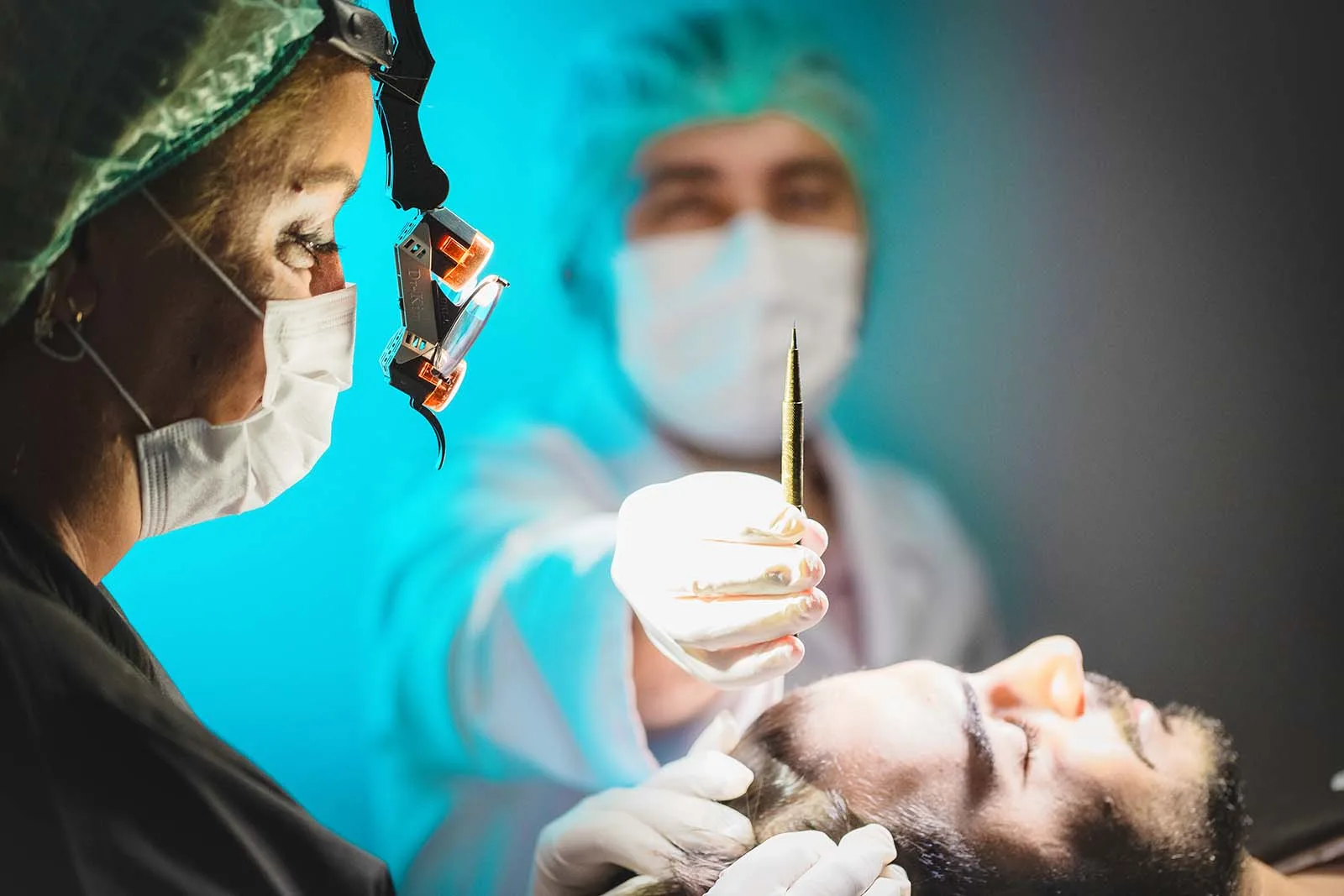
FUE (Follicular Unit Extraction) involves extracting individual hair follicles from the donor area using a micro punch tool, then creating incisions in the recipient area before placing the grafts manually.
Pros:
- Ideal for large coverage areas (crown, temples, mid-scalp)
- Shorter procedure time
- More affordable compared to DHI
- Widely available in clinics abroad
Cons:
- Slightly longer recovery due to incisions
- Less precision in hairline placement
What Is DHI?
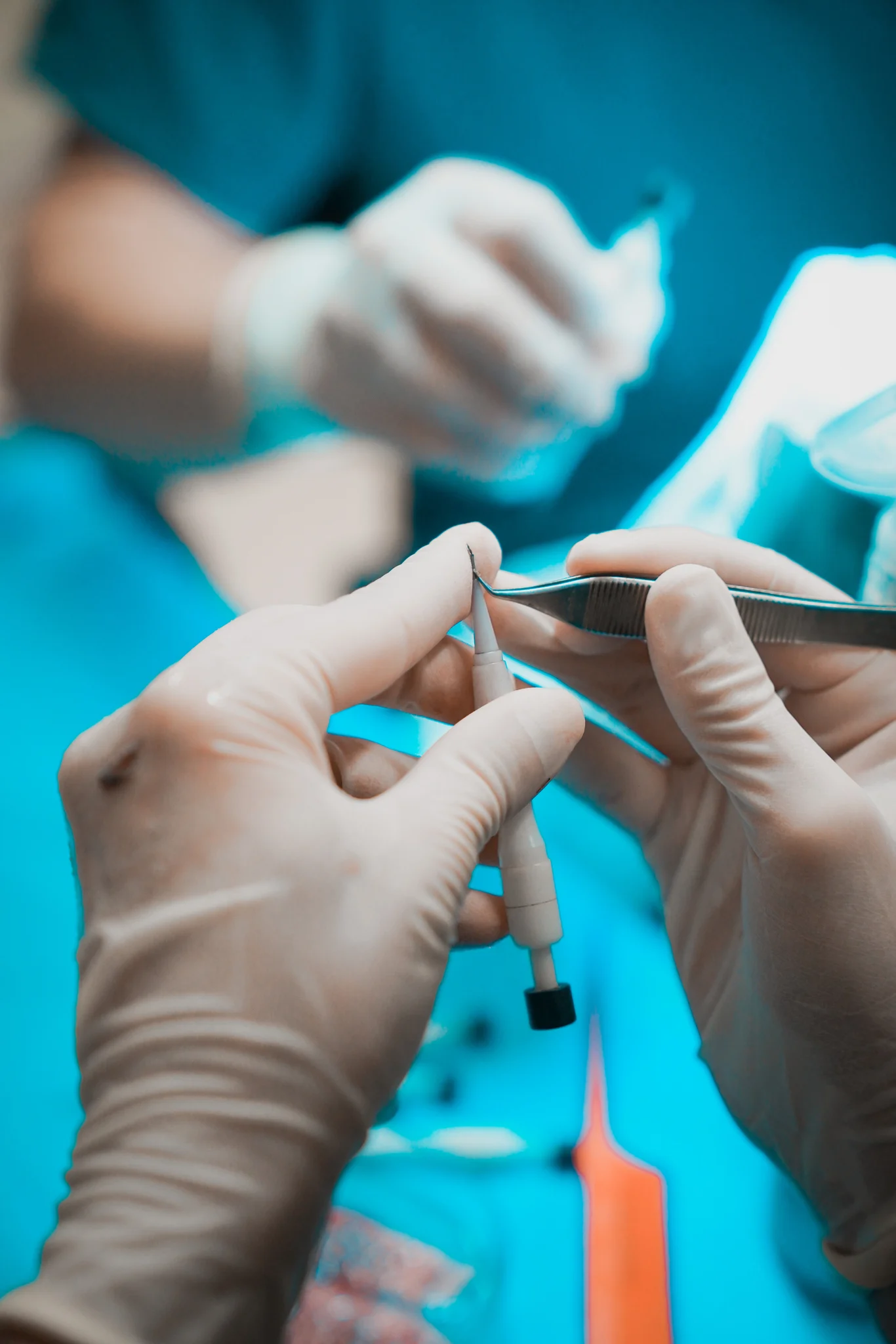
DHI (Direct Hair Implantation) uses a Choi implanter pen to place grafts directly after extraction, without pre-made incisions. It offers more control over angle, direction, and density.
Pros:
- Better for dense, natural-looking hairlines
- Minimal trauma to scalp
- Shorter recovery time
- High precision in graft placement
Cons:
- More expensive (due to equipment and longer procedure time)
- May not be suitable for covering large bald areas
Dr. Ahmet Murat explains:
“At Hermest Hair Clinic, we assess each patient to determine whether FUE or DHI is the better fit. DHI works well for dense frontal zones, while FUE is often best for full scalp coverage. Sometimes, we even combine both methods in a single session.”
Technique Comparison Table
| Feature | FUE | DHI |
|---|---|---|
| Ideal Use Case | Large bald areas | Frontal hairline precision |
| Tool Used | Micro punch + forceps | Choi Implanter Pen |
| Scalp Trauma | Moderate | Minimal |
| Healing Time | 10–14 days | 7–10 days |
| Cost Abroad | $1,500 – $3,000 | $2,000 – $4,000+ |
| Availability | Widely available | Available in select clinics |
Final Checklist Before Booking Your Hair Transplant Abroad
Before confirming your appointment and booking your flight, take time to go through this final checklist. A successful hair transplant abroad depends not just on choosing the right country, but selecting the right clinic, asking the right questions, and preparing properly.
Clinic & Surgeon Verification
- Confirm that the clinic is licensed and regulated.
- Verify the surgeon’s credentials and specialization in hair transplantation.
- Schedule a pre-surgery consultation (preferably video) with the doctor—not just a coordinator.
Transparent Pricing & Package Inclusions
- Clarify the number of grafts included in the quoted price.
- Understand what’s included: hotel, transportation, post-op medication, etc.
- Ask if there are hidden fees for extras like PRP, extra nights, or additional grafts.
Technique & Approach
- Know which technique will be used (FUE, DHI, or a combination).
- Ask if the procedure will be performed with manual tools or motorized systems.
- Confirm who will extract and implant the grafts.
Safety & Hygiene Protocols
- Ask about sterilization procedures and infection control.
- Ensure anesthesia is administered by licensed personnel.
- Request information about complication management and emergency protocols.
Post-Op Support
- Get written aftercare instructions in your language.
- Ask about follow-up support after you return home.
- Confirm how to contact the clinic for any issues during recovery.
Dr. Ahmet Murat emphasizes:
“Patients trust us with their appearance and confidence. That’s a responsibility we don’t take lightly. At Hermest, we build each plan based on medical necessity—not sales targets—and maintain follow-up for years after the procedure.”
Statistics and trends on hair transplant abroad
- Over 1.5 million medical tourists travel abroad each year for cosmetic procedures, with hair transplants being among the top 3 most requested surgeries. (Source: Medical Tourism Association, 2024)
- Turkey accounts for over 60% of all hair transplant medical tourism globally, performing more than 500,000 procedures annually. (Source: Turkish Ministry of Health, 2024)
- The average cost of a hair transplant in the U.S. is $7,000 to $15,000, while in Turkey it ranges from $1,500 to $3,500, making it up to 80% cheaper. (Source: ISHRS Global Census, 2024)
- The demand for DHI hair transplant abroad has grown by 42% in the past two years, especially among patients seeking higher hairline density and quicker recovery. (Source: Global Market Insights, 2025)
- More than 85% of international patients prioritize clinics with all-inclusive packages when choosing a hair transplant abroad. (Source: Health Travel Index, 2024)
- Europe and North America represent the largest patient base for overseas hair transplants, with UK and Germany being top origin countries. (Source: Medical Departures, 2024)
- Online search interest for “hair transplant abroad” has increased by 30% year-over-year from 2022 to 2025. (Source: Google Trends)
- Clinics offering remote video consultations before and after surgery have 30% higher patient satisfaction and return rates. (Source: Hermest Clinic internal data, 2025)
- 97% of patients say price transparency and clear graft limits significantly influence their decision to choose one clinic over another. (Source: WhatClinic survey, 2024)
- Countries like India and Thailand are now aggressively expanding into premium hair transplant services, with annual growth rates exceeding 12%. (Source: Deloitte Medical Travel Report, 2025)
FAQs
Turkey is widely considered the best country for a hair transplant due to its experienced surgeons, competitive pricing (often $1,500–$3,500), and comprehensive medical tourism packages that include hotel stays and transfers.
Ready to Restore Your Hair with Confidence?
Traveling for a hair transplant in Turkey offers not just affordability, but medical expertise trusted by thousands each year. With internationally recognized techniques like FUE and DHI, advanced safety protocols, and personalized packages—Turkey remains the leading destination for permanent, natural-looking results.
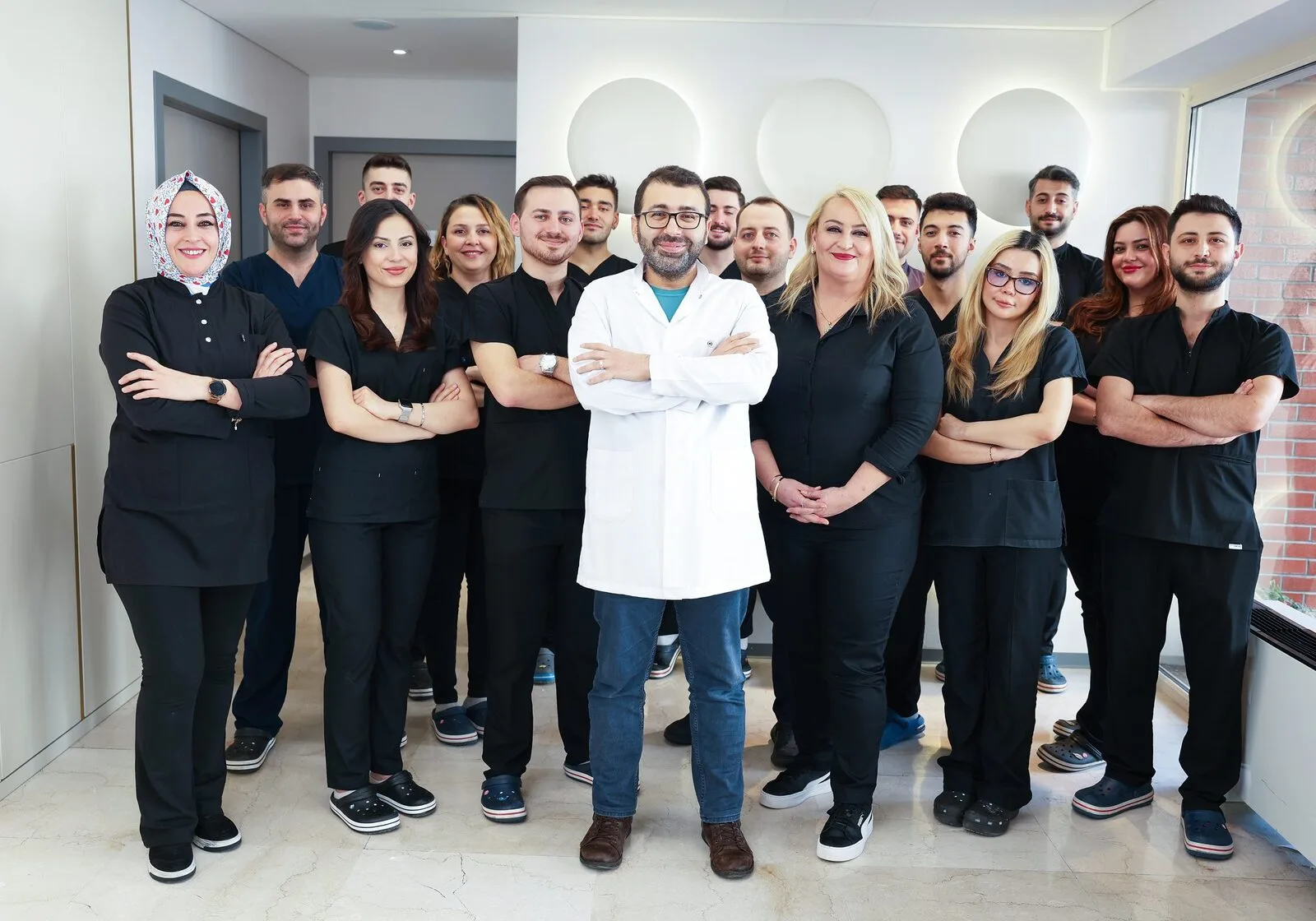
At Hermest Hair Clinic, we combine surgical precision, transparent pricing, and ongoing patient care to ensure your hair restoration journey is smooth from start to finish.
Dr. Ahmet Murat explains:
“We don’t just restore hair—we restore confidence. Every treatment at Hermest is customized, medically supervised, and designed for long-term satisfaction. We understand your concerns, and we take every detail seriously.”
Book a Free Online Consultation Today
Let our team assess your needs, explain your graft options, and walk you through the full process—before you ever step on a plane.
Your hair. Your decision. Let’s make it the right one—with Hermest.