

Aaron Paul Hair Transplant: Facts, Rumors, and Hairline Analysis
 ChatGPT
 Claude
 Perplexity
 Grok
Grok
 Gemini

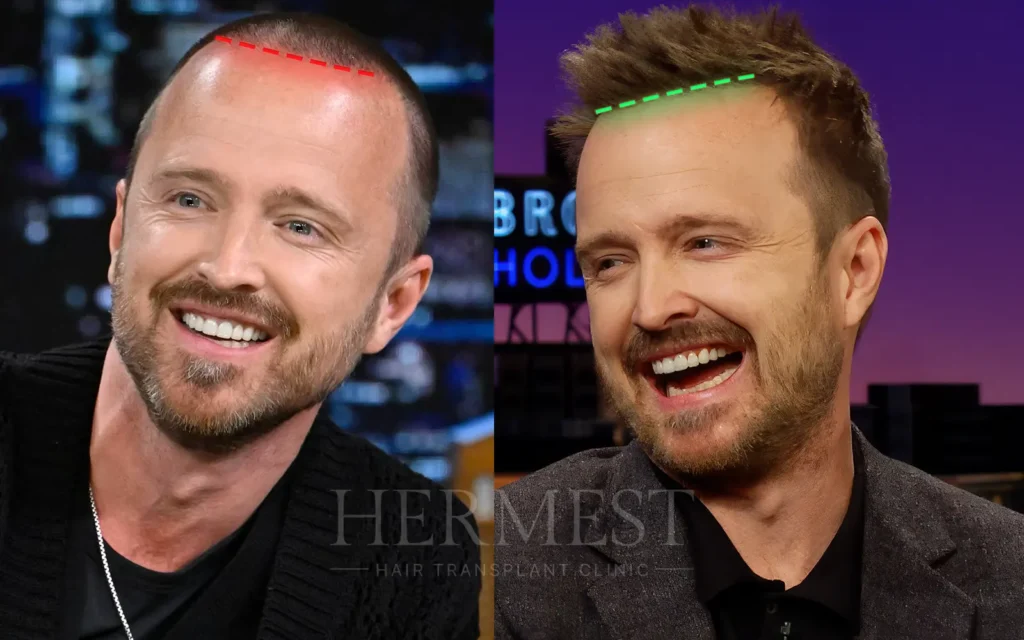
Searches for Aaron Paul hair transplant usually start with the same feeling. Something looks different. His hairline seems fuller in recent appearances. Older photos show recession. Newer ones feel more controlled. That contrast pushes people to ask whether a procedure happened or whether something else explains the change.
Aaron Paul has never publicly confirmed having a hair transplant. There are no interviews, medical disclosures, or verified statements supporting that claim. Still, the discussion continues because his appearance has evolved over time, and hair is one of the most noticeable markers of aging on camera.
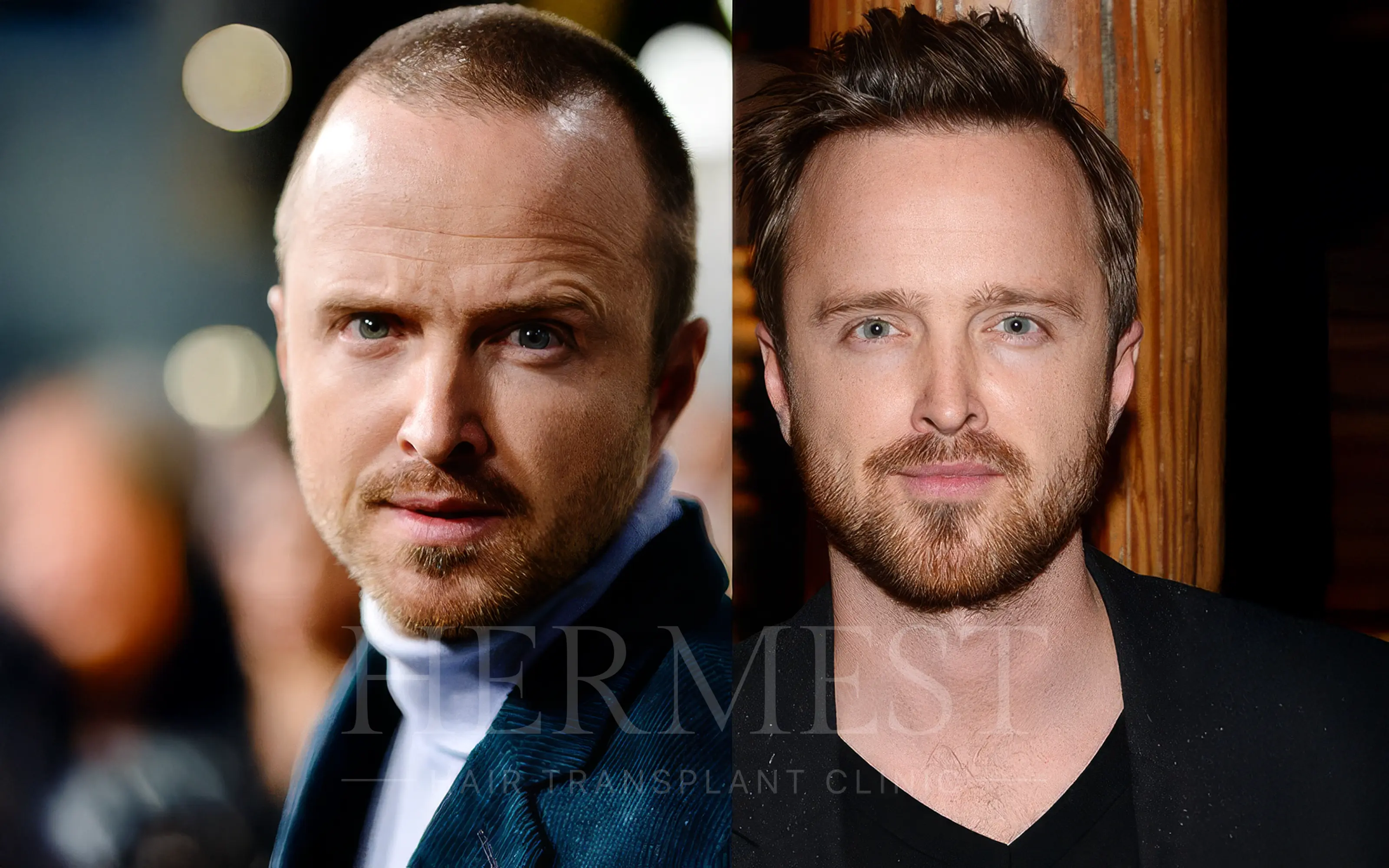
When people look at Aaron Paul hairline photos from the Breaking Bad era and compare them to later red-carpet appearances, the differences feel obvious. At the same time, those differences are not automatically surgical. Hair length, styling, lighting, and natural aging all play roles. Aaron Paul long hair phases can soften recession. Shorter cuts can exaggerate it. This is where speculation often replaces analysis.
From a medical perspective, Aaron Paul balding or Aaron Paul hair loss would not be unusual. Male pattern hair loss affects the majority of men to some degree. According to the American Academy of Dermatology, gradual recession and temple thinning are common, even without aggressive balding.
Dr. Ahmet Murat explains:
“Not every fuller-looking hairline is the result of a transplant. Changes in styling, hair length, and medical treatments can dramatically alter perception.”
This article separates curiosity from evidence. We will look at how Aaron Paul’s hair has changed over time, and what medical explanations make sense. We will also cover why celebrity hair transplant rumors persist, even when proof is absent.
The goal is clarity, not gossip. If you are trying to understand what is real, what is assumed, and what hair science actually supports, this is where that conversation should begin.
Quick Insights
- There is no confirmed evidence that Aaron Paul has had a hair transplant. All claims remain speculative.
- Searches for Aaron Paul hair transplant are usually driven by visible hairline changes, not verified information.
- Changes in Aaron Paull hairline appearance can be explained by hairstyle length, professional styling, lighting, and natural aging.
- Mild Aaron Paul hair loss and early frontal recession are common in adult men and do not automatically indicate surgery.
- Aaron paul long hair styles can significantly reduce visible thinning by adding overlap and volume.
Timeline of Aaron Paul’s Hairline (Before and After Public Appearances)
When people discuss Aaron Paul hair transplant, they usually rely on visual comparison. Photos from different years are placed side by side. Early roles show recession. Later appearances feel more controlled. The assumption follows quickly, but the reality requires more care.
Early career and Breaking Bad years
During the early seasons of Breaking Bad, Aaron Paul often wore very short hairstyles. These cuts exposed the temples and frontal corners, making recession easier to notice. In several appearances, mild thinning around the hairline was visible. This aligns with early-stage male pattern hair loss and does not suggest advanced Aaron Paul balding.
Short hair reveals structure. It does not forgive uneven density.
Later appearances and fuller looks
In later years, Aaron Paul frequently appeared with longer, textured hairstyles. Aaron paul long hair styles added volume and softened the frontal frame. Longer hair overlaps weaker zones and reduces scalp contrast, which can make the hairline appear fuller without any medical intervention.
Beard growth, facial aging, and styling maturity also changed how the face and hairline balanced visually. These factors are often ignored in online comparisons.
According to the American Academy of Dermatology, hair appearance can fluctuate significantly with length, grooming, and aging, even when hair loss continues slowly underneath.
Dr. Ahmet Murat explains:
“Hairline perception changes with styling and facial proportions. A fuller look does not automatically mean new hair.”
What photos can and cannot prove
Public images can show change, but they cannot confirm cause. There is no visible evidence of typical transplant markers such as abrupt hairline reconstruction or density transitions. At the same time, subtle improvement does not rule out non-surgical support.
Photos raise questions. They do not answer them.
Next, we will look at what evidence actually exists, and why no public confirmation matters when evaluating claims about a celebrity hair transplant.
What the Evidence Actually Shows
When discussing Aaron Paul hair transplant, the most important fact is also the simplest one. There is no public confirmation that Aaron Paul has had a hair transplant. No interview. No statement. No verified source. Everything beyond that point is interpretation.
This matters more than people realize.
No confirmation does not mean no explanation
In celebrity hair discussions, silence is often treated as proof. That is a mistake. Many public figures never comment on cosmetic procedures, whether they have had them or not. In medical analysis, absence of confirmation means the claim remains unverified, not secretly true.
Several medically oriented hair loss platforms that have reviewed Aaron Paul’s case state clearly that there is no direct evidence supporting surgery. They point instead to natural aging, styling, and possible non-surgical care as equally valid explanations.
According to guidance from the American Academy of Dermatology, gradual changes in hairline density are common over time. Hair loss does not always progress in a straight line. Periods of stability are normal, especially when hair is cut or styled differently.
What would qualify as real evidence?
From a clinical perspective, evidence would include at least one of the following:
- A direct statement from the individual
- Consistent, abrupt hairline reconstruction visible across appearances
- Clear density transitions typical of surgical placement
None of these are present in Aaron Paul’s public timeline. His Aaron Paul hairline has changed subtly, not dramatically. That pattern fits several non-surgical explanations.
Dr. Ahmet Murat explains:
“When we analyze photos medically, we look for patterns, not impressions. Subtle change without structural signs usually points away from surgery.”
Why skepticism protects readers
Celebrity hair transplant articles often blur opinion and fact. That creates unrealistic expectations. Readers assume surgery can deliver invisible change with no markers, no recovery, and no trade-offs.
That is not how hair restoration works.
If a claim cannot be supported, it should not be treated as truth. Understanding this protects patients from chasing outcomes based on assumptions rather than medical reality.
Next, we will explore why speculation continues anyway, and what non-surgical factors can realistically explain changes in Aaron Paul’s hair appearance over time.
Why Speculation Persists
Even without confirmation, discussion around Aaron Paul hair transplant continues. That persistence has clear reasons. Hair appearance is influenced by many variables that are easy to overlook when photos are compared without context.
Styling changes alter perception more than people expect
Hair length plays a major role. Aaron paul long hair phases create overlap and weight at the front. That reduces visible scalp and softens the temples. Shorter cuts do the opposite. They expose structure and highlight recession. Lighting, camera angle, and grooming finish amplify these effects.
Public appearances are styled. Red-carpet hair is rarely neutral. Volume products, texture sprays, and professional blow-drying can create density that looks surgical, even when it is not.
According to dermatology guidance from the American Academy of Dermatology, cosmetic styling alone can significantly change how thinning hair is perceived, especially at the frontal hairline.
Natural aging does not always mean rapid loss
Male pattern hair loss progresses unevenly. Periods of stability are common. Some men experience early recession that slows for years. This can create the impression of improvement when there is simply less visible change over time.
This is relevant when discussing Aaron Paul balding or Aaron Paul hair loss. A stable hairline photographed under better conditions can look fuller without new growth.
Dr. Ahmet Murat explains:
“Hair loss progression is not linear. Many patients stabilize for long periods, especially with proper care.”
Non-surgical treatments often go unmentioned
Medications such as finasteride and topical minoxidil are widely used, especially among public figures. These treatments can slow loss, thicken miniaturized hairs, and improve overall appearance without surgery. According to peer-reviewed studies indexed on PubMed, stabilization alone can change visual density noticeably.
None of these options require public disclosure. None leave visible markers.
Why celebrity narratives simplify reality
Celebrity hair stories often reduce complex biology into a single explanation. Surgery becomes the default answer because it feels decisive. Real hair science is quieter and slower.
Understanding this helps separate curiosity from assumption. Next, we will explain what a hair transplant would realistically look like if it had happened, and why Aaron Paul’s case does not clearly match that pattern.
What a Hair Transplant Would Actually Look Like
To evaluate claims about Aaron Paul hair transplant, it helps to understand what modern hair restoration usually leaves behind. Even the most refined procedures follow biological and technical rules. When those rules are absent, conclusions should stay cautious.
Typical visual signs of a surgical transplant
In most confirmed cases, a hair transplant creates at least one visible pattern. The hairline shows structural change. Density increases abruptly rather than gradually. The frontal zone looks newly reinforced, often with a clearer outline in early months.
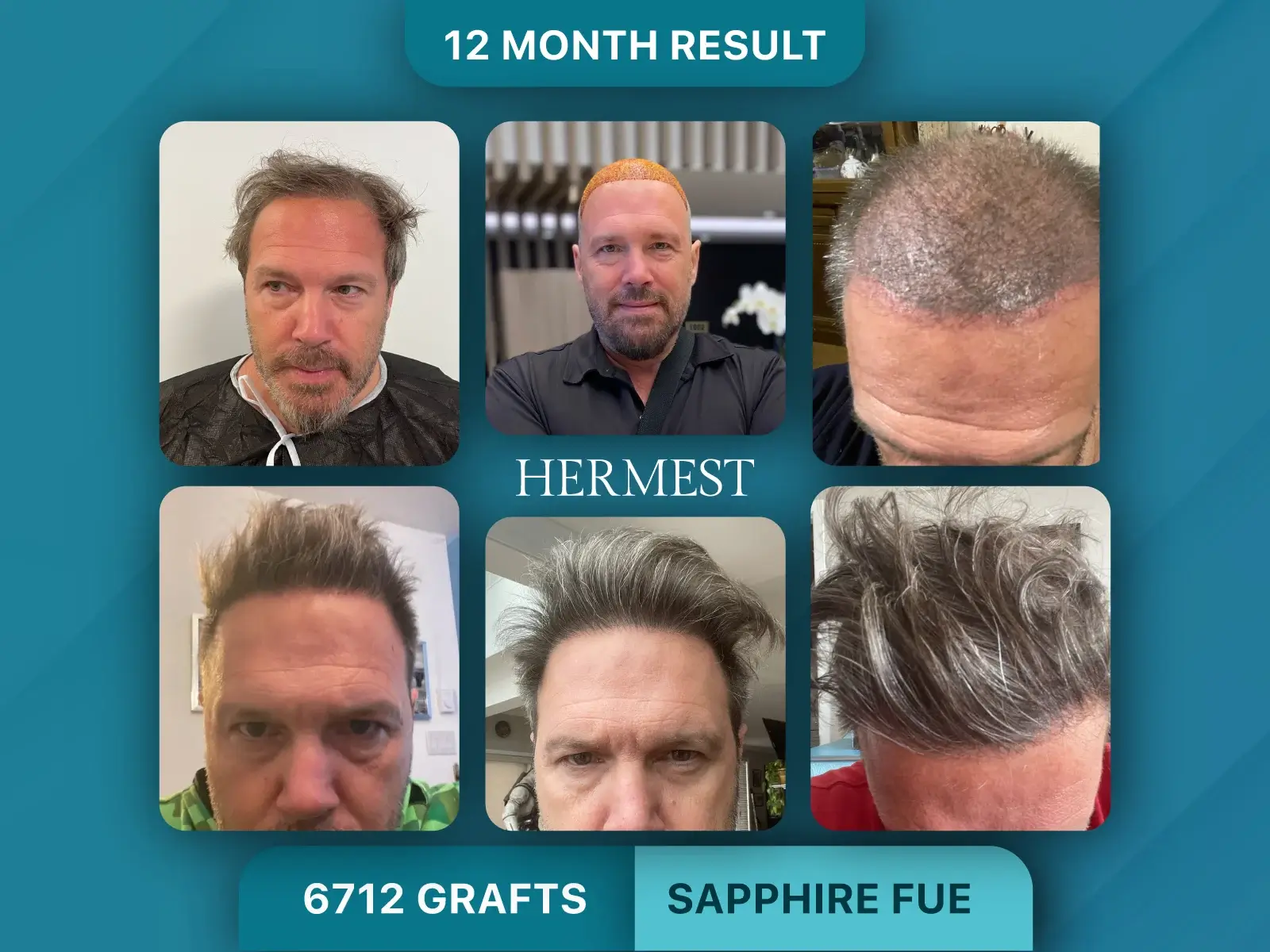
With FUE-based procedures, these changes can be subtle, but they still follow a recognizable logic. New hair grows where there was little before. Density distribution follows a design, not randomness.
In Aaron Paul’s public timeline, the Aaron Paul hairline does not show this kind of structural shift. Changes appear gradual and inconsistent, which aligns more with styling and stabilization than reconstruction.
Why “natural results” still leave clues
People often assume that a good transplant leaves no trace. That is only partly true. A well-executed transplant looks natural, but it still introduces hair where follicles were missing. Under consistent lighting and angles, that change becomes measurable.
According to ISHRS educational material, even refined transplants alter density patterns in ways trained eyes can detect over time.
Dr. Ahmet Murat explains:
“Natural does not mean invisible. Surgery leaves a density signature, even when done well.”
Why Aaron Paul’s case resists certainty
In Aaron Paul’s case, there is no clear point where density suddenly increases. There is no visible transition from sparse to reinforced zones. His Aaron Paul hair loss pattern appears stable rather than corrected.
That does not prove surgery did not happen. It means there is no strong visual evidence that it did.
This distinction matters. Treating uncertainty as confirmation misleads readers and creates unrealistic expectations about what surgery can achieve without signs.
A fuller look does not always equal new hair. Hair restoration has limits, timelines, and patterns. When those patterns are missing, restraint is the most honest conclusion.
Next, we will place this discussion in context by looking at celebrity hair trends more broadly, and why hair transplant rumors follow familiar paths, regardless of evidence.
Celebrity Hair Trends and Why These Rumors Keep Appearing
Discussions around Aaron Paul hair transplant follow a familiar pattern. A public figure ages well. Their hair looks controlled. The internet fills the gap with assumptions. This cycle repeats with actors, athletes, and musicians, regardless of evidence.
Why celebrities become hair references
Celebrities live under consistent visual documentation. Red carpets, interviews, high-resolution photography. Small changes feel amplified. When hair looks better at forty than it did at thirty, people search for explanations.
In reality, many celebrities invest heavily in maintenance rather than surgery. Professional stylists, dermatology supervision, and long-term non-surgical treatments are common. These details are rarely discussed, but they matter.
This context applies directly to Aaron Paul hairline discussions. His hair has changed, but not in a way that clearly signals reconstruction. It has matured, stabilized, and been styled differently over time.
Why hair transplant rumors spread easily
Hair restoration has become normalized. FUE procedures are widely known. Success stories circulate online. That makes surgery the first explanation people reach for when appearance improves.
The issue is that surgery is only one tool. Hair science offers several ways to slow or soften loss. According to dermatology guidance, medical therapy and cosmetic care can preserve hair appearance for years without altering the hairline itself.
Dr. Ahmet Murat explains:
“Many people expect surgery to explain every improvement. In practice, long-term care often plays the bigger role.”
Why restraint matters for readers
Celebrity stories shape expectations. When rumors are treated as facts, readers assume surgery delivers effortless, invisible change. That belief leads to disappointment when real procedures involve planning, recovery, and trade-offs.
Understanding this pattern helps reset expectations. Not every fuller look is surgical. Not every stable hairline is rebuilt.
What actually helps readers
The useful question is not whether Aaron Paul had a transplant. It is whether hair improvement is possible without surgery, and when surgery makes sense.
That brings the focus back where it belongs. On evidence. On biology. On individual planning.
FAQs About Aaron Paul’s Hair
There is no public confirmation that Aaron Paul had a hair transplant. He has never stated it in interviews, and no verified source has confirmed a procedure. All claims remain speculative and based on visual interpretation only.
What to Take Away From the Aaron Paul Hair Transplant Discussion
The discussion around Aaron Paul hair loss is less about him and more about expectations. People want to know whether visible improvement requires surgery. Aaron Paul’s case shows that appearance can change without clear evidence of a procedure.
Celebrity examples should not be used as proof. Every scalp is different. Every plan is individual. Hair restoration works best when decisions are based on medical evaluation, not comparison.
Dr. Ahmet Murat’s advice:
“The right question is not what a celebrity did. It is what your scalp needs and can safely support.”
Ready to talk about your own hair realistically?
If you are noticing changes in your hairline or density and wondering what your options are, the first step is evaluation, not assumption. At Hermest Hair Transplant Clinic, we assess donor capacity, hair characteristics, and long-term loss patterns before recommending any treatment, surgical or non-surgical.
If you want clear answers based on your own hair, book a consultation and let the plan be built on evidence, not rumors.