
3500 Grafts Hair Transplant: Cost, Coverage & Recovery
 ChatGPT
 Claude
 Perplexity
 Grok
Grok
 Gemini

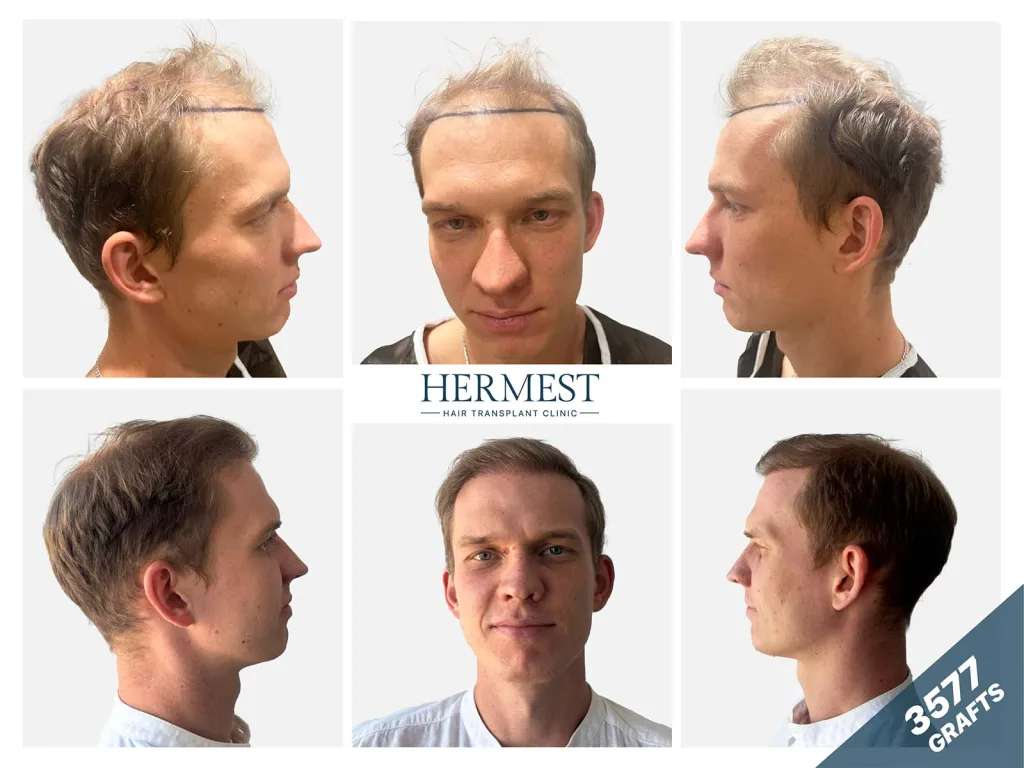
A 3500 grafts hair transplant is an ideal solution for individuals with moderate hair loss, especially those with thinning in the hairline, temples, and mid-scalp. Using modern methods like FUE, DHI, or Sapphire FUE, clinics can extract and implant up to 3500 follicular units in a single session—restoring both density and natural appearance.
In this guide, you’ll learn:
- What does 3500 grafts look like and how much does it cover?
- 3500 grafts hair transplant cost in Turkey vs USA
- Can it be completed in a single session?
- Recovery timeline, donor area condition, and long-term results
- Real before–after examples and frequently asked questions
“3500 grafts offer a great balance between visible transformation and donor area preservation,” says Dr. Ahmet Murat from Hermest Hair Clinic.
Key Takeaways
- A 3500 grafts hair transplant restores around 7,000–10,000 hairs, making it ideal for rebuilding the hairline, temples, and mid-scalp.
- Clinics in Turkey offer complete packages for $2,000–$3,800, including hotel, transfers, and aftercare—far more affordable than the $10,000–$18,000 cost in the USA.
- Recovery is typically smooth, with most patients healing in 10–14 days and seeing final results by Month 12.
- The most effective techniques include FUE and Sapphire FUE, with single-session procedures safely possible at expert clinics.
- Donor area health and graft planning are key to ensuring natural results and long-term success.
What Is a 3500 Grafts Hair Transplant?
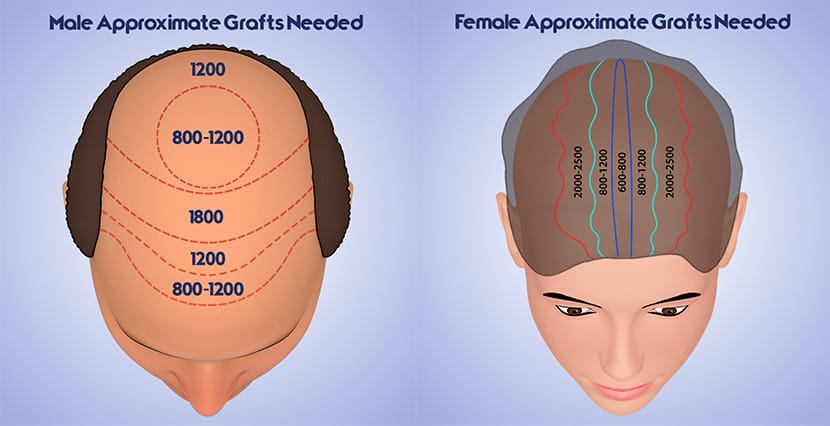
A 3500 grafts hair transplant involves the extraction and implantation of 3,500 follicular units—each containing 1 to 4 hairs—typically yielding between 7,000 and 10,000 hairs. This procedure is commonly used to rebuild the hairline, temples, and mid-scalp, while in some cases extending into the upper crown.
Who Is It Best For?
This graft count is ideal for:
- Men with Norwood stage 3 to 5 hair loss
- Patients wanting to restore a natural-looking front and mid-scalp
- Individuals with a strong donor area and realistic density expectations
“We find that 3500 grafts are sufficient for 80% of our patients. It allows us to build a defined, dense hairline and a smooth transition toward the crown,” explains Dr. Ahmet Murat.
Clinics typically use FUE, Sapphire FUE, or a hybrid technique that balances extraction efficiency with implantation precision—especially when aiming for high graft survival and minimal scarring.
Eligibility & Donor Area Considerations
While 3500 grafts may sound appealing for full restoration, it’s essential to assess whether your donor area can safely provide this amount without compromising long-term scalp health or appearance.
Key Eligibility Criteria
- Donor density: Ideally 70–100 grafts per cm² in the occipital zone (back of scalp)
- Scalp flexibility: Looser scalps are easier to extract from and heal better
- Hair thickness: Thicker hair provides better coverage with fewer grafts
- Hair loss stage: Best suited for Norwood 3 to 5
- Medical condition: No active infections, scalp disorders, or blood clotting risks
Donor Area After 3500 Grafts
- Redness, swelling, and pinpoint scabbing typically subside within 7–10 days
- No visible thinning if grafts are extracted evenly and within safe limits
- FUE and Sapphire FUE methods leave tiny dot scars that fade over time
“The most common error we see in corrective cases is poor donor management. At Hermest, we assess long-term sustainability before deciding on 3500 grafts,” says Dr. Ahmet Murat.
In borderline cases, your surgeon may recommend splitting into smaller sessions or combining with beard or chest hair if scalp donor capacity is limited.
Single vs Multi-Session Strategy
One of the most common questions patients ask is whether a 3500 grafts hair transplant can be performed in a single session. The answer is yes—in most modern clinics, especially in Turkey, this is routinely done in one sitting using advanced FUE or Sapphire FUE methods.
Single Session: What to Expect
- Surgery duration: 6 to 8 hours, typically with 2–3 breaks
- Graft yield: 3500 FUE grafts = ~7,000–10,000 hairs
- Ideal for: Healthy donors, average scalp area, no complex repair needed
“Our team at Hermest performs 3500 grafts in one day with surgeon-led planning and precise graft hydration techniques to ensure survival,” says Dr. Ahmet Murat.
When Multiple Sessions Are Recommended
While most patients can safely undergo 3500 grafts in one day, some cases may benefit from two sessions:
- When combining scalp + body/beard hair
- If the donor area requires strategic distribution
- When working on previous transplant corrections
- In clinics using DHI method, which is slower than FUE
Comparison Table
| Option | Pros | Cons |
|---|---|---|
| Single Session | Faster results, one trip | Requires experienced team and patient endurance |
| Two Sessions | More flexibility, lower daily stress | Delayed final outcome, extra visit needed |
Whether done in one or two sittings, the key is surgeon involvement, proper graft distribution, and post-op care—not just speed.
Procedure Methods: FUE, Sapphire FUE, and DHI for 3500 Grafts
The success of a 3500 grafts hair transplant depends not just on the number of grafts—but how they’re extracted, preserved, and implanted. Clinics typically choose from FUE, Sapphire FUE, or DHI, based on your hair type, density goals, and scalp condition.
FUE (Follicular Unit Extraction)
- Grafts extracted one by one using a micro-punch tool
- Channels opened manually for implantation
- Suitable for large sessions like 3500 grafts
- Leaves tiny dot scars that fade over time
- Healing: 7–10 days
Sapphire FUE
- Uses sapphire-tipped blades instead of steel for channel creation
- Allows denser packing, cleaner incisions, and faster healing
- Ideal for natural-looking hairlines and mid-scalp areas
- Frequently used at Hermest for UNIQUE FUE® technique
“Sapphire blades allow us to minimize trauma while increasing density. This is our go-to method for 3500 graft transplants,” says Dr. Ahmet Murat.
DHI (Direct Hair Implantation)
- Grafts are placed using Choi implanter pens without pre-made incisions
- Offers higher control over angle and direction
- Slower than FUE for high graft counts—often not preferred for full 3500 graft sessions
- Best for hairline refinement, not full coverage
Summary:
| Method | Best For | Speed | Ideal Use Case |
|---|---|---|---|
| FUE | Most hair types | Fast | Full restoration (frontal + mid-scalp) |
| Sapphire FUE | High-density, natural results | Very fast | Dense packing and defined lines |
| DHI | Angle precision | Slower | Hairline correction or refinement |
Coverage & Expected Results: What Does 3500 Grafts Look Like?
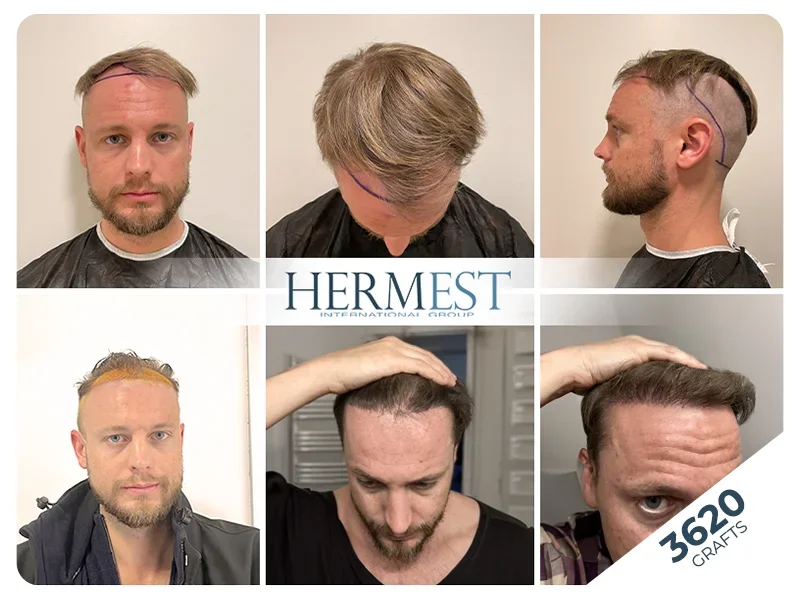
One of the most common questions patients ask is: “What does 3500 grafts cover?” In most cases, 3500 grafts are sufficient to reconstruct the frontal hairline, temples, and mid-scalp, with moderate coverage extending toward the crown depending on scalp size and density goals.
How Much Area Do 3500 Grafts Cover?
Average coverage: 80–100 cm² at moderate density (35–40 grafts/cm²)
Enough to restore a natural frame to the face and rebuild the top region
Grafts are often distributed like this:
- Hairline + temples: 1200–1500 grafts
- Mid-scalp: 1500 grafts
- Partial crown fill: 500–800 grafts (if donor allows)
“We always prioritize the hairline and mid-scalp for visual impact. 3500 grafts can create a dramatic improvement in these zones,” says Dr. Ahmet Murat.
3500 Grafts Hair Transplant Before and After
Patients generally begin to see new growth at Month 3, with visible improvements by Month 6. Full results are usually achieved around Month 12, with thickness and texture continuing to refine into Year 2.
Typical improvements:
- Reconstructed hairline with natural density
- Frontal framing that complements facial features
- Thicker mid-scalp that blends with remaining native hair
Hermest Hair Clinic provide detailed graft distribution maps and before-after documentation to ensure patients have realistic expectations.
Cost Comparison: 3500 Grafts Hair Transplant in Turkey vs USA
The cost of a 3500 grafts hair transplant varies significantly based on location, clinic reputation, technique, and whether packages include travel, accommodation, and post-op care. Turkey remains one of the most affordable destinations—offering all-inclusive packages for a fraction of the cost in Western countries.
3500 Grafts Hair Transplant Cost in Turkey
Price range: $2,000 – $3,800 USD
Inclusions:
- FUE/Sapphire FUE procedure
- 2–3 nights in a 4-star or 5-star hotel
- Airport-clinic-hotel transfers
- All medications, shampoo kit, and post-op instructions
- Translator and care coordinator
“At Hermest, patients receive a transparent quote—no hidden fees. We focus on maximizing results and minimizing cost stress,” says Dr. Ahmet Murat.
3500 Grafts Hair Transplant Cost in the USA
- Price range: $10,000 – $18,000 USD
- Clinics typically charge per graft (avg. $5–7/graft)
- Extras such as accommodation, post-op kit, and follow-ups are usually not included
- Limited experience with megasessions compared to high-volume Turkish clinics
Quick Price Comparison
| Country | Estimated Cost (3500 Grafts) | Package Includes Hotel/Transfer? |
|---|---|---|
| Turkey | $2,000 – $3,800 | ✅ Yes |
| USA | $10,000 – $18,000 | ❌ No |
For patients prioritizing both affordability and expertise, clinics in Turkey—especially in Istanbul—offer an unmatched value in terms of experience, results, and service quality.
Recovery & Aftercare Timeline
The healing process after a 3500 grafts hair transplant is typically smooth, especially when patients follow detailed aftercare instructions. Most people can return to light daily activities within a week, and the majority of scabbing and redness resolves in 10–14 days.
Recovery Timeline Overview
Day 1–3:
- Swelling may occur around the forehead
- Tiny scabs form around each graft
- Saline spray and sleeping with the head elevated are recommended
- Avoid touching, scratching, or washing the area
Day 4–7:
- Itching may begin as healing progresses
- Scabs begin loosening naturally
- First gentle washing usually advised on Day 3 or 4 (as per clinic guidelines)
Day 8–14:
- Most crusts fall off with soft washing
- Redness gradually fades
- Donor area appears fully healed by Day 10–12
Week 3–4:
- Shedding phase begins — transplanted hairs fall out (normal part of the cycle)
- Hair roots remain and begin regeneration
Month 3–6:
- First signs of new hair growth
- Hair may initially appear thin or slightly curled
Month 9–12:
- Hair thickens and blends with native strands
- Final results in density, texture, and coverage become visible
“We provide all Hermest patients with a recovery calendar, medication schedule, and round-the-clock post-op guidance to support graft survival and healing,” says Dr. Ahmet Murat.
Proper aftercare significantly influences final outcomes—especially the survival rate of grafts and the appearance of the donor area.
Risks & Limitations of a 3500 Grafts Hair Transplant
A 3500 grafts hair transplant is considered a safe and effective procedure when performed in the right hands. However, as with any surgical intervention, there are potential risks and limitations that patients should be aware of—especially related to donor health, technique, and post-op care.
Potential Risks
- Donor overharvesting: If grafts are not distributed evenly, the donor area may appear thin or patchy.
- Poor graft survival: Improper handling or dehydration during surgery can lead to lower yield.
- Infection or inflammation: Rare, but may occur if post-op hygiene is neglected.
- Shock loss: Temporary loss of native hair around the recipient zone (typically regrows).
- Unnatural design: If the hairline is placed too low or angled incorrectly, the result may look artificial.
“The most common risk isn’t medical—it’s aesthetic. We carefully plan every 3500 graft procedure to protect both the donor and long-term appearance,” emphasizes Dr. Ahmet Murat.
Limitations
- Not everyone is a candidate: Low donor density or existing scarring may make 3500 grafts unsafe.
- Coverage trade-off: 3500 grafts usually restore the front and mid-scalp; full crown coverage may require additional sessions.
- Hair loss progression: If underlying androgenetic alopecia continues, further hair loss can occur around the transplant area.
Well-planned procedures at reputable clinics help reduce these risks. A personalized design, realistic goals, and proper aftercare are the foundations of a successful transplant.
Important Questions & Answers
How much does 3500 grafts hair transplant cost in Turkey?
In Turkey, the average cost for a 3500 grafts hair transplant ranges from $2,000 to $3,800, including hotel, airport transfers, surgery, and aftercare. Prices vary by clinic, surgeon, and technique (FUE, Sapphire FUE, DHI).
What does 3500 grafts look like?
3500 grafts typically yield 7,000 to 10,000 hairs, depending on follicle structure. This is usually enough to restore the hairline, temples, and mid-scalp, and may slightly extend into the crown.
How much does 3500 hair grafts cover?
On average, 3500 grafts can cover 80 to 100 cm² of scalp area at moderate density (35–40 grafts per cm²). The exact coverage depends on your hair characteristics and scalp size.
Can I get 3500 grafts in one session?
Yes. A single-session 3500 graft FUE procedure is commonly performed at experienced clinics. The session usually lasts 6–8 hours with breaks and is safe when planned properly.
Is recovery longer after 3500 grafts?
No. Recovery time is similar to smaller procedures. Most patients return to light activities within 5–7 days, and full healing of donor and recipient areas occurs by day 14.
What happens to the donor area after 3500 grafts?
If harvested correctly, the donor area after 3500 grafts heals with minimal visible scarring. Tiny extraction points fade within a week, and hair regrowth hides the area fully in 2–3 weeks.
Are 3500 grafts enough for full coverage?
For many Norwood 3–5 patients, yes. It’s enough to rebuild the frontal zone and add mid-scalp density. However, full crown coverage may require additional grafts or a second session.
Which method is best for 3500 grafts: FUE or DHI?
FUE or Sapphire FUE is preferred for speed and graft volume. DHI may be used for frontal hairline refinement but is slower and less efficient for full 3500 graft sessions.
Do all 3500 grafts survive after surgery?
With proper technique and post-op care, 90–99% graft survival is typical. Clinics like Hermest focus on hydration, low-trauma implantation, and surgeon-led planning to protect every graft.
Get Your Personalized 3500 Grafts Plan at Hermest
Wondering if you’re a candidate for a 3500 graft hair transplant?
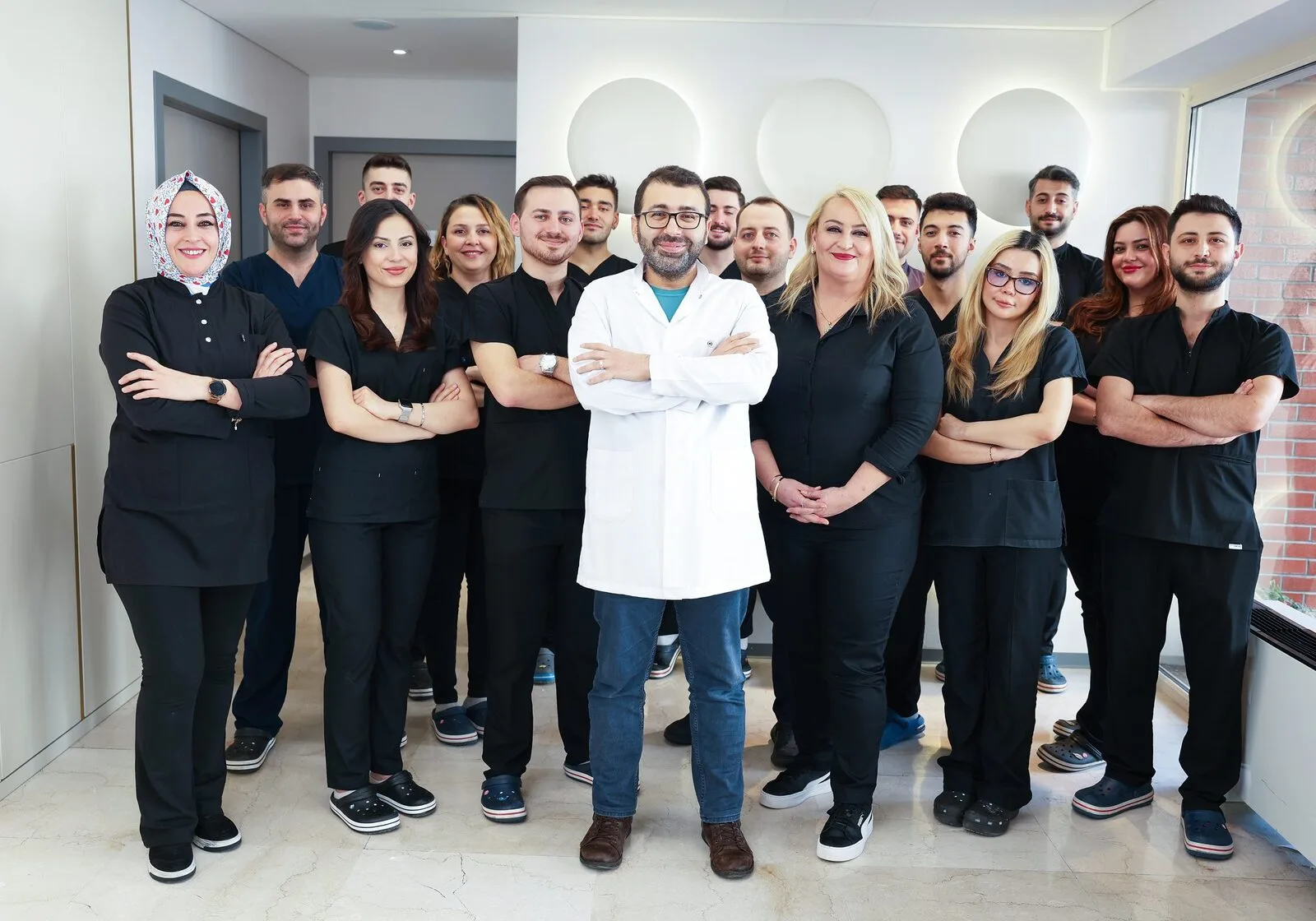
At Hermest Hair Clinic, we combine science-backed methods with surgical artistry to deliver natural, dense, and lasting results.
- UNIQUE FUE® technique with 99% graft retention
- Full package: hotel, transfer, aftercare, translator
- Surgeon-led operations with customized design
- Over 20,000 successful procedures from 62 countries
Contact us to book your free hair analysis and get a personalized treatment plan tailored to your hair loss pattern.