

Side Effects of Minoxidil After Hair Transplant: Safety, Timing & Results
If you are worried about the side effects of minoxidil after hair transplant and whether this medicine can affect your result, the short answer is simple. Minoxidil can help some patients support surrounding native hair and improve the look of early growth, but it does not decide whether properly implanted grafts survive. What matters more is timing, scalp condition, dose, and whether your skin tolerates the formula well.
This is where many patients get confused. They read that minoxidil after hair transplant can “boost growth”, then assume more is always better. That is not how it works. The American Academy of Dermatology notes that topical minoxidil can cause scalp irritation, including dryness, scaling, itching, and redness, and it can trigger a temporary increase in shedding during the first weeks before regrowth begins. ISHRS patient guidance also points out that topical and oral forms are not the same in how they are used or tolerated.
For hair transplant patients, the real questions are more practical. Is minoxidil safe after hair transplant? When to start minoxidil after hair transplant? Can minoxidil damage grafts?
In most cases, the concern is not that minoxidil “kills” grafts. The bigger issue is starting too early on healing skin, using a formula that irritates the scalp, or misreading normal shedding as a failed procedure. That distinction matters. A lot.
Dr. Ahmet Murat says: “Minoxidil is not a shortcut that fixes weak planning or poor aftercare. In our approach, we look at scalp recovery first, native hair stability second, and only then decide whether topical support makes sense for that patient. The right timing protects comfort and keeps the post-op period calmer.”
In this guide, we will break down the real risks, the common myths, who may benefit, who should be careful, and what minoxidil can actually change in hair transplant outcomes. You should leave with a clearer answer, not more anxiety.
Quick Insights
- Minoxidil after hair transplant supports native hair, not graft survival
- Most side effects are mild and related to scalp irritation
- Starting too early is the most common mistake
- Foam formulations are often easier to tolerate
- Oral minoxidil requires medical evaluation
- Stopping minoxidil does not affect transplanted grafts
- Shedding after starting is usually temporary and expected
Minoxidil use after a hair transplant
Most patients want a clear answer without mixed messages.

Using minoxidil after hair transplant can support early visual density and help protect surrounding native hair. It does not decide whether grafts survive. Once follicles are implanted correctly, their survival depends on surgical technique, blood supply, and post-operative care.
That distinction matters. It shapes expectations from the beginning.
Minoxidil works mainly on existing hair follicles that are still active or miniaturizing. According to the American Academy of Dermatology, it helps prolong the growth phase of hair and may trigger dormant follicles to re-enter that phase. This explains why patients often notice earlier thickening or faster visible regrowth.
Does minoxidil improve hair transplant outcomes?
It can improve how your hair looks during recovery. It does not change the final survival rate of transplanted grafts.
Patients often ask if it will “boost” their transplant. The more accurate answer is that it supports the environment around the transplant rather than the grafts themselves. You may see:
- Faster visible regrowth in early months
- Slightly fuller appearance during the shedding phase
- Better support for thinning native hair
The final density still depends on surgical planning and graft quality.
Does it affect graft survival or just surrounding native hair?
A common concern is: can minoxidil damage grafts?
When used correctly and at the right time, it does not harm grafts. The main risk comes from applying it too early, when the scalp is still healing. Fresh grafts need a calm environment without irritation or friction.
Minoxidil mainly acts on:
- Native hair follicles that are thinning
- Hair entering the growth cycle
- Scalp-level circulation effects
It does not “feed” grafts in a way that determines survival.
Who is most likely to benefit?
Not every patient needs it. The benefit depends on your hair loss pattern and goals.
You are more likely to benefit if:
- You still have thinning native hair around transplanted areas
- Hair loss is ongoing and progressive
- You want to support early cosmetic density
You may not need it if:
- Hair loss is already advanced with limited native hair
- The transplant design already provides strong density
- Your scalp reacts easily to topical products
Dr. Ahmet Murat says: “We evaluate minoxidil based on the patient’s existing hair, not just the transplant. If native hair is still at risk, it becomes part of a long-term protection plan. If not, adding it may not change the final outcome.”
The goal is not to use more products. The goal is to use the right ones at the right time.
Why do surgeons recommend minoxidil after surgery in the first place?
Minoxidil is often introduced after a transplant for one reason: to support the hair that was not transplanted.
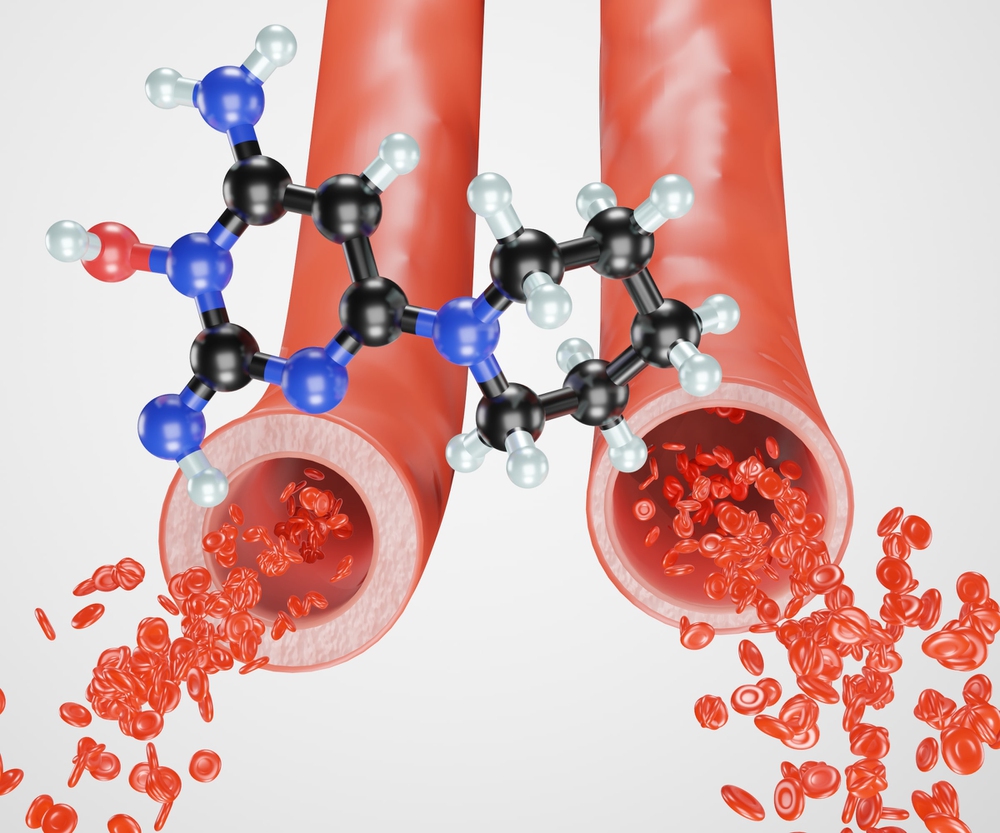
That is the key idea. It is not about saving grafts. It is about stabilizing what already exists.
Many patients still have thinning native hair around the implanted area. This hair remains sensitive to ongoing androgenetic loss. According to the American Academy of Dermatology, minoxidil helps extend the growth phase of these follicles and can improve their thickness over time.
Native hair protection
After surgery, attention naturally shifts to the grafts. But the surrounding hair can continue thinning if left untreated.
This is where minoxidil for transplanted hair is often misunderstood. It is not strengthening the grafts directly. It is helping nearby follicles stay active longer.
Patients may notice:
- Reduced thinning around the transplanted zone
- Better blending between native and transplanted hair
- A more uniform overall appearance
This becomes more relevant in patients with early or mid-stage hair loss.
Shock loss support
Another reason surgeons may recommend it is related to shock loss after hair transplant.
Shock loss is temporary shedding that can affect both transplanted and native hair shortly after surgery. It happens due to surgical stress and changes in blood flow.
Minoxidil may help some follicles return to the growth phase faster. This does not eliminate shock loss completely, but it can soften how noticeable it feels during recovery.
It helps the timeline feel shorter. That matters to patients.
Earlier visible density vs final long-term result
There is an important distinction here.
Minoxidil can make your hair look fuller earlier. It does not increase the final number of hairs that survive from the transplant.
That means:
- It may improve the “visual journey” in the first months
- It does not change the end result at 10–12 months
Dr. Ahmet Murat explains: “Patients often judge results too early. If minoxidil helps them see growth sooner, it improves confidence during recovery. But the final density always depends on graft planning, angle design, and surgical execution.”
This is why some clinics recommend it routinely, while others use it selectively.
The goal is not faster growth at any cost. The goal is stable, natural, and predictable results.
What side effects are common after a transplant?
Most concerns about side effects of minoxidil after transplant come from scalp reactions, not serious medical problems.
That is reassuring for most patients. The majority of reactions are local, temporary, and manageable when used correctly. According to the American Academy of Dermatology, topical minoxidil commonly causes irritation-related symptoms, especially in the early weeks.
The key is knowing what is normal and what is not.
Itching, burning, redness, and contact irritation
These are the most reported issues.
Patients restarting minoxidil after hair transplant may notice:
- Mild itching or tingling
- Light redness on the scalp
- A warm or slightly burning sensation
This usually happens when the skin is still sensitive. It is more common if minoxidil is applied too early or too frequently.
In many cases, symptoms settle as the scalp adapts.
Dryness, flaking, and propylene glycol sensitivity
Liquid minoxidil formulas contain propylene glycol, which can irritate some scalps.
This may lead to:
- Flaking that looks like dandruff
- Dry patches or tight skin feeling
- Increased sensitivity in the recipient area
Foam versions tend to cause fewer of these reactions. Patients with sensitive skin often tolerate foam better.
Temporary shedding after starting minoxidil
This is one of the most misunderstood effects.
Many patients search: minoxidil shedding after transplant and assume something went wrong.
In reality, temporary shedding can occur when hair shifts from a resting phase into a new growth cycle. According to dermatology guidance, this phase is expected in some users and usually stabilizes within weeks.
It is not a sign of graft failure.
Unwanted facial or body hair from transfer/contact
Another overlooked issue is accidental spread.
Minoxidil can transfer from the scalp to nearby areas, especially if:
- Hands are not washed after application
- The solution drips or spreads during sleep
This may lead to:
- Fine facial hair growth
- Increased hair on the forehead or temples
It is usually reversible once usage is adjusted.
Dr. Ahmet Murat says: “Most side effects we see are related to application habits, not the drug itself. When patients follow proper timing and technique, tolerance is usually very good.”
Understanding these reactions helps reduce unnecessary anxiety. Most are manageable. Few are permanent.
Which side effects are uncommon but more serious?
Most reactions to minoxidil stay limited to the scalp. A smaller group of symptoms involves the whole body. These are rare, but they matter.
The concern increases with higher doses, incorrect use, or oral forms. According to data summarized in National Center for Biotechnology Information, systemic absorption can lead to cardiovascular-related symptoms in some patients.
Dizziness, palpitations, swelling, and fluid retention
These symptoms are uncommon with topical use. They are more relevant with oral minoxidil or excessive application.
Watch for:
- Lightheadedness or dizziness
- Increased heart rate or palpitations
- Swelling in hands, feet, or around the eyes
- Sudden weight gain from fluid retention
These signs point to systemic effects. They should not be ignored.
If you experience any of these, stop use and contact your doctor.
Why oral minoxidil needs extra caution
Oral minoxidil is gaining attention as a low-dose hair loss treatment. It can be effective, but it is not risk-free.
Unlike topical versions, oral minoxidil works throughout the body. It can affect:
- Blood pressure regulation
- Heart rate
- Fluid balance
This makes it unsuitable for some patients, especially those with:
- Cardiovascular conditions
- Low baseline blood pressure
- Sensitivity to vasodilators
It requires medical supervision. Self-use is not recommended.
When to stop and call your doctor
You do not need to panic with mild scalp irritation. But certain symptoms require attention.
Contact your doctor if you notice:
- Persistent or worsening swelling
- Chest discomfort or irregular heartbeat
- Severe dizziness
- Rapid, unexplained fluid retention
These are not expected reactions from standard topical use.
Dr. Ahmet Murat says: “Topical minoxidil is generally safe when used properly. The problems we see are usually linked to overuse, early application on healing skin, or switching to oral forms without proper evaluation.”
Next, we will compare topical and oral forms in detail and how they differ in side effects and outcomes.
Topical vs oral minoxidil after a hair transplant
Minoxidil is not a single option. Patients now face two formats: topical and oral. The difference is not just convenience. It changes how the body reacts and how side effects appear.

Understanding this helps you avoid unnecessary risks.
Which form causes more scalp irritation?
Topical minoxidil is applied directly to the scalp. That makes local reactions more common.
Patients using topical minoxidil after hair transplant may notice:
- Itching or mild burning
- Redness in sensitive areas
- Dryness or flaking, especially with liquid formulas
These effects are usually linked to the formulation, not the active ingredient itself. Foam versions tend to be gentler since they do not contain propylene glycol.
This matters in the early recovery phase. A healing scalp is more reactive.
Which form has more systemic risk?
Oral minoxidil works differently. It enters the bloodstream and affects the body as a whole.
According to clinical data summarized by National Center for Biotechnology Information, systemic effects can include:
- Changes in heart rate
- Fluid retention
- Blood pressure fluctuations
These are rare at low doses, but they are still relevant.
Topical use, when applied correctly, has minimal systemic absorption. That is why it is generally considered the safer first-line option for most patients.
Which patients may be steered away from oral minoxidil?
Not everyone is a candidate for oral use.
Caution is advised in patients with:
- Cardiovascular conditions
- Low blood pressure
- History of fluid retention
- Sensitivity to similar medications
For these patients, topical application offers a more controlled and localized approach.
Dr. Ahmet Murat explains: “We rarely start with oral minoxidil after a transplant. Topical options give us enough support for most patients without exposing them to unnecessary systemic effects. If we consider oral therapy, it is always based on medical evaluation.”
There is also a practical aspect.
Topical minoxidil requires consistent application. Oral minoxidil is easier to take but demands closer monitoring. The choice depends on tolerance, lifestyle, and medical background.
For most hair transplant patients, starting simple is the safest path.
When should you stop before surgery and restart after?
Timing is one of the most important parts of using minoxidil after hair transplant. Most side effects and concerns come from starting too early or using it on a scalp that is still healing.
The goal is simple. Protect the grafts first. Add support later.
Before surgery
Many clinics recommend stopping topical minoxidil a few days before the procedure.
This helps:
- Reduce scalp sensitivity
- Lower the chance of irritation during surgery
- Keep the skin in a stable condition
Some surgeons may allow continued use until the day before. The exact timing can vary.
Week 1
This is a strict no-use period.
During the first 7 days:
- Grafts are settling into place
- The scalp is healing
- Any friction or chemical exposure can disturb recovery
Applying minoxidil at this stage can increase irritation and discomfort. It is avoided.
Weeks 2 to 4
This is the transition phase.
By this point:
- Scabs are usually gone
- The skin barrier is improving
- Grafts are more secure
Some patients may restart topical minoxidil after hair transplant during this window, depending on healing and sensitivity.
A cautious approach is often used:
- Start with a small amount
- Apply gently without rubbing
- Monitor for redness or irritation
If the scalp reacts, it is better to pause and wait longer.
Month 2 onward
This is when use becomes more consistent.
At this stage:
- The scalp has stabilized
- Shedding may already be happening
- Patients start focusing on regrowth
Minoxidil can be used more regularly if tolerated well.
Why surgeon instructions may differ
There is no single rule that fits everyone.
Timing depends on:
- Healing speed
- Skin sensitivity
- Surgical technique used
- Individual response to products
According to clinical guidance discussed in dermatology and hair restoration literature, the safest approach is to delay use until the scalp barrier has recovered.
Dr. Ahmet Murat says: “We prefer to see a calm, fully healed recipient area before introducing any topical agent. Starting too early does not improve results. It only increases the chance of irritation.”
Patients often rush this step. Waiting a little longer usually leads to a smoother recovery.
Can minoxidil damage grafts or ruin results?
This is one of the most searched concerns: can minoxidil damage grafts or affect the final outcome?
The short answer is no when used correctly. Minoxidil does not destroy transplanted follicles. Once grafts are properly placed, their survival depends on surgical technique, blood supply, and healing conditions.
The real issue is timing and application.
The real risk of starting too early
Problems usually happen when minoxidil after hair transplant is started before the scalp is ready.
In the early days:
- The skin barrier is still healing
- Grafts are stabilizing
- The area is sensitive to irritation
Applying minoxidil too soon can lead to:
- Increased redness and burning
- Discomfort in the recipient area
- Unnecessary stress on healing tissue
It does not “kill” grafts directly, but it can create a less stable environment during recovery.
Friction, irritation, and healing skin
Application technique matters more than most people think.
Aggressive rubbing or over-application can:
- Irritate the scalp
- Disrupt the surface of healing skin
- Increase inflammation
A calm scalp heals better. That is the priority.
Using small amounts and avoiding pressure during application reduces this risk significantly.
Why patients confuse shedding with graft failure
This is where anxiety spikes. Patients often notice shedding after restarting minoxidil and assume something went wrong. Searches like minoxidil shedding after transplant usually come from this moment.
In reality:
- Temporary shedding can happen when hair shifts into a new growth cycle
- Shock loss can occur after surgery regardless of minoxidil
- Transplanted follicles enter a resting phase before regrowing
According to dermatology guidance, this shedding phase is expected in some patients and does not indicate graft loss.
The key difference:
- Shedding hair does not mean the follicle is gone
- Growth typically returns over time
Dr. Ahmet Murat explains: “Patients often think they are losing the transplant when they see shedding. What they are seeing is part of the normal cycle. The follicle remains in place and prepares for new growth.”
Minoxidil does not ruin results. Misuse and misunderstanding create the problems.
What happens if you stop minoxidil after a transplant?
This is one of the most misunderstood topics. Many patients worry that stopping minoxidil will undo their entire procedure.
That is not how it works.
Stopping minoxidil after hair transplant does not cause transplanted grafts to suddenly fall out. Once those follicles are established, they are generally permanent and resistant to hair loss.
The confusion comes from what happens to the surrounding hair.
Will transplanted hair fall out?
No, not in a sudden or direct way.
Transplanted follicles are taken from donor areas that are typically resistant to androgenetic hair loss. Their survival does not depend on continued minoxidil use.
You will not lose your transplant just because you stopped the product.
What happens to non-transplanted native hair?
This is where changes become visible.
Minoxidil supports native hair that is still sensitive to hair loss. When you stop using it:
- Those follicles lose that support
- Miniaturization can continue
- Gradual thinning may return over time
This can create the impression that the transplant is “failing,” when in reality, the untreated native hair is changing.
When stopping may expose ongoing hair loss
Hair loss is often progressive. A transplant improves density in specific areas, but it does not stop the underlying process.
Stopping minoxidil may reveal:
- Continued thinning in untreated zones
- Reduced overall density balance
- A contrast between transplanted and native hair
This is why some patients choose long-term use, especially if hair loss is ongoing.
Dr. Ahmet Murat says: “The transplant is only one part of the plan. If native hair is still at risk, stopping supportive treatment can make the overall result look less stable over time. That does not mean the grafts failed.”
So, minoxidil is not required to maintain transplanted hair. It is used to support the hair you already had.
Who should use minoxidil cautiously or avoid it?
Minoxidil is widely used and generally well tolerated. Still, it is not the right fit for everyone after a transplant.
The decision depends on scalp condition, medical history, and how your body reacts to topical or oral treatments. According to guidance referenced by the American Academy of Dermatology, irritation and sensitivity vary significantly between individuals.
Understanding your own risk profile helps avoid unnecessary discomfort.
Sensitive scalp, eczema, or seborrheic dermatitis
Patients with reactive skin need extra care.
If you have:
- Eczema
- Seborrheic dermatitis
- Frequent scalp irritation
Topical minoxidil after hair transplant may trigger:
- Increased redness or itching
- Flaking that resembles dandruff
- Burning sensation on the recipient area
In these cases, foam formulations are usually better tolerated than liquid solutions.
Sometimes, delaying use or avoiding it altogether leads to a smoother recovery.
Cardiovascular history or low blood pressure concerns
This becomes more relevant with oral minoxidil.
Patients with:
- Heart conditions
- Low blood pressure
- History of fluid retention
Should approach oral forms cautiously.
Systemic effects, even if uncommon, can include:
- Changes in heart rate
- Dizziness
- Swelling
Topical use has minimal systemic absorption, but caution is still advised if symptoms appear.
Women, facial hair concerns, and counseling
Minoxidil is used by both men and women. However, unwanted hair growth can be more noticeable in some female patients.
Improper application or transfer can lead to:
- Facial hair growth
- Hair on the forehead or cheeks
This is not dangerous, but it can be distressing if not expected.
Clear instructions reduce this risk.
Patients already on multiple hair-loss treatments
Combining treatments can be effective, but it increases complexity.
Patients using:
- Finasteride
- PRP or mesotherapy
- Other topical solutions
May not always need additional products.
Layering treatments without a clear plan can:
- Increase irritation
- Reduce compliance
- Make it harder to identify side effects
Dr. Ahmet Murat explains: “We avoid adding treatments just because they are popular. Each patient needs a focused plan. If minoxidil adds value, we include it. If it increases irritation without clear benefit, we leave it out.”
The goal is balance. Not maximum treatment.
Minoxidil vs finasteride after a hair transplant
Patients often compare these two. Both are used after surgery, yet they work in very different ways.
Understanding that difference helps you choose the right plan.
Which protects native hair better?
If the goal is long-term protection, finasteride usually plays a stronger role.
Minoxidil supports follicles already in the growth phase. It helps them stay active longer. Finasteride targets the hormonal pathway behind androgenetic hair loss.
That means:
- Minoxidil supports existing hair behavior
- Finasteride slows the underlying loss process
For patients with ongoing thinning, combining both can provide better stability.
Which is easier to tolerate?
Tolerance varies between individuals.
With minoxidil after hair transplant, most side effects are local:
- Itching
- Redness
- Dryness
Finasteride works systemically. Side effects, although uncommon, may include:
- Reduced libido
- Hormonal sensitivity
- Mood-related changes in rare cases
Some patients prefer minoxidil because it stays local. Others prefer finasteride for its long-term control.
When combination therapy makes sense
In many cases, a combined approach offers balance.
This may be recommended if:
- Hair loss is still progressing
- Native hair is thinning around transplanted areas
- Long-term maintenance is a priority
Minoxidil can support early visual density. Finasteride helps preserve that density over time.
The combination addresses both short-term appearance and long-term stability.
When minoxidil alone may be the simpler choice
Not every patient needs both.
Minoxidil alone may be considered when:
- Hair loss progression is mild
- The patient prefers to avoid systemic medication
- The focus is on early regrowth support
Dr. Ahmet Murat says: “We explain the role of each treatment clearly. Minoxidil supports the surface result. Finasteride protects the foundation. The decision depends on how active the hair loss is.”
There is no universal formula.
The right choice depends on your hair pattern, your tolerance, and how proactive you want to be about future loss.
How to reduce side effects without losing the benefit
Minoxidil works best when it is tolerated well. Most issues are not about the drug itself, but how and when it is used.
A few simple adjustments can make a big difference.
Foam vs liquid
The formulation matters.
Liquid versions contain propylene glycol, which can irritate sensitive scalps. Foam versions are often better tolerated.
Patients who experience:
- Itching
- Flaking
- Redness
Usually switch to foam and notice improvement.
This is one of the easiest fixes.
Correct dose and application
More product does not mean better results.
Using too much can:
- Increase irritation
- Cause unnecessary runoff
- Raise the chance of side effects
A small, consistent dose is enough.
Apply gently. Do not massage aggressively, especially in recently treated areas.
Patch-test logic for sensitive scalps
If your scalp reacts easily, start slowly.
A cautious approach:
- Apply a small amount to a limited area
- Wait and observe for 24–48 hours
- Gradually increase coverage if tolerated
This helps you identify sensitivity early without affecting the whole scalp.
What not to do on a healing recipient area
This is where many problems begin.
Avoid:
- Applying minoxidil too early
- Rubbing or pressing on the recipient area
- Combining multiple new products at once
- Ignoring signs of irritation
A calm scalp supports better healing.
Dr. Ahmet Murat explains: “We prefer to introduce treatments step by step. When patients start everything at once, it becomes difficult to understand what is causing irritation. A controlled approach gives better long-term comfort.”
Small habits matter.
When used correctly, minoxidil after hair transplant can be well tolerated by most patients. Adjusting formulation, dose, and timing often resolves the majority of side effects.
Myths patients hear about minoxidil after hair transplant
Misinformation spreads fast in hair restoration forums and patient groups. Many concerns around side effects of minoxidil after transplant come from repeated myths rather than real clinical issues.
Clearing these helps patients stay calm and make better decisions.
“It makes grafts fall out”
This is one of the most common fears.
Minoxidil does not remove or destroy transplanted grafts. When used correctly and at the right time, it does not interfere with graft survival.
What patients often see is temporary shedding, which is part of the hair cycle. According to guidance from the American Academy of Dermatology, this shedding can happen when hair shifts into a new growth phase.
The follicle remains. Growth returns.
“More product gives faster results”
This assumption leads to unnecessary irritation.
Applying extra minoxidil does not accelerate results. It increases the chance of:
- Redness
- Burning sensation
- Product buildup on the scalp
Hair growth follows biological cycles. You cannot speed it up by increasing dosage.
Consistency matters more than quantity.
“If you stop, all transplanted hair will disappear”
This creates a lot of anxiety.
Stopping minoxidil does not affect the survival of transplanted follicles. It may affect surrounding native hair that depends on ongoing support.
The difference is important:
- Transplanted hair remains stable
- Native hair may continue thinning
This is why some patients continue treatment long term.
“Shedding means the transplant failed”
This is another common misunderstanding.
After surgery, both shock loss and minoxidil-related shedding can occur. These are temporary phases.
Patients may notice:
- Hair falling out in the early months
- Uneven density during recovery
This does not mean the transplant failed.
Dr. Ahmet Murat says: “Shedding is part of the process. Patients who understand this stay more relaxed during recovery. Those who don’t often worry unnecessarily and change treatments too early.”
Knowing what is normal prevents overreaction.
Minoxidil does not create problems on its own. Misinterpretation of normal phases is what causes concern.
When should you contact your surgeon or dermatologist?
Most reactions to minoxidil are mild and temporary. Still, there are moments when it is better to pause and get medical advice.
Knowing the difference keeps recovery smooth and stress levels low.
Normal vs not normal
After restarting minoxidil after hair transplant, some symptoms are expected.
Normal reactions include:
- Mild itching or tingling
- Light redness
- Temporary flaking
- Short-term shedding
These usually settle as the scalp adapts.
Symptoms that are not typical include:
- Persistent burning that does not improve
- Worsening redness or spreading irritation
- Swelling that feels unusual
- Strong discomfort during or after application
These signs suggest your scalp is not tolerating the product well.
Symptoms that deserve urgent review
Certain symptoms should not be ignored.
Stop using minoxidil and seek medical advice if you notice:
- Dizziness or lightheadedness
- Rapid or irregular heartbeat
- Swelling in the face, hands, or feet
- Sudden fluid retention
According to clinical data summarized by the National Center for Biotechnology Information, these may indicate systemic effects, especially if oral forms are involved.
These are uncommon, but they require attention.
What photos or notes to track
Keeping simple records helps both you and your doctor.
Useful things to track:
- When you restarted minoxidil
- What form you used (foam or liquid)
- Any changes in symptoms over time
- Photos of the scalp if irritation appears
This makes it easier to identify patterns and adjust treatment.
Dr. Ahmet Murat explains: “When patients come with clear timelines and photos, we can quickly understand what is happening. Most issues are easy to manage once we see the progression.”
The goal is not to react to every small symptom. It is to recognize when something needs attention.
FAQs about minoxidil use after hair transplant
Can minoxidil affect graft survival?
No, it does not affect graft survival when used correctly. Transplanted follicles are placed into the scalp with their own blood supply and healing process. Their survival depends on surgical technique and post-operative care. Minoxidil mainly acts on existing native hair and hair cycle behavior, not on the survival of implanted grafts.
Does minoxidil help shock loss after hair transplant?
It can help in some cases. Minoxidil for shock loss may support faster transition of affected follicles back into the growth phase. It does not fully prevent shedding, but it may reduce how noticeable it feels during recovery. The effect varies depending on individual hair characteristics.
When can I restart minoxidil after FUE?
Most patients restart between weeks 2 and 4, once the scalp has healed and scabs are gone. Starting too early can increase irritation. The exact timing depends on healing speed and your surgeon’s recommendation. A calm, stable scalp is the priority before reintroducing any topical product.
Is oral minoxidil safe after hair transplant?
Oral minoxidil can be used in selected patients, but it requires medical supervision. It affects the body systemically and may influence heart rate or fluid balance. It is not the first choice for most patients after a transplant. Topical forms are usually preferred for safety and control.
Does stopping minoxidil affect transplanted hair?
No, transplanted hair remains stable after stopping minoxidil. However, surrounding native hair may continue thinning over time. This can change the overall appearance of density, which is why some patients continue treatment for long-term support.
Why is my scalp itchy after restarting minoxidil?
Itching is a common reaction, especially in the early phase. It may be related to scalp sensitivity or ingredients like propylene glycol in liquid formulas. Switching to foam or adjusting frequency often helps reduce irritation.
Is foam better than liquid after a transplant?
Foam is often better tolerated, especially for sensitive scalps. It does not contain propylene glycol, which is a common cause of irritation. Many patients experience less redness and flaking with foam compared to liquid versions.
Can women use minoxidil after hair transplant?
Yes, women can use minoxidil after a transplant. However, careful application is important to avoid unwanted facial hair growth. Lower concentrations and proper technique are usually recommended based on individual needs.
Take the next step with confidence
Minoxidil can support your recovery when used correctly. It can also create unnecessary irritation when rushed or misused.
The difference comes down to timing, technique, and whether it fits your personal treatment plan.

If you are unsure:
- When to restart
- Which form to use
- Whether you actually need it
A tailored evaluation makes all the difference.
Dr. Ahmet Murat says: “Every transplant is different. We guide patients step by step, based on how their scalp heals and how their hair loss behaves over time.”
If you want a clear, personalized plan for your recovery, reach out to Hermest Hair Transplant Clinic for a free consultation and hair analysis.