

Types of Hairlines: Shapes, Stages & What They Mean (Male Guide)
Understanding types of hairlines is one of the first steps in figuring out what’s happening with your hair. Most men notice small changes and immediately assume the worst. That’s not always the case.
Hairlines vary naturally. Some are straight. Others have a widow’s peak. Some sit higher on the forehead without indicating any hair loss. The challenge is knowing the difference between a normal variation and early recession.
This is where confusion starts.
Search results often list different types of hairlines, but they rarely explain what those differences actually mean for you. They also skip one important detail. Not every change in the hairline is a sign of balding.
According to the American Academy of Dermatology, hairline shape is influenced by genetics, age, and hormonal factors. This means your hairline is not static. It evolves over time.
Here in this guide you’ll learn:
- the most common hairline types male
- how to identify your own hairline
- the difference between a mature and receding pattern
- what your hairline says about future changes
Dr. Ahmet Murat says:
“Many patients come in worried about their hairline, but what they’re seeing is often a natural transition. The key is understanding whether it’s stable or progressing.”
You don’t need to guess. Once you understand your hairline structure, decisions about styling or treatment become much more straightforward.
Quick Insights
- Hairlines vary naturally. Straight, rounded, or widow’s peak shapes are all normal variations.
- A mature hairline is not hair loss. It stabilizes after a slight shift.
- A receding hairline continues to move, especially at the temples.
- Progression matters more than appearance. Tracking changes over time gives the clearest answer.
- Hair type and density affect how your hairline looks day to day.
- Styling can improve balance, but it does not change the hairline itself.
- Early evaluation provides more options, especially in progressive cases.
What Is a Hairline and Why It Matters
A hairline is more than where your hair begins. It frames your face, defines proportions, and strongly influences how your appearance is perceived.
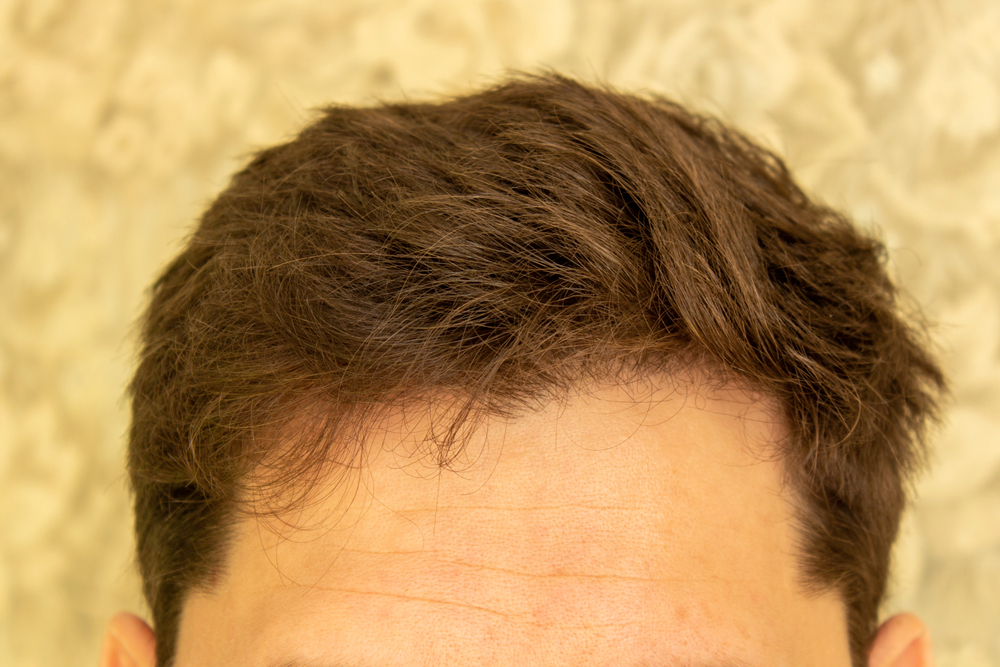
Small differences can change how you look.
Role in facial balance
The hairline creates the upper boundary of the face.
It works together with:
- forehead size
- eyebrow position
- overall face shape
When the hairline sits higher or changes shape, it can alter how balanced the face appears.
This is why hairline shapes men matter more than most people think.
A slightly different contour can make the face look:
- longer
- sharper
- more symmetrical
- or slightly off-balance
Why hairlines change over time
Hairlines are not fixed.
Most men experience some degree of change as they age. This is often referred to as a “mature hairline”.
According to the National Institute of Arthritis and Musculoskeletal and Skin Diseases, these changes are influenced by hormonal sensitivity and genetic factors.
The key difference lies in progression.
A stable shift is normal. Ongoing movement may indicate hair loss.
Why this distinction matters
This is one of the biggest gaps in most articles.
They list types of hairline shapes, but don’t explain how to interpret them.
Dr. Ahmet Murat explains:
“A mature hairline is not hair loss. It’s a natural adjustment. The concern begins when the movement continues beyond that stage.”
What to focus on
Instead of asking “Is my hairline normal?”, ask:
- Has it changed recently?
- Is it still moving?
- Is density decreasing?
These answers matter more than the shape itself.
Main Types of Hairlines in Men
Most men fall into a few recognizable categories when it comes to types of hairlines. The shape you have is usually determined by genetics, but how it evolves over time depends on multiple factors.
Understanding these patterns makes it easier to identify what you’re seeing in the mirror.
Straight Hairline
A straight hairline runs evenly across the forehead with minimal variation.
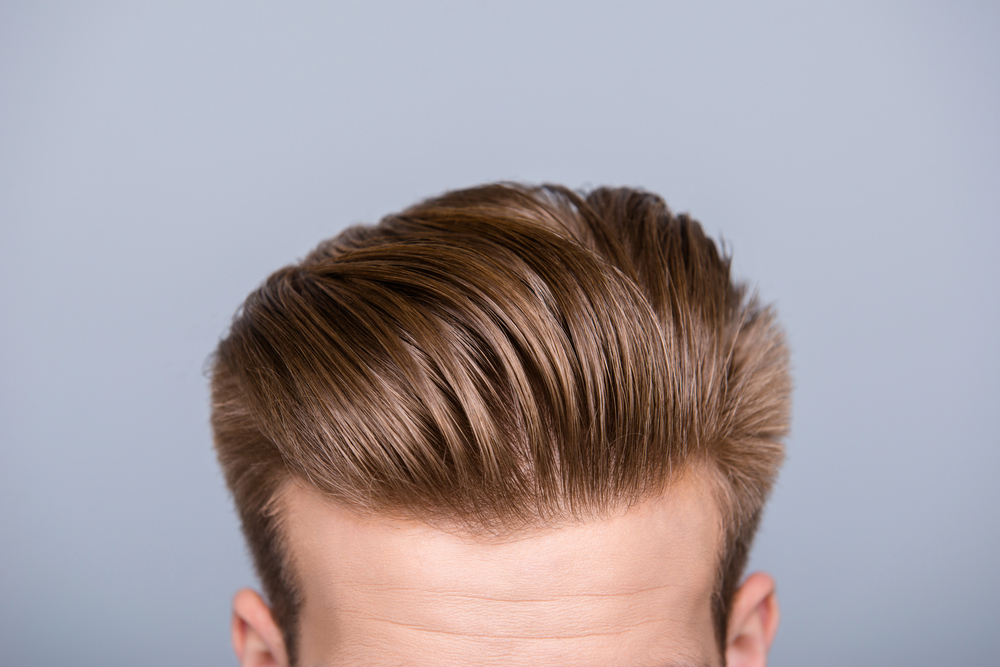
It is often seen in younger men and tends to sit lower on the forehead. This shape creates a more defined and structured appearance.
It is one of the most stable hairline types male, especially in early adulthood.
Rounded Hairline
A rounded hairline follows a soft curve instead of a straight line.
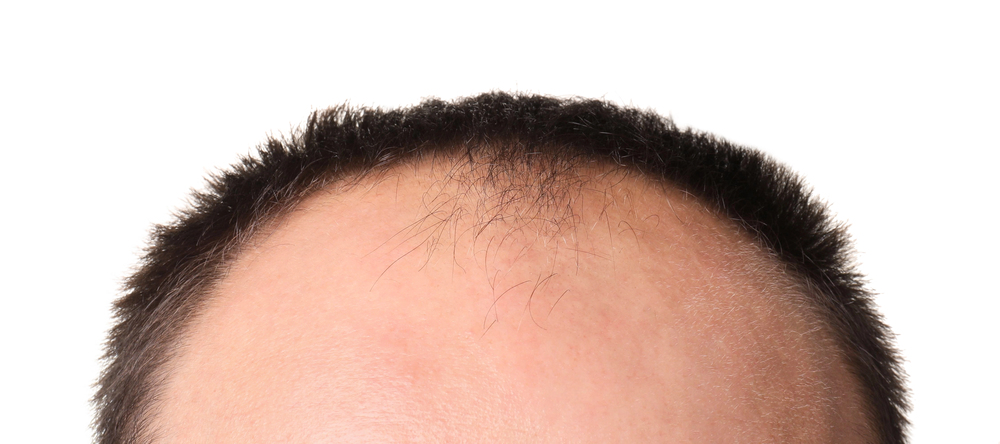
This shape looks more natural and less rigid. It blends smoothly into the temples without sharp angles.
Many men have a slightly rounded hairline as a natural variation.
Widow’s Peak
This type forms a V-shape in the center of the forehead.

The middle section sits lower, while the sides rise slightly. It is a genetic trait, not a sign of hair loss.
Widow’s peak is often confused with recession, but it remains stable over time.
Uneven Hairline
An uneven hairline does not follow a symmetrical pattern.

One side may sit higher or recede slightly more than the other. This can be genetic or develop over time.
Small asymmetries are normal. Significant changes should be monitored.
Receding Hairline
This is the most discussed type.
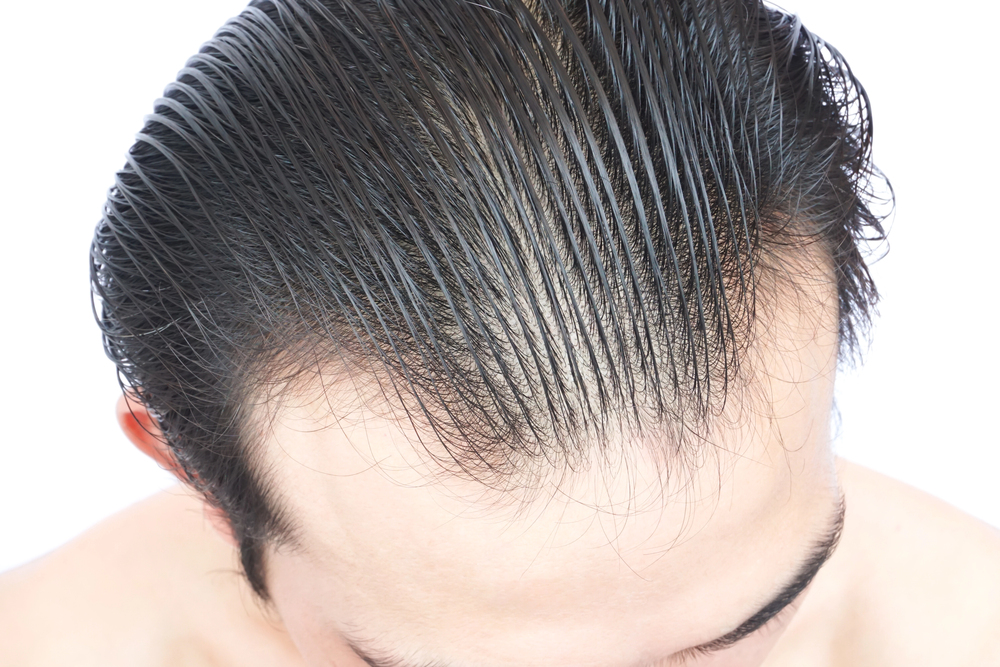
A receding hairline typically starts at the temples, creating an “M” shape. Over time, the corners move backward, and the forehead appears larger.
According to the American Academy of Dermatology, this pattern is commonly linked to androgenetic hair loss. The real value comes from understanding:
- which types are stable
- which types are progressive
Dr. Ahmet Murat says:
“The shape itself is not the issue. The direction of change is what tells us whether we are dealing with normal variation or hair loss.”
What to look for
Focus on:
- changes over time
- movement at the temples
- reduction in density
These signals matter more than the category name.
Mature Hairline vs Receding Hairline

This is the question most men are really asking. Is my hairline normal, or am I losing hair? That’s where confusion comes from.
What is a mature hairline?
A mature hairline is a natural transition.
It usually occurs between the late teens and early 30s. The hairline moves slightly upward and becomes less rounded, especially at the temples.
Typical signs:
- slight elevation of the hairline
- subtle temple definition
- stable position over time
This is not hair loss. It’s part of normal development.
What is a receding hairline?
A receding hairline shows ongoing movement.
It usually starts at the temples and progresses backward, creating a more defined “M” shape.
Common signs:
- noticeable temple recession
- widening forehead over time
- thinning or reduced density
According to the National Institute of Arthritis and Musculoskeletal and Skin Diseases, this pattern is often linked to androgenetic hair loss, influenced by genetics and hormones.
Key differences that matter
The distinction comes down to progression. A mature hairline stabilizes. A receding hairline continues to move.
You may notice:
- no change for years → likely mature
- gradual backward movement → possible recession
Why this is often misunderstood
Many men compare their hairline to others or to older photos without context.
A slightly higher hairline can look alarming, even when it’s completely normal.
Dr. Ahmet Murat explains:
“The mistake is focusing on shape instead of change. A mature hairline may look different, but it does not keep moving. That’s the key difference.”
What you should track
Instead of guessing, pay attention to:
- timeline of changes
- temple movement
- density around the hairline
This gives a much clearer picture than a single snapshot.
Hairline Stages (Norwood Scale Simplified)
Understanding progression is just as important as identifying types of hairlines. This is where the Norwood scale helps. It is a clinical classification used to track male pattern hair loss over time.
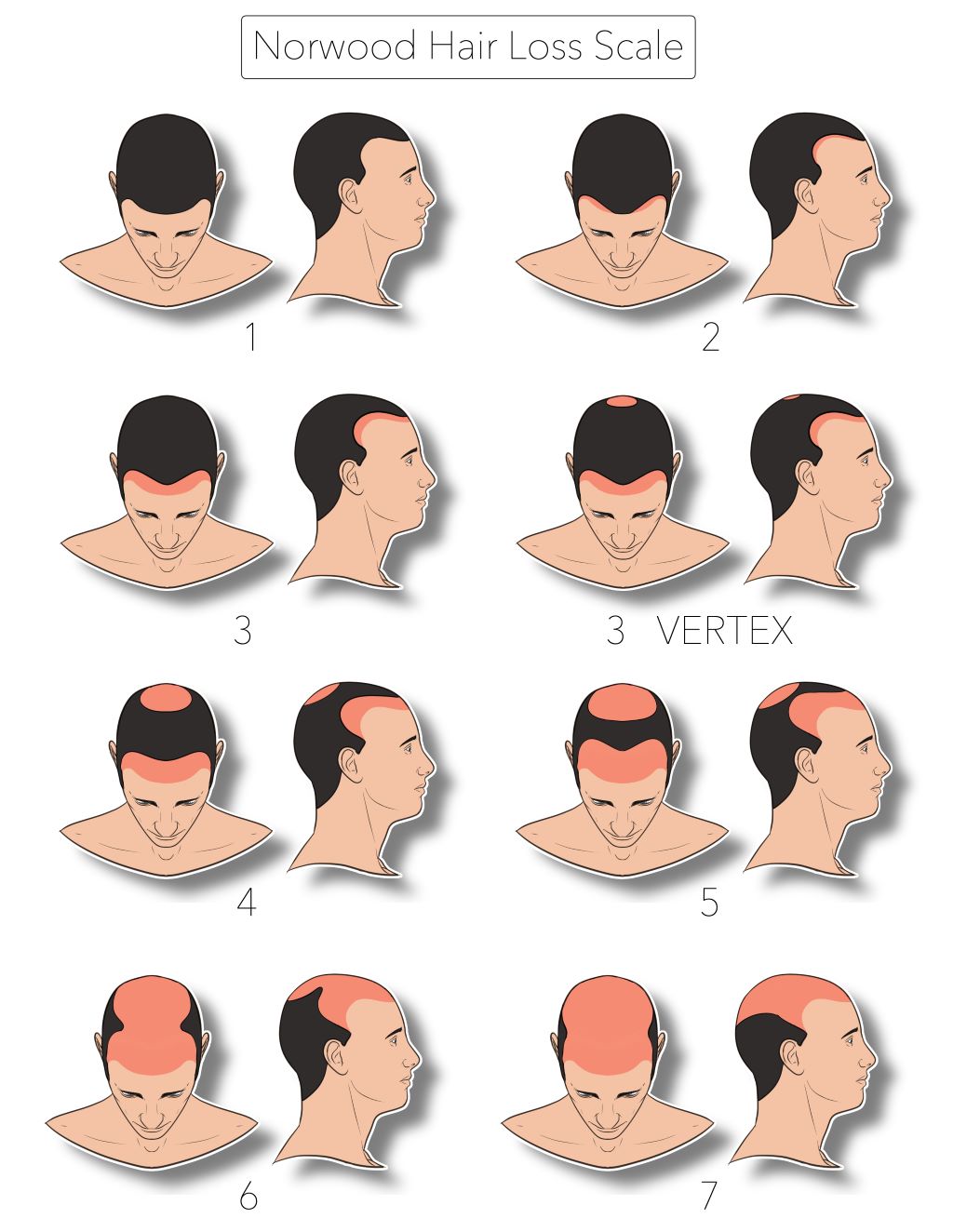
You don’t need to memorize every stage. You just need to recognize where you might be.
Stage 1–2: Early or Normal Range
At this stage, the hairline appears mostly intact.
- Stage 1: minimal or no recession
- Stage 2: slight temple movement, often mistaken for a mature hairline
This is where many men start questioning changes. In most cases, it remains stable.
Stage 3–4: Noticeable Recession
This is where progression becomes clear.
- Stage 3: deeper recession at the temples, forming an “M” shape
- Stage 4: further temple loss with thinning at the crown
At this point, styling alone becomes more limited. The change is no longer just structural.
Stage 5–7: Advanced Hair Loss
These stages involve more extensive loss.
- Stage 5: larger separation between front and crown
- Stage 6: merging of these areas
- Stage 7: significant loss across the top
Hair density becomes the main concern rather than just the hairline.
According to the American Academy of Dermatology, androgenetic hair loss follows a predictable pattern in many men, though the speed varies.
Why this scale matters
Most content mentions the Norwood scale without explaining how to use it.
Here’s what actually helps:
- identify your current stage
- track changes over time
- decide when to act
Dr. Ahmet Murat says:
“The earlier we identify progression, the more options we have. Waiting until advanced stages limits what we can achieve.”
What to focus on
Don’t focus on labels.
Focus on:
- whether your hairline is stable
- whether density is decreasing
- how fast changes are happening
This gives you a realistic understanding of your situation.
How to Identify Your Hairline Type
Knowing the types of hairlines is helpful. Identifying your own is what actually matters.
Most men rely on photos or comparisons. That approach often leads to confusion. A clearer method is to evaluate your hairline step by step.
Mirror test
Start with a simple visual check.
Stand in front of a mirror with your hair pulled back. Look at the overall shape:
- is it straight, rounded, or forming a V-shape?
- are both sides symmetrical?
This gives you a basic classification among common hairline shapes men.
Temple analysis
The temples reveal more than the center.
Focus on the corners:
- are they stable or moving backward?
- do they form a sharp “M” pattern?
- is one side more recessed than the other?
This step helps distinguish between a mature hairline and early recession.
Timeline tracking
This is the most important step.
A single snapshot is not enough. Hairlines should be evaluated over time.
Compare:
- current photos
- photos from 1–2 years ago
- changes in density or shape
According to the National Institute of Arthritis and Musculoskeletal and Skin Diseases, progression over time is the key indicator of androgenetic hair loss.
Density check
Look closely at the hairline itself.
Is the hair thick and consistent, or thinning?
Even if the shape looks stable, reduced density can signal early changes.
Why most people misidentify their hairline
This is a major gap in most content.
People focus on shape alone. They ignore movement and density.
That leads to:
- unnecessary worry
- or delayed action
Dr. Ahmet Murat explains:
“We rarely diagnose based on shape alone. We look at progression, density, and pattern together. That combination tells the real story.”
What you should take away
You don’t need complex tools.
Focus on:
- shape
- symmetry
- movement over time
Once you understand these, identifying your hairline becomes much more accurate.
What Your Hairline Says About Hair Loss
Your hairline is often the first visible signal of change. It doesn’t just show shape. It reflects what may happen next.
Understanding this helps you move from guessing to clarity.
Genetics play the biggest role
Hairline patterns are strongly influenced by genetics.
If male pattern hair loss runs in your family, there is a higher chance of similar progression. This doesn’t guarantee the same outcome, but it gives a general direction.
According to the American Academy of Dermatology, androgenetic hair loss is the most common cause of receding hairlines in men.
Hormones and sensitivity
Hair follicles respond differently to hormones.
Some are more sensitive to DHT, the hormone linked to hair miniaturization. This sensitivity determines how quickly hair thins and how the hairline changes.
Two people with similar hairline types male can experience completely different progression speeds.
Lifestyle and external factors
Lifestyle does not usually cause a receding hairline on its own, but it can influence how hair looks and behaves.
Factors include:
- stress levels
- nutrition
- overall scalp health
These can affect density and shedding patterns, especially in early stages.
What your current hairline might indicate
Your hairline gives clues, not guarantees.
For example:
- stable shape over years → likely natural or mature hairline
- gradual temple recession → possible androgenetic progression
- uneven thinning → may require closer evaluation
The pattern matters more than the shape.
Why early awareness matters
This is where many people wait too long.
They notice changes but assume it’s temporary. By the time they act, options may be more limited.
Dr. Ahmet Murat says:
“Hair loss is progressive. The earlier we understand the pattern, the more control we have over the outcome.”
What you should focus on
Instead of asking if your hairline looks “good” or “bad”, focus on:
- whether it is stable
- whether density is changing
- whether the pattern is progressing
These answers give you direction.
Can You Change Your Hairline?
Your hairline shape is largely genetic. You can’t change the natural pattern with styling alone. What you can change is how it looks and how it progresses. That’s where most confusion happens.
Some men try different styles hoping to “fix” their hairline. Others assume nothing can be done. The reality sits in between.
Styling vs structural change

Styling works at the surface level.
You can:
- soften the hairline
- adjust proportions
- reduce contrast
But styling does not increase density or move the hairline forward.
If the concern is visual balance, a haircut is often enough. If the concern is density or recession, styling reaches its limit.
Medical and non-surgical options

For early-stage changes, certain treatments can slow progression.
These may include:
- medications that target hormonal sensitivity
- supportive therapies like PRP
According to the American Academy of Dermatology, treatment effectiveness depends on early intervention and correct diagnosis.
Hair transplant and hairline design
This is where structural change happens.

Modern techniques allow the hairline to be redesigned in a natural way. The focus is not just filling gaps, but creating a balanced shape that fits the face.
At Hermest, the process involves:
- analyzing face proportions
- planning graft distribution
- designing a natural hairline
The UNIQUE FUE® technique is used to extract and place grafts with minimal trauma. This is combined with the AIS (All-In Safety) Protocol, which standardizes each step for consistency and safety.
Dr. Ahmet Murat says:
“A natural hairline is not straight or artificial. It must match age, density, and facial structure. That’s where experience matters.”
When to consider change
You may want to consider options beyond styling if:
- the hairline continues to move
- density decreases
- styling no longer gives the desired result
What matters most
You don’t need to rush into treatment.
You need clarity first.
Understanding your hairline type and progression helps you choose the right path instead of guessing.
Frequently Asked Questions About Hairline Types
What is considered a normal hairline in men?
A normal hairline varies from person to person. It can be straight, slightly rounded, or include a widow’s peak. What matters more than shape is stability. If the hairline remains consistent over time and density is intact, it is usually considered normal rather than a sign of hair loss.
How can I tell what type of hairline I have?
You can identify your hairline by looking at its shape, symmetry, and how it has changed over time. A mirror check combined with older photos helps. According to the National Institute of Arthritis and Musculoskeletal and Skin Diseases, progression over time is one of the most reliable indicators of hair loss patterns.
Is a widow’s peak a sign of balding?
No. A widow’s peak is a natural genetic hairline shape. It forms a V-pattern at the center of the forehead. It does not indicate hair loss unless it starts changing or receding at the temples over time.
What age does a hairline usually mature?
A mature hairline typically develops between the late teens and early 30s. It moves slightly higher than a juvenile hairline and becomes more defined at the temples. This is a normal change and does not necessarily mean hair loss.
How do I know if my hairline is receding?
A receding hairline usually shows gradual movement backward, especially at the temples. You may notice an “M” shape forming or reduced density in the front. Consistent change over time is the key sign rather than a single snapshot.
Will a receding hairline grow back naturally?
In most cases, a receding hairline linked to androgenetic hair loss does not reverse on its own. Some treatments may slow progression or improve density, but regrowth depends on the stage and underlying cause.
What is the difference between a mature and receding hairline?
A mature hairline stabilizes after a slight shift upward. A receding hairline continues to move backward over time. The difference lies in progression, not just appearance.
How do genetics affect hairline shape?
Genetics determine both the initial shape and the likelihood of hair loss. If family members experienced early recession, there is a higher chance of similar patterns. However, the speed and extent can vary.
Can hairstyles change how my hairline looks?
Yes. Styling can significantly influence perception. Adding texture, adjusting volume, or changing direction can make the hairline appear lower or more balanced. However, styling does not change the actual position of the hairline.
When should I consider treatment for my hairline?
If you notice consistent changes, reduced density, or difficulty maintaining your hairstyle, it may be time for evaluation.
Take the Next Step with a Clear Plan
If you’ve been researching different types of hairlines, you’re likely trying to understand your own situation. Now you have a clearer picture. Some hairlines are stable. Others change over time. The difference determines what you should do next.
Dr. Ahmet Murat explains:
“The goal is not to chase a perfect hairline. It’s to create a natural, balanced result that fits the patient.”
At Hermest Hair Transplant Clinic, every case begins with a detailed evaluation. No assumptions. No one-size-fits-all approach.

The clinic combines:
- personalized hairline design
- UNIQUE FUE® technique
- AIS (All-In Safety) Protocol
This ensures controlled, natural, and long-term results.
If you’re unsure about your hairline:
Get a professional assessment.
Understand your options.
Move forward with a plan that fits your case.
Request your free hair analysis and speak directly with a specialist today.