

Does Finasteride Regrow Hair? Crown Results, Timeline & Topical vs Oral
Does finasteride regrow hair? This is one of the most searched questions in hair restoration, and the answer is more nuanced than many people expect. Finasteride can help regrow hair in some individuals, especially when follicles are still miniaturized rather than permanently inactive. Its primary role, however, is slowing hair loss progression and protecting existing follicles from DHT-related damage.
Many people expect dramatic regrowth across completely bald areas. In reality, finasteride works best in regions where hair is thinning but still alive beneath the scalp surface.
According to research discussions indexed through PubMed and guidance from the American Academy of Dermatology, response rates are usually strongest in the crown and mid-scalp regions.
This guide explains:
- does oral finasteride regrow hair
- does topical finasteride regrow hair
- does finasteride regrow hair in women
- does finasteride regrow crown hair
- how long does it take for finasteride to regrow hair
- what finasteride can realistically improve
- what it cannot reverse completely
Many people also ask:
- Can you still go bald on finasteride?
- Is taking finasteride worth the risk?
- What does Elon Musk use finasteride for?
These questions usually come from uncertainty about expectations.
Dr. Ahmet Murat says:
“Finasteride works best when patients understand its real role. The medication is primarily about preservation and stabilization. Regrowth happens most effectively where follicles are still active.”
This article focuses on medical reality rather than exaggerated before-and-after promises. Because realistic expectations lead to better long-term decisions.
Quick Insights
- Finasteride primarily slows hair loss and protects vulnerable follicles from DHT-related miniaturization.
- Regrowth is possible, especially where follicles are still active beneath the scalp.
- Oral finasteride remains the most studied and established version of the treatment.
- Does topical finasteride regrow hair? In many patients, it may improve density and stabilization, though long-term evidence remains stronger for oral therapy.
- Crown and mid-scalp thinning usually respond better than temple recession.
- Does finasteride regrow crown hair? Often yes, particularly during earlier stages of miniaturization.
- Hairline and temple recovery are usually less predictable.
- Women with androgen-related thinning may respond under proper medical supervision.
- How long does it take for finasteride to regrow hair? Meaningful changes usually develop gradually across 6 to 12 months.
- Finasteride cannot fully restore follicles that have already become permanently inactive for years.
- Combination approaches with minoxidil or supportive therapies are common in long-term management plans.
How Finasteride Works for Hair Loss
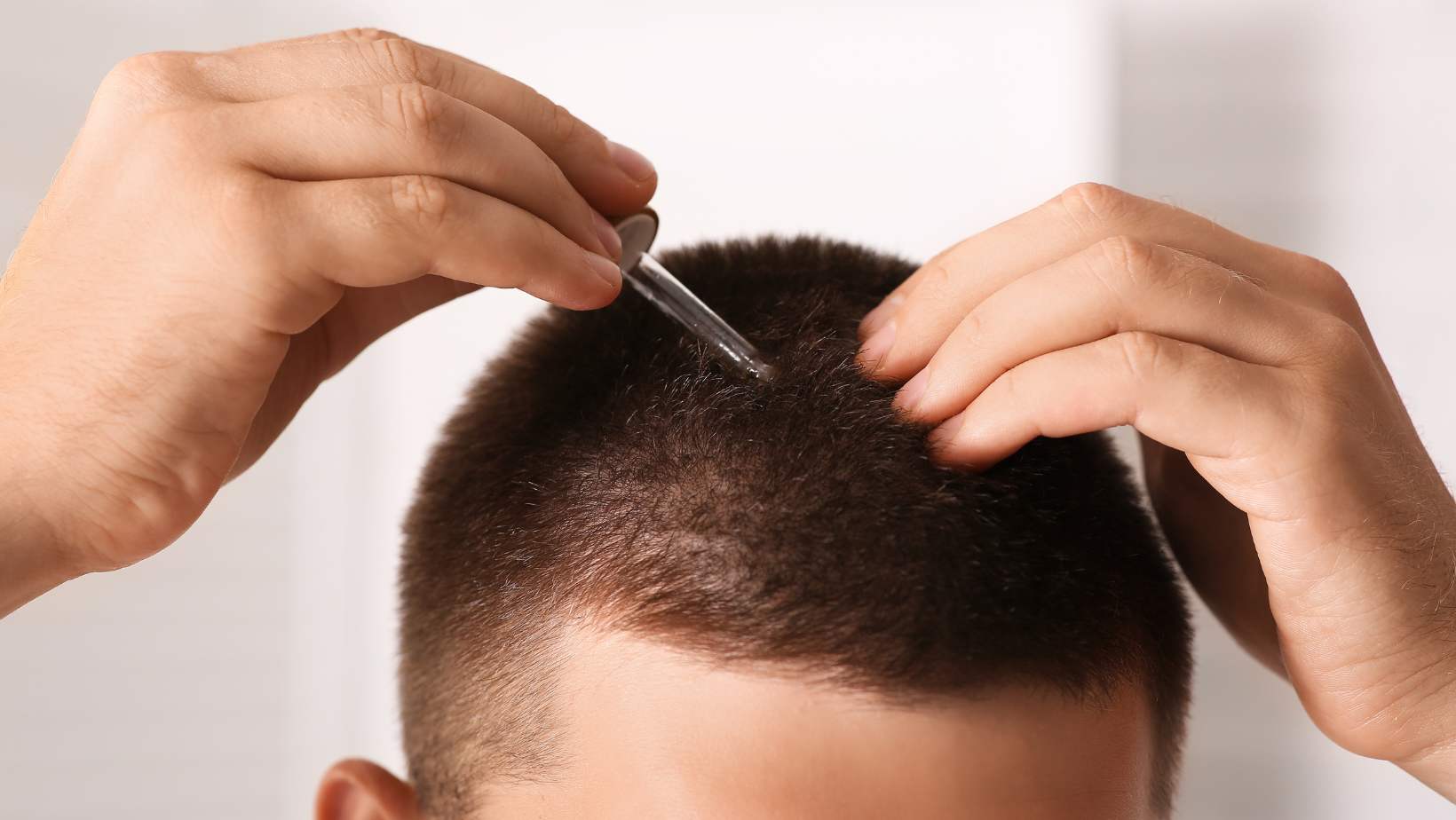
To understand whether finasteride can regrow hair, you first need to understand what causes androgenetic hair loss itself.
The process begins with DHT.
DHT and follicle miniaturization
Finasteride works by reducing levels of dihydrotestosterone, commonly called DHT. DHT is one of the main hormones involved in male pattern hair loss.
In genetically sensitive follicles, DHT gradually shrinks the hair over time. This process is called miniaturization.
The hair becomes:
- thinner
- shorter
- weaker with each growth cycle
Eventually, the follicle may stop producing visible hair entirely.
Finasteride slows this process by blocking the enzyme responsible for converting testosterone into DHT.
Stabilization vs regrowth
Finasteride’s primary strength is stabilization.
In many patients, the medication:
- slows further loss
- preserves existing density
- protects vulnerable follicles
Regrowth is possible mainly where follicles are miniaturized but still alive.
This is why some people experience visible thickening while others mainly maintain what they already have.
Why timing changes results
The earlier treatment begins, the stronger the potential response tends to be.
According to discussions indexed through International Society of Hair Restoration Surgery, earlier intervention improves the chances of preserving miniaturized follicles before permanent loss occurs.
Once follicles become inactive for too long, medication alone becomes far less effective.
Dr. Ahmet Murat says:
“Finasteride is most powerful during the miniaturization phase. It cannot fully restore follicles that are already permanently inactive.”
Patients often judge the medication incorrectly. They expect dramatic regrowth in completely bald areas and overlook the fact that preservation itself is a major success in progressive hair loss.
Next, we’ll answer the core question directly: does finasteride actually regrow hair, and what realistic clinical outcomes usually look like.
Does Finasteride Actually Regrow Hair?
Yes, finasteride can regrow hair in some patients. But the amount of regrowth varies significantly depending on the condition of the follicles and how early treatment begins.
This is where expectations become important.
What studies and clinical experience show
Research consistently shows that finasteride can improve hair density in men with androgenetic alopecia, especially in areas where follicles are thinning rather than completely inactive.
According to discussions indexed through PubMed, many patients experience:
- reduced shedding
- thicker existing hairs
- partial regrowth in miniaturized zones
The strongest improvements are usually seen in the crown and mid-scalp.
This is why many people searching does finasteride regrow crown hair report more visible success compared to temple areas.
Why some patients respond better than others
Not all follicles are in the same condition.
Some are only beginning to miniaturize. Others have already stopped producing visible hair for years. Finasteride works much better on weakened follicles than on completely dormant ones.
Age, genetics, duration of hair loss, and consistency of use all influence results.
What “regrowth” really means
This is another area where online discussions become misleading.
For many patients, regrowth does not mean restoring teenage density. Instead, it may involve:
- stronger existing hairs
- improved scalp coverage
- thicker crown appearance
- slower progression of thinning
That improvement can still be clinically significant.
Dr. Ahmet Murat says:
“Patients often underestimate the value of stabilization. Preventing further miniaturization is one of the biggest long-term benefits of finasteride.”
Can you still go bald on finasteride?
This is an important question.
Yes, progression can still continue in some patients, especially over many years. Finasteride slows the process significantly for many men, but it does not permanently stop genetic hair loss in every case.
Finasteride can regrow hair, particularly where follicles remain active. Its greatest strength is usually preserving and strengthening vulnerable hair before permanent loss develops.
Next, we’ll focus specifically on does oral finasteride regrow hair, including crown response, hairline limitations, and why oral treatment still has the strongest long-term evidence overall.
Does Oral Finasteride Regrow Hair?
When people ask whether finasteride truly works, they are usually referring to oral finasteride. This is the most studied version of the medication and still has the strongest long-term evidence for treating androgenetic hair loss.
How oral finasteride affects hair growth
Oral finasteride reduces DHT levels throughout the body by inhibiting the 5-alpha reductase enzyme.
Lower DHT exposure helps protect vulnerable follicles from continued miniaturization. Over time, some weakened follicles may begin producing thicker and healthier hairs again.
This is why many patients notice:
- reduced shedding first
- stabilization second
- gradual thickening later
The process is slow, not immediate.
Does oral finasteride regrow hair effectively?
Clinical evidence suggests that oral finasteride can improve hair density in many men with early to moderate androgenetic alopecia.
According to discussions indexed through PubMed and guidance from the American Academy of Dermatology, the strongest responses are commonly seen in:
- crown thinning
- mid-scalp miniaturization
- diffuse density loss
This is why patients searching does finasteride regrow crown hair often report more visible improvement than those focused on severe temple recession.
Why hairline response is less predictable
The frontal hairline and temples are usually harder to recover.
These follicles tend to be more genetically sensitive and may already be further along in the miniaturization process before treatment begins.
This does not mean oral finasteride cannot help the hairline. It means the degree of visible regrowth is often less dramatic than in the crown.
Why consistency matters
One of the biggest mistakes patients make is stopping treatment too early.
Hair cycles move slowly. Finasteride requires long-term consistency before results become fully visible.
Dr. Ahmet Murat says:
“Patients should think of finasteride as long-term follicle protection. The earlier treatment begins, the more hair can usually be preserved.”
Oral finasteride can regrow hair, especially in miniaturized crown and mid-scalp regions. Its strongest benefit, however, is often maintaining vulnerable follicles before permanent loss develops.
Next, we’ll explore the growing search trend around does topical finasteride regrow hair, including how it compares to oral treatment and why interest in topical formulations has increased so rapidly.
Does Topical Finasteride Regrow Hair?
Interest in topical finasteride has increased rapidly over the last few years. Many patients want the potential hair benefits of finasteride while reducing systemic exposure as much as possible.
This led to one of the most searched questions in hair restoration today:
Does topical finasteride regrow hair?
The evidence suggests it can help in selected patients, although oral finasteride still has stronger long-term research overall.
How topical finasteride works
Topical formulations are applied directly to the scalp rather than taken orally.
The goal is similar: reduce DHT activity around vulnerable follicles and slow miniaturization.
Instead of lowering DHT throughout the entire body to the same extent, topical treatment aims to create a more localized effect around thinning areas.
This is one reason many patients become interested in it.
What current evidence shows
Research comparing topical and oral finasteride suggests that topical versions may improve hair density and reduce shedding in some patients with androgenetic alopecia.
According to discussions and reviews indexed through PubMed, topical formulations show promising results, particularly for early thinning and maintenance-focused treatment plans.
However, oral finasteride still has deeper long-term evidence and more extensive clinical history overall.
Why some patients prefer topical treatment
Many people exploring topical finasteride are concerned about systemic side effects associated with oral therapy.
This does not mean topical formulations are entirely free from systemic absorption, but the exposure profile may differ.
That distinction is important.
Does topical finasteride regrow hair as strongly as oral finasteride?
The answer is not fully settled yet.
Some patients experience noticeable thickening and stabilization with topical therapy, especially during earlier stages of hair loss. Others respond more strongly to oral treatment.
Response depends on:
- consistency
- follicle condition
- progression stage
- treatment formulation
Dr. Ahmet Murat says:
“Topical finasteride is becoming increasingly interesting for selected patients, especially in earlier thinning stages. But expectations should remain realistic.”
Topical finasteride can help regrow or strengthen miniaturized hair in some patients, particularly when treatment starts early. Oral finasteride, however, still remains the most established option from an evidence perspective.
Next, we’ll focus on a topic many articles handle poorly: does finasteride regrow hair in women, including what research actually says and why treatment decisions differ for female patients.
Does Finasteride Regrow Hair in Women?
This is one of the most misunderstood topics in hair restoration. Many simplify the answer too aggressively and say finasteride is simply “not for women”. The reality is more nuanced.
Why female hair loss works differently
Women commonly experience diffuse thinning rather than the classic recession pattern often seen in men.
Female pattern hair loss usually appears as:
- widening part lines
- reduced overall density
- thinning around the crown and mid-scalp
Hormonal influences still matter, but the biological patterns can differ significantly.
Does finasteride regrow hair in women?
Research suggests finasteride may help selected women under proper medical supervision, particularly in cases of female pattern hair loss involving androgen sensitivity.
According to reviews indexed through PubMed, some women experience:
- reduced shedding
- improved density
- thicker miniaturized hairs
The strongest evidence currently exists for carefully selected postmenopausal patients.
Why pregnancy risk changes treatment decisions
This is one of the main reasons physicians approach finasteride differently in women.
Finasteride can affect fetal development during pregnancy, which creates important safety restrictions for women who are pregnant or may become pregnant.
Because of this, treatment decisions require individualized medical evaluation rather than generic internet advice.
Oral vs topical finasteride in women
Some physicians explore topical approaches in carefully selected female patients to potentially reduce systemic exposure concerns.
Interest in topical formulations continues growing, although evidence is still evolving compared to oral finasteride’s long-term data in men.
Why realistic expectations matter
Finasteride is not a universal solution for every type of female hair loss.
Conditions such as:
- iron deficiency
- thyroid disorders
- stress-related shedding
- autoimmune alopecia
require different approaches entirely.
Dr. Ahmet Murat says:
“Female hair loss should always be evaluated carefully before treatment begins. The cause matters just as much as the medication choice.”
What you should take from this
Finasteride may help some women with androgen-related thinning, particularly when follicles are still miniaturized rather than permanently inactive.
Treatment decisions, however, should always be individualized and medically supervised.
Next, we’ll answer one of the biggest expectation-related questions directly: how long does it take for finasteride to regrow hair, and what changes patients usually notice during the first year.
How Long Does It Take for Finasteride to Regrow Hair?
One of the hardest parts of finasteride treatment is patience.
Many patients start the medication expecting visible changes within a few weeks. Hair biology does not work that quickly.
This is why people constantly search: how long does it take for finasteride to regrow hair?
The answer depends on the hair cycle itself.
What happens during the first 3 months
Early treatment often feels psychologically confusing.
Some patients notice:
- reduced shedding
- no visible change yet
- temporary fluctuations in density
Others may feel like the medication is doing nothing at all.
This does not necessarily mean treatment failed. Hair follicles require time to transition through growth cycles before thicker hairs become visible.
What changes around 6 months
For many patients, the six-month period is where stabilization becomes easier to recognize.
Miniaturized hairs may begin appearing:
- thicker
- darker
- healthier overall
Crown thinning often responds more noticeably during this phase.
According to discussions indexed through PubMed and clinical reviews involving finasteride timelines, meaningful visual improvement usually develops gradually rather than suddenly.
What happens after 12 months
The one-year mark often gives the clearest picture of response.
Patients may notice:
- improved density
- slower progression
- stronger scalp coverage
- reduced visibility of thinning zones
This is especially true in crown and mid-scalp regions.
Why consistency matters more than speed
Stopping treatment early is one of the most common mistakes.
Hair restoration is cumulative. Follicles need continuous protection from DHT over time.
Dr. Ahmet Murat says:
“Patients who expect instant regrowth often become discouraged too early. Finasteride works gradually through repeated hair cycles.”
Can you still go bald on finasteride?
This remains an important reality check.
Some patients continue losing hair slowly even with treatment, especially over many years. Finasteride usually slows progression significantly, but it does not permanently freeze genetic hair loss in every person.
Finasteride is a long-term treatment, not a rapid cosmetic fix.
Most meaningful changes appear gradually across:
- 3 months
- 6 months
- 12 months and beyond
Next, we’ll examine one of the most searched pattern-specific questions directly: does finasteride regrow crown hair better than temples, and why different scalp regions respond differently biologically.
Does Finasteride Regrow Crown Hair Better Than Temples?
In most cases, yes.
This is one of the most consistent patterns seen in clinical hair restoration. Patients searching does finasteride regrow crown hair often report stronger improvement compared to temple or frontal recession areas.
There are biological reasons for that difference.
Why the crown responds better
Crown thinning usually contains a larger number of miniaturized follicles that are still active beneath the scalp surface.
These follicles are weakened, but not permanently inactive yet.
Finasteride works best during this stage because lowering DHT exposure gives vulnerable follicles a chance to stabilize and produce stronger hairs again.
This is why many patients notice:
- improved crown density
- thicker mid-scalp coverage
- reduced scalp visibility
within the first year of treatment.
According to clinical discussions indexed through PubMed, crown and vertex regions consistently show some of the strongest responses to finasteride therapy.
Why temples are harder to recover
Temple recession is usually more genetically aggressive.
By the time many patients begin treatment, temple follicles may already be:
- severely miniaturized
- dormant for years
- partially inactive
Finasteride may still slow further recession in these areas, but dramatic regrowth becomes less predictable.
This is one reason why patients sometimes feel disappointed even when the medication is technically working.
Why timing changes everything
Early intervention matters enormously.
A patient beginning treatment during mild crown thinning usually has a much better chance of visible improvement than someone trying to reverse long-standing baldness.
Dr. Ahmet Murat says:
“Finasteride protects vulnerable follicles most effectively before permanent loss develops. Earlier treatment generally creates stronger preservation potential.”
What about completely bald areas?
This is another major misunderstanding online.
Finasteride is not designed to fully restore completely smooth bald scalp where follicles have already become inactive for many years.
In those situations, surgical restoration may eventually become necessary.
Finasteride generally performs best in:
- crown thinning
- diffuse mid-scalp loss
- early miniaturization stages
Temple recovery is often more limited and less predictable.
Next, we’ll discuss an important reality-check section many articles avoid: what finasteride cannot do, including dead follicles, advanced baldness, and unrealistic social media expectations.
What Finasteride Cannot Do
Finasteride can be highly effective for many patients, but unrealistic expectations create a huge amount of confusion online.
Understanding what the medication cannot do is just as important as understanding what it can improve.
Finasteride cannot fully restore dead follicles
This is the biggest misconception.
Many people assume finasteride can completely reverse years of baldness. In reality, the medication works best on follicles that are miniaturized but still alive.
If follicles have remained inactive for a very long time, the chance of meaningful regrowth becomes much lower.
This is why early treatment consistently produces better outcomes.
Advanced baldness responds differently
Patients with severe recession or large smooth bald areas often expect dramatic transformation from medication alone.
That expectation is usually unrealistic.
Finasteride may still:
- slow additional loss
- preserve remaining density
- strengthen partially miniaturized hairs
But completely rebuilding advanced bald areas often requires surgical restoration rather than medication alone.
Social media transformations can distort expectations
Online before-and-after photos rarely tell the full story.
Some images involve:
- combined treatments
- hair fibers or styling changes
- minoxidil alongside finasteride
- hair transplant procedures
Patients sometimes compare themselves to unrealistic timelines or unusually strong responders.
That creates unnecessary disappointment.
Is taking finasteride worth the risk?
This is one of the most searched questions.
The answer depends on the individual patient, hair loss progression, medical history, and personal comfort level. Many people tolerate the medication without major issues, while others prefer alternative approaches or topical strategies.
This decision should always involve proper medical discussion rather than internet fear or hype alone.
Dr. Ahmet Murat says:
“The goal is not chasing unrealistic density. The real success is protecting follicles early enough to maintain natural long-term coverage.”
What does Elon Musk use finasteride for?
This search trend usually reflects curiosity about hair maintenance among public figures. Finasteride is commonly associated with preserving existing hair and slowing androgenetic loss progression rather than creating instant cosmetic transformation.
Finasteride is a preservation-focused treatment first and a regrowth treatment second. It can strengthen vulnerable follicles remarkably well, but it cannot completely reverse every stage of advanced baldness.
Next, we’ll discuss why many specialists combine finasteride with other therapies and answer whether finasteride alone is enough for long-term hair maintenance.
Should You Combine Finasteride With Minoxidil?
Many patients eventually ask whether finasteride alone is enough.
For some individuals, it may be. For others, combination therapy creates stronger long-term results.
This is why finasteride and minoxidil are frequently used together in modern hair restoration plans.
Why the two treatments work differently
Finasteride and minoxidil target hair loss through separate mechanisms.
Finasteride focuses primarily on hormonal protection by reducing DHT-related follicle miniaturization.

Minoxidil works differently. It helps stimulate follicles and prolongs the growth phase of the hair cycle.
This creates a complementary approach:
- finasteride protects vulnerable follicles
- minoxidil encourages activity and thickening
Because they target different biological pathways, many specialists combine them strategically.
Why combination therapy is so common
Patients with ongoing thinning often need both stabilization and stimulation simultaneously.
This is especially true for:
- diffuse thinning
- crown miniaturization
- progressive androgenetic alopecia
According to discussions indexed through PubMed and guidance associated with the American Academy of Dermatology, combination treatment is commonly used in clinical hair loss management.
Does this mean finasteride alone is ineffective?
No.
Many patients maintain and improve density using finasteride alone, particularly when treatment begins early. The question is usually about maximizing preservation rather than choosing one medication as universally superior.
Why long-term maintenance matters most
Hair loss is progressive.
Stopping treatment entirely often allows miniaturization to continue again over time. This is why long-term consistency matters more than chasing dramatic short-term changes.
Dr. Ahmet Murat says:
“The strongest hair preservation strategies usually combine early intervention, consistency, and realistic expectations rather than relying on a single miracle solution.”
Why individualized planning matters
Not every patient requires the same approach.
Some patients respond strongly to finasteride alone. Others benefit from:
- topical therapies
- minoxidil
- PRP support
- lifestyle optimization
- surgical restoration later on
The best plan depends on follicle condition and progression stage.
Finasteride is often the foundation of long-term androgenetic hair loss management. Combining it with other therapies may improve overall density and preservation potential, especially in progressive thinning patterns.
Frequently Asked Questions About Finasteride Hair Regrowth
Does finasteride regrow hair?
Yes, finasteride can regrow hair in some patients, especially where follicles are miniaturized rather than permanently inactive. Its primary role is slowing hair loss progression and protecting vulnerable follicles from DHT-related damage.
Does oral finasteride regrow hair?
Yes. Oral finasteride has the strongest long-term clinical evidence for androgenetic alopecia treatment. Many patients experience stabilization, thicker existing hairs, and partial regrowth, particularly in crown and mid-scalp regions.
Does topical finasteride regrow hair?
Topical finasteride may improve hair density and reduce shedding in selected patients. Current evidence is promising, especially for early thinning stages, although oral finasteride still has more extensive long-term research overall.
Does finasteride regrow hair in women?
Finasteride may help some women with androgen-related hair thinning under medical supervision. According to research indexed through PubMed, selected postmenopausal patients may experience improved density and reduced shedding.
How long does it take for finasteride to regrow hair?
Visible improvement usually develops gradually. Many patients notice stabilization within several months, with clearer density improvement often becoming more visible around 6 to 12 months of consistent treatment.
Does finasteride regrow crown hair better than temples?
In most cases, yes. Crown and mid-scalp areas often respond better because follicles there are more likely to remain miniaturized rather than permanently inactive. Temple recession is usually harder to reverse.
Can you still go bald on finasteride?
Yes, progression can still continue in some individuals over time. Finasteride usually slows androgenetic hair loss significantly, but it does not permanently stop the genetic process in every patient.
Is taking finasteride worth the risk?
The decision depends on the individual patient, medical history, and treatment goals. Many people tolerate finasteride without major problems, while others prefer topical approaches or alternative strategies. Proper medical discussion is important before starting treatment.
What does Elon Musk use finasteride for?
This search trend usually reflects curiosity about hair preservation among public figures. Finasteride is commonly associated with slowing androgenetic hair loss progression and maintaining existing density over time.
Can finasteride regrow completely bald areas?
Usually not. Finasteride works best on miniaturized follicles that are still biologically active. Long-standing smooth bald areas often respond poorly to medication alone and may require surgical restoration.
Take the Next Step Before Hair Loss Progresses Further
Hair loss treatment works best before follicles become permanently inactive. That is why early evaluation matters so much.
Some patients benefit greatly from:
- finasteride alone
- topical therapies
- combination treatment with minoxidil
- preventive long-term maintenance plans
Others may already need a more advanced restoration strategy. The important part is understanding what stage your follicles are actually in before choosing treatment blindly.
Dr. Ahmet Murat says:
“The earlier we protect miniaturized follicles, the greater the chance of preserving natural density long-term. Waiting too long often limits the available options.”
At Hermest Hair Transplant Clinic, every patient receives individualized hair analysis focused on:
- current follicle condition
- progression pattern
- crown and hairline assessment
- donor preservation strategy
- realistic treatment expectations
The goal is not selling unnecessary procedures.

It is building a sustainable long-term hair restoration plan that matches your stage of hair loss and future progression risk.
If you are considering finasteride, topical treatment, or a broader hair restoration strategy, now is the best time to understand your options clearly.
Request your free hair analysis and speak directly with an experienced hair restoration specialist today.