

Top Celebrities with Alopecia: Real Cases, Types & Treatment
When people search for celebrities with alopecia, they’re rarely just looking for names. They’re looking for reassurance. Someone out there understands what they’re going through. The truth is simple, but often blurred online. Some famous people with alopecia have publicly confirmed their diagnosis. Others have spoken about hair loss without naming a medical condition. And a few are often labeled incorrectly based on appearance alone.
Alopecia is not a single condition. It includes different types like alopecia areata, traction-related loss, and more advanced forms such as totalis or universalis. According to the American Academy of Dermatology, these conditions vary widely in cause, progression, and treatment outcomes. Grouping everything under one label leads to confusion, and sometimes false hope.
This guide takes a more careful approach.
You’ll find:
- Public figures who confirmed alopecia
- Celebrities with reported or unclear hair loss
- A breakdown of hair loss types linked to each case
- Clear medical context based on trusted sources
Also not every visible case of hair thinning is alopecia. And not every celebrity mentioned online has actually been diagnosed. That’s where many readers get misled.
Dr. Ahmet Murat says:
“Patients often come in believing they have alopecia because they saw similar patterns online. Diagnosis should never be based on appearance alone. A proper scalp evaluation changes everything.”
If you’re dealing with hair loss, this isn’t just a celebrity list. It’s a grounded, medically-aware guide designed to give you clarity, not confusion.
Which Celebrities Have Publicly Confirmed Alopecia?
Several well-known public figures have openly shared that they live with alopecia or a medically recognized hair-loss condition. The most referenced celebrities who have alopecia include:
- Jada Pinkett Smith
- Anthony Carrigan
- Matt Lucas
- Charlie Villanueva
- Jesy Nelson (reported in interviews)
These names appear frequently across search results for famous celebrities with alopecia, but not all cases carry the same level of confirmation. Some are based on direct statements. Others rely on interviews or secondary reporting.
That difference is often ignored.
Why confirmation matters more than popularity
Many articles list stars with hair loss without verifying the condition type. That creates a misleading mix of:
- alopecia areata
- traction alopecia
- stress-related shedding
- androgenetic hair loss
According to the National Institute of Arthritis and Musculoskeletal and Skin Diseases, alopecia areata is an autoimmune condition. It is not the same as hair loss caused by styling habits or genetics.
So grouping all cases together doesn’t help readers. It does the opposite.
The pattern we see across public figures
From reviewing multiple sources, a clearer pattern emerges:
- A small group has publicly confirmed alopecia areata
- Another group has spoken about hair loss without diagnosis clarity
- A third group is often included based on visual speculation only
Dr. Ahmet Murat explains:
“Hair loss is visible. Diagnosis is not. Two people can look similar externally but have completely different underlying causes.”
In the next section, we’ll break this down properly with a structured table. This is where things finally start to make sense.
Confirmed vs Reported Cases: Who Actually Has Alopecia?
Before going deeper into each story, it helps to separate facts from assumptions. Most pages ranking for celebrities with alopecia skip this step. They list names, but don’t clarify diagnosis strength.
That’s where confusion starts.
Below is a simplified, evidence-based breakdown. It reflects what was publicly stated, not what is guessed from photos or headlines.
Quick Table: Confirmed Alopecia vs Reported Hair Loss
| Celebrity | Publicly Confirmed? | Likely Type | Source Type | Notes |
|---|---|---|---|---|
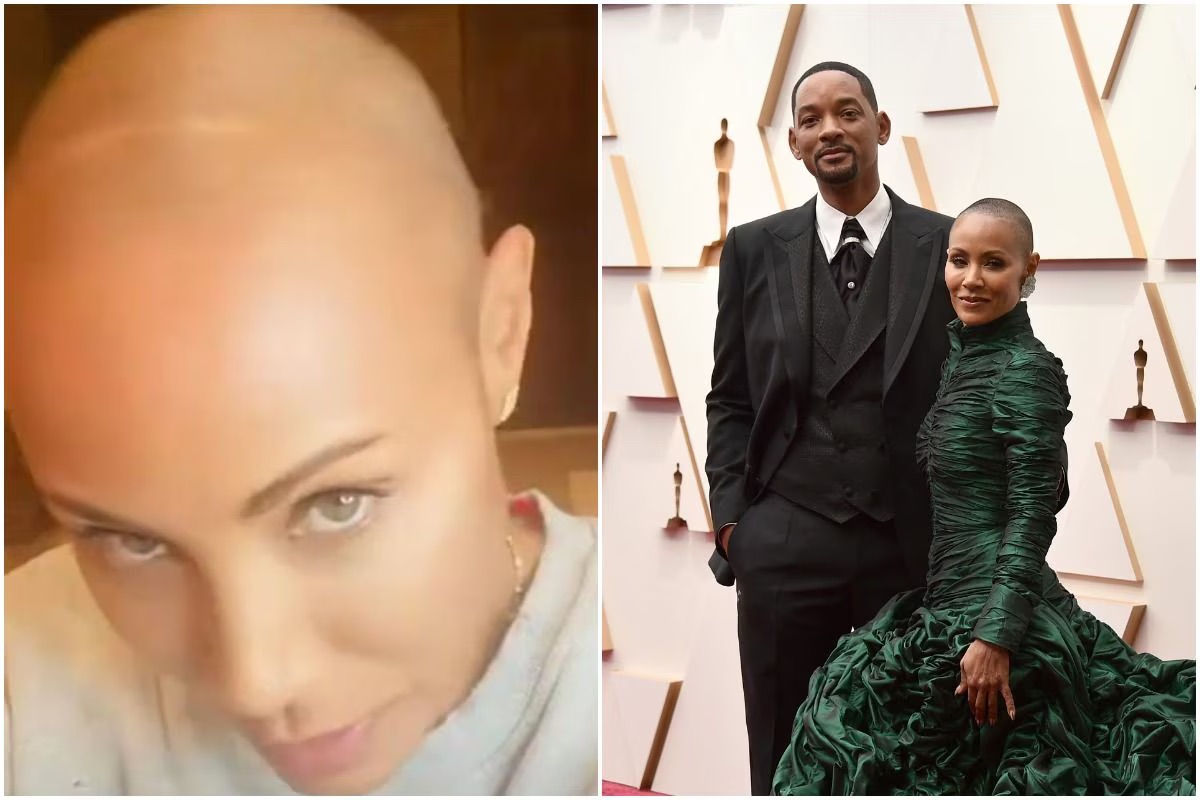
| Jada Pinkett Smith | Yes | Alopecia areata | Direct statement | Open discussions, shaved head publicly |
| Anthony Carrigan | Yes | Alopecia areata | Interviews | Lost scalp, eyebrows, eyelashes |
| Matt Lucas | Yes | Alopecia areata | Interviews | Diagnosed in childhood |
| Charlie Villanueva | Yes | Alopecia universalis | Public interviews | Complete body hair loss |
| Jesy Nelson | Reported | Alopecia areata | Interviews (limited clarity) | Not consistently confirmed |
| Viola Davis | Reported | Alopecia areata | Interview mention | Regrowth described |
| Tyra Banks | Unclear | Stress-related hair loss | Interview | Not confirmed alopecia |
| Naomi Campbell | No (commonly misattributed) | Traction alopecia | Media + expert analysis | Linked to styling damage |
| Ricki Lake | Reported | Mixed causes | Personal essay | Includes styling + stress |
| Keira Knightley | Unclear | Hair thinning | Interview | Wig use mentioned |
What this table reveals
Two important patterns stand out:
- Only a small number of famous people with alopecia have confirmed diagnoses
- Many widely shared examples are actually different types of hair loss
According to the American Academy of Dermatology, traction alopecia and autoimmune alopecia behave very differently. One is caused by repeated tension. The other is driven by immune response.
Treating them as the same condition leads to poor expectations.
Why this distinction matters for you
If you’re searching celebs with alopecia, you’re likely trying to compare your own situation.
That comparison only works when it’s accurate.
- Patchy, sudden loss? That aligns more with alopecia areata
- Gradual thinning with styling history? That may suggest traction or androgenetic causes
Dr. Ahmet Murat notes:
“The biggest mistake I see is self-diagnosis through celebrity comparison. It delays proper treatment. Hair loss should always be classified before being treated.”
Next, we’ll clarify what alopecia actually means, and how its different types behave. That’s the foundation you need before comparing any case.
What Alopecia Actually Means
Alopecia is often used as a blanket term, but it simply means hair loss. The details matter. Different types behave differently, respond to different treatments, and follow different timelines.
Understanding this helps you interpret stories about celebrities with hair loss more accurately. It also prevents unnecessary panic.
According to the American Academy of Dermatology, alopecia includes several medically distinct conditions. The most discussed one in public figures is alopecia areata, but it is far from the only type.
Alopecia Areata
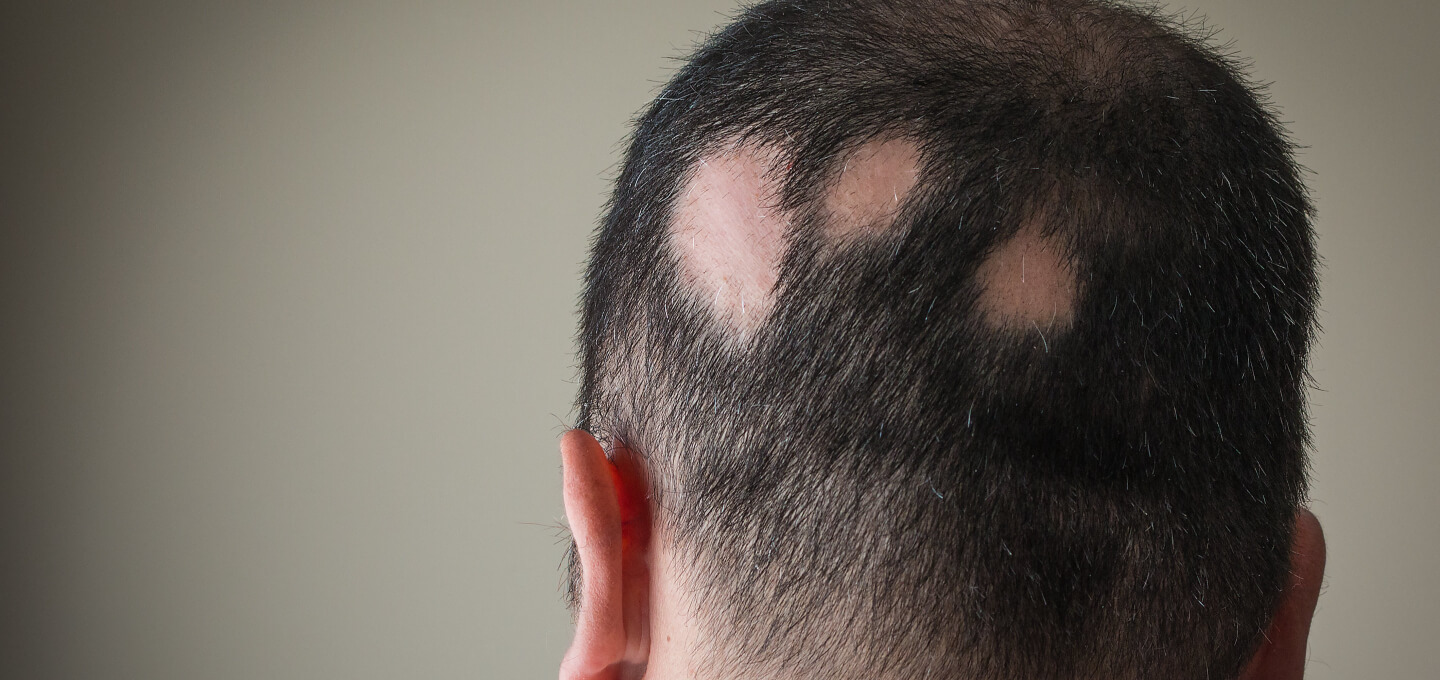
This is an autoimmune condition. The immune system mistakenly targets hair follicles, leading to patchy hair loss.
Common signs include:
- Round or oval bald patches on the scalp
- Sudden onset rather than gradual thinning
- Possible regrowth followed by recurrence
Some celebrities who have alopecia fall into this category, including Jada Pinkett Smith and Anthony Carrigan.
The course is unpredictable. Hair can regrow without treatment, or the condition can persist.
Dr. Ahmet Murat says:
“Alopecia areata is one of the most misunderstood conditions. Patients expect a linear recovery, but it often behaves in cycles. That unpredictability is part of the diagnosis.”
Traction Alopecia
This type is caused by repeated tension on the hair. Tight hairstyles, extensions, and frequent styling are common triggers.
It often appears as:
- Thinning along the hairline or temples
- Gradual progression over time
- Damage that may become permanent if prolonged
Some famous people with alopecia are actually dealing with traction-related hair loss, even if labeled otherwise online.
The key difference is cause. This is mechanical, not autoimmune.
Alopecia Totalis and Universalis
These are more advanced forms of alopecia areata.
- Alopecia totalis: complete scalp hair loss
- Alopecia universalis: loss of all body hair
Public figures like Charlie Villanueva have openly discussed these forms.
They are less common but more visible, which is why they often receive attention in media discussions about celebrities with alopecia.
Hair Loss That Is Not Alopecia Areata
Not all thinning or shedding fits under alopecia areata.

Hair loss can be linked to:
- Stress or hormonal changes
- Genetics (pattern hair loss)
- Medical treatments or nutritional factors
According to the National Institute of Arthritis and Musculoskeletal and Skin Diseases, proper classification is the first step before any treatment plan.
Dr. Ahmet Murat explains:
“Two patients can describe the same symptom, but require completely different treatments. That’s why identifying the type of hair loss is always the starting point.”
With this foundation, the next step is looking at real public cases grouped by condition type. That’s where the differences become much clearer.
Celebrities Who Publicly Discussed Alopecia Areata
When people search for celebrities who have alopecia, they are usually referring to alopecia areata. This is the form most commonly discussed in interviews and public statements.
What makes this group different is clarity. These individuals didn’t just show visible hair loss. They spoke about it, often in detail, and in their own words.
Jada Pinkett Smith

Jada Pinkett Smith is one of the most recognized celebrities with alopecia areata. She first shared her experience publicly after noticing sudden hair shedding in the shower.
She later chose to shave her head. Not as a trend, but as control.
Her case reflects a typical pattern:
- sudden onset
- emotional impact
- gradual acceptance
Her openness changed public perception. It made conversations about autoimmune hair loss more visible.
Anthony Carrigan

Anthony Carrigan’s experience is medically distinct and visually striking. He has alopecia areata that progressed over time, leading to the loss of scalp hair, eyebrows, and eyelashes.
He often appears on screen without trying to hide it.
This is closer to alopecia universalis progression, although commonly described under alopecia areata in media.
His story matters for one reason. It shows that complete hair loss does not follow the same path for everyone.
Matt Lucas

Matt Lucas developed alopecia areata as a child. His hair never fully returned.
His case highlights early-onset patterns, which can behave differently compared to adult-onset cases.
He has spoken openly about growing up with hair loss and how it shaped his identity.
Charlie Villanueva

Charlie Villanueva has alopecia universalis, a more advanced form where all body hair is lost.
Unlike patchy forms, this condition is complete and permanent in many cases.
His advocacy has focused on awareness, especially among younger patients.
What these cases have in common
Despite different outcomes, there are shared themes:
- sudden or early onset
- autoimmune involvement
- unpredictable regrowth patterns
According to the American Academy of Dermatology, alopecia areata can resolve spontaneously or persist for years. There is no fixed timeline.
Dr. Ahmet Murat notes:
“Alopecia areata doesn’t follow a rulebook. Some patients recover quickly. Others experience cycles for years. What matters is early evaluation and realistic expectations.”
These public stories help normalize the condition. They don’t define it.
In the next section, we’ll look at a different group often included in famous celebrities with alopecia, but with a very different underlying cause.
Celebrities Linked to Traction Alopecia and Styling-Related Hair Loss
Not every name listed under celebrities with alopecia actually falls into the autoimmune category. A large number of public figures are dealing with traction alopecia, which has a completely different cause and progression.
This type of hair loss develops from repeated tension. Tight braids, extensions, weaves, and frequent styling can gradually damage hair follicles. Unlike alopecia areata, this is not driven by the immune system.
That distinction changes everything.
According to the American Academy of Dermatology, traction alopecia can become permanent if the tension continues over time. Early stages, however, are often reversible.
Naomi Campbell

Naomi Campbell is one of the most cited examples when discussing famous people with alopecia, but her case is widely linked to traction alopecia.
Years of runway styling, tight extensions, and frequent hair changes contributed to visible thinning along her hairline.
Her situation is often misclassified online as alopecia areata, which it is not.
Ricki Lake

Ricki Lake shared her long-term struggle with hair loss in a personal essay. Her experience included multiple factors, but styling damage played a major role.
She described years of:
- harsh treatments
- tight hairstyles
- heat damage
Her case shows how different causes can overlap.
Keira Knightley

Keira Knightley has spoken about using wigs during film roles after experiencing hair thinning.
While not officially diagnosed with alopecia areata, repeated styling and dyeing were linked to her hair loss.
Serena Williams (reported traction-related episodes)

Serena Williams has experienced hairline thinning at different points in her career. While not formally labeled as alopecia, similar patterns are often associated with traction.
This highlights how common this condition is, especially in high-performance and high-styling environments.
Other public figures often discussed
Several additional names appear in discussions around celebrities with hair loss, where traction is a likely factor:
- Khloé Kardashian (reported thinning episodes)
- Jennifer Lopez (hairline changes over time)
- Cardi B (public discussions about hair damage)
These cases are rarely confirmed medically, but the patterns align more with styling-related stress than autoimmune causes.
Why traction alopecia is often misunderstood
It is visible in a similar way. Thinning edges, patchy areas, and hairline recession can look like alopecia areata at first glance.
But the underlying mechanism is different.
Dr. Ahmet Murat says:
“Traction alopecia is one of the few types of hair loss where early intervention can completely change the outcome. Removing the tension early often allows recovery.”
This matters if you’re comparing your own situation to stars with hair loss. The cause determines the treatment.
Next, we’ll look at celebrities who openly discussed hair loss, but where the exact diagnosis remains unclear.
Celebrities Who Spoke About Hair Loss Without a Clear Diagnosis
Many articles mix all celebrities with alopecia into one group. In reality, a large number of public figures have spoken about hair loss without confirming a medical diagnosis.
That doesn’t make their experiences less real. It just means the cause is not clearly defined.
This group is important. It reflects how common hair loss is, even outside autoimmune conditions.
Viola Davis
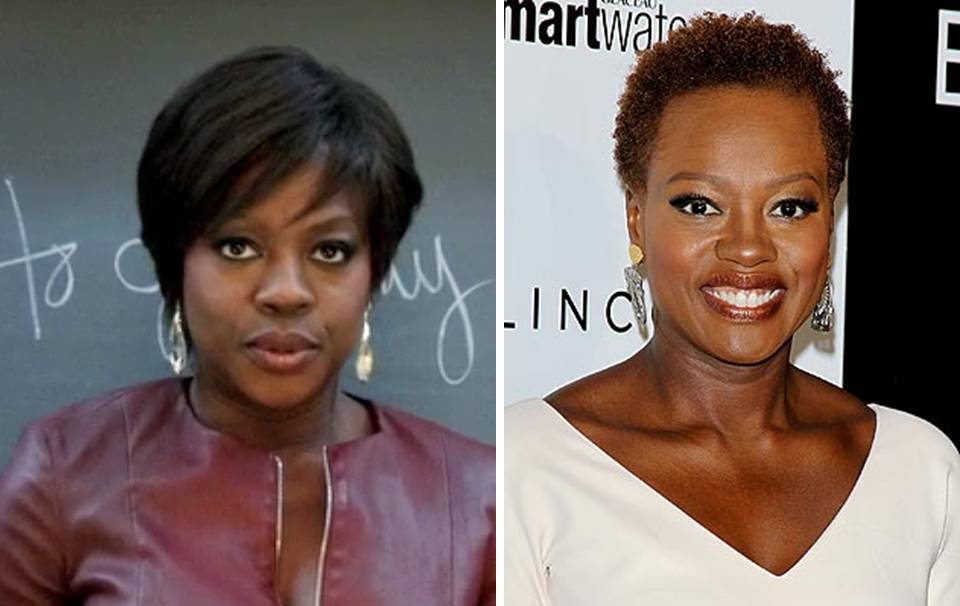
Viola Davis shared a powerful story about losing her hair at a young age. She described waking up with significant hair loss, which deeply affected her confidence.
Her experience aligns with patterns seen in alopecia areata. Still, she has not consistently labeled it as such in every source.
That nuance matters.
Tyra Banks

Tyra Banks has openly discussed hair loss linked to stress. She described periods of shedding during intense professional pressure.
Stress-related hair loss, often called telogen effluvium, behaves differently from autoimmune alopecia.
Hair typically regrows once the trigger is resolved.
Khloé Kardashian

Khloé Kardashian has mentioned hair thinning and scalp concerns in interviews and social media.
There is no confirmed diagnosis. Her case is often included in lists of famous celebrities with alopecia, but the evidence does not support a clear classification.
Kristen Davis
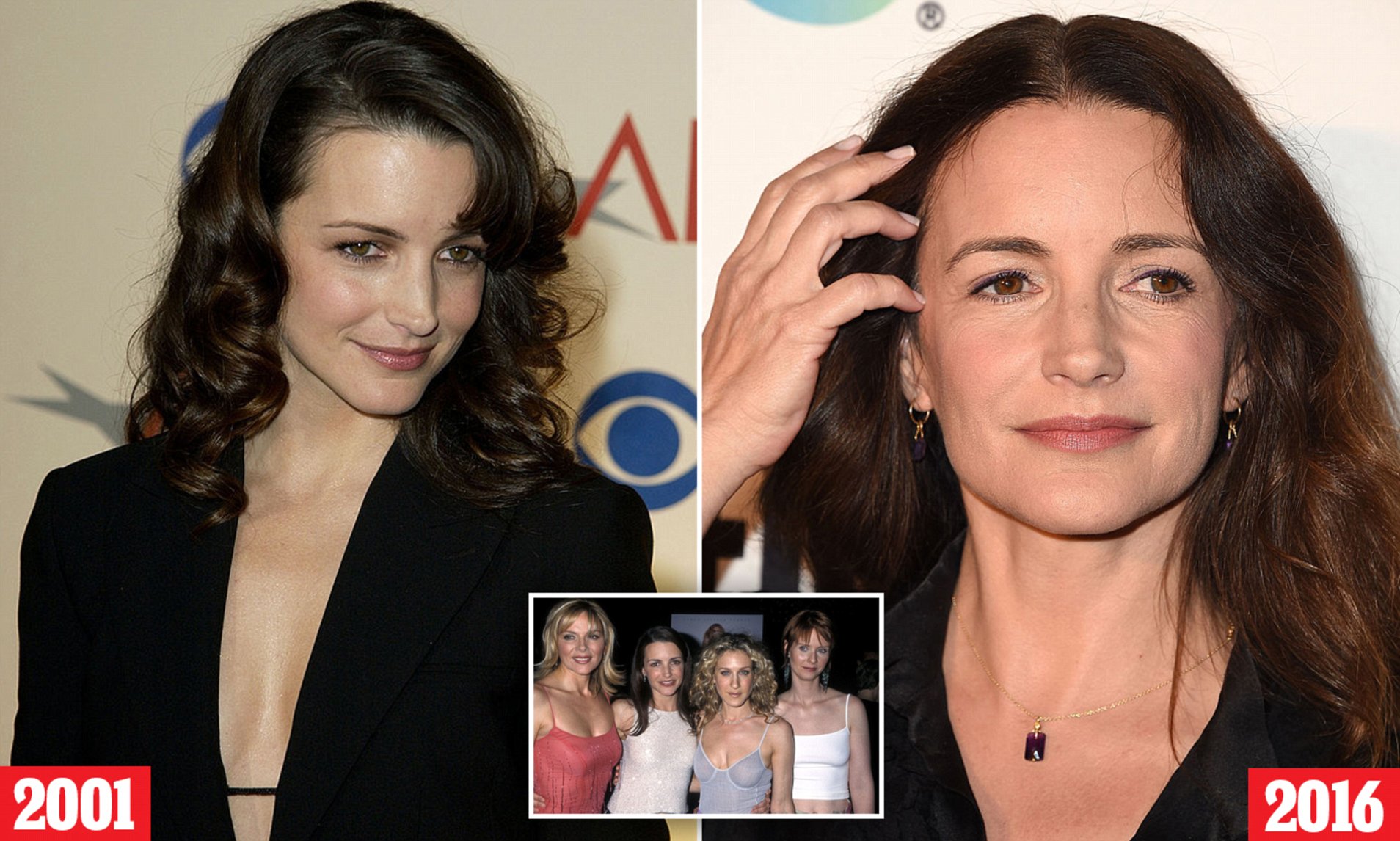
Kristen Davis has spoken about changes in hair density over time. Reports sometimes associate her with alopecia, but no confirmed subtype has been publicly stated.
This is a good example of how media labeling can go beyond available facts.
Lady Gaga (reported hair loss episodes)

Lady Gaga has experienced hair thinning related to styling and chemical treatments. Some sources link her to alopecia discussions, though her case is more consistent with damage-related shedding.
Additional names often included without confirmation
These public figures are frequently listed under celebs with alopecia, but lack confirmed diagnoses:
- Jennifer Aniston
- Katy Perry
- Ariana Grande
In most cases, hair loss is linked to styling, stress, or hormonal changes.
This is where many readers get confused. Hair loss does not automatically mean alopecia areata. According to the National Institute of Arthritis and Musculoskeletal and Skin Diseases, different types of hair loss require different approaches, and proper diagnosis is essential.
Dr. Ahmet Murat explains:
“Patients often come in convinced they have alopecia areata. In many cases, it turns out to be temporary shedding or traction-related loss. The treatment path is completely different.”
If you’re searching for celebrities with hair loss, this section is often the most relatable. It shows how varied the causes can be.
Next, we’ll step back and look at why these public stories matter, especially for people dealing with hair loss themselves.
Notable Celebrity Hair Transplants: Before and After
Alongside discussions about celebrities with alopecia, many readers are curious about real hair restoration results. Hair transplants are a different category, but they often appear in the same conversations around hair loss and public image.
These examples show how modern techniques can restore density and hairline structure. Some cases are confirmed. Others are based on visible changes and public discussion.
Adam Levine

Adam Levine has not confirmed a procedure, but his consistently even hairline over the years has led to speculation. Subtle improvements suggest possible professional intervention or strong maintenance.
Ben Affleck
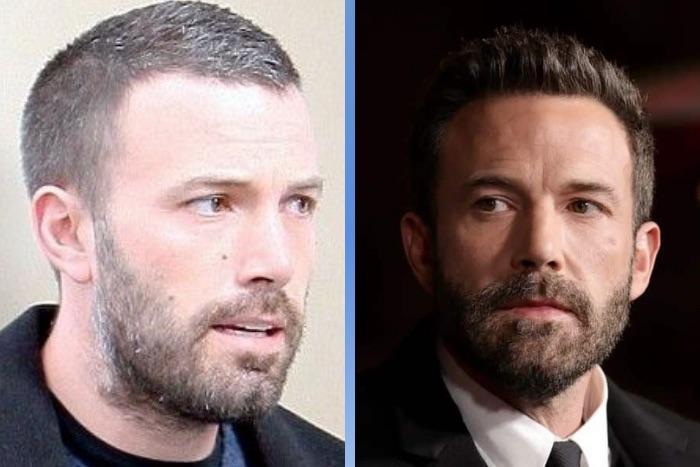
Ben Affleck has never confirmed a transplant, but his stable and full hairline over time has raised speculation about possible treatments such as FUE or PRP.
Boy George

Boy George’s restored hairline has been noticeable in recent years. His appearance suggests a well-timed intervention that aligned with modern techniques.
Bradley Cooper
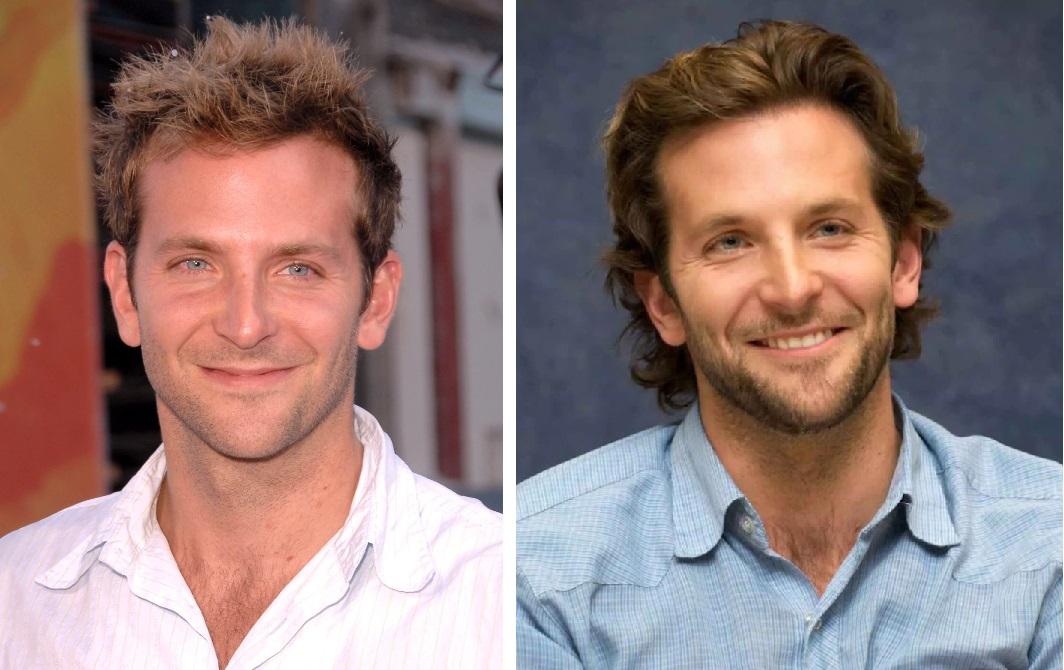
Changes in Bradley Cooper’s temple areas have led to discussions about subtle restoration work. His results appear natural and consistent.
Calum Best
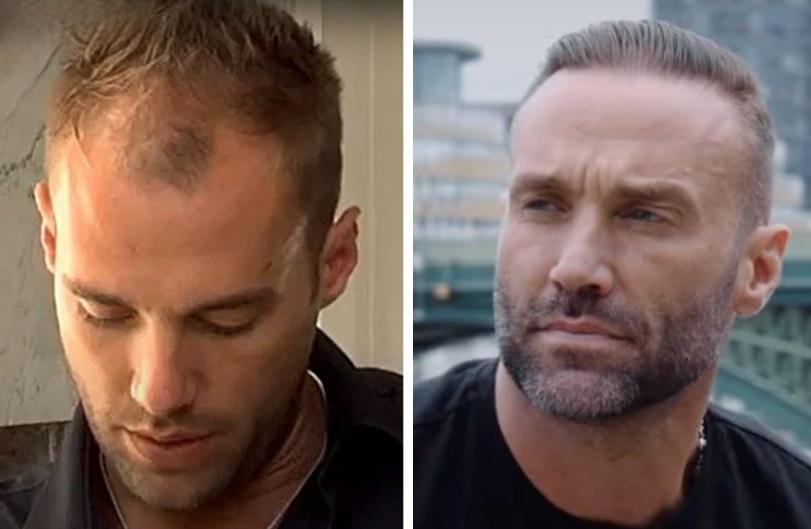
Calum Best has been open about undergoing multiple procedures, totaling thousands of grafts. His gradual transformation reflects staged, carefully planned restoration.
Channing Tatum
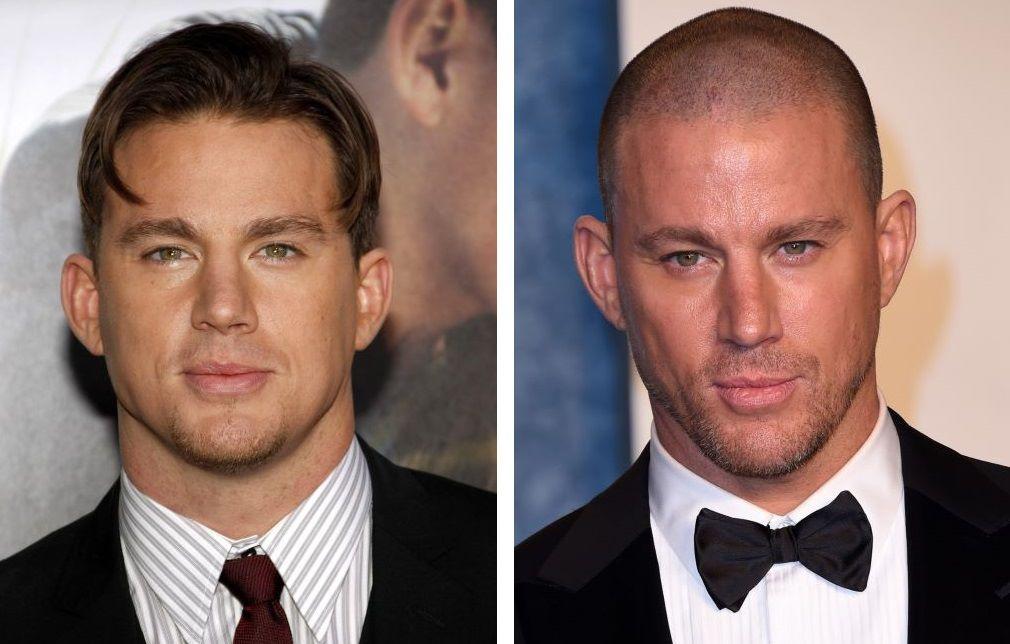
Channing Tatum has not confirmed treatment, but his fuller hairline compared to earlier appearances has drawn attention from fans.
David Beckham
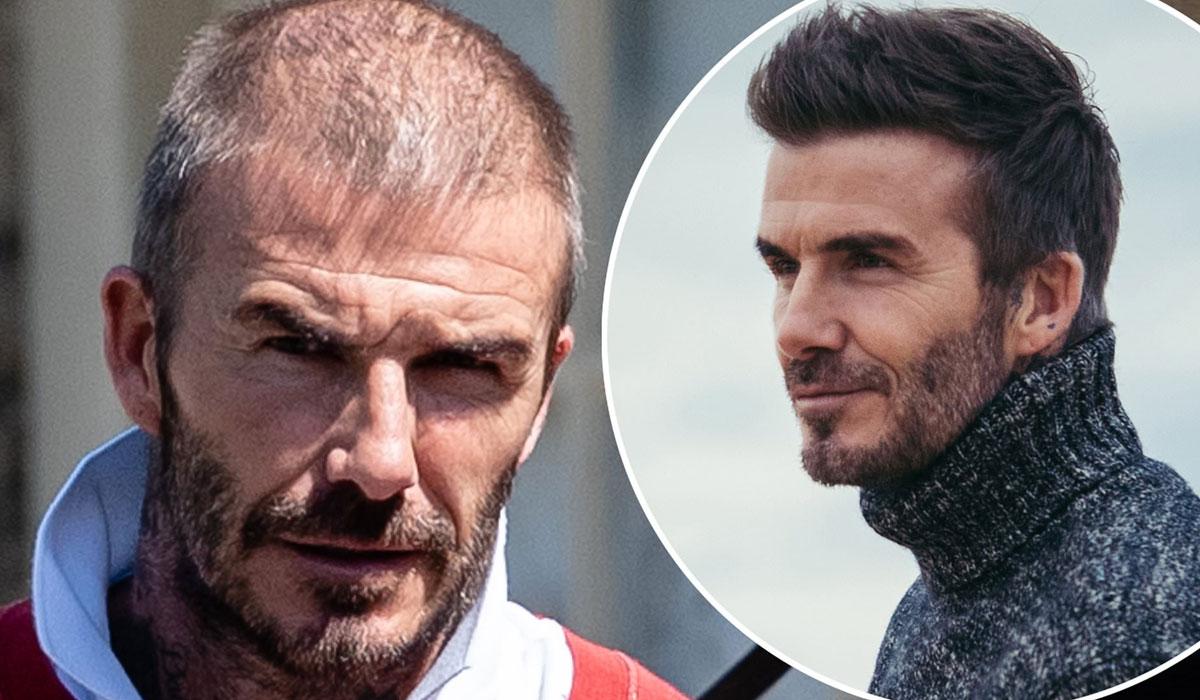
David Beckham’s hair remains dense and well-maintained. While not confirmed, speculation often includes PRP or maintenance-based treatments.
Elon Musk
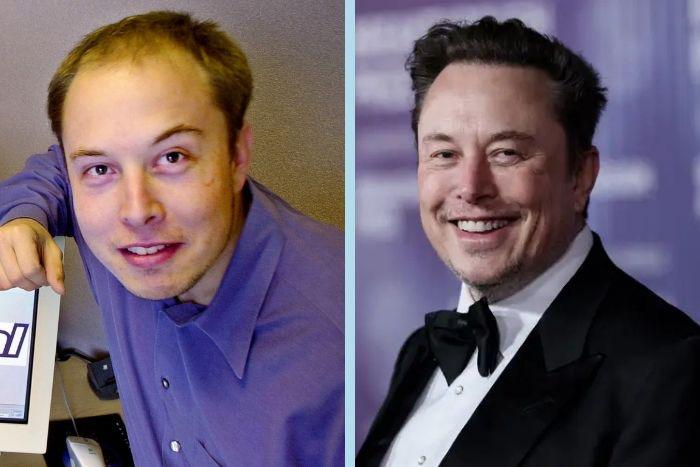
Elon Musk is one of the most widely discussed examples. His early photos show significant thinning, followed by a restored, dense hairline consistent with modern FUE procedures.
Elton John

Elton John underwent early hair transplant attempts in the 1970s. Results were limited at the time, reflecting the technology available in that era.
Jimmy Carr
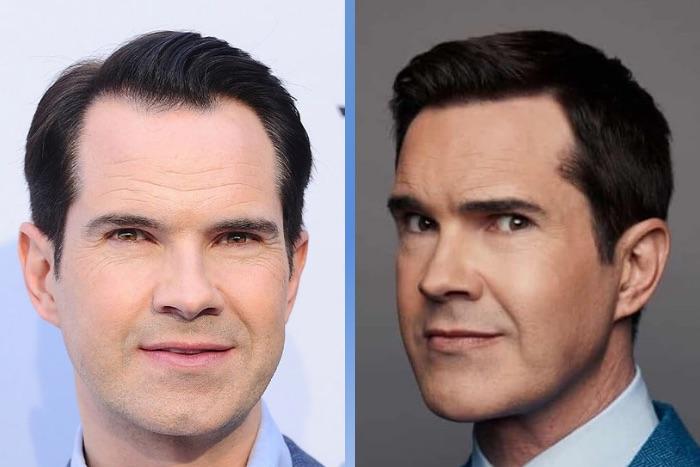
Comedian Jimmy Carr openly shared his decision to undergo a hair transplant, describing it as a “redistribution” of his existing hair. His honesty about the process has made the topic more approachable. The results enhanced his appearance while maintaining his recognizable style.
John Travolta

John Travolta’s hairline has changed noticeably over time. Reports suggest a procedure around 2016, with results that restored density and supported his long-standing public image.
Jude Law
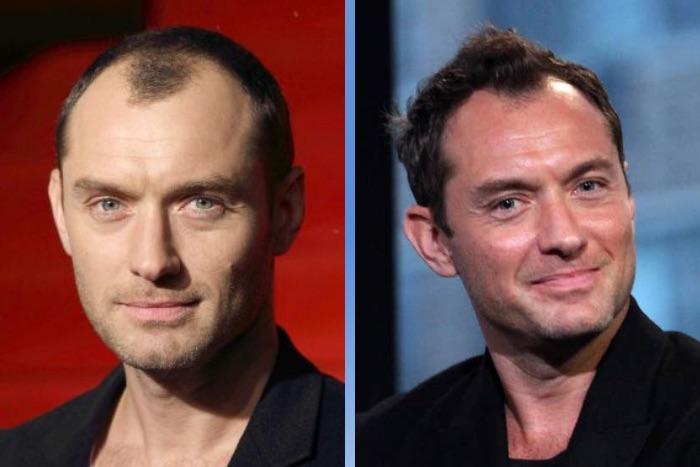
Jude Law has never confirmed treatment, but improvements in his hairline suggest possible intervention. The changes are subtle and consistent with natural restoration outcomes.
Kevin Costner
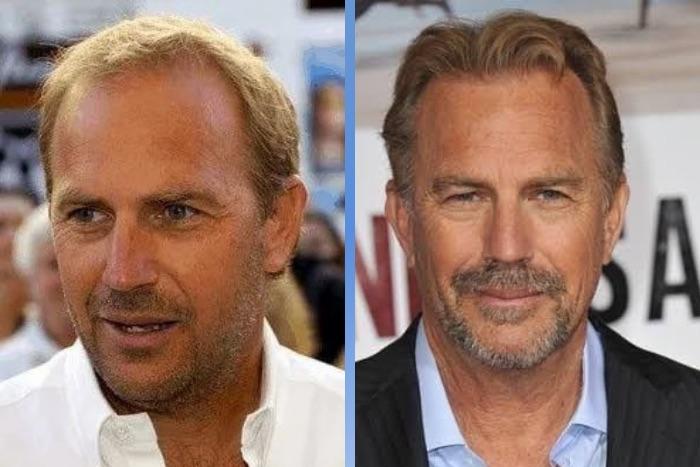
Kevin Costner has maintained a full hairline despite earlier thinning. While unconfirmed, his appearance suggests possible professional intervention.
LeBron James
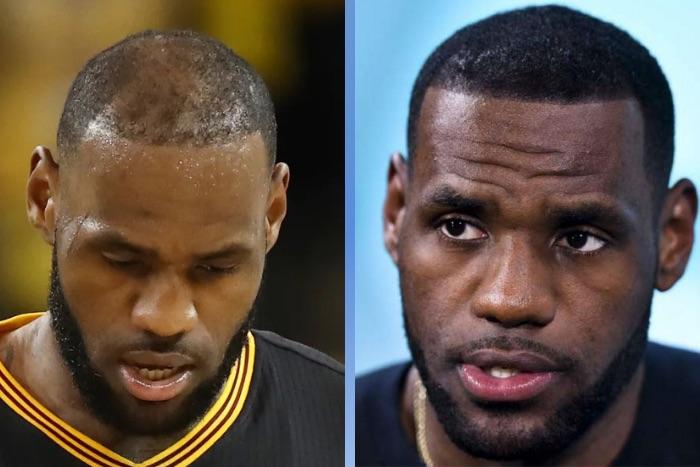
LeBron James has faced ongoing discussion about hair restoration. His improved hairline is often linked to advanced techniques suited for afro-textured hair, highlighting how methods adapt to different hair types.
Matthew McConaughey
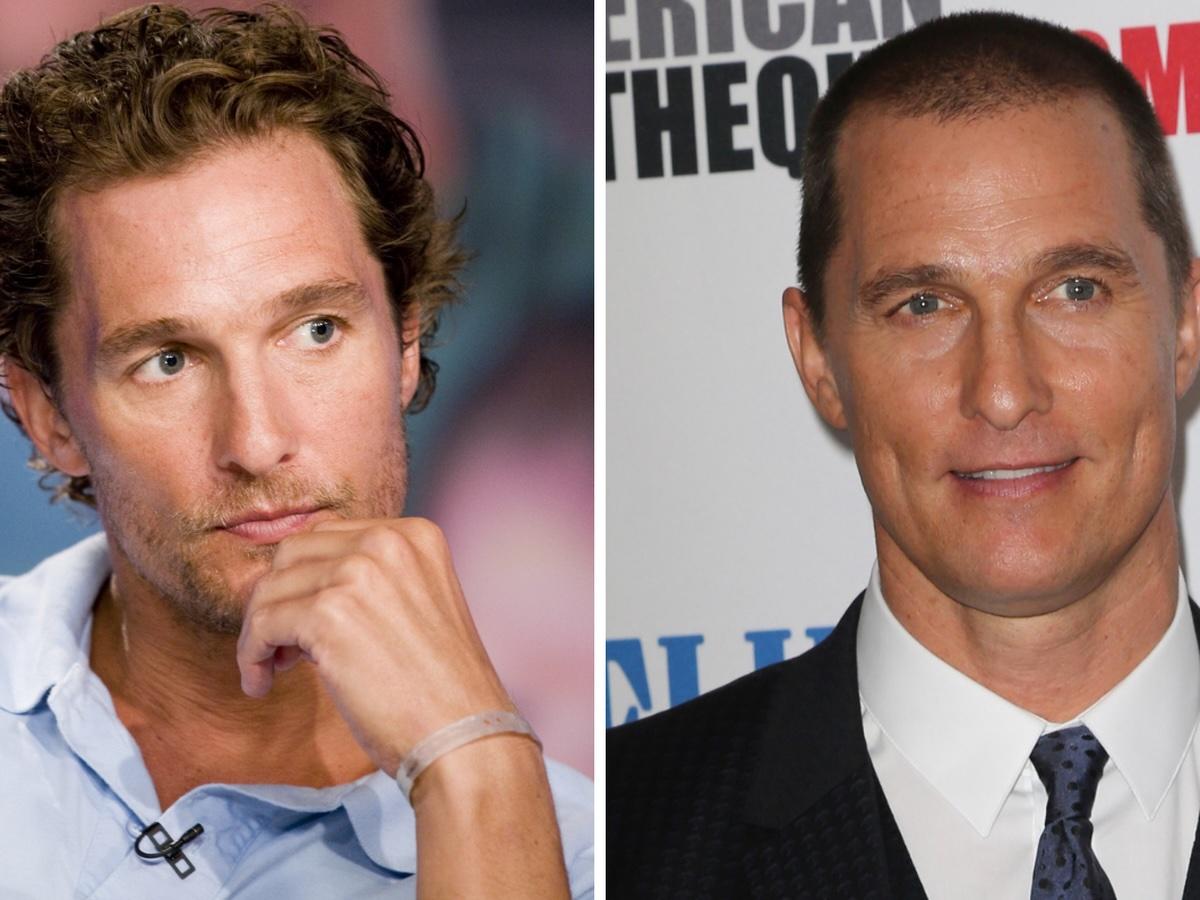
Matthew McConaughey attributes his hair improvement to topical care, though speculation about procedures remains. His results highlight the role of consistent treatment, surgical or not.
Nicolas Cage
Nicolas Cage has never confirmed a transplant, but his thicker hair in recent years suggests possible restoration work.
Prince Harry
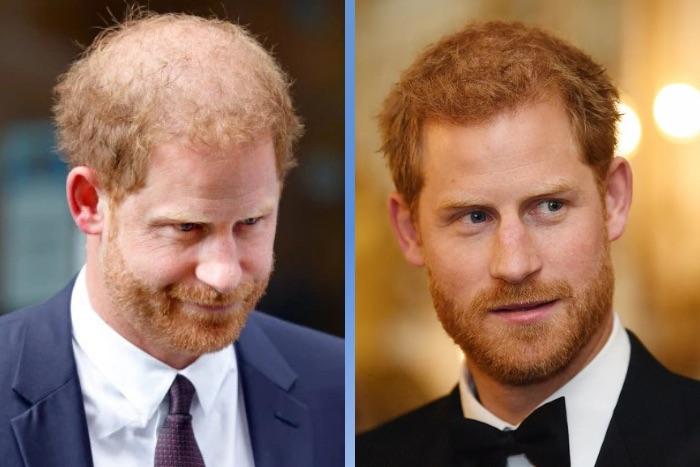
Prince Harry has not undergone a transplant, but his receding hairline is often discussed. Experts frequently note that early intervention could help maintain density.
Steve Carell

Steve Carell reportedly underwent a transplant between early seasons of The Office. The improvement in density contributed to a more defined on-screen appearance.
Tyga
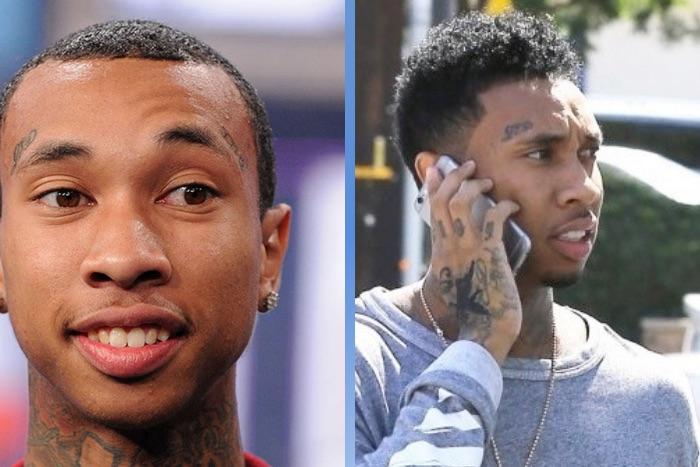
Tyga openly admitted to undergoing a hair transplant to correct his hairline. His natural results have influenced others in the music industry.
Will Arnett
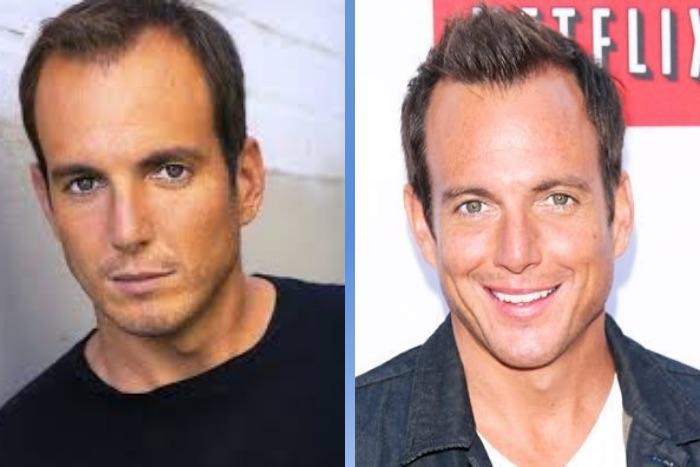
Will Arnett underwent an FUE procedure to address a receding hairline. His results are subtle, maintaining a natural and refreshed appearance.
What these results show
These cases highlight a clear shift.
Modern hair transplant techniques, especially FUE-based methods, allow:
- natural hairline design
- high graft survival when performed correctly
- long-term, stable results
Dr. Ahmet Murat says:
“A successful hair transplant should not be obvious. The goal is natural density and a hairline that fits the patient’s age and facial structure.”
Not every public figure confirms treatment. That’s expected. Hair restoration is often a private decision.
What matters is understanding what is possible today, based on real outcomes and proper medical planning.
Can Alopecia Be Treated?
This is usually the next question after reading about celebrities with alopecia. Can hair grow back? Yes, in many cases. But it depends on the type of hair loss, how early it’s identified, and how the body responds.
Alopecia is not one condition. So treatment is never one-size-fits-all.
According to the American Academy of Dermatology, some forms of alopecia can resolve on their own, while others require medical treatment to control progression.
When hair regrows on its own
In alopecia areata, spontaneous regrowth can happen. Hair follicles are not destroyed. They are temporarily affected by immune activity.
That means:
- regrowth may occur within months
- patches can reappear later
- cycles are common
This unpredictability is one of the defining features.
Common dermatologist-led treatments
Treatment focuses on calming the immune response and supporting regrowth.
Depending on the case, options may include:
- corticosteroid injections for localized patches
- topical immunotherapy
- minoxidil support in selected cases
The approach changes based on severity, age, and pattern.
FDA-approved options for severe alopecia areata
Recent developments changed the treatment landscape.
The U.S. Food and Drug Administration has approved JAK inhibitors for severe alopecia areata in certain patients. These medications target the immune pathways involved in hair follicle attack.
This is relevant for:
- extensive or resistant cases
- patients with long-term progression
- individuals not responding to traditional therapies
It is not a first-line treatment for everyone.
Why treatment depends on the type
This is where many misunderstandings happen.
- Alopecia areata → immune-based treatment
- Traction alopecia → remove tension and allow recovery
- Stress-related shedding → resolve trigger and support regrowth
Each path is different.
Dr. Ahmet Murat explains:
“The treatment is not for hair. It is for the cause behind the hair loss. If you treat the wrong cause, you delay real improvement.”
What to expect realistically
Hair regrowth is possible. But timelines vary.
Some patients see visible improvement within months. Others require long-term management.
The key is early evaluation and correct classification.
When Should You See a Dermatologist for Hair Loss?
Hair loss can feel confusing at first. Some shedding is normal. Other patterns need attention early.
If you’re searching for celebrities with alopecia, there’s a good chance you’re comparing your own symptoms. That’s a natural first step. The next step is knowing when to get a proper evaluation.
Signs that need medical attention
Not every case requires urgent care. Certain patterns should not be ignored.
Watch for:
- sudden patchy hair loss
- round bald spots appearing quickly
- loss of eyebrows or eyelashes
- increased hair shedding over a short period
- scalp discomfort, itching, or redness
- visible thinning along the hairline
According to the American Academy of Dermatology, early diagnosis improves the chances of effective treatment, especially in autoimmune-related cases.
Why timing matters
Hair follicles respond differently depending on the cause.
- In alopecia areata, early treatment can limit progression
- In traction alopecia, removing tension early may allow full recovery
- In stress-related shedding, identifying the trigger shortens recovery time
Waiting too long can reduce options.
What a proper evaluation includes
A dermatologist does more than look at hair loss. The process often includes:
- scalp examination under magnification
- medical history review
- pattern analysis of hair loss
- blood tests if needed
- in some cases, scalp biopsy
This step determines the exact type of hair loss.
Dr. Ahmet Murat says:
“Patients often wait months before seeking help. In many cases, we could have slowed or reversed the process earlier with the right diagnosis.”
What you should avoid doing
Many people try to self-manage based on what they see online or from famous people with alopecia.
That can lead to:
- using the wrong treatments
- delaying proper care
- unnecessary stress
Hair loss is visible. The cause is not. Getting clarity early changes the outcome.
Frequently Asked Questions About Celebrities and Alopecia
Who are some lesser-known celebrities with alopecia?
Beyond widely recognized names, several public figures have shared their experiences more quietly. Examples include Gail Porter and Ayanna Pressley. Their stories often receive less media attention but are medically relevant. These cases help broaden awareness and show that alopecia affects people across different industries, not just high-profile entertainers.
What is the difference between alopecia areata and general hair loss?
Alopecia areata is an autoimmune condition where the immune system targets hair follicles, causing patchy hair loss. General hair loss can result from stress, genetics, hormones, or styling damage. The key difference lies in the cause. Proper diagnosis is essential, as treatments vary significantly depending on the underlying condition.
How do celebrities manage alopecia in public life?
Celebrities manage alopecia in different ways based on comfort and visibility. Some choose to shave their heads, others use wigs or hair systems, and some openly discuss their condition. Public figures often balance personal acceptance with professional image, which can influence how they present their hair loss over time.
Why do some celebrities hide their hair loss while others speak openly?
The decision is personal. Hair loss can affect confidence and public perception, especially in image-driven industries. Some choose privacy to avoid scrutiny, while others speak openly to raise awareness or support others. There is no right or wrong approach. Both visibility and privacy are valid choices.
Where does alopecia usually start on the scalp?
Alopecia areata often begins with small, round patches on the scalp. These can appear suddenly and may expand or multiply. In traction alopecia, thinning usually starts along the hairline or temples due to tension. The location and pattern provide important clues for diagnosis.
How quickly can alopecia develop?
Alopecia areata can develop rapidly, sometimes within days or weeks. Patients may notice sudden patches of hair loss without warning. Other types, such as traction alopecia, progress gradually over time. The speed of onset is one of the factors dermatologists use when evaluating the condition.
Will hair always grow back after alopecia?
Not always. In many cases of alopecia areata, hair regrows since follicles remain intact. However, regrowth may be temporary or incomplete. More advanced forms, such as alopecia universalis, can lead to long-term or permanent hair loss. Outcomes vary from person to person.
What triggers alopecia in celebrities and the general population?
Triggers can include autoimmune activity, genetic predisposition, stress, or environmental factors. In traction alopecia, repeated tension from hairstyles is the main cause. In many cases, the exact trigger is not clearly identified. This is why medical evaluation is necessary to determine contributing factors.
How is alopecia diagnosed by specialists?
Diagnosis typically involves a scalp examination, medical history review, and pattern assessment. Dermatologists may use magnification tools or request blood tests. In some cases, a scalp biopsy is performed. The goal is to identify the exact type of hair loss before starting treatment.
Will lifestyle changes help improve alopecia?
Lifestyle changes can support overall hair health but may not fully treat autoimmune alopecia. Reducing stress, improving nutrition, and avoiding tension hairstyles can help in certain types of hair loss. However, medical treatment is often required for conditions like alopecia areata.
Take the Next Step with Hermest Hair Transplant Clinic
If you searched for celebrities with alopecia, you’ve seen how different each case can be. The same appearance can come from completely different causes. What matters is identifying yours correctly.

At Hermest Hair Transplant Clinic, every case starts with diagnosis. No assumptions. No generic plans.
Dr. Ahmet Murat says:
“We don’t treat hair loss blindly. We define the condition first, then build a plan around it. That’s what leads to natural and lasting results.”
Hermest is known for its UNIQUE FUE® technique, developed to protect the donor area and create natural-looking density. This is combined with the AIS (All-In Safety) Protocol, a structured system that controls every step, from planning to aftercare.
The clinic has also been recognized at the European Awards in Medicine 2025, reflecting consistent outcomes and patient-focused care.
Your process includes a detailed scalp analysis, graft planning, and a personalized approach based on your condition. For international patients, the experience is fully organized, including accommodation, transfers, and follow-up care.
If you’re unsure about your hair loss, the first step is simple.
Get a clear diagnosis.
Understand your options.
Move forward with a plan that fits your case.
Request your free hair analysis and speak directly with a specialist today.