


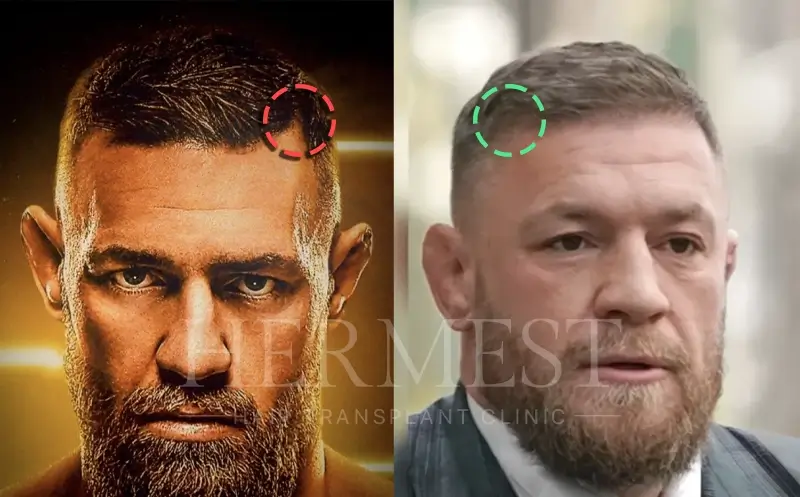
Conor McGregor Hair Transplant: Before & After, Truth & Results
The topic of Conor McGregor hair transplant comes up often, but the answer is not as simple as people expect. There is no official confirmation that Conor McGregor had a transplant. Still, visible changes in his hairline have kept the discussion active for years.
Searches like did Conor McGregor get a hair transplant, Conor McGregor hairline, and Conor McGregor hair before after all point to the same question. What actually happened?
If you compare different periods, you’ll notice two phases. First, a visible improvement in the hairline. Later, signs that the density is not as consistent as before. That combination is what creates confusion.
According to the American Academy of Dermatology, male pattern hair loss typically begins with temple recession and progresses gradually over time. That pattern matches what many observed in his earlier years.
What makes this case different is not just the change. It’s the timeline.
Dr. Ahmet Murat explains:
“In some cases, we see improvement followed by new thinning. This does not necessarily mean failure. It usually reflects how natural hair continues to change over time.”
Most articles stop at speculation. They either assume a transplant or dismiss the changes.
This guide takes a different approach.
We’ll break down what changed, what those changes suggest, and why the hair may have looked different again later. More importantly, we’ll connect this to your situation and what it means for your own hairline decisions.
Let’s start with the basics. What kind of hair loss pattern did Conor McGregor show in the beginning?
Quick Insights
- There is no confirmed Conor McGregor hair transplant, but visible changes suggest possible intervention
- His case shows both improvement and later thinning, which is common
- Hair transplants restore specific areas but do not stop future hair loss
- Maintenance and long-term planning are essential
- Hairline procedures require precision, not high graft numbers
- Styling and grooming can influence appearance but not structure
- The right timing depends on progression, not just appearance
What happened to Conor McGregor’s hair?

The early pattern is easier to understand than the later changes.
If you look at older photos, especially during his early UFC career, the signs are clear. This was not crown thinning. It was frontal hairline recession.
Early hair loss pattern
The most visible features were:
- Receding temples
- A slightly uneven frontal hairline
- Thinning at the corners rather than the center
This pattern is often described as Norwood stage 2 to 3. It’s one of the most common forms of male hair loss.
Searches like Conor McGregor hair loss and Conor McGregor hairline started increasing during this phase.
At certain angles, especially with short cuts or under strong lighting, the recession became more noticeable.
Why this pattern is common
Temple recession is usually the first stage of androgenetic alopecia.
According to the American Academy of Dermatology, this happens when hair follicles become sensitive to DHT. Over time, they shrink and produce thinner hair.
The process is gradual:
- Hair becomes finer
- The hairline moves back
- Density reduces at the edges
Unlike crown thinning, this directly affects facial framing. Even small changes can look significant.
What made his case noticeable
Conor McGregor often kept his hair short and styled forward or natural. That made the hairline easier to observe.
There was no attempt to hide the recession. That’s why it became part of his overall look.
The turning point
At a certain point, the hairline appeared stronger. More defined. Less recessed.
This is where searches like Conor McGregor hair transplant before after began to increase.
Dr. Ahmet Murat explains:
“When a receding hairline becomes more structured over time, we analyze the pattern. Natural progression rarely moves in that direction.”
That shift is what leads to the main question.
Next, we’ll address it directly. Did he actually have a procedure, or is there another explanation?
Did Conor McGregor get a hair transplant?
There is no confirmed statement from Conor McGregor.
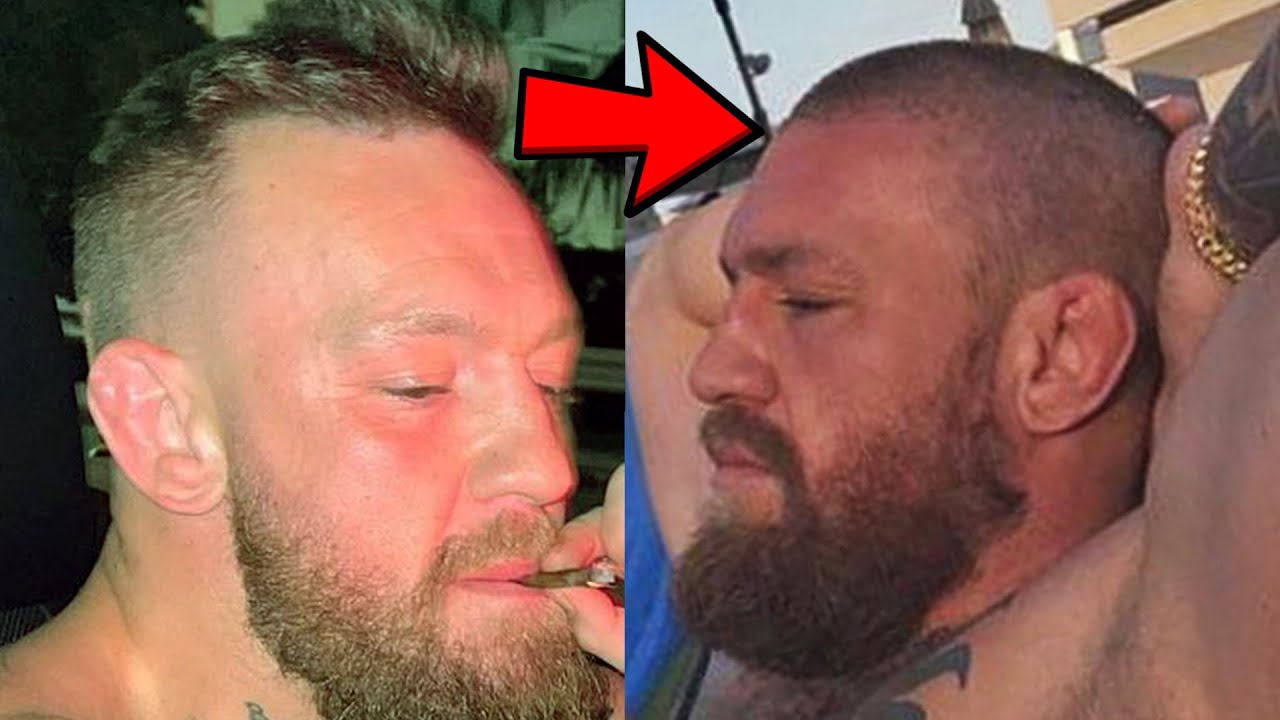
That needs to be clear. Any discussion around Conor McGregor hair transplant is based on visible changes, not official confirmation.
He has never openly stated that he underwent a procedure. This places the topic in the “likely but unconfirmed” category.
At the same time, searches like did Conor McGregor get a hair transplant continue to grow, driven by noticeable changes in his hairline over time.
Why people believe he may have had one
There are a few reasons the speculation is strong:
- The hairline appears more defined in later appearances
- Temple recession looks reduced
- Density in the frontal zone seems improved
These changes are more noticeable than in subtle cases like Adam Levine.
Sources such as Wimpole Clinic and Cosmedica Clinic have also highlighted these visible improvements, noting that they are consistent with hair restoration outcomes.
What makes this case different
Unlike some celebrity cases, there appears to be a clear phase of improvement.
Then later, signs of thinning again.
That combination is what creates confusion.
Searches like did Conor McGregor hair transplant fail reflect that second phase.
What experts look at in cases like this
Hair does not naturally regain density in receded areas without intervention. That’s a key point.
At the same time, transplanted hair does not stop future hair loss in untreated areas.
Dr. Ahmet Murat explains:
“A transplant improves specific zones. It does not stop the natural progression of hair loss. That’s why long-term planning is important.”
Why the answer is not black and white
The visible changes strongly suggest possible intervention.
But without confirmation, the correct position is careful analysis, not certainty.
Conor McGregor hairline before and after analysis
This is where the case becomes clearer.
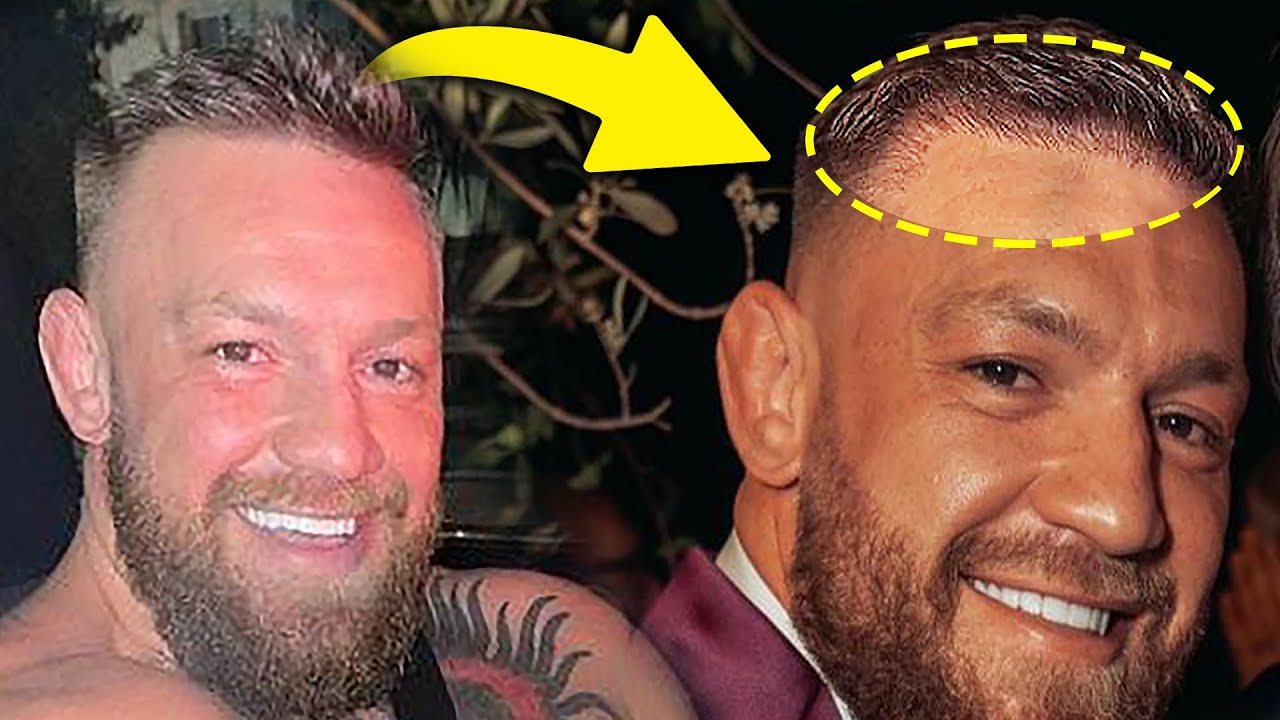
When you compare earlier and later appearances, the difference is not subtle. It’s structured.
What changed visually
Looking at Conor McGregor hair before after comparisons, several key changes stand out:
- The hairline appears lower and more defined
- Temple recession looks reduced
- The frontal zone shows improved density
- The overall shape looks more uniform
Earlier, the hairline had deeper corners and softer edges. Later, it appears sharper and more controlled.
This is why searches like Conor McGregor hairline transformation and Conor McGregor hair transplant results became more common.
The change looks deliberate. Not random.
What this suggests medically
Hairline recession does not reverse naturally once follicles are lost.
According to research referenced on PubMed, androgenetic alopecia leads to progressive thinning, not spontaneous regrowth in receded areas.
So when you see:
- Reduced recession
- Increased density
- More defined shape
The most common explanation is graft placement in the frontal zone.
This aligns with typical hairline restoration procedures.
Why the result looked natural
The hairline was not pushed too low.
It maintained:
- Slight irregularity
- Age-appropriate positioning
- Balanced density
That’s why the result didn’t look artificial.
Dr. Ahmet Murat explains:
“A natural hairline is never perfectly straight. Small irregularities are what make it believable.”
The second phase people notice
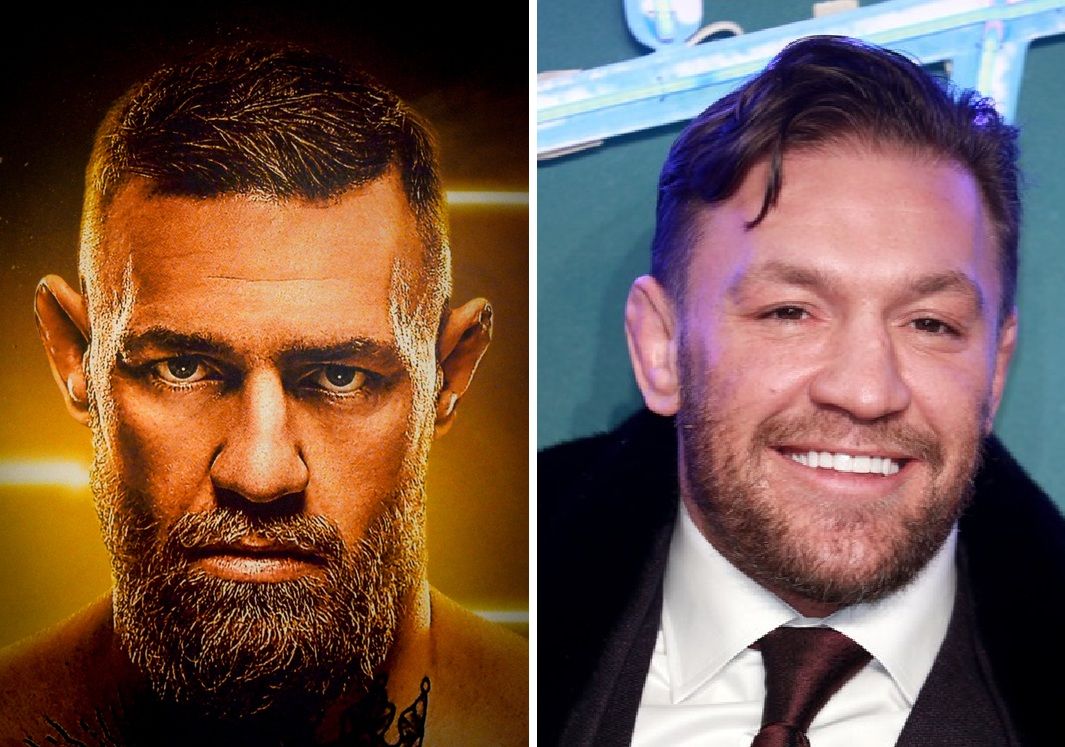
After the improvement, later appearances show:
- Slight thinning again
- Less consistent density
- A softer overall look
This is what drives searches like did Conor McGregor hair transplant fail.
But this phase needs proper explanation.
If he had a transplant, what technique was likely used?
The visible improvement in the frontal zone points toward a modern approach. Not large coverage. Not aggressive reconstruction. Controlled hairline work.
FUE explained in simple terms
FUE (Follicular Unit Extraction) is the most likely method for a case like this.
It involves extracting individual grafts from the donor area and placing them into the hairline.
Main advantages:
- No linear scar
- Precise placement in visible areas
- Natural-looking hairline design
This makes it ideal for frontal restoration, especially in public figures.
Sources like Kopelman Hair Clinic also suggest FUE as the most probable technique for similar celebrity cases.
Why FUE fits this type of result
Looking at Conor McGregor hair transplant results, the changes suggest:
- Focused work on the hairline
- Moderate graft numbers
- High attention to detail
These are typical characteristics of FUE-based procedures.
FUT is less likely here. It is usually chosen for larger areas like the crown. His change was concentrated in the front.
Could DHI or refined FUE techniques be involved?
Possibly.
Modern approaches like DHI or Unique FUE allow:
- Greater control over angle and direction
- Higher precision in hairline zones
- Better blending with existing hair
These techniques are often used when the goal is subtle improvement rather than full reconstruction.
Why the result changed over time
A transplant improves the transplanted area. It does not protect the native hair around it.
According to the American Academy of Dermatology, natural hair continues to thin over time if not treated.
So what you may be seeing is:
- Stable transplanted hair
- Continued thinning of surrounding native hair
Dr. Ahmet Murat explains:
“Patients sometimes think the transplant has failed. In reality, the native hair continues to change, which affects the overall appearance.”
That explains the second phase.
How many grafts would this require?
When people search how many grafts Conor McGregor hair transplant, they’re trying to translate a visible result into numbers.
That can help, but only with context.
Estimated graft range
Based on the visible hairline improvement, a realistic estimate would be:
- Around 1000 to 2500 grafts for frontal restoration
- Possibly on the lower end if the work was conservative
This range fits:
- Temple reinforcement
- Hairline reshaping
- Moderate density increase in the frontal zone
It’s not a full-scale restoration. It’s targeted work.
Why hairline cases use fewer grafts
Hairline procedures focus on a smaller area compared to crown cases.
The goal is:
- Define the shape
- Improve density where it matters most visually
- Blend with existing hair
That’s why even 1500 grafts can make a noticeable difference.
According to general data referenced by the International Society of Hair Restoration Surgery, frontal procedures often require fewer grafts but demand higher precision.
Why numbers don’t guarantee the same result
Two patients with 2000 grafts can look very different.
Outcome depends on:
- Hair thickness
- Hair color vs scalp contrast
- Natural hairline structure
- Placement accuracy
Dr. Ahmet Murat explains:
“In hairline work, placement matters more than numbers. A well-designed 1500 graft case can look better than a poorly planned 3000 graft case.”
What this means for you
If your hairline looks similar, your graft range may be close.
But copying a number is not the goal.
The goal is matching the plan to your pattern.
Why did his hair appear to thin again later?
This is the part most people misunderstand.
Searches like did Conor McGregor hair transplant fail come from one observation. His hair looked stronger at one point, then less consistent later.
That creates confusion.
Continued hair loss in native hair
A transplant does not stop hair loss.
It only restores specific areas where grafts are placed. The surrounding native hair can still thin over time.
According to the American Academy of Dermatology, androgenetic alopecia continues unless treated. Hair follicles gradually miniaturize and produce thinner strands.
So what you may be seeing is:
- Transplanted hair remaining stable
- Natural hair around it becoming thinner
This creates the impression that the result is fading.
Not protecting existing hair
This is a common issue.
If medical treatments are not used consistently, the native hair continues to weaken.
That affects overall density.
The hairline may still be in place, but it looks softer or less full.
Expectations vs reality
Many expect permanent, uniform density after a procedure.
That’s not how it works.
Hair restoration is:
- Area-specific
- Dependent on ongoing hair loss
- Influenced by maintenance
Dr. Ahmet Murat explains:
“A transplant is not a cure. It is a redistribution of hair. Without protecting the existing hair, the overall look can change over time.”
Why this does not mean failure
A failed transplant would show:
- Poor growth
- Patchy results
- Unnatural hair direction
That is not what is visible here.
Instead, what you see is a natural progression around a treated area.
So, this case highlights one important point.
A transplant is part of a long-term plan, not a one-time solution.
Could it be something else instead of a transplant?
It’s a fair question. Not every visible improvement comes from surgery.
In Conor McGregor’s case, the change looks structured. Still, it’s worth looking at other explanations.
Styling and grooming
Hair styling can influence how a hairline appears.
Different styles can:
- Push hair forward to soften recession
- Create volume at the front
- Reduce contrast between scalp and hair
Conor McGregor has used a range of styles over the years. Some emphasize the hairline. Others soften it.
Lighting plays a role too. Strong lighting reveals thinning. Softer lighting hides it.
This is why Conor McGregor hair before after images can sometimes look inconsistent.
Hair fibers and cosmetic enhancement
Hair fibers are common in media and public appearances.
They can:
- Add temporary density
- Reduce scalp visibility
- Improve the look in photos or on camera
They don’t change the structure of the hairline. They wash out.
That’s why they can’t fully explain a consistent, long-term improvement.
Medical treatments and maintenance
Non-surgical treatments can improve hair quality.
Options like minoxidil or finasteride can:
- Slow hair loss
- Strengthen existing follicles
- Improve overall density
According to the American Academy of Dermatology, these treatments are effective in early and moderate stages.
They help maintain hair. They don’t rebuild a receded hairline.
Why these explanations are not enough on their own
The key detail is structure.
A more defined hairline shape that remains stable over time is difficult to achieve through styling or temporary solutions alone.
That’s why searches like celebrity hair transplant Conor McGregor remain strong.
Dr. Ahmet Murat explains:
“Styling can improve appearance, but it does not change the hairline itself. Structural changes usually come from medical intervention.”
What this means
It’s possible that multiple factors played a role.
- Styling
- Maintenance
- And possibly a procedure
That combination is common in public figures.
What you can learn from Conor McGregor’s case
This is where the example becomes practical.
Most people searching Conor McGregor hair transplant results or Conor McGregor hairline are not just curious. They are comparing their own situation.
If your hairline looks similar
If you’re noticing temple recession, your pattern may be close to his early stage.
That usually means:
- The hairline is receding at the corners
- The center remains relatively stable
- Density is still present but weaker
This is a common stage. And it’s manageable.
You still have flexibility.
Why timing matters in this type of case
His case shows two important phases:
- Visible improvement
- Later thinning in surrounding areas
This highlights a key principle.
Intervention without long-term planning can lead to uneven results over time.
According to the American Academy of Dermatology, hair loss progression continues unless actively managed.
What most people misunderstand
Many think:
“I’ll fix my hairline once and it’s done.”
That’s not how it works.
Hair restoration is a process:
- You improve specific areas
- Natural hair continues to change
- Maintenance becomes essential
Dr. Ahmet Murat explains:
“A transplant should always be planned with the future in mind. If you don’t protect the existing hair, the overall appearance can change over time.”
What your options would look like
If your case is similar, your plan may include:
- A haircut that works with your hairline
- Medical support to slow progression
- A targeted procedure if needed
The key takeaway
This case is not about success or failure.
It’s about understanding how hair changes over time and planning accordingly.
When should you consider a hair transplant?
This is where most people pause and think. Do I act now, or wait?
The answer depends on your pattern and progression. Not just how your hair looks today.
Early vs progressing hairline recession
In early stages, like what you see in Conor McGregor hairline discussions, the change is limited.
You may notice:
- Slight temple recession
- Softer hairline edges
- Minor thinning at the front
At this point:
- Haircuts can still improve the look
- Styling can reduce contrast
- Medical treatments can slow progression
You still have time. And options.
As the pattern progresses, things become clearer:
- The temples move further back
- The hairline loses structure
- Styling becomes less effective
This is when searches like hairline restoration celebrities and Conor McGregor hair transplant before after increase.
According to research referenced on PubMed, androgenetic alopecia is progressive. Hair becomes thinner before it disappears, and this continues over time.
When a transplant becomes a realistic option
A procedure makes sense when:
- The hairline shape is clearly changing
- The pattern appears stable or predictable
- The donor area is strong
- You want long-term structural improvement
Hairline procedures are smaller than crown cases but require precision.
What most patients get wrong
Many focus on lowering the hairline too much.
That often creates unnatural results later.
The goal is not a perfect line. It’s a believable one.
Dr. Ahmet Murat explains:
“A well-designed hairline should match the patient’s age and expected future hair loss. That’s what keeps the result natural.”
The key idea
A transplant is not about acting quickly. It’s about acting at the right time.
Frequently asked questions
Did Conor McGregor get a hair transplant?
There is no confirmed statement that Conor McGregor had a hair transplant. Most discussions are based on visible changes in his hairline over time.
Why do people think Conor McGregor had a hair transplant?
People noticed a more defined hairline and improved frontal density compared to earlier years. This led to searches like Conor McGregor hair before after and ongoing speculation.
Did Conor McGregor’s hair transplant fail?
There is no clear evidence of failure. What many interpret as “failure” is more likely continued thinning of the natural hair around a possibly treated area.
Why can hair look thinner again after a transplant?
A transplant restores specific areas but does not stop future hair loss. The surrounding natural hair can continue to thin if not maintained.
What technique would be used in a case like his?
If a procedure was performed, FUE or similar modern techniques are the most likely choices for hairline restoration due to precision and natural results.
How many grafts would be needed for a similar hairline?
An estimated range would be around 1000 to 2500 grafts, depending on the level of recession and desired density.
Can transplanted hair fall out over time?
Transplanted hair is usually permanent, but the native hair around it can continue to thin. This can affect the overall appearance if not managed.
Could his hair changes be explained without a transplant?
Some improvement can come from styling, grooming, or medical treatments. However, structural changes in the hairline are harder to achieve without intervention.
Can you achieve similar results?
Yes, if your hair loss pattern and donor area are suitable. The outcome depends on proper planning, technique, and long-term care.
When should you consider a hair transplant?
A transplant becomes relevant when the hairline continues to recede, loses its shape, and no longer responds to styling or non-surgical options.
Get a personalized plan for your hairline
Looking at a case like this helps you understand possibilities. But your hairline needs its own plan.

At Hermest Hair Transplant Clinic, we evaluate your hairline pattern, donor capacity, and long-term progression before recommending anything.
We use techniques like UNIQUE FUE® and follow our AIS (Aesthetic Implantation Strategy) protocol to create natural, long-lasting results.
Dr. Ahmet Murat explains:
“Hairline design is about balance and future planning. Our goal is to create a result that remains natural over time.”
If you’re noticing early recession or changes in your hairline, this is the right time to get clarity.
Start with a consultation.
Understand your options.
And move forward with a plan designed for your future.