

Dave Portnoy Hair Transplant: Before & After, FUT vs FUE Explained
The topic of Dave Portnoy hair transplant is very different from most celebrity cases. This one isn’t speculation. It’s confirmed. Dave Portnoy openly shared that he had a procedure back in 2017. That transparency is why searches like did Dave Portnoy get a hair transplant, Dave Portnoy hair before after, and Dave Portnoy hairline keep trending.
People are not just curious about him. They are trying to understand what the result means for their own hair.
His case is especially interesting because the issue wasn’t the front hairline. It was the crown. That’s where many men struggle. Harder to style. Harder to hide. Often ignored until it becomes obvious.
According to the American Academy of Dermatology (AAD), male pattern baldness commonly affects the crown and temples first. Crown thinning can progress slowly, but once visible, it becomes difficult to manage with haircuts alone.
That’s exactly where his transformation becomes relevant.
Dr. Ahmet Murat explains:
“Crown thinning is one of the most frustrating patterns for patients. It doesn’t respond well to styling, and it spreads gradually. That’s why many eventually consider a procedure.”
This article breaks it down clearly.
We’ll look at what happened, which method was used, and why. More importantly, we’ll connect it to your situation. What you can realistically expect. And whether a similar approach makes sense for you.
No guessing here.
This is a confirmed case. And that makes it one of the most useful examples to learn from.
Let’s start with the basics. What kind of hair loss did Dave Portnoy actually have?
Quick Insights
- Dave Portnoy’s case is confirmed and focused on crown restoration
- The procedure was done in 2017 using FUT
- Crown transplants aim for coverage, not maximum density
- Modern techniques like FUE, Sapphire FUE, and DHI offer different advantages today
- Graft numbers matter less than distribution and planning
- The right timing depends on progression, not just appearance
- Long-term strategy defines the final outcome
What happened to Dave Portnoy’s hair?
If you look at earlier photos and videos, the pattern is clear. This wasn’t aggressive front hair loss. It was gradual thinning at the crown.

That distinction matters.
Searches like Dave Portnoy hair loss and Dave Portnoy hairline often focus on the front. But his main issue was behind it.
Early hair loss pattern
The visible signs were typical of crown thinning:
- Reduced density at the vertex (top-back area)
- Scalp visibility under bright lighting
- Hair appearing thinner when styled naturally
The frontal hairline stayed relatively stable. That’s why the change wasn’t immediately obvious to everyone.
Crown thinning often hides well at first. Then suddenly, it doesn’t.
Why crown loss is common
This pattern follows a well-known path in male pattern baldness.
According to the AAD, hair follicles at the crown are highly sensitive to DHT. Over time, they shrink and produce finer, weaker hairs.
This process is gradual:
- Hair becomes thinner
- Density decreases
- The scalp becomes more visible
Unlike the front, the crown is harder to disguise. Styling options are limited. Even short cuts don’t always solve it.
Dr. Ahmet Murat explains:
“Crown thinning is deceptive. Patients think it’s minor at first, but once density drops below a certain point, it becomes very noticeable from multiple angles.”
Why this case stands out
Dave Portnoy addressed the issue relatively early.
That’s important.
Early intervention means:
- Better blending with existing hair
- Lower graft requirements compared to advanced loss
- More natural-looking outcomes
This is why searches like Dave Portnoy hair before after show a clear but not exaggerated transformation.
Did Dave Portnoy get a hair transplant?
Yes. This is one of the rare celebrity cases with a clear answer.

Dave Portnoy has openly shared that he underwent a procedure in 2017. That’s why searches like did Dave Portnoy get a hair transplant and Dave Portnoy hair transplant 2017 have a straightforward explanation.
The confirmed answer
He had a hair transplant in 2017.
The procedure was performed at Leonard Hair Transplant Associates in Massachusetts. This has been referenced in multiple clinic reports and public discussions, including sources like Hair Center of Turkey.
There’s no guesswork here. The timeline and decision are known.
Why he chose to do it
The main concern was crown thinning.
Unlike frontal hair loss, the crown is difficult to manage with styling. It becomes visible from angles you can’t control.
For someone constantly on camera, that becomes a bigger issue.
This aligns with searches like Dave Portnoy hair loss and celebrity hair transplant Dave Portnoy, where users try to understand why he chose to act.
Why this case is different from most celebrity discussions
Most celebrity hair transplant topics are based on visual analysis.
This one isn’t.
- The procedure is confirmed
- The timing is known
- The clinic is known
That makes it more useful as a real-world reference.
Dr. Ahmet Murat explains:
“When a case is confirmed, we can evaluate it more accurately. We can look at the pattern, the method, and the result without speculation.”
Where and when did Dave Portnoy get his transplant?
This part is clear and documented. It helps explain both the method used and the type of result he achieved.
When did it happen?
The procedure took place in 2017.
That timing matters. Hair transplant techniques have evolved since then. What was commonly used in 2017 is not always the first choice today.
Searches like Dave Portnoy hair transplant 2017 often come from people trying to understand whether the same approach is still relevant.
Where was the procedure done?
Dave Portnoy had his transplant at Leonard Hair Transplant Associates in Newton, Massachusetts.
This has been referenced in multiple clinical summaries and reports.
The clinic is known for using the FUT method, also called the strip technique.
Why location and timing matter
The clinic choice often reflects the method.
At that time, many established U.S. clinics still preferred FUT, especially for crown restoration cases.
That’s because:
- FUT allows harvesting a large number of grafts in one session
- It can be efficient for covering wider thinning areas like the crown
- It was considered a standard approach for many years
Today, preferences have shifted. Many patients now choose FUE-based techniques for less visible scarring and faster recovery.
Dr. Ahmet Murat explains:
“Technique trends change over time. What was common a few years ago may not be the first choice today. The key is choosing what fits the patient, not just the trend.”
What technique did Dave Portnoy use?
The method used in this case is widely understood. It was FUT, also known as the strip method.
This is important. Many people searching what procedure did Dave Portnoy have FUT or FUE are trying to compare older techniques with modern options.
FUT (strip method)
FUT involves removing a thin strip of scalp from the donor area, usually at the back of the head.
That strip is then divided into individual grafts and implanted into thinning areas.
Key characteristics:
- Allows harvesting a large number of grafts in one session
- Leaves a linear scar in the donor area
- Often used for larger coverage areas like the crown
According to general clinical guidance referenced by International Society of Hair Restoration Surgery, FUT was widely used for many years and remains a valid option in specific cases.
Why FUT made sense for his case
Dave Portnoy’s main concern was crown thinning.
That area requires broader coverage rather than precise hairline design.
FUT can be suitable for this because:
- It provides a high graft yield in a single session
- It allows efficient distribution across a wider area
- It works well when donor density is strong
In 2017, this was still a common approach, especially in U.S.-based clinics.
The trade-offs of FUT
No technique is perfect. FUT comes with limitations:
- A linear scar at the back of the head
- Longer recovery compared to FUE
- Less flexibility for very short hairstyles
This is why many patients today explore FUE-based methods instead.
Dr. Ahmet Murat explains:
“FUT can still be effective in certain cases, especially when large graft numbers are needed. But today, many patients prefer techniques that preserve the donor area more discreetly.”
Why technique alone doesn’t define the result
The final outcome depends on more than the method.
- Graft placement
- Density distribution
- Long-term planning
All of these matter just as much.
Dave Portnoy before and after hair transplant
The change is noticeable, but not dramatic. That’s usually a good sign.
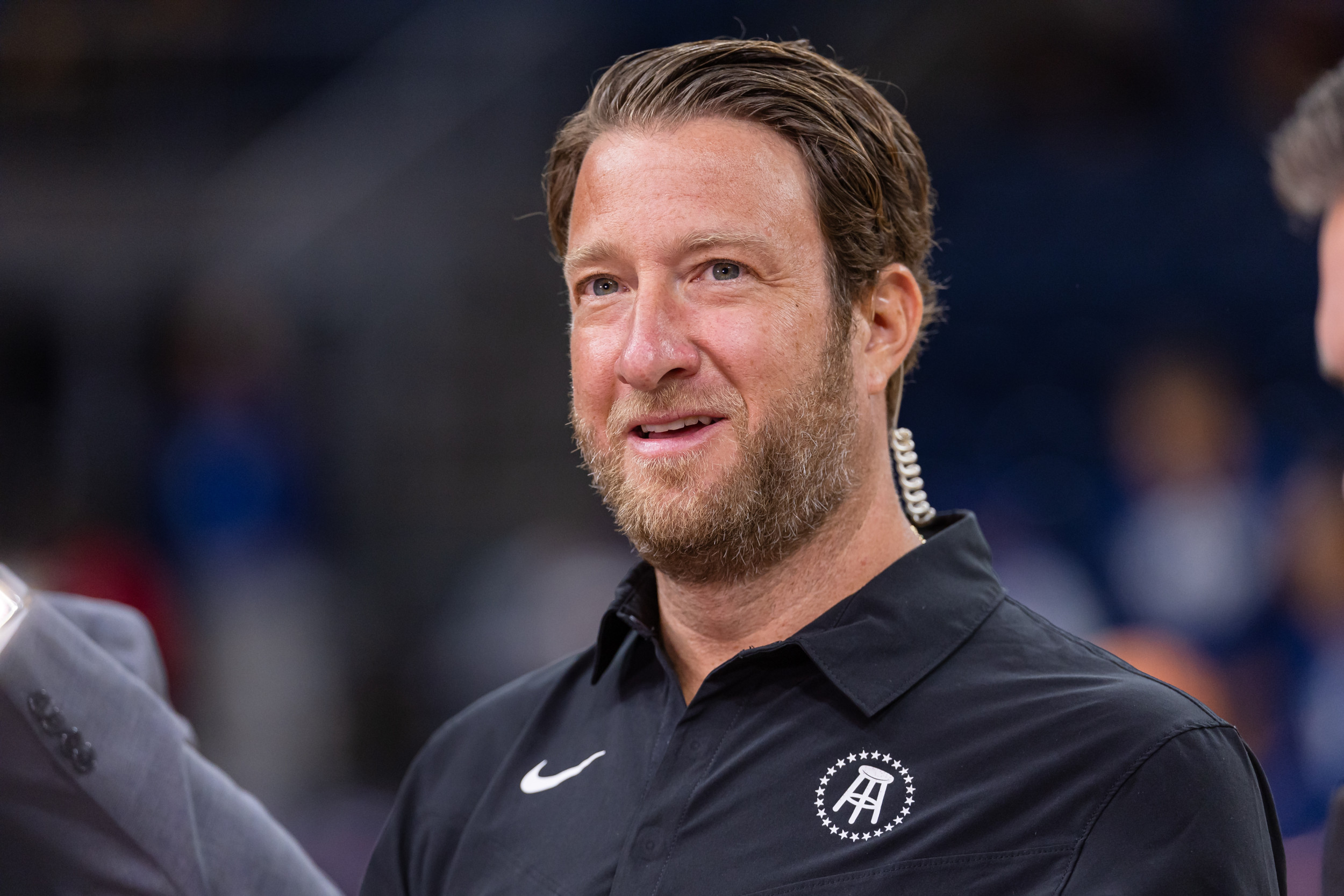
The goal in his case was not a new hairline. It was improved crown density. That creates a different type of transformation.
What changed after the procedure
Looking at Dave Portnoy hair before after comparisons, a few consistent improvements stand out:
- The crown area appears fuller
- Scalp visibility is reduced under normal lighting
- Hair looks more even across the top
Before the procedure, the thinning at the crown was visible, especially from above or under bright light. Afterward, that area looks more filled in.
This is typical for crown-focused restoration.
The improvement doesn’t create extreme density. It creates coverage. That’s the goal.
What stayed the same
The frontal hairline looks largely unchanged.
That’s important.
It suggests the procedure focused on the crown rather than the front. This aligns with the known pattern of his hair loss.
Searches like Dave Portnoy hairline often expect a front transformation, but that’s not where the work was done.
Why crown results look different from hairline results
Crown restoration behaves differently.
- It requires more graft spread over a wider area
- Density appears softer compared to the front
- Results are more about reducing visibility than creating sharp lines
According to observations aligned with International Society of Hair Restoration Surgery, crown transplants are typically designed for coverage rather than maximum density due to the circular growth pattern.
Dr. Ahmet Murat explains:
“The crown is not about perfect density. It’s about reducing contrast so the thinning becomes less noticeable from all angles.”
Why this result looks natural
There’s no sudden, artificial change.
The improvement blends with existing hair. That’s why it feels realistic.
How many grafts did Dave Portnoy need?
This is one of the most searched questions. People want a number they can compare to their own case. Searches like how many grafts Dave Portnoy hair transplant reflect that. But the answer needs context.
Estimated graft range for his case
Based on visible crown improvement, a realistic estimate would be:
- Around 2000 to 3500 grafts for crown coverage
- Possibly more depending on density goals
The crown requires a wider distribution. That means grafts are spread out rather than densely packed in a small area.
This is different from hairline work, where density is concentrated.
Why crown transplants need more grafts
The crown has a circular growth pattern. Hair doesn’t fall in one direction. It swirls.
That creates two challenges:
- More surface area to cover
- Light reflecting from multiple angles
Because of this, even moderate thinning can require a significant number of grafts.
According to general data referenced by International Society of Hair Restoration Surgery, crown restoration often uses a substantial portion of available grafts, depending on the size of the thinning area.
Why graft numbers alone can be misleading
Two patients with 3000 grafts can get very different results.
The outcome depends on:
- Hair thickness
- Color contrast between hair and scalp
- Curl or wave
- Placement strategy
Dr. Ahmet Murat explains:
“Patients often focus on the number. We focus on distribution. In crown cases, how grafts are spread matters more than how many you use.”
What this means for you
If your crown thinning is similar, your graft range may be close. But it won’t be identical.
A proper plan considers both current density and future progression.
Hair transplant timeline: what his results likely looked like
Most people expect immediate results. That’s not how it works.

A transplant is a staged process. The final result takes time to appear, especially in crown cases.
0–2 weeks: recovery phase
Right after the procedure, the scalp goes through healing.
You typically see:
- Redness in the recipient area
- Small scabs forming around grafts
- Mild swelling in some cases
The implanted hairs are still in place at this stage. The scalp is adjusting.
2–6 weeks: shedding phase
This is where many patients get concerned.
The transplanted hairs begin to shed. This is normal.
It’s called shock loss.
The follicles remain intact under the skin. Only the visible hair falls out.
According to clinical explanations referenced on PubMed, this phase is part of the natural hair growth cycle reset after transplantation.
3–6 months: early growth
New hair starts to grow from the transplanted follicles.
At this stage:
- Hair appears thin and soft
- Coverage begins to improve gradually
- The crown may still look uneven
This phase requires patience. Results are not fully developed yet.
6–9 months: visible improvement
Density becomes more noticeable.
The hair starts to:
- Thicken
- Blend better with existing hair
- Improve overall coverage
This is when many patients start to feel satisfied with the change.
9–12 months: final result
This is where the full outcome becomes clear.
- Hair reaches its natural thickness
- The crown looks more consistent
- The result stabilizes
Dr. Ahmet Murat explains:
“Hair growth after transplantation is gradual. The real result is not what you see in the first months, but what develops over the full year.”
Why crown results take longer
The crown has a slower growth cycle compared to the front. That’s why results in that area can take slightly longer to mature.
This timeline aligns with what Dave Portnoy likely experienced after his 2017 procedure.
FUT vs FUE, Sapphire FUE, and DHI: would he choose differently today?
Dave Portnoy’s case used FUT. That was common at the time. Today, the conversation is broader. Patients now compare FUT with FUE, Sapphire FUE, and DHI before making a decision.
Why FUT was used then
FUT was widely preferred in 2017, especially for crown cases.
It made sense because:
- A high number of grafts could be harvested in one session
- Large areas like the crown could be covered efficiently
- Donor density could be maximized
According to data referenced by the International Society of Hair Restoration Surgery, FUT remained a standard approach for many clinics during that period.
The trade-off was clear. A linear scar in the donor area and a longer recovery.
FUE: the modern standard

FUE (Follicular Unit Extraction) changed how patients approach hair restoration.
Instead of removing a strip, individual grafts are extracted one by one.
Key advantages:
- No linear scar
- Faster healing
- More flexibility for shorter hairstyles
This is why many patients today prefer FUE over FUT.
Sapphire FUE: more refined incisions
Sapphire FUE is an evolution of standard FUE.
It uses sapphire blades instead of steel to create recipient channels.
This allows:
- Smaller, more precise incisions
- Better control over density
- Potentially faster healing
It’s often used for patients who want a more refined, dense result, especially in visible areas.
DHI: direct implantation approach

DHI (Direct Hair Implantation) uses a specialized pen to implant grafts directly.
This gives:
- High control over angle and direction
- Precise placement in the hairline
- Minimal handling of grafts
It’s often preferred for frontal zones where design matters most.
Would his case be treated differently today?
Most likely, yes.
For a crown-focused case like his, many clinics today would consider:
- FUE or Sapphire FUE for extraction
- Strategic distribution across the crown
- Possibly combining techniques for better control
Dr. Ahmet Murat explains:
“Each technique has its place. The important part is choosing the right combination and planning for how the hair will look years later, not just after the procedure.”
That’s the shift.
Not just technique selection. Smarter planning.
What you can learn from Dave Portnoy’s case
This is where the example becomes useful.
Most people searching Dave Portnoy hair transplant results are not just curious. They are comparing their own situation.
If your crown looks similar
If you’re noticing thinning at the crown, your pattern may be very close to his early stage.
That usually means:
- Density is reduced but not completely gone
- The hairline is still relatively stable
- The thinning becomes visible under light or from above
This stage is ideal for planning.
You still have enough existing hair to blend with. That makes results look more natural.
Why crown cases need a different strategy
Crown restoration is not about sharp lines. It’s about coverage.
You’re working with:
- A circular growth pattern
- Light reflecting from multiple angles
- A larger surface area
This is why crown cases often require:
- More graft distribution
- Careful density planning
- Patience with the timeline
According to insights aligned with American Academy of Dermatology, crown thinning progresses gradually but becomes more visible as density drops below a certain level.
What most people misunderstand
Many expect full density like the front hairline.
That’s not realistic for the crown.
The goal is:
- Reduce scalp visibility
- Create even coverage
- Blend with existing hair
Dr. Ahmet Murat explains:
“In crown cases, success is not about maximum density. It’s about achieving a natural appearance from all angles.”
What your options would look like
If your case is similar, your plan may include:
- A haircut that reduces contrast
- Medical support to slow progression
- A targeted transplant if needed
When should you consider a hair transplant?
The answer depends on timing. Not just how your hair looks today, but how it’s changing.
Early vs progressing crown thinning
In early stages, the crown may only be visible under strong light or from certain angles.
At this point:
- Density is reduced but still present
- Styling can still improve the appearance
- Medical treatments can slow progression
You don’t always need surgery yet.
As thinning progresses, things shift:
- The crown becomes visible in normal lighting
- Coverage becomes harder to maintain
- Hair appears weaker even when cut short
This is where many start searching crown thinning hair transplant or Dave Portnoy hair transplant results to understand their options.
According to research referenced on PubMed, androgenetic alopecia leads to gradual follicle miniaturization, meaning hair becomes thinner before disappearing completely.
When a transplant becomes a practical option
A transplant makes sense when:
- The thinning area is clearly defined
- The donor area is strong enough
- The pattern is stable or predictable
- Styling no longer improves the look
For crown cases, patience is part of the decision. Acting too early can lead to inefficient graft use. Waiting too long can require more grafts later.
What most patients get wrong
Many think:
“I’ll fix everything in one procedure.”
Crown restoration doesn’t work that way.
It requires:
- Strategic graft placement
- Realistic density expectations
- Long-term planning
Dr. Ahmet Murat explains:
“We don’t just look at the crown today. We look at how the pattern will evolve. That’s how we decide when and how to intervene.”
Frequently asked questions
Did Dave Portnoy get a hair transplant?
Yes, he confirmed that he had a procedure in 2017.
What technique did Dave Portnoy use?
He underwent an FUT (strip method) procedure, which was commonly used at the time for crown restoration.
How many grafts did Dave Portnoy have?
Estimates suggest around 2000 to 3500 grafts, depending on the size of the crown area.
Did the transplant fully restore his hair?
It improved crown density and reduced scalp visibility, but it did not create extremely high density. That is typical for crown cases.
Is FUT still used today?
Yes, but many patients now prefer FUE-based techniques for less visible scarring and faster recovery.
Can you get similar results?
Yes, if your hair loss pattern and donor area are suitable. The outcome depends on planning, technique, and long-term care.
Get a personalized plan for your crown thinning
Looking at a case like this helps you understand the possibilities. But your situation needs its own strategy.

At Hermest Hair Transplant Clinic, we evaluate your crown pattern, donor capacity, and long-term progression before recommending anything.
We use techniques like UNIQUE FUE® and follow our AIS (Aesthetic Implantation Strategy) protocol to create balanced, natural results that hold up over time.
Dr. Ahmet Murat explains:
“Crown cases require careful distribution and long-term thinking. Our goal is to create coverage that remains natural from every angle.”
If you’re starting to notice crown thinning, this is the best time to get clarity.
Start with a consultation. Understand your options, and move forward with a plan designed for your future.