
Is a Hair Transplant Surgery Painful?
 ChatGPT
 Claude
 Perplexity
 Grok
Grok
 Gemini

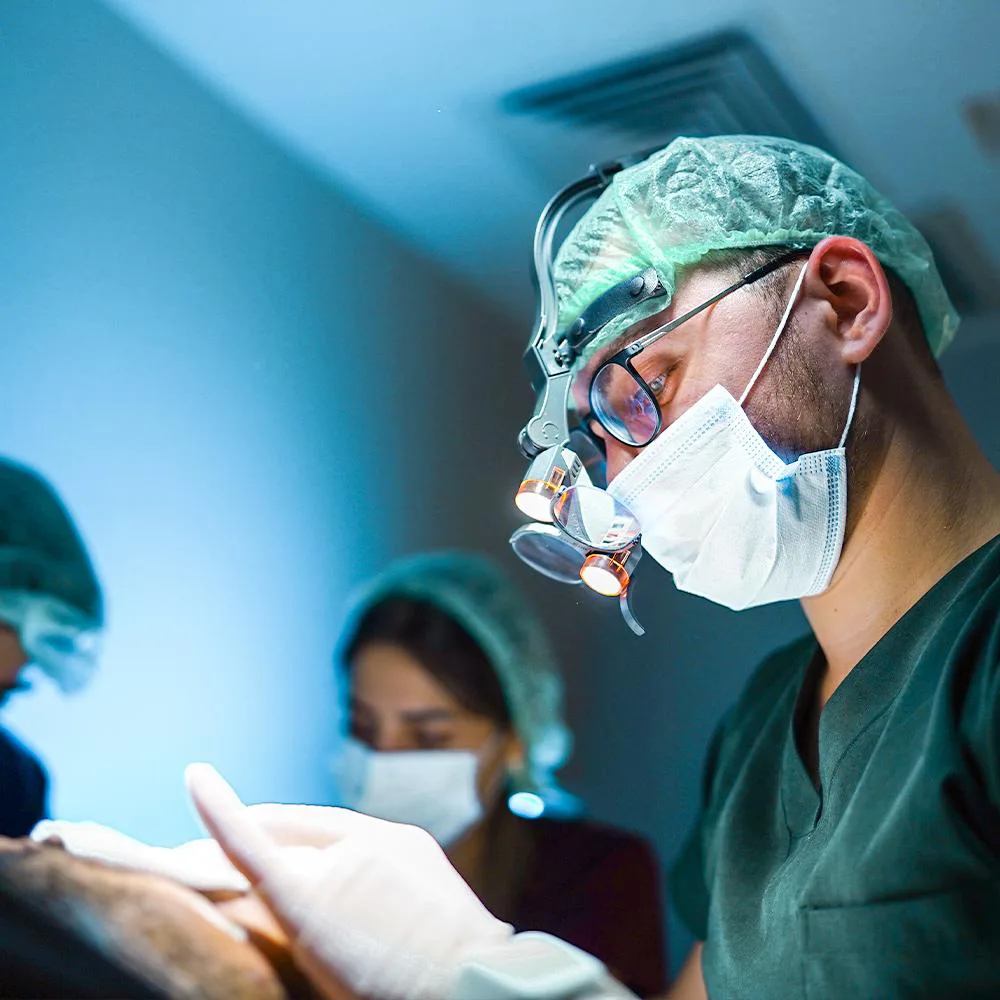
If you’re considering hair restoration, it’s natural to wonder: is a hair transplant surgery painful? The short answer is — no, not during the procedure, thanks to modern anesthesia. However, some mild discomfort can occur during recovery, especially in the donor area after hair transplant.
Hair transplants are typically performed under local anesthesia, which numbs the scalp completely. Most patients describe feeling pressure or vibration, not pain, during extraction and implantation. Some discomfort may appear later, but it’s usually manageable with over-the-counter medication.
“We tell our patients at Hermest: the only real discomfort is during the local anesthesia injection. Once the area is numb, the rest of the procedure is pain-free,” explains Dr. Ahmet Murat, lead surgeon at Hermest Hair Clinic.
In this guide, you’ll learn:
- What kind of pain you might expect during and after hair transplant
- Differences in pain between FUE vs DHI
- How long discomfort typically lasts
- Pain management tips and red flags
- Real patient experiences and expert advice
Quick Insights
- Is hair transplant painful? Most patients say no—thanks to local anesthesia, the procedure is virtually pain-free.
- The only discomfort is often from the anesthesia injection, lasting a few seconds.
- Post-hair transplant pain is usually mild and short-lived, often described as tightness or slight soreness.
- FUE vs DHI pain is comparable, with minor differences in donor vs recipient area sensitivity.
- With proper aftercare and simple pain management, most patients resume normal activities within 5–7 days.
What Kind of Pain Happens During Hair Transplant?
Most people are relieved to learn that hair transplant surgery is not painful during the procedure itself. Thanks to local anesthesia, your scalp will be completely numb throughout the operation. However, understanding each step can help set accurate expectations.
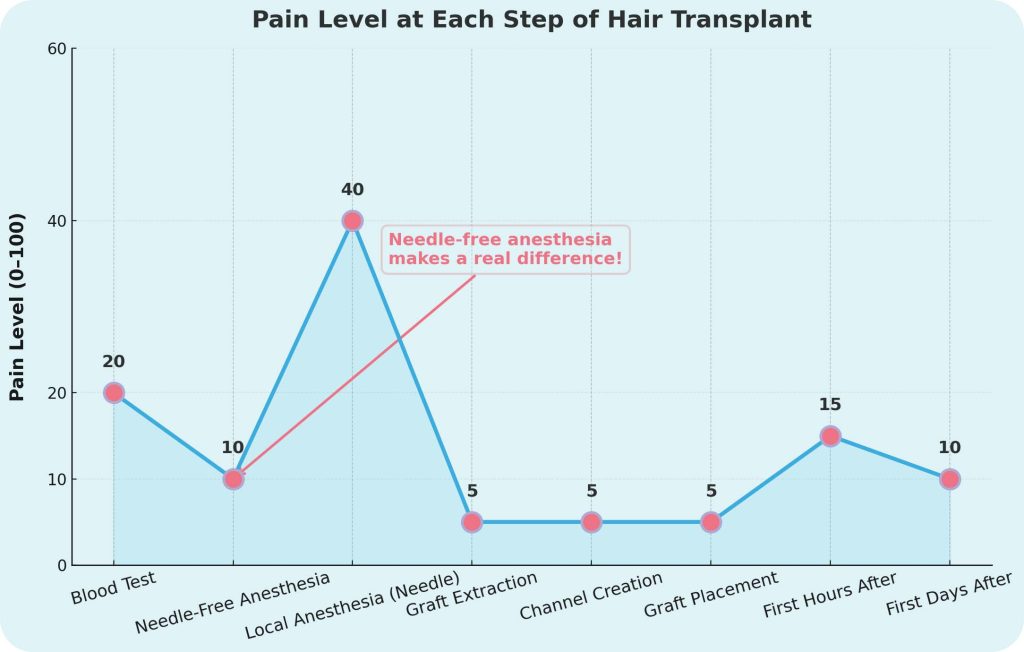
Hair Transplant Anesthesia Pain
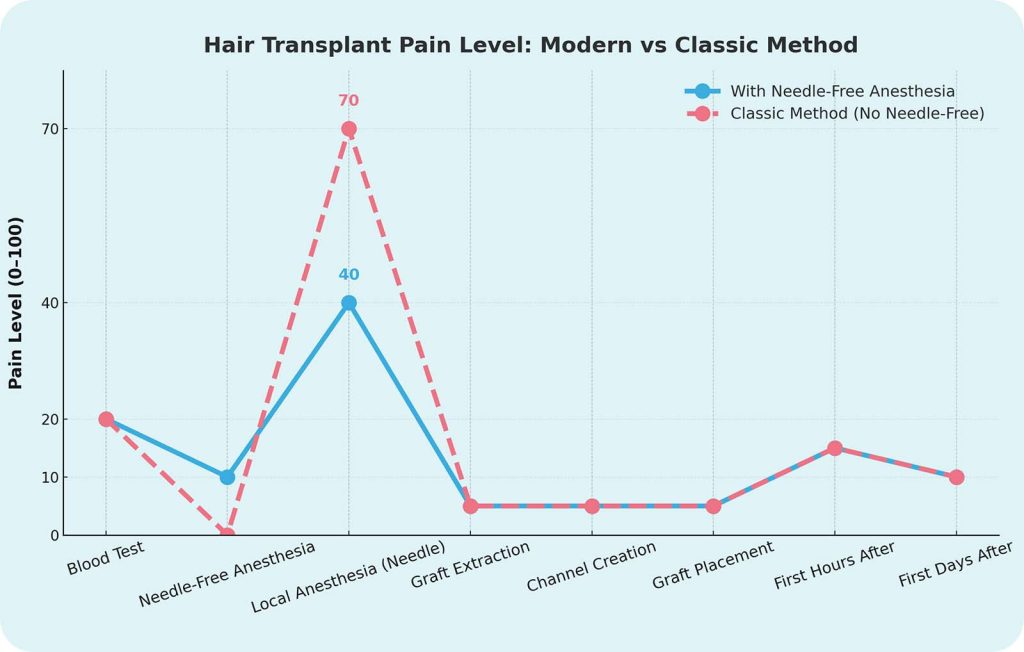
Before the transplant begins, a local anesthetic is injected into the donor and recipient areas. This part can cause a brief stinging or burning sensation that lasts around 10–20 seconds. Some patients describe it as the most uncomfortable part of the entire experience.
“The hair transplant injection pain is over quickly and well worth the comfort it provides for the next several hours,” says Dr. Ahmet Murat. “We also offer needle-free options for highly sensitive patients.”
Once the anesthesia takes effect, you may feel:
- Light pressure
- Vibrations from the micromotor or manual punch
- A tugging sensation during implantation
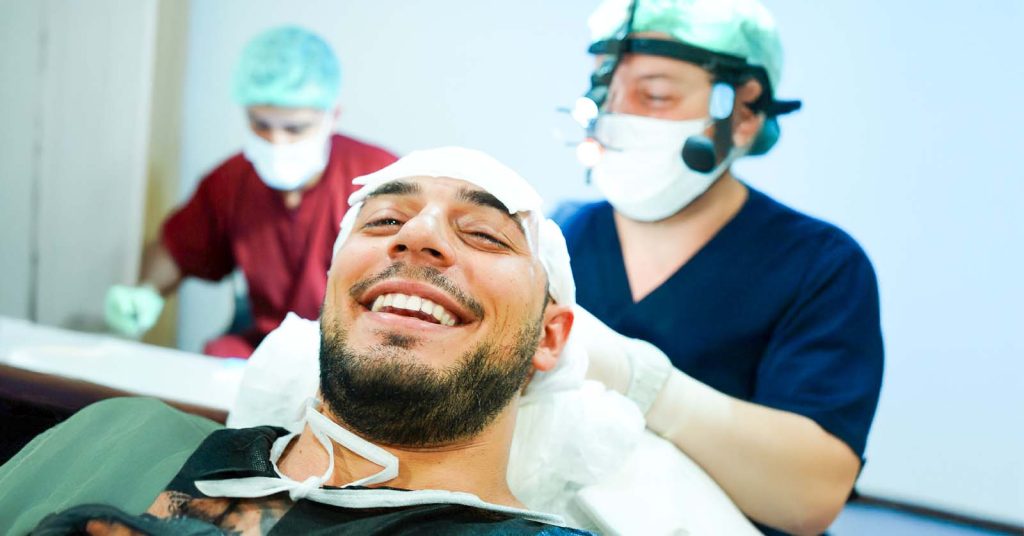
Does It Hurt During Hair Transplant?
No, the surgery itself doesn’t hurt. The scalp remains numb for several hours, and many patients even fall asleep or watch videos during the operation. If discomfort begins mid-surgery, a top-up dose of anesthetic is applied.
Does It Hurt More in FUE or DHI?
Both FUE (Follicular Unit Extraction) and DHI (Direct Hair Implantation) are considered minimally invasive hair transplant techniques. But when it comes to pain and comfort, small differences in their application can influence the patient experience.
FUE Pain Level
In FUE, the surgeon extracts hair follicles one by one from the donor area using a micro-punch tool. This part is done under local anesthesia, so there’s no pain during the procedure. The only discomfort may occur when the anesthesia is first injected.
Post-op, donor area discomfort may last 2–4 days, with a feeling of tightness or soreness. Recovery is generally smooth.
DHI Pain Level
In DHI, hair follicles are extracted similarly but implanted directly using a Choi implanter pen. Because the implantation is more concentrated and dense, some patients report mild sensitivity in the recipient area afterward. However, during the operation, pain is still absent due to anesthesia.
Dr. Ahmet Murat: “Pain-wise, there’s no major difference between FUE and DHI when done properly. However, DHI may lead to slightly more post-op tenderness in dense implant areas like the hairline.”
Summary:
| Aspect | FUE | DHI |
|---|---|---|
| Anesthesia | Local (mild sting during injection) | Same |
| During Procedure | Painless | Painless |
| Post-Op Sensation | Donor area tightness (2–4 days) | Recipient area sensitivity (3–5 days) |
| Pain Level | Mild to none | Mild, especially in frontal area |
Typical Pain During Recovery (Timeline)
While the procedure itself is painless, some patients experience mild discomfort after hair transplant surgery, especially in the first week. Here’s a breakdown of what to expect and when:
Day 1–3: Numbness and Tightness
- Donor area pain is most noticeable during this stage. It feels like soreness or tight skin, not sharp pain.
- The recipient area may be slightly tender or sensitive to touch.
- Mild swelling on the forehead may occur, especially in FUE or DHI procedures involving the frontal hairline.
Tip: Sleep with your head elevated at 45° and avoid touching or scratching.
Day 4–7: Scabbing and Itching
- Pain usually subsides, replaced by itching, especially where the grafts were implanted.
- It’s important not to pick at scabs, as this can damage the grafts.
- Over-the-counter pain relievers like paracetamol or ibuprofen may still be used if needed.
“Patients often confuse healing sensations with pain. Most discomfort by this point is just itching or skin sensitivity,” explains Dr. Ahmet Murat.
Week 2–3: Almost Pain-Free
- Most patients report no pain after hair transplant beyond the second week.
- By now, scabs have fallen off, redness fades, and the scalp returns to normal texture.
- Rarely, patients may feel numbness or tingling, especially in the donor area, which can last a few weeks.
Hair Transplant Pain After a Week?
If you still have noticeable pain after 7–10 days, it’s worth checking in with your surgeon. While occasional tenderness is normal, sharp or increasing pain may indicate inflammation or infection.
Anesthesia & Comfort Options
The key to a painless hair transplant lies in the anesthesia. Today’s techniques make it possible to undergo both FUE and DHI without feeling pain during surgery. But some patients still worry about the hair transplant injection pain during numbing.
Local Anesthesia
- The most common method used in Turkey
- Applied with small injections to the donor and recipient areas
- Sensation: a brief stinging or burning that lasts 10–20 seconds
- Once active, the area becomes completely numb for 4–6 hours
Needle-Free Anesthesia
Some clinics offer needle-free anesthesia using pressurized air or jet sprays. This method eliminates the initial sting, ideal for those with needle anxiety. However, it may require more applications to achieve full numbness.
Dr. Ahmet Murat: “At Hermest, we assess each patient’s pain sensitivity. For those who fear needles, we offer needle-free solutions or gentle sedation under medical supervision.”
Sedation & Mild Relaxants
In certain cases, especially for long procedures or highly anxious patients:
- Light oral sedatives may be given
- Some clinics offer conscious sedation (you stay awake, but relaxed)
- Not commonly needed, but available upon request
Pain Management Tips
Although hair transplant surgery is largely painless, post-procedure discomfort can occur—especially in the donor area. Fortunately, this discomfort is mild and easy to manage with a few practical steps.
1. Use Over-the-Counter Pain Relievers
Most clinics recommend paracetamol (acetaminophen) or ibuprofen for the first 2–3 days. These medications help reduce soreness, swelling, and general discomfort.
2. Apply Cold Compress
A cold compress can be gently applied to the forehead—not the transplanted area—to relieve swelling or pressure. Use a clean cloth and apply it in intervals (10 minutes on, 10 minutes off).
3. Sleep with Head Elevated
Use two pillows or a neck pillow to keep your head elevated at a 45-degree angle. This reduces pressure and minimizes swelling in the forehead and eyes.
4. Avoid These During Recovery
- Intense workouts or sweating (for 7–10 days)
- Hats or helmets that rub the scalp
- Hot showers or steam rooms
- Alcohol and smoking (they slow healing)
“The most effective pain relief is prevention. Follow the aftercare plan exactly—especially in the first 5 days,” says Dr. Ahmet Murat.
When to Worry: Pain Red Flags
Mild discomfort after a hair transplant is completely normal—but persistent or increasing pain can be a sign of complications. Knowing the difference between expected sensations and warning signs is important for a safe recovery.
Contact Your Clinic If You Experience:
- Sharp or throbbing pain that worsens after Day 5
- Redness that spreads or becomes warm to the touch
- Foul-smelling discharge or pus from donor or recipient area
- Headache combined with swelling or fever
- Numbness that lasts longer than 4 weeks in one area
These may indicate issues such as infection, inflammation, or nerve irritation, which require prompt medical attention.
“The vast majority of patients heal with zero complications. But if something doesn’t feel right—even minor—our advice is always: contact your surgeon,” says Dr. Ahmet Murat.
Patient Voices: What Real People Say About Hair Transplant Pain
Hearing directly from patients can be one of the most reassuring ways to understand the real pain level during and after a hair transplant. Most people are surprised by how little discomfort they actually feel.
Common Patient Feedback
- “The anesthesia injections were a bit uncomfortable, like a sharp pinch, but after that I didn’t feel a thing.” – Reddit, FUE patient
- “I was expecting pain for days, but honestly, I only took 2 paracetamols the whole week.” – Google Review, Hermest Hair Clinic
- “It felt more like pressure than pain. I was watching Netflix during the surgery.” – YouTube vlog, DHI transplant
- “I have low pain tolerance and was super anxious, but it wasn’t bad. The injections stung for 15 seconds, then nothing.” – RealSelf reviewer
- “Day 2, my donor area felt sore like I had pulled a muscle, but nothing sharp or unbearable.” – Patient testimonial, Cosmedica Clinic
- “The itching on day 5 drove me crazy more than the pain ever did.” – Reddit comment, 7-day recovery update
- “DHI was smooth, but the hairline area felt a bit sensitive the first few nights. Cold compress helped.” – Instagram Q&A with patient
- “The worst part was the buzzing sound of the punch tool—not the pain.” – YouTube comment, FUE step-by-step
- “I expected horror and got discomfort. Donor area was tight, but by day 4 it was like nothing happened.” – Google Review, Hermest Hair Clinic
- “I fell asleep during the surgery. It was that painless.” – RealSelf, FUE patient in Turkey
- “I was nervous about FUT-style scars, but with FUE, it was clean and I barely noticed the recovery.” – Facebook group comment
- “Even a dental filling was worse. This was painless once the numbing started.” – Reddit AMA, hair transplant recipient
- “The pressure on my scalp was weird during implantation, but not painful. Just… awkward.” – YouTube testimonial, Sapphire FUE
- “Pain after hair transplant? What pain? I was back at work on Day 4.” – Hermest Hair Clinic patient follow-up
- “I’d rate the entire pain level at 2 out of 10—and I didn’t even finish all the painkillers they gave me.” – RealSelf verified patient
At Hermest Hair Clinic, over 90% of patients report that their hair transplant pain level was 2 out of 10 or lower, with no pain at all during the actual surgery.
Important Questions & Answers
How painful is a hair transplant?
A hair transplant is typically not painful during the procedure thanks to local anesthesia. Most patients report only mild discomfort during injections, followed by numbness throughout the surgery. Post-op soreness is usually minimal and manageable with basic painkillers.
Is hair transplant painful or not?
No, hair transplant surgery is not painful for most patients. You may feel pressure or vibration during the process, but not pain. The only momentary sting comes from the anesthesia needle, which lasts a few seconds.
What is the hair transplant pain level on average?
Most patients rate their hair transplant pain level between 1 and 3 out of 10. The highest discomfort is often felt during local anesthesia injection. After surgery, discomfort in the donor area may feel like a sunburn or tightness for a few days.
Does it hurt more with FUE or DHI?
Pain levels for FUE vs DHI are similar. Both use local anesthesia and are minimally invasive. Some patients report slightly more sensitivity in the recipient area after DHI due to denser implantation, while FUE may cause more tightness in the donor zone.
How long does pain last after hair transplant?
Mild discomfort typically lasts for 2 to 5 days. By the end of the first week, most patients feel little to no pain. Rare cases may experience slight tenderness or itching up to two weeks, especially in the donor area.
What can I take for pain after a hair transplant?
Most clinics recommend paracetamol or ibuprofen to relieve pain and swelling after surgery. These over-the-counter medications are safe and effective when taken as directed.
Can I sleep comfortably after the procedure?
Yes, but it’s best to sleep with your head elevated at 45 degrees for the first 5 nights to reduce swelling and avoid pressure on the grafts. Using a travel neck pillow can help.
Is donor area pain normal?
Yes. The donor area after hair transplant may feel sore or tight for a few days. This is part of the healing process and typically resolves by Day 5–7 with rest and proper care.
What if I still feel pain after a week?
If you experience sharp or increasing pain after Day 7, especially with redness or discharge, contact your clinic. It may indicate irritation or early infection requiring medical attention.
Is needle-free anesthesia available for hair transplant?
Yes. Some clinics offer needle-free anesthesia using jet injection technology. It delivers the numbing solution through the skin without a needle, reducing the discomfort for needle-sensitive patients.
Book a Pain-Free Hair Transplant with Hermest
Still worried about pain during or after your hair transplant? At Hermest Hair Clinic, patient comfort is our top priority. We offer:
- Surgeon-led anesthesia for precise numbing
- Needle-free and sedation options available
- 99% satisfaction rate in post-op comfort
- Detailed aftercare plan to minimize pain and downtime
Contact us to schedule your free consultation and learn how your hair transplant can be as stress-free—and pain-free—as possible.