
Body Hair Transplant to Scalp: Results, Cost & Real Limits
 ChatGPT
 Claude
 Perplexity
 Grok
Grok
 Gemini

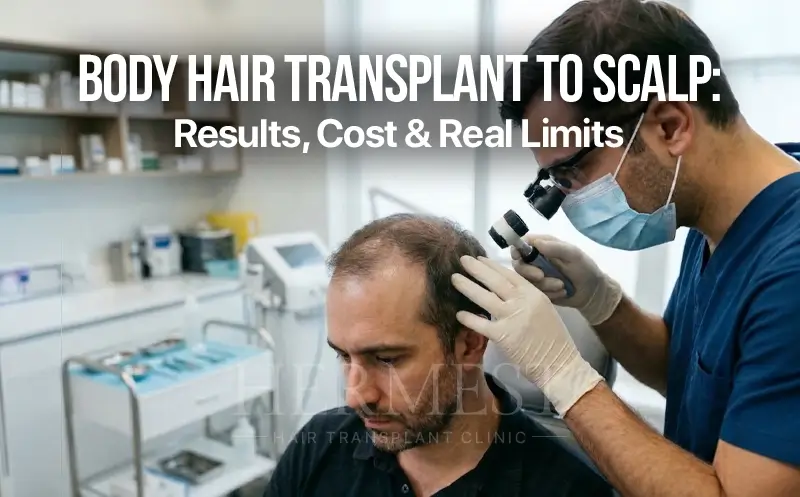
A body hair transplant is an advanced hair restoration option used when scalp donor hair is not enough. Patients searching body hair transplant to scalp, beard to scalp hair transplant, or BHT hair transplant are usually dealing with advanced hair loss or limited donor density.
At first, the idea sounds unusual. Using beard or chest hair to restore scalp coverage raises many questions. Will it grow the same? Will it look natural? Is it permanent? These are valid concerns, and the answers depend on proper planning and realistic expectations.
According to the International Society of Hair Restoration Surgery (ISHRS), donor dominance is the core principle behind transplantation. This means transplanted hair keeps the characteristics of its original location. That is why beard hair remains thick and coarse, while chest hair remains softer and finer, even after moving to the scalp.
A body hair transplant to scalp can help in situations such as:
- Advanced Norwood 6–7 hair loss
- Patients with weak scalp donor density
- Scar repair after previous surgeries
It is not a replacement for scalp donor hair. It is a supportive strategy used to improve density and coverage where needed.
Dr. Ahmet Murat says:
“Body hair is a powerful resource when used correctly. It should support the scalp donor, not replace it completely.”
This guide will explain:
- How body hair transplant works
- Which body areas are suitable donors
- What body hair transplant results really look like
- The limits, risks, and long-term expectations
If you are considering body hair transplant results or wondering if body hair can be used for hair transplant, this guide will give you a clear, honest roadmap.
Quick Insights
- A body hair transplant (BHT) uses beard, chest, or other body hair to support scalp coverage when donor hair is limited.
- The most common use is body hair transplant to scalp in advanced cases such as Norwood 6–7 or previous transplant patients with reduced donor supply.
- Beard hair is the strongest body donor and works best for density, while chest hair is softer and used for blending.
- Transplanted hair follows the donor dominance principle, meaning it keeps many characteristics of its original location.
- Body hair transplant results can improve coverage and density, but they do not create the same uniform texture as scalp hair everywhere.
- A hybrid approach combining scalp, beard, and chest hair produces the most natural-looking outcome.
- Survival and growth rates vary depending on donor source, technique, and individual biology.
- BHT is a supportive technique, not a full replacement for scalp donor hair in most cases.
- Most advanced cases require multiple sessions and staged planning to achieve optimal density and coverage.
What is a body hair transplant (BHT)?
A body hair transplant (BHT) is a hair restoration technique where follicles are taken from the body and implanted into the scalp. It follows the same extraction and implantation principles as FUE, but the donor source is different. Instead of using only scalp hair, surgeons use beard, chest, or other body hair to support coverage.
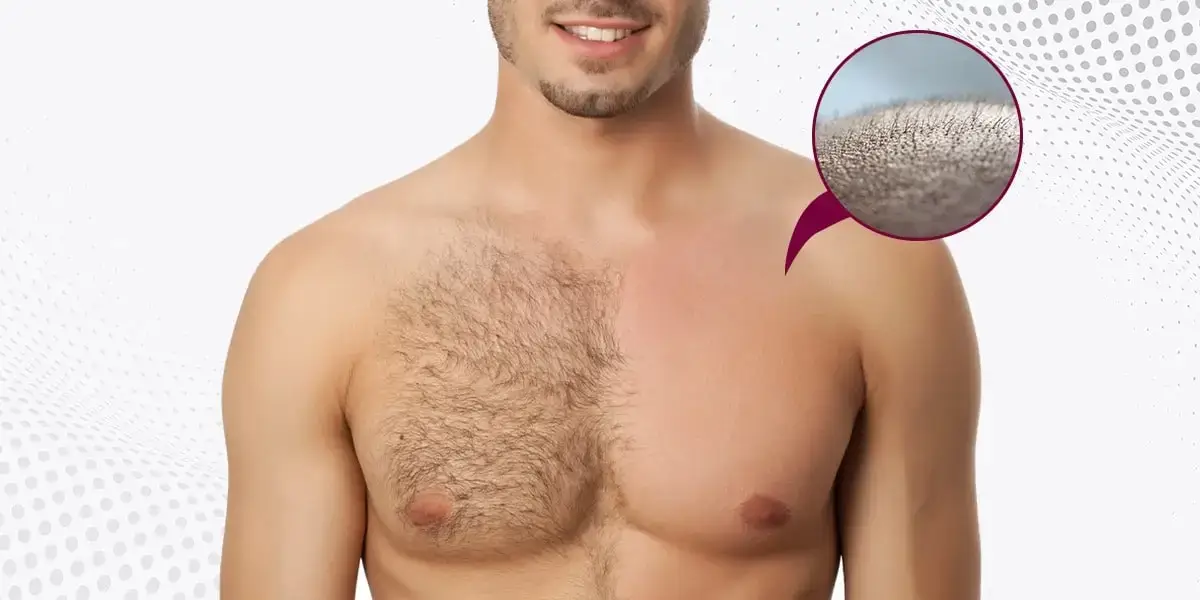
In a body hair transplant to scalp, each graft is removed individually and placed into thinning or bald areas. The goal is to increase coverage and visual density when scalp donor hair is limited.
According to StatPearls (NCBI) and the International Society of Hair Restoration Surgery (ISHRS), BHT is considered an advanced technique. It is usually reserved for selected cases where traditional donor supply is not sufficient.
This includes:
- Advanced Norwood 6–7 hair loss
- Previous transplant patients with depleted donor zones
- Scar repair or density enhancement procedures
How it differs from scalp FUE
The biggest difference between standard FUE and BHT hair transplant lies in the biology of the hair.
Body hair has different characteristics than scalp hair:
- Beard hair is thicker and more coarse
- Chest hair is softer and more variable
- Body hair grows in shorter cycles
This affects how the final result looks and behaves over time.
Key differences patients should understand:
Scalp FUE
- Consistent growth cycle
- Longer hair length potential
- More uniform density
Body hair transplant
- Variable growth rates
- Different texture and curl
- Used mainly to support density, not replace scalp hair entirely
Dr. Ahmet Murat explains:
“We use body hair strategically. Beard hair is strong for density, chest hair is softer for blending. Each source has a purpose.”
Understanding this difference helps set the right expectations for body hair transplant results.
Where can body hair be taken from?
A body hair transplant to scalp can use several donor areas, but each source behaves differently after transplantation. Understanding these differences helps set realistic expectations for body hair transplant results and guides where each type of hair should be placed.
Beard transplant
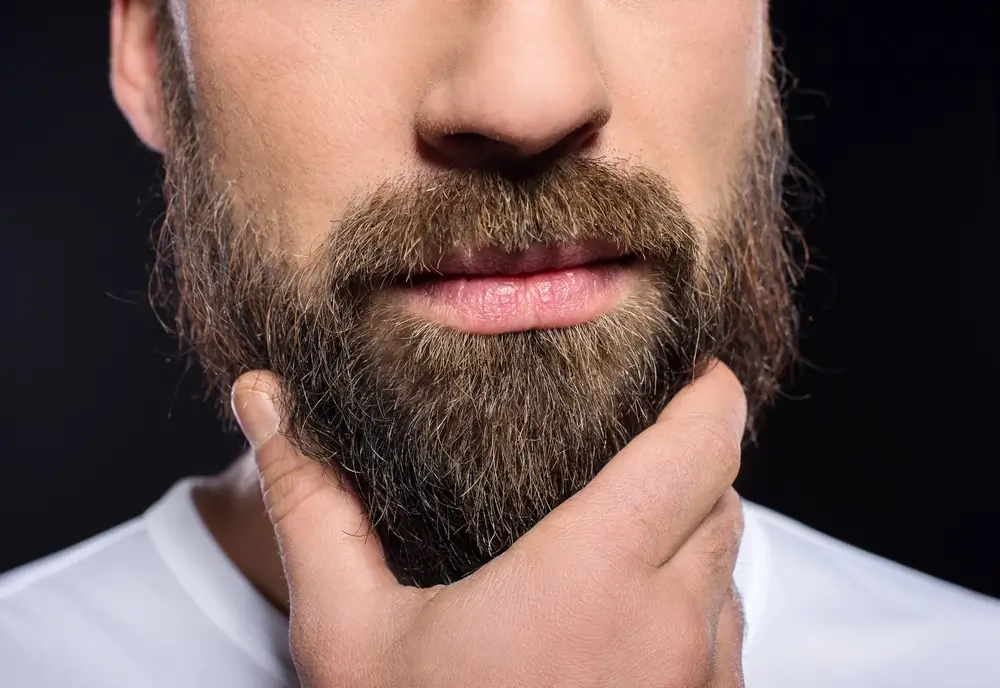
Beard hair is the most commonly used source in a beard to scalp hair transplant. It grows thicker and has a stronger shaft compared to chest or arm hair. This makes it ideal for creating density and visual fullness in specific zones.
Typical use cases for beard grafts:
- Strengthening the frontal third
- Adding density to the mid-scalp
- Supporting crown areas when scalp donor is limited
Beard hair usually grows longer than other body hair and has a higher survival rate when extracted carefully.
Dr. Ahmet Murat says:
“Beard hair is the strongest body donor. We use it to reinforce density where the eye needs it most.”
Chest and torso hair
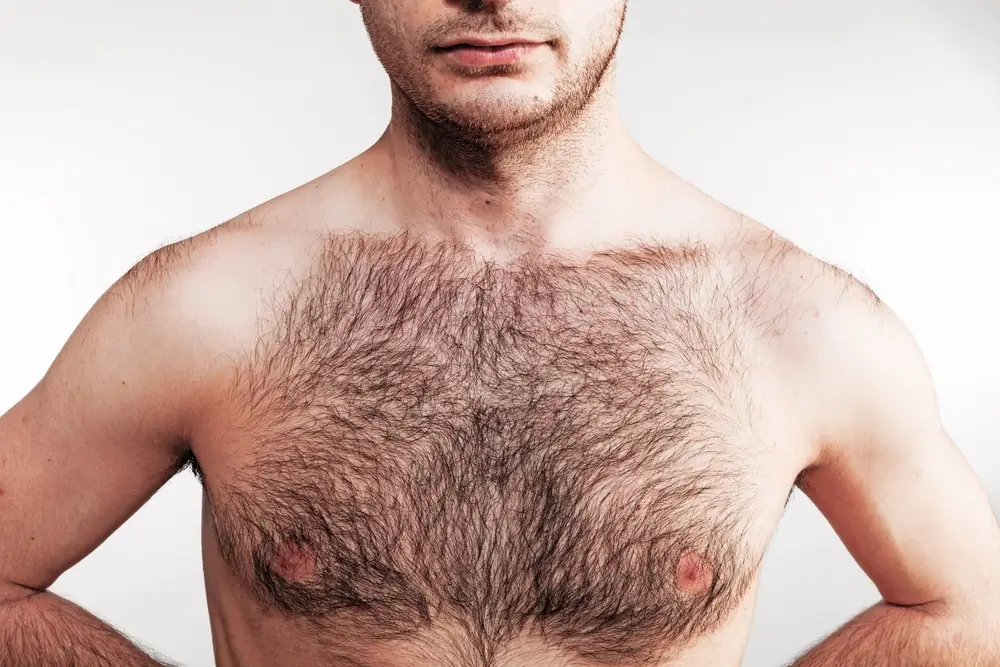
Chest hair is softer and finer than beard hair. It can be useful for blending and softening transitions between scalp and beard grafts.
Common roles for chest hair:
- Soft density fill between grafts
- Creating natural transitions
- Supporting lower density areas
Growth cycles are shorter and more variable, which means results can be less predictable.
Other body areas
Other sources such as leg, arm, or back hair are less commonly used. These areas often have inconsistent growth patterns and lower survival rates. They are considered secondary options when beard and chest supply are limited.
Choosing the right donor mix
A successful BHT hair transplant often combines multiple donor types:
- Scalp hair for structure
- Beard hair for density
- Chest hair for blending
This mixed approach creates a more natural and balanced appearance.
How body hair transplant works
A body hair transplant (BHT) follows the same extraction and placement steps as FUE. The difference lies in how body follicles behave after they move to the scalp. Two concepts explain most outcomes: donor dominance and growth cycle differences.
Donor dominance principle
Donor dominance means transplanted follicles keep many of the traits from their original site. This is why beard to scalp hair transplant grafts remain thicker and more coarse, even on the scalp. Chest hair stays softer and finer.
According to StatPearls (NCBI) and guidance from the International Society of Hair Restoration Surgery (ISHRS), donor dominance is the foundation of all hair transplantation. It explains why body hair can be used to improve coverage and density when scalp donor is limited.
What this means for your plan:
- Beard hair adds strength and visual density
- Chest hair softens transitions and fills gaps
- Mixing sources can create a more natural blend
Dr. Ahmet Murat says:
“We select the donor source based on the zone we want to improve. Each hair type has a role in the final design.”
Growth cycle differences
Body hair does not grow exactly like scalp hair. Scalp follicles have a longer anagen (growth) phase. Many body hairs have shorter growth cycles and may not reach the same length.
Typical differences to expect:
- Slower or shorter maximum length for chest and limb hair
- Variable growth rates across body sources
- A higher proportion of hairs resting at any time
These factors can influence body hair transplant results and perceived density.
Thickness and texture variation
Texture matters in visual coverage. Thicker shafts create stronger shadow and density. Finer shafts create softer blending. Curl pattern and color can differ too, which is why strategic placement is important.
In practice, a BHT hair transplant works best when:
- Scalp grafts build the main structure
- Beard grafts boost density in key zones
- Finer body hair blends edges and transitions
Who is a good candidate for body hair transplant?
A body hair transplant is not for everyone. It is usually considered when standard scalp donor hair alone cannot achieve the desired coverage. Patients searching body hair transplant to scalp or beard to scalp hair transplant are often in advanced stages of hair loss or have already had previous procedures.
Advanced Norwood 6–7 cases
The most common candidates are patients with Norwood 6 or Norwood 7 hair loss. At these stages, the scalp donor zone may not provide enough grafts for full coverage.
In these cases, BHT hair transplant can:
- Increase total graft numbers
- Improve density in key areas
- Support crown or mid-scalp coverage
Beard hair is especially useful in these advanced cases because of its thickness and strength.
Patients with limited donor hair
Some patients naturally have low donor density or weaker hair in the safe donor zone. Others may have already used a large portion of their donor in a previous transplant.
For these patients, body hair transplant results can improve coverage by adding extra grafts from beard or chest areas. It expands the available donor supply without overharvesting the scalp.
Scar repair and density enhancement
BHT is also used in specific repair cases, such as:
- FUT strip scar camouflage
- Patchy areas from previous transplants
- Density reinforcement in thin zones
Finer body hair can help soften scars and create a more uniform appearance.
Dr. Ahmet Murat explains:
“Body hair is not a first-line donor for everyone. It is a strategic tool we use when scalp donor alone is not enough.”
Who is not an ideal candidate?
Patients with very sparse body hair, very light or fine body hair, or unrealistic expectations about density may not benefit from BHT.
The best candidates are those who understand that body hair transplant is a supportive technique, not a replacement for scalp donor hair.
Body hair transplant results – what to expect
Results from a body hair transplant can be very rewarding when planned correctly. Still, they differ from standard scalp FUE outcomes. The goal is coverage, blending, and density support, not identical texture everywhere.
According to the International Society of Hair Restoration Surgery (ISHRS), outcomes in body hair transplant to scalp depend on donor source, placement strategy, and patient biology.
Density outcomes
Patients often search body hair transplant results before and after expecting uniform density. At advanced stages, density is created through smart layering rather than equal thickness everywhere.
Typical results include:
- Stronger visual density in the frontal and mid-scalp
- Improved scalp coverage from normal viewing distance
- Softer density in the crown or lower priority zones
Beard hair contributes most to visible density due to its thicker shaft.
Dr. Ahmet Murat says:
“Beard grafts create shadow and density. Chest hair helps soften the look. Together, they create a natural visual balance.”
Growth rate differences
One of the most important factors in BHT hair transplant results is growth behavior.
Beard hair:
- Grows longer
- Has stronger shaft thickness
- Shows more visible density
Chest and body hair:
- Grow shorter
- Have slower cycles
- May appear less dense over time
Patients may need to trim or style hair differently to maintain a consistent look.
Natural appearance factors
Natural results depend on:
- Hairline design
- Correct placement angles
- Blending of different hair types
- Color and curl compatibility
A well-designed body hair transplant to scalp uses scalp hair for structure, beard hair for strength, and chest hair for blending.
Realistic expectations are key. The result will look natural and balanced, but not identical to original hair density everywhere.
Limitations and risks of body hair transplant
A body hair transplant can improve coverage and density when planned correctly. Still, it has limits. Understanding these limits helps you decide if body hair transplant to scalp is the right approach for you.
According to guidance summarized in StatPearls (NCBI) and the International Society of Hair Restoration Surgery (ISHRS), outcomes depend on donor quality, technique, and placement strategy.
Survival rate variability
One of the main challenges in BHT hair transplant is that survival rates vary by donor source and patient biology.
In general:
- Beard hair shows higher survival and growth rates
- Chest and torso hair can be more unpredictable
- Arm and leg hair often have lower survival rates
This means results can differ between patients, even with similar graft numbers.
Dr. Ahmet Murat explains:
“We always evaluate donor quality first. Not all body hair behaves the same, and planning must reflect that.”
Curl, thickness, and color mismatch
Body hair often has different texture and color compared to scalp hair. This can create visible differences if not placed carefully.
Possible challenges include:
- Curl mismatch between beard and scalp hair
- Color differences between chest and scalp hair
- Coarse beard grafts appearing too strong in soft zones
This is why strategic placement and blending are essential for natural-looking results.
Multiple sessions may be required
Most body hair transplant results are achieved in stages. A single session may not provide enough density or coverage.
Patients should be prepared for:
- Two or more procedures in advanced cases
- Time between sessions for healing and growth
- Gradual improvement rather than instant transformation
Growth length and styling limitations
Some body hairs do not grow as long as scalp hair. This may affect how you style your hair after transplantation.
Setting realistic expectations
A body hair transplant is a supportive technique. It can improve density and coverage, but it cannot fully replace scalp donor hair in most cases.
Combining scalp and body hair (hybrid approach)
A body hair transplant works best when it supports scalp donor hair, not replaces it. This is why most advanced cases use a hybrid approach, combining scalp, beard, and chest grafts in a single long-term plan. The goal is to create natural density where it matters most, while preserving donor resources for future needs.
Strategic placement zones
In a well-designed body hair transplant to scalp, each donor source has a specific role.
Typical placement strategy:
- Scalp hair builds the hairline and overall structure
- Beard hair adds density to the frontal third and mid-scalp
- Chest hair softens transitions and fills low-density areas
This layered approach improves visual coverage without overusing any single donor source.
Patients searching body hair vs scalp hair transplant often assume one replaces the other. In reality, the best results come from combining both in the right proportions.
Dr. Ahmet Murat says:
“We use scalp hair for design, beard hair for strength, and chest hair for blending. Each graft type has a purpose.”
Blending techniques for natural appearance
Blending is the most important part of BHT hair transplant results. Without proper mixing, different textures can appear uneven.
Key blending methods include:
- Gradual density transitions from front to crown
- Mixing graft types within the same zone
- Adjusting angles and directions for natural flow
- Avoiding large clusters of one hair type
These techniques help reduce visible contrast between different hair sources.
Why hybrid planning improves long-term results
A hybrid plan:
- Maximizes total graft availability
- Protects the scalp donor area
- Allows staged procedures over time
- Creates more natural density distribution
This is especially useful for Norwood 6–7 body hair transplant cases, where donor supply is limited.
Cost of body hair transplant
The cost of a body hair transplant depends on the number of grafts, donor source, and the complexity of the case. Because body hair transplant to scalp requires more time and precision than standard FUE, it is usually priced higher per graft.
According to data trends reported by the International Society of Hair Restoration Surgery (ISHRS), advanced procedures that involve mixed donor sources often require longer sessions and more surgical planning.
Price ranges by graft
Typical pricing for BHT hair transplant is calculated per graft. Rates vary by clinic, surgeon experience, and location.
Approximate global ranges:
- $2.5 – $5 per graft for body hair extraction
- Beard grafts often priced slightly higher due to difficulty
- Chest hair grafts may vary depending on density and quality
For a moderate case using 3,000–5,000 body grafts, total costs can range between $7,500 and $20,000+ depending on technique and clinic standards.
Factors affecting total cost
Several variables influence final body hair transplant cost:
- Donor source (beard vs chest vs mixed)
- Total graft number required
- Number of sessions needed
- Surgeon expertise and clinic reputation
- Use of advanced techniques like hybrid FUE + BHT
Complex cases such as Norwood 6–7 body hair transplant often require multiple sessions, which increases total investment.
Dr. Ahmet Murat explains:
“BHT is more time-consuming than standard FUE. Each graft must be selected and placed carefully, which is why planning and experience matter.”
Is body hair transplant worth the cost?
For patients with limited donor hair, BHT can make restoration possible when scalp donor alone is not enough. The value comes from expanding graft supply and improving overall coverage, not from replacing scalp hair entirely.
Statistics & Trends
- Body hair transplant procedures are increasing as more patients present with advanced hair loss and limited donor supply (ISHRS trend data).
- Around 20–30% of Norwood 6–7 patients require additional donor sources such as beard or chest hair to achieve sufficient coverage.
- Beard hair graft survival rates are typically reported around 80–90%, higher than most other body sources.
- Chest hair graft survival is generally lower, often in the 60–80% range, depending on extraction technique and patient biology.
- Beard hair shafts can be 2–3 times thicker than scalp hair, which helps create stronger visual density in transplanted areas.
- Body hair has a shorter anagen (growth) phase, so chest or torso hair usually grows shorter than scalp hair after transplantation.
- A typical BHT session can add 1,000–3,000 extra grafts, expanding total donor supply in advanced cases.
- Modern restoration planning favors a hybrid approach (scalp + beard + chest hair) rather than relying on body hair alone.
- More than 60% of advanced BHT cases require multiple sessions to achieve balanced coverage and protect the donor area.
- Body hair transplant costs are often 20–40% higher per graft compared to standard scalp FUE due to increased time and technical complexity.
FAQs about body hair transplant
Yes. A BHT hair transplant uses follicles that are genetically stable in their original donor area. According to the International Society of Hair Restoration Surgery (ISHRS), transplanted follicles usually keep this resistance after placement. This means the transplanted hair is long-lasting. Still, surrounding native scalp hair can continue to thin, so maintenance is still important.
Start your body hair transplant plan with the right strategy
If you are considering a body hair transplant, the most important step is a detailed evaluation of your donor sources and long-term goals. BHT is a specialized procedure that requires careful planning, especially in advanced cases or limited donor situations.
At Hermest Hair Transplant Clinic, every body hair transplant to scalp is designed as part of a comprehensive restoration plan. The team combines UNIQUE FUE® extraction with the AIS Protocol to control graft placement, density distribution, and natural hair direction. This allows scalp, beard, and chest hair to work together in a balanced and natural way.
Your personalized plan includes:
- Full scalp and body donor analysis
- Identification of beard, chest, and scalp donor potential
- A staged graft distribution strategy if needed
- Long-term maintenance and stabilization guidance
Dr. Ahmet Murat says:
“Body hair is a valuable donor source when used correctly. The key is choosing the right zones and blending them naturally with scalp hair.”
If you are searching body hair transplant results, beard to scalp hair transplant, or wondering whether body hair transplant to scalp is right for you, you can share your photos and expectations with the Hermest team. You will receive a clear, realistic plan tailored to your donor capacity, hair type, and long-term goals.