

Jamie Foxx Hair Transplant: Hairline Analysis & Results Explained
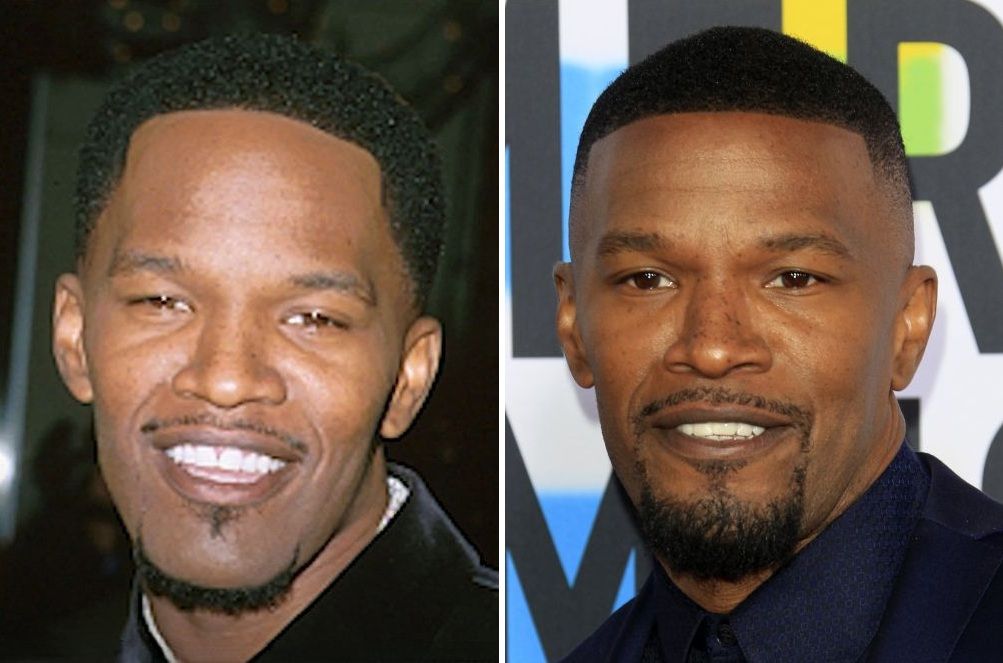
The topic of Jamie Foxx hair transplant and Jamie Foxx hairline has been discussed for years, mainly because of how his hairline changed over time. If you compare older photos to more recent appearances, the difference is noticeable. Naturally, this leads to one question: did Jamie Foxx actually have a hair transplant?
Jamie Foxx has never publicly confirmed having a procedure. However, visible changes in his hairline strongly suggest some form of intervention, most likely a transplant or a combination of treatments. This is where things get interesting.
Unlike dramatic transformations, his result looks subtle. The hairline appears sharper, more defined, and more consistent across years. That kind of change usually does not happen naturally once recession has started.
According to clinical insights referenced in American Academy of Dermatology, androgenetic hair loss typically progresses gradually over time, not reverse or improve without treatment.
This is why his case draws attention.
It shows:
- a controlled, natural-looking hairline
- consistency across different time periods
- no obvious signs of aggressive or unnatural work
Subtle change, strong impact.
Dr. Ahmet Murat explains:
“When a hairline becomes more defined instead of continuing to recede, we look for intervention. Natural progression rarely moves in that direction.”
In this guide, we’ll break it down step by step:
- what is confirmed and what is speculation
- how his hairline changed over time
- what technique may have been used
- what you can realistically learn from this case
Let’s start with the key question.
Quick Insights
- The Jamie Foxx hair transplant is not officially confirmed, but visual changes strongly suggest intervention.
- His hairline improved over time instead of continuing to recede, which is not typical without treatment.
- The transformation appears gradual, which makes the result look natural and believable.
- Estimated graft usage likely falls between 1,500 and 2,500, focused on the frontal area.
- Hairline design plays a bigger role than graft count in achieving natural results.
- Afro-textured hair requires specialized technique, making his outcome more technically demanding.
- Celebrity results should not be copied directly, as each case depends on individual factors.
Did Jamie Foxx have a hair transplant?
This is the most searched question, and it needs a clear, honest answer.
What is confirmed
Jamie Foxx has never officially stated that he had a hair transplant. There are no direct statements, clinic confirmations, or public disclosures.
That means any conclusion is based on visual analysis rather than confirmed medical records.
Short truth. No official confirmation.
What experts and observers believe
Despite the lack of confirmation, many specialists and analysts point to visible changes that suggest intervention.
Key observations include:
- a lower and more defined hairline over time
- improved density in the frontal area
- consistent appearance across years without further recession
These changes are difficult to explain through natural progression alone.
According to clinical references and observations, once hairline recession begins, it does not naturally reverse without treatment.
Why speculation exists
His case sits in a gray area.
It is not an extreme transformation. It is refined.
This makes it:
- harder to prove
- easier to question
- more interesting to analyze
The most realistic conclusion
Based on visible evidence, it is likely that some form of hair restoration was performed. This could include:
- hair transplantation
- medical treatments
- or a combination of both
Dr. Ahmet Murat says:
“We often see cases where the change is subtle but consistent. In those situations, the goal is not to transform, but to maintain and refine the hairline.”
This is the key takeaway. Not confirmed, but strongly suggested.
Jamie Foxx hairline before and after
To understand the discussion around a Jamie Foxx hair transplant, you need to look at the timeline. The changes did not happen overnight. They developed gradually, which is why the transformation feels natural.
Early 2000s: natural recession begins
In his earlier appearances, Jamie Foxx showed mild recession at the temples. The hairline was slightly higher and less defined.
This stage is typical for many men:
- the temples begin to move back
- the front loses sharpness
- density remains relatively stable
Nothing unusual here. It follows the normal pattern of androgenetic hair loss.
Around 2007: noticeable shift
This is where things change.
Around the mid-2000s, his hairline appeared:
- lower than before
- more structured and defined
- consistent across different appearances
This type of shift is important. Hairlines do not naturally move downward once recession has started.
Reversal suggests intervention.
Recent years: stable and maintained
In more recent years, his hairline has remained stable. There is no visible progression of recession, which is another key detail.
Typically, untreated hair loss continues over time. In this case:
- the hairline stays consistent
- density appears maintained
- no significant thinning is visible
According to American Academy of Dermatology, untreated androgenetic alopecia usually progresses rather than stabilizes on its own.
What the timeline tells us
Looking at the full picture:
- early recession → normal
- mid-career improvement → unusual
- long-term stability → unlikely without intervention
Dr. Ahmet Murat explains:
“When we see a hairline improve and then remain stable for years, it usually indicates controlled intervention rather than natural progression.”
This is the key takeaway. The timeline reveals more than a single photo ever could.
What type of hair transplant did he likely have?

Since the Jamie Foxx hair transplant has never been officially confirmed, the technique can only be estimated based on timing and visible results. Still, there are strong clues.
FUT vs FUE: what was more likely?
Around the mid-2000s, when his hairline appeared to improve, the most commonly used technique was FUT (Follicular Unit Transplantation).
FUT involves removing a thin strip of scalp from the donor area and dissecting it into grafts. It was widely used at that time because it allowed a higher number of grafts in a single session.
FUE (Follicular Unit Extraction), which extracts individual follicles, became more popular later due to its minimal scarring and precision.

Based on timing, it is possible that:
- an initial FUT procedure was performed
- later refinements may have used FUE
Technique follows era.
Why technique matters for his result
Jamie Foxx’s hairline looks sharp but natural. That suggests careful graft placement and strong planning, regardless of technique.
The visible outcome indicates:
- controlled hairline lowering
- consistent density at the front
- smooth transition into existing hair
According to clinical insights referenced in PubMed, both FUT and FUE can produce natural results when graft placement and hairline design are done correctly.
Afro hair transplant complexity
This is an important detail often missed.
Afro-textured hair has:
- curved follicles under the skin
- tighter curl patterns
- higher risk of transection during extraction
This requires more experience and precision. That is why results like his stand out. Achieving natural density with afro hair is technically more demanding.
What this tells us
The technique alone does not explain the result.
Planning, experience, and execution are what matter most.
Dr. Ahmet Murat explains:
“In afro hair cases, the challenge is not just extracting grafts, but placing them correctly to maintain natural direction and density.”
Technique is a tool. Execution defines the outcome.
How many grafts might have been used?
When people look at the Jamie Foxx hair transplant, one of the first questions is about graft numbers. It’s a natural curiosity, but numbers alone don’t explain the result.
Estimated graft range
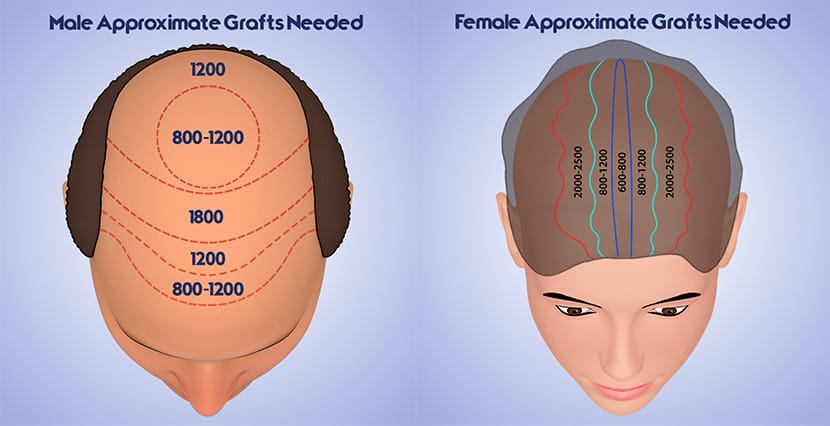
Based on the visible change in his hairline, most estimates suggest a range of 1,500 to 2,500 grafts focused on the frontal area.
This aligns with a typical hairline restoration case:
- limited area
- targeted density
- strong visual impact
Small area, big difference.
Why graft numbers can be misleading
Many assume that more grafts automatically lead to better results. That’s not accurate.
A graft is simply a unit containing 1 to 4 hairs. What matters is how those grafts are placed.
In Jamie Foxx’s case, the improvement came from:
- precise placement at the hairline
- balanced density, not overpacking
- careful blending with existing hair
This approach creates a natural look rather than an artificial one.
According to clinical insights referenced in PubMed, the success of a hair transplant depends more on graft distribution and angulation than on the total number of grafts.
Why fewer grafts can look better
In hairline-focused procedures, density is concentrated in a smaller area. This creates a stronger visual effect without requiring excessive grafts.
Spreading the same number across a larger area would produce a thinner result.
This is why planning matters.
The real question to ask
Instead of asking: “How many grafts do I need?”
The better question is: “How should those grafts be used for my pattern?”
Dr. Ahmet Murat explains:
“We design the graft plan based on the patient’s face and future hair loss. The number is secondary. Placement is what creates the result.”
Strategy matters more than quantity.
Why his results look natural
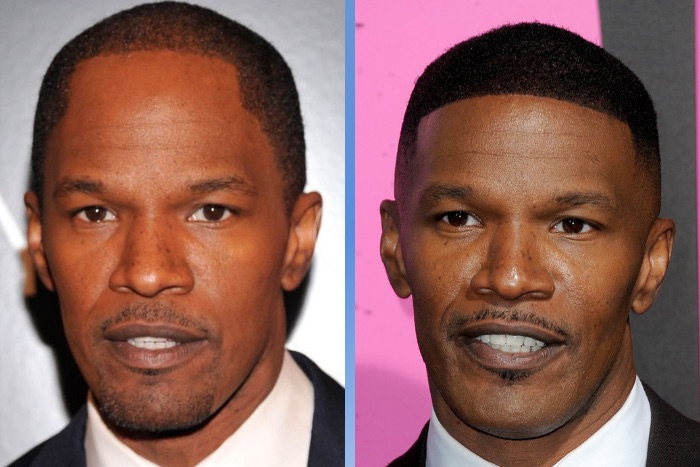
What makes the Jamie Foxx hair transplant so interesting is not just the improvement. It’s how natural the outcome looks over time. There is no obvious sign of surgery, which is exactly what most patients want.
Hairline design: subtle but intentional
The hairline is not overly low or aggressively straight. It follows a natural contour that fits his face.
This includes:
- a slightly irregular front edge
- soft transitions at the temples
- an age-appropriate position
These small details prevent the “drawn-on” look that often gives away poor work.
Natural equals imperfect.
Density that matches reality
Another important factor is density.
Instead of creating extreme thickness, the approach focuses on:
- moderate density at the front
- gradual transition into existing hair
- consistency across different angles
This makes the result believable in real-life settings, not just in controlled photos.
According to clinical insights referenced in PubMed, natural density distribution is more important than maximum density for achieving realistic outcomes.
Afro hair characteristics
Jamie Foxx’s hair type plays a role in the final appearance.
Afro-textured hair:
- provides natural volume
- creates better visual coverage
- requires careful handling during placement
When done correctly, this hair type can enhance the perception of density without needing excessive grafts.
Long-term consistency
One of the strongest indicators of a well-planned transplant is how it looks years later.
In his case:
- the hairline remains stable
- there is no obvious mismatch with surrounding hair
- the result continues to look natural
Dr. Ahmet Murat explains:
“A natural result is one that holds up over time. If the design matches future hair loss patterns, it will continue to look consistent.”
This is the key takeaway. Natural results are designed to last, not just impress initially.
FAQs
How can I tell if Jamie Foxx really had a hair transplant?
There is no official confirmation, so the assessment relies on visual changes over time. A lowered and more defined hairline, combined with long-term stability, often suggests intervention. Natural hair loss typically progresses rather than improves, which is why many experts believe a procedure was likely involved.
Why did Jamie Foxx’s hairline look different after 2007?
Around that time, his hairline appeared sharper and more structured compared to earlier years. This kind of change is unusual in natural hair loss patterns, which is why it is often associated with hair restoration or treatment.
Can a hairline naturally improve like Jamie Foxx’s?
No, once hairline recession begins, it does not naturally reverse. Improvements in shape or density usually indicate some form of treatment, whether surgical or medical.
What type of hair transplant works best for afro hair?
Afro-textured hair requires specialized handling due to curved follicles. Both FUT and FUE can be used, but the technique must be adapted carefully to avoid damage and ensure natural direction during placement.
How long does a hairline transplant last?
Transplanted hair is typically permanent, as the follicles are taken from areas resistant to hair loss. However, surrounding natural hair may continue to thin over time, which is why long-term planning is important.
Why do celebrity hair transplants look more natural?
Celebrity results often involve detailed planning, conservative hairline design, and experienced surgical teams. The focus is usually on subtle improvement rather than dramatic change, which creates a more natural appearance.
Can I achieve the same hairline as Jamie Foxx?
Results vary depending on your donor hair, hair type, and degree of hair loss. The goal is not to replicate someone else’s hairline, but to design one that fits your facial structure and long-term pattern.
How many grafts are needed for a natural hairline?
Most hairline procedures require between 1,500 and 3,000 grafts. The exact number depends on the area being restored and the desired density. Placement strategy matters more than the total number.
Will a hair transplant stop future hair loss?
No, a transplant does not prevent future thinning in untreated areas. This is why ongoing monitoring and, in some cases, additional treatments are recommended.
When is the best time to consider a hair transplant?
The ideal time is when hair loss has become noticeable but not too advanced. Early intervention allows better blending with existing hair and more natural long-term results.
Build the Right Plan for You
The Jamie Foxx hair transplant discussion shows what well-planned hair restoration can look like. Subtle, natural, and consistent over time. But your hairline, donor area, and long-term pattern are unique. The right result starts with a personalized strategy.

At Hermest Hair Transplant Clinic, we focus on:
- hairline design tailored to your facial structure
- strategic graft placement for natural density
- long-term planning that keeps results consistent as you age
- clear expectations before any procedure
Dr. Ahmet Murat advises:
“A natural result is never copied. It is designed for the individual, based on their hair pattern and future progression.”
Book your consultation today and get a personalized plan that delivers natural, long-lasting results — without guesswork or unrealistic expectations.