

Adam Levine Hair Transplant: Truth & Hairline Analysis
The topic of Adam Levine hair transplant comes up often, but the answer is not as straightforward as some expect. There is no confirmed statement that Adam Levine had a transplant. That’s the starting point. Still, visible changes in his hairline over the years keep the discussion active.
Searches like did Adam Levine get a hair transplant, Adam Levine hairline, and Adam Levine hair before after all reflect the same curiosity. People are trying to understand whether what they see is natural, styled, or medically enhanced.
If you look closely, there are signs that triggered this conversation. Slight temple recession in earlier years. A more defined and consistent hairline later on. Nothing extreme. But noticeable.
According to the American Academy of Dermatology, early-stage male pattern hair loss often starts at the temples. It progresses slowly, and changes can be subtle at first.
That aligns with what many observed in Adam Levine’s case.
Dr. Ahmet Murat explains:
“In early hairline recession, the change is not dramatic. It’s gradual. That’s why people often question whether it’s natural or assisted.”
In this guide, we’ll look at what actually changed. What those changes mean medically. Whether a procedure is likely. And most importantly, what you can take from this if your hairline looks similar.
Let’s start with the basics. What kind of hair changes did Adam Levine show over time?
Quick Insights
- There is no confirmed Adam Levine hair transplant, but visible changes suggest either preservation or subtle intervention
- Early hairline recession is common and often manageable without surgery
- Hairline improvements require precision, not large graft numbers
- Styling and grooming play a major role in appearance
- Medical treatments can help maintain existing hair
- A transplant becomes relevant when structure and density decline further
- Long-term planning is more important than immediate results
What happened to Adam Levine’s hair?
The changes are subtle. That’s why this case creates confusion. If you look across different years, you don’t see dramatic loss. You see gradual shifts. Mostly around the temples.
Early hairline recession
In earlier photos and appearances, a few patterns stand out:
- Slight recession at the temples
- A less defined frontal outline
- Minor asymmetry in the hairline
This is typical of early-stage hairline change. Not aggressive. Easy to miss unless you compare over time.
Searches like Adam Levine receding hairline and Adam Levine hairline started increasing during this phase.
At certain angles, especially when the hair is styled back, the recession becomes more visible.
Why this pattern is common
Temple recession is one of the earliest signs of male pattern hair loss.
According to the American Academy of Dermatology, this process begins with follicle miniaturization. Hair becomes thinner before it disappears.
That creates:
- Softer hairline edges
- Reduced density at the corners
- Gradual movement of the hairline backward
Unlike crown thinning, this pattern directly affects facial framing. That’s why even small changes feel noticeable.
What makes this case different
Adam Levine often wears shorter styles or even a shaved look.
That matters.
Short styles reduce contrast. They make recession less obvious. This is one reason why the change never appeared extreme.
What people started noticing later
Over time, the hairline appears:
- More consistent
- Slightly stronger in density
- Better defined in shape
These changes are subtle but stable. That’s what leads to searches like Adam Levine hair transformation.
Dr. Ahmet Murat explains:
“When a hairline looks more structured over time, we look at density, shape, and consistency. Those details tell us more than a single photo.”
Next, we’ll address the main question directly. Did he actually undergo a procedure, or is there another explanation?
Did Adam Levine get a hair transplant?
There is no confirmed statement from Adam Levine. That’s important to say clearly. Any discussion around Adam Levine hair transplant is based on observation, not official disclosure.

Adam Levine has never stated that he underwent a procedure. This places the topic in the “possible but unconfirmed” category.
At the same time, consistent searches like did Adam Levine get a hair transplant show that people notice changes over time.
Why people think he may have had one
There are a few visible reasons behind the speculation:
- The hairline appears more defined in later years
- Temple areas look slightly reinforced
- Density seems more consistent across appearances
These are subtle changes, not dramatic ones.
Unlike aggressive transformations, this looks controlled. That’s why it raises questions.
What experts usually consider in cases like this
Hair does not naturally regain density in receded areas without intervention. That’s a key point.
At the same time, small improvements can come from:
- Styling techniques
- Grooming consistency
- Medical treatments that strengthen existing hair
According to commentary patterns referenced by sources like Belgravia Centre, early-stage hairline changes in celebrities are often difficult to classify without direct confirmation.
Dr. Ahmet Murat explains:
“In early cases, the difference between natural variation and intervention can be very subtle. We focus on patterns over time, not single images.”
Adam Levine hairline before and after analysis
The change is subtle. That’s why it creates debate.
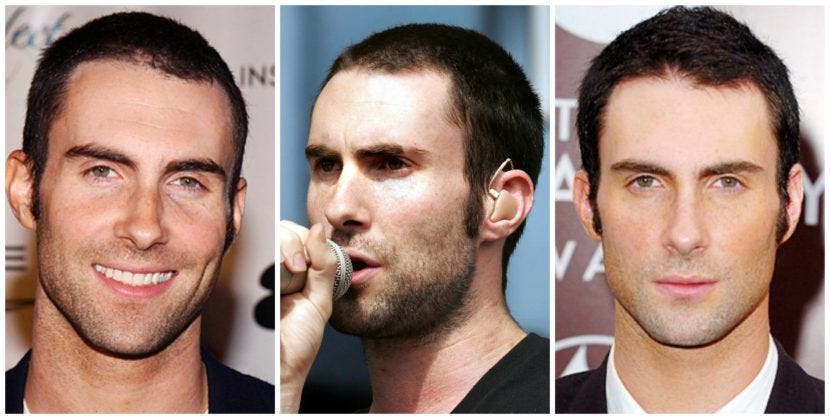
When you compare older and newer appearances, you don’t see a dramatic transformation. You see refinement.
What changed visually
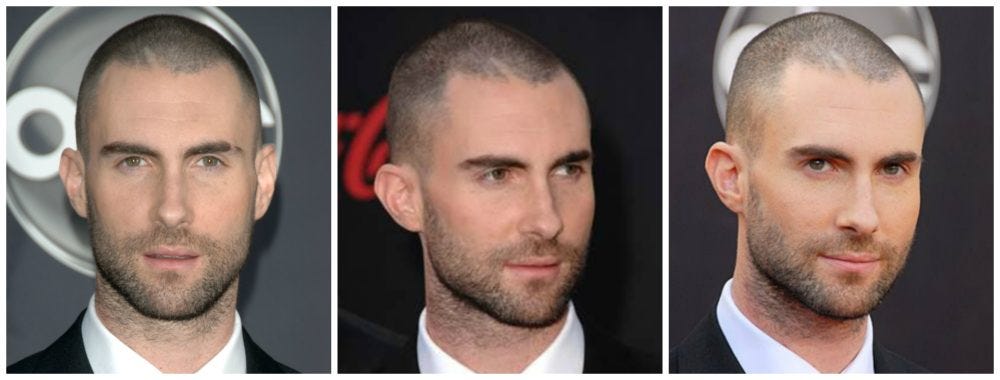
Looking at Adam Levine hair before after comparisons, a few patterns stand out:
- The hairline looks slightly more defined
- Temple areas appear less recessed
- The frontal zone looks more consistent in density
- The overall outline feels more structured
Earlier, the hairline had softer corners. Less density at the temples. In later appearances, the shape looks more controlled.
This is not a major shift. It’s a gradual improvement.
That’s why searches like Adam Levine hair transformation often lead to mixed opinions.
What this suggests medically
Hairline changes can come from different factors. Not all of them involve surgery.
According to research referenced on PubMed, male pattern hair loss typically progresses over time rather than reversing naturally.
So when a hairline appears more stable or slightly improved, possible explanations include:
- Minor hairline reinforcement through a procedure
- Medical treatments improving existing follicles
- Consistent grooming and styling choices
The main detail is consistency. The hairline does not continue to recede noticeably over time.
Why the change looks natural
There is no sharp, artificial edge.
The hairline maintains:
- Slight irregularity
- Age-appropriate positioning
- Balanced density
These are signs of either natural preservation or very conservative intervention.
Dr. Ahmet Murat explains:
“When a hairline looks natural, it usually means it hasn’t been pushed too low or too dense. Subtlety is what makes it believable.”
If he had a transplant, what technique was likely used?
If a procedure was done, it would be a subtle one. Focused on the hairline. Not full restoration.
That changes the type of technique you would expect.
FUE vs DHI
Modern hairline work usually comes down to FUE-based approaches.

FUE (Follicular Unit Extraction) involves taking individual grafts and placing them into carefully designed channels.
DHI (Direct Hair Implantation) uses a pen-like tool to implant grafts directly, allowing very precise control over angle and direction.
In simple terms:
- FUE is flexible and widely used
- DHI offers higher control in delicate areas like the hairline
Both can create natural results when used correctly.
What would fit his type of result
Looking at Adam Levine hairline analysis, the changes suggest:
- Minimal adjustment rather than full reconstruction
- Slight reinforcement at the temples
- Controlled density in the frontal zone
This type of result typically requires:
- A relatively small number of grafts
- Careful placement rather than large coverage
- A focus on maintaining a natural, age-appropriate shape
That aligns more with FUE or DHI than FUT.
FUT is usually used for larger areas like the crown. His case does not show that pattern.
Why hairline work is different
Hairline procedures require more precision than crown work.
You’re dealing with:
- Visible frontal framing
- Natural irregularity
- Direction and angle of each graft
According to general guidance referenced by the International Society of Hair Restoration Surgery, natural hairline design depends heavily on placement strategy, not just technique.
Dr. Ahmet Murat explains:
“Hairline work is about detail. Each graft must follow a natural direction and density pattern. Small changes can make a big difference.”
Why this doesn’t look like a major procedure
There is no dramatic density jump. No aggressive lowering of the hairline.
That suggests either:
- Very conservative intervention
- Or strong natural preservation
How many grafts would this require?
When people search how many grafts Adam Levine hair transplant, they’re trying to estimate what it would take to achieve a similar hairline.
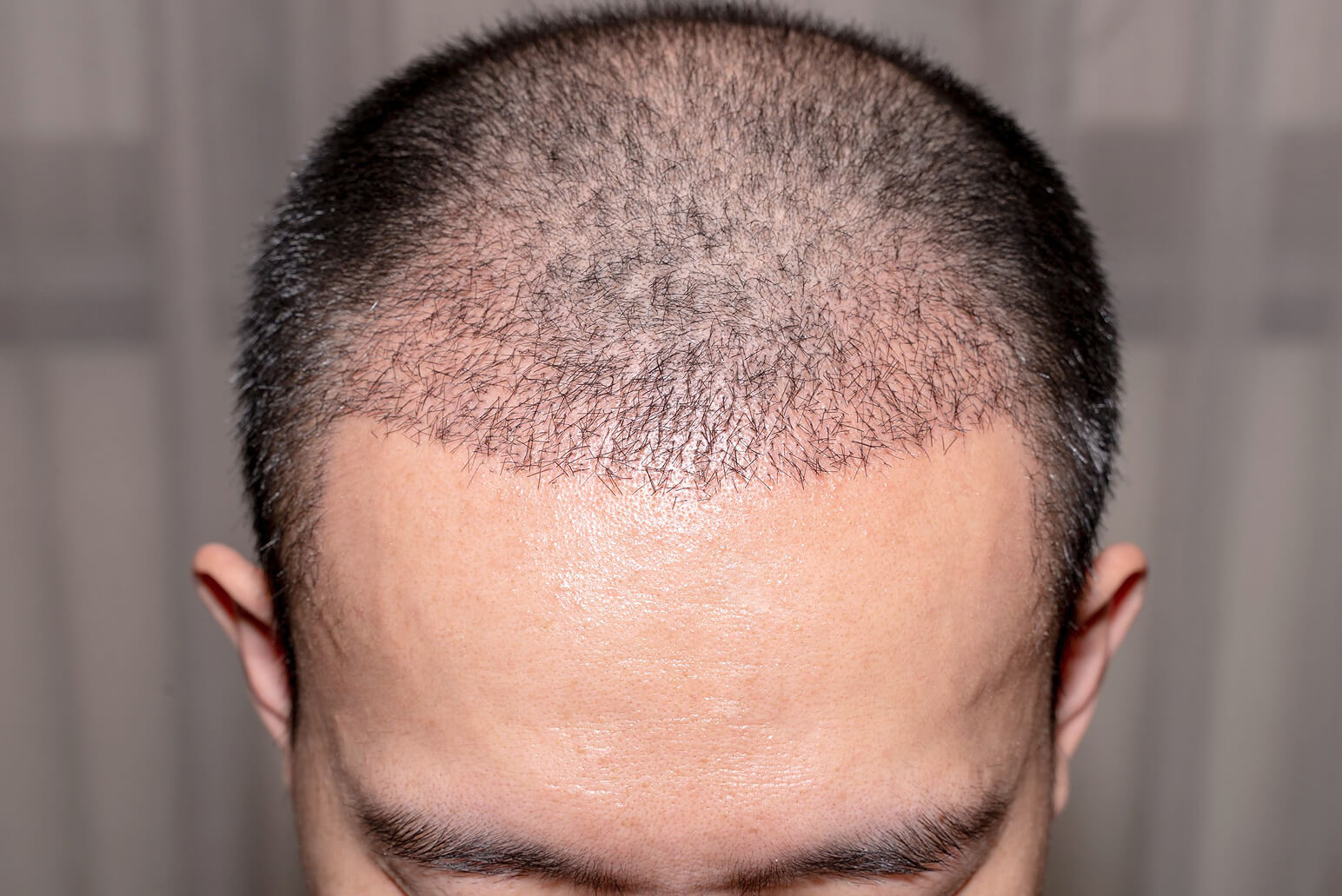
The main detail here is scale. This is not a full restoration case. It’s a subtle, hairline-focused improvement.
Estimated graft range
Based on visible changes, a realistic estimate would be:
- Around 1500 to 2500 grafts for frontal refinement
- Possibly fewer if the work was very conservative
This range fits:
- Temple reinforcement
- Slight density increase at the front
- Minor hairline reshaping
It’s a targeted approach. Not large coverage.
Why the number stays relatively low
Hairline work is concentrated in a small area.
Unlike crown restoration, you are not spreading grafts across a wide surface. You are placing them strategically where they will have the most visual impact.
That’s why even 1500 grafts can create a noticeable improvement.
According to general data referenced by the International Society of Hair Restoration Surgery, frontal hairline procedures often require fewer grafts compared to crown cases, but demand higher precision.
Why graft numbers don’t guarantee the same result
Two patients with the same number of grafts can look completely different.
The final outcome depends on:
- Hair thickness
- Color contrast between hair and scalp
- Natural hairline shape
- Placement accuracy
Dr. Ahmet Murat explains:
“In hairline cases, the number of grafts is secondary. The design and placement define how natural the result looks.”
So, if your hairline resembles his earlier stage, your required graft range may be similar. But it always depends on your pattern and goals.
The focus should not be copying a number. It should be building the right plan.
Could it be something else instead of a transplant?
This is where most people get stuck. They see improvement and assume surgery. But there are other explanations, especially in early-stage hairline cases.

Styling and grooming habits
Adam Levine often keeps his hair short or shaved. That alone changes how the hairline looks.
Short styles:
- Reduce contrast between scalp and hair
- Make recession less visible
- Create a cleaner outline
Even small differences in styling direction can affect how the temples appear.
Lighting matters too. Harsh light exposes thinning. Softer light hides it.
This explains why Adam Levine hair before after comparisons can look inconsistent.
Hair fibers and cosmetic solutions
Hair fibers are widely used in media and public appearances.
They can:
- Add temporary density
- Fill in lighter areas near the temples
- Reduce scalp visibility in photos
They don’t change the structure of the hairline. But they can improve how it appears on camera.
This is often behind searches like is Adam Levine hair real or transplant.
Medical treatments and maintenance
Non-surgical treatments can strengthen existing hair.
Minoxidil and finasteride are commonly used to slow progression and improve hair quality.
According to the American Academy of Dermatology, these treatments can help maintain density, especially in early stages.
They do not rebuild a fully receded hairline. But they can stabilize and improve what’s still there.
Why these explanations fit this case
The changes seen are:
- Gradual
- Subtle
- Consistent over time
There is no sudden shift that clearly indicates a procedure.
Dr. Ahmet Murat explains:
“In early hairline cases, improvement can come from preservation and styling, not just transplantation. That’s why careful evaluation is important.”
So, it’s possible that no procedure was done. Or that any intervention was very conservative.
That’s why this case remains open to interpretation.
Why Adam Levine’s hair always looks good
Consistency is the key here.
When people search Adam Levine hairline or Adam Levine hair transformation, they’re noticing something subtle. His hair doesn’t look dramatically different. It just always looks controlled.
Grooming and haircut choices
One of the biggest factors is how he wears his hair.
Adam Levine often keeps:
- Very short cuts
- Buzzed or closely cropped styles
- Clean, even lengths across the scalp
These styles reduce contrast and make early thinning less visible.
Short hair creates uniformity. It removes the visual gaps that longer hair can expose.
This is why many men with early recession choose similar styles.
Styling that supports the hairline
Even when his hair is slightly longer, the styling stays simple.
- No heavy shine products
- No strong side parts
- No attempts to cover the temples
This keeps the look natural.
It avoids the common mistakes seen in receding hairline haircuts men, where styling tries to hide thinning instead of working with it.
Maintenance over time
The most important detail is consistency.
There is no visible progression in a dramatic way. The hairline looks stable across years.
That can come from:
- Good grooming habits
- Possible medical maintenance
- Early awareness of hairline changes
According to general dermatology guidance from the American Academy of Dermatology, maintaining existing hair is often more effective than trying to restore it later.
Why this creates a strong overall look
There’s no effort to overcorrect.
- The hairline is not pushed too low
- Density is not exaggerated
- The style fits the natural pattern
Dr. Ahmet Murat explains:
“A natural look comes from restraint. When you avoid overcorrecting, the result stays believable over time.”
What most people miss
It’s not just the hair. It’s how the hair is managed.
That’s why the result feels consistent rather than dramatic.
What you can learn from Adam Levine’s case
This is where the example becomes useful.
Most people searching Adam Levine hair transplant truth or Adam Levine receding hairline are comparing their own situation. The question behind the question is simple. Do I need to do something now?
If your hairline looks similar
If you’re seeing slight temple recession, you’re likely in an early stage.
That usually means:
- The hairline is changing, but still present
- Density is slightly reduced at the corners
- The overall shape is still intact
This stage gives you options.
You can still work with what you have. That’s the advantage.
Why early-stage cases are different
At this point, the goal is not reconstruction. It’s preservation and refinement.
You can often improve the appearance with:
- A haircut that reduces contrast
- Simple, natural styling
- Medical support to slow progression
A procedure may not be necessary yet.
According to the American Academy of Dermatology, early intervention can help maintain existing hair longer, especially before significant loss occurs.
When a transplant becomes relevant
A transplant becomes more realistic when:
- The temples recede further
- The hairline loses its shape
- Styling no longer improves the look
This is when searches like hairline transplant men start increasing.
What most people misunderstand
Many think they need to act immediately.
In early cases, timing matters more than speed.
Dr. Ahmet Murat explains:
“We don’t rush into procedures for early hairline changes. The focus is on maintaining what’s there and planning carefully for the future.”
The key takeaway
You don’t need to match someone else’s result.
You need to understand your stage and choose the right step.
When should you consider a hair transplant?
This is where most decisions happen.
Not when you first notice change. Not when it’s too advanced. The right timing sits in between.
Early vs progressing hairline recession
In early stages, like the pattern seen in Adam Levine hairline discussions, the changes are limited.
You may notice:
- Slight temple recession
- Softer hairline edges
- Minor density loss at the front
At this point:
- Haircuts can still improve the look
- Styling can reduce contrast
- Medical treatments can slow progression
You still have flexibility.
As the pattern progresses, things shift:
- The temples move further back
- The hairline loses structure
- Styling becomes less effective
According to research referenced on PubMed, androgenetic alopecia is progressive. Hair becomes thinner before it disappears, and the process continues without intervention.
When a transplant becomes a realistic option
A procedure makes sense when:
- The hairline shape is clearly changing
- The pattern appears stable or predictable
- The donor area is strong
- You want long-term structural improvement
Hairline procedures are usually smaller than crown cases, but they require precision.
What most patients get wrong
Many focus on lowering the hairline too much.
That often creates unnatural results over time.
The goal is not a “perfect” hairline. It’s a natural one.
Dr. Ahmet Murat explains:
“A well-designed hairline should match the patient’s age and future hair loss pattern. That’s what keeps the result natural long-term.”
The key idea
A transplant is not about acting quickly. It’s about acting correctly.
Frequently asked questions
Did Adam Levine get a hair transplant?
There is no confirmed statement that Adam Levine had a hair transplant. Most discussions are based on visual changes in his hairline over time rather than official information.
Why do people think Adam Levine had a hair transplant?
People notice that his hairline appears more defined and stable in later years. This leads to speculation, especially when comparing Adam Levine hair before after photos.
Does Adam Levine have a receding hairline?
In earlier years, there were signs of mild temple recession. This is common and aligns with early-stage male pattern hair loss.
Could his hairline improvement be natural?
Yes, it’s possible. Early-stage changes can be managed with grooming, styling, and medical treatments that help maintain existing hair.
If he had a transplant, how many grafts would be needed?
For subtle hairline refinement, an estimated range would be around 1500 to 2500 grafts. This depends on the level of recession and desired density.
Which technique would be used for a case like his?
Hairline-focused procedures are typically done with FUE, Sapphire FUE, or DHI. These methods allow precise placement and natural-looking results.
Can you get the same result as Adam Levine?
It depends on your hair loss pattern, donor area, and expectations. A similar look is possible, but it requires a personalized plan.
Do you need a transplant for early hairline recession?
Not always. In early stages, many patients manage the condition with styling and medical treatments before considering surgery.
When should you consider a hair transplant for the hairline?
A transplant becomes relevant when the hairline continues to recede, loses structure, and no longer responds to styling or non-surgical options.
Is a natural-looking hairline more important than density?
Yes. A natural hairline design with proper shape and direction creates a more realistic result than simply increasing density.
Get a personalized plan for your hairline
Looking at a case like this helps you understand possibilities. But your hairline needs its own plan.

At Hermest Hair Transplant Clinic, we evaluate your hairline pattern, donor capacity, and long-term progression before recommending anything.
We use techniques like UNIQUE FUE® and follow our AIS (Aesthetic Implantation Strategy) protocol to create natural, age-appropriate results.
Dr. Ahmet Murat explains:
“Hairline design is about balance and long-term planning. Our goal is to create a result that still fits the patient years later.”
If you’re noticing early recession or changes in your hairline, this is the best time to get clarity.
Start with a consultation.
Understand your options.
And move forward with a plan designed for your future.