

Hair Transplant After 20 Years: Do Results Last Long Term?
When people search for hair transplant after 20 years, they are usually not curious. They are cautious. They want to know whether the decision they made, or are about to make, will still hold up decades later.
A hair transplant does not suddenly stop working. However, hair loss itself does not stop either. This difference explains why long-term results can look excellent in some patients and disappointing in others, even when the transplanted grafts survive.
According to long-term clinical observations, transplanted hair taken from the safe donor area is typically resistant to DHT and continues to grow permanently. This principle, known as donor dominance, is well documented in dermatology and hair restoration literature. What changes over time is the native hair around those grafts. Androgenetic alopecia continues its course, slowly affecting untreated areas of the scalp.
This is why patients often ask the same questions years later.
- What happens 10 years after hair transplant?
- What about 15 years after hair transplant?
- Is a hair transplant after 20 years still natural-looking?
- And most importantly, do hair transplants last long term?
This guide answers those questions step by step. It looks at the full timeline, from the first week after hair transplant to 20 years after hair transplant, and explains what stays stable, what changes, and what can be managed with the right planning.
Dr. Ahmet Murat explains it this way:
“A successful hair transplant is not judged at year one. It should still make sense at year twenty. That requires correct donor management, realistic density planning, and respect for how hair loss progresses over time.”
We will also cover long term hair transplant results, hair transplant side effects long term, and when a touch-up transplant or second transplant is actually beneficial rather than harmful.
Quick answer
Patients looking up hair transplant after 20 years usually want a clear, direct explanation. They want to know whether transplanted hair still grows decades later and why some long-term results appear thinner over time.
Do transplanted hairs still grow after 20 years?
In most properly planned cases, transplanted hair continues to grow even 20 years after hair transplant. The reason is biological. Hair follicles used in transplantation are taken from the safe donor area, which is genetically resistant to DHT. This concept, known as donor dominance, is well documented in dermatologic research and explains why transplanted follicles usually maintain their growth characteristics for life.
Long-term clinical observations show that grafts do not suddenly weaken or disappear after ten or twenty years. What does change is the natural aging process.
Hair growth cycles become slower, hair shafts may become finer, and graying occurs, but the follicles themselves remain active. This is why many patients still style and cut transplanted hair decades after surgery.
Why some people feel their transplant “stopped working”
When patients feel disappointed years later, the issue is rarely graft survival. The more common reason is ongoing androgenetic alopecia affecting native hair. Transplanted hair stays in place, but surrounding non-transplanted hair continues to thin.
This imbalance often becomes noticeable 10 years after hair transplant and more pronounced 15 years after hair transplant. By the time patients ask about hair transplant after 20 years, the contrast between stable transplanted hair and thinning native hair is usually the real concern.
Several factors contribute to this perception, including native hair thinning around transplanted hair, crown progression that was not addressed initially, aggressive hairline design at a young age, and lack of long-term planning for donor supply.
According to ISHRS educational guidance, hair transplantation restores hair in selected areas but does not stop the progression of hair loss elsewhere. Understanding this distinction is key to realistic expectations.
Dr. Ahmet Murat explains:
“In long-term follow-ups, we usually see that the transplanted grafts are still alive. What changes is the surrounding hair. That is why we plan every transplant with future hair loss in mind, not just the first year.”
So, do hair transplants last long term? From a biological standpoint, yes. From a visual standpoint, longevity depends on planning, progression control, and follow-up strategy.
What you can expect at 5, 10, 15, and 20+ years
Long-term hair transplant results do not change overnight. They evolve gradually, and the timeline is fairly predictable when planning is done correctly. This section explains what most patients experience at different stages, and why those changes happen.
Hair transplant after 5 years
By five years, the transplant has fully matured. Density has stabilized, hair shafts have thickened, and styling feels natural. The shedding phase / shock loss from the early months is long behind you. Any temporary thinning seen in the first week after hair transplant or the first year is no longer relevant.
At this stage, most patients feel satisfied. Native hair loss may be present, but it is usually subtle. If medical therapy is part of the plan, progression often appears slower.
Hair transplant after 10 years
Around 10 years after hair transplant, the difference between transplanted hair and native hair becomes more noticeable. Transplanted grafts usually remain strong. Native hair affected by androgenetic alopecia may thin, especially in the crown or mid-scalp.
This is where many patients start questioning hair transplant longevity, even though graft survival is not the issue. The visual change is driven by untreated hair loss rather than failure of the transplant itself.
15 years after hair transplant
At fifteen years, aging plays a larger role. Hair caliber may reduce slightly, growth cycles slow, and graying is common. Density contrast can increase if no long-term strategy was in place.
Patients with conservative hairline design and protected donor supply usually age well at this stage.
Hair transplant after 20 years
By 20 years after hair transplant, transplanted hair typically still grows, but the scalp around it may look different. The most common issue is native hair thinning around transplanted hair, not graft loss. This is also the stage when a touch-up transplant or second transplant may be discussed, if donor supply allows.
Dr. Ahmet Murat explains:
“When we evaluate patients after 15 or 20 years, the grafts are usually alive. The key question is whether the original plan respected future hair loss. That decision determines whether the result still looks natural decades later.”
This timeline explains why long-term success depends more on planning than on the surgery itself.
The science of permanence: why transplanted hair lasts
Long-term results depend on biology, not technique names or marketing claims. To understand hair transplant longevity, it helps to understand why transplanted hair behaves differently from the hair that was lost in the first place.
Donor dominance and the safe donor area
Hair used in transplantation is taken from the safe donor area, usually the mid-occipital and parietal scalp. These follicles are genetically programmed to be resistant to DHT, the hormone responsible for androgenetic alopecia. This principle is known as donor dominance.
According to dermatologic research and ISHRS educational materials, follicles taken from this region retain their genetic characteristics after relocation. In practical terms, this means transplanted hair continues to grow even decades later. This is the biological basis behind stable long term hair transplant results and explains why grafts do not suddenly fail after 10 or 20 years.
What donor dominance does not mean is just as important. It does not mean hair loss stops. It does not mean every scalp area is protected. It only explains why the transplanted follicles themselves usually survive.
Androgenetic alopecia does not pause
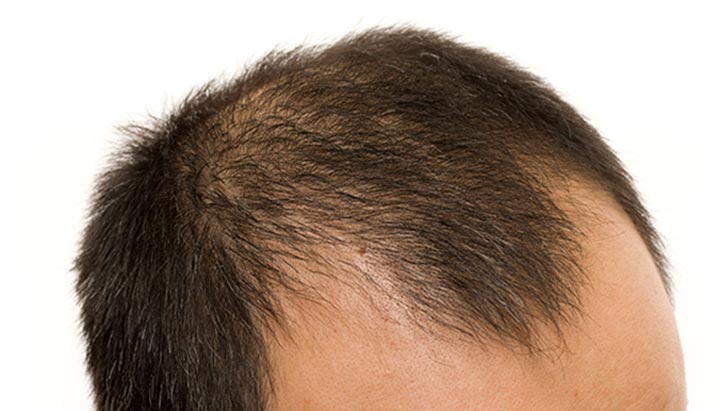
The most common misunderstanding is believing a transplant treats hair loss as a condition. It does not. Androgenetic alopecia continues to progress in non-transplanted areas. This is why patients notice thinning in the crown or mid-scalp 10 years after hair transplant or 15 years after hair transplant, even when the hairline looks stable.
Over time, this progression creates contrast. Transplanted hair remains. Native hair weakens. Visually, this can feel like the transplant is fading, even though graft survival remains high.
Why planning matters more than the technique
FUE, FUT, and DHI all rely on the same biological principle. Long-term success depends less on the extraction method and more on donor management, density planning, and future hair loss prediction.
Dr. Ahmet Murat explains:
“Permanent hair comes from permanent zones. Our responsibility is deciding where and how much to use. If you spend donor hair without respecting future loss, the biology stays strong, but the result ages poorly.”
This scientific foundation explains why permanence is real, but outcomes still vary widely between patients.
Why long-term results can look thinner years later
When patients worry about hair transplant after 20 years, the concern is rarely about graft survival. In most cases, transplanted hair is still growing. The visual change comes from factors that develop slowly and often go unnoticed until contrast appears.
Native hair thinning around transplanted hair
The most common reason long-term results look thinner is native hair thinning around transplanted hair. Hair affected by androgenetic alopecia continues to miniaturize outside the transplanted zones. This process does not stop after surgery. It often becomes noticeable 10 years after hair transplant and more obvious 15 years after hair transplant.
When strong transplanted hair sits next to thinning native hair, density imbalance forms. Patients interpret this as loss, even though the grafts themselves remain intact.
Crown progression and density perception
The crown is especially vulnerable over time. It is often treated conservatively or left untouched during the first procedure. As years pass, crown thinning advances and draws attention away from the stable frontal area. This shift alters how overall density is perceived and fuels doubts about hair transplant longevity.
Early design decisions that age poorly
Aggressive hairlines created at a young age can look unnatural later. Facial structure changes with age. Hairlines that were too low or too dense at 25 may feel misplaced at 45 or 55. This does not mean the transplant failed. It means the design did not age with the patient.
Donor overuse and limited reserves
Some patients experience thinning because too many grafts were taken early without a long-term donor strategy. This limits options later, when a touch-up transplant or second transplant might be helpful.
Dr. Ahmet Murat explains:
“Most long-term dissatisfaction is not surgical failure. It is planning failure. When donor hair is used without respecting future loss, patients feel trapped years later.”
Lifestyle and scalp health factors
Sun exposure, chronic scalp inflammation, smoking, and poor aftercare can affect hair caliber over time. These factors do not kill grafts, but they reduce visual density and quality.
Understanding these causes helps separate real graft loss from predictable long-term changes. That distinction guides smarter next steps.
Maintenance plan for the next 20 years: what actually helps
Long-term success does not come from the surgery alone. It comes from how results are protected over time. Patients who age well after a transplant usually follow a simple, realistic maintenance strategy rather than chasing constant interventions.
Medical options that slow progression
Medical therapy does not strengthen transplanted hair. It protects native hair. This distinction matters. Treatments such as finasteride have strong evidence for slowing androgenetic alopecia in suitable patients, which helps reduce native hair thinning around transplanted hair. Clinical studies published in peer-reviewed dermatology journals show that consistent use can stabilize loss for many years in responsive individuals.
Medication is not for everyone. Age, medical history, side effects, and personal tolerance all matter. The decision should always be made with a physician, not online forums. When it works, it improves long term hair transplant results by preserving balance.
Scalp care and daily habits
Basic scalp care has more impact than most people expect. Chronic inflammation, excessive sun exposure, harsh chemicals, and smoking can all reduce hair caliber over time. These factors do not cause graft failure, but they affect how dense hair looks 10 years after hair transplant and beyond.
Simple habits help maintain quality:
- Sun protection for exposed scalp areas
- Gentle cleansing to avoid chronic irritation
- Avoiding traction and aggressive styling
Follow-up rhythm and early intervention
Patients who monitor change early avoid bigger problems later. Periodic photo comparisons allow subtle progression to be addressed before contrast becomes obvious. This is especially helpful around the crown.
When a second procedure is reasonable
A touch-up transplant or second transplant may be considered when progression creates imbalance and donor supply allows it. This decision should be conservative and data-driven.
Dr. Ahmet Murat explains:
“Long-term success is about protecting what you still have. Surgery adds hair, but maintenance preserves harmony. We focus on balance, not constant intervention.”
Maintenance does not need to be complicated. It needs to be consistent and realistic. That mindset separates stable results from avoidable disappointment decades later.
Do you need a second transplant? A practical decision guide
By the time patients consider hair transplant after 20 years, the question is rarely emotional. It is practical. They want to know whether another procedure will genuinely improve balance or quietly create new problems.
Touch-up transplant versus repair work
A touch-up transplant is meant to restore balance. It usually targets areas affected by ongoing androgenetic alopecia, such as the crown or mid-scalp. Graft numbers are modest. Expectations are controlled. Donor supply is respected.
Repair work is different. It addresses issues caused by poor past planning, such as unnatural hairlines, patchy density, or overharvested donor zones. Repair often requires redistribution, camouflage strategies, or combining techniques. It is more complex and less forgiving.
Understanding which category you fall into determines whether a second procedure helps or harms.
Donor supply and lifetime graft budgeting
Every patient has a finite donor supply. That supply does not reset with time. If too many grafts were used early, options later become limited. This is why surgeons evaluate donor density, scalp laxity, and previous extraction patterns before recommending a second transplant.
Patients disappointed 15 years after hair transplant often assume more grafts are the answer. In reality, poor donor availability can make additional surgery risky or ineffective.
When a second transplant makes sense
A second procedure may be reasonable when progression has created visible imbalance, donor reserves remain healthy, and expectations are realistic. It should aim to restore proportion, not recreate youth.
When it is better to stop
Additional surgery should be avoided when donor areas are depleted, scalp quality is compromised, or expectations focus on chasing density rather than harmony.
Dr. Ahmet Murat explains:
“A second transplant should solve a clear problem. If it only creates temporary satisfaction and long-term donor damage, we advise against it.”
A careful decision here protects hair transplant longevity rather than shortening it.
Technique and planning choices that age well
Long-term results depend more on planning than on technique labels. In modern practice, FUE and DHI both rely on the same biological principle: permanent hair must come from the safe donor area. What separates strong long term hair transplant results from weak ones is how donor hair is managed over decades.
FUE and long-term donor management
FUE allows selective extraction across the donor zone. When performed conservatively, it preserves flexibility for the future. When overused, it quietly limits options 10 years after hair transplant or later.

Patients who struggle 15 years after hair transplant often show signs of donor depletion rather than graft failure. Patchy density, see-through areas, and limited reserves are usually planning issues, not technique failures.
Proper FUE planning respects extraction ratios, spacing, and lifetime graft budgeting. These decisions determine whether a touch-up transplant or second transplant is possible later.
DHI and density planning over time
DHI focuses on direct implantation, which allows precise control over angle and placement. This can improve early density perception, especially in the frontal zone. However, DHI does not change how hair loss progresses.
High-density DHI in young patients can create future imbalance if surrounding native hair thins. The technique places grafts well. The long-term result still depends on conservative design and respecting future loss.
Hairline design that ages naturally
Hairlines must evolve with the face. Designs that are too low or overly dense may look strong early but appear artificial 20 years after hair transplant. Conservative hairlines preserve donor supply and maintain age-appropriate proportions.
Crown strategy and restraint
The crown consumes grafts quickly and shows progression early. Partial coverage or staged planning often ages better than aggressive early density.
Dr. Ahmet Murat explains:
“FUE and DHI are tools. If you use them without long-term discipline, the result will not age well. We plan every graft as if the patient will ask us the same questions 20 years later.”
This approach allows results to remain natural rather than forced over time.
Special cases: when long-term rules change
Not every patient follows the same long-term pattern. Hair characteristics, loss type, and donor behavior can change how results age. This section focuses on groups that need different planning for stable long term hair transplant results.
Female hair transplant long-term considerations
Female hair transplant long-term outcomes depend heavily on diagnosis. Many women experience diffuse thinning rather than clear pattern loss. Transplanting into unstable zones can reduce visual improvement over time. This often explains disappointment 10 years after hair transplant in female patients whose underlying condition was not fully addressed.

Hormonal shifts, iron deficiency, thyroid imbalance, and chronic telogen effluvium all influence density later. A transplant can add volume, yet it cannot correct systemic triggers. Long-term planning focuses on conservative density placement and ongoing medical monitoring.
Dr. Ahmet Murat explains:
“In women, the most important step happens before surgery. If we do not define the type of hair loss correctly, the result may look weaker years later even if the grafts survive.”
Afro hair transplant long-term planning
Afro hair transplant long-term outcomes require different extraction and implantation logic. Curved follicles increase transection risk during harvesting. Density perception works differently due to curl pattern and hair shaft thickness.
When executed properly, Afro-textured grafts provide strong coverage and durable growth. Problems appear when extraction angles are misjudged or donor areas are overused early. Long-term balance depends on conservative donor usage and respecting curl direction during placement.
Older patients and late transplants
Patients who undergo their first procedure later in life often age well cosmetically. Hair loss patterns are usually more established. Donor planning becomes more predictable. Density goals are realistic from the start.
Growth cycles slow with age, yet graft survival remains strong. Visual harmony often improves rather than declines 15 years after hair transplant in well-selected older patients.
Special cases succeed when rules are adjusted early. Applying the same strategy to every patient creates uneven outcomes over time.
Safety, ethics, and choosing the right clinic for long-term security
When evaluating hair transplant after 20 years, safety and ethics matter as much as technique. Many long-term problems trace back to decisions made before surgery, not to how the hair behaved later.
Who should perform the critical steps
Hair transplantation is a medical procedure, not a cosmetic service. According to the International Society of Hair Restoration Surgery (ISHRS), surgical planning, donor assessment, and graft harvesting should be performed or directly supervised by a qualified physician. Clinics that delegate these steps entirely risk inconsistent outcomes and long-term complications.
This becomes visible years later. Overharvested donor areas, uneven density, and limited options for a second transplant are often the result of poor oversight rather than poor biology.
Verifying clinic authorization and standards
Patients traveling for treatment should verify that the clinic is licensed by the national health authority and authorized for international health tourism where applicable. In Turkey, this includes Ministry of Health licensing and official international patient certification. These checks protect patients legally and medically, especially if issues arise years later.
Ethical planning versus short-term selling
Ethical clinics plan for future hair loss. Unethical ones sell maximum grafts early. The difference becomes obvious 10 years after hair transplant or 15 years after hair transplant, when donor reserves matter most.
Warning signs include promises of permanent density without maintenance, aggressive hairline placement in very young patients, and pressure to use all available grafts in one session.
Dr. Ahmet Murat explains:
“Ethics show up later. If a clinic ignores future hair loss, the patient pays the price years later. Our responsibility is to say no when a plan threatens long-term balance.”
Why long-term follow-up matters
Clinics that offer structured follow-up, photo tracking, and honest reassessment tend to produce better long term hair transplant results. Long-term care allows early intervention before imbalance becomes obvious.
Choosing the right clinic is not about avoiding complications today. It is about protecting options for the next twenty years.
Hair transplant after 20 years: key statistics & long-term trends
- Over 90% of transplanted follicles survive long term when harvested from the safe donor area, reflecting the principle of donor dominance observed in long-term follow-up studies.
- Transplanted hair typically continues growing for decades, with no defined “expiration period,” provided the follicles were taken from DHT-resistant zones.
- Native hair loss continues in nearly 100% of patients with androgenetic alopecia, even after a successful transplant, explaining why density perception changes over time.
- Around 35–45% of patients seek a second consultation 10–15 years after their first transplant, usually due to progression in untreated areas rather than graft failure.
- The crown accounts for the highest long-term dissatisfaction rate, as it requires more grafts and continues thinning later than the frontal zone.
- Patients who undergo hair transplantation before age 30 are more likely to need additional procedures later, due to unpredictable future hair loss patterns.
- Conservative hairline design significantly improves satisfaction 15–20 years later, compared to aggressive low hairlines created at younger ages.
- Donor overharvesting is one of the leading causes of long-term aesthetic problems, limiting options for future correction or density balancing.
- Medical therapy to slow native hair loss improves perceived long-term results, even though it does not affect transplanted hair survival directly.
- Long-term dissatisfaction is more often linked to planning decisions than surgical technique, with design strategy and donor management outweighing whether FUE or DHI was used.
FAQs
Is a hair transplant permanent after 20 years?
Yes, transplanted hair is usually permanent. In most patients, grafts taken from the safe donor area remain active even 20 years after hair transplant because they are resistant to DHT. What changes over time is not the transplanted hair itself, but the native hair around it.
What happens 20 years after a hair transplant?
Most patients still have growing transplanted hair. The most common change is reduced density in non-transplanted areas due to ongoing androgenetic alopecia. This creates contrast, which can make results feel weaker even when graft survival is high.
Do hair transplants last long term?
From a biological perspective, yes. Do hair transplants last long term is best answered by separating graft survival from appearance. Grafts usually survive for life. Visual longevity depends on planning, donor management, and how future hair loss was anticipated.
Why does my hair look thinner 10 or 15 years after a transplant?
This usually happens because of native hair thinning around transplanted hair, especially in the crown and mid-scalp. It often becomes noticeable 10 years after hair transplant and more pronounced 15 years after hair transplant, even though the transplanted hair remains intact.
Are there hair transplant side effects long term?
Long-term side effects are uncommon when surgery is done correctly. Possible issues include donor area thinning from overharvesting, unnatural hairline design, or scalp sensitivity. These are typically related to poor planning rather than the transplant process itself.
Will I need a second transplant in the future?
Some patients benefit from a touch-up transplant or second transplant, especially if hair loss progresses. Others do not need additional surgery. The decision depends on donor availability, progression pattern, and expectations. More surgery is not always the right answer.
Does a hair transplant work the same for women and Afro-textured hair?
No. Female hair transplant long-term outcomes depend heavily on correct diagnosis, as diffuse thinning behaves differently over time. Afro hair transplant long-term planning requires special attention to follicle curvature and donor protection. Both require tailored strategies.
Book a long-term consultation with Hermest Hair Transplant Clinic
If you are thinking about hair transplant after 20 years, or questioning how your current results will age, the most important step is an honest medical evaluation. Long-term success depends on donor safety, realistic density planning, and understanding how your hair loss will progress over time.
At best hair transplant clinic in Turkey, treatments are built around long-term outcome control, not short-term density promises. The clinic’s UNIQUE FUE® technique focuses on disciplined donor management, controlled extraction ratios, and natural distribution that remains balanced as hair loss progresses. This approach is designed to preserve options years down the line, including the possibility of a safe second transplant if ever needed.

Hermest also applies its AIS Protocol (Advanced Implantation Strategy), which prioritizes angle control, placement logic, and future density perception rather than aggressive early packing. This is especially important for patients concerned about hair transplant longevity and aging naturally over decades.
Dr. Ahmet Murat explains:
“Our goal is not to impress in the first year. We plan every case with donor safety, future loss, and long-term harmony in mind. That is what makes results still make sense after 15 or 20 years.”
Hermest is known for doctor-led planning, transparent consultation, and refusing procedures that threaten long-term balance. Each case is evaluated individually, with honest discussion about what will age well and what should be avoided.
If you want a realistic assessment of long term hair transplant results, donor safety, and whether your current or future plan truly protects you over time, you can book a consultation with the Hermest medical team.
Book your consultation with Hermest and plan your hair restoration with the next 20 years in mind.