

Hairline Lowering Surgery Guide – Costs, Candidacy, Recovery
If you’ve been thinking about hairline lowering surgery or forehead reduction surgery, you’re probably feeling a mix of curiosity and hesitation. A high hairline can affect how your face looks and how you feel in photos, in conversation, and even in quiet moments when you catch your reflection. Many people start searching for help because they feel their forehead height takes over their features, or their hairline sits higher than feels natural.
The challenge is simple to describe but complicated to understand. You may be asking yourself:
- Is this hairline lowering procedure right for me
- Do I need hairline lowering or a hair transplant
- Is my hair strong enough to hide the scar
- How does scalp advancement surgery actually work
These questions matter, because the right approach depends on your anatomy, your goals, and the long-term behavior of your hair.
This guide covers everything you need to know about hairline reduction surgery, hairline advancement surgery, and even forehead shortening surgery. You’ll learn what the top clinics do, what patients get wrong, and what surgeons actually evaluate during a candidacy assessment. We go through topics most articles skip, like scalp elasticity, future hair thinning, gender-based goals, and how your facial thirds proportions influence surgeon decisions.
People choose this surgery for many reasons. Some have a congenital high forehead. Others deal with traction alopecia high hairline from years of tight styling. Some want a more feminine shape. Some want balanced proportions that match the rest of their face. All want clarity.
A strong decision requires facts, not pressure. And honest planning, not assumptions.
Surgeons often say:
“Good results come from choosing the right approach for the right forehead. Not every high hairline needs surgery. Some need transplants. Some need both. Some need neither.”
By the end of this guide, you’ll know where you stand, what your options are, and whether this treatment aligns with your long-term hair and facial goals.
Quick Insights: Hairline Lowering Surgery
- Hairline lowering surgery is a structural solution that shortens the forehead by advancing the scalp. It reshapes proportions rather than addressing density.
- The best candidates have a naturally high forehead, strong frontal density, stable hair patterns, and good scalp elasticity.
- Men with even mild signs of thinning often need transplant-based lowering instead, to avoid exposing the incision in the future.
- Technique matters. A natural, irregular incision and tension-controlled closure significantly improve scar blending.
- Many patients benefit from a combined approach where surgery lowers the structure and FUE perfects the outline.
- Trans women often achieve the most refined feminine results with structural lowering plus softening work at the temples.
- Healing is predictable. Swelling fades within a week, incision blending improves over months, and full maturity appears around 12 months.
- Scar issues or shape refinements can be improved with small FUE sessions later, which is common and expected for perfection-focused patients.
- Non-candidates still have multiple alternatives: FUE-only lowering, temple reconstruction, tissue expansion, or subtle non-surgical framing.
Is Hairline Lowering Surgery Right For You
If you want a fast, clear answer before reading the full guide, this section helps you understand where you stand. Hairline lowering surgery, sometimes called forehead reduction surgery, is a structural cosmetic procedure that brings the hairline forward by advancing the scalp. It works best when your high forehead is related to anatomy, not active hair loss.
Here’s the simplest way to understand who benefits most.
Who This Surgery Is Usually Right For
- People with a naturally high hairline or congenital high forehead
- Patients with good scalp laxity, meaning the scalp moves easily
- Women with dense frontal hair density
- People with stable hair patterns and no ongoing progressive hair loss
- Anyone wanting their facial thirds to look more balanced
These individuals typically see noticeable and long-lasting improvement because the problem is structural, not related to thinning or shedding.
Who May Need a Different Approach
Some patients are not ideal candidates for structural lowering and may need a hair transplant instead, or a combination.
This includes:
- Men with potential future thinning
- Anyone with active recession
- Patients with limited scalp elasticity
- People with a weak or thinning frontal zone
- Patients with a history of heavy traction or repeated styling damage
- Individuals whose facial balance issues relate more to temple recession than true forehead height
In these cases, hairline lowering vs hair transplant needs careful comparison. A transplant may give a softer, more flexible result that adapts better to future changes.
Realistic Expectations in One Look
- Typical lowering amount is 1.5 to 3 cm
- The incision hides inside the natural hairline
- A fine scar may be visible depending on hair density and healing
- Social downtime is often 7 to 10 days
- Mild swelling and numbness after forehead reduction are normal
- Results settle and soften for several months
- Long-lasting improvement when the hairline is stable
Average Cost Ranges
- USA: Higher pricing due to anesthesia and facility fees
- UK and Western Europe: Similar to US ranges in many cities
- Turkey: Lower pricing with experienced surgeons and packaged care
(Searchers often look for forehead reduction cost, hairline lowering Turkey cost, forehead reduction Istanbul, and similar terms.)

What Is Hairline Lowering Surgery (Forehead Reduction)
Hairline lowering surgery is a structural cosmetic procedure designed to reduce the vertical height of the forehead by bringing the hairline forward. People often search for terms like hairline lowering surgery, forehead reduction surgery, hairline advancement surgery, or forehead shortening surgery, but all describe the same core idea: advancing the hair-bearing scalp to improve facial proportions.
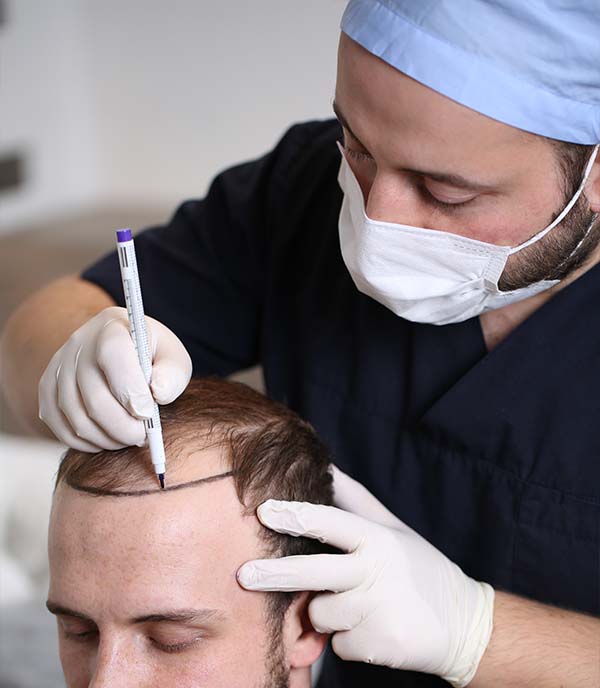
If your forehead feels longer than the rest of your features or you’ve always felt your hairline sits higher than it should, this is the procedure surgeons typically consider first. It focuses on the anatomy of the upper face, not on treating hair loss. That distinction is important, because the cause of a high hairline determines the right solution.
How Hairline Lowering Surgery Works in Simple Terms
The surgeon makes a carefully shaped incision along the hairline, lifts the forehead skin, and advances the scalp downward. The goal is to shorten the distance between the eyebrows and the hairline, creating more balanced facial thirds proportions.
Once the scalp is repositioned, the excess forehead skin is removed and the incision is closed using techniques like trichophytic closure to help hairs grow through the scar for better blending.
This approach is often referred to as:
- scalp advancement surgery
- hairline reduction surgery
- hairline lowering procedure
Regardless of wording, the purpose is the same: correct a large or long forehead by adjusting the architecture of the upper face.
Where This Procedure Works Best
Hairline lowering is most effective when the issue is structural, not related to thinning. It works for:
- congenital high foreheads
- stable hairlines
- high hairline cases without miniaturisation
- big forehead surgery requests for aesthetic balance
- high hairline surgery candidates wanting softer features
When the bone-to-hair distance is naturally long, not shifting due to progressive hair loss, scalp advancement offers immediate and dramatic improvement.
Why Technique Matters
A successful result depends on:
- a natural, irregular wavy incision hairline
- respect for scalp mobility
- tension control
- proper pericranial mobilisation
- healthy blood supply
- undisturbed hair follicles at the incision line
These details influence how natural the new hairline looks and how well the scar blends with native hair.
Dr. Ahmet Murat shares:
“People often think hairline lowering is only about moving the scalp forward, but the artistry is in how the incision is shaped. A natural irregular outline helps the scar disappear into the hair. When this step is rushed, the hairline looks unnatural even if the lowering is precise.”
Who Is a Good Candidate for Hairline Lowering Surgery
Choosing the right candidate is the heart of safe and natural hairline lowering surgery. Not every high forehead needs forehead reduction, and not every patient with a high hairline can safely undergo scalp advancement surgery. The success of this procedure relies on anatomy, stability, and future planning, not just aesthetic goals.

Here’s how surgeons decide whether you’re suitable.
Core Signs You’re a Strong Candidate
A good candidate typically has:
- A naturally high forehead that has always been present
- Stable hair growth with no signs of progressive hair loss
- Good scalp laxity and scalp elasticity when the scalp is gently moved
- Solid thick hair density at the front to help hide the incision
- Balanced craniofacial proportions aside from the elongated forehead
- No thinning at the frontal zone or mid-scalp
- Realistic expectations about scar visibility and recovery
- Healthy medical status with no conditions affecting wound healing
This group tends to see dramatic improvement because their issue is structural rather than related to hair loss.
Dr. Ahmet Murat notes:
“The patients who benefit most are those born with a high forehead, not those losing hair. When the hairline is stable and dense, the scar blends beautifully. Stability is everything.”
Important Physical Factors Surgeons Examine
During assessment, surgeons evaluate:
- The mobility of your scalp
- Forehead length in millimeters
- Natural curvature of the frontal bone
- Hair flow direction and thickness
- Whether the temples need temple lowering
- Any signs of miniaturisation near the front
- Your facial thirds proportions
These details guide how much lowering is safe and how the incision should be shaped for natural-looking hairline contouring.
Who Should Avoid or Postpone Surgery
Some situations require caution or a different approach:
- Men with a family history of heavy hair loss
- Ongoing thinning at the temples or front
- Tight scalps with poor elasticity
- Very fine hair that cannot hide a scar
- History of chronic styling stress like severe traction alopecia high hairline
- Anyone needing more than the scalp can safely advance
These patients risk visible scarring, worsening imbalance, or unnatural results over time.
Dr. Ahmet Murat explains:
“The biggest mistake is lowering a hairline that is not stable. If your hair thins later, the scar becomes visible. In those cases, I guide patients toward a transplant-based approach because it adapts better to future change.”
When Hair Transplant Might Be Better
You may be guided toward hairline lowering with hair transplant instead of surgery if:
- Your scalp has limited movement
- Your hairline shows early recession
- You want a softer, more feathered shape
- You need temple or widow’s peak correction
- Your priority is flexibility as you age
Transplants are precise tools for shaping, filling, or softening the line, especially for patients who may develop thinning later.
Hairline Lowering vs Hair Transplant – Which One Do You Actually Need
People often arrive asking for hairline lowering surgery when what they truly need is a hair transplant. Others come in wanting a transplant when their anatomy shows that forehead reduction is the better solution. These procedures create very different outcomes, and choosing the wrong one can lead to visible scars, unnatural proportions, or poor long-term stability.
This section gives you a clear decision pathway and helps you understand how surgeons evaluate the safest and most natural choice for your face, your scalp, and your future hair behavior.
When Hairline Lowering Surgery Is the Better Choice
Scalp advancement surgery is ideal when:
- Your hairline is naturally high
- Your hair is dense and stable
- Your scalp has good mobility
- You want a significant lowering effect, usually 1.5 to 3 cm
- You want fast, immediate results
- You have strong frontal hair density to hide the incision
In these cases, structural lowering provides a dramatic improvement in the facial thirds proportions with one procedure.
Dr. Ahmet Murat states:
“If the issue is a naturally long forehead and the hairline is healthy, surgery gives a more predictable and immediate change. In these patients, the result looks incredibly natural because the hair itself is strong and stable.”
When a Hair Transplant Works Better
A transplant may be safer and more natural when:
- You have early or ongoing frontal thinning
- Your temples show frontotemporal recession
- Your scalp has limited elasticity
- Your hair is thin and would struggle to hide a scar
- You want gentle shaping rather than structural lowering
- You prefer a softer, feathered transition at the front
In these cases, FUE for hairline lowering allows careful placement of individual follicles, ideal for shaping widow’s peaks, temples, and soft curves.
Dr. Ahmet Murat explains:
“Hair transplants adapt better to future thinning. If your pattern is not stable, I avoid surgical lowering because the scar can become exposed later. With FUE, we can build a natural hairline that evolves as your pattern changes.”
When You Need a Combination of Both
There are many cases where combining techniques gives the best outcome.
A combined approach is helpful when:
- You want more lowering than scalp mobility allows
- You want to soften the surgical hairline
- You want a feminine curve or temple shape
- You need scar camouflage with micrografts
- You want a balanced look after lowering the central hairline
This method uses hairline lowering surgery for structural reduction, followed by FUE to perfect the outline.
Hermest uses precise incision shaping plus advanced hairline design principles to blend transplanted and native follicles so the result feels seamless.
Your Easy Decision Framework
- If the problem is a large forehead from birth: Surgery
- If the problem is thinning hair or recession: Transplant
- If you want a major reduction plus perfect shaping: Combination
- If your scalp is tight: Transplant only or two-stage lowering
- If you want maximum softness and artistry: FUE-focused approach
Why This Decision Matters More Than You Think
Choosing the wrong method causes issues like:
- visible hairline scars
- disproportionate forehead
- unnatural straight lines
- patchy recession around the lowered hairline
- future thinning that unveils the incision
Hermest evaluates these concerns with careful scalp measurements, miniaturisation checks, and long-term forecasting.
Dr. Ahmet Murat says:
“Our priority is not lowering your hairline as much as possible. Our priority is protecting your long-term result. If your future hair pattern suggests risk, we choose the safer path. Patients appreciate honesty because it leads to results that stay beautiful.”
How Hairline Lowering Surgery Works – Step by Step
Understanding how hairline lowering surgery actually works helps you see why candidacy, scalp elasticity, and technique matter so much. This is not a simple skin excision. It is a carefully planned forehead reduction procedure that combines anatomy, tension control, artistic incision design, and safe advancement of the scalp.
Below is the clear, patient-friendly explanation most clinics never give.
Planning and Marking the New Hairline
Your transformation starts with careful planning.
The surgeon measures:
- current forehead height
- craniofacial proportions
- scalp mobility
- curvature of the frontal bone
- temple alignment and recession
- natural hair flow direction
- desired hairline shape
Then a new hairline is drawn using hairline design principles, usually with a natural, irregular outline that mimics how real hair grows.
Dr. Ahmet Murat notes:
“The drawing stage is not cosmetic. It defines the entire result. A millimeter higher or lower can change facial balance. We shape the line to match your features, not a template.”
Creating the Hairline Incision
The surgeon makes an incision along the hairline following a soft, wavy pattern. This is crucial for blending.
Why a wavy or irregular incision
- breaks up the line so it looks natural
- allows better camouflage
- supports trichophytic incision where hairs grow through the scar
- preserves natural hairline texture
- avoids the artificial straight line look
This is one of the most important artistic steps.
Lifting and Advancing the Scalp
After the incision, the forehead skin is lifted using controlled undermining of scalp tissue. This creates space to bring the scalp forward.
Main surgical steps include:
- releasing the galea for mobility
- ensuring proper pericranial mobilisation
- spreading tension evenly using tension distribution principles
- protecting sensory nerves for better healing
The scalp is then carefully advanced downward. The available movement depends on your scalp laxity.
Dr. Ahmet Murat explains:
“Some scalps move easily. Others are tight. Mobility determines how much we can lower safely. Forcing more than the tissue allows leads to tension, wider scars, and long-term issues. We never push beyond what the tissue can handle.”
Removing Excess Forehead Skin
Once the scalp is advanced into the desired position, the surgeon trims the excess skin from the upper forehead. The amount removed equals the exact amount your hairline is lowered.
Typical lowering range:
- usually 1.5 to 3 cm
- up to 4 cm in rare cases with exceptional scalp flexibility
More than that risks visible scarring and unnatural tension.
Closing the Incision with Precision
Closure is the final and most delicate part. To create the best blending possible, surgeons use:
- tension-free closure techniques
- careful alignment of follicle direction
- fine suturing
- optional trichophytic closure so hair grows through the incision
- hidden stitches placed strategically
The goal is a thin, soft, well-camouflaged line that sits inside your natural hair pattern.
Hermest places special attention on scar placement and follicle preservation at the front.
Dr. Ahmet Murat shares:
“Scar quality is not luck. It comes from how well the tension is handled and how gently the tissue is closed. Every step of closure is done slowly and carefully. This is where long-term beauty is protected.”
One-Stage vs Two-Stage (Tissue Expander Method)
If your scalp is too tight, you may benefit from:
- tissue expander forehead reduction
- two-stage forehead reduction
This involves placing a small expander beneath the scalp, gradually inflating it over weeks, and then performing the advancement later. This method creates extra mobility for larger reductions without tension.
Risks, Side Effects, and Long-Term Considerations
Every procedure has risks, and hairline lowering surgery is no exception. The goal is not to scare you, but to give you honest, clear expectations. When you know what is normal and what is not, you feel calmer, safer, and more confident about your decision.
This is where technique matters just as much as candidacy. A great result depends on a stable hairline, good scalp elasticity, controlled tension, and meticulous handling of the incision.
Hermest performs each step with long-term planning in mind, especially for patients who may experience subtle changes in hair thickness as they age.
Common Temporary Effects
These are normal parts of healing and usually fade within days or weeks.
- mild to moderate swelling
- bruising near the eyes or temples
- a tight feeling in the forehead
- numbness after forehead reduction
- mild discomfort during the first few days
- small crusts along the incision line
- itching as the tissue heals
Swelling tends to peak around day two or three, then gradually declines. Numbness decreases slowly over several weeks as sensory nerves recover.
Scar-Related Concerns
A visible hairline scar is possible if:
- your hair is extremely fine
- tension was too high
- your hairline thins in the future
- your scalp has low mobility
- the incision design is too straight
Hermest uses irregular, natural incision patterns and careful closure to help reduce risk. Advanced techniques like trichophytic closure improve blending by allowing hairs to grow through the scar.
Dr. Ahmet Murat explains:
“We shape the incision to mimic nature. A hairline is never perfectly straight. When the outline is soft and irregular, the scar hides more effectively inside the natural growth pattern.”
If the scar becomes visible later due to natural thinning, tiny FUE grafts can blend it beautifully. This is called scar camouflage with FUE.
Less Common but Important Risks
Although uncommon, these risks require honest discussion:
- infection or delayed wound healing
- prolonged swelling
- small areas of hair loss around the incision
- asymmetry if the forehead skin heals unevenly
- headache or tightness during the early healing period
- temporary sensory changes due to nerve stretching
- pigmentation changes along the incision
These situations are usually manageable with proper incision care, antibiotics if needed, and follow-up visits.
Hermest monitors the postoperative edema patterns and healing stages throughout the process.
Long-Term Stability and Future Hair Loss
This part is one of the most overlooked topics online.
If you develop frontal thinning years later, the lowered hairline may lose density and expose the incision. This does not mean the surgery failed. It means the natural hair changed.
This is why male patients and patients with early thinning need careful planning.
In these cases:
- structural lowering may be limited
- a hair transplant after forehead reduction may be advised in the future
- temple work may be needed to maintain balance
- long-term stability guides the decision, not aggressive lowering
Dr. Ahmet Murat says:
“We never chase extremes. A natural result must look good today and still make sense ten years later. If your pattern has any risk of future thinning, we adjust the plan to protect you in the long run.”
Can Hairline Lowering Cause Hair Loss
Rarely, small areas around the incision may shed temporarily due to surgical stress. This is part of the wound-healing cycle and usually regrows as the scalp recovers.
If the tissue is treated gently and the tension is controlled, risk is minimal.
Is Hairline Lowering Permanent
Yes. The structural change is permanent. The only variable is how your natural hair evolves with age, hormones, and genetics.
Hairline Lowering Surgery Recovery Timeline
A smooth recovery is one of the biggest reasons patients feel confident about hairline lowering surgery. The healing process is predictable, and most people return to normal routines sooner than they expect. Still, understanding each stage helps you prepare mentally and physically. Recovery is not just about the incision. It is about how the scalp settles, how swelling moves, and how the tissues adapt to their new position.
Below is a clear, realistic timeline that reflects what most patients experience.
First 24 to 48 Hours
Your forehead feels tight. Some swelling appears around the brows and upper eyelids. Mild discomfort is common but manageable with prescribed medication.
You may notice:
- slight heaviness around the eyes
- early bruising
- a numb or strange sensation on the scalp
- a bandage or protective dressing
Keeping your head elevated during sleep reduces swelling and protects the incision.
Dr. Ahmet Murat says:
“The first two days set the tone. Elevation helps more than patients expect. Good early care leads to cleaner healing in the following days.”
Days 3 to 7
This is the most noticeable part of recovery.
You may see:
- swelling reaching its peak and then decreasing
- small crusts near the incision
- light bruising around the eyes
- mild itching
Many patients feel comfortable going outside with a hat or scarf. Pain decreases significantly, replaced by tightness or pressure as tissues adapt.
During this period, Hermest guides patients with clear instructions for incision care, gentle cleansing, and protection from sun exposure.
Week 2 to Week 4
Sutures are removed or dissolve depending on technique. Swelling fades. Bruising disappears. Tightness improves but may linger lightly.
You can usually:
- return to office work
- resume light exercise
- wash hair normally
- sleep without strict positioning
Some lingering numbness after forehead reduction is normal. Sensory nerves recover slowly, sometimes over several months.
Dr. Ahmet Murat shares:
“Numbness is part of the nerve recovery cycle. It fades gradually as the small sensory branches reconnect. Patients worry about it, but it resolves naturally with time.”
Months 1 to 3
The incision begins to soften and lighten. Hair starts growing through the scar if a trichophytic incision was used. Any shedding around the incision area stabilises.
Typical experiences:
- gradual return of sensation
- reduced tightness
- a more natural blend of the new hairline
- the transition zone becoming softer
This is when most patients feel the result starting to look integrated.
Months 3 to 6
The scar continues maturing. Pigmentation evens out. Residual numbness fades. The hairline shape becomes clearer.
You can usually:
- resume vigorous exercise
- use hair styling tools
- color hair (with caution)
Hermest monitors the wound healing phases and offers scar optimisation guidance if needed.
Month 6 to 12
This is the settling phase.
You’ll notice:
- final hairline blending
- the scar becoming discreet
- full return of sensation in most cases
- natural movement and expression restored
- long-term adaptation of the scalp position
For many, this is the moment the result reaches its final, stable form.
Dr. Ahmet Murat explains:
“The first month shows the change. The first three months show the blend. But the true final result takes time. Patience pays off when you see the hairline soften into your features.”
When You Can Return to Daily Activities
- Work: 5 to 10 days depending on visibility comfort
- Light exercise: around 1 week
- Full exercise: 3 to 4 weeks
- Flying: often allowed after a few days depending on swelling
- Social events: usually after the first week
This timeline varies slightly based on your healing rate, incision design, and how much the hairline was lowered.
How Much Does Hairline Lowering Surgery Cost
The cost of hairline lowering surgery varies across countries, surgeons, and the complexity of your specific case. Because this procedure involves structural tissue movement, anesthesia, and precise aesthetic planning, the price reflects both technical skill and surgical time.
When people search for terms like hairline lowering surgery cost, forehead reduction cost, forehead reduction UK cost, hairline lowering USA cost, or forehead reduction price Turkey, they’re usually looking for a clear breakdown. Below is the most accurate, real-world overview based on global averages.
Typical Cost Range by Country
United States
Hairline lowering tends to be on the higher end due to facility and anesthesia fees. Typical range is around 9,000 to 16,000 USD
Higher pricing often reflects hospital settings, general anesthesia, and top surgical experience.
United Kingdom
Costs sit slightly below US averages but still in the higher bracket. Typical range is around 7,000 to 12,000 GBP
Private clinic settings, local anesthesia choices, and surgeon expertise affect the final number.
Europe
Prices vary significantly by region. Typical range is around 5,000 to 10,000 EUR
Some EU countries offer more affordable packages, especially for patients traveling from other regions.
Turkey
People searching for forehead reduction Istanbul or hairline lowering Turkey cost usually look for a high-quality but more economical option. Typical range is around 2,000 to 4,500 USD
This often includes:
- surgeon fees
- anesthesia
- clinical facility
- pre-op tests
- post-op follow-up
- hotel and transfers in many cases
Turkey’s experience with facial and hair-related surgeries makes it a well-known option for combined procedures.
Dr. Ahmet Murat comments:
“The cost difference between countries surprises people. What matters most is the surgeon’s precision and their experience with both scalp mobility and long-term aesthetics. A lower or higher price does not always reflect quality. Technique and planning do.”
What Affects the Price
Several factors influence the final cost:
- the amount of lowering needed
- your natural scalp laxity
- whether the temples need shaping
- surgeon’s experience
- whether trichophytic incision is used
- local vs general anesthesia
- need for a two-stage forehead reduction
- clinic facility fees
- combining with a hair transplant
- postoperative care and follow-up requirements
Patients needing more complex adjustments, such as balancing facial thirds proportions or correcting previous asymmetries, may have higher procedural costs due to extended surgical time.
Additional Costs to Consider
Depending on your plan, you might also consider:
- FUE grafts for softening the surgical hairline
- scar camouflage in rare cases
- revision work if past procedures were done elsewhere
- travel and accommodation if coming from abroad
Hermest evaluates each case with transparent planning to avoid unexpected fees after the consultation.
Is the Cost Worth It
Most patients choose this procedure because it delivers immediate, structural change that no hairstyle or non-surgical option can match.
Patients consistently report improved facial harmony, better proportions, and boosted confidence. A high forehead often dominates expressions, and reducing its height can bring the entire face into balance.
Dr. Ahmet Murat says:
“Patients don’t just see a lower hairline. They see themselves more clearly. This is why cost should be weighed against long-term confidence and balance, not just centimeters of lowering.”
Hairline Lowering for Women and Men
Not everyone approaches hairline lowering surgery with the same goals or challenges. Women and men patients each have unique anatomical patterns, hairline shapes, and long-term considerations. A safe and natural outcome depends on understanding these differences and choosing the right technique for your specific needs.
At Hermest, we evaluate each patient individually because one approach never fits all.
Hairline Lowering for Women
Women are often the best candidates for forehead reduction surgery because their hairlines are usually stable, dense, and unaffected by future male-pattern thinning. Many women have naturally larger forehead height due to genetics, not hair loss.
Women benefit when:
- they have a congenital high forehead
- their frontal hair density is strong
- their scalp has good mobility
- they want softer, more balanced facial proportions
- they want a feminine curvature rather than a high straight line
Hairline design focuses on soft arcs, gentle temple flow, and subtle irregularity for realism.
Dr. Ahmet Murat shares:
“Female candidates often see the most dramatic improvements. Their hair patterns tend to stay stable, so the structural change blends beautifully. The key is shaping a feminine hairline that suits their face, not creating a flat curve.”
Hairline Lowering for Men
Men require more caution. A high forehead does not always mean forehead reduction is the right choice.
Risks arise when:
- there is any early progressive hair loss
- the temples show recession
- frontal miniaturisation is starting
- there is a family history of advanced thinning
- hair is too fine to hide the scar
In men, future thinning can expose the incision line. For this group, a hair transplant or a combination approach is often safer.
Men often benefit from:
- subtle, transplant-based lowering
- hairline contouring with FUE
- temple corrections
- avoiding structural lowering when patterns are unstable
Dr. Ahmet Murat explains:
“Male patients need long-term thinking. If there is any sign of future thinning, I avoid aggressive lowering because the scar can become visible over time. Protecting their future hairline is always the priority.”
Hairline Lowering for Traction Alopecia Cases
Some patients, especially women, develop a high hairline due to years of tight hairstyles. This requires a different approach because the front may be weakened.
In these cases:
- a transplant may be better than surgical lowering
- the frontal zone must be assessed for strength
- blending is key to avoid visible scarring
- structural lowering may worsen tension if not planned carefully
Traction-related cases are handled with high caution.
Hermest evaluates your long-term pattern, scalp mobility, and hair characteristics before suggesting any technique.
Alternatives to Hairline Lowering Surgery
Hairline lowering surgery creates a powerful change, but it is not the only solution for a high or uneven hairline. Some people want a softer transition instead of a structural shift. Others are not ideal candidates due to scalp mobility, thinning patterns, or personal preference. Understanding every option helps you choose the safest and most natural path for your features.
Hair Transplant for Hairline Lowering
A hair transplant is often the first alternative for patients who:
- have early recession
- want gentle shaping
- need temple reinforcement
- prefer flexibility for future changes
- want to avoid a long incision at the hairline
- have limited scalp elasticity
- show signs of future thinning
With FUE for hairline lowering, individual follicles are placed to lower the line by small amounts or redesign its shape. This method allows:
- natural, feathered edges
- correction of widow’s peaks
- subtle temple rounding
- blending after minor structural improvements
Dr. Ahmet Murat explains:
“For patients who may thin over time, transplants adapt better. They blend into future changes and protect the overall balance. Surgery is powerful, but only when the anatomy supports it.”
Combining Surgery and Hair Transplant
For patients who want maximum refinement, a combination offers the best of both techniques.
This approach is useful when:
- scalp advancement achieves the structural lowering
- FUE softens the incision or perfects the shape
- the temple area needs more curvature
- the natural hairline pattern is complex
- scar blending is desired months after surgery
This dual method is very common among:
- women wanting soft, feminine arcs
- patients seeking flawless natural blending
- individuals with minor shape asymmetries
Hermest uses micrograft placement to refine contour and ensure seamless detail.
Two-Stage Approach with Tissue Expansion
If your scalp is too tight for significant lowering, surgeons may recommend:
- tissue expander forehead reduction
- two-stage scalp advancement
A small expander is placed beneath the scalp and gradually inflated over weeks. This increases scalp mobility so the final lowering can be done safely with minimal tension.
This option helps patients who want more lowering than a single surgery allows.
Scar Revision or Camouflage Options
If you’ve undergone forehead reduction elsewhere and are unhappy with the scar, several options can help:
- scar camouflage with FUE
- micro-pigmentation
- minor surgical scar revision
- contour enhancement with grafts
These methods can blend or soften the line if your original procedure resulted in a visible scar.
Dr. Ahmet Murat notes:
“Scar visibility can be improved significantly with the right technique. Tiny, carefully placed grafts often make a dramatic difference. Patients regain confidence when that line softens.”
Non-Surgical Cosmetic Options
These work well for patients who want improvement without surgery:
- hairstyles that soften the upper face
- volumising techniques around the temples
- strategic parting to balance facial thirds proportions
- hair fibers for temporary density at the hairline
While these do not change forehead height, they help create framing until you’re ready for a long-term solution.
When Doing Nothing Is the Right Decision
Sometimes the safest choice is waiting, especially if:
- your hairline is unstable
- your family history suggests future thinning
- your scalp is too tight for advancement
- your expectations require refinement rather than lowering
Our goal is always to guide you honestly. Timing matters. Long-term results depend on stable patterns and safe planning.
How to Choose a Surgeon and Clinic for Hairline Lowering
Selecting the right surgeon for hairline lowering surgery is one of the most important decisions you’ll make in this journey. This procedure demands not only technical skill but also a deep understanding of facial aesthetics, tissue behavior, long-term hair stability, and incision artistry. The right hands can create a hairline that looks natural for years. The wrong hands can leave visible scars, poor proportion, or complications that require repair.
Here’s how to choose safely and confidently.
Look for Surgeons Who Specialize in the Upper Face and Hairline
Not every plastic surgeon performs forehead reduction or scalp advancement surgery. You need someone who understands:
hairline design principles
- natural curvature and irregularity of real hairlines
- safe levels of lowering based on scalp laxity
- tension control
- blending techniques
- strategies to protect long-term stability
A surgeon who routinely performs this procedure can spot risks that others may miss.
Dr. Ahmet Murat advises:
“Experience with hairlines is essential. This is not just a skin operation. It affects identity, expression, and long-term balance. A surgeon must understand how hair behaves today and how it might change in the future.”
Evaluate Before and After Photos Carefully
Look for:
- natural, irregular hairline shapes
- smooth temple transitions
- scar blending through hair
- proportional facial thirds
- consistency across multiple patients
- evidence of feminine and masculine designs
- results at multiple time points (not just early healing)
If every result looks the same, be cautious. Hairlines are personal.
Ask These Questions During Consultation
These questions reveal whether the surgeon understands both anatomy and artistry.
- How many hairline lowering surgeries do you perform each year
- What is the typical amount you lower safely
- How do you evaluate scalp elasticity
- How do you design the incision pattern
- Do you use trichophytic closure
- What happens if I develop thinning later
- Do you combine structural lowering with FUE when needed
- What is your revision or complication rate
- Can I see healed results, not just fresh photos
A skilled surgeon answers these transparently and confidently.
Understand the Clinic’s Approach to Long-Term Planning
Hairline lowering is permanent. Hair behavior is not.
A responsible clinic evaluates:
- signs of progressive hair loss
- temple recession
- miniaturisation patterns
- family history
- current density
- future thinning risk
This determines whether you need structural lowering, transplant-based shaping, or a combination.
Dr. Ahmet Murat explains:
“Our focus is protecting your future. If your hairline has any risk of thinning, we adjust the plan. Sometimes that means recommending a transplant instead of lowering, even if the patient prefers the surgical option. Honesty builds better results.”
Beware of Red Flags
Avoid clinics that:
- offer one fixed lowering amount to every patient
- promise scarless surgery
- perform the procedure without proper scalp mobility checks
- ignore future hair loss risks
- avoid discussing long-term balance
- show only early postoperative photos
- use generic, overly straight hairlines
These are signs of rushed decision making and limited expertise.
Check Safety Standards and Facility Quality
Look for:
- modern surgical environment
- proper perioperative anesthesia team
- sterile equipment
- emergency readiness protocols
- consistent postoperative monitoring
- clear follow-up plan
Your safety depends on both the surgeon and the surgical setting.
Why Technique and Planning Matter More Than Price
Lower cost does not automatically mean lower quality. Higher cost does not automatically guarantee better artistry.
The main point is the surgeon’s planning process, understanding of proportion, and ability to hide the incision within your natural hair characteristics.
At Hermest, every case is evaluated with careful measurements, long-term forecasting, and a blended approach when necessary.
12-Point Self-Check – Are You a Candidate for Hairline Lowering Surgery
People often search “am I a candidate for hairline lowering” or “how do I know if I’m suitable for forehead reduction,” but most online checklists are either too vague or too optimistic. This self-assessment is built on real clinical criteria surgeons use when evaluating hairline lowering surgery. Read each point carefully. If most apply to you, you’re likely a strong candidate.
1. Your forehead has always been long, not suddenly changing
If your high forehead is congenital and hasn’t shifted due to thinning, this is a positive sign.
2. Your hairline is stable and shows no sign of progressive loss
Look for:
- no temple recession
- no miniaturisation
- no family history of male-pattern thinning (for men)
Dr. Ahmet Murat adds:
“Stability is everything. A stable hairline protects the scar for life.”
3. You have good scalp mobility
Place your fingers on your scalp and gently move it forward. If it glides with ease, mobility is likely good. If it feels tight and stiff, lowering may be limited.
4. Your frontal hair density is strong
Dense, thick hair hides the incision more effectively.
5. Your hair is not extremely fine or see-through
Ultra-fine hair may struggle to conceal a scar.
6. You want significant reduction: 1.5 to 3 cm
Ideal candidates usually want noticeable forehead shortening that surgery can deliver better than FUE.
7. You want a softer, more feminine or balanced upper face
This is especially common among women seeking a gentler curvature.
8. You’re comfortable with a hidden incision at the hairline
The scar is usually very discreet, but it exists. If you prefer zero incisions, transplant-only approaches may fit better.
9. You’re in good general health
Healing requires healthy tissue, good circulation, and no active dermatologic conditions at the hairline.
10. Your expectations match what surgery can do
Surgery lowers the entire hairline structure. It doesn’t:
- increase density
- fill temples
- fix recession
- change texture
These can be improved with FUE afterward.
11. You understand that future hair thinning may require maintenance
Especially for:
- men
- patients with borderline stability
- anyone with a family history of recession
Small FUE sessions later can maintain the harmony of the lowered line.
12. You’re OK with a recovery period of around 1 to 2 weeks
If you need a no-downtime solution, subtle transplant-based lowering may be better.
Dr. Ahmet Murat comments:
“We always match the method to your lifestyle. If someone cannot take time off for healing, we guide them to lighter alternatives that still improve their framing.”
If Most of These Apply to You
You’re likely a good candidate for forehead reduction surgery. But even if only some apply, you may still be eligible with the right combined approach.
Hermest evaluates:
- scalp laxity
- future hair loss risk
- facial proportion
- incision blending
- long-term aesthetics
This ensures the method chosen — surgery, FUE, or a combination — protects your result for years.
Realistic Expectations and Long-Term Results
A lowered hairline can completely change the way your face is framed, but the best outcomes come when expectations match reality. Hairline lowering surgery creates structural change, not density change. It adjusts proportions, not hair quality. The goal is harmony, balance, and a natural result that ages gracefully with your features.
What You Can Expect Immediately After Surgery
The change is visible as soon as the bandage comes off. Your forehead looks shorter. Your framing feels stronger. Expressions look more balanced. Typical early impressions:
- the hairline sits closer to the eyebrows
- face appears more proportional
- forehead no longer dominates first impressions
- contour feels softer, especially in women
Many patients describe a sense of relief — their reflection finally matches how they’ve always felt.
Dr. Ahmet Murat notes:
“The early change is always emotional. Patients don’t just see a new hairline. They see a more balanced version of themselves.”
What the Procedure Cannot Do
It’s important to be clear. This surgery cannot:
- increase density at the front
- fix temple recession on its own
- reshape the hairline into detailed curves without support
- reverse underlying thinning tendencies
- guarantee a scar that is invisible in every lighting situation
These are achievable with follow-up FUE if needed. Surgery creates the structure. Transplant perfects the texture.
How Natural the Hairline Looks Afterwards
A natural result depends on:
- the incision being irregular, not straight
- your own hair growing through the scar line
- your scalp having enough mobility for tension-free closure
- the surgeon respecting your natural hair direction and flow
Patients with strong density often end up with incredibly seamless blending once the incision matures.
Hermest specifically shapes the outline in a way that mimics organic hair patterns, which is something that cannot be achieved with a straight-line approach.
Long-Term Stability
The outcome is permanent, but hair is a living structure that can change slowly over time. Long-term expectations vary depending on your biology.
For Women
Results remain stable for many years because female hairlines rarely recede.
For Men
If even mild thinning appears later, small FUE sessions maintain coverage and protect the incision.
Dr. Ahmet Murat explains:
“The surgery itself is permanent, but hair behavior is personal. Planning with future changes in mind is the only way to protect a natural result.”
When You Might Need Additional Touch-Ups
This is normal, not a sign of failure. Touch-ups may be recommended if:
- natural aging causes subtle thinning
- temples need extra softening
- the scar needs gentle blending
- a more feminine curve is desired later
- you want further refinement for symmetry
Hermest frequently performs delicate transplant work several months after surgery to perfect the frame.
How the Result Looks at One Year
By month twelve:
- scar softens and blends
- hair grows completely through the line
- forehead movement feels natural
- sensation mostly returns
- proportions look fully settled
- the hairline looks like it has always been there
This is when the full transformation becomes clear.
FAQs – Everything You Need to Know About Hairline Lowering Surgery
How does hairline lowering surgery work?
The scalp is gently lifted, released, and advanced forward. Excess skin is removed, and the hairline is lowered by 1.5 to 3 cm depending on your scalp elasticity. The incision is then closed in a way that allows hair to grow through the scar for blending.
How much can the hairline be lowered?
Most patients can safely achieve 1.5 to 3 cm. Rare cases with exceptional scalp mobility can reach up to 4 cm, but pushing beyond your tissue capacity risks tension, scarring, and unnatural results.
Am I a candidate for hairline lowering surgery?
You’re a strong candidate if you have a naturally high forehead, stable hairline, good scalp mobility, and healthy frontal density. Patients with thinning, recession, or miniaturisation often need transplant-based lowering instead.
Can men have hairline lowering surgery?
Yes, but with caution. Men with even mild thinning or family history of hair loss often need FUE instead to avoid exposing the scar later.
Is hairline lowering permanent?
Yes. The repositioned scalp does not slide back. The only long-term variable is how your natural hair behaves with age.
How long is recovery for forehead reduction?
Most swelling resolves in 5 to 7 days. Patients return to office work in about a week. Scar blending and hair growth through the incision continue for several months. Final results appear at 9 to 12 months.
Does hairline lowering leave a scar?
There is always a fine line at the hairline, but with irregular incision design and trichophytic closure, it hides well in most patients. Those with fine or thinning hair may need small FUE grafts later for blending.
Can hairline lowering cause hair loss?
Small shedding around the incision can happen due to surgical stress, but this regrows. Protecting follicles during incision creation reduces risk significantly.
Can I combine hairline lowering with a hair transplant?
Yes, and many patients do. Surgery provides the structural lowering. FUE softens the outline, perfects the curvature, or blends the scar if needed.
What is the best age for hairline lowering?
Patients with stable hairlines — typically adult women and trans women — are ideal at any age above 18. Men may need to wait until stability is clear.
Is hairline lowering better than a hair transplant?
It depends on your goals. If you want structural lowering of 2 to 3 cm, surgery is the best choice. If you want gentle shaping or have thinning, FUE is safer.
What are the risks of hairline lowering surgery?
Risks include swelling, numbness, temporary shedding, scarring, and asymmetry. Rare risks include infection or prolonged healing. Most are manageable with proper care.
Can hairline lowering be reversed?
No. It is a permanent structural change. Minor adjustments can be made with FUE.
Can hairline lowering help with traction alopecia?
Not usually. These patients benefit more from FUE because the front scalp may be weakened.
Start Your Hairline Transformation With Hermest
If you’re considering hairline lowering surgery, forehead reduction, or a combination approach with FUE, you deserve a clinic that evaluates your case with care, precision, and long-term planning. At Hermest, every patient is assessed through a detailed lens — your anatomy, scalp mobility, future hair behavior, and aesthetic goals all guide the decision.

You have one face. One expression. One hairline that frames everything. It deserves expertise.
Hermest provides:
- detailed scalp and proportion analysis
- advanced planning for long-term hair stability
- natural, irregular incision patterns for seamless blending
- careful tension management to protect scar quality
- combination options with FUE for perfect refinement
- honest guidance when surgery is not the safest option
Dr. Ahmet Murat says:
“A good result is not just lowering the hairline. It’s understanding your future pattern and protecting your natural expression. That is what we focus on, every time.”
Whether you want structural lowering, soft feminine arcs, temple refinement, or a blended approach, our team builds a plan that matches your identity, your lifestyle, and your long-term goals.
You can start with an online evaluation. Your transformation begins with a conversation — and we’re here to guide you every step of the way.