

Triangular Alopecia: Causes, Treatment, and Does It Spread?
Triangular alopecia is one of the most misunderstood forms of hair loss. Many people first notice a small patch near the temple and assume it is alopecia areata or early balding. In most cases, it’s something completely different.
Also known as temporal triangular alopecia or congenital triangular alopecia, this condition is typically benign, non-scarring, and stable over time. It usually appears as a triangular or oval-shaped patch in the frontotemporal area of the scalp.
That location matters. Because it looks similar to other hair loss conditions, it is often misdiagnosed. This leads to unnecessary treatments and confusion.
According to research published in PubMed Central, this type of alopecia is characterized by the presence of fine vellus hairs within the patch and a lack of progression over time. That means it behaves very differently from conditions like alopecia areata.
This guide will help you understand the condition clearly.
You’ll learn:
- what is the cause of triangular alopecia
- whether it spreads or changes
- how it differs from other alopecias
- how to fix triangular alopecia realistically
- what triggers other forms of alopecia
- and where celebrity cases fit into the conversation
Dr. Ahmet Murat says:
“The biggest issue with triangular alopecia is misdiagnosis. It looks like other conditions, but the behavior is very different. That changes everything about how we approach it.”
This is not a progressive condition in most cases. Understanding that early can save you time, money, and unnecessary worry.
Quick Insights
- Triangular alopecia, also called temporal triangular alopecia or congenital triangular alopecia, is a localized and stable condition.
- It is not triggered by stress, hormones, or immune activity.
- The patch usually appears near the temple and does not spread over time.
- It is often confused with alopecia areata, but the two behave very differently.
- The condition is typically permanent, but not progressive.
- Treatment is optional and mainly cosmetic, with hair transplantation offering the most reliable correction.
- Topical treatments like minoxidil may help in some cases, but results are not consistent.
What Is Triangular Alopecia?
Triangular alopecia, often referred to as temporal triangular alopecia or triangular temporal alopecia, is a localized patch of hair loss that typically appears in the frontotemporal scalp.
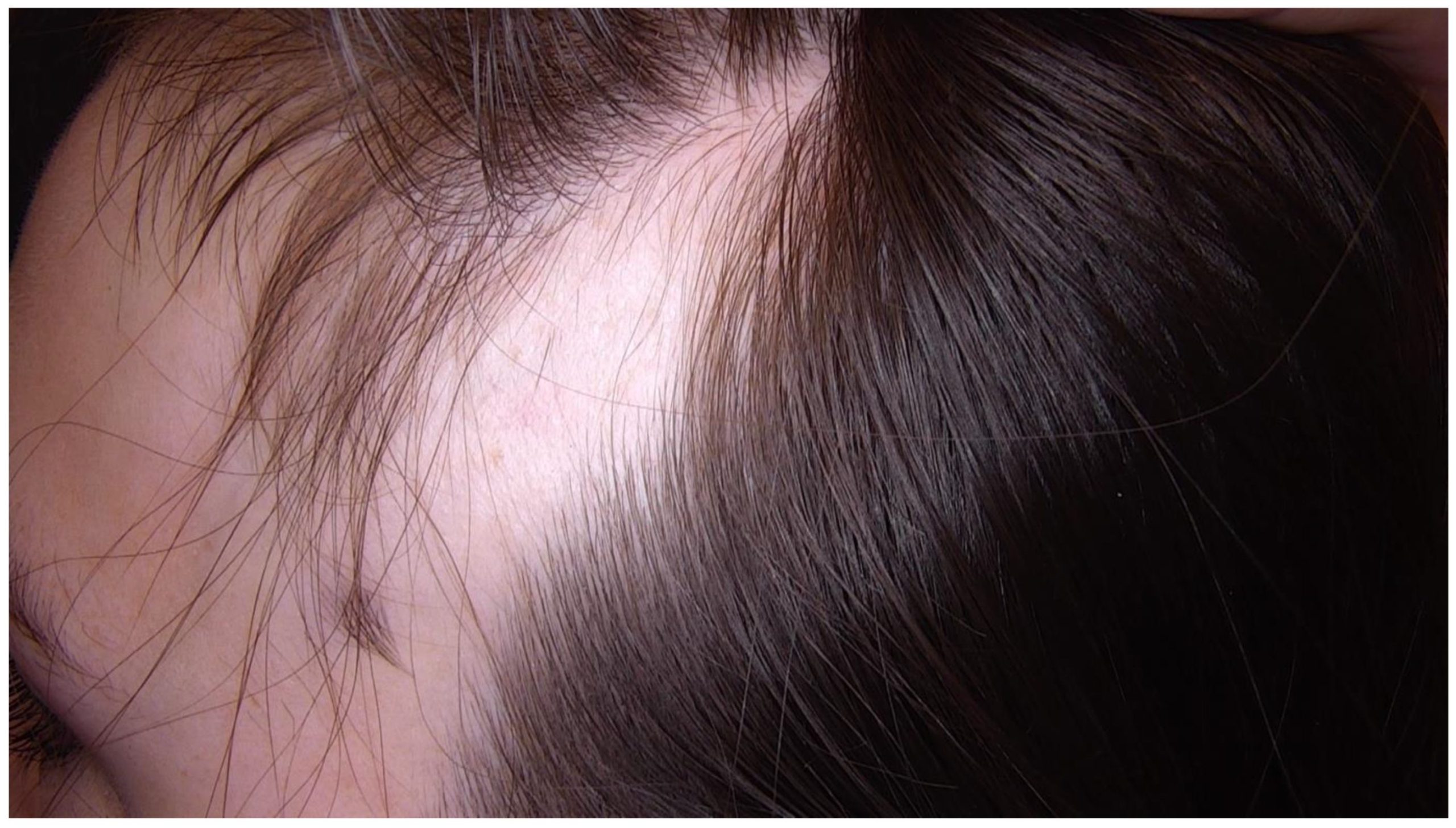
It has a very specific pattern.
Why it is also called temporal or congenital triangular alopecia
The name comes from both its location and origin.
- “Temporal” refers to the temple area
- “Triangular” describes its shape
- “Congenital” reflects that it often develops early in life
Many cases become noticeable in childhood, although some people only recognize it later.
Where it usually appears
The condition almost always affects:
- one side of the temple (sometimes both)
- a well-defined patch
- an area that remains consistent over time
The patch may contain fine, soft hairs instead of complete baldness.
This detail is important.
Why it is often mistaken for other hair-loss conditions
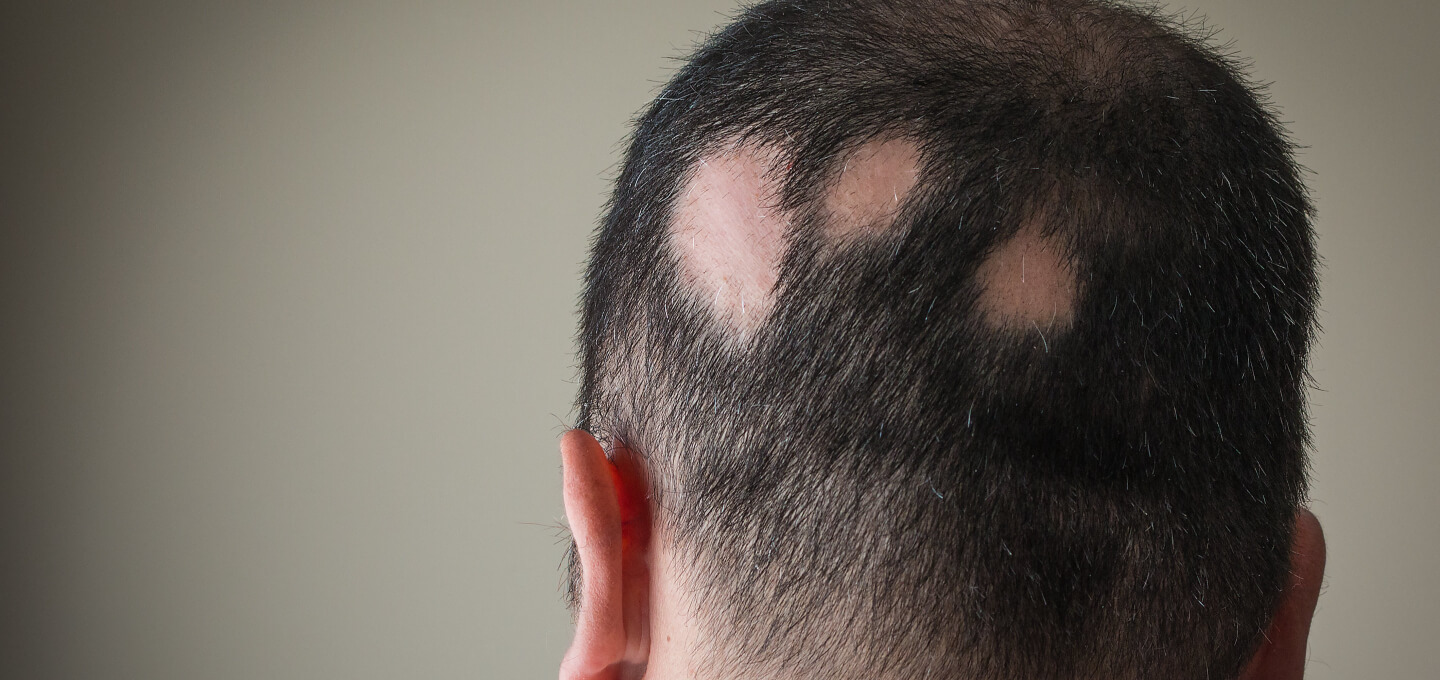
Triangular alopecia is frequently confused with:
- alopecia areata
- early male pattern hair loss
- traction-related thinning
The difference lies in behavior.
According to studies indexed in PubMed Central, this condition is non-scarring and typically nonprogressive. It does not expand or spread like autoimmune forms of hair loss.
Dr. Ahmet Murat explains:
“When we examine these patches, we often see stable boundaries and fine hairs inside. That’s very different from inflammatory or progressive hair loss conditions.”
What makes it unique
It is:
- stable over time
- localized
- not driven by inflammation
That combination makes it distinct from most other alopecias.
What Is the Cause of Triangular Alopecia?
The cause of triangular alopecia is different from most other types of hair loss. That’s why it often gets misunderstood.
Congenital or developmental origin
Most evidence points to a developmental origin.
This means congenital triangular alopecia is usually present early in life, even if it becomes noticeable later. It is not caused by stress, hormones, or autoimmune activity.
The hair follicles in that specific area develop differently. Instead of producing thick terminal hairs, they produce fine vellus hairs. That difference remains stable.
According to studies in PubMed Central, this condition is considered a benign, non-scarring alopecia with a localized follicular pattern rather than a destructive process.
Is it genetic?
Genetics may play a role, but it is not strongly hereditary in the same way as androgenetic hair loss.
Most cases appear sporadically.
There is no consistent pattern of family transmission, which makes it harder to predict.
What triggers alopecia to start, and why this is different
This is where confusion usually happens.
People often ask: what triggers alopecia to start?
That question applies more to conditions like alopecia areata, where immune system activity can trigger sudden hair loss.
Triangular alopecia does not behave like that.
There is no clear trigger:
- no inflammation
- no sudden onset
- no progression pattern
It simply exists as a localized difference in hair growth.
Why this distinction matters
Treating triangular alopecia like other alopecias leads to frustration.
Medications used for autoimmune or hormonal hair loss often have limited effect here.
Dr. Ahmet Murat says:
“This is not a condition that starts suddenly or spreads due to triggers. It’s a structural difference in how hair grows in that area. That’s why treatment expectations need to be realistic.”
What you should understand
The cause is not something you triggered.
It is not something you can reverse through lifestyle changes.
It is a localized, stable condition.
Does Triangular Alopecia Spread?
This is usually the first concern. You notice a patch and wonder if it will grow, spread, or lead to more hair loss. The short answer is reassuring.
Why it is considered nonprogressive
Does triangular alopecia spread? In most cases, no. This condition is widely described as nonprogressive. That means the patch typically stays the same size and location over time.
It does not expand across the scalp.
According to clinical reports in PubMed Central, temporal triangular alopecia is characterized by stable boundaries and long-term persistence without progression.
That stability is one of its defining features.
What stable vs changing hair loss looks like
Understanding this difference helps avoid confusion.
A stable pattern:
- same size over years
- no new patches
- consistent density within the area
A changing pattern:
- patch gradually enlarges
- new areas appear
- density continues to decrease
Triangular alopecia fits the first pattern.
If you notice ongoing change, it may not be the same condition.
When to reassess the diagnosis
This is where many people miss an important step.
If the patch:
- grows larger
- becomes inflamed
- develops sudden changes
It should be evaluated again.
Other forms of alopecia, such as alopecia areata, can mimic the appearance early on but behave differently over time.
Dr. Ahmet Murat explains:
“The key feature here is stability. If the patch changes, we question the diagnosis. Triangular alopecia does not usually evolve the way other conditions do.”
Why this matters for treatment
If a condition does not spread, treatment decisions become simpler.
You are not trying to stop progression. You are deciding whether to improve the appearance.
That changes expectations completely.
How Is Triangular Alopecia Diagnosed?
Diagnosis is where clarity happens. Many people assume they can identify triangular alopecia by looking at photos online. In reality, distinguishing it from other conditions requires a closer evaluation.
History and location
The first step is simple. Doctors look at:
- where the patch is located
- when it first appeared
- whether it has changed over time
A stable patch in the frontotemporal area strongly points toward temporal triangular alopecia.
If the patch has been present for years without progression, that’s another key indicator.
Dermoscopy findings
This is where diagnosis becomes more precise. Using dermoscopy, doctors examine the scalp at high magnification.
Typical findings include:
- presence of fine vellus hairs
- absence of inflammation
- no signs of follicle destruction
According to findings reported in PubMed Central, this pattern helps distinguish triangular alopecia from other types of hair loss.
How doctors tell it apart from alopecia areata
This distinction is critical. Alopecia areata often shows:
- sudden onset
- rapid changes
- exclamation mark hairs
- inflammatory signs
Triangular alopecia does not show these features.
It remains stable and lacks the typical markers of autoimmune activity.
Dr. Ahmet Murat says:
“We rely on pattern recognition and dermoscopy. The absence of inflammation and the presence of fine hairs inside the patch are strong indicators of triangular alopecia.”
Why misdiagnosis happens
Visually, early alopecia areata and triangular alopecia can look similar. Without proper evaluation, they can be confused.
That leads to:
- unnecessary treatments
- incorrect expectations
- frustration
What you should take from this
Diagnosis is not based on shape alone.
It is based on:
- stability over time
- location
- microscopic features
Once the diagnosis is clear, treatment decisions become much more straightforward.
How to Fix Triangular Alopecia
The answer depends on expectations. This condition is not progressive and does not damage follicles. It is a localized difference in hair type, which changes how treatment works.
When no treatment is needed
In many cases, no medical treatment is required.
The patch is stable. It does not spread. It does not lead to further hair loss. For some people, that reassurance is enough.
The decision to treat is usually cosmetic.
Can minoxidil help?
This is often asked. Some case reports have described partial improvement with minoxidil, especially when vellus hairs are present. However, results are inconsistent.
According to findings reported in PubMed Central, minoxidil may stimulate some growth, but it does not change the underlying follicular pattern in a predictable way.
That means expectations should remain realistic.
Hair transplant as the most established option
If a visible correction is the goal, hair transplantation offers the most reliable results. The approach involves placing healthy follicles into the affected area. These grafts produce terminal hairs, which blend with surrounding hair.
Published case reports have shown stable, natural-looking outcomes when performed correctly.
Dr. Ahmet Murat says:
“This is one of the few conditions where transplantation can create a very controlled result. The area is stable, so we are not chasing progression. We are simply restoring density.”
Why treatment is different here
This is an important distinction.
You are not trying to stop hair loss. You are improving a localized cosmetic concern.
That changes the strategy completely.
What to consider before choosing treatment
Think about:
- how visible the patch is
- how it affects your confidence
- whether you prefer a permanent or temporary solution
Once those are clear, the decision becomes much easier.
Does Triangular Alopecia Get Worse With Age?
This question comes up often. If you have triangular alopecia, you want to know whether it will change over time or become more noticeable.
The answer is usually reassuring.
Why it typically stays stable
Unlike many other hair loss conditions, temporal triangular alopecia is considered nonprogressive.
This means:
- the size of the patch remains similar
- the location does not change
- the pattern stays consistent
According to clinical observations reported in PubMed Central, this stability is one of the defining characteristics of the condition.
It does not behave like androgenetic hair loss or alopecia areata.
Why it can appear more noticeable over time
Even though the condition itself does not worsen, perception can change.
As surrounding hair changes with age:
- density may decrease in other areas
- styling habits may shift
- hairlines may mature
This can make the patch stand out more, even if it hasn’t changed.
So the condition stays the same. The context around it evolves.
What changes should raise concern
There are situations where re-evaluation is needed.
If you notice:
- the patch increasing in size
- new patches appearing
- redness, itching, or inflammation
it may not be the same condition.
Other forms of alopecia can develop later and should not be confused with a stable triangular pattern.
Dr. Ahmet Murat explains:
“Triangular alopecia itself does not progress. If a patient reports change, we reassess. The diagnosis should always match the behavior.”
What this means for long-term planning
You are not managing progression.
You are deciding whether to leave it as it is or improve the appearance.
That makes long-term planning simpler compared to other types of hair loss.
What Is the Rarest Alopecia?
This question sounds simple, but it’s not. There is no single condition officially defined as the “rarest alopecia”. Hair loss disorders vary widely, and rarity depends on how they are classified.
Why this is a tricky question
Alopecia is not one condition. It includes:
- autoimmune forms like alopecia areata
- genetic patterns like androgenetic hair loss
- localized conditions like triangular alopecia
Some rare types are linked to genetic syndromes or scarring disorders, but they are not commonly seen in everyday clinical practice.
Where triangular alopecia fits
Triangular alopecia is considered uncommon, but not the rarest.
It is:
- well-documented in dermatology literature
- recognized as a distinct condition
- often underdiagnosed rather than extremely rare
According to clinical reviews available through PubMed Central, many cases may go unreported because they are stable and do not require treatment.
That makes it seem rarer than it actually is.
Rare vs severe: an important distinction
Some forms of alopecia are considered rare because of how they present.
Others are considered severe because of how much hair they affect.
For example:
- alopecia universalis is uncommon and extensive
- certain scarring alopecias are rare and complex
These are very different from congenital triangular alopecia, which is localized and stable.
Why this matters for patients
If you have triangular alopecia, the key point is this:
It is not a progressive or systemic condition.
It does not behave like severe or autoimmune forms of hair loss.
Dr. Ahmet Murat says:
“Patients often hear the word ‘alopecia’ and assume something serious or progressive. In triangular alopecia, the situation is very different. It is localized and predictable.”
What to take from this
The term “rarest alopecia” is less important than understanding your specific condition.
Once you know what you’re dealing with, the next steps become much clearer.
What Triggers Alopecia to Start?
The answer depends entirely on the type of alopecia. This is where many people get misled.
Triangular alopecia vs other types
For triangular alopecia, there is no clear trigger. It is not caused by stress, hormones, or immune activity. It is usually a developmental condition that exists from early life, even if it becomes noticeable later.
That means it does not “start” in the way other forms of alopecia do.
Autoimmune triggers in alopecia areata
This is where triggers actually apply. In alopecia areata, the immune system mistakenly targets hair follicles. This can lead to sudden hair loss.
Reported triggers may include:
- stress
- illness
- genetic predisposition
According to research available in PubMed Central, alopecia areata is an autoimmune condition and may be associated with other immune-related disorders.
This is very different from congenital triangular alopecia.
Hormonal and genetic triggers in other hair loss
In androgenetic hair loss, triggers are linked to:
- genetic sensitivity
- hormonal factors like DHT
This leads to gradual thinning rather than sudden patch formation.
Why diagnosis matters before asking about triggers
This is one of the biggest misunderstandings.
People often ask about triggers without knowing which condition they have. That leads to confusion and incorrect assumptions.
Dr. Ahmet Murat says:
“Before discussing triggers, we need a clear diagnosis. Different types of alopecia have completely different causes. Without that clarity, treatment decisions become guesswork.”
What you should focus on
If you have a stable patch consistent with triangular alopecia, there is no trigger to identify or remove. If your hair loss is sudden or changing, then triggers may be relevant. Understanding the type always comes first.
Frequently Asked Questions About Triangular Alopecia
What is triangular alopecia?
Triangular alopecia, also known as temporal triangular alopecia or congenital triangular alopecia, is a localized patch of hair loss usually found near the temples. It is non-scarring and typically stable over time. The area often contains fine vellus hairs instead of complete baldness, which helps distinguish it from other conditions.
What is the cause of triangular alopecia?
The cause is usually developmental rather than triggered. It is considered a congenital or early-life condition where hair follicles in a specific area produce finer hairs. According to research in PubMed Central, it is not linked to inflammation, hormones, or autoimmune activity.
Does triangular alopecia spread?
No, in most cases it does not spread. This condition is described as nonprogressive, meaning the patch remains stable in size and location. If you notice changes over time, it may indicate a different diagnosis that should be evaluated.
How to fix triangular alopecia?
Treatment is usually cosmetic. Some people choose no treatment if the patch is not noticeable. Hair transplantation is considered the most reliable option for visible correction. Topical treatments like minoxidil may offer limited improvement in some cases but are not consistently effective.
Is triangular alopecia permanent?
Yes, the condition itself is typically permanent. However, it does not worsen or expand. The stability of the patch allows for predictable long-term planning if cosmetic improvement is desired.
Can triangular alopecia appear in adults?
Yes, although it often begins in childhood, some people only notice it later in life. In these cases, the patch was likely present earlier but became more visible over time.
Is triangular alopecia the same as alopecia areata?
No. Alopecia areata is an autoimmune condition that can cause sudden and sometimes progressive hair loss. Triangular alopecia is stable and not driven by immune activity. The two can look similar at first but behave very differently.
What triggers alopecia to start?
Triggers depend on the type of alopecia. In autoimmune forms like alopecia areata, triggers may include stress or immune factors. In triangular alopecia, there is no clear trigger. It is not caused by external factors.
What is the rarest alopecia?
There is no single condition officially labeled as the rarest. Some scarring or genetic alopecias are very uncommon. Triangular alopecia is considered rare but not the rarest, and it is often underdiagnosed rather than extremely uncommon.
Take the Next Step with a Clear Diagnosis
If you’ve been researching triangular alopecia, you now understand the key points. It is:
- stable
- localized
- not triggered like other forms of alopecia
The most important step is not guessing. It is confirming the diagnosis.
Dr. Ahmet Murat explains:
“Once we identify triangular alopecia, the plan becomes straightforward. We are not trying to stop progression. We are deciding how to improve the appearance.”
At Hermest Hair Transplant Clinic, every case starts with a detailed evaluation.

The focus is on:
- accurate diagnosis
- realistic expectations
- personalized treatment planning
For patients seeking correction, techniques like UNIQUE FUE® within the AIS (All-In Safety) Protocol allow controlled, natural-looking results in stable conditions like this.
If you’re unsure what type of hair loss you have:
Get clarity first.
Understand your options.
Move forward with confidence.
Request your free hair analysis and speak directly with a specialist today.