


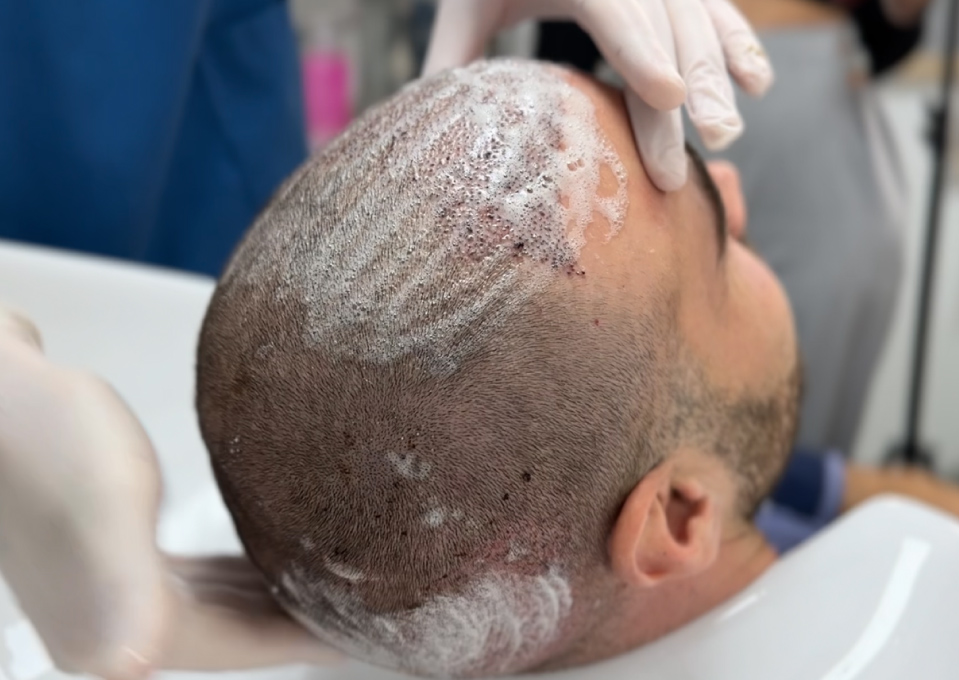
Hair Transplant Scabs: Timeline, Removal & Aftercare Tips
Scabbing after a hair transplant is a natural part of the healing process—and something nearly every patient experiences. These small crusts help protect newly implanted grafts and are a sign your scalp is starting to recover. But for many, questions arise: When do they fall off? Should I remove them? Is scabbing normal after 7 days or even 3 weeks?
In this guide, we’ll explain everything you need to know about hair transplant scabs, from what they look like and why they form, to how to remove scabs after a hair transplant without damaging results.
Quick Insights: Hair Transplant Scabs
- Scabs are a normal part of recovery and help protect implanted grafts after both FUE and DHI procedures.
- Do not pick or scratch scabs, especially in the first 7–10 days, to prevent dislodging grafts.
- Gentle washing with medical shampoo starting from day 4 helps scabs soften and fall off safely.
- Most scabs fall off naturally between days 7–14, depending on technique and healing rate.
- Lingering scabs beyond 3 weeks, or signs of infection, should be evaluated by your surgeon.
- Scabbing may vary between FUE and DHI, with DHI typically producing lighter crusting.
- Proper aftercare with moisturizers, sun protection, and scalp hygiene is key to healing.
- Shedding some hair with scabs is normal and does not mean the transplant has failed.
- Itching is common—manage it without scratching by using cooling foams or tapping the area.
Why Scabs Form After Hair Transplant & Why They Matter
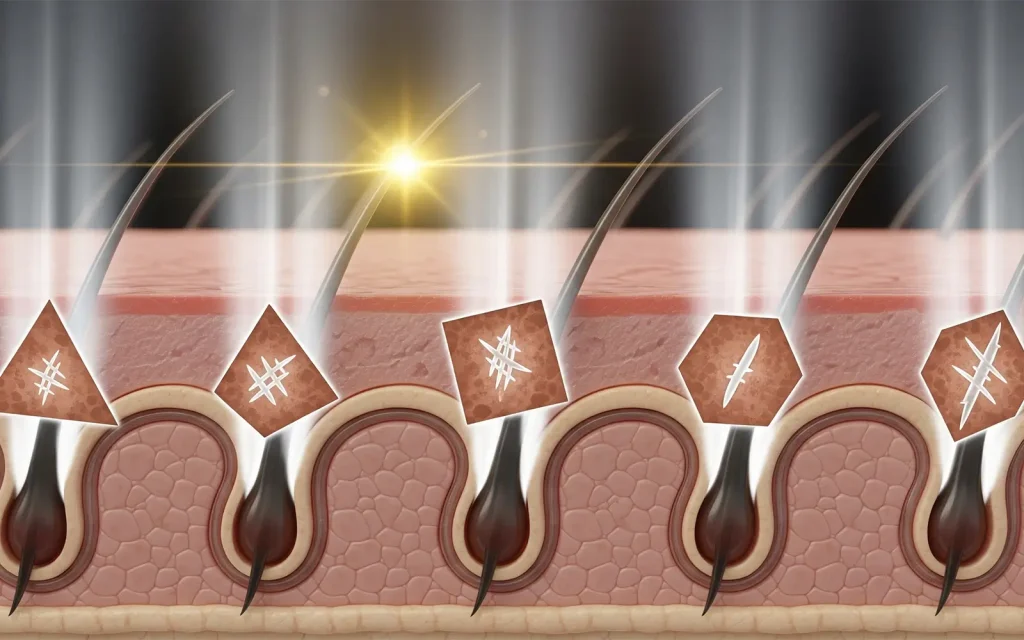
After a hair transplant, small wounds are created where grafts are placed. These wounds quickly form protective crusts—scabs—which act as natural shields against bacteria, dirt, and trauma during the critical first days of recovery.
Dr. Ahmet Murat explains:
“Scabs are not a complication; they are your scalp’s first defense. At Hermest Hair Clinic, we monitor how they form and advise each patient on customized aftercare because premature removal or harsh washing can risk dislodging grafts.”
Why they matter:
- Scabs seal micro-wounds and support graft stability
- They minimize infection risk
- Their presence often reflects a healthy healing response
Most patients begin to see these crusts forming within 48–72 hours post-op. Recognizing this as part of the process, not a problem, is key to healing smoothly.
Hair Transplant Scabbing Timeline: Day-by-Day Expectations
Understanding the hair transplant scabbing timeline helps set realistic expectations during recovery. While individual healing rates vary slightly, most patients follow a predictable pattern:
| Post-Op Day | What to Expect |
|---|---|
| Day 1–3 | Scabs begin to form. Grafts are still very delicate. No touching or washing. |
| Day 4–6 | Scabs become more visible. Washing typically starts with gentle techniques. |
| Day 7–10 | Most scabs begin softening and gradually falling off during daily washing. |
| Day 10–14 | Majority of scabs fall off naturally. Grafts should remain intact underneath. |
| Week 3+ | Any remaining crusts should be gone. If scabs are not falling off after 3 weeks, consult your surgeon. |
Dr. Ahmet Murat advises:
“We tell our patients to focus on gentle washing from day 4, not to speed up scab removal but to soften them slowly. Forced removal can compromise graft survival, especially in dense-packed zones.”
When do scabs fall off after hair transplant?
Scabs typically start falling off between day 7 and 10 and are usually gone by day 14. This process should happen naturally with proper washing and without picking.
What Do Hair Transplant Scabs Look Like?
Hair transplant scabs often appear as small, brownish or reddish crusts that form around each implanted graft. Their appearance varies slightly depending on your skin tone, healing rate, and the density of the grafts.
Common features:
- Rough texture, clustered around graft sites
- Color ranges from light brown to dark red
- Often dry and flaky by day 5–7
- May appear thicker in the crown area or high-density zones
Dr. Ahmet Murat notes:
“The appearance of scabs doesn’t always reflect how well a patient is healing. Some may see more crusting, but that doesn’t mean poor recovery. What matters most is that they fall off gradually without pulling the graft.”
What do scabs look like after hair transplant?
They typically look like tiny crusts or dried blood spots surrounding each graft. They can appear reddish-brown and become flakier as they begin to fall off around days 7–10.
Should You Remove Hair Transplant Scabs?
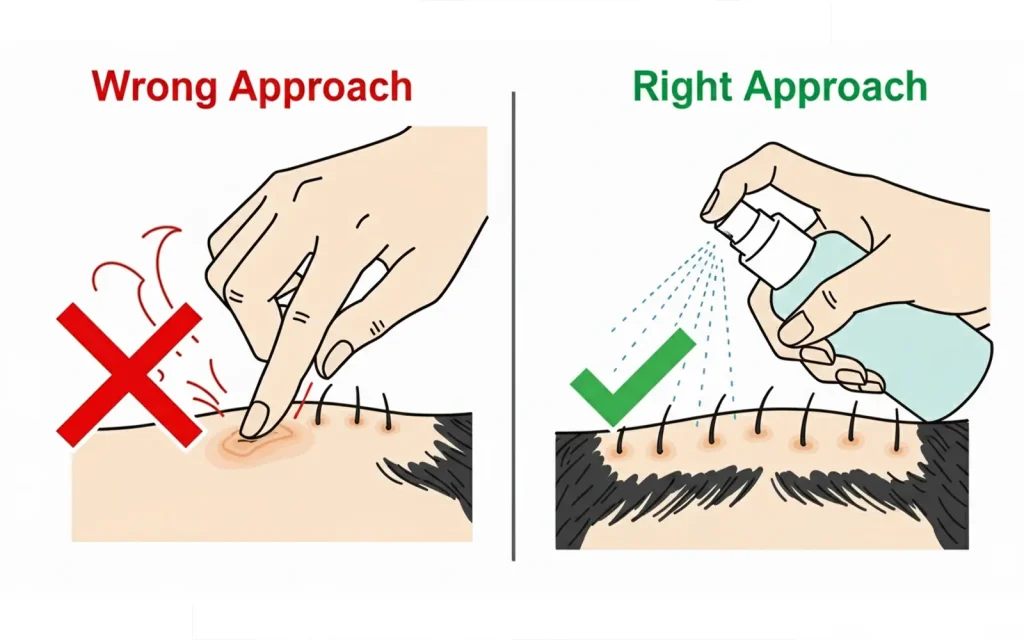
It’s natural to feel the urge to pick or rub off scabs, especially when they start to itch. But manually removing scabs too early can damage grafts, delay healing, or even lead to permanent loss in the transplanted area.
Dr. Ahmet Murat warns:
“We strongly advise patients not to touch scabs with their fingers or nails. Premature scab removal can pull out the graft entirely, particularly within the first 7–10 days.”
Instead of forcing scabs off, allow them to shed on their own through proper washing and moisturizing.
Should I remove scabs after hair transplant?
No, scabs should never be picked off manually. Let them fall off naturally with daily gentle washing after day 4–5 to avoid damaging the grafts.
How to Remove Scabs After Hair Transplant (Safely)
The safest way to remove scabs is through a gradual and gentle washing routine. Starting from day 4 or 5 post-op, proper care helps soften and loosen scabs without disturbing the grafts.
Step-by-step guide:
- Use lukewarm water (not hot) to wet the area before applying shampoo.
- Apply medical shampoo or doctor-approved baby shampoo by tapping gently with your fingertips.
- Let the foam sit for 5–10 minutes to soften the crusts.
- Rinse using a slow, low-pressure pour—not a showerhead.
- Dry by dabbing with a clean towel—no rubbing or friction.
From day 7 onward, gentle fingertip massage during washing can help loosen stubborn scabs. By day 10–14, they should mostly be gone.
Dr. Ahmet Murat emphasizes:
“We guide each patient at Hermest through this stage with visual instructions. The goal isn’t to rush scab removal but to allow natural detachment with care. This protects the graft integrity.”
How to remove scabs after hair transplant?
Start washing with doctor-recommended shampoo around day 4–5 using gentle dabbing. From day 7 onward, use soft circular motions while washing to gradually loosen scabs.
How to get rid of scabs after hair transplant?
Avoid picking. Wash daily with mild shampoo and let the scabs fall off naturally between days 7–14. Moisturizing foams like panthenol may be used if advised by your surgeon.
What If Hair Transplant Scabs Aren’t Falling Off?
It’s common for some patients to worry when scabs don’t fall off after 10–14 days. In most cases, a few crusts may linger slightly longer, especially in areas with dense implantation or slower skin turnover.
However, if scabs remain after 3 weeks, or if they appear thick, inflamed, or painful, this may signal an issue such as:
- Incomplete washing technique
- Dry scalp with low moisture
- Early infection (especially if redness or pus is present)
Dr. Ahmet Murat explains:
“Delayed scab shedding is usually harmless, but if combined with irritation or swelling, we advise patients to contact us immediately. Early diagnosis prevents complications like folliculitis or scarring.”
What to do:
- Continue daily gentle washing and avoid scratching.
- Use a moisturizing post-op foam if recommended.
- Contact your clinic if scabs persist after 21 days.
Can Scabs Cause Graft Loss or Hair Fall?
Scabs themselves do not damage grafts—unless they are removed prematurely or forcefully. When scabs fall off naturally, the underlying graft remains intact and continues its growth cycle.
However, if you:
- Pick at scabs
- Rub the scalp aggressively
- Use your nails or combs during early healing
…you risk dislodging grafts, especially within the first 7–10 days when roots haven’t anchored fully.
It’s also common for hair to shed with scabs during this period. This is part of the shock loss phase, not a sign of failure.
Dr. Ahmet Murat clarifies:
“We always inform our patients that some hair falling with scabs is expected and normal. The root remains underneath and will enter the growth phase later. Graft loss only occurs if the root is pulled with the scab—something easily avoided with proper care.”
Hair transplant scabs falling off with hair—should you worry?
No. Hair falling with scabs is usually part of the shock shedding phase. As long as you haven’t forcefully removed the scabs, the graft root remains in place and new hair will grow.
FUE Scab Care vs. DHI – Does It Differ?
While both FUE and DHI techniques involve implantation of hair follicles into micro-incisions, the post-op scabbing experience can differ slightly based on the method used:
| Aspect | FUE | DHI |
|---|---|---|
| Incision Type | Pre-made channels + implanted grafts | Direct implantation with implanter pen |
| Scabbing Intensity | Moderate to high in large areas | Often milder due to smaller incisions |
| Scab Shedding Timeline | 7–14 days | 5–12 days |
| Aftercare Complexity | Requires more attention for wide areas | Easier to manage in smaller treatment zones |
Dr. Ahmet Murat shares:
“In our experience at Hermest, DHI patients report less crusting thanks to the precision of the implanter pen. But regardless of method, we provide tailored washing protocols to suit the technique used.”
Regardless of whether you’ve undergone FUE or DHI, following a personalized aftercare plan is key to minimizing complications and ensuring scabs fall off without harming the grafts.
Tips to Prevent Excessive Scabbing After Hair Transplant
While some scabbing is unavoidable, excessive or hardened scabs may lead to itching, discomfort, or delayed healing. Here’s how to keep crusting under control and promote faster recovery:
Best practices:
- Follow your clinic’s washing instructions starting around day 4.
- Use only doctor-approved shampoo and foam to avoid irritation.
- Avoid sun exposure, which can dry out the scalp and worsen crusting.
- Do not wear hats or anything that rubs the scalp during the first week.
- Stay hydrated and maintain scalp moisture—ask about panthenol-based moisturizers.
- Avoid smoking and alcohol, which can reduce blood flow and slow healing.
Dr. Ahmet Murat advises:
“At Hermest, we provide every patient with a tailored post-op kit that includes medical shampoo, foam, and a step-by-step guide. These early care routines make a big difference in how scabs behave and how well grafts take root.”
When to Contact Your Surgeon About Scabs
While most cases of hair transplant scabbing resolve naturally, certain warning signs should prompt immediate contact with your clinic or surgeon.
Contact your doctor if:
- Scabs persist beyond 3 weeks without signs of falling off
- You notice yellow or green crusts, pus, or unusual odors
- The scalp becomes inflamed, red, or increasingly painful
- There is excessive hair loss with scabs after the second week
- You accidentally picked or scratched scabs and see bleeding
Dr. Ahmet Murat emphasizes:
“Any change in scab color, smell, or pain level should not be ignored. Infection is rare, but early intervention is essential. Our team is always on standby for patients who notice anything unusual.”
Timely action can prevent complications such as folliculitis, scarring, or graft loss, and reassure you that your recovery is progressing as expected.
Important Questions & Answers
Why do scabs form after hair transplant?
Scabs form as a natural part of healing when small incisions are made to implant hair grafts. The body responds by creating crusts to protect the wounds from infection and support graft anchoring. These scabs usually start forming within the first 48–72 hours after surgery.
Are scabs normal after a hair transplant?
Yes, scabs are a completely normal part of the hair transplant recovery process. They indicate that your scalp is healing and that the grafted follicles are being protected. As long as they are not inflamed or infected, there’s nothing to worry about.
Is it bad if scabs fall off early?
If scabs fall off within the first 5 days, it could mean the grafts haven’t fully settled, which may risk dislodgement. Scabs should ideally fall off naturally between days 7 and 14. Always follow your clinic’s post-op instructions to avoid early detachment.
Can scabs cause infection after hair transplant?
Scabs themselves don’t cause infection, but poor hygiene or premature picking may lead to bacterial entry. Keeping the scalp clean with approved shampoos and avoiding physical contact helps minimize any infection risk during the healing process.
Do all patients get scabs after a hair transplant?
Most patients develop scabs to some degree, regardless of whether they had FUE or DHI. However, the size and number of scabs may vary depending on the technique, graft density, and individual healing speed. Some patients may see lighter crusting with DHI.
Can I use moisturizer on scabs after hair transplant?
Moisturizers like panthenol-based foams may be recommended by your clinic to soften scabs and prevent dryness. Do not apply anything unless specifically approved by your surgeon, as some products can irritate the scalp or disrupt grafts.
What happens if scabs are scratched off?
Scratching or picking off scabs too early may pull out the underlying grafts, leading to patchy growth or permanent follicle damage. This is why clinics emphasize hands-off healing and proper washing instead of mechanical removal.
Do scabs affect the final hair transplant result?
If handled correctly, scabs will not affect the final outcome. However, improper scab removal or poor hygiene can lead to folliculitis or graft loss, which may compromise density or regrowth in the treated areas.
Are scabs itchy after a hair transplant?
Yes, scabs may cause mild itching as the skin tightens and heals. Itching is usually a sign of regeneration, but you should avoid scratching. Instead, you can tap gently around the area or ask your clinic about anti-itch foams or antihistamines.
Can I speed up scab removal after hair transplant?
The safest way to help scabs shed is by following a consistent washing routine using lukewarm water and medical shampoo. Avoid aggressive rubbing or hot water. Never try to rush scab removal manually, as it can harm the grafts.
Ready for a Safe and Successful Hair Transplant Experience?
At Hermest Hair Clinic, we combine advanced techniques like FUE and DHI with personalized post-operative care to give you the best results—with zero guesswork.
Our team, led by Dr. Ahmet Murat, pays close attention to every detail, including how your scalp heals after surgery. From your first wash to full recovery, we guide you every step of the way.
- Transparent pricing
- Scientifically backed techniques
- Customized aftercare kits
- Ongoing support from our medical staff
Want expert care without the complications? Book your consultation with Hermest Hair Clinic today and take the first step toward safe, natural hair restoration.