

3000 Grafts Hair Transplant: Cost, Coverage & Results
A 3000 grafts hair transplant is one of the most commonly performed procedures for patients with moderate hair loss. Using advanced techniques like FUE or Sapphire FUE, this treatment can restore around 6,000 to 9,000 hairs, often enough to rebuild the frontal hairline, fill in thinning areas, and frame the face naturally.
In this guide, you’ll find answers to:
- How much does 3000 grafts hair transplant cost in Turkey?
- What does 3000 grafts look like and how much coverage does it provide?
- Can it be done in one session, and how long does recovery take?
- Before and after results and expert guidance from Hermest Hair Clinic
“3000 grafts is the sweet spot for many of our patients—enough for transformation without exhausting the donor area,” says Dr. Ahmet Murat from Hermest Hair Clinic.

Key Takeaways
- A 3000 grafts hair transplant restores approximately 6,000–9,000 hairs, which is typically enough to treat the hairline, temples, and mid-scalp.
- Clinics in Turkey offer full-package procedures starting from $2,000, significantly more affordable than prices in the USA ($9,000–$15,000).
- Recovery usually takes 10–14 days, with full results visible by Month 12.
- The most effective techniques for this graft count include DHI, Unique FUE and Sapphire FUE, performed in a single session.
- Long-term success depends on donor area preservation, proper planning, and expert surgical execution.
What Is a 3000 Grafts Hair Transplant?
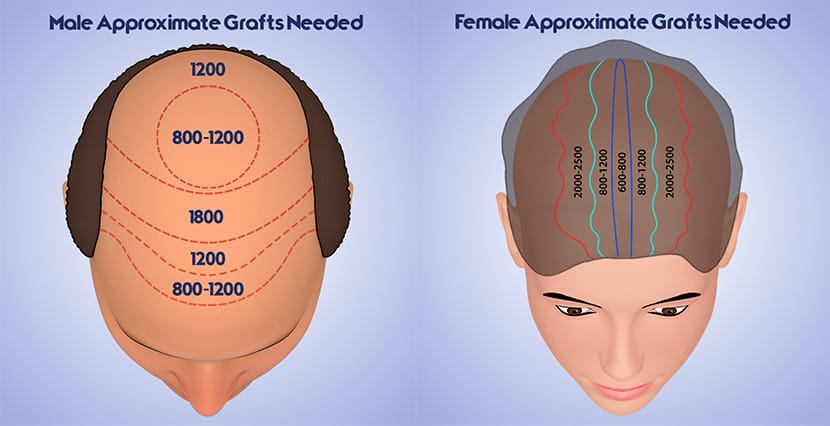
A 3000 grafts hair transplant involves extracting 3,000 follicular units—each containing 1 to 4 hairs—from the donor area (typically the back or sides of the scalp) and implanting them into balding or thinning regions. On average, this procedure restores between 6,000 and 9,000 hairs, depending on hair thickness and follicle composition.
Who Is It For?
- Patients with Norwood stage 3 to 4 hair loss
- Individuals experiencing receding hairlines or temple thinning
- Those who want to restore frontal density and mid-scalp fullness
- Candidates with adequate donor density and good scalp health
“For patients who want a visible but balanced improvement, 3000 grafts give us enough flexibility to design a natural-looking hairline and blend it into the native density,” explains Dr. Ahmet Murat.
This graft count is frequently used in DHI and Sapphire FUE methods, which are minimally invasive, leave no linear scars, and support quicker healing.
Eligibility & Donor Area Considerations
Not everyone is a suitable candidate for a 3000 grafts hair transplant. While it’s a popular choice for achieving visible results, success depends on proper donor area analysis, long-term planning, and matching your hair loss pattern to the right technique.
Who Qualifies for 3000 Grafts?
- Men with Norwood 3 or 4 pattern baldness
- People seeking frontal zone reconstruction
- Patients with thick donor hair (more coverage per graft)
- Individuals with no active scalp diseases or uncontrolled hair shedding
- Realistic expectations: 3000 grafts won’t fully restore crown and front in one go
“We always assess scalp elasticity, donor density, and future hair loss risk before deciding on 3000 grafts. Long-term planning matters as much as short-term gain,” says Dr. Ahmet Murat.
Donor Area After 3000 Grafts
- Most donor zones can safely yield 3000 grafts without visible thinning
- Small red extraction points close up in 7–10 days
- With proper spacing and skilled harvesting, the donor area remains natural-looking
- Risk of overharvesting is low if spacing is respected and the surgeon is experienced
Hermest Hair Clinic use digital density measurement tools and a zone-based extraction approach to protect donor health while maximizing graft survival.
Single vs Multi-Session Strategy
For most patients, a 3000 grafts hair transplant can be safely performed in a single session—especially using the DHI or Sapphire FUE technique. However, the decision depends on factors like graft quality, donor density, and whether additional refinements or future sessions are planned.
Single-Session Transplant: What to Expect
- Surgery time typically ranges from 6 to 7 hours, including breaks
- Best suited for patients with clear frontal or mid-scalp thinning
- Reduces the need for travel and downtime
- Enables natural-looking density when grafts are distributed properly
“We perform 3000 graft sessions in one day with full surgical team involvement and continuous graft hydration to maximize survival,” says Dr. Ahmet Murat.
When a Multi-Session Approach May Be Considered
- If the donor area is borderline or narrow, requiring careful pacing
- In cases where patients want to treat front first, crown later
- If combining beard or body hair grafts
- When using slower implantation methods like DHI for high-precision zones
The number of sessions is less important than planning—what matters most is ensuring long-term donor preservation, proper angulation, and realistic coverage.
Procedure Methods: FUE, Sapphire FUE, and DHI
The success of a 3000 grafts hair transplant depends not only on the number of grafts but also on the method used to extract and implant them. Each technique offers unique benefits depending on your scalp condition, density goals, and desired recovery speed.
FUE (Follicular Unit Extraction)
- Grafts are extracted one by one using a micromotor punch
- Channels are manually opened before implantation
- Fast and effective for medium-sized sessions like 3000 grafts
- Healing time: about 7 to 10 days
- Minimal scarring and no stitches required
Sapphire FUE
- A more refined version of FUE that uses sapphire-tipped blades for channel creation
- Allows for denser packing, especially in the hairline
- Reduces scalp trauma and supports faster healing
- Often preferred for patients seeking natural, high-density results
“For 3000 grafts, we often decide between DHI and Sapphire FUE depending on the type of hair loss. Both techniques allow us to achieve natural density while preserving the surrounding tissue,” says Dr. Ahmet Murat.
DHI (Direct Hair Implantation)
- Uses an implanter pen (Choi Pen) to place grafts directly without pre-opening channels
- Offers higher control over the angle and direction of each hair
- Often used for hairline and temple work, but not ideal for full 3000 graft sessions
- Generally slower and more expensive than FUE
In most cases, DHI or Sapphire FUE is the preferred method for 3000 grafts due to better efficiency, shorter surgery time, and higher graft survival when performed by experienced teams.
Coverage & Expected Results: What Does 3000 Grafts Look Like?

A 3000 grafts hair transplant typically restores between 6,000 and 9,000 hairs, depending on the number of hairs per graft. This is often enough to rebuild the frontal hairline, temples, and mid-scalp, offering noticeable improvement without overharvesting the donor area.
How Much Area Does 3000 Grafts Cover?
Covers approximately 70 to 90 cm² of balding scalp at moderate density (35–40 grafts per cm²)
Distribution example:
- Hairline and temples: 1200–1500 grafts
- Mid-scalp: 1500–1800 grafts
Not typically enough for full crown coverage unless density expectations are lowered
“We prioritize visual impact with 3000 grafts—framing the face and creating a natural front profile matters more than spreading them too thin,” explains Dr. Ahmet Murat.
3000 Grafts Hair Transplant Before and After
Patients begin to notice improvement from Month 3, with significant density forming by Month 6. Full results are usually seen around Month 12.

Explore all our hair transplant before & after results in the Hermest Clinic gallery.
Typical changes include:
- Reconstructed and natural-looking hairline
- Thicker, fuller front and top appearance
- Blended transition between native and transplanted hair
Hermest Hair Clinic provide custom graft mapping and design based on your face shape, hair type, and future hair loss risk, ensuring every graft contributes to a lasting, natural look.
Cost Comparison: 3000 Grafts Hair Transplant in Turkey vs USA
The cost of a 3000 grafts hair transplant can vary significantly depending on where you have it done. Clinics in Turkey are internationally recognized for offering affordable, all-inclusive packages—often at a fraction of the price charged in the USA or UK.
For more details, see these in-depth comparisons:
-
- Hair Transplant Cost Turkey
- Hair Transplant Turkey vs USA
- Hair Transplant Mexico vs Turkey
- Hair Transplant Australia vs Turkey
3000 Grafts Hair Transplant Cost in Turkey
Average cost: $2,000 – $3,500
What’s typically included:
-
-
- Surgeon consultation and operation (FUE/Sapphire FUE)
- 2–3 nights hotel accommodation
- Airport-hotel-clinic transfers
- Translator and care coordinator
- Medications and aftercare kit
-
“We’ve designed our packages to be worry-free. Patients pay one flat price and receive full treatment, hospitality, and follow-up care,” says Dr. Ahmet Murat from Hermest Hair Clinic.
3000 Grafts Hair Transplant Cost in the USA
-
-
- Average cost: $9,000 – $15,000
- Typically charged at $4–$6 per graft
- Hotel, transport, and post-op support often come with extra fees
- Higher pricing due to regulatory, facility, and labor costs
-
Price Comparison Table
| Location | Average Cost (3000 Grafts) | All-Inclusive Package |
|---|---|---|
| Turkey | $2,000 – $3,500 | Yes ✅ |
| USA | $9,000 – $15,000 | No ❌ |
For international patients looking for both quality and savings, Turkey remains the most cost-effective and medically experienced destination for 3000 graft transplants.
Recovery & Aftercare Timeline
The healing process after a 3000 grafts hair transplant is generally smooth and predictable when aftercare instructions are followed. Most patients return to daily activities within a week, and full recovery of both the donor and recipient areas occurs within two weeks.
Day-by-Day Recovery Overview
Day 1–3:
-
-
- Mild swelling around the forehead
- Tiny scabs form at the graft sites
- Saline sprays used regularly to keep grafts hydrated
- Sleeping with head elevated is essential
-
Day 4–7:
-
-
- Itching may begin—sign of healing
- Scabs begin to loosen naturally
- Gentle washing usually starts by Day 3 or 4 (clinic-specific protocol)
-
Day 8–14:
-
-
- Most scabs fall off
- Redness and irritation gradually fade
- Donor area is mostly healed, recipient area looks clear
-
Week 3–4:
-
-
- Shock loss phase begins: implanted hairs fall out (normal)
- Roots remain intact and begin regenerating
-
Month 3–6:
-
-
- First new hairs become visible
- Texture may be soft or slightly curled at first
-
Month 9–12:
-
-
- Hair thickens and blends with native hair
- Full results are visible by Month 12
-
“We provide each patient with a personalized aftercare plan, 24/7 support line, and follow-up schedule. This ensures not just fast healing—but long-lasting results,” says Dr. Ahmet Murat.
Proper hygiene, avoiding direct sun, pausing exercise, and using post-op medications as directed all support higher graft survival and better cosmetic outcomes.
Risks & Limitations of a 3000 Grafts Hair Transplant
A 3000 grafts hair transplant is considered safe when performed by qualified professionals. Still, like any surgical procedure, it comes with potential risks and some limitations that should be understood before treatment.
Common Risks
-
-
- Donor area overharvesting: If extraction isn’t well-distributed, patchiness or thinning may occur in the donor zone.
- Low graft survival: Poor handling, dehydration, or inexperienced staff can reduce the survival rate of implanted follicles.
- Infection or inflammation: Rare, but possible if post-op hygiene isn’t followed carefully.
- Shock loss: Temporary shedding of surrounding native hair, especially in cases of miniaturized hair.
- Unnatural appearance: If the hairline is placed too low or the angle of implantation is incorrect, the result may look artificial.
-
“At Hermest, we take great care in planning both the hairline design and donor area spacing to avoid unnatural density patterns or long-term damage,” says Dr. Ahmet Murat.
Key Limitations
-
-
- Not suitable for every hair loss case: 3000 grafts are effective for frontal and mid-scalp zones but may not provide full crown coverage.
- Hair loss may continue: Transplanted hairs are permanent, but native hair around them can still thin unless maintained with treatment.
- Not ideal for patients with low donor density: If the donor area is weak, this graft number may not be feasible in one session.
-
Important Questions & Answers
How much does 3000 grafts hair transplant cost in Turkey?
In Turkey, the average cost of a 3000 grafts hair transplant ranges between $2,000 and $3,500. This typically includes the surgery, hotel stay, transfers, medications, and aftercare support.
What does 3000 grafts look like?
3000 grafts usually produce 6,000 to 9,000 hairs, depending on the number of hairs per follicular unit. This is generally enough to rebuild the hairline, temples, and mid-scalp with visible density.
How much does 3000 hair grafts cover?
A 3000 graft procedure can cover around 70 to 90 cm² of balding scalp at moderate density. It’s typically used to restore the front half of the scalp in Norwood 3–4 cases.
Can 3000 grafts be done in one session?
Yes. Most experienced clinics complete 3000 grafts in a single session lasting 6 to 7 hours. Proper team coordination and hydration protocols ensure high graft survival.
What’s the recovery time after 3000 grafts?
Initial healing takes 7–10 days. Most scabs fall off by Day 10. New hair begins growing at Month 3, and final results appear by Month 12.
Will I need a second session after 3000 grafts?
It depends on your hair loss stage. If you’re Norwood 4 or below, 3000 grafts may be enough. But if you plan to treat the crown later, a second session might be necessary.
Is donor area affected after 3000 grafts?
When spaced correctly, the donor area after 3000 grafts heals well with minimal visible change. Tiny extraction points close up in a week, and hair regrowth conceals the area.
Which is better for 3000 grafts: FUE or DHI?
FUE or Sapphire FUE is preferred for 3000 grafts due to faster harvesting and efficient coverage. DHI is better for high-precision zones like the hairline but may be slower for larger sessions.
Start Your Hair Transformation at Hermest Hair Clinic
Wondering if 3000 grafts is the right amount for your hair loss?

At Hermest Hair Clinic, we customize each transplant based on your unique hairline, facial structure, and future hair loss pattern—ensuring natural, lasting results.
✓ Over 12,000 successful hair transplants
✓ UNIQUE FUE® technique with 99% graft retention
✓ All-inclusive pricing: no hidden costs
✓ 2–3 night hotel stay, transfers, translator, aftercare included
Contact us to schedule your free consultation and receive a personalized graft assessment with no obligation.